Commission for Air Quality Management in Delhi-NCR orders for immediate closure of 228 numbers of units / sites

 Rigorous inspections in units in the NCR, across air pollution contributing sectors, continue through 40 Flying Squads constituted by the Commission. Enforcement Task Force (ETF) of the Commission is reviewing the field level action and inspection reports of the Flying Squads on a daily basis.

Flying Squads particularly check for compliance in respect of various directions and orders issued by the Commission from time to time towards abatement of air pollution, particularly for measures to be taken for the critical winter months, including related statutory environmental rules / regulations and guidelines issued by the agencies concerned in the Central and State Governments. 

General compliance levels reported to be satisfactory and improving over the days.  However, serious violations still being reported across sectors; majorly in Industrial units, Construction & Demolition project sites, use of Diesel Generator Sets in industrial installation/ commercial complexes and residential set ups.

In geographical terms, such gross violations have been reported across the respective jurisdictions in the National Capital Region, with 38, 48, 104 and 38 cases reported from NCT of Delhi and NCR Districts of Haryana, UP and Rajasthan respectively. 

The Enforcement Task Force (ETF) after deliberations and detailed screening of the non-conformities / non compliances recorded in the inspection reports, decide for immediate closure of such units, to prevent any further deterioration of air quality, as also a signal to act as a strong deterrent for violators of environmental norms.

In respect of 1215 no. of cumulative inspections carried out till 7th December, 2021, gross violations of Directions/ Orders of the Commission and non-adherence of prescribed norms has been reported from 228 number of units / sites across various sectors. Of these, closures have been identified for 128 No. of Industries, 58 C&D Project sites and 42 Commercial / residential complexes operating on DG Sets.

Not only the closure orders have been issued in respect of the grossly violating units, the Flying Squads have further verified physical closure of operations and 111 No. of such units have so far been physically closed down, till further orders from the Commission.

***

Loss of life due to climate change

 There is no established study for India providing a quantified attribution of climate change to the triggering of natural disasters leading to loss of life and property. While many studies monitor impact of disasters such as floods, drought and heat, the science of attribution of these changes particularly to climate change is far more complex and currently an evolving subject. Most studies so far have relied on mathematical modelling of climate change impacts but these are yet to be empirically verified.

The extant legal and promotional measures cater to the concerns of disasters related to climate change, which are subject to refinement, improvement and further development by the relevant Ministries/Departments at the Centre and the States. The relief, recovery, and rehabilitation related to disasters in India are governed inter alia by the relevant provisions of the Disaster Management Act, 2005 and the guidelines, directives, and orders of the National Disaster Management Authority (NDMA) and the State Disaster Management Authorities. Furthermore, the India Meteorological Department (IMD) is responsible for monitoring, detection and forecasting of weather and climate including early warning for severe weather events such as cyclones, heavy rainfall, extreme temperature, thunderstorms, and other such extreme events.

The National Disaster Management Authority (NDMA) and State Disaster Management Authority (SDMA) spearhead and implement holistic and integrated approach to Disaster Management in India. NDMA has issued guidelines for the preparation of District Disaster Management Plans (DDMPs). In addition, the National Disaster Management Plan prepared by NDMA in 2019 and the respective State Disaster Management Plans provide the overall framework and guidance for the preparation of DDMP. Further, the relief, recovery, and rehabilitation related to disasters in India are governed inter alia by the relevant provisions of the Disaster Management Act, 2005 and the guidelines, directives, and orders of the NDMA and the SDMAs.

As part of India’s participation and leading international cooperation and collaboration in these matters, the Coalition for Disaster Resilient Infrastructure (CDRI) has been launched in 2019 and headquartered in India. It aims to promote the resilience of new and existing infrastructure systems to climate and disaster risks through updating and enhancing information on the exposure of infrastructure systems, and model climate related hazards such as droughts and heat waves, enabling near time response.

Awareness towards good green

 The Ministry of Environment, Forest and Climate Change supports the States/Union Territories for carrying out afforestation activities through various Centrally Sponsored Scheme and funds under CAMPA to expand green cover across the country.  The Ministry on various occasions like International Day of Forests, World Environment Day, Van Mahotsav, Wild life Week, International Day for Biological Diversity etc. disseminates knowledge  in planting trees and other floral species which are naturally grown in a  particular region through various Conferences, Workshops, Mass Plantation etc. State Forest Departments also promotes knowledge of local indigenous species of trees, herbs and shrubs along with their medicinal properties through Books, Pamphlets, Sign boards, Brochures etc.

The Ministry has also through its advisories issued from time to time to State/UT Governments on afforestation programs/activities emphasized that the plantation of locally suitable tree species should be on the basis of local climatic and soil conditions. The National Mission for a Green India also encourages the plantation of mixed indigenous species along with grasses, herbs, shrubs and tree species. Exotic and invasive plants are avoided in afforestation in forest areas.

The National Medicinal Plants Board (NMPB), Ministry of AYUSH has also launched a Medicinal Plant species-specific campaign on Tinosporiacordifoliaviz ‘Amrita for Life’, for promotion and creating awareness. Further, NMPB has also launched, ‘20 medicinal plants for 2020’, campaign to promote, cultivate and to create awareness among local people about rich diverse traditional knowledge on medicinal plants.

Restrictions on many Construction & Demolition(C&D) activities to continue in the NCR

 The Commission for Air Quality Management in NCR and Adjoining Areas (CAQM) in furtherance of Direction No. 44 dated 16/11/2021 and its Order dated 27.11.2021 directs with immediate effect that Construction and Demolition (C&D) activities shall not be allowed in NCR, except for the following categories of projects:


(a)        Railway services / Railway stations;

(b)        Metro Rail Services including stations;

(c)        Airports and Inter State Bus Terminals (ISBTs);

(d)        National security/ Defence related activities/ projects of national importance;

(e)        Hospitals/ nursing homes / health care facilities;

(f)        Linear public projects such as highways, roads, flyovers, over bridges, power transmission, pipelines etc.;

(g)        Sanitation and public utility projects like sewage treatment plants, water pumping stations etc.;

(h)        Ancillary activities specific to and supplementing the above categories of projects.


Further, the above said exemptions are subject to strict compliance of the C&D Waste Management Rules, dust prevention/ control norms including compliance with the directions of the Commission issued from time to time in this regard.

As per the report of IIT Kanpur (2016) namely “Comprehensive Study on Air Pollution and Green House Gases in Delhi”, construction and demolition activities in Delhi are frequent and “this source is the third most contributor to area source emission in PM10 and importantly it is a consistent source all through the year”. Additionally, the study estimated that the emission load from C&D activities in Delhi is 5167 kg per day and 1292 kg per day with respect to PM10 and PM2.5 respectively.

As per “Source Apportionment of PM10 and PM2.5 of Delhi NCR for Identification of Major Sources”, study of August, 2018 prepared by Automotive Research Association of India (ARAI) and The Energy and Resources Institute (TERI), PM10 contribution from dusty sources (example – road, construction and soil dust) was significant in winter season ranging from 23 to 31 %.  Similarly, contribution of dusty sources PM2.5 in winter was 15% in Delhi-city as well as NCR Towns.

C&D activities in urban agglomeration of Delhi city and NCR are frequent, numerous and dispersed and dust from the construction and demolition activities is a major source of Air Pollution in the National Capital Region and contributes significantly to adverse PM2.5 and PM10 levels.

While the Commission’s restrictions are still in force to control air pollution from two other major sectors contributing to air pollution namely industries and transport and it is both advisable and desirable to follow a phased approach in respect of construction sector also considering the air quality in NCR.

Keeping in view the current air quality in Delhi-NCR, there is a need to exercise control on various sectors that significantly contributes to air pollution. Taking into consideration different studies that clearly show that C&D sites are a major contributor of air pollution across the NCR, the Commission if of the view that except for the above said exemptions, C&D activities should not be allowed in the NCR till further orders.

Since the current air quality index is within the ‘Very Poor’, it would not be advisable to allow the operations at all C&D sites. Based on air quality forecast and significant improvement in air quality, the decision will be reviewed further.

As per the Hon’ble Supreme Court’s Order dated 24.11.2021, States shall use the funds collected as labourcess for the welfare of constructions workers and provide them subsistence for the period during which construction activities are prohibited and pay wages notified under the minimum Wages Act for the respective categories of workers.

***

Career in Environment and Wildlife Conservation

 The Ministry of Environment, Forest & Climate Change is implementing the Environment Education, Awareness and Training (EEAT) Scheme with the objective to promote environmental awareness especially among school and college students and to mobilize their participation for conservation of environment. Under the National Green Corps (NGC) programme of this Scheme, more than one lakh Eco-clubs have been formed in schools and colleges to educate students and to spread awareness on environmental issues. Further, this Ministry also supports organization of field visits/ nature camps for school students in Protected Areas, Wildlife Sanctuaries, National Parks, etc. under the National Nature Camping Programme of EEAT Scheme with an objective to provide ‘nature experience’ to students and thereby to trigger their sensitivity towards nature and its conservation. As per information provided by Department of Youth Affairs, awareness on environment conservation and enrichment is a component in the regular activities of National Service Scheme (NSS). Volunteers of NSS organize activities on environment conservation, climate change, use of renewable energy and other related issues in addition to plantation drives.

This Ministry has launched the Green Skill Development Programme (GSDP) in June 2017 under the ongoing Environmental Information System (ENVIS) Scheme, on a pilot basis, at 10 locations, spread over 9 biogeographic regions of the country with the objective to skill youth in environment, forest and wildlife sectors and enabling them to be gainfully employed or self-employed.Based on the success of the pilot phase, the programme was extended to pan-India level in 2018-19 covering diverse fields like pollution monitoring (air/water/soil), emission inventory, operation of Sewage Treatment Plant(STP)/ Effluent Treatment Plant (ETP)/ Common Effluent Treatment Plant(CETP), waste management, environmental impact assessment, forest management, water budgeting and auditing, wildlife management, para taxonomy including Peoples Bio-Diversity Register(PBR), bamboo management and livelihood generation, etc. The training imparted under GSDP endeavours to enhance technical knowledge of the skilled workforce with a focus on hands-on training.The ENVIS Hubs/ Resource Partners and other institutions imparting training under the GSDP invite applications from all over the country and the placements take place based on employment opportunities available within or outside the State / Union Territory.

Environment, Forest and Climate Change

 The Vision of this Ministry is to provide the citizens of India a clean, green and healthy environment with peoples’ participation and to support higher and inclusive economic growth through sustainable utilization of available natural resources.  This Ministry has achieved different milestones to plan, promote, co-ordinate and oversee the implementation of India’s environmental and forestry policies and programmes related to conservation of the country’s natural resources including its lakes and rivers, its biodiversity, forests and wildlife, ensuring the welfare of animals, and the prevention and abatement of pollution.  The major achievements during year 2021 are as follows: –

Azadi ka Amrit Mahotsav:

Green Good Deed of the Week campaign: In order to commemorate the 75thyear of independence, the country is celebrating a 75 week-long “Azadi ka Amrut Mahotsav”. An outreach programme for promoting sustainable lifestyle –“Green Good Deed of the Week” campaign is being organized as a part of this Mahotsav through Eco-clubs since 12th March 2021. State Nodal Agencies and Eco-clubs organized various activities to promote sustainable lifestyle like cleanliness/ plantation drives, painting/ slogan/ essay competitions, awareness on single-use plastics, awareness on environment-friendly ways of celebrating festivals, etc.

Iconic week celebration: The Iconic Week of the Ministry of Environment, Forest and Climate Change (MoEF&CC) as a part of the Azadi ka Amrut Mahotsav was celebrated from 4th to 10thOctober, 2021. The major themes identified for activities of the week were lake/ wetland conservation, curbing of use of single-use plastics, wildlife conservation, forest conservation and coastal conservation. Activities like Green Pledge, webinars, promotion of Green Good Deeds and screening of videos on the identified themes were organized in schools/ colleges across the country in co-ordination with Department of School Education & Literacy and SNAs.

Swachhta Campaign from October 2 –November 1, 2021

  • The Swachhta Campaign was observed for one month starting from 2nd October – 1st November, 2021. During the campaign, a big number of files have been reviewed by the various divisions in the Ministry of Environment, Forest and Climate Change which comes to a huge total of 45,154 files. Out of which around 41,758 files have been weeded out which has resulted in generation of paper waste of approximately 9 tonnes. A heavy duty shredder machine was specially brought to do the huge task. A revenue generation of Rs. 18 thousand has been generated out of the process of disposal of the waste generated by weeding of the files. A sufficient clear and open area in the Indira Prayavaran Bhawan appx 3000 sq.ft. has been reclaimed.
  • The Ministry has organised an auction of the e-Waste to dispose of all obsolete items including computers, printers, photocopiers and other electronic equipment. The e-waste bid has already been finalised at a price of Rs. 5.21 lakh to M/s. Clean Waste Management, Burari, Delhi. The shifting of e-waste material has been completed.
  • The Ministry has also organised an auction to dispose of all obsolete furniture items including tables, chairs, almirahs, side racks, sofa sets and other waste furniture items. The furniture waste bid has already been finalised at a price of Rs. 6.80 lakh to M/s Patel scrap.

Sustainable Development Goals (SDGs)

The UN General Assembly in its 70th Session considered and adopted the 17 Sustainable Development Goals (SDGs) and associated 169 targets for the next 15 years. The 17 SDGs came into force with effect from 1st January, 2016. Though not legally binding, the SDGs have become de facto international obligations and have potential to reorient domestic spending priorities of the countries during the decade ending 2030. The SDG 13, 15 and 12 have been mapped majorly to Ministry of Environment, Forest and Climate Change. Significant strides have been made in achieving SDG 13 (Urgent action to protect against Climate Change and its impact) as 24% reduction in emission intensity of GDP against 2005 levels has been achieved in 2016 itself. India has emphasized that Climate Finance from developed countries as promised in the Paris agreement is integral to achieve this goal. Similarly, country’s pledge on land degradation neutrality and intense afforestation are helping the country move towards SDG 15(Sustainable use of terrestrial Ecosystems and prevention of Biodiversity Loss). The commitment of the country in implementing the Extended Producer responsibility in plastics and ratification of Basel Convention to monitor hazardous substances is a remarkable step in moving towards SDG12 for ensuring sustainable production and consumption patterns. The 2030 Agenda also underscored that quality, reliable and disaggregated data will be needed for measurement of progress and to ensure that “No One is Left Behind”. MoEF&CC is strengthening its data systems for realistic monitoring of progress on the sustainable development goals.

Climate Change

As a responsible member of the International community of nations, the Government will continue to engage in a meaningful way with deliberations in the International fora/ UN climate summit duly keeping in mind the national developmental goals and priorities through the various international meets and at present India is a president of UNCCD.

  • Ministry of Environment Forest and Climate Change took part in the 26th Session of the Conference of Parties (COP-26) to the United Nations Framework Convention on Climate Change (UNFCCC) was held in Glasgow, United Kingdom for green net zero program The National Statement in the World Leaders Summit was delivered by the Hon’ble Prime Minister at COP-26, which the following mainly discussed and highlighted during the summit
    • India’s non-fossil energy capacity to reach 500 GW by 2030
    • India will meet 50 per cent of its energy requirements with renewable energy by 2030.
    • India will reduce its total projected carbon emissions by one billion tonnes from now to 2030.
    • India will reduce the carbon intensity of its economy by 45 per cent by 2030, over 2005 levels.
    • By 2070, India will achieve the target of net zero emissions.
  • The transfer of climate finance and low-cost climate technologies have become more important for implementation of climate actions by the developing countries. The ambitions on climate finance by developed countries cannot remain the same as they were at the time of Paris Agreement in 2015 and the Indian Delegation led by Hon’ble Minister for Environment, Forest & Climate Change attending the COP Summit through multilateral negotiations with major countries for adoption of greener norms in the global scenario.
  • The Glasgow Climate Conference adopted decisions, which inter-alia, include adoption of an overarching decision titled “Glasgow Climate Pact” that stresses the urgency of enhancing ambition and action in relation to mitigation, adaptation and finance in this critical decade to address the gaps in the implementation of the goals of the Paris Agreement. The Glasgow Climate Pact also noted with deep regret that the goal of developed country Parties to mobilize jointly USD 100 billion per year by 2020 has not yet been met. The COP 26 outcome also include completion of work related to rules, procedures, and guidelines for the implementation of the Paris Agreement including that for cooperative approaches, mechanisms and non-market approaches referred to in Article 6, enhanced transparency framework, and common timeframes for Nationally Determined Contributions (NDCs) and it was discussed with Ministers and Representatives from United Kingdom, Scotland, South Korea, Australia, BASIC countries, Nepal, Bhutan, Maldives, France, Canada, Brazil, USA, UAE, Germany, Norway, Singapore, Jamaica, Sweden, and Japan. Hon’ble Minister also held meetings with the Ministers of Like Minded Developing Countries and also with representatives from United Nations Environment Programme, United Nations Convention to Combat Desertification, and Green Climate Fund.
  • For strengthening impact, the Indian Delegation also participated in side events on the side-lines of COP 26 which include South Asia Co-operative Environment Programme, International Solar Alliance, CDRI, Leadership Group for Industry Transition and Namami Gange.

PARIVESH

In order to streamline the procedure for early grant of Clearances under this Ministry PARIVESH portal has been simplified for grant of Environmental Clearances which is now been reduced to 70 working days..

In pursuant to the spirit of ‘Digital India’ and capturing the essence of Minimum Government and Maximum Governance, a Single-Window Integrated Environmental Management System named PARIVESH (Pro-Active and Responsive facilitation by Interactive, Virtuous and Environmental Single Window Hub) has been developed by the Ministry of Environment, Forest and Climate Change for complete online, expeditious and transparent system for environment, forest, wildlife and CRZ clearances in the country. The facility is operational for processing of applications for Environmental Clearances (ECs), Forest Clearances(FCs), Coastal Regulatory Zone Clearances (CRZ). Over the years, the existing system of ‘PARIVESH’ has undergone numerous modifications and customization in alignment with statutory provisions and requirements.

Ministry in recent times has automated various processes through PARIVESH such as development of online module in PARIVESH for dispensation for requirement of EC for expansion / modernization with no increase in pollution load, aligning the EIA Notification with MMDR Amendment Act 2021, Online generation of EC with unique identification number etc.

Due to the above initiatives along with other Policy reforms, the average time taken for grant of EC in all the sectors has reduced significantly from more than 150 days in 2019 to less than 90 days. In some of the sectors, the ECs are being granted even within 60 days also accordingly, ECs for 7787 projects was granted under EIA Notification in 2021.

Ministry has decided to upgrade the existing PARIVESH to provide a “single window” solution for administration of environmental regulations. Centralized Processing Centre (CPC) has been proposed to be set up in the Ministry of Environment, Forest & Climate Change. Upgraded PARIVESH will not only strengthen the clearance processes but also encourages ease of doing business in the country. Know Your Approval module with inbuilt decision rules in the envisaged system will guide the Users about the applicability of clearances to the proposed project activity. In addition, it will minimize repetitive efforts of the Users and the same time will ensure single version of the truth across all applicable clearances. Further, in the envisaged system redundancies in the process flow will be minimized to maximum extant.

DPR of the project proposal has been approved. Total time line for overall development of modules is 64 weeks, however modules for critical major clearance processes would be made live in 42 weeks from the date of on boarding of NIC’s system integrator.

Nagar Van Yojana:

Ministery is implementing Nagar Van Yojana and revised its guidelines in October 2021 with an aim at developing 400 Nagar Vans and 200 Nagar Vatikas with the objective to significantly enhance the tree outside forests and green cover in cities leading to better environment, enhancement of biodiversity and ecological benefits to the urban and peri-urban areas apart from improving quality of life of city dwellers. The scheme will be funded from the National Fund under CAMPA at a total cost of Rs. 895.00 crore during the period 2020-21 to 2024-25.

School Nursery Yojana: Ministry is implementing School Nursery Yojana with an aim to associate students in the process of raising plantations as part of their learning and by providing an environment for the students to understand and appreciate the significance of plants in maintaining and sustaining the natural ecosystem. The scheme ‘School Nursery Yojana’ is proposed to be implemented for the period of five years..

Compensatory Afforestation Fund Management and Planning Authority (CAMPA)

The “National Compensatory Afforestation Fund Management and Planning Authority” (National Authority) came into existence in place of the Ad-hoc CAMPA with effect from 30.09.2018; the day the Compensatory Afforestation Fund (CAF) Act, 2016 and CAF Rules, 2018 came into force. Hon’ble Minister, Environment, Forest and Climate Change, Government of India is the chairperson of the Governing Body of the National Authority. The National Authority manages and utilises the “National Compensatory Afforestation Fund” (National Fund), which has been created under the public account of India. The other fund at the State/UT level is known as “State Compensatory Afforestation Fund” under the public accounts of respective States/UTs. CAF collected against approvals under the Forest (Conservation) Act, 1980 is distributed in the ratio of 90:10 between the concerned State Fund and National Fund and are made available to the National Authority and respective State Authorities through budgetary process. Until 07.10.2021 funds amounting to Rs 6,63,63.12 crore was transferred from state specific bank accounts maintained at New Delhi to the public Account of India and Rs. 48,606.39 crore was disbursed from the National Fund to 32 States, who have created their public accounts and completed reconciliation.  Until now, twenty-eight schemes amounting to Rs 1329.78 crore has been approved from the National Fund. Similarly, Annual Plans of Operation (APOs) of 31 States/UTs worth Rs 9,926.48 crore have been approved from the respective State Fund during current financial year. The activities included in the APOs are mostly related to forestry and wildlife management.  At national level, achievement of compensatory afforestation (CA) in 9,06,583 Ha against the target of 10,63,031 ha is major achievements of CAMPA. The average survival percentage of CA has been reported to be 73 percent.

Wildlife

The project Dolphin and the project lion have been initiated and the associated environmental impact of this are also strengthen at the major sanctuary and forest areas for cleaner Environmental Protection of endangered species.

  • The Protected Area coverage in the country has been steadily increasing. The coverage of Protected Areas which was 4.90% of country’s geographical area in 2014 has now increased to 5.03%. This includes an increase in Protected Areas in the country from 740 with area of 1,61,081.62 sq.kms. in 2014 to present 981 with an area of 1,71,921 sq.kms.
  • Population of several species like Tiger, Asiatic Lion, Greater one Horned Rhinoceros, Asian elephants, etc. increased. Wildlife health is being addressed to aggressively monitor zoonotic diseases.
  • India has taken a leadership role in conservation of migratory birds along the Central Asian Flyway and had organized a two day workshop  in October 2021, with  Central Asian Flyway (CAF) Range countries on conservation of migratory birds along the Central Asian Flyway.
  • The Ministry has released ‘Guidelines for sustainable ecotourism in forest and wildlife areas-2021 in October 2021. These guidelines emphasise on participation of local community in ecotourism activities.

Biodiversity Conservation

India enacted the Biological Diversity (BD) Act in 2002, and notified the Rules in 2004, through an extensive consultative process initiated in 1994. India was one of the first few countries to have enacted such a comprehensive legislation on biodiversity.

The Act is implemented through a three-tier institutional mechanism, at national, state and local levels: The National Biodiversity Authority (NBA) at the national level set up by the Government of India, State Biodiversity Boards set up by the State Governments at the State level, and Biodiversity Management Committees (BMCs) constituted by the elected bodies at the local level.

The Convention on Biological Diversity (CBD) will hold its second part of the 15th Conference of the Parties (COP 15) in Kunming, China in 2022 in which delegates will come together to adopt a “Post-2020 Global Biodiversity Framework”. The vision for proposed framework is that “By 2050, biodiversity is valued, conserved, restored and wisely used, maintaining ecosystem services, sustaining a healthy planet and delivering benefits essential for all people. 2021 is viewed as a decisive year on biodiversity action. India joined High Ambition Coalition for Nature and People which calls for protecting at least 30 percent of world’s land and ocean by 2030 where India has already reported about 27% of area as conserved under Aichi Target 11 to CBD.

The Biological Diversity (Amendment) Bill, 2021 is being introduced to simplify, streamline and reduce compliance burden in order to encourage conducive environment for collaborative research and investments, simplify patent application process, widen the scope of levying access and benefit sharing with local communities and for further conservation of biological resources, without compromising the objectives of United Nation Convention on Biological Diversity and its Nagoya Protocol and also national interests.’

National Biodiversity Authority

National Biodiversity Authority, a statutory body of the Ministry of Environment Forest and Climate Change established to implement the Biological Diversity Act, 2002 has ensured that 28 State Biodiversity Boards, 8 Union Territory Biodiversity Councils and 2,76,156 Biodiversity Management Committees have been constituted in all local bodies to implement the provisions of the Act. NBA has accorded approvals for over 3000 applications to access biological resources and traditional knowledge for undertaking research, commercial utilization and patents. The BD Act envisages its implementation through consultation with local communities living in forest and rural areas. India is a leading country in issuing Internationally Recognized Certificate of Compliance (IRCC) which recognizes stakeholders for legally accessing biological resources. Till date, out of the 3297 IRCCs issued globally, 2339 IRCCs have been issued by India. Besides, 22 Biodiversity Heritage Sites have been notified by 12 State Governments and 159 plants and 175 animals have been notified as threatened species in 18 states and 2 Union Territories. Seventeen institutions of national importance have been recognized as national Repositories for preserving voucher specimens of biodiversity

Wetland

  • The number of Ramsar sites (Wetlands of International Importance) in India have increased to 47 covering an area of 10,90,230 hectares which include 21 new sites designated during 2019-2021. India has the largest number of Ramsar sites in South Asia.  A dedicated web portal for wetlands has been developed and was launched on 2nd October, 2021 (Gandhi Jayanti). The portal indianwetlands.in is a publicly available information and knowledge platform to facilitate knowledge sharing, information dissemination, host capacity building material, and provide a single-point access data repository.
  • Health cards prepared for 500 wetlands under the four pronged approach for conservation of wetlands.

Vienna Convention, Montreal Protocol to Protection of Ozone

The Ozone Cell of the Ministry of Environment, Forest and Climate Change is the national ozone unit for implementation of the Montreal Protocol in India and phase out of substances controlled under the Montreal Protocol.

After successfully phasing out chlorofluorocarbons, carbon tetrachloride, halons, methyl bromide and methyl chloroform for controlled uses, India is now phasing out hydrochlorofluorocarbons as per the accelerated phase out schedule of the Montreal Protocol

The Government of India ratified the Kigali Amendment to the Montreal Protocol to phase down Hydrofluorocarbons on 27 September 2021 after approval by the Union Cabinet. Hydrofluorocarbons are used in air conditioners, refrigerators, aerosols, foams and other products, which even though do not deplete the stratospheric ozone layer, they have high global warming potential ranging from 12 to 14,000. As per the Kigali Amendment, to the Montreal Protocol, India will complete its phase down of Hydrofluorocarbons in 4 steps from 2032 onwards with cumulative reduction of 85% of production and consumption of HFCs by 2047. In line with the Cabinet decision, National Strategy in consultation with all the stakeholders will be developed by 2023 and funding for preparing the strategy has been secured from the Multilateral Fund

The Ministry of Environment, Forest and Climate Change has developed and launched the India Cooling Action Plan (ICAP) during March 2019, to provide an integrated vision towards cooling across sectors encompassing inter alia reducing cooling demand, refrigerant transition, enhancing energy efficiency and better technology options with a 20-year time horizon. Space cooling in buildings being the most important and can significantly contribute to achieving the goals in the ICAP, has been prioritized for implementation of the recommendations given in the ICAP. Action points for implementation of the recommendations for Space Cooling in Buildings was finalized and launched on the World Ozone Day held on 16th September 2021 and widely disseminated

Following studies were completed as part of non-investment component of HCFC phase out Management Plan Stage-II (HPMP Stage-II)

a) Application of non-ODS and low GWP alternatives in Cold Chain Sector in India

b) Public Procurement Policies for Refrigeration and Air-Conditioning Equipment Using Non-ODS based refrigerants

c) Good servicing practices and Energy efficiency in RAC sector

The above studies were published and launched on 16 September 2021 on the World Ozone Day and were widely disseminated

Preparation of Stage-III of HPMP has been initiated, to the implemented from 2023-2030, after securing funding from the Multilateral Fund for preparation of project proposal.

National Clean Air Program

Ministry of Environment, Forest and Climate Change (MoEF&CC) is implementing National Clean Air Programme (NCAP) for reducing levels of air pollution in non-attainment cities (NACs) of the country since January 2019. NCAP is implemented in targeted 132 cities.

A Commission on Air Quality Management in NCR and Adjoining Areas (CAQM) has been constituted by enactment of an Act by Parliament for better coordination, research, identification and resolution of problems surrounding the air quality index and for matters connected therewith or incidental thereto.

Avoiding Use of Single Use Plastics and Efficient and Effective Management of Plastic Waste.

  • To enhance the efficacy implementation of PWMR, the Ministry has notified the Plastic Waste Management Amendment Rules, 2021 on 12th August 2021 which also prohibits identified single use plastic items, which have low utility and high littering potential, by 2022.
  • As per the notification, the manufacture, import, stocking, distribution, sale and use of 12 identified single-use plastic items including polystyrene and expanded polystyrene, commodities shall be prohibited with effect from the 1st of July, 2022.
  • The thickness of plastic carry bags has been increased from fifty microns to seventy-five microns with effect from 30th September, 2021, and to one hundred and twenty microns with effect from the 31st December, 2022.
  • The Ministry has organized “Awareness Campaign on Single Use Plastic – 2021”.
  • The States/UTs have been requested to constitute a Special Task Force under Chairpersonship of Chief Secretary/Administrator for elimination of single use plastics and effective implementation of Plastic Waste Management Rules, 2016. 31 Task Forces have been formed.
  • The Ministry of Environment, Forest and Climate Change has notified the draft Regulations on the Extended Producer Responsibility for plastic packaging under Plastic Waste Management Rules, 2016, as amended from time to time on 6th October 2021 for public consultation.

Combating the Land Degradation, Desertification and Drought:

  • India committed to achieve Land Degradation Neutrality and restoration of 26 million hectares of degraded land by 2030, which includes 21 million hectares of Bonn Challenge and additional commitment of 5 million hectares as voluntary commitment. India presently holds the Presidency of UNCCD COP for 2 years till April 2022.
  • Hon’ble Prime Minister, Shri Narendra Modi graced the High level Dialogue on desertification, land degradation and drought of United Nations General Assembly, held on 14th June 2021 highlighting the initiatives taken by India on combating Land Degradation.

Integrated Coastal Zone Management

Blue Economy is one of the thrust area of the Government for sustainable development of coastal resources. The development will in due consideration of Conservation & protection of coastal and marine resources, Pollution abatement measures, Management of coastal and Marine ecosystem, Livelihood enhancement with security of coastal community, Capacity building and will also comprehend Sustainable development goals.

10 beaches in 7 States and One Union Territory, have been developed at par with international Standards and has been conferred with prestigious Blue Flag certification for its environmentally sound management and ecological sustainable infrastructures with adequate safety measures. This has resulted in better waste management, maintaining bathing water quality, self-sustaining solar energy-based infrastructure, containing marine littering, enhancing local level livelihood options and increased tourist based economy.

****

highlights of the Union Ministry of Culture

 The major highlights of the Union Ministry of Culture during the year 2021 are as follows:

Azadi ka Amrit Mahotsav launched from Sabarmati Ashram: 

The Prime Minister, Shri Narendra Modi launched Azadi ka Amrit Mahotsav, a mega celebration of 75 years of country’s Independence. The Amrit Mahotsav was launched on 12th March from Sabarmati Ashram, Ahmedabad, Gujarat. He also flagged off the Dandi ‘Padyatra’ on the occasion. 

The Prime Minister launched the website of India@75 on the occasion. He also launched the ‘Atmanirbhar Incubator’ programme of Ministry of Culture in partnership with Sabarmati Ashram Preservation and Memorial Trust to preserve the skills and arts of artisans/crafts persons on the verge of extinction. A unique Charkha Campaign was also started by the Prime Minister to promote ‘Vocal for Local’. 
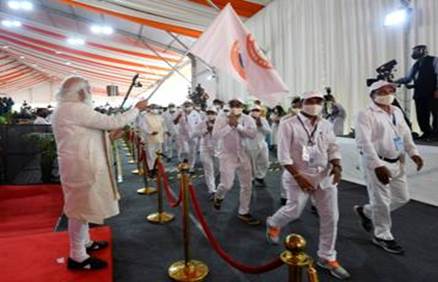
 

The Vice President, Sh M. Venkaiah Naidu graced the colourful closing ceremony of the 25-day long commemorative Dandi Padyatra as part of Azadi Ka Amrit Mahotsav near National Salt Satyagraha Memorial, Dandi, Gujarat on April 6, 2021. 
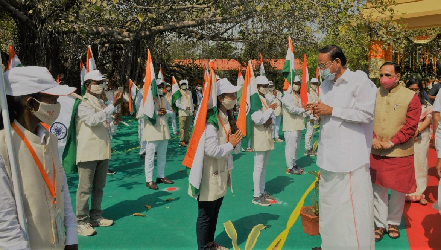
Commemoration of 125th Birth Anniversary Year of Netaji Subhas Chandra Bose launched on Parakram Diwas on January 23, 2021 from Kolkata

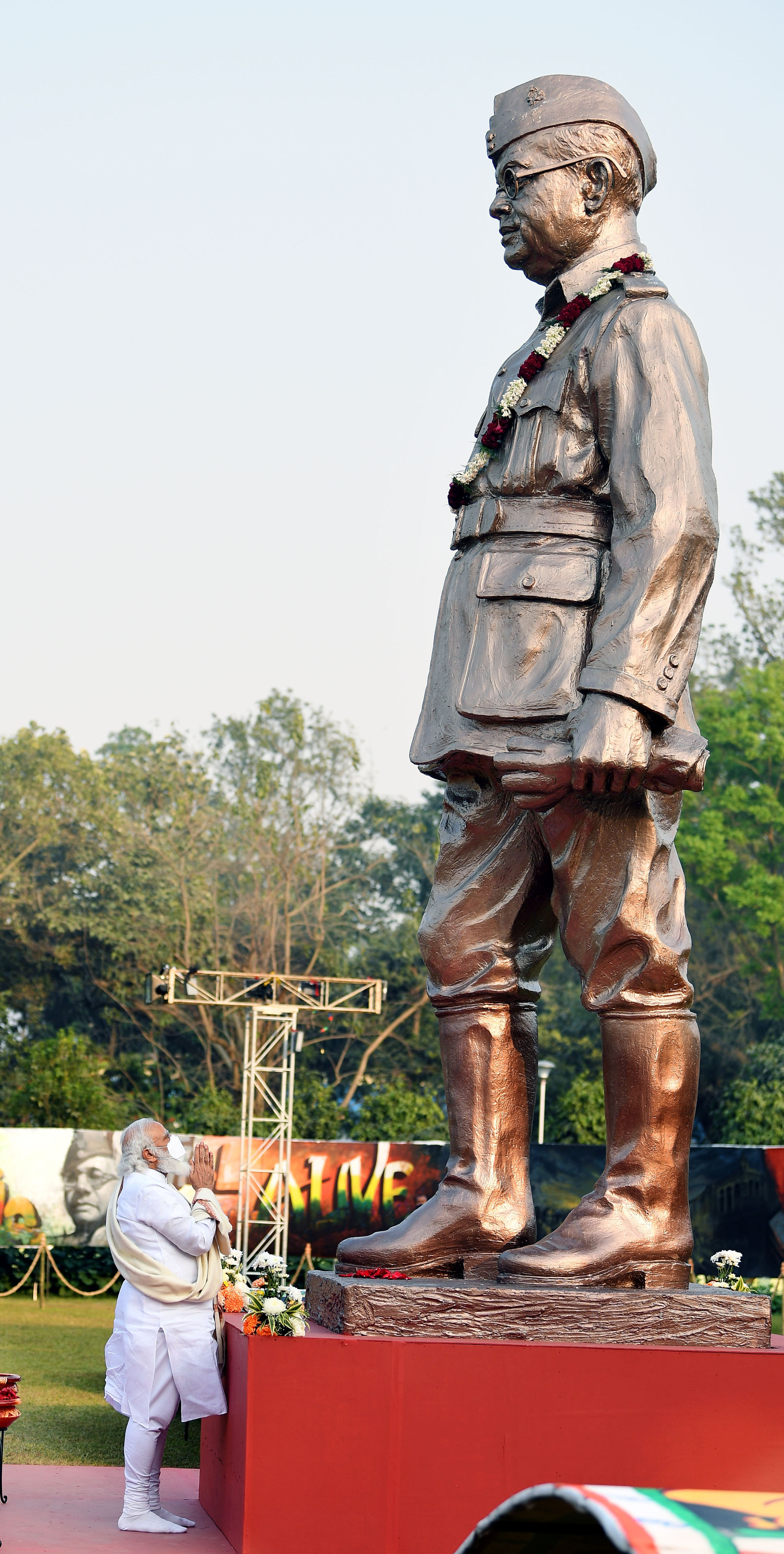
In one of the first major events of the year 2021, the Prime Minister, Shri Narendra Modi launched the commemoration of 125th Birth Anniversary Year of Netaji Subhas Chandra Bose in Kolkata on 23rd January, 2021. He presided over the inaugural function of the ‘Parakram Diwas’ celebrations at Victoria Memorial in Kolkata. 

 ‘Nirbhik Subhas’ (‘Irrepressible Subhas’)- ‘A multimedia exhibition’ celebrating the 125th Birth Anniversary of Netaji Subhas Chandra Bose- A Permanent Exhibition, a 3D Projection Mapping Show on Netaji, unveiling of book ‘Letters of Netaji” and Release of Commemorative Coin and release of Stamp in the memory of Netaji Subhash Chandra Bose, by the Prime Minister of India were some of the other highlights of the commemoration programme.
 

https://static.pib.gov.in/WriteReadData/Gallery/PhotoGallery/2021/Jan/H2021012495055.JPG

Several other programmes were also organised to mark the day including a special programme organised at Haripura at Surat in Gujarat. An exhibition by NGMA of Ministry of Culture  was organised comprising of the famous Haripura panels made by Nand Lal Bose for the Congress session at Haripura where Netaji was made the President. 

The South-Central Zone Cultural Centre, Nagpur under the Ministry of Culture organised a special cultural programme under Ek Bharat Shresth Bharat (EBSB) to commemorate the 125th Birth Anniversary Year of Netaji Subhas Chandra Bose. As part of the celebration, a play named “Bose” and different patriotic songs and dance programmes were performed by Nagpur-based social organisation, Prayas. Similarly, Odia artists have also performed folk songs and dances during the celebration. Odisha is paired state of Maharashtra under EBSB.

Rashtriya Sanskriti Mahotsav: Rashtriya Sanskriti Mahotsav, the flagship festival of Ministry of Culture organized since 2015 with the active participation of Seven Zonal Culture Centres has been playing a pivotal role to take the vibrant culture of India out to the masses instead of confining to auditoria and galleries. It has been instrumental in showcasing, folk and tribal art, dance, music, cuisines & culture of one state in other states reinforcing the cherished goal of “Ek Bharat Shreshtha Bharat” and at the same time providing an effective platform to the artists and artisans to support their livelihood. The eleventh edition of Rashtriya Sanskriti Mahotsav was being held between 14th to 28th February, 2021 in West Bengal at Cooch Behar (14th to 16th February, 2021), Darjeeling (22nd to 24th February, 2021) and Murshidabad (27th to 28thFebruary, 2021). 

Udaipur Science Centre inaugurated at Udaipur, Tripura.
It is the 22nd Science Centre developed by NCSM of M/o Culture under Scheme for Promotion of Culture of Science. 

e-Auction of gifts and mementos received by the Prime Minister, from 17th September to 7th October 2021: 
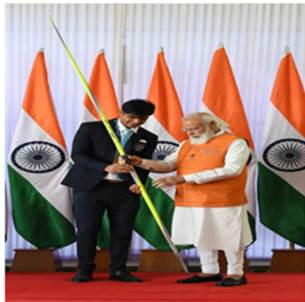
  

It was the third edition of auction of gifts and mementos received by Prime Minister. The memorabilia included sports gear and equipment of the medal winning Olympians and Paralympians, replica of the Ayodhya Ram Mandir, Chardham, Rudraksh Convention Centre, models, sculptures, paintings, angavastras among others. Proceeds from the e-Auction  go to the Namami Gange Mission aimed at conserving and rejuvenating the Ganga. 1348 mementos were put up for e-auction , Tokyo Olympics gold medallist Neeraj Chopra’s javelin received the highest bid of Rs 1.5 Cr.

Special programme for trainee officers at the two-day Geographical Indication (GI) Mahotsav organized at Lal Bahadur Shastri National Academy of Administration, MussoorieThis special programme for the trainee officers of LBSNAA was meant to be an overview into the world of artisans, design and GI products. The sessions covered topics ranging from legal implications of GI, artistic & design collaborations with GI crafts and more, and witnessed  participation from legal, academic and design luminaries.

Vesak Global Celebrations on Buddha Poornima organised which was addressed virtually by the Prime Minister on 26th May 2021. The Virtual Prayer Event saw the participation of heads of Buddhist Sanghas from around the world. Buddha Poornima celebrations were held through a virtual congregation owing to the impact of the COVID-19 Pandemic across the globe. This year the Buddha Poornima is dedicated to Global Peace and Relief from the Pandemic- Covid 19.

Ministry of Culture in partnership with International Buddhist Confederation also celebrated Asadha Poornima Dhamma Chakra Day through day long events on July 24, 2021. 

Abhidhamma Day at the Mahaparinirvana Temple in Kushinagar: A solemn ceremony was organised in the premises of the Mahaparinirvana Temple, Kushinagar, where a three-day Buddhist congregation was inaugurated by the Prime Minister along with exposition of Holy Buddha Relic from Shri Lanka. An exhibition of Buddhist glory excavated by ASI was also organised on the side-lines where Buddhist antiquities from excavation sites including Vadanagar was displayed. Besides this 110-member high level Sri Lankan delegation, the event was attended by a large number of prominent National and International Buddhist Sanghha, Ambassadors, Central and State officials etc.

Gandhi Peace Prize for 2019 and 2020: The Gandhi Peace Prize for 2019 has been conferred on Late Sultan Qaboos Bin Said Al Said of Oman; and Gandhi Peace Prize 2020 on Bangabandhu Late Shiekh Mujibur Rahman.  Gandhi Peace Prize for 2020 was awarded by Prime Minister of India to Late Bangabandhu Shiekh Mujibur Rahman (posthumously) in Dhaka on 26th March 2021.

Two Meetings of National Committee on Azadi ka Amrit Mahotsav chaired by Prime Minister held : The first meeting of National Committee was held on 8th March, 2021 in the run-up to the launch of the flagship programme and the second meeting was held on 22nd December 2021. In the first meeting, the Prime Minister highlighted the 5 pillars that have been decided for the celebration of the 75 years. These are Freedom Struggle, Ideas at 75, Achievements at 75, Actions at 75 and Resolve at 75. All these should include the ideas and feelings of the 130 crore Indians and the programme should be organised with Jan Bhagidari.

 At the second meeting, the Prime Minister presented  his vision for the commemoration and how India should lead in the Post Covid World Order. He also emphasised that as  we observe Azadi Ka Amrit Mahotsav, we should surge ahead with a focused approach setting new targets for ourselves for 2047. Azadi ka Amrit Mahotsav should sow the seed of a sense of duty among the youth, the Prime Minister urged.

Celebration of International Day of Yoga: The Union Culture Ministry celebrated ‘International Yoga Day’ on June 21, 2021 under the ‘Yoga is an Indian Heritage’ campaign. Demonstration of Common Yoga Protocol (CYP) at 75 heritage monuments across the country along with cultural performances was organsied. To celebrate the event, National Council of Science Museum (NCSM) also organised various online programme /activities at its various units.

Culture Ministry launches a unique programme to celebrate Azadi ka Amrit Mahotsav on Independence Day 2021: A unique initiative , connected with the National Anthem, was taken up by the Ministry of Culture for celebrating Independence Day this year to instill pride and unity among Indians all over the world. In this, the people were invited to sing the National anthem and upload the video on website www.RASHTRAGAAN.IN. More than 1.5 crore Indians from India and across the world  recorded and uploaded their videos.The compilation of National Anthem was shown  live on 15th August, 2021 during celebrations at Red Fort.

Renovated complex of Jallianwala Bagh Smarak at Amritsar dedicated to the nation: Prime Minister Shri Narendra Modi dedicated the renovated complex of Jallianwala Bagh Smarak at Amritsar to the nation through video conference. During the event, he also inaugurated the Museum Galleries at the Smarak. The event showcased the multiple development initiatives taken by the government to upgrade the complex. 

Nation pays homage to Shaheed Bhagat Singh, Rajguru and Sukhdev on Shahidi Diwas on March 23, 2021: Ministry of Culture organised various programmes at several places on ‘Shaheedi Diwas’ as a grateful nation proudly remembered the exceptional courage & martyrdom of Shaheed Bhagat Singh, Rajguru and Sukhdev. A joint Shraddhanjali Sabha was held in honor of Shaheed Bhagat Singh, Sukhdev and Rajguru at Shaheed E Azam Sardar Bhagat Singh Museum Khatkar Kalan, (Village of Shaheed Bhagat Singh), in Punjab, by Sangeet Natak Akademi. Homage was also paid to Shaheed Sukhdev at his ancestral house at Mohalla Naughra while a similar ceremony was held at the ancestral house of Shaheed Rajguru at Rajguru Wada, Rajguru Nagar, Pune.

Anniversary of the formation of Azad Hind Government by Netaji Subhas Chandra Bose celebrated, events held across India and South -east Asia: As part of Amrit Mahotsav celebrations, events were organized in the run up to and on 21st October in India and South East Asia to commemorate the Anniversary of the formation of Azad Hind Government by Netaji Subhas Chandra Bose. Bringing to life the whole of government approach, Ministry of Culture spearheaded the organization of an integrated program calendar across regions and geographies with participation from various Ministries, States and Union Territories of India and and in SSingapore.. The commemorative programs saw participation from INA veterans, school students, local communities and others making a true embodiment of the idea of Jan Bhagidari. 

In a unique initiative to celebrate Azadi ka Amrit Mahotsav, Union Culture Minister Sh. G.K Reddy launched the Amrit Mahotsav Podcast. The first series, Zara Yaad Karo Qurbani, went live with an episode based on the Indian National Army. 

Culture Ministry has launched three unique competitions to celebrate Azadi ka Amrit Mahotsav: Ministry of culture is holding a nationwide competition as #UnityInCreativity for Deshbhakti Geet writing, Lori Writing and Rangoli Making rightfrom Tehshil/Taluka level to National level. This initiative aims to encourage participation so as to ensure substantive ‘Jan bhagidaari’. 

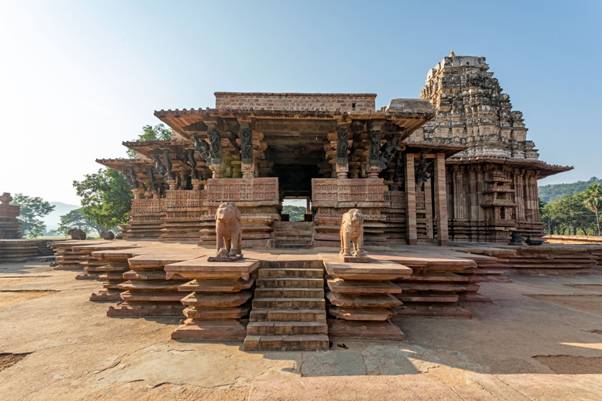
UNESCO World Heritage Tag :  (i) Kakatiya Rudreshwara (Ramappa) Temple, Telangana (2021) and (ii) Dholavira: A Harappan City (2021) under protection of Archaeological Survey of India (ASI) have been inscribed on World Heritage List in the 44th Extended World Heritage Meeting virtually held in Fuzhou, China taking the number of World Heritage properties in India from 38 to 40.
Image

Ramappa Temple 

Celebration of “Destination Northeast India” by the National Museum, New Delhi from 1st November, 2021 to 7th November 2021: As part of the celebrations of #AzadiKaAmritMahotsav to commemorate 75 years of progressive India and the glory of its people’s culture and achievements, the National Museum, New Delhi celebrated the rich heritage of North East India, under the Ministry of DoNER & NEC’s initiative titled #DestinatioNorthEastIndia. NM organised a week-long series of cultural performers, online lectures and tours of the Northeast Lifestyle Gallery to highlight the diverse artistic traditions and communities of the North-eastern states. 

PM lays foundation stones and dedicates to the Nation various development projects in Kedarnath on November 5, 2021. On the occasion, programmes were organized at Jyotirlingas & Jyotishpeeth including Char Dham across the country.
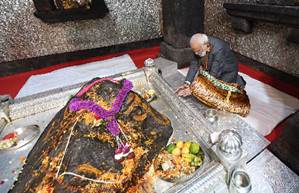
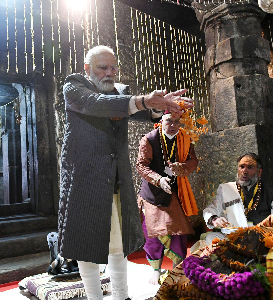
  

The Prime Minister, Shri Narendra Modi laid foundation stones and dedicated to the Nation various development projects in Kedarnath. He inaugurated Adi Shankaracharya Samadhi and unveiled the statue of Adi Shankaracharya. The Prime Minister also offered prayers at the Kedarnath Temple. Prayers were offered and celebrations held at 12 Jyotirlingas and 4 dhams. Programs were organized simultaneously at 11 Jyotirlingas , 4 Jyotishpeeth and Char Dhams(Badrinath, Dwarka, Puri and Rameshwaram) also. The programmes included the customary morning Aarti followed by Vedic chanting. Ministry of Culture organized cultural events at either premise of Jyotirlingas /Jyotishpeeth or nearby venue. Culture Minister Sh G. Kishan Reddy led the programme at Kalady, Kerala which is the birthplace of Adi Shankaracharya.

M/o Culture Shri G. Kishan Reddy formally hands over Idol of Goddess Annapurna to Uttar Pradesh Government in presence of several Union and State ministers.
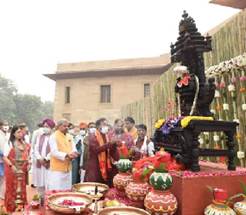
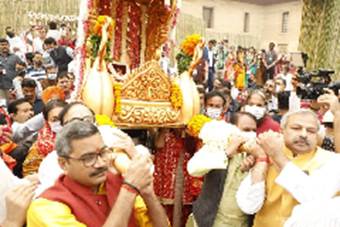


18th Century Idol of Goddess Annapurna retrieved from Canada, was handed over to UP Government on 11th November, 2021 and was placed at its rightful place at the Kashi Vishwanath Temple Varanasi, Uttar Pradesh on 15th November, 2021.

Retrieval of Antiquities by ASI : Antiquities Section of ASI has been constantly engaged in effective retrieval of antiquities from abroad. In the month of September, 2021, a team of experts from ASI went to the USA to examine a lot of 258 art objects, as per the communication received from CGI, New York. Out of this entire lot, 94 objects had been identified as “Antiquity” as per the Antiquities and Art Treasures Act, 1972. In 2019, a team of ASI had verified 63 objects as antiquities and now total 157 antiquities are ready for retrieval, presently in CGI, New York.


The Ministry of Culture holds ‘Vande Bharatam- Nritya Utsav’, an All-India dance competition as part of Azadi Ka Amrit Mahotsav.
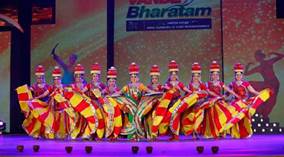
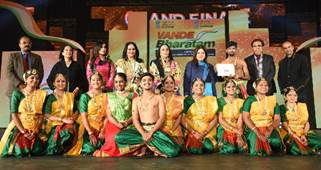


The objective of this competition was to select dancers who will perform during the cultural programme at the Republic Day Parade of 2022 at Rajpath, India Gate. Vande Bharatam final Competition was held in New Delhi on 19th December 2021. A total 36 teams won in the final round which will participate in the Republic Day Parade 2022

Ministry of Culture launches Azadi Ka Amrit Mahotsav mobile app: Minister of State for Culture and External Affairs, Smt. Meenakashi Lekhi launched the Azadi Ka Amrit Mahotsav mobile App to enable all single point access to all information related to the 75th anniversary celebrations of India’s independence. The app available in android and iOS has details of all the activities and events happening under the AKAM banner. It is a free for download app with no age restrictions

A three-day festival ‘Kashi Utsav’ organised in Varanasi from 16th -18th November as part of Azadi Ka Amrit Mahotsav to celebrate the classic heritage and culture of Kashi especially the centuries-old luminaries who are Goswami Tulsidas, Sant Kabir, Sant Raidas, Bhartendu Harishchandra, Munshi Premchand and Shri Jaishankar Prasad. The festival was based on the themes ‘Kashi ke Hastakshar’; ‘Kabir, Raidas ki Bani aur Nirgun Kashi’ and ‘Kavita aur Kahani – Kashi ki Zubani’.

Kala Kumbh Artist Workshops: The National Gallery of Modern Art, New Delhi has organised Kala Kumbh– artist workshops for painting scrolls representing the heroic lives and struggles of unsung heroes of India’s freedom movement, as an integral part of the Republic Day celebrations 2022 in collaboration with Ministry of Defence. The first workshop was organised from 10th – 17th December, 2021 at Bhubaneswar to creatively showcase the legacy of India’s freedom struggle and our national pride on five scrolls of seventy five meters. Similar workshops are being held in other parts of the country. 

India’s biggest drone show organised in Lucknow as part of Amrit Mahotsav series of events on First War of Independence of 1857. 
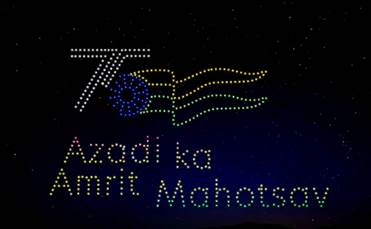
India’s biggest drone show was organised in Lucknow on December 20, 2021 as part of Amrit Mahotsav series of events on 1857.More than 500 drones took part in this show.

Prime Minister chairs the first meeting of High-Level Committee to commemorate 150th Birth Anniversary of Sri Aurobindo: The Committee comprises 53 members from various walks of life. The Prime Minister suggested that 150 universities across the country should be involved in writing papers on different aspects of Sri Aurobindo’s life and philosophy and the 150 papers to be published on the occasion.

National Archives of India (NAl) has appraised the 2,076 Records of Rehabilitation Division, Ministry of Home Affairs, New Delhi and 1498 files entries made in AIMS Package of Rehabilitation Division, M/o Home Affairs.

Exhibitions Under AKAM

Some of the important exhibitions organized as part of Amrit Mahotsav as are as follows:

Exhibition to mark the 79th anniversary of ‘Quit India Movement’ 

Culture Minister Shri G. Kishan Reddy inaugurated an exhibition to mark the 79th anniversary of the ‘Quit India Movement’ at National Archives of India in New Delhi on August 8, 2021.
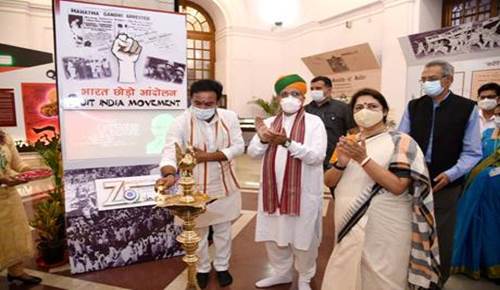
Culture Minister, Shri G. Kishan Reddy inaugurated an Exhibition Katha Kranthiveeron Ki, an exhibition of revolutionaries with a dedicated painting exhibition on Alluri Seetharamaraju and exhibits of paintings of Shaheedi Diwas, Champaran Satyagraha and Jallianwala Bagh at Lalit Kala Galleries, Rabindra Bhawan in New Delhi as part of ‘Azadi Ka Amrit Mahotsav’ being celebrated to commemorate 75 years of Independence.

Weeklong Exhibition ‘Bharatmata Ewam Bharat Ke Nayak’by Lalit Kala Akademi Inaugurated by MoS Culture, Smt Meenakashi Lekhi. The exhibition depicts portraits by eminent artist Sh. Pawan Verma “Shaheen”. The exhibition showcases portraits of stalwarts like Rabindranath Tagore, Sardar Vallabhbhai Patel, APJ Abdul Kalam and Prime Minister Shri Narendra Modi.

On the occasion of International Women’s Day on 8th March 2021, Salarjung Museum organized a Painting exhibition and also a special photo exhibition on 75th years of Independence on AZADI KA AMRUT MOHOTSAV.

MoS Culture, Shri Arjun Ram Meghwal inaugurated the exhibition “Azad Ki Shaurya Gatha” focused on the life of immortal martyr ‘Chandrasekhar Azad’ as part of “Azadi Ka Amrit Mahotsav” at Indira Gandhi National Center for the Arts (IGNCA), New Delhi.

Culture & International Cooperation

The Ministry participated in Culture Working Group virtual meeting of G20 countries hosted by Italy on 22nd – 23rd Feb,2021. 

Smt. Meenakashi Lekhi, Minister of State for Culture participated in the G20 Culture Ministers’ Meeting on 30 July, 2021 hosted by Italy during their ongoing Presidency of G20 in 2021.Discussion was held on Protection of Cultural Heritage; Addressing the Climate Crisis through Culture; Building Capacity through Training and Education; Digital Transition and New Technologies for Culture; and Culture and Creative Sectors as drivers for growth.

A meeting through Video Conferencing was held on 13th May, 2021 between Culture Minister of India and Culture Minister of Mongolia to discuss on promoting bilateral cultural and spiritual ties, and ways to implement Cultural Exchange Programme signed between the two countries.

MoS, Culture, Shri Arjun Ram Meghwal, participated in 18th SCO Culture Ministers’ Meeting through virtual mode on 18th August, 2021 hosted by the Tajikistan. In the meeting, the regulations of Gala Concert of the Arts Festival of SCO Member States and the Protocol of 18th Meeting of SCO Cultures Meeting was agreed upon and signed by all heads of delegations of SCO Members. In the meeting, the Draft Agreements on Cultural Cooperation in the field of Protection of Cultural Heritage and the Vocational Education in Culture and Arts were also finalized and are proposed to be signed at the meeting of the Council of Heads of States (CHS) of the SCO Countries, to be attended by Hon’ble Prime Minister. 

A Cultural Exchange programme between the Government of the Republic of India and the Government of the Republic of Serbia on Cooperation in the field of Culture and Arts was signed on 11th October, 2021.

******

Sri Aurobindo’s philosophy of ‘Revolution’ and ‘Evolution’

 The Prime Minister, Shri Narendra Modi  today chaired the first  meeting of the  High Level Committee (HLC) which has been constituted to commemorate 150th Birth Anniversary of Sri Aurobindo in a befitting manner. The  notification of HLC was issued on 20th December, 2021. The Committee comprises 53 members from various walks of life.

Secretary (Culture), Shri Govind Mohan, gave a presentation on the Road Map for the celebration of the Commemoration and sought the advise of the esteemed members for celebrating 150th Anniversary of Sri Aurobindo in a befitting manner. 

Speaking on the occasion, the  Prime Minister expressed his gratitude to the esteemed members for their valuable thoughts and suggestions on Sri Aurobindo’s Commemoration. The Prime Minister said that the two aspects of Sri Aurobindo’s philosophy of ‘Revolution’ and ‘Evolution’, are  of key importance and should be emphasized  as part of the commemoration. The youth should be encouraged towards the concept of greatness as embodied in the philosophy of  Nar to Narayan to create a MahaManav as propounded by Sri Aurobindo, he added. 

The Prime Minister  further added that it is the responsibility of India  as a spiritual leader of the world to contribute in terms of spiritualism to nations across the globe. He suggested that 150 universities across the country should be involved in writing papers on different aspects of Sri Aurobindo’s life and philosophy and the 150 papers to be published on the occasion. 

The Prime Minister proposed to launch the commemoration celebrations of Sri Aurobindo from Puducherry coinciding with the celebration of National Youth Day. This will encourage the youth to visit Puducherry and learn about his life and teachings, where Sri Aurobindo spent his life from 1910 to 1950. The Prime Minister fondly recalled his discussions and deliberations as Gujarat Chief Minister with Shri Kireet Joshi, who was a disciple of Sri Aurobindo. He said that these discussions enriched him with the thoughts of Sri Aurobindo, which were deeply reflected when he was working on preparing the National Education Policy.The  Prime Minister stated that the literature of Sri Kireet Joshi on Sri Aurobindo should be disseminated widely across the world. 

The Home Minister profusely thanked the participants for their valuable suggestions and time and closed the meeting.

Today’s meeting of HLC was held in a hybrid mode. 16 distinguished members were  present physically and 22 members participated through Video Conference (VC). The Home Minister Shri Amit Shah  welcomed the distinguished participants. Members gave their suggestions at the meeting. All the members expressed the opinion that the concept of integral education of Sri Aurobindo should be a part of the New Education Policy and should be included  in the curriculum at the college and university levels. 


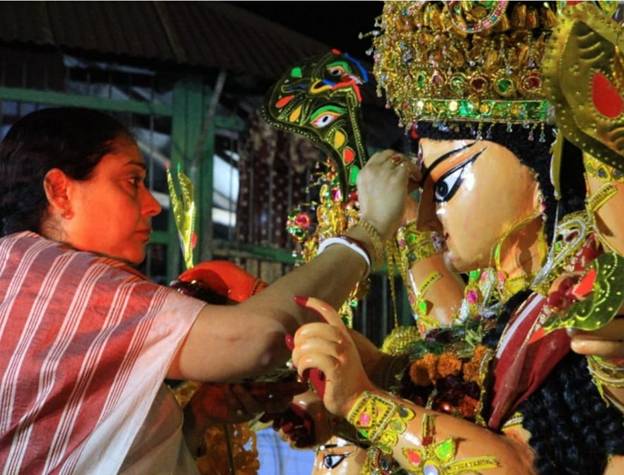
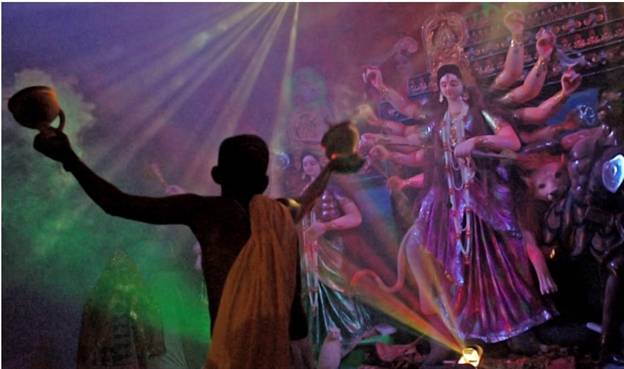
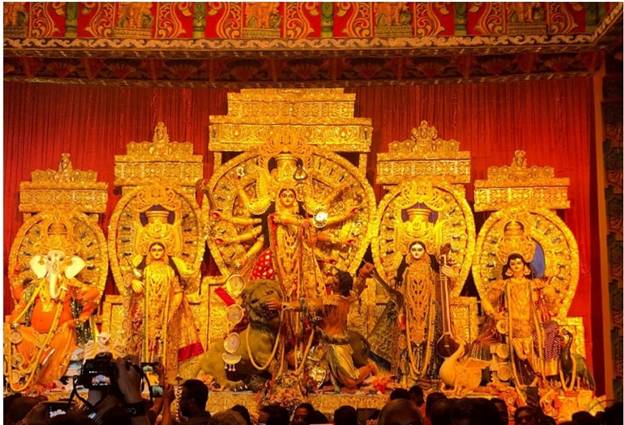
UNESCO inscribes ‘Durga Puja in Kolkata’ on the Representative List of Intangible Cultural Heritage of Humanity

 In an important announcement, the Intergovernmental Committee of UNESCO’s 2003 Convention on Safeguarding of the Intangible Cultural Heritage has inscribed ‘Durga Puja in Kolkata’ on the Representative List of Intangible Cultural Heritage of Humanity during its 16th session being held at Paris, France from 13th to 18th December 2021. The Committee commended Durga Puja for its initiatives to involve marginalized groups, and individuals as well as women in their participation in safeguarding the element.

The Union Minister for Culture, Tourism and DONER, in a tweet said that this is a recognition of the confluence of our rich heritage, culture, rituals and practices and a celebration of the feminine divinity and the spirit of womanhood.


Durga Puja not only is a celebration of the feminine divinity but is a consummate expression of dance, music, crafts, rituals, practices culinary and cultural aspects. The festival transcends the boundaries of caste, creed and economic classes and joins the people together in its celebration. 

With the inscription of Durga Puja in Kolkata, India now has 14 intangible cultural heritage elements on the prestigious UNESCO Representative List of ICH of Humanity. In recent years, the  ICH elements that saw inscriptions areKumbh Mela (inscribed 2017), Yoga (inscribed 2016) among others. India is a signatory of the 2003 UNESCO Convention which aims for the Safeguarding of the Intangible of theIntangible Heritage along with traditions and living expression.  Intangible cultural heritage means the practices, representations, expressions, knowledge, skills – as well as the instruments, objects, artifacts and cultural spaces associated with them that communities, groups and, in some cases, individuals recognize as a part of their cultural heritage. Furthermore, its importance is not in the cultural manifestation itself, but in the wealth of knowledge, know-how and skills that are transmitted from one generation to the next.


*****

Ministry of Culture help generate indirect employment for people associated with Indian Art, Literature and Culture

 The mandate of the Ministry of Culture is preservation & conservation of cultural heritage, protection, development & promotion of literature, music, dance, visual arts and drama. However, the activities carried out through various organizations under the Ministry generate indirect employment for a large number of people associated with Indian Art, Literature and Culture. There are several academic, fellowships, scholarships and training programmes organized by the autonomous bodies of the Ministry of Culture which help the artists to find an employment in their field of expertise. 

Centre for Cultural Resources and Training (CCRT), another autonomous organization under Ministry of Culture, is running a scholarship scheme called “Award of Scholarships to Young Artistes (SYA) in different cultural fields (18-25 Years)”.

Kalakshetra Foundation (autonomous body under the Ministry of Culture) has a unit named Rukmini Devi College of Fine Arts where training is imparted in the different classical art forms of South India like Bharatanatyam, Carnatic music and fine arts. This helps students to establish themselves in the respective fields. 

Lalit Kala Akademi provides scholarships to 40 young artists every year. All these academic programs help the youth to find employment in their area of interest. Government of India organizes several programs to promote women in the field of art, culture and literature. Women are engaged as writers, translators and resource persons in various events. 

The preservation of ancient and medieval literature of the country in Indian languages attracts the youth of the country. This is evident in the academic programs on ancient and medieval literature of Kalakshetra Foundation, wherein the youth are enrolled. 

Sahitya Akademi carries a number of programs for youth and confers several awards to promote literature, local dialects among the young generation. Some of the awards are: Sahitya Akademi Award, Yuva Puruskar, Bal Sahitya Puruskar, Translation Prize, and Bhasha Samman. Sahitya Akademi also runs programs titled, Yuva Sahiti & Avishkar, to encourage young writers writing in different Indian languages. The Akademi offers travel grants to young writers for traveling to other states to get acquainted with literary ambience of another language. These programs attract youth in large numbers.

40 ancient temples have been rediscovered, restored and beautified

 Prime Minister Shri Narendra Modi will visit Varanasi on 13-14 December. At around 1 PM on 13 December, Prime Minister will visit Shri Kashi Vishwanath Temple and offer prayers, after which he will inaugurate phase 1 of Shri Kashi Vishwanath Dham, constructed at a cost of around Rs 339 crores.

It was the vision of the Prime Minister for a long time, to facilitate the pilgrims and devotees of Baba Vishwanath, who had to encounter congested streets and surroundings with poor upkeep, when they practiced the age-old custom of taking dip in the holy river, collecting Gangajal and offering it at the temple. To realise this vision, Shri Kashi Vishwanath Dham was conceptualised as a project to create an easily accessible pathway to connect Shri Kashi Vishwanath Temple to the banks of the River Ganga. To kickstart the work for this pious endeavour, the foundation stone of the project was laid by the Prime Minister on 8th March 2019. 

Prime Minister took a keen and active interest at all stages of the project. Regular briefings, reviews and monitoring was done by the Prime Minister himself, and he constantly gave inputs and insights to improve the project and make it more accessible for pilgrims, including for the disabled. The  project was designed to provide easy access for the disabled and old age people with provision of ramps, escalators, and other modern facilities. 

A total of 23 buildings will be inaugurated in the phase 1 of the project. They will provide a variety of facilities to the pilgrims visiting Shri Kashi Vishwanath Temple, including  Yatri Suvidha Kendras, Tourist Facilitation Centre, Vedic Kendra, Mumukshu Bhavan, Bhogshala, City Museum, Viewing Gallery, Food Court, among others.

The project involved purchase and acquisitions of more than 300 properties around Shri Kashi Vishwanath Temple. Prime Minister’s vision to take everyone along was the principle based on which mutual negotiations were done for these acquisitions. In this endeavour, the rehabilitation of around 1400 shopkeepers, tenants and homeowners were done amicably. The testimony of the success is the fact that there is no litigation pending in any court of the country regarding acquisitions or rehabilitation related to the development of the project.  

Prime Minister’s vision was also to ensure that all heritage structures be preserved during the course of development of the project. This foresight came handy when, during the process of destruction of the old properties, more than 40 ancient temples were rediscovered. These temples have been restored and beautified, while ensuring that there is no change in the original structure. 

The scale of the project was such that the project is now spread over a massive area of about 5 lakh square feet,  whereas earlier premises was limited to just around 3000 square feet. Despite the Covid pandemic, the work on the project has been completed as per the planned schedule.

During the visit to Varanasi, the Prime Minister will also visit Kaal Bhairav Temple at around 12 noon and witness Ganga Aarti while on board a Ro-Ro Vessel at around 6 PM on 13 December. On 14 December, at around 3:30 PM, Prime Minister will attend the 98th anniversary celebrations of Sadguru Sadafaldeo Vihangam Yog Sansthan at Swarved Mahamandir in Varanasi. During the two-day visit, Prime Minister will also participate in a conclave of Chief Ministers of Assam, Arunachal Pradesh, Goa, Gujarat, Haryana, Himachal Pradesh, Karnataka, Madhya Pradesh, Manipur, Tripura, Uttar Pradesh and Uttarakhand, along with Deputy CMs from Bihar and Nagaland. The conclave will provide an opportunity to share governance related best practices and is in line with the Prime Minister’s vision of furthering team India spirit. 

***

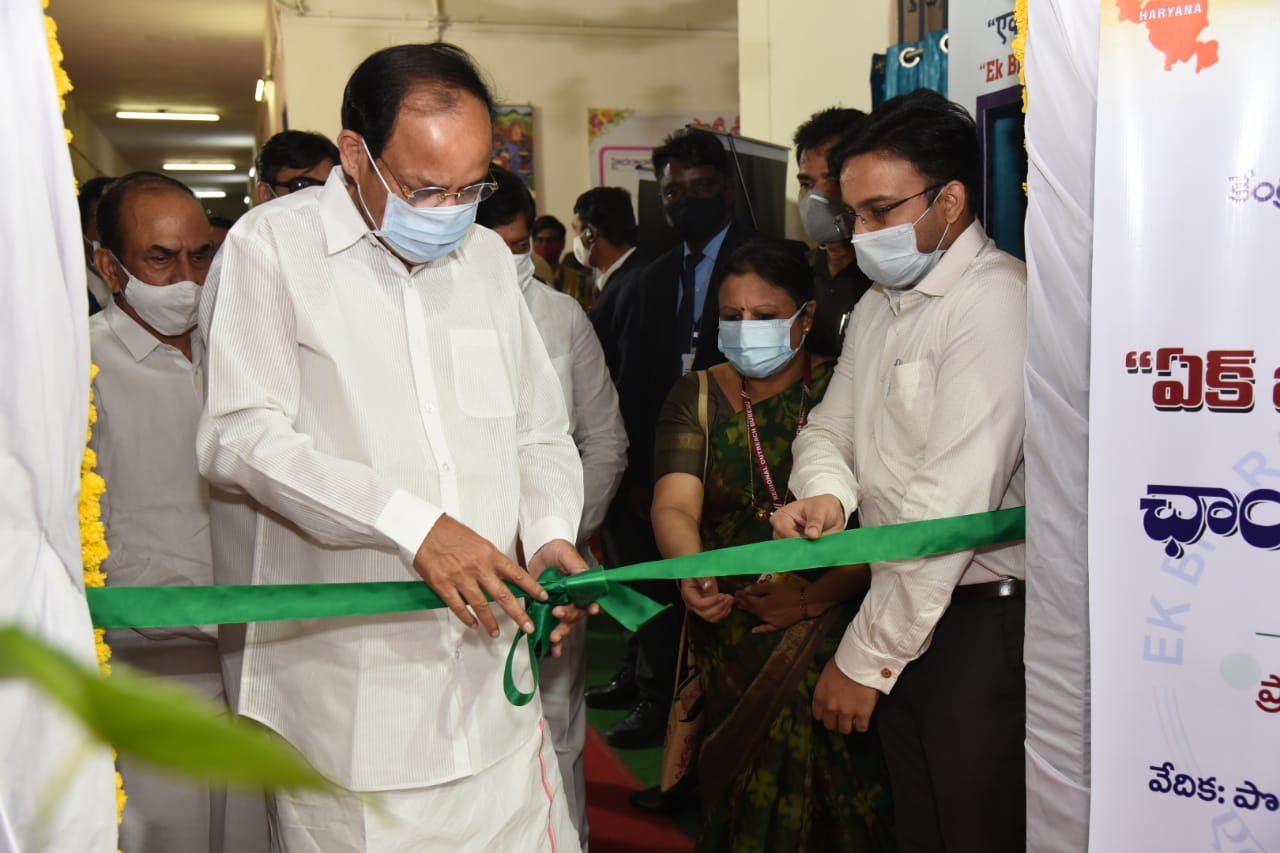
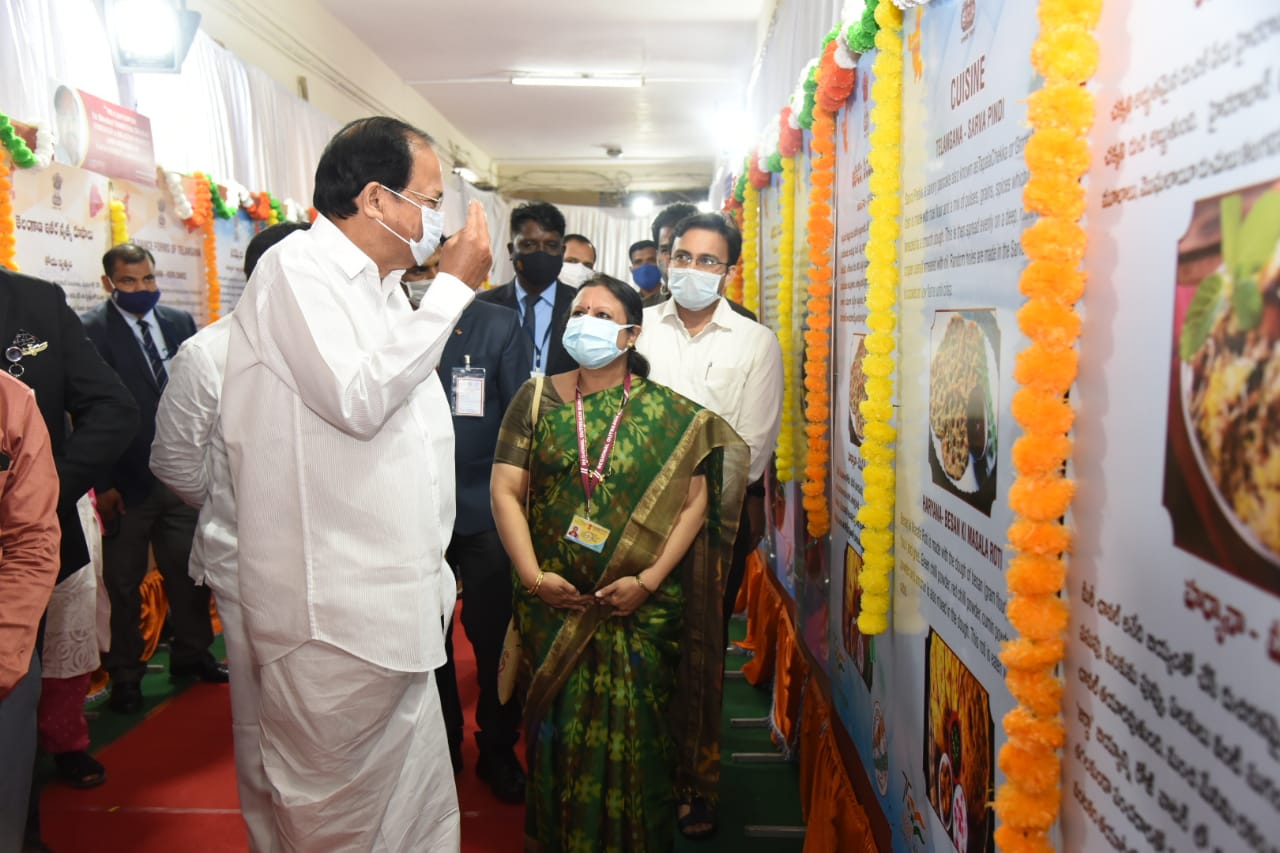
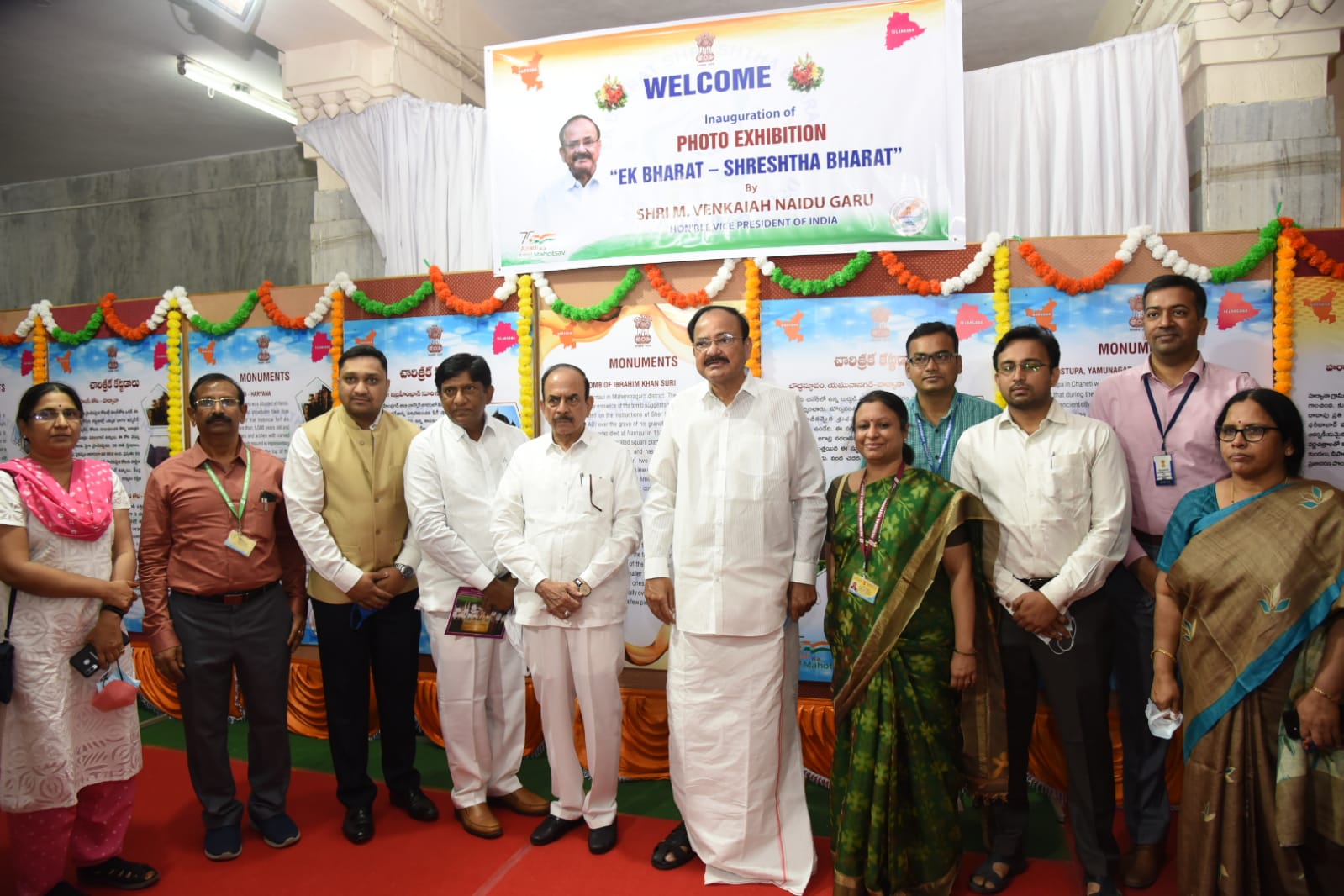
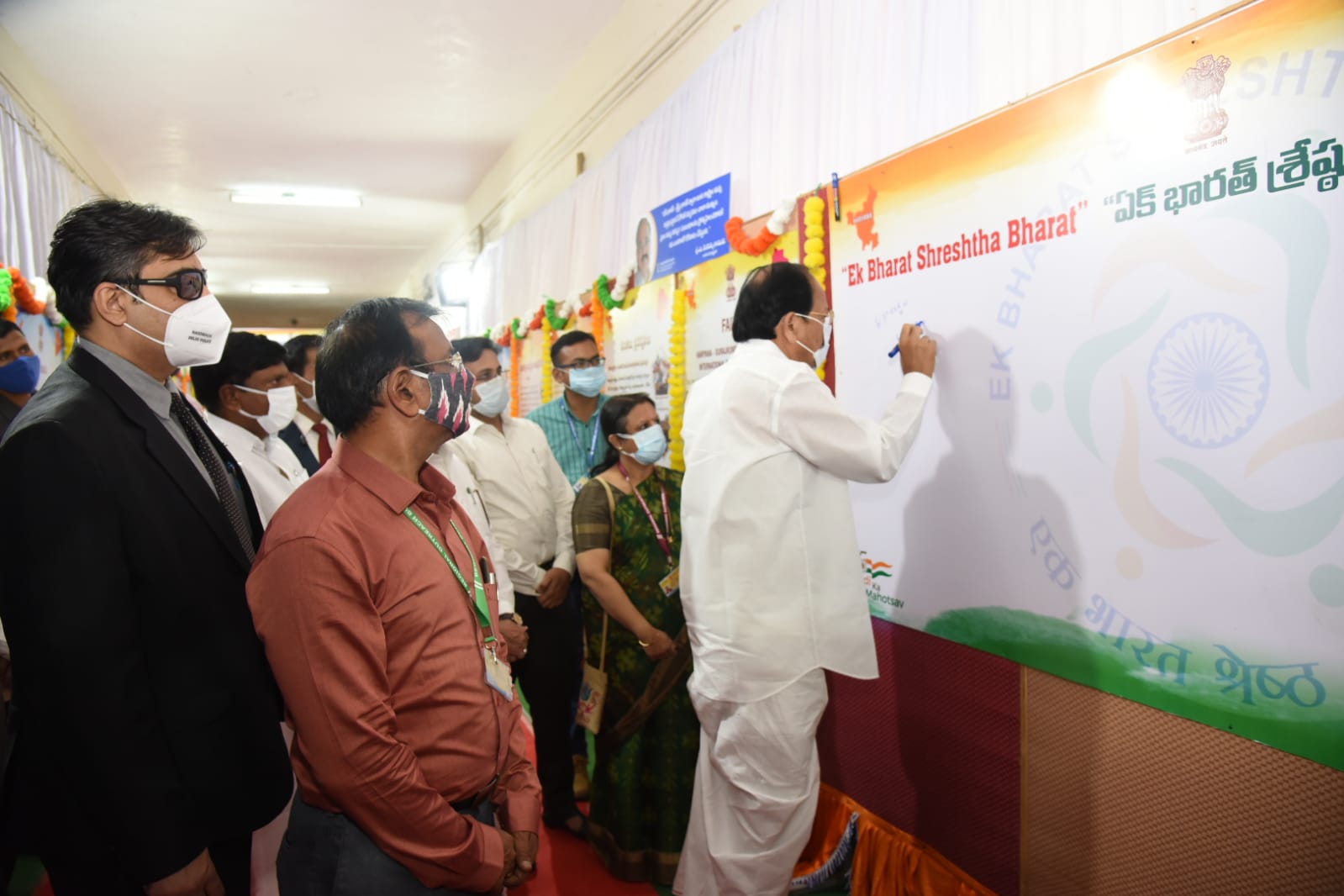
‘EK BHARAT SHRESHTHA BHARAT’ EXHIBITION; EXHORTS PEOPLE TO LEARN ABOUT ART AND CULTURE OF THE PAIRED STATES

 The Hon’ble Vice President Shri M. Venkaiah Naidu inaugurated an exhibition on ‘Ek Bharat Shreshtha Bharat’ (EBSB) at Potti Sreeramulu Telugu University in the city today. Organised by the Regional Outreach Bureau, Ministry of Information and Broadcasting, this exhibition highlights the various interesting aspects of the paired states of Haryana and Telangana like art forms, cuisine, festivals, monuments, tourism spots etc, The exhibition will be open for viewing from 12th to 14th December, 2021 at Potti Sreeramulu Telugu University Campus, Nampally, Hyderabad. Noteworthy books brought out on the themes of art and culture have been  put up on display by the Publications Division at the exhibition.

Sharing his thoughts on the occasion, Shri Naidu said that such initiatives will go a long way in propagating the rich cultural heritage of the paired states and promoting people-to-people contacts. He complimented the Ministry of Information & Broadcasting for this initiative that brings people from the both States together and creates awareness about our rich & diverse cultural heritage.

Telangana State Home Minister, Shri Mohammed Mahmood Ali, Vice Chairman, Telangana State Planning Board, Shri B. Vinod Kumar, attended the event. The senior officers of Ministry of I&B from ROB, PIB, DPD and AIR were present on the occasion.

The Ek Bharat Shreshtha Bharat programme is a unique initiative by the Government to promote the spirit of national integration and to strengthen the fabric of emotional bonds between the people of our country. The Ek Bharat Shreshtha Bharat (EBSB) programme was launched by the Hon’ble Prime Minister on 31st October, 2015 on the occasion of the 140th birth anniversary of Sardar Vallabhbhai Patel, who played a significant part in the unification of the country post-independence.

*****

KALA KUMBH ARTIST WORKSHOP ORGANISED BY NATIONAL GALLERY OF MODERN ARTS

 The National Gallery of Modern Art, New Delhi is celebrating  Azadi ka Amrit Mahotsav with Kala Kumbh– artist workshops for painting scrolls representing the heroic lives and struggles of unsung heroes of India’s freedom movement, as an integral part of the Republic Day celebrations 2022 in collaboration with Ministry of Defense.  The workshop is being organised  from 10th – 17th December, 2021 at Bhubaneswar to creatively showcase the legacy of India’s freedom struggle and our national pride on five scrolls of seventy five meters. Similar workshops will also be held in other parts of the country. 


Kala Kumbh workshop intends to showcase our rich cultural heritage of indigenous and contemporary visual art practices, focusing on diverse geographical locations of India. Inspiration will also be drawn from the creative illustrations in the Constitution of India wherein the artistic elements painted by Nandalal Bose and his team have imparted a distinctive appeal. It will be an embodiment of progressive aspects of India’s socio-cultural, political and economic identity, represented on the scrolls as per the artistic vision of Sri Adwait Garanayak, Director General, NGMA.  


As the entire program focuses on a collaborative effort, the National Gallery of Modern Art, New Delhi has joined hands with Kalinga Institute of Industrial Technology and Silicon Institute of Technology in Bhubaneswar for this artists’ workshop. The narratives would reflect the tales of valor from Odisha, Bihar, Jharkhand, Chhattisgarh, Bengal, North Eastern parts of India and Andhra Pradesh with artistic expressions reflecting the indigenous forms of art such as Pattachitra, Talapatra chitra, Manjusa, Madhubani and Jadupatua to name a few. As NGMA, New Delhi takes these workshops to other parts of the country, many other forms of indigenous art will be woven into the stories of the unsung heroes of India’s freedom movement as a befitting artistic tribute to their struggles.   

Central Council for Research in Ayurvedic Sciences launches eOffice

 The Central Council for Research in Ayurvedic Sciences (CCRAS), the largest Research Council under the Ministry of Ayush, Government of India has initiated the use of eOffice for its official purposes. The Council in its quest for becoming a paperless organisation, has launched the application developed by National Informatics Centre (NIC), Ministry of Electronics and Information Technology on 3rd January, 2022.

In the presence of higher officials and staff of the Council, Dr. N. Srikanth, Director General, CCRAS processed an e-file through the application to formally launch the platform for the Council. While addressing the gathering on the occasion, the Director General emphasized the need and advantages of using electronic platforms for office work. He also urged the officers and staff to utilize the application to its full potential as it aids all spheres of office procedures. He also informed that the Council has already been taking many IT based initiatives including the NAMASTE Portal, Ayush Research Portal and many other for the welfare and use of Ayush stakeholders. 

The eOffice platform is a digital workplace solution comprising a suite of products and features that support efficient and transparent governance by streamlining all workflow and making all procedures paperless. While appraising the Director General, CCRAS and gathering of officials and staff about the development, Dr. Radhe Krishan, In Charge, IT Cell at CCRAS mentioned that the Council has implemented and initiated the use of eOffice for employees and staff. He also informed that with the integrated software SPARROW (Smart Performance Appraisal Report Recording Online Window), the concerned officials will be able to process their annual performance reports online. 

**********

PM Modi To Inaugurate Projects Worth Over ₹ 42,750 Crore In Punjab Today

PM Modi In Punjab: PM Modi will inaugurate the Delhi-Amritsar-Katra Expressway; four laning of Amritsar – Una section; Mukerian – Talwara New Broad Gauge railway line; PGI Satellite Centre at Ferozepur and two new medical colleges at Kapurthala and Hoshiarpur,

New Delhi: 

Prime Minister Narendra Modi will visit Ferozepur in Punjab today to lay the foundation stone of multiple development projects worth more than ₹ 42,750 crore.

These projects include the Delhi-Amritsar-Katra Expressway; four laning of Amritsar – Una section; Mukerian – Talwara New Broad Gauge railway line; PGI Satellite Centre at Ferozepur and two new medical colleges at Kapurthala and Hoshiarpur, according to Prime Minister’s Office (PMO).

The consistent endeavour of the Prime Minister to improve connectivity all across the country has led to multiple national highway development initiatives being taken up in the state of Punjab. It has resulted in more than doubling the total length of National Highways in the state from about 1700 kilometres in 2014 to more than 4100 kilometres in 2021, said the PMO.

In continuation of such efforts, the foundation stone of two major road corridors will be laid in Punjab. This will also be a step towards fulfilling the Prime Minister’s vision to enhance accessibility to major religious centres, it added.

As per the PMO, the 669-kilometre long Delhi-Amritsar-Katra Expressway will be developed at a total cost of about ₹ 39,500 crore. It will halve travel time from Delhi to Amritsar and Delhi to Katra.

The Greenfield Expressway will connect key Sikh religious sites at Sultanpur Lodhi, Goindwal Sahib, Khadoor Sahib, Tarn Taran and the holy Hindu shrine of Vaishno Devi in Katra. The expressway will also connect key economic centres like Ambala Chandigarh, Mohali, Sangrur, Patiala, Ludhiana, Jalandhar, Kapurthala, Kathua and Samba in the three states/UTs of Haryana, Chandigarh, Punjab and Jammu and Kashmir.

The four-laning of the Amritsar – Una section will be done at the cost of around 1700 crore. The 77-kilometre long section is part of the larger Amritsar to Bhota corridor spanning across the longitudinal expanse of Northern Punjab and Himachal Pradesh, connecting four major national highways, namely Amritsar-Bhatinda-Jamnagar Economic Corridor, Delhi-Amritsar-Katra Expressway, North-South Corridor and Kangra-Hamirpur-Bilaspur-Shimla Corridor, stated the PMO.

It will help in improving the connectivity of religious sites at Ghoman, Shri Hargobindpur and Pulpukta Town (home to the famous Gurudwara Pulpukta Sahib), added the PMO.