Importance Of Effective Communication Skills

Contemporary World
People feel generally competent and confident when discussing matters of communication. Some perceive communication as one of the fundamental differences between human and other animal species, and as the very element that led to human change, development, adaptation, and domination. But to try and define such a broad term is a difficult task – one that many scholars have undertaken. The essence of communication though can be expressed in simple words: communication is the transfer of thoughts, feelings, ideas, and opinions from one person to another (or to a group of others) through specific channels.

The Virtual Scenario
Virtual communication clearly has many advantages including increased productivity, reduced business costs and a better work/life balance of the workforce. However, virtual communication also entails numerous challenges and obstacles which are often neglected in light of the benefits.

When communication is effective, it leaves all parties involved satisfied and feeling accomplished. By delivering messages clearly, there is no room for misunderstanding or alteration of messages, which decreases the potential for conflict. In situations where conflict does arise, effective communication is a key factor to ensure that the situation is resolved in a respectful manner. How one communicates can be a make or break factor in securing a job, maintaining a healthy relationship, and healthy self-expression.

In contemporary virtual scenario, effective communication fosters trust with others. Your ability to listen attentively and embrace different points of view helps others trust that you are making optimal decisions for everyone in the group. The ability to communicate effectively plays a large role in resolving conflicts and preventing potential ones from arising. The key is to remain calm, make sure all parties are heard and find a solution that is ideal for everyone involved. With people feeling more confident in their work and in their understanding of what they need to do, they become more engaged with their work as a whole. To cite a day-to-day example, video-conference with clients on another continent or even replying to a flood of emails for that matter, can be two of the very prominent instances, one may come across quite frequently.


A video-conference with clients on another continent, can be best accomplished only with one’s spontaneous communication skills, virtually. It is definitely not as easy as it may seem in an authentic face-to-face scenario.

The same holds true for online classes as well. Communicating with teachers, and students, virtually, isn’t as fun as it used to be in the past in a non-virtual scenario. To make situations like these more welcoming. One must have good communication skills and must know the right way to make use of it too. Being able to communicate effectively is one of the most important life skills to learn.

Realism

Realism has been the most important approach of international relations over the years. It has been the dominant way of explaining international behaviour. Realism emphasizes relations among nations, as they have been and as they are. It is not concerned with the ideal world. It is the international interpretation of human behaviour. Individuals are essentially selfish, and they seek power to serve their interests and to prevail over others. As Morgenthau wrote in the 20th century, power is the control of men over the minds and actions of other men. And, there is constant strife leading to conflicts and clashes between individuals having divergent interests and seeking to acquire power. Thus, there is an ever-present struggle for power in the society. The same is the tone of nations that are guided by the same considerations as individuals.

Political Realism
Realism, or political realism, as an approach of international relations has evolved over the centuries. Prominent among its earlier advocates were Indian scholar Kautilya, Chinese strategist Sun Tzu, and Greek scholar Thucydides. Much later, Italian scholar Nicolo Machiavelli and English philosopher Thomas Hobbes also contributed to the evolution of realism. Their ideas may be called classical realism, though Morgenthau is now considered the principal classical realist. However, according to the view expressed by Robert Jackson and George Sorensen (1999) and many others, Morgenthau’s theory may be described as neo-classical realism. But, Morgenthau was the most systematic advocate of realism. However, British Professor E.H. Carr, who wrote The Twenty Years’ Crisis (1919-39) had prepared the ground on which Morgenthau developed his theory of realism.

Carr criticized democracies like the UK and France for their failure in defeating the designs of dictators. He blamed the democratic countries for failing to recognize the power realities in the world. Carr divided the scholars of international relations into two groups. These were ‘utopians’, or ‘idealists’, and the ‘realists’. He described the utopians as optimists- children of enlightenment and liberalism. The liberals held the view that reason and morality could structure international behaviour of the states towards peace. Wilson and (his) League of Nations were cited as main examples of utopians. Carr, who himself was a a realist, described realists as pessimists, or children of darkness, who emphasize power and national interest. Commenting on Carr’s views on power, Michael G Roskin and Nicholas O Berry wrote, ‘This does not necessarily mean perpetual war, for if statesmen are clever and willing to build and apply power, both economic and military, they can make the aggressors back down…’

Political realism is a significant theory in the field of international relations that seeks to explain state behavior under a set of specific and rigid assumptions. At its core, political realism is guided by three S’s: statism, survival, and self-help.

Statism asserts that states are the only entity on the international stage that matter and that they are unitary (acting alone) and rational (acting in its best interests) actors. Survival identifies the state’s primary goal is to survive in an international system characterized by anarchy. The final S, self-help, conveys the assumption that states cannot trust others in their pursuit of survival and must secure their security.

Political realism is further delineated into sub-theoretical frameworks, including:

Classical realism
Liberal realism
Neorealism
Neoclassical realism
While each sub-framework has its own nuance within the broader political realist theory, all forms of political realism fundamentally believe world politics is a field of conflict among states pursuing power.

Structural Realism
Structural realism, also referred to as neorealism in the academic community, is a major branch of political realism derived from classical realism. While the latter incorporates analysis of human behavior within state decision-making, structural realism focuses predominantly on the anarchic structure of the international system. In other words, structural realists see global conflict as inevitable because there is no supranational body that could prevent or mediate conflict between individual states. Therefore, structural realists assume that states must always be preparing for conflict because war could break out at any time.

Structural realists believe that understanding the international system is guided by the three S’s of political realism. However, they do incorporate analysis of inter-relationships between distinct state entities, particularly regarding power relationships. A key concept in structural realism is polarity, the balance of power within the international system. Today, international theorists often describe the world as unipolar, with the United States acting as the sole superpower endowed with the ability to dominate international relations via their economic, political, and military supremacy.

What Is a Shakespearean Tragedy?

A Shakespearean tragedy is a play penned by Shakespeare himself or a play written in the style of Shakespeare by a different author. Shakespearean tragedy has got its own specific features, which distinguish it from other kinds of tragedies. Traditionally Shakespeare play types are categorized as Comedy, History, and Tragedy, with some additional play categories proposed over the years. The plays grouped as Shakespeare tragedies follow the Aristotelian model of a noble, flawed protagonist who makes a mistake and suffers a fall from his position before the normal order is somehow resumed. It must be kept in mind that Shakespeare is mostly indebted to Aristotle’s theory of tragedy in his works.

Aristotle’s Theory of Tragedy
A tragedy is the imitation of an action that is serious and also, as having magnitude, complete in itself; in appropriate and pleasurable language; in a dramatic rather than narrative form; with incidents arousing pity and fear, wherewith to accomplish a catharsis of these emotions.”
— Aristotle

What Is a Tragedy?

A tragedy is a play which when adequately acted before an audience can produce a complete cleansing of the emotions. To effect such a catharsis the dramatist much move the audience; he must have a capacity to feel the patho of human suffering, a strong moral sense, and great craftsmanship. The word tragedy was derived from the Greek word tragoidia, which means ‘the song of the goat.’ It is called “the song of the goat” because in ancient Greece the theater performers used to wear goatskin costumes to represent satyrs. Today in theater and literature a tragedy is a work that has an unhappy ending. The ending must include the main character’s downfall.

List of Shakespeare Tragedy Plays

Shakespeare wrote eleven tragedies beginning with ‘Titus Andronicus’. They include the four great tragedies ‘Hamlet’, ‘Othello’, ‘Macbeth’ and ‘king Lear’, the two great Roman tragedies ‘Julius Caesar’, and ‘Antony Cleopatra’ and the lyrical tragedy ‘Romeo and Juliet’.

The Origin of Shakespearean Tragedy

One of the main features of Renaissance art is that it was inspired by classical art and philosophy. This is evident in the work of such artists as Michelangelo who, caught up in the spirit of Humanism that was sweeping across Europe, focused on the human form. Focusing on the human form during Mediaeval times would have been impossible as it would have been a distraction from the necessary focus on God.

The essence of Humanistic art was that human beings were created in God’s image so it was possible for Michelangelo even to portray God – as a beautiful and physically powerful man with realistic human features, presented as perfection – in fact, the human form at its most beautiful. Artists became anatomists, going as far as buying human bodies for dissection. The result was a new realism in the representation of human beings in art.

Shakespeare is, in a way, the Michelangelo of literature. That he could, in one play, Othello, written four hundred years ago, represent what we can recognize as a modern psychopath and a modern alcoholic, in Iago and Cassio respectively, is incredible. Iago is a fully realized psychological character just as David is a fully realized man physically.

Greek drama was an important model for Renaissance drama after the flat, unrealistic morality plays of the medieval centuries. The Greek philosopher, Aristotle, defined tragedy and asserted that it was the noblest and most serious, dignified, and important form of drama. Many of the plays of the Renaissance resembled those Greek tragedies. In several of Shakespeare’s plays, there is a central protagonist who undergoes a harrowing experience as he is brought down from his lofty height, ending up dead.

There is also a special feeling created in an observer of those Shakespeare dramas, similar to the feeling described by Aristotle as the effect of tragedy on an observer. Critics thus thought of those Shakespeare plays as tragedies and that notion has remained with us to this day, although many of those interested in Shakespeare are now thinking differently about the plays from this ‘Shakespearean tragedy’ label. There are still teachers, though, who teach the ‘tragedies’ as though they were Aristotelian tragedies and miss a great deal of what those plays are doing.

EXAMPLES OF SHAKESPEARE’S TRAGIC CHARACTERS

Using the term ‘Shakespeare tragedy’ about any of Shakespeare’s plays invites attempts to fit them to the Aristotelian pattern but none of them fits exactly. Othello seems to conform to the pattern but when one thinks about it, Othello, superficially resembling a tragic hero, doesn’t even seem to be the main character in the play. It can be seen as a modern psychological drama about a psychopath who manipulates every one around him just for fun – just because he has nothing better to do – and destroying other human beings gives him pleasure or is necessary because they get in his way.
Othello may seem to have a fatal flaw – too trusting, gullible – but so do all the other characters, because Iago has deceived them all with his psychopathic charm and a deliberate effort of making himself appear trustworthy. Every misjudgment Othello makes is the hard work of Iago. Easily manipulated? Jealous? Does he have all those ‘tragic flaws’ as well? The feeling at the end is not quite Aristotle either. Perhaps it is more of disgust for Iago than pity for Othello, who comes across as more stupid than tragic. And to make things more complicated, our feeling of pity is directed more to, Desdemona. And yet some teachers miss the meaning of this play by their insistence on teaching it as an Aristotelian tragedy.
Antony and Cleopatra are sometimes called a ‘double tragedy’. While Othello appears to fit the Aristotelian pattern because of the huge charisma of Othello at the beginning of the play Antony and Cleopatra cannot fit it in any shape or form. In tragedy, the focus is on the mind and inner struggle of the protagonist. The emotional information comes to the audience from that source. In comedy the information comes from a variety of sources and the comic effect is produced by a display of many different points of view, coming at the audience from different angles. That is exactly what happens in Antony and Cleopatra, so we have something very different from a Greek tragedy. What we have is a miracle – a tragic feeling coming out of a comic structure.
So what is Shakespearean tragedy? Perhaps there is no such thing. And yet we can identify tragic moments, feelings, and even a cathartic effect in some of the plays. We must be very careful not to insist on fitting them to any pattern because that wouldn’t help us understand the plays. We must look elsewhere for our understanding of them. Moreover, all of Shakespeare’s plays have elements of both tragedy and comedy, sometimes very finely balanced, creating effects that Aristotle could never have dreamt of.

Entire spectrum of oxygen infrastructure including PSA Plants, Oxygen Concentrators and Oxygen Cylinders,Ventilators

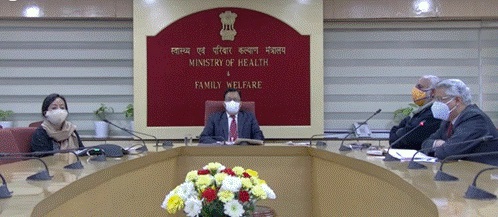
 Shri Rajesh Bhushan, Union Health Secretary chaired a high-level meeting today to review preparednessstatus of the entire spectrum of oxygen equipment including ventilators, PSA/Oxygen plants, oxygen concentrators and oxygen cylindersfor timely and effective management of the COVID19 pandemic,with States and UTs through a Video Conference today.

Underlining the challenge posed by increasing number of COVID cases across the country, with focus on Omicron, Union Health Secretary emphasized that it is the primary and critical responsibility of States and UTs to ensure all oxygen equipment, till the field level at all health facilities is tested and kept in a functional state to meet any emergent situation.

States/UTs were urged to ensure full and optimal utilization of ECRP-II funds, through daily reviews, and to upload the expenditure on the dedicated NHM PMS portal so that they are eligible for release of further funds in order to strengthen the healthcare facilities till the sub-district levels. Under ECRP-II, funds are also made available for installing Liquid Medical Oxygen [LMO] tanks and Medical Gas Pipeline Systems [MGPS]. States are required to make them operational and secure approval from Petroleum and Explosives Safety Organization [PESO] in respect of LMO tanks.

Union Health Secretary also urged the concerned States to commission PSA plants being set up under state’s own funds and CSR funds on a war-footing through daily reviews. States were requestedto also ensure that mock drill of the PSA plants are carried out to ensure that oxygen flow at the patient bedside adheres to adequate purity, recommended outlet pressure with no leakages. In addition, flowmeters must be tested and remain in functional state. States were exhorted to also monitor installation of PSA plants in private hospital facilities and Medical College Hospitals.

Union Health Secretary emphasized that States need to ensure that the delivered ventilators are quickly installed and commissioned at the designated field health facilities. They were urged to address the large gaps that continue to exist between delivered and installed ventilators, provide consignee details of hospitals for requirement of additional ventilators and expedite the issuing of Final Acceptance Certificates for installed ventilators. States/UTs were further reminded to expedite finalizing maintenance contracts with manufacturers. States/UTs were also advised to lodge any complaint related to ventilators in the online Complaint Management System which was launched on 30 August 2021.

It was pointed out that the Union Health Ministry has started the National Oxygen Stewardship Program from 22ndDecember 2021. States need to ensure that Technical Training of the operators is completed across the country.  More than 1600 candidates joined the said training programme covering 738 districts. An online PSA training program is also being carried out by Directorate General of Training [DGT] through 24 regional centres across the country.So far, 4690 candidates have been trained under the 180-hour training program, while 6,825 candidates have received their training under the 10-hour training program.

States to also maintain a state of alertness to ensure adequate buffer stock of drugs.They were urged to update buffer stock details with Government hospitals as well as with Medical Colleges on the Drugs and Vaccine Distribution Management System [DVDMS] portal. States/UTs which have not frozen their buffer requirement of drugs on DVDMS portal were urged to timely update them along with the details of stocks available and purchase orders placed.

Purvanchal region emerges as new hub for India’s Agri-export

 Working in close collaboration with the Ministry of Commerce & Industry, the Agricultural and Processed Food Products Export Development Authority (APEDA) has taken several initiatives in making landlocked Purvanchal region as a new destination of agri-export activities through development of Varanasi Agri – Export Hub (VAEH).

APEDA has identified potential districts of Uttar Pradesh to be covered under the VAEH. The Purvanchal division covers districts of Varanasi, Mirzapur, Azamgarh, Prayagraj, Gorakhpur, Basti, Ghazipur, Jaunpur, Chandauli and Sant Ravidas Nagar.

The Varanasi region, where there are negligible agri-exports used to take place because of lack of basic infrastructure, is now abuzz with activities which has given a boost to exports. After the intervention of APEDA, Varanasi region has recorded exemplary changes in the export scenario and registered many first-of-its-kind achievements in a very short span of time.

With the active intervention of APEDA, about 20,000 Metric Tonne (MT) of agri- produce have been exported from Purvanchal region in the last six months. Out of these shipments, about 5,000 MT fresh fruits and vegetables and 15,000 MT of cereals have been exported to Vietnam, Gulf nations, Nepal and Bangladesh by all modes of transportation.

Varanasi and nearby areas witnessed an export of around 12 MT, 22 MT and 45 MT in the months of October, November, December respectively in the year 2021. Also, around 125 MT have been exported from Varanasi and nearby areas.

As Varanasi is a territory based in the plains of river Ganges, it has rich nutritional composition of soil with ample amount of fertility which leads to production of good quality agri-produce. Varanasi region also has reputed institutions of central and international level such as Indian Institute of Vegetable Research (IIVR), International Rice Research Institute (IRRI), Banaras Hindu University (BHU).

Currently, the Varanasi region has a number of exporters and exports of agricultural products is being undertaken through air route due to establishment of robust quarantine as well as custom clearance facilitation centre at Lal Bahadur Shastri International (LBSI) Airport. APEDA has organised more than 30 capacity building programmes in the entire Varanasi region followed by eight international buyer-seller meets, which has provided a platform to the exporters to market their food products in the global marketplace.

To monitor the product and production, a project of AI tech is also being considered for approval. APEDA is also planning to take member Farmer Producer Organization to different successful territories for unveiling the agri-supply chain and market linkage.

The government is also considering replicating the Varanasi model in the Gorakhpur region of Purvanchal as the geography, demography and few other parameters are common in both the places. The newly established international airport in Kushinagar may play a vital role in triggering the export. The DDU Gorakhpur University, Indian Institute of Seed Science, Mau are the institutions actively working towards promotion of agri- activities in the region.

APEDA has also approved three projects for comprehensive grain and nutritional quality profiling of non-Basmati Rice, value added products from Rice and rice-based food systems. An APEDA-funded project for integrated IT solutions to enhance Agri Export in Varanasi Region is under process.

The export of the first trial shipment of 14 MT green chilly was facilitated by APEDA from Varanasi to Dubai’s Jebel Ali Port in December 2019.

For the first time, from Varanasi 3 MT fresh vegetables was exported to London, 3 MT fresh mangoes to Dubai, 1.2 MT fresh mangoes to London, 520 MT regional rice to Qatar and 80 MT regional rice to Australia during the Covid pandemic in 2020, after APEDA’s intervention.

Meanwhile, Trisagar Farmer Producer Company Ltd, which is based in Sant Ravidas Nagar district, has started sending shipments on a daily basis to the international market after the intervention of APEDA. In another success story, Gazipur district-based Shivansh Krishak Producer Company Ltd with a base of 1,500 progressive farmers has managed to get a decent realisation for its commodities after exporting a good volume of agri-produce.

Similarly, Varanasi-based FPO Jaya Seed Farmer Producer Company Ltd, which grows mangoes in around 50 acres, is getting higher price as compared to average price of the market after the intervention of APEDA. Prior to the initiative taken by APEDA, the FPC used to sell mangoes at an average price of Rs 25/kg, but in recent season they have sold it at Rs 50/kg to a Netherland-based company named Super Plum having few outlets in Bangalore and Mumbai.

***

REMEDIAL TEACHING

Remedial Teaching is a kind of teaching method or instructional work carried out to provide remedial measure to students. The word “ remedy” means “to rectify” or “to improve” something. So, Remedial teaching is carried out to provide remedial measures to get rid of common or specific weakness of students. The major objective of remedial teaching is to provide learning support and additional help to pupils who are not good as their peers in performance. Students with learning difficulties have some psychological needs. Some have less ability to comprehend abstract ideas and concepts. Others may have poor memory. So it is integral in remedial teaching to identify the specific weakness of pupils.

The learning difficulties in students are various. They may include poor memory, weak in problem solving power, short attention span, lack of learning motivation, lack of self confidence and self expectation, difficulty in understanding new or abstract concepts. So assessment is the first step in remedial teaching. Assessment is also the important factor, because through this the teacher gets a knowledge about the skills and weaknesses of a student. The capacity of students should be assessed by the teacher through survey testing. This will help the teacher to find the present level of achievement and difficult areas of a student. This will also aid the teacher in preparing suitable individual teaching materials. The survey testing reveals the strength and weakness of the class as a whole and the levels of discrepancies in the various basic skills of each student. So the test will help in classifying the students into groups for works like reading, spelling etc.

Teachers use various methods in remedial teaching. There must be diverse learning activities with the same teaching objective to develop abilities and skills of students. Quizzing is the most common method used in remedial teaching. Analyzing the progress of students will help in regrouping them if necessary. Designing meaningful learning situation is important. Suitable language environment is very important in second language classes. Games and activities also stimulate the interest and initiative in learning. Different teaching methods should be adapted by the teacher to improve the learning capacity of students. For example, the teacher should give valuable examples before proceeding to abstract concepts, which will help in easy understanding. Providing clear instructions is also important for students who are less competent in understanding written language. There must be short and clear instruction to avoid confusion among students. Summarising main points is another method which enhances the audio visual memories. Teachers can also guide the students to link up classroom knowledge with life experiences. This will enhance effectiveness of learning. Enhancing learning interest is important in remedial teaching. Teachers can design interesting activities coupled with reward scheme to stimulate the interest of students, for example role play, debate, narrating incidents and games related to language learning initiate learning. Remedial teaching should enhance the active participation of students to enhance their self confidence. Concern for individual performance is important. If individualized remedial teaching is necessary it should be done before or after the class, so the students can remove learning obstacles as soon as possible. Teachers should also note common errors made by these students

Thus remedial teaching is a very significant method . This provides correct foundation to rectify mistakes and for future learning. It hastens the process of learning. Underachievers are promoted to update learning and other students are promoted to expand learning. Remedial teaching also creates confidence in students and it help them to realize their full potential.