Four Year Integrated Teacher Education Programme

 Ministry of Education notifies the Four Year ITEP, a dual-major holistic bachelor’s degree offering B.A. B.Ed./ B. Sc. B. Ed. and B.Com. B.Ed. which is one of the major mandates of the National Education Policy 2020 related to Teacher Education.As per the NEP, 2020, teacher engagement from the year 2030 onwards will be only through ITEP. It will be offered in pilot mode initially in about 50 selected multidisciplinary institutions across the country. 

National Council for Teacher Education (NCTE) under Ministry of Education has devised the curriculum of this course in such a way that it enables a student-teacher to get a degree in education as well as a specialised discipline such as history, mathematics, science, arts, economics, or commerce. ITEP will not only impart cutting-edge pedagogy, but will also establish a foundation in early childhood care and education (ECCE), foundational literacy and numeracy (FLN), inclusive education, and an understanding of India and its values/ethos/art/traditions, among others.  The Year ITEP will be available for all students who choose teaching as a profession after secondary, by choice. This integrated course will benefit students since they will save one year by finishing it in four years rather than the customary five years required by the present B.Ed. plan. The commencement of Four Year ITEP will be from the academic session 2022-23. Admission for the same will be carried out by the National Testing Agency (NTA) through the National Common Entrance Test (NCET). This course will be offered by multidisciplinary institutions and will become as the minimal degree qualification for schoolteachers.

The Four Year ITEP is a milestone achievement in fulfilling one of the major mandates of National Education Policy 2020. The course will contribute substantially to the revitalization of the whole teacher education sector. The prospective teachers passing out of this course through a multi-disciplinary environment, grounded in Indian values and traditions will be instilled with the needs of 21st century on global standards, and hence will be largely helpful in shaping the future of New India.   

******

Pandemic preparedness in J&K

 Union Minister of State (Independent Charge) Science & Technology; Minister of State (Independent Charge) Earth Sciences; MoS PMO, Personnel, Public Grievances, Pensions, Atomic Energy and Space, Dr Jitendra Singh today reviewed pandemic preparedness in the Union Territory of Jammu & Kashmir. 

During the high-level online meeting connecting different districts ranging from Jammu to Srinagar as well as the two divisional headquarters of Kashmir and Jammu respectively, the Minister advised setting up of a designated Dashboard for real time updates related to the ongoing third wave. He also issued a number of other instructions in the wake of the course being followed by the third wave.

Description: C:\Users\admin\Desktop\covid.jpg

The meeting was attended, among others, by Divisional Commissioner of Jammu, Dr Raghav Langer, Divisional Commissioner of Kashmir, Pandu Rang Pole, Mayor Jammu Chandra Mohan Gupta, Mayor Srinagar Junaid Mattoo, Director General Health Dr Salim Rehman, DDC Chairmen of different districts, Municipal Council Heads, District Development Commissioners and other concerned officials and representatives.

Divisional Commissioners of Kashmir and Jammu, Pandu Rang Pole and Raghav Langar respectively, informed the Minister that by and large there was no major concern in each of the two Divisions. In Kashmir Division, among the cases tested for Genome Sequencing so far, there was no one reported as Omicron case, whereas from Jammu Division three cases had been reported. The vaccination process was almost complete barring a few farflung pockets in districts like Kishtwar.

DC Srinagar Mohammad Aijaz and DC Ramban Mussarat Islam also offered an update regarding weather related constraints in their respective districts. 

Dr Jitendra Singh advised setting up of at least one Dash Board each in the office of Divisional Commissioner Jammu and Divisional Commissioner Kashmir respectively for real time information, which could be shared and could also offer regular inputs for follow up. He also suggested setting up of a Public Helpline in order to build up the confidence of the common masses. 

Observing that in certain instances, there was a delay in communication between District administration and Health Department, Dr Jitendra Singh suggested setting up of a Whatsapp Group of all the concerned. He said, much of the improvement in our performance and delivery can be achieved by using existing technologies, which are already available. 

As of now, Dr Jitendra Singh observed that most of the positive cases in the third wave have remained asymptomatic or mildly symptomatic with flu like symptoms which invariably wane away in 4-5 days. However, he said, there is no room to be complacent because during the second wave also, there was a surge in the later weeks and, therefore, the next few weeks will determine the nature and course of this week’s wave of pandemic we are going through. 

Dr Jitendra Singh said that during the first wave in early 2020, there was a regular mechanism for regular monitoring of different districts and a regular coordination between the Centre and the UT. He said, the same mechanism would be evolved if required, but meanwhile the functionaries in the administration and elected representatives were free to be in touch with his office as and when required, whenever there was any coordination or intervention needed.

The Minister was informed that while the night curfew has been imposed in Jammu, no decision has yet been taken on imposing weekend lockdown on the pattern of Delhi-NCR. 

There was a general demand for expediting the Genome Sequencing facility, in response to which the Director General Health informed that necessary steps had already been taken in this direction. 

*****    

Development of North Eastern Region (DoNER), Culture and Tourism

 Key Highlights

  1. The long standing demand of the people of Manipur, Tripura and South Assam was fulfilled by inauguration of special trains Jan Shatabdi connecting Agartala – Jiribam – Agartala. The inaugural special trains were flagged off from Agartala and Jiribam railway stations simultaneously.
  2. The priority that the Prime Minister accords to the North eastern states is evident from the fact that budgetary allocations to the North Eastern states have nearly doubled in the last 7 years Rs. 36,107.56 crore in 2014-2015, to Rs. 68,020 crore in 2020-2021.=
  3. The government is consistently working towards the Hon’ble Prime Minister’s ‘HIRA’ model of development that prioritizes Highways, Information ways, Railways and Airways.

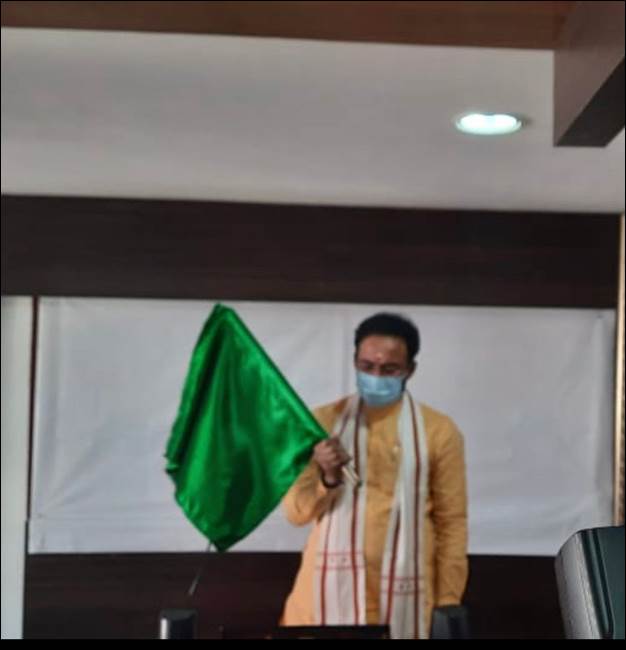
The first Janshatabdi express trains connecting the states of Manipur and Tripura via Assam was flagged off today by Shri Ashwini Vaishnaw,  Minister of Railways, Communications, Electronics and Information Technology and by  Shri G Kishan Reddy, Union Minister For Culture, Tourism And Development of North Eastern Region (DoNER) through video link from Railway Board in the presence of Chief Minister of Manipur Shri Nongthombam Biren Singh and Chief Minister of Tripura, Shri Biplab Kumar Deb. 

The long standing demand of the people of Manipur, Tripura and South Assam was fulfilled by inauguration of special trains Jan Shatabdi connecting Agartala – Jiribam – Agartala. The inaugural special trains were flagged off from Agartala and Jiribam railway stations simultaneously. 

Shri G. Kishan Reddy, Minister for Culture, Tourism and DoNER said that the special trains will be a crucial link to important towns and provide a major boost to passenger connectivity, trade and tourism. He said that under the Hon’ble Prime Minister’s leadership, the North East Region is taking important strides towards development.

The Prime Minister’s priority towards the Northeastern States is evident from the fact that budgetary allocations have nearly doubled in the last 7 years from Rs. 36,107.56 crore in 2014-2015, to Rs. 68,020 crore in 2020-2021”,  he said.  The Minister added that with the unprecedented development initiatives and infrastructural growth, the North East Region is set to become the growth engine of the rest of India. 

The Minister also highlighted the fact that the region is naturally blessed with abundant resources and the Ashtalakshmi States have their own inherent potential to become global hubs in different sectors be it agro-horticulture, organic farming, textiles, tourism etc. He said that good connectivity is the key to achieving progress on all the fronts and realizing the true potential in all the sectors and spoke about the government’s effort in consistently working towards Hon’ble Prime Minister Sri Narendra Modi’s ‘HIRA’ model of development that prioritizes Highways, Information ways (Internet), Railways and Airways. 

Dwelling on each of these vital infrastructure elements, the Hon’ble Minister said that the National Highway construction saw more than a 25% increase in road length in the last 7 years and that the impressive pace of work is evident from the fact that road and highway projects worth 85,631 crore are currently ongoing in the eight NE States and another 80,000-crore worth of projects are planned for the next two years. 

The Minister also expressed his gratitude to the Railway Minister Shri Ashwini Vaishnaw for the various initiatives that Railways was undertaking in enhancing connectivity in the tough hilly terrain of the region. The Minister highlighted 14 new railway line projects that have been taken up at a total cost of Rs. 56,553 crore and that the Capital connectivity project is opening new doors of opportunities in almost all the sectors and laying the groundwork for further development. The Minister also dwelled on the crucial Agartala-Akhaura project that is currently being developed at a cost of Es. 972.5 crores linking India to the Bangladesh Rail Network holds tremendous economic and strategic significance. 

The Minister said that Air Connectivity has also improved on an unprecedented scale. He observed that Guwahati has today become one of the busiest airports of the nation and the two major Capital Green Field Air Connectivity Projects are being undertaken in NER – Holongi-Itanagar, Arunachal Pradesh sanctioned with a cost of Rs.955.37 Cr. and the Pakyong Airport, Sikkim sanctioned with a cost of Rs. 553.53 Cr. 

The Minister also brought to light the Government’s initiatives in enhancing Digital connectivity in the North eastern region in spite of the hilly and challenging train. 4G mobile connectivity and Wi-Fi Connectivity for village Panchayats is being enhanced at a rapid pace. Almost 6,000 Gram Panchayats are service ready and a total of 9461 FTTH connections have been provided. This digital connection will give wings to the aspiration of the youth and work towards bringing about the 4th Industrial revolution in the region.

After this, the Minister of Railways, Electronics and Information Technology Shri Ashwini Vaishnaw spoke and expressed his gratitude to all stakeholders in collaborating with the Ministry of Railways in ensuring their speedy execution.

He highlighted that the Prime Minister had a special place in his heart for the Northeastern region and always exhorted all stakeholders for the speedy execution of projects in the Northeast region.  

The Ministers then flagged off the trains. The scheduled tri-weekly service of train No. 12097/12098 Agartala –Jiribam – Agartala Janshatabdi Express on Monday, Wednesday and Friday will commence w.e.f 10-01-2022 (Monday). The train will leave from Agartala at 06-00 hours to reach Jiribam at 12-00 hours. In return direction, the train will leave from Jiribam at 16-00 hours to reach Agartala at 22-00 hours.
 

The inaugural programme was graced by Shri Nongthombam Biren Singh, Chief Minister of Manipur through video link and Shri Biplab Kumar Deb, Chief Minister of Tripura. Dr. Rajkumar Ranjan Singh, Minister of State for External Affairs, Education; Pratima Bhoumik,  Minister of State for Social Justice and Empowerment; Vungzagin Valte, Minister for Transport & GAD, Tribal Affairs & Hills Govt of Manipur; Pranajit Singha Roy, Minister for Transport, Tourism, Agriculture and Farmers Welfare, Govt of Tripura; MPs Jharna Das Baidya, Maharaja Sanajaoba Leishemba, M.C. Mary Kom,  Rebati Tripura, Kripanath Mallah, Dr. Lorho S. Pfoze;  MLAs Mimi Majumdar, Rajkumar Imo Singh and  Ashab Uddin were also present during the occasion at different inaugural places.

The first Janshatabdi express train from Manipur to Tripura via Arunachal station (Silchar) in Assam will connect some important and historic towns like Silchar, Badarpur, New Karimganj, Dharmanagar and Ambassa apart from Jiribam and Agartala the two terminal stations. The Train journey will minimize the travel time by half as the journey time will be around 06 hours covering a distance of 300 Kms against about 12 hours or so it takes to travel by road.

This service will give an impetus to the trade, tourism and transportation sector in this region including the three states. At present there is no direct train between Manipur and Tripura and only one train runs between Agartala and Silchar that too in the morning hours. The Janshatabdi train will now provide direct connectivity to the people of Manipur going to Tripura for Educational and Health facilities and people of Tripura also get the opportunity to visit Manipur for trade, tourism etc boosting the overall economy of the region.

***

Food & Public Distribution, Government of India

 The Secretary Department of Food and Public Distribution under Ministry of Consumer Affairs, Food and Public Distribution,  Shri Sudhanshu Pandey  held a meeting with the Chief Secretary, Government of Karnataka wherein the settlement of procurement incidental claims, preparations of the state for procurement operations, setting up of units for production of fortified rice kernels, distribution of fortified rice, encouraging production of millets, setting up of ethanol blending units etc. were discussed. 

The Secretary informed the state that the procurement incidentals claims and distribution subsidy amounts to the extent of automated EPOS distribution quantities are already approved for payment to the state. He further informed that the state should have their procurement and distribution plans approved from the department well in advance and that the revised guidelines for procurement and distribution of course grains will be stretching to a period of 10 months.

Description: C:\Users\HP\Desktop\MoCAFPD\2022\January\08\WhatsApp Image 2022-01-08 at 5.59.48 PM.jpeg

Shri Pandey further informed that 2023 being declared as International year of Millets and Karnataka being large producer of Ragi, the state should gear up with increased production of millets and tie up with the Indian Institute of Millets in Hyderabad for increased market penetration of millet products through start-ups. The Secretary Food further informed that the requirement of millets of other states can also be met by Karnataka with centre bearing all the handling and transportation costs.

He informed that the centre has already approved procurement of local verities of paddy in Udupi and Dakshin Kannada for self-consumption by the state. On the request of Chief Secretary for release of advance subsidy, it was informed that the state should send their provisional expenditure before commencement of procurement operations based on which advances can be released.

Drawing the attention of the state to the important project of the Centre which is distribution of Fortified Rice under ICDS and MDM schemes, he suggested that the state health department should be roped in for monitoring the health developments of such children. As the state has ambitious plans of increased paddy procurement he suggested that the fortified rice can be procured locally with FRK units being established on long term objective of 100% fortified rice for aspirational and heavy burdened districts. He suggested that the state should do the fortification of rice at milling stage itself.

With Karnataka being one of the largest producer of sugar, Secretary Food suggested that the ethanol production and blending has to be encouraged as Karnataka is one of the eight identified states planned for introduction of 100 ethanol bunks in metros. 

The Chief Secretary has suggested to have one unified software for procurement operations to which the secretary had informed that the same is under consideration.

The secretary had informed that one nation one ration for migrant labours, coffee plantation workers and other settlement workers engaged in construction activities can be actively taken up by the state for real benefit of the poor.  

*****************

Urea and DAP Production by using 'Green Hydogen

 Union Minister for Chemicals and Fertilizers Shri Mansukh Mandaviya today chaired a high level meeting to make Atmanirbhar Bharat in Urea and DAP Production by using ‘Green Hydogen’. During the meeting the Minister urged the officials of Department of Fertilizers to take necessary steps for sustainable agriculture and green future of India.

In the Independence Day speech on 15.08.2021, Prime Minister announced the launch of National Hydrogen Mission and stated the goal to make India a global hub for Green Hydrogen production and export. The Mission proposes a framework for inter alia creating demand for Green Hydrogen in sectors such as petroleum refining and fertilizer production; support for indigenous manufacturing of critical technologies; Research & Development activities; and an enabling policy and regulatory framework. The proposed steps will lead to the development of additional renewable energy capacity for Green Hydrogen production.

*****

Global Surya Namaskar Demonstration programme on Makar Sakranti

 The Ministry of AYUSH is organizing a global Surya Namaskar Demonstration programme on 14 January 2022 for 75 lakh people globally (on the day of Makar Sakranti to commemorate the journey of the sun to the Northern Hemisphere). This occasion commemorates thanksgiving to ‘Mother Nature’ for bestowing health, wealth and happiness. On this day, the ‘Surya Namaskar’ is offered as a salutation to the Sun to exhibit one’s gratitude for each of its rays as it nurtures all living beings. The Sun, as the primary source of energy, is critical not only for the continuation of the food-chain but it also energizes the mind and body of human beings. Scientifically, the Surya Namaskar has been known to develop immunity and improve vitality, which is significant to our health during pandemic conditions. Exposure to the Sun further provides the human body with Vitamin D, which has been widely recommended in all medical branches around the world.

The mass Surya Namaskar demonstration also intends to carry the message of climate change and global warming. In today’s world where climate consciousness is imperative, the implementation of solar e-energy (green energy) in daily life will greatly reduce carbon emissions that threaten the planet. 

Further, the event will underline the importance of Makar Sakranti in our cultural and spiritual heritage. The Surya Namaskar is a set of 8 Asanas performed in 12 steps with coordination of the body and mind. It is preferably performed in the early morning.

For Registration visit:

https://www.75suryanamaskar.com

https://yogacertificationboard.nic.in/suryanamaskar/

https://yoga.ayush.gov.in/suryanamaskar

******

Bhasha Sangam initiative for schools, Bhasha Sangam Mobile App and Ek Bharat Shreshtha Bharat Mobile Quiz

 Language learning to be promoted as skill with formal credit earning system said Union Education and Skill Development Minister Shri Dharmendra Pradhan during launch of Bhasha Sangam Initiative for schools, Bhasha Sangam Mobile App and Ek Bharat Shreshtha Bharat Quiz App, to commemorate Rashtriya Ekta Diwas which is celebrated on October 31 every year to mark the birth anniversary of Shri Sardar Vallabhbhai Patel

Shri Pradhan stated that the National Education Policy 2020 outlines the vision to lay emphasis on promotion of Indian languages. Going forward, language learning will be promoted as skill with formal credit earning system, he added. The Minister said that the country is celebrating Azadi ka Amrit Mahotsav to mark 75 years of India’s independence. The initiatives launched today will facilitate our students to embrace the linguistic diversity of our nation and sensitize them about the richness of our culture, heritage and diversity, he added.

Bhasha Sangam is an initiative of the Ministry of Education under Ek Bharat Shreshtha Bharat, to teach basic sentences of everyday usage in 22 Indian languages. The idea is that people should acquire basic conversational skills in an Indian language other than their mother tongue. We are aiming that at least 75 lakh people should acquire this skill during the Azadi Ka Amrit Mahotsav period.

           Initiatives launched under Bhasha Sangam today:

  1. An initiative for school children that is being made available on DIKSHA, ePathshala and through 22 booklets
  2. Bhasha Sangam Mobile App developed in collaboration with myGov, by a start up called Multibhashi
  3. A Mobile App based quiz with over 10,000 questions on states of India developed by Nazara  Technologies through the Innovation Cell of this Ministry 


Bhasha Sangam Initiative for schools 

  • Developed by NCERT
  • 100 sentences in 22 scheduled languages are presented in such a way that children in school will be able to read in the Indian language, in Devanagari script, in roman script and translations into Hindi and English. 
  • 100 sentences are presented in audio and video form with Indian Sign Language. 
  • Through this programme of Bhasha Sangam learners in school will be able to get acquainted with all the languages-their scripts, pronunciation 
  • Available on DIKSHA, ePathshala and 22 booklets


Bhasha Sangam Mobile App 

  • This is an initiative of DoHE, in collaboration with MyGov
  • The App has been developed by a start up Multibhashi, selected by myGov through a competition
  • The App initially has 100 sentences of every day usage in 22 Indian languages. These sentences are available in both Roman script and in the script of the given language, and also in audio format. More sentences will be added to the list 
  • A learner will pass through stages on the basis of testing. There is also a detailed testing in the end with generation of digital certificate
  • Available in both Android and iOS


EBSB Quiz App 

  • EBSB Quiz game is targeted toward children and youngsters of Bharat for helping them learn more about our different regions, states, culture, national Heroes, monuments, traditions, tourist locations, languages, geography, history, topography,
  • We already have more than 10,000 questions as part of this quiz. The game play is simple – Play Quizzes, Learn & Achieve Grades. Moreover, this quiz has 15 different levels of toughness.
  • Currently, EBSB quiz is available on android OS, iOS version will be made available soon. 
  • This game is currently available in English and Hindi. In the next 3 months EBSB quiz will be also available in 12 other different regional languages.


Restoring normalcy and vibrancy in educational institutions post-COVID

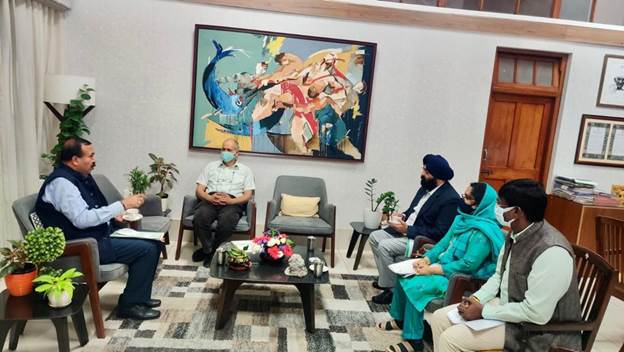
 Union Education Minister Shri Dharmendra Pradhan today reviewed the vaccination status of teachers across the country and reopening of schools. He also reviewed the vaccination status in the skilling ecosystem. Shri Rajeev Chandrasekhar, Minister of State for Skill Development and Entrepreneurship and Shri Rajkumar Ranjan Singh, Minister of State for Education were also present in the meeting.

Shri Pradhan has been regularly monitoring the vaccination of teaching staff and non teaching staff to ensure enabling environment for schools to move towards reopening. He stressed upon the need to restore normalcy and vibrancy in the educational institutions in wake of rapid vaccination at scale happening in the country.

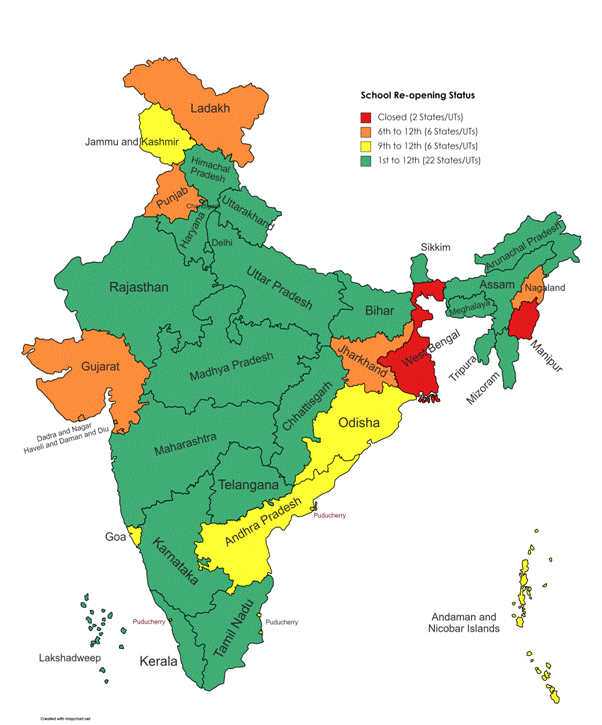
As on date, a majority of states have already opened the schools for all the classes. Over 92% of teaching staff have been vaccinated. In the institutions under Central Government, over 96 % of teaching staff have been vaccinated.


School_Re_opening_Status (2).png


  MJPS/AK

Diplomatic conclave, outlines government’s vision on internationalisation of education

 Union Minister of Education and Skill Development and Entrepreneurship Shri Dharmendra Pradhan today participated in a Diplomatic Conclave organised by Chandigarh University. 

Addressing the gathering, Shri Pradhan spoke about India’s inherent strength as a knowledge centre of the world and the role of education in shaping India’s place in the post-COVID new world order.

The Minister outlined the vision for India’s education system and said that enabling policy structure in the form of National Education Policy 2020, quality educational institutions, societal inclusivity with multiculturalism and focus on innovation, entrepreneurship and internationalisation will drive India’s education system to newer heights.

Mentioning India’s age-old belief in ‘Vasudhaiva Kutumbukam’, he called for working towards preparing global citizens and working together with common understanding to address common global challenges and achieve common goals.

Shri Pradhan mentioned that he was glad to note that more than 120 countries were represented in the conclave.

National Achievement Survey 2021 has been conducted successfully

 The National Achievement Survey 2021, was successfully conducted today across all 36 states and UTs of the country. As per initial estimates received from 24 states/UTs nearly 96% of the sampled schools and nearly 92% of the targeted sampled children, of classes 3, 5, 8 and 10 participated in the survey. The National Achievement Survey(NAS) is aprocess of gathering information in order to develop a deep understanding of what students know, understand and can do with their knowledge as a result of their educational experiences. This process will ultimately culminate to improve the subsequent students’ learning and development, through systemic interventions. The Achievement Surveywas conducted in different mediums of instruction as available in the sampled schools.

NAS is a scientifically designed achievement survey.There are 3 phases of NAS exercise, namely instrument development, sampling design and actual administration of the test. Grade-wise subject specific Learning Outcomes have been identified, which have been assessed through NAS. Instruments have been developed in such a way that it can map the specific Learning Outcomes. NCERT, being nodal academic body has done the instrument development, testing, finalization of the test items.Being a sample-based survey, sampling design becomes crucial to make the data more representative and authentic. Sampling-Design has been done in a scientific manner as per international standards. Actual Administration of the test in the sampled schools was conducted by CBSEin collaboration with states and UTs, to maintain highest levels of reliability and impartiality, being a third party assessment agency external to the school education department.

Besides student achievement test, Pupil Questionnaire, Teachers Questionnaire and School Questionnaire were also obtained to understand the various settings and perspective of students, teachers and schools. This will provide valuable information regarding back ground, teacher training, rural-urban, effectiveness of online education etcto comprehend the education system in a comprehensive manner.

NAS 2021 is the first achievement survey after release of National Education Policy 2020 (NEP). The assessment would be used to benchmark students’ learning against criteria such as process skills and learning outcomes. NAS 2021 will infuse the competency-based assessment system over the content and memory-based assessment as envisaged by NEP 2020.

The Covid pandemic had forced the closure of schools and interrupted the learning at different levels. There is an urgent need to evaluate children’s progress and learning competencies to analyze and examine the health of the education sector for taking necessary action at the district, state and national level. It is essential to gauge theeducation system before and after lockdown to evaluate the impact of school closures on students’ leaning.  The assessmentfocused on students in early grades in core subjects like reading and mathematics, which will give enough space for correctives measures in time. Further, it focusses not only on cognitive learning but also other skills that children may have picked up, while being at home during the pandemic such as painting, cooking, photography, reading, gardening etc. The enthusiastic participation of children in the survey will help pave the way forward for normal functioning of the schools.

The results of NAS 2021 will be prepared in the form of District Report Cards, State/UT reports and National report. NAS will enable States and the Union Territories to identify gaps in learning outcomes and take remedial steps. It will also help in the capacity building for teachers and officials involved in the delivery of education in the country. The result from the assessment would also provide a rich repository of evidences and data points furthering the scope of research and development. 


****

Research institutions planning in biodiversity conservation, sustainable commercial cultivation of bio-resources.

 Union Minister of Education and Skill Development and Entrepreneurship Shri Dharmendra Pradhanalong with Minister of State for Education and External Affairs Dr.Rajkumar Ranjan Singh today chaired the meeting of Ministers’ of Education of the North-eastern states in Guwahati. Education Advisors of the NE states and senior officials of the Ministry of Education, GOI were also present.

Shri Pradhan overviewed presentations on the school and higher education scenarios in the North Eastern region, including enrolment trends, outreach initiatives for ethnic students, access to facilities, penetration of centrally-sponsored schemes, steps taken to make education accessible, among others.Deliberations centred around the way forward towards implementing the NEP 2020, strategies to strengthen the learning landscape in the NE states to transform the NE region into a knowledge-based economy.

Shri Pradhan stressed on working together with the NE state education ministries in charting special initiatives for reducing drop-out rates and also research institutions planning in areas like, biodiversity conservation, promoting sustainable commercial cultivation of bio-resources.

North-East Education Conclave in Guwahati

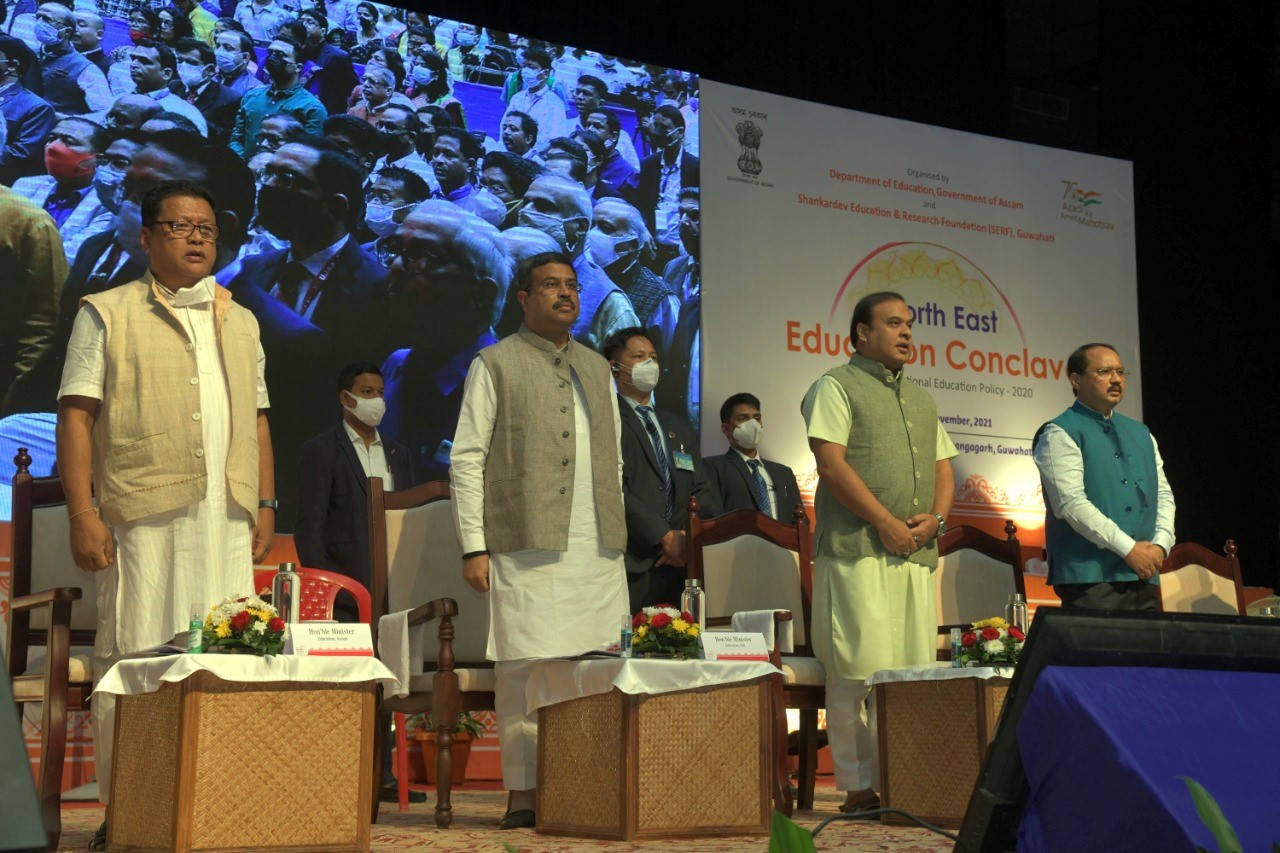
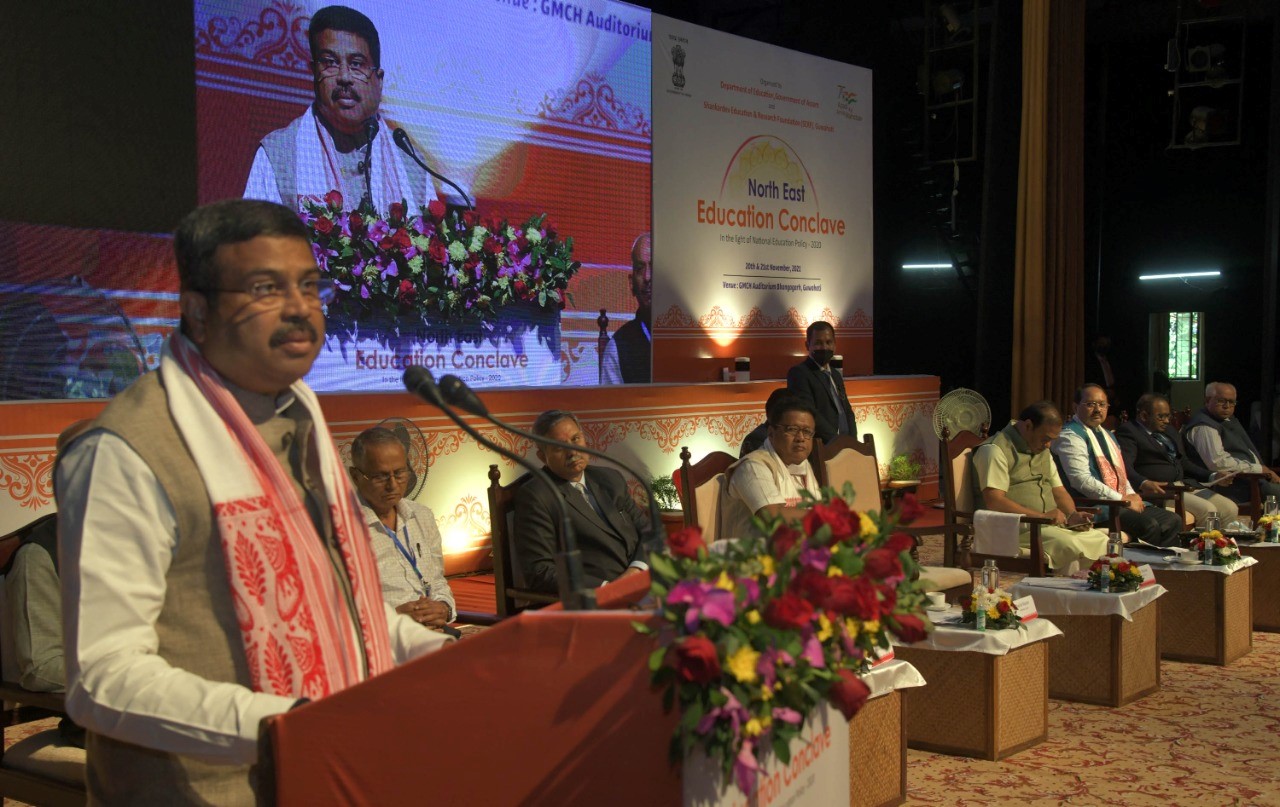
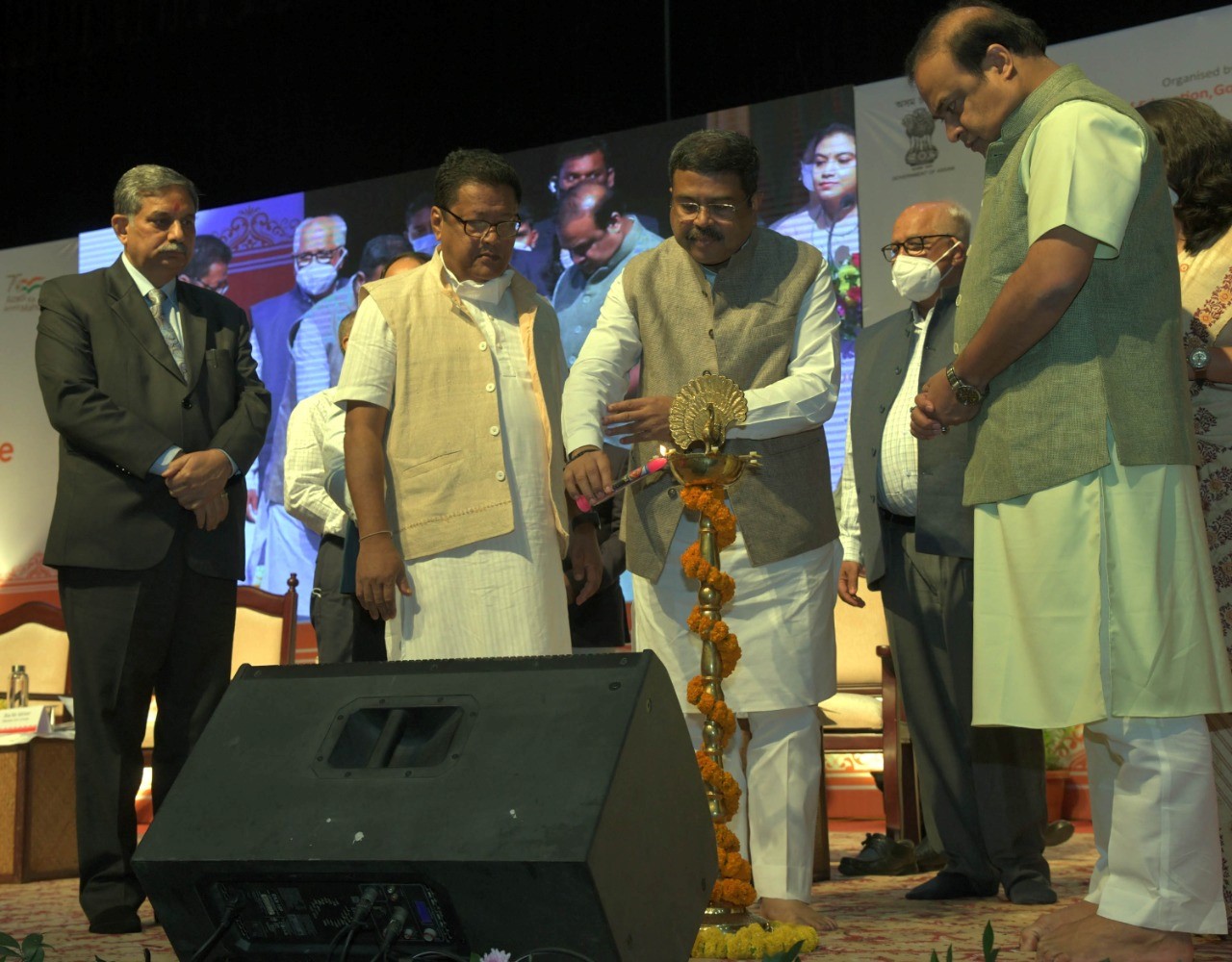
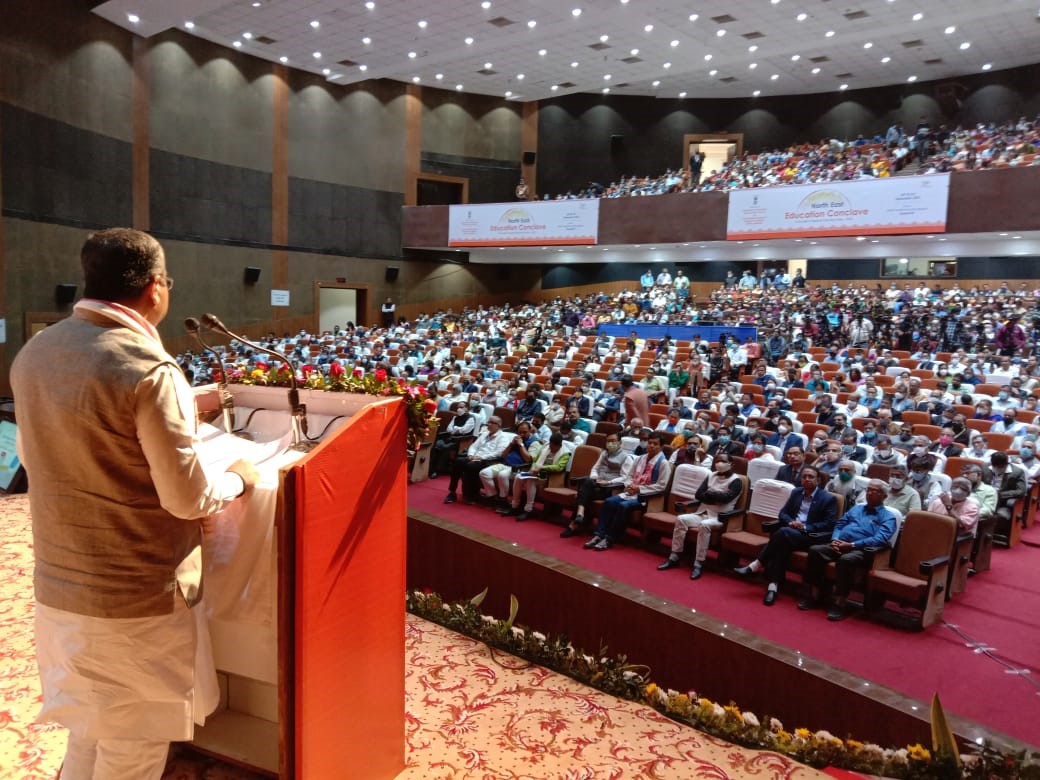
 Union Education Minister Shri Dharmendra Pradhan along with the Chief Minister of Assam Dr. Himanta Biswa Sarma today inaugurated the North-East Education Conclave at Guwahati Medical College & Hospital Auditorium at Guwahati organized by Department of Education, Government of Assam and Shankardev Education and Research Foundation (SERF).  The Union Minister said that education sector in India is undergoing an unprecedented transformation and National Education Policy 2020 introduced by the Government under the leadership of Prime Minister Shri Narendra Modi aims at preparing the youth to be future-ready, socially aware, global citizens of the 21st century.

The Union Education Minister lauded the State Education Department and Shankardev Education & Research Foundation (SERF) for its initiative to organise the country’s first of its kind Education Conclave. Speaking on the occasion, the Union Minister said that NEP 2020 is a visionary approach to transform the education landscape of the country and is ushering in a paradigm shift In India’s education landscape. He also said that the NEP is a unifying factor in celebrating our diversity and strengths as a civilization. Elaborating the vision of NEP, he said that the NEP is focused on developing desired learning competencies, equipping students with 21st century knowledge and skills and preparing our youth to become global citizens. 

He said that the North East Education Conclave aims to discuss and deliberate on various aspects of NEP-2020 which will help in creating a roadmap for the North East Region and to design strategies for its successful implementation.

He further said that the diversity of languages cannot be witnessed better than in the North East Region with about 180 languages spoken by the tribes residing here. NEP-2020 has emphasized on imparting education in mother tongue and local languages and the government is striving to convert this vision into reality. Speaking about linguistic diversity in the state, he said that Assam can be the laboratory of local-language based education in India.

The Chief Minister of Assam Dr. Himanta Biswa Sarma said that the NEP 2020 has given the opportunity to go beyond marksheet to strive for knowledge which will make India more powerful, take the country to greater heights, empower students and offer them opportunities to grow.

The Chief Minister apprised that the two- day deliberation would result in finalizing a roadmap for implementation of NEP in the region while converting the policy into action and setting timelines to realize the dream of a new and powerful India as envisioned by Prime Minister Narendra Modi. He expressed gratitude to Union Minister of Education for attending the conclave and said that his able and dynamic leadership would guide the state towards proper implementation of NEP-2020.

Education Minister of Assam, Dr Ranoj Pegu, VC, CSS University, Meerut, UP, Prof. Narendra Kumar Taneja, , UGC, Chairman, Prof. D.P. Singh, Education Ministers of eight NE states, Prof.Nani Copal Mahanta,Education Adviser,Govt.of Assam, stakeholders and academicians were present in the inaugural session.

………..

Centres for nano technology and Indian Knowledge System at IIT Guwahati

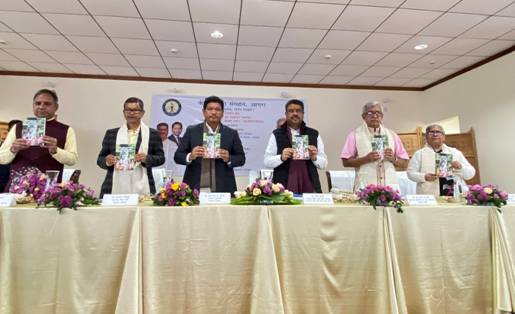
 Union Minister of Education, Skill Development and Entrepreneurship Shri Dharmendra Pradhan today visited IIT Guwahati and inaugurated the state-of-the-art Centre for Nanotechnology (CNT) and Centre for Indian Knowledge System (CIKS) as well as two hostels at the Institute. He also released a book on NEP 2020 implementation at the institute. Dr. Ranoj  Education Minister of Assam and Smt. Queen Oja, MP were also present.

Speaking on the occasion Shri Pradhan congratulated IIT Guwahati for achieving excellent rankings in various international and national ranking systems and appreciated the efforts of IIT Guwahati for creating an ecosystem for research and education as well as focusing on overall development of the northeastern region. He also said that IIT Guwahati has to play an important role in areas like, disaster management, biodiversity-based research, green energy development, strengthening knowledge-based economy and driving entrepreneurship among the students. He also called upon the students and faculty associated with the institute to synergize technology and knowledge to create a vibrant ecosystem of solution-centric innovation.

He said that, in this era of interconnected world, the centre for nanotechnology at IIT Guwahati will host a number of CoEs, incubators and state-of-the-art research laboratories for advancements in multi-disciplinary research and education in the areas of healthcare, nano-bio-materials, micro/nano electronics , and energy.

He further said that Prime Minister Shri Narendra Modi in his convocation speech in 2020 had suggested IIT Guwahati to set up a Centre for Indian Knowledge System. He expressed his happiness that the same has been established in quick time for preserving, documenting  and sharing ancient & traditional Indian knowledge.

Shri Pradhan said that Srimant Sankardev was a great scholar gave new thought and shape to civilisation and humanity. The glorious Ahom culture, the mighty Brahmaputra, the blessed land of Ma Kamakhya and greats like Lachit Borphukan should serve as an inspiration for students at  IIT Guwahati, he added.

The Minister highlighted that during the COVID-19, innovation and technology aided us with PPT kits, helped us with development and production of vaccine and represented the resilience of this country. Institutes like IIT Guwahati have to play an important role in leveraging innovation for societal good, he added.

He said that during the COP 26, Prime Minister Modi outlined the Panchamrit vision to fight climate change. Our north eastern states can become the hub of green energy development with IIT Guwahati playing an important role, he added.

Dr. Ranoj Pegu, Education Minister of Assam congratulated IIT Guwahati and said that the Institute should focus on entrepreneurship and  produce job creators and not only job seekers. Institutes like IIT Guwahati should also focus on developing new agricultural technologies to help double farmers’ income. He further requested IIT Guwahati to mentor other educational institutions in the region and also develop modules for training of teachers.

Smt. Queen Oja, Hpn’ble MP expressed her happiness in getting such advanced research facilities in northeast and expected IIT Guwahati to contribute in the overall development of northeast.

Centre for Nanotechnology (CNT) aims at meeting future challenges and augment academic partnerships with industry in Nanotechnology. The major funding for the Centre, which included Rs. 37 cr for the building, apart from equipment, was obtained from the Ministry of Education (MoE) and the Ministry of Electronics and Information Technology (MeitY), Government of India. It will host 25 advanced laboratories that will focus on advancements in multi-disciplinary, scientific and translational research and is equipped with a Class-100 clean room facilities integrated with state-of-the-art fabrication, characterization and testing laboratories. The CNT presently hosts two Centres-for-Excellence sponsored by the Ministry of Electronics and Information Technology (MeitY) and the Indian Council of Medical Research (ICMR) along with an Incubator BioNEST sponsored by Biotechnology Industry Research Assistance Council (BIRAC), Department of Biotechnology, Government of India. CNT is thus a good example of synergy among various ministries of the Government of India. The key outcomes expected from the Centre for Nanotechnology include nano-enabled healthcare, energy harvesting, and LED prototypes, devices and technologies, start-ups/ incubation ecosystem, high-end R&D outputs, capacity building of highly skilled manpower in the area of nanofabrication and nanoelectronics, etc.

Centre for Indian Knowledge System (CIKS) will focus on preserving, documenting and sustaining the knowledge that is unique to India. The top priorities include Indian classical music, Yoga, Sanskrit, traditional medicines, temple architecture, ceramic tradition and special agricultural practices of North-East India, herbal plants of north-east as health food and metal work of Assam. Scholars from diverse backgrounds will be encouraged to participate in the new CIKS’s interdisciplinary research and education programs, enabling them to evolve practices and technologies in varied areas for sustainable growth and development.

Disang hostel adds another 1000 rooms to the existing hostel capacity of IIT Guwahati. Dikhow hostel is the first hostel in the campus specifically for the accommodation of project staff. Constructed at a total cost of Rs. 132 cr, these hostels will further halp in enhancing the capacity of IIT Guwahati.

Earlier, while welcoming the guests, Director, IIT, Guwahati said that, through these and similar other initiatives, the Institute has been proactively pursuing high-end research and working towards the vision of “Atmanirbhar Bharat”, while fulfilling the aspirations of the region, aligning with national policies, especially implementing the NEP2020, and competing globally in research and technology development.

Kendriya Hindi Sansthan in Meghalaya

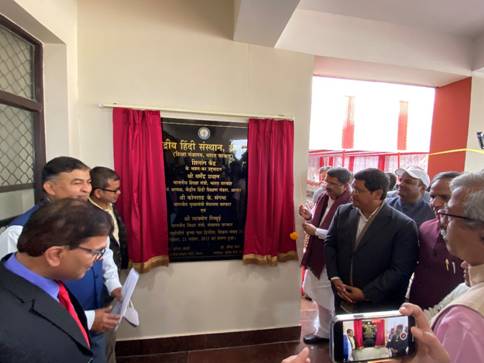
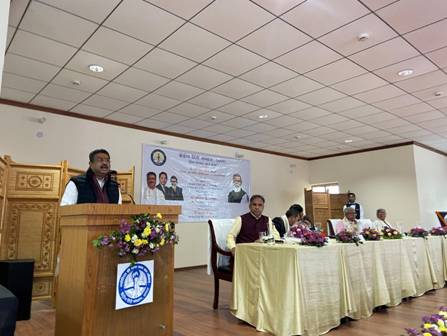
 Union Minister for Education and Skill Development Shri Dharmendra Pradhan inaugurated the newly constructed building of Kendriya Hindi Sansthan at Mawdiangdiang, East Khasi Hills today. Chief Minister of Meghalaya Shri Conrad K Sangma was also present during the inauguration programme. Union Ministerexpressed his gratefulness to the Government of Meghalaya for providing the necessary assistance including the required land for setting up of this Institute at Mawdiangdiang, Meghalaya. He expressed that this Institute will work for the benefit of teachers of Hindi and people eager to learn and do research in the language and will cater to states of Meghalaya, Tripura and Mizoram.

Speaking on the occasion the Union Minister said that NEP 2020 is a visionary approach to transform the education landscape of the country and to achieve the realistic goal and to percolate its ripple effect to the grassroots. One of most important salient features of NEP, the Minister said, is that NEP-2020 emphasised on imparting education in Mother language at the primary level and the government is striving to achieve the target within the stipulated time frame. 

Acknowledging the diversity of culture, language and tradition of this country and the co-existence amid this diversity, the Minister said that it because of this beauty of this language that people can share each others tradition and rich heritage. The Minister said that technology should be used extensively to preserve and enrich native languages so that people can use internet in their native languages and make people from other parts of the world about their rich culture and tradition.These practices will encourage innovation and creativity among the youths and may show light to world about many relevant issues concerning the people, the Minister added. 

The Minister while acknowledging the rich culture of this region said, “There are many things to learn from this region, it has a very rich heritage and is strong in natural resources. There has been many good educational institutions coming up in this region including IIM’s new campus.” The Minister said that there is a lot to do for the youths of the region and exhorted everyone to work for providing a better environment for the young generation. He said, “I have been informed that Meghalaya has around the 3.5 lakh college going students and it is the collective responsibility everyone to build a conducive environment to ensure their quality education, skilling, raising their employability capability and imbibing inside them the value of fundamental research. The first step towards this effort would be to simplify the process of learning languages”. 

The minister also referred to the North-East Education Conclave that was held in Guwahati on Saturday and said that the North East Region has nearly 180 languages and dialects spoken by various tribes and community and it is the mandate of the NEP to develop and preserve this heritage. In the days to come Kendriya Hindi Sansthan and English and Foreign Languages University (EFLU) will function as a Centre of Excellence and will work with the Government of Meghalaya to preserve and enrich Khasi, Garo and Jaintia languages with the help of technology, the Minister added. The Minister was categorical when he said that language is a tool that connect people from across the world and the availability of applications in the internet to learn languages of this region will enable people from outside the state to know about the rich culture and heritage of this region.  

The Minister also released two books at the occasion- SamànvayPurvottarSanchayan and Hindi-khasi-Garo-Jaintia-English Concise Dictionary. The Minister was amused to come across the Concise Dictionary and exclaimed that this will help in enriching the languages.

The Chief Minister of Meghalaya Shri Conrad K Sangma expressed his happiness for the inauguration of the Kendriya Hindi Sansthan in his state and said that the presence of this institute will help the youths of Meghalaya and the entire Northeast region to learn Hindi and also to excel in this language.

National Apprenticeship Training Scheme for next five years

 The Cabinet Committee on Economic Affairs chaired by the Prime Minister, Shri Narendra Modi today has accorded its approval for stipendiary support of Rs. 3,054 crore to apprentices who undergo apprenticeship training under National Apprenticeship Training Scheme (NATS) of Ministry of Education for the period from 2021-22 to 2025-26 (upto 31-03-2026).

Approximately 9 lakhs apprentices will be trained by industry and commercial organisations. NATS is a well-established scheme of Government of India which has demonstrated to enhance the employability of students who have successfully completed the apprenticeship training.

The apprentices who have completed graduate and diploma programme in Engineering, Humanities, Science and Commerce will be given stipend of Rs.9,000/- and Rs.8,000/- per monthrespectively. 

The Government has approved an expenditure of more than Rs. 3,000 crore during the next five years which is about 4.5 times the expenditure made during the previous 5 years. This increased expenditure on apprenticeship is in line with the thrust which National Education Policy 2020 has given to apprenticeship.

In keeping with the Government emphasis on “SabkaSaath, SabkaVikas, –SabkaVishwas, SabkaPrayaas”, the scope of NATS has further been expanded to include students from Humanities, Science and Commerce besides students from engineering stream. This scheme aims to raise the standards of skill level by strengthening the skill ecosystem and as a result, will provideemployment to approximately 7 lakhs youths in the next five years.

The NATS will provide apprenticeship in the emerging areas under ‘Production Linked Incentive’ (PLI) such as Mobile manufacturing, Medical devices manufacturing, Pharma sector, Electronics/Technology products, Automobile sector etc. The scheme will also be preparingskilled manpowerfor connectivity/logistics industry sectors, identified under GatiShakti.