Union Education and Skill Development Minister Shri Dharmendra Pradhan invited students, teachers and parents to participate in the 5thedition of “Pariksha Pe Charcha 2022” and get a chance to be mentored by Prime Minister Shri Narendra Modi.
Prime Minister Shri Narendra Modi conceptualized a unique interactive program – Pariksha Pe Charcha wherein students, parents, teachers across the nation and also from overseas interact with him to discuss and overcome the stress emerging out of examinations in order to celebrate life as an Utsav. This event was organized successfully for the last four years by the Department of School Education & Literacy, Ministry of Education.
The format of this programme is proposed to be in online mode like in 2021. An online creative writing competition is being conducted at https://innovateindia.mygov.in/ppc-2022/ on various topics from 28th December to 20th January 2022 to select participants. Questions asked by selected winners will be featured in Pariksha Pe Charcha programme.
School students of classes 9 to 12, teachers and parents shall be selected through an online competition. Registrations on https://innovateindia.mygov.in/ppc-2022/are live from 28th December 2021 till 20th January 2022 on a bouquet of themes listed below:
● Themes for Students:
Exam stress management strategies during COVID-19
Azadi Ka Amrit Mahostav
Self-reliant School for Self-reliant India
Clean India, Green India
Digital Collaboration in Classrooms
Environmental conservation and climate change resilience
● Themes for Teachers:
a.National Education Policy (NEP) for Naya Bharat
The COVID-19 Pandemic: opportunities & challenges
● Themes for Parents:
Beti Padhao, Desh Badhao
Local to Global – Vocal for Local
Lifelong Students’ Yearning for Learning
About 2050 participants selected through competitions on MyGov will be presented with a certificate of appreciation from Director, NCERT and a special Pariksha Pe Charcha kit comprising of Exam Warriors book in Hindi and English, written by the Prime Minister.There is enthusiastic participation of students, teachers and parents from all over the country.
The Government of India has launched a 75-week long campaign Azadi ka Amrit Mahotsav; to celebrate the achievements of the country and its people. The University Grants Commission(UGC) as part of this campaign is conducting a series of activities beginning with the a sensitisation webinar on “Cyber security Empowerment of Higher Education Institutions (HEIs)”an effort towards making cyber security more accessible, available, and adaptable for HEIs.
Delivering the welcome address, Prof. Rajnish Jain, Secretary, UGC welcomed and introduced all panelists. He set the context for the webinar, stressing on the need for cybersecurity awareness with the increased dependence on IT post pandemic. He emphasised on the fact that the pandemic has put Higher Education in the cyber space which has led HEIs to be subject to increased cybersecurity issues. He said that there is a need to understand how cyber security issues may be addressed and how cyber hygiene may be managed.
The keynote address was delivered by Lt. Gen. (Dr.) Rajesh Pant, Chief (retd.), National Cyber Security Coordinator, National Cyber Coordination Centre, PMO. He emphasized and reiterated the threat cybercrime poses to economy and national security. He focused on cybersecurity for HEIs that are base of personal information and intellectual property. He highlighted the structure of institutions that make them susceptible to cybercrimes and the measures to be taken to address these issues. He shared the ongoing and proposed government initiatives of cyber swacchta kendra and the malware posh and national blockchain project given to IIT Kanpur. He concluded with two mantras for survival in the new normal: personal hygiene and cyber hygiene.
Shri Abhishek Singh, CEO, My Gov and President & CEO NeGD, Ministry of Electronics & Information Technology delivering his address emphasised on the importance of cyber security due to the increased dependency and use of the cyber space. He focused on the issues of cybersecurity; cyberattacks, frauds and use of cyber warfare, further emphasising the steps and measures to be taken by HEIs to stay safe. He touched upon the various aspects of cybercrimes and measures to be taken and the processes for reporting cybersecurity issues. He spoke of Cyber Surakshit Bharat of Government of India aimed at educating people on cybersecurity.
Shri Deepak Virmani, Deputy Secretary, Indian Cyber Crime Coordination Centre (I4C) , Cyber & Information Security, Division, Ministry of Home Affairs spoke about the initiatives of Ministry of Home Affairs’ CIS and its efforts in controlling Cybercrimes. He shed light on the Indian Cyber Crime Coordination Centre schemes (I4C) of MHA that aims to prevent cybercrimes. He discussed in detail the 7 verticals of the scheme that also involve the training of police personnel and government functionaries. He further shared about the various portals and helpline numbers that can be availed by the citizens and the initiative Cyber Jaagrookta Diwas, celebrated every month since October 2021. Further delivering his address, he hailed UGC for its initiatives for promoting and sensitizing HEIs regarding Cyber security through the proposed handbook on cyber hygiene and cybersafe curriculum.
Dr. Charru Malhotra , Coordinator, Centre of e-Governance, Indian Institute of Planning and Administration, New Delhi brought out the findings on Cybersecurity through analysis of a pre webinar questionnaire which had been shared with HEIs. She highlighted the current status amongst HEIs about cyber security and their preparedness.
Prof. Naveen Chowdhary, National Forensic Science University, Gandhinagar through his address shared the cybersecurity threat landscape highlighting cases of compromises on cybersecurity in Educational Institutions, research facilities. He provided a detailed outlook and a framework for cybersecurity.
Dr. Atul Kumar Pandey, Chairperson , Rajiv Gandhi National Cyber Law Centre, NLIU, Bhopal spoke about the threat landscape in HEIs and the importance of cybersecurity in HEIs. In his address he shed light on various components like content protection and privacy and capacity building for addressing cybersecurity.
The address by the panelists was followed by a Question and Answer session from the faculty members from HEIs.
The webinar discussed pertinent issues of cyber security with prioritizing its impact on HEIs and the necessary. The Webinar was the first step towards Cyber security empowerment of HEIs and provided an opportunity for sensitization and awareness on cyber security.
More Indians speak English than any other language, with the sole exception of Hindi. What’s more, English speakers in India outnumber those in all of western Europe, not counting the United Kingdom. And Indian English-speakers are more than twice the UK’s population.
These facts emerge from recently released census 2001 data on bilingualism and trilingualism in India. Indians’ linguistic prowess stood revealed with as many as 255 million speaking at least two languages and 87.5 million speaking three or more. In other words, about a quarter of the population speaks more than one language.
English was the primary language for barely 2.3 lakh Indians at the time of the census, more than 86 million listed it as their second language and another 39 million as their third language. This puts the number of English speakers in India at the time to more than 125 million.
The only language that had more speakers was Hindi with 551.4 million. This includes 422 million, who list it as the primary language, 98.2 million for whom it was a second language and 31.2 million who listed it as their third.
The rise of English puts Bengali, once India’s second largest language in terms of primary speakers, in distant third place. Those who spoke Bengali as their first, second or third language add up to 91.1 million, far behind English.
Telugu with 85 million speakers in all and Marathi with 84.2 million retain their position behind Bengali as does Tamil with 66.7 million and Urdu with 59 million.
Gujarati now falls behind Kannada though it has a sizeable number of primary speakers — 6.1 million — compared to Kannada’s 37.9 million.
Karnataka’s linguistic diversity means that many list other languages as their first and Kannada as a second language. This adds 11.5 million to the ranks of Kannada speakers and another 1.4 million use it as a third language. In total, Kannada had 50.8 million speakers in 2001 compared to Gujarati’s 50.3 million.
Oriya overtakes Malayalam thanks to the 3.3 million people who listed it as their second language and 3.2 lakh who said it was their third language.
The total number of Oriya speakers was 36.6 million against 33.8 million who spoke Malayalam. Punjabi, with 31.4 million speakers, and Assamese with 18.9 million are among India’s most spoken languages. Unfortunately, the census asked people to list a maximum of three languages, so it is not known how many speak more languages.
The data covers only those over five because the census assumed that younger children would only know their mother tongue.
As expected, urban Indians are more likely to be multi-lingual but as many as 136.7 million rural Indians speak at least two languages.
English in India is a question of linguistic centralism while the other Indian languages lead to linguistic regionalism.A foreign languages existing so firmly and distinctly has posed a problem to the country .Yet the language problem became more complicated without any practical solution .In the process of teaching-learning ,the teacher should try to understand the student first.Then only he/she can enable the students to understand his/her teaching .
Theory with practice on some of the teaching topics , may enable the students to understand the concept easily. The growing modernisation and internationalism in the world prevented us from doing away with the English language. Besides ,Indian languages are associated with tradition and are understood to be anti-modern. Therefore , a complete switchover to the Indian languages would lead to educational chaos and complete isolation from the developments on the international arena.
We could not risk this because of the cultural ,social ,political and economic reasons .Hence ,this situation requires an urgent solution .The only resolution that could be thought of was a need for coexistence of English with Indian languages .As a result, we had to define the role of English inIndia and its relationship with Indian languages .
And furthermore, we had to define the role of English in India and its relationship with Indian languages.The role of English was strengthened and consolidated as English was recognized and perceived as:
The language of knowledge(science and technology)
The language of liberal, modern thinking.
A window on the world
The language of library
Thus, the three language formula came in to existence.This policy was proposed in 1956 by the central advisory board on education and was adopted at the Chief Ministers conference in1961 .The policy aimed at making English an integral part of the school education in India .This naturally restricted the learning and use of Hindi and the students started learning English as second language.
Hair loss has many causes. What’s causing your hair loss can determine whether your hair:
Falls out gradually or abruptly
Thins
Can regrow on its own
Requires treatment to regrow
Needs immediate care to prevent permanent hair loss
Causes of hair loss
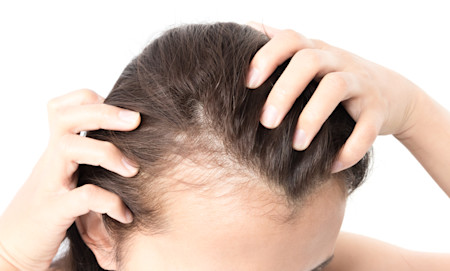
Hereditary hair loss
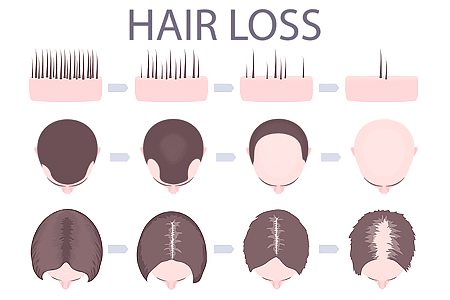
Both men and women develop this type of hair loss, which is the most common cause of hair loss worldwide. In men, it’s called male pattern hair loss. Women get female pattern hair loss. Regardless of whether it develops in a man or women, the medical term is androgenic alopecia.
No matter which term you use, it means that you’ve inherited genes that cause your hair follicles (what each hair grows out of) to shrink and eventually stop growing hair. Shrinking can begin as early as your teens, but it usually starts later in life.
In women, the first noticeable sign of hereditary hair loss is usually overall thinning or a widening part.
When a man has hereditary hair loss, the first sign is often a receding hairline or bald spot at the top of his head.
Is regrowth possible? Yes, treatment can help stop or slow hair loss. It may also help regrow hair. The earlier treatment is started, the better it works. Without treatment, you will continue to lose hair.
Hereditary hair loss
Both men and women develop this type of hair loss, which is the most common cause of hair loss worldwide. In men, it’s called male pattern hair loss. Women get female pattern hair loss.
Age
With age, most people notice some hair loss because hair growth slows. At some point, hair follicles stop growing hair, which causes the hair on our scalp to thin. Hair also starts to lose its color. A woman’s hairline naturally starts to recede.
Is regrowth possible? Caught early, treatment helps some people regrow their hair.
Age
With age, most people notice some hair loss because hair growth slows.
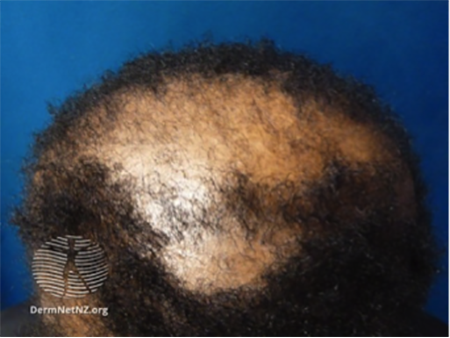
Alopecia areata
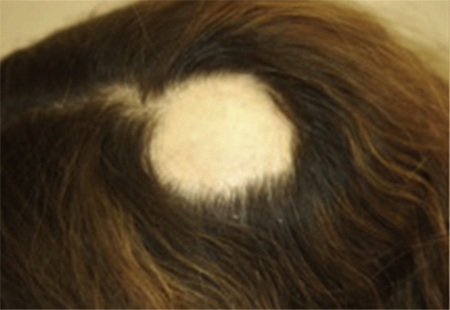
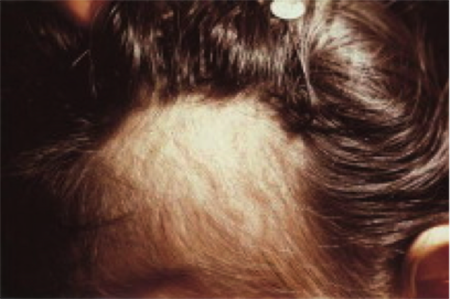
Alopecia areata is a disease that develops when the body’s immune system attacks hair follicles (what holds the hair in place), causing hair loss. You can lose hair anywhere on your body, including your scalp, inside your nose, and in your ears. Some people lose their eyelashes or eyebrows.
Is regrowth possible? Yes. If your hair fails to grow back on its own, treatment may help stimulate regrowth.
Alopecia areata
Alopecia areata is a disease that develops when the body’s immune system attacks hair follicles (what holds the hair in place), causing hair loss.
Cancer treatment
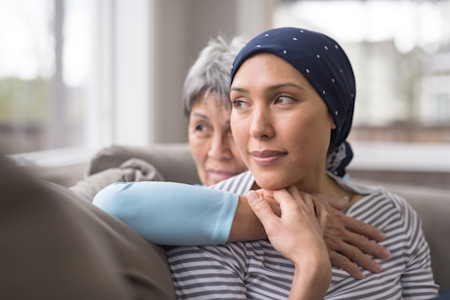
If you receive chemotherapy or have radiation treatment to your head or neck, you may lose all (or most of) your hair within a few weeks of starting treatment.
Is regrowth possible? Hair usually starts to regrow within months of finishing chemotherapy or radiation treatments to the head or neck. Dermatologists can offer medication to help hair grow back more quickly.
Is it preventable? Wearing a cooling cap before, during, and after each chemotherapy session may help prevent hair loss.
Cancer treatment
If you receive chemotherapy or have radiation treatment to your head or neck, you may lose all (or most of) your hair within a few weeks of starting treatment.
Childbirth, illness, or other stressors
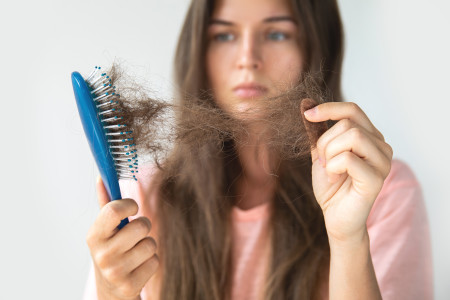
A few months after giving birth, recovering from an illness, or having an operation, you may notice a lot more hairs in your brush or on your pillow. This can also happen after a stressful time in your life, such as a divorce or death of a loved one.
Is regrowth possible? If the stress stops, your body will readjust and the excessive shedding will stop. When the shedding stops, most people see their hair regain its normal fullness within 6 to 9 months.
Childbirth, illness, or other stressors
A few months after giving birth, recovering from an illness, or having an operation, you may notice a lot more hairs in your brush or on your pillow. This can also happen after a stressful time in your life, such as a divorce or death of a loved one.
Hair care
If you color, perm, or relax your hair, you could be damaging your hair. Over time, this damage can lead to hair loss.
Is regrowth possible? You can change how you care for your hair, which can prevent hair loss. Once you damage a hair follicle, hair cannot grow from that follicle. Having many damaged hair follicles creates permanent bald spots.
Hair care
If you color, perm, or relax your hair, you could be damaging your hair. Over time, this damage can lead to hair loss.
Hairstyle pulls on your scalp
If you often wear your hair tightly pulled back, the continual pulling can lead to permanent hair loss. The medical name for this condition is traction alopecia.
Is regrowth possible? No. You can prevent hair loss by making some changes.
Hairstyle pulls on your scalp
If you often wear your hair tightly pulled back, the continual pulling can lead to permanent hair loss.
Hormonal imbalance
A common cause of this imbalance is polycystic ovary syndrome (PCOS). It leads to cysts on a woman’s ovaries, along with other signs and symptoms, which can include hair loss. Stopping some types of birth control pills can cause a temporary hormonal imbalance. Women who develop a hormonal imbalance can develop thinning hair (or hair loss) on their scalp.
Is regrowth possible? Treatment may help.
Hormonal imbalance
A common cause of this imbalance is polycystic ovary syndrome (PCOS). It leads to cysts on a woman’s ovaries, along with other signs and symptoms, which can include hair loss.
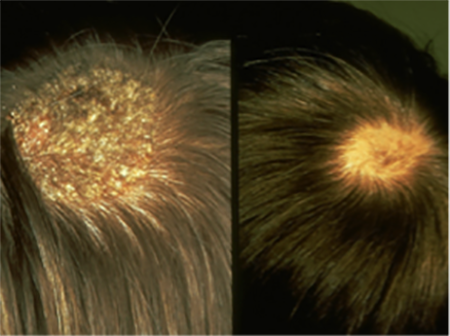
Scalp infection
A scalp infection can lead to scaly and sometimes inflamed areas on your scalp. You may see what look like small black dots on your scalp. These are actually stubs of hair. Some people develop a bald spot.
Is regrowth possible? Yes, treatment can get rid of the infection. Once the infection clears, hair tends to grow.
Scalp infection
A scalp infeciton can lead to scaly and sometimes inflamed areas on your scalp.
Medication
A possible side effect of some medications is hair loss. If you think a medication is causing your hair loss, ask the doctor who prescribed it if hair loss is a possible side effect. It’s essential that you do not stop taking the medication before talking with your doctor. Abruptly stopping some medications can cause serious health problems.
Is regrowth possible? Yes.
Medication
A possible side effect of some medications is hair loss. If you think a medication is causing your hair loss, ask the doctor who prescribed it if hair loss is a possible side effect.
Scalp psoriasis
Many people who have plaque psoriasis develop psoriasis on their scalp at some point. This can lead to hair loss.
Is regrowth possible? Hair tends to regrow once the scalp psoriasis clears, but this takes time. By following these dermatologists’ tips, you may be able to prevent hair loss.
Scalp psoriasis
Many people who have plaque psoriasis develop psoriasis on their scalp at some point. This can lead to hair loss.
Pulling your hair
Some people pull on their hair, often to relieve stress. They may be unaware that they’re pulling their hair. The medical term for this is trichotillomania.
Is regrowth possible? If you haven’t destroyed the hair follicles, yes. For your hair to regrow, you have to stop pulling it.
Pulling your hair
Some people pull on their hair, often to relieve stress. They may be unaware that they’re pulling their hair.
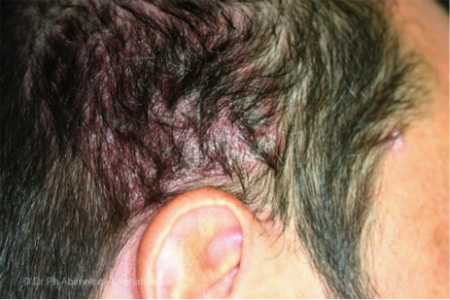
Scarring alopecia
This condition develops when inflammation destroys hair follicles. Once destroyed, a hair follicle cannot grow hair. Diverse conditions can cause this. The medical name for this group of conditions is cicatricial alopecia.
Is regrowth possible? Once a hair follicle is destroyed, it cannot regrow a hair. Catching this condition early can prevent further hair loss.
Scarring alopecia
This condition develops when inflammation destroys hair follicles. Once destroyed, a hair follicle cannot grow hair. Diverse conditions can cause this.
Sexually transmitted infection
Left untreated, a sexually transmitted infection (STI) can lead to hair loss. Syphilis is such an STI. Left untreated, syphilis can cause patchy hair loss on the scalp, eyebrows, beard, and elsewhere. Other STIs can also cause hair loss.
Is regrowth possible? After treating the STI, hair often starts to regrow.
Sexually transmitted infection
Left untreated, a sexually transmitted infection (STI) can lead to hair loss.
Thyroid disease
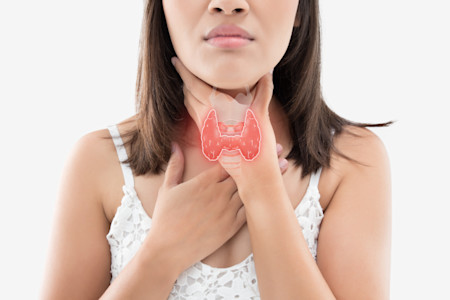
If you have a problem with your thyroid, you may see thinning hair. Some people notice that their hair comes out in clumps when they brush it.
Is regrowth possible? Yes, treating the thyroid disease can reverse the hair loss.
Thyroid disease
If you have a problem with your thyroid, you may see thinning hair.
Too little biotin, iron, protein, or zinc
If you’re not getting enough of one or more of these, you can have noticeable hair loss.
Is regrowth possible? Yes. When your body gets enough of the missing nutrients, hair can regrow.
Too little biotin, iron, protein, or zinc
If you’re not getting enough of one or more of these, you can have noticeable hair loss.
Friction
People can develop hair loss where boots, socks, or tight clothing frequently rubs against their skin. The medical term for this is frictional alopecia.
Is regrowth possible? Hair tends to regrow on its own when the rubbing stops.
Friction
People can develop hair loss where boots, socks, or tight clothing frequently rubs against their skin.
Poison
Being slowly poisoned can lead to hair loss. Poisons that can cause hair loss include arsenic, thallium, mercury, and lithium. If you ingest a large amount of warfarin, which is found in rat poisons, it can also cause hair loss. Taking large amounts of vitamin A or selenium is also toxic and can cause hair loss.
Is regrowth possible? Yes, hair tends to regrow when you are no longer exposed to the poison.
Poison
Being slowly poisoned can lead to hair loss. Poisons that can cause hair loss include arsenic, thallium, mercury, and lithium. If you ingest a large amount of warfarin, which is found in rat poisons, it can also cause hair loss.
While many causes of hair loss can be treated successfully, the key to effective treatment is to find out what’s causing the hair loss. Without an accurate diagnosis, treatment is often ineffective.
Being able to communicate effectively is perhaps the most important of all life skills. It is what enables us to pass information to other people, and to understand what is said to us. You only have to watch a baby listening intently to its mother and trying to repeat the sounds that she makes to understand how fundamental is the urge to communicate.
Communication, at its simplest, is the act of transferring information from one place to another. It may be vocally , written , visually or non-verbally (using body language, gestures and the tone and pitch of voice). In practice, it is often a combination of several of these.
Communication is a two-way process
Communication is not the same as broadcasting, or simply sending out information.
It is a two-way process. In other words , it involves both the sending and receiving of information.
It therefore requires both speaking and listening, but also—and perhaps more crucially—developing a shared understanding of the information being transmitted and received.
If you are the ‘sender’ of information, this means communicating it clearly to start with (whether in writing or face-to-face), then asking questions to check your listeners’ understanding. You must also then listen to their replies, and if necessary, clarify further.
If you are the recipient, it means listening carefully to the information, then checking that you have understood by reflecting back, or asking questions to ensure that you both have the same understanding of the situation.
It is, therefore an active process. There is nothing passive about communication, in either direction.
Developing Communication Skills
It is a longterm process, you will have to keep yourselves updated.Good communication skills can improve the way that you operate through life, smoothing your way in your relationships with others.
Poor communication skills, on the other hand, can sour relationships from business to personal, and make your life significantly harder.
Some people seem to understand how to communicate without even trying. They are able to tailor their language, tone and message to their audience, and get their point across quickly and succinctly, in a way that is heard. They are also able to pick up the messages sent to them rapidly, understanding both what is said, and what has not been said.
This may seem effortless, but the chances are that they have spent plenty of time honing their skills.
Along the way, they have probably also developed a good understanding of themselves and habits of reflecting on success and failure, and the actions that have led to one or the other.
Ways to Enhance Communication Skills
1. Listen, listen, and listen. People want to know that they are being heard. Really listen to what the other person is saying, instead of formulating your response. Ask for clarification to avoid misunderstandings. At that moment, the person speaking to you should be the most important person in your life. Another important point is to have one conversation at a time. This means that if you are speaking to someone on the phone, do not respond to an email, or send a text at the same time. The other person will know that she doesn’t have your undivided attention.
2. Who you are talking to matters. It is okay to use acronyms and informal language when you are communicating with a buddy, but if you are emailing or texting your boss, “Hey,” “TTYL” or any informal language, has no place in your message. You cannot assume that the other person knows what the acronym means. Some acronyms have different meanings to different people, do you want to be misunderstood? Effective communicators target their message based on who they are speaking to, so try to keep the other person in mind, when you are trying to get your message across.
3. Body language matters. This is important for face-to-face meetings and video conferencing. Make sure that you appear accessible, so have open body language. This means that you should not cross your arms. And keep eye contact so that the other person knows that you are paying attention.
4. Check your message before you hit send. Spell and grammar checkers are lifesavers, but they are not foolproof. Double check what you have written, to make sure that your words are communicating the intended message.
5. Be brief, yet specific. For written and verbal communication, practice being brief yet specific enough, that you provide enough information for the other person to understand what you are trying to say. And if you are responding to an email, make sure that you read the entire email before crafting your response. With enough practice, you will learn not to ramble, or give way too much information.
6. Write things down. Take notes while you are talking to another person or when you are in a meeting, and do not rely on your memory. Send a follow-up email to make sure that you understand what was being said during the conversation.
7. Sometimes it’s better to pick up the phone. If you find that you have a lot to say, instead of sending an email, call the person instead. Email is great, but sometimes it is easier to communicate what you have to say verbally.
8. Think before you speak. Always pause before you speak, not saying the first thing that comes to mind. Take a moment and pay close attention to what you say and how you say it. This one habit will allow you to avoid embarrassments.
9. Treat everyone equally. Do not talk down to anyone, treating everyone with respect. Treat others as your equal.
10. Maintain a positive attitude and smile. Even when you are speaking on the phone, smile because your positive attitude will shine through and the other person will know it. When you smile often and exude a positive attitude, people will respond positively to you.
Communicating effectively is a teachable skill, therefore following a few of the tips outlined above, will enable you to hone up on your communication skills.
The Omicron variant of COVID-19 has been called a variant of concern by WHO based on the evidence that it has several mutations that may have an impact on how it behaves. There is still substantial uncertainty regarding Omicron and a lot of research underway to evaluate its transmissibility, severity and reinfection risk.
Development of the Omicron Variant
When a virus is circulating widely and causing numerous infections, the likelihood of the virus mutating increases. The more opportunities a virus has to spread, the more opportunities it has to undergo changes.
New variants like Omicron are a reminder that the COVID-19 pandemic is far from over. It is therefore essential that people get the vaccine when available to them and continue to follow existing advice on preventing the spread of the virus, including physical distancing, wearing masks, regular handwashing and keeping indoor areas well ventilated.
It is also crucial that vaccines and other public health measures are accessible everywhere. Vaccine inequity leaves lower income countries – many of them in Africa – at the mercy of COVID-19. Well-supplied countries must urgently deliver the doses they promised.
Is Omicron variant less severe?
There is also emerging evidence that omicron tends not to burrow deep into the lungs as much as previous variants. A study, which was posted online by the University of Hong Kong and not yet peer-reviewed, found that while omicron is less severe in the lungs, it can replicate faster higher up in the respiratory tract.
In this way, omicron may act more like bronchitis than pneumonia, said Dr. Hugh Cassiere, director of critical care services for Sandra Atlas Bass Heart Hospital at the North Shore University Hospital, on Long Island, New York.
“Usually patients with acute bronchitis tend not to be short of breath. They tend to cough and produce sputum,” he said. “Patients with pneumonia tend to be short of breath and feel more fatigued than bronchitis in general.”
A small study from the CDC found that people who had Covid and are later reinfected with omicron may experience fewer symptoms than they did during their initial bout with the virus.
Still, it’s virtually impossible for people to rely on symptoms to self-diagnose an illness. In addition to omicron, the delta variant continues to circulate, along with increasing cases of the flu.
For these reasons, doctors urge people who have any cold symptoms or flulike symptoms to get tested.
Symptoms of Omicron
Most common symptoms: fever, cough ,tiredness, loss of taste or smell
Less common symptoms: sore throat, headache aches and pains, diarrhoea, a rash on skin, or discolouration of fingers or toes red or irritated eyes
Serious symptoms: difficulty breathing or shortness of breath loss of speech or mobility, or confusion, chest pain.
Seek immediate medical attention if you have serious symptoms.
Always call before visiting your doctor or health facility.
People with mild symptoms who are otherwise healthy should manage their symptoms at home.
On average it takes 5–6 days from when someone is infected with the virus for symptoms to show, however it can take up to 14 days.
The symptoms of omicron generally start with body ache, generalised weakness, fatigue, headache and fever in the initial days and eventually they might also develop a cough which is sometimes dry along with a cold where there is water from the nose, sneezing, etc. The cough is typically dry which resolves over the next few days. Most of the time i.e. in 80% of the patients, fever is resolving over the first 3 days and if not, then that becomes a sign of moderate to severe infection which needs close monitoring.
How do you protect yourself and others?
The WHO has advised the following steps to protect yourself and prevent the spread of COVID-19:
Get vaccinated
Wear a mask
Maintain physical distancing
Ventilate indoor spaces
Keep good hygiene
Self-isolate if you develop symptoms
Effectiveness of COVID-19 vaccines against Omicron or Delta infection
A research shows that Two doses of COVID-19 vaccines are unlikely to protect against infection by Omicron. A third dose provides some protection in the immediate term, but substantially less than against Delta. Our results may be confounded by behaviours that we were unable to account for in our analyses. Further research is needed to examine protection against severe outcomes.
1. Shimla – a stunning city in the Himalayan foothills which is one of the best places to explore in India.
A popular tourist destination located in the north-west Himalayas, gorgeous Shimla is also sometimes referred to as the ‘Queen of Hills.’ Its colourful colonial past is still evident today and the town is characterised by unusual neo-gothic buildings surrounded by thick forest and outstanding views, offering a very different feel to the rest of India.
‘The Mall’ is the main shopping street and the hub of the city where tourists and locals like to meet, shop and eat. This area also has a good number of clubs and bars great for those looking to step it up a gear.
The Christ Church is also worth a visit – it’s the second oldest church in northern India and its stained glass windows are designed in a distinctive style that you won’t find anywhere else. Also don’t leave Shimla without visiting Jakhu Hill – the highest peak which is also home to many playful monkeys who hang out waiting to be fed. From Shimla, you can also visit a comparatively offbeat destination called Chai.
2. Goa – the famously beautiful beach and party resort.
The famous idyllic party place should not be missed and it’s still one of the most popular places to visit in India as well as the most beautiful. If you decide to take a trip, I recommend not leaving the island’s coastal areas. Goa is the smallest state in India and has the most beautiful beaches by far – when you’re here you’ll want to make the most of them.
Many refer to Goa as a tropical paradise and when you’re here enjoying the warm temperatures, clear turquoise water, and palm trees you’ll also probably agree. If you time your visit around the Goa Carnival held every February you’ll be treated to three days and nights of music, lights, dancers, and awesome food.
This is when the legendary King Momo takes over the state and the island becomes party central. Originally celebrated in the 1800s by locals only, now both tourists and locals come here to have a good time.
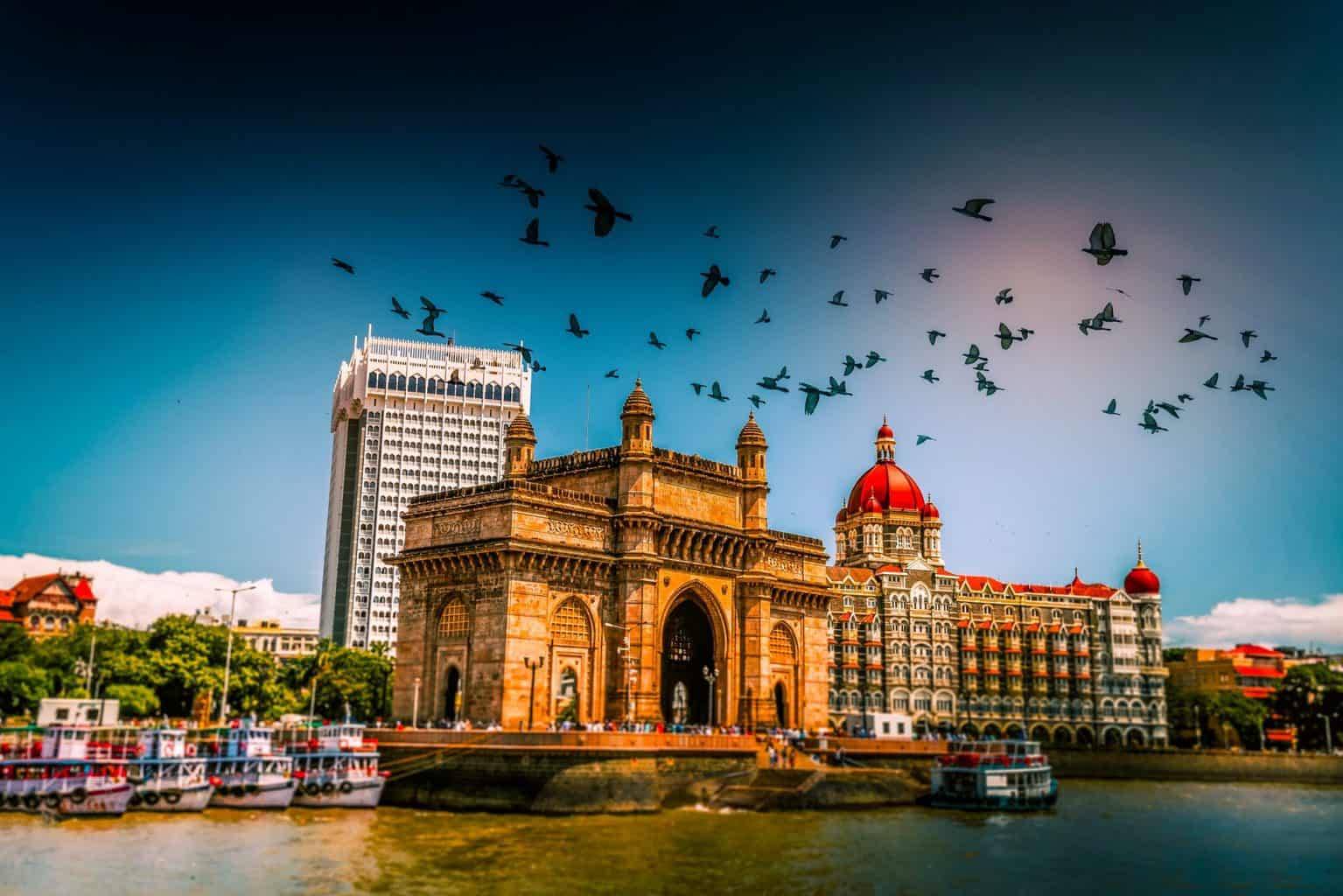
3.Mumbai – the bustling and vibrant city which is one of the most famous cities to visit in India.
This place has a kind of beauty all of its own. Formally known as Bombay, Mumbai is the most populated city in India. Noisy, frantic, and polluted, Mumbai is a melting pot of different cultures, religions, and wealth extremes. Even though the city is developing at a fast rate, unfortunately, you’ll still see many scenes of poverty.
The city is also the birthplace of Indian cinema and there are many theatres to watch movies from all over the world.
A visually impressive city Mumbai has a large metropolitan area comparable to the size of New York’s skyline and a fine but eclectic mix of colonial buildings, stylish bars, colourful bazaars, and shiny new malls. Finding something to do here would not be a problem.
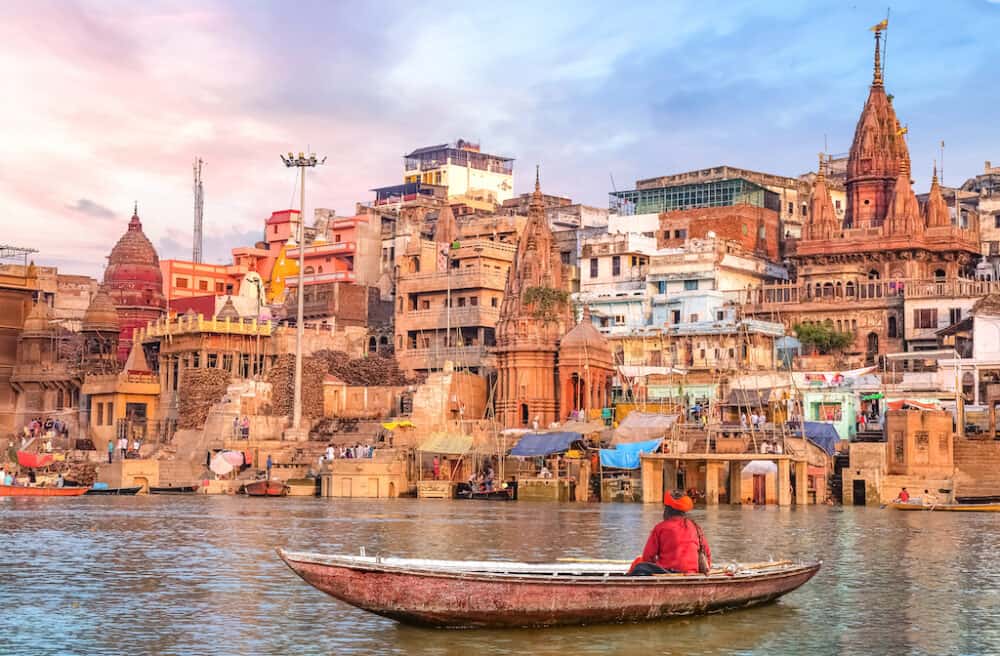
4.Varanasi – an intriguing and beautiful city which is regarded as sacred by Hindus, Buddhists and Jains.
If you wanted to bottle the essence of Hindu spirituality, then Varanasi would be the place to do it. Walking along the ghats along the River Ganges in this Uttar Pradesh city is not an experience that any visitor ever forgets.
While this city is very much alive, it is also fundamentally about death and rebirth. Here you can watch public cremation ceremonies at the Ganges by day and witness the Hindu aarti ritual by night. Aarti is a part of puja (worship) where light is offered to the gods at the different ghats.
Holy men (known as sadhus) as well as babas and aghoris all spend their days down at the ghats. The sadhus are holy men, often swathed in orange, babas are so-called spiritual gurus and aghoris drink the blood of the dead and cover themselves in cremation ashes.
Not all of them have good intentions so be careful. It is common for holy men to be naked and covered in powder or ashes, some adorn their penises and even do tricks with them for tourists. Varanasi is certainly not for the faint-hearted.
5.The backwaters of Kerala – a network of brackish lagoons and a famous beauty spot to visit in India.
The backwaters are a beautiful chain of lakes and lagoons along the Arabian sea coast and are a place in India that definitely shouldn’t be missed – they are considered to be the number one tourist destination in India. Ferries here will take you anywhere and you can even hire a houseboat to stay in.
In the Kuttanad region of Alappuzha you’ll also be treated to boat races, where you will also find snake boats that can hold up to a hundred oarsmen. Thousands of fans line the riverbanks and cheer on their favourite teams which makes for a great atmosphere.
There are dozens of villages and communities throughout this area which you can visit and get a real sense of everyday life and culture in this interesting place.
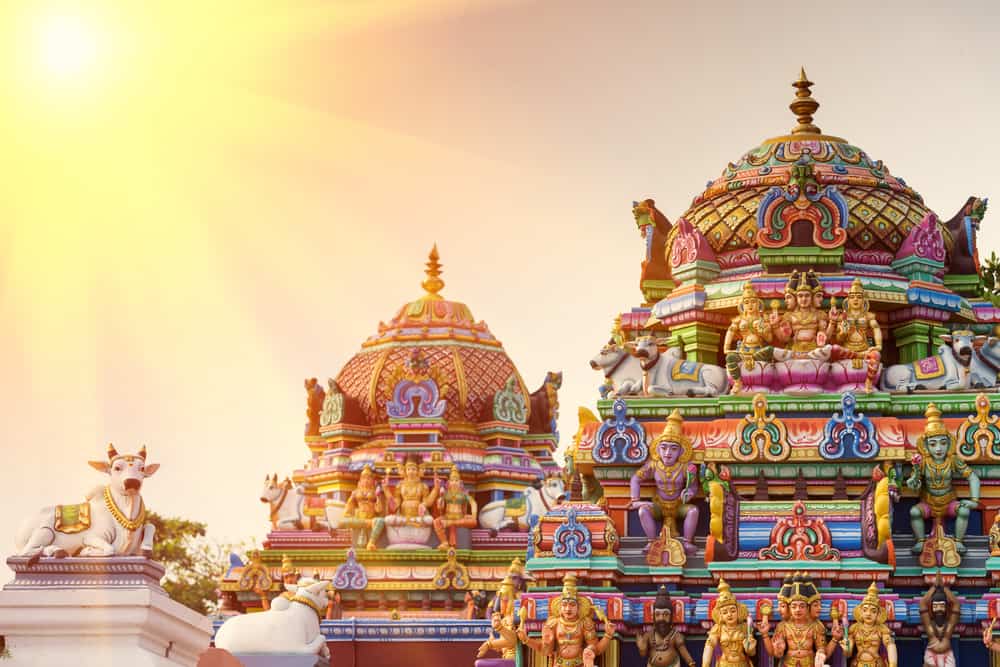
6. Kapaleeshwarar Temple – the temple’s towers were once the tallest structures in one of the oldest cities in India.
Chennai and the state of Tamil Nadu is one of India’s most spiritual regions, with many exquisite Hindu temples and ruins. In the region of Mylapore in Chennai (formerly known as Madras) you can find the wonderful Hindu Kapaleeshwarar Temple. It is dedicated to Lord Shiva with an incredible rainbow-coloured gopuram (tower), with a large pool within its walls.
Nearby is the busy Marina beach, the second longest urban beach in the world, a hectic stretch of land complete with a market and its own lighthouse. At the nearby San Thome Cathedral, you can attend mass and visit the tomb of St Thomas the apostle that resides there.
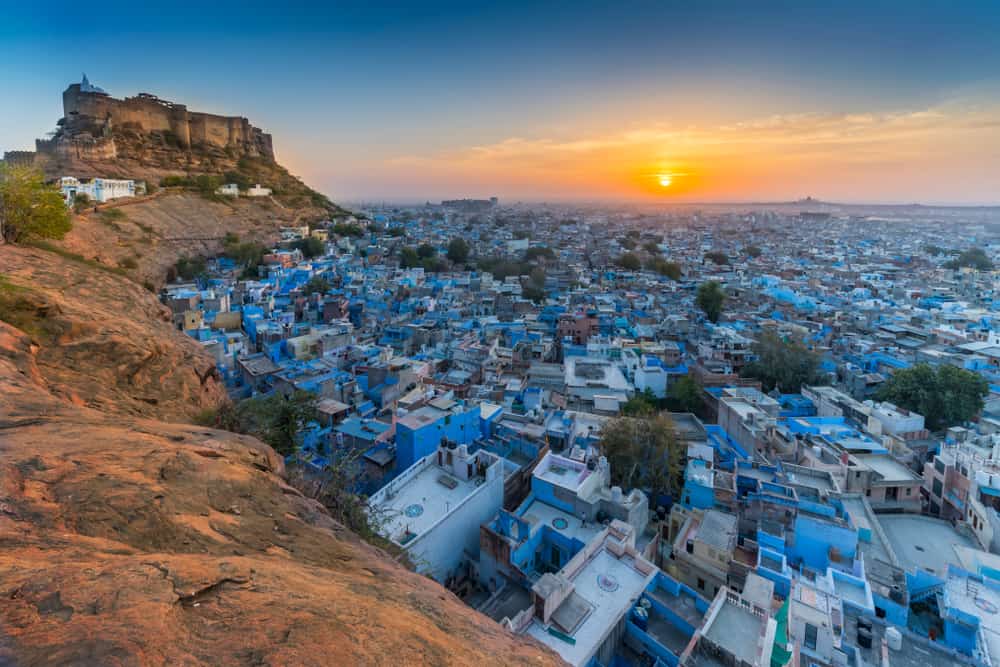
7.Jodhpur – the beautiful and incredible ‘Blue City’
Jodhpur in Rajasthan is known as the ‘Blue City’ as so many of this city’s buildings are painted in a Brahmin blue colour. Residents did this to distinguish themselves as Brahmins.
This isn’t the only history to be found here as it’s also home to the magnificent Mehrangarh Fort. Inside one of India’s largest forts is Maharaja Gaj Singh II’s personal collection of riches, and there are a lot of them, with over 15,000 treasures to see in total.
There are cultural performances that take place in various areas of the fort throughout the day. For those that want even more history, there is also the Umaid Bhawan Palace, the Jaswant Thada marble building, and the beautiful Mandore Gardens
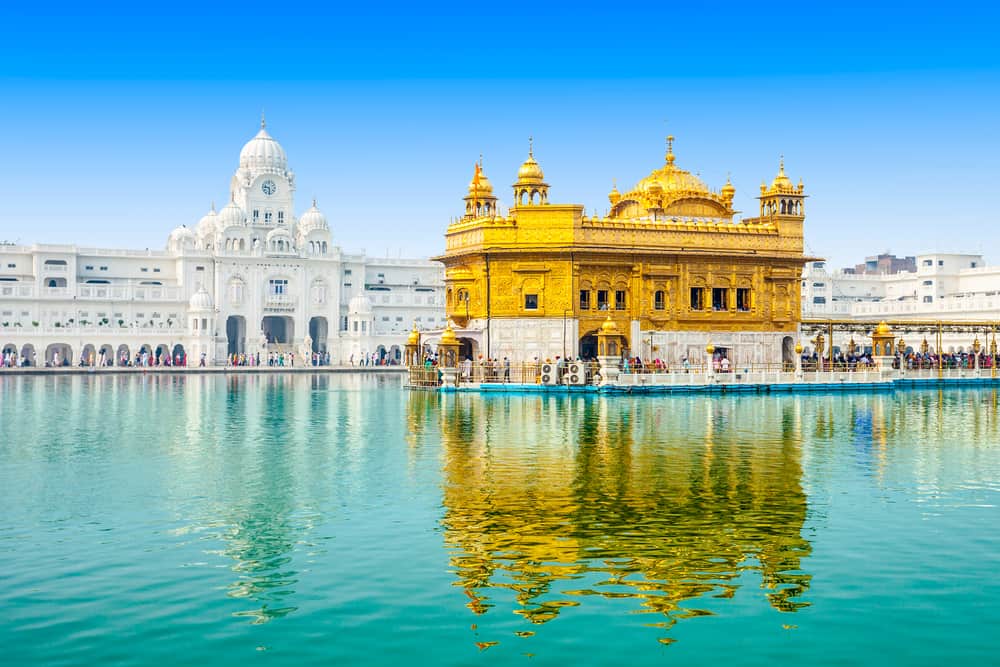
8.Golden Temple in Amritsar, Punjab – a beautiful and spiritual place and the main attraction in the city.
Amritsar is a city close to India’s border with Pakistan that is the beating heart of Punjab as well as a principal place of worship for Sikhs. The Golden Temple (Harmandir Sahib) is considered the holiest shrine in Sikhism and draws people from all over the world to marvel and worship at it. Many tourists return to the temple after darkness falls to listen to the sounds of prayer emanating from it.
Everyone that visits the temple can sit down for a free meal, known as langar, which is served to 50,000 people by hundreds of volunteers every day. The food is made in vats due to the scale of it, and each plate is washed 5 times afterwards. In the early evening, don’t miss the Wagah-Attari border ceremony.
This is an elaborate ceremony performed by the Indian and Pakistani military to show comradeship between the nations.
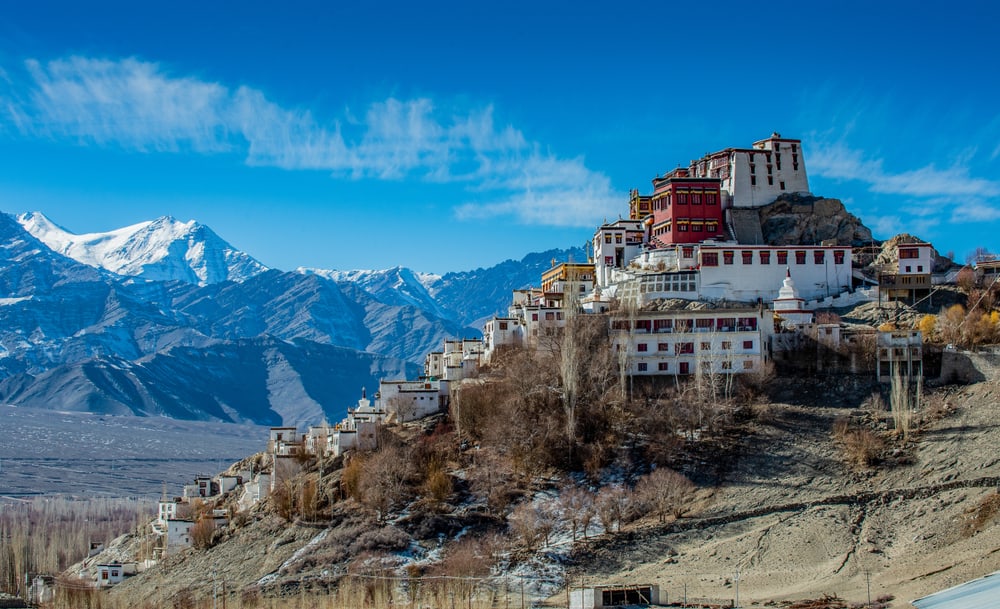
9.Ladakh – a beautiful city located on the crossroads of the historic “Silk Route” .
To be in with a chance of seeing India’s snow leopards, you need to travel up to Leh, in the Northwest corner of the country. Whether you are looking for the elusive leopard or not, Ladakh is a jaw-dropping place to hike through its mountains and valleys.
The town of Leh has its own palace, as well as several Buddhist stupas and monasteries, making it a serene place to spend time at a high altitude.
10. Konkan Coast, Maharashtra – a little-developed shoreline running south from Mumbai all the way to Goa.
The Konkan Coast runs from the city of Mumbai all the way down to Goa, with many serene beaches and interesting attractions along the way. Some of the most beautiful beaches to visit are Alibaug, Kashid, Diveagar, Murud, Karde, and Ganpatipule.
Ganpatipule even has a Ganesh Temple located right on the beach. Winter is a great time to visit as there are dolphin sightings on a daily basis.
This maxim was first stated by Sir Thomas Overbury in his poem “A Wife” (1613): “All the Carnall beauty of my wife is but skin-deep.” He strongly suggests that External attractiveness has no relation to goodness or essential quality. The quote states that physical appearance has nothing to do with one’s character.A good personality is determined by a his/her thoughts.
I comply with the topic, “Personality is more important than looks”. Both of these adjectives fall under two different domains. There is something called Inner Beauty and Outer Beauty. Personality is something that we call inner beauty which refers to the mindset and character of a person and Looks is something that we call outer beauty which simply refers to the physical appearance of a person. In my opinion, looks can never be a factor based on which an individual should be judged. How we look, What’s the colour of our skin, Short or Tall, all these traits are God-Gifted and we ain’t the one who can manipulate it.
Looks or Outer Beauty is the one that can be pretended. There are many ways in which a person can look good, be it Dressing, Make-up, Surgery, or any other treatments but Inner beauty can’t be pretended. It reflects in the behaviour and attitude of a person. A person may possess a very good and dashing appearance but if he doesn’t have morals, ethics, and good personality, he will still be considered evil.
Sometimes, outer beauty gets more significance, for instance, in fashion shows. Over there, the people will rate you according to your looks and appearance. However, even in a fashion show, the contestants need a positive personality. If he/she possesses a negative personality, it will be very difficult for him/her to win the crown because personality reflects in your attitude. Moreover, beauty is just a short – sustaining bonus of nature. It doesn’t last for too long with any individual. As you grow older and older, the beauty starts to fade. The only thing which will remain with us until our last breath is our inner beauty which is our personality, our attitude, and behaviour towards others. Even after demise, people will remember us for our behaviour, kindness, and professionalism and not on the ground of our appearance.
There is a common saying that, “Beauty lies in the eyes of the beholder”. It ravishingly explains that it depends upon the person with whom you are dealing with whether you look attractive to them or not. Not all people will judge you by the looks you possess, some will still consider you beautiful, even if you are not, because of the personality you possess.
However, there are still many people who lack this moral and run after appearance rather than personality. They will pretend in front of everyone that they don’t care for looks but they do. Let’s take an example of George Floyd, a black man who was killed by white police officers in Minneapolis in the United States recently. Worldwide, over millions of people are protesting for him with a phrase, “Black Lives Matter” and the social media platforms are also flooded with these hashtags but deep down we all know that most of them themselves run after physical appearance of the person. When they have to find a bridegroom for their daughters, most of them will try their best to find one with better looks and wealth rather than inner beauty and behaviour, which is the most important one for keeping their daughters happy for a lifetime. So, there’s a drastic need for change in people’s mentality. They should heartily accept that not only Black but all lives matter and look is not a criterion for deciding which person is gentle and which is not.
As a conclusion, I must say that a person should focus on and work on his personality. He should make sure that his behaviour and attitude are not hurting anyone and people consider him a wise and gentle person. Whatever beautifulness and smartness you try to manoeuvre, but at the end of the day, if you don’t get moral pleasure and peace of mind, that you have done right to all those you met throughout the day, you won’t be considered a beautiful person. And this moral pleasure comes from nowhere other than people’s blessings.
So, it doesn’t matter at all whether you are good looking or not, you have to be well-behaved and possess inner beauty and you will be praised everywhere.
As per All India Survey on Higher Education (AISHE), the overall enrolment of female students in higher education has been consistently increasing over the years. Table below gives female, male and total enrolment in higher education between 2015-16 and 2019-20. The enrolment of females has increased by about 18% from 1.60 crore in 2015-16 to 1.89 crore in 2019-20.
Enrolment in Higher Education from 2015-16 to 2019-20
Year
Enrolment
Growth (%) in enrolment over the previous year
% Female enrolment
Female
Male
Total
Female
Male
Total
2015-16
15990058
18594723
34584781
46.2
2016-17
16725310
18980595
35705905
4.6
2.1
3.3
46.8
2017-18
17437703
19204675
36642378
4.3
1.2
2.5
47.6
2018-19
18189500
19209888
37399388
4.3
0.0
2.2
48.6
2019-20
18892612
19643747
38536359
3.9
2.3
3.0
49.0
Growth (%) in enrolment during 2015-16 to 2019-20
18.2
5.6
11.3
(source: Compiled from AISHE reports of different years)
The steps taken/being taken by the Government to promote education among girls and women are as follows:
Issuing of new UGC regulation for Open and Distance Learning that allows entry of reputed institutions to offer education on the distance mode.
Use of ICT technology- SWAYAM portal to take the best teaching resources to all, including the most disadvantaged.
Opening of more centrally funded institutions.
Encouraging opening of institutions by State Governments through the Rashtriya Uchchatar Shiksha Abhiyan (RUSA) which aims to achieve equity, access and excellence in higher education. The scheme supports components such as upgrading autonomous colleges to universities, clustering colleges to establish a university, setting up of new professional colleges in un-served and underserved areas as well as providing infrastructure grants to universities and colleges to scale up capacity.
More scholarship programmes to supplement the cost of education.
Additionally, as per the recommendations of National Education Policy (NEP), 2020, the following steps are being initiated by the Government to ensure equitable access to the highest quality of education for all learners, especially women, regardless of social or economic background:
A Gender Inclusion Fund will be constituted by Government of India to provide quality and equitable education to all girls. The fund will focus on ensuring 100% enrolment of girls in Schooling and a record participation rate in higher education.
Free hostel facilities will be made available for all women.
New multi-disciplinary HEIs (including those specially for women) will be opened in or near every district.
Special scholarships for women/transgender/ divyang will be introduced.
Guidelines and advisories will be issued and monitoring mechanism will be put in place to ensure basic facilities amenities and safe, secure environment in all HEIs for women.
Every country and nation has its specialty. Its recognition is through its tradition, culture, ethnicity, language, animals, birds, etc. Apart from all of this, what truly defines a nation is also a sport. Every nation, city, district, and village holds a lot of pride in their sportspersons. Today my article is going to be something that we have been seeing a lot in recent years. However, it is a sad, bad and disheartening thing it has become obvious in our society and needs a desperate amount of change. My topic is going to be about how people who play sports experience criticism that goes beyond the sport.
Constant Battle with criticism
When a group of members plays on an international level, they represent the entire country in that game. Many people’s expectations are on their shoulders. The players are well aware that many things depend on their performance and sometimes even winning. They prepare themselves every single day to give their hundred percent and do well in the matches. They even prepare themselves for all the hurdles and problems that they have to face during the matches. Nevertheless, what they do not expect is the amount of criticism they receive when they do not do well or sometimes do not win the match. I am not saying the criticism is bad however when the criticism negatively affects the player and their family it is very disheartening and unwelcomed. When I mean criticism, I am not referring to the lapses that we see in the game. I am referring to the troll, backlash, unnecessary boycott, shaming, targeting, death threats, and rape threats to the players and their family members. These are just some of the things that players suffer when their performance is not up to the mark of people’s expectations or have not won the trophy.
We often expect sportsmanship and the right spirit from the players. However, this needs to come from normal people as well or people who watch any kind of sport ardently. Speaking negatively, harshly, rudely is not going to help anyone. If people think that poor performance or not winning does not affect the players of any sport then you are wrong. If we as an audience feel sad or angry about winning or not doing well, imagine the amount of the same feelings that these players go through. Their intensity will be much higher than ours will because these players give their lives away to playing for their country. They work hard and go through rigorous practice and training because they are well aware that they are playing for their country and not just for themselves.
I have often observed people justifying their actions in many ways. It is sad to know that just because these players are good at their sport their identification as human beings are completely lost. They are expected to win and do well every single time. The only time they are given an exemption is when they have a physical injury that will not allow them to play. People forget that just because these sports players are amazing at their work does not mean that they cannot have times when they do not do well. Sportspeople are not robots or even humans who have an unimaginable amount of superpowers that, they will win and do extraordinarily well every single time. Neither should we expect that from them nor should we expect that from ourselves.
It is high time that the ideology of ‘If one is doing well, working hard and giving their hundred percent all the time then they will always win’ goes away from society so that becomes more humane and compassionate for all. People might not know this but giving your hundred percent every single time and trying to win every single time drains an individual constantly until they have nothing left for themselves. This has to change and the acceptance of not doing well or even for that matter, the people should accept not winning.
The other problems that play an important role in the process of criticism are politics, religion, caste, etc. We have been seeing this so much around the world that it often questions the very idea of unity and diversity at least for me. Their personal choices are a medium for people to criticize them negatively so much, so that is nothing less than a traumatic experience. I am not referring just to a few countries; rather I am talking about this problem as a whole. It is not fair that the sportspersons who represent their countries with all their heart and soul be constantly under the radar of negativity and criticism for their religion, caste, etc. It should rather come out as a fact that when these sports players represent their country and play matches with their opponents, they forget about everything else and only focus on making their nation proud and bringing a good name for their country.
The most heart-wrenching thing that has come to my observation is about how this constant criticism drags family members of these sportspeople. This happens not just to members such as parents or wives or siblings but also to their children, which is disgusting and inappropriate. What is worse is that now it has become a trend among people to throw death and rape threats at these players and their family members. This shows that rape has nothing to do with the way women dress rather it has everything to do with the mentality of the people. Even though we are in the 21st-century wives are still responsible for the performance of their husbands in the matches and games. Even his or her family members are in the picture for no joy or valid reason. People solely for creating havoc and problems have constantly intruded on the personal lives of these sportspersons, which need to change.
Social media also plays a major role in spewing negative comments and posts about sports players and their family members. There is constant competition between different fan groups of players though these players in real have nothing between them. It is high time that when people call themselves fans of a sports player, they also have some kind of sportsman spirit in them and behave more ethically towards low performance and not winning.
I wanted to put some examples of these happening with sports players but then I realized that most of the players have gone through this in their life at some point regardless of what sport they play. Putting all of them in this article would not be possible therefore if readers want to know, the things players go through they can check it on the internet, which has all the information out there.
To conclude, I hope this never-ending battle comes to an end. There has been progress and change but it has to keep going on until we win the battle against this negativity and bad situations. There is no victory if people do not support each other and stand for each other through good and bad times and this plays a very important role in the relationship of sportspeople and the people of his country.











:max_bytes(150000):strip_icc():format(webp)/GettyImages-691884219-aa68b0b7cd574136b8269a8b5ef8bb28.jpg)



 Eduindex
You must be logged in to post a comment.