How to rebuild your confidence?

Building and rebuilding confidence

Rebuilding confidence is not the same as building confidence.

  • When building confidence, you’re trying to do something you’re not sure you can do.
  • However, rebuilding confidence means you used to be good but failed at some point. Getting back is much harder to do.
Confidence is essentially about expectations

You think you’ll excel, but considering the probability of success and feeling confident is not that easy.
Framing effects happen when the same thing looks different when the context change. If you’re a good student in a mediocre class, you feel smarter than if you’re a good student in an elite class.

Relearning confidence

When practising a skill that you have forgotten, you may lack the confidence to pick it up again.
However, those doubts are exaggerated. Not remembering is normal, and relearning happens faster than you may expect. Yet, you may still lack self-confidence, which will undermine your self-image and motivation.

Play over Performance

When we improve in a skill, our mindset will start to shift from play to performance. Rebuilding confidence requires you to relive that initial play mindset.

  • Make failures painless. Your first practice should have zero consequences. Do warm-up exercises for low stakes before you put on pressure to perform. However, if you review your skill but continue to get everything wrong, it is a signal to stop.
  • Expect frustration and failure. When you expect failure, it won’t bother you so much when performance suffers. Set the bar lower.
  • Trust the rebuilding process. You don’t need confidence that you will excel, just confidence that you’ll eventually rebuild your confidence.
  • Reframe your expectations. You have no responsibility to live up to other people’s expectations of you.
reference

https://www.scotthyoung.com/blog/2020/07/20/rebuild-confidence/

Time management techniques

Automate Decisions
  • Transfer money to your savings account every time you receive a paycheck
  • Choose all your outfits for your week on Sunday and hang them in the closet in order
  • Subscribe to a weekly fresh delivery of organic vegetables and fruits to your home
  • Standardize the typical daily meals you like the most, saving time in cooking and grocery shopping
  • Prepare your sports bag every night and put it in your car. If you prefer running in the morning, leave your running shoes near the bed
  • Automate all electronic gadgets to go into sleep mode at a certain hour

“Time management is not a peripheral activity or skill. It is the core skill upon which everything else in life depends.” – Brian Tracy

Work Around Your Energy Levels

Productivity is directly related to your energy level.
Find your most productive hours — the time of your peak energy — and schedule Deep Work for those periods. Do low-value and low-energy tasks (also known as shallow work), such as responding to emails or unimportant meetings, in between those hours.

Plan Your Day the Night Before

Before going to bed, spend 5 minutes writing your to-do list for the next day. These tasks should help you move towards your professional and personal goals.
You’ll be better prepared mentally for the challenges ahead before waking up and there won’t be any room for procrastination in the morning. As a result, you’ll work faster and smoother than ever before.

Start the Day with Critical Work

A golden time management technique: Find your most important task (MIT) for the day and tackle it first. 
Your MIT should be the one thing that creates the most impact on your work. Getting it done will give you the momentum and sense of accomplishment early in the day. That’s how big life goals are achieved: small continuous efforts, day after day.

Prioritize Tasks
  • Write down all your tasks.
  • Identify what’s urgent and what’s important. After each task, mark them with “U” for Urgent and “I” for Important. 
  • Assess value: look at your “I” tasks and identify the high-value drivers of your work. You want to find which tasks have priority over others and how many people are impacted by your work
  • Estimate time to complete each task. Order them from the most effort to the least effort.
Delegate or Outsource Tasks
  • Find the right person: he should have all the necessary skills and is capable of doing the job
  • Provide clear instructions: write down the tasks in a step-by-step manual be as specific as possible
  • Define success: be specific about what the expected outcome is and the deadline to have the task completed
  • Clarity: have the tasks explained back to you and offer clarification when something is unclear, rewriting the specifications if needed
Automate Repetitive Tasks

Putting some of your daily tasks on autopilot is key to working smarter.

  • Create canned responses for emails you keep writing over and over again
  • Set reminders in your calendar so you never forget anything
  • Proofread your writing automatically
  • Schedule and automate your social media posts in advance
  • Automatically fill online forms,  saving all your passwords in one place
  • Create spreadsheet templates for reports you have to do weekly/monthly.
Set Time Constraints

Set deadlines even when you don’t need to. Schedule less time to complete tasks and force your brain to focus.
Parkinson’s law states: “work expands to fill the time available for its completion”. So, if you reduce the time you have to complete a task, you force your brain to focus and complete it.

Eliminate Distractions
  • Turn off all notifications on your phone, computer, and tablet
  • Leave your phone in odd places that prevent you from immediately finding it
  • Work with headphones as people are less likely to approach you.
  • If you find interesting articles, save them  to read later, such as during the commute
  • Turn off your Wi-Fi when your tasks don’t require internet connectivity
  • Don’t browse social media at work at all. 
  • Use “Do Not Disturb” functions on chat systems.
  • If you have an office, shut the door.
Track Your Time

Track your time to have real data on your work and uncover insights on how you can improve your productivity.
After a couple of weeks, you’ll start noticing patterns and knowing where and how your time is leaking. By being aware of how exactly you are using your time, you can devise a plan to attack your leaks and how to get rid of them.

The 2-Minute Rule
  • If it can be done in two minutes, just do it. Don’t add it to your to-do list, put it aside for later, or delegate it to someone else. Just do it.
  • If it takes more than two minutes, start it. Once you start acting on small tasks, you can keep the ball rolling. Simply working on it for two minutes will help you break the first barrier of procrastination.
Say No More Often Than Yes

Say “no” by default to anything that doesn’t contribute to your top 5 career goals.
Your time is a limited resource and you can’t let people set your agenda in life.

Use “Gap Time” Effectively:
  • Learn a new skill, either for your professional or personal life
  • Read books or articles you saved for later
  • Organize your computer, folders, calendar or work
  • Plan your week, tomorrow, or the rest of your day
  • Listen to a podcast
  • Learn a language
  • Take a walk and think and let your mind wander
  • Take a productive pause to clear your mind.
80/20 Your Time

The 80 20 rule states that “80% of the output or results will come from 20% of the input or action”. In other words, the little things are the ones that account for the majority of the results.
Use the 80/20 rule in your life and work to prioritize the input that brings the majority of the output.

Break Down Big Tasks

Break down big tasks into smaller ones to avoid procrastinating and help you stay on track to achieve your final goal.
Never put a huge project down as just one to-do on your list. Instead, put bite-sized to-dos that you can do one at a time. Take it to step by step.

Work From the Calendar

Schedule tasks, working from your calendar instead of the to-do list. When an event is consistently scheduled on your calendar, it’s much more likely to transform into an unconscious habit
Using your calendar forces you to rethink your work from tasks to time units. That small change increases the likelihood of getting things done.

reference

https://dansilvestre.com/time-management-techniques/amp/

Indira Gandhi-First Woman Prime Minister Of India

Indira Gandhi, in full Indira Priyadarshini Gandhi, née Nehru, (born November 19, 1917, Allahabad, India—died October 31, 1984, New Delhi), Indian politician who was the first female prime minister of India, serving for three consecutive terms (1966–77) and a fourth term from 1980 until she was assassinated in 1984.

Indira Nehru was the only child of Jawaharlal Nehru, who was one of the chief figures in India’s struggle to achieve independence from Britain, was a top leader of the powerful and long-dominant Indian National Congress (Congress Party), and was the first prime minister (1947–64) of independent India. Her grandfather Motilal Nehru was one of the pioneers of the independence movement and was a close associate of Mohandas (“Mahatma”) Gandhi. She attended, for one year each, Visva-Bharati University in Shantiniketan (now in Bolpur, West Bengal state) and then the University of Oxford in England. She joined the Congress Party in 1938.

Gandhi’s biggest achievement following the 1971 election came in December 1971 with India’s decisive victory over Pakistan in the Indo-Pakistani War that occurred in the last two weeks of the Bangladesh Liberation War, which led to the formation of independent Bangladesh.

She married Feroze Gandhi at the age of 25, in 1942. Their marriage lasted 18 years until he died of a heart attack in 1960.[218] They had two sons—Rajiv (b. 1944) and Sanjay (b. 1946). Initially, her younger son Sanjay had been her chosen heir, but after his death in a flying accident in June 1980, Gandhi persuaded her reluctant elder son Rajiv to quit his job as a pilot and enter politics in February 1981. Rajiv took office as prime minister following his mother’s assassination in 1984; he served until December 1989. Rajiv Gandhi himself was assassinated by a suicide bomber working on behalf of LTTE on 21 May 1991.[219]Gandhi’s yoga guru, Dhirendra Brahmachari, helped her in making certain decisions and also executed certain top level political tasks on her behalf, especially from 1975 to 1977 when Gandhi “declared a state of emergency and suspended civil liberties.

Garibi Hatao Desh Bachao (“Remove poverty, rescue the country”) was the theme and slogan of Indira Gandhi’s 1971 election campaign.It was a famous slogan given by her.

she died on 31 October, 1984.Indian Prime Minister Indira Gandhi was assassinated at 9:29 a.m. on 31 October 1984 at her residence in Safdarjung Road, New Delhi. She was killed by her Sikh bodyguards Satwant Singh and Beant Singh in the aftermath of Operation Blue Star.She was attacked by a gun..38 (9.1mm) revolver and Sterling submachine gun

Salma Sultan gave the first news of the assassination of Gandhi on Doordarshan’s evening news on 31 October 1984, more than ten hours after she was killed.It is alleged by the Indian government that Gandhi’s secretary R. K. Dhawan overruled intelligence and security officials who had ordered the removal of policemen as a security threat, including her assassins.

Pandit Jawahar Lal Nehru- The First Prime Minister Of India

Pandit Jawaharlal Nehru was a leading figure in the Indian Independence struggle. He was the first Prime Minister of Independent India. He had initiated socio-economic policies of the idealistic socialist kind. He was a prolific writer and authored books such as ‘The Discovery of India’ and ‘Glimpses of the World History’

Quick Facts⭕

⭕Born on: 14 November, 1889

⭕Place of Birth: Allahabad, Uttar Pradesh

⭕ IndiaFather’s Name: Motilal Nehru

⭕Mother’s Name: Swarup Rani Nehru

⭕Spouse: Kamala NehruChildren: Indira Gandhi

⭕Education: Harrow School, London; Trinity College, Cambridge; Inns of Court School of Law, London

⭕Occupation: Barrister, Writer, and PoliticianPolitical party:

⭕ Indian National CongressPolitical Ideology: Nationalism, Socialism, Democracy

⭕Award: Bharat RatnaPublications/

⭕Works: The Discovery of India, Glimpses of World History, Jawaharlal Nehru’s Autobiography, Letters from a Father to his Daughter, etc

⭕.Died: 27 May 1964

⭕Place of Death: New Delhi

Children’s Day 2021: It is also known as ‘Bal Diwas’. It is celebrated on November 14, 2021, to commemorate the birth anniversary of India’s first Prime Minister Pandit Jawaharlal Nehru.The day is also recognised across the country to raise awareness about the rights, care, and education of children.

Since 1956, India has been celebrating Children’s Day on November 20. Originally, on November 20, Children’s Day was observed as Universal Children’s Day by the United Nations.After the death of Chacha Nehru in 1964, his birth anniversary began to be celebrated as Children’s Day in the country. His popularity among children was considered and a resolution was passed in parliament to celebrate National Children’s Day in his honour on November 14.

Chacha Nehru was a strong advocate for children’s education and always believed that a newly independent country could only flourish alongside the prosperity of its children. He believed that children were the real strength of a nation and the foundation of society.

How to properly plan out your week

Become more organized

To be successful and reach your goals, you need to be organized.
One first step in this direction refers to starting your day planning: choosing the agenda that works best for you can be a game-changer.

Practice a lot

Acquiring organizational skills, as in getting better at planning, can take a while. While finding the appropriate agenda is essential, making a habit out of using it is just as important.

Plan important moments monthly

When preparing your schedule monthly, make sure to add not only the daily tasks and objectives but also the big moments.
For instance, integrating your friends’ birthdays can prove both useful and time saving for the future.

Establish a day for planning your schedule

Establishing a certain day, when you can sit and plan your next week can prove extremely useful.
For instance, choosing Friday to be that day, seems pretty clever, as this day marks both the end of a working week and, why not, the beginning of another one.

Manage priorities first

To have successful days at work and not only, make sure you keep track of your tasks. Furthermore, taking care first of the priorities should be on everybody’s calendar.

Necessities are the real thing

Whenever you plan your schedule, write down whatever you need to do, but not everything you need to do.
Some tasks do not require being noted down, as they have become part of a daily ritual and can not be forgotten.

Use colours to plan your agenda or not

You choose how you want your planning to look like, therefore avoid trusting too much others’ opinions, but rather choose to prioritize your own.
For instance, using colour appeals to many individuals, but not to everybody. Just choose your style and get started.

reference

https://www.domino.com/content/how-to-plan-your-week/

APJ ABDUL KALAM – The Missile Man Of India

APJ Abdul Kalam Biography, Early Life, Achievements, Quotes will be discussed here. Avul Pakir Jainulabdeen Abdul Kalam, often known as APJ Abdul Kalam, was an outstanding scientist who rose to become India’s 11th President from 2002 to 2007. Kalam worked as a scientific administrator and scientist for over four decades, mainly at the Indian Space Research Organization (ISRO) and the Defence Research and Development Organization (DRDO). He was deeply involved in India’s military missile development activities as well as its civilian space program.

⭕APJ Abdul Kalam Biography⭕

He was given the moniker ‘The Missile Man of India’ to launch technology and ballistic missile development. APJ Abdul Kalam was a key figure in the Pokhran-II Nuclear Tests in 1998. On October 15, 1931, APJ Abdul Kalam was born into an impoverished Tamil Muslim family in the pilgrimage town of Rameswaram, Tamil Nadu. Ashiamma was a homemaker, while his father, Jainulabdeen, was a boat owner and an imam at a local mosque.

⭕APJ Abdul Kalam Early Life⭕

He was an average student at school, but he had a tremendous desire to study and work hard. He loved mathematics and would spend hours studying it. In 1954, he graduated from ‘Saint Joseph’s College, Tiruchirappalli,’ after attending ‘Schwartz Higher Secondary School.’He aspired to be a fighter pilot, but his ambition was dashed when the IAF only had eight seats available, and he was assigned to the ninth.

⭕APJ Abdul Kalam Career⭕

As a researcher, While on the ‘INCOSPAR’ committee, Kalam worked under the great space scientist Vikram Sarabhai. After joining the ‘Defence Research and Development Service,’ he graduated from the ‘Madras Institute of Technology in 1960 and worked as a scientist at the ‘Aeronautical Development Establishment.’ In 1969, Kalam was sent to the Indian Space Research Organization (ISRO). He rose to the project manager position for the country’s most advanced satellite launch vehicle (SLV-III). Under Kalam’s direction, SLV-III successfully launched the ‘Rohini’ satellite into near-Earth orbit in July 1980.In 1970, Kalam took part in a variety of initiatives, including ‘Project Devil.’ He was also a part of the ‘Project Valiant’ group. Despite the project’s failure, it established the groundwork for creating the ‘Prithvi Missile’ in 1980.

⭕APJ Abdul Kalam Achievements⭕

He was a crucial figure in India’s ‘Porkhran-II’ nuclear tests, which took place in May 1998. Kalam became a national hero due to the success of these nuclear tests, and his popularity skyrocketed.He provided various proposals to make India a developed country by 2020 as a technical visionary in technology advancements, agriculture, and nuclear energy.As President, The governing National Democratic Alliance (NDA) nominated Kalam for President in 2002, and he was elected President. On July 25, 2002, he became India’s 11th President, a post he held until July 25, 2007. He was also the third President of India to be awarded the ‘Bharat Ratna’ before taking office.He was popularly known as ‘The People’s President’ because of his working manner and interactions with ordinary people, particularly the young. The signing of the ‘Office of Profit Bill,’ according to Dr. Kalam, was the most difficult choice he made during his presidency.During his presidency, he was chastised for his lack of action in deciding on the fate of mercy petitions that were sent to him. Only one of the 21 mercy requests received his attention. He advocated President’s rule in Bihar in 2005, which was also a contentious choice.

What Is Journalism And Mass Communication ?

Journalism is the activity of gathering, assessing, creating, and presenting news and information. Basically, writing about recent developments. Mass communication is the study of spreading information to a large audience through various means of communication.If mass communication is the activity of dispersing news, journalism is concerned with collection and dissemination of news through the print media as well as the electronic media. This involves various areas of works like reporting, writing, editing, photographing, broadcasting or cable casting news items.  Journalism includes investigating, analysing and reporting local as well as world events, trends, current affairs, and so on. In recent years, the field of mass media and communication has evolved into a partially interactive concept that touches almost every aspect of human life. And, with the sheer proliferation of media into our lives through newspaper, television, and the internet the field of mass communication is gaining popularity like never.

*Why should you pursue a degree in Journalism and Mass Communication?*

📍A degree in Journalism and Mass Communication brings an opportunity to work under/with creative, well-educated people who inspire you to do well. The scope of mass media as a field is increasing and there is never a dearth of job opportunities. One gets the taste of name, fame & money and also travel while working.

⭕Rewarding career

⭕Broaden your network

⭕Social prestige

⭕Travel and gain new experiences

⭕Ample career opportunities

⭕Social networking

⭕Glamour

⭕Brings creativity

⭕Gain skills

⭕Freelancing

*List of Top 10 career options in Journalism and Communication:* *1️⃣Television* *

2️⃣Journalist* *

3️⃣. Digital Marketing Expert* *

4️⃣Radio Jockey(Rj)* *

5️⃣Social Media Executive* *

6️⃣Content Creator/Developer* *

7️⃣Publicity/Advertising Industry* *

8️⃣Public Relations Professionals*

*9️⃣Event Manager*

🔟 *Broadcasting and Production*

 A degree in mass communication opens doors of opportunities in Journalism, Public Relations, Reporting, News Analysis and Advertising.

⭕Teacher’s Day⭕

TEACHER: Talented Educated Adorable Charming Helpful Encouraging Responsible📍Every year on September 5, the birth anniversary of Dr Sarvepalli Radhakrishnan is being celebrated as Teachers’ Day across the country. Radhakrishnan was born in a poor Brahmin family in Andhra Pradesh’s Tiruttani in 1888. He was a bright student and through scholarships completed his studies. A great scholar, philosopher and a Bharat Ratna recipient, Radhakrishnan was the first Vice President and second President of independent India.During his tenure as a President of India (from 1962-67), his students and friends requested him to celebrate his birthday. He replied, “Instead of celebrating my birthday, it would be my proud privilege if September 5 is observed as Teachers’ Day.” Since then, his birthday has been observed as Teachers’ Day. *Fun Games And Activities To Celebrate Teacher’s Day This Year* Teachers play very important roles in shaping the future of your child. Activities for Teacher’s day celebrations are a way to celebrate the unparalleled contribution of the teachers in your child’s life. Teachers love the activities performed and the fun games hosted by students on this day. It gives an opportunity to your child to come closer to her teacher and develop a strong bonding.

⚫ “`Stage Performances“`

⚫Teacher’s Day Games

⚫Arrange Informal Chatting Sessions

⚫ “` “`Thanking The Teachers“`

⚫Arrange A Picnic

⚫ “`Decorate“`

⭕GIFT ITMES To Teachers

1️⃣ Books

2️⃣A Pack of Chocolates

3️⃣Diary

4️⃣Pen Stand

5️⃣Greetings Card

6️⃣A Hand-written Note

7️⃣Cake

8️⃣Perfume And many more.

This is why and how we celebrate teachers day.

10 Advantages Of Digital Marketing

According to HubSpot’s report, digital marketing can help companies achieve a better cost of leads (CPL) than traditional marketing or even telemarketing. Business owners can easily achieve better results by incorporating technology-driven strategies into their marketing.

Companies use various digital marketing activities such as search engine optimization (SEO), social media marketing (SMM), email marketing, search engine marketing (SEM), content creation, and more to promote their brand to potential consumers or build loyalty. clients. More and more small businesses are implementing digital marketing strategies to reach their target consumers online effectively. Many companies, new or established, use digital marketing strategies to reach their target audience online.

As such, online marketing is a great way for a small business or startup to launch their own marketing plans. Digital online marketing saves a lot of money for businesses and companies to reach their target audience compared to traditional marketing.

Targeted and well-planned digital advertising and marketing campaigns can reach the right users in less time and at a lower cost. The greatest benefit of digital marketing is that you can reach your target audience in a cost-effective and measurable way. You can connect with people who match your ideal customers with targeted advertising, stay connected with current customers, and get noticed by people who are actively searching for your products or services online. With traditional marketing, you never know who your investments will reach because results are difficult to measure.

This is difficult for your budget because you can’t change it while the campaign is active for better results. Whereas in the case of traditional marketing, you would have to wait weeks or even months to assess the credibility of the campaign.

Unlike traditional methods, you can see in real-time what’s working and what’s not working for your online business. You can engage in real-time to gain a good understanding of how customers perceive your brand. By optimizing your content in the digital space, you can reach more buyers of your products online. Using relevant keywords can help you describe what you have to offer.

In fact, over time, your website’s traffic will increase and so will your conversion rate. This is a valuable marketing strategy, especially for businesses located in restricted areas like restaurants. Small brands can drive traffic locally and nationally to reach targeted consumers.

According to the report, by 2020, 26 billion gadgets, including smartphones, tablets, home appliances, shoes, glasses and other accessories, are expected to be integrated into a global online ecosystem, which speaks to the importance of digital marketing. Today, over 7.7 billion people around the world use the Internet to find, buy and promote products/services.

Digital platforms are increasingly associated with marketing schemes and everyday life. In today’s digital age, building an online presence and investing in internet marketing versus traditional marketing is essential for a business to survive and thrive. Today, hundreds of thousands of companies are engaged in digital marketing, because it is easier and more convenient for them to reach a large number of people in this way.

Traditionally, businesses reach their target audience through channels such as television, radio, magazines, events, and direct mail. Now that people are spending more time online, companies are trying to reach potential buyers through digital channels. In the age of digitalization, your best strategy would be to meet your customers online, where they already spend a lot of time.

Online marketing is great for businesses as it offers consumers a better and more convenient shopping experience. This high adaptability of online marketing is an important advantage that businesses can take advantage of to offer their consumers the best shopping experience. With online marketing, companies can deliver content to their customers through personalized and low-cost communication.

With all the benefits internet marketing can bring to your business, running a professional internet marketing campaign can further expand your business by bringing in more customers for your product or brand. Internet marketing is a great opportunity to grow your business and get more valuable traffic and sales. Even if you don’t have the budget for SEO or pay-per-click (PPC) advertising, businesses can still use digital marketing to build and connect with their audience.

Social media is one of the most convenient digital marketing methods used to distribute content and increase visibility for your business. Every social media profile you add to your marketing mix is ​​a gateway to your website, and every content you post is another opportunity to acquire a new customer.

Without the use of social media as part of your marketing strategy, it will be much harder for you to connect with anyone outside of your circle of loyal customers. You need to reach people who are interested in your business and want to hear from you.

Of all the benefits, the most significant benefit of online marketing is the ability to target people in a targeted manner. The main advantage of digital marketing is the ability to reach target audiences in a cost-effective and measurable way. Reduce costs: A properly planned and targeted digital marketing campaign can reach the right customers at a fraction of the cost of traditional marketing methods.

Trackable and measurable results. Measuring your online marketing with web analytics and other online tools makes it easy to determine the effectiveness of your campaign. With Google Analytics, you can track statistics and information on your marketing website.

By showing a breakdown of all of this traffic information, these analytics can help you prioritize your marketing channels. Real-time analytics give you a better understanding of the effectiveness of your marketing strategies. With access to this information, you can also optimize your marketing budget by investing in effective marketing campaigns. Digital Online Advertising and Marketing introduces you to these channels and strategies so your potential buyers can see you, learn more about you, and find out what’s important to deliver.

Digital online advertising and marketing help organizations and individuals easily reach audiences around the world. If your business is not limited to a specific location, you can use digital marketing to reach your target audience around the world. Unlike mass marketing, which effectively engages local audiences through radio, newspapers, and print media, Internet marketing allows businesses to build more personal relationships with consumers around the world. You can connect with potential customers online through various digital marketing channels, such as social media platforms (Facebook, Twitter, Google+, LinkedIn, etc.), SEO, email marketing, videos, etc.

As you can see, digital marketing has many benefits that can change how your business reaches and attracts your target market. With our digital marketing training courses, you can learn how to use digital marketing to create a steady stream of new customers and sales every day, regardless of your product, price range, or market. Our team will help your business reap the many benefits of digital marketing by providing various effective services such as Search Engine Optimization (SEO), PPC Management, and Social Media Management.

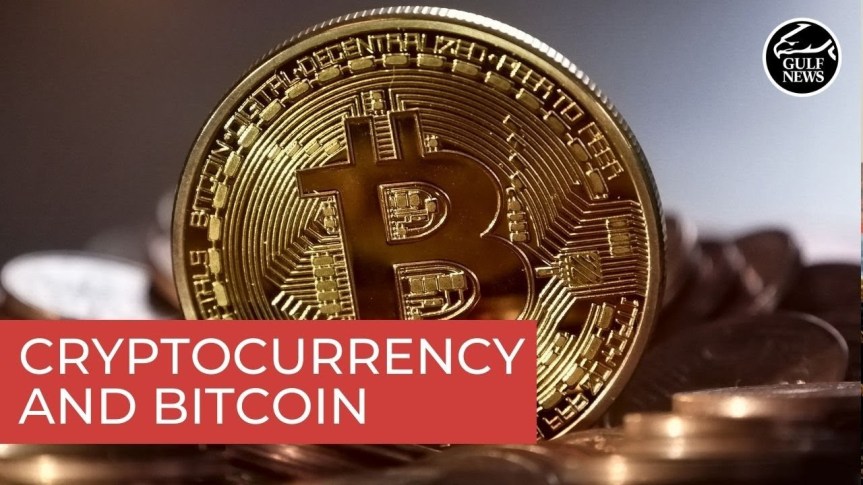
Bitcoin And Cryptocurrency

Bitcoin price volatility makes everyday shopping difficult. The vast majority of Bitcoin transactions take place on cryptocurrency exchanges, not for transactions with merchants. Typically, you create an account with an exchange, and then you can transfer real money to buy cryptocurrencies like Bitcoin or Ethereum.

Coinbase is a popular cryptocurrency exchange where you can create a wallet and buy and sell Bitcoin and other cryptocurrencies. If you are willing to take the risk of owning bitcoins, there are a growing number of digital currency exchanges, such as Coinbase and FTX, where you can buy, sell, and store bitcoins. Any investor can buy cryptocurrencies through cryptocurrency exchanges such as Coinbase, Cash app, etc. Investors can profit from cryptocurrencies by mining bitcoins or simply selling their bitcoins for a profit.

Bitcoin is by far the most popular cryptocurrency followed by other cryptocurrencies such as Etherum, Litecoin and Cardano. Bitcoin is the largest cryptocurrency by market capitalization and a good indicator of the cryptocurrency market in general as other coins like Ethereum (and smaller altcoins) tend to follow trends.

Bitcoin prices have been negatively impacted by numerous hacks or thefts from cryptocurrency exchanges, including Coincheck in January 2018, Bithumb in June, and Bancor in July. As of December 2017, approximately 980,000 bitcoins have been stolen from cryptocurrency exchanges. Bitcoin has been controversial since its inception in 2009, and so have cryptocurrencies that followed.

Bitcoin is a digital currency that operates without any central control or oversight from banks or governments. At the core of the appeal and functionality of Bitcoin and other cryptocurrencies is blockchain technology, which is used to keep an online record of all transactions ever made, thus providing a data structure for this book that is sufficiently secure and public. coordinated by the entire network of one node or by the computer that stores a copy of the registry. In this way, Bitcoin acts as an incentive to add valid transactions to the ledger, eliminating the need for a central trusted authority.

Both Bitcoin and Ethereum experienced short-term price increases, while Musk, Dorsey, and Wood discussed wider institutional adoption of the cryptocurrency. Musk detailed his holdings in cryptocurrencies — Bitcoin, Ethereum, and Dogecoin — at The B Word conference on Wednesday. If you are looking for a tutorial on bitcoin and cryptocurrencies, you are in the right place.

We explore the early days of bitcoin and provide survey data on consumer familiarity, usage, and more. Let’s take a look at the most commonly used aspects of Bitcoin in the real world, such as Bitcoin wallets, wallet mechanisms, mining, transactions, and governance. We present the Ethereum virtual machine and Turing’s idea of ​​completeness and explore some of the major protocol differences between Bitcoin and Ethereum such as the UTXO model and functionality versus accounts. Let’s take a look at how FS companies are using blockchain and how we expect blockchain technology to evolve in the future.

Blockchain also has potential applications far beyond Bitcoin and cryptocurrencies. The first blockchain-based cryptocurrency was Bitcoin, which remains the most popular and most valuable. Bitcoin’s success has spawned a number of competing cryptocurrencies, called “altcoins,” including Litecoin, Peercoin, and Namecoin, as well as Ethereum, Cardano, and EOS. This year, Bitcoin — and cryptocurrencies in general — has penetrated deep into financial services and culture, gaining a foothold in folk art, commerce, and other mainstream fields.

For an overview of cryptocurrencies, start with 2015’s Money Isn’t the Problem. Read the Robinhood review * Seven cryptocurrencies including Bitcoin, Bitcoin Cash, and Ethereum. Read TradeStation Review * Offers trading in five cryptocurrencies including Bitcoin, Bitcoin Cash, and Ethereum.

What You Should Know About Cryptocurrency Investing Cryptocurrency is a highly volatile speculative investment. Here’s how you can invest wisely, regardless of news or bitcoin price fluctuations.

Cryptocurrency (or “crypto”) is a digital currency that can be used to buy goods and services, but an online ledger with strong encryption is used to secure online transactions. Bitcoin [a] (BTC) is a cryptocurrency invented in 2008 by an unknown individual or group of individuals named Satoshi Nakamoto. The value of bitcoin or this cryptocurrency remains highly uncertain. Cryptocurrencies such as bitcoin, ethereum, and litecoin show significant price fluctuations due to high levels of uncertainty.

In addition, cryptocurrencies are not ordinary shares of companies and are not traded on the stock exchange. As NerdWallet authors point out, cryptocurrencies like bitcoin may not be as safe, and some prominent members of the investment community are advising novice investors to avoid them. There are concerns that cryptocurrencies like bitcoin are not based on any tangible asset.

For those considering cryptocurrencies such as Bitcoin as the currency of the future, it should be noted that currencies need stability so that merchants and consumers can determine what a fair price for goods is. While buying and selling Bitcoin is legal, many aspects of the industry, such as tax issues for investors, remain in a gray area that could be vulnerable to future regulatory and/or enforcement actions. The rules and bans that apply to Bitcoin are likely to apply to similar cryptocurrency systems.

Other countries have completely banned the use of bitcoin and other cryptocurrencies, and there are severe penalties for anyone who makes cryptocurrency transactions. Some countries have imposed restrictions on the use of bitcoins, and banks have banned their customers from making transactions in cryptocurrency. The Bank of Indonesia, the country’s central bank, has adopted new rules banning the use of cryptocurrencies, including bitcoin, as a means of payment from January 1, 2018.

The State Bank of Vietnam said it is illegal to issue, supply, and use bitcoin and other cryptocurrencies as means of payment, with fines ranging from VND 150 million (EUR 5,600) to VND 200 million (EUR 7,445). ). On April 16, 2021, the Central Bank of the Republic of Turkey issued a regulation prohibiting the direct or indirect use of cryptocurrencies, including Bitcoin, to pay for goods and services. The European Union has proposed regulation of private crypto transactions in an attempt to stop crypto crime. In July last year, the Federal Reserve launched an investigation into whether to launch its own digital currency.

The Federal Reserve Chairman says the US may need more regulation of cryptocurrencies, but long-term holders of large coins like Ethereum and Bitcoin probably don’t need to worry about changing their strategy, according to experts. As the Fed continues to investigate the digital dollar, which will create competition for major cryptocurrencies such as Bitcoin, Ethereum, Solana, XRP and BNB, the congressman wants to ban state-backed digital currencies. While Fed Chairman Jerome Powell has said that private cryptocurrencies can coexist with central bank-issued digital currencies (CBDCs), the congressman argues that a CBDC would allow the Fed to control Americans, which defeats the very purpose of a decentralized cryptocurrency.


New Delhi World Book Fair 2021 – Virtual Edition

 Union Education Minister Shri Ramesh Pokhriyal ‘Nishank’ inaugurated the New Delhi World Book Fair 2021 – Virtual Edition today.


Addressing on the occasion, the Minister appreciated that ‘National Education Policy-2020’ is the theme of New Delhi World Book Fair 2021. Speaking on NEP, the Minister said, it has emerged as world’s biggest reform, which will develop India not only as the Knowledge hub but will also help in making learners ideal and global citizens.  Recalling Prime Minister Shri Narendra Modi’s quote, ‘the one who reads, leads the nation’, the Minister said that the one who has the capability to read, write and think, can lead in any field.

Shri Pokhriyal congratulated National Book Trust and its entire team for holding the Virtual Edition of Book Fair. He also commended NBT efforts towards providing quality content to the nation and for working towards promoting regional Indian languages.

Minister also launched 17 bilingual titles published by NBT under the implementation policy of the NEP-2020. These titles have been published in Bilingual format under the Bilingual Editions series for Children as per the guidelines of the NEP 2020 with the objective to create supplementary reading materials for children to help them adapt suitably to the multilingual fabric of the country.

Prof. Govind Prasad Sharma, in his address said that India is the world’s third largest publisher of books and it is thus our prerogative that through these books we produce such content that takes forward our rich culture and traditions. He further said that the theme for this year’s NDWBF 2021 is the National Education Policy to discuss the dynamics of its implementation through publishing for various age-groups.

Shri Yuvraj Malik Director, NBT in his address said that the theme of NDWBF-2021 as the National Education Policy-2020 is dedicated to the symbiosis of book reading culture with the vision of the new education policy. He further said that through NDWBF-2021, NBT will host a multitude of authors, writers and educationists, over 20+ webinars, seminars and conclaves to discuss the new education policy. He also said that as the Knowledge Partner of the nation, it is NBT’s responsibility to take steps for knowledge dissemination along with knowledge creation.

The New Delhi World Book Fair 2021-Virtual Edition (6-9 March 2021) will be accessible 24×7 on the virtual platform www.nbtindia.gov.in/ndwbf21

**********


MC/KP/AK

Draft UGC (Academic Collaboration between Indian and Foreign Higher Education Institutions to offer Joint Degree, Dual Degree and Twinning Programmes) Regulations, 2021

 Union Minister of Education Shri Ramesh Pokhriyal ‘Nishank’ today informed that the UGC has placed the draft Regulations on Academic Collaboration between Indian and Foreign Higher Education Institutions to offer Joint Degree, Dual Degree and Twinning Programmes, in the public domain and invited suggestions from all the stakeholders. The Minister sought insights and feedback from the public including the academia and all other stakeholders to enable the Ministry of Education to bring about effective implementation of this aspect of NEP. The Minister also informed that the last date of receiving suggestions/feedback has now been extended to 15th March. Feedback may be sent to ugcforeigncollaboration@gmail.com.

The Government of India is taking a number of initiatives for the implementation of the National Education Policy-2020. The NEP-2020 calls for permitting credits acquired in foreign countries to be counted for the award of a degree. Furthermore, the budget announcement of 2021 proposed regulatory mechanism to permit dual degrees, joint degrees and twinning arrangements. Accordingly, UGC has framed the draft UGC (Academic collaboration between Indian and foreign Higher Education Institutions to offer Joint Degree, Dual Degree and Twinning Programme) Regulations, 2O21.

These Regulations shall apply to Indian Higher Education Institutions intending to collaborate with Foreign Higher Education Institutions leading to award of diploma(s) and degree(s) including Post Graduate and Doctoral programmes, and Foreign Higher Education Institution intending to collaborate with Indian Higher Education Institutions. Academic Collaboration between Indian and foreign higher education institutions under these Regulations shall facilitate Credit Recognition and Transfer, Twinning Arrangement, Joint Degree Programme and Dual Degree Programme.

Under “Twinning Arrangement”, students enrolled with an Indian higher education institution shall be able to undertake their programme of study partly in India, complying with relevant UGC regulations, and partly in the foreign higher education institution. Moreover, credits earned by the students at a foreign education institution shall be counted towards the degree/diploma awarded by the Indian higher education institution. In case of “Joint Degree programme”, the curriculum shall be designed jointly by the collaborating Indian and foreign higher educational institutions and the degree shall be awarded by both the collaborating institutions with a single Certificate bearing the crests and logo of both collaborating institutions, upon completion of the programme. “Dual Degree Programme” under these Regulations shall be conferred by the Indian and foreign higher education institutions, separately and simultaneously, upon completion of degree requirements of both the institutions.

Promotion of foreign academic collaboration shall be strengthened through the introduction of the provisions of joint degree, dual degree and twinning arrangement. This initiative will provide global exposure to the students, multidisciplinary and interdisciplinary education with internationally relevant curriculum, improve employability, attract foreign students to study in India and improve the standing of the Indian universities in international rankings as internationalization is an important parameter.

Click below to see Draft UGC (Academic Collaboration between Indian and Foreign Higher Education Institutions to offer Joint Degree, Dual Degree and Twinning Programmes) Regulations, 2021:

ugc.ac.in/pdfnews/4258186_Draft-UGC-Academic-Collaboration-with-Foreign-HEIs-Regulations-2021.pdf

*****

Unveiling of QS World University Rankings by Subject

 Union Education Minister Shri Ramesh Pokhriyal ‘Nishank’ today addressed at the unveiling of QS World University Rankings by Subject 2021. Shri Amitabh Kant, CEO, NITI Aayog; Chairman, UGC, Prof Dhirendra P Singh; Chairman, NAAC, Dr Virendar S Chauhan, Chairman, AICTE, Dr Anil D Sahasrabudhe; Vice President, QS Rankings, Mr Ben Sowter, Head of Evaluation, QS Rankings, Leigh Kamolins, Head of Institutions being felicitated today and other dignitaries were also virtually present on the occasion.

Addressing on the occasion, the Minister expressed his happiness and congratulated 12 Indian Institutions on securing position in top 100 in the QS Subject Rankings for the year 2021. He said, over the last few years the Government’s continuous focus on improvement and reform in Indian higher education has resulted in significant improvement in the representation of Indian institutions in globally acclaimed and reputed rankings like QS. These rankings and ratings have fostered healthy competition amongst Indian Institutions motivating them towards global excellence, he added.

12 Indian institutions have made it to the top 100 of the world – IIT Bombay, IIT Delhi, IIT Madras, IIT Kharagpur, IISC Bangalore, IIT Guwahati,, IIM Bangalore, IIM Ahmedabad, JNU, Anna University, University of Delhi, and O.P Jindal University .

Amongst these top 100 ranked institutions, IIT Madras has been ranked 30th in the world for Petroleum Engineering, IIT Bombay has been ranked 41st and IIT Kharagpur has been ranked 44th in the world for Minerals and Mining Engineering, and University of Delhi has been ranked 50th in the world for Development Studies.

Union Minister said India’s higher education system plays a vital role in driving the nation’s competitiveness. Today, India is a leading nation with the highest number of higher education institutions across the globe with significant progress in the last few years in terms of enrolment in higher education which now stands at 37.4 million. He also highlighted the achievements of the Government in addressing the gender gap in higher education, wherein now women constitute 48.6% of the total enrolment.

Shri Pokhriyal said new reforms have been brought through NEP 2020 in the Indian Education system under the able leadership of Prime Minister Shri Narendra Modi. Speaking on NEP, he said it stresses on transforming Indian Higher Education into a knowledge superpower in the 21st century. It also has a forward-looking vision for holistic and multidisciplinary education, eliminating the rigid separation of streams. It paves the way towards internationalisation of education and encourages top world-ranked universities to open campuses in India. The future roadmap for the implementation of the policy needs active participation of all stakeholders, he added.


*****

‘Harnessing Education, Research and Skill Development for an Atmanirbhar Bharat’

 The Prime Minister, Shri Narendra Modi addressed the Inaugural session of Webinar on ‘Harnessing Education, Research and Skill Development for an Atmanirbhar Bharat’. The webinar was organized jointly by the Ministries/ Departments of Education, Science & Technology, Biotechnology, Earth Sciences, Skill Development, Space, Pharmaceuticals and Chemicals & Petrochemicals, with the department of Higher Education as the nodal Ministry.  The objective was to brainstorm and discuss ways for effective implementation of Budget provisions regarding education sector, with experts and industry representatives.

Union Education Minister Shri Ramesh Pokhriyal ‘Nishank’, Union Minister for Skill Development and Entrepreneurship Dr. Mahendra Nath Pandey, Union Minister for Chemicals & Fertilizers Shri Sadananda Gowda, MoS Education, Communications, Electronics & IT Shri Sanjay Dhotre, MoS Ports, Shipping & Waterways (IC), Chemicals & Fertilizers Shri Mansukh Mandviya graced the occasion. Principal Scientific Adviser Dr. K. Vijay Raghavan, Former Chairman, ISRO and Chairman, drafting committee of NEP Dr. K. Kasturirangan, Chairman ISRO Dr. K Sivan, Chairman AICTE Prof. Anil Sahasrabudhe and Secretaries to the Government of India including other dignitaries participated in the Webinar virtually.  Secretary, HE Shri Amit Khare and Secretary, DoSEL also attended the meeting.

https://twitter.com/DrRPNishank/status/1366973223695310848?s=20

In the Inaugural address, the Prime Minister, Shri Narendra Modi pointed out that to build a self-reliant India, confidence of the youth of the country is equally important. Confidence comes only when the youth has complete faith in their education and knowledge. Confidence comes only when they realize that their studies are giving them the opportunity to do their work and also the necessary skills. He said that the new National Education Policy has been made with this thinking. He stressed the need to implement all the provisions of the National Education Policy from pre-nursery to PhD quickly and said that the Budget will be of immense help in this regard.

The Prime Minister said the second biggest focus after health in this year’s budget is on education, skill, research and innovation. He called for a better synergy between Colleges and Universities of the country. He said the emphasis placed in this budget on skill development, upgradation and apprenticeship is unprecedented. This budget has further expanded the efforts made to link Education with Employability and Entrepreneurial Capabilities over the years. As a result of these efforts, he said, today India has come in the top three countries in terms of scientific publications, number of PhD scholars and start-up ecosystem. He said India has joined the top 50 ranks in Global Innovation Index and is continuously improving. He said new opportunities are growing for the students and young scientists with the constant focus on higher education, research and innovation.

The Prime Minister said for the first time, the focus is on issues ranging from Atal Tinkering Labs in schools to Atal Incubation Centers in higher institutions. A new tradition of Hackathons for start ups has been created in the country, which is becoming a huge force for both the youth and industry of the country. He further informed that through the National Initiative for Developing and Harnessing Innovation, more than 3500 start ups are being nurtured. Similarly, under the National Super Computing Mission, three supercomputers: Param Shivay, Param Shakti and Param Bramha have been established in IIT BHU, IIT-Kharagpur and IISER, Pune. He informed that more than a dozen institutes in the country are proposed to get such supercomputers. Three Sophisticated Analytical and Technical Help Institutes (SATHI) are serving from IIT Kharagpur, IIT Delhi and BHU, he said.

The Prime Minister said with the thinking that restricting knowledge and research is a great injustice to the country’s potential, many avenues in sectors like space, atomic energy, DRDO and agriculture are being opened for talented youth. He said for the first time, the country has met the international standards related to Metrology which leads to R&D and improving our Global Competency a lot. Geo-spatial data has been opened up recently and this would lead to immense opportunity for the space sector and the youth of the country. The entire ecosystem will benefit immensely. He said the National Research Foundation is being built for the first time in the country. 50 thousand crore rupees have been allocated for this. This will strengthen the governance structure of the research related institutions and will improve linkages between R&D, academia and industry. The Prime Minister said, more than 100 per cent increase in Biotechnology research is indicative of the Government’s priorities. He called for increasing the scope of Biotechnology research in the service of food security, nutrition and agriculture.

Noting the demand for Indian talent, the Prime Minister emphasized the need for mapping of skill sets and preparing the youth accordingly through adoption of best practices, inviting international campuses and industry ready skill upgradation. Ease of Doing Apprenticeship Program envisaged in this Budget will be of great benefit for the youth of the country, The Prime Minister said.

Shri Modi said Future Fuel and Green Energy are essential for our self reliance on Energy. For this Hydrogen Mission announced in the Budget is a serious pledge. He informed that India has tested Hydrogen vehicle and called for concerted efforts for making hydrogen as a fuel for transport and to make ourselves industry ready for this.

The Prime Minister said the new National Education Policy has encouraged the use of more and more local language. He added now it is the responsibility of all the academics, experts of every language, how the best content of the country and the world should be prepared in Indian languages. This is completely possible in this era of technology. National Language Translation Mission proposed in the Budget will go a long way in this regard, he asserted.

The Webinar included following 6 parallel Break away sessions:

  • Promoting Research & Innovation in a multidisciplinary Environment
  • Using Glue Grant to Develop Education Hubs
  • Deep Ocean Mission
  • Making India Skill Capital of The World
  • Reinvigorating Human Capital Through Excellence In Education And Multilingualism
  • Augmenting Learning Through Digital Education


Union Education Minister Shri Ramesh Pokhriyal ‘Nishank’ chaired the Valedictory Session of webinar on ‘Harnessing Education, Research and Skill Development for an Atmanirbhar Bharat’ Union Minister for Skill Development and Entrepreneurship Dr. Mahendra Nath Pandey, MoS Education, Communications, Electronics & IT Shri Sanjay Dhotre, including other dignitaries participated in the Webinar virtually. 

Addressing the Valedictory Session Shri Pokhriyal said that Prime Minister Shri Narendra Modi has laid the foundation of AtmaNirbhar Bharat. As envisioned by the Prime Minister the idea of “Jai Anusandhan” will lead to a Shresth, Swasth and Saksham Bharat. The Minister stressed on the need to encourage the initiatives of ‘vocal for local’ and ‘local to global’. The idea behind these initiatives is to promote local culture, languages and nurture skills of people at a local level and to take it the global platform. He called for concerted and collaborative effort of all the ministries, universities, faculty and students for the smooth implementation of New Education Policy.


Dr Mahendra Nath Pandey said that strengthening Skill development will empower the youth of the country. Skilling, reskilling and upskilling will help in realizing the vision of an Atmanirbhar Bharat. The Minister informed that Skill Development Centres are actively working in 69 districts. This network of skill development centres will be further extended nationwide, he added. He further stated that Skill Development Ministry and Ministry of Education will collaborate for successful implementation of NEP 2020.


Shri Sanjay Dhotre expressed his gratitude to the Prime Minister for sharing his vision on holistic transformation of education sector. He said that the NEP 2020 encourages use of local languages on a larger scale. It is the responsibility of educationists and language experts to ensure that the best educational content is available for our students and technology can make this happen, he added.


                                                                       ****          


Kendriya Vidyalayas displaying educational toys in the India Toy Fair

 Students of Kendriya Vidyalaya Sangathan are participating enthusiastically in the India Toy Fair 2021. The total number of registrations from KVS is approx. 3.5 lakhs.

Prime Minister Shri Narendra Modi inaugurated the India Toy Fair on 27th February 2021. While inaugurating the Fair Prime Minister Said, there is so much strength hidden in the toy industry of our country. Increasing this strength and increasing its identity is a big part of the Aatmanirbhar Bharat campaign.

Three KendriyaVidyalayas from all over the country have been selected to display their Stalls in the Fair. KV JNU from Delhi Region, KV No. 1 AFS Gurugram and KV IIT Kanpur are displaying their unique toys in this fair.

KVs are present in Hall No. 9, where Learning and Educational Toys are being displayed. KV JNU can be visited at stall no i347, while KV IIT Kanpur is displaying its toys at stall No. i1550 and KV No. 1 AFS Gurugram is present at stall no. i361.

KV JNU is showing 25 toys including animal puppets used to narrate various stories, dancing acrobat skeleton, lungs balloon, nose bug etc.

KV IIT Kanpur is displaying 33 toys on its stall having board games, digital games, mechanical games and Science Activitygames including Rolling Joker, Paper Puppets, Dynamic Doll, Knowledge Express, Way Maker, Touching Slate, COVID Rakshak, Toy Parachute etc.

KV No. 1 AFS Gurugram has incorporated 14 toys on its stall having Addition Machine, Word Housie, Hydraulic Brake System, JodGadi, NalTarang, Probino etc.

In the first-of-its-kind initiative where all types of Traditional and Modern Toys are being displayed taking children into a unique world of Indian Toys, the Students of KendriyaVidyalayas are actively participating.

The India Toy Fair is being held from February 27 to March 2, 2021. It is an opportunity for children to participate in various activities, including craft demonstrations on traditional toy-making and virtual visits to toy museums and factories.

*****