Unveiling of QS World University Rankings by Subject

 Union Education Minister Shri Ramesh Pokhriyal ‘Nishank’ today addressed at the unveiling of QS World University Rankings by Subject 2021. Shri Amitabh Kant, CEO, NITI Aayog; Chairman, UGC, Prof Dhirendra P Singh; Chairman, NAAC, Dr Virendar S Chauhan, Chairman, AICTE, Dr Anil D Sahasrabudhe; Vice President, QS Rankings, Mr Ben Sowter, Head of Evaluation, QS Rankings, Leigh Kamolins, Head of Institutions being felicitated today and other dignitaries were also virtually present on the occasion.

Addressing on the occasion, the Minister expressed his happiness and congratulated 12 Indian Institutions on securing position in top 100 in the QS Subject Rankings for the year 2021. He said, over the last few years the Government’s continuous focus on improvement and reform in Indian higher education has resulted in significant improvement in the representation of Indian institutions in globally acclaimed and reputed rankings like QS. These rankings and ratings have fostered healthy competition amongst Indian Institutions motivating them towards global excellence, he added.

12 Indian institutions have made it to the top 100 of the world – IIT Bombay, IIT Delhi, IIT Madras, IIT Kharagpur, IISC Bangalore, IIT Guwahati,, IIM Bangalore, IIM Ahmedabad, JNU, Anna University, University of Delhi, and O.P Jindal University .

Amongst these top 100 ranked institutions, IIT Madras has been ranked 30th in the world for Petroleum Engineering, IIT Bombay has been ranked 41st and IIT Kharagpur has been ranked 44th in the world for Minerals and Mining Engineering, and University of Delhi has been ranked 50th in the world for Development Studies.

Union Minister said India’s higher education system plays a vital role in driving the nation’s competitiveness. Today, India is a leading nation with the highest number of higher education institutions across the globe with significant progress in the last few years in terms of enrolment in higher education which now stands at 37.4 million. He also highlighted the achievements of the Government in addressing the gender gap in higher education, wherein now women constitute 48.6% of the total enrolment.

Shri Pokhriyal said new reforms have been brought through NEP 2020 in the Indian Education system under the able leadership of Prime Minister Shri Narendra Modi. Speaking on NEP, he said it stresses on transforming Indian Higher Education into a knowledge superpower in the 21st century. It also has a forward-looking vision for holistic and multidisciplinary education, eliminating the rigid separation of streams. It paves the way towards internationalisation of education and encourages top world-ranked universities to open campuses in India. The future roadmap for the implementation of the policy needs active participation of all stakeholders, he added.


*****

‘Harnessing Education, Research and Skill Development for an Atmanirbhar Bharat’

 The Prime Minister, Shri Narendra Modi addressed the Inaugural session of Webinar on ‘Harnessing Education, Research and Skill Development for an Atmanirbhar Bharat’. The webinar was organized jointly by the Ministries/ Departments of Education, Science & Technology, Biotechnology, Earth Sciences, Skill Development, Space, Pharmaceuticals and Chemicals & Petrochemicals, with the department of Higher Education as the nodal Ministry.  The objective was to brainstorm and discuss ways for effective implementation of Budget provisions regarding education sector, with experts and industry representatives.

Union Education Minister Shri Ramesh Pokhriyal ‘Nishank’, Union Minister for Skill Development and Entrepreneurship Dr. Mahendra Nath Pandey, Union Minister for Chemicals & Fertilizers Shri Sadananda Gowda, MoS Education, Communications, Electronics & IT Shri Sanjay Dhotre, MoS Ports, Shipping & Waterways (IC), Chemicals & Fertilizers Shri Mansukh Mandviya graced the occasion. Principal Scientific Adviser Dr. K. Vijay Raghavan, Former Chairman, ISRO and Chairman, drafting committee of NEP Dr. K. Kasturirangan, Chairman ISRO Dr. K Sivan, Chairman AICTE Prof. Anil Sahasrabudhe and Secretaries to the Government of India including other dignitaries participated in the Webinar virtually.  Secretary, HE Shri Amit Khare and Secretary, DoSEL also attended the meeting.

https://twitter.com/DrRPNishank/status/1366973223695310848?s=20

In the Inaugural address, the Prime Minister, Shri Narendra Modi pointed out that to build a self-reliant India, confidence of the youth of the country is equally important. Confidence comes only when the youth has complete faith in their education and knowledge. Confidence comes only when they realize that their studies are giving them the opportunity to do their work and also the necessary skills. He said that the new National Education Policy has been made with this thinking. He stressed the need to implement all the provisions of the National Education Policy from pre-nursery to PhD quickly and said that the Budget will be of immense help in this regard.

The Prime Minister said the second biggest focus after health in this year’s budget is on education, skill, research and innovation. He called for a better synergy between Colleges and Universities of the country. He said the emphasis placed in this budget on skill development, upgradation and apprenticeship is unprecedented. This budget has further expanded the efforts made to link Education with Employability and Entrepreneurial Capabilities over the years. As a result of these efforts, he said, today India has come in the top three countries in terms of scientific publications, number of PhD scholars and start-up ecosystem. He said India has joined the top 50 ranks in Global Innovation Index and is continuously improving. He said new opportunities are growing for the students and young scientists with the constant focus on higher education, research and innovation.

The Prime Minister said for the first time, the focus is on issues ranging from Atal Tinkering Labs in schools to Atal Incubation Centers in higher institutions. A new tradition of Hackathons for start ups has been created in the country, which is becoming a huge force for both the youth and industry of the country. He further informed that through the National Initiative for Developing and Harnessing Innovation, more than 3500 start ups are being nurtured. Similarly, under the National Super Computing Mission, three supercomputers: Param Shivay, Param Shakti and Param Bramha have been established in IIT BHU, IIT-Kharagpur and IISER, Pune. He informed that more than a dozen institutes in the country are proposed to get such supercomputers. Three Sophisticated Analytical and Technical Help Institutes (SATHI) are serving from IIT Kharagpur, IIT Delhi and BHU, he said.

The Prime Minister said with the thinking that restricting knowledge and research is a great injustice to the country’s potential, many avenues in sectors like space, atomic energy, DRDO and agriculture are being opened for talented youth. He said for the first time, the country has met the international standards related to Metrology which leads to R&D and improving our Global Competency a lot. Geo-spatial data has been opened up recently and this would lead to immense opportunity for the space sector and the youth of the country. The entire ecosystem will benefit immensely. He said the National Research Foundation is being built for the first time in the country. 50 thousand crore rupees have been allocated for this. This will strengthen the governance structure of the research related institutions and will improve linkages between R&D, academia and industry. The Prime Minister said, more than 100 per cent increase in Biotechnology research is indicative of the Government’s priorities. He called for increasing the scope of Biotechnology research in the service of food security, nutrition and agriculture.

Noting the demand for Indian talent, the Prime Minister emphasized the need for mapping of skill sets and preparing the youth accordingly through adoption of best practices, inviting international campuses and industry ready skill upgradation. Ease of Doing Apprenticeship Program envisaged in this Budget will be of great benefit for the youth of the country, The Prime Minister said.

Shri Modi said Future Fuel and Green Energy are essential for our self reliance on Energy. For this Hydrogen Mission announced in the Budget is a serious pledge. He informed that India has tested Hydrogen vehicle and called for concerted efforts for making hydrogen as a fuel for transport and to make ourselves industry ready for this.

The Prime Minister said the new National Education Policy has encouraged the use of more and more local language. He added now it is the responsibility of all the academics, experts of every language, how the best content of the country and the world should be prepared in Indian languages. This is completely possible in this era of technology. National Language Translation Mission proposed in the Budget will go a long way in this regard, he asserted.

The Webinar included following 6 parallel Break away sessions:

  • Promoting Research & Innovation in a multidisciplinary Environment
  • Using Glue Grant to Develop Education Hubs
  • Deep Ocean Mission
  • Making India Skill Capital of The World
  • Reinvigorating Human Capital Through Excellence In Education And Multilingualism
  • Augmenting Learning Through Digital Education


Union Education Minister Shri Ramesh Pokhriyal ‘Nishank’ chaired the Valedictory Session of webinar on ‘Harnessing Education, Research and Skill Development for an Atmanirbhar Bharat’ Union Minister for Skill Development and Entrepreneurship Dr. Mahendra Nath Pandey, MoS Education, Communications, Electronics & IT Shri Sanjay Dhotre, including other dignitaries participated in the Webinar virtually. 

Addressing the Valedictory Session Shri Pokhriyal said that Prime Minister Shri Narendra Modi has laid the foundation of AtmaNirbhar Bharat. As envisioned by the Prime Minister the idea of “Jai Anusandhan” will lead to a Shresth, Swasth and Saksham Bharat. The Minister stressed on the need to encourage the initiatives of ‘vocal for local’ and ‘local to global’. The idea behind these initiatives is to promote local culture, languages and nurture skills of people at a local level and to take it the global platform. He called for concerted and collaborative effort of all the ministries, universities, faculty and students for the smooth implementation of New Education Policy.


Dr Mahendra Nath Pandey said that strengthening Skill development will empower the youth of the country. Skilling, reskilling and upskilling will help in realizing the vision of an Atmanirbhar Bharat. The Minister informed that Skill Development Centres are actively working in 69 districts. This network of skill development centres will be further extended nationwide, he added. He further stated that Skill Development Ministry and Ministry of Education will collaborate for successful implementation of NEP 2020.


Shri Sanjay Dhotre expressed his gratitude to the Prime Minister for sharing his vision on holistic transformation of education sector. He said that the NEP 2020 encourages use of local languages on a larger scale. It is the responsibility of educationists and language experts to ensure that the best educational content is available for our students and technology can make this happen, he added.


                                                                       ****          


Kendriya Vidyalayas displaying educational toys in the India Toy Fair

 Students of Kendriya Vidyalaya Sangathan are participating enthusiastically in the India Toy Fair 2021. The total number of registrations from KVS is approx. 3.5 lakhs.

Prime Minister Shri Narendra Modi inaugurated the India Toy Fair on 27th February 2021. While inaugurating the Fair Prime Minister Said, there is so much strength hidden in the toy industry of our country. Increasing this strength and increasing its identity is a big part of the Aatmanirbhar Bharat campaign.

Three KendriyaVidyalayas from all over the country have been selected to display their Stalls in the Fair. KV JNU from Delhi Region, KV No. 1 AFS Gurugram and KV IIT Kanpur are displaying their unique toys in this fair.

KVs are present in Hall No. 9, where Learning and Educational Toys are being displayed. KV JNU can be visited at stall no i347, while KV IIT Kanpur is displaying its toys at stall No. i1550 and KV No. 1 AFS Gurugram is present at stall no. i361.

KV JNU is showing 25 toys including animal puppets used to narrate various stories, dancing acrobat skeleton, lungs balloon, nose bug etc.

KV IIT Kanpur is displaying 33 toys on its stall having board games, digital games, mechanical games and Science Activitygames including Rolling Joker, Paper Puppets, Dynamic Doll, Knowledge Express, Way Maker, Touching Slate, COVID Rakshak, Toy Parachute etc.

KV No. 1 AFS Gurugram has incorporated 14 toys on its stall having Addition Machine, Word Housie, Hydraulic Brake System, JodGadi, NalTarang, Probino etc.

In the first-of-its-kind initiative where all types of Traditional and Modern Toys are being displayed taking children into a unique world of Indian Toys, the Students of KendriyaVidyalayas are actively participating.

The India Toy Fair is being held from February 27 to March 2, 2021. It is an opportunity for children to participate in various activities, including craft demonstrations on traditional toy-making and virtual visits to toy museums and factories.

*****

School Education and Literacy to celebrate iconic week from 17th January – 21st January,2022

 Department of School Education and Literacy will be celebrating the iconic week under Azadi ka Amrit Mahotsav  from 17th January – 21st January,2022.

As part of the iconic week, the Department of School Education and Literacy will organize a series of events . These will include a two-day  International webinar on Toys  and Games to Play, Make and Learn,  27th National Annual Conference of Sahodaya School Complexes and a webinar on Inclusive Education.

The Webinar on Inclusive Education will be organised in partnership with Atal Innovation Mission (AIM), on 17.01.2022 through virtual and physical mode. The theme of the webinar will be ‘Ed Tech start-ups focused on children with special needs’.  Senior Officers of the Ministry of Education, Principals  State IE coordinators, parents and other Stakeholders will participate in the event. The main objective of the webinar is to make parents and teachers aware about the technology and assistive devices available for children with Special Needs.

CBSE will organize the 27th edition of National Conference of its Sahodaya School Complexes on the theme ‘PUNARNAVA – REDISCOVERY OF INDIA @75’ in collaboration with the Sahodaya School Complex, Gwalior on 17th and 18th January 2022 in a hybrid mode.The conference aims to engage participants in co-creating and contributing towards a sustainable future. It also aims at enabling the Principals and Management of CBSE affiliated schools to understand the new policies and innovative practices that have been launched by the Board in pursuance of  NEP 2020.

A two day International Webinar will be organised on 20th and 21st January 2022, with the aim of rediscovering the role of toys in cognitive development of children and to promote the art of creating toys with help of low/no cost materials which are not only environmentally sustainable but ignite creativity collaboration and problem-solving skills in children. During two days of the Webinar, focus will be on different aspects of toys at all stages of school education across all subjects and their mapping; pedagogical implications of toys; toys and games as learning through play and make; living/ local tradition of toy making; courses for designing toys and games as skill courses in school Education etc. The outcome of the Webinar will lay a roadmap for infusion and integration of toys and games in education at all stages.

The Department of Higher Education is also being organized from 10th January – 17th January, 2022 under the name ‘National Innovation Week’. The Innovation week  highlighted the various initiatives undertaken to spread awareness to promote innovation and entrepreneurship in India.  An E-Symposium on ‘Building Innovation Ecosystem in Educational Institutions’, webinar on cyber security empowerment of Higher Education Institutions, virtual launch of capacity building of faculty as master trainers for Community Based Participatory Research (CBPR) as part of Unnat Bharat were organized during the iconic week.

*****

Online workshop for Universities and Colleges on Intellectual Property Rights (IPR)

 University Grants Commission today organised online workshop for Universities and Colleges on Intellectual Property Rights (IPR) under the iconic week of Ministry of Education.  Smt. Neeta Prasad, Joint Secretary (ICC & Vig.) Department of Higher Education, Ministry of Education, Shri Rajendra Ratnoo, Joint Secretary, DPIIT  & CGPDTM, Ministry of Commerce & Industry and Prof. Rajnish Jain, Secretary, UGC addressed the Inaugural session.

Delivering the welcome address, Prof. Rajnish Jain, Secretary, UGC highlighted the importance of IPR and its importance in the image of the country and its relevance in building the knowledge pool of the country and its legal aspects. He shed light on the historical aspect of India’s position as creator and innovator. He expressed hope in the day’s deliberations in creating awareness about IPR.

Delivering the Special Address, Smt. Neeta Prasad, Joint Secretary (ICC & Vig.) Department of Higher Education, Ministry of Education  stressed upon importance of Intellectual Property as foundation of innovation, research and creativity. She focused shared that necessary steps have been taken in India to create a robust innovation and IPR culture in the country which has resulted in significantly improving the relevant innovation and IP numbers, be it the IP filing, IP grant and IP disposals. However, inspite of all changes India is behind a lot of countries in terms of IPR. She stressed that the reason could be a lack of awareness in students for filing of patents.

She shared about the Government’s initiative in the areas like the KAPILA programme launched for IP literacy and awareness in October 2020, the reduction in the fee for filing the patent. She concluded by suggesting that the way forward was by proactively protecting knowledge and inventions by respective IPRs not only in India but also in other countries.

Keynote address was delivered by Shri Rajendra Ratnoo, Joint Secretary, DPIIT  & CGPDTM, Ministry of Commerce & Industry who said that there is a need for converting energy into synergy by coming together. He said that there was a need to collaborate instead of working in silos. He further stressed that innovation and creation in both art and science that need to be promoted and that collective cultural heritage needs to be protected.

He further said that partnership between industry, academia and registry of IPR is importance.

The inaugural session was followed by the technical session which was addressed by experts from the field of IP that gave an overview on the theme.

Dr. Usha Rao, Assistant Controller of Patents & Designs presented an overview of Intellectual Property Rights. She provided an insight into the need and importance of IPR and the different types of IP and their governing bodies. She also shed light on the various acts and rules of IPR in India. She also discussed the various ways of filing the patent processes.

The second expert for the technical round was Shri Sukhdeep Singh Assistant Controller of Patents & Designs. He addressed the various schemes and privileges for Educational Institutes in the field of IPR. He concluded by stating that the way forward involved the establishment of IP management cells in Universities, have master trainers and establishing TISCs.

The webinar ended with the vote of thanks by Dr. Surender Singh, Additional Secretary UGC.  The webinar discussed pertinent aspects of IPR for HEIs and was an important step towards IPR awareness.

*****

Assistive Technology Innovation Showcase for Inclusive Education

 Minister of State for Education Shri Subhas Sarkar today addressed the Assistive Technology Innovation Showcase for inclusive Education organised by Department of School Education and Literacy, Ministry of Education in association with Atal Innovation Mission, NITI Aayog.

Shri Subhash Sarkar highlighted the provision of NEP-2020 that mandates equitable & inclusive education so that every citizen has an equal opportunity to dream, thrive and contribute to the growth of the nation. He stated that schools & school complexes are working to provide all Children with Special Needs (CWSN) accommodations and support mechanisms tailored to suit their needs, ensuring their full participation and inclusion in the classroom.                    

Stressing on the need for innovation in the assistive tech space Dr. Abhay Jere, Chief Innovation Officer, AICTEmentioned about the textbooks conversion into Indian Sign Language (ISL) and ministry’s innovation ecosystem to take forward assistive-tech innovations through incubation and acceleration support.

Shri Manoj Kumar, Founder Social Alpha highlighted that assistive technology for education should not only be considered as a social venture but it has a solid business model of its own and the same needs to be developed further.

Speaking on this occasion, Mr Chapal Khasnabis, Head of Assistive technology, Medical Devices and Diagnostics, WHO highlighted access to assistive technology and global best practices and stressed how India can become truly inclusive.

The highlight of the event was presentation by 12 start-ups, having compilation of top solutions in the form of applications or devices which have been created by young entrepreneurial minds of India. These young minds are leveraging frontier technologies such as AI to provide socially relevant solutions to aid the learning of children who suffer from various disabilities such as Autism, Dyslexia, Hearing and Speech impairment disorder, Visual impairment disorder, Cerebral Palsy etc.

The event also featured innovations from young innovators from schools. Children from Atal Tinkering Labs presented their innovations ranging from innovative device to convert sign language to speech to a device that scans and converts printed text in any book or newspaper into an audio clip.

A panel moderated by Prof PVM Rao of IIT Delhi and consisting of Prof. Anupam Basu, NIT,Durgapur, Prof. Anil Prabhakar and Prof. Sujata, IIT Madras participated in the discussion about research and innovations and partnership required for an inclusive education. Prof. Rao focused on the need for promotion of research in assistive devices and its inclusion in curriculum. He talked about the need of flexibility in examinations and assessments and of taking different aspects into consideration for a true inclusive education. Prof. Prabhakar expressed his concerns that while as a country we have several solutions in assistive technologies, we need to reach scale and focus on functional disabilities to make solutions acceptable at scale. He also talked about the need to foresee the needs of students in colleges and universities who are presently in schools. Prof. Sujata provided details on the assistive device landscape where the solutions are concentrated on the ends of spectrum- one end with low tech and low-cost devices, on the other hand hi-tech and expensive assistive devices. The research at R2D2 center at IIT Madras has focused on challenges such as affordability, awareness, access and appropriateness of the solutions.     

Dr Chintan Vaishnav, Mission Director, Atal Innovation Mission commended the innovators and highlighted how can an Innovation Ecosystem be built for assistive technology in education. He stressed upon support through AIM’s innovation network of incubation centres and community innovation centres.

Closing the event Shri Santosh Sarangi, Additional Secretary, MoE highlighted the challenges and way forward in mainstreaming the assistive technology innovations. He highlighted the role of the ministry to scale-up and institutionalize solutions.

The Event designed to promote and give start-ups a platform to showcase innovations received an overwhelming response. Youtube views crossed 2+ lakh views before the event culminated.

Ms Ritu Sain, Joint Secretary, Ministry of Education, gave the closing remarks and as an end note called upon continued work to leverage tech-based interventions for early identification and support to children with special needs in rural and remotest part of the country. She also stressed that Ministry of Education will work with these start-ups to get product pilot in place on merit and indicated upcoming similar events to solve sectoral challenges.

*****


27th National Annual Conference of Sahodaya School Complexes

 The 27th National Annual Conference of Sahodaya School Complexes organised by CBSE and hosted by the Sahodaya Samiti Gwalior commenced on 17th January 2022 in a virtual mode. Chief Minister of Madhya Pradesh, Shri Shivraj Singh Chouhan was the Chief Guest on the occasion. Minister of State for Education Shri Subhas Sarkar also graced the occasion.

Shri Shivraj Singh Chouhan applauded the efforts of the Sahodaya Samiti Gwalior to host the Conference in a virtual mode. In his speech, he informed about the contribution of the education sector in Madhya Pradesh and inspired the audience with teachings of Swami Vivekananda illustrating how education is what makes us human. In his exemplary speech, he inspired the students to be on a journey towards truth, knowledge and holistic development. He informed that the government’s endeavours have brought about development that allow state-wide access to education institutions in the past, and he is looking forward to working on the outcomes of this conference to lead the state towards future development.

Shri Sarkar commenced his speech with ‘Aao kal ke Bharat ki tasveer banaye’. He asserted the supreme power of knowledge, unity, collective thinking and cultural sharing. Shri Sarkar highlighted the vision of NEP-2020 to shift from rote learning to holistic, integrated, enjoyable & engaging learning through arts & sports-integrated education.

He also highlighted the micro-learning programme launched by Prime Minister which concentrates on a competency-based education system. The Minister lauded the efforts of CBSE in delivering effectively to all its affiliated schools a variety of programmes to enable students to be in sync with all the latest trends in education. He also stated that the Azadi Ka Amrit Mahotsav is being celebrated across the country and what better way to mark the celebration by hosting the 27th CBSE Annual Conference of Sahodaya School Complexes with the theme on celebrating 75 years of independence.

Shri Subhas Sarkar inaugurated the digital art gallery, Nav-Kala Vithika, showcasing extraordinary artistic skills of young students of CBSE schools from across the country. He also released an e–souvenir titled Amiyotsav – Celebrating 75 years of Independence under the theme Ek Bharat Shreshtha Bharat consisting of case studies on preservation of heritage of the country.

The gathering was also addressed by Chairman CBSE, Mr. Manoj Ahuja. He provided a brief overview of the conference, highlighting the growth of CBSE and progression of Sahodaya School Complexes, acknowledging the evolution of education systems with current times and addressing future objectives. Mr. Ahuja pointed out that CBSE endorses innovative and children-friendly education by concocting combinations of experimental, scientific and social skills, competency-based education and meaningful and joyful pedagogies. He implored the teachers to facilitate students to partake in ‘Ek Bharat Shreshth Bharat’ campaigns.

The inaugural session of the conference saw the presence of around 15,000 Principals from the school community from India and abroad.

*****

TIME MANAGEMENT

Do you ever wonder how the same 24 hours are enough for some and insufficient for some?

There are times when we often feel somebody else is being more productive than we are in the same 24 hours of the day. There’s nothing wrong to be thinking that , the answer to that is Good Time Management. The highest achievers in the world are usually the ones who are the best at utilising their time and all of us are equally capable of maintaining the balance of time and to make the most of our day.

Time management encourages the process of working smarter and not harder. It is the process of getting more work done in less time and under high pressures. Time management encourages organising and planning how to divide your time between different activities.

Benefits of Good Time Management

  • Greater productivity and efficiency
  • Reduction in stress
  • It gives a good reputation professionally
  • Increase in confidence
  • increased opportunities to achieve goals

Tools helpful in Managing Time

1.Organizational skills: Only when you think in an organised manner you can arrange your work in an organised manner and hence it’ll allow you to function at your optimum efficiency .

2.Prioritization: With the help of your organisational skills you learn to prioritise the right activity. It changes your focus towards the more important and urgent things and increases the drive to work towards them before the lesser important activities.

3.Scheduling: It’s important to know when you can complete the tougher tasks and when you can boost your efficiency. The tougher tasks should be done when one feels fresher in the day. Therefore scheduling plays a very crucial role and helps in knowing when to meet a deadline.

4.Goal Setting: The most successful time managers are very clear with their aim and can clearly prioritise them right. They develop smart goals and certain missions which helps them stay committed to your plans.

5.Concentration and focus: There’s no point in organising, scheduling and goal setting if it doesn’t have enough concentration and focus to finish the self made goals. It’s very important to minimise the distractions and be in a focused flow of work.

6. Practice Time Management: Good skills in time management needs a lot of practice to develop. It’s not an activity which can improve overnight, even after a lot of powerful tactics one tends to fall back in management of time. Therefore, one needs to start practicing the methods without procrastinating. Like many others even in Time Management “Practice makes man a Perfect” .

10 Benefits of Detoxing the Body

Your body is miraculous. It helps you do everything from eating delicious foods and driving to work to walking around town and laughing with your friends. In the midst of all these activities, your body is exposed to hundreds of thousands of toxic chemicals a day. 

After years of housing harmful toxins, you might start to notice some mild side effects like foggy thinking or skin problems. If these toxins aren’t eventually cleared from your body, they could damage your internal organs or lead to disease.

To save our bodies from these toxins, detoxing our bodies is extremely important. Here are some of its benefits.

1. Boosts Your Energy

Detoxing empties your body of things like sugar and caffeine which is known to deprive your body of energy. Thus, it fills your body with stable energy that keeps you fresh throughout the day. This is usually one of the first changes you will notice as soon as you start following a detox plan.

2. Supports your Internal Organs

As detoxing is essentially the removal of toxins, it gives all the internal organs associated with this important task a much-needed rest. You might not be able to believe but despite the continuous working of your organs, your body still has a number of stored up toxins that can be removed by a detox.

3. Helps with Weight Loss

It’s easy to see how a detox diet would cause you to lose weight in the short term, but a healthier way to look at it would be to establish long-term eating habits, and rid yourself of unhealthy habits. Many times it is the drastic reduction in calories and rapid weight loss that is focused on, especially in the media. But these short-term results won’t last if you don’t make it a point to replace bad foods with good, and use your newfound energy to exercise more and be more active overall.

4. Stronger Immune System

Detoxing will allow your organs to focus on other tasks, such as protecting your body by absorbing some vital nutrients faster. This will give a boost to your immune system.

5. Improves Skin

A healthy diet is the prime step of any skincare regime. Simply follow a detox diet and you will start seeing results. Also, many detoxes contain a sauna element, by which you can sweat out the toxins which are clogging your pores.

6. Better Breath

Along with fixing your health, the removal of toxins will also improve your breath. Detoxing helps the digestive system to function better which will remove some of the causes of bad breath. Initially, your breath may get worse because your body will gradually adjust to the detox routine. However, once your body is in tandem with the change, it will be a lot better than ever.

7. Clearer Thinking

Detoxing not only benefits your body physically but also enables a clearer and better memory. It calms your mind and removes all other negative impacts associated with unhealthy habits.

8. Healthier Hair

The accumulating toxins don’t let some essential nutrients reach the follicles, thereby depriving them of the healthy shine. These toxins also result in dry, brittle, broken locks. Detoxing will thus help you flaunt healthy, shiny hair and also increase its growth.

9. Anti-Aging Benefits

Though getting older is in itself a natural and beautiful thing, we don’t want the outward signs of aging to catch up with us. Detoxing can help you escape the evident visible signs of aging. Removing the toxins lessen the skin damage which is associated with growing old.

10. Improves Sense of Wellbeing

When you detox, you feel good, and when you feel good, good things happen. Detoxing is often used strategically to lose weight or to start a new diet plan, but really there’s no better reason than just to feel better. When you set the stage for wellbeing, you are going to improve all areas of your life, and you should see better relationships, better productivity at work, and a newfound or renewed zest for life.

Is It Good for Certain Conditions?

In certain medical conditions, detox diets could be harmful. There is no research showing they improve blood pressure or cholesterol or have a positive effect on the heart. For people with diabetes, it may be quite dangerous. Any diet that severely restricts what you eat could lead to dangerously low blood sugar if you take medicine for diabetes.

The exception would be a detox diet that just focuses on clean eating. This approach could be great for anyone living with high cholesterol, high blood pressure, diabetes, and even heart disease.

Detoxification (detox) has many benefits, however, diets which limits the intake of important nutrients and protein may do more harm than good. Consult a dietician to know more about what’s best for your body.

SOURCE(S)

https://www.credihealth.com/blog/advantages-of-daily-detoxification/

Student Suicides: What are the deep rooted problems?

In India, as the word ‘suicide’ is heard, one assumingly conclude the reason to be some exam failure. However, in the recent years, the pandemic was quite traumatic for the students as their number of suicides spiked to high numbers pointing to some entirely different facts. In India, the rate of suicides among the youth is one of the highest worldwide. According to various surveys, it has been observed that about 72% of the students (today even more) are not capable of handling pressure and as a result have fragmentated relation with family and friends. The pressure of the society has seemingly been reduced to near 14 years from 19 years of age.

  • Mental Illness

Today, one of the important cause of suicide is mental illness. Mental health was earlier considered a taboo subject in India but few recent instances has made it the talk of the town. The lives ended by students were more in the recent pandemic years as stated by the National Crime Records Bureau (NCRB). The mental health issue was identified as due to COVID lockdown, the students were compelled to stay at homes being debarred from emotional socialisation and physical classrooms for about more than a year. The students were traumatized by uncertainty of things happening around. They were unwillingly compelled to deal with fear and tension.

  • Forced Career Choices

The decision to choose the specific course or career has always been very pressurizing for the students. As a result, many submit to such pressure made by the family and teachers. The students must be allowed to lead a dream of their desire. It is believed by the parents that medical, engineering and law are the only prestigious career options. However, they fail to recognize that Arts and other courses are also interesting and they also offer a well paying career ahead. Thus, it can be inferred that in the society, there may be awareness about new subjects but the basic acceptability is still absent.

  • Silence

In many suicidal cases, the cause of suicide remains undiscovered. The students fail to communicate or rather express their emotions to anyone. They find it difficult to share their feelings and the pressure bothering them even to their parents. The gap between the generations sometimes seems so wide that the child feels uncomfortable in expressing their concerns to their parents even for once. Many questions arises, such as why was silence chosen by them, why they had to suffer, why could they not seek help even from their closed ones?

  • Poor Education System

Our education system is also a cause for such suicides. The desire to get admission in the top-notch universities build so much pressure inside the students that some succumb up to such stress and are forced to take some serious steps. The exposure of the students to such do or die situation and the fear to end up doing nothing haunts them terribly. The measure to secure a seat in a decent college by requirement of minimum percentage effects the students in large scale.

The deep rooted problems such as the pressure of the society and the various loopholes in the system of education needs to be concentrated thoroughly. The colleges should provide a friendly and healthy environment and also there is a need for a counselling center in every institution. The capability and caliber of every individual must be understood by their teachers and parents. The students should not be judged on their poor academic performance, rather they should be encouraged to perform better. As blaming and holding them responsible would only add up to their miseries and they might suffer in silence lonely. The students must be made aware of the various possible outcomes in life and also the methods to deal with problems. They should understand that suicide is not a solution to such problems, rather it brings much more miseries. Apart from subjective studies, great emphasis should be given on emotional strength. If one seek for help, look around there are psychologists, counsellors, special friends who are more than willing to help in order to endure it.

” Suicide doesn’t solve problems. It only makes them infinitely, un-countably worse.”

– Sinead O’ Connor

If Keyboards Could Talk.

The reasons for the design of these other keyboards and the subsequent impact they had on the world of keyboards are discussed. During this time, QWERTY has become a contentious issue, as many people believe that the market for serial keyboards is monopolized by sub-optimal layouts. All keyboards in history have always been the same, except for one case.

For example, the original name of this keyboard was “Moth” (I still use it in my head), and I now remember it came from that brain. When I found out that computers can do anything, remember this is one of those keyboards that still remembers what you typed. These were probably the most important things a keyboard player thought about at the time.

There was only the keyboard world, consisting of millions and millions. Once you learned to speak their language, all you had to worry about was their fingers, each with a number, on a keyboard that looked like a big metal claw. If keyboards could speak, they would tell you and hold you tighter as you typed all those vulnerable words in the world. If keyboards could speak, they would tell you how much the beauty of your soul fills the world with strength and how many souls, touching your words, can not wait to become like you, just like you.

I’m just guessing that if we could interview keyboardists, how much of a joke would that be. Well, we’ve interviewed some keyboardists and asked them if they’re happy, if they’re satisfied, if they feel abandoned, unhappy, or absolutely proud to serve you.

You have an idea xD I think my keyboard is fed up with the fact that I use it half the time and most likely it is plotting against me somehow. I better say goodbye before I start revealing secrets like how often I sit at my laptop. I have a feeling that if I could get into the habit of using it all the time instead of taking notes and lists on sheets of paper, I would be even more organized.

Imagine if the keyboards would talk and interview based on how fast he can type and what processor he has. Assuming that keyboards can talk, they explicitly tell us how much time we spend on them. Instead of feeling down and out of place and not telling others where they’re going, you might think about what the keyboard means, but not in a way that reminds you of the saying you shouldn’t pass; it is the most important of all the needs of the world. Use the keyboard to talk to you and he can turn around, talk to himself, and relax in peace.

My keyboard is essentially my confidant at work, not only listening but allowing me to do everything from dictation and typing, sitting quietly, and translating every keystroke without bias or judgment. Almost all keyboards share the process of searching and editing information with you, allowing you to do all your typing by silently transcribing every key pressed on its surface. Keyboards are probably the best secret keepers the world has to offer because you can express exactly what you think and feel, and if you don’t save the document, no one will know what you said. When I was angry, frustrated, elated, or even happy about the day, my keyboard could tell you exactly what mood I was in.

Imagine that you open your laptop to look for something, and as soon as you press a key on your keyboard, it starts yelling at you. However, in today’s world, it still doesn’t matter, but I’m sure one day it will. On the other hand, there are things that could be done without touching the keyboard and without shouting. That’s why keyboards would talk to you if they could talk or talk so they could rest and be quiet.

I think everyone is thanking GOD that the keyboard is an electronic device that has neither feelings nor a brain, otherwise, it would go wrong, there would be a huge fight between people, and maybe the war would break out between countries. If someone feels really jagged and empty and can’t share with others what they’re going through, do you think the keyboard really wants to express it without discerning the way I do here, I’m listening to what you’re slowly, you’re not in despair, you are irreplaceable and in demand in this world. Another thing our keyboards would say if they could speak is that some people really should be more open about what they think. Another thing that our keyboards can say is that they can talk to people and open their minds.

The popular saying is that actions speak louder than words, so you can imagine your strange dream of our lives turning into pure electronics when keyboards can speak. A very famous saying that actions speak louder than words, but have you ever wondered how magically our lives would be turned upside down if something as simple as a keyboard could talk? .Imagine today’s so-called lovebirds talking to each other using these keyboards via these social networking sites.

Since you don’t know what to type next, the keyboard might suggest you as your best friend: “Tell him he hasn’t forgotten what you did for him? I know it sounds selfish, but have you not thought about it? What are you fighting about?” If you can’t type on a keyboard, I suggest you and a good friend tell her, “Don’t forget, I know it sounds selfish, but you’re arguing right now, so think Think about what you’re talking about. Next time you go to write an article, send an email, or complete an online assignment, stop and think about what your keyboard will say to you. Give up motivational quotes just because you’re bored.

What you’re overlooking, however, is the feel of the keys we’re brutally and briskly wresting them back from… For that, it’s all killed off other questions like these that hum in focus every time we predict what will happen if a keyboard gets tangled. We spend as much time, if not more, at our keyboards and computers as they could see through who we make ourselves out to be. They can tell if we spend a lot of time studying or lying down all day watching Netflix. I’ve heard that some bloggers set their daily word or time goals and stick to the keyboard until their goals are met.

Present Educational Policy

Introduction

Under the Indian Constitution, Article 21-A states that free and compulsory education upto to an age of fourteen years is the fundamental right of every individual born in India. Therefore, education plays a vital role in shaping an individual’s personality. Till date three policies in the sector of education has been introduced, National Educational Policy 1968, National Educational Policy 1986 and National Educational Policy 2020. The former policies mainly dealt with the educational approach issues, thus in order to resolve the drawbacks, the new policy was introduced keeping in mind the requirements and needs of the near future that would result in the development of education in schools as well as in higher institutions. The National Educational Policy was approved by the Indian government in light to achieve development of the nation and promote equality in the society. In 2020, the Ministry of Human resource Development was also renamed as Ministry of Education.

Aim

The New Educational Policy is an altered or revised system of education along with some new outline measures. The policy aims at establishing a zestful and lively environment of education as well as making the student skilled in their work and receptive to its surrounding. The objective of the New National Policy is to make India a powerful nation world wide in the field of knowledge. The purpose of NEP has changed to ‘How to Think’ from ‘What to Think’.

Advantages:

The unified advancement of the learner is the main objective of the learner. Providing the schooling experience at an early stage by replacing the system of 10+2 with 5+3+3+4 measure with pre-schooling of 3 years and schooling of 12 years. The students will be provided two attempts for clearing board exams by scheduling them twice a year. The programmes at under-graduate level are envisaged with an approach of integration and multi-disciplinary manner. A common entrance test would be conducted by NTA in order to secure admissions in universities all over the nation. The rate of GDP is believed to rise by 6% by higher public investments as a result of joint working of the government of centre and state. The main focus of the policy is to replace the pressure of books by amplifying the practical learning. The students would have complete freedom to opt any courses of their choice and desire. The NEP would help in the development of skills and create a comfortable environment for group discussion, learning and reasoning in a better way.

Disadvantages or Challenges:

In the current scenario of education at elementary level, there is paucity of skilled teachers. Thus, under the National Educational Policy 2020, practical execution of the education system at elementary level is still observed as a problem unresolved. The admission in universities abroad is also predicted to be comparatively expensive under the National Educational Policy.

Conclusion

The approval of the National Educational Policy 2020 by the Indian government is a significant action to be brought up. The need for education is beneficial and necessary for both the nation and the society as a whole, thus implementation of such policies is required by the country to meet up the needs. However, the new education policy’s progress is solely dependent on its application. It can be concluded that the future of India will rest on the making of education of high quality available to the young generation of the nation as India is a country with the population of young people.

“It’s heartening that the National Educational Policy hasn’t raised concerns of bias. Every country reforms its education system according to its national values and goals. The end goal is to make sure its youth is future ready.”

– PM Narendra Modi

Top 10 Books Which Were In High Demand In 2021

Whether you’re looking for a new release from a favorite author or timely non-fiction, these books are among the 24 most popular among Goodreads members in 2021. But while they, along with many others, did not disappoint (See TIME’s list of 100 must-read books in 2021), it was the newcomers who really shined. Throughout 2021, I kept a list of “Best Books of the Year (So Far)”.

The data examines adult fiction, adult non-fiction, and youth books (including fiction, non-fiction, and comics). It’s a fascinating look not only at the most popular e-books in public libraries—they’re not much different from what you’d expect from bestseller lists—but also at books that are in unusually high demand in libraries. The data for the books on these lists comes from anonymous e-book requests to libraries between August and October 2021, and the books are limited by publication dates. National Book Award-nominated debut novel by poet Honorie Fanonne Jeffers is an insightful epic that tells the story of an American family from the colonial slave trade to the present day.

I first came across “Roman 11, Book 18” by the great Norwegian writer Dag Solstad on a warm and sunny day while walking with friends who were visiting from out of town. Best of all, they were invigorating: the kind of books that crawl out of the text right into your life. It is based on the mission of Ailee Pearl Garfield, a black woman who came of age in the 1980s and 1990s who is determined to learn more about her family’s history. While the announcement of Kazuo Ishiguro’s new book would have been met with feverish anticipation under normal circumstances, his latest novel has added anticipation as it is the first since he was awarded the Nobel Prize in Literature in 2017.

Prior to this, Watkins had written two brilliant books — a beautiful collection of otherworldly Battleborn stories and a terrifying environmental novel, The Golden Glory of Citrus — but it is this work that should make her famous. But it would be easier to say that reading it is like meeting someone new and feeling like the world is falling apart. It was almost amusing to find out just how ruthlessly dark the book was.

But it’s also a work of social critique and a reflection on how to live with purpose in a world whose history is far from complete and which seems to be fueled by disinformation. Book descriptions of bulgogi, fried rice cakes, and other Korean delicacies stand out as a testament to the deep and all-encompassing love between Zuna and his mother, which can be seen in vivid descriptions of his posthumous mother; around the world At a time when millions of people are struggling with the untold toll of COVID-19, Zauner’s candor about deaths seems like an unexpected but much-needed gift. Now, Strout writes for “Oh William! wrote a more direct sequel, which takes place some 20 years after the events of the first book, when Lucy becomes a widow and is reunited with her first husband, William.

2021 was supposed to be a big year for established and fan-favorite creators. House of Sticks is a book that will also warm your heart: a classic immigrant story told from the perspective of a Vietnamese girl who settled with her family in New York City in the early 1990s with little or no knowledge of life in America. These books pierce the nauseating anxiety of insanity, a state that the best writers can imagine as a kind of hell.

Burnt from time and beautiful pocket cover – dark green on cream – and, above all, the closeness of friends, I bought it. His book reads quickly, but like the ghost of Marx that roams Europe, stays with you.

Divided like a play into acts and scenes, the book wrestles with love, lust, fatherhood, and fame, but primarily deals with the sometimes life-threatening but ultimately redeeming hard work of creating art. It’s a special feeling to read a book that seems to be written for you, but in fact it was not. In a crowded field of novels-posters about the humiliation of fatherhood, “Night Bitch” is primitive and corporeal, the working cry of the book.

The general title of the book implies that small tragedies, like those of Hansen, happen everywhere and always, just as the price of life. In The Prophets, National Book Award finalist Robert Jones Jr. traces the relationships between teenagers as well as the lives of the women who raised them, surrounded them, and were the mainstay of the plantation for generations. Other times, the book feels surreal and fantastical as Wideman considers the possibility that their lives have taken them elsewhere.

Since then, Dorr has catapulted Cloud Cuckoo Land back and forth, from 15th-century Constantinople to a starship and back to that dusty library in Idaho where a looming crisis looms. The best entertainment of the year in 2021, as voted by Vultures critics.

In his poignant debut novel, Caleb Azuma, Nelson tells a shocking love story about young black artists in London. Like Isigouros’ previous book Don’t Let Me Go, this novel offers a gentle and compelling twist. World-renowned bestselling author Laura Dave presents a gripping new detective novel about a woman who is determined to find out the truth about her husband’s disappearance.

Jocelyn Nicole Johnson’s searing collection of short stories should be read in order. For better or worse, no matter what happens in a given year, be it an uprising, new variations, the rise of #BookTok, or even a free Britney, the year-end lists will go on. Every part of Libertie is rich and vibrant, offering the best of what historical fiction can do. Our favorite works so far are from both emerging and established authors, reflecting on everything from life on the internet to life at the intersection of identity.

Net Zero Carbon Emission

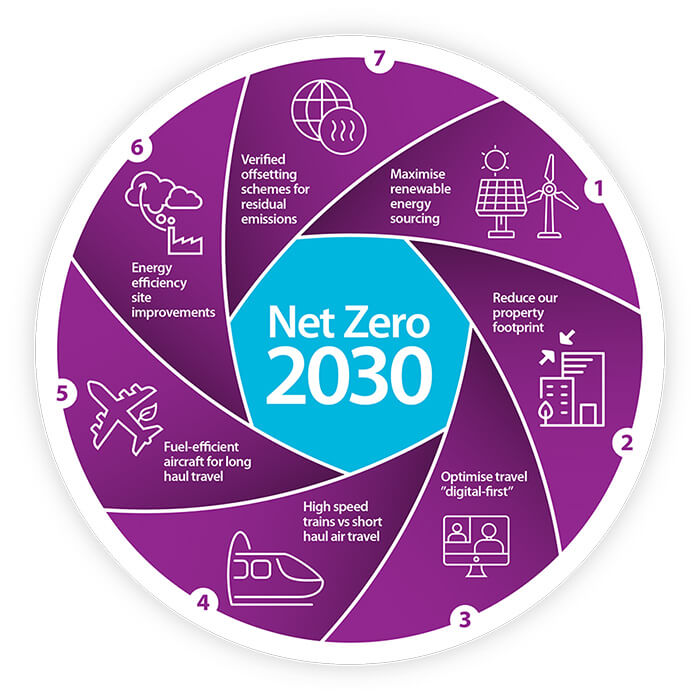
Policymakers should take this into account when setting short- and medium-term milestones on the path to net-zero emissions, including an ambitious 2030 emissions reduction target as part of their NDC. In short, in order to have a sufficient chance of meeting the Paris goals, the world must limit its carbon emissions so that the amount of greenhouse gases in the atmosphere does not increase further after 2050.

Most rich countries with no net targets have already peaked in carbon emissions; their outliers are now starting to decline, making it easier to find downward trajectories. The good news is that low-carbon developing countries should also be able to reduce their overall emissions by separating their GDP more from emissions over time: as their economies develop, they won’t need to emit as much carbon, and technology is constantly improving. . improvement.

The area under the curve is also better depicted because measuring cumulative emissions removes any incentive to predict emissions, which would happen if a country only cared about the date zero was reached. This is different from low-carbon countries’ concerns about equity, where zero by 2050 for a high-emitting country means they will still emit far more than their fair share of emissions, based on almost any disruption to the remaining global carbon balance.

Critics fear this could lead to over-reliance on carbon dioxide removal, allowing decision-makers to use net-zero targets to avoid short-term cuts in emissions. Furthermore, even if successfully implemented, the commitments made to date will still leave around 22 billion tons of CO 2 emissions worldwide in 2050. zero by mid-century.

In scenarios that limit warming to 1.5°C, carbon dioxide (CO2) emissions should reach zero between 2044 and 2052, and total greenhouse gas emissions should reach zero between 2063 and 2068. Therefore, to stabilize climate change, CO2 emissions must be reduced. down to zero. The IPCC, in its latest 2018 report, demonstrates that net emissions must be reduced to zero in order to stabilize global temperatures.

The Intergovernmental Panel on Climate Change (IPCC) released a report on the 1.5°C target in October 2018; concluded that global emissions should reach zero by about mid-century to give a reasonable chance of limiting warming to 1.5°C. A recent report by the Intergovernmental Panel on Climate Change (IPCC) highlights the need to stop carbon emissions by 2050 to keep the global mean temperature rise below 1.5 degrees Celsius.

The ambitious pledge made on November 1 at the important COP26 climate meeting in Glasgow, UK, puts India on par with other major emitters, including the US, China, Saudi Arabia, and the European Union, who have made similar pledges. Even reaching zero carbon emissions by 2070 is a very ambitious target for India, say climate policy researchers who have worked with the Indian government to model emission reduction scenarios.

Complete zero would mean the cessation of all emissions, which is not realistically achievable in all areas of our life and industry. Even with all efforts to reduce them, there will still be some emissions. Going to net-zero means we can still produce some emissions if they are offset by processes that reduce greenhouse gas emissions into the atmosphere.

This will bring new greenhouse gas emissions as close to zero as possible and remove the greenhouse gases we contributed to them in the past. To achieve this, we need to reduce greenhouse gas emissions to zero and then repair past damage by reducing past emissions. Net-zero emissions are achieved when all human greenhouse gas emissions are offset by removing greenhouse gases from the atmosphere in a process called carbon removal.

A positive climate means business goes beyond achieving net-zero carbon emissions to create environmental benefits by removing additional carbon dioxide from the atmosphere. When carbon-neutral refers to balancing total carbon emissions, net zero carbon means that carbon was not emitted, to begin with, so there is no need to capture or offset carbon. In contrast, net-zero emissions refer to the total balance of greenhouse gas (GHG) emissions produced and GHG emissions removed from the atmosphere.

The term “net zero” is increasingly used to describe a broader and more comprehensive commitment to decarbonization and climate change action, going beyond carbon neutrality by including more activities under indirect emissions, and often including The goal of reducing emissions science, rather than relying solely on nets. Terms like “carbon neutral”, “net-zero” or “climate positive” have been around for a while, but small startups and global companies have been integrating them over the past few years, mostly for traditional marketing purposes.

We may use certain terms as resources in this context that the US Securities and Exchange Commission (SEC) strictly prohibits us from including in our SEC filings. In addition, we may refer to Shell’s “net carbon footprint” in this content, which includes Shell’s carbon footprint in the production of our energy products, our suppliers’ carbon emissions in the supply of energy for that production, and our customers’ carbon emissions associated with using the energy products we sell. The use of the term Shell’s net carbon footprint is for convenience only and does not imply that these emissions are those of Shell or its subsidiaries.

The Net-Zero Tracker Climate Clock shows how these goals were achieved, such as through Nationally Determined Contributions (NDCs), Long-term Low Greenhouse Gas (LTS) Development Strategies, national laws, policies, or high chapter-level political commitments. states or other cabinet members. Climate models show the world, on average, needs to achieve zero carbon dioxide emissions by 2050 and net greenhouse gas emissions by 2070, he says, to limit global warming to 1.5 degrees Celsius above pre-industrial levels. 2015 Paris climate agreement. But now the country needs to put in place a clear roadmap on how to reach net zero and put in place monitoring mechanisms to ensure emission reductions, he says.

Following the recommendations of the Climate Change Committee (CCC), the Government has made a legal commitment to reduce the UK’s net greenhouse gas emissions to zero by 2050[141], according to which the Energy and Climate Intelligence Unit (ECIU) said it would be available. You can become carbon neutral by offsetting the rest of your emissions with our certified partners. To balance these residual emissions and reach zero overall, we need to remove the same amount of carbon dioxide from the atmosphere.

The more emissions produced, the more carbon dioxide we ultimately have to remove from the atmosphere (this is called sequestration) to reach net zero. Net-zero emissions balance the total amount of greenhouse gases (GHG) released and the amount removed from the atmosphere. The use of carbon offsets aims to offset a certain amount of greenhouse gas emissions by funding projects that are expected to result in a corresponding reduction in greenhouse gas emissions elsewhere, such as planting trees. While these approaches have reduced the growth of carbon emissions, many of them are accounting tricks because they have not yet led us to zero global emissions.

Online Schooling, Can It Be The Future Of Education?

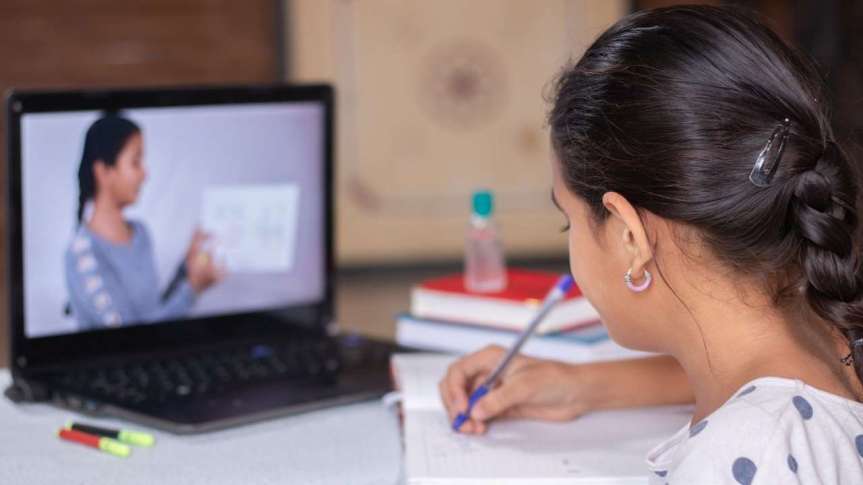
In addition, online education provides a space for creative learning and developing students’ problem-solving skills. Therefore, online learning will continue to grow and become popular among students if universities have already incorporated it into traditional education. Online learning has countless benefits that can help those who choose it over a more traditional education. Put education at your fingertips. Online learning allows you to pursue your education later in life, for example, if you are working full-time but want to continue your education.

As mentioned above, online education is flexible, allowing you to set your own pace of study and customize courses to fit your schedule, but at the same time, it is flexible and everyone can learn according to their abilities. y Needs and skill levels. Online learning allows teachers and students to set their own learning pace and adds the flexibility to set a schedule that fits everyone’s agenda. Online learning and e-learning are flexible, allowing teachers and students to set the pace at which they can easily understand things.

Online learning reduces learning gaps for students as students can always view pre-recorded lessons at their leisure to resume lessons they missed due to illness, death in the family or other reasons. While a teacher may still need to include real-time online lessons as part of the curriculum requirements for their students that can be distributed around the world, most lessons are automated, allowing students to learn on their own using a screen. Nowadays, it has become one of the most popular and popular learning tools, and it is also quite easy and convenient to conduct a lesson online rather than offline. For some, this may be more effective than traditional activities; to others, it may seem like a waste of time to get an online education, and they believe that face-to-face education will benefit them more.

There is no doubt that online education will soon become an important part of educational institutions around the world, but the focus should be on quality education for all, including the poor and disadvantaged. Perhaps this type of learning will somehow alleviate the problems we have faced in education over the last century. I am optimistic that this type of education will help address the injustice our students suffer and create a sense of greater equality, as well as help to cope with the ever-increasing number of students suffering from mental health problems, which are greatly exacerbated in schools that they visit. . Meanwhile, educators are learning how to provide a rich learning experience through virtual contacts and online resources.

Teachers tailor learning to the needs of each student, rather than moving forward or slowing down to fit class schedules, which inevitably results in students falling behind or getting bored waiting for classmates to catch up.

The transition to digital learning makes it clear that children don’t necessarily need a traditional classroom to learn and achieve academic success. Children can use online libraries, online courses, educational websites, Wikipedia, and even regular websites to learn new things every day. Students and educators are finding innovative ways to combine online lectures and courses with similar educator and learning resources.

At the college level, online learning is cheaper than regular schools, which is more beneficial for college students on a budget, as they can save on housing, textbooks, transportation, and more. However, this cost reduction has not affected the quality of online education, which is a win-win situation for students who choose online education over college. These benefits are one of the reasons many believe that online learning will be the future of education. All in all, I believe e-learning is the future, despite its drawbacks (obesity due to lack of exercise, mental disorders that may result from separation, access to hate speech, fake news, porn, etc., but that’s for another article) undoubtedly A booming industry, both in college and as more and more parents homeschool their children.

While the classic face-to-face style of learning will not disappear anytime soon, many people recognize the benefits of online education, while others suggest that it is the future of education. It’s not that face-to-face classes are completely gone given all the downsides that can come with online classes, only that online may end up being the preferred option for learning in the future.

The fast growing online network is sure to be the future of education in many ways. The growth of online classes due to the COVID-19 lockdown has helped a lot with the overall vision for the future of education. In 2020, it increased even more due to the unprecedented COVID-19 epidemic, which made it impossible for schools to function normally. Despite everything, professors and students of all higher educational institutions have slowly begun to gravitate towards online learning. With this sudden exit from the classroom in many parts of the world, some are wondering if the adoption of online learning will continue after the pandemic and how such a shift will affect the global education market.

To begin with, more and more higher education institutions are implementing or strengthening their online learning platforms, the main considerations of which are to reduce student costs and increase hiring in an increasingly competitive environment. More and more universities are using online platforms in their learning, and students who have chosen traditional education have not yet participated in any virtual learning, such as with Moodle or Blackboard. But let’s put aside actual learning for a moment and highlight the many practical effects of distance learning, many of which are used in schools and universities that have moved to online learning.

The shift to online learning also means less need for huge university parking spaces that take away green space. With online learning, schools can open up classrooms to more students from different locations, including those who don’t live in the area or who might not otherwise be able to get to school in person.

New programs offer teachers more effective ways to deliver education and students the opportunity to interact and learn, including innovations from students interested in connecting better online when they can’t be together in person7. for online learning, enhancing the ability of teachers to learn from each other as they adapt to a new teaching and learning paradigm. In recognition of the shift to online learning, administrators from some of the country’s largest school districts have indicated they are specifically looking for teachers with the skills to teach students online. find highly coveted jobs in US school districts, supervising a wide range of students at all levels of education. Because online learning is so flexible, our high school students can sign up for meaningful internships that teach valuable professional skills and encourage career planning.