NIPUN Bharat Programme

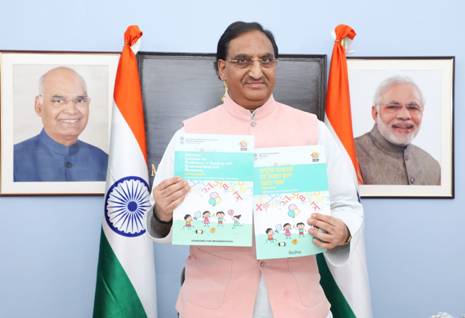
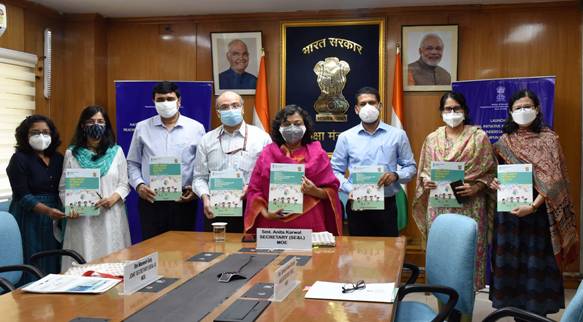
 Union Minister for Education, Shri Ramesh Pokhriyal ‘Nishank’ today virtually launched a National Initiative for Proficiency in Reading with Understanding and Numeracy (NIPUN Bharat), for ensuring that every child in the country necessarily attains foundational literacy and numeracy by the end of Grade 3, by 2026-27. The National Mission was launched in the presence of Minister of State, Shri Sanjay Dhotre, Smt. Anita Karwal, Secretary (SE&L), senior officers from the Ministry, all States and UTs, Senior Policy Makers and Heads of Institutions. On this occasion, a short video, anthem and NIPUN Bharat Guidelines were also launched. This Mission, which has been launched under the aegis of the centrally sponsored scheme of Samagra Shiksha, will focus on providing access and retaining children in foundational years of schooling; teacher capacity building; development of high quality and diversified Student and Teacher Resources/Learning Materials; and tracking the progress of each child in achieving learning outcomes.
WhatsApp Image 2021-07-05 at 4.02.11 PM.jpeg

Addressing the participants Shri Pokhriyal said that NIPUN Bharat aims to cover the learning needs of children in the age group of 3 to 9 years.  He said that teachers need to focus on every child for developing basic language; literacy and numeracy skills which will help them develop into better readers and writers. Thus, NIPUN Bharat envisages making the experience of learning at the foundational stage Holistic, Integrated, Inclusive, Enjoyable, and Engaging, he added.

The Minister underlined that the National Education Policy 2020 has laid down that attaining foundational literacy and numeracy for all children must become an immediate national mission. In keeping with this, the Department has developed a comprehensive guideline under NIPUN Bharat, through a series of intensive consultations with implementing partners, experts to make it flexible and collaborative, he added. Shri Pokhriyal said that it covers key technical aspects of foundational literacy and numeracy as well as the administrative aspects for effectively setting up an implementation mechanism at the National, State, District, Block and School level. He also informed that an approval of Rs 2688.18 crore has already been given under Samagra Shiksha scheme to the States and UTs for implementation of the various interventions for Foundational Stage in 2021-22.

Speaking on the occasion Shri Dhotre said that quality education is the bedrock of strong Nation building and, foundational education in literacy and numeracy skills is its core component. The Minister stated that in the coming years, this mission will change the outlook of our school education, and will strongly impact 21st Century India. Shri Dhotre stressed that NIPUN Bharat will not only help our students to take a big leap in their higher classes, but it will also have a major impact in making our students globally competitive.

The unique feature is that the goals of the Mission are set in the form of Lakshya Soochi or Targets for Foundational Literacy and Numeracy.Although, the overall aim is to achieve the desired learning outcomes by the end of grade 3, however, in order to generate greater awareness among the parents, community, volunteers etc. the Lakshyashas been developed from Balvatika to Grade 3. The Laskhyas are based on the learning outcomes developed by the NCERT and international research and ORF studies. For example, a child should be able to read 45to 60 words per minute and atleast 60 words per minute correctly by the end of Grade II and III respectively from an age appropriate unknown text with comprehension and clarity.

The success of NIPUN Bharat will primarily depend on teachers, so, there will be a special emphasis on capacity building of teachers.  A special package for foundational literacy and Numeracy under NISHTHA is being developed by NCERT and around 25 lakh teachers teaching at pre-primary to primary grade will be trained this year on FLN. 

Following outcomes have been envisaged from implementation of the goals and objectives of NIPUN Bharat Mission:

  • Foundational skills enable to keep children in class thereby reducing the dropouts and improve transition rate from primary to upper primary and secondary stages.
  • Activity based learning and conducive learning environment will improve quality of education.
  • Innovative pedagogies such as toy-based and experiential learning will be used in classroom transaction thereby making learning a joyful and engaging activity.
  • Intensive capacity building of teachers will make them empowered and provide greater autonomy for choosing the pedagogy.
  • Holistic development of the child by focusing on different domains of development like physical and motor development, socio-emotional development, literacy and numeracy development, cognitive development, life skills etc. which are interrelated and interdependent, which will be reflected in a Holistic Progress Card.
  • Children to achieve steeper learning trajectory which may have positive impacts on later life outcomes and employment.
  • Since almost every child attends early grades, therefore, focus at that stage will also benefit the socio-economic disadvantageous group thus ensuring access to equitable and inclusive quality education.

Thus, NIPUN Bharat is envisaged to support and encourage students, along with their schools, teachers, parents, and communities, in every way possible, to helprealise the true potential of our children and propel the country to new heights.

Click below to access presentation on NIPUN Bharat: 

https://static.pib.gov.in/WriteReadData/specificdocs/documents/2021/jul/doc20217531.pdf

Click below to access NIPUN Bharat Guidelines:

https://www.education.gov.in/sites/upload_files/mhrd/files/NIPUN_BHARAT_GUIDELINES_EN.pdf


*****
R&D institutions will play a major role in the upcoming decade

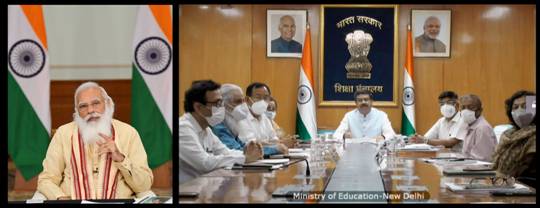
 Prime Minister Shri Narendra Modi interacted with Directors of Centrally Funded Technical Institutions on 8th July 2021 via video conferencing. More than 100 Heads of Institutions joined the Prime Minister for this interaction. Union Minister for Education and Minister of Skill Development & Entrepreneurship Shri Dharmendra Pradhan, MoS Smt. Annpurna Devi, MoS Dr. Rajkumar Ranjan Singh and MoS Dr. Subhas Sarkar and senior officials of the Ministry were also present during the interaction.

Prime Minister lauded the R&D work done by these institutions towards meeting the challenges posed by Covid. He appreciated the efforts of young innovators towards providing quick technological solutions.

Prime Minister said that there is a need to adapt higher education and technical education to keep in tune with the changing environment and emerging challenges. He added that this requires the institutions to reinvent and re-evaluate themselves, develop alternative and innovative models in accordance with the present and future needs of the country and society. He emphasized that our higher educational and technical institutions need to prepare our youth for continuous disruptions and changes, keeping in mind the fourth industrial revolution.

Prime Minister underlined the need to progress towards education models that are flexible, seamless, and able to provide learning opportunities as per the requirements of the learners. He said that access, affordability, equity, and quality should be the core values of such education models.

Prime Minister appreciated the improvement in the Gross Enrolment Ratio (GER) in higher education in the past few years & emphasized that digitization of higher education can play a big role in increasing GER, and students will have easier access to good quality and affordable education. Prime Minister also lauded the various initiatives taken by the institutions to increase digitization such as that of online bachelor and master degree programmes.

PM added that we need to develop an ecosystem of technological education in Indian languages and translate global journals into regional languages.

Prime minister said that ‘Aatmanirbhar Bharat Abhiyan’ will form the basis of dreams and aspirations of India in the coming 25 years when we celebrate 100 years of Independence. He added that technological, R&D institutions will play a major role in the upcoming decade, which is also being called as “India’s Techade”.

Prime Minister said that we need to focus on developing futuristic solutions in fields of education, healthcare, agriculture, defense, and cyber technologies.

Speaking on the occasion Shri Pradhan stated that India has got a New Education Policy after a period of 34 years. With the introduction of National Educational Policy-2020, the Indian education system has taken a giant leap in fostering an environment for a future-ready 21st century India, he added. He further said that the Government is committed to make students and youth the primary stakeholders in propelling India towards an equitable knowledge society.

Shri Pradhan emphasized that NEP will be instrumental in meeting the expectations of the Prime Minister from innovators, researchers and scientists. The Minister expressed his confidence that under the guidance of Prime Minister Shri Narendra Modi and the support of our academic institutions, Government will continue to set new benchmarks in integrating education with employment & making it more inclusive, holistic, multi-disciplinary and at par with global standards.

During the interaction, Prof Govindan Rangarajan of IISc Bangalore, Prof Subhasis Chaudhuri of IIT Bombay, Prof. Bhaskar Ramamurthi of IIT Madras, and Prof Abhay Karandikar of IIT Kanpur, gave presentations to the Prime Minister and highlighted various ongoing projects, academic work, and new research being done in the country. The Prime Minister was apprised about the Covid related research being done that encompasses developing new techniques for testing, Covid vaccine development efforts, indigenous oxygen concentrators, Oxygen generators, Cancer Cell Therapy, Modular hospitals, Hotspot prediction, Ventilators production, Efforts in the fields of Robotics, Drones, Online education, Battery technology. The Prime Minister was also informed about new academic courses, especially the online courses that are being developed, as per the changing nature of the economy and technology.

*****

Digital Education initiatives of the Ministry

 Union Education Minister Shri Dharmendra Pradhan reviewed the Digital Education initiatives of the Ministry of Education including PM e-Vidya, National Digital Education Architecture (NDEAR), Swayam, among others. Minister of State Smt Annpurna Devi;  MoS Shri Rajkumar Ranjan Singh and MoS Dr Subhas Sarkar also attended the meeting. Senior officials of the Ministry briefed the Ministers about these initiatives.

Emphasizing the importance of leveraging technology in Education, Shri Pradhan said that technology would help in achieving the goals of an open, inclusive and accessible education. A vibrant digital ecosystem in education will expand learning opportunities for the students, spur innovation and entrepreneurship in the Education sector, he added.

The Minister noted that COVID-19 pandemic necessitated a shift towards digital medium of education and assured that Digital initiatives taken by the Ministry to ensure continuity of Education will be further strengthened and institutionalised.

*****

School Innovation Ambassador Training Program

 Union Education Minister Shri Dharmendra Pradhan and Tribal Affairs Minister Shri Arjun Munda jointly launched the ‘School Innovation Ambassador Training Program’ for 50,000 school teachers today. MoS, Smt Annpurna Devi; MoS Shri Rajkumar Ranjan Singh and MoS Dr Subhas Sarkar were also present along with senior officials of the Ministry of Education and Ministry of Tribal Affairs.

Speaking on the occasion, Minister Pradhan said that teachers are the biggest influence in our lives. He said that we aim to make our teachers, change-agents and ambassadors of innovation to make our students future-ready.

Shri Pradhan stressed that technology is reshaping the world and our students have the potential to not only address domestic but also the global challenges. The program launched today is a collaborative effort by the Ministry of Education’s Innovation Cell, Ministry of Tribal Affairs, CBSE and AICTE, which will in turn nurture lakhs of students with innovation capabilities, develop a culture of innovation and lay the foundation of a new and vibrant India, he added.

The Union Minister for Tribal Affairs, Shri Arjun Munda expressed his gratitude that the Ministry of Education has launched its new initiative in the field of innovation in collaboration with Tribal Affairs Ministry which will benefit the large number of schools for tribal children across the country. This programme will have far reaching consequences which will help to fulfil the Prime Minister’s vision of a New Indiathe Minister elaborated.

Sh Arjun Munda further said that ‘SIATP’ will give wings to the creativity of the children and provide a platform so that they can give something new to the world with their ideas. Eklavya Model Residential Schools (EMRS) for tribal children is another ambitious programme of the Prime Minister under which 740 EMRS will be established in tribal dominated areas over the next three years, he said. The students of EMRS will greatly benefit from SIATP since it is also the endeavour of Tribal Affairs Ministry to give the best possible education to the tribal children. Sh Arjun Munda explained that through this unique capacity building programme for teachers, prominence has been given to development of creativity, collaboration , critical thinking and communication skills among children and the integration of Eklavya Schools into the entire programme is a big step in this direction for the meaningful development of tribal children.

Speaking on the occasion, Secretary, Tribal Affairs, Shri Anil Kumar Jha said that encouraging innovation is at the core of the New Education Policy. Teachers will need to evolve new methods of teaching; they will need to first transform themselves into guides from being instruments of written text books. Shri Jha further said that apart from running Ekalavya World Education School, the Ministry of Tribal Affairs has been supporting initiatives of States/Union Territories in spreading scientific education to tribal students and the new initiative will help promote quality education among tribal children. The Ministry of Tribal Affairs has launched an Adi-Prashikshan portal which is also a repository of training inputs. It will be of great benefit if SIAP training module also gets connected to this portal, he said.

The innovative and one-of-its-kind training program for school teachers, it aims at training 50,000 School Teachers on Innovation, Entrepreneurship, IPR, Design Thinking, Product development, Idea generation, among others.

The program has been designed by the Innovation Cell of the Ministry of Education and AICTE for school Teachers based on its “Innovation Ambassador Training Program for Higher Educational Institution’s faculty members”. The training will be delivered in online mode only.

*****

Welfare schemes of the Government promoting girls education

 Department of School Education and Literacy (DoSEL), Ministry of Education is implementing various welfare schemes for incentives for girls education. Under the Samagra Shiksha, there is a provision of Kasturba Gandhi Balika Vidyalayas (KGBVs) under Samagra Shiksha. KGBVs are residential schools from class VI to XII for girls belonging to disadvantaged groups such as SC, ST, OBC, Minority and Below Poverty Line (BPL). A total of 5726 KGBVs have been sanctioned in the country. Out of it, 5010 KGBVs are functional with the enrolment of 6.54 lakh girls.

The scheme also has a provision of opening of schools in the neighbourhood, free uniform and text-books up to Class VIII, provision of gender segregated toilets in all schools, provision of self-defence training from classes VI to XII and stipend to Divyang girls from class I to Class XII. Special  state  specific  projects such as Life Skills, Awareness programmes, Incinerators, Sanitary Pad Vending Machines etc. for varied interventions  under  equity are also emphasized under the scheme for enhancing  access,  retention  and  quality for girls  by  promoting  enrolment  drives,  retention and motivation camps, gender sensitization modules etc.

A Central Sector Scheme ‘National Means-cum-Merit Scholarship Scheme (NMMSS)’is also under implementation since 2008 to award scholarships to meritorious students, including girls, of Economically Weaker Sections (EWS) to arrest their drop-out at class VIII and encourage them to continue the study at Secondary Stage. Under the scheme, one lakh fresh scholarships of Rs.12000/- per annum per student are awarded to selected students of class IX  every year and are renewed  in classes X to XII for study in a State Government, Government-aided and Local body school under the scheme.

Ministry of Education also runs a Central Sector Scheme of Scholarship for College and University Students since 2008 with the objective to provide financial assistance to meritorious students to meet a part of their day-to-day expenses while pursuing higher studies. 50% of the scholarships are earmarked for girls.

IIT Ropar develops first-of-its-kind Oxygen rationing device

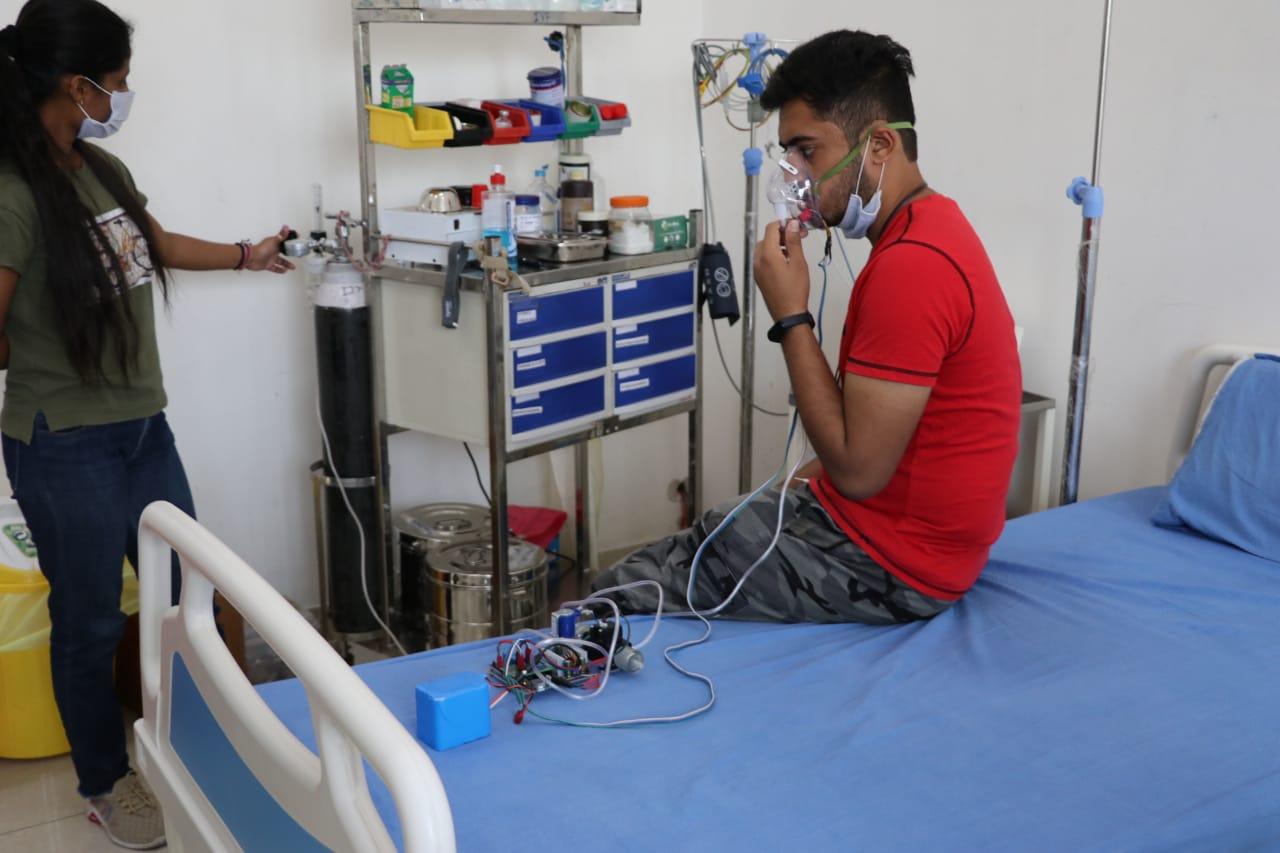
 To increase the life of medical oxygen cylinders three fold, the Indian Institute of Technology, Ropar has developed a first-of-its-kind Oxygen Rationing Device – AMLEX that supplies a required volume of oxygen to the patient during inhalation and trips when the patient exhales CO2. This process saves oxygen which otherwise unnecessarily get wasted.

So far, during exhalation, the oxygen in the oxygen cylinder/pipe is pushed out along with the exhaled CO2 by the user. This leads to wastage of a large volume of oxygen in long run. In addition to this, a large volume of oxygen escapes from the openings of the mask to the environment in the resting period (between inhalation and exhalation) due to continuous flow of life saving gas in the mask. As we have seen the demand of medical oxygen has jumped manifold amid the second wave of Covid-19, the device would help in stopping the unwanted wastage of the same. 

“The device can operate on both portable power supply (battery) as well as line supply (220V-50Hz)”, said Director, IIT, Ropar, Prof. Rajeev Ahuja.


It has been developed by PhD students of Biomedical Engineering Department of the institution – Mohit Kumar, Ravinder Kumar and Amanpreet Chander under the guidance of Dr. Ashish Sahani, Assistant Professor, Department of Biomedical Engineering.


“Made specifically for oxygen cylinders, AMLEX can be easily connected between oxygen supply line and the mask worn by the patient. It uses a sensor which senses and successfully detects inhalation and exhalation of the user in any environmental condition”, said Dr Sahani. This ready to use device works with any commercially available oxygen therapy masks having multiple openings for air flow. 


Appreciating the innovation, Dr GS Wander, Director, Research and Development at Dayanand Medical College, Ludhiana, said that in the present pandemic times we all have learnt the importance of effective and pertinent use of life saving Oxygen. He said though many hospitals are increasing their oxygen production capacity, a device like this can really help in limiting the use of oxygen in small rural and semi urban health centers.


Prof. Rajeev Ahuja said that the country now needs rapid but safe solutions to combat Covid-19. Since the virus is affecting the lungs and subsequently breathing system of the patient, the institution has not intended to go in for patenting of the device. He said rather the IIT would be happy to transfer this technology free of cost, in the interest of the nation, to those interested to go in for mass production of the device. 


World Universities Summit

 Vice President of India Shri M. Venkaiah Naidu addressed the World Universities Summit organized by O.P. Jindal Global University as a Chief Guest. Union Education and Skill Development Minister Shri Dharmendra Pradhan also addressed the summit. The theme of the summit was “Universities of the Future: Building Institutional Resilience, Social Responsibility and Community Impact”.

Vice President asked universities to become thought leaders in finding solutions to global challenges such as climate change, poverty and pollution. He also wanted the universities to discuss various socio-economic and political issues facing the world and come up with ideas that can be implemented by the governments as per their needs and suitability.

Referring to the benefits of learning in the mother tongue, the Vice President said it enhances one’s grasping and comprehension levels. “To understand a subject in another language, one has to first learn and master that language, which needs a lot of effort. However, this is not the case while learning in one’s mother tongue,” he added.

Highlighting our country’s rich linguistic and cultural heritage, the Vice President said that India is home to hundreds of languages and thousands of dialects. He said, “Our linguistic diversity is one of the cornerstones of our rich cultural heritage.” Emphasizing on the significance of mother language, Shri Naidu said, “Our mother language or our native language is very special to us, as we share an umbilical cord relationship with it.”

Addressing the participants, Union Education and Skill Development Minister Shri Dharmendra Pradhan emphasized on the Government’s commitment to transform India’s education sector bringing it at par with global standards, encouraging research and innovation and on developing well-rounded responsible citizens, who are also global citizens- Vishwa Manav.

Shri Pradhan said that the New National Education Policy -2020 has heralded a new imagination for the Indian higher education system. It outlines the vision of the Prime Minister Shri Narendra Modi to make an Aatmanirbhar Bharat. Quality, equity, accessibility and affordability are the four pillars of the new education policy on which a new India will emerge, he added.

Minister Pradhan stated that with the vision of Study In India—Stay In India’, India will move towards becoming a global destination in education. Shri Pradhan highlighted the efforts made by the Government to make education holistic, innovative, linguistically diverse, and multi-disciplinary. No student should suffer due to language limitations or regional linguistic constraints, he added.

He said that the multidisciplinary education and research university (MERU) will open up new opportunities for India’s youth. MERU will promote inter-disciplinary research and make India a global hub of Research and Development, he further added.

Minister Pradhan stressed that synergizing education with skill development will open new avenues of socio-economic empowerment. The NEP will facilitate integration of education with skills and enable India to reap the demographic dividend.

Education and Skill Development Minister Shri Pradhan said that Covid-19 pandemic necessitated the adoption of online learning and use of digital technologies to ensure that learning continues. This mode is going to stay giving way to hybrid methods of learning and knowledge dissemination. Our future planning, therefore, needs to fill a digital divide, he said.

He also congratulated the organizers for event and wished them success in all their endeavors.

Professor (Dr.) D.P. Singh, Chairman, University Grants Commission, Mr. Naveen Jindal, Chancellor, O.P. Jindal Global University, Professor (Dr.) C. Raj Kumar, Founding Vice-Chancellor; Professor Dabiru Sridhar Patnaik, Registrar and other distinguished university leaders from India and overseas, faculty also attended the event.

*****

Steps taken by the government to ensure equal access to education

 The Right of Children to Free and Compulsory Education (RTE) Act, 2009, mandates the appropriate Government to provide free and compulsory elementary education to every child of the age 6 to 14 years in a neighbourhood school. During the pandemic, the Ministry of Education has taken various steps for providing children remote access to education, which are available to each category of students including SC/ST irrespective of their region or economic standard.

A comprehensive initiative called PMeVidya has been started which aims to unify all efforts related to digital/online/on-air education to enable multi-mode access to education. The initiative includes all forms of digital modes to provide wide access – DIKSHA (online), SWAYAM (online), SWAYAM PRABHA (TV), other TV Channels including use of Doordarshan and AIR Networks. Further, PRAGYATA guidelines were issued to States/UTs to facilitate continued education through various modes. The guidelines inter-alia include situations where internet connectivity is not available or available with very less bandwidth, these resources are shared through various platforms like television, radio etc that do not depend on internet. An Alternate Academic Calendar has been prepared for learning solutions for grade 1 to 12 for both children with and without device. Besides these, community radio, worksheets & textbooks supplied to residence of learners, home visits by teachers, community classes, toll free numbers, SMS based requests for audio content, localised radio content for edutainment etc have been used. The steps taken by all the states and UTs are shown in the – India Report Digital Education June 2020, which is available at the following link:

https://www.education.gov.in/sites/upload_files/mhrd/files/India_Report_Digital_Education_0.pdf.

Steps taken by the government to promote IT based education

 A comprehensive initiative called PM eVIDYA has been initiatedas part of Atma Nirbhar Bharat Abhiyaan on 17th May, 2020, which unifies all efforts related to digital/online/on-air education to enable multi-mode access to education. The initiative includes:

  • DIKSHA (one nation, one digital platform)is the nation’s digital infrastructure for providing quality e-content for school education in states/UTs and QR coded Energized Textbooks for all gradesare available on it.
  • One earmarked Swayam Prabha TV channel per class from 1 to 12 (one class, one channel).
  • Extensive use of Radio, Community radio and CBSE Podcast- Shiksha Vani.
  • Special e-content for visually and hearing impaired developed on Digitally Accessible Information System (DAISY) and in sign language on NIOS website/ YouTube.

In order to promote online education, UGC has notified necessary regulation, which facilitates the Universities to offer full-fledged Online Program. Further, the current provisions of 20 per cent Online courses in a programme, as per provisions of UGC SWAYAM and ODL Regulations to be enhanced up to maximum 40 per cent for implementation considering “National interest during COVID-19” and also to ensure effective utilization of e-resources.

Various digital initiatives are also undertaken by Ministry of education viz. SWAYAM (“Study Webs of Active-Learning for Young Aspiring Minds”), SWAYAM Prabha, National Digital Library (NDL), Virtual Lab, e-Yantra, NEAT (National Education Alliance for technology), FOSSEE (Free Open-Source Software for Education) etc to ensure quality education to the students. 

To improve the internet connectivity in rural areas the CSC e-Governance Services India Ltd (CSC-SPV) of MEITY has been assigned the task of providing Fibre to the Home (FTTH) connectivity to the Government Institutions, including schools.

Central Board of Secondary Education (CBSE) has launched a ‘Cyber Security Handbook’ to ensure safe and healthy digital habits among students. The ‘Cyber Security Handbook’ can be accessed at this link:

http://cbseacademic.nic.in/web_material/Manuals/Cyber_Safety_Manual.pdf.


An Integrated Teacher Training Programme called NISHTHA has been launched it is a capacity building programme for “Improving Quality of School Education through Integrated Teacher Training“.NISHTHA can be accessed from the below link:https://itpd.ncert.gov.in//


Schemes of the Government to ensure education for all Citizens

 During COVID-19 Pandemic, Government of India has held various consultations with the States and UTs at different levels. Also, a brain storming session was held with Civil Society Organizations (CSOs) in January, 2021 for taking their views/ perspectives to assess and to bridge the learning gap in the Covid-19 pandemic period. 

Education is in the concurrent list of the Constitution and majority of the schools are under the domain of respective State and UT Governments. However, to ensure thatevery student gets continued access to education, a multi-pronged approach has been adopted. A comprehensive initiative called PM e-VIDYA has been initiated as part of Atma Nirbhar Bharat Abhiyan on 17th May, 2020, which unifies all efforts related to digital/online/on-air education to enable multi-mode access to education. The initiative includes: 

  • DIKSHA (one nation, one digital platform) is the nation’s digital infrastructure for providing quality e-content for school education in states/UTs and QR coded Energized Textbooks for all grades are available on it. 35 of the 36 states and UTs have on boarded on DIKSHA platform and contextualised the content as per the local need.
  • One earmarked Swayam Prabha TV channel per class from Class 1 to 12 (one class, one channel).
  • Extensive use of Radio, Community radio and CBSE Podcast- Shiksha Vani.
  • Special e-content for visually and hearing impaired developed on Digitally Accessible Information System (DAISY) and in sign language on NIOS website/ YouTube.

Besides, the Ministry has undertaken a proactive initiative, named, ‘MANODARPAN’ covering a wide range of activities to provide psychosocial support to students, teachers and families for Mental Health and Emotional Wellbeing during the COVID outbreak and beyond.

The Central Government is constantly advising States/UTs through guidelines and meetings with respect to interventions for reducing impact of pandemic on education. The guidelines issued so far are given below:


S.No.

Interventions

Links of Guideline

1.

Guidelines for Children of Migrant Labourers

https://www.education.gov.in/sites/upload_files/mhrd/files/Migrant%20labour%20guideline.pdf

2.

Guidelines for Out of School Children and Mitigation of Loss of Learning

https://www.education.gov.in/sites/upload_files/mhrd/files/guidelines_oosc.pdf


3.

PRAGYATA Guidelines on Digital Education

https://www.education.gov.in/sites/upload_files/mhrd/files/pragyata-guidelines_0.pdf

4.

Learning Enhancement Guidelines for Continuous Learning

https://ncert.nic.in/pdf/announcement/Learning_%20Enhancement_Guidelines.pdf 


5.

Covid-19 Related Health and Safety Sop/Guidelines for School Re-Opening

https://www.education.gov.in/sites/upload_files/mhrd/files/SOP_Guidelines_for_reopening_schools.pdf

6.

Covid Action Plan for School Education

https://www.education.gov.in/sites/upload_files/mhrd/files/Covid_Action_Plan.pdf

7.

Alternate Academic Calendar

Secondary- https://www.education.gov.in/sites/upload_files/mhrd/files/Academic%20Calender%20-%20Secondary%20-%20Eng.pdf

Primary- – https://www.education.gov.in/sites/upload_files/mhrd/files/Eight_Weeks_AAC_Primary_%28English%29%5B1%5D_0.pdf

8.

Guidelines for JNV –Residential Schools 

https://drive.google.com/file/d/1LAc4iKQTqTJkNVDGc5glEDsrDGdAXwC8/view


9.

Guidelines for parents on Home Based Education

https://www.education.gov.in/sites/upload_files/mhrd/files/MoE_Home_Learning_Guidelines.pdf

10.

Guidelines for orphaned Children

In this regard, a joint DO letter No. 13-10/2021-IS-11 dated 16.06.2021 from Secretary DoSEL, MoE and Secretary, MWCD has been issued to all States and UTs.

11.

Guidelines for developing E-content for CWSN

https://www.education.gov.in/sites/upload_files/mhrd/files/CWSN_E-Content_guidelines.pdf

12.

CBSE competency-based assessment framework

http://cbseacademic.nic.in/web_material/Manuals/Safal_handbook.pdf

13.

NCTE Guidelines for TEIs

https://ncte.gov.in/WebAdminFiles/RecentAnnouncement/0_20_08_2020_637335320672297662.pdf


The details of the major schemes to promote education in the country implemented by the Government of India are as follows:

(I) Samagra Shiksha: The Government of India launched Samagra Shiksha-an Integrated Scheme for school education, w.e.f 2018-19, as an overarching programme for the school education sector extending from pre-school to class XII, which aims to ensure inclusive and equitable quality education at all levels of school education, across the country including the rural areas. The scheme has now been aligned to NEP, 2020 recommendations and extended till 2025-26. The scheme provides support to States and UTs for strengthening of infrastructure in schools, universal access, bringing gender equality, promoting inclusive education, quality of education, financial support for teachers’ salary, digital initiatives, entitlements under the Right of Children to Free and Compulsory Education (RTE) Act, 2009 including uniforms and textbooks, pre-school education, vocational education, sports and physical education and strengthening of teacher education institutions. 

(II) Mid-Day-Meal (MDM):  Mid-Day Meal Scheme (MDMS) is an on-going Centrally-Sponsored Scheme which provides nutritional supplement to all school children studying in Classes I-VIII of Government, Government-Aided schools, Special Training Centres including Madarsas and Maqtabs.

(III)     Padhna Likhna Abhiyan:  A centrally sponsored scheme of Adult Education namely, “Padhna Likhna Abhiyan (PLA)” was implemented during 2020-21 with a physical target of imparting functional literacy to 57 lakh adult illiterates in the age group of 15 and above under basic literacy programme. The scheme was extended upto 31.07.2021. 

 (IV)    Rashtriya Uchchatar Shiksha Abhiyan (RUSA): Rashtriya Uchchatar Shiksha Abhiyan (RUSA), a Centrally Sponsored Scheme (CSS) is an overarching scheme, operating in mission mode for funding the State Government Universities and colleges to achieve the aims of equity, access and excellence.The funding to states being made on the basis of critical appraisal of State Higher Education Plans, which describe each state’s strategy to address issues of equity, access and excellence in higher education.

Further, in order to improve the education standards in the country, the Government has taken several steps:- 

  1. Central RTE Rules have been amended on 20th February, 2017 to include reference on class-wise, subject-wise Learning Outcomes at Elementary level. 
  2. National Achievement Survey (NAS) is conducted to enable States/UTs to identify gaps in learning outcomes, and take remedial steps.
  3. A 70 indicator based matrix Performance Grading Index (PGI) has been developed to grade the States/UTs.
  4. NISHTHA (National Initiative for School Heads and Teachers Holistic Advancement), an Integrated Teacher Training Programme has been introduced.
  5. Learning Outcomes for Secondary level have been notified.
  6. The National Institute of Open Schooling (NIOS) was entrusted to conduct teachers training through ODL (Open Distance Learning) mode, which has been completed by about 9.58 lakh teachers.

Also, the National Education Policy, 2020 focuses on improving the standard of education through various measures such as introduction of New pedagogical and curricular structure, Early Childhood Care and Education, Foundational Literacy and Numeracy, Transforming Assessment for Student Development, Experiential and Competency based Learning etc.

Sexual undercourse under deception

According to ancient Hindu laws, marriage is a sacred union between two individuals. It does not merely establishes the physical relationship but also establishes the emotional aspect and spiritual bonding between the couples. It is performed to pursue Dharma(Duty), Artha(Possessions) and Kama(Physical Desires). It is in this regard that anything done in this ritual or performed in the institution should be pure and sacred and done with the mutual consent. It should not involve any kind of cheating, scam or deception. Apart from sacredness and wholliness, it is the right of the every individual to decide whether she wants to engage herself in consummation or not. Their consent is very important and it matters a lot.


As it can be seen in many cases, women are deceived under the false promise of marriage with the malafide intention. According to the accused, he is safe because to not charged with the offence of rape, consent should be given and in these cases consent is provided by the victim but where the accused lacks is that the consent was not that of free consent. If a person taking the consent under the pretext of marriage or under the guise of any lie, it violates the principle of free consent because here woman does not know the validity of the words spoken. The consent was given under the ‘misconception of fact’ and if she would have known, she could have avoided that. Thus, the consent does not hold it’s validity in the eyes of law and the person who did misconception will be charged under the Section 375 of IPC,1860 ( sexual intercourse with a woman against her will, without her consent, by coercion, misrepresentation or fraud or at a time when she has been intoxicated or duped, or is of unsound mental health and in any case if she is below 18 years of age).


But to hold the person guilty under this regard, it is very important that the section 375 of the IPC,1860 be interpreted in a wider sense. Right now, the law does hold the person guilty who had a sexual intercourse under a fake promise of marriage but to come under the ambit of section 375 of IPC, the strict interpretaion of the provisions enshrined is very important in this regard.


Lastly, I want to conclude with the fact that these kind of cases are increasing day by day in the society. Hence it should be taken into account and a proper framework should be established for these kind of offences.The accused should be punished who is out to exploit innocent girls in the society and have sexual intercourse with them under the pretext of false promise of marriage. Thus, the accused should be under the 376 of the IPC because rape have tortorous effects on the woman both physically and mentally. Their mental and emotional well being gets affected a lot. It reduces a woman to an animal as it shakes the very core of her life. Therefore, anyone undermining the reputation and well being of the woman should be punished.

DRUG-ADDICTION: CAUSES AND REMEDIES

What is Drug Addiction?

Drug addiction is a complex neurobiological disorder, which affects a person’s brain and behaviour in a way that they lose the ability to resist the urge to use drugs. It isn’t just about illegal drugs like heroin and cocaine. You can get addicted to substances like medication drugs, alcohol, nicotine, marijuana and other legal drugs as well. Drug dependence usually starts with an experiment. Initially, you take drugs because you like the way it feels. You think it’s a one-time experience and you can handle it. Also, many people start using drugs as self-medication or to cope with stress. But repeated misuse of drugs physically changes how your brain works. It makes you lose self-control and messes with your ability to avoid the desire to take drugs. These changes in the brain can be long-lasting. People who are in recovery from drug abuse are likely to return to drug use even after years of being in recovery from drug addiction. This is called drug relapse.

Effects of Drug Addiction

Drugs are chemicals which affect the brain and body. Different drugs have different compounds and affect the human body differently. Effects of drug abuse also depend on the way you consume it. There are few ways a drug can be consumed, like injection, inhalation and ingestion.

If the drug is injected into the bloodstream, it works almost instantaneously. But when ingested, it takes time for the drug to get into the bloodstream. According to the WHO, around 31 million people worldwide have drug abuse disorder, and among them, 11 million consume drugs by injecting it.

Effect of Drug Addiction on the Brain

Here are some effects of drug addiction in your brain:

  • Altered brain functions
  • Loss of rational decision-making
  • Loss of self-control
  • Drug viewed as necessary to survival
  • Inability to feel pleasure without drugs

Effect of Drug Addiction on the Body

Here are some common effects of drug misuse on the human body:

  • Drug abuse damages the immune system and makes you vulnerable to infections.
  • It causes heart conditions, including abnormal heart rates, heart attacks and the collapse of veins.
  • Drugs cause nausea, abdominal pain and vomiting.
  • Some drugs increase the risk of liver failure due to the excessive strain on the liver.
  • Misuse of drug abuse causes permanent brain damage, including memory loss, and problems with decision-making and focus.

Social Effects

Apart from these, there are social effects of drug abuse that are also damaging:

  • Damaged relationships with family and friends
  • Losing job
  • Financial trouble
  • Sexual abuse
  • Accidents and injuries
  • Legal consequences (e.g. going to jail).

Causes of Drug Addiction

  1. Genetics – According to the National institute of the drug abuse (NIDA) genetics (the genes a person is born with) account for approximately half, or 50 percent, of a person’s risk for developing an addiction.
  2. Environment – Like with many other disorders, drug addiction is also largely environmental. A person’s surroundings – including family, friends, home and neighborhood – can all influence their chances of drug addiction in some way. .
  3. Development – Both genetic and environmental factors correlate with a person’s critical developmental stages. For example, when a teen uses drugs in adolescence (when the brain is still maturing), the risk for disrupting brain development is high. 
  4. Mental health disorders – When an individual is struggling with a mental health issue – such as anxiety disorder, depression, ADHD, or schizophrenia – he or she is more likely to get addicted to drugs.

Prevention From Drug Addiction

When it comes to prevention from drug abuse, there is no foolproof way. But you can certainly do some things that will help you protect yourself and your loved ones from becoming addicted to drugs.

  • Educate yourself – Learn about the physical, biological, and social effects of drug misuse. Evaluate the risk factors like losing a job, isolation from society, dropping out of college. No one sets out to be addicted to drugs, so be careful in thinking using a drug “just once” will not be harmful.
  • Learn healthy ways to cope with stress – Stress is one of the primary reasons that drive people to drug misuse.
  • In this fast-paced world, stress is inevitable – And sometimes to escape from stress, people turn to alcohol and drugs. In the end, this can make life more miserable and stressful. To avoid this, you should learn to handle stress without using drugs. Take up exercising, read a book, volunteer for a good cause, create something. Anything positive that will give you a sense of fulfillment and take your mind away from using drugs to relieve stress.
  • Develop close bonds with family – Research has shown that people who have a close relationship with their families are less likely to abuse drugs. A loving family works as a support system and helps you deal with your pressures in life. It helps you to keep a distance from addictive substances.
  • Choose your friends mindfully – Teenagers and young adults are easily influenced by others. Often they start to explore different addictive drugs to impress their friends and portray themselves as “cool”. Find friends who won’t force you to do harmful things or be okay with possibly facing rejection when you turn down drugs.
  • Develop a healthy lifestyle – There is no better prevention of drug problems than adopting a healthy lifestyle. Being active and fit makes it easier to manage stress. This, in turn, helps to reduce the urge to use drugs or any other harmful substances to manage stress.

These are some of the preventive measures one can take to avoid drug addiction. But if you already developed an addiction, it is advisable to seek professional help and treatment for your drug problem.

Aristotle as a Critic

Crucial to Aristotle’s defense of art is his 

  • Rejection of Plato’s Dualism

Man is not an “embodied” intellect, longing for the spiritual release of death, but rather an animal with, among all the other faculties, the ability to use reason and to create

  • Rejection of Plato’s Rationalism
    We must study humans as we would study other animals to discover what their “nature” is. Look among the species; see who are the thriving and successful and in what activities do they engage? For Aristotle, this is how to determine what is and is not appropriate for a human and human societies
  • Rejection that Mimesis= Mirroring Nature

Aristotle: Art is not useless

  • It is Natural:
  1. It is natural for human beings to imitate
  2. Any human society which is healthy will be a society where there is imitative art
  3. Nothing is more natural that for children to pretend
  • Art production and training is a necessary part of any education since it uses and encourages the imaginative manipulation of ideas
  1. Nothing is more natural than for human beings to create using their imagination
  2. Since art is imitation, it is an imaginative use of concepts; at its heart art is “conceptual,” “intellectual”

Aristotle: good art is not dangerous

A) Art is not deceptive:

  • Artists must accurately portray psychological reality in order for characters to be believable and their actions understandable
  • It teaches effectively and it teaches the truth
  • Convincing and powerful drama is convincing and powerful because it reveals some truth of human nature
  • Introduces the concept of “Organic Unity” – the idea that in any good work of art each of the parts must contribute to the overall success of the whole
  • Just as in biological organisms each part contributes to the overall health and wellbeing of the creature, so too in good works of art reflects or imitates reality
  • Unified action, “with its several incidents so closely connected that the transposal or withdrawal of any one of them will disjoin and dislocate the whole”

B) Sensuous art is not a bad thing:

  • Aristotle did not believe that the mind was one thing and body was something else and therefore Aristotle did not have the bias against physical pleasure that Plato had
  • The only way of acquiring knowledge at all, according to Aristotle, was through the senses and so developing, exercising and sharpening those senses through art was a healthy thing to do
  • Art was not solely concerned with the sensual pleasures, but rather was/should be an intellectual, conceptual affair.

C) (Good) Art is tied to Morality and Truth

  • (Successful Tragic) Drama always teaches morality. When trying to understand how tragedies achieve their peculiar effect (Pathos), he notes the psychology and morality on which they must be based
  • NB: Aristotle believe that drama imitated not only “evens” but actions. As such they imitated intended behaviours, psychological forces and the unseen “inner life” of persons
  • He unwittingly set up two functions for a work of art to fulfil; to imitate nature’s perceptual detail and to imitate nature’s “organic unity.”

Aristotle agreed that art did stir up negative emotions but, he claims it then purged these in harmless, healthy way. This led to the principle of Catharsis

  • Art is neither psychologically destabilizing nor politically destructive
  • Art is a therapeutic part of the healthy life of not only the individual, but of the nation

Aristotle: Mimesis is not equal to imitation

Mimesis is more like

  • Rendering
  • Depicting
  • Construing
  • Idealizing
  • Representing

Aristotle’s Critical Responses

  • Poetry is more Philosophical than History
  • “Poetry is sometimes more philosophic and of graver importance than history (He means a mere chronicle of events here), since its statements are of the nature rather of universals, whereas those of history are singulars”
  • Poetry describes “not the thing that has happened” as Aristotle imagines history does “but a kind of thing that might happen, (i.e, what is possible) as being probable or necessary”
  • Thus history mere “mirrors,” but not art. Art is necessarily conceptual /cognitive.

Aristotle on Tragedy

In the Poetics, Aristotle compares tragedy to such other metrical forms as comedy and epic. He determines that tragedy, like all poetry, is a kind of imitation (mimesis), but adds that it has a serious purpose and uses direct action rather than narrative to achieve its ends. He says that poetic mimesis is imitation of things as they could be, not as they are — for example, of universals and ideals — thus poetry is a more philosophical and exalted medium than history, which merely records what has actually happened.

The aim of tragedy, Aristotle writes, is to bring about a “catharsis” of the spectators — to arouse in them sensations of pity and fear, and to purge them of these emotions so that they leave the theater feeling cleansed and uplifted, with a heightened understanding of the ways of gods and men. This catharsis is brought about by witnessing some disastrous and moving change in the fortunes of the drama’s protagonist (Aristotle recognized that the change might not be disastrous, but felt this was the kind shown in the best tragedies — Oedipus at Colonus, for example, was considered a tragedy by the Greeks but does not have an unhappy ending).

According to Aristotle, tragedy has six main elements: plot, character, diction, thought, spectacle (scenic effect), and song (music), of which the first two are primary. Most of the Poetics is devoted to analysis of the scope and proper use of these elements, with illustrative examples selected from many tragic dramas, especially those of Sophocles, although Aeschylus, Euripides, and some playwrights whose works no longer survive are also cited.

Several of Aristotle’s main points are of great value for an understanding of Greek tragic drama. Particularly significant is his statement that the plot is the most important element of tragedy:

Tragedy is an imitation, not of men, but of action and life, of happiness and misery. And life consists of action, and its end is a mode of activity, not a quality. Now character determines men’s qualities, but it is their action that makes them happy or wretched. The purpose of action in the tragedy, therefore, is not the representation of character: character comes in as contributing to the action. Hence the incidents and the plot are the end of the tragedy; and the end is the chief thing of all. Without action there cannot be a tragedy; there may be one without character. . . . The plot, then, is the first principle, and, as it were, the soul of a tragedy: character holds the second place.

Aristotle goes on to discuss the structure of the ideal tragic plot and spends several chapters on its requirements. He says that the plot must be a complete whole — with a definite beginning, middle, and end — and its length should be such that the spectators can comprehend without difficulty both its separate parts and its overall unity. Moreover, the plot requires a single central theme in which all the elements are logically related to demonstrate the change in the protagonist’s fortunes, with emphasis on the dramatic causation and probability of the events.

The Metaphysical School of poetry

The term ‘metaphysical’ was first applied to Donne by Dryden and later extended to a group of poets by Dr. Johnson. It has been used to describe the special characteristics of the poetry of John Donne and his followers in the 17th century. John Dryden first used this term in connections to the poetry of John Donne and the same was confirmed by Dr. Samuel Johnson. At the beginning of the 17th century, there appeared a group of poets who reacted against the conventions of Elizabethan love poetry and wrote more colloquial, witty, passionately intense, and psychologically probing poetry. This group came to known as the metaphysical poets. They include John Donne, Andrew Marvell, George Herbert, Abraham Cowley, Richard Crashaw, and Henry Vaughan. They were men of learning, but wrote colloquial and often metrically irregular lines filled with unusual metaphors, similes, and conceits.

Dr. Samuel Johnson

Dr. Johnson thought that from the Aristotelian point of view they were not poets at all. Though their learning and subtlely were high, they were wholly concerned with something unexpected and surprising. Johnson says that their attempts were analytic and they broke every image into fragments. “The most heterogeneous ideas are yoked by violence together; nature and art are ransacked for illustrations, comparisons, and allusions”. Dr. Johnson was certainly not impressed by them. However, T.S. Eliot in the present century discovers several beauties in the metaphyscial. He sees in their Poetry “a direct sensuous apprehension of thought, or a recreation or thought into feeling”. Eliot places them in the direct current of English poetry and points to their ‘quaint and pleasant taste’.

John Donne, Founder of Metaphysical poetry

The metaphysical style was established by John Donne. Dryden pointed out that Donne ‘affects the metaphysics not only in his satires but in his amorous verses’. Donne inspired a host of others like Suckling, Cleveland, Crashaw, and Cowley.

Metaphysical poetry resolves itself into two broad divisions amorous verse and religious verse. The amorous verse was generally written by the courtly poets like Carew, Suckling, and Lovelace and religious verse by Herbert, Crashaw, and Vaughan. Donne wrote amorous, devotional, and satirical poems. In his poetry sensuality and cynical wit mingle at times. He excelled in reflective imaginations and sober meditation. Herrick wrote amorous and religious verses and several epigrams. Crashaw was best in his religious verse. Abraham Cowley’s lyrics were sweet and graceful.

In conclusion, the age of metaphysical poetry successfully presented great educational benefits and presented significant value to English literature. The significance of this age is quite clear as it presented new aspects of value and new methods of expression that were not known before the seventeenth century, the language and concepts used in metaphysical poetry are unique and present significant cleverness. It also focuses on driving the audience to imagine what they have not thought of before and capture their imaginations. Most metaphysical poets suffered from different struggles, but the one they almost all had in common was self anxiety, presented in the fear of the future of the human soul, which is what lead them to speak and express their thoughts on the journey of life and turning points. Also, most of the metaphysical poets were born in the seventeenth century and raised into religious families and therefore carried out a religious mindset, and some of them even held religious positions during his lifetime, which explains the majority of religious poetry over other types of poetry, other topics such as love was also present, and it shared the common point of desiring reciprocity results whether from God or the loved one.

Steps taken by the Government to promote Agriculture Sector in Education

The Indian Council of Agricultural Research (ICAR) has informed that to promote agriculture sector through Education, 63 State Agricultural Universities, 3 Central Agricultural Universities, 4 Deemed to be Universities and 4 Central Universities with agriculture faculty are working in the country.

ICAR has also informed that in order to promote agricultural education and attract students in agricultural education, various National/International scholarships are provided to students at different levels.

Further, the National Education Policy, 2020 envisions that both capacity and quality of agriculture and allied disciplines must be improved in order to increase agricultural productivity through better skilled graduates and technicians, innovative research, and market-based extension linked to technologies and practices. The preparation of professionals in agriculture and veterinary sciences through programmes integrated with general education will be increased sharply. The design of agricultural education will shift towards developing professionals with the ability to understand and use local knowledge, traditional knowledge, and emerging technologies while being cognizant of critical issues such as declining land productivity, climate change, food sufficiency for our growing population, etc.