Why You Should be Getting into Podcasts

Of all the different types of media available to us today, podcasts may be the ones we have the least exposure to. Even while podcasts are less popular compared to other media forms like videos and blogs, the number of podcast listeners has risen steadily each year since it started in 2004. The Covid-19 pandemic and the worldwide lockdowns are what kickstarted my habit of listening to podcasts. Whether the episode features experts’ advice on topics like mental health and exercise, celebrity interviews, or film and TV show reviews, listening to podcasts has been both educational and entertaining for me.

When I talk to people about podcasts, a lot of them are confused about what it is. A podcast refers to a series of digital audio files prepared and distributed through RSS feeds or apps (Spotify, Apple Podcasts, etc), that can be accessed through the internet or downloaded. The audio files can be about anything – you name it, you can probably find podcast episodes on it. It can be news, comedy, science, and niche topics. You can find great reviews of new and old films, TV shows and series. Podcasting initially started as an easy and inexpensive way for individuals like bloggers and musicians to communicate their ideas and opinions and build a close community of similar-minded people. Comedian Joe Rogan’s The Joe Rogan Experience is the most popular podcast globally. Dear Hank and John by authors and YouTubers John and Hank Green discuss almost everything their listeners want answers to.  Podcasts today have also been adopted by large and small companies, radio networks (BBC, for example), and media organizations like NPR and New York Times. For a lot of businesses, it is an effective content marketing technique for cultivating brand loyalty and customer relationships.

One of the greatest advantages of listening to podcasts is how easy it is to access. Users can listen to any podcast from their mobile phones at any time of the day. If you are like me, you will appreciate how it makes a lot of your daily chores like cleaning or washing dishes fun. It makes multitasking so much easier. You can listen and learn new things while you go through your daily chores or travelling to work/class. It is also a very effective way of reducing the time you spend looking at the laptop or mobile phone screen. Listening to podcasts is a great way of learning and unlike visual media, it doesn’t exert strain on your eyes. It also keeps your brain active as you use your imagination more with podcasts. The vast variety of topics on which podcasts are made also means you get to learn unique stuff often directly from the subject experts. That is a lot of education and entertainment guaranteed.

Many popular podcasts have seasons with a series of episodes in each season. These episodes may be released daily, weekly, or at any time the podcaster wishes. You can subscribe to podcasts and get notified when a new episode is posted. People get into podcasting because it is a comparatively easier and cheaper way of producing your own show. You do not need to depend on radio broadcast stations and can talk about anything you like. You just have to make sure you have the right audio recording equipment and audio editing software, and choose the right topic to talk about. Podcasts can go as short as a few minutes or be longer than an hour. You can use any of the popular podcast hosting websites and apps to search for podcasts on the topics you like.


Forms of Content Marketing

As regular consumers of the media and the internet, all of us must have come across some form of content marketing at some point. Content marketing refers to the creation and distribution of valuable, relevant content for a clearly defined audience to cause a profitable customer action. The goal of content marketing is to provide valuable information to the audience through content such that they willingly consume it rather than avoiding it. We build brand loyalty and trust by providing solutions to problems faced by them.

There are mainly 5 forms of content marketing we can see today. They are:

Blogging

Many brands use blogs, often including it as part of their website. It is one of the most popular forms of content marketing techniques, being very cost-effective for small businesses. Blog posts usually contain written material about useful information on topics related to your product or service. When the written material provides relevant knowledge and effective solutions to customers’ problems, they earn an audience and build good customer relationships. The length of the post depends on the topic of the blog, audience demographics and the writer’s unique writing style. Whether it is long or short in length, make use of catchy headlines and simple language. Search Engine Optimization (SEO) also comes into play in driving web traffic to the blog.

Podcasts

The immersive field of podcasting has seen a rise in its number of listeners every passing year. Podcasts are audio content posted on topics ranging from interviews, discussions to reviews on the internet. Even though it is a smaller market compared to blogging, it still garners a loyal group of listeners because of how easy it is to indulge in podcasts. Unlike blogs and videos, the audience can listen to podcasts while doing anything else like travelling or cleaning. Listening to the podcaster’s voice, the information they give and their opinions on stuff builds a stronger relationship with the audience, They choose topics closely related to their product or service and post content consistently to various podcast hosting platforms like Spotify, Google Podcast, Apple Podcast, etc. Quality audio recording equipment and software are also important for good podcasts.

Videos

Nobody can deny how popular videos are among the general public. All of us watch YouTube at least once a day and short-form videos on platforms like TikTok and Instagram are all the rage. Videos could be vlogs, reviews for products, step-by-step guides or even animated/sketched whiteboard videos. While it is expensive and time-consuming, it is also very efficient as it can communicate quicker than any other form of content marketing, provided it is produced in the right setting with good characters and equipment. Whether they are product reviews or instructional videos, they are the closest you get to having real contact with someone. The video content you created can also be used in other forms, like in social media and blogs.

Infographics

Infographics refer to long representations of graphs, statistics, and other relevant information. You may have across interesting graphical representations of information and statistics related to various interesting topics. These simple, valuable graphics are useful in summarizing and breaking down the important points of a complicated, large area of study or a survey. A well-made infographic can grab a lot of attention. It usually gets shared a lot on the internet and on social media. They can be supporting content for blogs or standalone content.

Social Media

Everybody has social media these days and it goes without saying that it is one of the easiest and most effective forms of content marketing. Posting consistently and making relevant and shareable content is essential for social media marketing. When you have such a large amount of people online exposed to your content, you need to make sure your content is relatable and engaging with the audience. Make use of social media analytics to figure out which social media platform and what kind of content (written, videos, etc) works best with your audience.

Guide to Choose the Best School ERP Software?

 Due to the pandemic, there was a complete turn of events, and the children are attending classes online at peak times. Though the situation is getting normal these days, it is essential and beneficial to have a school ERP software that helps maintain accurate academic and operational excellence information.


What is School ERP Software?

A school ERP is an advanced technology where you can perform a set of programs specially made to perform administrative tasks of a school in an appropriate manner. This is also known as school management ERP software that can manage all the tasks without the presence of a person, pen, and paper. 

This is a software platform where all the people, including students, teachers, principals, parents, and management, can access the software to know vital information.

Uses:

      Teachers can spend their most time teaching and progress of the student

      Parents get aware of their child’s performance

      Easy to handle all the administrative tasks

      Principals can observe and take action, respectively

Different modules are present in the ERP software, do consider while choosing the best one for your school.

1. Online Registration:

A student can get registered on a school database by filling out all the details like date of birth certificate, Aadhar card, parents information, etc. This is a kind of eligibility, where schools allow admission from any side of the world. Parents have to fill out the form about the student details and then submit the form.

Benefits:

This process is time-saving; you can access it globally and eco-friendly.

2. Student Information Module:

This is the primary and most significant module and acts as a central part of the entire software. This is the main part of the software where all the modules are interlinked to this module to check all the data with just one click. Any information can generate in the software system, including fees due, attendance, etc.

Benefits:

It is easy to use, simple to get the details, and a hassle-free process. Some divisions are separated session-wise to simplify the process.

3. School Fee Management:

It helps every school collect the school fees online, and the software can also maintain an accurate database of every transaction. There is a process where notifications can be sent to parents in case of late payment, due fees, etc.

Benefits:

It is a simple process for both parents and school management; the benefits include no late fees, online payment, reconciliation, and checking for defaulters.

4. Exam and Result Management:

This module can present wonderful report cards and check them with just one click. Parents can view these report cards using the school ERP software, and it is a great advantage for parents as they cannot visit the school frequently. 

Benefits:

The software is simple and easy to analyze student performance by comparing the past and present results. There are no irrelevant results or misprinting; it is highly reliable and shows accurate results.

5. School Library Management:

This is an excellent module as the software can handle a lot of books, magazines, textbooks, videos, newspapers, school albums, etc., by an automated process.

Benefits:

No need to worry about issuing the books; you can check the database for a specific book that is available or not. No delays while you are issuing the book.

Bottom Line:

<

p class=”MsoNormal” style=”line-height: 15.693333625793457px;margin-bottom: 8pt”>You can easily select the best ERP software for your school by considering all the modules, making things and processes more simple for your convenience.

Hazards of burning plastic waste

When plastic waste is burnt, a complex weave of toxic chemicals is released. Breaking down polyvinyl chloride (PVC) — used for packaging, toys, and coating electrical wires — produces dioxin, an organochlorine that belongs to the family of Persistent Organic Pollutants (POPs). A recent Dioxin Assessment Report brought out by the United States Environment Protection Agency (USEPA) says the risk of getting cancer from dioxin is ten times higher than reported by the agency in 1994.
Yet the Delhi government is giving the green signal to a gasification project which will convert the garbage into energy without removing plastic waste. Former transport minister Rajendra Gupta, the promoter of this project, says this is not necessary.
He claims no air pollution will be caused and that the ash produced can be used as manure. An earlier waste-to-energy project set up in Timarpur failed. The new one, built with Australian assistance, will cost ₹ 200 crores. It will generate 25 megawatts of power and gobble 1,000 tonnes of garbage every day.

“Technologies like gasification are a form of incineration,” says Madhumita Dutta, a central coordinator with Toxics Link, New Delhi. Incineration merely transfers hazardous waste from a solid form to air, water, and ash, she points out.
Toxins produced during incineration include acidic gases, heavy metals as well as dioxins and furans. “The ‘manure’ will be hazardous and a problem to dispose of,” says Dutta.
Municipal solid waste contains a mix of plastics. Breaking down this waste emits hydrochloric acid which attacks the respiratory system, skin, and eyes, resulting in coughing, vomiting, and nausea.
Polyethylene generates volatile compounds like formaldehyde and acetaldehyde, both suspected carcinogenic. Breathing styrene from polystyrene can cause leukemia. Polyurethane is associated with asthma. Dioxin released by PVC is a powerful hormone disrupter and causes birth defects and reproductive problems. There is no threshold dose to prevent it and our bodies have no defense against it.
“Even the best run incinerators in the world have to deal with stringent norms, apart from contaminated filters and ash, making them hugely expensive to operate,” says Dutta. In Germany, air pollution devices accounted for two-thirds of the cost of incineration. Despite such efforts, the European Dioxin Inventory noted that the input of dioxin into the atmosphere was the highest from incineration.

“India does not have the facility to test dioxin and the cost of setting one up is prohibitively expensive,” says Dutta.
Besides, Indian garbage has a low calorific content of about 800 cal/kg, since it has high moisture and requires additional fuel to burn. Toxics Link calculates that the electricity generated from such technology will cost between ₹ 5-7 per unit, which is six times higher than conventional energy. India has chosen a dioxin preventive route and burning of chlorinated plastics is prohibited under Municipal Solid Waste and Biomedical Rules.
Nearly 80 percent of Indian garbage is recyclable or compostable. Resident associations, the informal sector, and the municipal corporation can make Delhi’s garbage disappear in a sustainable manner. “Instead, the government promotes the end of pipeline solutions,” says Dutta.

Action plan for inclusive and equitable quality education

 The National Education Policy 2020 envisages an inclusive and structural change in the educational system. It focuses on ‘Equitable and Inclusive Education’ which reverberates the idea that no child should be left behind in terms of educational opportunity because of their background and socio-cultural identities. It has taken into account the concerns of the Socio-Economically Disadvantaged Groups (SEDGs) which includes female and transgender individuals, Scheduled Castes, Scheduled Tribes, OBCs, minorities and other categories. This policy aims at bridging the social category gaps in access, participation, and learning outcomes in school education.

Department of School Education and Literacy (DoSEL), Ministry of Education is implementing Samagra Shiksha scheme, effective from 2018-19. Bridging gender and social category gaps at all levels of school education is one of the major objectives of the scheme. The  Scheme reaches  out  to  girls,  and  children  belonging  to  SC,  ST,  Minority  communities  and transgender.  The Scheme also focuses on the identified Special Focus Districts (SFDs) on the basis of adverse performance on various indicators of enrolment, retention, and gender parity, as well as concentration of SC, ST and minority communities.

Under Samagra Shiksha, there is a provision of Kasturba Gandhi Balika Vidyalayas (KGBVs). KGBVs are residential schools from class VI to XII for girls belonging to disadvantaged groups such as SC, ST, OBC, Minority and Below Poverty Line (BPL).  The KGBVs are set up in Educationally Backward Blocks. The objective behind establishing KGBVs is to ensure access and quality education to girls from disadvantaged groups by setting up residential schools and to reduce gender gaps at all levels of school education. 

Currently there are 5627 sanctioned KGBVs across the country in which 6,65,130 girl students belonging to various disadvantaged groups are enrolled.

The Scheme also covers Children with Special Needs (CwSN) from pre-primary to senior secondary level across the country. There is a dedicated Inclusive Education component for the education of CwSN as an integral part of Samagra Shiksha. In keeping with the principle of inclusion, CWSN are provided support through specific student oriented interventions i.e. aids and appliances, teaching aids, assistive devices, identification and assessment camps, teaching and learning materials, orientation program for the parents, education administrators, community, sports events, world disability day, braille books/kits, corrective surgeries, transportation allowances, escort allowances, uniforms (under RTE), stipend for girls, training of general teachers, financial assistance for special educators, use of ICT etc.

Under Student Oriented Component assistance is provided to States/Union Territories @ Rs. 3500/- per Child with Special Needs for both school going and children who cannot attend school (home based education) pertaining to the severity of the disability.

Girls with disabilities receive special focus and efforts under the scheme to help them gain access to schools, as also to provide motivation and guidance for developing their potential. An amount of Rs. 200 per month for 10 months ( Rs.2000/- PA), through Direct Benefit Transfer, is given to girls as stipend to encourage them to come to school.

In the year 2021-22, girls’ stipend is provided to 6.12 lakhs girls with special needs. The total outlay approved was Rs.122.57 Crores.


Writing for the Web

Writing a copy for a company’s website can be quite different from other copies. Not only do you need to communicate your message clearly to the readers, but you also need to do it most quickly and interestingly as possible. Here are some points to keep in mind when writing for the web:

Get the Reader to Stay:

Web visitors are usually looking for some information and decide if your website is useful swiftly. We can say people scan, rather than read web pages. The visitor needs to get the message of the copy at a glance. How do we get our message across so quickly?

  • Make use of headings that clearly communicate what the whole website and each of its sections are about.
  • The sub-headlines should summarize the key points
  • Improve readability using bullet points
  • Give an informative caption for the images used

If the web visitors scan the web page and find the information they need, they will stay on the website instead of closing it and opening another.

Most Important Information Comes First:

Writing for scanners also means you need to put the most valuable information at the front of the website. Writing an essay or article would require you to include an introduction and a conclusion before and after the main content. But when writing for the web, present the main point first, and then provide additional information. This makes it possible for readers to leave the website at any point while still having an idea about the main point of the page.

Use Familiar Words:

When writing a copy for the web, use familiar words which are easy to understand for readers. Readers are looking for these familiar words, also called “carewords”, and if they do not spot them quickly, they can leave the page. Avoid being too fanciful or scientific with your word choices. Visitors are more likely to look for the word “cheap” than something more complicated like “cost-efficient” when trying to buy a product.

Keep it Short and Simple:

Use short paragraphs and simple sentences in your web copy. Paragraphs should contain a maximum of four sentences and sentences should have twelve words on average. Do not use jargon. Wordy, complicated text can turn off your visitors. Readers simply do not have the time to go through lengthy paragraphs and decipher complex phrases. Avoid the passive tense when writing and address the web visitors directly, use “you” to refer to them.

Maintain Visual Appeal:

When writing for the web, you have to make sure that your copy goes well with the visual design of the page. This means that the copy matches with the theme of the website. Choose the font types and colours carefully. Play around with highlights, italics and bold text. Include lots of photos and videos. Most importantly, maintain spacing and reduce noise. Adding white space improves readability and increases perceived trust.

Expect People to Arrive Anywhere on your Website:

Unlike a book in which people usually start reading from page 1 and then move through the book, visitors can arrive on any of the pages of your website. This means that they should be able to understand where they are, what the site is about and what it does from any web page they open. Each page of the website should be easy to scan and should have a call to action telling people where to go next. Other than the navigation bar, include buttons or links to guide people to the next step or next page.

The Rebellion of 1857

The Rebellion of 1857 was among some of the major yet unsuccessful uprisings against British Rule that contributed in the course of bringing Independence to India. The rebel was actually against the East India Company that worked on behalf of the British Crown Rule.

Many mistakes the Rebellion of 1857 to be the first rebellion of the country against British Rule. But the truth is that many small regional rebellions had already occurred before the 10th of May of 1857. And all these small uprisings indicated that agitation among Indians had started throughout the country.

Some of the mentionable revolts that occurred before the Rebellion of 1857 are the Sanyasi Revolt, The Jungle Mahal Rebellion (1767), Nayak Rebellion, Chuad Rebellion, Santhal Rebellion, the Second Military Rebellion of Bengal (1795), the Vellore’s Rebellion (1803), the Great Rebellion of 1824, Mahikant Rebellion of Gujarat (1836), and Military uprising of 1855.

But it was the Rebellion of 1857 that recorded the most unified support from the Indian population. It was not one reason that caused such a massive uprising. Rather the people had multiple reasons to revolt against the British Government by then.

Some of the causes of the revolt were the Britishers looting Indians of their rightful properties like land and imposing an excessive amount of taxes on the people. The sense of fear among regional rules heightened with the introduction of the Doctrine of Lapse by Dalhousie.

The orthodox conservative families of India were also threatened when Britishers started banning some of the then social norms. Other than this, the Indians working in the military of the British Government were treated very poorly.

One of the major incidents that enraged the Indian people, including Mangal Pandey and his mates, was that the British made them use cow and pig fat covered bullets. These bullet covers were required to be broken using teeth, and the army did so. The British did this, knowing that it would be going against most people’s religious beliefs in India.

The Britishers imprisoned those who did not use those bullets and also hanged them. Thus such injustice gave rise to rebellions in several parts of India. And the Rebellion of 1857 did start in Meerut when the arrested soldiers broke out of the jail and killed several British officers.

The revolt was led by Dhan Singh Gurjar, who was a Katowal in the British army himself. The revolting soldiers went to Delhi to spread the notion of revolt. And they succeeded in doing so because the revolt started in other parts of India as well.

The Britishers were stunned since they were outnumbered compared to the number of Indian soldiers in the British Army who were all revolting. But the British Government wasn’t letting the satiation get the best of them so easily, so they played dirty politics by using several tactics.

Lord Canning ultimately suppressed the Rebellion of 1857. It was because the tactics of the British Government succeeded in creating a massacre as they lured Sikh and Madrasi soldiers in their favor.

Access to education during lockdown

 Education is in the concurrent list of the Constitution and majority of the schools are under the domain of respective State and UT Governments. However, in order to ensure that every student of the country gets continued access to education, a multi-pronged approach has been adopted. Regarding school education, to facilitate the online learning by all students a comprehensive initiative called PM eVIDYA has been initiated as part of AtmaNirbhar Bharat Abhiyaan on 17th May, 2020, which unifies all efforts related to digital/online/on-air education to enable multi-mode access to education. The initiative includes:

  • DIKSHA the nation’s digital infrastructure for providing quality e-content for school education in states/UTs:  and QR coded Energized Textbooks for all grades (one nation, one digital platform)
  • One earmarked SwayamPrabha TV channel per class from 1 to 12 (one class, one channel)
  • Extensive use of Radio, Community radio and CBSE Podcast- Shiksha Vani
  • Special e-content for visually and hearing impaired developed on Digitally Accessible Information System (DAISY) and in sign language on NIOS website/ YouTube


Further, an Alternate Academic Calendar has been prepared for providing learning solutions for grade 1 to 12 and ‘Students’ Learning Enhancement Guidelines’ prepared by NCERT suggest models for the following three types of scenarios to ensure that no child is deprived of reach of education:

a)         Learning Enhancement during COVID-19 for students without digital devices;

b)         Learning Enhancement during COVID-19 for students with limited accessibility to digital devices &

c)         Learning Enhancement during COVID-19 for students with digital devices.


Also, PRAGYATA guidelines issued to States/UTs to facilitate continued education through various modes. The guidelines inter-alia includes situations where internet connectivity is not available or available with very less bandwidth where resources are shared through various platforms like television, radio etc that do not depend on internet.

Where the digital facility (mobile device/ DTH television) is not available, Ministry of Education has taken many initiatives like Community Radio Stations and a podcast called Shiksha Vani of CBSE, Textbooks, worksheet supplied to residence of learners, Handbook on 21st Century Skills and community/mohalla classes are organized. Innovation Funds of the Department are used to set up mobile school, virtual studios, virtual class rooms in schools, Continuous Learning Plan (CLP) for States/UTs has been initiated in all States/UTs, pre-loaded tablets in various states and UTs are effectively used in remote/rural areas where online classes are difficult.

Under the BharatNetprogramme, the CSC e-Governance Services India Ltd (CSC-SPV) of MeitY has been assigned the task of providing Fibre to the Home (FTTH) connectivity to the Government Institutions, including schools.

Due to the COVID pandemic, since schools were closed, all enrolled children are eligible for Food Security Allowance comprising of food grains and cooking cost. Some States/UTs have provided food grains alongwith payment of cooking cost into the beneficiary’s bank accounts/through cash while other States/UTs provided food grains and dry ration like pulses etc equivalent to cooking cost since 2020-21. About 11.80 crore children are benefited under the scheme studying in 11.20 lakh school during this period.

New Education Policy

The need for a new education policy was felt in the country for a long time. Three National Education Policies have been introduced in India till now. These three Policies are National Education Policy 1968, National Education Policy1986, and National Education Policy 2020.

The New Education Policy has been brought in keeping with the shortcomings of the previous education policy and the current and future needs, which can lead to large-scale transformative reforms in both the school and higher education sectors.

In June 2017, a committee was formed under the chairmanship of former ISRO chief Dr. K. Kasturi Rangan to formulate a new education policy. The draft of the National Education Policy was presented by this committee in May 2019.

The New National Education Policy 2020 aims at the universalization of education from pre-school to secondary level with a 100% Gross Enrollment Ratio (GER) in schooling by 2030.

The New Education Policy 2020 proposes some changes, including the opening of Indian higher education in foreign universities, the introduction of a four-year multidisciplinary undergraduate program with several exit options. The objective of the New Education Policy 2020 is to make India a global knowledge superpower.

The policy gives an advantage to students of classes 10 and 12 by making the board exams easier. In other words, it plans to test the core competencies instead of mere memorization of facts.

It will allow all the students to take the exam twice. Further, it proposes that an independent authority will be responsible for regulating both public and private schools. Similarly, the policy aims to diminish any severe separation between the educational streams and vocational streams in the schools.

There will also be no rigid division between extra-curriculum. Vocational education will begin at class sixth with an internship. Now, the essay on new education policy 2020 will tell you about the disadvantages of the policy.

Firstly, it can make the education system expensive. Meaning to say, admission to foreign universities will probably result in this. Further, it will create a lack of human resources.

If we look at the present elementary education, we notice that there is a lack of skilled teachers. Thus, keeping this in mind, the National Education Policy 2020 can give rise to practical problems in implementing the system that is for elementary education.

Finally, there is also the drawback of the exodus of teachers. In other words, admission to foreign universities will ultimately result in our skilled teachers migrating to those universities. This policy is an essential initiative to help in the all-around development of our society and country as a whole. However, the implementation of this policy will greatly determine its success. Nonetheless, with a youth-dominant population, India can truly achieve a better state with the proper implementation of this education policy.

What are Black Holes?

Known for its strong gravitational field and captivating mystery, a black hole, also referred as a singularity, remains confusing and indescribable to all of those who attempt to comprehend it; something so fascinating, yet unseen, unrecorded by man, and undetected by technology. Black holes prevail as one of the universe’s greatest phenomenons.

The definition of a black hole is “a region of space [that has] a gravitational field so intense that no matter or radiation can escape” (Smith), which fails to fully describe a black hole. They are not completely understood by humanity, but there are some things that scientists are well aware of, for instance, how they come to be. There are multiple ways to trigger the creation of a black hole, one of them being when a large mass in space accumulates in a very small area. Hawking says “it is like piling more and more books into a library. Eventually, the shelves will give way, and the library will collapse into a black hole” (Hawking). Another way black holes are created is in the collision of two stars within a binary system. After merging, a black hole is born. The third way for a black hole to be created is when a star eventually runs out of fuel, and if the mass of the star is so immense that it can’t be held, then the star will shrink and its matter will be compressed into an “infinitely small, infinitely dense point called a singularity. This is the center of a black hole” (Allen). You may be wondering how it is a black hole dies, given that some of them come from dead stars. In other words, how can something that is already dead… die? This happens because of Hawking radiation. In the event horizon of a black hole, there are matter and antimatter particles merging at all the times and converting into energy. As a consequence, if an antimatter particle falls into the singularity of the black hole then it will merge with a matter particle within the singularity of the black hole, and “antimatter destroys matter” (Brandvold). Therefore, the black hole would shrink but it would be almost insignificant since “The bigger the Black hole, the shorter the lifespan” (Brandvold).

Techniques to Manage Time Efficiently

Time and tide wait for none and that is why time management is such an essential skill to possess. It is useful in planning and organizing activities and being productive, both at work and in your personal life. It helps you reach your goals, reduce stress and remain motivated. So, time management is basically about managing yourself efficiently in the time available to you. There are a lot of tips and tricks you can use to improve your time management skills. Here are some of the most popular and effective time management techniques:

Keep a To-do-list:

A to-do list is one of the simplest yet most useful ways to manage your time. Whether you write down in a notebook or make notes in mobile applications, this habit helps you be aware of all the tasks you have to complete. You can plan your tasks daily, weekly, or monthly, and ensure productivity. These tasks may be quick jobs completed in minutes or bigger ones that could take days or weeks. Striking away the tasks you have completed at the end of the day is very satisfying and also gives you an idea of how productive you have been.

Set Goals:

Having set goals in your work and personal life is one of the most important steps to achieve success in life. When you have a goal to reach and stick to it, you automatically get all the motivation you need. Your main goal can be broken down into smaller goals or steps which would eventually lead you to the final aim. Things get done faster and more effectively. For an organization, goals determine its vision, and priorities.

Prioritize your Work:

Prioritizing your tasks and goals makes you a lot more efficient and productive. Keep the most important and valuable work at the top of the list so that they are dealt with first. Prioritizing helps you take care of the tasks that matter the most and not put too much effort into tasks that are not as important. Allocate time for performing these tasks and activities according to their priority.

Take Regular Breaks:

Remember to give yourself regular breaks between your work to make sure you do not feel too tired or unmotivated. Breaks help you refresh and boost your productivity. You can spend your breaks reading, watching films, listening to music, walking, or indulging in any other fun and enjoyable habits. As an employee, you are entitled to regular breaks between your working hours. So, make sure your organization provides it.  

Exercise Regularly:

Exercising regularly is a sure way to maintain your health as well as reduce stress. Spending some time in a day jogging, working out or doing yoga helps you clear your mind of distractive thoughts and increase your energy levels. So, make sure to spend some time on exercise.

Maintain a Routine:

Nothing helps you manage your time and stay motivated as maintaining a good routine, particularly in the morning. Try not to open social media first thing in the morning, focusing instead on better practices like exercising, cleaning, meditating and eating a healthy breakfast.

Be aware of when you are the most productive in a day and allocate more work for those hours. If you are a morning person, schedule your work hours in the morning. If you are a night owl, spend time working at night. Manage your work and time according to your preference to be the most productive.

Reward Yourself:

Once you have finished a major task or achieved a goal on your to-do list, do not forget to reward yourself. Reward your hard work and dedication by taking some time for yourself and doing what you like. You can talk with your friends, eat food you like, or read your favourite book!

Additional classes and opportunities for students

 Education is in the concurrent list of the Constitution and majority of the schools are under the domain of respective State and UT Governments. Schools were closed as a precautionary measure to protect the students from Novel COVID-19 (Corona) virus across the world. This has interrupted the learning of students from pre- school to grade 12. During the pandemic, Ministry of Education has held several consultations with the States and UTs to assess the various aspects of the COVID-19 pandemic. After discussion with the States and UTs, a multi-pronged approach has been adopted to enable multi-mode access to education. Based on the UDISE Plus report 2019-20, 22% schools had access to internet. The Government has taken various steps to provide education amidst COVID-19 pandemic. These include PRAGYATA Guidelines on various modes of digital education including online mode that depends more on availability of internet, partially online mode that utilizes the blended approach of digital technology and other offline activities, partial and offline mode that utilizes television and radio as a major medium of instruction of education. The guidelines can be accessed at:

https://www.education.gov.in/sites/upload_files/mhrd/files/pragyata-guidelines_0.pdf


The State governments have been asked to act based on the situation prevailing at every place to meet the demands of all students for providing them with the digital access required for learning digitally. In order to enable online education benefit to the children of every category and teachers, Learning Enhancement Guidelines have been issued. The guidelines can be accessed at:

https://www.mhrd.gov.in/sites/upload_filehs/mhrd/files/Learning_Enhancement_0.pdf


With a view of addressing the issues related to gaps and/or loss of learning among students, during and after the lockdown, National Council of Education Research & Training (NCERT) has prepared ‘Alternative Academic Calendar’ which is a Week-wise plan for grades 1 to 12 and has been developed. It consists of interesting activities and challenges related to topics/themes in the syllabus. It maps the topics/themes with the learning outcomes & facilitates teachers/parents to assess the progress in students’ learning in a variety of ways. NCERT has also developed bridge course for children including lots of activities which are helpful for bridging the learning gaps across classes 1-8 and the States/UTs have also been requested to prepare and implement School Readiness Module/Bridge Course in classrooms for initial one or two months for each grade. When  school reopens, the grade related syllabus should be undertaken only after the bridge course is completed, so that students can adjust to the changed school environment and do not feel the stress or being left out, especially students who did not have access to alternate means of education. Further, Vidya Pravesh has been launched for class 1st students. This is a play preparation 3 months program which prepare students for school through playschools. This scheme aims at spreading the concept of playschools to the remotest parts of the country. It aims to ensure that no student is deprived of education.  


What You Should Know About Media Consolidation

As consumers of various media, have you ever questioned who owns most of the media you come across? With some quick research, you will be able to learn that a lot of the media companies you know belong to the same group of media owners. This phenomenon of media companies falling into the control of fewer individuals and organizations is known as Media Consolidation. We also call it Media Conglomeration or Concentration of Media Ownership. Comcast, The Walt Disney Company, AT&T, and Paramount Pictures are the largest media conglomerates in the world today.

The media industry can be a monopolistic or oligopolistic structure. If it is a monopoly, a single firm dominates a particular industry. Microsoft had an antitrust suit filed against it in 1998, accusing it of monopolistic practices that made it very difficult for users to uninstall Internet Explorer and use any other browser on their computer, monopolizing the personal computer market. Google has also faced lawsuits against its monopoly over all other search engines. Oligopoly, on the other hand, refers to a few firms dominating an industry. When a few firms control the media industry with large-scale companies getting rid of competitors by buying or forcing them out, it is known as media oligopoly. In such an industry structure, a lot of mergers occur. When a media company buys out another company for control of their resources to increase revenue and viewership, it is a media merger.

Many consider the increasing media consolidation to be a threat to media pluralism. As media ownership gets concentrated, it reduces the plurality of political, social and cultural points of view. A lot of these commercially-driven media care more about their advertisers than their viewers. Their focus tends to be on facilitating maximum profits than on public affairs or true journalism. In a lot of cases, powerful corporations have a great influence on mainstream media. In fact, many multinational corporations own media outlets and stations. These media outlets can be greatly affected by various corporate interests. Large media houses also come under attack for their biased political views. Media companies may act biased towards particular political parties and it can affect the content they show the viewers. They may choose to omit or not cover stories and events that can offend their political views, advertisers or owners. This means that there are less diverse voices and opinions available in the media for the general public. The concentration of media ownership thus opposes the opportunity of citizens to make an informed decision and provides fewer opportunities for minorities and others to voice out their opinions.

The well-known American multinational company, Disney or The Walt Disney Company, is one of the largest conglomerates, owning numerous film studios (Walt Disney Pictures and Animation Studios, Pixar, Marvel Studios, Searchlight Pictures, 20th Century Studios), broadcasting networks (ABC Network, Disney Channel, ESPN, National Geographic, FX), streaming services (Disney+, Star+, ESPN+, Hotstar, Hulu), publishing, merchandising, music and theme parks.

In India, Zee Entertainment Enterprises is a large media conglomerate, operating 45 channels worldwide. Its subsidiaries include the film production and distribution studio, Zee Studios, the music label, Zee Music, the news and regional entertainment channel, Zee News, and a Spanish-language Bollywood film channel targeting Latin America, Zee Munda. The company merged with Sony Pictures Network India in September 2021, which itself is a subsidiary of the mass media conglomerate, Sony Pictures Entertainment.     


How International Exchange of Rate Decided

 The relative price of a country’s currency, that is its exchange rate, is the protagonist in debates on international spillovers of monetary policy and international trade competitiveness. Yet, the popular discourse on how exchange rate fluctuations impact inflation and trade is often quite simplistic. An exchange rate depreciation is perceived to be inflationary as the price of imported goods rise, and is perceived to improve a country’s trade balance as it becomes more competitive. What appears to be absent is a systematic notion of why inflation in some countries may be more sensitive to exchange rate fluctuations than others.

 The International Price System (IPS) has several implications for monetary policy and for the international spillovers of monetary policy. Firstly, it has positive implications for inflation stabilization. The IPS implies that inflation stabilization in response to exchange rate fluctuations (that arise from external shocks) is a smaller concern for the U.S. as compared to countries like Turkey. Using input-output tables to measure the import content of consumer goods expenditureI estimate the direct impact of a 10% dollar depreciation to cumulatively raise U.S. CPI inflation overtwoyearsby0.4-0.7percentagepoints.Ontheotherhanda10%depreciationoftheTurkish Lira will raise cumulative inflation by 1.65-2.03 percentage points. See how prices of coins like Lebanese lira rate is affected in the international market. 

As the U.S. considers raising interest rates one concern often expressed is the consequence of the dollar appreciation on inflation. According to the IPS moderate dollar appreciations are unlikely to generate major disinflationary concerns for the U.S. but important inflationary concerns for a country like Turkey as its currency depreciates relative to the dollar.

On the flip side, dampening (raising) inflation to meet targets via contractionary (expansion- ary) monetary policy receives much less support from the exchange range channel for the U.S. than it does for Turkey.

The nominal exchange rate is the rate at which currency can be exchanged. If the nominal exchange rate between the dollar and the lira is 1600, then one dollar will purchase 1600 lira. Exchange rates are always represented in terms of the amount of foreign currency that can be purchased for one unit of domestic currency. Thus, we determine the nominal exchange rate by identifying the amount of foreign currency that can be purchased for one unit of domestic currency.

The real exchange rate is a bit more complicated than the nominal exchange rate. While the nominal exchange rate tells how much foreign currency can be exchanged for a unit of domestic currency, the real exchange rate tells how much the goods and services in the domestic country can be exchanged for the goods and services in a foreign country. The real exchange rate is represented by the following equation: real exchange rate = (nominal exchange rate X domestic price) / (foreign price). 

Full text: Dubliners

Let’s say that we want to determine the real exchange rate for wine between the US and Italy. We know that the nominal exchange rate between these countries is 1600 lira per dollar. We also know that the price of wine in Italy is 3000 lira and the price of wine in the US is $6. Remember that we are attempting to compare equivalent types of wine in this example. In this case, we begin with the equation for the real exchange rate of real exchange rate = (nominal exchange rate X domestic price) / (foreign price). Substituting in the numbers from above gives real exchange rate = (1600 X $6) / 3000 lira = 3.2 bottles of Italian wine per bottle of American wine.

By using both the nominal exchange rate and the real exchange rate, we can deduce important information about the relative cost of living in two countries. While a high nominal exchange rate may create the false impression that a unit of domestic currency will be able to purchase many foreign goods, in reality, only a high real exchange rate justifies this assumption.

Net Exports and the Real Exchange Rate

An important relationship exists between net exports and the real exchange rate within a country. When the real exchange rate is high, the relative price of goods at home is higher than the relative price of goods abroad. In this case, import is likely because foreign goods are cheaper, in real terms, than domestic goods. Thus, when the real exchange rate is high, net exports decrease as imports rise. Alternatively, when the real exchange rate is low, net exports increase as exports rise. 

The International Fisher Effect (IFE) states that the difference between the nominal interest rates in two countries is directly proportional to the changes in the exchange rate of their currencies at any given time. Irving Fisher, a U.S. economist, developed the theory.


International Fisher Effect (IFE) Theme


The International Fisher Effect is based on current and future nominal interest rates, and it is used to predict spot and future currency movements. The IFE is in contrast to other methods that use pure inflation to try to predict and understand movements in the exchange rate.


How the International Fisher Effect was Conceptualized

The International Fisher Effect theory was recognized on the basis that interest rates are independent of other monetary variables and that they provide a strong indication of how the currency of a specific country is performing. According to Fisher, changes in inflation do not impact real interest rates, since the real interest rate is simply the nominal rate minus inflation.

The theory assumes that a country with lower interest rates will see lower levels of inflation, which will translate to an increase in the real value of the country’s currency in comparison to another country’s currency. When interest rates are high, there will be higher levels of inflation, which will result in the depreciation of the country’s currency.

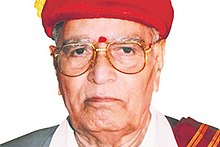
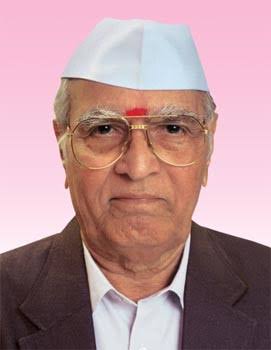
Nana Dharmadhikari: Indian spiritual Guru

The name of Nana Dharmadhikari is Dr. Narayan Vishnu Dharmadhikari. He born in Raigad in 1 March 1922. Nana is the social reformer. He initiated a free social service of spiritual literature from Revdanda , Raigad district, Maharashtra. He has million followers across the world.

Since childhood he read and studied Shrimat Dasbodh (simply called as Dasbodh). After a several years he started social reform by speech (called Nirupan). He founded an organisation named shree samarth prasadik Aadhyatmik seva samiti. Through this he spent his entire life for spreading the philosophy of Saint Samarth Ramdas. Samarth Ramdas is writers of devotional book Dasbodh, Manache Shlok and Atmaram. Nana gives Nirupan on Dasbodh. He also started this reform for children called Balbhakti Margadarshan. Nana also done lots of social work on cleaning area and tree plantation as well.

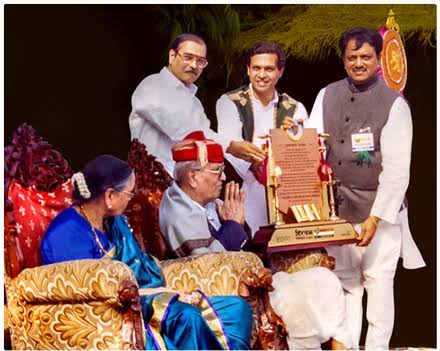
Nana Dharmadhikari got an National Integration Award by seroc India in 1999. The doctor of literature in 2004. And Maharashtra Bhushan Award in 2008. Today such service called parmarth is present in several Nations such as UAE, London, Singapore, Australia, Nigeria, Iran and so on.

Nana receiving award

Nana Dharmadhikari died on 8 July 2008 in Pune, Maharashtra. He spent his all life for social reform by spiritual literature. Nana helps in solving the people issue through correct guidance,he also resolved superstitions in society and literate people through his speech.