Start-up to Success: Ola Cabs

Gone are the days when commuting without a personal vehicle, used to be an issue for city dwellers. Either they had to resort to public transport which is not always the safest option, or book rental car services way before the trip for enormous amounts. Now with the coming up of app based cab riding services, voyaging has become easier for city dwellers.

And Ola is one of the key players in the market in regard to cab services. It is the first Indian cab aggregator company. Ola has made it much easier for the public to book cab at their own convenience. The company started in 2010 by Bhavish Aggarwal and Ankit Bhatia, and since then it has been bridging the gap between cabs and commuters.

Ola partners with a number of taxi drivers and owners, and with the help of their app they allows people to book cabs by entering their pick up location and destination. Ola has users in over 250 Indian cities and employs more than 2.5 million driver-partners.

How did it start ?

It all started when Bhavish Aggarwal while journeying from Bandipur to Bangalore, was left abandoned in his journey by his driver. This was because the driver was renegotiating the already decided payment. This unfortunate incident lead him to come up with a economical and satisfying cab service. And thus, Ola cabs was born.

The founders of Ola, Bhavish Aggarwal and Ankit Bhatia are both IIT Mumbai graduates, and launched Ola in December 2010. Both of them became the youngest billionaires of India, at the age of 25 and 26.

The name of the company is driven from the Spanish word ‘Hola’ that translates to ‘Hello’. The name ‘Ola’ probably indicates their services as easy and simple to use. Their logo is simple yet elegant and has the ‘O’ in the shape of a tyre.

Ola has a wide range of car categories to choose from, such as hatchback, sedan, SUV and more. Travellers choose them depending on their budget and number of people travelling. For travelling within the city, people can hire cabs, bikes, autos and even e-rickshaws through Ola.

Challenges and Competitors

In the initial day of the start up they had to code for long hours and sometimes 48 hours straight. They even had to drive customers to their desired locations at times because the drivers did not show up. As much as Ola wanted to spread their services across India, they faced the issue of internet connectivity in smaller town. Thus, they designed the app so that I could accommodate network connectivity in smaller towns. However, after bagging an investment worth 2 crores, things were finally in track and there was no looking back.  

Every business has its fair share of competitors and so does Ola. Uber is Ola’s biggest competitor. There are other players in the Indian market such as, Meru Cabs, Zoomcars, PeIndia Cabs, Carzonerent and more. Rapido is increasing taking over the bike taxi segment as well, which is the competitor to Ola’s bike services.

Needless to say, just like most businesses, Ola too had to bear the burnt of the COVID-19 pandemic. The travel and transport sector was hit severely with the pandemic as there were repeated lockdowns and curfews affecting its revenue generation. However, with the upliftment of lockdowns and curfews, it is believed that Ola will regain its revenue generation soon.  

Addition and Expansions

In spite of facing ups and downs through out the years Ola manages to sail through smoothly. Over the years Ola introduced new services in ‘Ola pedal’, which is a huge success in IIT Kanpur and IIT Madras campuses. They have also introduced the option to book cabs on an hourly basis to travel out of the city and have named the segment ‘Ola outstation’.

‘Ola money’ was also introduced and the product includes Ola money credit card, Ola money post-paid, Ola money mobile wallet and Ola money hospicash. Ola launched ‘Ola corporates’ in 2016, where employees book their rides through Ola, and the fare is deducted from the company’s Ola corporate prepaid account.

In March 2015 Ola acquired ‘TaxiForSure’, another taxi aggregator for $200 million, and maintained its stand in the country’s cab hailing market. Another impressive deal was when Ola acquired Foodpanda-India, an food delivery aggregator in 2017 at a valuation of $40-$50 million. In 2018 onwards, Ola expanded its services overseas in countries of New Zealand, Australia and United Kingdom.

                     Clocking more than 150,000 bookings per day, Ola holds a little less than half of the Indian market (as of the Uber’s 2020 report). The CEO of Ola Bhavish Aggarwal has disclosed that the company is planning on initiating an IPO in the coming years. Ola plans on further expanding their services in remote areas, making India travel luxuriously on a budget.  
THE BOOK REVIEW OF IKIGAI

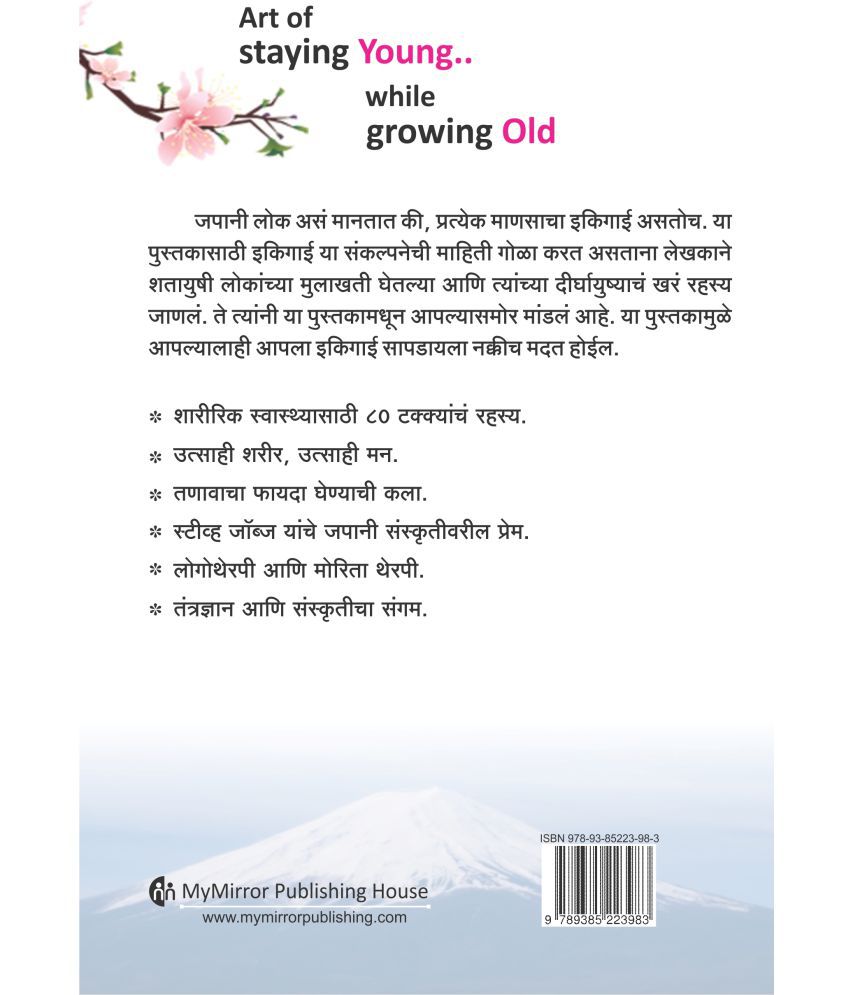
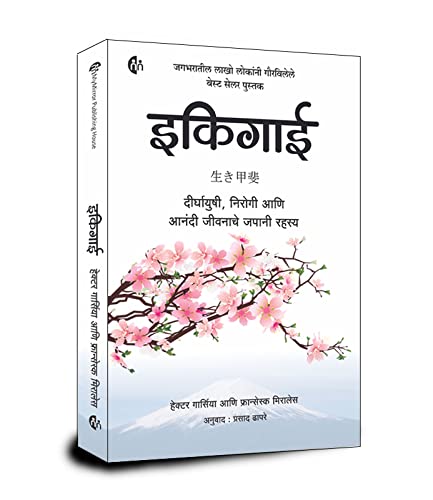
THE BOOK REVIEW OF IKIGAIIkigai is the Japanese term the meaning that is the art of living. “IKIGAI: The Japanese secret to long and happy life” book is written by Francesc Miralles and Hector Garcia. the book is published by Penguin books. This book refers to the practice of living a purposeful life.


The book is about a long, healthy, and happy life. for the book, they studied Japanese living culture. They went to Okinawa and observed the lifestyle of people. Okinawa is the home of long-living people. the reason for long life is their lifestyle which is detailed explains their lifestyle. Anyone struggling to find motivation in life. In this book, there is how we become always motivated. and can live a happy life. The content also contains encourages healthy life and purposeful living among people. there are various things to become happy such as the importance of flow, importance of friendship, reason of being living, and lifelong source of motivation.
The book contains details about living a long lifestyle. There is a specific diet for the whole life. always eat in small pieces so we can stop our eating when the stomach is full. another important point is exercise. regularly do some exercise. the suryanamaskar is great exercise. it’s all about a healthy body so we can easily focus on our work. mental health is also much more important and for that, they told what is ikigai and how to find our ikigai. continuous working on/ with our ikigai is the best way of a happy life.
Ikigai is to find the purpose of our life. Everyone should be self-motivated and finding the source of self-motivation is the secret of a long, happy life.
the 10 rules to follow Ikigai are included in the book-
1)Keep working and never retire
2)stay calm
3)Don’t fill your stomach
4)good friends
5)Be more fit for next birthday
6)Humor
7)Being connected to nature
8)thank you
9)Live in the present
10)Behave like your Ikigai

this is the best to become self-motivated. being self-motivated is the secret of a long and healthy life. everyone should read books and find the ikigai of life. and live a healthy, happy, and long life.

Bauls of Bengal: The Devoted Folk Singers

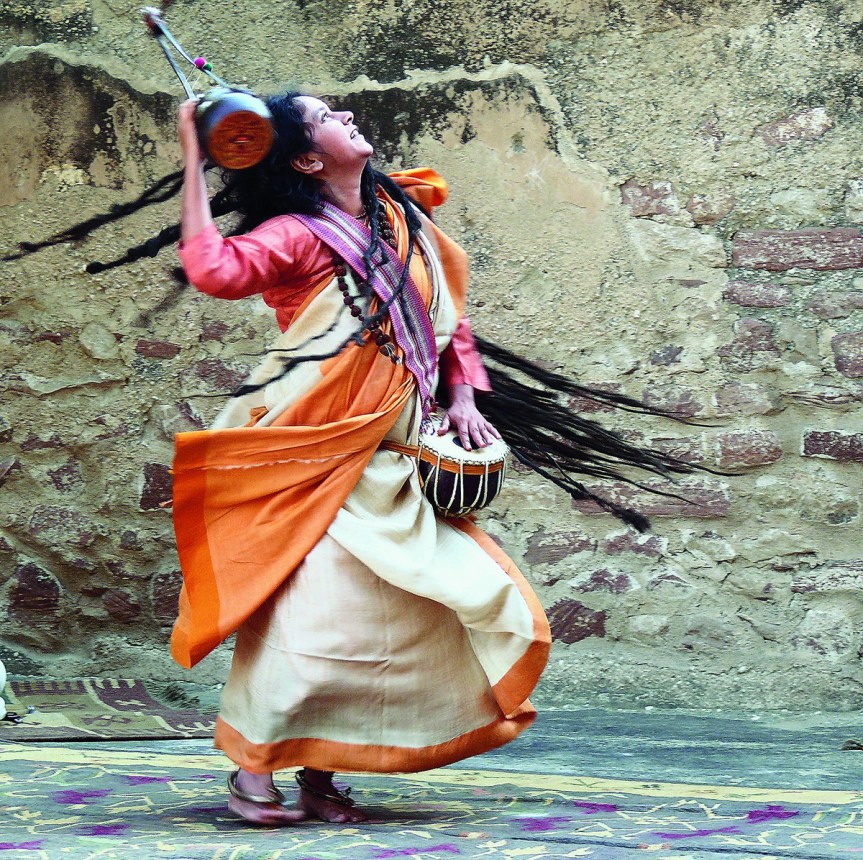
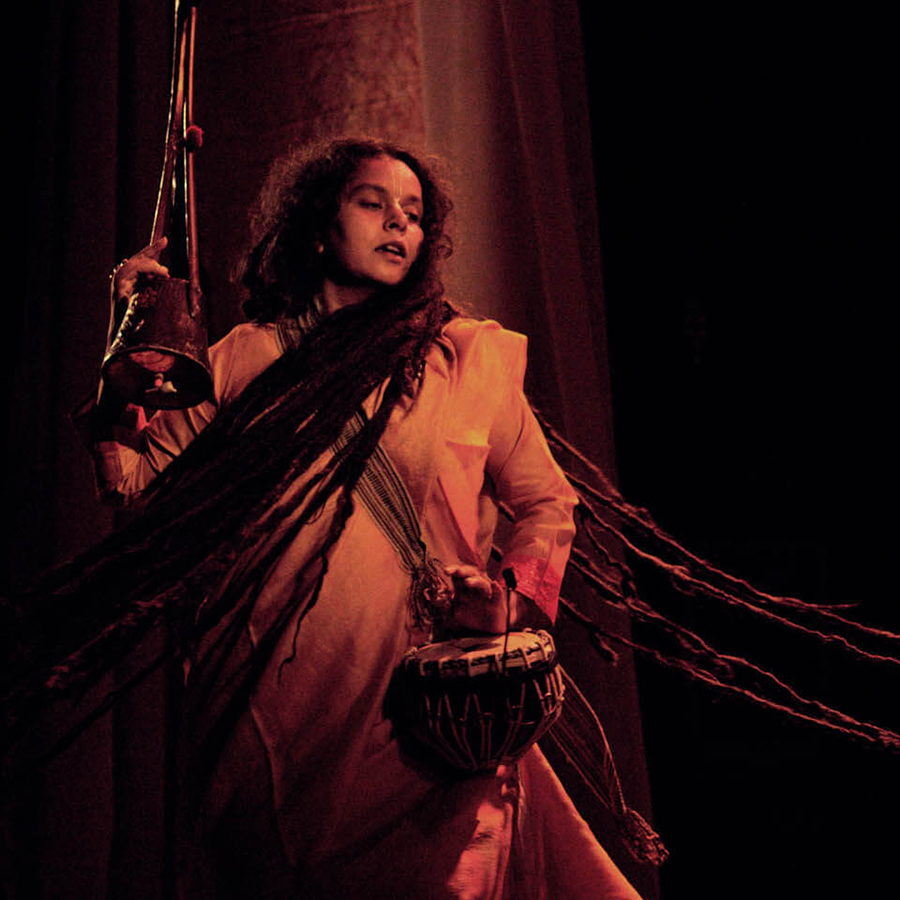
Parvathy Baul

Introduction

The Bauls of Bengal are an order of wandering folk singers that have kept their philosophies alive for centuries. But modern demands threaten to overtake their simple, itinerant lifestyles. Now, an audio-visual record is being taken to keep their vocal traditions alive for generations yet to come.

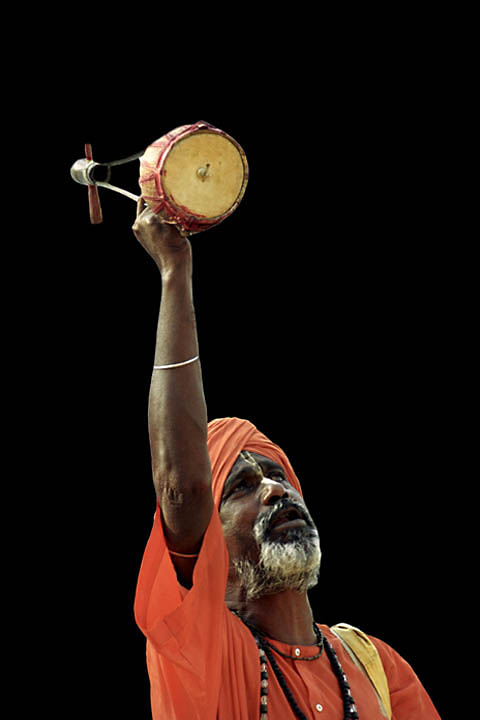
A Baul holding a Dotara

Bauls : Who They Are

In the Bengal region of South Asia, however, itinerant mystics are still welcomed widely, respected for their sincere but simple way of life, and rewarded for the brilliance of their performances, sharing memorable poetry and music, mainly with rural communities, much as they have done for several centuries. These are the Bauls of Bengal – a group that pursue a life of self-denial and meditative discipline, committed to a belief that ‘the ultimate’ existence is to be found, not so much through rituals in holy places, but in every ‘self’ and are enthusiastic to share this passion almost exclusively through their art. Bauls belong to an unorthodox devotional tradition, influenced by Hinduism, Buddhism, Vaishnavism and Sufi Islam, yet distinctly different from them. Bauls neither identify themselves with any organized religion nor with the caste system, special deities, temples or sacred places. They share only one belief —that God is hidden within the heart of man and neither priest, prophet, nor the ritual of any organized religion will help one to find Him there. To them we are all a gift of divine power and the body is a temple, music being the path to connect to that power.

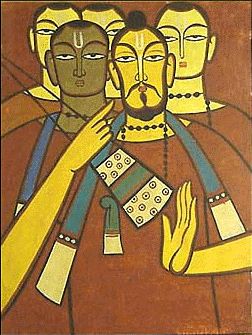
Bauls artwork by Jamini Roy

Historic Background

The word Baul comes from the Sanskrit word “Batul,” which means mad and is used for someone who is possessed or crazy for God. The Bauls are wandering minstrels of West Bengal and Bangladesh, whose song and dance reflect the joy, love and longing for mystical union with the Divine. The Baul tradition of mendicancy – ascetics who entertain in exchange for subsistence – has ancient origins, and seems to have thrived well before the rule of the great Mughal Emperors from the 16th to 18th centuries, a period during which Islam spread eastwards from the Middle East to Bengal and beyond. Originally the district of Birbhum in West Bengal was the seat of all Baul activity. Later, the Baul domain stretched to Tripura in the north, Bangladesh in the east, and parts of Bihar and Orissa in the west and south respectively. In Bangladesh, the districts of Chittagong, Sylhet, Mymensingh and Tangyl are famous for Bauls. Bauls from far off places come to participate in the Kenduli Mela and the Shantiniketan Poush Mela –the two most important fairs held in West Bengal for Baul music.

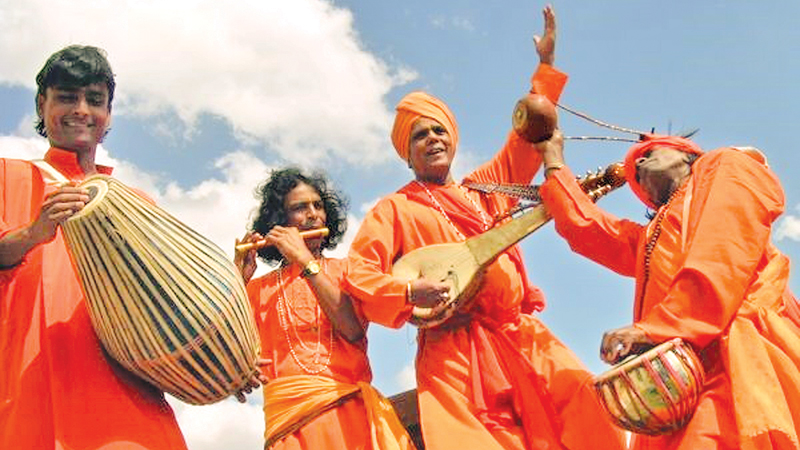
A group of Bauls in Bengal

The Characteristics and Attires

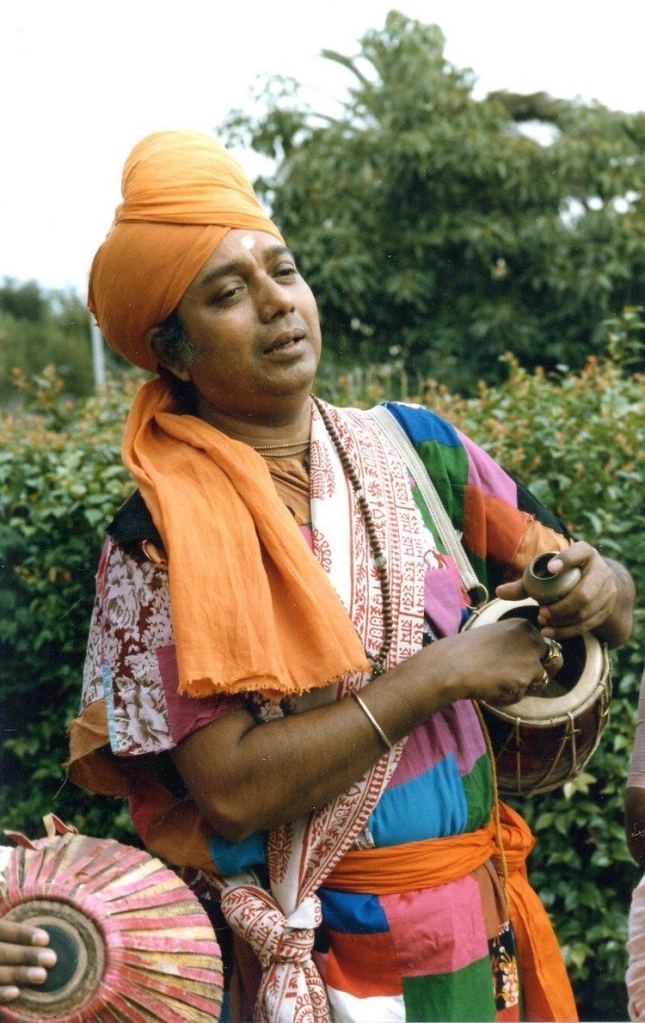
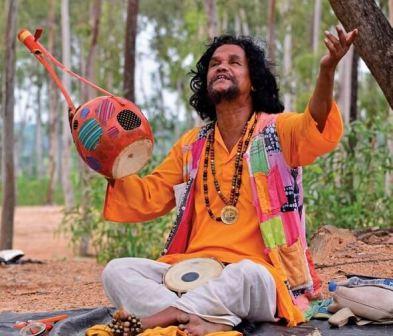
They can often be identified by their distinctive clothes and musical instruments. It’s easy to identify a Baul singer from his uncut, often coiled hair, saffron robe (alkhalla), a necklace of beads made of basil (tulsi) stems. Bauls use a number of musical instruments: the most common is the ektara, a one-stringed “plucked drum” drone instrument, carved from the epicarp of a gourd, and made of bamboo and goatskin. Others include the dotara, a long-necked fretless lute (while the name literally means “two stringed” it usually has four metal strings) made of the wood of a jackfruit or neem tree; besides khamak one-headed drum with a string attached to it which is plucked. The only difference from ektara is that no bamboo is used to stretch the string, which is held by one hand, while being plucked by another. Drums like the duggi a small hand-held earthen drum, and dhol and khol; small cymbals called kartal and manjira, and the bamboo flute are also used. Ghungur and nupur are anklets with bells that ring while the person wearing them dances.

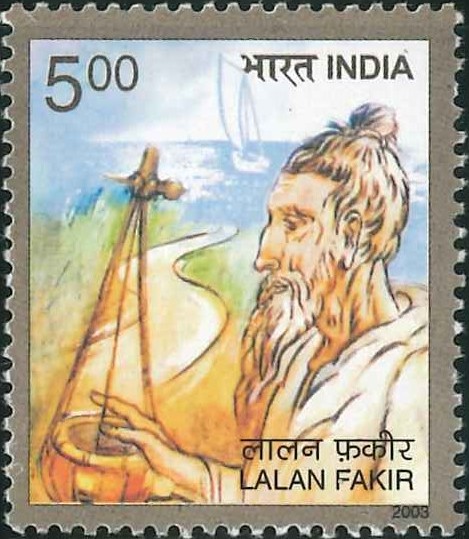
Lalan Fakir

Lalan Fakir : The Legend of Baul Movement

 Lalan Fakir (1774 -1890), the greatest of all Bauls, continued to compose and sing songs for decades without ever stopping to correct them or put them on paper. He composed a thousand songs, of which just 600 can be traced. It was only after his death that people thought of collecting and compiling his repertoire. He rejected the division of society into communities, protesting and satirising religious fundamentalism of all kinds. Lalan’s metaphysical lyrics raise a basic question – that if there is a single creator then why so many religions exist ? This is a pertinent problem in today’s world; we all know that the different ‘Gods’ have created acrimony between races and sects and as of today this concept of different ‘Gods’ remains the most decisive divisive force on planet Earth. His most famous song quoted, “Khanchar Bhitor Ochin Pakhi Kemne Ase Jay”. In 2004, Lalan was ranked 12 in BBC’s poll of the Greatest Bengali of all time.

Parvathy Baul

Baul Philosophy

Bauls do not believe in the pious ‘other world’ and most of the times deny the presence of super powers. Looking from a different angle it can be said that according to them, ‘God’ resides in each human being and it is for the human being to realise this truth, the human beings are the best exponents of spirituality ever to tread on this Earth. Nowhere did this philosophy leave its imprint more powerfully than on the work of Rabindranath Tagore, who talked of Bauls in a number of speeches in Europe in the 1930s. An essay based on these was compiled into his English book ‘The religion of man’. An important part of Baul philosophy is “Deha tatta”, a spirituality related to the body rather than the mind. They seek the divinity in human beings. Often, the lyrics philosophize on love and stress to remain unattached and unconsumed by the pleasures of life even while enjoying them. Baul music celebrates celestial love, but does this in very earthy terms.

Purna Das Baul

International Connection

Referred to as the Baul Samrat, Purna Das Baul, introduced Baul songs to the West during an eight-months tour of the US in 1965 with stars like Bob Dylan, Joan Baez, Paul Robeson, Mick Jagger, Tina Turner, and all. Dubbed “India’s Bob Dylan” by the New York Times in 1984, Purna Das Baul has played with Bob Marley, Gordon Lightfoot and Mahalia Jackson and the likes. Currently another version of Baul called the folk fusion also called baul rock is also greatly accepted by the audience, especially in West Bengal. Kartik Das Baul has taken baul to different heights by associating himself with folk fusion. This type of baul was brought into the world of music by ‘Bolepur Bluez’, which was world’s first folk fusion band. There are also the Western Bauls in America and Europe under the spiritual direction of Lee Lozowick, a student of Yogi Ramsuratkumar. Their music is quite different (rock /gospel/ blues) but the essence of the spiritual practices of the East is well maintained.

A Baul in Shantiniketan,Birbhum

Conclusion

The tradition is so integral to Bengal that it’s hard to think of Bengali culture sans the Bauls. They’re not only an intrinsic part of Bengal’s music, they’re in the mud and air of this land and in the mind and blood of its people. The spirit of the Bauls is the spirit of Bengal– ever-flowing in its society and culture, literature and art, religion and spirituality.

Women in The Indian Film Industry

The Indian film industry is enormous, with more than 1800 movies being released every year in over 20 languages. In fact, Bollywood is the largest film industry in the world! With top movies like Baahubali and Dangal earning a box office collection of over 300 crore Rs, it is evident that films are a big deal in India. People flock to theatres to see their favourite movie stars and enjoy their films. For years, the film industry has been considered a male-dominated workspace. But there have been several women who have broken through this pre-conceived barrier and risen to become some of the best in the industry. Fatma Begum is credited as the first woman feature director in India for her work in the silent film Bulbul-e-Paristan (1926). She was a director, actor and writer who established her own production company Fatma Films in 1926. Jaddam Bai, Protima Dasgupta and Shama Zaidi are some of the pioneering women directors and screenwriters in India. Women directors were not under the spotlight for a lot of years after then till unique and creative women started gaining attention for their directing and screenwriting skills in the last few decades.

A lot of female filmmakers and producers are going mainstream these days, many of them bringing their own fresh and interesting takes on filmmaking and storytelling. Anjali Menon films like Manjadikuru (2008), Bangalore Days (2014) and Koode (2018) are some of the most heartfelt and warm films in Mollywood. Soorarai Pottru in Tamil was also directed by the talented Sudha Kongara. Meghna Gulzar’s work in Raazi (2018) and Chaapak (2020) has been impressive as well. Gauri Shinde brought back the legendary actress Sridevi on screen in 2012 with the highly acclaimed English Vinglish. Rima Das is a director and screenwriter whose film in Assamese, Village Rockstars (2017) won many national and international awards. Zeenat Lakhani was the co-writer for the 2017 Hindi comedy-drama Hindi Medium. Mira Nair (Monsoon Weddings, 2001) and Gurinder Chadha (Bend it Like Beckham, 2002) are directors who found fame outside of India for their work. Zoya Akhtar, the daughter of poet and screenwriter Javed Akhtar, has directed and produced several hugely popular and commercially successful films. Her most recent work was with Gully Boy (2019) and she has announced a road-trip movie, Jee Le Zara featuring some of the female superstars of Bollywood like Alia Bhatt, Priyanka Chopra and Katrina Kaif. This has been planned as a sequel to Zindagi Na Milegi Dobara (2011) which was such a big success on its release it remains one of the most loved films in Bollywood by the masses. Top actresses in Bollywood like Priyanka Chopra, Anushka Sharma and Deepika Padukone have also taken up producing, with many of them establishing their own production houses.

Some of the most significant evolutions can be seen in the depiction of female characters in Indian cinema. For ages, these characters were simply the side pieces, simply pretty, too emotional and dependent on the male characters in the movie. Oftentimes, she was the “damsel in distress”, needing the “hero” to save her from the villains so that he could show off how strong and cool he is. Over the last 2 decades, there have been several films that showcased strong women characters – both physically and mentally. More female-oriented movies are being made like Kahaani (2012), Queen (2013), Raazi (2018) and the recently released Gangubai Kathiawadi (2022), which showcase the diverse personalities and strengths of women. Even in some male-oriented films, women are represented as strong-minded individuals in their own right. Their characters no longer lack substance. Take the 2020 Tamil film Soorarai Pottru for example. Even though Surya’s Maaran is the central character, the character of his wife Bommi, played by Aparna Balamurali, is one of the highlights of the film. With her strong principles and ambitious personality, she impresses the audience by standing up for herself and supporting her husband. Films have a lot of influence on the socio-political stance of society regarding various issues. When there are movies like Kabir Singh (2019) still garnering a huge fan following for their depiction of toxic masculinity and abusive relationships, stories like that of Soorarai Pottru are required for providing a good example of what a healthy relationship should look like and how women are just as strong, funny, ambitious and efficient as men. Filmmakers these days understand how impactful cinema is as a communication medium and try to bring attention to the various issues faced by women like discrimination, abuse and acid attacks through their films.

Women have come a long way in Indian Cinema. Here’s to hoping we get to see more of their work and a lot more real and relatable female characters on screen in the coming years.