
Problems of Aged in Changing Scenario

Credit: Metropolis

Introduction

Population aging is a global issue, which has been recognized to have implications on the health care and social welfare systems. The process whereby the proportion of children in the population decreases and those of old people increases is known as the “aging of population”. The global population of the elderly has constantly been increasing during the second half of the last century. This has been possible due to the easy availability of life-saving drugs, famines’ control, various communicable diseases, better awareness and supply of nutrition and health facilities, and a comparatively better overall standard of living. These achievements have resulted in a drastic reduction in mortality rates and a substantial increase in the life expectancy at birth and the overall span of people.

What is Aging?

Aging is a continuous, irreversible, universal process, which starts from conception till the death of an individual. However, the age at which one’s productive contribution declines and one tends to be economically dependent can probably be treated as the onset of the aged stage of life. Old age is the last phase of the human life cycle, which is again universally true. UN recommended 60 years as the age of transition for the elderly segment of the population, and has been categorized as follows:

  1. Young Old- between the ages of 60-75 years
  2. Old-Old- between the ages of 75-85 years
  3. Very Old- 85 years and above.

Disabilities in Old Age

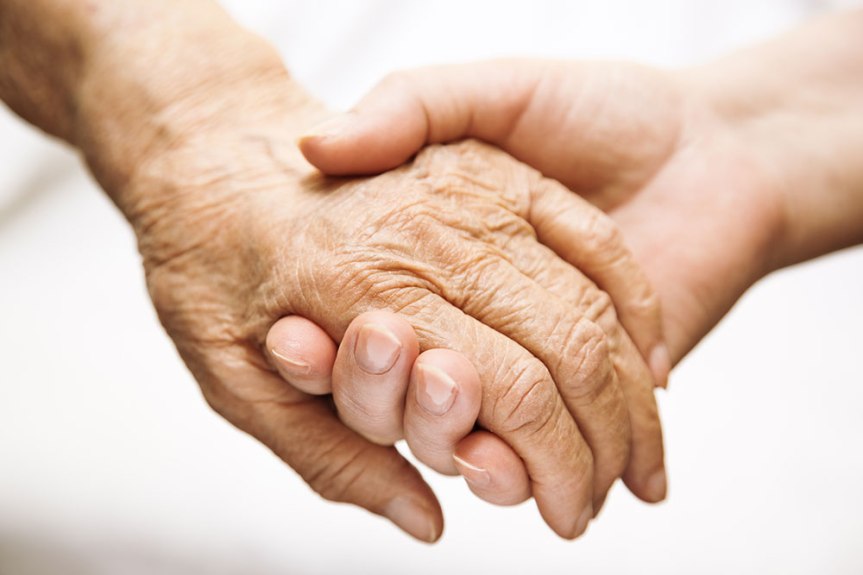
The disabilities that a person experiences in the course of aging are multiple in nature. For some, aging enhances the status and enriches life satisfaction, but for many others, it may be difficult and problematic. On one hand, getting old provides an opportunity to relax, enjoy and do things they always wanted to do but never had the time for when they were young. On the other hand, old age also implies increasing physical, mental, and psychological disabilities. Such disabilities are the result of many factors. With the increasing age and decreasing health, the older person begins to depend unknowingly physically and psychologically on either the kinship group or the existing social support network.

Government’s Role

Since independence, the Indian government has been committed to supporting the old people in our society with certain interventionist welfare methods. The year 1999 was declared by the UN as the International Year of Older Persons followed on 13th Jan 1999, by the Government of India approving the National Policy for Older Persons for accelerating welfare measures and empowering the elderly in ways beneficial to them. Maintenance and Welfare of Parents and Senior Citizens Act, 2007 provides legal sanctions for the rights of the elderly. In addition constitutional provisions for old age security, old age pension, establishing old age homes, expanding geriatric services, and liberalizing housing policy for elders have also been undertaken.

Role of Old Age Homes

The concept of the old age home, though not very common in India, is not unknown. The first old age home was established in Bangalore in 1983 by the Bangalore Friends-in Need society and was called the ‘(obb Home)’. According to Help Age India estimates, there are 728 institutions at present, perhaps a majority of them in urban areas. Kerala has the largest number of old-age homes. More than 60 percent of the old age homes in India are of the charitable type, meant for destitute or very poor persons. About 20 percent of them are of the ‘pay and stay’ type and another 20 percent are mixed. About 15 percent of the homes were for women exclusively. In recent years, there has been a rapid increase in the number of old age homes and they are gradually gaining acceptance, especially by those who see these institutions as a better alternative than living in a son’s home where you are not wanted. There is a debate going on in India at present among seniors’ organizations, nongovernmental organizations, and others about whether this growth should be allowed, supported, or curbed. There is a strong feeling that the proliferation of old-age homes would make it easier for children to shirk their responsibility for taking care of their aging parents by placing them in institutions.

Conclusion

Despite the government’s and NGO’s efforts in rehabilitating the aged in India they are still the most vulnerable group facing multiple problems and hence require proper care and attention. Aging is a natural process. ‘Old age is an incurable disease’. But more recently J.S. Ross commented, “You do need old age, you protect it, you promote it, and you extend it”. A man is as old as he feels and a woman as old as she looks. Hence there is a need for proper care and protection for the elderly in the changing scenario.
References

An Analysis of National Safe Motherhood Day

Credit: Eduwar

Introduction

The White Ribbon Alliance for Safe Motherhood is an alliance of organizations working together to increase awareness, build partnerships and act as a stimulus for action to decrease maternal mortality significantly. It was launched in India by the Centre for Development and Population Activities in 1999 and with a coalition of 1800 organizations, in 2003, it requested the Government of India to declare April 11th, Kasturba Gandhi’s birth anniversary, as National Safe Motherhood Day. India is the world’s first country to have officially declared a National Safe Motherhood Day.

Theme for 2022

Every year a nationwide advocacy theme is selected for Safe Motherhood Day, and activities and full-scale campaigns are carried out throughout the country to increase awareness of proper healthcare and maternity facilities for pregnant and lactating mothers. Also, the members, state associations, and non-profit organizations come together on National Safe Motherhood Day to share technical skills, expertise, and resources. This year’s theme is “Remain at home in the face of the Coronavirus; protect mother and child.”

Why this day is Celebrated?

India is the main country to have formally proclaimed a day committed to well-being and security, all things considered. Every year, WRAI individuals select a cross country topic for “Safe Motherhood Day.” They do crusades all across the country. The objective of these missions is to increment mindfulness that each lady has an option to live and endure pregnancy and labor.

Initiatives taken by Indian Government

In 2003, at the request of the WRAI, the Indian government designated April 11 (the anniversary of Kasturba Gandhi’s birth) as “National Safe Motherhood Day” (a coalition of 1,800 organizations). India is the world’s first country to establish a “National Safe Motherhood Day.” Every year, WRAI members choose a national publicity theme for “Safe Motherhood Day,” and WRAI members conduct activities and large-scale campaigns across the country. These annual campaigns, which are launched on “National Safe Motherhood Day,” aim to raise awareness that every woman has the right to survive and recover from pregnancy and childbirth. The White Ribbon Alliance of India was established in 1999.

Safe Motherhood Program

The aim of the National Safe Motherhood Program is to reduce morbidity and mortality rates of pregnant and lactating mothers and neonates and to improve their health through preventive strategies and activities related to health promotion as well as by addressing avoidable causative factors that can lead to death during pregnancy, childbirth and postpartum period. Nutritious snacks, such as vegetables, fruits, egg, yoghurt, cheese, pulses, sprouts, soya and milk products, along with proper hydration are ideal for a pregnant woman.

Significance of Motherhood Day

Our mothers are the only reason we were able to see the light of day and grow up to be strong people. Their numerous sacrifices, dedication, hard work, and blessings enable us to progress in life. Motherhood is one of the most special and important stages in a woman’s life, and she requires the greatest amount of care and affection during this time. Thus, National Safe Motherhood Day is observed in India on April 11 to raise awareness about motherhood and its importance. The entire period of pregnancy and delivery is critical and must be handled with extreme caution. Because of our government’s efforts, I can say with great pride and accomplishment that Madhya Pradesh has seen a significant decrease in Maternal Mortality Rate over the years.

Conclusion

Janani Express Ambulance has made it simple and quick to get to the hospital. Similarly, schemes such as Janani Suraksha Yojana, Surakshit Matritva Abhiyan, Mamta Abhiyan, and others have been launched to provide pregnant women with all necessary care and health facilities. The government is working around the clock to improve mothers’ health and hygiene. Motherhood, on the other hand, necessitates more than just medical and health advantages. As a result, it is critical to pay attention to her mental health and meet all of her needs. On this National Safe Motherhood Day, I humbly ask that everyone prioritize motherhood and pay special attention to pregnant and lactating women. In the absence of healthy mothers, we cannot envision a beautiful future.

References

An Analysis of World Haemophilia Day

Credit: Deccan Chronicle

Introduction

World Hemophilia Day was started by the World Federation of Hemophilia (WHF) and is annually observed on the 17th of April. The international community started observing WHD in 1989 and April 17 was chosen to recognize Frank Schnabel the founder of WHF. World Hemophilia Day is aimed at raising awareness about hemophilia and other bleeding disorders. It also helps to raise funds for patients who cannot afford hemophilia treatment as well as attract volunteers for the World Federation of Hemophilia.

What is Haemophilia?

Haemophilia is an inherited condition that causes bleeding for a long time after injury or surgery and painful swelling of the joints either after injury or even without injury. (“Inherited” means that the disease is passed from parents to children through their genes). Haemophilia is the commonest X-linked disorder affecting approximately 1 in 10,000 male births; whereas women act as carriers of Haemophilia. Haemophilia is an inherited blood disorder disease in which blood does not clot properly. It is caused due to defects in the blood vessels, the coagulation mechanism, or the blood platelets and by a deficiency in a gene that resolves how the human body will make factors VII, IX, or XI.

Types of Haemophilia

Haemophilia has three forms namely Haemophilia A, B, and C. Out of these, Hemophilia A is the most common.

– Haemophilia A patient is treated by prescribing a hormone desmopressin.

– Haemophilia B patient is treated by infusing the patient’s blood with the clotting factors of a donor.

– Haemophilia C patient is treated by plasma infusion which ceases down profuse bleeding.

Theme of World Haemophilia Day

April 17, 2022, is World Hemophilia Day. The theme of the event this year is “Access for All: Partnership. Policy. Progress. Engaging your government, integrating inherited bleeding disorders into national policy“. By raising awareness and bringing hemophilia and other inherited bleeding disorders to the attention of policymakers, we can increase sustainable and equitable access to care and treatment.

Significance of World Haemophilia Day

The World Federation of Haemophilia (WFH) started celebrating the day in 1989 and chose April 17 to celebrate it in honour of the founder of WFH Frank Schnabel. Haemophilia was discovered in the 10th century and was found mainly in males. The disease was then known as Abulcasis. In the year 1937, Haemophilia genetic disorder was divided into two types namely A and B, however, no proper treatment was found till that time. Then, it was decided to raise awareness about the disease among the people and make them understand the need to give the right attention to this serious health issue. In 1963, the WFM was established to improve treatment and care for all haemophiliac patients.

Awareness-raising campaigns, conferences, workshops, etc. are being organized on this day by several communities and people. various kinds of activities are being performed to inform the general public about Haemophilia disease. Also, landmarks and monuments in Australia and around the world change their colour to red at the night to support World Haemophilia Day.

Conclusion

When there is a family history of Haemophilia, it is now possible to identify females who carry the Haemophilia gene. Women, who know they are carriers, or might be carriers, may have options for prenatal diagnosis to obtain information on the fetal status. According to National Blood Transfusion Council under National Aids Control Organization (NACO) guidelines, all state/UTs administration patients suffering from thalassemia, sickle cell anemia, and Haemophilia should be provided blood free of cost. The Rashtriya Bal Swasthya Karyakarama (RBSK) launched under the National Health Mission (NHM), provides early detection and treatment of children suffering from genetic disorders.

References