

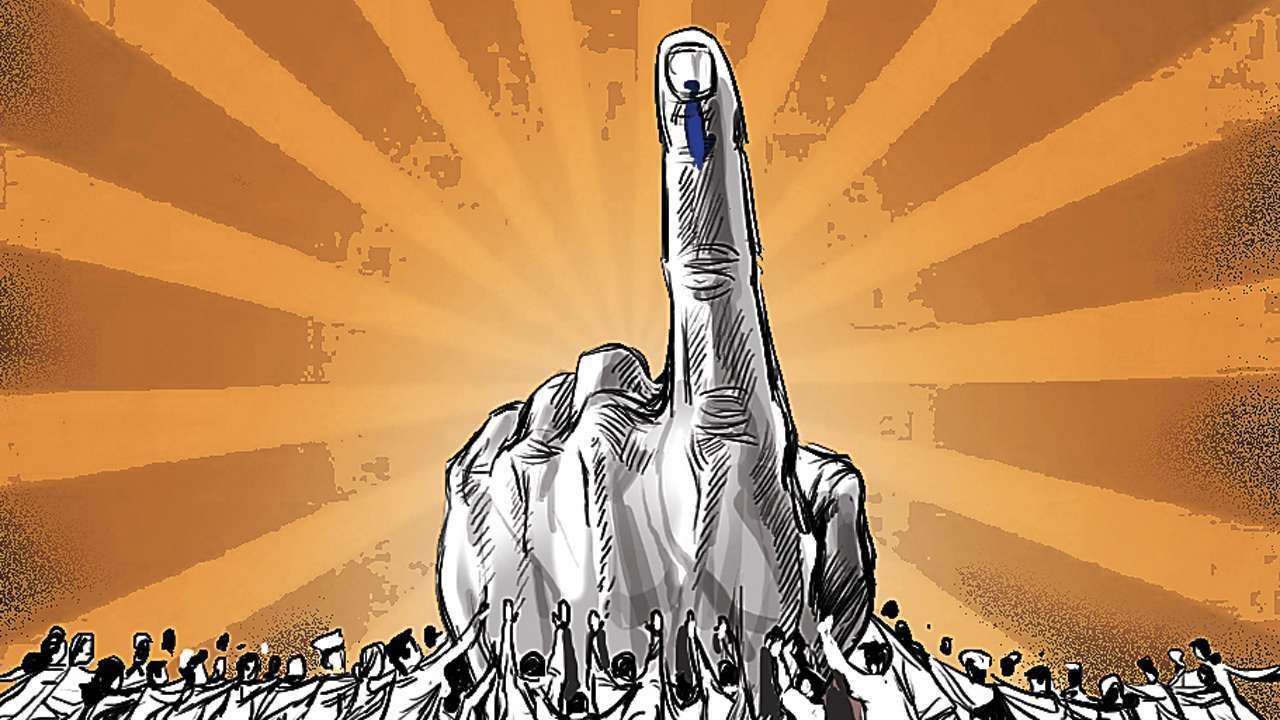
ELECTIONS AND COMMON MAN

Kerala Assembly Election 2021: Voting begins, fate of 957 candidates to be  decided today

“The elections are the greatest symbol of participation and political reform”

                                                -Mohammad Khatami (former president of Iran)

An election is a process by which the citizens of a democratic nation, irrespective of their caste and creed, decide who should take decisions on behalf of them. These have been the common mechanism for the functioning of representative democracies since the seventeenth century. The elections could be either direct elections or indirect elections. In direct elections, people could directly take part in the election process, whereas in indirect elections one individual is entitled to vote on behalf of a representative group. India being the largest democracy in the world considers elections as the “festivals of democracy” in which we celebrate the powers of common man.

            In India elections held once in five years normally. Representatives are elected on the basis of universal adult franchise. As per the conditions laid down by the makers of Indian constitution any citizen who has attained the age of 18 could cast their vote irrespective of their religion, economic and social status. Similarly, Indian constitution also enables any citizen to contest in elections without any discrimination. In order to monitor the equal participation in elections the constitution has also setup an independent body named “election commission”. Thus, elections in India are an inclusive process where common man is pivotal point.

            Indian democracy is the one in which all voters are considered equal thus, the contestants in elections are forced to treat each and every voter of his constituency with same importance at least at the time of elections. The truth is that, it is only during elections that the politicians will listen to the demands of common man. The elections instill a special power in the common man, who constitute a major portion of the society. Even the richest contestant is at the mercy of common man at times of election. It provides each and every individual an opportunity to shape the future of their nation regardless of their socio- economic conditions. Elections are the easiest way in which a citizen can express their discontent towards an existing government. Apart from this electoral system also lay down certain provisions by which common man could contest in elections and thereby contribute towards nation building directly. But many citizens are still unaware of this immense power.

            The voting percentages of elections make it evident that people are still reluctant towards casting their vote. Despite of providing holidays and several other measures to encourage people to vote, many people are not ready to play their role in nation building. Low literacy rates, apathy, unprincipled politics, lack of concrete effort on the part of the political parties in motivating the voters and local conditions in some part of the country can also be sited as the reason for lower public participation in elections. The corrupt, divisive, dishonest and exploitative practices might have decreased the confidence of people in this process. Increase in the use of money power, reliance on money power during elections, inciting communal and caste prejudice in the voters and the misuse of official machinery have shaken the foundations of the electoral process. The only remedy in these circumstances lies in bringing about systematic changes in the polity and elections.

 As John f Kennedy rightly quoted, “The ignorance of one voter in a democracy impairs the security of all”. It is necessary to make the voters aware of their rights and duties. The voters should be encouraged to cast their votes in an informed manner. The political system should take efforts to educate voters and bring back the trust in democratic system. The children should be taught about the need and worth of elections from a younger age. Above all, people should develop a feeling of obligation towards voting and should keep in mind that voting is their duty towards their nation.

By making proper use of the right to vote a common man could contribute immensely towards building their nation. On the whole as Roald Dahl said “Somewhere inside all of us is the power to change the world”. Elections are one the easiest way for a common man to contribute towards this change.


ELECTIONS AND COMMON MAN

Kerala Assembly Election 2021: Voting begins, fate of 957 candidates to be  decided today

“The elections are the greatest symbol of participation and political reform”

                                                -Mohammad Khatami (former president of Iran)

An election is a process by which the citizens of a democratic nation, irrespective of their caste and creed, decide who should take decisions on behalf of them. These have been the common mechanism for the functioning of representative democracies since the seventeenth century. The elections could be either direct elections or indirect elections. In direct elections, people could directly take part in the election process, whereas in indirect elections one individual is entitled to vote on behalf of a representative group. India being the largest democracy in the world considers elections as the “festivals of democracy” in which we celebrate the powers of common man.

            In India elections held once in five years normally. Representatives are elected on the basis of universal adult franchise. As per the conditions laid down by the makers of Indian constitution any citizen who has attained the age of 18 could cast their vote irrespective of their religion, economic and social status. Similarly, Indian constitution also enables any citizen to contest in elections without any discrimination. In order to monitor the equal participation in elections the constitution has also setup an independent body named “election commission”. Thus, elections in India are an inclusive process where common man is pivotal point.

            Indian democracy is the one in which all voters are considered equal thus, the contestants in elections are forced to treat each and every voter of his constituency with same importance at least at the time of elections. The truth is that, it is only during elections that the politicians will listen to the demands of common man. The elections instill a special power in the common man, who constitute a major portion of the society. Even the richest contestant is at the mercy of common man at times of election. It provides each and every individual an opportunity to shape the future of their nation regardless of their socio- economic conditions. Elections are the easiest way in which a citizen can express their discontent towards an existing government. Apart from this electoral system also lay down certain provisions by which common man could contest in elections and thereby contribute towards nation building directly. But many citizens are still unaware of this immense power.

            The voting percentages of elections make it evident that people are still reluctant towards casting their vote. Despite of providing holidays and several other measures to encourage people to vote, many people are not ready to play their role in nation building. Low literacy rates, apathy, unprincipled politics, lack of concrete effort on the part of the political parties in motivating the voters and local conditions in some part of the country can also be sited as the reason for lower public participation in elections. The corrupt, divisive, dishonest and exploitative practices might have decreased the confidence of people in this process. Increase in the use of money power, reliance on money power during elections, inciting communal and caste prejudice in the voters and the misuse of official machinery have shaken the foundations of the electoral process. The only remedy in these circumstances lies in bringing about systematic changes in the polity and elections.

 As John f Kennedy rightly quoted, “The ignorance of one voter in a democracy impairs the security of all”. It is necessary to make the voters aware of their rights and duties. The voters should be encouraged to cast their votes in an informed manner. The political system should take efforts to educate voters and bring back the trust in democratic system. The children should be taught about the need and worth of elections from a younger age. Above all, people should develop a feeling of obligation towards voting and should keep in mind that voting is their duty towards their nation.

By making proper use of the right to vote a common man could contribute immensely towards building their nation. On the whole as Roald Dahl said “Somewhere inside all of us is the power to change the world”. Elections are one the easiest way for a common man to contribute towards this change.

Happy Birthday Manna Dey: A Legendry Singer Born on International Labour Day

Padmabhusan Manna Dey was born on 1 May 1919 in present Kolkata the day which coincides with International Labour Day. By reading Manna Dey’s life, I have understood for reaching the zenith there is no shortcut to hard labour.

In India, from time to time many great singers were born and among the famous classical singers, a few great personalities are: Tansen, Ustad Bade Ghulam Ali Khan, Dr. Balamuralikrishna, Pandit Bhimsen Joshi, M S Subbulakshmi, Pandit Jasraj, and many others. On the date of 1 May 1919 naturally one name crops up as Padmabhusan Manna Dey. He is a legendary figure in Indian music. And that is why he received many awards inter alia of which are: Padmabhusan Award, Padma Shri Award, Bongo Bibhusan Award,  given by the Government of West Bengal; Lifetime Achievement Award by Filmfare; Hony D.Lit Award from Jadavpur University; Dadasaheb Phalke Award; First Akkshaya Mohanty Award by the  Government of Odisha; National Film Award, Best Male Playback Singer for the Hindi film \”Mere Huzoor”.  His original name was Probodh Chandra Dey, and he was born on 1 May 1919 in present Kolkata.  He received his early education, in a small pre-primary school popularly known as Indu Babur Pathshala. Later on, he went to Scottish Church Collegiate School to complete both his schooling and intermediate studies. He completed his graduation from Vidyasagar College. From the very childhood, Manna Dey had a special liking for sports viz., wrestling, and boxing. Anyway, it is pertinent to mention that during his intermediate study at Scottish Church College, Manna Dey’s singing talent came to the limelight. He learned singing mainly from his uncle Krishna Chandra Dey and from Ustad Dabir Khan. It is heartening to mention that Manna Dey stood first for three consecutive years in three different categories of inter-collegiate singing competitions. In 1942, Manna Dey accompanied his renowned uncle Krishna Chandra Dey on a visit to Mumbai. There he met another legendary figure Sachin Dev Burman and Manna Dey started working as an assistant music director. Later on, he also assisted other famous music composers for some time and then decided to work independently. While working as a music director for different successful Hindi films Manna Dey was keen to learn  Hindustani Classical music, which he could do from two classical stalwarts, Ustad Aman Ali Khan and Ustad Abdul Rahman Khan.

In 1943, Manna Dey started his career in playback singing with the film Tamanna. The musical score was set by his uncle Krishna Chandra Dey and he had to sing a duet with Suraiya. The song was an instant hit. The people across the country loved the song. In 1950, Mashal was the second film where Manna Dey got the opportunity to sing a solo ‘Upar gagan vishal’, and this time the melody was created by Sachin Dev Burman. In 1952, Manna Dey sang both for a Bengali and a Marathi film of the same name and storyline – Amar Bhupali and established himself as a booming playback singer. Thus, he reached in zenith in the music world.  It is found from the different reports, publications that Manna Dey has recorded more than 3500 songs over the course of his career in many Indian languages.

On 18 December 1953, Manna Dey married Sulochana Kumaran from Kerala. They were blessed with two daughters. The versatile genius singer passed away on 24 October in Bengaluru, at the age of 94 years where he settled permanently. Because of his versatile and melodious singing, he will be in the heart of millions of generations after generations of Indians.  

(Some inputs about Padmabhusan Manna Dey have been collected from the website http://www.mannadey.in/index2.html)

Happy Birthday Manna Dey: A Legendry Singer Born on International Labour Day

Padmabhusan Manna Dey was born on 1 May 1919 in present Kolkata the day which coincides with International Labour Day. By reading Manna Dey’s life, I have understood for reaching the zenith there is no shortcut to hard labour.

In India, from time to time many great singers were born and among the famous classical singers, a few great personalities are: Tansen, Ustad Bade Ghulam Ali Khan, Dr. Balamuralikrishna, Pandit Bhimsen Joshi, M S Subbulakshmi, Pandit Jasraj, and many others. On the date of 1 May 1919 naturally one name crops up as Padmabhusan Manna Dey. He is a legendary figure in Indian music. And that is why he received many awards inter alia of which are: Padmabhusan Award, Padma Shri Award, Bongo Bibhusan Award,  given by the Government of West Bengal; Lifetime Achievement Award by Filmfare; Hony D.Lit Award from Jadavpur University; Dadasaheb Phalke Award; First Akkshaya Mohanty Award by the  Government of Odisha; National Film Award, Best Male Playback Singer for the Hindi film \”Mere Huzoor”.  His original name was Probodh Chandra Dey, and he was born on 1 May 1919 in present Kolkata.  He received his early education, in a small pre-primary school popularly known as Indu Babur Pathshala. Later on, he went to Scottish Church Collegiate School to complete both his schooling and intermediate studies. He completed his graduation from Vidyasagar College. From the very childhood, Manna Dey had a special liking for sports viz., wrestling, and boxing. Anyway, it is pertinent to mention that during his intermediate study at Scottish Church College, Manna Dey’s singing talent came to the limelight. He learned singing mainly from his uncle Krishna Chandra Dey and from Ustad Dabir Khan. It is heartening to mention that Manna Dey stood first for three consecutive years in three different categories of inter-collegiate singing competitions. In 1942, Manna Dey accompanied his renowned uncle Krishna Chandra Dey on a visit to Mumbai. There he met another legendary figure Sachin Dev Burman and Manna Dey started working as an assistant music director. Later on, he also assisted other famous music composers for some time and then decided to work independently. While working as a music director for different successful Hindi films Manna Dey was keen to learn  Hindustani Classical music, which he could do from two classical stalwarts, Ustad Aman Ali Khan and Ustad Abdul Rahman Khan.

In 1943, Manna Dey started his career in playback singing with the film Tamanna. The musical score was set by his uncle Krishna Chandra Dey and he had to sing a duet with Suraiya. The song was an instant hit. The people across the country loved the song. In 1950, Mashal was the second film where Manna Dey got the opportunity to sing a solo ‘Upar gagan vishal’, and this time the melody was created by Sachin Dev Burman. In 1952, Manna Dey sang both for a Bengali and a Marathi film of the same name and storyline – Amar Bhupali and established himself as a booming playback singer. Thus, he reached in zenith in the music world.  It is found from the different reports, publications that Manna Dey has recorded more than 3500 songs over the course of his career in many Indian languages.

On 18 December 1953, Manna Dey married Sulochana Kumaran from Kerala. They were blessed with two daughters. The versatile genius singer passed away on 24 October in Bengaluru, at the age of 94 years where he settled permanently. Because of his versatile and melodious singing, he will be in the heart of millions of generations after generations of Indians.  

(Some inputs about Padmabhusan Manna Dey have been collected from the website http://www.mannadey.in/index2.html)

HOW FINANCIAL ADMINISTRATION IS CRUCIAL FOR ECONOMIC GROWTH

Source: Public Consulting Group

The management of the finance of a state or whether Public authority endowed with taxing and spending power known as Financial administration. Efficiency and economy are two watch words of Public finance. Financial administration desire to raise, spend and account for the funds needs to fulfill the Public expenditure.

It involves the activities of “four agent executive” which needs and spend funds, that grants the funds and infuse them to particular ministries and departments of the Finance Ministry, that hold the strong bond on expenditure and audit; they will decide which fund use in what manner.

Financial administration of Government depicted as two main elements such as budgeting, financial control and fiscal & monetary policies. These elements incorporate a variety of subjects like various types of budget system, parliamentary financial control, delegation of financial powers, tax policies and tax administrative problem.

 Scope of financial Administration

Source : CFO Share

Financial administration increasing it’s magnitude and complexity. It involves the discipline of economics, political science, commerce, management, statistics, philosophy and International Relations.

Fiscal policy, economic policy, fiscal planning, monetary policy , planning and management are parts of financial Administration. Constitutional law, financial administration, economy, socio – economic development are creating relation with Public Administration. To look at Administration of Public financial institutions and Public enterpriser. Budgeting performance and management accounting. Financial accounting and management accounting, financial auditing and management auditing are the wider version of financial Administration.

Financial administration at different levels and their interest relations at federal state and local states. Regulatory financial administration for regulating financial institutions by the private sector. Promote education, training and research in financial Administration. Ensure ethics and integrity of financial administration. Corporate Financial administration experience in developed and developing society. Financial control by the legislature, executives and judiciary.

Significance of financial Administration

Financial administration role is to ensure the economic growth of a country. It is more important for developing countries which increasing it’s socio – economic and infrastructural problems like poverty, unemployment and other economic related issues. Financial administration acquiring importance in the area of financial planning, protecting funds, improves standard of living, Allocation of funds, Economic Growth and stability and taxation planning.

Nature of Financial administration

Source : Unblast.com

Financial administration capture wider spectrum of development. Financial administration based on old and new economic methods that put forward the straight method for improving the economy. Financial administration conceive as a aggregate values of generation, regulation and distribution of monetary resources which is eligible for the sustenance and growth of Public organization.

Some scholars view this as traditional perspective, emphasis upon that set of Administrative functions in a public organization which relate to an arrangement of flow of funds as well as to regulating mechanism and processes which ensure proper and productive utilisation of these funds. The core of pure theory of Public finance us that Public finance should deal with the problem of Public income, Public expenditure and public debt in more practical way without any relation to a set of values and premises of the political party in power. As per to the intellectual of modern age, financial Administration is broad concept, it is an integral part of the overall management process of public administration except only raising Public funds. It discuss three important theories of Public finance i . e the socio political theory by (Wagner Edgeworth and pigou), the functional theory of Keynesian perspective and activiting view of modern Public finance theorists.

HOW FINANCIAL ADMINISTRATION IS CRUCIAL FOR ECONOMIC GROWTH

Source: Public Consulting Group

The management of the finance of a state or whether Public authority endowed with taxing and spending power known as Financial administration. Efficiency and economy are two watch words of Public finance. Financial administration desire to raise, spend and account for the funds needs to fulfill the Public expenditure.

It involves the activities of “four agent executive” which needs and spend funds, that grants the funds and infuse them to particular ministries and departments of the Finance Ministry, that hold the strong bond on expenditure and audit; they will decide which fund use in what manner.

Financial administration of Government depicted as two main elements such as budgeting, financial control and fiscal & monetary policies. These elements incorporate a variety of subjects like various types of budget system, parliamentary financial control, delegation of financial powers, tax policies and tax administrative problem.

 Scope of financial Administration

Source : CFO Share

Financial administration increasing it’s magnitude and complexity. It involves the discipline of economics, political science, commerce, management, statistics, philosophy and International Relations.

Fiscal policy, economic policy, fiscal planning, monetary policy , planning and management are parts of financial Administration. Constitutional law, financial administration, economy, socio – economic development are creating relation with Public Administration. To look at Administration of Public financial institutions and Public enterpriser. Budgeting performance and management accounting. Financial accounting and management accounting, financial auditing and management auditing are the wider version of financial Administration.

Financial administration at different levels and their interest relations at federal state and local states. Regulatory financial administration for regulating financial institutions by the private sector. Promote education, training and research in financial Administration. Ensure ethics and integrity of financial administration. Corporate Financial administration experience in developed and developing society. Financial control by the legislature, executives and judiciary.

Significance of financial Administration

Financial administration role is to ensure the economic growth of a country. It is more important for developing countries which increasing it’s socio – economic and infrastructural problems like poverty, unemployment and other economic related issues. Financial administration acquiring importance in the area of financial planning, protecting funds, improves standard of living, Allocation of funds, Economic Growth and stability and taxation planning.

Nature of Financial administration

Source : Unblast.com

Financial administration capture wider spectrum of development. Financial administration based on old and new economic methods that put forward the straight method for improving the economy. Financial administration conceive as a aggregate values of generation, regulation and distribution of monetary resources which is eligible for the sustenance and growth of Public organization.

Some scholars view this as traditional perspective, emphasis upon that set of Administrative functions in a public organization which relate to an arrangement of flow of funds as well as to regulating mechanism and processes which ensure proper and productive utilisation of these funds. The core of pure theory of Public finance us that Public finance should deal with the problem of Public income, Public expenditure and public debt in more practical way without any relation to a set of values and premises of the political party in power. As per to the intellectual of modern age, financial Administration is broad concept, it is an integral part of the overall management process of public administration except only raising Public funds. It discuss three important theories of Public finance i . e the socio political theory by (Wagner Edgeworth and pigou), the functional theory of Keynesian perspective and activiting view of modern Public finance theorists.