Indian Railways network with IIT Madras to develop a hyperloop technology

Hyperloop is a high-speed transportation system(even faster than the bullet trains), having a low operating cost.

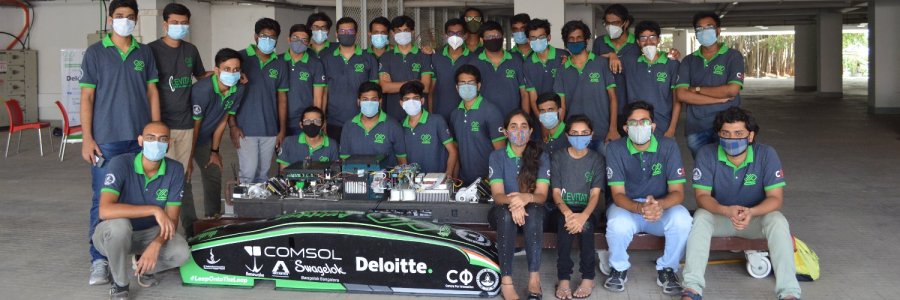
IIT Madras Avishkar Hyperloop Team(Image Source- Twitter)

The Indian Railways has collaborated with IIT Madras to develop a hyperloop technology based transport system and extended a financial support of Rs. 8.34 crores to IIT Madras for this project.

The Hyperloop project was also mentioned in the Union Budget 2022-2023. According to that, the railways was exploring possibilities of acquiring hyperloop technology for a demonstrative project to showcase its capabilities in the rail sector.

Union Minister of Railways Shri Ashwini Vaishnaw approved a financial assistance of Rs. 8.34 crores to IIT Madras for the development on hyperloop technology during his visit on Thursday.

A recent tweet on the official twitter handle of Avishkar Hyperloop

The above tweet was posted on the official twitter handle of Avishkar Hyperloop team, declaring Ashwini Vaishnaw sir as their 72nd member.

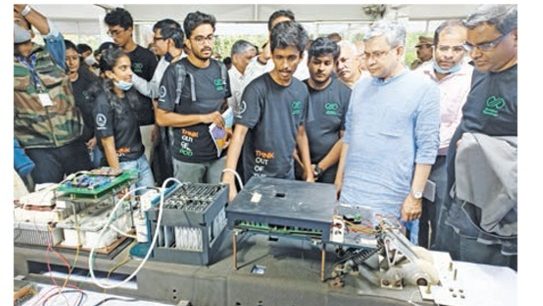
Ashwini Vaishnaw sir watching the demonstration on Hyperloop pod model

The minister saw the demonstration on the Hyperloop pod model at the New Academy Complex. Also, he also tested 5G at the Research Park.

His tweet regarding testing of 5G at the IIT-M Campus

The Hyperloop pod is a futuristic high-speed long distance public transport. The design aims at a speed of 1200 km/hr. The institution is also developing a 500m long tube, inside which the hyperloop pod will travel. Below is a visual demonstration of the Hyperloop Pod.

Fortification of Rice

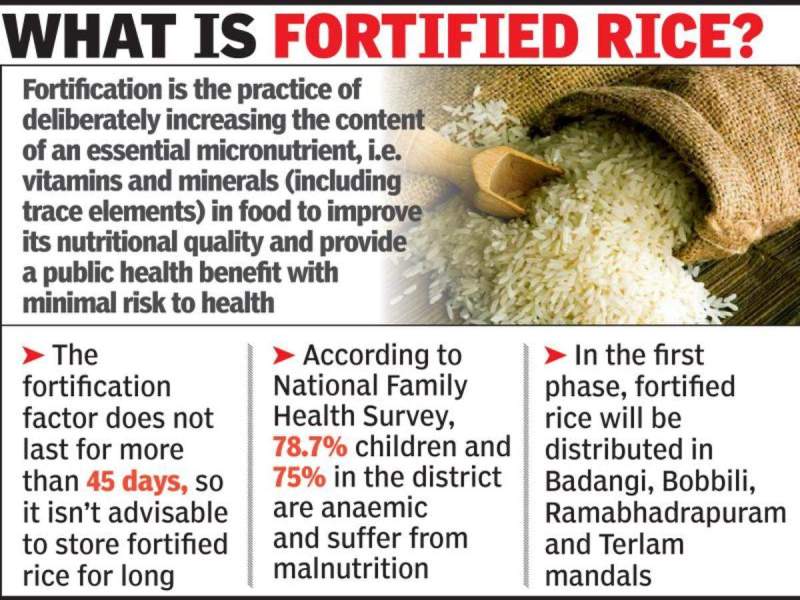
Fortification is the addition of key vitamins and minerals such as iron, iodine, zinc, Vitamin A & D to staple foods such as rice, milk and salt to improve their nutritional content.

Fortification of rice is a cost-effective and complementary strategy to increase vitamin and mineral content in diets.

According to FSSAI norms, 1 kg fortified rice will contain iron (28 mg-42.5 mg), folic acid (75-125 microgram) and Vitamin B-12 (0.75-1.25 microgram). In addition micronutrients can also be added, singly or in combination, with zinc, Vitamin A, Vitamin B1, Vitamin B2, Vitamin B3 and Vitamin B6.

Need of Food Fortification?

There is high level of malnutrition among children and women in India. A/c to Food Ministry, every second woman in the country is anemic and every third child is stunted.

India ranks 101 among 116 countries in the Global Hunger Index (GHI) 2021. In 2020 it was positioned 94th.

Rice is one of India’s staple foods, consumed by about two-thirds of the population. Therefore, fortifying rice with micronutrients is an option to supplement the diet of the poor.

Issues with the Fortification of Rice

  • Inconclusive Evidence:
    • Evidence supporting fortification is inconclusive and certainly not adequate before major national policies are rolled out.
  • Hypervitaminosis:
    • According to some studies published in the medical journal Lancet and in the American Journal of Clinical Nutrition which show that both anaemia and Vitamin A deficiencies are overdiagnosed, meaning that mandatory fortification could lead to hypervitaminosis ( a condition of abnormally high storage levels of vitamins, which can lead to various symptoms such as over excitement, irritability, or even toxicity ).
  • Toxicity:
    • Adding one or two synthetic chemical vitamins and minerals will not solve the larger problem, and in undernourished populations can lead to toxicity.
    • A 2010 study that showed iron fortification causing gut inflammation and pathogenic gut microbiota profile in undernourished children.
  • Cartelisation:
    • Mandatory fortification would harm the vast informal economy of Indian farmers and food processors including local oil and rice mills, and instead benefit a small group of multinational corporations.
  • Decrease Value of Natural Food:
    • Once iron-fortified rice is sold as the remedy to anaemia, the value and the choice of naturally iron-rich foods like millets, varieties of green leafy vegetables, flesh foods, liver, to name a few, will have been suppressed.

There are different methods to make rice more nutritious post-harvest: Dusting, Coating, Hot or Warm extrusion.

To have a positive health impact, fortified rice needs to have good:

  • Stability during transport and storage
  • Retention during cooking & preparation
  • Consumer acceptability
  • Absorption by the body of the used micronutrients

Benefits of fortification –

  • Ease of use – this is one of the biggest benefits. As a widely used staple food, it is simple to replace standard rice with fortified rice to boost the nutritional profile of a simple diet.
  • Cost – the specific costs of fortified rice depend on several factors, such as the scale of the operation and the blending ratio of fortified to non-fortified kernels.
  • Consistency for consumers – it looks, cooks, and tastes the same as non-fortified rice.
  • Market differentiation for brands – fortified rice can also be customized for specific needs. It presents a solution for health-conscious consumers looking for new ways to reach specific health benefits.
  • Reducing micronutrient deficiencies for governments and schools

Six books about Black lives in American fiction

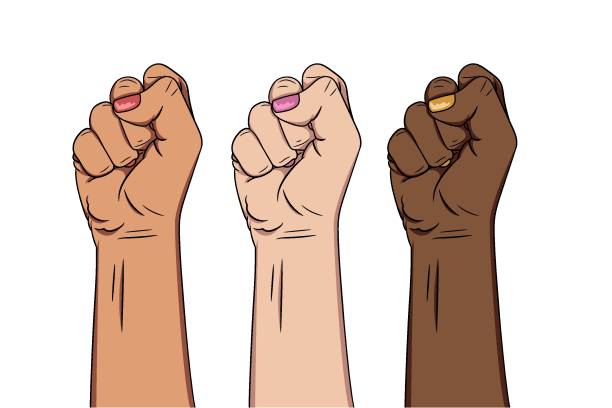
359 Racism Protest Illustrations & Clip Art - iStock

Racial discrimination is one of the social evils which had took the lives of a whole lot of innocent people. This evil has not only killed people, it has also made life miserable for many. Even the so called “most civilized society” in the world could not free itself from this social evil and in fact it has been stage for the most alarming cases we had ever heard. There were a whole lot of legislations implemented aiming to prevent this, and it has helped at least for developing a public opinion against racial discrimination.

People around the world have raised their voice against this evil in whatever ways possible and one such strong means was through literature. Several authors have shared either their experiences or some strong stories which had acted as an eye opener for many people. The realistic stories have created an empathetic attitude among general public. Some books are:

The help

The Help is a historical fiction novel by American author Kathryn Stockett. The story is about African Americans working in white households in Jackson, Mississippi, during the early 1960s. The thrust of the book is the collaborative project between the white Skeeter and the struggling, exploited “colored” help, who together are writing a book of true stories about their experiences as the ‘help’ to the white women of Jackson. Not all the stories are negative, and some describe beautiful and generous, loving and kind events; while others are cruel and even brutal. The book, entitled “Help” is finally published, and the final chapters of “The Help” describes the aftermath of the book’s success.

To kill a mocking bird

o Kill a Mockingbird is a novel by the American author Harper Lee. The plot and characters are loosely based on Lee’s observations of her family, her neighbors and an event that occurred near her hometown of Monroeville, Alabama, in 1936, when she was ten. The historian Joseph Crespino explains, “In the twentieth century, To Kill a Mockingbird is probably the most widely read book dealing with race in America, and its main character, Atticus Finch, the most enduring fictional image of racial heroism.” However, reaction to the novel varied widely upon publication.

Uncle tom’s cabin

Uncle Tom’s Cabin; or, Life Among the Lowly is an anti-slavery novel by American author Harriet Beecher Stowe. Published in two volumes in 1852, the novel had a profound effect on attitudes toward African Americans and slavery in the U.S., and is said to have “helped lay the groundwork for the American Civil War”. This is one great book which could not be ignored while we discuss racism.

Roots: The Saga of an American

Roots: The Saga of an American Family is a 1976 novel written by Alex Haley. It tells the story of Kunta Kinte, an 18th-century African, captured as an adolescent, sold into slavery in Africa, and transported to North America; it follows his life and the lives of his descendants in the United States down to Haley. It stimulated interest in African American genealogy and an appreciation for African-American history.

The color purple

The Color Purple is a 1982 epistolary novel by American author Alice Walker which won the 1983 Pulitzer Prize for Fiction and the National Book Award for Fiction. The story revolves around Celie a young poor, uneducated 14-year-old African-American teenager girl living in the Southern United States in the early 1900s. The novel has been the frequent target of censors and appears on the American Library Association list of the 100 Most Frequently Challenged Books of 2000–2009 at number seventeenth because of the sometimes-explicit content, particularly in terms of violence.

Beloved

Beloved is a 1987 novel by the American writer Toni Morrison. Set after the American Civil War, it tells the story of a family of formerly enslaved people whose Cincinnati home is haunted by a malevolent spirit. Beloved is inspired by an event that actually happened: Margaret Garner, an enslaved person in Kentucky, who escaped and fled to the free state of Ohio in 1856. She was subject to capture in accordance with the Fugitive Slave Act of 1850; when U.S. marshals burst into the cabin where Garner and her husband had barricaded themselves, she was attempting to kill her children, and had already killed her two-year-old daughter, to spare them from being returned to slavery.

It is of severe concern that even in today’s world where borders merely exist, people are discriminated and even killed on grounds of their color, caste, creed or race. These books could be an eye opener for all those who believe themselves to be superior than others merely on ground of their genetic roots.


Six books about Black lives in American fiction

359 Racism Protest Illustrations & Clip Art - iStock

Racial discrimination is one of the social evils which had took the lives of a whole lot of innocent people. This evil has not only killed people, it has also made life miserable for many. Even the so called “most civilized society” in the world could not free itself from this social evil and in fact it has been stage for the most alarming cases we had ever heard. There were a whole lot of legislations implemented aiming to prevent this, and it has helped at least for developing a public opinion against racial discrimination.

People around the world have raised their voice against this evil in whatever ways possible and one such strong means was through literature. Several authors have shared either their experiences or some strong stories which had acted as an eye opener for many people. The realistic stories have created an empathetic attitude among general public. Some books are:

The help

The Help is a historical fiction novel by American author Kathryn Stockett. The story is about African Americans working in white households in Jackson, Mississippi, during the early 1960s. The thrust of the book is the collaborative project between the white Skeeter and the struggling, exploited “colored” help, who together are writing a book of true stories about their experiences as the ‘help’ to the white women of Jackson. Not all the stories are negative, and some describe beautiful and generous, loving and kind events; while others are cruel and even brutal. The book, entitled “Help” is finally published, and the final chapters of “The Help” describes the aftermath of the book’s success.

To kill a mocking bird

o Kill a Mockingbird is a novel by the American author Harper Lee. The plot and characters are loosely based on Lee’s observations of her family, her neighbors and an event that occurred near her hometown of Monroeville, Alabama, in 1936, when she was ten. The historian Joseph Crespino explains, “In the twentieth century, To Kill a Mockingbird is probably the most widely read book dealing with race in America, and its main character, Atticus Finch, the most enduring fictional image of racial heroism.” However, reaction to the novel varied widely upon publication.

Uncle tom’s cabin

Uncle Tom’s Cabin; or, Life Among the Lowly is an anti-slavery novel by American author Harriet Beecher Stowe. Published in two volumes in 1852, the novel had a profound effect on attitudes toward African Americans and slavery in the U.S., and is said to have “helped lay the groundwork for the American Civil War”. This is one great book which could not be ignored while we discuss racism.

Roots: The Saga of an American

Roots: The Saga of an American Family is a 1976 novel written by Alex Haley. It tells the story of Kunta Kinte, an 18th-century African, captured as an adolescent, sold into slavery in Africa, and transported to North America; it follows his life and the lives of his descendants in the United States down to Haley. It stimulated interest in African American genealogy and an appreciation for African-American history.

The color purple

The Color Purple is a 1982 epistolary novel by American author Alice Walker which won the 1983 Pulitzer Prize for Fiction and the National Book Award for Fiction. The story revolves around Celie a young poor, uneducated 14-year-old African-American teenager girl living in the Southern United States in the early 1900s. The novel has been the frequent target of censors and appears on the American Library Association list of the 100 Most Frequently Challenged Books of 2000–2009 at number seventeenth because of the sometimes-explicit content, particularly in terms of violence.

Beloved

Beloved is a 1987 novel by the American writer Toni Morrison. Set after the American Civil War, it tells the story of a family of formerly enslaved people whose Cincinnati home is haunted by a malevolent spirit. Beloved is inspired by an event that actually happened: Margaret Garner, an enslaved person in Kentucky, who escaped and fled to the free state of Ohio in 1856. She was subject to capture in accordance with the Fugitive Slave Act of 1850; when U.S. marshals burst into the cabin where Garner and her husband had barricaded themselves, she was attempting to kill her children, and had already killed her two-year-old daughter, to spare them from being returned to slavery.

It is of severe concern that even in today’s world where borders merely exist, people are discriminated and even killed on grounds of their color, caste, creed or race. These books could be an eye opener for all those who believe themselves to be superior than others merely on ground of their genetic roots.