Arrival of Portuguese in India

The Portuguese State of India was a Portuguese colonial state on the Indian Subcontinent. Vasco De Gama was the first Portuguese to set foot in India in 1498. However, Portuguese control in India is considered to have lasted from 1505 until 1961. Although Portuguese colonialism outlasted its English counterpart, it had little influence outside of its territories. The Portuguese were the first Europeans to arrive in India and the last to go.

Portugal’s Early Years in India
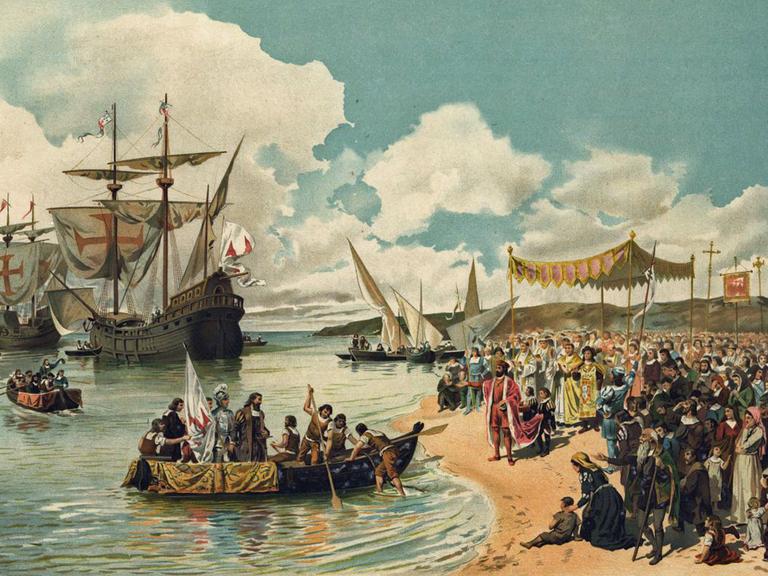
When Vasco da Gama arrived in Calicut on the Malabar Coast on May 20, 1498, Portuguese colonialism began in earnest. He met with the ruler of Calicut, the Zamorin, and received permission to trade in Calicut. But Vasco da Gama was unable to pay the customs duties and the cost of his merchandise. The Zamorin’s officials detained some of Vasco da Gama’s soldiers when the duties were not paid. This enraged him so much that he kidnapped some Indians and fisherman. However, the voyage was a success in the eyes of the Portuguese authorities in Lisbon. A sea path around the Ottoman Empire was discovered, and the expedition made a profit well in excess of its initial cost.

Expansion of Portuguese Colonialism
Vasco da Gama established a base of operations on the Malabar coast after further conflict with the Zamorin Kingdom. Francisco de Almeida, the first viceroy, placed his headquarters in what is now Cochin. Alfonso de Albuquerque, the second governer of the Portuguese territories in the East, was appointed in 1509. Off the coast of Calicut, a Portuguese fleet led by Marshal Fernão Coutinho arrives. Their orders were quite clear: destroy the Zamorin. The city was levelled and the palace of the Zamorins was taken, but the local soldiers rallied and attacked the invading Portuguese, forcing them to retreat and wounded Albuquerque. In 1510, Afonso de Albuquerque defeated the Sultanate of Bijapur, establishing Goa as a permanent settlement. It would later become the viceroy’s seat and the headquarters of the Portuguese colonial conquests in India. Modern-day Mumbai was likewise a colonial possession until 1661, when it was handed over to the British. From 1799 until 1813, the British conquered Goa for a brief while, eradicating the final vestiges of the inquisition. The capital was moved to Panjim, which was later renamed Nova Goa, in 1843, when it became the administrative center of Portuguese India. For the next century, Portuguese control would be limited to Goa and the enclaves of Diu and Daman.

Cause of Decline of Portugal in India
While the British granted independence to most of India, the Portuguese retained colonial colonies in India. Local anti-Portuguese demonstrations in Goa were violently suppressed. Despite repeated pleas from the Indian government, the Portuguese government, led by dictator António de Oliveira Salaza, refused to hand over its colonial holdings, saying that they were an intrinsic part of Portuguese territory. The invasion of Goa by the Indian troops took place in December 1961. The Portuguese attempted to resist against overwhelming odds, but were quickly crushed by the Indian Army. On December 19, 1961, the Governor of Portuguese India signed the Instrument of Surrender, freeing Goa after 450 years of Portuguese domination in India.

Arrival of Portuguese in India

The Portuguese State of India was a Portuguese colonial state on the Indian Subcontinent. Vasco De Gama was the first Portuguese to set foot in India in 1498. However, Portuguese control in India is considered to have lasted from 1505 until 1961. Although Portuguese colonialism outlasted its English counterpart, it had little influence outside of its territories. The Portuguese were the first Europeans to arrive in India and the last to go.

Portugal’s Early Years in India
When Vasco da Gama arrived in Calicut on the Malabar Coast on May 20, 1498, Portuguese colonialism began in earnest. He met with the ruler of Calicut, the Zamorin, and received permission to trade in Calicut. But Vasco da Gama was unable to pay the customs duties and the cost of his merchandise. The Zamorin’s officials detained some of Vasco da Gama’s soldiers when the duties were not paid. This enraged him so much that he kidnapped some Indians and fisherman. However, the voyage was a success in the eyes of the Portuguese authorities in Lisbon. A sea path around the Ottoman Empire was discovered, and the expedition made a profit well in excess of its initial cost.

Expansion of Portuguese Colonialism
Vasco da Gama established a base of operations on the Malabar coast after further conflict with the Zamorin Kingdom. Francisco de Almeida, the first viceroy, placed his headquarters in what is now Cochin. Alfonso de Albuquerque, the second governer of the Portuguese territories in the East, was appointed in 1509. Off the coast of Calicut, a Portuguese fleet led by Marshal Fernão Coutinho arrives. Their orders were quite clear: destroy the Zamorin. The city was levelled and the palace of the Zamorins was taken, but the local soldiers rallied and attacked the invading Portuguese, forcing them to retreat and wounded Albuquerque. In 1510, Afonso de Albuquerque defeated the Sultanate of Bijapur, establishing Goa as a permanent settlement. It would later become the viceroy’s seat and the headquarters of the Portuguese colonial conquests in India. Modern-day Mumbai was likewise a colonial possession until 1661, when it was handed over to the British. From 1799 until 1813, the British conquered Goa for a brief while, eradicating the final vestiges of the inquisition. The capital was moved to Panjim, which was later renamed Nova Goa, in 1843, when it became the administrative center of Portuguese India. For the next century, Portuguese control would be limited to Goa and the enclaves of Diu and Daman.

Cause of Decline of Portugal in India
While the British granted independence to most of India, the Portuguese retained colonial colonies in India. Local anti-Portuguese demonstrations in Goa were violently suppressed. Despite repeated pleas from the Indian government, the Portuguese government, led by dictator António de Oliveira Salaza, refused to hand over its colonial holdings, saying that they were an intrinsic part of Portuguese territory. The invasion of Goa by the Indian troops took place in December 1961. The Portuguese attempted to resist against overwhelming odds, but were quickly crushed by the Indian Army. On December 19, 1961, the Governor of Portuguese India signed the Instrument of Surrender, freeing Goa after 450 years of Portuguese domination in India.
Never have you ever thought how the Indian History started????

Indian history is filled with incredible stories of thriving civilizations, religions and cultures dating all the way back to paleolithic age, Indian civilization is one of the oldest civilization that we know and it has played a part on the world stage for centuries and even still today while it is impossible to truly capture all of Indian history in a one single go.

Remains of Harappan civilization

Harappan civilization also known as Indus valley civilization.

 The evidence of cave paintings and stone tools have revealed that the first sign of human activity in India can be traced back to somewhere between 400,000B.C and 200,000B.C ,  details concerning the civilizations , inhabiting the region back that long ago do not exist. But we do know that the first sophisticated societies to walk the lands of India was the Harappan civilization, who likely existed throughout the first few thousand year Before Christ(B.C), positioned along the Indus river, the Harrapan people had their own writing system, advanced social and economic systems and impressive urban cities and architecture. Everything was perfect and seem like a modernized India. But the reason why the civilization collapsed was unknown. The civilization was collapsed around  1500BC. But some attribute their demise to the common floods and other natural disasters in the region or may be because of  potential invaders from the western and central Asia

The next known civilization that left mark on Indian History is the Vedic Aryans.

 These people were initially were migrants who spoke an early form of Sanskrit and were determined to stay true to their own tribal identity. The name they have been given- the Vedic people comes from the 4 sacred texts or Vedas that have presented researches with a glimpse into the lives of civilizations and their beliefs.  The Vedas are often considered to be the oldest Hindu scripts and the Vedic civilization is believed to have spread their culture across the large portion of India by roughly 1000Bc, with them the Vedic Aryans brought their philosophical beliefs

    These ideas represent a theory that happiness and salvation from a persons morals and ethics and one’s path should be based upon their place in life.

The societal system of Vedic Aryans are originally made up of 3 tiers. They are:

  1. Brahman or priest
  2. Kshatriya or warrior.
  3. Vaishya or commoner

The spread their  civilization and accordingly both the culture and trade flourished.

A series of 26 individual states have spanned across northern india. This include

Gandhara, kosala, kuru and Magadha and the latter this flourished under the rule of Chandragupta Maurya during the 4th century BC. This extended and formed the Mauryan empire which is believed to be the first Indian imperial power.

Mauryan empire established its capital in  Patali-Putra which in modern day is called as Patna.

 The entire empire was led by 3 major emperors. They are Chandragupta Maurya(321-298 BCE); Bindusara(298-272BCE); Ashoka(272-232BCE).

In the 2nd century BC Mauryan empire slowly started to dissolve.

The later came SUNGA DYNASTY, but with a small period it fell down.

The other dynasties aroused during this period like Kushan, Satavahana, Cheras, Cholas, Pandya’s sin the south were some of the major authorities during the time

Then came the Gupta empire which became the face of northern India during the classical age and is describe as golden age as everything was united during that time.

1.Sri Gupta and Ghatotkachgupta.

2. Chandragupta I

3. Samudragupta

4. Ramagupta

5. Chandragupta II

6. Kumargupta I

7. Skandgupta.

Salute to Telangana Girl Nikhat Zareen: Reached the zenith in the World Boxing Championship 2022   

Nikhat Zareen young girl of Telangana (born June 1996) has recently won the gold medal in Istanbul, Turkey where World Boxing Championship (2022) was recently held. It is pertinent to mention that on 19 May 2022, Zareen won the gold medal in the 52 kilograms, Flyweight category at the Women’s World Championship defeating Thailand’s Jitpong Jutamas. Zareen became the fifth Indian women’s boxer to win a gold medal at the World Championships, joining Mary Kom, Laishram Sarita Devi, Jenny R. L., and Lekha K. C. (en.m.wikipedia.org/wiki/Nikhat_Zareen).

She has shown us the path to success by doing hard labour. I had the opportunity to listen to her interview on India Today TV. According to her, some of her relatives were not happy that she should continue boxing because of socio-cultural reasons and complained also. But her footballer father always supported her in boxing by wearing short dresses and also her mother did. Thus, it is evident that when someone is in good work/mission, a few persons whether friends or relatives or ‘so-called well-wishers’ will try to block the person’s carrier. In this context, I wish to mention one line of a poem from a legendary personality Gurudev Rabindranath Tagore.  In 1905 Tagore wrote Jôdi Tor Dak Shune Keu Na Ase Tôbe Ekla Chôlo Re (“If no one responds to your call, then go your own way alone”), which is commonly known as Ekla Chôlo Re. Many people including sportspersons said me about this poem. Anyway, Nikhat Zareen has shown the young Indian girls, to continue sports and games without any botheration. She is also good in study  (completed her B.A.). Also, I had the opportunity to listen to her English conversation on TV. She with a wonderful accent with awesome communication skills lucidly presented.

 Zareen was born on 14 June 1996 to Mohammad Jameel Ahmed (a football player) and Parveen Sultana in Nizamabad city of Telangana. She completed her primary education at the Nirmala Hrudaya Girls High School in Nizamabad. Zareen was introduced to boxing by her father, who trained her. Later on, Nikhat was inducted into the Sports Authority of India in Vishakhapatnam to train under Dronacharya awardee, I.V. Rao in 2009. A year later, she was declared the ‘golden best boxer’ at the Erode Nationals in 2010.

Many great personalities including our Prime Minister congratulated her. According to her, she was excited when her favourite actor Salman Khan of Bollywood congratulated her. She earlier had won many awards inter alia of which are: Women’s Junior and Youth World Boxing Championships (2011), Youth World Boxing Championships (2014), Nations Cup International Boxing Tournament (2014),  16th Senior Woman National Boxing Championship (2016), Thailand Open International Boxing Tournament (2019), Strandja Memorial Boxing Tournament (2019), Strandja Memorial Boxing Tournament (2022). It glaringly reflects that almost every year she had won an award.

 Before conclusion, it may be mentioned here that during the interview on India Today TV  she expressed that her dream is to excel in Commonwealth Games (2022) and then the Olympics which will be held in 2024.  

All Indians feel proud and happy about her outstanding achievement and performance.  My personal salute to her in college and university days I was a player and played hockey at the national level and wish her very good luck.  

Prof Shankar Chatterjee, Hyderabad 

Salute to Telangana Girl Nikhat Zareen: Reached the zenith in the World Boxing Championship 2022

Nikhat Zareen young girl of Telangana (born June 1996) has recently won the gold medal in Istanbul, Turkey where World Boxing Championship (2022) was recently held. It is pertinent to mention that on 19 May 2022, Zareen won the gold medal in the 52 kilograms, Flyweight category at the Women’s World Championship defeating Thailand’s Jitpong Jutamas. Zareen became the fifth Indian women’s boxer to win a gold medal at the World Championships, joining Mary Kom, Laishram Sarita Devi, Jenny R. L., and Lekha K. C. (en.m.wikipedia.org/wiki/Nikhat_Zareen).

She has shown us the path to success by doing hard labour. I had the opportunity to listen to her interview on India Today TV. According to her, some of her relatives were not happy that she should continue boxing because of socio-cultural reasons and complained also. But her footballer father always supported her in boxing by wearing short dresses and also her mother did. Thus, it is evident that when someone is in good work/mission, a few persons whether friends or relatives or ‘so-called well-wishers’ will try to block the person’s carrier. In this context, I wish to mention one line of a poem from a legendary personality Gurudev Rabindranath Tagore.  In 1905 Tagore wrote Jôdi Tor Dak Shune Keu Na Ase Tôbe Ekla Chôlo Re (“If no one responds to your call, then go your own way alone”), which is commonly known as Ekla Chôlo Re. Many people including sportspersons said me about this poem. Anyway, Nikhat Zareen has shown the young Indian girls, to continue sports and games without any botheration. She is also good in study  (completed her B.A.). Also, I had the opportunity to listen to her English conversation on TV. She with a wonderful accent with awesome communication skills lucidly presented.

 Zareen was born on 14 June 1996 to Mohammad Jameel Ahmed (a football player) and Parveen Sultana in Nizamabad city of Telangana. She completed her primary education at the Nirmala Hrudaya Girls High School in Nizamabad. Zareen was introduced to boxing by her father, who trained her. Later on, Nikhat was inducted into the Sports Authority of India in Vishakhapatnam to train under Dronacharya awardee, I.V. Rao in 2009. A year later, she was declared the ‘golden best boxer’ at the Erode Nationals in 2010.

Many great personalities including our Prime Minister congratulated her. According to her, she was excited when her favourite actor Salman Khan of Bollywood congratulated her. She earlier had won many awards inter alia of which are: Women’s Junior and Youth World Boxing Championships (2011), Youth World Boxing Championships (2014), Nations Cup International Boxing Tournament (2014),  16th Senior Woman National Boxing Championship (2016), Thailand Open International Boxing Tournament (2019), Strandja Memorial Boxing Tournament (2019), Strandja Memorial Boxing Tournament (2022). It glaringly reflects that almost every year she had won an award.

 Before conclusion, it may be mentioned here that during the interview on India Today TV  she expressed that her dream is to excel in Commonwealth Games (2022) and then the Olympics which will be held in 2024.  

All Indians feel proud and happy about her outstanding achievement and performance.  My personal salute to her in college and university days I was a player and played hockey at the national level and wish her very good luck.  

Prof Shankar Chatterjee, Hyderabad 

Theories of Evolution – Lamarckism

The most important question that has always been exciting to human mind is about human origin and destination. Where did we come from and where are we heading to?

To understand the human origin and evolution, we have to first look in to the emergence of life on the earth. It is believed that life is originated from inorganic matters due to many physical-chemical conditions

Theories of Organic Evolution

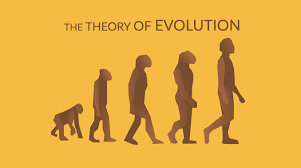
The term evolution was first applied by the English philosopher Herbert Spencer, to mean the historic development in life. Evolution is a process that results inheritable changes in a population spread over many generations.

Lamarckism

Jean Baptist de Lamarck (1744-1829) was a French biologist. He spent the early part of his life as a botanist. Then at the age of 50, he turned his attention to zoology, particularly to the study of invertebrates. His extensive studies on invertebrates formed a base in zoological classification. As a result of his systematic studies, he became convinced that species were not constant but rather were derived from pre-existing ones. By consolidating all these ideas, he proposed his theory of evolution in his book Philosophie Zoologique 1809 which is known as Lamarckism.

Lamarck believed that organic changes seen in animals resulted from the influence of environment. According to him, when the environment changes, animals need to change their body structure as well. He proposed his ideas as two different laws as the following-


i) The law of use and disuse: A living body is influenced by environmental factors, and ultimately this phenomenon initiates an adaptation of organisms to their surroundings. As per the necessity, some parts of the body may be used more and more. Therefore, those parts tend to show more development or changes in the course of time, while the other parts of the body, which may not be required much, will become weak or degenerate due to constant disuse.

ii) Inheritance of acquired characters: Modifications produced during the lifetime of organisms become hereditary and will be inherited by the offspring. All the modifications that the organism acquires during its lifetime in adaptation to the environment are automatically transmitted to the next generation and so become a part of heredity

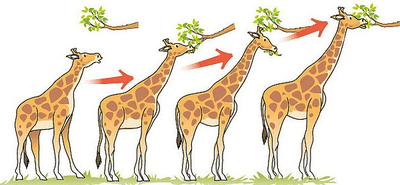
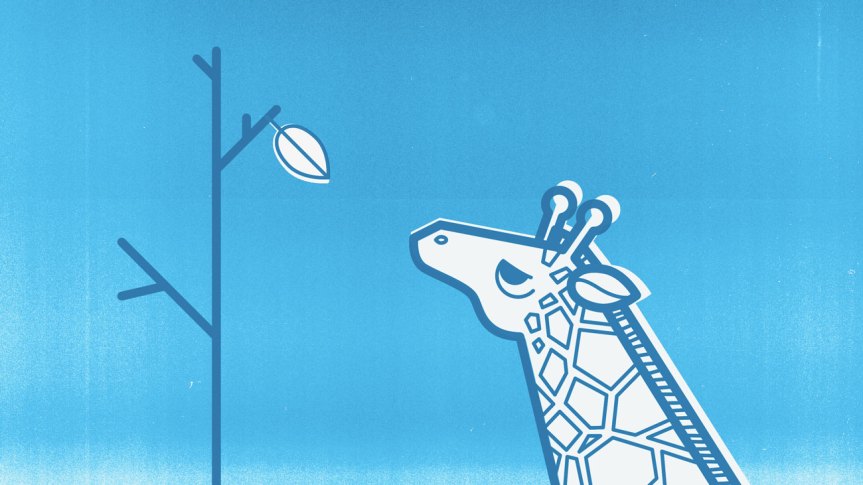
To support his theory, Lamarck presented several examples. The most remarkable one is associated with the long neck and tall front legs of giraffes. According to Lamarck, the ancestors of giraffe were normal animals with reasonably long neck and forelimbs. They depended on grass and bushy vegetation for their survival. But a sudden scarcity of leafy vegetation due to some environmental factors, forced the giraffe to depend on leaves of tall trees and for that they had to stretch their neck and forelimbs. The continuous stretching of these organs resulted in the long neck and long forelimbs of present day giraffe.

In another example, he mentioned that the ducks are unable to fly because their wings became weak, when they stopped flying. Again, the birds that started to live in an aquatic environment, gradually acquired webbed feet through the conquest of survival.

Criticism of Lamarckism

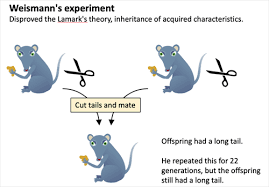
Lamarck’s theory has been criticised from many angles. The German scientist August Weismann criticised the essence of Lamarck’s theory of inheritance acquired characters by his experiments, which involved cutting off the tails of mice for over twenty-one generations. All tailless mice in all generations produced their offspring with tails. Therefore, he reached to the conclusion that the environmental factors might influence the body cells, but it is not enough to profess a change of reproductive cells. Characters of an organism would not be inherited unless the change could occur in the reproductive cells.

Characters of an organism would not be inherited unless the change could occur in the reproductive cells. According to Weismann the body of an animal is composed of two parts viz. germ plasm (germ cells) and somato plasm (body cells). Only those characters which are located in the germ plasm will be inherited.

As a result of these experiments, Lamarckian law of inheritance of acquired characters lost its evolutionary ground. But the effort towards finding facts related to organic evolution continued. Charles Darwin’s interest in this field gave birth to new findings (Darwinism).