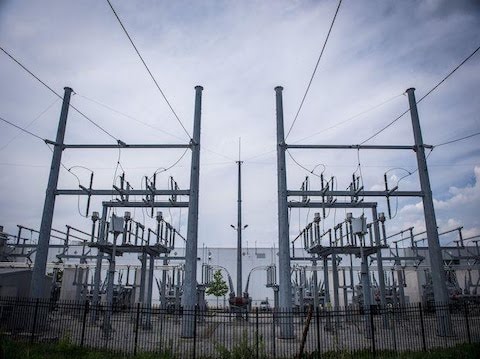
Delhi's peak power demand reaches record high of 7,334 MW for June

The peak power demand in the national capital rose to 7,334 MW on Wednesday afternoon, the highest ever in June, amid increased use of cooling appliances to beat the intense heat, discom officials said.It is expected to hover around 8,200 MW in the coming days, they added.

“Before June 9, Delhi’s peak power demand had never crossed the 7,000 MW-mark during June.

However, on May 19 this year, it clocked 7,070 MW. It has already crossed 7,000 MW six times in June this year and once in May,” a power distribution company (discom) official said.

The power demand peaked to 7,334 MW at 3.35 pm on Wednesday.Delhi’s power demand crossed the 6,000 MW-mark on every single day this June, the official said.In 2021, it crossed the 6K mark on nine occasions through the month, five-times in 2020 and thrice in 2019.

Delhi’s peak power demand reaches record high of 7,334 MW for June

The peak power demand in the national capital rose to 7,334 MW on Wednesday afternoon, the highest ever in June, amid increased use of cooling appliances to beat the intense heat, discom officials said.It is expected to hover around 8,200 MW in the coming days, they added.

“Before June 9, Delhi’s peak power demand had never crossed the 7,000 MW-mark during June.

However, on May 19 this year, it clocked 7,070 MW. It has already crossed 7,000 MW six times in June this year and once in May,” a power distribution company (discom) official said.

The power demand peaked to 7,334 MW at 3.35 pm on Wednesday.Delhi’s power demand crossed the 6,000 MW-mark on every single day this June, the official said.In 2021, it crossed the 6K mark on nine occasions through the month, five-times in 2020 and thrice in 2019.

NGO ‘SAAHDEV for the Development of Farmers: A Case from Assam

Across the world and also in our country there are many Non-governmental Organizations (NGOs) working in various fields. Here, I am presenting the case of  “Society for Assam Agri-Horticultural Development” locally popular as  “SAAHDEV”  a Non-Governmental   Organisation (NGO) located in Guwahati which is working for the development of rural farming communities of Assam, especially for the resource crunch poor farmers. SAAHDEV   is comprised of senior citizens, who had long experience in the Agri-horticultural sector. It started its work in 2021 after registration under the Societies Registration Act of 1860.

Presently, SAAHDEV initiated a project for the production of quality winter paddy seeds viz.,  Ranjit Sub-1 variety, a submergence tolerance variety,  in a flood-prone area of Assam at   Durung village (Kamrup district) which is about 50 kilometers away from Guwahati. This variety was developed by the Assam Agricultural University and made available in 2018.

Incessant rain and a subsequent flood occur almost every year from June to September in this area (Durung village and its vicinity) and thus damage a vast area of paddy crops. Even if farmers try to do re-transplanting (if seedlings are available at that time), it will not help farmers to get their due return as the ideal time of transplantation is over. Therefore, the growing of submergence tolerance variety is one of the solutions at Durung village for which Ranjit Sub -1 variety is an alternative.

 SAAHDEV in collaboration with the Regional Agricultural Research Centre, Nagaon of Assam Agricultural University (AAU) organized a day-long programme on 12 Jun 2022 at Durung ( Khetri) distributing 20 Kilograms of breeder seeds to 20 farmers at the rate of one kilogram each. Also, imparted training to the farmers on the production of the breeder to foundation seeds, then to certified seeds of paddy.

It may be mentioned that Dr. Hemen Kalita, Agricultural Scientist, Regional Agricultural Research Centre, Nagaon, of Assam Agricultural University, attended as a resource person in the training and explained various aspects of seed production techniques to the farmers. Dr. Bhubaneshwar Burman, President of “SAAHDEV”, Bijoy Sarathi Sarma, Ramendra Kumar Bhuyan workers, and executive members of SAAHDEV attended the programme and discussed future steps on the project with the farmers and chalked out a detailed plan for production.  It is pertinent to mention that the yield of Ranjit Sub-1 is around 7,500 kilograms per hectare.

Further, it may be mentioned that the Government of India has already initiated measures to inspire farmers of flood-affected Kharif (sali) paddy to shift from regular sali paddy seeds to submergence tolerant varieties.  Indian Council of Agricultural Research (ICAR) and Agricultural Universities of India have developed other varieties viz., Swarna sub-1, Ranjit sub-1, etc.

It has to be admitted that the Government organizations cannot do it alone so, NGOs, Farmers’ Association, and others should come forward to take up seed production of such varieties in remote areas of the country, particularly in the flood-prone areas.

I extend my gratitude to my friend Bijoy Sarathi Sarma, Worker and Executive Member of SAAHDEV, Guwahati (bijoysarathi@yahoo.com) for providing the necessary inputs to publish the article.


NGO ‘SAAHDEV for the Development of Farmers: A Case from Assam

Across the world and also in our country there are many Non-governmental Organizations (NGOs) working in various fields. Here, I am presenting the case of  “Society for Assam Agri-Horticultural Development” locally popular as  “SAAHDEV”  a Non-Governmental   Organisation (NGO) located in Guwahati which is working for the development of rural farming communities of Assam, especially for the resource crunch poor farmers. SAAHDEV   is comprised of senior citizens, who had long experience in the Agri-horticultural sector. It started its work in 2021 after registration under the Societies Registration Act of 1860.

Presently, SAAHDEV initiated a project for the production of quality winter paddy seeds viz.,  Ranjit Sub-1 variety, a submergence tolerance variety,  in a flood-prone area of Assam at   Durung village (Kamrup district) which is about 50 kilometers away from Guwahati. This variety was developed by the Assam Agricultural University and made available in 2018.

Incessant rain and a subsequent flood occur almost every year from June to September in this area (Durung village and its vicinity) and thus damage a vast area of paddy crops. Even if farmers try to do re-transplanting (if seedlings are available at that time), it will not help farmers to get their due return as the ideal time of transplantation is over. Therefore, the growing of submergence tolerance variety is one of the solutions at Durung village for which Ranjit Sub -1 variety is an alternative.

 SAAHDEV in collaboration with the Regional Agricultural Research Centre, Nagaon of Assam Agricultural University (AAU) organized a day-long programme on 12 Jun 2022 at Durung ( Khetri) distributing 20 Kilograms of breeder seeds to 20 farmers at the rate of one kilogram each. Also, imparted training to the farmers on the production of the breeder to foundation seeds, then to certified seeds of paddy.

It may be mentioned that Dr. Hemen Kalita, Agricultural Scientist, Regional Agricultural Research Centre, Nagaon, of Assam Agricultural University, attended as a resource person in the training and explained various aspects of seed production techniques to the farmers. Dr. Bhubaneshwar Burman, President of “SAAHDEV”, Bijoy Sarathi Sarma, Ramendra Kumar Bhuyan workers, and executive members of SAAHDEV attended the programme and discussed future steps on the project with the farmers and chalked out a detailed plan for production.  It is pertinent to mention that the yield of Ranjit Sub-1 is around 7,500 kilograms per hectare.

Further, it may be mentioned that the Government of India has already initiated measures to inspire farmers of flood-affected Kharif (sali) paddy to shift from regular sali paddy seeds to submergence tolerant varieties.  Indian Council of Agricultural Research (ICAR) and Agricultural Universities of India have developed other varieties viz., Swarna sub-1, Ranjit sub-1, etc.

It has to be admitted that the Government organizations cannot do it alone so, NGOs, Farmers’ Association, and others should come forward to take up seed production of such varieties in remote areas of the country, particularly in the flood-prone areas.

I extend my gratitude to my friend Bijoy Sarathi Sarma, Worker and Executive Member of SAAHDEV, Guwahati (bijoysarathi@yahoo.com) for providing the necessary inputs to publish the article.

The Green Revolution in India

Photo by Pixabay on Pexels.com

The great increase in production of food grains(like rice and wheat) due to the introduction of high yielding varieties,to the use of pesticides, and to bettter management techniques is known as the Green Revolution in India.
A part of a larger initiative by Norman Borlaug, green revolution in India was founded by M.S Swaminathan. The aim was to increase agricultural productivity in the developing world with the use of technology and agricultural research. The Green Revolution started in 1965 with the first introduction of High yielding variety(HYV)seeds in Indian agriculture. The end result of the Green Revolution was to make India self sufficient when it came to food grains. The Green Revolution in India was first introduced in Punjab in the late 1960s as a part of a development program issued by international donor agencies and the government of India. During the British Raj, India’s grain economy hinged on a unilateral relation of exploitation. The Green Revolution resulted in increased production of food grains (especially wheatand rice) and was in large part due to the introduction into developing countries of new, high-yielding varieties, beginning in the mid-20th century with Borlaug’s work. Borlaug developed a short-stemmed (“dwarf”) strain of wheat that increased crop yields. Previously, taller wheat varieties would break under the weight of the heads if production was increased by chemical fertilizers. Borlaug’s short-stemmed wheat could withstand the increased weight of fertilized heads.Wheat production in Mexico multiplied threefold owing to this and other varieties.Following Borlaug’s success in Mexico, the Indian and Pakistani goverments requested his assistance. Borlaug began his agricultural revolution in Asia. With India and Pakistan facing food shortages due to rapid population growth, the importation of Borlaug’s dwarf wheat in the mid-1960s was a key element if Green Revolution in India and helped the country to become agriculturally self sufficient.

What are the main features of Green Revolution?
1) Introduction of new and high yielding variety of seeds
2) Increased use of fertilizers, pesticides and weedicides to reduce agricultural losses.
3) Increased application of fertilisers to enhance agricultural productivity.
4) Use of latest agricultural machinery like tractors, threshers and harvesters etc.
5) Use of disease resistant varieties so that production will enhance.

Pros and cons of Green Revolution
Pros:
1) increase in agricultural production
2) reduction in import of food grains
3) increase quality of food
4) increase tolerance to pests, diseases and weeds
5) prosperity of farmers and helps in rural employment
Cons:
1) expensive seeds
2) ecological problems like soil erosion, waterlogging, desertification etc.
3) creates lack of biodiversity
4) health impacts from increased pesticides and fertilisers
5) deforestation

The Green Revolution in India

Photo by Pixabay on Pexels.com

The great increase in production of food grains(like rice and wheat) due to the introduction of high yielding varieties,to the use of pesticides, and to bettter management techniques is known as the Green Revolution in India.
A part of a larger initiative by Norman Borlaug, green revolution in India was founded by M.S Swaminathan. The aim was to increase agricultural productivity in the developing world with the use of technology and agricultural research. The Green Revolution started in 1965 with the first introduction of High yielding variety(HYV)seeds in Indian agriculture. The end result of the Green Revolution was to make India self sufficient when it came to food grains. The Green Revolution in India was first introduced in Punjab in the late 1960s as a part of a development program issued by international donor agencies and the government of India. During the British Raj, India’s grain economy hinged on a unilateral relation of exploitation. The Green Revolution resulted in increased production of food grains (especially wheatand rice) and was in large part due to the introduction into developing countries of new, high-yielding varieties, beginning in the mid-20th century with Borlaug’s work. Borlaug developed a short-stemmed (“dwarf”) strain of wheat that increased crop yields. Previously, taller wheat varieties would break under the weight of the heads if production was increased by chemical fertilizers. Borlaug’s short-stemmed wheat could withstand the increased weight of fertilized heads.Wheat production in Mexico multiplied threefold owing to this and other varieties.Following Borlaug’s success in Mexico, the Indian and Pakistani goverments requested his assistance. Borlaug began his agricultural revolution in Asia. With India and Pakistan facing food shortages due to rapid population growth, the importation of Borlaug’s dwarf wheat in the mid-1960s was a key element if Green Revolution in India and helped the country to become agriculturally self sufficient.

What are the main features of Green Revolution?
1) Introduction of new and high yielding variety of seeds
2) Increased use of fertilizers, pesticides and weedicides to reduce agricultural losses.
3) Increased application of fertilisers to enhance agricultural productivity.
4) Use of latest agricultural machinery like tractors, threshers and harvesters etc.
5) Use of disease resistant varieties so that production will enhance.

Pros and cons of Green Revolution
Pros:
1) increase in agricultural production
2) reduction in import of food grains
3) increase quality of food
4) increase tolerance to pests, diseases and weeds
5) prosperity of farmers and helps in rural employment
Cons:
1) expensive seeds
2) ecological problems like soil erosion, waterlogging, desertification etc.
3) creates lack of biodiversity
4) health impacts from increased pesticides and fertilisers
5) deforestation

The White Revolution in India

Photo by Engin Akyurt on Pexels.com

The revolution associated with a sharp increase in milk production in the country is called the White Revolution in India also known as Operation Flood. White revolution period intended to make India a self-dependent nation in milk production.
Verghese Kurien ,the founder of Amul introduced White revolution in India. He is known as the father of white revolution in India.
Operation Flood started the White Revolution in India and made our country self-sufficient in milk and this was achieved entirely through the cooperative structure.One of the largest of its kind, the programme objective was to create a nationwide milk grid. It resulted in making India one of the largest producers of milk and milk products, and hence is also called the White Revolution of India. It also helped reduce malpractices by milk traders and merchants. The White Revolution in India was successful in transforming the country from a milk deficient nation to a world leader in milk production. It helped dairy-farming become India’s largest self-sustaining industry and also, India’s largest rural employment provider.

Advantages and disadvantages of white revolution
Advantage:
1) ended imports of milk solids in India.
2) India started exporting milk powder to many foreign nations.
3) dairy industries and infrastructures modernised and expanded.
4) more employment in the field of dairy farming.
5) dairy needs are met locally.
Disadvantage:
1) since livestock are prone to many diseases, milk obtained from them during such conditions leads to disease spreading.
2) adulteration of milk and dairy products.

The White Revolution in India

Photo by Engin Akyurt on Pexels.com

The revolution associated with a sharp increase in milk production in the country is called the White Revolution in India also known as Operation Flood. White revolution period intended to make India a self-dependent nation in milk production.
Verghese Kurien ,the founder of Amul introduced White revolution in India. He is known as the father of white revolution in India.
Operation Flood started the White Revolution in India and made our country self-sufficient in milk and this was achieved entirely through the cooperative structure.One of the largest of its kind, the programme objective was to create a nationwide milk grid. It resulted in making India one of the largest producers of milk and milk products, and hence is also called the White Revolution of India. It also helped reduce malpractices by milk traders and merchants. The White Revolution in India was successful in transforming the country from a milk deficient nation to a world leader in milk production. It helped dairy-farming become India’s largest self-sustaining industry and also, India’s largest rural employment provider.

Advantages and disadvantages of white revolution
Advantage:
1) ended imports of milk solids in India.
2) India started exporting milk powder to many foreign nations.
3) dairy industries and infrastructures modernised and expanded.
4) more employment in the field of dairy farming.
5) dairy needs are met locally.
Disadvantage:
1) since livestock are prone to many diseases, milk obtained from them during such conditions leads to disease spreading.
2) adulteration of milk and dairy products.

What is Cyberbullying and how to deal with it?

Photo by Valery on Pexels.com

Cyberbullying is a form of online harassment or bullying using electronic means.  It has become increasingly common, especially among teenagers. Cyberbullying includes sending, posting, or sharing negative, harmful, false, or mean content about someone else. It can include sharing personal or private information about someone else 
The most common places where cyberbullying occurs are:

• Social Media, such as Facebook, Instagram etc.

• Text messaging and messaging apps on mobile or tablet devices

• Online forums, chat rooms, and message boards, such as Reddit

• Email

• Online gaming communities

How we can stop or prevent cyberbullying?
1) Don’t respond to any emails, app messages, or text messages sent by cyberbullies.
2) Don’t be an accomplice by forwarding any of the messages to others kids.
3) Take screeshots as proof and evidence of cyberbullying.
4) If you are being bullied, tell an adult to get help solving the problem.

What is Cyberbullying and how to deal with it?

Photo by Valery on Pexels.com

Cyberbullying is a form of online harassment or bullying using electronic means.  It has become increasingly common, especially among teenagers. Cyberbullying includes sending, posting, or sharing negative, harmful, false, or mean content about someone else. It can include sharing personal or private information about someone else 
The most common places where cyberbullying occurs are:

• Social Media, such as Facebook, Instagram etc.

• Text messaging and messaging apps on mobile or tablet devices

• Online forums, chat rooms, and message boards, such as Reddit

• Email

• Online gaming communities

How we can stop or prevent cyberbullying?
1) Don’t respond to any emails, app messages, or text messages sent by cyberbullies.
2) Don’t be an accomplice by forwarding any of the messages to others kids.
3) Take screeshots as proof and evidence of cyberbullying.
4) If you are being bullied, tell an adult to get help solving the problem.

Another COVID-19 Pill-” Paxlovid”

Pfizer announced its investigational novel COVID-19 oral antiviral medicine , Paxlovid reduced hospitalization & death. The adminstration has also arranged to purchase 20 million corses of drug. It will be manufactured & distributed to pharmacies in weeks & months.

It is orally bioavailable drug used against HIV that is active against M*pro, a viral drug that play an essential role in viral replication by leaving the 2 viral polyproteins . It has demonstrated antiviral activity against all coronavirus that are known to infect humans. It is ritonavir , a strong cytochrome P450 ( CYP) 3 A4 drug and boosting agent that has been used to boost HIV . How may tablet are needed? After it is prescribed, Paxlovid is administered as three tablets taken together orally twice daily for five days, for a total of 30 tablets. What are the side effects? Possible side effects of Paxlovid include impaired sense of taste, diarrhea, high blood pressure and muscle aches, says the FDA. Using Paxlovid at the same time as certain other drugs may result in “potentially significant drug interactions.” Consult with your doctor. Using Paxlovid in people with uncontrolled or undiagnosed HIV-1 infection may lead to HIV-1 drug resistance, the FDA said. How did Paxlovid performed in clinical studies? Paxlovid significantly reduced the number of hospitalization or death from COVID-19 by 88 percent, compared to placebo among patients treated within five days of symptom onset and who did not receive COVID-19 therapeutic monoclonal antibody treatment.

It is developed by Pfizer and can be taken at home to help keep high- risk patients from getting so sick that they need to be hospitalized.

According to Kaiser health information it not always easy to find a prescription; one individuals told that RPR that it took an usual amount of knowledge and connections.

The medication company named Pfizer is taken a stepping towards vaccine named “Paxlovid” to reduce hospitalization and may offer to India at lower prices.