The Maratha king- Chhatrapati Shivaji

Chhatrapati Shivaji Maharaj born on 19 February 1630 at the Shivneri Fort

He was an Indian ruler and a member of the Bhonsle Maratha clan.

Shivaji Maharaj carved out an enclave from the declining Adilshahi sultanate of Bijapur that formed the genesis of the Maratha Empire.

In 1674, he was formally crowned the Chhatrapati of his realm at Raigad Fort.

Over the course of his life, Shivaji Maharaj engaged in both alliances and hostilities with the Mughal Empire, the Sultanate of Golkonda, Sultanate of Bijapur and the European colonial powers.

His military forces expanded the Maratha sphere of influence, capturing and building forts, and forming a Maratha navy.

Chhatrapati Shivaji Maharaj is known as ‘Father of Indian Navy

Shivaji Maharaj established a competent and progressive civil rule with well-structured administrative organisations.He revived ancient Hindu political traditions, court conventions and promoted the usage of the Marathi and Sanskrit languages, replacing Persian in court and administration.

His legacy was to vary by observer and time, but nearly two centuries after his death, he began to take on increased importance with the emergence of the Indian independence movement, as many Indian nationalists elevated him as a proto-nationalist and hero of the Hindus

He established a competent and progressive civil rule with the help of disciplined military and well-structured administrative organisations.

He innovated military tactics, pioneering non-conventional methods(guerrilla warfare) and leveraged strategic factors like geography, speed, and surprise.

He focused on pinpoint attacks to defeat his larger and more powerful enemies.

He placed the well-being of his people above everything.brave and genuinely secular ruler, he respected women and cared for the downtrodden and farmers.

Accession & Reign

  • He made his first military conquest at the age of 16 in 1645 by attacking and capturing Torna Fort in the Bijapur Sultanate, followed by conquest of other forts – Chakan, Kondana, and Rajgad.
  • Fearing his rising power, the Bijapur Sutlan, Mohammed Adil Shah imprisoned his father, following which he halted his conquests and built a stronger army until his father’s release in 1653 or 1655.
  • The Bijapur Sultan sent his general, Afzal Khan, to supress Shivaji in November 1659, who, fearing Afzal’s deceitful plans, came armed with bagh nakh (tiger claw) in one hand and a dagger in the other, and slayed him at the Pratapgar Fort.
  • He was attacked by the army of Adilshah’s general, Siddi Jauhar, while camping at Panhala Fort, near present-day Kolhapur, in 1660, but Shivaji escape to Vishalgad fort to regroup his large army for a battle. Backed by his Maratha sardar Baji Prabhu Deshpande, who wounded himself while holding back the army at the Battle of Pavan
  • Khind, he reached Vishalgad safely, resulting in a truce between him and Adilshah in July 1660.
  • He resumed his raids after his father’s death in 1664-65 and seized the northern parts of Konkon and forts of Purandar and Javali.
  • His peaceful relations with the Mughals saw conflicts in 1657 when he raided the Mughal territories in Ahmednagar and Junnar, following which Aurangzeb sent a 150,000-force under Shaista Khan, in 1660, to chastise him.
  • The Mughal army captured Pune. When they encamped there, Shivaji made a surprise attack killing Mughal soldiers and guards, with Shaista Khan narrowly escaping. Soon after in 1664, he raided Surat and looted its treasure.
  • He made a visit to Agra, along with his nine-year old son Sambhaji, upon Aurangzeb’s invitation in 1666, who planned to send him to Kandahar (now in Afghanistan) to handle the Mughal empire’s northwestern frontier.
  • He was ill-treated by Aurangzeb at his court and offended. He was taken into custody and put under house arrest. However, he managed to escape with his son and spent the next three years strengthening his administration.
  • With the end of the Treaty of Purandar in 1670, he attacked the Mughal forces in Maharashtra and re-captured the forts he had surrendered to them.
  • In 1670, he launched an expedition under Tanaji Malusare to capture Kondana For, which was under Mughal possession, in the Battle of Sinhagad. While the fort was seized, Malusare died and hence, the fort was renamed Sinhagad.
  • He raided Surat for a second time in 1670 and defeated the Mughal army under Daud Khan in the Battle of Vani-Dindori (close to present-day Nasik) while returning back.
  • After spending the early 1670s in capturing land and expanding his domain, he crowned himself as the king of the Marathas at Raigad in 1674, earning the title Kshatriya Kulavantas Sinhasanadheeshwar Chhatrapati Shivaji Maharaj.
  • He went on an extensive campaign of raiding more territories in the later half of 1674, capturing Khandesh, followed by Bijapuri Ponda, Karwar, Kolhapur and Janjira in 1675, and Ramnagar, Athani, Belgaum and Vayem Rayim in 1676.
  • He moved southwards at the end of 1676, seizing the forts at Vellore and Gingee (in present-day Tamil Nadu), once ruled by the Adilshahi Dynasty.
  • Despite being a devoted Hindu, he showed great respect to all religions, including Islam and Christianity, and was unbiased towards other castes and communities.

The History of Capital Market in India

Indian Capital Market

Indian Capital Markets are one of the oldest in Asia. The earliest records of security dealings in India are ambiguous and roughly dates back to 200 years ago. Initially, in the eighteenth century, East India Company securities were traded in the country. Later in 1861 with the American Civil War began and opening of the Suez Canal, led to a tremendous increase in Exports to the United Kingdom and United States. Several companies were registered under the British Companies Act during this period and many banks came forward to handle the finances relating to these trades. An unincorporated body of a dozen of stockbrokers, which informally traded cotton in the city, under a banyan tree in front of the Town hall in Mumbai formed an association. Afterwards, in 1985 it became an incorporated body, which we know known by the name of Bombay Stock Exchange (BSE). Until the end of the nineteenth century securities trading remained unorganized with the main trading centers in Mumbai and Kolkata. Trading activities flourished during this period, resulting in a boom in share prices. This boom, the first in the history of the Indian capital market lasted for about half a decade. However, there had been much fluctuation in the stock market on account of the American war and the battles in Europe, therefore it was more prominently known as ‘Satta Bazar’, which means a market of speculations.

Pre-Independence Era of Indian Capital Market

British government was not interested in the economic growth of the country. As a result, many foreign companies depended on the London capital market for funds rather than in the Indian capital market. Hence, the Indian capital market was not properly developed before Independence. The growth of the industrial securities market was very much hampered since, there were very few companies and the number of securities traded in the stock exchanges was still smaller. A large part of the capital market consisted of the gilt-edged marker for government and semi-government securities. Business was essentially confined to company owners and brokers, with very little interest displayed by the general public.

Post-Independence Era of Indian Capital Market

In the post-independence period also, the size the capital market remained relatively small. During the first and second five-year plans, the government’s emphasis was on the development of the agricultural sector and public sector undertakings. The public sector undertakings were healthier than the private undertakings in terms of paid-up capital but shares were not listed on the stock exchanges. Moreover, the Controller of Capital Issues (CI) closely supervised and controlled the timing, composition, interest rates pricing allotment and floatation consist of new issues. These strict regulations de-motivated many companies from going public for almost four and a half decades.

However, since 1951, the Indian capital market has been broadening significantly and the volume of saving and investment has shown steady improvements. All types of encouragement and tax relief exist in the country to promote savings. Besides, many steps have been taken to protect the interests of investors, to illustrate, the government enacted the Securities Contracts (regulation) Act and Companies Act in 1956. A very important indicator of the growth of the capital market, is the growth of joint stock companies or corporate enterprises. In 1951 there were about 28,500 companies, both public limited and private limited companies with a paid-up capital of Rs. 775 crores.

In the 1950s, Tata Steel, Bombay Dyeing, National Rayon, Kohinoor mills and Century textiles were the favorite scripts of speculators. Speculation, non-payment or defaults were prominent features of the market.

The 1960s was characterized by the wars and droughts in the country which led bearish trends. Financial institutions such as LIC and GIC helped to revive the sentiment by emerging as the most important group of investors. The first mutual fund of India, the Unit Trust of India (UTI) came into existence in 1964.

In the 1970s Badla trading was resumed under the disguised forms of hand delivery contracts. Badla trading involved buying stocks with borrowed money with the stock exchange acting as an intermediary at an interest rate determined by the demand for the underlying stock and a maturity not greater than 70 days. This revived the market. However, the capital market received another severe setback in 1974, when the government broadcasted the Dividend Restriction ordinance. An Act to provide, in the interests of national economic development, for temporary restrictions on the power of certain companies to declare dividends out of profits and for matters connected therewith or incidental thereto. This led to a slump in market capitalism at the BSE by about 20 per cent overnight and the stock market did not open for nearly a fortnight.

Foreign Exchange Regulation Act (FERA) was promulgated in 1973. This act enforced all non-banking foreign branches and subsidiaries with foreign equity exceeding 40 per cent had to obtain permission to establish new undertakings, to purchase shares in existing companies, or to acquire wholly or partly any other company. Several MNCs opted out of India. One hundred and twenty-three MNCs offered shares worth Rs 150 crore, creating 1.8 million shareholders within four years. The offer prices of FERA shares were lower than their intrinsic worth. Hence, for the first the FERA dilution created an equity cult in India. It was the spate of FERA issues that gave a real fillip to the Indian stock markets. For the first time, many investors got an opportunity to invest in the stocks of such MNCs as Colgate and Hindustan Liver Limited. One mass participation by retail investors came into picture, when in 1980s, entrepreneur, Mr. Dhirubhai Ambani came up with the Reliance IPO, followed by BSE introducing the BSE Sensex, providing a means to measure overall performance of the exchange to the investors.

Why saffron is so expensive????

Even in the expensive world of spices, saffron stands out and the real saffron can cost you over $10000 per kilogram. Sought after for thousands of years as a spice, a dye and a medicine.

For making just 1 gram of saffron you need over 150 flowers. Some times the product we use in name of saffron may be false. So, just what makes this spice so expensive?

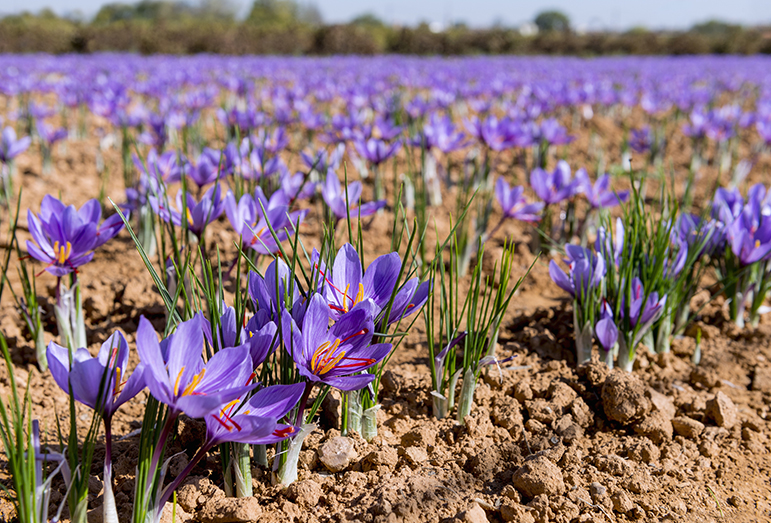
Saffron is the red stigma of the Crocus Sativus. Each crocus have 3 small stigmas, that have to be picked carefully by hand.

This minuscule harvest means that the amount you get from each flower is roughly 0.006 grams. No machine can do this delicate work to harvest these thin threads and it can take 40 hours of hard manual labor to produce just 1 kilogram of high quality saffron.

Growing the plants isn’t exactly easy either. The buds are actually called corms but, they are like a bulb basically like a flower bulb. So, the more flowers per bulb you can get and bigger the flowers are and this all depends on how you look after that, like growing , climatic conditions.

So. Once the flowers started growing, harvesters have to work fast to make sure they can pick it all in time. Almost all the saffron that is planted can flower within one week of the year and to maintain the quality, the flowers are best picked during the morning.  Quality is key when growing such a precise crop and the taste of the saffron depends on the rainfall, temperature and soil.

Kashmir is famed for producing some of the highest quality saffron in the world. In Kashmir, red soil is mostly found and this is fertilized and good for saffron.

 The most  expensive highest grade saffron is generally made up of just the very tips of the Stigma.

In Iran,where over 90% of the saffron is produced. There are 4 grades. The lowest grade is the bunch I.e., the entire strand that’s pulled from the flower, from the dark red tips to the yellow base. In higher grades, the yellow strand is removed leaving a long strand of pure red.

One kilo of saffron is made up of around 4,50,000 strands and you need 1,50,000 flowers and to grow these flowers, it needs a large space.

Over 200 metric tons of saffron threads are harvested worldwide each year. This is the result of over 30billion flowers. The demand for the threads is so high that some might produce fake saffron.Some threads are even made of corn silks, coconut fibers or even horse hair, and to made it look real- synthetic colors are used to dye the lower grade stigmas and sell them as high grade saffron.

 The main reason for the increasing demand of saffron is climate change which is drastically changing. In Kashmir, production has dropped significantly and many farmers are selling their land instead.

Between 2017 and 2018, saffron production in the region fell almost 70% from 16.5 metric tonnes down to 5.2 and with continuing droughts and climate change the current harvest could become even more rare

The refusal to face reality

Photo by Polina Zimmerman on Pexels.com

Living in the 21st century, life has become much easier with the advent of much advanced technology. We all are connected to each other via multiple social media platforms and no longer rely on postcards and letters to convey our message to our dear ones. These new platforms have also made it easier to communicate with new people and widen our social circle. No doubt, these platforms provide us with thousands of opportunities for our own benefit. Many people have sought to their personal small businesses owing to the ease of access to higher number of people and minimum marketing cost and labour. Unfortunately, even if we live in the world that has made life much easier, the modern generation is much more isolated than ever and is at the higher risk of facing mental health issues such as depression and anxiety more often as compared to the previous generations. In the modern world, statistics show that depression has become a common illness worldwide affecting 3.8% of the total world population, approximately 280 million people worldwide.

Mental health is often considered as a byproduct of physical health and nobody actually sees that both are equally important and are equally responsible for a person to live a longer and happier life. There are many examples where we see a physically fit person committing suicide or doing any other unacceptable actions. Suicide is one of the leading causes of death in young people. Globally 800,000 people die from suicide every year. The number is quite overwhelming! But the reason behind this is something that may seem very trivial but is very deadly at times! This reason is nothing but “not facing the reality” and “not accepting the truth”. It is all about seeing the light even in the darkness.

Photo by Brett Sayles on Pexels.com

Something that we all can agree is that the modern generation is very good at is running away from the consequences of their actions and they refuse to face the reality. Every single day we see people posting certain good moments of their lives, people being successful in their lives, people tirelessly working hard, some success gurus giving tips on how to become successful and so much more. All these posts do make us rethink our own decisions and choices. We start questioning what we are doing in our life and by what level are we able to be called successful. We start following those online success and motivational speakers who tell us to work tirelessly, forget our own needs and wishes and just jump into the marathon even if we don’t want to be a part of it. This is mostly because when we see others achieve their dream job or what they desired for, we subconsciously start getting compelled to do better than them. There is the thought of doing the exact same thing better and quicker (in some cases) than others. We too want to feel the sense of achievement. We too feel the obligation to prove ourselves to others. We want our life to hold some worth in the society by doing things that don’t even entertain us or don’t even tingle our excitement. We just jump into the race without being equipped with proper protective gears. And what comes next is the inevitable, failure. And this failure brings with it an immense mountain of disappointment, self-doubt and fear. The question here is, did we think before jumping into the race? Did we ask ourselves if we really want this? Did we care about failure or the consequences of our actions before going on the path? The simple answer is NO. We did not. We just saw someone do it and succeed and we decided to do the same without analyzing the intensity of the result.

Photo by Andrea Piacquadio on Pexels.com

The most saddening part of the picture is after failing the task, the blame game starts. Self- blame, blaming others for their own failure and this process continues. We cannot accept the fact that we failed and we get stuck at that only. We prohibit ourselves from moving on and kill our own determination. This further results on nothing but self deterioration and leads us to take extreme steps. But what changes occur in the society? Nothing, absolutely nothing. The world still goes on and people still jump into the race and on the other side of the picture there exists a person who once failed, stands up again and fights for what he desires. He accepts the failure and learns from it about what his actual destination is.

Fear of failure and lack of the ability to accept failure does no good instead of bringing ourselves down to the point where we can’t get up on our feet again. Fear of facing the reality and accepting it leads to nothing but self doubt and lower self esteem. All these unnecessary thoughts leads us to nowhere other than self deterioration. Thus, it is really important to learn and accept the fact that failure is an inevitable part of life. We all know “failure is the pillar of success”, as it is taught to us at the very early age. But what we do is just forget this important fact and stress over the term “failure” only. We forget the fact that even the person whom we saw getting successful online has undergone many hardships and even in many cases faced a number of failures but still they never gave up on themselves or neither their hard work. Thus, it is very important for us to face our fears, face the challenges and face our fears in order to move forward in life. It is ok to not feel ok. It is totally fine to say that you are not fine. It is absolutely ok to fail. But it is absolutely not ok to let that failure push you down. Enjoy the little things in life. Learn to accept the reality and move on with life. Get the happiness in little things and it is never an obligation for things to work out your way.

INSTAGRAM LIKES…

Cut throat competition and consumerism are the bones of the fast-paced modern life, born out of advancement in Science and Technology.

Everyone is busy and focused to secure a career and bright future for themselves. In this business, everyone seems to have forgotten the basic morality and ethics.

It must be kept in mind, if our means are wrong, our ends can never be right. Competition can never bring anyone in seeking. The most valuable treasure in the world is Peace, Happiness and Health. They can be in hand only through righteousness. Competition are antithesis of peace, health and happiness.

So. the most ideal approach to live a great life should be doing one’s best without compromising with the morals and ethics. One must never do mean things; think mean thoughts and speak words of any type.

“The outcome will always be grand if one’s thoughts, words and acts are garnd,”

In recent era, the most hyped and commonly used application which is being used by millions of people all around the world, is namely INSTAGRAM.

It is basically a social networking site service which allows users to upload media that can be edited with filters and organized by hashtags and geographical tagging.

This is done by the people for getting likes and fame on social media in lieu of becoming an influencer or famous among people by show casing their talents and to be more specific by out bursting their thousands and millions of followers.

For increasing name and fame on social media, people especially the youth literally buy likes on their pictures, videos by requesting their followers to re-post, re-share their posts on their stories. They literally allow the strangers to openly and freely invade in their privacy and life and allow them to judge on the basis of their posts and likes.

‘Likes on Instagram’ is rapidly becoming a trend to become popular like the famous celebrities.

People just for few likes on their posts either accept money, offer money or indulge in unfair means just to show how important, supreme or popular they are among millions of people.

While surfing the internet, we can see many sites and applications offering opportunities to people to grow and boost their followers and likes on any social media by paying just a handsome amount of money.’

This needs to stop, as in lieu of boosting followers and likes, many innocent people are trapped and later some are blackmailed too.

Likes from strangers or the people you don’t even know can be dangerous for you only. A few numbers of likes can’t tell how important, good-looking or what you are capable of.

It’s just you and you only.

“Existence wants you to be you.”

INSTAGRAM LIKES…

Cut throat competition and consumerism are the bones of the fast-paced modern life, born out of advancement in Science and Technology.

Everyone is busy and focused to secure a career and bright future for themselves. In this business, everyone seems to have forgotten the basic morality and ethics.

It must be kept in mind, if our means are wrong, our ends can never be right. Competition can never bring anyone in seeking. The most valuable treasure in the world is Peace, Happiness and Health. They can be in hand only through righteousness. Competition are antithesis of peace, health and happiness.

So. the most ideal approach to live a great life should be doing one’s best without compromising with the morals and ethics. One must never do mean things; think mean thoughts and speak words of any type.

“The outcome will always be grand if one’s thoughts, words and acts are garnd,”

In recent era, the most hyped and commonly used application which is being used by millions of people all around the world, is namely INSTAGRAM.

It is basically a social networking site service which allows users to upload media that can be edited with filters and organized by hashtags and geographical tagging.

This is done by the people for getting likes and fame on social media in lieu of becoming an influencer or famous among people by show casing their talents and to be more specific by out bursting their thousands and millions of followers.

For increasing name and fame on social media, people especially the youth literally buy likes on their pictures, videos by requesting their followers to re-post, re-share their posts on their stories. They literally allow the strangers to openly and freely invade in their privacy and life and allow them to judge on the basis of their posts and likes.

‘Likes on Instagram’ is rapidly becoming a trend to become popular like the famous celebrities.

People just for few likes on their posts either accept money, offer money or indulge in unfair means just to show how important, supreme or popular they are among millions of people.

While surfing the internet, we can see many sites and applications offering opportunities to people to grow and boost their followers and likes on any social media by paying just a handsome amount of money.’

This needs to stop, as in lieu of boosting followers and likes, many innocent people are trapped and later some are blackmailed too.

Likes from strangers or the people you don’t even know can be dangerous for you only. A few numbers of likes can’t tell how important, good-looking or what you are capable of.

It’s just you and you only.

“Existence wants you to be you.”