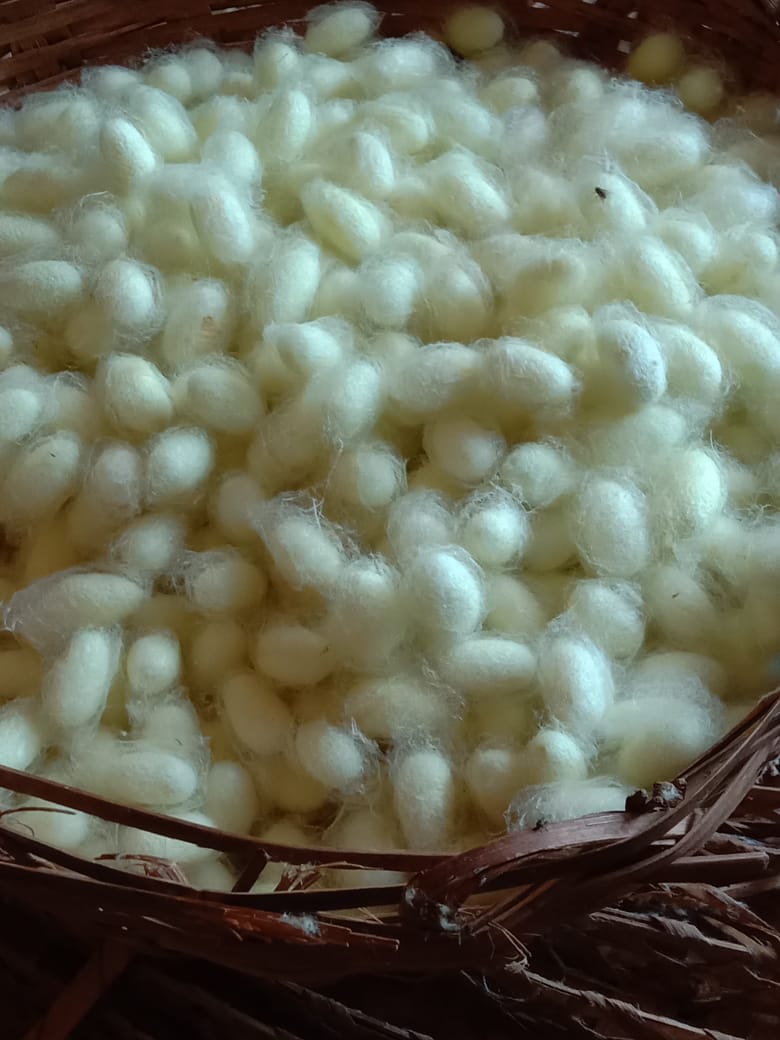
Sericulture:Silk diversity

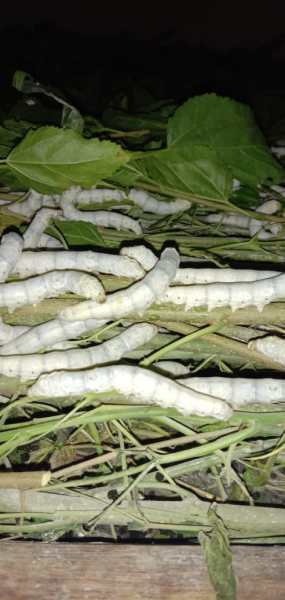
Sericulture is the branch which involves rearing of silkworm which produce silk. This involves three process i.e. cultivation of mulberry( Moriculture) or food plant for insect, rearing of silkworm and reeling and spinning of silk.

However origin for silk production roots from China. It is also said that Tipu Sultan was the first South Indian ruler to introduce this in India.

The Central silk board was started in 1948 and it’s headquarter is situated in Bengaluru (Karnataka). It is mainly involved in research and development of silk sector.

Silkworm undergoes complete metamorphosis and constitute of four stages in life cycle:Egg, larvae, pupa and adult.

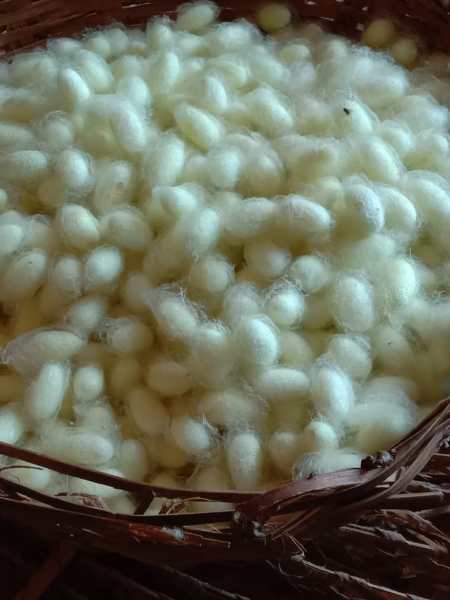
Pupa is the most important stage as through this stage only cocoon is obtained which is reeled to produce silk. Silk is the salivary secretion secreted by pair of silk gland located in head region.

Types of silkworm: There are four types of natural silk commercially produced .

1.Mulberry silk which constitutes 95 % of total production. These silkworm feed on mulberry leaves. This is mainly found in Southern states like Karnataka, Andhra Pradesh, Tamil Nadu.

2.Non- mulberry silk includes tasar silk, eri silk and muga silk.

Eri silkworm feeds on castor leaves and is also called Ahimsa silk as This does not involves killing of moth to obtain silk. This is mainly reared in Meghalaya, Assam and Northeast state.

Tasar silkworm feeds on ber, arjun plant .It is mainly found in Jharkhand,Bihar,West Bengal etc.

Muga silkworm feeds on som and sualu leaves. This silkworm is reared in Assam and also called Assam silk. It is known for it’s glossy, fine texture and durability.
Sericulture

4 WAYS TO FIX WHEN MICROSOFT EXCEL CAN NOT OPEN OR SAVE ANY DOCUMENTS

Microsoft Excel is being used worldwide as the most trusted and capable software to maintain data and input of the organisation. It is the best way to store data in one place and easy to access it back but sometimes, some excel file we receive doesn’t open and comes with a flash message.

“MS EXCEL CAN’T OPEN OR SAVE ANY MORE DOC CAUSE THERE IS ENOUGH MEMORY SPACE NOT AVAILABLE”

So, how to fix this issue??

Apparently, this issue does not mean that the file is corrupted or your ms-excel is not working properly. This is just a secure way to proceed and prevent unwanted malware that comes along with spreadsheets. but you can go and change it in settings to run the excel file.

Many excel files until 2007 are saved in a different format that is XLS and after 2007 files use extensions in XLSX format so, modifying the format can actually be made it possible for files to open easily.

FOUR WAYS TO OPEN MS EXCEL FILE.

1. TEMPORARY SOLUTION 

Sometimes files are not directly allowed to open and are in the restricted mode so just allowing them by unblocking can actually work. This is the most basic solution which is done with two clicks only and the most common solution to open an excel file.

STEPS TO FOLLOW

  • RIGHT-CLICK ON THE MS EXCEL FILE
  • GO TO PROPERTIES
  • CLICK ON UNBLOCK 

After clicking on unblocking the file that doesn’t open up earlier is now easily able to open if it is just blocked and not having any further issues.

2. PERMANENT SOLUTION 

This solution is required to go to the main settings of the excel file to allow the settings that are restricting it to open and this actually is done by deleting the existing hidden file that is actually blocking the file to open.

STEPS TO FOLLOW 

  • CLICK ON MY COMPUTER
  • OPEN C-DRIVE
  • GO TO USER
  • OPEN APP DATA
  • OPEN LOCAL
  • CLICK ON TEMPT
  • SELECT ALL THE FILES AND DELETE IT

After deleting all the files in there those files which are restricting the excel to open are now deleted and now your file will be open easily.

3. OPEN FILE IN VERSION MS EXCEL 2013 AND ABOVE

There is also a possibility that the settings of the TRUST CENTRE will be changed and allow the location of the file directly through the trust centre. This indicates the file is safe and easy to access after that.

STEPS TO FOLLOW

  • OPEN MS EXCEL
  • OPEN FILE
  • GO TO OPTIONS
  • CLICK ON TRUST CENTRE
  • CLICK ON TRUST CENTRE SETTINGS

AND choose the file that is having trouble while opening.

  • Also, don’t forget to click on the subfolder also

4. UNCHECKING BARS IN TRUST CENTRE

Sometimes just some unchecked bars can do a lot of things and lead to opening some rusted files that you think might be corrupted.

Steps to follow 

  • OPEN MS EXCEL 
  • OPEN FILES
  • CLICK ON OPTIONS
  • CLICK ON TRUST CENTRE 
  • CLICK ON TRUST CENTRE SETTINGS
  • OPEN PROTECTED VIEW
  • UNCHECKED ALL BARS ONE BY ONE

There are a total of three bars which can be checked one by one and then press ok. This actually disables the protected view for the files from the internet, unsafe location and outlook attachment. Boom, your spreadsheet is ready to open.

Origin and Development of Agriculture

Agriculture began in different parts of the globe in a diverse range.Agriculture started approximately 10,000 years ago,when human began to domesticate plants and animals. Agriculture is the important turning point of humankind. It brought several development and cultivation of processes for producing food,fibre and fuel and so on which are important for the human race to its next level.

The development of agricultural about 12,000 years ago changed the way humans lived. It was switched from nomadic hunter-gatherer lifestyles to permanent settlements and farming. Traditional hunter-gatherer lifestyles, followed by humans since their evolution, were swept aside in favor of permanent settlements and a reliable food supply.Domesticated plants and animals have been raised at scales ranging from the household to massive commercial operations. Agriculture developed independently in many regions of the world. It was the first profound change in the relationship between fully modern humans and the environment.Although global climate change played a role in the development of agriculture, it does not account for the complex and diverse cultural responses that ensued, the specific timing of the appearance of agricultural communities in different regions, or the specific regional impact of climate change on local environments. By studying populations that did not develop intensive agriculture or certain crops , such as wheat and rice.Many studies are made from agriculture like pathology , horticulture, agronomy,floriculture and so on.

Raw materials from agriculture make huge portion of trade internationally,in both imports and exports.The impact of high on export show the wealth of the country. Agriculutral industries is one of the biggest sources of employment,whether it’s a farmer, harvester, technician for farm equipment, scientist and so on,there are plenty of jobs available in this field. Agricultural jobs helps in reducing high rate of unemployment in the developing countries. Economic development of a country is tied to a country’s agriculture sector. Agriculture is important for the world’s food supply. Agriculture is important for the world’s food supply.

Agriculture is the backbone of a country.As agriculture plays an important role in the economic development of the country it is our responsibility to save and preserve the agricultural lands for our use and our future generations to live a healthy life.

‘ Agriculture is a fundamental source of national prosperity’. -by J.J.MAPES

Launching of first International Bullion Exchange in India.

India being the second biggest consumer of precious metals, tries to regulate the market for the precious metal. For this Prime Minister on July 29 laid the foundation of India International Bullion Exchange (IIBX), based at Gujarat International Finance Tec-City, or GIFT City in western Gujarat state.

India imported 1,069 tonnes of gold in 2021, up from 430 tonnes a year ago. Indian households own an estimated collective 25,000 tonnes of gold, which passes from one generation to the next. New Delhi has been trying to monetise these holding to reduce the imports. Gold is tightly regulated in India and currently only nominated banks and agencies approved by the central bank can import gold and sell to dealers and jewellers. The opening of the international bullion exchange is aimed to standardize the gold pricing in India. It further seeks to it easier for small bullion dealers and jewellers to trade.

Currently, there are nominated banks and agencies who have been approved by the central bank to conduct trade or import gold and sell it to dealers.

“IIBX with its technology-driven solutions, will facilitate transition of Indian bullion market towards a more organised structure by granting qualified jewellers a direct access to import gold directly through the exchange mechanism,” the exchange said in a statement.

The International Bullion Exchange shall be the Gateway for Bullion Imports into India, wherein all the bullion imports for domestic consumption shall be channelized through the exchange, as per a government’s notification.

The exchange ecosystem is expected to bring all the market participants at a common transparent platform for bullion trading and provide an efficient price discovery, assurance in the quality of gold, enable greater integration with other segments of financial markets and help establish India’s position as a dominant trading hub in the World.

Launching of first International Bullion Exchange in India.

India being the second biggest consumer of precious metals, tries to regulate the market for the precious metal. For this Prime Minister on July 29 laid the foundation of India International Bullion Exchange (IIBX), based at Gujarat International Finance Tec-City, or GIFT City in western Gujarat state.

India imported 1,069 tonnes of gold in 2021, up from 430 tonnes a year ago. Indian households own an estimated collective 25,000 tonnes of gold, which passes from one generation to the next. New Delhi has been trying to monetise these holding to reduce the imports. Gold is tightly regulated in India and currently only nominated banks and agencies approved by the central bank can import gold and sell to dealers and jewellers. The opening of the international bullion exchange is aimed to standardize the gold pricing in India. It further seeks to it easier for small bullion dealers and jewellers to trade.

Currently, there are nominated banks and agencies who have been approved by the central bank to conduct trade or import gold and sell it to dealers.

“IIBX with its technology-driven solutions, will facilitate transition of Indian bullion market towards a more organised structure by granting qualified jewellers a direct access to import gold directly through the exchange mechanism,” the exchange said in a statement.

The International Bullion Exchange shall be the Gateway for Bullion Imports into India, wherein all the bullion imports for domestic consumption shall be channelized through the exchange, as per a government’s notification.

The exchange ecosystem is expected to bring all the market participants at a common transparent platform for bullion trading and provide an efficient price discovery, assurance in the quality of gold, enable greater integration with other segments of financial markets and help establish India’s position as a dominant trading hub in the World.