Demography

Demography is the study of human population dynamics. Population is shaped by a number of factors including fertility, mortality, migration and urbanization. Significant demographic changes have been shown in many parts of the world. The world population growth has been decelerating since 1970s. Fertility rates in more developed countries (MDCs) have been showing a declining trend, whereas an increasing one in the less developed countries (LDCs). Mortality rates have gone down in both MDCs and LDCs due to medical advancement. Consequently, the population of the countries with low fertility rates aged more quickly, and the world population growth will be concentrated in those developing countries where fertility rates remain high. Uneven population growth among nations accelerated the migration of people across nation borders and the growth of cities. The changes of these interrelated factors with their causes and problems of each of the factors will be discussed, followed by some possible plans and opportunities that may benefit from these changes.Human birth rate (natality) is the fertility expressed as the average number of live births per thousand populations per year. Since not all age groups in a population have equal fertility, demographers often use more specialized measures of birth rates that relate to age groups.Human mortality rate is the average number of individuals who die per thousand populations per year.

Again, demographers often use more sensitive measures, for different mortality rates. Both the very young and the very old segments of the population have higher mortality rates than are found in other age groups.Human population shows uneven or clumping pattern of distri­bution on earth. The density of human population in a village, district, city, province, country or any area can be obtained by di­viding the total number of persons living in the given region by the total land area of that region.The average number of people per square unit of land area tells us how dense or sparse is the popu­lation in a giver, area. The average population density of the world is calculated about 27 persons per square kilometre.insurance agents to determine life insurance rates.

These early demographic studies were mostly concerned with mortality. However, in the 19th century, studies showed that there was a decline in the number of births, and researchers began to study fertility as well as mortality. These studies led to the idea of “differential fertility.” Differential fertility suggests that different groups within a population have different numbers of children due to factors, such as religion, cultural attitudes, poverty, and employment. Migration of people is the last main factor in demographic studies. It is these three variables (mortality, fertility, and migration) that contribute to population change.Demographers gather data mainly through government censuses and government registries of births and deaths. However, these sources can be inaccurate depending on the precision of government records. Demographers also gather data indirectly through surveying smaller groups within a population. These samples are then examined using statistical models to draw conclusions about the whole population.


Demography is changing us as we are older societies, we’re living longer. How the generations balance each other out, how that affects education and health care.

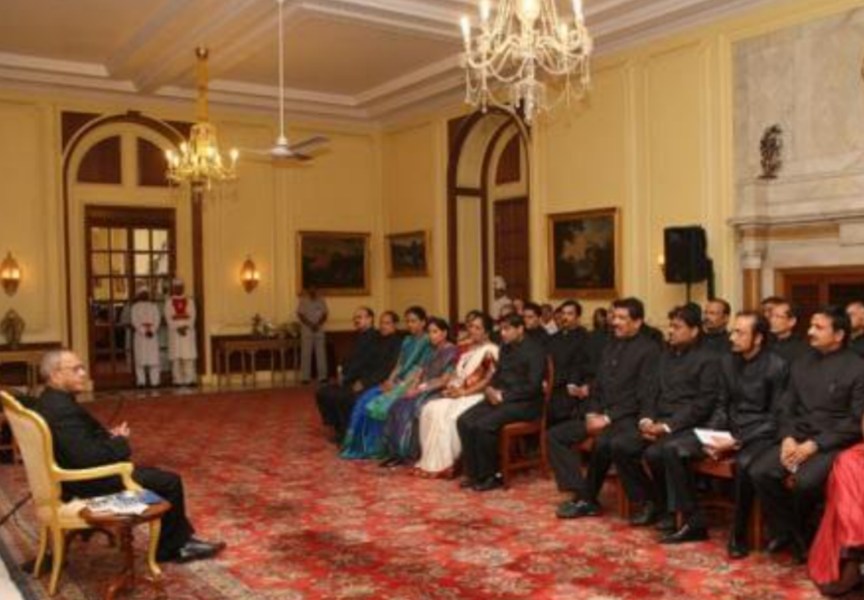
Role of civil services in a democracy .

In the process of governance, which involves several sets of activities to deliver effective services to people, civil services play a pivotal role in providing shape to policies that reflect people’s needs and put their suggestive, analytical and informative roles to implement the
policies. It is recognized that civil services play a crucial role in all societies. In the modern administrative state, public administration has become so significant that our development, upliftment and progress depend mainly upon the efficient functioning of civil services that are
the bedrock of public administration. Civil services have assumed more important role in democracy to ensure good governance, both in developing and developed countries. Civil Services form a part of bureaucracy, wherein the roles of civil servants are determined by
written rules. It’s an impersonal system operating on the basis of calculable rules and staffed by full time appointed officials. Usually, the civil servants are selected on basis of their technical
qualifications, receive fixed salaries, have a defined sphere of competence and work under a clearly defined hierarchy of offices.

The role of Civil Servants across the domains of policy making and policy implementation is critical to the development process. They assist in identifying major policy areas such as preparing major policy proposals, analyzing various alternatives and solutions to societal problems requiring urgent attention, dividing the major policies into sub-policies, determining
program of action and suggesting modification in the existing policy on the basis of its experience on the implementation front.Civil services carry on the governance when governments change due to elections etc. Ramsay
Muir has remarked that while governments may come and go, ministers may rise and fall, the administration of a country goes on forever. It is needless to say that civil services form the backbone of administration. E.g. In India, when the President’s Rule is imposed in a state, the
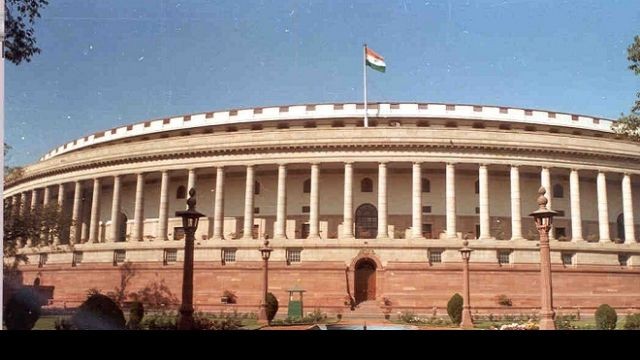
Governor runs the state through the Chief Secretary and other civil servants.The civil servants are responsible to the ministers of the departments in which they serve. The ministers are accountable to the people through the Parliament or State Legislatures, and the civil servants are accountable to the ministers. They should ideally serve the elected government of the day, as government policies are the functions of the civil services. However, an impartial civil servant is also accountable to the Constitution of India on which he has taken an oath of allegiance.

In India, bureaucracy or civil services is permanent and does not change with the government. The recruitment is based on merit and through competitive exams. This is in contrast to the system followed in the US, where civil servants, especially in the higher echelons, change with the government. This is called the spoils system where people who are close to the government of the day get posts.


With bad laws and good civil servants it’s still possible to govern. But with bad civil servants even the best laws can’t help.

-Otto von Bismarck

Physical Geography

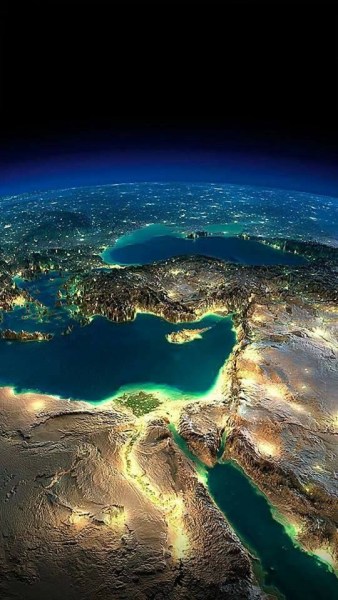
Physical geography is one of the two branches of geography viz., physical geography and human ge­ography. In fact, the study of physical aspects of the earth represents the core of spatial science i.e., geogra­phy. Most of geographers have pleaded for bifurcation of geography into physical and human geography but it is rather unwise to ignore biotic aspect of the biospheric ecosystem of the earth and hence there should be trifurcation of geography into physical ge­ography, human geography and biogeographyPhysi­cal geography in terms of its meaning and definition, scope (subject matter) and methods of study has under­gone sea-change in the past few decades. In the begin­ning, physical geography was defined as the study of only physical environment (namely reliefs, air and water) of the earth e.g., ‘the study of physical environ­ment by itself is physical geography which includes consideration of surface relief of the globe (geomorphology), of the seas and the oceans (ocea­nography) and of the air (meteorology and climatol­ogy) (Arthur Holmes).

Physical geography was considered as the ag­glomeration of different branches of earth sciences or natural sciences viz., sciences of atmosphere (meteor­ology and climatology); science of seas and oceans (oceanography); science of solid earth (geology); sci­ence of soil (pedology); science of plants (botany) and science of landforms (geomorphology).As a distinct branch of geography physical geography studies the spatial patterns and spatial relationships of environmental components of the globe in regional context, it also studies the causes of regional patterns of such spatial relationships, simultaneously it incorporates the ex­planation of spatial and temporal changes of environ­mental components and causes thereof.The study of features resulting from the interac­tions between endogenetic and exogenetic forces in­volves the discussion of mode of denudational proc­esses (weathering and erosion), hetherto termed as geomorphic processes, their mechanism of operation (machanism of erosion, transportation and deposition by running water-river, groundwater, sea waves, wind, glacier and periglacial agent) and resultant landforms.

The discipline of physical geography has evolved through successive stages of its development in terms of methodology and approaches to study. After taking its birth in the philosophical ideas and reports of ancient thinkers, philosophers and historians of the ancient seats of civilization and culture e.g., Greece, Rome and Egypt, the science of physical environment attained its present status wherein different compo­nents were added from time to time.


Geography is also memory. And loss of physical geography is also loss of narrative memory.

Nanotechnology

Nanotechnology is defined as fabrication of devices with atomic or molecular scale precision. Devices with minimum feature sizes less than 100 nanometers (nm) are considered to be products of nanotechnology. A nanometer is one billionth of a meter (10-9 m) and is the unit of length that is generally most appropriate for describing the size of single molecules.The nanoscale marks the nebulous boundary between the classical and quantum mechanical worlds; thus, realization of nanotechnology promises to bring revolutionary capabilities. Fabrication of nanomachines, nanoelectronics and other nanodevices will undoubtedly solve an enormous amount of the problems faced by mankind today.Nanotechnology is currently in a very infantile stage. However, we now have the ability to organize matter on the atomic scale and there are already numerous products available as a direct result of our rapidly increasing ability to fabricate and characterize feature sizes less than 100 nm. Mirrors that don’t fog, biomimetic paint with a contact angle near 180°, gene chips and fat soluble vitamins in aqueous beverages are some of the first manifestations of nanotechnology. However, immenant breakthroughs in computer science and medicine will be where the real potential of nanotechnology will first be achieved.

Nanoscience is an interdisciplinary field that seeks to bring about mature nanotechnology. Focusing on the nanoscale intersection of fields such as physics, biology, engineering, chemistry, computer science and more, nanoscience is rapidly expanding. Nanotechnology centers are popping up around the world as more funding is provided and nanotechnology market share increases. The rapid progress is apparent by the increasing appearance of the prefix “nano” in scientific journals and the news. Thus, as we increase our ability to fabricate computer chips with smaller features and improve our ability to cure disease at the molecular level, nanotechnology is herestorage (or other uses) is enormous. As first described in a lecture titled, ‘There’s Plenty of Room at the Bottom’ in 1959 by Richard P. Feynman, there is nothing besides our clumsy size that keeps us from using this space. In his time, it was not possible for us to manipulate single atoms or molecules because they were far too small for our tools. Thus, his
speech was completely theoretical and seemingly fantastic. He described how the laws of physics do not limit our ability to manipulate single atoms and molecules. Instead, it was our lack of the appropriate methods for doing so. However, he correctly predicted that the time would come in which atomically precise manipulation of matter would inevitably arrive.Nanomachines can also be incorporated into various materials to make those materials respond to their environment, or to outside commands. Examples of such materials would be “smart” fabrics that respond to the environment to become warmer or cooler, or walls and furniture that can move or change shape on command. Nanomachines could also be used as tools both in industry and by consumers. Such tools could cut apart or glue together material far more efficiently than anything large-scale that is used today. Nanomachines could also repair cars, furniture, applicances, or almost anything else quickly and efficiently. Or these objects could be designed with nanomachines to repair themselves should the need arise. Life would be greatly simplified by relieving people of the need to repair objects at home or at work.


In thinking about nanotecnolog today, what’s most important is understanding where it leads, what nanotechnology will look like after we reach the assembler breakthrough.

-K. Eric Drexler

Agriculture

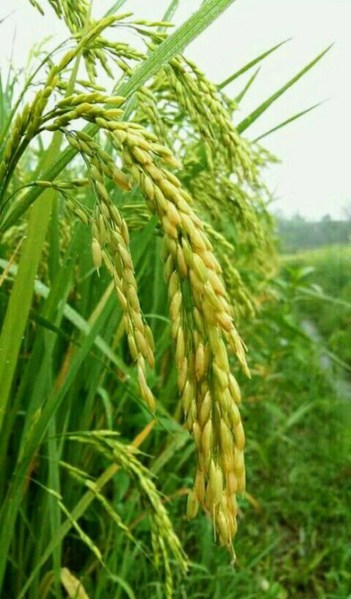
The word “Agriculture” has no rigid definition. It has been explained by many people very comprehensively. Agriculture has been defined as the science and art of cultivating the soil, and this definition emphasizes the primary nature of plant production in agriculture.Moreover, it is so frequent that the same person performs both the primary functions of growing plants and the secondary one of feeding the plants to livestock that these two industries are grouped together as agriculture. Therefore, it may be said that agriculture includes not only the production of crops by the cultivation of the soil, but also the rearing of livestock.
Thus, milk, meat and wool are as much agricultural products as are wheat, rice and cotton. In the words of George O’Brien, therefore, the word agriculture includes, “every industry which aims at producing vegetables or animals by the cultivation of the soil.”So, agriculture is the business of raising products from the land. The products raised may either be plants and their products or animals and their products. The former are the direct products while the latter are the indirect products of the land. Agricultural products are complex and diverse, in nature, and as such, agriculture may be regarded as complex industry.Modern agriculture is such broader in scope than merely the art and science of cultivating the land. It is the whole business of supplying food and fiber for a growing population at home and abroad. Again in agriculture we include all forms of soil production, from forestry to glass-house culture, from fishery to artificial insemination, and from breeding to horticulture.

Primi­tive men must have begun as food gatherers, eating whatever fruits, leaves and roots they could obtain. Nature must have been bountiful in those days when human numbers were so small and wild plants grew everywhere. As time passed and human numbers grew, fishing and hunting became increasingly im­portant in supplementing what was lacking in the field, and an endless search for food ensued.It was soon realized that some form of food pro­duction was necessary if men were to live long and secure. Animals were tamed, first to provide meat, milk and skin; later for use as draught animals. Seeds were sown in ploughed fields, carefully tended and harvested when the time came.Men were then able to live in settled communities. Because they were no longer continually moving they had time to develop the various arts, crafts and skills that formed the basis of modern industries and also evolved religious and political ideas. Without a settled agriculture, a meas­urable degree of civilization is not possible.


Agriculture
is not farming
it’s feeding

God and Faith

The spiritual teachings in today’s life were not getting much attention in people’s minds. Everything man wished for was manifested by God, but without faith in God we feel better in our well-being but the result was violence. Peace is a gift of God when we want peace in our life, we should get into spiritual worship to god.

There are so many scientific proofs there about trust in spiritual powers. we will feel better when we are on that frequency of spiritual power. All the things around us came from that power.

The real thing that matters is when we are going ahead in life, all our sins will become come back to us without any doubt. What a man gives out will gradually come back to his own life. There are so many incidents to prove that our faith will keep up with our existence. Faith Faith Faith, everything belongs to faith.

What is Startup India Seed Fund Scheme (SISFS)

Overview of Startup India Seed Fund Operation
The scheme aims to provide startups with financial assistance at their early stages such as proof of concept, prototyping, product trials, market entry and commercialization.

Once a startup gets access to capital at the early stage, it improves the potential for the enterprise to scale to a level where funding can be sought from angel investors, venture capital firms, Banks and other financial institutions.
Process of the SISFS
Department for Promotion of Industry and Internal Trade (DPIIT) has created an Experts Advisory Committee (EAC) to execute and monitor the Startup India Seed Fund Scheme. The EAC will select eligible incubators who will be provided grants of upto Rs 5 Crores each. In turn, the selected incubators will provide startups with up to Rs 20 lakhs for validation of Proof of Concept, prototype development, product trials to startups.
Moreover, up to Rs 50 lakhs shall be provided to the startups for market entry, commercialization, or scaling up through convertible debentures or debt-linked instruments. Detailed guidelines of the Startup India Seed Fund Scheme are available on the Startup India portal.
It is anticipated that the startups that receive support at their early stages shall create significant employment opportunities for everyone.

Key points of the SISFS
  • ~3600 Startups expected to benefit from SISFS
  • ~300 Virtual Incubators to be promoted for supporting startups
  • INR 945 crore corpus divided over 4 years, starting FY2021-22, to be disbursed through eligible incubators
  • Year-round ‘Call for Applications’ for Incubators and Startups
  • Sector-agnostic
  • No mandatory physical incubation
  • PAN-India startup programme
  • Startups can apply to 3 incubators simultaneously

RELATED LINKS

Best Ideas for Starting Manufacturing Business

No matter what anybody tells you, words and ideas can change the world.” So that is what I bring to you today- A curated list of manufacturing business ideas under 10 Lakhs in India to choose and experiment from.
See, the fact is – the business world and its ways are reforming. And in 2021, you do not need to be another Larsen & Toubro or another Jindal steel to make a difference; you just have to be – well, you!
Entrepreneurship in manufacturing business might seem to be a fancy venture where you can dabble your way to success and earn millions and live happily ever after. But let me burst the bubble and tell you – the truth cannot be any further. It requires plans, strategies, skills, expertise, a supportive team, and most importantly – honest efforts to make a dent.
If it’s your first time, this will help.
Here are 20 manufacturing business ideas in India to start in 2021:
1) Handmade Organic & Exotic Soaps
With more and more people opting for chemical-free alternatives, it is the perfect time to dive into the hand-made organic soap business.
You need to make an initial investment of INR 1.5 – 2 lakhs and can expect pretty exciting returns. Another favourable fact is – you won’t have a hard time convincing prospects.
Why? Because people are already switching to an organic lifestyle. Check out SoulPure, a Bangalore-based startup that produces not only skin-friendly but also environmental-friendly soaps, for more inspiration.
2) Fashion Jewellery
This is one of the most profitable manufacturing business ideas under 10 Lakhs in India.
What makes it profitable? Rather than hoarding on gold and diamond, modern-day women now buy jewellery that is light and pleasant and wears it to work, events, and celebrations. And fashion jewellery serves the purpose well.
These days jewellery brands leverage e-commerce and social media – Instagram and Facebook pages, for marketing. Secret tip – Influencer marketing is a great way for such brands to gain traction.
For clarity, study about Pipa+bella, brain-child of Suchi Pandya, a thriving Mumbai-based jewellery business.
3) Women’s Footwear
The world is evolving and so are the choices. Women are actively seeking home-grown brands and are more than willing to try new and unique styles.
The demand for businesses that manufacture non-leather, cruelty-free, fashionable yet comfortable footwear for women is on the rise. And this is the best time to take the leap.
Here, again, social media marketing proves to be fruitful – you can start with your website/blog/page. Know more from those who are already leveraging the industry – Devika Srimal’s Kanabis, a Delhi-based footwear business and Chondamma Cariappa’s The Sole Sisters.
Interesting story – Chondamma started a Facebook album named ‘Fetish’ where she would post pictures of shoes from various parts of the world that she came across while travelling.
The album turned into a blog, ‘The Sole Sisters’, and the response she received pushed her to start the footwear label.
4) Eco-friendly cutlery and kitchen items
The common denominator in all successful manufacturing businesses under 10 Lakhs in India is that they all make their customers’ lives easy. Eco-friendly cutlery is another growing business that does the same.
It not only saves us from the hassle of maintenance but also is the best possible alternative to plastics.
With our generation becoming more aware and environment-sensitive, there’ll be no dearth of customers in this business. The aesthetic appeal will serve as an added advantage.
For this, you’ll need to invest in cutlery making machines that will cost around INR 50,000. The best example I can think of is Narayana Peesapaty’s Hyderabad-based Bakeys that makes edible cutlery from nutritious food materials.
The company claims the cutlery contains no chemicals, additives, or preservatives. Bakeys claims the products have a long shelf life as they are moisture and fat-free.
5) Environment- friendly bags
This category encompasses Jute, canvas cloth, and paper bags that are sustainable alternatives to plastic ones. This is one business that will never fall short of customers because. Well, we are not going to stop using bags anytime soon!
Paper bags and envelopes are in high demand with large supermarkets, pharmacies and other retailers. Its raw material is inexpensive and available in abundance.
The use of biodegradable and reusable “golden fibre” is also at a high. And its manufacturing process is also simple. These kinds of bags serve multiple purposes.
The canvas cloth bags, on the other hand, are used by college-going students which again make them rich in demand. EcoAd is doing a great job in this context.
The paper bag making startup says – “We target the elimination of polyethene from our culture and society. Every day we are getting closer to it. Closer we go more we realise the magnitude of this issue.”
6) Smartphone accessories
Out of the many manufacturing business ideas under 10 Lakhs in India, this one is obvious. With smartphones, we carry our world in our pockets, quite literally.
There’s no if and but about its demand – and the same goes with its accessories. Anyone who uses smartphones will need tempered glass, phone cases/covers, selfie sticks, and other accessories as well.
This makes the business high in terms of profit. Speaking of investment, the low capacity tempered glass making machines cost around Rs 75,000 while high capacity ones cost over Rs 1.5 lakh.
One inspiring story is that of Chirag Demla and Pawan Demla’s CellBell. It’s an eCommerce platform for mobile accessories – Selfie sticks, headphones, cables, screen glass, and covers that started with an initial investment of 7 lakhs.
Recently, CellBell was selected by Amazon as a ‘strategic account’ due to its consistent sales performance and was the single brand account to achieve a sales target of over Rs 12 crore.
Startup Handbook: Build A Business From Scratch
Get instant access to this ebook on building a business from scratch worth $19 absolutely FREE!
7) Personal care range
In today’s day and age, people are more than willing to splurge in natural/organic personal care products. The reason is simple – awareness.
The products range from facewash, face creams, lotions to lip balms and scrubs. You can choose a single product or an entire range to start your business. The returns are great and sure to come.
One such home-grown brand is Shabia Walia’s Mumbai-based Wild Earth. It offers natural beauty products free from sulphates and parabens.
Started with a single product, she then went on to launch her own company. It today has 17 categories of products for hair and skincare that recorded an annual turnover of Rs 1.23 crore.
8) Recyclable apparels
What if I tell you heaps of waste can build you an empire? Well, not an empire, but definitely a start-up. You can recycle waste or used clothes to produce edgy apparels out of it.
Sounds innovative? It is, and start-ups are leveraging it already. A unique idea backed by innovative marketing can turn this business into a goldmine.
One such inspiration is RawPressery, a Mumbai-based food and beverage startup that has started an eco-friendly initiative called RawCycle. “The used beverage bottles are first washed and chopped into flakes.
These are then melted and converted to chips before extruding the same into yarn. The yarn is woven into a fabric, stitched and dyed to make t-shirts,” Raw Pressery told YourStory.
9) Indian handicraft items
Thinking of starting a social startup? Here’s an idea! Indian handicraft items are high in demand and bridge the gap between artisans and customers.
You can start this manufacturing business with low investment, and there’s much more than monetary benefits you’ll earn in return.
One such story is that of Ahmedabad-based Gaatha. They use recyclable materials such as bamboo, wood, leather, fibre, and even urban waste to produce clothes, jewellery, paintings, and stationery. The products are crafted by artisans of Gujarat, Rajasthan, Madhya Pradesh, and Kashmir.
10) Handmade candles
We are a generation that strongly believes in the power of aesthetics. And that makes handmade candles a high in-demand product.
In recent years, there’s been an inclination towards scented and therapeutic ones – found in restaurants, households, and hotels, spas, and spiritual places. With an initial investment of INR 20,000 to 30,000, you can expect great returns, especially in the festive season.
11) Homemade chocolates/cookies
Let’s face the fact – Indian have a sweet tooth! And we are always looking for new and refreshing flavours. If you think you can serve pure delight on a platter, then this manufacturing business is for you.
The best part? It requires an initial investment of less than INR 50,000. Also, you’ll have a wider target market to cater to as this is one product that will tickle the taste buds of children and adults both.
12) Garden Landscaping
There are multiple backyard/ garden landscaping ideas available online. All you need to do is come up with something similar at your place and for which you won’t need to shell out a fortune as well.
For there are a number of flea markets and recycled goods stores present in major cities. You can also upcycle old furniture to come up with mix and match styles of decor. Once you’re done posing across the newly landscaped backyard or garden of yours, just post it online for marketing it across. And don’t go anywhere but your existing social media handles to showcase your work. When you’ve successfully created a buzz around your newly acquired skills, it will be time to cash things in by taking up projects.
13) Pickle-Making
All you need for kick-starting a pickle business in India is the right workforce. Once you set your hands upon the right people to deliver the utmost, authentic taste, this venture hardly needs any more investment. Pickle making, packaging and delivery has been one of the most underrated manufacturing businesses under 10 Lakhs in India with low starter investment.
14) Dairy Production
Go local is the sentiment echoed by many when it comes to consumption of dairy products in both urban and rural areas. Dairy production does require low capital investment but the legal and compliance framework of this business can be a tough job.
Cattle and feed legal requirements are strict and tasking. Although known as the business for all seasons in India, dairy production can be an exhausting endeavour.
Other than these 14 sought-after manufacturing businesses under 10 Lakhs in India, there are several more to sample from:
15) Home-Made Ice-cream manufacturing
16) Home-Made Jams
17) Home-Made Rakhis
18) Paper Egg Tray Making Business
19) Envelope & File Manufacturing
20) Hand-Made Paper & Personalized Gift Wrappers Making