Rs. 375.25 crore approved to 102 incubators under Startup India Seed Fund Scheme (SISFS)

 As on 30th July 2022, of the corpus of Rs. 945 crore, Rs. 375.25 crore have been approved to 102 incubators under the Startup India Seed Fund Scheme (SISFS). Also, 378 DPIIT recognised startups have been approved a total sum of Rs. 81.45 crore by the approved incubators under the Scheme.

Specifically, from the North Eastern States (Arunachal Pradesh, Assam, Manipur, Meghalaya, Mizoram, Nagaland, Sikkim and Tripura), as on 30th July 2022, two incubators (one each from Sikkim and Assam) have been approved a total sum of Rs. 5 crore under the Scheme. Also, 9 DPIIT recognised startups from North Eastern States have been approved a total sum of Rs. 1.15 crore by the approved incubators under the Scheme.

The Startup India Seed Fund Scheme (SISFS) is being implemented by the Government with effect from 1st April 2021. It provides financial assistance to eligible Department for Promotion of Industry and Internal Trade (DPIIT) recognised startups for proof of concept, prototype development, product trials, market entry and commercialization. This enables the startups to graduate to a level where they will be able to raise investments from angel investors or venture capitalists, or seek loans from commercial banks or financial institutions. SISFS is disbursed to eligible startups through eligible incubators across India.

Centre for Trade and Investment Law (CTIL)

 The Centre for Trade and Investment Law (CTIL), Indian Institute of Foreign Trade (IIFT), New Delhi celebrated its 5th Anniversary and released the Fifth Anniversary issue of CTIL Magazine on August 2, 2022 at the Constitutional Club of India, Rafi Marg, New Delhi.

The event marked five years of inception of CTIL providing sound and rigorous analysis of legal issues pertaining to international trade and investment law. CTIL was established by Department of Commerce, Government of India with the objective of developing international trade and investment law capacity in India and as a repository of information on trade and investment law. CTIL has over the years emerged as a leader in engaging in and influencing the evolving discourse on global economic law issues. CTIL has also organised numerous conferences, stakeholder consultations, seminars and training programmes.

The Guest of Honour for the event was Shri. B. V. R. Subrahmanyam, Commerce Secretary, Government of India, who delivered the Keynote Address on “India’s perspective on WTO and MC 12”. The address highlighted India’s key contributions and successes on acting as a ‘deal-maker’ while preserving its interests in public stockholding and prevention of IUU fishing during the recent 12th Ministerial Conference of the WTO in Geneva. He emphasized on the important role India is expected to and should play in multilateral discussions by positively engaging in issues like gender, labour and environment.

Ambassador Ujal Singh Bhatia, former Ambassador of India to the WTO and the former Chairman of the WTO Appellate Body delivered the Anniversary Distinguished Lecture on “Appellate Advocacy in International Trade Law: Views from the Bench”. The lecture provided insights into Ambassador Bhatia’s experience as a member and Chairman of the WTO Appellate Body. He emphasized on the uniqueness of the appellate procedure of the WTO’s dispute settlement body (DSB) by highlighting the high number of compliances of WTO DSB reports. He also underlined the relationship between public international law and international trade law, which was particularly strengthened with the emergence of globalization and adoption of the WTO DSB mechanism.

A Special Address on “The Role of Academic Think Tanks in Trade Policy Making” was delivered by Shri Amit Yadav, Additional Secretary, Department of Commerce, Ministry of Commerce and Industry, Government of India. The address accentuated the importance of academic engagement in trade policy formulation, particularly the assistance provided by CTIL and other CRIT Centres established by the Department of Commerce. He emphasized on the importance of creating an institutional memory through the Centres in order to enable the government to take informed decisions.

Professor James J. Nedumpara, Head and Professor, Centre for Trade and Investment Law delivered the Welcome Address and discussed the role played by CTIL in the past five years, including contributions in recent FTA negotiations. He thanked the leadership and encouragement by the Department of Commerce and IIFT to assist the Centre in achieving its goals in the past five years. This was followed by Vice Chancellor’s address delivered by Professor Manoj Pant, Vice Chancellor, IIFT. He applauded CTIL’s work as a ‘unique experiment’ to link academia and trade policy in the country.

Industry associations, stresses on a ‘Whole of Govt’ approach to boost exports

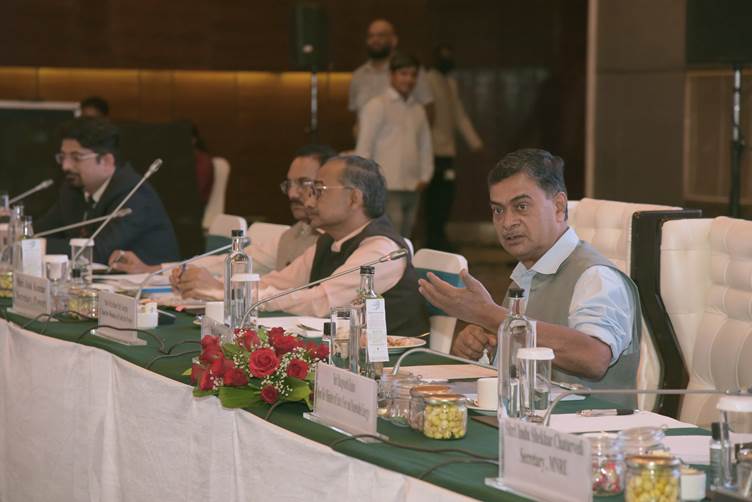
 Union Minister for Commerce & Industry, Consumer Affairs, Food & Public Distribution and Textile Shri Piyush Goyal reviewed the Export scenario in his interaction with Export Promotion Councils (EPCs) and representatives of Industry associations at New Delhi today.

Shri Goyal emphasized on a ‘Whole of Govt’ approach to boost exports. The Minister said this would require exporters, EPCs, Govt Agencies & Indian Missions abroad to work together.

Recognizing the crucial role played by EPCs and Industry, Shri Goyal remarked that EPCs & Industry Associations are key to realise “Local goes Global: India makes for the World”.

Speaking to EPCs and Industry representatives, Minister stated that the ball is in our court and we have to be ready to take on global competition. He said that Government is doing its best through various measures to support Indian exporters to compete globally. Enumerating initiatives taken, he highlighted that with Gati Shakti, government is improving connectivity and logistics. Government is also negotiating to sign more FTAs with important trade partners. This will have a direct impact in providing a level playing field in international markets, he added. He emphasized that everybody will have to work hard to achieve true potential of India in terms of global trade.   

Expressing confidence that we are on track to meet expectations of Prime Minister Shri Narendra Modi, Shri Goyal said that the country touched highest ever merchandise exports of $ 422 billion and all-time total exports of $ 667 billion – an increase of 34.5% over FY 21. By July’22, exports have reached $156 bn (19% higher) – Engineering goods exports $38 bn (8% higher); Readymade garment (22% higher). Agri exports grew by almost 20% till July’22, driven by rice, marine products & sugar.

Stating that the Government has been increasing its international engagement, the Minister underlined the importance of Free Trade Agreements (FTAs). In this context, he urged the industry representatives to study FTAs and identify the areas which have competitive advantage. He hoped for an agreement on a multidimensional partnership with UK this year.  Minister also appealed to representatives from the industry to take advantage of PM Gati Shakti, PLI, NSWS, EoDB reforms to improve export competitiveness wrt to other manufacturing powerhouses. 

Har Ghar Tiranga campaign

Commerce and Industry Minister urged all the stakeholders in the export ecosystem to take the message of Har Ghar Tiranga to every nook and corner of the country. He urged industry to unite and work together to keep our flag flying high and make this campaign a grand success. Textile Secretary Shri U P Singh informed that the Ministry is working with a select group of private companies to supply 6 crore flags to state governments and Department of Post by 12th August. He said 5.12 crore flags have already been produced.

One District One Product (ODOP)

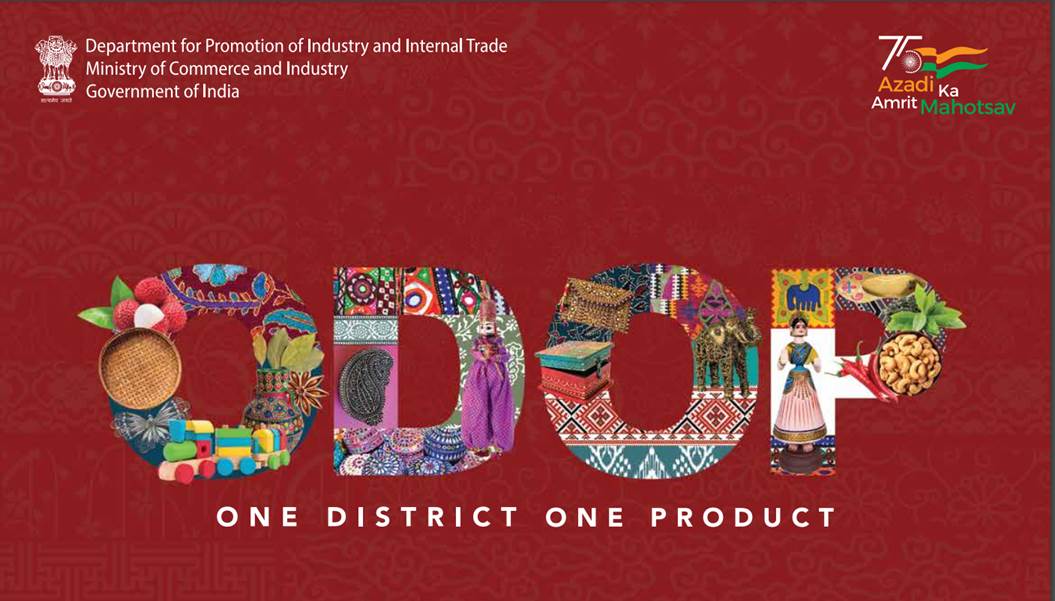
During the interaction today, Minister launched the ODOP catalogue of over 300 products. He appealed to the people to use ODOP portal and buy products from there. This will directly help Indian artisans and families and also help revive dying arts of India. He mentioned that PM has repeatedly asked the nations to use these ODOP products as festival gifts and cooperate gifts, and PM himself uses these products for gifting purposes.

Master Database of all Associations/EPCs– Shri Goyal asked all stakeholders to prepare a database of the industry associations/EPCs over the country along with their members, employees & other basic details. 

Presentation was made on National Single window system. This scheme is being run by Ministry of Commerce and Industry to facilitate ease of doing business. Since its inception last year, 10k approvals have already been given under it.

In his initial presentation Commerce Secretary Shri B V R Subramanyam said that all stakeholders in the export ecosystem worked really hard last year and achieved the target 9 days ahead of scheduled end of the year. He said that everyone will have to contribute to keep the momentum going.

****

AD/KP

digital version of ODOP gift catalogue

 Union Minister of Commerce and Industry; Consumer Affairs; Food and Public Distribution and Textiles, Shri. Piyush Goyal unveiled the digital version of the ODOP gift catalogue. The digital launch took place during the meeting with Export Promotion Councils and Industry Associations at Vanijya Bhawan on 5th August 2022.

The ODOP gift catalogue includes a wide range of products like Fragrances and Oils, Indian Spirits, Home Décor products, Fabrics, and Silks and Shawls.  HCIM highlighted the ways in which the ODOP gift catalogue is a step towards realizing the potential of all districts in India and will give global recognition to the country’s diverse indigenous products. Further, he urged all the line ministries, Industry Association, and Export Promotion Councils to utilize products from the catalogue for encouragement to designs and branding. He also recommended a conscious effort to be taken to include these treasures of India for corporate gifting. This will provide a tremendous boost to the local economy and will help promote the livelihood and sustenance of many farmers and artisans.

Minister highlighted that utilizing products from the catalogue will promote a brand image for local products in the international market, consequently boosting the Prime Minister’s vision of “Make in India” and “Make for World”. He also requested all the associations to share their feedback on each of these products to ensure continuous improvement so that the products can compete at a global level.


Video on ODOP Gift Catalogue


ODOP Background:


  • The ODOP Initiative is aimed at achieving the vision of the Hon’ble Prime Minister to foster balanced regional development across all districts of the country. 
  • The idea is to select, brand, and promote One Product from each District (One District – One Product) of the country for enabling holistic socio-economic growth across all regions.
  • The range of chosen products under ODOP, from all 761 districts of the country, spans multiple sectors, Ministries and Departments. 


****

AD/KP

Medical Device Parks

 The Department implements the scheme “Promotion of Medical Devices Parks”, with a total financial outlay of Rs. 400 crore and the maximum assistance under the scheme for one Medical Device Park would be limited to Rs. 100 crore. The tenure of the scheme is from FY 2020-2021 to FY 2024-2025 and the selected Medical Device Park project will be implemented by a State Implementing Agency (SIA).  Under the scheme, Department of Pharmaceuticals has received proposals from 16 States/Union Territories.  The proposals were evaluated as per the criteria given in the scheme guidelines and final approval for financial assistance of Rs. 100 crore each has been given to the States of Uttar Pradesh, Tamil Nadu, Madhya Pradesh and Himachal Pradesh.  There is no proposal to establish more medical device parks in the Country, under the scheme.

Further, the Department has provided grant-in-aid to the project of the Superconducting Magnet Testing, Validation and Integration Centre at AMTZ, Andhra Pradesh under the scheme “Assistance to Medical Device Industry for Development of Common Facility Centres”.

The Government of India has taken several measures to encourage domestic manufacturing of Pharmaceutical drugs including bulk drugs and medical devices to reduce import dependence. The Programmatic interventions to support Pharma and Medical Devices Industries are as follows;

  1. The Production Linked Incentive (PLI) Scheme for promotion of domestic manufacturing of critical Key Starting Materials (KSMs)/ Drug Intermediates (DIs) and Active Pharmaceutical Ingredients (APIs) in India, with a financial outlay of Rs. 6,940 crores and the tenure from FY 2020-2021 to FY 2029-30, provides for financial incentive for 41 identified products. A total of 51 applicants have been selected under the scheme.
  2. The Production Linked Incentive Scheme for Pharmaceuticals, with a financial outlay Rs. 15,000 crores and the tenure from FY 2020- 2021 to FY 2028-29, provides for financial incentive to 55 selected applicants for manufacturing of identified products under three categories for a period of six years, including five (5) industry applicants selected for In-vitro diagnostic medical devices.
  3. The Scheme for Promotion of Bulk Drug Parks, with a financial outlay of Rs. 3,000 crores and the tenure from FY 2020-2021 to FY 2024-25, provides for financial assistance to three States for establishing Bulk Drug Parks. The proposals received are under evaluation.
  4. The Department has launched the scheme of Strengthening of Pharmaceutical Industry (SPI), with a financial outlay of Rs. 500 crores and the tenure from FY 2021-2022 to FY 2025-26 and this scheme has three components, to provide infrastructure support for pharma MSMEs in clusters and to address the issues of technology upgradation of individual pharma MSMEs.
  5. Under the scheme “Promotion of Medical Devices Parks”, final approval for financial assistance of Rs. 100 crore each, has been given to the States of Uttar Pradesh, Tamil Nadu, Madhya Pradesh and Himachal Pradesh for establishment of common facilities in their Medical Device Parks.
  6. Further, under the sub-scheme “Assistance to Medical Device Industry for Common Facility Centre”, grant-in-aid of ₹ 25 crore was provided to Andhra Pradesh Medtech Zone Ltd. (AMTZ), Andhra Pradesh for establishment of Common Facility for Super conducting magnetic coil testing and research facility.
  7. The Production Linked Incentive (PLI) Scheme for Promoting Domestic Manufacturing of Medical Devices, with a financial outlay of Rs.3,420 Cr and with the tenure from FY 2020-21 to FY 2027-28, provides for financial incentives to selected companies at the rate of 5% of incremental sales of medical devices manufactured in India and covered under the four Target segments of the scheme, for a period of five (5) years.  A total of 21 Applicants have been selected under the scheme.

The non-schematic interventions are as follows:

  1. In order to attract investments in this sector, the Government has allowed 100% foreign direct investments (FDI) in medical devices sector. Similarly, the Government has allowed 100% FDI in pharma sector for greenfield projects under automatic route. For the brownfield projects, upto 74%, FDI investments are allowed under automatic route and beyond 74% to 100%, FDI investments are allowed under government approval route.
  2. To redress the specific challenges of the MedTech Industry, in view of the diversity and multi-disciplinary nature of the sector, the institutional mechanism of Standing Forum of Medical Devices Associations, has been set up to deliberate on various issues with all the stakeholders including regulators.

Uniform Code of Pharmaceutical Marketing Practices

 The Government has put in place a Uniform Code for Pharmaceutical Marketing Practices (UCPMP) for Pharmaceutical companies, which is in operation since 01.01.2015, to prevent unethical practices by the pharmaceutical companies. This code governs the conduct of pharmaceutical companies in their marketing practices, duly covering the various aspects such as medical representatives, textual and audio-visual promotional materials, samples, gifts, etc. Further, the code establishes relationship with healthcare professionals, wherein the provisions related to travel facilities, hospitality and cash or monetary grants to physicians or their families have been elaborated.

The code also details the mode of operation of the code, responsibilities of the Pharmaceutical Associations in constituting the Ethics Committee for Pharmaceutical Marketing Practices (ECPMP) for handling the complaints and Apex Ethics Committee for Pharmaceutical Marketing Practices (AECPMP) for review, procedure of lodging a complaint, procedure of handling of complaints by the Pharmaceutical Associations and various penalty provisions. 

The code has been adopted by the all the major associations of pharmaceutical companies and the Department on various instances has reviewed implementation of the code by the Pharmaceuticals associations.

The complaints of violation of the voluntary UCPMP by pharma companies which are perceived by the Department are forwarded to the concerned associations for taking necessary action.

The Indian Medical Council (Professional Conduct, Etiquette and Ethics) Regulations, 2002 formed under Indian Medical Council Act, 1956 (102 of 1956), provides for conduct for doctors and professional association of doctors in their relationship with pharmaceutical and allied health sector industry. Under this, any complaint of professional misconduct of a medical practitioner or professional is to be addressed by the respective State Medical Councils. 

Besides UCPMP, there exists sufficient and enforceable legal regime to counter, control and dis-incentivize the unethical marketing practices such as “Indian Medical Council Professional Conduct, Etiquette and Ethics) Regulations, 2002” under the Indian Medical Council Act, 1956, provisions available under the Income Tax Act, Drugs and Cosmetics Act, Prevention of Corruption Act, etc.

The Department has not received any representations in the recent past from civil societies and patents group to make the UCPMP code mandatory. Further, in the writ petition (Civil) No. (s).323/2021 filled by federation of the Medical and Sales Representatives Associations of India & others against Union of India and others, the matter is under consideration of Hon’ble Supreme Court of India.

Financial assistance to develop Regional Agricultural Produces

 The Ministry of Food Processing Industries (MoFPI) has been incentivizing setting of food processing industries through Central sector umbrella scheme ‘Pradhan Mantri Kisan SAMPADA Yojana (PMKSY), Production Linked Incentive Scheme for Food Processing Industry (PLISFPI) and centrally sponsored scheme ‘PM Formalization of Micro Food Processing Enterprises (PMFME) scheme across all the country. Under scheme of creation of infrastructure for agro processing clusters, a component scheme of PMKSY, the scheme is aimed at development of modern infrastructure and common facilities to encourage entrepreneurs to set up food processing units based on cluster approach and also to create modern infrastructure for food processing closer to production areas and to provide integrated and complete preservation infrastructure facilitates from the farm gate to the consumer.

For One District One Product (ODOP), the Ministry of Food Processing Industries (MoFPI) under Centrally Sponsored Pradhan Mantri Formalisation of Micro Food Processing Enterprises Scheme (PM FME Scheme), in partnership with the States, provides financial, technical and business support for upgradation of existing micro food processing enterprises. The scheme adopts ODOP approach to reap the benefit of scale in terms of procurement of inputs, availing common services and marketing of products. The Ministry of Agriculture and Farmers Welfare has advised states for convergence of resources towards ODOP from ongoing centrally sponsored schemes such as Mission for Integrated Development of Horticulture (MIDH), National Food Security Mission (NFSM), Rashtriya Krishi Vikas Yojana (RKVY), Paramparagat Krishi Vikas Yojana (PKVY) etc. Similar approach has been suggested to Ministry of Fisheries, Animal Husbandry and Dairying for convergence of their schemes towards ODOP.

In addition, Department of Agriculture and Farmers Welfare under Horticulture Cluster Development Programme (HCDP) had identified 55 clusters of selected high value horticulture crops and 12 clusters have already been launched in first phase.

Crop Insurance Schemes

 National Crop Insurance Portal (NCIP) is the only source of enrolment for Pradhan Mantri Fasal Bima Yojana (PMFBY), on which farmer applications from various designated sources including banks/financial institutions are entered. Specific cut-off dates have been prescribed for enrolment of farmers, debit of premium, remittance of farmers’ premium to concerned insurance company and uploading of data of farmers on NCIP.  However, it was noticed that sometimes some banks/financial institutions in some States/Union Territories did not enter the data on NCIP, due to which some farmers could not be enrolled in time. In order to ameliorate against such instances, additional 15 days above the cut-off date for submission of proposal/application by farmers for enrolment have been provided to Banks/Financial Institutions for entry of individual farmer-wise data on the NCIP for enrolment and premium subsidy calculation purposes. However, as banks have to ensure that eligible loanee farmers are not deprived of any benefit under the Scheme due to errors/omissions/commissions of the concerned branch/ PACS, and in case of such errors, the concerned agencies shall have to make good of all such losses.     

MSP benefits and its concerns

 The NITI Aayog (erstwhile Planning Commission) has conducted a study entitled “Efficacy of Minimum Support Prices on farmers”, in 2016. The study has found, among other things, that MSP declared by the Government has encouraged 78% of the farmers covered under the study for adopting improved methods of farming such as high yielding varieties of seeds, organic manure, chemical fertilizer, pesticides and improved methods of harvesting etc.

Government extends price support for paddy and wheat through the Food Corporation of India (FCI) and State Agencies. Under this policy, whatever food grains are offered by farmers within the stipulated period & conforming to the specifications prescribed by Government are purchased at MSP by the State Government agencies including FCI for Central Pool.

Additionally, Oilseeds, pulses and copra of Fair Average Quality (FAQ) are procured from registered farmers under Price Support Scheme of the Umbrella Scheme of Pradhan Mantri Annadata Aay SanraksHan Abhiyan (PM-AASHA), as per its prescribed guidelines.

The Union Budget for 2018-19 had announced the pre-determined principle to keep MSP at levels of one-and-half times of the cost of production. Accordingly, Government has increased the MSPs for all mandated Kharif (including wheat), Rabi and other commercial crops with a return of at least 50 per cent over all India weighted average cost of production from the agricultural year 2018-19.

Smart Farming

 Government is promoting adoption of smart farming methods through the use of technology and innovation in the agriculture sector in the country. Government is implementing a Digital Agriculture Mission (DAM) which includes India Digital Ecosystem of Agriculture (IDEA), Farmers Database, Unified Farmers Service Interface (UFSI), Funding to the States on the new Technology (NeGPA), Revamping Mahalanobis National Crop Forecast Centre (MNCFC), Soil Health, Fertility and profile mapping. Under the NeGPA programme funding is given to State Governments for Digital Agriculture projects using emerging technologies like Artificial Intelligence and Machine Learning (AI/ML), Internet of Things (IOT), Block chain etc. Adoption of drone technologies is being done. To promote smart farming, the Government promotes Startups in the Agriculture sector and nurtures agri-entrepreneurs. The Per Drop More Crop component of the Pradhan Mantri Krishi Sichai Yojana (PMKSY-PDMC) aims to increase water use efficiency at the farm level through micro irrigation technologies, i.e., drip and sprinkler irrigation systems. The GoI started eNAM (National Agriculture Market), an electronic trading portal which creates networks between the existing Agricultural Produce Market Committee (APMC) mandis for the farmers.

The Indian Council of Agricultural Research (ICAR) promotes innovation, extension and education in agriculture. A total of 1575 field crop varieties were released for different agricultural crops during 2014-21. During 2014-21, 91.43 crore agro-advisories were provided to farmers through mobiles. ICAR developed 187 mobiles apps on different farm and farmer related services during 2014-21. These ICAR apps are now integrated on one common platform called KISAAN. The Farmer FIRST (Farm, Innovations, Resources, Science and Technology) initiative was launched during this period by ICAR with enhanced farmers-scientists interface to move beyond production and productivity.

Pharmacopoeia Commission for Indian Medicine

 The Government of India has established Pharmacopoeia Commission for Indian Medicine & Homoeopathy (PCIM&H), as a subordinate office under Ministry of Ayush by merging Pharmacopoeia Commission of Indian Medicine & Homoeopathy (PCIM&H) and the two central laboratories namely Pharmacopoeia Laboratory for Indian Medicine (PLIM), Ghaziabad and Homoeopathic Pharmacopoeia Laboratory (HPL) vide gazette dated 6th July, 2020).


The Commission is engaged in development of Pharmacopoial Standards for Ayurvedic, Unani, Siddha & Homoeopathic drugs.  Further, PCIM&H is also acting as Central Drug Testing cum Appellate Laboratory for Indian systems of Medicine & Homoeopathy.


After re-establishment, a total of 1483 samples of ASU&H drugs have been tested during 6th July, 2020 to till date and 03 Pharmacopoeial monographs along with  their formulary specifications for AYUSH Kwath related formulation has been published.  Apart from Pharmacopoeial Monographs, National Formulary for Unani Medicines, Part-IV (2nd Edition) comprising formulary specifications of 166 formulations have also be published.  


50 monographs of single drugs of Ayurveda along with 51 monographs of formulation of Ayurvedic drugs, 1 monograph of formulation of Siddha drug and 101 monographs of formulation of Unani drugs have been published during the last five years . 


However, since inception of PLIM & HPL (now PCIM&H w.e.f. 6th July 2020), a total number of 2199 quality standards on raw materials (Single Drugs of plant/animal/mineral/metal/ Chemical origin) used in ASU&H systems of medicines have been  published in various Pharmacopoeias and also 405 quality standards of ASU formulations also been published in respective pharmacopoeias.


As prescribed in Drugs and Cosmetics Act 1940 and Rules 1945 made thereunder, enforcement of the legal provisions pertaining to Quality Control and issuance of drug license of Ayurveda, Siddha, Unani, is vested with the State drug Controllers/ State Licensing Authorities appointed by the concerned State/ Union Territory Government. Rule 158-B in the Drugs and Cosmetics Rules, 1945 provides the regulatory guidelines for issue of license to manufacture Ayurvedic, Siddha, Unani medicines. It is mandatory for the manufacturers to adhere to the prescribed requirements for licensing of manufacturing units & medicines including proof of safety & effectiveness, compliance with the Good Manufacturing Practices (GMP) as per Schedule T of Drugs and Cosmetics Rules, 1945 and quality standards of drugs given in the respective pharmacopoeia.


As prescribed in Drugs and Cosmetics Act 1940 and Rules 1945 made there under, enforcement of the legal provisions pertaining to Quality Control and issuance of drug license of Ayurveda, Siddha, Unani, is vested with the State drug Controllers/ State Licensing Authorities appointed by the concerned State/ Union Territory Government. As per the information received from States/ UTs, action taken by State drug Controllers/ State Licensing Authorities regarding production/sale of sub-standard Ayurvedic medicines/formulations  is as follows –

S. no.

Name of the State/UTs

Action taken

  1.  

Tamil Nadu

92 license suspended/ cancelled since 2017 to 2021

  1.  

Odisha

13 license of cancelled since 2017-18  to 2022-23

  1.  

Maharashtra

Since 2016-17 to 2022, 84 prosecution orders issued, 38 prosecutions filed and 46 are pending.


1. This Ministry has issued Gazette notification no. G.S.R 716 E for Amendment in the Drugs Rules, 1945 related to licensing process of ASU drugs on 01.10.2021. The amendments have been done with a view to reduce the compliance burden and facilitate ease of doing business. The process to grant license to manufacture Ayurveda, Siddha and Unani (ASU) drugs has been made swift, paperless and more transparent the license application system through online e-aushadhi.gov.in portal. The license of the ASU drugs have been made perpetual i.e. with one time registration fee the license of the product will be valid lifetime with no further retention or renewal fees thereafter. The maximum time in granting the license to manufacture ASU drugs has been reduced from three months to two months.       


In addition to the above, for facilitating exports, Ministry of Ayush encourages following certifications of AYUSH products as per details below:-

•           Certification of Pharmaceutical Products (CoPP) as per WHO Guidelines for herbal products.

•           Quality Certifications Scheme implemented by the Quality Council of India (QCI) for grant of AYUSH Premium mark to Ayurvedic, Siddha and Unani products on the basis of third party evaluation of quality in accordance with the status of compliance to international standards.           


(3.) Ministry of Ayush has implemented Central Sector Scheme AYUSH Oushadhi Gunvatta Evam Uttpadan Samvardhan Yojana (AOGUSY). The objectives of the Scheme are as under;

i. To enhance India’s manufacturing capabilities and exports of traditional medicines and health promotion products under the initiative of Atmanirbhar Bharat.

ii. To facilitate adequate infrastructural & technological upgradation and institutional activities in public and private sector for standardization, quality manufacturing and analytical testing of Ayush drugs & materials.

 iii. To strengthen regulatory frameworks at Central and State level for effective quality control, safety monitoring and surveillance of misleading advertisements of Ayush drugs.

iv. To encourage building up synergies, collaborations and convergent approaches for promoting standards and quality of Ayush drugs & materials.

The components of the AYUSH OushadhiGunvattaEvamUttpadanSamvardhanYojana (AOGUSY) Scheme are as under;

A. Strengthening and up-gradation of Ayush Pharmacies and Drug Testing Laboratories to achieve higher standards.

B. Pharmaco vigilance of ASU&H drugs including surveillance of misleading advertisements.

C. Strengthening of Central and State regulatory frameworks including Technical Human Resource & Capacity Building programs for Ayush drugs.


D. Support for development of standards and accreditation/ certification of Ayush products & materials in collaboration with Bureau of Indian Standards (BIS), Quality Control of India (QCI) and other relevant scientific institutions and industrial R&D centres.


Pan India Drive under ‘Operation Yatri Suraksha’ to enhance security of passengers

 Railway Protection Force (RPF) is an Armed Force of the Union under Ministry of Railways entrusted with the responsibility of security of railway property, passenger area and passengers. With the aim of improving the security of passengers travelling by Indian Railways, RPF has launched a Pan-India Operation under the code name “Operation Yatri Suraksha”. As part of this initiative, several steps are being taken to provide foolproof security to passengers i.e. Train Escorting, visible presence on stations, Surveillance through CCTV, Surveillance on active criminals, collection of intelligence about the criminals and action thereupon, identifying black spots and crime prone trains/sections and enhancing security thereat among others to formulate an actionable strategy to reduce crime against passengers. Regular coordination is being made with all the stake holders and joint action is planned to improve passenger security regularly.

In order to give an impetus to Operation Yatri Suraksha, a month long pan India drive was launched against criminals targeting passengers in July 2022 by RPF. During the drive, 365 suspects were nabbed by RPF personnel and were handed over to the concerned GRPs for legal action based on which 322 cases of Passenger Crime i.e. theft of Passenger Belongings, Drugging, Robbery, Chain Snatching etc. were detected.  Stolen property of passengers worth more than Rs. 1 Crore was recovered either from the possession of these criminals or in course of investigation of these offences.

RPF will continue its efforts to enhance security of passengers over Indian Railways in future too by launching drives, improving response, infusing technology and innovation in its working to enhance its response, effectiveness and reach and to realize its objective of SEWA HI SANKALP.

****

Review Planning & Monitoring (RPM) meeting held with States and State Power Utilities

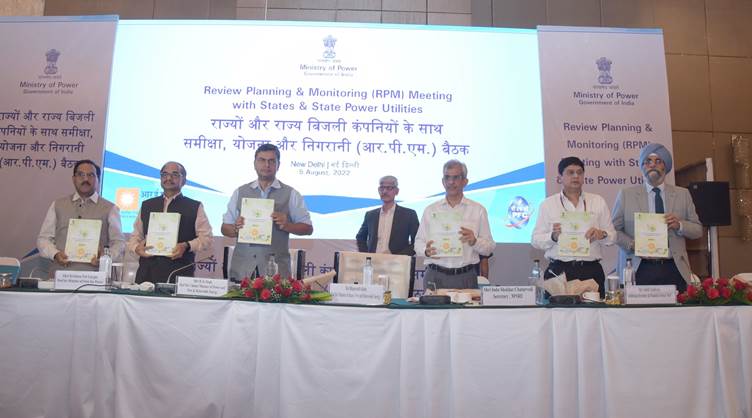
 The Review Planning & Monitoring (RPM) meeting with States and State Power Utilities was held on 05.08.2022 at New Delhi, under the chairmanship of Hon’ble Union Minister of Power and New & Renewable Energy Sh. R. K. Singh in presence of Hon’ble Minister of State for Power and Heavy Industries Shri Krishan Pal Gurjar. Secretary (Power), Secretary (New & Renewable Energy) along with other senior officials from Ministry of Power, Ministry of New & Renewable Energy, Power Sector CPSEs and Power / Energy Departments of various States and State Power Utilities were present in the meeting.

The meeting deliberated on several issues of national importance in the Power Sector with underpinnings of Sectoral viability and Sustainability, building upon Hon’ble Prime Minister’s address on 30th July, 2022 on the occasion of Ujjwal Bharat Ujjwal Bhavishya celebrations. These included liquidation of Government Department electricity dues and subsidy dues; progress on prepaid Smart metering in Government departments; establishing robust systems of Energy accounting and subsidy accounting and timely and advance payments thereof; timely fixation of regular and true-up tariffs; timely finalisation of Utility accounts; Progress of Feeder & DT metering; progress on Revamped Distribution Sector Scheme (RDSS); and compliance in regard to Electricity (Late Payment Surcharge and Related Matters) Rules, 2022.

During the meeting, Hon’ble Union Minister launched the (i) 10th Integrated Rating of Power Distribution Utilities, (ii) 1st Consumer Service Rating of DISCOMs and (iii) Bharat eSmart Mobile Application (BeSMA).

Integrated  Rating  exercise  is  being  carried  out annually since 2012 with the aim of evaluating performance of utilities on a range of parameters covering financial sustainability, performance excellence and external environment and their ability to sustain improvements year over year. The methodology for the rating has been comprehensively reviewed and revised in the current rating exercise, which is the 10th one in the series. The rating now lays a higher emphasis on financial performance, while also assessing operational efficiencies and external ecosystem of DISCOMs. The rating will now be dynamic in nature based on triggers having impact on DISCOM financials. Private DISCOMs and State Power Departments have also been included for comprehensive sectoral coverage. The details can be been accessed at urjadrishti.com.


Taking forward the multiple reform measures centred around ensuring the best-in-class services to electricity consumers across the country, Hon’ble Union Minister also launched the first ever Consumer Service Rating of DISCOMs (CSRD) for the FY 2020-21. The report captures the current status of consumer services across various DISCOMs. It delves into key parameters of consumer services such as operational reliability, connection services, metering, billing and collection services, fault rectification and grievance redressal. The DISCOMs have been rated across various identified parameters on a seven-point scale. The intent is to enable sharing of best practices of top performing DISCOMs as well as to help other DISCOMs in identifying critical areas for enhancing performance. The report is available at recindia.nic.in.

As a step towards enhancing consumer empowerment, a free-to-use Mobile app for prepaid smart meters was also launched for the nationwide rollout of smart metering. This mobile App would build up on the data of the Smart meters and would provide essential information to consumers in regard to their usage and balance electricity remaining, both in terms of Units and Monetary terms. The App would enable consumers to access real time information pertaining to their electricity usage and receive alerts & notifications. The App provides multiple options and gateways like UPI, net banking, credit & debit card etc. for payment and recharge through Mobile phones with ease. This mobile app is aimed at achieving consumer delight by enabling them achieve a command over their electricity usage in almost real time, while also helping them in electricity usage as per their needs, altering consumption behaviour to achieve energy efficiency, as well as help them in lowering their bills. This App would be available to all the Distribution Utilities free of charge once they place a requirement to the Ministry of Power. While the App is amenable to a top level customisation as per specific Utility needs, O&M for 10 years would also be free for the DISCOMs. The mobile app is built on strong security measures and is adequately equipped to protect individual data.


These initiatives would pave the path towards an efficient and sustainable power distribution sector.

****

NG

What is Book Review

 A book review is a form of literary criticism in which a book is merely described or analyzed based on content, style, and merit. A book review may be a primary source, opinion piece, summary review or scholarly review.

Other readers will always be interested in your opinion of the books you’ve read. Whether you’ve loved the book or not, if you give your honest and detailed thoughts then people will find new books that are right for them.

If you’re stuck on what to say in a review, it can help to imagine you’re talking to someone who’s asking you whether they should read the book.

1. Start with a couple of sentences describing what the book is about

But without giving any spoilers or revealing plot twists! As a general rule, try to avoid writing in detail about anything that happens from about the middle of the book onwards. If the book is part of a series, it can be useful to mention this, and whether you think you’d need to have read other books in the series to enjoy this one.

2. Discuss what you particularly liked about the book

Focus on your thoughts and feelings about the story and the way it was told. You could try answering a couple of the following questions:

  • Who was your favourite character, and why?
  • Did the characters feel real to you?
  • Did the story keep you guessing?
  • What was your favourite part of the book, and why?
  • Were certain types of scene written particularly well – for example sad scenes, tense scenes, mysterious ones…?
  • Did the book make you laugh or cry?
  • Did the story grip you and keep you turning the pages?

3. Mention anything you disliked about the book

Talk about why you think it didn’t work for you. For example:

  • Did you wish the ending hadn’t been a cliffhanger because you found it frustrating?
  • Did you find it difficult to care about a main character, and could you work out why?
  • Was the story too scary for your liking, or did it focus on a theme you didn’t find interesting?

4. Round up your review

Summarise some of your thoughts on the book by suggesting the type of reader you’d recommend the book to. For example: younger readers, older readers, fans of relationship drama/mystery stories/comedy. Are there any books or series you would compare it to?

What is h-Index

 The h-index is an author-level metric that measures both the productivity and citation impact of the publications, initially used for an individual scientist or scholar.

The h index was proposed by J.E. Hirsch in 2005 and published in the Proceedings of the National Academy of Sciences of the United States of America.[i]  The h index is a quantitative metric based on analysis of publication data using publications and citations to provide “an estimate of the importance, significance, and broad impact of a scientist’s cumulative research contributions.”[ii]   According to Hirsch, the h index is defined as: “A scientist has index h if h of his or her Np papers have at least h citations each and the other (Np – h) papers have ≤h citations each.”

How Calculated: Number of papers (h) that have received at least h citations. 

As an example, an h index of 10 means that among all publications by one author, 10 of these publications have received at least 10 citations each.  

Hirsch argues that the h index is preferable to other single-number criteria, such as the total number of papers, the total number of citations and citations per paper. However, Hirsch includes several caveats:

  • A single number can never give more than a rough approximation to an individual’s multifaceted profile;
  • Other factors should be considered in combination in evaluating an individual;
  • There will be differences in typical h values in different fields, determined in part by the average number of references in a paper in the field, the average number of papers produced by each scientist in the field, and the size (number of scientists) of the field; and
  • For an author with a relatively low h that has a few seminal papers with extraordinarily high citation counts, the h index will not fully reflect that scientist’s accomplishments.[iii]
Hirsch stressed that the full career publications for an author should be used for the h index.

Since Hirsch introduced the index in 2005, this measure of academic impact has garnered widespread interest as well as proposals for other indices based on analyses of publication data such as the index, h (2) index, m quotient, index, to name a few.

The h-index has already been used by major citation databases to evaluate the academic performance of individual scientists. Although effective and simple, the h-index suffers from some drawbacks that limit its use in accurately and fairly comparing the scientific output of different researchers. These drawbacks include information loss and low resolution: the former refers to the fact that in addition to h2 citations for papers in the h-core, excess citations are completely ignored, whereas the latter means that it is common for a group of researchers to have an identical h-index.

Several commonly used databases, such as Elsevier’s Scopus, Clarivate Analytics’ Web of Science, and Google Scholar  provide h index values for authors.