econfiguring curricular and pedagogical structure under NCF

 To take forward the process of widespread consultation for the development of the new National Curriculum Framework (NCF) based on the National Education Policy, 2020, the Ministry of Education held a meeting with senior officials/representatives of all Ministries and Departments of Govt. of India and important bodies including NCERT, Election Commission of India, ICAR, DRDO, etc. The meeting was chaired by Ms. Anita Karwal, Secretary, Department of School Education and Literacy (DoSEL), Ministry of Education (MoE), and focused on how ministries and organisations can contribute in developing a curriculum framework that is responsive and relevant to the developmental needs and interests of learners at different stages of their development.

In the said meeting, the officials present were first taken through a presentation by Ms LS Changsan, Additional Secretary, DoSEL, on how a curriculum framework is prepared, what are its deliverables and what is expected from them. Many areas of contribution were subsequently discussed, such as, the rapidly changing technology, need for innovation and generation of new ideas, need to focus on crucial areas like climate change, future skill requirements, crucial factors for agricultural growth, knowledge of India, especially in those areas where India is at the forefront for instilling a sense of pride, assistive technology for inclusion, enriching subject knowledge with real-life information, how to promote multilingualism, integration of sports, fitness, arts, etc.  The inputs from ministries would help in identifying and integrating several pertinent areas, skills and competencies in the NCF at relevant stages. It was also discussed that it would be very helpful if the ministries also point out their own role in taking certain ideas forward by partnering with school education ecosystem.

The key deliverables of NCF were discussed in detail, including, Early Childhood Care and Education, Foundational Literacy and Numeracy, Competency Based Education, Flexibility in Choice of Subjects in Secondary Classes, Reduction of Curriculum to Core Essentials, Reimagining Vocational education, Identification of Core Skills and Content, Inclusive Education, Multilingualism, Integrating Knowledge of India, citizenship, values like-appreciation of national heritage, respect for public property, taking care of elders, spirit of service, needs of Gifted Children,  Experiential learning, Integration of arts and craft, toys, health and well-being, sports and physical education Guidance and Counselling, Community involvement etc.

Given the crucial nature of the work undertaken by the MoE in preparing the new NCF, participants shared their ideas on how they would be able to contribute to the process. Ideas such as leveraging the innovation ecosystem of the Department of Science and Technology, understanding the efforts that go into agriculture to bring food on the table, the huge role of Gram panchayats in ensuring enrolment and retention in schools, the importance of imbibing volunteerism in early years, the need for every child to participate in activities related to physical health and well-being, focus on Divyang children, exposure to new technology from a young age, etc. were discussed. It was decided that all ministries would soon send written inputs for the National Steering Committee and NCERT to take cognizance of. In the end, the ministries were also requested to whole-heartedly participate in and disseminate the web-app based citizen survey being undertaken by NCERT on https://survey-ncf.inroad.in/#/ where the questionnaire is available in 22 Indian languages and in English.

The NCF process can be seen at: https://ncf.ncert.gov.in/#/web/home

*********
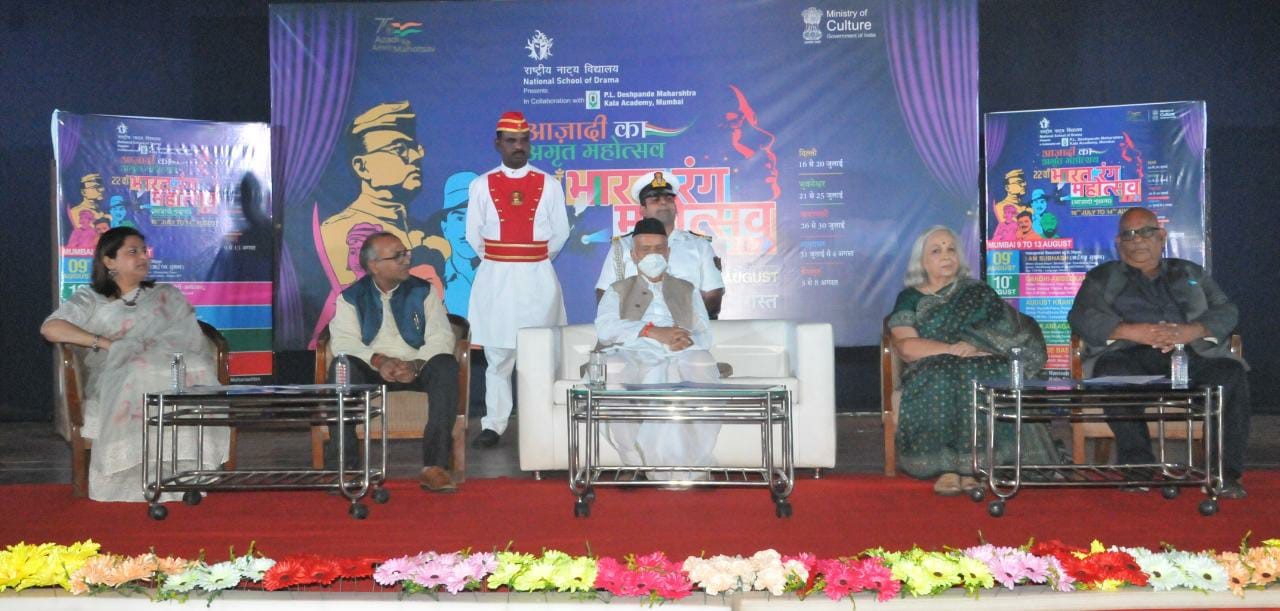
22nd ‘Bharat Rang Mahotsav’ at Rabindra Natya Mandir in Mumbai

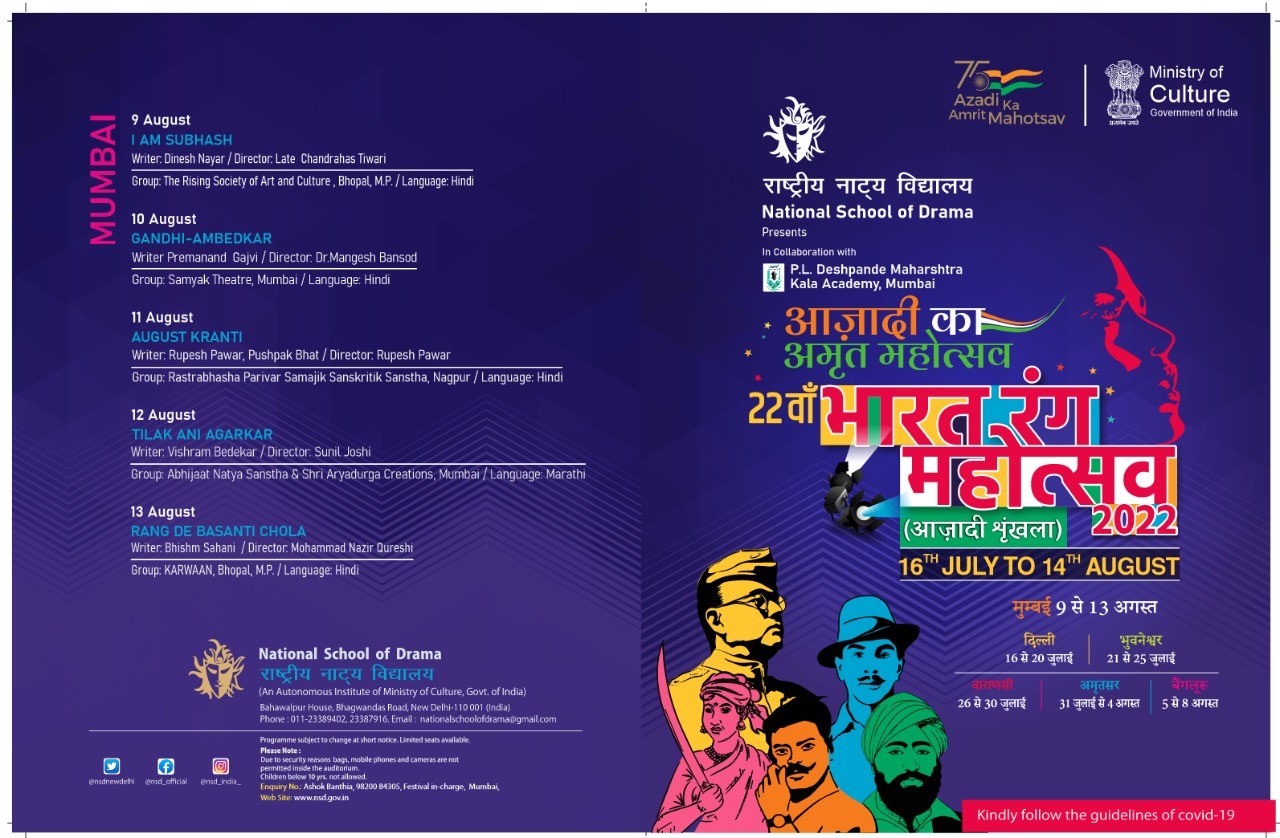
 Maharashtra Governor Shri Bhagat Singh Koshyari inaugurated the 22nd ‘Bharat Rang Mahotsav’ at Rabindra Natya Mandir in Mumbai today. The five-day drama festival (being held from August 9 to August 13, 2022) is being jointly organised by the Union Ministry of Culture and P.L. Deshpande Maharashtra Kala Akademi in the city to pay tribute to our freedom fighters. Veteran actress Rohini Hattangadi, Producer Director Satish Kaushik and Vani Tripathi Tikku also graced the inauguration ceremony in Mumbai today.  The Director of National School of Drama (NSD), Professor Ramesh Chandra Goud presided over the programme. 

Speaking on the occasion, Maharashtra Governor said that theatre is an important medium to spread joy, promote awareness and protect our rich heritage and culture.  Theatre has also an important role in showing us how we should be as a nation and society, he added. When the stories of great people such as freedom fighters are told through the plays of National Theatre Festival, it will provide inspiration for citizens to imbibe their qualities and make similar contribution, said the Governor. Speaking about the great role played by the NSD in shaping good actors, he expressed hope that more talented actors will come up from NSD. The Governor said that more theatre artists should come up and contribute positively to the society. Recalling that today is the 80th anniversary of the launch of Quit India Movement from Mumbai, the Governor wished all success for the Bharat Rang Mahotsav which showcases the contribution of Indian freedom fighters.

Actor Vani Tripathi said, “It is commendable that NSD has identified plays showcasing the stories of our freedom fighters from across the country. We all need to work together to make our youth too aware about the festival and the stories being portrayed in the plays of the festival”. Actor Rohini Hattangadi said, “This drama festival organized by the National School of Drama on the occasion of Amrit Mahotsav is a commendable initiative and it is an inspiration to the younger generation”.

NSD Director Professor Ramesh Chandra Goud stated that NSD has taken this initiative to remember the brave freedom fighters through various programmes on the occasion of Azadi Ka Amrit Mahotsav. Besides, a play called ‘Kargil Ek Shauryakatha’ was staged on Kargil Vijay Diwas a few days back, he added.

The festival is open for public. The festival will showcase plays of renowned theatre directors based on life and sacrifices of our freedom fighters. Hindi Drama ‘I am Subhash’ by Bhopal based theatre group ‘The Rising Society of Art and Culture’ and directed by Chandrahas Tiwari will be played on the first day of the festival. On August 10, Hindi play ‘Gandhi-Ambedkar’ by Mumbai-based Samyak Theatre and directed by Dr. Mangesh Bansod will be performed. Rupesh Pawar’s Hindi play “August Kranti” will be staged by Nagpur-based group ‘Rashtrabhasha Parivar Samajik Sanskritik Sanstha’  on August 11 and Marathi play “Tilak and Agarkar” directed by Sunil Joshi will be presented by Mumbai-based Abhijat Natya Sanstha and Shri Aryadurga Creations on August 12. The festival will conclude on August 13 with the Bhopal-based KARWAAN theatre group’s Hindi play ‘Rang De Basanti Chola’ which is directed by Mohammad Nazir Qureshi.

Over the five day festival in Mumbai, noted theatre personalities from Maharashtra will be felicitated from the stage of Bharat Rang Manch. This list includes Sohani Kumar, Anand Panchal, Ullas Surve, Chandrashekhar vaman kirdavkar, Pange Rohidas, Sharad Sawant, Lau Raul, Nayana Apte, Balu Mama Ghodke, Sushma Deshpande and Abhiram Bhadakmakar.

As part of the 22nd Bharat Rang Mahotsav, 2022 (Azadi Segment), 30 plays are being showcased in Delhi, Bhubaneshwar, Varanasi, Amritsar, Bengaluru and Mumbai from 16th July to 14th August, 2022. Bharat Rang Mahotsav (BRM) (भारत रंग महोत्सव) or the National Theatre Festival, started in 1999, is the annual theatre festival organized by National School of Drama (NSD), New Delhi. Bharat Rang Manch was started to stimulate the growth and development of theatre across the country. Originally a national festival showcasing the work of the most creative theatre workers in India, it has evolved to international scope, hosting theatre companies from around the world, and is now the largest theatre festival of Asia. The National School of Drama is India’s premier theatre training institute funded by Govt. Of India.

*** 

The cooperative model allows people with limited capital to come together and work on a large scale

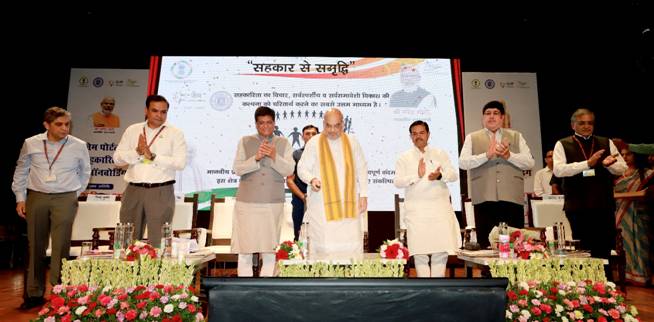
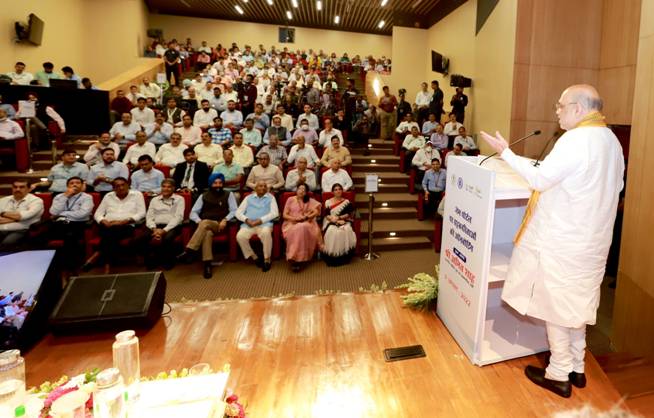
 The Union Home and Cooperation Minister, Shri Amit Shah launched the onboarding of cooperatives on the Government e-Marketplace (GeM) portal, today in New Delhi. The program organized by the Ministry of Cooperation, Government of India, the National Cooperative Union of India (NCUI) and GeMwas also attended by Union Minister of Commerce and Industry Shri PiyushGoyal, Union Minister of State for Cooperation and North East Region Development Shri B.L.Verma and the NCUI President Shri DilipSanghani and many other dignitaries.

https://static.pib.gov.in/WriteReadData/userfiles/image/image001QGDJ.jpg

In his address, Shri Amit Shah said that today is a very important day in Indian history. In 1942, on August 9, Gandhijibegan the Quit India Movement against British Rule and today another important work is being done task is taking place on the occasion ofAzadikaAmritMahotsav on August 9, in which access to GeMhas been given to cooperative societies in the country.  He said there is immense potential in the cooperative sector and the GeM portal will be a very useful platform for the expansion of this sector. The Union Minister of Cooperation said most of units of the government buy through GeM, so cooperatives should also start preparing for registration for supply on GeM to increase their market. He also appealed to the National Cooperative Union of India (NCUI) to expand marketing of cooperatives and for this there can be no better way than the GeM.

The Cooperation Minister said this sector has been neglected since Independence, but Prime MinisterNarendraModi is accelerating its expansion with historic reforms and modernization. Under the leadership of Shri Modi, the Ministry of Cooperation has taken a number of measures for expansion and in the last year the Ministry has been continuously working on 25 to 30 initiatives.

The government has to expand cooperatives but there is no database, therefore the ministry is also creating a national level database of different categories of cooperatives. Arrangements for training will also be made available. Shri Shah said an export house is also being registered the work for which will be completed by December. It will provide a platform for export from cooperatives across the country. He said radical changes are also being made in the Multistate Cooperative Act and the government led by Shri NarendraModi has also decided to computerize all PACS.

 Amit Shah said population size is a great advantage in aneconomy, because ultimately the population is also the market. Till 2014, India’s population was 130 crore, but the market was only 60 crore,as 70 crore people did not have purchasing capacity. 60 crore people worried about their next meal andother basic needs and generations went through the same ordeal. Prime Minister Shri NarendraModiopened bank accounts, provided gas cylinders, toilets, electricity, pure drinking water and food grains free of cost to the poor and as a result awakened the aspirations of these 60 crore people by fulfilling their basic needsand cooperatives havethe potential to fulfil all these aspirations. Today after fulfilling their primary needs, these people have ambitions to move ahead in life by earning more money and through cooperatives they can fulfil these ambitions. Shri Amit Shah said if these 60 crore people have justRs. 5,000, they can run the biggest of cooperatives. Giving the example of Amul, Shri Shah said today this cooperative has crosseda turnover of Rs.60,000crore and20 lakh women members are not only running the cooperative,but havealso been  making profits for many years.

https://static.pib.gov.in/WriteReadData/userfiles/image/image003TTRY.jpg

The Union Cooperation Minister said the cooperative model is a model in which even with limited capital people can come together and undertake large tasks easily. He said earlier the cooperative model did not have much potential, but Shri NarendraModihas awakened the aspirations of 60 crore people. He said if a system does not change itself with the times, then it becomes out dated, and therefore it is necessary to improve the cooperative system for the expansion of the sector. India’s cooperative system is 115 years old, the laws are also very old, thoughsmall changes have takenplace from time to time, radical changes and modernization according to the times have not taken place.

Shri Shah said now the cooperative sector cannot be given second class treatment, however there is a need to bring about change and to move in the direction of bringing transparency and for cooperatives to prepare themselves for change. The GeM portal will be very useful in bringing in transparency in the cooperative sector and when there is transparency, the trust of farmers and milk producers will also increase on the committees and their members. He said that by bringing theGeM portal, Shri NarendraModihas brought in transparency in government procurement. This is a new system, and therefore there may be some initial administrative problems, but no one should doubt the intention of bringing in this new system. Shri Shah said it is also very important to bring transparency in three areas within cooperatives – elections, recruitment and purchase. There can be no better medium than theGeM to bring transparency in procurement. The Union Minister of Cooperation said he is confident that the world will recognize this successful model of transparent government procurement in the next five5 years.

The UnionMinister of Cooperation said he is very optimistic about the future of GeM’s journey under the leadership of Union Minister for Commerce and Industry, Shri PiyushGoyal. He said of the589 of the committees to be added have a turnover of about Rs.100croreare of the state government and till date 289 of them have joined, as well as 45 of the 54 multistate cooperativeshave also joined, which is a huge achievement. Also more than 10,000 products and more than 288 services have been listed. Till now business worthRs. 2.78 lakh thousand crore has also been completed which is a huge achievement of the GeM. Shri Shah said this day is important for the Nation as the Quit India movement began on August 9 and six years ago on August 9 the GeM wasalso launched and todayonboarding of cooperatives has been initiated on this day.Shri Amit Shah congratulatedthose associated with cooperatives, the entire team of the GeM and eight lakh cooperative societies and especially Shri PiyushGoyal.


*****

The world sees India as an engine of economic growth

 Union Minister for Commerce and Industry, Consumer Affairs, Food and Public Distribution and Textiles, Shri PiyushGoyal today said that the world now sees India as an engine of economic growth. He was addressing the gathering at the VyapariUdyamiSammelan in New Delhi today.

Stressing that India enjoyed the confidence of the world today, Shri Goyal said that developed countries very keen to sign trade deals with India now. He added that before 2014, Indian economy was considered to be fragile and investors had their doubts bout doing business with India.

Stressing upon the need for transparency and ease of doing business, the Minister assured traders and entrepreneurs that the Government will fully support traders who raise their voice against harassment by any authority.

He called upon traders to work with the Government to reduce compliance burden of people and businesses, but asked that they strictly follow ethical trade practices. Unnecessary, cumbersome and counter-productive laws and regulations must be uprooted to improve ease of doing business, he added.

He asked traders to give priority to the quality of goods and services that India offered. He also underscored the need to encourage youngsters to come forward and lend a youthful energy to India’s growth story with new ideas. The clarion call of ‘vocal for local’ given by the Prime Minister, Shri Narendra Modi must be taken up by the youth of the nation, the Minister said. He added that we must also encourage more and more women to become traders and entrepreneurs.

Applauding Prime Minister’s visionary welfare policies, Shri Goyal said that these policies have been helping the poor emerge as consumers and have successfully transformed India’s population into its greatest strength. He added that the Prime Minister’s tireless work had ensured that every household in the country gets access to basic amenities such as cooking gas, drinking water, electricity and toilet and every village gets access to the internet. Shri Goyal said that the policies of the government had also given every Indian the courage to be ambitious and the confidence to aspire to become entrepreneurs.

The Minister also emphasized that traders and Micro, Small and Medium Enterprises (MSMEs) should benefit from demand of goods by beneficiaries of the Prime Minister’s welfare schemes. He asked all traders, entrepreneurs, and businesses, both big and small, to take a collective resolve to work together to take forward the dream of a self-reliant India by promoting more and more Indian products.

***


Policymaking and implementation should be a two way process with people’s participation

 The Vice President, Shri M. Venkaiah Naidu today emphasised the need for constant dialogue between the people and the governments for citizen centric and responsive governance. He said that policymaking and implementation should be a two way process with people’s participation at every stage. 

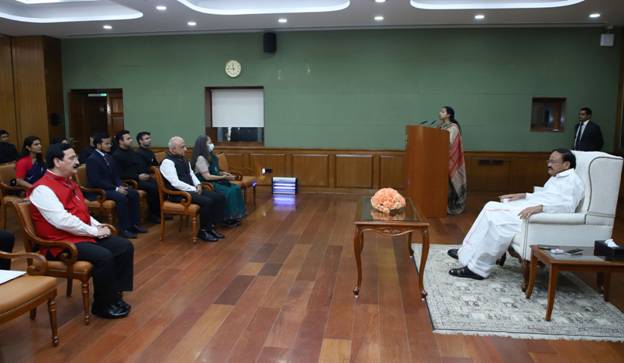
Addressing the Indian Information Service officers of 2018 and 2019 batches who came to call on him at Upa-Rashtrapati Nivas today, Shri Naidu highlighted the role of communication in bridging the divide between the governments and citizens. “In a democracy, people need to be empowered through timely information on government’s policies and initiatives in their mother tongues. On the other hand, governments also need to be apprised of people’s expectations and aspirations in an objective and timely manner,” he said.

Referring to the mass behavioral change campaign undertaken as part of the Swachh Bharat Mission, Shri Naidu said that the success of any reform depends on the cooperation from the people. He further said that people will understand and support an initiative better when they have been involved in its planning and implementation strategy from the beginning.

Describing India as the largest Parliamentary democracy in the world, he said that the purpose of any reform process should be to make people’s life happy and prosperous. “Therefore, the focus of all government policy measures should be on bringing lasting happiness to people’s lives,” he told the officers, and at the same time, underscored the need to bear with “temporary pain for long term gain”.

IIS officers of 2018 and 2019 batches in group photographs with the Vice President, Shri M. Venkaiah Naidu

Mentioning that the ICT revolution and spread of the internet have fundamentally changed the way we consume news, he cautioned that this ‘ease of information’ comes with its associated risks. “Misinformation, disinformation and fake news have emerged as new challenges which need to be promptly tackled by the government communicators round the clock,” he added. The Vice President also cautioned against the misuse of social media by certain anti-social elements, the Vice President called for curbing such tendencies at the earliest.

Drawing attention to the growing trend of ‘instant journalism’ triggered by the emergence of Internet and social media expansion, Shri Naidu expressed concerns about the erosion of journalistic norms and ethos due to this. He emphasized the importance of neutrality and objectivity in media reporting and said that news should not be mixed with views. “Media is the fourth pillar of democracy and its neutrality, objectivity and fairness is crucial for survival of India’s democratic ethos,” he stressed.

The Vice President asked the young officers to bring forth many developmental stories from across the nation. “You as government communicators should also make all efforts to ensure that the good work being done by various ministries and departments is covered adequately by the media,” he told them. Terming information & psychological warfare as an important dimension of modern day wars, Shri Naidu advised the IIS officers to develop expertise in these emerging and strategic areas.

Referring to the increasing frequency of extreme climatic events and erratic weather patterns across the globe, the Vice President asked the young officers to run a mass media campaign for nature conservation and environmental protection. “If you love nature, nature will protect you,” he told them.

Cautioning against the populist measures to garner votes by various political parties, Shri Naidu said that the freebie culture has led to deteriorating financial health of many states. “Government should definitely support the poor and needy, but at the same time should prioritize health, education and infrastructure development,” he said.

In his address, his last as the Vice President of India, Shri Naidu said that “the key to my rise from an ordinary farmer’s son to the second highest constitutional post in the country lies in sheer hard work, single minded devotion and constant travel and interaction with the people in every part of the country.”  I have learned a lot by meeting and talking to the people, he said.

Congratulating the officer trainees for joining the prestigious Civil Services, he exhorted them to work for transforming the lives of people in the country. It may be noted that the Indian Information Service (IIS) is a Central Group ‘A’ Service whose members work as the media managers of the Government of India. The IIS officers, in their various capacities, act as a vital communication link between the Government and the people by way of disseminating information and communicating various Government policies and schemes to the public at large.

Prof. (Dr.) Sanjay Dwivedi, Director General, IIMC, Shri Ashish Goel, ADG, IIMC, Dr Rinku Pegu, Associate Professor IIMC & Training Coordinator for IIS officers, officers of Indian Information Service batches of 2018 & 2019 were present during the interaction. Prof. Sanjay Dwivedi also presented his book titled, “Bharat Bodh ka Naya Samay” to the Vice President on this occasion.

******