
HISTORY OF AKBAR

Abu’l-Fath Jalal-ud-din Muhammad Akbar Akbar was born on October 15,1542.He was popularly known as Akbar The Great.
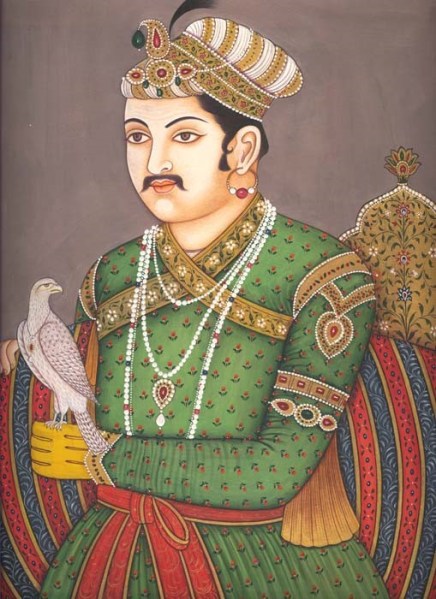
Akbar succeeded his father, Humayun, under a regent, Bairam Khan, who helped the young emperor expand and consolidate Mughal domains in India. Bairam Khan taught him the ruling and war techniques which made him a strong personality and a successful general. Akbar gradually enlarged the Mughal Empire to include much of the Indian subcontinent. His power and influence, however, extended over the entire subcontinent because of Mughal military, political, cultural, and economic dominance. To unify the vast Mughal state, Akbar established a centralised system of administration throughout his empire and adopted a policy of conciliating conquered rulers through marriage and diplomacy. To preserve peace and order in a religiously and culturally diverse empire, he adopted policies that won him the support of his non-Muslim subjects. Mughal India developed a strong and stable economy, leading to commercial expansion and greater patronage of culture. Akbar himself was a patron of art and culture. Although he could not read and write, he was fond of literature, and created a library of over 24,000 volumes in several languages. Akbar dedicated the first decade of his rule towards expanding his empire. Under the regency of Bairam Khan, Ajmer, Malwa and Garhkatanga were annexed into the Mughal territories. After consolidating the empire, Akbar concentrated on establishing a stable and subject-friendly administration at the center to govern his vast empire. The principles of Akbar’s administration were based on moral as well as material welfare of his subjects. He brought about several changes in existing policies to establish an environment of uniform opportunities to people irrespective of religion.
The Emperor himself was the supreme governor of the empire. He retained ultimate judicial, legislative and administrative power above anyone else. After consolidating the empire, Akbar concentrated on establishing a stable and subject-friendly administration at the center to govern his vast empire. The principles of Akbar’s administration were based on moral as well as material welfare of his subjects. He brought about several changes in existing policies to establish an environment of uniform opportunities to people irrespective of religion.
The Emperor himself was the supreme governor of the empire. He retained ultimate judicial, legislative and administrative power above anyone else. Akbar introduced reforms in judicial system as well and for the first time, Hindu customs and laws were referred to in case of Hindu subjects. The Emperor was the highest authority in Law and the power to give capital punishment rested solely with him. The major social reform introduced by Akbar was the abolition of the Pilgrimage Tax for Hindus in 1563 as well as the Jazia tax imposed on the Hindu subjects. He discouraged child marriage and encouraged widow remarriage. Akbar was probably the first Islamic ruler in India who sought stable political alliances through matrimony. He married several Hindu Princess including Jodha Bai. Akbar’s rule was marked by wide religious tolerance and liberal outlook. Akbar was profoundly religious himself, yet he never sought to enforce his own religious views on anyone; be it prisoners of war, or Hindu wives or the common people in his kingdom. He gave great importance to choice and abolished discriminatory taxes based on religion. He encouraged building of temples and even churches his empire. Out of reverence for the Hindu members of the Royal Family he banned the cooking of beef in the kitchens. He took several steps to unite the Muslim and Hindu society. For his contribution he was fondly called as Akbar by the people.
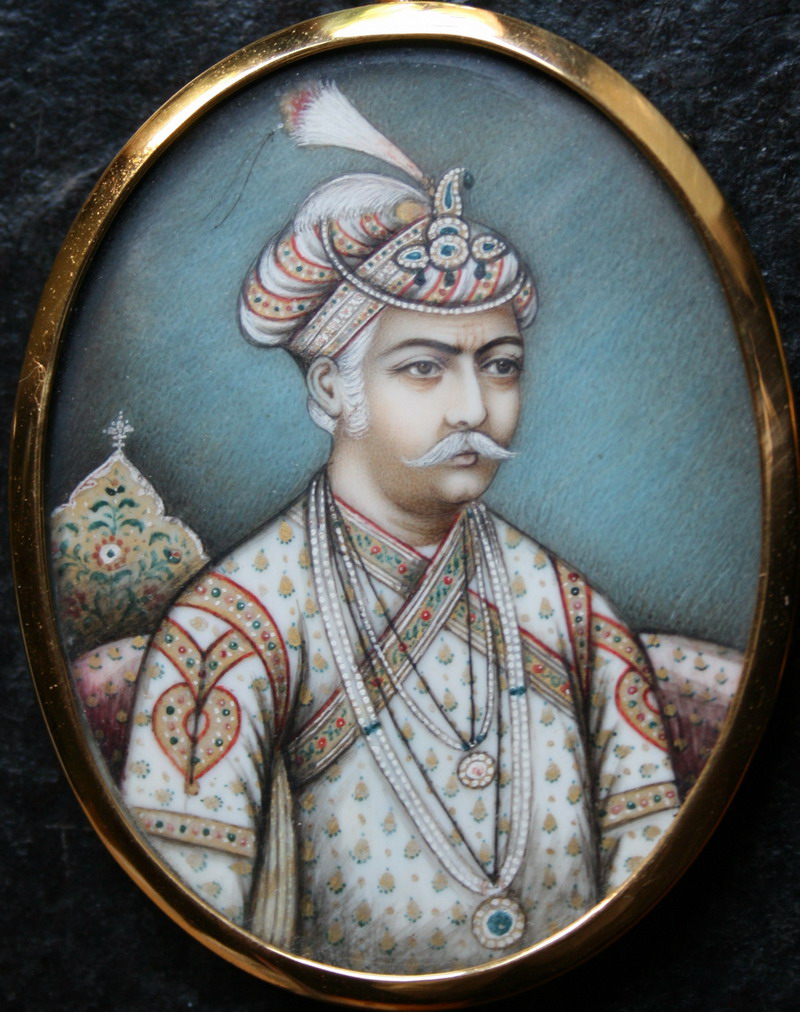
In 1605, at the age of 63, Akbar fell ill with a serious case of dysentery. He never recovered from it and after three weeks of suffering, he passed away on October 27, 1605 at Fatehpur Sikri. He was buried at Sikandra, Agra.
 Senior Citizen’s Day 21 August 2022: A Few points from UN Report on ‘World Population Ageing 2019’

On the occasion of senior citizen’s day August 21, 2022, I salute senior citizens because I believe senior citizens are still the guiding spirit of any country, any society, or even any family. Senior citizens as per Income Tax’s interpretation in India, “An individual resident who is 60 years or above in age but less than 80 years at any time during the previous year is considered as Senior Citizen for Income Tax purposes. A Super Senior Citizen is an individual resident who is 80 years or above, at any time during the previous year”. According to the law in India, a “senior citizen” means any person being a citizen of India, who has attained the age of sixty years or above. The concept of World Senior Citizen Day was initiated by the former President of the United States, Ronald Reagan. He instituted it the day after signing a Proclamation on August 19, 1988. Later on December 14, 1990, the United Nations General Assembly (UNGA) declared August 21 as World Senior Citizens Day. Anyway, in the context of India, it may be mentioned that “according to Population Census 2011 there are nearly 104 million elderly persons (aged 60 years or above) in India; 53 million females and 51 million males. A Report released by the United Nations Population Fund and HelpAge India suggests that the number of elderly persons is expected to grow to 173 million by 2026. According to the Report of the Technical Group on Population Projections for India and States 2011-2036, there are nearly a 138million elderly persons in India in 2021 (67 million males and 71 million females) and is further expected to increase by around 56 million elderly persons in 2031. Both the share and size of the elderly population are increasing over time. From 5.6% in 1961 the proportion increased to 8.6% in 2011. The proportion increased to 10.1% in 2021 and is further likely to increase to 13.1% in 2031. For males, it was marginally lower at 8.2%, while for females it was 9.0%”.  (vikaspedia.in/social-welfare/senior-citizens-welfare).

In the context of world senior citizens, I wish to mention a few points from the Report on “World Population Ageing 2019” published by the Department of Economic and Social Affairs of the United Nations, New York, 2020. “Globally, there were 703million persons aged 65 or over in 2019. 1 The region of Eastern and South-Eastern Asia was home to the largest number of older persons (261million), followed by Europe and Northern America (over 200 million)”. Another important finding is “Over the next three decades, the number of older persons worldwide is projected to more than double, reaching more than 1.5 billion persons in2050. All regions will see an increase in the size of the older population between 2019 and 2050. The largest increase (312 million) is projected to occur in Eastern and South-Eastern Asia, growing from 261 million in 2019 to 573million in 2050. The fastest increase in the number of older persons is expected in Northern Africa and Western Asia, rising from 29 million in 2019 to96 a million in 2050 (an increase of 226 percent). The second fastest increase is projected for sub-Saharan Africa, where the population aged 65 or over could grow from 32 million in 2019 to 101 million in 2050 (218 percent). By contrast, the increase is expected to be relatively small in Australia and New Zealand (84 percent) and in Europe and Northern America (48 percent), regions where the population is already significantly older than in other parts of the world”. It may be noted here that “Not only has the absolute number of older persons increased globally but also the share of older persons in the total population has increased and is projected to continue to grow in all regions. The percentage of persons aged 65 or over worldwide has grown from 6 percent in 1990 to 9 percent in 2019 and is projected to increase further to 16 percent in 2050”. Lastly, I wish to mention from the Report that, “In 2019, the largest numbers of persons aged 80 or older were found in Europe and Northern America (53.9 million) and in Eastern and South-Eastern Asia (48.6 million). By 2020, more than half of the population at ages 80 years and above will live in Eastern and South-Eastern Asia (177 million), followed by Europe and Northern America (109 million.). The largest increments in the population at ages 80 and above – in all cases over 250 percent – are projected for Northern Africa and Western Asia, for Oceania, and for Eastern and South-Eastern Asia”. From the UN Report, it is evident that the longevity of senior citizens (65 years and above, UN has taken into account 65 years as a senior citizen) in the world has been increasing. 

I was born in a joint family and observed the behaviour of some citizens in our family and still cherishing their knowledge, wisdom, and guidance, which in one word is fantastic.  

Senior Citizen’s Day 21 August 2022: A Few points from UN Report on 'World Population Ageing 2019'

On the occasion of senior citizen’s day August 21, 2022, I salute senior citizens because I believe senior citizens are still the guiding spirit of any country, any society, or even any family. Senior citizens as per Income Tax’s interpretation in India, “An individual resident who is 60 years or above in age but less than 80 years at any time during the previous year is considered as Senior Citizen for Income Tax purposes. A Super Senior Citizen is an individual resident who is 80 years or above, at any time during the previous year”. According to the law in India, a “senior citizen” means any person being a citizen of India, who has attained the age of sixty years or above. The concept of World Senior Citizen Day was initiated by the former President of the United States, Ronald Reagan. He instituted it the day after signing a Proclamation on August 19, 1988. Later on December 14, 1990, the United Nations General Assembly (UNGA) declared August 21 as World Senior Citizens Day. Anyway, in the context of India, it may be mentioned that “according to Population Census 2011 there are nearly 104 million elderly persons (aged 60 years or above) in India; 53 million females and 51 million males. A Report released by the United Nations Population Fund and HelpAge India suggests that the number of elderly persons is expected to grow to 173 million by 2026. According to the Report of the Technical Group on Population Projections for India and States 2011-2036, there are nearly a 138million elderly persons in India in 2021 (67 million males and 71 million females) and is further expected to increase by around 56 million elderly persons in 2031. Both the share and size of the elderly population are increasing over time. From 5.6% in 1961 the proportion increased to 8.6% in 2011. The proportion increased to 10.1% in 2021 and is further likely to increase to 13.1% in 2031. For males, it was marginally lower at 8.2%, while for females it was 9.0%”.  (vikaspedia.in/social-welfare/senior-citizens-welfare).

In the context of world senior citizens, I wish to mention a few points from the Report on “World Population Ageing 2019” published by the Department of Economic and Social Affairs of the United Nations, New York, 2020. “Globally, there were 703million persons aged 65 or over in 2019. 1 The region of Eastern and South-Eastern Asia was home to the largest number of older persons (261million), followed by Europe and Northern America (over 200 million)”. Another important finding is “Over the next three decades, the number of older persons worldwide is projected to more than double, reaching more than 1.5 billion persons in2050. All regions will see an increase in the size of the older population between 2019 and 2050. The largest increase (312 million) is projected to occur in Eastern and South-Eastern Asia, growing from 261 million in 2019 to 573million in 2050. The fastest increase in the number of older persons is expected in Northern Africa and Western Asia, rising from 29 million in 2019 to96 a million in 2050 (an increase of 226 percent). The second fastest increase is projected for sub-Saharan Africa, where the population aged 65 or over could grow from 32 million in 2019 to 101 million in 2050 (218 percent). By contrast, the increase is expected to be relatively small in Australia and New Zealand (84 percent) and in Europe and Northern America (48 percent), regions where the population is already significantly older than in other parts of the world”. It may be noted here that “Not only has the absolute number of older persons increased globally but also the share of older persons in the total population has increased and is projected to continue to grow in all regions. The percentage of persons aged 65 or over worldwide has grown from 6 percent in 1990 to 9 percent in 2019 and is projected to increase further to 16 percent in 2050”. Lastly, I wish to mention from the Report that, “In 2019, the largest numbers of persons aged 80 or older were found in Europe and Northern America (53.9 million) and in Eastern and South-Eastern Asia (48.6 million). By 2020, more than half of the population at ages 80 years and above will live in Eastern and South-Eastern Asia (177 million), followed by Europe and Northern America (109 million.). The largest increments in the population at ages 80 and above – in all cases over 250 percent – are projected for Northern Africa and Western Asia, for Oceania, and for Eastern and South-Eastern Asia”. From the UN Report, it is evident that the longevity of senior citizens (65 years and above, UN has taken into account 65 years as a senior citizen) in the world has been increasing. 

I was born in a joint family and observed the behaviour of some citizens in our family and still cherishing their knowledge, wisdom, and guidance, which in one word is fantastic.  

RBI heading to curb prevailing inflation.

In the august meeting of the committee of the apex bank, the Reserve Bank of India (RBI) hiked the repo rate by 50 basis points to 5.4 per cent, its third hike in the current financial year continuing its fight to tame stubbornly high inflation.

The decision of the six-member Monetary Policy Committee (MPC) of the RBI, which met on August 3 to Aug 5, 2022 was largely in line with expectations. Financial markets were largely unchanged at mid day as the hike was on expected lines. The central bank said it would continue its stance of withdrawal of accommodation to ensure that inflation moves close to the target of 4 per cent over the medium term, while supporting growth.

RBI has been increasing policy rates since May, with a cumulative rate hike of 140 basis points being done so far, India’s retail inflation for June inched down in June to 7.01% from 7.04% in the previous month, but it remained above the 7% mark for the third successive month and above RBI’s 2-6% tolerance level for a sixth straight month.

But the estimates for July show that India’s inflation problem seems to have bottomed out sooner than the MPC thought. At its latest meeting earlier this month, RBI retained inflation projections for FY23 at 6.7% and estimated inflation to average 7.1% in the September quarter. There is more evidence that inflation in India has peaked for now, and it is likely to slow faster than RBI’s published trajectory, coming into the target band by October, according to our latest tracking estimates. The Central government working with RBI target to curb inflation from the economy in all possible way, the objective of these steps as expected by the committee is to lower the prices of basic commodity and works toward appreciation of the rupee against dollar.

RBI heading to curb prevailing inflation.

In the august meeting of the committee of the apex bank, the Reserve Bank of India (RBI) hiked the repo rate by 50 basis points to 5.4 per cent, its third hike in the current financial year continuing its fight to tame stubbornly high inflation.

The decision of the six-member Monetary Policy Committee (MPC) of the RBI, which met on August 3 to Aug 5, 2022 was largely in line with expectations. Financial markets were largely unchanged at mid day as the hike was on expected lines. The central bank said it would continue its stance of withdrawal of accommodation to ensure that inflation moves close to the target of 4 per cent over the medium term, while supporting growth.

RBI has been increasing policy rates since May, with a cumulative rate hike of 140 basis points being done so far, India’s retail inflation for June inched down in June to 7.01% from 7.04% in the previous month, but it remained above the 7% mark for the third successive month and above RBI’s 2-6% tolerance level for a sixth straight month.

But the estimates for July show that India’s inflation problem seems to have bottomed out sooner than the MPC thought. At its latest meeting earlier this month, RBI retained inflation projections for FY23 at 6.7% and estimated inflation to average 7.1% in the September quarter. There is more evidence that inflation in India has peaked for now, and it is likely to slow faster than RBI’s published trajectory, coming into the target band by October, according to our latest tracking estimates. The Central government working with RBI target to curb inflation from the economy in all possible way, the objective of these steps as expected by the committee is to lower the prices of basic commodity and works toward appreciation of the rupee against dollar.

Globalization it's importance and it's effects

 Globalization and it’s effects

Globalization is the free movement of goods, services and people across the world in a seamless and integrated manner .

 Globalization can be thought of to be the result of the opening up of the global economy and the concomitant increase in trade between nations. In other words, when countries that were hitherto closed to trade and foreign investment open up their economies and go global, the result is an increasing interconnectedness and integration of the economies of the world. This is a brief introduction to globalization.

Further, globalization can also mean that countries liberalise  their import protocols and welcome foreign investment into sectors that are the mainstays of its economy. What this means is that countries become magnets for attracting global capital by opening up their economies to multinational corporations.

Further, globalization also means that countries liberalise their visa rules and procedures so as to permit the free flow of people from country to country. Moreover, globalization results in freeing up the unproductive sectors to investment and the productive sectors to export related activities resulting in a win-win situation for the economies of the world.

Importance of globalisation 

Globalization changes the way nations, businesses and people interact. Specifically, it changes the nature of economic activity among nations, expanding trade, opening global supply chains and providing access to natural resources and labor markets.
Changing the way trade and financial exchange and interaction occurs among nations also promotes the cultural exchange of ideas. It removes the barriers set by geographic constraints, political boundaries and political economies.
For example, globalization enables businesses in one nation to access another nation’s resources. More open access changes the way products are developed, supply chains are managed and organizations communicate. Businesses find cheaper raw materials and parts, less expensive or more skilled labor and more efficient ways to develop products.
With fewer restrictions on trade, globalization creates opportunities to expand. Increased trade promotes international competition. This, in turn, spurs innovation and, in some cases, the exchange of ideas and knowhow. In addition, people coming from other nations to do business and work bring with them their own cultures, which influence and mix with other cultures.
The many types of exchange that globalization facilitates can have positive and negative effects. For instance, the exchange of people and goods across borders can bring fresh ideas and help business. However, this movement can also heighten the spread of disease and promote ideas that might destabilize political economies.

Effect of globalisation 

The effects of globalization can be felt locally and globally, touching the lives of individuals as well as the broader society in the following ways:

1. Individuals – Here, a variety of international influences affect ordinary people. Globalization affects their access to goods, the prices they pay and their ability to travel to or even move to other countries.

2. Communities – This level encompasses the impact of globalization on local or regional organizations, businesses and economies. It affects who lives in communities, where they work, who they work for, their ability to move out of their community and into one in another country, among other things. Globalization also changes the way local cultures develop within communities.

3. Institutions – Multinational corporations, national governments and other organizations such as colleges and universities are all affected by their country’s approach to and acceptance of globalization. Globalization affects the ability of companies to grow and expand, a university’s ability to diversify and grow its student body and a government’s ability to pursue specific economic policies.

While the effects of globalization can be observed, analyzing the net impact is more complex. Proponents often see specific results as positive and critics of globalization view the same results as negative. A relationship that benefits one entity may damage another, and whether globalization benefits the world at large remains a point of contention.

Entrepreneurship

 Entrepreneurship

Entrepreneurship is the ability to run, develop and organize a business enterprise to make a profit and employment opportunity. It means discovering and taking the risk to succeed in changing and competitive global market.

Entrepreneurs play a great role in it. It is a person who starts the business based on his idea and provides work to gain profit by taking a financial risk. They are often known as a source of new ideas or innovators and bring new ideas into the market by replacing old ones with a new inventions. The new business can be a home-based, small or multinational company.

Types of entrepreneurship

There are mainly four types of entrepreneurship. They are:

Small Business Entrepreneurship

These businesses are hairdressers, grocery stores, travel agents, consultants, carpenters, plumbers, electricians, etc. These people run their businesses and hire family members or local employees. For them, the profit would be able to feed their family and not make 100 million in business. They fund their business by taking small business loans or loans from friends and family.

Scalable Start-up Entrepreneurship

This start-up entrepreneur starts a business knowing that their vision can change the world. They attract investors who encourage people who think out of the box. These business focuses on research and experimental models so that they can hire the best and the brightest employees. They require more venture capital to fuel their project or business.

Large Company Entrepreneurship

These huge companies have defined life-cycle. Most of these companies grow by offering new and innovative products that revolve around their main products. The change in technology, customer preferences, new competition, etc., build pressure on large companies to create an innovative product and sell it to the customers in the new market. To cope with the rapid technological changes, the existing organizations either buy innovation enterprises or attempt to construct the product internally.

Social Entrepreneurship

This type of entrepreneurship focuses on producing products and services that resolve social needs and problems. Their goal is to work for society and not make any profits.

Importance of Entrepreneurship

 Entrepreneurship generates employment. It provides an entry-level job, required for gaining experience and training for unskilled workers.

Entrepreneurship helps to improve the standard of living of a person by increasing income. It helps to increase the consumption of various goods and services by a household for a particular period.

It is the hub of innovation that provides new product ventures, markets, technology and quality of goods, etc.

It brings changes in society and promotes facilities like higher expenditure on education, better sanitation, fewer slums, a higher level of homeownership, etc.

New products and services need to be researched and tested before launching in the market. Therefore, an entrepreneur also dispenses finance for research and development with research institutions and universities.

Now, the government is also encouraging entrepreneurs by providing some schemes and programs like Make in India. Today, people are working toward providing employment rather than taking employment, this will help the nation to grow its economy with new ideas and innovation from a young mind.


Make in India scheme

 Make in India scheme

Make in India is our prime minister, Mr. Narendra Modi’s scheme was launched in 2014 with the motive of enhancing the domestic manufacturing sector and augmenting investment in the country. the make in India initiative is based upon four pillars which have an agenda of boosting entrepreneurship in India not only in manufacturing sector but also in other sectors as well as.

the make in India initiative focuses on the development of companies of India by producing the product within its own boundaries rather than buying it from outside and feeling independent and a modern country. the scheme launched under Atma Nirbhar Bharat Abhiyan influenced the foreign capital for investing in the manufacturing sector of India for creating employment options for transforming India globally.

 the idea behind introducing this initiative is to generate more employment & saves our nation money from importing goods from outside rather than encouraging to make this in our own country which will help in boosting the GDP of the country and reduce unemployment.

the swadeshi companies are the best example of make-in-India products which is contributing to uplifting the GDP for a long time. this program is not only on paper but it is a mission for the growth of our youth. this initiative support people who want to open their own startup but have to deprive of finance they could not run so under this initiative the government provided around 930cr for startup business and around 2000 cr for ongoing business for moving ahead.

the best thing out of all these is that when the products are made within own boundaries then it saves lots of money on tax which reduces the cost of the product and provide it less costly to the people which helps in diminishing the poverty level and enhancing employment level.

Make in India is not as simple as it looks because to convince the big companies to setup their business in our company is big task as this is a whole process which takes time to implement.for instance there are companies who manufacture phones stick that note on back of their phone that it is made in our company but when it comes to India if we put the name of our country  at the back then nobody will accept it and they will replace it.

there is no doubt that India is a country of youth talent so that’ why the gov and the banks support them in opening their own buisness.so if you want to do the same then you need to do registration with having eligibility criteria by fillup the form on its official website. After receiving the application proposal for producing made in India products the candidate asked the future plans then they get approval if they find fit .after receiving approval the candidate need the certificate for the validity of the company and the right to use the logo for make in India products.

Stock Market Players

 Stock Market : Players

In the world of stock market, the main players or participants are: brokers and investors. A Broker is a middleman who brings a buyer and a seller together. Broker helps to strike a deal and charges brokerage or commission for services. In stock markets there are two types of brokers ( individual and corporate brokers) 

Types of Brokers

  1. Bear : A bear is a broker and speculator. He expects the price of shares to fall. So what he tries to do is sell at today’s price, which he fears that will fall in the upcoming future. By selling shares at today’s higher price, he can avoid making a loss in the future. If there is large- scale of selling by large group of bearers. This is type of market sentiment known as bearish.

  2. Bull :  A bull is also a broker and a speculator. He is optimistic and expects the price of shares to rise. He tries to buy shares at today’s price and hopes that it will rise in upcoming future. By buying shares at today’s lower price, he can make huge profits in upcoming future, after selling shares at larger price. If there is large scale of buying large amount of bulls. This type of market sentiment known ad bullish.

Types of Investors

  1. Stag : A stag is an investor who buys shares through famous company issues, that is when the company comes out with their share. Stag buys shares at face value or par value and sell shares before trading starts on stock exchange or on the first day of listing the company on stock exchange. There is little risk involved in this type of trading.

  2. Chicken: A chicken is an investor who doesn’t have any willpower or courage to take risks. He avoid taking risk and doesn’t wish to lose the money. He tries to avoid buying or selling anything for short term. He invests his money as government bonds and as fixed deposit. He might also invest in blue chip stocks it means companies that are more financially secure and have a long, consistent growth throughout. For example: SEBI(Security Exchange Board of India).

  3. Pig: A pig is an investor who dares to take risks and make large profits. He buys shares without doing any background check on the companies performance or rising the price of shares.