Why were Noida’s twin tower demolished.

The Supertech twin towers were demolished on Sunday (August 28). The demolition of the Emerald Court project in Noida is leading to a loss of about Rs 1,000 crore to developer Supertech. It also took nearly Rs 20 crore to raze the building. 

A part of Supertech’s Emerald Court project, the two 40-story towers, that stand on Noida-Greater Noida expressway, houses over 900 flats in an area of around 7.5 lakh sq. feet. The twin towers (namely Apex and Ceyane) are located at Sector 93A in Noida. One of the buildings has an altitude of 103 metres, while another is around 97-metre tall.

The twin towers are being demolished because of serious violations of building codes. Supreme Court said, the Noida Authority and Supertech had engaged in “nefarious complicity” and ordered the company to demolish the buildings at its own expense under the guidance of the Noida Authority.

The ‘Supertech Emerald Court’ housing society was proposed to be built in Noida’s Sector 93A in 2004. The next year, the Noida authority sanctioned the building plan that showed 14 towers and nine floors. 

But this plan was later revised. And in 2012, the Noida authority reviewed the new plan, in which the height of the twin towers was fixed at 40 floors.

Following this, Residents’ Welfare Association (RWA) of the society moved to Allahabad High Court stating that the construction was illegal. Accordingly, in 2014, the court directed the authority to demolish the twin towers within four months (at its own expense) from the date the order was filed.

Later, in August 2021, Supreme Court upheld the Allahabad HC order, and ordered the demolition, noting that the structures had come up violating construction norms.

The Supreme Court’s decision was the result of a number of petitions submitted by homebuyers in support of and opposition to the Allahabad High Court’s ruling.  According to the Supreme Court, August 28 had affirmed as the date of destruction.

For the demolition, about 3,700 kg of explosives were brought from Palwal (Haryana) to be used. It was a mix of dynamite, emulsions and plastic explosives.

Why were Noida's twin tower demolished.

The Supertech twin towers were demolished on Sunday (August 28). The demolition of the Emerald Court project in Noida is leading to a loss of about Rs 1,000 crore to developer Supertech. It also took nearly Rs 20 crore to raze the building. 

A part of Supertech’s Emerald Court project, the two 40-story towers, that stand on Noida-Greater Noida expressway, houses over 900 flats in an area of around 7.5 lakh sq. feet. The twin towers (namely Apex and Ceyane) are located at Sector 93A in Noida. One of the buildings has an altitude of 103 metres, while another is around 97-metre tall.

The twin towers are being demolished because of serious violations of building codes. Supreme Court said, the Noida Authority and Supertech had engaged in “nefarious complicity” and ordered the company to demolish the buildings at its own expense under the guidance of the Noida Authority.

The ‘Supertech Emerald Court’ housing society was proposed to be built in Noida’s Sector 93A in 2004. The next year, the Noida authority sanctioned the building plan that showed 14 towers and nine floors. 

But this plan was later revised. And in 2012, the Noida authority reviewed the new plan, in which the height of the twin towers was fixed at 40 floors.

Following this, Residents’ Welfare Association (RWA) of the society moved to Allahabad High Court stating that the construction was illegal. Accordingly, in 2014, the court directed the authority to demolish the twin towers within four months (at its own expense) from the date the order was filed.

Later, in August 2021, Supreme Court upheld the Allahabad HC order, and ordered the demolition, noting that the structures had come up violating construction norms.

The Supreme Court’s decision was the result of a number of petitions submitted by homebuyers in support of and opposition to the Allahabad High Court’s ruling.  According to the Supreme Court, August 28 had affirmed as the date of destruction.

For the demolition, about 3,700 kg of explosives were brought from Palwal (Haryana) to be used. It was a mix of dynamite, emulsions and plastic explosives.

International business and it's benefits

 International business and it’s benefits 

What is international business?

Business activities done across national borders is International Business. The International business is the purchasing and selling of the goods, commodities and services outside its national borders. Such trade modes might be owned by the state or privately owned organization.
In which, the organization explores trade opportunities outside its domestic national borders to extend their own particular business activities, for example, manufacturing, mining, construction, agriculture, banking, insurance, health, education, transportation, communication and so on.
Nations that were away from each other, because of their geological separations and financial and social contrasts are now connecting with each other. World Trade Organization established by the administration of various nations is one of the major contributory factors to the expanded connections and the business relationship among the countries.
The national economies are dynamically getting borderless and fused into the world economy as it is clear that the world has today come to be known as a ‘global village’. Numerous more organization are making passage into a worldwide business which presents them with opportunities for development and tremendous benefits.
India was trading with different nations for quite a while, yet it has quickened its progress of incorporating with the world economy and expanding its foreign trade and investment.

Benefits of international business 

International Business is important to both Nation and Business organizations. It offers them various benefits.

Benefits to Nation

1. It encourages a nation to obtain foreign exchange that can be utilized to import merchandise from the global market.
2. It prompts specialization of a country in the production of merchandise which it creates in the best and affordable way.
3. Also, it helps a country in enhancing its development prospects and furthermore make opportunity for employment.
4. International business makes it comfortable for individuals to utilise commodities and services produced in other nations which help in improving their standard of life.

Benefits to Firms

1. It helps in improving profits of the organizations by selling products in the nations where costs are high.
2. It helps the organization in utilizing their surplus resources and increasing profitability of their activities.
3. Also, it helps firms in enhancing their development prospects.
4. International business also goes as one of the methods for accomplishing development in the firms confronting extreme market conditions in the local market.
5. And it enhances business vision as it makes firms more aggressive, and diversified.

Amazing facts about international business 

1. The WTO estimates a 7.2% improvement in international trade in 2021, after seeing a 9.2% decline in 2020. 
2. Globally, imports and exports shrank 14.3% from the first to the second quarter of 2020, the sharpest one-period contraction on record. Merchandise exports from North America contracted 21.8% during that time period. 
3. The United States was the second largest importer and exporter of goods related to combating COVID-19 behind China in the first half of 2020.
4. Worldwide, medical product exports grew 15.4% in the first half of 2020 and COVID-critical products grew 27.3%. Imports and exports of medical goods reached $1.14 trillion. 
4. In 2018 and 2019, the United States imposed tariffs on more than $300 billion in imports from China. In response, China imposed tariffs on $110 billion in American goods and shifted some business away from the United States. 
5. In January 2020, as part of a phase one trade deal, the United States cuts tariffs on certain Chinese imports. China pledged to boost American export purchases by $200 billion above 2017 levels, over a two year period, in return. 
6. Based on 2017 Census Bureau statistics, the target for U.S. exports to China in 2020 was $159.0 billion. The United States exported $93.7 billion to China in 2020, only reaching 59% of the target, despite China’s pledge to spend more. 
7. The United States trade deficit rose from $577 billion to $682 billion in 2020. Within that, U.S. trade in goods with the world reached $3.77 trillion in 2020, a 9% drop from 2019.
8. The United States exported $1.4 trillion worth of goods to the rest of the world in 2020. In 2019, the United States exported $1.7 trillion, and in 2018, the United States exported $1.6 trillion.
9. Canada was the United States’ top export destination in 2020, receiving $255 billion in exports, followed by Mexico and China. 

Arch rivals India and Pakistan faceoff in Asia cup

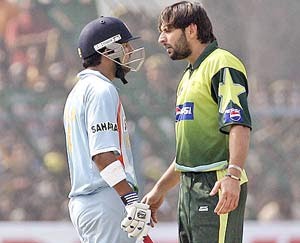
Pakistan’s Shahid Afridi and India’s Gautam Gambhir in an argument during a 2007 ODI in Kanpur

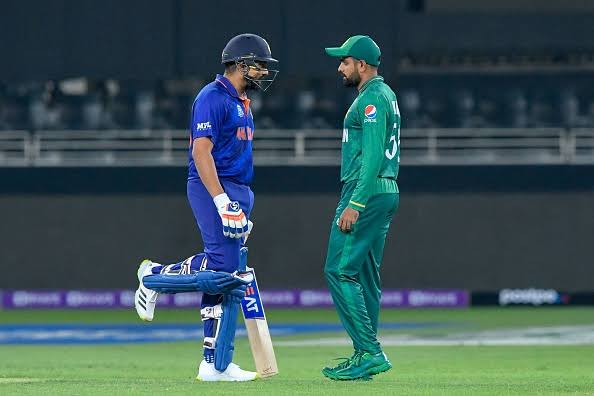
Sunday evening will be spiced up as the two arch-rivals India and Pakistan will lock horns in the T20 Asia cup match, to be played in the Dubai international stadium at 7:30 pm.

While India is Playing without Jasprit Bumrah and Harshal patel. Pakistan will have to carry on without the services of Shaheen afridi and Mohammad Wasim Jr.

Team India

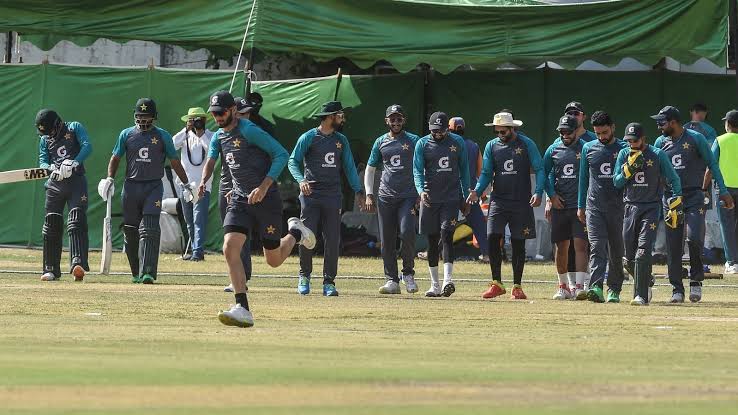
Team india practice session

The revival of Indian batting has reached a turning point. Since the lethargic Tournament that occurred last October in the UAE, much exertion has been put into attaining a do-over. Commencing on Sunday, there seems to be an opportunity to try it for the very first time in a cross competition. India could use an adversary that regularly wins in the UAE as a beginning point to determine whether their 180 degree batting turnaround will break their 15-year T20 WC winless streak subsequently this year.

With such a decent top, India currently has the chance to adhere to this destruction strategy after improving their batting results over the past ten months in every part of the Twenty20 game by accepting the dangers and benefits about not performing cautiously. After their respective sabbatical, KL Rahul and Virat Kohli return, giving VVS Laxman and Rohit Sharma a crucial decision to make at the start of this campaign. Hardik Pandya, Dinesh Karthik, and Ravindra Jadeja make up India’s 5-6-7 finishing axis, with Suryakumar Yadav and Rishabh Pant acting as useful floaters. However, with their back to regular fortitude and as a sign of the batsman dominance hierarchy, this strategy may need to be adjusted.

Tactics: In this year’s T20Is, 12 of Bhuvneshwar Kumar’s Twenty strikes had arrive inside the PowerPlay. India will seek to utilise this skill against a team with a top-3 and middle-order batting average of 42.35 and 15.59, accordingly, since January 2021, which shows a noticeable talent gap amongst sides. Since January 2021, Babar Azam and Mohammad Rizwan have scored 1000 or more runs in T20I, therefore breaking that opening partnership should be India’s top bowling priority.

Team pakistan

Team pakistan practice session

All tempo issues and decision-making difficulties for Pakistan are related to its bowling. Due to Shaheen Afridi’s injuries, Pakistan has now been hindered vs an outfit that has had trouble handling the left-hander in previous matches. Mohammad Wasim Jr. is now unavailable due to injuries sustained during practise.

Shahnawaz Dahani and Naseem Shah are Pakistan’s two quick bowlers, and they have a cumulative total of two T20 Internationals of encounter. Hasan Ali, who had not been initially selected after a lacklustre year with ball, is now returned to the side. With his left-armer-free bowling options, Babar Azam must be precise, while leggie Shadab Khan, making his first Limited – overs match since December 2021, must also get going right away.

Tactics: Babar must use his skills wisely in Shaheen’s absence against an enthusiastic Indian batting lineup. It is important to wisely utilise the large sizes of the Dubai stadium, especially in the PowerPlay overs, when India has struck 71 sixes in 37 innings since January 2021. Pakistan has only hit 30 of them throughout this time period (in 10 less innings), which helps put the level of risk-taking into perspective. Timing the insertion of leggies Shadab and Usman Qadir will also be crucial, depending on where Rishabh Pant bats.

Head to head encounter

India has a better 8-5 win ratio over Pakistan at Asia Cups. Five of 6 Asia Cup competitions among the two teams since 2010 have been won by India.

Expectations

Dew’s effect causes problems for teams that bowl second. However, India has prepared for this possibility by electing to bat first if it is feasible since their last participated overseas. In 16 T20Is played following the 2021 World Cup, India has batted first 12 times and has lost just three of those contests.

Key players

Virat Kohli, Babar Azam,Rohit Sharma, Mohammad Rizwan,Bhuvneshwar Kumar and Haris Rauf.

What Captains have to say before match

Rohit Sharma (India): “The mood in the camp is buzzing. It will be a challenge to play against Pakistan without a doubt. We do talk about our losses, that’s how we improve as a team. That loss [in Dubai last year] did hurt us at that point, but I think it’s been a while since that game has been played. We learn from our mistakes. For now, it’s a fresh start for us and obviously, the team is coming out of playing a lot of T20 cricket. We will not think too much about what happened in October, that was a long time back.”

Babar Azam (Pakistan): “No heat at all [between the two sides]. It’s normal and we have to adjust to everything as a professional. Every match is important for me and it is my responsibility as captain that I give my 100 percent. Injuries are part of the team. We have a good bench strength and we have a young battery of fast bowlers who have performed well and I have belief in them.”

Squad

India : Rohit Sharma(c), KL Rahul, Virat Kohli, Rishabh Pant(w), Suryakumar Yadav, Hardik Pandya, Ravindra Jadeja, Bhuvneshwar Kumar, Yuzvendra Chahal, Arshdeep Singh, Avesh Khan, Ravichandran Ashwin, Deepak Hooda, Dinesh Karthik, Ravi Bishnoi

Pakistan : Babar Azam(c), Mohammad Rizwan(w), Fakhar Zaman, Iftikhar Ahmed, Khushdil Shah, Asif Ali, Mohammad Hasnain, Shadab Khan, Usman Qadir, Haris Rauf, Naseem Shah, Shahnawaz Dahani, Mohammad Nawaz, Hasan Ali, Haider Ali

Arch rivals India and Pakistan faceoff in Asia cup

Pakistan’s Shahid Afridi and India’s Gautam Gambhir in an argument during a 2007 ODI in Kanpur

Sunday evening will be spiced up as the two arch-rivals India and Pakistan will lock horns in the T20 Asia cup match, to be played in the Dubai international stadium at 7:30 pm.

While India is Playing without Jasprit Bumrah and Harshal patel. Pakistan will have to carry on without the services of Shaheen afridi and Mohammad Wasim Jr.

Team India

Team india practice session

The revival of Indian batting has reached a turning point. Since the lethargic Tournament that occurred last October in the UAE, much exertion has been put into attaining a do-over. Commencing on Sunday, there seems to be an opportunity to try it for the very first time in a cross competition. India could use an adversary that regularly wins in the UAE as a beginning point to determine whether their 180 degree batting turnaround will break their 15-year T20 WC winless streak subsequently this year.

With such a decent top, India currently has the chance to adhere to this destruction strategy after improving their batting results over the past ten months in every part of the Twenty20 game by accepting the dangers and benefits about not performing cautiously. After their respective sabbatical, KL Rahul and Virat Kohli return, giving VVS Laxman and Rohit Sharma a crucial decision to make at the start of this campaign. Hardik Pandya, Dinesh Karthik, and Ravindra Jadeja make up India’s 5-6-7 finishing axis, with Suryakumar Yadav and Rishabh Pant acting as useful floaters. However, with their back to regular fortitude and as a sign of the batsman dominance hierarchy, this strategy may need to be adjusted.

Tactics: In this year’s T20Is, 12 of Bhuvneshwar Kumar’s Twenty strikes had arrive inside the PowerPlay. India will seek to utilise this skill against a team with a top-3 and middle-order batting average of 42.35 and 15.59, accordingly, since January 2021, which shows a noticeable talent gap amongst sides. Since January 2021, Babar Azam and Mohammad Rizwan have scored 1000 or more runs in T20I, therefore breaking that opening partnership should be India’s top bowling priority.

Team pakistan

Team pakistan practice session

All tempo issues and decision-making difficulties for Pakistan are related to its bowling. Due to Shaheen Afridi’s injuries, Pakistan has now been hindered vs an outfit that has had trouble handling the left-hander in previous matches. Mohammad Wasim Jr. is now unavailable due to injuries sustained during practise.

Shahnawaz Dahani and Naseem Shah are Pakistan’s two quick bowlers, and they have a cumulative total of two T20 Internationals of encounter. Hasan Ali, who had not been initially selected after a lacklustre year with ball, is now returned to the side. With his left-armer-free bowling options, Babar Azam must be precise, while leggie Shadab Khan, making his first Limited – overs match since December 2021, must also get going right away.

Tactics: Babar must use his skills wisely in Shaheen’s absence against an enthusiastic Indian batting lineup. It is important to wisely utilise the large sizes of the Dubai stadium, especially in the PowerPlay overs, when India has struck 71 sixes in 37 innings since January 2021. Pakistan has only hit 30 of them throughout this time period (in 10 less innings), which helps put the level of risk-taking into perspective. Timing the insertion of leggies Shadab and Usman Qadir will also be crucial, depending on where Rishabh Pant bats.

Head to head encounter

India has a better 8-5 win ratio over Pakistan at Asia Cups. Five of 6 Asia Cup competitions among the two teams since 2010 have been won by India.

Expectations

Dew’s effect causes problems for teams that bowl second. However, India has prepared for this possibility by electing to bat first if it is feasible since their last participated overseas. In 16 T20Is played following the 2021 World Cup, India has batted first 12 times and has lost just three of those contests.

Key players

Virat Kohli, Babar Azam,Rohit Sharma, Mohammad Rizwan,Bhuvneshwar Kumar and Haris Rauf.

What Captains have to say before match

Rohit Sharma (India): “The mood in the camp is buzzing. It will be a challenge to play against Pakistan without a doubt. We do talk about our losses, that’s how we improve as a team. That loss [in Dubai last year] did hurt us at that point, but I think it’s been a while since that game has been played. We learn from our mistakes. For now, it’s a fresh start for us and obviously, the team is coming out of playing a lot of T20 cricket. We will not think too much about what happened in October, that was a long time back.”

Babar Azam (Pakistan): “No heat at all [between the two sides]. It’s normal and we have to adjust to everything as a professional. Every match is important for me and it is my responsibility as captain that I give my 100 percent. Injuries are part of the team. We have a good bench strength and we have a young battery of fast bowlers who have performed well and I have belief in them.”

Squad

India : Rohit Sharma(c), KL Rahul, Virat Kohli, Rishabh Pant(w), Suryakumar Yadav, Hardik Pandya, Ravindra Jadeja, Bhuvneshwar Kumar, Yuzvendra Chahal, Arshdeep Singh, Avesh Khan, Ravichandran Ashwin, Deepak Hooda, Dinesh Karthik, Ravi Bishnoi

Pakistan : Babar Azam(c), Mohammad Rizwan(w), Fakhar Zaman, Iftikhar Ahmed, Khushdil Shah, Asif Ali, Mohammad Hasnain, Shadab Khan, Usman Qadir, Haris Rauf, Naseem Shah, Shahnawaz Dahani, Mohammad Nawaz, Hasan Ali, Haider Ali

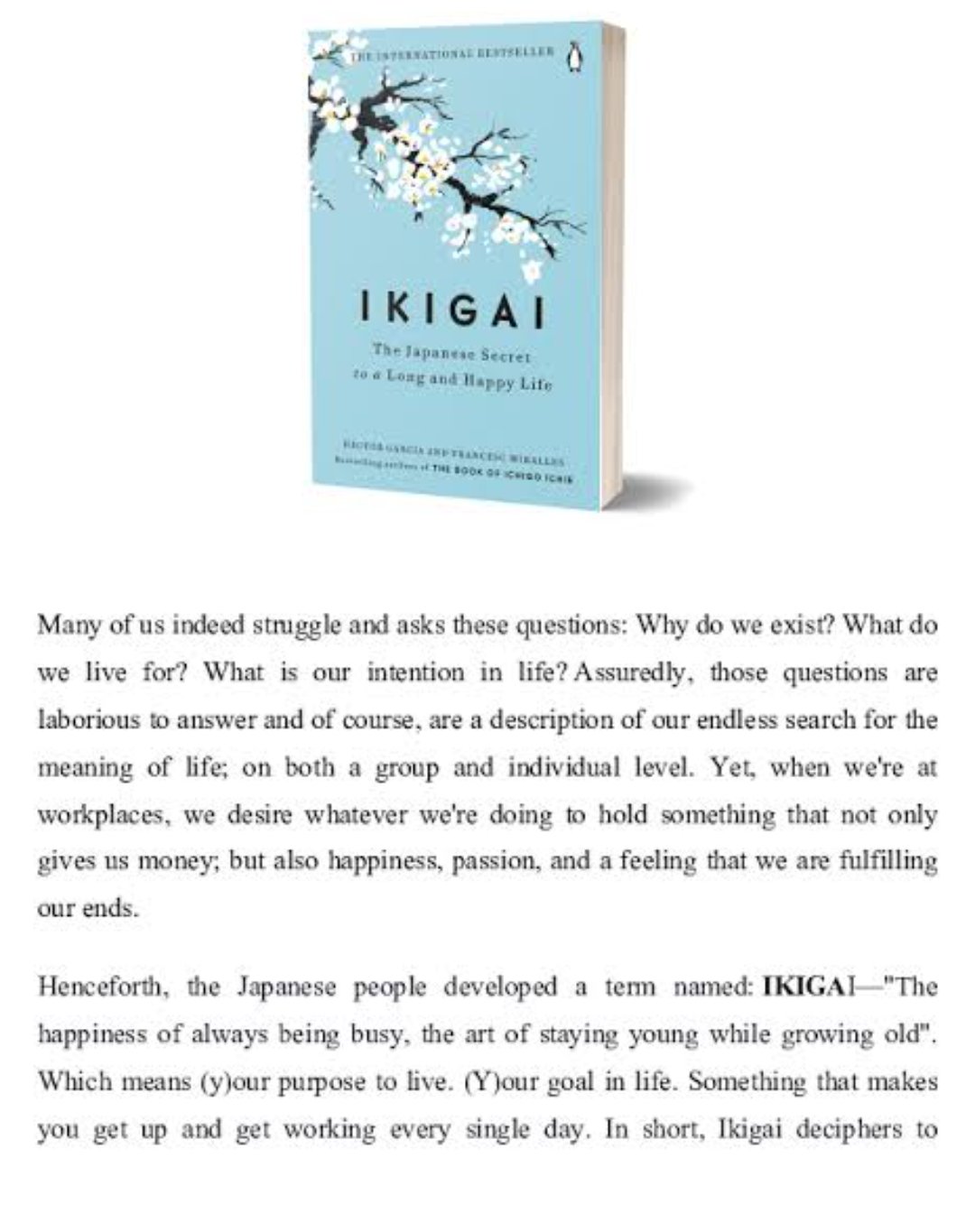
Summary of book Ikigai by Hector Garcia

 Summary of book Ikigai by Hector Garcia

I was hoping this book would be a deep dive into the “how” of ikigai. However, it’s more of an introduction to a variety of different topics including: the Blue Zones, logotherapy, longevity, flow, tai chi, yoga, resilience, and more. If you’re new to those topics, then this is the book for you!

What is Ikigai?

1. In Japanese, ikigai is written by combining the symbols that mean “life” with “to be worthwhile.”
2. “Translates roughly as ‘the happiness of always being busy.’” (Note: I believe they mean “busy” in the sense of living a full life vs busy life)
3. “There is a passion inside you, a unique talent that gives meaning to your days and drives you to share the best of yourself until the very end. If you don’t know what your ikigai is yet, as Viktor Frankl says, your mission is to discover it.” (Note: Viktor Frankl is the author of Man’s Search for Meaning)
4. “Our ikigai is different for all of us, but one thing we have in common is that we are all searching for meaning. When we spend our days feeling connected to what is meaningful to us, we live more fully; when we lose the connection, we feel despair.”
5. “Our ikigai is hidden deep inside each of us, and finding it requires a patient search. According to those born on Okinawa, the island with the most centenarians in the world, our ikigai is the reason we get up in the morning.”
6. “Once you discover your ikigai, pursuing it and nurturing it every day will bring meaning to your life.”
7. “They have an important purpose in life, or several. They have an ikigai, but they don’t take it too seriously. They are relaxed and enjoy all that they do.”
8. “One thing that everyone with a clearly defined ikigai has in common is that they pursue their passion no matter what.”

Ikigai Book Highlights

Stress & Existential Crisis:

1. “Many people seem older than they are. Research into the causes of premature aging has shown that stress has a lot to do with it.”
2. “The American Institute of Stress investigated this degenerative process and concluded that most health problems are caused by stress.”
3. “Existential crisis, on the other hand, is typical of modern societies in which people do what they are told to do, or what others do, rather than what they want to do. They often try to fill the gap between what is expected of them and what they want for themselves with economic power or physical pleasure, or by numbing their senses.”
4. “Those who give up the things they love doing and do well lose their purpose in life. That’s why it’s so important to keep doing things of value, making progress, bringing beauty or utility to others, helping out, and shaping the world around you, even after your ‘official’ professional activity has ended.”

Morita Therapy:

1. “Many Western forms of therapy focus on controlling or modifying the patient’s emotions. In the West, we tend to believe that what we think influences how we feel, which in turn influences how we act. In contrast, Morita therapy focuses on teaching patients to accept their emotions without trying to control them, since their feelings will change as a result of their actions.”
2. “Logotherapy and Morita therapy are both grounded in a personal, unique experience that you can access without therapists or spiritual retreats: the mission of finding your ikigai, your existential fuel. Once you find it, it is only a matter of having the courage and making the effort to stay on the right path.”
 

Flow:

1. “The happiest people are not the ones who achieve the most. They are the ones who spend more time than others in a state of flow.​”
2. “In order to achieve this optimal experience, we have to focus on increasing the time we spend on activities that bring us to this state of flow, rather than allowing ourselves to get caught up in activities that offer immediate pleasure.”
3. “Concentrating on one thing at a time may be the single most important factor in achieving flow.”
4. “Japanese people often apply themselves to even the most basic tasks with an intensity that borders on obsession.”
5. “Our ability to turn routine tasks into moments of microflow, into something we enjoy, is key to our being happy, since we all have to do such tasks.”
6. “Artists, for example, who carry the torch of their ikigai instead of retiring, have this power. Art, in all its forms, is an ikigai that can bring happiness and purpose to our days. Enjoying or creating beauty is free, and something all human beings have access to.​”
7. “Artists know how important it is to protect their space, control their environment, and be free of distractions if they want to flow with their ikigai.”
8. “Many such artists might seem misanthropic or reclusive, but what they are really doing is protecting the time that brings them happiness, sometimes at the expense of other aspects of their lives. They are outliers who apply the principles of flow to their lives to an extreme.​”
9. According to Csikszentmihalyi, in order to focus on a task we need:
1. To be in a distraction-free environment
2. To have control over what we are doing at every moment .

Ogimi, Okinawa:

1. “We realized right away that time seems to have stopped there, as though the entire town were living in an endless here and now.”
2. “Many Japanese people never really retire—they keep doing what they love for as long as their health allows.”
3. “The Japanese are skilled at bringing nature and technology together: not man versus nature, but rather a union of the two.”
4. “Okinawans live by the principle of ichariba chode, a local expression that means ‘treat everyone like a brother, even if you’ve never met them before.’”
Celebrations seem to be an essential part of life in Ogimi.

Slow Living:

1. “Being in a hurry is inversely proportional to quality of life. As the old saying goes, ‘Walk slowly and you’ll go far.’ When we leave urgency behind, life and time take on new meaning.​”
2. “Looking back, our days in Ogimi were intense but relaxed—sort of like the lifestyle of the locals, who always seemed to be busy with important tasks but who, upon closer inspection, did everything with a sense of calm. They were always pursuing their ikigai, but they were never in a rush.”
3. “They are always busy, but they occupy themselves with tasks that allow them to relax. We didn’t see a single old grandpa sitting on a bench doing nothing.​”
4. “The restaurant is right by the sea and seems like something from the planet Tatooine, from Star Wars. The menu boasts in large letters that it serves ‘slow food‘ prepared with organic vegetables grown in the town.​”
 

Secrets of the Centenarians & Supercentenarians:

1. “Over the course of a week we conducted a total of one hundred interviews, asking the eldest members of the community about their life philosophy, their ikigai, and the secrets to longevity:
Don’t worry
Cultivate good habits
Nurture your friendships every day
Live an unhurried life
Be optimistic”
2. “Eat and sleep, and you’ll live a long time. You have to learn to relax.” — Misao Okawa (117 years old)
3. “I’ve never eaten meat in my life.” — María Capovilla (116)
4. “Everything’s fine.” — Jeanne Calment (122)
5. “Your mind and your body. You keep both busy, you’ll be here a long time.” — Walter Breuning (114)
6. I just haven’t died yet.” — Alexander Imich (111)
7. “Food won’t help you live longer…The secret is smiling and having a good time.”
8. “My secret to a long life is always saying to myself, ‘Slow down,’ and ‘Relax.’ You live much longer if you’re not in a hurry.”
9. “The key to staying sharp in old age is in your fingers. From your fingers to your brain, and back again. If you keep your fingers busy, you’ll live to see one hundred.”


Ganesh Chaturthi 🙏

 Ganesh Chaturthi 🙏

Ganesh Chaturthi / Ganesh Puja is majorly a national festival, which is marked with the installation of Ganesh clay idols both publicly and privately. The festival celebrates Lord Vinayaka or Ganesh as the God of new beginnings and remover of hurdles. Lord Ganesh is worshipped for prosperity and knowledge.

History of Ganesh Chaturthi 

Ganesh is known by the names Heramba, Ekadanta, Ganapati, Vinayaka and Pillaiyar. Ganesh Chaturthi / Ganesh Puja is one of the widely celebrated Hindu festivals in the country. The blessings of Lord Ganesha are invoked at religious ceremonies. Lord Vinayaka is known as the fortune giver and one who can assist to avoid natural calamities. He is also the patron god of traveling. Lord Vinayaka is portrayed with an elephant’s head on a human body. According to Hindu customs, Lord Ganesh is the son of Lord Shiva and Goddess Parvati.

How is Ganesh Chaturthi celebrated ?

In a few parts of India such as Maharashtra and Andhra Pradesh the festival of Ganesh is celebrated for ten days. It is a public occasion. Sweets are offered. On the day of the festival, clay idols of Vinayaka are installed in homes or outdoor in decorated tents for the public to view and submit their homage. Clay idols of Ganesh are also installed by schools and colleges.
Ganesh Chaturthi/Chavithi is celebrated with great pomp and show in Maharashtra, Gujarat, Goa, and Karnataka. Other states that celebrate this festival are: Andhra Pradesh, Telangana, Tamil Nadu, Odisha, Delhi, and Punjab.

What Rituals Are Observed for Vinayaka Chaturthi?

Though the festival is the same and has similar connotations across India, each region has slight variations in rituals and traditions. The celebrations last between 7 and 10 days at different places. A few common observances are:

1. Installation of Ganapati statue: 

A statue of the Elephant God is installed on a pedestal either at home or in a public place with a pranprathishtha puja.

2. Not looking at the moon: 

On the first night of the festival, people avoid looking at the moon because it is considered a bad omen.

3. Prayers:

 Washing of the statue; puja with the chanting of shlokas and offerings of flowers and sweets; and aarti, i.e. circumlocution of the idol with a plate filled with a lit earthern/metal lamp, kumkum and flowers, is done. Prayer meetings are also conducted at Ganapati temples and public installations every day in the evenings and in some places, in the mornings as well.

4. Special performances: 

Some public installations of Lord Ganesh might also have performances with dance, music, and skits.

5. Making and eating modak: 

Modak is believed to be Ganapati’s favourite sweet. So, these dumplings are made and distributed as prasad during the festival. Other food items such as laddoo, barfi, pedha, and sundal are also distributed during this time.

6. Visarjan: 

This is the immersion of the idol in a water body and is conducted on the last day – anywhere between the seventh and eleventh days – of the festival. It is accompanied by a procession of people chanting bhajans and shlokas and songs, with the idol. People seek forgiveness for the mistakes they have done so far and request the god to help them stay on the righteous path. Ganesha is thanked for visiting the home/locality, for being removing obstacles from people’s path, and for the auspiciousness he bestows.

Why Are Ganesha Statues Immersed in Water on the Last Day of the Festival?

Ganesh Visarjan symbolises the end of the festival as well as the fact that everything on Earth eventually merges with one or more of the elements of nature. It also indicates the birth cycle of Lord Vinayak – he was born from clay and returns to the elements in that form. In literal terms, he is going back to his heavenly abode after staying with his devotees for 7 to 10 days.

What is the need for sustainability?

What does it Mean?

Sustainability is the ability to exist and develop without depleting natural resources for the future.

The United Nations defined sustainable development in the Brundtland Report as development that meets the needs of the present without compromising the ability of future generations to meet their own needs. It assumes that resources are finite, and so should be used conservatively and carefully to ensure that there is enough for future generations, without decreasing present quality of life. A sustainable society must be socially responsible, focussing on environmental protection and dynamic equilibrium in human and natural systems.

Why is Sustainability Important?

There are many benefits to sustainability, both short-term and long-term. We cannot maintain our Earth’s ecosystems or continue to function as we do if more sustainable choices are not made. If harmful processes are maintained with no change, it is likely that we will run out of fossil fuels, huge numbers of animal species will become extinct, and the atmosphere will be irreparably damaged. Clean air and nontoxic atmospheric conditions, growth of resources that can be relied upon, and water quality and cleanliness, are all benefits of sustainability.

What is Sustainability

What are the 3 Pillars of Sustainability?

The concept of sustainability is composed of three pillars: environmental, social and economic—also known informally as profits, planet, and people. These are in particular relevant to corporate sustainability, and efforts made by companies.

  1. Environmental protection is the most frequently discussed element. It is concerned with the reduction of carbon footprints, water usage, non-decomposable packaging, and wasteful processes as part of a supply chain. These processes can often be cost-effective, and financially useful as well as important for environmental sustainability.
  2. Social development is about treating employees fairly and ensuring responsible, ethical, and sustainable treatment of employees, stakeholders, and the community in which a business operates. This may be achieved through more responsive benefits, like better maternity and paternity benefits, flexible scheduling, and learning and development opportunities. For example, business should operate using sustainable labour, which involves fairly-paid, adult employees who can operate in a safe environment.
  3. Economic development is probably the simplest form of sustainability. To be economically sustainable, a business must be profitable and produce enough revenues to be continued into the future. The challenge with this form of sustainability is achieving an equilibrium. Rather than making money at any cost, companies should attempt to generate profit in accordance with other elements of sustainability.

Focussing on social and environmental sustainability in addition to economic performance is an approach frequently referred to as the Triple Bottom Line.

What are the Primary Goals?

Recently, the UN issued The Sustainable Development Goals as its main aims for the successful achievement of a better and more sustainable future. They address global challenges to sustainability. The 17 Goals include sustainable economic growth, no poverty, zero hunger, clean water and sanitation, affordable and clean energy, and responsible consumption and production, and it is hoped that they will be reached by 2030.

How can it be Measured?

Sustainability is measured by assessing performance of the three main principles altogether, in particular a balanced treatment of all three. These three key principles of the Triple Bottom Line do not provide a measurement system of themselves, but recent methods of measuring sustainability have attempted to measure sustainability through them. Though no official universal measurement of sustainability exists, many organisations are developing industry-specific tools and practices to judge how social, environmental and economic principles function as part of a company.

How Does Sustainability Affect Business?

The Triple Bottom Line approach to operating a company is useful for businesses in a number of ways. Not only is it ethical and important to meet UN standards of environmental sustainability, it is also economical and allows a stronger business model. Additionally, sustainability enables an organisation to attract employees, shareholders and customers who are invested in the goals of sustainability and share these values. The impact of sustainability can therefore be positive for a business’ image as well as revenue.

Can it be Achieved?

In 2018, the EU Commission released six key transformations to be made. If properly implemented, these steps will allow better sustainability to be achieved by the current goal of 2050.

  1. Sustainable development is a societal challenge, not simply an environmental one – improvements of education and healthcare are therefore required to achieve higher income and better environmental decisions
  2. Responsible consumption and production, and the importance of doing more with fewer resources, are important to adopt a circular economy and reduce demand
  3. Decarbonisation of the energy industry, through clean energy resources and renewable processes, will be necessary to provide clean and affordable energy for all
  4. There should be food and clean water for all while protecting the biosphere and the oceans, which will require efficient and sustainable food systems, achievable through the increasing of agricultural productivity and reduction of meat consumption
  5. Smart cities: Settlement patterns should be transformed for the good of the population and the environment, which may be done through ‘smart’ infrastructure and internet connectivity
  6. A digital revolution in science, technology, and innovation would be required to support sustainable development, as it is hoped that the world will use the development of Information Technology to facilitate sustainability

The Future

With the climate crisis, there is a current movement towards sustainability as a more appealing priority for businesses, as people begin to live more sustainable lives. It is likely that, in the future, positive impact on climate over the whole value chain, improved impact on the environment, people, and atmosphere, and productive input on society, will be expectations for businesses. Companies will be held accountable for all aspects of industry, and any environmental damage or harmful emissions should be limited or removed from productive processes.

It is also expected that resources will be reused to suit the global increase in population in what is commonly referred to as a ‘circular economy’. This change would allow one person’s waste to be another’s resource, in a process that would greatly reduce waste and create a more efficient supply chain.

Commodity Trading

 Commodity Trading

Any goods that are unbranded and are commonly traded in the market are called commodities. Commodity exchange rate deals non financial commodities such as agricultural commodities like wheat, cotton and non- agro commodities. Commodity market include spot market where commodities are brought and sold for immediate delivery. In derivative market various financial instruments are traded as commodities. Commodity future is derivative instrument for future delivery of commodity at fixed date and particular price. Commodities have fast price movement and provide increased profit. In commodity profits one is only taxed based on one’s income. Commodities have intrinsic value and always have a value.Changes in supply impact the demand; low supply equals higher prices. A commodity pool operator (CPO) is a person (or limited partnership) that gathers money from investors and then combines it into one pool in order to invest that money in futures contracts and options. CPOs distribute periodic account statements, as well as annual financial reports. They are also required to keep strict records of all investors, transactions, and any additional pools they may be operating

The major commodity exchanges in India include National Spot Exchange Limited( NSEL), Indian Commodity Exchange Limited(ICEX), Multi Commodity Exchange(MCX), National MultiCommodity Exchange of India Limited(NMCE) etc. The commodity market in India is regulated by SEBI(Security Exchange Board of India)