Make Your Insurance Premium Payment Online

 There are many risks and uncertainties involved in our day-to-day lives and having insurance provides a support system in unforeseen circumstances. Whether it be life insurance, health insurance, vehicle insurance or any other, paying your premiums on time is a must for the insurance buyers. To keep your insurance policy in force, you need to pay your insurance premiums before the grace period.

There were days when paying your insurance premium was a hectic task, but that is not the case anymore, as now, you can pay your premiums online instantly. Many payment platforms enable you to make these payments online. This guide will help with the complete procedure as well as the benefits of making insurance premium payments online.

How to Pay Insurance Premiums Online?

Among many reasons as to why you would like to pay your insurance premiums online is because it is very easy to do so. Plus, it comes with many additional benefits such as cashback and a lot more. To pay your insurance premium online, follow these steps:

On Paytm mobile application

  • Open the Paytm mobile application on your phone
  • Click on ‘Recharge & Pay Bills’
  • Then click on ‘LIC / Insurance’
  • Select your Insurer
  • Enter your details such as Policy Number, Date of Birth, Mobile Number etc.
  • Click on ‘Get Premium’ to check your premium amount
  • Select your preferred mode of payment and complete the payment

On Paytm’s official website

  • Go to the ‘Insurance Premium Payment’ page on Paytm
  • Select your Insurer
  • Enter your details such as Policy Number, Date of Birth, Mobile Number etc.
  • Click on ‘Get Premium’ to check your premium amount
  • Select your preferred mode of payment and complete the payment

As soon as you complete your insurance payment on Paytm, you will be notified about the same on your registered mobile number and email address.

Benefits of Paying Insurance Premium on Paytm

Whether you need your premiums for life insurance, car insurance, health insurance or any other, you get a fast online payment service on Paytm. On top of that, there are many benefits explained as follows:

  • Your payments are safe and secure with Paytm
  • You can save money on your insurance premium with the help of cashbacks and vouchers
  • Paytm also sends you reminders for your insurance payment every month so that you don’t forget to pay them on time
  • Paytm saves your details such as policy number, etc.

Conclusion

Paying your insurance premiums on time ensures that your insurance policy remains in force and that you get the maximum benefit when there is a need for it. You can pay your insurance premiums instantly on the payment portals like Paytm and can also get additional benefits such as cashback.

FAQs of Insurance

 FAQs

What are the tax benefits of insurance coverage plans?
The tax benefits of insurance coverage plans depend on the type of insurance as well as the policy. However, mostly the life insurance policies offer exemption from tax under Section 80C of the Income Tax Act up to Rs. 1.5 lakh. In certain cases, the health insurance policy for self and parents is also tax exempted under Section 80C.
Which type of insurance coverage is most important?
All types of insurance coverages are important but it depends on the individuals and their circumstances as to what shall be their priority. Having health insurance is important and getting insured for all your motor vehicles.
What is the difference between General Insurance and Life Insurance?
General insurance is usually short-term that can be renewed after a year or more. Life insurance plans are a long time for which you pay the premium almost all your life. Life insurance claims are settled after maturity or death of the insured, whereas general insurance coverage claims are settled when a particular event occurs like an accident for vehicle insurance, property damage for home insurance.

What is Insurance: Definition, Benefits, and Types

 Insurance is a legal agreement between two parties – the insurer and the insured, also known as insurance coverage or insurance policy. The insurer provides financial coverage for the losses of the insured that s/he may bear under certain circumstances. Let’s discuss in detail what is insurance and how it works, the insurance benefits, and types.

Insurance – Definition and Meaning

Insurance coverage can be defined as a contract in the form of a financial protection policy. This policy covers the monetary risks of an individual due to unpredictable contingencies. The insured is the policyholder whereas the insurer is the insurance-providing company/the insurance carrier/the underwriter. The insurers provide financial coverage or reimbursement in many cases to the policyholder.

The policyholder pays a certain amount called ‘premium’ to the insurance company against which the latter provides insurance cover. The insurer assures that it shall cover the policyholder’s losses subject to certain terms and conditions. Premium payment decides the assured sum for insurance coverage or ‘policy limit’.

What is Deductible? Why Pay Deductible if Premium is Paid?

Sometimes when you make an insurance claim, the premium amount is less than what it should be. So, in that case, you first have to pay the remaining amount and then claim the insurance money. The extra amount to be paid under such circumstances is called ‘deductible’. You can pay lesser premiums and higher deductibles in an agreement with the insurer.

Features of Insurance Coverage

Insurance coverage has the below mentioned salient features:

  • It is a kind of risk management plan to use an insurance policy as a hedge against an uncertain loss
  • Insurance coverage does not mitigate the magnitude of loss one may face. It only assures that the loss is shared and distributed among multiple people
  • Various clients of an insurance company pool in their risks. Hence, they pay the premiums together. So when one or a few incur a financial loss, the claimed money is given out of this accumulated fund. This makes each client bear a nominal fee
  • Insurance coverage can be provided for medical expenses, vehicle damage, property loss/damage, etc. depending on the type of insurance
  • Premium, policy limit, and deductible are the main components of an insurance coverage policy. The policy buyer should check them thoroughly while buying an insurance policy

Benefits of Insurance Coverage

An insurance policy performs various functions and comes with multiple benefits. Below are some of its most fundamental advantages, along with some of the secondary and the rest are additional ones. The basic functions of insurance coverage are:

1. Provides Protection

Insurance coverage does reduce the impact of loss that one bears in perilous situations. It provides monetary reimbursement during financial crises. It not only protects the insured from financial woes but also helps in checking mental stress arising out of it.

2. Provides Certainty

Insurance coverage provides a feeling of assurance to the policyholders. The insured pays a small portion of the income for this certainty that will help in the future. So, there is a certainty of handsome financial aid against the premium. It will protect the policy buyer when met with accidents, hazards, or any vulnerabilities.

3. Risk Sharing

The very manner in which insurance policy functions makes it a cooperative scheme. An insurer would be unable to pay from one’s capital. An insurance company pools in collective risks and premiums because it covers a large number of risk-exposed people. The payout to the one who claims insurance coverage is out of this fund. Thereby, all policyholders share the risk of the one who actually suffered the loss.

4. Value of Risk

Insurance policy assesses the volume of risk and also anticipates the various causes of it. It evaluates the amount for insurance coverage and the premium payment amounts on a risk value basis. It safeguards against unforeseen events and consequential loss.

Above were the primary benefits of an insurance coverage policy. Apart from the above, it also has some additional benefits and secondary functions that it performs such as the ones mentioned below:

1. Capital Generation

The fund generated from the various premiums acts as a pooled investment for the insurance company. The insurers invest this lump sum into money market instruments. For instance, in stocks, mutual funds, and other productive channels. This helps in generating income and profit for the business. It guards against the loss of capital for the company.

2. Economic Growth

Insurance policies mobilize domestic savings into providing financial stability. It also directs towards loss mitigation due to damage or destruction for the insured community. It not only equivalently spreads the risks but also promotes trade and commerce by utilizing the fund.

3. Saving Habits

Insurance policies help inculcate saving habits among individuals. They keep a portion of income to pay premiums that will act as a guard for unknown future predicaments. Many insurance plans come as insurance-cum-savings or insurance-cum-investment schemes. This further encourages people to save and invest.

Types of Insurance Coverage

Insurance policies can cover up medical expenses, vehicle damage, loss in business or accidents while traveling, etc. Life Insurance and General Insurance are the two major types of insurance coverage. General Insurance can further be classified into sub-categories that clubs in various types of policies. These are:

1. Life Insurance

One can avail the life insurance in order to protect the family due to premature death or death during the tenure of the policy. It provides the family with a lump sum when the insured person meets with an untimely death. This helps the grieving family to battle with financial struggles that may occur in absence of a breadwinner.

Is Term Insurance the same as Life Insurance?

Term Insurance is the most common form of life insurance where you pay the premium for the pre-decided term. If you pass away within the term period, the money you are insured of is given to the family. But it remains with the insurance company if you survive through the term policy’s tenure. Unlike term plans, whole life insurance or endowment plans pay upon maturity as well if you outlive the term. Some Pension Plans, or post-retirement plans also carry insurance coverage. One is to pay the premium up to a certain time. You receive the promised amount upon maturity. The family gets the money upon the untimely death of the insured.

Hence, Term Insurance is one among many types of Life Insurance plans.

What is Unit Linked Insurance Plan?

Unit Linked Insurance Plan is an investment-cum-insurance plan. The premiums provide coverage as well as they are for the purchase of units of market-linked equity, debt, and other instruments. This has the potential to provide an opportunity for wealth creation apart from the life cover provision.

Life Insurance Coverage Plans also come with tax benefits under Section 80C.

2. General Insurance

Non-life insurance policies count as general insurance policies that include insurance coverages for home, auto, education, etc. as mentioned below:

1. Health Insurance

You can buy health insurance for yourself or for your family that may include your spouse, parents, siblings, and children. Some insurance companies have tie-ups with hospitals. So here you can use your policy number to avail of cashless services in-network hospitals. In other cases, you can claim reimbursement for hospitalization and treatments. Do check the coverage of the type of disease/illness/health issue. Also, verify what type of costs are covered.

2. Education Insurance

Education insurance can also serve as an investment scheme. You pay premiums by the time your child is 18 years of age or attains a certain age as decided by the insurance policy. You can have a lump sum with imposed regulations that you can use for a child’s educational purposes and not any other. Use an education calculator to estimate the amount you may need when the child grows up. Such calculators are often provided by insurance companies or insurance offering sites. The parent/ foster parent/legal guardian is the owner of the policy.

3. Home/Property Insurance

If man-made or natural calamities damage your valuable property then this policy can cover the financial loss and provide monetary aid. Losses due to theft, floods, or any other mishaps can be alleviated.

4. Motor/Auto/Vehicle Insurance

This is one of the mandatory policies in current times. First of all, it protects your valuable asset against road accidents or any other damage and covers the losses. Secondly, the traffic rules suggest you carry insurance papers while driving.

5. Travel Insurance

You may have seen that you get an option to buy insurance for minimal costs when booking a rail or air ticket. Alternatively, you can buy travel insurance if you are a frequent flyer and especially if you travel internationally. You can claim for baggage loss, trip cancellation, or delay in flight.

Apart from the types of insurances discussed above, there are miscellaneous insurance coverage policies for furniture, goods, machines, etc. There are other types of insurance such as Fire Insurance (damage due to fire), Marine Insurance (for cargo ships), Tenant Insurance, Landlord’s Insurance, and so on. Group Medical Insurance Policies often cover the employees of an organization if the latter has any.

Wrapping it up:

The benefit of having insurance is that it prevents burning a hole into your pocket in unprecedented times. It gives you financial assistance for your losses and damage. The basic function of all types of insurance coverages is to provide damage control to the insured by bringing in a lot of people who pay to cover their risks. The fund is further used for capital formation through investment in the markets. This helps the insurance companies to keep running and settle/adjust the claims of the insured people. It also boosts the economy.


What Is Insurance?

 Most people have some kind of insurance: for their car, their house, or even their life. Yet most of us don’t stop to think too much about what insurance is or how it works.

Put simply, insurance is a contract, represented by a policy, in which a policyholder receives financial protection or reimbursement against losses from an insurance company. The company pools clients’ risks to make payments more affordable for the insured.

Insurance policies are used to hedge against the risk of financial losses, both big and small, that may result from damage to the insured or their property, or from liability for damage or injury caused to a third party.


KEY TAKEAWAYS

  • Insurance is a contract (policy) in which an insurer indemnifies another against losses from specific contingencies or perils.


  • There are many types of insurance policies. Life, health, homeowners, and auto are the most common forms of insurance.


  • The core components that make up most insurance policies are the deductible, policy limit, and premium.

How Insurance Works

A multitude of different types of insurance policies is available, and virtually any individual or business can find an insurance company willing to insure them—for a price. The most common types of personal insurance policies are auto, health, homeowners, and life. Most individuals in the United States have at least one of these types of insurance, and car insurance is required by law.

Businesses require special types of insurance policies that insure against specific types of risks faced by a particular business. For example, a fast-food restaurant needs a policy that covers damage or injury that occurs as a result of cooking with a deep fryer. An auto dealer is not subject to this type of risk but does require coverage for damage or injury that could occur during test drives.


To select the best policy for you or your family, it is important to pay attention to the three critical components of most insurance policies: deductible, premium, and policy limit.

There are also insurance policies available for very specific needs, such as kidnap and ransom (K&R), medical malpractice, and professional liability insurance, also known as errors and omissions insurance.

Insurance Policy Components

When choosing a policy, it is important to understand how insurance works.

A firm understanding of these concepts goes a long way in helping you choose the policy that best suits your needs. For instance, whole life insurance may or may not be the right type of life insurance for you. Three components of any type of insurance are crucial: premium, policy limit, and deductible.

Premium

A policy’s premium is its price, typically expressed as a monthly cost. The premium is determined by the insurer based on your or your business’s risk profile, which may include creditworthiness.

For example, if you own several expensive automobiles and have a history of reckless driving, you will likely pay more for an auto policy than someone with a single midrange sedan and a perfect driving record. However, different insurers may charge different premiums for similar policies. So finding the price that is right for you requires some legwork.


Policy Limit

The policy limit is the maximum amount that an insurer will pay under a policy for a covered loss. Maximums may be set per period (e.g., annual or policy term), per loss or injury, or over the life of the policy, also known as the lifetime maximum.

Typically, higher limits carry higher premiums. For a general life insurance policy, the maximum amount that the insurer will pay is referred to as the face value, which is the amount paid to a beneficiary upon the death of the insured.

Deductible

The deductible is a specific amount that the policyholder must pay out of pocket before the insurer pays a claim. Deductibles serve as deterrents to large volumes of small and insignificant claims.

Deductibles can apply per policy or per claim, depending on the insurer and the type of policy. Policies with very high deductibles are typically less expensive because the high out-of-pocket expense generally results in fewer small claims.

Types of Insurance

There are many different types of insurance. Let’s look at the most important.

Health Insurance

With regard to health insurance, people who have chronic health issues or need regular medical attention should look for policies with lower deductibles. Though the annual premium is higher than a comparable policy with a higher deductible, less expensive access to medical care throughout the year may be worth the tradeoff.

Home Insurance

Homeowners insurance (also known as home insurance) protects your home and possessions against damage or theft. Virtually all mortgage companies require borrowers to have insurance coverage for the full or fair value of a property (usually the purchase price) and won’t make a loan or finance a residential real estate transaction without proof of it.

Auto Insurance

When you buy or lease a car, it’s important to protect that investment. Getting auto insurance can offer reassurance in case you’re involved in an accident or the vehicle is stolen, vandalized, or damaged by a natural disaster. Instead of paying out of pocket for auto accidents, people pay annual premiums to an auto insurance company; the company then pays all or most of the costs associated with an auto accident or other vehicle damage.


Life Insurance

Life insurance is a contract between an insurer and a policy owner. A life insurance policy guarantees that the insurer pays a sum of money to named beneficiaries when the insured dies in exchange for the premiums paid by the policyholder during their lifetime.

Travel Insurance

Travel insurance is a type of insurance that covers the costs and losses associated with traveling. It is useful protection for those traveling domestically or abroad. According to a 2021 survey by insurance company Battleface, almost half of Americans have faced fees or had to absorb the cost of losses when traveling without travel insurance.


What is insurance?

Insurance is a way to manage your risk. When you buy insurance, you purchase protection against unexpected financial losses. The insurance company pays you or someone you choose if something bad happens to you. If you have no insurance and an accident happens, you may be responsible for all related costs.


What are the four major types of insurance?

There are four types of insurance that most financial experts recommend everybody have: life, health, auto, and long-term disability.

Is insurance an asset?

Depending on the type of life insurance policy and how it is used, permanent life insurance can be considered a financial asset because of its ability to build cash value or be converted into cash. Simply put, most permanent life insurance policies have the ability to build cash value over time.

The Bottom Line

Insurance is a contract in which an insurer indemnifies another against losses from specific contingencies or perils. It helps to protect the insured person or their family against financial loss. There are many types of insurance policies. Life, health, homeowners, and auto are the most common forms of insurance.

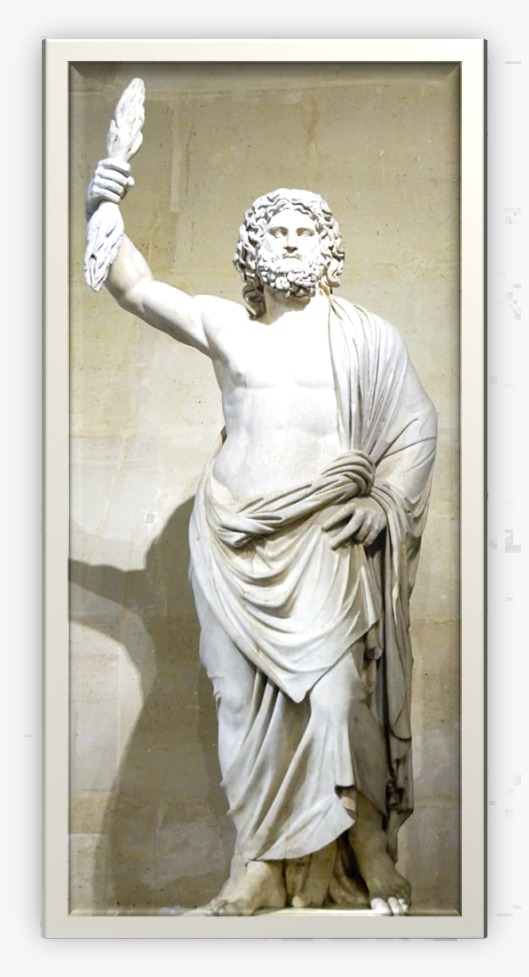
HISTORY OF ZEUS

Zeus was the king of the Greek gods who lived on Mount Olympus.

Zeus is the child of Cronus and Rhea, the youngest of his siblings to be born. He is married to Hera, by whom he is usually said to have fathered Ares, Eileithyia, Hebe, and Hephaestus.

He was respected as an all father who was chief of the gods.

Brothers and Sisters:

Zeus had several brothers and sisters who were also powerful gods and goddesses. He was the youngest, but the most powerful of three brothers. His oldest brother was Hades who ruled the Underworld. His other brother was Poseidon, god of the sea. He had three sisters including Hestia, Demeter, and Hera (who he married).

Zeus had a number of children. Some of his children were Olympic gods such as Ares, Apollo, Artemis, Athena, Aphrodite, Hermes and Dionysus. He also had some children who were half human and were heroes such as Hercules and Perseus. Other famous children include the Muses, the Graces, and Helen of Troy.

STORY OF KING OF GODS:

Zeus was the sixth child of the Titan gods Cronus and Rhea.

Zeus’ father Cronus was worried that his children would become too powerful, so he ate his first five children. They didn’t die, but they couldn’t get out of his stomach either.

When Rhea had Zeus, she hid him from Cronus and Zeus was raised in the forest by Nymphs. When Zeus grew older he wanted to rescue his brothers and sisters. He got a special potion and disguised himself so that Cronus would not recognize him. When Cronus drank the potion, he coughed up his five children. They were Hades, Poseidon, Demeter, Hera, and Hestia.

Cronus and the Titans were angry. They battled Zeus and his brothers and sisters for years. Zeus set the giants and Cyclopes of Earth free to help him fight.

They gave the Olympians weapons to fight the Titans. Zeus got thunder and lightning, Poseidon got a powerful trident, and Hades a helm that made him invisible.

The Titans surrendered and Zeus had them locked deep underground. Mother Earth then became angry with Zeus for locking the Titans underground.

She sent the world’s most fearsome monster called the Typhon to fight the Olympians.

The other Olympians ran and hid, but not Zeus. Zeus fought the Typhon and trapped him under Mount Etna.

This is the legend of how Mount Etna became a volcano. Now Zeus was the most powerful of all the gods.

He and his fellow gods went to live on Mount Olympus. There Zeus married Hera and ruled over the gods and humans.

Zeus is king in heaven is a saying common to all men”. Zeus’ symbols are the thunderbolt, eagle, bull, and oak.

Zeus is frequently depicted by Greek artists in one of three poses: standing, striding forward with a thunderbolt leveled in his raised right hand, or seated in majesty.

THUNDERBOLTS:

The God of Thunder, had the power to wield thunderbolts.

He did this by concentrating vast amounts of energy in his hands, then aiming and hurling thunderbolts at his targets.

His bolts could shear mountains, vaporize islands, incinerate entire cities and even boil the seas.

His bolt were also capable of destroying the bodies of mortals, and even gods.

CONTROL OVER THE ELEMENTS:

Since Zeus was the God of the sky, he had absolute control over elements such as winds, thunderstorms, rain, moisture, clouds, lightning and weather.

He also had the ability to control the movement of stars, govern the functioning of day and night, controlling the effects of time and decide the lifespan of mortals.

ABILITY TO GRANT POWERS:

It is believed that Zeus controlled the abilities of all his children and sisters, and could take their powers and grant them new ones at will.

Apart from this, he was also extremely strong physically, enough to lift mountains.

His strength exceeded that of every Olympian, except that of Hercules, who was his son.

SHAPE-SHIFT:

Another great ability of Zeus was that he was able to shape-shift or transform himself into other forms at will.

Accounts of this ability are mainly witnessed in the tales of his sexual escapades.

His disguises included that of an eagle, a satyr, a flame of fire, a phoenix, a shower of gold, a bull, an ant, an eagle, a shower, a lapwing, a swan, a star, a bear, a shepherd, a goose, a serpent and a vulture.

Leda and the Swan-Zeus took the form of a swan to have intercourse with Leda.

Health Insurance

Usually, the first thought that comes to mind when entering a hospital is how much lighter your wallet will be when you leave. In a high-tech world, medicine is at the forefront, and technology comes with a cost. It’s not uncommon for routine check-up bills to run into the thousands of dollars. A lengthy hospital stay will inevitably set you back hundreds of thousands of dollars. Having reliable comprehensive health insurance can save you a day and your wallet, at least if you’re in the hospital for treatment.

What is health insurance?

If you choose health insurance, your medical expenses will be covered by your insurance company and you will instead have to pay an annual membership fee called a “premium”. This can also be paid in monthly installments. Depending on which policy you choose and who provides it, health insurance protects your wallet by covering medical bills, hospital bills, ambulance bills, test bills, and other related costs. Some policies also cover lost earnings compensation.

Why should you have health insurance?

A WHO report outlines the need for expanded health insurance coverage in India, which is staggering as 68% of India’s healthcare costs are out-of-pocket (OOP). Also, only 18% of urban and 14% of rural India have health insurance. Getting health insurance at a young age is a wise decision as premiums are much lower. Please note that many policies do not cover pre-existing illnesses or illnesses that occur within 30 days of obtaining the policy, except for accidents.

If you do not yet have health insurance or are considering it, here is a list of reasons why you should recognize the importance of health insurance.

• Cashless treatment: All major health insurance companies have many popular hospitals in their networks, so-called network hospitals. When you get treatment at one of these hospitals, all you have to do is present your health insurance card (or just your insurance number), fill out a few forms if necessary, and then you’re all set. However, if you decide to go to an out-of-network hospital, you will have to pay for treatment and later apply for a refund. Cashless treatment is therefore one of the biggest benefits of health insurance. Because few people can arrange a large amount of money in a short period of time for medical purposes.

• Rising health care costs and illnesses: According to cancer statistics in India, there were 11,57,294 registered cancer patients in 2019. In the last 26 years, cancer incidence has almost doubled in India. Other life-threatening diseases such as tuberculosis and diabetes are also on the rise. With medical and treatment costs continuing to rise, look no further than why health insurance is a must.

• Free Health Checks and Additional Benefits: Many insurers offer their customers free health checks every year (but only if you haven’t filed a claim in the last few years). Some companies do). You are also eligible to receive a No Claim Bonus (NCB). H. If you do not have insurance other than outpatient insurance during the insurance period, the insurance amount will increase by a certain amount. In addition, ambulance costs, pre-hospital and post-hospital costs are some of the other benefits offered by insurance companies.

• Tax Incentives: Section 80D of the Income Tax Act provides tax incentives for health insurance premiums. Under the age of 60, INR 50,000 for parents under the age of 60 (INR 25,000 for self-employed persons, spouses and dependent children and INR 25,000 for parents), for parents over the age of 60 can claim a deduction of Rs 75,000. (Self-employed person, spouse and dependent children Rs 25,000 for her and Rs 50,000 for parents). In total he can claim a deduction of Rs 1,00,000 if both the individual and the parents are above her 60 years of age.

• Peace of Mind: Well-planned back insurance can be a great peace of mind, especially when life-threatening diseases have increased at an alarming rate in recent decades. It can save you and your family during a medical emergency, and most importantly, one less thing to worry about in your busy daily schedule.

Now that you understand the importance of health insurance, let’s take a look at what to consider when choosing health insurance.

Points to note when looking for health insurance 

• As mentioned above, it is better to get health insurance when you are young. Insurance premiums tend to increase with age, as does the risk of health problems.

• Look for insurance that covers terminal illness. These are the things that weigh most on our finances, so it makes no sense not to include them in the covered list.

• Do not choose insurance with expensive copay clauses. Your copay is the part of your bill that you have to pay out of your own pocket in the event of a claim. The insurance company will pay the rest according to the terms of the policy.

• You may select passenger/additional features related to health insurance to contribute to the overall insurance coverage network.

Types of Health Insurance

Compensation Plan: In this case, the patient pays a fixed amount for hospital expenses and the insurance company pays the rest of the bill. You can choose the doctor you want to see, and your insurance company doesn’t have to decide which hospital or whether you need to see a doctor. But this autonomy is only up to a point. In an emergency, emergency room admission still requires insurance clearance unless you are incapacitated. If you choose a coverage plan, first pay the full amount out of your own pocket and then request a refund. is needed.

Exclusive Provider Organization (EPO): Members of the EPO plan must use a defined network of physicians and primary care physicians (PCPs) who issue referrals to the network’s specialists for treatment. However, this condition does not apply in emergency situations. You will also be required to make a small donation yourself.

Point of Service (POS): Similar to EPO Pan, POS also offers PCP with a choice of network providers. In such cases, higher compensation is available. However, if you choose to go to an out-of-network hospital, you may be subject to a deductible (out-of-pocket) and have less insurance coverage. You may also need to prepay and then request a refund.

In summary, the importance of health insurance cannot be overestimated. Get health insurance for yourself, your spouse, your children, and your parents early.

Key skills for professionals

 Key skills for professional

Main skills are very important for everyone because if you go out for a job, interview or any presentation you will need the key skills. Key skills are also called soft skills. Key skills are very essential for your growth in a career.

Below there are some key skills which will make your career grow –

1. Communication skills

Communication is the main in all. For any purpose, you should communicate with each other. If you have good communication skills you will perform always better in front of your seniors or your boss. It gives you a lot of confidence if you have a good command of your language.

2. Time management

As we all know there is a very famous quote .

Time is money and it doesn’t wait for anyone. If you have a meeting or presentation or anything else you should go before your time. If you maintain your time it shows how punctual you are. You should have the ability to manage things on time.

3. Leadership 

This is another skill which is important in your career. You should have the quality of leadership. It shows how you manage all the things, and how you can teach your juniors or colleagues. It shows you are responsible which is very good for your profession.

4. Personality development

For going to an interview or a job you should have the personality. Personality gives you bold courage that reflects when people see you. If someone doesn’t have the personality then you should research before going for an interview or job.

5. Self-confidence

You need self-confidence to do any work without having self – confidence you will get  demotivated by yourself. If you have self-confidence, you can achieve everything.

6. Positive attitude

A positive attitude is a very crucial role in key skills. Doing any work or activity everyone needs a positive attitude to impress other people. Positivity leads to achieving everything

This is all the key skills which you need for your career growth.

Health insurance

 Health Insurance 

Usually, the first thought that comes to mind when entering a hospital is how much lighter your wallet will be when you leave. In a high-tech world, medicine is at the forefront, and technology comes with a cost. It’s not uncommon for routine check-up bills to run into the thousands of dollars. A lengthy hospital stay will inevitably set you back hundreds of thousands of dollars. Having reliable comprehensive health insurance can save you a day and your wallet, at least if you’re in the hospital for treatment.

 What is health insurance?

 If you choose health insurance, your medical expenses will be covered by your insurance company and you will instead have to pay an annual membership fee called a “premium”. This can also be paid in monthly installments. Depending on which policy you choose and who provides it, health insurance protects your wallet by covering medical bills, hospital bills, ambulance bills, test bills, and other related costs. Some policies also cover lost earnings compensation.

Why should you have health insurance?

 A WHO report outlines the need for expanded health insurance coverage in India, which is staggering as 68% of India’s healthcare costs are out-of-pocket (OOP). Also, only 18% of urban and 14% of rural India have health insurance. Getting health insurance at a young age is a wise decision as premiums are much lower. Please note that many policies do not cover pre-existing illnesses or illnesses that occur within 30 days of obtaining the policy, except for accidents.

If you do not yet have health insurance or are considering it, here is a list of reasons why you should recognize the importance of health insurance.

• Cashless treatment: All major health insurance companies have many popular hospitals in their networks, so-called network hospitals. When you get treatment at one of these hospitals, all you have to do is present your health insurance card (or just your insurance number), fill out a few forms if necessary, and then you’re all set. However, if you decide to go to an out-of-network hospital, you will have to pay for treatment and later apply for a refund. Cashless treatment is therefore one of the biggest benefits of health insurance. Because few people can arrange a large amount of money in a short period of time for medical purposes.

 • Rising health care costs and illnesses: According to cancer statistics in India, there were 11,57,294 registered cancer patients in 2019. In the last 26 years, cancer incidence has almost doubled in India. Other life-threatening diseases such as tuberculosis and diabetes are also on the rise. With medical and treatment costs continuing to rise, look no further than why health insurance is a must.

 • Free Health Checks and Additional Benefits: Many insurers offer their customers free health checks every year (but only if you haven’t filed a claim in the last few years). Some companies do). You are also eligible to receive a No Claim Bonus (NCB). H. If you do not have insurance other than outpatient insurance during the insurance period, the insurance amount will increase by a certain amount. In addition, ambulance costs, pre-hospital and post-hospital costs are some of the other benefits offered by insurance companies.

 • Tax Incentives: Section 80D of the Income Tax Act provides tax incentives for health insurance premiums. Under the age of 60, INR 50,000 for parents under the age of 60 (INR 25,000 for self-employed persons, spouses and dependent children and INR 25,000 for parents), for parents over the age of 60 can claim a deduction of Rs 75,000. (Self-employed person, spouse and dependent children Rs 25,000 for her and Rs 50,000 for parents). In total he can claim a deduction of Rs 1,00,000 if both the individual and the parents are above her 60 years of age.

 • Peace of Mind: Well-planned back insurance can be a great peace of mind, especially when life-threatening diseases have increased at an alarming rate in recent decades. It can save you and your family during a medical emergency, and most importantly, one less thing to worry about in your busy daily schedule.

 Now that you understand the importance of health insurance, let’s take a look at what to consider when choosing health insurance.

 Points to note when looking for health insurance 

 • As mentioned above, it is better to get health insurance when you are young. Insurance premiums tend to increase with age, as does the risk of health problems.

 • Look for insurance that covers terminal illness. These are the things that weigh most on our finances, so it makes no sense not to include them in the covered list.

 • Do not choose insurance with expensive copay clauses. Your copay is the part of your bill that you have to pay out of your own pocket in the event of a claim. The insurance company will pay the rest according to the terms of the policy.

 • You may select passenger/additional features related to health insurance to contribute to the overall insurance coverage network.

Types of Health Insurance

Compensation Plan: In this case, the patient pays a fixed amount for hospital expenses and the insurance company pays the rest of the bill. You can choose the doctor you want to see, and your insurance company doesn’t have to decide which hospital or whether you need to see a doctor. But this autonomy is only up to a point. In an emergency, emergency room admission still requires insurance clearance unless you are incapacitated. If you choose a coverage plan, first pay the full amount out of your own pocket and then request a refund. is needed.

 Exclusive Provider Organization (EPO): Members of the EPO plan must use a defined network of physicians and primary care physicians (PCPs) who issue referrals to the network’s specialists for treatment. However, this condition does not apply in emergency situations. You will also be required to make a small donation yourself.

 Point of Service (POS): Similar to EPO Pan, POS also offers PCP with a choice of network providers. In such cases, higher compensation is available. However, if you choose to go to an out-of-network hospital, you may be subject to a deductible (out-of-pocket) and have less insurance coverage. You may also need to prepay and then request a refund.

In summary, the importance of health insurance cannot be overestimated. Get health insurance for yourself, your spouse, your children, and your parents early.

Career Guidance For Students


Why students need career guidance?

Today, there are more than 250 profession alternatives, and we need career assistance to determine which one is ideal for us. Here are some reasons why it’s crucial for pupils.

A counselling service called career guidance was created to assist students in selecting the best career path based on their academic and professional preferences. It is a qualitative and quantitative evaluation of the potential job alternatives based on the knowledge, skills, information, and experience.

There is a lack of awareness and knowledge about the many profession opportunities available to children in India once they graduate from high school. The practise of consulting a career advisor is seldom ever practised.

A recent poll found that 93 percent of pupils were only aware of ten or fewer professional alternatives, such as engineering, medical, law, finance, and information technology. In contrast, there are currently over 250 different professional paths available. In other words, the majority of students have very little knowledge of a wide range of professional alternatives.

Get help from a career counsellor

A career advisor or counsellor is skilled at analysing students’ skill sets and areas of interest and making thoughtful recommendations that take the best of both worlds into account.

In order to determine the elements impacting a person’s professional interests, abilities, and values, the career adviser uses career interest or aptitude tests as part of the discovery process. In essence, a career advisor helps each student develop attainable professional goals.

Finding resources and sources of career information, tips for writing resumes, methods for preparing for interviews, and the fundamentals of networking are all advantages for students who seek out professional assistance from a career counsellor.

India needs more than a million counsellors.

The ratio of counsellors to students, which is generally thought to be 1:250, is 1:3,000 in India, which represents a significant gap.

However, it also creates a significant potential for career counsellors, especially given that 93 percent of Indian schools lack a specialised professional counsellor.

The 350 million students in India require at least 1.4 million career counsellors to match the ratio of students to counsellors that is considered to be appropriate around the world, according to the Annual International Career and College Counseling Conference, which was held in 2018.

In order to address the gap left by counsellors, we must immediately develop policy, systemic, and infrastructure alignment. This is crucial to help students choose the correct careers, resulting in a productive, diverse, and distributed workforce that supports the development of the country.

Here, innovations and technical advancements will be crucial.

Counsellor education and licencing

To develop more than a million counsellors in India, training and certification of counsellors is another essential component.

This will solve the acute deficit as well as quality and uniformity. If school administrators, principals, and instructors are included as part of the training strategy’s surrounding ecology, it may be more successful.

What’s way ahead?

One of the most important adjustments that can be made to our educational system is to include career counsellors who are knowledgeable in guiding candidates towards their ideal profession in all career guidance programmes.

The mainstreaming of counselling should emphasise a 360-degree, “future-ready” approach outfitted with cutting-edge tools and technologies to include all stakeholders in the counselling process, including teachers, students, and parents.

By giving young people the opportunity to contact with industry specialists who can serve as the greatest “practical” career advisers, the industry may also play a significant role in assisting young people with their career aspirations.

As an illustration, a doctor may meet the students at the school and discuss the advantages and disadvantages of being a doctor with them. Experts from other industries, such as engineering, retail, or even the military forces, can also visit schools to inform children about the advantages and difficulties of their respective fields.

As an alternative, student visits to businesses can be quite helpful in giving them a perspective on various industries. Additionally, it makes it possible for educational institutions to easily engage with business.

In India, the moment is right to spread the word about career counselling and coaching. Every school and institution should have qualified career counsellors on staff who can plan company visits and hold frequent sessions with students about various career options.

The future success and happiness of kids, families, schools, and the community depend on career guidance and counselling in this area!

How Do Internships Work?


A professional learning opportunity known as an internship provides students with relevant, hands-on work that is connected to their area of study or career interest. A student can explore and enhance their career while learning new skills through an internship. It gives the business the chance to cultivate talent, bring in fresh perspectives and vigour, and perhaps even create a pipeline for future full-time workers.


An excellent internship:

– Consists of a part- or full-time work schedule with no more than 25% of the time spent on administrative or clerical tasks.

– Gives a detailed account of the work experience’s job or project.

– Introduces the student to the company, its culture, and the suggested job (s).

– Assists students in setting and achieving learning objectives.

– Offers the learner continuous feedback.

What distinguishes a research experience from an internship and cooperative education (co-op)?

Internships are professionally supervised, structured learning opportunities that give you the chance to get useful job experience in the area of study that you have selected. For internships, a minimum of 120 hours are needed (typically, at least 10 hours per week during the fall and spring and either part-time or full-time during the summer).

Co-ops are compensated positions that mandate full-time work during the academic term and full-time academic study for at least two semesters on alternate semesters. After graduation, students are frequently—but not always—offered full-time employment with the company. Although co-ops are uncommon at UMBC, some students are interested in them as practical learning opportunities. We advise communicating with a member of our staff if you are interested in a co-op so that you can create a structure for the experience that will be the most practical for our students.

Opportunities for research exist both on and off campus. These experiences provide a special approach to learn more about a student’s academic interests and to take into account the potential role that graduate school might play in future career paths. These encounters might be financially supported by institutions like the National Science Foundation (NSF).

Internships for students:

– To develop actual work experience and give the company useful support. They reject being gophers!


– Must have a mentor who offers advice, feedback, openness, and professionalism as an example.


– To advance one’s knowledge and abilities in a certain profession.


– To establish business relationships.

to become more visible to senior management.


– To be given an introduction to the organisation they are interning for. The student is given information on the company’s policies, rules, and procedures as well as its mission and goals. The intern is also introduced to other workers that they might ask questions of in the future.

Advantages of Employing an Intern:

– Reduce the regular employees’ workload.


– Allow staff to concentrate on higher-level responsibilities.


– Fill temporary staffing gaps.


– Deliver “Priority C” tasks and projects.


– Use an economical employment approach

gaining access to kids with strong motivation who can satisfy staffing needs Finish finite projects.


– Create a funnel for potential workers.


– Prepare the workforce of tomorrow.


– Bring energy and new thoughts to your company.


– Give pupils opportunity for real-world learning.


– Take advantage of students’ knowledge of technology and social media.

What is importance of public health engineering?

Public health engineering helps people to satisfy their humanitarian needs. Today’s crises occur often in urban areas. They usually last longer and have a wider regional effect. They cause widespread human misery, threaten basic services such as water supply and sanitation.

In this blog, I will show what is Public Health Engineering, its learning objectives and the role of a Public Health Engineer.

What is Public Health Engineering?

A clean and balanced Earth is a good place where everyone owns and bears responsibility for ensuring a good quality of life. It can be made possible through several ways.

Some of them are safe drinking water, proper sanitation, and best hygiene practices. This is what Public Health Engineering envisions for our society. It is a specialisation in civil engineering.

Engineers and technical specialists in the fields of water, sanitation, electricity and other related fields are critical in meeting the challenges and rising demands. They are known as public health engineers.

Water processing, purification, transmission, and distribution are all handled by the Public Health Engineering industry. Thus “Sanitary Engineering” is now referred to as “Public Health Engineering.” 

Role of a Public Health Engineer

Public health engineers
Public Health Engineers

A Public Health Engineer must calculate design flow, design population, design area, and population density in order to do his job. They will play an important role in the present and future scenarios for tackling the following issues:

  • Water, air, and soil contamination 
  • Environmental crises
  • Industrial solid and liquid waste management
  • Industrial and occupational safety hazardous 
  • Chemical hazards
REPORT THIS AD

A Public Health Engineer’s position today includes a wide range of responsibilities. This includes: 

  • Ensuring that water levels are controlled and managed
  • Rivers are built to function with increasing populations
  • Water and wastewater treatment systems are planned to meet growing demands
  • Evaluating and reducing water use in domestic and industrial applications.

Now let’s move on to the learning objectives of this amazing course.

Objectives of Public Health Engineering:

The course consists of the following modules.

  • Fundamentals of public health engineering
  • Humanitarian contexts
  • Water supply systems
  • Sanitation
  • Waste management and hygiene protection

Now let’s dive deeper into each of the objectives.

Fundamentals of Public Health Engineering: 

  • The first section explores the fundamentals of public health engineering.
  •  It shows how engineers can help reduce mortality and morbidity in a variety of humanitarian situations. 
  • Engineers must have a thorough understanding of how infectious diseases spread in order to do so.
  •  You will be exposed to various disease transmission routes in the area.
  •  You will gain awareness about steps that can be taken to prevent the spread of such diseases. 
  • To aid comprehension, real-life case studies will be presented.

Humanitarian contexts:

 The humanitarian background in which public health engineering activities take place is presented in this section. How long-running disputes impact urban basic services like water supply and sanitation, causing public health problems are dealt in this section.

Water Supply Systems:

 This section takes a look at some of the most popular water technologies used from the source to the distribution point. We address the benefits and drawbacks of various water distribution systems that can be used.

Sanitation: 

The section covers an analysis of sanitation technology and excreta management. Some of the humanitarian sector’s problems and activities are highlighted with the help of case studies.

Waste management & Hygiene promotion: 

Waste management - public health engineering
Waste Management

The section focuses on medical waste. It is a form of solid waste that public health engineers often encounter in humanitarian crises. Finally, in humanitarian emergencies, we address the crucial problem of behaviour modification and hygiene promotion.

A career in Civil Engineering with a specialisation in Public Health offers promising prospects. Some career choices that students can explore after their specialisation include:

  • Building Engineering & Services
  • Water Resources Engineering
  • Renewable Water Resources Management
  • Facility Management
  • Operations Management
  • Sustainable Design & Solutions
  • Clean Energy
  • Research & Development
  • Entrepreneurship

This Civil Engineering specialisation will place you on the right track if you want to make a difference in combating the global issues. Hope you found this article insightful.

key skills for professionals

 key skills for professionals

people in India always looking for a high-paying job but they struggle with it because of deprived of skills that are in demand as demanding skills pays more than the old one because the company searches also looked for new talent with updated skills so here the difference comes between the salary and in growth opportunities so today we will discuss some skills which are in demand and can opt as a professional.

High-paying skills  to have in 2022

1: Digital content creation:

As a digital marketer, you can work in any kind of niche and can create content for that . mostly work do by content creator is generating unique and plagrism free content which attract the users to read it and keep them engaging.

work done by digital content creator:

  • writing blog post
  • can work as an digital photographer
  • can create infographics
  • can work as an audio producer who have expertise in podcast creation

How to become digital content creator:

if you want to excel in this field then fistly you should choose the kind of content you want to adopt and then take course in audio production.

earning of digital content creator:

it depends with kind of content you are dealing with but a video editor earn around $120000 manually and as a podcast creator can expect around $75000 anually.

2: website design:

 every online business basic requirement is to have a good website which is well designed and functioning here the skills of website design comes . the web designer are the responsible for creating attractive and functional website which helps in build a business so if you are creative one and don’t occpy skills of coding don’t then its a good career option.

how to become web designer:

if you possess any degree in graphic design , computer science so you can easily opt this career .

earning of web designer:

it is not a high paying job but still you can expect around $100000 anually.

3: Graphic designer:

if you have skills of graphic designing then it can give you a high paying salary. as a graphic designer you are responsible to designing the visual element in  offline and online ads. what are the common things a graphic designer do.

  • create company profile
  • logos
  • website graphics
  • ad graphics

how to become graphic designer:

you just need to enroll in a graphic designing course from any university. it  don’t need any kind of degree . if you can not afford the course then there are lots of free online course available where you can learn too.

earning of graphic designer:

Around $40000 after having experience $45000 .


KEY SKILLS FOR PROFESSIONALS

What are skills?

Skills are something which is not taught in schools or colleges, but rather they are acquired from experience. In today’s digital era where everyone is hunting for jobs and mostly college students are searching for part-time jobs, it’s not going to be easy to get a job with only a degree. You have to develop professional skills that will make you stand out from the crowd.


What are professional skills ?

Professional skills are combination of both hard skills as well as soft skills.

What are soft skills?

Soft skills are universal skills that are not tied to any particular job; rather, they are basic skills that are important for any employee.

15 examples of soft skills-

  • Communication
  • Teamwork
  • Problem-solving
  • Time management
  • Critical thinking
  • Decision-making
  • Organizational
  • Stress management
  • Adaptability
  • Conflict management
  • Leadership
  • Creativity
  • Resourcefulness
  • Persuasion
  • Openness to criticism
  •  source –https://resources.workable.com/hr-terms/what-are-soft-skills#:~:text=Communication,Openness%20to%20criticism
  • How to develop soft skills?

    You can develop soft skills by reading books on soft skills training or simply by observing senior employees handling pressure or the way they communicate with the team.

    What are hard skills?

    Hard skills are a set of skills specific to a particular job. They are acquired through formal education and internships.

    Most important in-demand hard skills:

    • digital marketing
    • coding
    • google analytics
    • app development
    • artificial intelligence
    • content writing
    • project marketing

    How to earn through these skills?

    1) Earn as a freelancer

    There are many online sites which connects clients with freelancers.

    Here are the list of freelance platforms-

    • Toptal
    • Flexjobs
    • Fiverr
    • Upwork

    2) Sell your E-books

    E-books are a great way to sell your skills. Like if you are a musician, you can write a step guide to learn piano and then create a pdf and you can offer pdf download through PayLoadz or DPD services.

    3) Become an consultant

    If you have knowledge of growing new business then you can also earn online. 

    if you want to be a consultant then TOPTAL will be the best for you.


    4) Sell online courses

    If you have expertise in any field then you can sell your online courses.

    As everyone is searching everything on internet so it is a good opportunity to capture their attention.

    Government budget

    The government budget is an annual fiscal statement depicting the revenues and expenditures for a financial year that is often moved by the legislature, sanctioned by the Chief Executive or President, and given by the Finance Minister to the country. The budget is also known as the Annual Financial Statement of the nation.In terms of Article 112 (1) of the Constitution of India, a statement of estimated receipts and expenditure of the Government of India is presented to the Parliament every year. Article 112(2) provides that the estimate of expenditure embodied in this annual financial Budget, shall show separately. This Annual Financial Statement comprises the main budget document of the government.
    Whilst the budget document relates to the receipts and expenditures of the government for a particular fiscal year, the effect of it will be there in the following years.

    •There is an obligation to have two accounts that are associated with the current financial year and are incorporated in the revenue account which is also known as revenue budget.
    • Those that concern the assets and liabilities of the government into the capital account are known as the capital budget.
    • In order to comprehend the accounts, it is significant to understand the aims of the government budget.

    The two basic elements of any budget are the revenues and expenses. In the case of the government, revenues are derived primarily from taxes. Government expenses include spending on current goods and services, which economists call government consumption; government investment expenditures such as infrastructure investment or research expenditure; and transfer payments like unemployment or retirement benefits.The government may need to correct fluctuations in income and employment.
    The overall level of employment and prices in the economy depends upon the
    level of aggregate demand which depends on the spending decisions of millions
    of private economic agents apart from the government. These decisions, in turn,
    depend on many factors such as income and credit availability. In any period,
    the level of demand may not be sufficient for full utilisation of labour and other
    resources of the economy. Since wages and prices do not fall below a level,
    employment cannot be brought back to the earlier level automatically. The
    government needs to intervene to raise the aggregate demand. On the other hand, there may be times when demand exceeds available output under conditions of high employment and thus may give rise to inflation. In such situations, restrictive conditions may be needed to reduce demand.

    Key skills one should learn.

    Learning new skills is a habit that helps in career, profession, business, and daily life. It can be a technological skill, business management, resume writing, designing, marketing, advertising skills or basic computer skills. Consistent learning and skills development is important for everyone. It’s not only important for students, job seekers, professionals but also important for housewives, seniors citizens and leaders of various field.

    Learning means, one self is practicing existing skills, experimenting with new imaginations, reading from books, learning from the internet, doing online and offline courses, learning by observing others, learning from failures and success of others and learning from the problems that you’re facing. Learning new skills is like watering a plant. Its connect to growth. And to grow in business, career and a student it’s important to learn new skills. So that you will become fruitful for companies, people and nation.

    Some of the key soft skills are.

    Communication skills

    Communication skills are the most common and frequently used professional skills in our life. You use communication skills to give and receive different kinds of information, and it helps you to understand and be understood by others while communicating. These skills may include sharing ideas with others, actively listening to conversations, responding, and public speaking.

    Teamwork skills

    Teamwork skills are the qualities and abilities that allow you to work with a group of people during conversations, projects, meetings or other collaborations to achieve a common goal. Your teamwork skills are dependent on your ability to communicate well, actively listen and be responsible and honest. 

    Time management

    Time management is the process of organising, planning, and dividing your time between specific activities. Good time management skills enable you to work smarter, not harder. If you work smartly, you will get more done in less time, even when time is tight and pressures are high. Failing to manage your time while performing a task will damage your effectiveness and cause stress. 

    Creative Thinking

    Creative thinking means your ability to use the imagination to generate new ideas or ability to think about a task or a problem in a new or different way. Creative thinkers look at things from a unique perspective which is invisible to others. They can find patterns and make connections to find opportunities in complex systems. If you are a creative thinker, it will assist you to solve complex problems or find interesting ways to approach tasks.

    Interpersonal skills

    Interpersonal skills are the traits you rely on when you are interacting and communicating with others. These skills often indicate your ability to communicate and build relationships with others. Interpersonal skills are often called people skills. Because they combine both your innate personality characteristics and how you’ve learned to handle certain social situations. If you use interpersonal skills effectively, these skills can help you during the job interview process and can also have a positive impact on your career advancement.

    Leadership skills

    Leadership skills are those skills you often use when organizing other people to reach a shared goal or complete a task. It doesn’t matter if you are in a management position or leading a project, leadership skills require you to motivate others to complete a series of tasks before the deadline.

    Some of the professional skills, one should learn are.

    Graphics Designing

    Graphic design is the art of making visual content to communicate messages. Designers apply different page layout methods and visual hierarchy by using letters and pictures to meet the need of end-users. Most companies use graphic design to sell their product or services and to convey complicated information by using infographics.

    Web Development

    It refers to developing and maintaining web pages, including bits and pieces of concepts like web design, web programming, web publishing, and database management. Further, it includes various types of web development tools and techniques such as text editors for manually coding the websites, Dreamweaver for developing a web page, using a blogging website to update blogs, and more. Having web development language skills will help candidates stand out from the rest. Prominent web developer skills include understanding HTML, design skills, and analytical knowledge.

    Animation Designer

    Animation design requires a balance of computer software and creativity skills to create animating graphics for an array of industries, including film, television, and marketing. Animation design is the act of creating visual effects and animations for a variety of multimedia, including video games, videos, and digital assets like websites and apps. These effects and animations can be 2D or 3D (CGI) and range from a simple loading icon that indicates something is happening behind the scenes to a full-scale animated video. 

    Audio and Video editing

    Knowing how to alter video and audio files can be a useful skill, especially for jobs in marketing and entertainment. This capability often requires expertise in editing software, which allows you to manipulate individual clips or add special effects. 

    Search Engine Optimization

    Search engine optimization (SEO) is a digital marketing strategy that allows companies to improve their website content so it might appear higher on the first page of a search engine’s results. This may involve using best technical practices to compose text, select image formats and include links that connect between two separate pages on a website.