Jaipur : The Pink City of India.

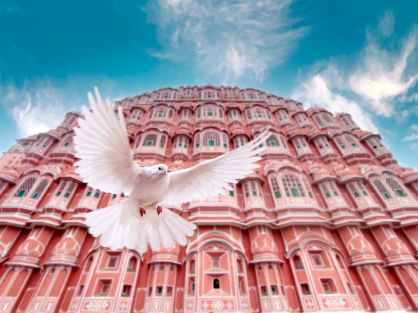
The capital of Rajasthan, the largest state in the country, Jaipur is all about its glorious history. It is also widely known as the Pink City. The name is derived from the fact that the erstwhile area of Jaipur which is now the area around the HawaMahal, was built of pink sandstone. The narrow streets, the colourful clothing, the lovely aromas bursting forth from the food, the vast number of palaces speak volumes of the deep rooted culture of the city.
Maharaja Sawai Jai Singh II invoked the artisans from all over the world and facilitated them with all the things they required, to help in creating the exotic city of beautiful architecture as Jaipur. Today, Jaipur is a hub for rich wedding destinations. Royal weddings are organized here. Exquisite destinations are specially designed for marriages, and offer an experience of one of its kind. Jaipur’s forts, monuments, and museums can be read about further.

Some of the best monuments and sites to visit in pink city are.

Amber/Amer Fort.
At a distance of 13 km from Jaipur Junction Railway Station, Amer Fort or Amber Fort is located in Amer near Jaipur. It is one of the best-preserved forts in Rajasthan, The architecture of Amer Fort is influenced by both Hindu and Muslim styles. Among the famous tourist places in Jaipur, Amer Fort was built using red sandstone and overlooks Maota Lake which is the main water source to the Palace.

City Palace.
City Palace, Jaipur was constructed between 1729-1732, in Jaipur as it paints the picture of heritage and rich culture. Sawai Jai Singh II has started the work of this palace, exclusively the exterior architecture of the building. Moving from Amber, he has moved to the Jaipur city because of the increase in water shortage problem which resulted in an inadequate supply of water to people.

Nahargarh Fort.
Nahargarh is one of three forts in the vicinity of the “Pink City” of Jaipur. Despite its prominence, the fort remained sadly neglected until recent years, resulting in visitors frequently overlooking it in favor of iconic and well-preserved Amber Fort on the opposite end of the ridge. Extensive restoration works and some exciting new attractions have revitalized the fort though, making it one of the top tourist places in Jaipur.

Jai Garh Fort.
Situated on one of the mountains of the Aravalli Range, Jaigarh Fort is a landmark structure in Jaipur. The strategically designed Jaigarh Fort was fundamentally built to protect the Amer Fort from any attack. Jaigarh Fort is popular for numerous reasons and the two most prominent are its mesmerizing architecture, which is a fusion of Rajputana and Mughal style, and for being the hub of artillery during the Mughal era.

Jantar Mantar.
Jantar Mantar is one of the finest monuments and striking creations by astronomers and architectures. It is a compilation of architectural astronomical devices which provided accurate astronomical results. It has even struck the modern approach of science. Jantar Mantar is the most well-known observatories amongst all the buildings formed during the sovereignty of Maharaja Sawai Jai Singh II.

Hawa Mahal.
Hawa Mahal was built by Maharaja Sawai Pratap Singh in 1799 and was designed by architect Lal Chand Usta as a ‘Rajmukut’. The Hawa Mahal was built specifically for Rajput members, and especially for women, so that the royal ladies could watch the daily drama dance in the street below, as well as have a beautiful view of the city from the window.

Central Museum
Central museum is also known as ‘Albert museum’ or ‘Government Central Museum’. This is the oldest museum of the city and was constructed in 1876 beneath the command of Lt. Swinton Jacob. Initially the building was a town hall. But on the order of Maharaja Madho Singh it was transformed into an art museum.

 Extreme Poverty to ‘Prosperity’: Unique Case of Indian weight-lifter Achinta Shewli 

 Because of poverty many families and many youths in our country could not reach the zenith albeit they have potential. . Regarding poverty, I wish to mention that John Boyd Orr, the first Director-General of the United Nations Food and Agriculture Organization (FAO)   used the calorie concept to explain poverty which was the minimum value of foods a human being required to sustain a good life. In India, poverty has been defined based on a minimum daily requirement of 2,400 and 2,100 calories for an adult in rural and urban areas, respectively which subsequently has been converted to income earning.

Here, I am presenting a case of a youth who in spite of living in extreme poverty has reached the zenith because of strong dedication, devotion, and sincerity.

Achinta Shewli of West Bengal (resident of Howrah) brought gold to the country in the Commonwealth Games but in his childhood in weight-lifting but he passed awful days because of extreme poverty. Arranging good food, particularly protein food was a dream for the families. It is fact that in general Bengali people irrespective of caste or religion eat non-vegetarian items like fish, chicken, mutton, and egg. In childhood eating, the non-veg item was a dream​ for Achinta. His father was a rickshaw van driver earning a paltry amount and unfortunately, his father passed away in April 2013 (38 years age) when Achinta was just 11 years old. After the death of the father, the two brothers Alok and Achinta helped the mother with the lace work. Both the brothers dreamed of becoming weightlifters. But it was not easy to dream where they had to fight to get two meals.  After his father’s death, his grandfather did everything for them. 

​According to him, the goal is to get a medal at the 2024 Paris Olympics and the Commonwealth Games medal will give Achinta confidence to get the same. It may be mentioned that Achinta’s brother Alok told Anandabazar Online, “One day when I was a child, my brother was crying because he wanted to eat chicken -​meat. But later on at that age, he understood the financial condition of the house. After that, he did not cry.”

Achinta’s coach Ashtam Das said, “I had many players who were physically better than Achinta, but they did not have the hunger for sports, which I saw in Achinta.” Achinta’s coach Ashtam Das left his BSF job to train potential weight-lifters. In view of his financial condition, he trained him free of cost. 

Achinta Shewli started weightlifting in the year 2011, admiring his brother who was also a former Weightlifter. Ashtam Das admitted him to the Army Sports Institution in Pune. Since then Achinta’s studies and sports have been going on there. He got a job in the army last year 2021). It seems Ashtam Das spent his personal money on the development of weight lifters but the State Government did not extend any support for the infrastructure development of the ‘practicing center’ although everyone knows the State Government has been spending huge money on much unproductive expenditure. So, I suggest to the State Government please look into such issues as such expenditure is known as ‘Development Expenditure’ i.e. development for human resource.

(Basic inputs collected mainly from two editions of Anandabazar Patrika (Bengali editions), Kolkata, 1/8/22 and 2/8/22)

Extreme Poverty to ‘Prosperity’: Unique Case of Indian weight-lifter Achinta Shewli

 Because of poverty many families and many youths in our country could not reach the zenith albeit they have potential. . Regarding poverty, I wish to mention that John Boyd Orr, the first Director-General of the United Nations Food and Agriculture Organization (FAO)   used the calorie concept to explain poverty which was the minimum value of foods a human being required to sustain a good life. In India, poverty has been defined based on a minimum daily requirement of 2,400 and 2,100 calories for an adult in rural and urban areas, respectively which subsequently has been converted to income earning.

Here, I am presenting a case of a youth who in spite of living in extreme poverty has reached the zenith because of strong dedication, devotion, and sincerity.

Achinta Shewli of West Bengal (resident of Howrah) brought gold to the country in the Commonwealth Games but in his childhood in weight-lifting but he passed awful days because of extreme poverty. Arranging good food, particularly protein food was a dream for the families. It is fact that in general Bengali people irrespective of caste or religion eat non-vegetarian items like fish, chicken, mutton, and egg. In childhood eating, the non-veg item was a dream​ for Achinta. His father was a rickshaw van driver earning a paltry amount and unfortunately, his father passed away in April 2013 (38 years age) when Achinta was just 11 years old. After the death of the father, the two brothers Alok and Achinta helped the mother with the lace work. Both the brothers dreamed of becoming weightlifters. But it was not easy to dream where they had to fight to get two meals.  After his father’s death, his grandfather did everything for them. 

​According to him, the goal is to get a medal at the 2024 Paris Olympics and the Commonwealth Games medal will give Achinta confidence to get the same. It may be mentioned that Achinta’s brother Alok told Anandabazar Online, “One day when I was a child, my brother was crying because he wanted to eat chicken -​meat. But later on at that age, he understood the financial condition of the house. After that, he did not cry.”

Achinta’s coach Ashtam Das said, “I had many players who were physically better than Achinta, but they did not have the hunger for sports, which I saw in Achinta.” Achinta’s coach Ashtam Das left his BSF job to train potential weight-lifters. In view of his financial condition, he trained him free of cost. 

Achinta Shewli started weightlifting in the year 2011, admiring his brother who was also a former Weightlifter. Ashtam Das admitted him to the Army Sports Institution in Pune. Since then Achinta’s studies and sports have been going on there. He got a job in the army last year 2021). It seems Ashtam Das spent his personal money on the development of weight lifters but the State Government did not extend any support for the infrastructure development of the ‘practicing center’ although everyone knows the State Government has been spending huge money on much unproductive expenditure. So, I suggest to the State Government please look into such issues as such expenditure is known as ‘Development Expenditure’ i.e. development for human resource.

(Basic inputs collected mainly from two editions of Anandabazar Patrika (Bengali editions), Kolkata, 1/8/22 and 2/8/22)

Media as the Fourth Pillar of Democracy

 Media as the Fourth Pillar of Democracy

As the largest democracy, India is considered a role model for a large number of developing countries. We have state and central governments elected by the people. We have a government run by our own elected representatives, known as Members of Legislative Assembly (MLAs) in the state and Members of Parliament (MPs) at the center. The democratic government has three pillars:

a) A Legislature: State Assemblies and Parliament, responsible for framing laws and deciding the way we run our affairs.

b) An Executive: The Governor, the Chief Minister, and the Ministers who run the state and the President, Prime Minister, and the Council of Ministers who run the country.

c) A Judiciary: The Supreme Court, High Courts, and other courts decide whether laws and constitutional provisions are followed by the elected governments.

The fourth pillar of Democracy:

Media work to provide information about what is happening in our surroundings. Media keep an eye on everything happening in the nation and it is the fastest way to know about current happening and other relevant information. Media is considered the fourth pillar of democracy. It plays an important role as play by the legislature, executive, and judiciary in the functioning of a democratic country. As these three pillars run the government of the country for the welfare and development of all the people, the media also work for the same.

 In a democracy, the people should know what the three institutions, namely the Legislature, the Executive, and the Judiciary are doing for the welfare of the people. These institutions in turn need to know how the people are reacting to what they are doing. This can be only possible through the media because media is the easiest way to disseminate information quickly and easily across the country.

The government can’t spread the information about the decision they made or new policies they made, to individual people of the country. And it is also not possible for the citizens of the country to keep an eye on every decision-making of government. So, the media is the only way to connect both. The main role of the media is to act as a bridge between the people and the government.

Media can spread the information about government through TV news, newspaper, website, or social media platform, which help people to get in touch with what is happening in the administration. In the same way, the government can know about the needs, demands, thoughts, and problems of people. This helps them to work for the betterment of the nation. Media also work to expose corruption and raise social issues. Thus, the media play a great role in the functioning of the country.

Real estate, types of real estate

 Real estate

Real estate is property in the form of land , houses, or other buildings. It is real property that consists of land and improvements , which include buildings , fixtures , roads , structures , and utility systems.
It having generally immovable property . 
For anyone who want more gain in property with low investment and more gain they should have real estate . 
There are many benefits of investing in real estate include passive income , stable cash flow , tax advantages, diversification, and leverage.
There are five main categories of real estate which include residential, commercial, industrial, raw land , and special use.
Investing in real estate includes purchasing a home , rental property, or land . Investment in this immovable property help person in future as everyone need money for their survival without money nothing can been taken in this world . So by investing in these properties people will gain more with their less investment after sometime in the future.

Types of Real Estate

1. Residential real estate – 

Any property used for residential purposes. Examples include single – family homes , condos , cooperatives, duplexes , townhouses, and multi-family residences.

2. Commercial real estate – 

Shopping centres, restaurants, schools , hospitals, and office spaces all are some examples of commercial properties that we are probably familiar with. Investing in them is more expensive as computer to residential properties, but the chances of profit generation are better too.

3. Industrial real estate – 

Buildings and factories used for manufacturing goods and warehousing are known as industrial properties. They are generally located far away from the city to avoid the citizens getting affected by their pollutants. Each factory produce polluting agents so it’s better that it should be far away.

4. Mixed use real estate – 

Mixed use real estate is fun investment because it allows you to play with both residential and commercial real estate.
The cool thing about mixed use real estate is that it can be single homes zoned on commercial land , which means a home can become a business such as a barber shop or boutique. It also includes properties like apartment building with retail stores on the first floors. 

5. Land – 

I think buying a land is one of the best idea in this generation. As day by day the price of land is increasing and if one person buy land today then in future he will get profit as their price will increase. Here investors typically receive more ROI when they purchase a building and rent it out as opposed to buying property with the purpose of holding on to it and selling it at a later date .
So investing in a real estate is good idea for anyone . We always need some property to ensure our financial condition will be good in the future. If a person don’t have any real estate he or she will regret later as everyone need money for their livelihood and maintaining their status in the society.
Try to invest in real estate it will surely help you in your difficult time .

Describing "Loan"


What’s a loan?

A loan is anything loaned to another person in exchange for future repayment of the loan value plus interest and other financing charges, whether it be property, money, or other tangible goods. A loan can be obtained as an open-ended line of credit with a set maximum or for a fixed, one-time sum. There are many various types of loans, including unsecured, secured, commercial, and personal loans.


Know about the loans


A loan is a debt that a person or an organisation incurs. A lender is the other party to the transaction; typically, it is a government agency, financial institution, or business. They lend the borrower the necessary amount of money. In exchange, the borrowers consent to pay a specific set of conditions, such as any finance fees, interest, etc., using the money they initially borrowed.

How is the loan process carried out?


You apply for a loan from a business or a bank when you need money. You must supply particular information, including the reason you need the loan, as well as your financial background, Social Security Number (SSN), and other facts that may differ from lender to lender.

In order to determine if you can afford to repay the loan, the lender will examine your application and look at your debt-to-income ratio. The lender will either accept or reject your application based on it. If your application is turned down, the lender is required to give a justification.

A contract between you and the lender is signed if your application is accepted. The loan amount, together with interest and other fees, are sent to your account by the lender.

Before a loan contract is completed and funds are dispersed, certain terms must be agreed upon by both parties. The loan paperwork will specify any requirements for collateral, which the lender may in some circumstances require. The majority of loans also include clauses defining the maximum rate of interest and the grace period before repayment is necessary.

When and why are loans given?


Loans are given out for a variety of reasons. A borrower can require a loan to finance a purchase, debt relief, business endeavours, home improvements, or for investments. Business loans can support a company’s expansion.

Loans, in other words, enable the expansion of an economy’s total money supply and promote competition by funding new enterprises. Lenders (banks) receive income from the interest and other fees they charge borrowers.

When taking out a loan, one key consideration


The importance of interest rates to a borrower is one of the key considerations when applying for a loan. The borrower will spend more money for loans with higher interest rates since they require larger monthly payments or take longer to repay than loans with lower interest rates.

What inquiries must to be made while applying for a loan?


A few inquiries one should make while applying for a loan include:

Q. How long will it take to receive the funds?,

Q. What is the loan’s interest rate?,

Q. What is the loan’s duration? Do there charge any fees?

What are the three primary categories for loans?


Loans can be divided into three basic groups: traditional, open-end and closed-end loans, unsecured and secured loans.

What elements influence loan approval?


Loan approval is influenced by a number of variables, including credit score, debt-to-income ratio, down payment, employment history, home valuation, and condition.

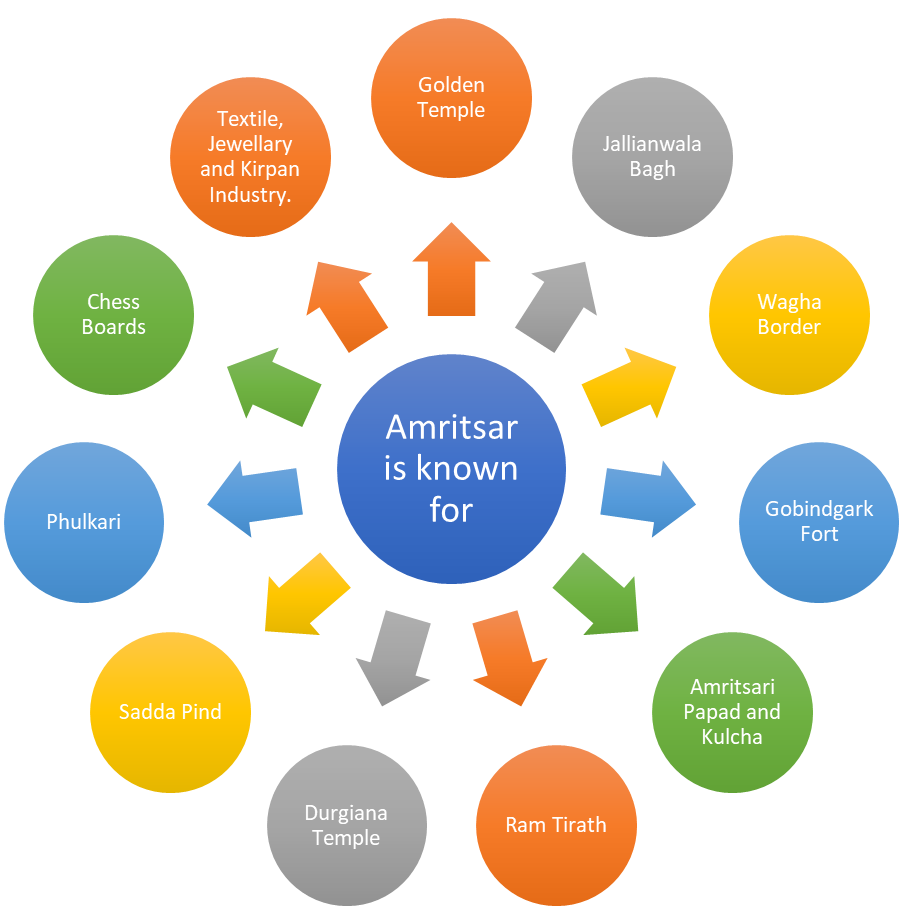
Amritsar- The Holy City

 Amritsar- The Holy City

Amritsar also called Ambarsar and historically known as Ramdaspur, is located in the Punjab state of India. It derives its name from Amrit Sarovar which was built by Guru Ram Das in the village of Tung. Guru Ram Das believed that the waters of the lake had healing powers. Amritsar is the largest and most important city in Punjab and is a major commercial, cultural, and transportation center. It is also the center of Sikhism and the site of the Sikhs’ principal place of worship—the Harmandir Sahib which is popularly known as the Golden Temple. The hospitality of Amritsar is very good and the people here are so overwhelming.

 5 most important reasons to visit Amritsar


1.    The very first reason to visit Amritsar is Golden Temple. The peace and tranquility of the temple is the main reason why travelers love visiting the temple. The langar served at the temple is yet another reason why this is a popular place to visit in Amritsar. The Architecture and ambiance of the temple will touch your heart.


2.    The second thing is the Wagah border. The Wagah Border is what divides India and Pakistan. Every evening, a ceremony called the ‘lowering of the flags’ is hosted half an hour before the sunset, and it sees a huge gathering on both sides of the border. The ceremony has been going on every day since 1959 and is worth an experience. 


3.    The third reason to visit Amritsar is Jallianwala Bagh. No Indian can forget the massacre and the tragic history of the Jallianwala Bagh during India’s struggle for freedom. The memorial is a tribute and a way to pay respect to everyone who lost their lives here. Still, you can see the signs of history here.


4.    The fourth thing is food, which is so good that you can’t stop yourself. You eat at one Dhaba, and you’ll find yourself eating at a Dhaba throughout your trip to Amritsar. Kesar Da Dhaba is one of the most popular Dhaba in the city, and you’ll be drawn to it the moment you’re anywhere near it. The smell of desi ghee and parathas will draw you to the Dhaba. It’s also one of the oldest dhabas in the city. You will find a lot of Dhabas in Amritsar and don’t forget to order a big glass of lassi while you’re at it. The chole, parathas, dal, and phirni are some of the other specialty food items you must try out.


5.    The fifth reason is locals and the market. Interacting with the locals is one of the best things to do in Amritsar. You will learn a lot about their culture, and you will leave with a bunch of friends and a wonderful experience. The people here are extremely hospitable and will become your best buddy very quickly and quite easily. Head over to Old Amritsar to experience what Amritsar is all about. You will find a lot of bazaars here and some that have been there for over a hundred years. 

 Thus, the reasons to visit Amritsar are endless. Once you visit the place you will connect with the place heartly. This place will teach you to how to enjoy your life happily and keep others happy too.


Tourist Destination and 5 reasons you should visit Goa

 What do you mean by tourist destination?

A tourist destination is any city or place where you can visit and explore things. It attracts the nature of that particular place, the beauty, the most historical monuments, temples and their famous food.

Goa

Goa is the smallest state in India. It is bounded by the states of Maharashtra in the north and Karnataka in the south and east and the Arabian Sea in the west. Goa’s capital is Panaji. It is located 400 km south of Mumbai. Goa is very famous for its beaches and its goan foods. The climate of goa is equally high and low temperature throughout the year and it receives rainfall in the monsoon season. 

Agriculture is an important factor in goa’s economy. It has a large fisheries industry and they have agricultural farms where they grow mangoes, cashew, sugarcane, pulses, coconuts, and betel. 

The transportation service to Goa is available by road, sea, rail and air.

Goa is the most beautiful place to visit and explore new things. Till now I have not visited goa but for sure to go one time for a vacation. There are some famous beaches, food and monuments there. 

Let’s explain it briefly

1. Calangute Beach

It is one of the most popular beaches in Goa. It is located in the district of North Goa. The main tourist attraction is in New Year and Christmas time and during the summer of May. Calangute beach is the most adventurous beach. It has many watersports like parasailing, banana rides and jet- skiing.

2. Fort Aguada

Fort Aguada is situated in North Goa. From September to March it is the best time to visit Fort Aguada and see the beauty of the fort. It is built at the mouth of the Mandovi river and it takes 2 hours to visit and sees the entire fort.

3. Baga Beach

Baga beach is situated in North Goa. It is a popular beach with bars, restaurants and clubs. It has many watersports such as parasailing,net-skiing, kite surfing, and wakeboarding. There is a Tibetian market on Baga Road for shopaholics. 

Baga beach has an indoor snow park where you can enjoy many games in the play area and sledge in the sledging area.

4. Dudhsagar waterfall

Dudhsagar waterfall is also known as the Sea of Milk and it is the highest waterfall in India. November and December is the most beautiful time to visit Dudhsagar waterfall and the nearest railway station to reach Dudhsagar waterfalls is Castle Rock Station. It is located in the Mandovi river in the state of Goa.

5. Butterfly Beach

 Butterfly beach is located in south goa. It is also known as honeymoon beach. Butterfly beach has a very beautiful view and is surrounded by a thick forest. These beaches have dolphins and butterflies on the top hillside.

5 reasons why you should visit Goa 

* Goa is a beautiful place to go for a vacation with your loved ones. You can enjoy the sunset beach walk and doing shopping in the markets.

* Goa has its famous food which is called Goan food. Goan food is incomplete without fish, rice and fish curry. Once you eat this Goan food you will always be in love with this famous Goan food of Goa. Another snack which is very popular in India is the samosa. Many people love samosas but Goan samosas is one of the best snacks served in every tea corner or stall in Goa.

* In Goa you can enjoy doing watersports available on beaches. Example – parasailing, jet- skiing, banana ride, boat ride, Ringo ride, windsurfing and many more.

* If you want to enjoy a festive atmosphere you can plan a trip to Goa. Many carnivals are there to enjoy and the church at Christmas time. It is one of the most beautiful views in Goa.

* Dolphin spotting is another reason you must visit Goa. There are many dolphins on Goa beaches and if you take a banana boat and ride into the ocean you will see dolphins jumping out to play. Candolim beach is very popular for dolphin spotting.

Hope you will find this blog helpful if you plan a trip to Goa and if you want more details about the planning and booking of tickets, and resorts in Goa, you can check their official website.

PageRank Checker – Check Your Google Page Rank

PageRank is an algorithm used by Google Search to rank websites in their search engine results. Page Rank was named after Larry Page, one of the founders of Google as a way of measuring the importance of website pages.

What is Google PageRank and Why Is It Important

According to Google:

“PageRank works by counting the number and quality of links to a page to determine a rough estimate of how important the website is. The underlying assumption is that more important websites are likely to receive more links from other websites.”

Briefly, the Page Rank is an assessment of the importance of a web page. This relevance is calculated and published on a scale from 0 to 10. Google basically takes into account the number of backlinks that each page receives, however, the number doesn’t matter that much if we don’t build high quality backlinks from sites which are related to our links, preferably internal links.

A greater importance has the quantity of internal links linked by other websites, which happens when you create a post and someone publishes the link that redirects to this post that you created. So, the more backlinks your blog or site has, the higher is the chance of having a good PageRank.

Now that we have a basic understanding of what Page Rank is, how about checking yours?

Check Google Page Rank using the PageRank Checker

You can easily calculate your page rank and check the importance of your page. Just enter the address of your website / blog below and check it out:

Check Page Rank of your Web site pages instantly:


This page rank checking tool is powered by Page Rank Checker service

Do you want to share your page rank with your visitors? You can add a button to your blog by visiting the PageRank Buttons page.

What is an Insurance Policy?

 A contract between a person (Policyholder) and an insurance business is known as an insurance policy or plan (Provider). According to the terms of the contract, you pay the insurer regular sums of money (referred to as premiums), and they pay you if the sum assured is realised in the case of an unpleasant occurrence, such as the early death of the life insured, an accident, or damage to a home. Let’s learn more about what insurance is and the different features, advantages, and forms of insurance that are offered in India.

If an event occurs, the insurer pays a lump sum settlement to the policyholder/nominee in accordance with the insurance terms.

Depending on a person’s needs and life goals, they will decide which kind of insurance coverage to purchase.

An insurance policy has a number of different parts, each of which should be well understood before selecting the one that best suits your needs.

Insurance-Related Items

Listed below are some of these elements to assist you comprehend “what is insurance” and how it operates:

Policy for Insurance Premiums

The amount you must pay to purchase a certain quantity of insurance coverage is known as the premium of an insurance policy. It is often described as a consistent expense that you have during the period of premium payments, whether it is monthly, quarterly, half-yearly, or annually.

The premium for an insurance policy is determined by a number of variables by an insurance provider. The purpose is to determine if an insured person is qualified to purchase the particular sort of insurance policy that he or she desires.

For instance, if you are in good health and have never received treatment for serious physical ailments, you will probably pay less for health insurance or a life insurance policy than someone who is unwell.

Additionally, you should be aware that different insurance providers may charge various costs for comparable types of plans. So it does take some work to choose the appropriate one at a price you can afford.

Policy Limit

It is described as the highest sum that an insurance provider is accountable for covering for damages covered by the insurance policy. Based on the timeframe (the policy term), the loss or injury, and comparable other considerations, it is decided. 

Generally speaking, the higher the coverage limit, the more expensive the premium will be. The highest sum that an insurer will pay to the nominee under a life insurance policy is referred to as the sum assured.

Deductible

The amount or percentage that the policyholder agrees to pay out of pocket prior to the insurer beginning to settle a claim is the deductible associated with an insurance policy. It also serves as a deterrent to the numerous petty, unimportant claims that people make under their insurance coverage.

According to the conditions of a certain type of policy, deductibles are applied per policy or per claim. High deductible insurance policies are typically less expensive because fewer claims are filed due to the greater out-of-pocket costs.

How Do Insurance Policies Work?

According to the definition given above, an insurance policy is a binding legal agreement between the policyholder and the insurance provider. It contains all the information on the terms or situations under which the insured person or the policy nominee will receive insurance benefits from the insurer.

You can protect yourself and your loved ones from a financial crisis by purchasing insurance. You purchase an insurance policy for the same, and the insurance provider assumes the associated risk and provides insurance coverage for a set fee.

The insured or nominee may submit a claim to the insurer in the event of any occurrence. The insurer examines the claim application and resolves the claim based on the criteria for claim evaluation.

India’s Insurance Options

The four forms of insurance that people most frequently purchase are:

Health Insurance

Medical Insurance

Vehicle Insurance

Property Insurance

Gains from Insurance :

Insurance plans have numerous advantages for both individuals and society as a whole. Other advantages of insurance, besides the obvious ones, are less well known or spoken of.

1. Protect against ambiguity

It is among the most notable and significant advantages of insurance. According to the insurance plans, the insured person or organisations are protected against losses. The correct kind of insurance coverage might help you protect yourself from losses brought on by various life’s uncertainties.

2. Managing Cash Flow

The management of cash flow is greatly impacted by the uncertainty of covering the losses out of pocket. However, you can deal with this uncertainty with ease if you have an insurance coverage on your side. The selected insurance company

3. Possibilities for Investment

A portion of the premium for the unit-linked insurance plan is invested in various market-linked funds. They make it possible for you to consistently invest money in order to benefit from market-linked returns and achieve your life goals.

Benefits of Insurance for Taxes

You can receive income tax benefits in addition to protection benefits from insurance plans.

Article 80C

According to Section 80C of the Income Tax Act, the premiums for life insurance policies may be deducted from taxable income. The maximum deduction allowed is Rs. 1.5 lakh.

Article 80D

According to Section 80D of the Income Tax Act of 1961, health insurance premiums paid to purchase policies for you and your parents are also tax deductible.

Chapter 10 (10D)

This clause exempts from taxation any life insurance benefits that you or the insurance policy nominee receive from the insurer.

Purchase insurance to be safeguarded.

In today’s world, having insurance to stay protected is essential. Even while many people invest in various insurances, not everyone is aware of all the benefits they can provide. Insurance, such as life insurance, safely and affordably guarantees the financial security of your family as well as your own. Additionally, buying life insurance promotes the development of a consistent saving routine. It so gives you the ability to create a significant corpus.

You may protect your financial situation and that of your family with the aid of insurance plans from one of the available Life Insurance policy, such as term plans and health insurance plans, and you can also benefit from a number of other advantages. Now that you understand what insurance is and how it functions, you should think about getting the kind that’s right for you and stay safe!

DISASTER AND DISASTER MANAGEMENT

DISASTER:
A disaster is a serious disruption occurring over a short or long period of time that causes widespread human, material, economic or environmental loss which exceeds the ability of the affected community or society to cope using its own resource. It is a natural or man-made hazard resulting in an event of substantial extent causing significant physical damage or destruction, loss of life, or drastic change to the environment.

Disaster are classified into natural disaster and man-made disaster. In modern times, the divide between natural, man-made and man-accelerated disasters is quite difficult to draw.
Complex disasters, where there is no single root cause, are more common in developing countries. A specific disaster may spawn a secondary disaster that increases the impact. A classic example is an earthquake that causes a tsunami, resulting in coastal flooding, resulting in damage to a nuclear power plant. Some manufactured disasters have been wrongly ascribed to nature such as smog and acid rain. Some researchers also differentiate between recurring events such as seasonal flooding, and those considered unpredictable.

NATURAL DISASTERS AND MAN-MADE DISASTERS:
The natural disaster is caused by natural hazard whereas the man made disasters are caused by anthropogenic hazards.
A natural disaster can cause loss of life or damage of property.It brings economic damage after its wake. The severity of the damage depends on the affected population’s resilience and on the infrastructure available.Examples of natural hazards include: avalanche, coastal flooding, cold wave, drought, earthquake, hail, heat wave, hurricane, ice storm, landslide, lightning, riverine flooding, strong wind, tornado, tsunami, volcanic activity, wildfire, winter weather. Anthropogenic hazards can be grouped into societal hazards, civil disorder, terrorism, war, industrial hazards, engineering hazards, power outage, fire, hazards caused by transportation and environmental hazards.
In modern times, its is difficult to differentiate between man-made and man-made accelerated disaster. A man-made hazard impact a vulnerable community. It is the combination of the hazard along with exposure of a vulnerable society that results in a disaster. The rapid growth of the world’s population and its increased concentration often in hazardous environments has escalated both the frequency and severity of disasters. With the tropical climate and unstable landforms, coupled with deforestation, unplanned growth proliferation, non-engineered constructions make the disaster-prone areas more vulnerable. Developing countries suffer more or less chronically from natural disasters due to ineffective communication combined with insufficient budgetary allocation for disaster prevention and management.

DISASTER MANAGEMENT:
he International Federation of Red Cross & Red Crescent Societies defines disaster management as the organisation and management of resources and responsibilities for dealing with all the humanitarian aspects of emergencies, in particular preparedness, response and recovery in order to lessen the impact of disasters.
DISASTER PREVENTION:
UNISDR views Disaster Prevention as the concept of engaging in activities which intend to prevent or avoid potential adverse impacts through action taken in advance, activities designed to provide protection from the occurrence of disasters. WCPT similarly highlight that while not all disasters can be prevented, good risk management, evacuation plans, environmental planning and design standards can reduce risk of loss of life and injury mitigation. The HYOGO Framework was one such Global Plan for natural Disaster Risk Reduction, which was adopted in 2005 as a 10 year Global Plan, signed by agreement with 168 Governments which offered guiding principles, priorities for action and practical means for achieving disaster resilience for vulnerable communities.
Disaster Preparedness
Disaster Preparedness refers to measures taken to prepare for and reduce the effects of disasters, be they natural or man-made. This is achieved through research and planning in order to try to predict areas or regions that may be at risk of disaster and where possible prevent these from occurring and/or reduce the impact those disasters on the vulnerable populations that may be affected so they can effectively cope. Disaster preparedness activities embedded with risk reduction measures can prevent disaster situations and also result in saving maximum lives and livelihoods during any disaster situation, enabling the affected population to get back to normalcy within a short time period. Minimisation of loss of life and damage to property through facilitation of effective disaster response and rehabilitation services when required. Preparedness is the main way of reducing the impact of disasters. Community-based preparedness and management should be a high priority in physical therapy practice management.
In order to reduce the impact during disaster activities like Rescue, Relocation, Provision food and water, Prevention of disease and disability, Repairing Vital services, Provision temporary shelter.

DISASTER MANAGEMENT:
When disasters strike, there is always a huge amount of goodwill from rehabilitation professionals around the world who wish to use their skills to support those affected. This brief guidance informs those who are considering responding internationally to a disaster either as individuals or as part of a team. It highlights key questions to consider before departing, whilst working in the disaster area and on returning home. Responses to these questions considered are presented as “Do’s and Dont’s” which are exemplified by recommended practices and those to avoid in the real case studies below. The guidance note is not intended to be a step-by-step or technical guide, nor is it exhaustive, and does not supersede any specific guidance provided by your own global professional body.

Agencies involved in Disaster Management
• National Disaster Management Authority (NDMA):- The National Disaster Management Authority, or the NDMA, is an apex body for disaster management, headed by the Prime Minister of India. It is responsible for the supervision, direction, and control of the National Disaster Response Force (NDRF).
• National Executive Committee (NEC):- The NEC is composed of high profile ministerial members from the government of India that include the Union Home Secretary as Chairperson, and the Secretaries to the Government of India (GoI)like Ministries/Departments of Agriculture, Atomic Energy, Defence, Drinking Water Supply, Environment and Forests, etc. The NEC prepares the National Plan for Disaster Management as per the National Policy on Disaster Management.
• State Disaster Management Authority (SDMA):- The Chief Minister of the respective state is the head of the SDMA.The State Government has a State Executive Committee (SEC) which assists the State Disaster Management Authority (SDMA) on Disaster Management.
• District Disaster Management Authority (DDMA):- The DDMA is headed by the District Collector, Deputy Commissioner or District Magistrate depending on the situation, with the elected representatives of the local authority as the Co-Chairperson. The DDMA ensures that the guidelines framed by the NDMA and the SDMA are followed by all the departments of the State Government at the District level and the local authorities in the District.
• Local Authorities:- Local authorities would include Panchayati Raj Institutions (PRI), Municipalities, District and Cantonment 11 Institutional and Legal Arrangements Boards, and Town Planning Authorities which control and manage civic services.

Menstruation & It’s Taboos

N kavya

The menstrual cycle is a part of your reproductive system. Menstruation is the monthly shedding of the lining of your uterus. The menstrual blood which is partly blood and partly tissue from the inside of your uterus flows from your uterus through your cervix and out of your body through your vagina.

It has been said that during those days the tradition started for a good reason as women go through heavy cramps, PMS (premenstrual syndrome), headaches, stomach aches, mood swings, etc. Women were being isolated from their family and given complete rest in a separate room, as time passed the traditions became aggressive and gave more stress associated with myths, or misconceptions and taboos to women than being supportive to them during their menstrual cycle. Women are not allowed to enter the temples, in many households’ girls are subjected to many superstitious practices such as; prohibition from entering the kitchen and prayer room, being made to stay in a separate room, being forced to eat in separate utensils, and in some houses, the girl is provided the left-over food. Not being allowed to touch certain kinds of food because they could get spoilt, and tagging the girl as impure and unclean. The stigma associated with a woman bleeding every month leads to poor hygiene among a large section of rural women who use wood husk, leaves, paper, and other such materials instead of sanitary napkins when on their periods. The temple in Assam ‘Maa Kamkhaya’ where the main deity is the uterus of a woman signifies the importance of reproduction and the menstrual cycle is completely natural. In India, some school girls were allegedly forced to remove their underwear to prove they were not menstruating. The girls also reported that they were barred from touching other students during their menstrual cycle.

These social stigmas isolate the girls from family and friends which increases their stress levels and impacts their mental health. As per the survey in India, only 48% of adolescent girls are aware of what menstruation is before getting their first period, which is unhygienic for their health due to a lack of proper sanitation facilities. Young people do not have access to reliable and correct information about their reproductive health and rights. The lack of acceptance and the taboo associated with it leads the girls to stay at home due to anxiety and embarrassment… An overall lack of scientific knowledge about menstruation also gives way to myths and misconceptions. During previous centuries, there were many rules followed due to some circumstances but following those rules in this period seems unreasonable.

Girls must be given proper menstruation knowledge before they get their first period because many girls do not have the knowledge about how their body works and provide free napkins to the government schools. The main development goals must include an equal opportunity for education for girls and boys and access to proper sanitation. The media creating public awareness regarding these issues would break the taboo prevailing in society. The movie ‘Pad Man’ starring Akshay Kumar and Radhika Apte which speaks about the importance of women’s menstrual health is notable. To cross these barriers government, NGOs, corporate companies, and media and entertainment industries must collaborate and take advantage of each other’s capability and influence to achieve this vision.

Image credits- Google

why Vocational Studies is the right choice for present generation

What Is Vocational Education? 


Theoretical knowledge is not everything in today’s world,
rather skills are becoming more valuable. This term skill is what is talked
about these days, but how to acquire them?  

While traditional colleges/universities provide students
with theoretical knowledge which can be applied to certain fields, vocational
education provides the students with hands-on training. Vocational education is
a great opportunity for students who are looking to acquire specific skills to
get a job that better aligns with their career goals and dreams, as they learn
the fundamentals of a specific occupation under the supervision of an
experienced professional.


Skills offered by vocational training courses


Vocational training focuses on developing technical
skills which make you instantly job-ready for example electrician, artisan,
emergency medical technician, plumber, woodworking and carpentry, automobile
technician, welding training, etc.

Differences between vocational education and university
education


The differences between traditional education and
vocational education are:-


Program
focus


Programs offering vocational education focus on teaching
the students specific skills which can directly be applied to a specific job.
These programs offer technical skills for a job like plumbers, electricians,
etc. on the other hand university education programs are focused on providing
theoretical knowledge to the students and focus less on applicable skills.
These students gain more academic knowledge compared to a vocational education
program.


Time to complete


As vocational courses focus less on theoretical-based
learning, the students gain the desired amount of qualifications in a much
shorter period. On the other hand, traditional university students usually need
to spend around two to four years completing their education before they are
qualified enough to apply for a job 


Costs

Because vocational courses can be completed in a much
shorter duration they are more cost-effective when compared to traditional
education programs. These courses are the perfect opportunity for people with a
limited budget. Universities on the other hand can be a lot more expensive as
they have a longer duration and the universities with better education and
access to competent job opportunities usually charge more.

Types of job opportunities

Vocational education programs prepare their students for
blue-collar and physical labor jobs. Gaining expertise in the respective field
will enable you to move up to a better role like a supervisor or a manager.
Contemporary university programs prepare their students for white-collar and
desk jobs, which do not require physical labor rather, they involve more mental
work and internet-based technologies.

Different types of vocational education

There are a lot of different sources which provide
vocational training programmes, some of these are-

High school CTE programs

The CTE program is for high school students who want to
gain work experience in different professions and go on to college. This type
of vocational training is usually part of the high school curriculum, but
students can also attend separate vocational centers. These career training
programs allow students to explore different career options and prepare them
for industry or graduate school-specific work. In most vocational training
programs at this level, students continue their intermediate education while
completing their training. 

Tech Prep education

Tech Prep programs serve as a bridge between general and
post-secondary vocational training to prepare students to pursue careers in the
high-tech sector. Thanks to a partnership between the two institutions, Tech
Prep programs combine at least two years of high school and two years of
post-secondary. The program usually culminates in a certificate or associate’s
degree in a particular field of study.


Apprenticeship
programs

Apprenticeship programs are specific to the trade and can
last up to four or five years. In these types of programs, apprentices or
students work under the supervision of an expert in their trade and get paid
for their work. This type of vocational training is most common in highly
skilled and practical occupations. Apprenticeships often combine on-the-job
training with classroom instruction. Since some apprenticeships include
classroom courses, they can lead to a certificate or diploma. A major advantage
of this type of training is that it is an educational program in which the
student also receives remuneration for his or her work.


Distance
learning programs

Another great option to learn or develop a skill set is
to enroll in a distance learning program. Many distance learning courses allow
students to work on materials and lesson plans at their own pace, making it
perfect for working professionals. However, some programs may require students
to log in at specific times or according to the class schedule. Before
enrolling in a distance learning program, be sure to thoroughly research the
training institution, making sure it is legitimate and accredited.


jobs you can get with a vocational education


Here are four examples of jobs you can pursue with this
type of education:


1. Auto mechanic: 

Automotive Mechanic service and repair vehicles with
minor problems or complex mechanical problems. They help customers determine
the cause of a problem, such as a leaking gas tank or a blown headlight. In
addition to performing repairs, they may also recommend additional repairs to
the customer to improve vehicle performance. 

2. Electrician Primary:

 Electricians use specialized equipment to repair
and maintain electrical equipment in many buildings, such as corporate offices
and homes. They also work on power lines and other electrical systems to ensure
they function as expected. Electricians must follow strict safety procedures to
avoid injury to themselves, colleagues, or civilians. 

3. First aid instructor:

 First Aid Instructor educates teenagers and adults
on how to give someone emergency first aid in a critical situation. Students
can also learn how to respond appropriately to emergencies and heal superficial
injuries. 

4. Web Designer: 

Web designers use their creativity and software expertise
to design and create websites that meet the needs of their clients. They
develop the overall look and feel of the website and how it works. A good
website should be easy for customers to navigate.