Month: August 2022
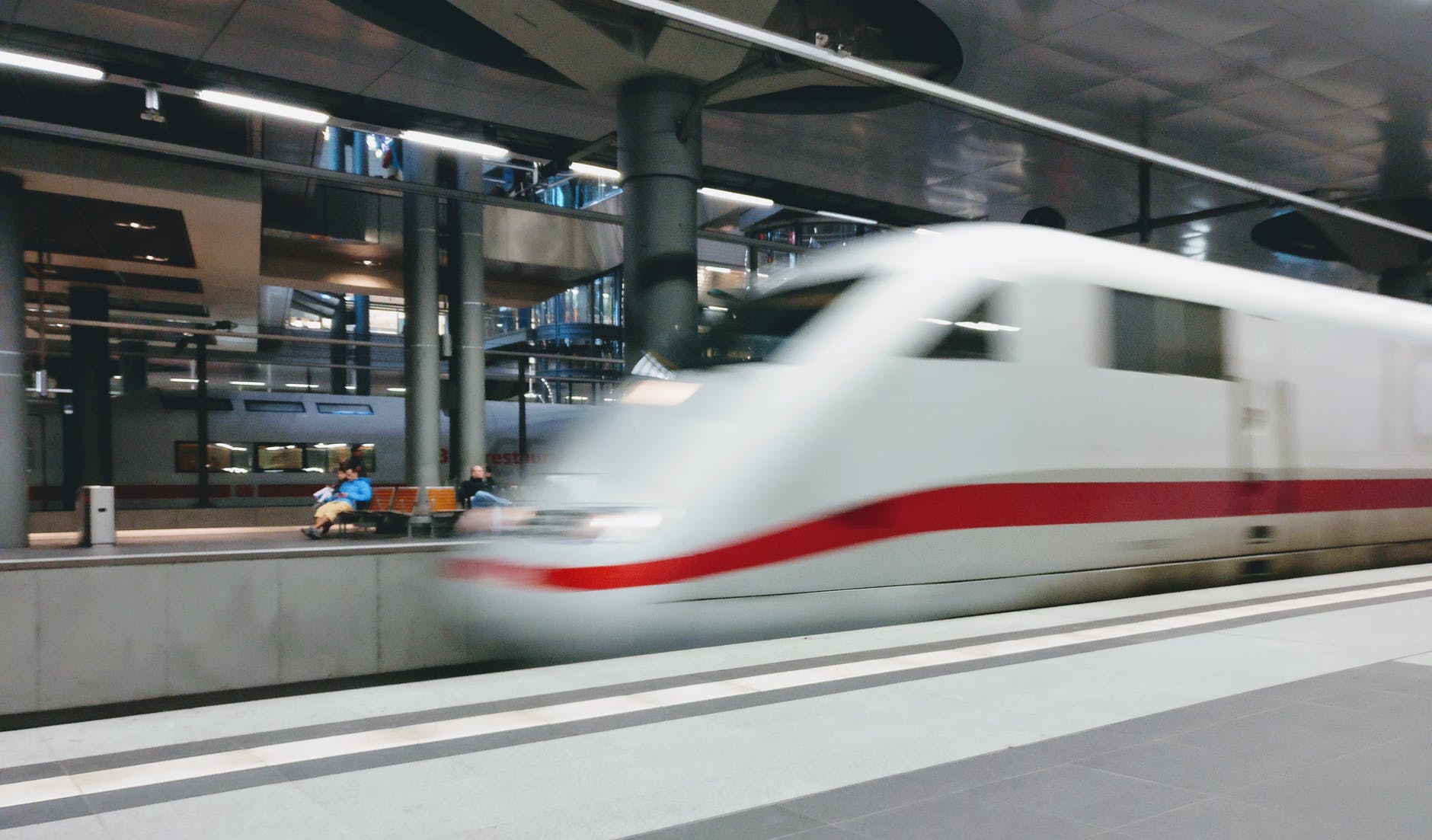
Vande Bharat : India’s Indigenous bullet train.

Indian Railways is developing its own super-fast train by increasing the speed of the locally made Vande Bharat Express in a phased way to match those running in European nations. The railways plans to increase the speed of the new version of the Vande Bharat
Express train to 180km per hour (kmph) this year from 160kmph. The train is expected to run at speeds of 220kmph byb2025 and subsequently faster at 260kmph, on par with the speed of most European high-speed trains. Vande Bharat would also increase its speed in phases and continue to improve the overall passenger experience, safety and security.
The first version of the Vande Bharat trains was launched in 2019 under the Make in India initiative and is designed to reach speeds up to 160kmph. However, this has been boosted to 180kmph in the second version, which will start operating this month, with 75 such trains deployed by 15 August next year as part of the country’s 75 years of independence celebrations.
Indian Railways has set a tar-get of manufacturing 300 Vande Bharat train sets over the next three years (2025). This will be increased to 500 trains by 2028. Prime Minister Narendra Modi has given the Railways a target to make at least 75 such trains by August 2023, coinciding with 75 years of Indian Independence. The plan is also to connect 75 key Indian cities with these trains. Indian Railways’ Integral Coach Factory, Chennai, plans to manufacture around 10 Vande Bharat trains a month and, eventually, the Rail Coach Factory, Kapurthala, and the Modern Coach Factory, Rae-bareli, are also likely to start manufacturing these coaches to meet the target of 500 trains. Two sets of Vande Bharat trains are running on the Delhi-Katra and Delhi-Varanasi routes. Two more Vande Bharat semi-high-speed trains are expected to enter operations by August.
Vande Bharat : India's Indigenous bullet train.

Indian Railways is developing its own super-fast train by increasing the speed of the locally made Vande Bharat Express in a phased way to match those running in European nations. The railways plans to increase the speed of the new version of the Vande Bharat
Express train to 180km per hour (kmph) this year from 160kmph. The train is expected to run at speeds of 220kmph byb2025 and subsequently faster at 260kmph, on par with the speed of most European high-speed trains. Vande Bharat would also increase its speed in phases and continue to improve the overall passenger experience, safety and security.
The first version of the Vande Bharat trains was launched in 2019 under the Make in India initiative and is designed to reach speeds up to 160kmph. However, this has been boosted to 180kmph in the second version, which will start operating this month, with 75 such trains deployed by 15 August next year as part of the country’s 75 years of independence celebrations.
Indian Railways has set a tar-get of manufacturing 300 Vande Bharat train sets over the next three years (2025). This will be increased to 500 trains by 2028. Prime Minister Narendra Modi has given the Railways a target to make at least 75 such trains by August 2023, coinciding with 75 years of Indian Independence. The plan is also to connect 75 key Indian cities with these trains. Indian Railways’ Integral Coach Factory, Chennai, plans to manufacture around 10 Vande Bharat trains a month and, eventually, the Rail Coach Factory, Kapurthala, and the Modern Coach Factory, Rae-bareli, are also likely to start manufacturing these coaches to meet the target of 500 trains. Two sets of Vande Bharat trains are running on the Delhi-Katra and Delhi-Varanasi routes. Two more Vande Bharat semi-high-speed trains are expected to enter operations by August.
While Blogging Keep these Tips in Mind
What are the top 10 Types of Digital Marketing?
Every marketing plan today includes a digital strategy. This is because marketing goals usually put a focus on how the business can reach more potential customers, retain existing customers, and increase sales. And today, your customers are online. Digital marketing has become one of the most effective ways to communicate because you can connect with your custom
ers in their preferred channels
So, what are some things that can improve a site’s SEO? It’s important to understand that one of the things that makes SEO challenging is that the answer to this question always depends on Google and its most current algorithm. Keeping that in mind, here are a few of the most important things for SEO strategists and marketers in general to understand about how SEO works today, from Moz’s Beginners Guide to SEO:Content indexing – It is important to allow search engines to clearly “read” what your site content is, by doing things like adding alt text for images and text transcripts for video and audio content.
Good SEO practices
Good link structure – It is important that search engines can “crawl” your site structure to easily find all the content on your site. There are many things that an SEO specialist can do to properly format links, URLs, and sitemaps to make them most accessible to site crawlers.
Keywords and keyword targeting – Properly deploying your keywords – i.e. the search terms you want your site to be found for—in your content and headers is one of the fundamental building blocks of SEO. It is no longer good practice to “stuff” your content with as many keywords and keyword variations as possible. Writing high-quality content that uses keywords in the headers and a few times in the crawl-able page content is now considered better practice, and will make pages rank better in search results.
But the broad range of digital marketing options can make it overwhelming to know where to focus. Organizations that want to set themselves apart in the market understand that effectively reaching and engaging with potential customers matters most. This means using creative ways to connect with the right people in the right place and delivering a compelling message that helps them decide if a product might meet their needs.
What is a digital marketing plan?
A digital marketing plan is a document that defines marketing goals to be accomplished within a given time frame so a company can meet a set of business objectives. When creating a digital marketing plan, it is important to remember that marketing is still about communicating the benefits of your product or service in a way that resonates with customers. So your plan should focus on the marketing tactics that will help your company engage your target audience with a cohesive experience.
what is bank loan and its types?
what is a bank loan and its types?
what is a loan? A loan is a sum of money that an individual borrows or received from his sources as it can be his friend, relative, bank, or any financial institution which he needs to repay in the future along with interest, charging on the principal amount. when a loan is given it creates fear in the mind of the lender as might in the future the recipient will not be able to pay the money back so what he will do? so he secures himself by keeping some asset of the recipient in form of security it can be anything like property, shares, land, etc.
when a loan is given then the recipient and lender must have agreed upon the terms and conditions of the agreement before joining hands otherwise it will create disturbance in the future now it has become a legal matter so one needs to be very careful while choosing the path of bringing loan for diminishing financial problems like whether I will be able to pay the installment or not? will I be able to pay the principal amount along with its interest? as it is not everyone’s cup of tea to have it.
Advantages of Bank loan
- Retain profit:
it helps in retaining profit for an org as when it raises money through shares or equity then it needs to share its profit among all investing parties which decrease its own profit but in the case of the bank you just need to give interest, no profit is shared.
- tax saving:
when an org takes a loan from a bank it doesn’t need to pay tax by the inclusion of it as it is considered a tax-deductible item so it saves the profits of an org and saves them from tax.
- cheapest interest rates:
it is quite a cheaper source of income compared with overdraft and credit cards.
- flexibility:
loan provides flexibility in repaying the amount as you can pay according to your convenience as long as the installments are regular and timely but in consumer credit cards, there is a limit beyond which you can’t go.
Disadvantages of bank loan
- difficulty in financing:
As when an org takes a big amount of finance from a bank then the bank demands collateral security on which they provide the loan but the new business finds it difficult to perform its operations based upon a bank loan.
- irregularity in payment:
when there is a long-duration loan taken then its interest charges differ monthly which creates variations in payment so it diminished the interest of the individual in considering it as a source of income.
types of loans:
various kinds of loans are being offered by the banks to an individual which is categorized into three ways.
1: Secured and unsecured loans:-
As it is being cleared from name secured which means when an individual takes a loan from a bank then it demands some kind of collateral security for securing its money to recover the amount in the future if that person does not pay. the assets which an individual can keep in form of security include any stocks, bonds, personal property papers, etc.
some common features of secured loans are timely payment foundation, lower interest rates long repaying time duration, and harsh borrowing limits for instance mortgage, and auto loan comes under this kind of loan category.
on the contrary unsecured loans do not own any kind of collateral security, it is just being offered as per the client’s status, repaying capacity, or track record of his previous transaction which helps the bank to decide whether to award the loan or not to that person.
2: Open-End and closed -End loans:
open-end loans are those loan in which an individual has the liberty to borrow money, again and again, credits cards is a perfect example of this although they also have some credit restriction it is up to that individual whether he wants to spend his whole money or some chuck of it on the other hand with close-end loans, the individual can not borrow again until he has not repaid his previous one but if he wants more money then he needs to apply for a new loan from scratch.
3 conventional loans:
it is that type of loan which is in the form of a mortgage as it is not being issued by the government agencies.
things to remember while considering a bank loan:
- when a person demands a loan then his credit score should be good as it shows his ability to repay the amount if a person has a good credit score he has a higher chance of approving his loans by the bank because it gives an idea to a bank about that professional payment habits.
- when a person is thinking of a loan then he should analyze his income as he needs to submit his documents like his salary letter, and in the case of a self-employed person, he needs to give the tax return for his last two years so he should see his payment capacity before deciding anything.
- before applying for a loan an individual should check his monthly obligation as he needs to manage it along with his installment so be careful unless it will be difficult to handle in the future.
India and its neighborhood- relations
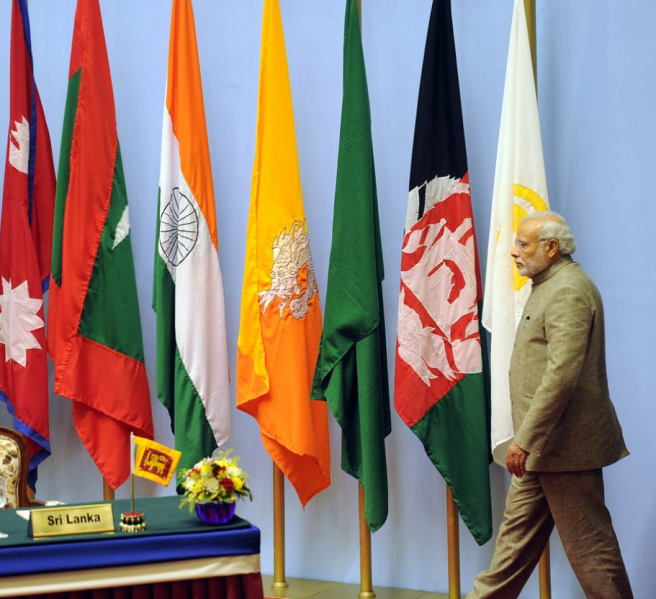
India shares geographical boundary with eight countries namely Pakistan, Afghanistan, China, Nepal, Bhutan, Bangladesh and Sri Lanka. Since the inception of our foreign policy, India has aimed at building trust with its neighbors. It aims at peaceful friendly relations and mutual economic development by enhanced trade and investments.
•Pakistan: Improving relations with Pakistan has been among top priorities in Indian foreign policy. After the visit of Pakistan former Prime Minister Parvez Musharaff in 2004, there has been a vacuum in our talks. It seems that radical groups in Pakistan took undue advantage of this vacuum and consequently there has been increased reports of cross-border terrorism activities. 26/11 attack is an unwashable strain on the fabric of friendship between India and Pakistan. But as it is said that ‘time heals all wounds’. The recently elected Narendra Modi led National Democratic alliance government’s attitude is worth appreciation. Indian Prime minister invited his Pakistani counterpart in his swearing in ceremony in New Delhi. This is a clear indication that both Nations are willing to take their relations on newer heights. In this aspect changed outlook India should try to adopt a sustainable foreign policy towards Pakistan. Smaller initiatives like Indo-Pak trade fair at Jalandhar, Punjab (India) needs to be encouraged. Healthy trade relations will help both sides equally.

•Nepal: Since the birth of democratic institution in Nepal, India has increasingly tried to have good relations with Nepal. Currently a joint hydro power project is being built on Sharda River. This power plant is thought to mutually help both India and Nepal with respect to electricity production and irrigation facilities. From the environmental perspective, there are a number of Tiger reserves along Indo-Nepal border. Both countries have identified their importance and are helping each other to sustain the existing ones and creating new ones. •China: China being manufacturing hub of world, is strategically very important to India. In fact China has become a role model for development. India needs to build strong trade relations with China. Increasing Foreign Direct Investment caps in various sectors has been one such step of India to invite investors from abroad.Apart from these bilateral relations, India has been active on various other forums as well which provides for greater engagement with its neighbors. For example India has been one of the pioneering advocate of TAPI (Turkmenistan, Afghanistan, Pakistan and India). This project aimed at bringing gas from Gulf countries and distribute it in TAPI countries.
India is an active member in BRICS (Brazil, Russia, India China and South Africa). BRICS is emerging a one of the significant union in world. BRICS nations represent 40 per cent of world population and has approximately sixteen trillion dollars as its Nominal Gross Domestic Product (GDP). BRICS nation contributes around eighteen per cent of world economy. The recent BRICS summit held at Brazil in July 2014.
One of the German intellectual has rightly said that ‘For economic development of a nation, peace with its neighbors is a pre-requisite’. India not only recognizes this statement but also conforms to it. Going by the mood of current Indian government in India, Union government too knows the importance of its neighbors. If India wants to be a super-power then maintaining friendly relations with its neighbors is a first step of ladder in this direction.
India has always wanted friendly ties with its neighbours, there can be no debate around it. We want to live in harmony and peace.
-Narendra Modi
Salute to freedom fighter Pingali Venkayya (Venkaiah): Birthday Day Tribute
To get rid of British rule many Indians fought or came forward to protest, as the British with the attitude of colonial feelings tortured /insulated Indians for trivial issues. Jallianwala Bagh in Punjab, Patharighat, previously known as Patharughat, in Assam, etc., are two cases I am mentioning here out of many cases depicting the barbaric behaviour of the British rule. In our history books from primary to secondary standards always a few names have been highlighted as if for them we have got independence. We all know huge sacrifices made by Shahid Bhagat Singh, Netaji Subhas Chandra Bose, Khudiram Bose, Surya Sen (Masterda), Kushal Konwar, Birsa Munda, and many others but their names are not highlighted as desired by Indian citizens. Anyway, one great name in the freedom movement who designed the Indian flag which many Indians in present generations may not know I am presenting as today his birthday. He is Pingali Venkayya (but on the postal stamp Venkaiah has been printed) who was born on 2 August 1876 and passed away on 4 July 1963. He was born at Bhatlapenumarru, near Machilipatnam, Andhra Pradesh. I visited Machilipatnam and really like the pristine beauty of the place. Anyway, it was formerly known as “Masulipatnam or Masulipatam, city, eastern Andhra Pradesh, southern India. Masulipatam was the first British trading settlement (1611) on the Bay of Bengal. From 1686 to 1759 the city was held by the French and Dutch until it was finally ceded to the British, who captured the city and fort from the French in 1759. The ruined fort is still a point of interest” (britannica.com/place).
Venkayya met Mahatma Gandhi in South Africa during the Second Boer War (1899-1902) when he was posted there as part of the British Indian Army. There he observed the soldiers had to salute the Union Jack (the British National flag). After returning to India, he decided to create a national flag for the country (source: Steena Joy 13 August 2021 news.yahoo.com). Further, according to indiatoday.in/2 August 2018, he was also a linguist and a writer. In 1913, he delivered a full-length speech in Japanese. Such credentials gave him interesting titles like ‘Japan Venkayya’, ‘Patti (cotton) Venkayya’ and ‘Jhanda Venkayya’.
He also published a booklet in 1916 offering thirty designs of what could make the Indian flag. Throughout all Congress sessions between 1918 and 1921, he persistently supported having a flag of our own. Venkayya’s design for the National Flag was finally approved by Mahatma Gandhi in a Congress session held in Vijayawada in 1921.
It is heartening to mention that “Andhra Pradesh Chief Minister YS Jagan Mohan Reddy urged the Centre (in 2021) to confer the Bharat Ratna to Pingali Venkaiah who designed the National Flag, posthumously. He also felicitated Ghantasala Sitamahalakshmi, daughter of late Venkaiah, while the inauguration of the 75-week-long “Azadi Ka Amrut Mahotsav” in the State. The Chief Minister presented ₹ 75 lakh to Sitamahalakshmi and wrote to Prime Minister Narendra Modi requesting the Centre confer the highest civilian award Bharat Ratna on Venkaiah posthumously” (ndtv.com/india-news/ Updated: March 13, 2021).
A postage stamp in his honour was released in 2009. Also, the Vijayawada station of All India Radio has been named after him in 2014. I am reiterating in the postal stamp Pingali Venkaiah has been printed.
My salute to Pingali Venkayya (Venkaiah) on his birthday 2 August 2022 as every year we unfurl our National Flag on 15 August and 26 January on the occasion of Independence Day and Republic Day respectively.
Why insurance is important for living?
Who else won’t crave for a safe fence around their life in this uncertain world? Insurance is one of the safest fences a human being ever has. Various kinds of insurances are rooting into our society. People are confused over the selection of insurance .Some of them are still doubted in types of insurance and how this insurance act as a benefactor .Let us discuss about 5 important insurance that you must know and its allies below.
TYPES OF INSURANCES LIFE INSURANCE
LIFE INSURANCE
Life insurance offers a protection over the family members of the policy holder’s .This will help mostly the one who is going for an adventurous trip or something risky or rather some of them who are facing a life threatening disease .Usually in this insurance there will be a nominee. Nominee is the person who experience the money which policy is pointing
HEALTH INSURANCE
There is always a doubt prevails among the common people is health insurance and life insurance is same. It is a kind of medical insurance which covers the entire medical expenses of the party (policy holder) and risk of the treatment.
AUTO INSURANCE
This Insurance policy shields from the financial loss held during an accident or theft. Auto insurance provide for property (including damages caused by theft), liability (having legal responsibility to other for injuring body parts or damaging property), medical (the amount of treating wounds extending to funeral expenses)
TRAVEL INSURANCE
Travel insurance takes off liability of a risky travelling. Medical expenses, lost luggage, flight cancellations, and other losses a traveler might face is factored into this policy. The right time to set off the insurance is from the date which travel begins to till it ends

Loan and its Type
Loan and its Type
A loan is an amount of money that any individual or company borrows from banks or another financial institute for their financial work. It is money, property, or another kind of thing given to another person in exchange for repayment of a loan in the future with interest. It includes two parties, the lender- who gives a loan, and the borrower- who takes a loan. The lender can be any corporation, financial institution, or government. This process of exchanging money includes a written agreement with the exchange of terms and conditions about interest, financial charges, repayment date, collateral, etc., between two parties.
Process of loan
When someone needs money, then they can apply for a loan from a bank, government, or corporation. The borrower is required to provide some information like the reason for the loan, their financial history, and other important information. The lender reviews the information to check if the borrower is eligible to get the loan and see if the loan can be paid back. After reviewing the information, the lander may approve the application for a loan or may be denied. If the loan is approved, they both sign an agreement regarding the loan to complete the process.
There are different types of a loan based on two factors and one can apply for any loan according to their requirements:
1. Secured loan
It is a type of loan which required collateral, where you have to provide security of the money you are borrowing to the lender. If you cannot repay the loan the lender has some means to get the money back.
2. Unsecured loan
It is a type of loan which doesn’t require collateral. The lender gives money based on your credit score and history. But this loan has a high-interest rate than a secured loan due to a lack of collateral.
- Types of Secured loans
|
S. No |
Types of loan |
Specification |
|
1. |
Home loan |
The is taken to buy or build the home. There are different types of home loans: Land purchase loan, home construction loan, home loan balance transfer, Top up loan |
|
2. |
Loan against Property |
This is taken to against any residential, commercial, or industrial property. The amount of the loan is based on the value of the property. This loan can be used to satisfy personal goals and business expansions. |
|
3. |
Gold loan |
You can get the loan by pledging gold jewellery as collateral. This loan is generally used for short-term needs. |
|
4. |
Loan against fixed deposit |
You can get the loan on your fixed deposit. The amount of the loan depends on the value of fixed deposit or may depend on the lender. |
- Types of Unsecured loans
|
S. No |
Types of loan |
Specification |
|
1 1. |
Personal loan |
This loan is used for personal use. This loan offers instant liquidity but it has a higher interest rate due to insecurity. Your good credit score and secured income help you to get this loan. |
|
2. |
Short-term Business loan |
This loan is can be used to fulfil various expansions of the organization. |
|
3. |
Educational loan |
This loan is useful if someone wants to aspire for higher education from a reputed institution. In this loan, the student is the primary borrower, and the parents or spouse are co-applicants. The amount of the loan can be repaid after completion of the course. |
|
4. |
Vehicle loan |
This loan is helpful to buy your dream vehicle. Your financial history plays a great role in determining the amount of the loan. |
Thus, Loan can be beneficial to maintain you expenses only if you can repay and use it in correct manner.
7 Search Engine Optimization Tips For Bloggers
SEO, as you might have already know, is an acronym for search engine optimization. In the simplest of words, it’s the way search engines like Google.com, Yahoo.com, Bing.com and others present your page in users’ search results on their sites.
Cool, how do they that?
Well, they do that via sophisticated software tools, called spiders. Consider the whole internet as an empty room, with air particles as websites. Now sneak a spider into that room. Each tiny step that this spider would take now is essentially crawling a website (as the room is dark and full of websites). This is how search engines crawl through the web picking up site after site, studying them and ranking them. This ranking is important, really important. A higher ranked website by Google will always be on the first page of Google’s search results for a related query compared to a lower ranked one.

So, in order to get ranked higher, you and I need SEO. SEO is like black pepper without which fried egg might not taste ‘that’ tastier. In simple words, in order for search engines to find your site and rank it higher than others in your field, you need to optimize it. Let’s see how with these 7 simple tips.
Ways to SEO Optimize your Blog
Before starting with our 7 simple tips for a quality SEO, it’s important to broadly classify those tips into two basic areas, on the basis of origin:
On-page Optimization
Refers to optimization of your actual web content including your HTML code, your text, as well as graphic content.
Off-page optimization
Off-page optimization, however, deals with things like backlinks (hyperlinks pointing to you site from other websites, apps and networks).
1. Create SEO Friendly Blog Post Titles
Post titles are important for SEO. They really are since they are deal makers or breakers. Whenever you write something, make sure you give proper attention to the post’s title. Make your titles simple, intriguing, descriptive and gullible so that people may know what is this all about and what to expect. An even better approach is to wear searchers shoes while giving a title and think how would you Google it if you were looking for content like this.
Also, don’t forget to include keywords in your title and keep it under 70 characters (or search engines would crop it before looking).2. Improve the quality of your content
If you think ‘content’ isn’t important for SEO, think again! Your content is the most important part of your site. While writing, don’t copy-paste from elsewhere, don’t stuff it with keywords alone, don’t bombard it with images and multimedia files and don’t write any lesser than 300 words. These all would affect your ratings quite poorly.
So, write original, use keywords in scenarios instead of straying them around (like I didn’t use SEO here, SEO there in every next line), use images where they suffice and make sure you name them properly to appear in image search results, i.e. an image with the “img009.jpg” name would never appear in the image search results but “tips_to_success.jpg” would. The best would be to use text content and wrap them proper in HTML tags like etc. (search engines likes content this way). Also, make sure your blog post’s length is somewhere between 300-500 words – crossing over is fine but lesser isn’t.

3. Keywords are keys
Keywords are terms that others may use to search for your content. While keywords are important for SEO, don’t go on and stuff your site with keywords. This would make your content appear like a spam to spiders, who would neglect it henceforth.
Ideal is that once you have chosen your title (and included your keyword in it, as I have added keyword SEO in title above), use it in page URL, in your starting and ending paragraphs, as well as in article body where required without sounding awkward. Additionally, you may link it using anchor text to relevant resources in and out of site.
![]() |
| Adding keyword in the post URL using Custom Permalink |
4. Meta-tags are important, but not ‘that’ much
If we had been living in early part of 21st century, meta tags might have done all the SEO for your site. Unluckily, we aren’t. Google and other search engines have long left using meta-tags for finding site information. Hence, if someone tells you meta-tagging is all you need for your sites SEO, tell them it isn’t.
Nevertheless, it’s important that you use your keywords in your meta-data. Some themes already do that for you, if they don’t (you can check that using page source or using view source code from browser), don’t sweat. You can use 3rd party plugins like All in One SEO Pack and Scribe.
5. Socialize!
Make others talk about your site and share your content on social media sites or their blogs. It gets even better if somehow sites with high ratings link back to your site. This makes spiders think that you are someone important that everyone these days is talking about, resulting in enhancing your ratings dramatically.
Guest posting is another good approach for that. Comment on other sites, make friends with bloggers (best in business) and make them comment at yours. These tiny little things do matter a lot, resulting in enhanced SEO of your site.
6. Link in and Link-Out
Hyperlinks or Links are important from SEO perspective. You can use them to:
Link out to other sites, networks and posts, or even to your previous posts (also called inbound or backlinks) using anchor element with keyword.

Or even better, make others to link in to you, via sharing your content on their sites or social media networks.
As mentioned, an even outstanding strategy for building links is guest posting.
7. Write Often
Sites with new content every day, or twice thrice a week have still far better ratings than those who post every fortnight. A better incoming content frequency makes spider come to your site regularly, resulting in better ratings and enhanced SEO.
Are we done then? Well, trust me – your sites rating is in your hands, not in Google or Yahoo. SEO is just about doing things neatly and in a sophisticated manner. Walk your site these 7 steps for a quality SEO and you will witness the difference yourself at Google, if no place else.
Remember, code clean, write original, socialize… this is what SEO is all about!
Demography
Demography is the study of human population dynamics. Population is shaped by a number of factors including fertility, mortality, migration and urbanization. Significant demographic changes have been shown in many parts of the world. The world population growth has been decelerating since 1970s. Fertility rates in more developed countries (MDCs) have been showing a declining trend, whereas an increasing one in the less developed countries (LDCs). Mortality rates have gone down in both MDCs and LDCs due to medical advancement. Consequently, the population of the countries with low fertility rates aged more quickly, and the world population growth will be concentrated in those developing countries where fertility rates remain high. Uneven population growth among nations accelerated the migration of people across nation borders and the growth of cities. The changes of these interrelated factors with their causes and problems of each of the factors will be discussed, followed by some possible plans and opportunities that may benefit from these changes.Human birth rate (natality) is the fertility expressed as the average number of live births per thousand populations per year. Since not all age groups in a population have equal fertility, demographers often use more specialized measures of birth rates that relate to age groups.Human mortality rate is the average number of individuals who die per thousand populations per year.

Again, demographers often use more sensitive measures, for different mortality rates. Both the very young and the very old segments of the population have higher mortality rates than are found in other age groups.Human population shows uneven or clumping pattern of distribution on earth. The density of human population in a village, district, city, province, country or any area can be obtained by dividing the total number of persons living in the given region by the total land area of that region.The average number of people per square unit of land area tells us how dense or sparse is the population in a giver, area. The average population density of the world is calculated about 27 persons per square kilometre.insurance agents to determine life insurance rates.
These early demographic studies were mostly concerned with mortality. However, in the 19th century, studies showed that there was a decline in the number of births, and researchers began to study fertility as well as mortality. These studies led to the idea of “differential fertility.” Differential fertility suggests that different groups within a population have different numbers of children due to factors, such as religion, cultural attitudes, poverty, and employment. Migration of people is the last main factor in demographic studies. It is these three variables (mortality, fertility, and migration) that contribute to population change.Demographers gather data mainly through government censuses and government registries of births and deaths. However, these sources can be inaccurate depending on the precision of government records. Demographers also gather data indirectly through surveying smaller groups within a population. These samples are then examined using statistical models to draw conclusions about the whole population.

Demography is changing us as we are older societies, we’re living longer. How the generations balance each other out, how that affects education and health care.
Role of civil services in a democracy .
In the process of governance, which involves several sets of activities to deliver effective services to people, civil services play a pivotal role in providing shape to policies that reflect people’s needs and put their suggestive, analytical and informative roles to implement the
policies. It is recognized that civil services play a crucial role in all societies. In the modern administrative state, public administration has become so significant that our development, upliftment and progress depend mainly upon the efficient functioning of civil services that are
the bedrock of public administration. Civil services have assumed more important role in democracy to ensure good governance, both in developing and developed countries. Civil Services form a part of bureaucracy, wherein the roles of civil servants are determined by
written rules. It’s an impersonal system operating on the basis of calculable rules and staffed by full time appointed officials. Usually, the civil servants are selected on basis of their technical
qualifications, receive fixed salaries, have a defined sphere of competence and work under a clearly defined hierarchy of offices.

The role of Civil Servants across the domains of policy making and policy implementation is critical to the development process. They assist in identifying major policy areas such as preparing major policy proposals, analyzing various alternatives and solutions to societal problems requiring urgent attention, dividing the major policies into sub-policies, determining
program of action and suggesting modification in the existing policy on the basis of its experience on the implementation front.Civil services carry on the governance when governments change due to elections etc. Ramsay
Muir has remarked that while governments may come and go, ministers may rise and fall, the administration of a country goes on forever. It is needless to say that civil services form the backbone of administration. E.g. In India, when the President’s Rule is imposed in a state, the
Governor runs the state through the Chief Secretary and other civil servants.The civil servants are responsible to the ministers of the departments in which they serve. The ministers are accountable to the people through the Parliament or State Legislatures, and the civil servants are accountable to the ministers. They should ideally serve the elected government of the day, as government policies are the functions of the civil services. However, an impartial civil servant is also accountable to the Constitution of India on which he has taken an oath of allegiance.
In India, bureaucracy or civil services is permanent and does not change with the government. The recruitment is based on merit and through competitive exams. This is in contrast to the system followed in the US, where civil servants, especially in the higher echelons, change with the government. This is called the spoils system where people who are close to the government of the day get posts.

With bad laws and good civil servants it’s still possible to govern. But with bad civil servants even the best laws can’t help.
-Otto von Bismarck
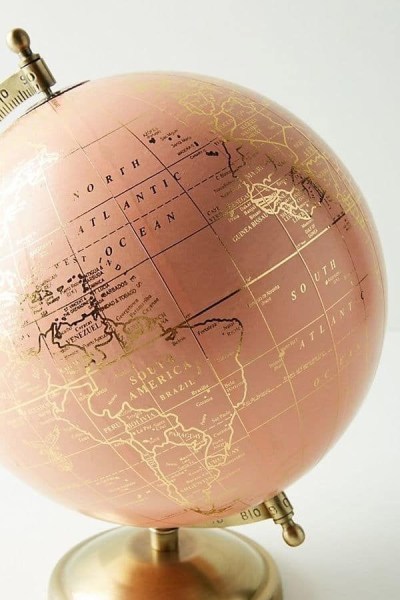
Physical Geography
Physical geography is one of the two branches of geography viz., physical geography and human geography. In fact, the study of physical aspects of the earth represents the core of spatial science i.e., geography. Most of geographers have pleaded for bifurcation of geography into physical and human geography but it is rather unwise to ignore biotic aspect of the biospheric ecosystem of the earth and hence there should be trifurcation of geography into physical geography, human geography and biogeographyPhysical geography in terms of its meaning and definition, scope (subject matter) and methods of study has undergone sea-change in the past few decades. In the beginning, physical geography was defined as the study of only physical environment (namely reliefs, air and water) of the earth e.g., ‘the study of physical environment by itself is physical geography which includes consideration of surface relief of the globe (geomorphology), of the seas and the oceans (oceanography) and of the air (meteorology and climatology) (Arthur Holmes).

Physical geography was considered as the agglomeration of different branches of earth sciences or natural sciences viz., sciences of atmosphere (meteorology and climatology); science of seas and oceans (oceanography); science of solid earth (geology); science of soil (pedology); science of plants (botany) and science of landforms (geomorphology).As a distinct branch of geography physical geography studies the spatial patterns and spatial relationships of environmental components of the globe in regional context, it also studies the causes of regional patterns of such spatial relationships, simultaneously it incorporates the explanation of spatial and temporal changes of environmental components and causes thereof.The study of features resulting from the interactions between endogenetic and exogenetic forces involves the discussion of mode of denudational processes (weathering and erosion), hetherto termed as geomorphic processes, their mechanism of operation (machanism of erosion, transportation and deposition by running water-river, groundwater, sea waves, wind, glacier and periglacial agent) and resultant landforms.
The discipline of physical geography has evolved through successive stages of its development in terms of methodology and approaches to study. After taking its birth in the philosophical ideas and reports of ancient thinkers, philosophers and historians of the ancient seats of civilization and culture e.g., Greece, Rome and Egypt, the science of physical environment attained its present status wherein different components were added from time to time.

Geography is also memory. And loss of physical geography is also loss of narrative memory.
Nanotechnology
Nanotechnology is defined as fabrication of devices with atomic or molecular scale precision. Devices with minimum feature sizes less than 100 nanometers (nm) are considered to be products of nanotechnology. A nanometer is one billionth of a meter (10-9 m) and is the unit of length that is generally most appropriate for describing the size of single molecules.The nanoscale marks the nebulous boundary between the classical and quantum mechanical worlds; thus, realization of nanotechnology promises to bring revolutionary capabilities. Fabrication of nanomachines, nanoelectronics and other nanodevices will undoubtedly solve an enormous amount of the problems faced by mankind today.Nanotechnology is currently in a very infantile stage. However, we now have the ability to organize matter on the atomic scale and there are already numerous products available as a direct result of our rapidly increasing ability to fabricate and characterize feature sizes less than 100 nm. Mirrors that don’t fog, biomimetic paint with a contact angle near 180°, gene chips and fat soluble vitamins in aqueous beverages are some of the first manifestations of nanotechnology. However, immenant breakthroughs in computer science and medicine will be where the real potential of nanotechnology will first be achieved.

Nanoscience is an interdisciplinary field that seeks to bring about mature nanotechnology. Focusing on the nanoscale intersection of fields such as physics, biology, engineering, chemistry, computer science and more, nanoscience is rapidly expanding. Nanotechnology centers are popping up around the world as more funding is provided and nanotechnology market share increases. The rapid progress is apparent by the increasing appearance of the prefix “nano” in scientific journals and the news. Thus, as we increase our ability to fabricate computer chips with smaller features and improve our ability to cure disease at the molecular level, nanotechnology is herestorage (or other uses) is enormous. As first described in a lecture titled, ‘There’s Plenty of Room at the Bottom’ in 1959 by Richard P. Feynman, there is nothing besides our clumsy size that keeps us from using this space. In his time, it was not possible for us to manipulate single atoms or molecules because they were far too small for our tools. Thus, his
speech was completely theoretical and seemingly fantastic. He described how the laws of physics do not limit our ability to manipulate single atoms and molecules. Instead, it was our lack of the appropriate methods for doing so. However, he correctly predicted that the time would come in which atomically precise manipulation of matter would inevitably arrive.Nanomachines can also be incorporated into various materials to make those materials respond to their environment, or to outside commands. Examples of such materials would be “smart” fabrics that respond to the environment to become warmer or cooler, or walls and furniture that can move or change shape on command. Nanomachines could also be used as tools both in industry and by consumers. Such tools could cut apart or glue together material far more efficiently than anything large-scale that is used today. Nanomachines could also repair cars, furniture, applicances, or almost anything else quickly and efficiently. Or these objects could be designed with nanomachines to repair themselves should the need arise. Life would be greatly simplified by relieving people of the need to repair objects at home or at work.
In thinking about nanotecnolog today, what’s most important is understanding where it leads, what nanotechnology will look like after we reach the assembler breakthrough.
-K. Eric Drexler


.jpg)


You must be logged in to post a comment.