Alternatives to layoff.

In the span of weeks, the United States’ Silicon Valley which has been a reliable source of high-paying jobs and booming stocks is now witnessing a tough time with major big tech companies including Meta, Twitter, Snap, and Microsoft announcing mass layoffs, which have tens of thousands of people unemployed. 

Layoffs are happening as the world ponders whether a global recession is coming. Whatever label people end up putting on this era, companies are struggling with consecutive lackluster quarters, inflation, price hikes, and uncertainty. Varying interest rates, a plummeting stock market, and a downturn in consumer confidence are only making matters worse. 

Here are some alternatives to layoffs that may help HR avoid all the drama: 

Remote Work

Thanks to the pandemic, most, if not all, companies with knowledge workers are now set up for remote work. 

Hiring Freeze

Many companies that are laying off people are still hiring at the same time. It is a bad look. Employers should have a hiring freeze to save money and stay on budget.

Furloughs

Furloughs can be a short-term way to avoid at least some layoffs. A furlough is a mandatory but temporary leave of absence. A furloughed employee works a reduced schedule or takes unpaid leave.

Pay cuts

Pay cuts can help prevent a business from bleeding jobs. However, to be noted that this strategy can be costly for employees, particularly those living paycheck to paycheck amid high inflation.

Cuts in benefits or perks

Aside from pay cuts, an employer might temporarily reduce benefits or perks to “buy the company some time” to turn around its finances.

Alternatives to layoff.

In the span of weeks, the United States’ Silicon Valley which has been a reliable source of high-paying jobs and booming stocks is now witnessing a tough time with major big tech companies including Meta, Twitter, Snap, and Microsoft announcing mass layoffs, which have tens of thousands of people unemployed. 

Layoffs are happening as the world ponders whether a global recession is coming. Whatever label people end up putting on this era, companies are struggling with consecutive lackluster quarters, inflation, price hikes, and uncertainty. Varying interest rates, a plummeting stock market, and a downturn in consumer confidence are only making matters worse. 

Here are some alternatives to layoffs that may help HR avoid all the drama: 

Remote Work

Thanks to the pandemic, most, if not all, companies with knowledge workers are now set up for remote work. 

Hiring Freeze

Many companies that are laying off people are still hiring at the same time. It is a bad look. Employers should have a hiring freeze to save money and stay on budget.

Furloughs

Furloughs can be a short-term way to avoid at least some layoffs. A furlough is a mandatory but temporary leave of absence. A furloughed employee works a reduced schedule or takes unpaid leave.

Pay cuts

Pay cuts can help prevent a business from bleeding jobs. However, to be noted that this strategy can be costly for employees, particularly those living paycheck to paycheck amid high inflation.

Cuts in benefits or perks

Aside from pay cuts, an employer might temporarily reduce benefits or perks to “buy the company some time” to turn around its finances.

One need to spend 4 years instead of 3, to graduate in honours degree.

Students looking to earn an honours degree in undergraduate courses will have to pursue four-year programmes under new regulations likely to be announced by the University Grants Commission this week,  PTI reported.

“Students will be able to get a UG [undergraduate] degree in three years on completion of 120 credits (measured through the number of academic hours) and a UG honours degree in four years on completion of 160 credits,” the news agency quoted from the draft Curriculum and Credit Framework of the University Grants Commission.

At present, students get an honours degree after completing three years of undergraduate programmes. Under the National Education Policy (NEP) 2020, universities and colleges will offer four-year undergraduate degrees with multiple exit and entry options. Several universities, including DU, and Jawaharlal Nehru University (JNU), have already adopted the programme.

A senior UGC official, requesting anonymity, said, “There will be only one honours degree, that is four-year UG with honours or honours with research. The regulations will be applicable for students who will be enrolled under the new norms from this year onwards.”

One need to spend 4 years instead of 3, to graduate in honours degree.

Students looking to earn an honours degree in undergraduate courses will have to pursue four-year programmes under new regulations likely to be announced by the University Grants Commission this week,  PTI reported.

“Students will be able to get a UG [undergraduate] degree in three years on completion of 120 credits (measured through the number of academic hours) and a UG honours degree in four years on completion of 160 credits,” the news agency quoted from the draft Curriculum and Credit Framework of the University Grants Commission.

At present, students get an honours degree after completing three years of undergraduate programmes. Under the National Education Policy (NEP) 2020, universities and colleges will offer four-year undergraduate degrees with multiple exit and entry options. Several universities, including DU, and Jawaharlal Nehru University (JNU), have already adopted the programme.

A senior UGC official, requesting anonymity, said, “There will be only one honours degree, that is four-year UG with honours or honours with research. The regulations will be applicable for students who will be enrolled under the new norms from this year onwards.”

'Divya Kala Shakti: Witnessing Abilities in Disabilities'

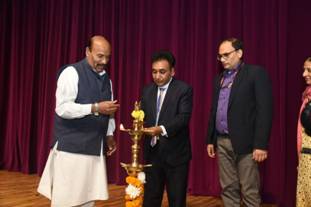
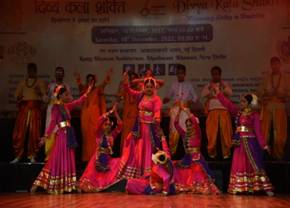
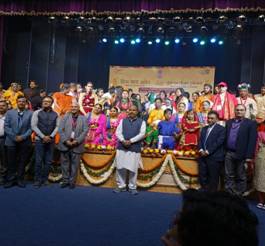
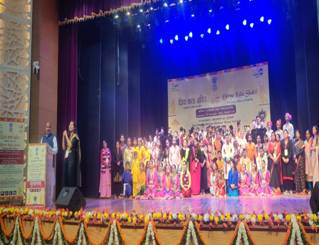
 Minister of Social Justice & Empowerment, Dr. Virendra Kumar inaugurated the ‘Divya Kala Shakti’ Programme at Rang Bhawan Auditorium, Akashwani Bhawan, Delhi, today on 10th Dec 2022.Various Non-Govt organizations working in disability sectors and  stake holders of the Department witnessed the extraordinary performances by the Divyang children and youth at the cultural event ‘Divya Kala Shakti- Witnessing Ability in Disability’ organized by the Department of Empowerment of Persons with Disabilities (Divyangjan), Ministry of Social Justice and Empowerment in collaboration with PDUNIPPD , a National Institution uder the Administrative head of the Department.

After two national events held on 18th April 2019 & 23rd July 2019 at President House & Balayogi Auditorium  of India Department is taking Divya kala Shakti to regional levels with the direction of former President Sh. Ram Nath Kovind. Accordingly three regional “Divya kala Shakti” programmes have already been held at various places i.e, Western Region, North Eastern and Southern Region in Mumbai, Arunachal and Chennai. This time the first ever Northern regional Divya kala Shakti  held in Delhi where approximately 100 Ar111qqQqqqqtistes have been drawn from different states, cultural societies, institutions, civil societies from Northern regions to make it a truly Northern regional spirit. Department arranged for their rehearsals and practice session with the choreographer and the discipline and precision of timing and performance among such children is the greatest example of their intellectual, creative and their latent ability that needs to be harnessed for their optimal self-actualization. The event was witnessed by about 300 dignitaries representing Senior Government officials, Creative personalities, Educators, Principals, various disability advocacy groups etc.

The performances were presented by children and youth with disabilities ranging from physical, visual, hearing, intellectual, Autism to multiple disabilities and dwarfism. They are capable of excelling in any field, be it art, culture, sports, or anything. The children with disabilities and the audience will always remember the inspiring words said by PM  “Divyang are gifted human beings we are working steadfastly towards ensuring an inclusive, accessible and equitable future for our Divyang sisters and brothers. Their fortitude and accomplishments in various fields inspire all of us” .

President of India, also rightly said Divyangjan required no sympathy what is required is empathy and an enabling, barrier free environment.

The programme was packed with several state specific performances that made the evening vibrant. Durga Dance by a cancer survivor and locomotor disable Anita Gupta from East was really an awakening. Really lots of mind-blowing performances by these Divyangjan can inspire one and all.

*******

Pradhan Mantri National Apprenticeship Mela


  • The Mela will begin in 25 states covering 197 districts
  • Several local businesses have been invited to be part of the mela and provide apprenticeship opportunities to the youth

As a part of Prime Minister Shri Narendra Modi’s vision to boost career opportunities for India’s youth under Skill India Mission, the Ministry of Skill Development and Entrepreneurship (MSDE) will hold the Pradhan Mantri National Apprenticeship Mela (PMNAM) on December 12th, 2022, across 197 locations in 25 states and union territories.

Several local businesses have been invited to be a part of the mela to provide local youth with the opportunity to shape their careers through apprenticeship training. The event will witness the participation of various companies from different sectors. Participating companies will have the chance to meet potential apprentices on a single platform and choose applicants on the spot and provide them with an opportunity to be a part of their organization.

Individuals can register for the mela by visiting https://www.apprenticeshipindia.gov.in/and to find the mela’s nearest locationCandidates who have passed Class 5 to Class 12 and have skill training certificates, or ITI Diploma holders or graduates can apply during this apprenticeship melaThe candidates must carry three copies of their resume, three copies of all the marksheets and certificates, photo ID (Aadhaar card/driving licence etc) and three passport size photographs to the respective venues.

Those who have already enrolled have been requested to reach the venue with all the relevant documents.Through this fair, the candidates will also earn National Council for Vocational Education and Training (NCVET)-recognized certifications, improving their employability rate after the training session.

Expressing his views on the Pradhan Mantri National Apprenticeship Mela, Shri Atul Kumar Tiwari, Secretary, Ministry of Skill Development and Entrepreneurship, said “India has often been compared to other developed economies in terms of apprenticeship opportunities for the youth of today. To bridge this gap, we are trying our best to make apprenticeship opportunities reachable to trainees and students. We received a great response during last month’s apprenticeship mela from the potential youth who is eager to work hard, contribute to our economy, and help shape the future of our country. The major purpose of this programme is to encourage companies to hire more apprentices, while also assisting employers in discovering the right talent and developing their potential via training and practical experience. It is also critical to embed apprenticeship in the educational ecosystem besides building credible pathways from apprenticeship to higher education. With our continuous efforts, our goal is to raise apprenticeship opportunities in India to 10 lakhs by end of 2022, and to 60 lakhs by 2026”.

Apprenticeship melas are hosted in the country every month, wherein selected individuals receive a monthly stipend in accordance with government criteria for gaining new skills. Apprenticeship is considered the most sustainable model of skill development, and it has been getting a big boost under Skill India Mission.

The government is striving to train 1 million youth per annum through apprenticeship training and to fulfil this mission, PMNAM is being used as a platform to increase the participation of establishments and students. It is also providing awareness to the youth on various opportunities existing across the participating companies.

****

Swahid Diwas in Goa

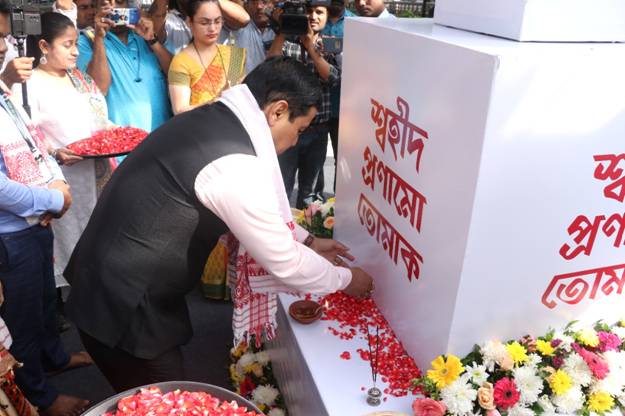
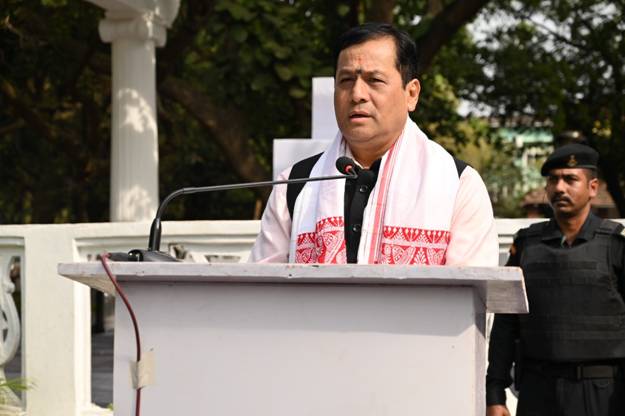
 Union Minister of Ports, Shipping & Waterways and Ayush Shri Sarbananda Sonowal paid glowing tributes to the martyrs of the historic Assam Movement in a solemn programme in Goa today marking Swahid Diwas, the martyrdom day of Khargeswar Talukdar in 1979, the first martyr of the Assam Movement. The Union Minister is on a three day visit to the coastal state. The programme held at Francisco Luis Gomes Garden in Panjim was organised by the Assam Society of Goa and was attended by members of the Assamese community and a host of dignitaries and locals. 


Speaking on the occasion, the Minister reminisced the valour of the martyrs of the six year long Assam Movement from 1979-1985. “Today, on the occasion of Swahid Diwas, I salute all those who made the ultimate sacrifice to protect Assam. The people of Assam took part in the six year-long movement to protect the state from illegal immigrants and 860 martyrs gave their ultimate sacrifice to protect the unity and integrity of India. These great martyrs have written an unforgettable history of unparalleled patriotism and courage The Assam Movement is a shining example of the united efforts of the indigenous people of Assam to protect the nation and its impact was far-reaching. The immortal sacrifice of the martyrs will continue to inspire the greater Assamese community and the nation forever,” the  Minister stated.


Shri Sonowal added, “We have to continue to work with honesty, dedication and determination to keep alive the noble ideals of the brave martyrs. We have to fulfill our national responsibility to keep our language, culture, heritage and tradition alive. If the history of student movements of the world is analysed, the Assam movement was a watershed moment. I urge the people of Assam as well as the people from different parts of the country to take the lead in building a strong India inspired by the nationalistic spirit of this movement and render dedicated service to our motherland.”

*****

International Workshop on Research Agenda, Social Needs and Open Science

  by Shashikant Nishant Sharma 

CSIR-NIScPR (National Institute of Science Communication & Policy Research) is involved in creating livelihood and foster skill development in rural areas through CSIR technologies. Recent cutting-edge fields are being worked on by various R&D divisions of the lab. Scientometric has been one of the institute’s strongest areas and CSIR-NISTADS (which was one of the laboratory which together with CSIR-NISCAIR merged to became NIScPR) was instrumental in bringing this area as a focus area of research and input to policy making in India. These were the words of Prof. Ranjana Aggarwal, Director, CSIR-NIScPR who was delivering a welcome address in an International Workshop on ‘Research agenda, Social needs and Open science’ organized by CSIR-NIScPR.
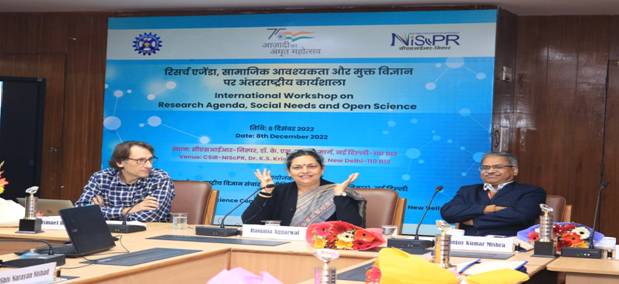
 

Prof. Ranjana Aggarwal, Director, CSIR-NIScPR addressing the workshop

Prof. Aggarwal highlighted that CSIR-NIScPR is the largest government organization in the nation that publishes more than 15 journals in a variety of research fields in an open access mode as there is no APC involved for publishing along with popular science magazines publications to bridge the gap between science and society. An online repository National Open Periodicals Repository (NOPR) of CSIR-NIScPR also provides to access of older papers from anywhere in the world. She concluded by emphasizing that CSIR-NIScPR is working towards solving problems under the motto “One Earth, One Family, and One Future.”

The global challenges have called for scientific research to increasingly reshape their agenda to focus more on societal problems. The reshaping can be seen prominently in the STI (Science-Technology-Innovation) policy framing of different countries and funding bodies. Responsible research and innovation, open science, open innovations are some of the key terms of new era that get space in policy articulations of different countries. Innovation System is also paying serious attention to informal, grass root and frugal innovations as they intervene to address unmet societal challenges. Cross-disciplinary interactions across different stakeholders have become important in this environment. The policy interactions need to be more evidence based to reshape the agenda and design pathways for implementation. In this context, an International Workshop on Research Agenda, Social needs and Open Science was organized on 8 December 2022 at CSIR-NIScPR. The conference was addressed by eminent scholars and policy makers from India and abroad.
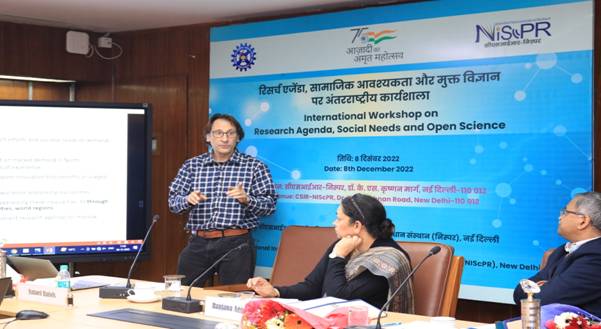
 

Dr. Ismael Rafols, UNESCO Chair, Leiden University, Netherlands delivering keynote address

Dr. Sanjay Kumar Mishra, Sr. Advisor, Department of Biotechnology, put forward his initial remark about the subject of workshop as putting three oceans of knowledge set into one go, namely bibliometrics, scientometrics and infometrics. Dr. Mishra urged to take into consideration social needs of societies, countries and on global level in research and research agenda to extract maximum benefit out of scientific research to mankind. He also opined that science advisory role is as important as research output. Usually science research is in general pro urban, pro affluent, there is need to be new focus on society oriented and need for synchronization of science and society. Bibliometrics and scientrometrics tool can be used to understand the gap in the research for society by scientific communities.
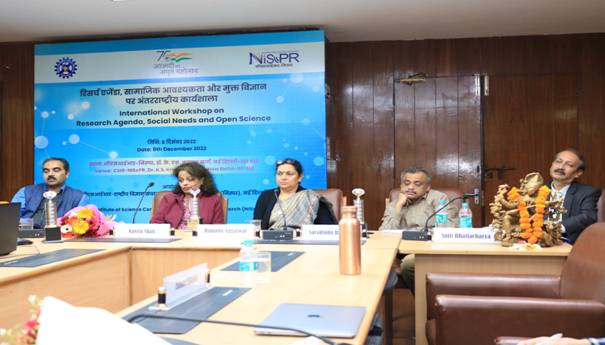
Speakers of the second session focused on ‘Frugal Innovations and Openness

Dr. Sujit Bhattacharya, Chief Scientist & Dean-Policy Research, CSIR-NIScPR and Coordinator of this Workshop began his talk by giving a brief overview of STS (Science, Technology and Society), innovation studies and Scientometrics research, drawing upon the strong linkages among these fields of research. He stressed that the contemporary global challenges have called for science-technology-innovation agenda be shaped by societal needs and user driven approach.
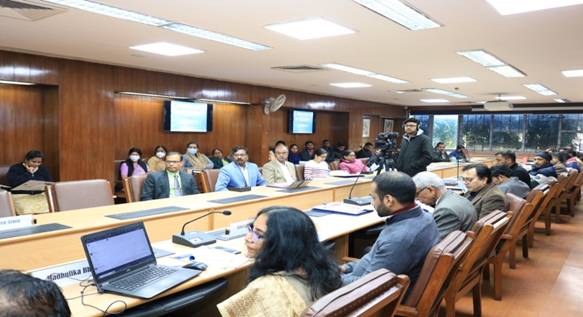
 

Scientists, staff members and audience of the workshop

Dr. Ismael Rafols, UNESCO Chair, Diversity and Inclusion in Global Science Centre for Science and Technology Strategies (CWTS), Leiden University, Netherlands delivered the keynote address. Dr. Rafols reinforced UNESCO recommendation of diverse and inclusive matter for research agenda for benefit of whole human kind. He brought forth the usual notion that research agenda tends to favour elite and rich though not universal but true to a greater extent. He justified his argument by describing concentration of research in global north, being driven by market demands and incentivized by few narrow academic goals and social groups. Dr. Rafols highlighted that research agendas are not in sync with SDG goals in higher and middle income countries. Evidence indicates better alignment in least developing countries of research with SDGs. He emphasized upon the need for more open access to science and having more open infrastructure so that maximum benefit can be achieved by mankind. He concluded by highlighting need for inclusion of citizen in sciences to lessen the misalignment.

Prof. Saradindu Bhaduri, Associate Professor, Centre for studies in Science Policy, Jawaharlal Nehru University, New Delhi and coordinator of the Trans-Disciplinary Research Centre on frugality studies (a joint initiative of JNU with Leiden University) gave his presentation on how research agenda, innovation, regulation, and user driven research conflict with each other. He highlighted some interesting engagements between policymakers and stakeholders. He highlighted how useful and widely used appliances such as stove suffer from agencies not giving standard certification.

Dr. Vivek Kumar Singh, Professor and Head of the Computer Science Department, Banaras Hindu University (BHU), Varanasi provided an overview of open access and its various forms, such as Gold, Platinum, and Diamond open access. He highlighted the open archive available at India such as the IndiaRxiv, eprints by the Indian Institute of Science, Krishikosh by the ICAR etc. Dr. Singh correctly emphasized the need for making research accessible to society because there is a gap in knowledge access in India, and we need to seek for effective policy implementation to address this.

Dr. Kavita Shah, Professor, Purdue University, USA gave a brief insight of the changing environment she has been observing in India now. The infrastructure, and support to research and many institutions now are in India which is bringing a positive change for doing high end research. She felt that this opportunity calls for students and researchers to make their research more aligned to the challenges faced by the society.

Dr. Madhulika Bhati, Principal Scientist, CSIR-NIScPR and Dr Anurag Kanojia, Policy Fellow, Department of Computer Science, BHU as discussant drew upon the important learning from this workshop. They stressed upon the important argument and key issues that linked the different presentations together.

Dr. Shiv Narayan Nishad, Scientist, CSIR-NIScPR gave a broad overview of the ongoing project on Social Network Analysis by CSIR-NIScPR. This study led by Dr. Sujit Bhattacharya and team in which he is the Co-Principal Investigator is exploring how social network analysis can be developed as a resource material for its application in different fields of studies. The project intends to impart training and provide the resources developed in open access.

The interactive session led to many questions and comments that enriched the workshop. The large number of young researchers who were among the attendee raised many important issues related to their research and how this workshop has benefitted them to think of Open access, aligning their research in proper direction, etc. At the end of the workshop, Dr. Sandhya Lakshmanan, Scientist CSIR-NIScPR proposed vote of thanks. Dr. Kasturi Mandal, Principal Scienctist, CSIR-NIScPR anchored the whole event and young researchers who acted as rapporteurs.


Need-based skill mapping for employment and training to India’s youth


  • RSETIs have trained 44 lakh youths of which nearly about 31 lakh candidates have settled so far
  • Giriraj Singh says, out of 44 lakh youths trained, about 29 lakhs are women candidates (about 66%), which underlines RSETIs mandate and role for “Women Empowerment”
  • 14.28 Lakh trained candidates received cumulative credit to the tune of Rs.7200 crores from Banks and Financial Institutions at the behest of RSETIs

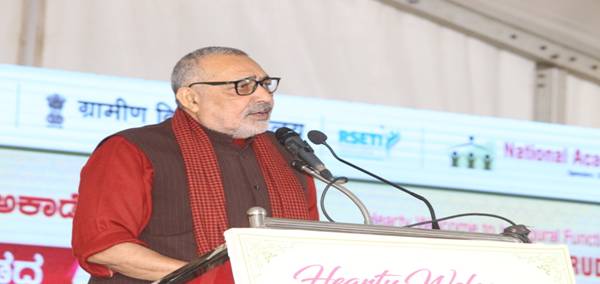
Union Minister of Rural Development and Panchayati Raj Shri Giriraj Singh has called for need-based skill mapping for employment and training to India’s youth, mainly in the rural areas. Noting that the quality of job training is important, the Minister urged to explore means to see how best the traditional trades can be integrated with electronic, education and training, IT & BPO and tourism and hospitality sectors to create more employment opportunities for the youth in the country.


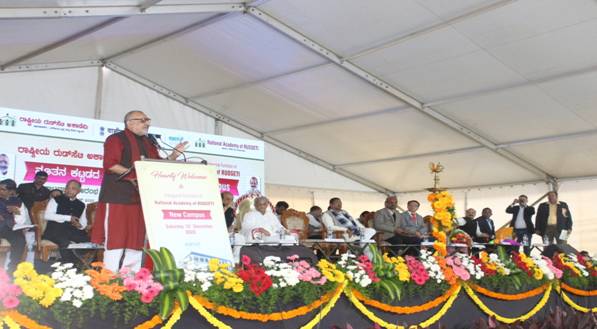
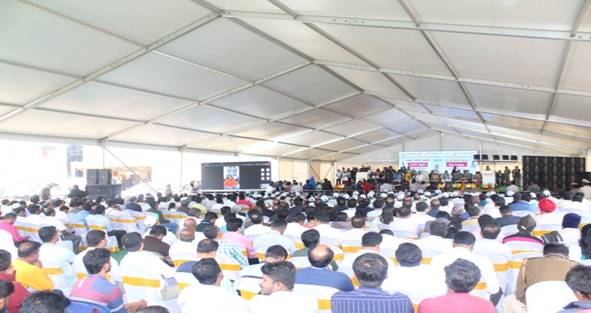
The Minister was speaking after opening the new campus of the National Academy of Rural Development and Self Employment Training Institute (RUDSET) – NAR at Kumbalagodu in Bengaluru on today.

Chief Minister of Karnataka, Shri Basavaraj Bommai, Sadhvi Niranjan Jyoti, Union Minister of State for Rural Development, Consumer Affairs, Food, and Public Distribution, Sri Faggan Singh Kulaste,

Union Minister of State for Rural Development and Steel, Dr. C N Ashwath Narayan, Minister of Skill Development, Entrepreneurship, and Livelihoods of Karnataka State, Sri S T Somasekhara, Minister of Co-operation of Karnataka State and Dr. Dr. Veerendra Heggade, MP and President, NAR joined the inaugural event.

Shri Giriraj Singh said, the Rural Self Employment Training Institutes – RSETIs have a significant role in building India into a major human resources hub and added that RSETIs have trained 44 lakh youths of which nearly about 31 lakh candidates have settled so far. The Minister also informed that of the total candidates trained, about 29 lakhs are women candidates, over 66 %, which proves that RSETIs are giving lot of importance to “Women Empowerment”.


Dr Giriraj Singh cited a United Nation’s report that says in the coming 20 years, India’s work force would grow by 32 per cent while the overall global manpower would dip by four per cent. He said that RSETIs are following up with the Banks and Financial Institutions to make available required credit to the trained candidates for their successful settlement. 14.28 Lakh trained candidates were credit linked and the cumulative credit disbursed is to the tune of Rs.7200 crores. The average level of credit linkage of RSETI trained candidates is 51%, the Minister added.

A sum of Rs 25 crores has been approved for the project of new campus of NAR in Bengaluru. The State Government has allotted 3.5 acres of land. At present, there are 590 RSETIs functioning covering 572 districts spreading over 27 States and six Union Territories. These include 33 RSETIs in Karnataka having trained 3.49 lakh unemployed youths so far. RSETIs are sponsored by 24 banks including banks in public, private, co-operative sectors and Garmin Banks.

In 1982, Canara Bank, erstwhile Syndicate Bank and SDME Trust, Dharmasthala pioneered the unique concept of Rural Development and Self Employment Training Institute (RUDSET) to address the problem of unemployment amongst the rural youth in the country under the leadership of Dr. D. Veerendra Heggade, Dharmadhikari, Sri Kshetra Dharmasthala. The Ministry of Rural Development has since replicated RUDSETI model across the country and advised banks to set up Rural Self Employment Training Institute (RSETI) in each of their Lead District. The National Academy of RUDSETI-NAR, set up in 2008 entered a Memorandum of Understanding with the Rural Development Ministry in 2011 for providing training to youths in self-employment ventures.


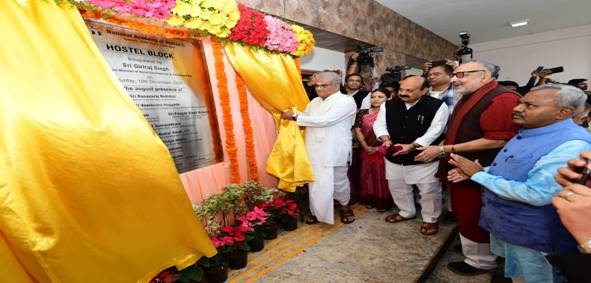
Earlier, Shri Giriraj Singh formally opened the Hostel Block while Shri Bommai inaugurated the Admin Block of the new campus. The Chief Minister also addressed the gathering.


Shri Shailesh Kumar Singh, Secretary, Rural Development, Government of India, Shri Karma Zimpa Bhutia, Joint Secretary, Ministry of Rural Development, senior officers of Government of Karnataka and top bank executives attended the event.

An experience sharing session of successful RSETI trainees and distribution of bank loans to entrepreneurs also formed part of the programme.


Kashi Tamil Sangamam Express

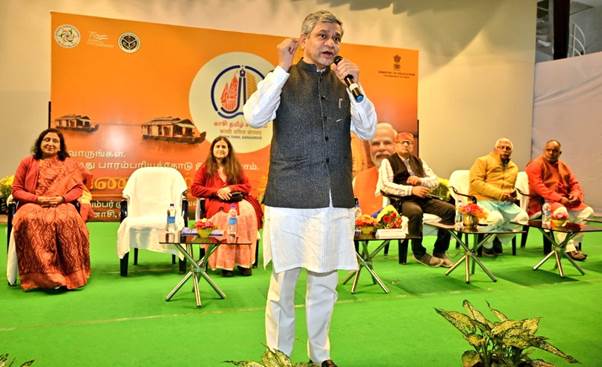
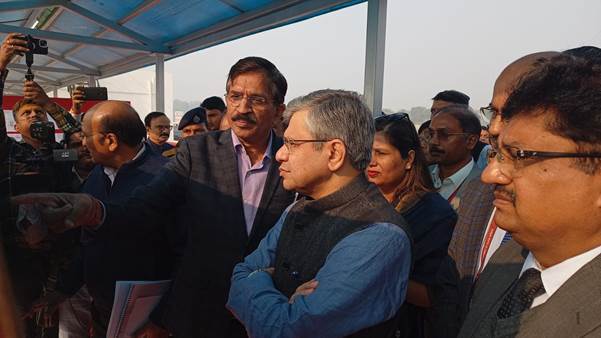
 Union Minister of Railways,Communications and Electronics & Information Technology Shri Ashwini  Vaishnaw  has announced a new train service Kashi Tamil Sangamam Express between Kashi and Tamil Nadu to commemorate the event. He interacted with the delegates from Tamil Nadu who were invited to witness the Kashi Tamil Sangamam. He also inspected the redevelopment plan of Varanasi Junction Railway Station.

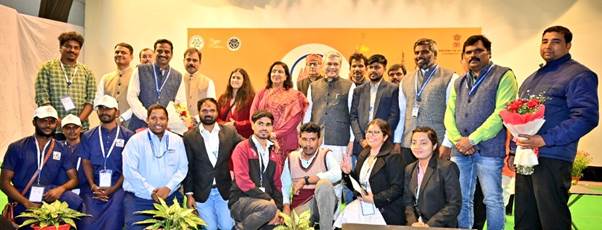
Shri Ashwini  Vaishnaw interacted with the delegates of the eighth batch. The delegates shared their experiences in the tour and how they were well taken care of. He lauded the efforts of the Ministry of Railways & IRCTC team who helped in making this event successful. He said that such people-to-people exchange will bring the traditions, knowledge and culture closer together, while building an understanding of shared heritage and strengthen ties between the people of these two regions.


Shri Vaishnaw announced a new train service Kashi Tamil Sangamam Express between Kashi and Tamil Nadu to commemorate the event. He said the service will commence soon.

The Union Minister of Railways also reviewed the redevelopment plans of Varanasi Junction Railway Station. He suggested planning the redevelopment of the station keeping future traffic increases in mind.


While inspecting the Varanasi Junction Railway Station, the Minister said redevelopment of this station into a world class railway station is in line with the PM’s vision of making the railway station to look like an airport terminal. He added that about Rs 7000 crore would be spent in revamping the station to make it one of the best in the world.


Shri Vaishnaw said that the redevelopment would be done planning for 50 years ahead. He said that in order to ease the heavy footfall of passengers in the stations in Varansi city, Integrated development of all the railway stations in the region would be made. He also said that sleeper Vande Bharat manufacturing would commence soon to provide modern amenities to the passengers.

Kashi Tamil Sangamam is a month-long programme organized by the Ministry of Education, as a part of Azadi ka Amrit Mahotsav. Delegates from various walks of life are invited to witness this festival in Kashi. The Ministry of Railways and IRCTC ferried the invited delegates to Kashi, Prayagraj and Ayodhya and provided hospitality to them.

***

Universal Health Coverage Day 2022

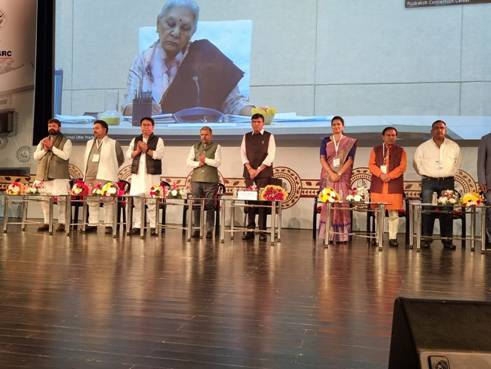
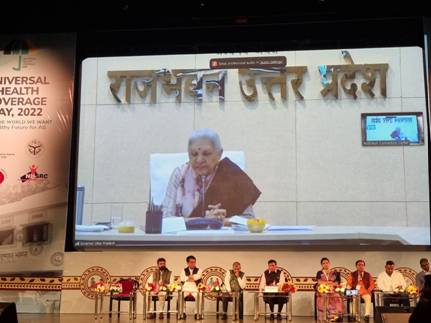
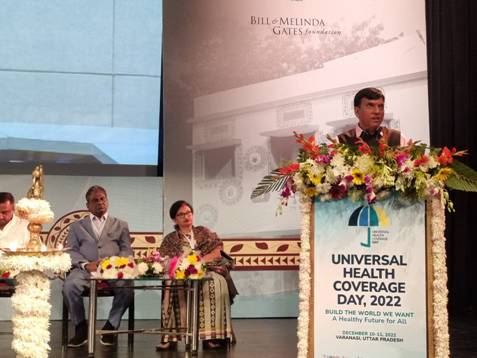
 Smt. Anandiben Patel, Hon’ble Governor, Uttar Pradesh virtually inaugurated the two-day conclave of Universal Health Coverage (UHC) at Rudraksh Convention Centre, Varanasi today, in the presence of Union Minister of Health & Family Welfare Dr. Mansukh Mandaviya. The event was also graced by several Health Ministers from States. These included Minister of State, Uttar Pradesh Dr Daya Shankar Mishra, Smt. Vidadala Rajni (Andhra Pradesh), Shri Banna Gupta (Jharkhand), Dr. Prabhuram Choudhary (Madhya Pradesh), Shri Dhan Singh Rawat (Uttarakhand), Shri Ravindra Jaiswal (Uttar Pradesh), Smt. Chandrima Bhattacharya (West Bengal), Dr. Sapam Ranjan (Manipur) and Dr M K Sharma (Sikkim).


Speaking at the occasion, Hon. Governor, Uttar Pradesh praised the work of Ayushman Bharat Health and Wellness Centers in providing last mile delivery of healthcare services. “I am happy to learn that more than 1.33 lakh HWCs have now become operational and are working as hubs of teleconsultations services”, she stated. She further encouraged the medical professionals at these Centers to create awareness regarding screening for various diseases among the  local population, emphasizing that collaborative effort is essential for eradicating the nation of diseases. Applauding the spirit and progress of the initiative Nikshay-Mitra, she said “With collaborative effort of Centre, States, communities and individuals, we can easily  achieve goal of TB – mukt Bharat by 2025. Let us all come forward and become a Ni-kshay Mitra to support TB patients.”


At the outset, Dr. Mansukh Mandaviya thanked the Community Health Officers (CHOs) for their selfless service and commitment to duty exhibited especially during the Covid-19 pandemic.

The Union Health Minister praised the significant impact of e-Sanjeevani, flagship initiative of Govt of India in digital health, elaborating that it has successfully saved 21.59 km per health visit to the patient, and enabled savings of Rs 941.51 in terms of direct and indirect cost per health visit leading to a saving of Rs 7,522 crore across the country. These teleconsultations are available at AB-HWCs. To build on this momentum and spread awareness regarding the 12 healthcare services being provided at HWCs, he urged that once a month Health Mela should be organized for comprehensive drive on integrated health and wellness through screening, diagnostics and treatment.


The theme of the UHC day 2022 is Build the World We Want: A Healthy Future for All”. Highlighting the importance of health coverage in building a healthy future for all, UHC strives to ensure that all people have access to quality health services without suffering financial hardship when paying for these services. In light of its significance, UHC also features as a key priority in G20 India Health track and comprises as a key target for the United Nations Sustainable Development Goals (SDGs) of 2030.


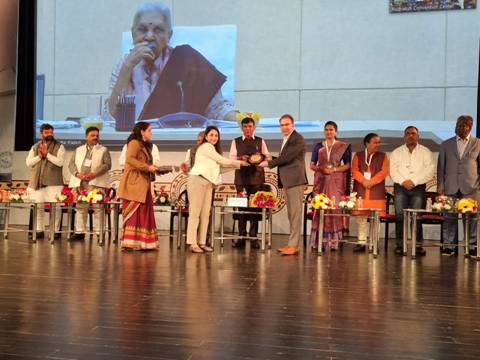
On day one of the conclave, states/UTs were awarded for best performances under the following categories:

  1. Achievement of HWCs Operationalization against target,
  2. Tele consultation), and
  3. ABHA ID Generation.

A Ministeral Session on implementation of PM- Ayushman Bharat Health Infrastructure Mission (PM-ABHIM) and 15th Financial Commission was also held today.

The event was also attended by Dr R S Sharma, CEO, NHA, Shri Rajesh Bhushan, Union Health Secretary, Ms. Roli Singh, AS&MD (NHM), senior officers from Centre, States, UTs, and representatives from development partners.

***


IYOM & Mega Food Event 2023

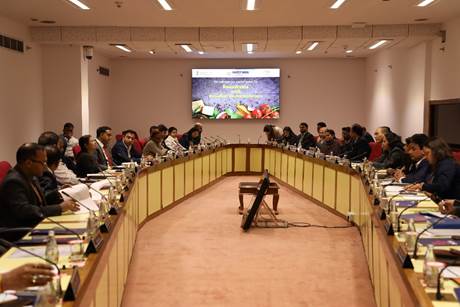
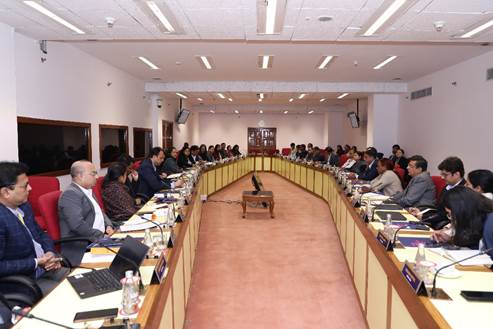
 Secretary, FPI chaired a roundtable interaction with Resident Commissioners on Thursday 8th December 2022 at 11:00 AM. The agenda of the roundtable was to apprise the Ministry’s plan of action for the proposed Mega Food Event to States / UTs and discuss possible areas of collaborations.

During the keynote address, Secretary, FPI informed the RCs that the mega event would be organized in October 2023 and is being envisaged on a much larger scale than the event earlier organised by the Ministry. This event would be providing a platform for the States and UTs to showcase State / UT-specific opportunities, interact with global and domestic business leaders, suppliers, purchasers, and technology providers for collaborations, and generate investment & sourcing interests across the value chain of food processing and food retail sectors.

All States / UTs were requested to share feedback / suggestions to make the event a grand success. They were also requested to participate actively in the event, as well as support the Ministry in creating awareness, ensuring participation of senior policy makers, agri-food companies, FPOs / SHGs and all relevant stakeholders in the mega food event.

The participants were also informed that as part of ‘International Year of Millets’, a series of activities are being planned by the Ministry to create awareness about the many benefits of millets and millet based value-added products.

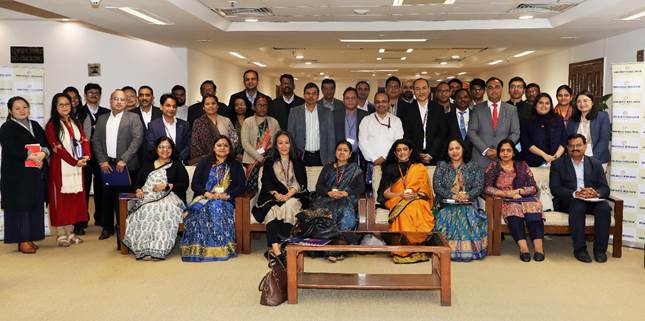
All participating RCs assured support to MoFPI in activities planned throughout the year 2023 and during the Mega Food Event 2023. Some of the suggestions / feedback included requirements of focused campaigning of the mega food event as well as benefits of millets domestically & in international expos, organising district level summits in addition to planned summits and expos in State Capitals which would help in onboarding micro entrepreneurs, FPOs, SHGs; showcasing of traditional aspects, possible association with tourism industry for promotion of the mega event etc.

.

A group of people sitting in a conference roomDescription automatically generated with medium confidence


The Investment Facilitation Cell (Invest India) was advised to coordinate with the States and UTs for implementing the identified plan of action and ensuring necessary support to enable active participation of States / UTs.

Secretary, FPI urged all States and UTs to engage with the Ministry for showcasing the strength of Indian food processing sector as well as actively participate in to avail the maximum benefits of the mega event.

A group of people posing for a photoDescription automatically generated

***

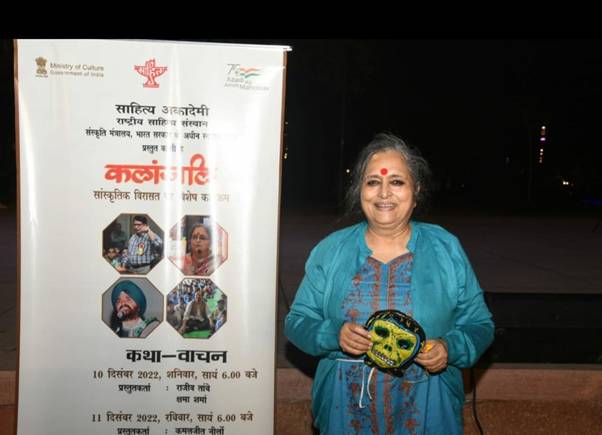
Ministry of Culture organises ‘Story Telling’ as part of Kalanjali campaign

 Main Highlights:

  • On 10th December, 2022, Shri Rajiv Tambe and Kshama Sharma presented story in an interactive manner.
  • The 2 day event will be organized on 11th of December 2022 also.

Under the aegis of Azadi ka Amrit Mahotsav, Sahitya Akademi, an autonomous organisation of the Ministry of Culture, Government of India, organized Storytelling  at the India Gate Lawns in New Delhi as a part of campaign named Kalanjali, a unique culture spectacle, under which cultural programmes are being organised at Amphitheatre Central Vista, India Gate every week.


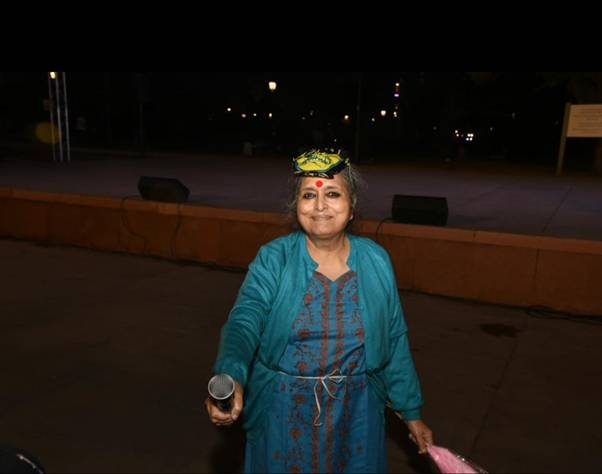
On 10th December, 2022 ,Shri Rajiv Tambe and  Kshama Sharma presented story in an interactive manner which  held  the interest of both children and adults. Shri Rajiv Tambe is  a writer of children’s stories and a Sahitya Akademi Awardee for Children’s Literature. His style is unique and immersive. Besides being a writer, he also works with few select non-government organizations (NGOs) and the United Nations International Children’s Emergency Fund. He has to his credit 80 published books in Marathi, Hindi, Gujarati and English.


Kshama Sharma has received the Sahitya Akademi Award for her contribution to Children’s Literature. An eminent writer in Hindi, she has to her credit over 50 published works. She has also been associated with the editing of several children’s magazines. She will be presenting her story with interesting dialogues.

The 2 day event will be organized on 11th of December 2022 also. On 11th December Kamaljit Neelon and Devendra Mewari,will present their stories.

Oral traditions have always been popular in India. It is a way of preserving the culture and beliefs of a tribe or community and passing them down to the next generation. That is the real significance of oral traditions. However, storytelling does not need to be limited to oral recitation. It can take form through drawings, paintings, dance or even puppet shows. India’s storytelling traditions are as diverse as the culture of the country,

Narrating stories is a means used to teach lessons, morals and to entertain people, particularly in rural areas. Before TV, the internet and smartphones, people were coming together to hear stories about their history, folklore and current events. India being a land of diverse cultures, every state follows its own style of storytelling. While some narrate, others employ props like puppets, masks and even musical instruments. There are some that are told through the medium of dance and music.

Katha is an Indian style of religious storytelling, performances of which are a ritualistic event in Hinduism. It often involves professional storytellers who recite Hindu religious texts such as Puranas, The Ramayana or Bhagavata Purana, followed by an explanatory commentary. South India has a long tradition of storytelling and religious discourse. Religious scholars were knowledgeable in the scriptures used for discourse in temples and monasteries. Purana-Pravachana is a lecture about scriptures in which the pauranika is a spiritual interpreter of the scriptures. These stories generally have a religious theme, usually the life of a saint or a story from an Indian epic.

Wall paintings in temples and shrines across India also serve the purpose of interpreting and storytelling with a religious theme.

Kamaljit Neelon  is the recipient of the Sahitya Akademi Award for Children’s Literature. A well-known name in Punjabi children’s literature, her writings incorporate cultural and social values, which motivates both children and adults to move towards a positive direction. Nine albums of Punjabi songs written by her continue to be aired by Doordarshan and other television channels. She will be presenting her stories with the musical accompaniment of the Dhapli and Harmonium.

 Devendra Mewari is a recipient of the Sahitya Akademi Award for Children’s Literature. A distinguished writer in Hindi, he has 25 published books to his credit. He has also worked on a rare genre of audio plays in Hindi on Science and Technology. His presentation will be innovative and interesting.

******

Human Rights Day Celebration Organised by the National Human Rights Commission

 The President of India, Smt Droupadi Murmu graced and addressed the Human Rights Day celebration, organised by the National Human Rights Commission, in New Delhi today (December 10, 2022).

Speaking on the occasion, the President said that it is an important occasion for the whole of humankind, as it was on this day in 1948 that the United Nations General Assembly adopted the Universal Declaration of Human Rights (HDHR). She noted that the text of the UDHR has been translated into more than 500 languages, which makes it the most translated document in history. She said that still, when we consider the sad developments that keep taking place in many parts of the world, we wonder if the declaration has been read at all in some of those languages. The fact remains that human rights are a work in progress around the world.

The President said that in India, we can take solace in the fact that the National Human Rights Commission has been making the best possible efforts to spread awareness about them. Now in its 30th year, the NHRC has done a commendable job of protecting as well as promoting human rights. It also participates in various global forums for human rights. India is proud of the fact that its work has been appreciated internationally.

The President said that developing sensitivity and sympathy is the key to promoting human rights. It is essentially an exercise of the faculty of imagination. If we can imagine ourselves in the place of those who are treated as less than human, it would open our eyes and compel us to do the needful. There is a so-called ‘golden rule’, which says “Treat others as you would like them to treat you”. That sums up the human rights discourse beautifully. 

The President noted that today is the beginning of the worldwide, year-long celebrations of the 75 years of the UDHR. And the United Nations has chosen ‘Dignity, Freedom and Justice for All’ as the theme of the year 2022. She said that over the past few years, the world has suffered from a high number of natural disasters caused by unusual weather patterns. Climate change is knocking on the doors. People in the poorer nations are going to pay a heavier price for the degradation of our environment. We must consider the environmental dimension of justice now.

The President said that the challenge of climate change is so enormous that it forces us to redefine ‘rights’. Five years ago, the High Court of Uttarakhand held that the Ganga and Yamuna rivers have the same legal rights as human beings. India is a land of sacred geography, with countless holy lakes, rivers and mountains. To these landscapes, the flora and fauna add rich biodiversity. In old times, our sages and seers saw them all as part of a universal whole, along with us. So, just as the concept of human rights exhorts us to consider every human being as no different from us, we should treat the whole living world and its habitat with respect.

The President shared that she wonders what the animals and trees around us would tell us if they could speak, what would our rivers say about human history and what would our cattle say on the topic of human rights. She said that we have trampled on their rights for long, and now the results are before us. We must learn – rather re-learn – to treat nature with dignity. This is not only a moral duty; it is necessary for our own survival too.

Please click here to see the President’s Speech – 

***