5 must-visit places in Bhubaneshwar


Lingaraja Temple

This image has an empty alt attribute; its file name is image-58.png

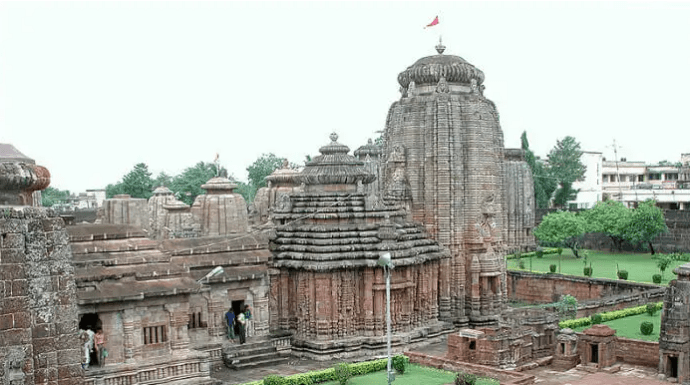
The 54m-high Lingaraj Mandir dedicated to Shiva dates from 1090 to 1104 – though some parts are more than 1400 years old–and is surrounded by several smaller temples and shrines. The granite block within, representing Tribhubaneswar (Lord of Three Worlds), is bathed daily with water, milk and bhang (marijuana). The main gate, guarded by two mustachioed yellow lions, is a spectacle in itself as lines of pilgrims approach with offerings in hand. The temple is closed to non-Hindus.

Given the high compound wall, foreigners can view the temple’s interiors only from a viewing platform (this may also include Hindu foreigners). Face the main entrance, walk right, then follow the wall around to the left and find the viewing platform on your left, just before you reach Chitrakarini Temple. There is occasional aggressive hassling for ‘donations’ at the viewing platform. The money will not go to the temple, so stand your ground and do not pay.

Location: Lingaraj Road, Old Town Bhubaneswar, Odisha
Timings: 5:00 AM to 9:00 PM
Entry Fees: No entry fee

Nandankanan Zoological Park
This image has an empty alt attribute; its file name is image-54.png

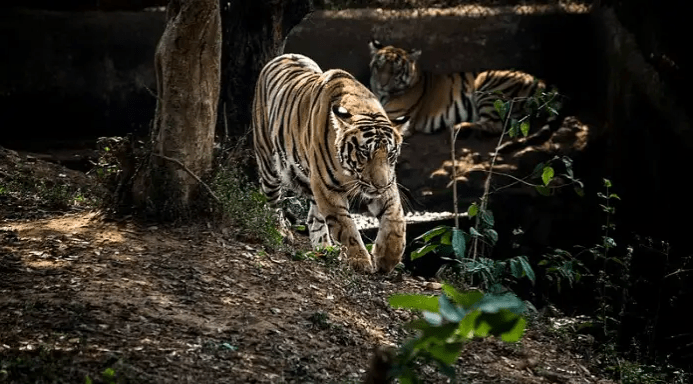
Spread over 400 hectares in the Chandaka forest lies the impressive Nandankanan Zoological Park. Located on the banks of Kanjia Lake, this zoo is home to over 67 kinds of mammals, 81 species of birds and 18 varieties of reptiles. It was the first zoo in India to join the World Association of Zoos and Aquariums (WAZA) and also houses a botanical garden. Visitors can see black panthers, white tigers, gharial crocodiles and many other animals, birds and reptiles in an attempt to maintain the natural balance of nature against the growing urbanisation of Bhubaneswar.

Price: Budget

Opening hours: 7.30am-5.30pm (April–September), 8am-5pm (October–March); Closed Monday.

Odisha State Museum
This image has an empty alt attribute; its file name is image-55.png

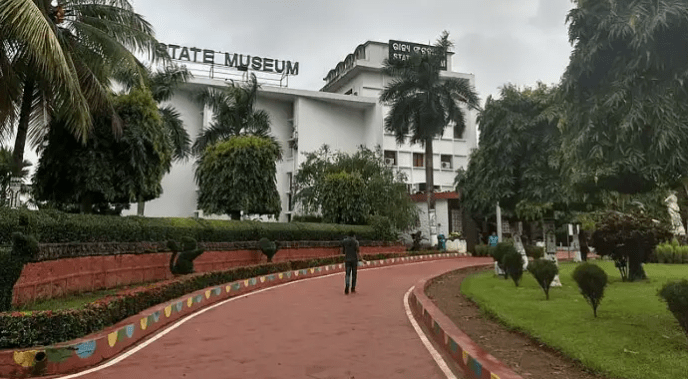
Wondering what to do in Bhubaneswar? Visit Odisha State Museum, which houses a treasure trove of artifacts emphasizing the magnificent history of the state and the families which ruled it for centuries. The museum, established in the year 1948, houses the best collection of erratic palm-leaf manuscripts, scroll paintings, folk musical instruments, and Bronze Age tools.

Location: Near Lewis Road, Kalpana Square, BJB Nagar Bhubaneswar, Odisha
Timings: 10 AM to 5.00 PM
Entry Fees: INR 10 for Indians and INR 50 for foreigners

Pathani Samanta Planetarium 
This image has an empty alt attribute; its file name is image-56.png

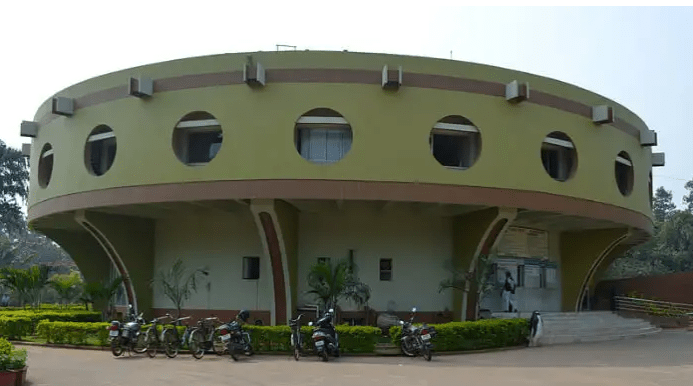
The Pathani Samanta Planetarium was recognized to create awareness of astrophysics, astronomy, and space science. Multiple shows, workshops, regular conferences about outer space are organized here. There is an extensive library with an impressive number of books from the field of astronomy, science and technology are there.

Location: Sachivalaya Marg Acharya Vihar, Bhubaneswar, Odisha
Timings: 1.00 PM to 5:45 PM
Entry Fees: INR 30

Udayagiri & Khandagiri Caves
This image has an empty alt attribute; its file name is image-57.png

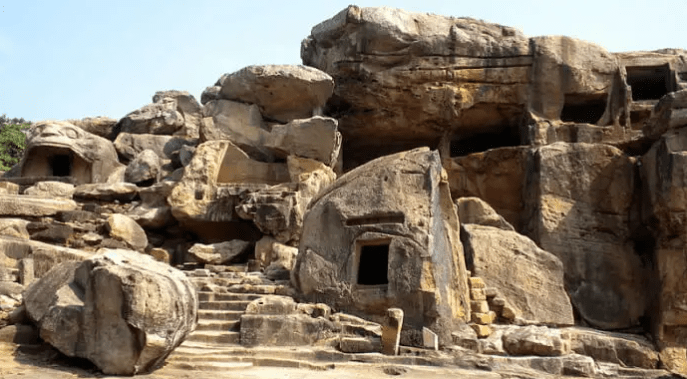
Udayagiri and Khandagiri caves are located six kilometres to the west of Bhubaneswar. These caves offer a brief look into the history of Jain religion and Kalinga Empire. The names of these caves were derived from the hills on which they are located. The caves have been numbered according to the Archaeological Survey of India, Hatigumpha, and Ganesha Gumpha are the most popular in the area. Cave 1 is decked out by sculptural wall painting with carved figures of athletes, women, elephants, and geese carrying flowers.

Location: Khandagiri, Bhubaneswar, Odisha
Timings: 9.00 AM to 6.00 PM
Entry Fees: INR 15 for Indians and INR 200 for foreigners
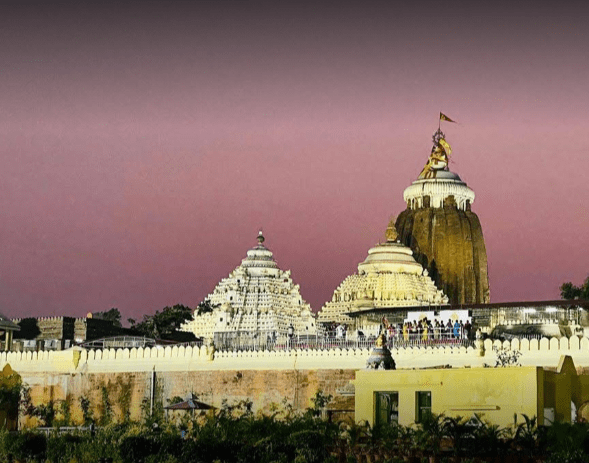
7 intriguing facts of Jagannath Puri

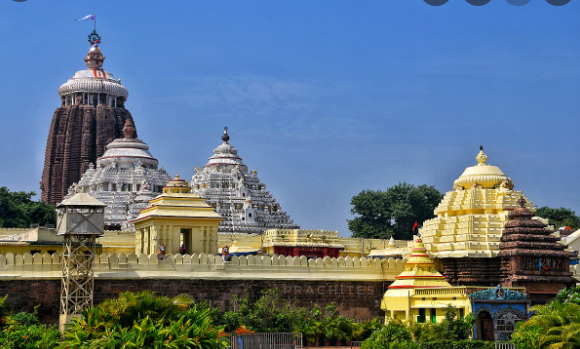
 Shri Jagannath’s Temple in Puri has uttermost importance for the Hindu devotees as it is one of the Char-Dham pilgrimages i.e. Puri, Dwaraka, Badrinath, and Rameshwar. This temple is famous for its annual Rath Yatra, but that’s not the sole reason people worship Lord Jagannath and Devi Subhadra and elder brother Lord Balabhadra.

Jagannath Puri is also famous for the mysteries and undefinable facts that catch the traveler’s eye worldwide. Devotees believe that all these are blessings of Lord Jagannath, and people who consider these as myths should visit the place themselves and find themselves dumbfounded. So, here are some most intriguing facts about Jagannath Puri.

1. No birds, no planes fly above the Lord

They say no one’s above God, so nothing flies above it. It’ll leave you surprised to encounter such a divine miracle that no birds, no planes fly above the temple. This is a rare contrast compared to other temples, as we have always seen birds resting on the top of temples are other entities. The temple is considered as a no-fly zone, not by any state government orders but by the Lord himself. And this phenomenon apparently has no scientific explanation.

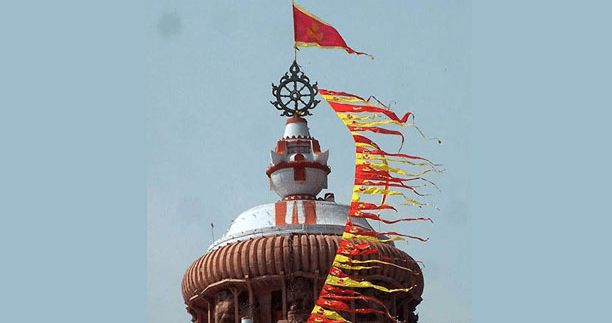
2. Flag defying the power of wind

All of us know that any cloth flows towards wind direction, be it the sails of ship or the kites we flew in our childhoods. But here, the flag that flies atop of the Jagannath temple is an exception to this common principle. No scientific explanations reason the flag flow in the opposite direction of wind.

3. Mute oceans

Odisha Tourism : Puri Beach
As soon as you step inside the main door, i.e. Singha Dwara entrance of the temple, you can’t hear the burble of water. And this phenomenon is more prominent in the evenings. But once you step out the audibility of water returns. It’s said that Devi Subhadra wished for serenity inside the temple walls and by this her wish was duly fulfilled.

4. Neela Chakra at the pinnacle

The riddle of Neela Chakra (Blue wheel) has still been unsolved. First, just think about the fact, how did the wheel made of 8 different alloys and a 36 feet circumference get up there at the pinnacle with just a human force of that century. Second, the view of this wheel doesn’t really depend on the direction that we look at it from. It’s like it was designed to look the same from all directions.

5. The temple casts no shadows

Every small object/thing/ peoples have shadows. But ever wondered what if something doesn’t have a shadow? The temple Jagannath Puri doesn’t cast any shadow on any part of the day under sunlight. If this is not a miracle, what would it be; just an unexplained phenomenon with no scientific reason to back up.

6. The magical techniques to cook

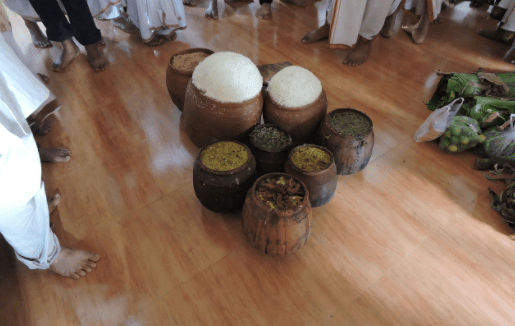
The traditional methods for cooking the mahaprasadam have been preserved here from the start. They place exactly 7 pots, one above the other on the firewood. Enchantingly, the upper pot gets cooked first, followed by the rest in order.

7. Mahaprasad never goes vain here

In India, wasting food is considered as a bad sign; the temple crew lives by this same. So, here at Jagannath temple the food is never futile, even if the crowd of devotees may vary from 2,000 to 2,00,000. Miraculously, the Parsadam prepared every day is never wasted, not even a bite. Could this be an effective management or the Lord’s will?

After reading such celestial facts, you might want to see them yourself. So, do not forget to check these facts on your next trip to Odisha and share your experience with me.

Types of Data in Statistics

 There are different types of data in Statistics, that are collected, analysed, interpreted and presented. The data are the individual pieces of factual information recorded, and it is used for the purpose of the analysis process. The two processes of data analysis are interpretation and presentation. Statistics are the result of data analysis. Data classification and data handling are important processes as it involves a multitude of tags and labels to define the data, its integrity and confidentiality. In this article, we are going to discuss the different types of data in statistics in detail.

What are Types of Data in Statistics?

The data is classified into majorly four categories:

  • Nominal data
  • Ordinal data
  • Discrete data
  • Continuous data

Further, we can classify these data as follows:

Let us discuss the different types of data in Statistics herewith examples.

Qualitative or Categorical Data

Qualitative data, also known as the categorical data, describes the data that fits into the categories. Qualitative data are not numerical. The categorical information involves categorical variables that describe the features such as a person’s gender, home town etc. Categorical measures are defined in terms of natural language specifications, but not in terms of numbers.

Sometimes categorical data can hold numerical values (quantitative value), but those values do not have a mathematical sense. Examples of the categorical data are birthdate, favourite sport, school postcode. Here, the birthdate and school postcode hold the quantitative value, but it does not give numerical meaning.

Nominal Data

Nominal data is one of the types of qualitative information which helps to label the variables without providing the numerical value. Nominal data is also called the nominal scale. It cannot be ordered and measured. But sometimes, the data can be qualitative and quantitative. Examples of nominal data are letters, symbols, words, gender etc.

The nominal data are examined using the grouping method. In this method, the data are grouped into categories, and then the frequency or the percentage of the data can be calculated. These data are visually represented using the pie charts.

Ordinal Data

Ordinal data/variable is a type of data that follows a natural order. The significant feature of the nominal data is that the difference between the data values is not determined. This variable is mostly found in surveys, finance, economics, questionnaires, and so on.

The ordinal data is commonly represented using a bar chart. These data are investigated and interpreted through many visualisation tools. The information may be expressed using tables in which each row in the table shows the distinct category.

Quantitative or Numerical Data

Quantitative data is also known as numerical data which represents the numerical value (i.e., how much, how often, how many). Numerical data gives information about the quantities of a specific thing. Some examples of numerical data are height, length, size, weight, and so on. The quantitative data can be classified into two different types based on the data sets. The two different classifications of numerical data are discrete data and continuous data.

Discrete Data

Discrete data can take only discrete values. Discrete information contains only a finite number of possible values. Those values cannot be subdivided meaningfully. Here, things can be counted in whole numbers.

Example: Number of students in the class

Continuous Data

Continuous data is data that can be calculated. It has an infinite number of probable values that can be selected within a given specific range.

Example: Temperature range