
Story of Dharmapada – Legend of Konark Temple

The Sun Temple of Konark was built around the 13th century and took 12 years and 12000 artisans to complete. Generations have grown up hearing the immortal story of the little child prodigy-Dharmapada, who could only add the finishing touches to the construction work of Konark Temple and gave his life to save twelve thousand artisans. The throngs of people were stunned to learn that a 12-year-old boy could master the intricacies of building a temple in Odisha that modern architects find incomprehensible.

Picture Courtesy – Sadhana Khamari

The construction work of Sun Temple of Konark was over seen by Sibei Samantray Mahapatra and Bishu Maharana as the chief architect. The soil on which the temple was to be built was originally in such poor condition that the chief architect, Bishu Maharana, who was entrusted with the project, became very upset. There was an agreement between the king and the workers that no one would be allowed to leave until the entire project was completed. 

As the construction progressed, the chief architect Bishu Maharana and his workers encountered difficulties in repositioning the Kalasha (temple crown stone). Meanwhile, the chief architect’s son, ‘Dharmapada,’ came to see his father because he had been away from home for a long time. Dharmapada was born a month after his father’s departure, and it had been twelve years, he had never seen his father and his mother never told him much about his father.  On his 12th birthday, he asked his mother for a gift, and she told him about his father and his responsibility to build the Konark Sun Temple near the sea. Dharmapada decided to visit his father and arrived at the construction site after a long journey. He went to the site and didn’t take long to spot his father. After meeting his father and other artisans, he discovered that they were dissatisfied and faced a major problem. 

The versatile boy could have known about the real flaw in the final stage of construction from the manuscripts he read as a child. It was only through his sheer genius that the stone that would fit the temple as the key stone or Kalash and keep the temple together could be designed. When his father showed him the structure, he hurried to make the correct stone with him. The key stone was correctly placed and the work was completed within a few hours.

However, the workers on the construction site were afraid that the king would be furious if he found out that a 12-year-old child had completed the work while twelve thousand artisans had failed to do so. The sensitive child climbed and gradually reached the temple’s peak. As the first ray of light appeared, the child jumped into the sea and gave his life to save 12000 lives, including his father’s. The example of supreme sacrifice laid down by the little child has been passed down through the generations as a tale of inspiration, brilliance, and self-sacrifice for the greater good of society.

Know more about every 12 zodiac signs; Dates, Traits & more

 There are 12 different horoscope signs, each with its own strengths, weaknesses, traits, desires, and way of viewing the world. Your personal astrological sign is based on the position of the sun on the day you were born. Take a look below to learn what your zodiac sign is, and discover their powerful traits and secrets.


Picture Courtesy – https://english.jagran.com/ 

Aries (23rd March- 22nd April)

As the first sign to appear in the zodiac, Aries are typically brave and outgoing.

They’re assertive by nature and won’t hesitate to tell you how they feel. But they do need to be mindful that they don’t hurt anyone’s feelings by speaking impulsively. They can be headstrong at times, and make better leaders than followers.

Taurus (23rd April- 22nd May)

No one will expose you to the finer things in life, quite like a Taurus.

This fixed earth sign has impeccable taste and loves to indulge. They tend to be financially responsible, but still know how to treat themselves and the ones they love. Though they do have a stubborn streak, this member of the zodiac is incredibly loyal and reliable.

Gemini (23rd May- 22nd June)

Perhaps the most curious sign in the zodiac, Geminis make great students and communicators.

They’re witty and charming, but also have a darker side to them. They love to socialize but can become nervous or overstimulated when they don’t take time for themselves. This sign is also great at multitasking but needs to be careful not to take on too much at once.

Cancer (23rd June- 22nd July)

As a water sign, Cancers feel deeply, though will often keep these sentiments hidden under their shell.

They are intuitively nurturing and love to take care of the people around them. They have a reputation for being moody and aren’t always the best at unpacking their feelings with others. They often opt to sort out their issues alone.

Leo (23rd July- 22nd August)

Warm, artistic, and protective of the ones they love, Leos make great friends and companions.

They are confident and larger-than life, easily charming the people they encounter. However, this sign can be dramatic from time to time, especially if they feel disrespected. They feel passionately about their personal interests but need to be mindful that they show interest in the lives of those around them as well.

Virgo (23rd August- 22nd September)

One of the most efficient members of the zodiac, Virgos are organized, driven, and meticulous in their work.

They are very detail-oriented, making them master editors with extremely high standards. However, they need to be mindful that they are not overly demanding or critical of themselves or those around them.

Libra (23rd September- 22nd October)

Known for their diplomacy and harmonious energy, Libra is one of the most laid-back members of the zodiac.

They are extremely relationship-oriented but can sometimes prioritize their partner’s needs over their own. This Venus ruled sign has a keen eye for aesthetics with impeccable personal style and well decorated homes.

Scorpio (23rd October- 22nd November)

Mysterious, charismatic, brave, and magnetic, Scorpios are hard to ignore.

They are extremely intuitive and make natural psychologists with an ability to easily read those around them. They form intense bonds with their friends and romantic partners, but they can become possessive or jealous if they’re not completely confident with themselves.

Sagittarius (23rd November- 22nd December)

Sagittarius is one of the most beloved members of the zodiac-with an adventurous, charismatic, and generous spirit.

They lean toward optimism and love to take risks, but need to be mindful of living in the present and making practical plans for the future. Sagittarius are natural philosophers and are always looking to explore the mysteries of the universe.

Capricorn (23rd December- 22nd January)

Perhaps the most disciplined members of the zodiac, Capricorns, are known for their endurance and determination.

Career-motivated and focused on status, these earth signs are highly driven to reach their professional goals and take their responsibilities very seriously. They’re typically resistant to change and will often stick with their personal routines for many years.

Aquarius (23rd January- 22nd February)

Nothing says “quirky” quite like Aquarius energy does. This member of the zodiac embodies rebellion, creativity, eccentricity, and intelligence.

They’re driven by a desire to evolve past antiquated ideals, and help society move into a more compassionate space. They can be seen as unpredictable or disorganized, but often surprise people with their streaks of brilliance and hidden genius.

Pisces (23rd February- 22nd March)

Pisces signs have a peaceful and gentle presence about them, with an uncanny ability to tap into the emotions of the collective.

They’re extremely malleable and need to be careful of who they surround themselves with. Since they are hyper-intuitive, they can sometimes become disconnected-making it important for this water sign to ground often.

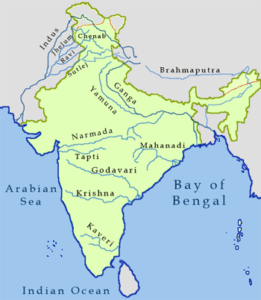
Drainage System of India

 India is the country of rivers. Here, more than 4000 big and small rivers are found, which can be divided into 23 large and 200 small river basins. On the basis of origin, Indian rivers are broadly divided into (A)Himalayan Rivers and (B) Peninsular Rivers. The differences in drainage pattern and water levels are found in these two types of river systems. In India, water mainly drains in two directions of the main water divide line of India. 90% of land water drains into the Bay of Bengal and the rest drains into Arabian Sea.

Picture Courtesy – https://in.pinterest.com/pin/87609155236646009/

(A) Himalayan Rivers

Indus System

This system includes the Indus and its tributaries, like Jhelum, Chenab, Ravi, Beas, Sultej(The Panchnad), etc. It is 2880 km long, originates from Mansarovar lake in Tibet. In India, it flows between Zaskar and Ladakh ranges. It is also one of the largest river of the world. It is also known as the Sindhu and is India’s westernmost Himalayan river. It flows from a glacier near Bokhar Chu in the Kailash Mountain range of Tibet. In Tibet, it is known as ‘Singi Khamban’; or Lion’s mouth.
Important tributaries of Indus System:
  • Jhelum – It originates from Verinag stream in J&K at 4900 m height & flows only in J&K. It passes through Wular Lake in Kashmir valley. It joins Chenab at Trimmu (Pakistan). Kishan Ganga and Lidar are important tributaries of Jhelum. Controversial Tulbul Project is located on this river.
  • Chenab – It originates from Chandra-Bhaga stream in Himachal Pradesh near Lahul & Spiti. It flows in Himachal Pradesh and J&K Jhelum and Ravi meet with Chenab in Himachal Pradesh. Controversial Baglihar Project is located across this river in Doda district of J&K. Salal, Dulhasti and Ranvir Sagar hydropower project is also located on river Chenab.
  • Ravi – It originates from Kullu hills near Rohtang pass (Himachal Pradesh). It flows in Himachal Pradesh, J&K and Punjab. Ranjit Sagar (also known as Thein Dam) is located on river Ravi.
  • Beas –  It originates from Beas kund near Rohtang pass in Himachal Pradesh and flows in Himachal Pradesh & Punjab. It joins Satluj at Harike (Punjab). Indira Gandhi Canal takes off from Harike barrage, which is the longest irrigation canal of India. It runs up to Jaisalmer district of Rajasthan. Pong reservoir is constructed across this river.
  • Satluj – It originates from Rakshastal near Mansarovar Lake in Tibet and enters into India through Shipki-la pass (Himachal Pradesh). River Spiti is its major tributary. Satluj flows in Himachal Pradesh and Punjab. It forms boundary between India and Pakistan near Ferozepur. Famous Bhakra-Nangal Projects located on the river Bhakra dam is also called Govind Sagar dam. Nathpa-Jhakri (Himachal Pradesh) is also located on this river and producing more power as compared to Bhakra-Nangal. Satluj is known as Langchen Khambab in Tibet.

Ganga System

Ganga System Ganga is the longest river of India (2510 km). It originates as Bhagirathi from Gangotri glacier in Uttarkashi district of Uttarakhand. Bhagirathi is joined by Alaknanda (originates from Badrinath) at Devprayag. Alaknanda and Bhagirathi flow in the name of Ganga below Devprayag. Major part of Ganga lies in Uttar Pradesh region Famous Tehri Dam is located on river Bhagirathi and it is considered as India’s highest dam (265 m). 
Important tributaries of Ganga System:

Left Bank Tributaries – 
  1. Ramganga: It originates near Nainital and joins Ganga near Farrukhabad (Uttar Pradesh) 
  2. Gomti: It originates near Pilibhit and joins Ganga downstream to Varanasi near Ghazipur (Uttar Pradesh).
  3.  Kali or Sarda: It joins Ghaghra which meets Ganga near Chhapra (Bihar).
  4. Gandak: It originates from Nepal-China border in Tibet and joins Ganga near Hajipur (Bihar).
  5.  Kosi: It originates from Nepal-China border and is also known as Sorrow of Bihar. 
  6.  Mahananda: it originates from Nepal – Sikkim border and joins Ganga in Bangladesh.
Right Bank Tributaries – 
    1. Yamuna: It originates from Yamunotri glacier and joins Ganga at Prayagraj. Important tributaries of Yamuna are Chambal (originates from Mhow in Madhya Pradesh), Ken, Betwa, Dhasan etc.
    2. Son – It originates from Amarkantak plateau and flows towards north and joins Ganga near Manner (Danapur Bihar) upstream of Patna. It is the only peninsular river which directly joins Ganga Rihand river is its main tributary, Govind Vallabh Pant Sagar is located on Rihand river. It lies in Renukot region (near Hindalco) of Uttar Pradesh.

    Brahmaputra System

    It originates from Tumcho Khambhat glacier in Mansarovar Lake of Tibet. It is known as Tsangpo in Tibet( meaning “purifier”), Brahmaputra in Assam and Jamuna in Bangladesh.
    Brahmaputra is volume wise largest river of India where as lengthwise Ganga is the longest river of India. It is one of the longest rivers of the world and with regard to the volume of water it is among the four largest rivers of the world Its drainage system is spread in three countries- China (Tibet), India and Bangladesh and it takes a sharp south-westerly turn along the eastern side of the Namcha Barwa Mountain and forms a 5500 m deep gorge.
    Brahmaputra forms largest number of fresh water riverine islands in the world and among this, Majuli is the largest fresh water riverine island in the world.
    Important tributaries of Brahmaputra are Subansir Lohit. Tista, Pagladia, Puthumari, Jia Bhore Dibang or Sikang. Koppali, Jal-dhaka, Tor Barak, etc. Last four of these join in Bangladesh.

    (B) Peninsular Rivers

    The peninsular rivers are distinguished by their fixed course, lack of meanders, and nonperennial flow of water.
    The drainage system is older than the Himalayan drainage system.
    The Western Ghats, which run near the western coast, serve as a water divide between the major Peninsular rivers.
    Except for the Narmada and Tapi, the majority of the Peninsular rivers flow from west to east.
    The Peninsular drainage’s other major river systems are the Mahanadi, Godavari, Krishna, and Kaveri.
    Narmada River – 
    • It is the peninsular region’s largest west-flowing river, flowing through a rift valley between the Vindhya (north) and Satpura Ranges (south). It rises in Madhya Pradesh from the Maikala range near Amarkantak. Major Tributaries of the river are Hiran, Orsang, Barna and Kolar.
    • The Narmada basin includes Madhya Pradesh, Maharashtra, and Gujarat. The Sardar Sarovar Project has been constructed on this river.
    Tapi – 
    • The Betul district of Madhya Pradesh, which is located in the Satpura ranges, is the source of another significant river that flows west. 
    • While much shorter in length than the Narmada, it too flows in a rift valley. 
    • Parts of Gujarat, Maharashtra, and Madhya Pradesh are included in its basin.
    Mahanadi – 
    • The river origins in Chhattisgarh’s Raipur area and flows through Odisha eventually discharging into the Bay of Bengal.
    • This river’s drainage basin spans 53% of Madhya Pradesh and Chhattisgarh and 47% of Odisha.
    • Seonath, Hasdeo, Mand, Ib, Jonking, and Tel rivers are among the major tributaries.
    • Its basin is bordered on the north by the Central India hills, on the south and east by the Eastern Ghats, and on the west by the Maikala range.
    Godavari
    • It is also known as the “Dakshin Ganga” and is the largest Peninsular river system.
    • It rises in the Maharashtra district of Nasik and empties into the Bay of Bengal.
    • Its tributaries drain Maharashtra, Madhya Pradesh, Chhattisgarh, Odisha, and Andhra Pradesh.
    • Its main tributaries are the Penganga, Indravati, Pranhita, and Manjra.
    Krishna –
    • Krishna river is the second largest east-flowing Peninsular river, rising in Sahyadri near Mahabaleshwar.
    • Its major tributaries include the Koyna, Tungbhadra, and Bhima rivers.
    • Before entering the Bay of Bengal, it flows through the states of Maharashtra, Karnataka, Telangana, and Andhra Pradesh.
    Kaveri –
    • The Kaveri river rises in the Brahmagiri hills of Karnataka’s Kodagu district.
    • It is a holy river in southern India.
    • Its major tributaries include the Arkavathi, Hemavathi, Bhavani, Kabini, and Amravati.
    • It flows southeast through Karnataka, Kerala, and Tamil Nadu before draining into the Bay of Bengal via Pondicherry.

    What are Agro-Climatic Regions of India?

     Geographers use the term “area” to refer to any particular portion of Earth’s surface. It may be as small as a park or a neighborhood, or as large as a continent or an ocean. Metropolitan areas, for example, help define the borders of large population centers for a census and other official purposes. The metropolitan area of Delhi, Mumbai are urban geographic areas.  Area is also an exact measure of the size of a surface with specific boundaries.

    The geographical area of India is divided into 15 agro-climatic regions. These are further divided into more homogeneous 72 sub-zones. The 15 agro-climatic zones are:

    • Zone 1 – Western Himalayan Region: Jammu and Kashmir, Uttar Pradesh
    • Zone 2 – Eastern Himalayan Region: Assam, Sikkim, West Bengal and all North-Eastern states
    • Zone 3 – Lower Gangetic Plains Region: West Bengal
    • Zone 4 – Middle Gangetic Plains Region: Uttar Pradesh, Bihar
    • Zone 5 – Upper Gangetic Plains Region: Uttar Pradesh
    • Zone 6 – Trans-Gangetic Plains Region: Punjab, Haryana, Delhi and Rajasthan
    • Zone 7 – Eastern Plateau and Hills Region: Maharashtra, Uttar Pradesh, Orissa and West Bengal
    • Zone 8 – Central Plateau and Hills Region: MP, Rajasthan, Uttar Pradesh
    • Zone 9 – Western Plateau and Hills Region: Maharashtra, Madhya Pradesh and Rajasthan
    • Zone 10 – Southern Plateau and Hills Region: Andhra Pradesh, Karnataka, Tamil Nadu
    • Zone 11 – East Coast Plains and Hills Region: Orissa, Andhra Pradesh, Tamil Nadu and Pondicherry
    • Zone 12 – West Coast Plains and Ghat Region: Tamil Nadu, Kerala, Goa, Karnataka, Maharashtra
    • Zone 13 – Gujarat Plains and Hills Region: Gujarat
    • Zone 14 – Western Dry Region: Rajasthan
    • Zone 15 – The Islands Region: Andaman and Nicobar, Lakshadweep
    Geographic Areas Examples
    Tropical Rainforest Assam and parts of the Sahyadri Mountain Range
    Tropical Savannah Sahyadri Mountain Range and parts of Maharashtra
    Tropical and subtropical steppe Parts of Punjab and Gujarat
    Tropical Desert Most parts of Rajasthan
    Moist subtropical with winter Parts of Punjab, Assam, and Rajasthan
    Mountain climate Parts of Jammu and Kashmir, Himachal Pradesh, and Uttaranchal
    Drought Rajasthan, Gujarat, and Haryana
    Tropical semi-arid steppe Tamil Nadu, Maharashtra, and other parts of South India