What is Good Friday

Good Friday is an important religious holiday observed by Christians all over the world. It commemorates the crucifixion of Jesus Christ, who died for the sins of humanity. The holiday is observed on the Friday before Easter Sunday and marks the end of the Lenten season.

The origin of Good Friday dates back to the early days of Christianity when it was first observed as a day of mourning and repentance. It is believed that Jesus was arrested and put on trial before the Roman governor, Pontius Pilate, who sentenced him to death by crucifixion. The crucifixion took place on a hill called Golgotha, outside the city walls of Jerusalem.
The story of Jesus’ crucifixion is recorded in the New Testament of the Bible. According to the Gospels, Jesus was betrayed by one of his disciples, Judas Iscariot, who led a group of soldiers to arrest him in the Garden of Gethsemane. Jesus was then taken to the high priest Caiaphas and questioned by the Sanhedrin, the Jewish council of elders. He was accused of blasphemy and sentenced to death by the Roman authorities.
Jesus was then taken to Golgotha, where he was crucified alongside two thieves. He was nailed to a wooden cross and left to die. According to Christian tradition, Jesus died on the cross after several hours of agony, during which time he uttered the famous words, “Father, forgive them, for they know not what they do.”
Good Friday is a solemn and reflective day for Christians. Many churches hold special services, including the reading of the Passion of Christ, a recounting of Jesus’ suffering and death. In some churches, the service ends in darkness, symbolizing the darkness that fell upon the earth when Jesus died.
Christians also observe Good Friday by fasting and abstaining from meat. The day is a time for reflection, prayer, and repentance. Many Christians also participate in the Stations of the Cross, a devotional practice that involves walking the path of Jesus’ final hours, stopping at 14 stations along the way to meditate on his suffering and death.
In some countries, Good Friday is a public holiday, and businesses and schools are closed. It is a time for families to gather, and many traditional foods are eaten, including hot cross buns, a sweet bread marked with a cross, and fish, which is a traditional Lenten food.
In conclusion, Good Friday is a significant religious holiday for Christians, marking the crucifixion and death of Jesus Christ. It is a time for reflection, prayer, and repentance, and is observed with solemnity and reverence around the world. Christians believe that Jesus’ death on the cross was a sacrifice for the sins of humanity, and that through his death and resurrection, they can have eternal life. Good Friday is a powerful reminder of the importance of faith, sacrifice, and redemption in the Christian faith.

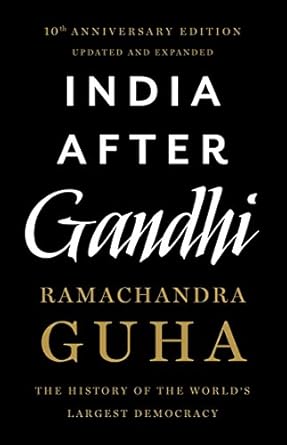
Top Ten Books to Read on Indian History

Here are ten books that cover different aspects of Indian history and are widely regarded as essential reading:

India After Gandhi: The History of the World’s Largest Democracy by Ramachandra Guha – A comprehensive account of India’s political, social, and economic history from 1947 to the present day.

The Wonder That Was India by A.L. Basham – A classic study of India’s cultural and intellectual history, covering topics such as religion, philosophy, literature, and art.
A History of Ancient and Early Medieval India by Upinder Singh – A detailed and accessible survey of India’s history from the Indus Valley Civilization to the rise of the Delhi Sultanate.
The Discovery of India by Jawaharlal Nehru – A philosophical and reflective exploration of India’s history, culture, and identity by India’s first Prime Minister.
The Great Partition: The Making of India and Pakistan by Yasmin Khan – A vivid and detailed account of the partition of India in 1947 and its aftermath.
The Last Mughal: The Fall of a Dynasty, Delhi, 1857 by William Dalrymple – A gripping account of the Indian Rebellion of 1857 and its impact on the Mughal Empire.
The Argumentative Indian by Amartya Sen – A collection of essays that explore the intellectual and cultural traditions of India, from ancient times to the present day.
India’s Struggle for Independence by Bipan Chandra et al. – A comprehensive and detailed account of India’s freedom struggle, covering the period from the early 19th century to 1947.
The Story of Indian Business: The East India Company by Tirthankar Roy – A detailed and engaging account of the East India Company and its role in shaping India’s economic history.
The Idea of India by Sunil Khilnani – A thought-provoking exploration of the idea of India and the various forces that have shaped its history and culture.
These books cover a wide range of topics and periods in Indian history, and offer different perspectives and approaches to understanding India’s past and present.

Top 10 Books to Read for Management

Here are ten management books that have been widely read and celebrated:
The 7 Habits of Highly Effective People by Stephen Covey – A classic self-help book that outlines seven habits that can help people achieve success in their personal and professional lives.
7 HABITS OF HIGHLY EFFECTIVE PEOPLE: 30th Anniversary Edition (The Covey  Habits Series) : Covey, Stephen R., Covey, Sean, Collins, Jim: Amazon.in:  Books
Good to Great by Jim Collins – A book that examines why some companies succeed while others fail, and outlines the characteristics of companies that have made the transition from good to great.
The Lean Startup by Eric Ries – A book that outlines a methodology for creating and managing startups that focuses on continuous innovation, rapid experimentation, and customer feedback.
The Innovator’s Dilemma by Clayton Christensen – A book that explores why successful companies often fail to innovate and how disruptive technologies can disrupt established markets.
First Things First by Stephen Covey – A book that focuses on time management and prioritization, and provides practical tools for achieving balance and success in one’s personal and professional life.
The Art of War by Sun Tzu – A classic book on strategy and leadership that has been widely applied in both military and business contexts.
Who Moved My Cheese? by Spencer Johnson – A short book that provides a simple and engaging allegory for dealing with change and uncertainty in one’s personal and professional life.
The One Minute Manager by Kenneth Blanchard and Spencer Johnson – A concise and practical guide to effective management that emphasizes goal-setting, praise, and constructive feedback.
The 4-Hour Work Week by Tim Ferriss – A book that challenges conventional notions of work and productivity, and provides tools and strategies for achieving more with less.
Getting Things Done by David Allen – A book that provides a comprehensive system for personal productivity and time management, and has become a cult classic among productivity enthusiasts.
These books cover a wide range of management topics, from leadership and strategy to productivity and personal development, and are all valuable resources for anyone looking to improve their management skills.

Top 10 Books to Read

Here are ten books across various genres that are widely considered as classics and are definitely worth reading:
To Kill a Mockingbird by Harper Lee – A Pulitzer Prize-winning novel that explores themes of race, justice, and morality in the Deep South of the United States.
1984 by George Orwell – A dystopian novel that portrays a totalitarian future society, where individualism and freedom are suppressed.
Pride and Prejudice by Jane Austen – A classic romance novel that explores social class, gender roles, and the importance of marrying for love.
Pride & Prejudice (2005 film) - Wikipedia
Crime and Punishment by Fyodor Dostoevsky – A psychological thriller that delves into the mind of a murderer and his inner struggles with morality and guilt.
The Catcher in the Rye by J.D. Salinger – A coming-of-age novel that explores teenage angst, alienation, and the search for meaning in life.
One Hundred Years of Solitude by Gabriel Garcia Marquez – A magical realist novel that follows the multi-generational saga of the Buendía family in a fictional South American town.
The Great Gatsby by F. Scott Fitzgerald – A novel that explores the excesses and decadence of the wealthy elite in the 1920s, set against the backdrop of the American Dream.
The Diary of a Young Girl by Anne Frank – A memoir that chronicles the life of a young Jewish girl during the Nazi occupation of the Netherlands, and her experiences in hiding.
The Lord of the Rings by J.R.R. Tolkien – A classic fantasy trilogy that follows the epic journey of hobbit Frodo Baggins and his companions as they attempt to destroy the One Ring and defeat the evil Sauron.

The Alchemist by Paulo Coelho – A philosophical novel that explores themes of destiny, purpose, and the importance of following one’s dreams.
These books have all had a lasting impact on literature and continue to be widely read and celebrated by readers across the world.

Top Educational News

Here are some of the top educational news in India:
New Education Policy 2020: In July 2020, the Indian government launched the New Education Policy (NEP), which aims to revamp the education system in the country and provide a holistic and multidisciplinary education to students. The NEP has been widely discussed and debated in educational circles since its launch.

Online education during pandemic: With the outbreak of the COVID-19 pandemic, schools and colleges across India were closed, and the education sector had to shift to online modes of learning. The pandemic has highlighted the importance of technology in education and the need to develop new models of online learning.
Entrance exams: The year 2021 has seen several changes in the entrance exams for admission to colleges and universities. The National Testing Agency (NTA) has announced changes in the format of several entrance exams, including the Joint Entrance Examination (JEE) and the National Eligibility cum Entrance Test (NEET).
Skill-based education: The Indian government has been focusing on promoting skill-based education and vocational training in recent years. Several initiatives have been launched to provide training and support to students in areas such as agriculture, healthcare, and tourism.
School reopening: With the decline in COVID-19 cases, several states in India have started reopening schools in a phased manner. However, concerns about the safety of students and teachers continue to be raised, and many schools are adopting hybrid models of learning to ensure social distancing and safety.
Research and innovation: The Indian government has been promoting research and innovation in the education sector through various initiatives, including the establishment of the National Research Foundation and the Atal Innovation Mission. These initiatives aim to foster a culture of research and innovation in educational institutions and promote the development of new technologies and solutions.
Overall, the education sector in India is undergoing significant changes and developments, with a focus on providing quality education and developing new models of learning.

New Education Policy of India 2020

The New Education Policy (NEP) of India was launched in 2020 with the aim of revamping the education system in the country and bringing about significant changes in the way education is imparted. The NEP is the first education policy in India to be launched in the 21st century, and it replaces the earlier National Policy on Education, which was launched in 1986 and revised in 1992.

The NEP is based on the principles of access, equity, quality, affordability, and accountability, and it aims to provide a holistic and multidisciplinary education to students from all backgrounds. The policy is designed to promote lifelong learning and to equip students with the skills and knowledge they need to succeed in a rapidly changing world.
One of the major goals of the NEP is to provide universal access to education from preschool to secondary school. The policy aims to increase enrollment rates and reduce dropout rates by providing free and compulsory education to all children between the ages of 3 and 18 years. It also emphasizes the importance of early childhood education and aims to provide high-quality preschool education to all children.
The NEP also seeks to bring about a significant shift in the curriculum and pedagogy of schools and colleges. It emphasizes the importance of multidisciplinary learning and encourages the integration of vocational and academic education. The policy aims to reduce the emphasis on rote learning and memorization and promote critical thinking, creativity, and problem-solving skills.
Another significant feature of the NEP is its focus on the use of technology in education. The policy aims to promote the use of technology to enhance learning outcomes and make education more accessible and affordable. It also emphasizes the importance of digital literacy and aims to provide students with the skills they need to use technology effectively.
The NEP also seeks to promote the internationalization of education and encourage greater collaboration between Indian and foreign educational institutions. The policy aims to attract foreign students to study in India and encourage Indian students to study abroad.
The NEP also addresses the issue of teacher training and professional development. It emphasizes the importance of continuous learning and aims to provide teachers with the skills and knowledge they need to deliver high-quality education. The policy also encourages the use of technology in teacher training and aims to provide teachers with access to high-quality online resources.
The NEP also addresses the issue of funding for education. The policy aims to increase public investment in education and encourage private investment in the sector. It also proposes the establishment of a National Research Foundation to fund research and innovation in education.
The NEP has received mixed reactions from stakeholders in the education sector. While some have praised the policy for its focus on access, equity, and quality, others have criticized it for being too ambitious and lacking in detail. Some critics have also raised concerns about the implementation of the policy, particularly in terms of funding and teacher training.
In conclusion, the New Education Policy of India is a comprehensive and ambitious policy that seeks to bring about significant changes in the education system of the country. The policy has the potential to transform the education sector and provide students with the skills and knowledge they need to succeed in a rapidly changing world. However, its success will depend on the effective implementation of the policy and the commitment of all stakeholders to work towards its goals.

Red Fort (Lal Quila) in Delhi

The Red Fort, also known as Lal Qila, is a historic fort complex located in the heart of Old Delhi, India. It is one of the most iconic monuments of India and is a popular tourist attraction, attracting millions of visitors each year.

The construction of the Red Fort began in 1638 under the Mughal Emperor Shah Jahan and was completed in 1648. The fort was built as the royal palace for Shah Jahan and served as the seat of the Mughal Empire for nearly 200 years. The fort is surrounded by a massive red sandstone wall that stretches for over two kilometers and has several gates, including the Lahori Gate, the Delhi Gate, and the Turkman Gate.
The Red Fort complex covers an area of approximately 254 acres and includes several buildings, gardens, and courtyards. The most notable structures within the complex include the Diwan-i-Am (Hall of Public Audience), the Diwan-i-Khas (Hall of Private Audience), the Rang Mahal (Palace of Colors), the Khas Mahal (Private Palace), the Mumtaz Mahal (Jewel Palace), and the Moti Masjid (Pearl Mosque).
The Diwan-i-Am is a large hall where the emperor would meet with the public and hear their grievances. The hall is supported by a series of red sandstone pillars and has a large marble throne on which the emperor would sit. The Diwan-i-Khas is a smaller hall used for private audiences with dignitaries and ambassadors. It is decorated with intricate carvings and inlaid with precious stones.
The Rang Mahal is the palace where the emperor’s wives and concubines lived. It is decorated with intricate paintings and carvings and has several private chambers for the women. The Khas Mahal is the private palace of the emperor and was used for personal and family functions. It is built on a raised platform and has a beautiful marble pavilion in the center.
The Mumtaz Mahal is a small palace located near the Rang Mahal and was named after Shah Jahan’s beloved wife, Mumtaz Mahal. It was built in her memory after her death and is adorned with beautiful paintings and carvings. The Moti Masjid is a small mosque located near the Diwan-i-Khas and is made of white marble. It was built by Aurangzeb, the son of Shah Jahan, and is known for its exquisite architecture and beauty.
The Red Fort has played a significant role in the history of India. It was the site of many important events, including the coronation of Emperor Bahadur Shah Zafar, the last Mughal emperor. It was also the site of the famous Indian rebellion of 1857, which was led by Indian soldiers against the British East India Company. After the rebellion, the British took control of the fort and used it as a military base until India gained independence in 1947.
Today, the Red Fort is a UNESCO World Heritage Site and is a popular tourist destination. Visitors can explore the various buildings and structures within the complex and learn about the rich history of India. The fort also hosts a famous annual event, the Independence Day celebration, where the Indian Prime Minister hoists the national flag and delivers a speech from the ramparts of the fort.
In conclusion, the Red Fort is a remarkable monument that showcases the architectural and cultural heritage of India. Its intricate designs, beautiful carvings, and exquisite paintings make it a must-visit destination for anyone interested in history and culture. The fort’s rich history and significance in the Indian freedom struggle also make it a symbol of India’s struggle for independence and its rich cultural legacy.

What is EduPub

EduPub is a trademark of Edupedia Publications Pvt Ltd.
Edupub is a term that refers to educational publishing in digital formats, such as e-books and online educational content. It aims to make learning materials more accessible, interactive, and engaging by using technology to create dynamic and flexible educational resources.
Edupub is a collaborative effort between the publishing industry, education experts, and technology providers. It is based on the principles of interoperability, accessibility, and usability, which means that educational content should be able to work seamlessly across different platforms and devices, be accessible to all learners, regardless of disabilities, and be easy to use and navigate.
One of the key benefits of edupub is that it allows for more personalized and adaptive learning experiences. With digital formats, learners can interact with content in different ways, such as by highlighting, taking notes, and answering quizzes. They can also access additional resources and multimedia content, such as videos and simulations, to enhance their understanding of the subject matter.
Edupub also enables the creation of modular and flexible learning materials, which can be customized to meet the specific needs of different learners. For example, learners can choose to study at their own pace, skip over sections they already know, or revisit topics that they find difficult.
In addition, edupub can help to reduce the cost of educational materials by eliminating the need for physical textbooks and reducing distribution costs. This makes education more affordable and accessible, particularly for learners from low-income backgrounds.
However, there are also some challenges associated with edupub. One of the main challenges is ensuring that educational content is of high quality and accuracy. With the ease of digital publishing, there is a risk of low-quality and misleading content being circulated, which can have negative effects on the learning outcomes of students.
Another challenge is ensuring that edupub content is accessible to all learners, including those with disabilities. This requires careful attention to design and development, such as ensuring that content is compatible with screen readers and other assistive technologies.
Despite these challenges, edupub has the potential to revolutionize the way we learn and teach. By using digital formats, it can make education more engaging, interactive, and accessible to learners of all ages and backgrounds.
One of the key aspects of edupub is its use of open standards, such as HTML5, EPUB, and DAISY. These standards ensure that educational content is interoperable and can be accessed across different platforms and devices. They also enable the creation of interactive and multimedia-rich content that can enhance the learning experience.
Another important feature of edupub is its focus on accessibility. With the use of standards such as DAISY, edupub content can be made accessible to learners with disabilities, such as those who are blind or have low vision. This ensures that all learners can access educational materials on an equal basis.
Edupub also enables the creation of modular and flexible educational content. With digital formats, content can be broken down into smaller modules, which can be combined and customized to meet the specific needs of different learners. This allows for more personalized and adaptive learning experiences, where learners can progress at their own pace and focus on topics that are most relevant to them.
Another benefit of edupub is its potential to reduce the cost of educational materials. With the use of digital formats, publishers can eliminate the need for physical textbooks and reduce distribution costs. This can make education more affordable and accessible, particularly for learners from low-income backgrounds.
Overall, edupub has the potential to transform the way we learn and teach. By leveraging technology and open standards, it can make education more engaging, interactive, and accessible to learners of all ages and backgrounds. However, it is important to address the challenges associated with edupub, such as ensuring the quality and accuracy of educational content and making it accessible to all learners.

What is importance of Training and internship

Training and internships are both extremely important in terms of career development and gaining valuable experience.
Training programs provide individuals with the necessary skills and knowledge to perform their job duties effectively. These programs can take many forms, including on-the-job training, formal classroom training, workshops, seminars, and online courses. By participating in training programs, employees can develop new skills, improve existing ones, and stay up-to-date on the latest trends and best practices in their field.
Internships, on the other hand, provide students and recent graduates with hands-on experience in their chosen field. They offer a unique opportunity to gain practical skills, network with professionals in the industry, and learn about the inner workings of an organization. Internships can also be a great way to determine if a particular career path is right for you.
Overall, both training and internships can help individuals develop the skills and experience needed to succeed in their chosen careers, and can provide valuable opportunities for personal and professional growth.
Sure, here are ten tips for a successful internship:
Set clear goals: Before starting your internship, define your goals and objectives. What do you want to learn? What skills do you want to develop? What experiences do you want to gain?
Be proactive: Don’t wait for tasks to be assigned to you. Take initiative and ask for projects that interest you. This will show your supervisor that you are eager to learn and contribute.
Network: Use your internship as an opportunity to network with professionals in your field. Attend company events, introduce yourself to colleagues, and ask for informational interviews.
Be professional: Dress appropriately, arrive on time, and be respectful to everyone you work with. Remember, your behavior and attitude can impact your future career opportunities.
Ask questions: Don’t be afraid to ask questions if you don’t understand something. This will show your supervisor that you are engaged and interested in learning.
Take notes: Take notes during meetings and when given instructions. This will help you remember important information and ensure that you are completing tasks accurately.
Seek feedback: Ask for feedback on your performance and use it to improve. Take constructive criticism as an opportunity to learn and grow.
Stay organized: Keep track of your tasks and deadlines. Use a planner or digital tool to stay organized and ensure that you are meeting expectations.
Build relationships: Build positive relationships with your colleagues and supervisor. These connections can be valuable for future job opportunities and references.
Be open-minded: Keep an open mind and be willing to learn new things. Embrace new experiences and challenges, and use them to grow both personally and professionally.

Swaswati Borpuzari

 Articles written by Swaswati Borpuzari

1. http://track2training.com/2023/04/02/alone-time-a-boon-for-mental-health/

2.  http://track2training.com/2023/04/02/family-time-the-most-important-of-all/

3.  http://track2training.com/2023/04/02/a-step-towards-healthy-eyes/

4. http://track2training.com/2023/04/02/walking-the-best-and-underrated-form-of-exercise/

5. http://track2training.com/2023/03/31/stress-a-threat-to-students/

6. http://track2training.com/2023/03/31/5-skin-care-tips-that-everyone-should-be-aware-of/

7. http://track2training.com/2023/03/30/insomnia-a-sleeping-disorder-we-need-to-know-about/

8. http://track2training.com/2023/03/30/why-your-weight-is-not-losing/

9. http://track2training.com/2023/03/25/miscarriage-causes-and-symptoms/

10. http://track2training.com/2023/03/25/importance-of-yoga-in-a-students-life/

11. http://track2training.com/2023/03/25/beginner-friendly-yoga-for-everyone/

12. http://track2training.com/2023/03/19/foods-that-enhances-the-process-of-weight-loss/

13. http://track2training.com/2023/03/19/yoga-for-proper-hair-growth/

14. http://track2training.com/2023/03/16/6-yoga-poses-that-can-give-you-bright-and-glowing-skin/

15. http://track2training.com/2023/03/14/yoga-for-peace-and-harmony/

16. http://track2training.com/2023/03/13/mineral-riches-in-soil/

17. http://track2training.com/2023/03/13/water-pollution-3/

18. http://track2training.com/2023/03/13/air-pollution-5/

19. http://track2training.com/2023/03/13/pollution-a-real-threat/

20. http://track2training.com/2023/03/12/48819/

21. http://track2training.com/2023/03/12/biotechnology-an-emerging-field/

22. http://track2training.com/2023/03/12/albert-einstein/

23. http://track2training.com/2023/03/10/knowledge-being-the-ultimatum/

24. http://track2training.com/2023/03/10/picnic-everyones-favourite/

25. http://track2training.com/2023/03/10/travelling-the-best-choice/

26. http://track2training.com/2023/03/10/48673/

27. http://track2training.com/2023/03/07/why-hobbies-are-important-for-us/

28. http://track2training.com/2023/03/07/why-travelling-is-important-for-us/

29. http://track2training.com/2023/03/07/how-to-celebrate-eco-friendly-holi/

30. http://track2training.com/2023/04/05/anxiety-and-stress-two-sides-of-the-same-coin/