
Char Dham Yatra

Char Dham Yatra is a pilgrimage tour to four holy shrines of Hinduism, located in the Himalayan region of Uttarakhand, India. These shrines are Yamunotri, Gangotri, Kedarnath, and Badrinath, and the Yatra is considered one of the most important pilgrimages in Hinduism. It is believed to be a means of achieving salvation or Moksha, and devotees undertake this journey to seek the blessings of the Gods and to attain spiritual enlightenment. The Yatra usually starts in the month of May and continues until November, as the harsh winter conditions in the region make it impossible to travel during the rest of the year.

The Yatra begins with a visit to Yamunotri, which is the source of the Yamuna River and is dedicated to the goddess Yamuna. The temple here is located at an altitude of 3,293 meters and is accessible only by trekking or on a horseback ride. The trek to Yamunotri takes you through scenic Himalayan routes, passing by waterfalls, glaciers, and stunning landscapes.

The second destination on the Yatra is Gangotri, which is the source of the Ganges River and is dedicated to the goddess Ganga. The temple here is located at an altitude of 3,048 meters, and it is believed that taking a dip in the holy waters of the Ganges at Gangotri can wash away all sins and grant Moksha.

The third destination on the Yatra is Kedarnath, which is located at an altitude of 3,583 meters and is dedicated to Lord Shiva. The temple here is one of the 12 Jyotirlingas in India and is considered one of the most important pilgrimage sites for Shiva devotees. The trek to Kedarnath is considered the toughest of the Char Dham Yatra, as it involves a steep climb of around 16 km from Gaurikund.

The fourth and final destination of the Char Dham Yatra is Badrinath, which is located at an altitude of 3,133 meters and is dedicated to Lord Vishnu. The temple here is considered one of the 108 Divya Desams or the holiest of holy shrines of Lord Vishnu. Badrinath is also the only shrine among the four that is accessible by road.

Apart from these four shrines, there are also several other holy places and temples that one can visit during the Char Dham Yatra, including Hemkund Sahib, which is a Sikh shrine, and Valley of Flowers, which is a UNESCO World Heritage Site and is known for its rare flora and fauna.

In conclusion, the Char Dham Yatra is a spiritually enriching journey that takes devotees on a pilgrimage to four holy shrines in the Himalayan region of India. The Yatra is considered one of the most important pilgrimages in Hinduism, and it offers a unique opportunity to experience the beauty and divinity of the Himalayas while seeking the blessings of the Gods.
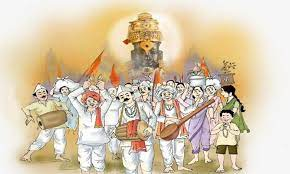
Ashadi Ekadashi; Its Significance & Celebrations

Ashadi Ekadashi is a significant Hindu festival celebrated every year on the eleventh day of the waxing phase (Shukla Paksha) of the Hindu month of Ashadha. It usually falls in the month of July or August in the Gregorian calendar. This festival is celebrated with great enthusiasm and devotion in Maharashtra, Karnataka, and some parts of Gujarat.

The word ‘Ekadashi’ is derived from the Sanskrit language, which means ‘eleven’. It is believed that Lord Vishnu goes into a deep slumber or ‘Yoga Nidra’ on this day, and wakes up after four months on the day of Prabodhini Ekadashi, which falls in the month of Kartik. Hence, Ashadi Ekadashi is also known as ‘Devashayani Ekadashi’ or ‘Hari Shayani Ekadashi’, which means the day on which Lord Vishnu goes to sleep.


Significance of Ashadi Ekadashi:

Ashadi Ekadashi holds great significance in Hindu mythology. It is believed that by observing a fast and performing puja on this day, one can seek the blessings of Lord Vishnu and be free from all sins and negative energy. It is also believed that by observing this fast, one can attain Moksha or liberation from the cycle of birth and death.

In Maharashtra, Ashadi Ekadashi marks the beginning of the ‘Wari Yatra’, a pilgrimage to the holy town of Pandharpur. The Wari Yatra is a tradition that has been followed for over 700 years, and thousands of devotees undertake this journey every year to seek the blessings of Lord Vithoba, a form of Lord Vishnu. The journey on foot starts from various towns and villages, and the devotees walk for several days to reach Pandharpur, where they offer prayers and seek blessings.

Celebrations:

On the day of Ashadi Ekadashi, devotees wake up early in the morning and take a bath before performing puja to Lord Vishnu. They observe a fast, abstain from food and water, and spend the day in prayer and meditation. The fast is broken the next day after performing puja in the morning. Devotees also visit temples dedicated to Lord Vishnu and offer prayers.

In Maharashtra, the day is celebrated with great fervor and devotion. Processions are taken out with devotees carrying the ‘Palkhis’ (palanquins) of Lord Vithoba and his consort Rukmini. The streets are filled with the sounds of bhajans and kirtans, and devotees offer food and water to the pilgrims on their way to Pandharpur. The Warkaris (devotees of Lord Vithoba) wear traditional attire and carry a flag with the image of Lord Vithoba.

Death of Devi Sati – Tragic tale of love & devotion

Devi Sati was the daughter of Daksha, one of the Prajapatis, and the son of Lord Brahma. She was born with divine qualities and was considered to be an incarnation of the goddess Shakti. Sati was a devoted wife to Lord Shiva, the Hindu god of destruction, and they lived together in Mount Kailash.

One day, Daksha organized a grand Yagna (sacrificial fire ceremony) and invited all the gods, goddesses, and sages except Lord Shiva. Sati, who was not aware of this, decided to attend the ceremony. When she arrived, she was treated with disrespect and insults by Daksha, who disapproved of her marriage to Lord Shiva. Sati tried to reason with her father, but he refused to listen to her and continued to insult her husband. Unable to bear the humiliation, Sati invoked her yogic powers and immolated herself in the fire of the Yagna. Her sacrifice was a shock to the gods and goddesses who were present at the ceremony, and it was considered to be an act of immense courage and devotion.

Credits – Gururaj Bhandari

Lord Shiva, who was unaware of what had happened, sensed the distress of his wife and rushed to the Yagna site. He was horrified to see the charred remains of Sati and was filled with rage and grief. In his anger, he created the ferocious Veerabhadra, who attacked Daksha and his followers and destroyed the Yagna. The news of Sati’s death spread quickly, and Lord Brahma and other gods and goddesses came to offer their condolences. Lord Shiva, who was inconsolable, carried the body of Sati and roamed around the universe in a fit of rage. He was unable to let go of his beloved wife and refused to perform his duties as the god of destruction.

To put an end to Lord Shiva’s agony, Lord Vishnu decided to intervene. He used his Sudarshan Chakra (discus) to cut Sati’s body into fifty-one pieces, which fell to earth in different places. These places are now considered to be Shakti Peethas (sacred shrines dedicated to the goddess Shakti) and are revered by devotees of the goddess.

What is a DOI?

 A DOI is a unique identifier that provides a permanent link to any research you add to your profile – making it easily findable and citable.

DOIs help you:

  • Make your research citable. DOIs provide information on where your work can be found online. They are guaranteed to never change, making them a great way to provide a reliable link to any of your research.
  • Put a date on your discovery. DOIs include the publishing date of your research, to make sure you get the credit you deserve. 

The search bar at the top of every ResearchGate page supports DOIs, allowing you to quickly find and identify a publication when you have its DOI.  

What type of research can I generate a DOI for? 

DOIs can be generated for most of your unpublished work. As publications classified as article, book, chapter, patent, cover page, poster, and conference paper are considered to have been published elsewhere, DOIs cannot be generated for these types of research. You can, however, add an existing DOI issued by your publisher to any of your research. You should not generate a new DOI for a research item that already has one, as this will potentially lead to confusion.

How do I generate a DOI for my research?  

Provided the type of research you have added supports adding a DOI, you can generate one by following these steps:

  1. Go to your Research tab
  2. Select the research item you would like to generate a DOI for by clicking on its title
  3. On the right-hand side, click on the More button and select Generate a DOI (if this is not visible, then generating a DOI for this type of research item is not possible)
  4. Review the details of your research item to ensure they are correct
  5. Click Generate a DOI.

Note: Once a ResearchGate DOI has been generated for a research item, you’re no longer able to edit that research item. Instead, you should remove the research completely, re-upload it with the edits and generate a new DOI.

What if my research already has a DOI from another source?  

You should not generate a new DOI for a work that already has one, as this will potentially lead to confusion. To add a publisher-issued DOI to your research item, follow these steps:

  1. Go to your Research tab
  2. Scroll down to the research item you would like to add the DOI to
  3. Click the More button below the research item’s title and select Edit
  4. Enter the DOI number in the DOI field
  5. Click Save to confirm your changes.

Researchers will now be able to cite your work using its DOI.

SSC Exams

 The SSC (Staff Selection Commission) exam is a prominent recruitment examination in India that aims to fill various non-gazetted and non-technical positions in government departments, ministries, and organizations. The SSC conducts multiple exams throughout the year to recruit candidates for different job profiles.

Here are some key aspects of the SSC exams:

  1. Exams Conducted by SSC:

    • SSC Combined Graduate Level Examination (SSC CGL): This exam is for graduates and recruits for various Group B and Group C posts in ministries, departments, and organizations of the Government of India.
    • SSC Combined Higher Secondary Level Examination (SSC CHSL): It is for candidates who have completed their 10+2 education and recruits for positions like Lower Division Clerk (LDC), Data Entry Operator (DEO), Postal Assistants, and Court Clerks.
    • SSC Junior Engineer Examination (SSC JE): This exam is for recruiting Junior Engineers in various government departments.
    • SSC Multitasking Staff Examination (SSC MTS): It is for recruiting non-technical staff in various ministries, departments, and offices of the Government of India.
  2. Examination Structure:

    • Tier I (Preliminary Exam): Objective-type multiple-choice questions covering subjects such as General Intelligence & Reasoning, General Awareness, Quantitative Aptitude, and English Language.
    • Tier II (Mains Exam): Descriptive paper, comprising questions related to English Language and Comprehension or Quantitative Abilities for certain exams.
    • Tier III (Skill Test/Typing Test): For certain exams like CHSL, a skill test (typing test or skill-based test) is conducted.
  3. Eligibility Criteria: The eligibility criteria for different SSC exams vary based on the educational qualifications, age limit, and specific requirements for each position.

  4. Competition and Preparation:

    • The competition for SSC exams is high due to the number of applicants competing for a limited number of vacancies.
    • Aspirants prepare for these exams by studying subjects such as mathematics, English language, general knowledge, and reasoning. They often utilize study materials, practice papers, and coaching institutes for preparation.
  5. Job Opportunities: Successful candidates in the SSC exams secure employment in various government departments and ministries at different levels, offering job security, perks, and career advancement opportunities.

The SSC exams serve as a significant pathway for individuals seeking government jobs in various administrative and technical roles. Successful candidates contribute to the functioning of government institutions and contribute to the country’s administrative machinery.

Western Ghats of India

The Western Ghats, also known as the Sahyadri Mountain Range is a UNESCO World Heritage Site and a biodiversity hotspot located along the western coast of India. It spans over 1,600 km and covers six Indian states, including Maharashtra, Karnataka, Tamil Nadu, Kerala, Goa, and Gujarat. The Western Ghats are one of the oldest mountain ranges in the world and have significant ecological, cultural, and economic importance. In this article, we will discuss the significance of the Western Ghats and the conservation efforts undertaken to protect this important ecosystem.

Source – Shutterstock

Significance of the Western Ghats

Ecological Significance:

The Western Ghats are home to a diverse range of flora and fauna, with over 5,000 species of flowering plants, 139 mammal species, 508 bird species, 179 amphibian species, and 290 freshwater fish species. The region is also home to numerous endemic species, which are found nowhere else in the world. The Western Ghats also serve as a catchment area for several major rivers in India, including the Godavari, Krishna, and Cauvery.

Cultural Significance:

The Western Ghats have been inhabited by numerous indigenous communities for thousands of years. These communities have a rich culture and tradition that is closely linked to the natural environment. The Western Ghats are also home to several important pilgrimage sites, including the famous Sabarimala temple in Kerala.

Economic Significance:

The Western Ghats are an important source of timber, fuelwood, and non-timber forest products. The region is also home to several important industries, including agriculture, fisheries, and tourism. The Western Ghats also provide numerous ecosystem services, such as regulating the water cycle, carbon sequestration, and soil conservation.

Conservation Efforts

The Western Ghats face numerous threats, including deforestation, mining, hydroelectric projects, and climate change. To protect this important ecosystem, several conservation efforts have been undertaken by the Indian government, non-governmental organizations, and local communities. Some of the key conservation efforts are:

  1. Protected Areas:
    Several protected areas have been established in the Western Ghats to conserve the region’s biodiversity. These include national parks, wildlife sanctuaries, and biosphere reserves. Some of the notable protected areas in the Western Ghats include the Silent Valley National Park, Periyar National Park, Bhadra Wildlife Sanctuary, and Nilgiri Biosphere Reserve.

  2. Forest Conservation:
    Several initiatives have been undertaken to conserve the forests of the Western Ghats. These include community-based forest management programs, afforestation, and reforestation efforts. The Indian government has also launched several programs, such as the Green India Mission and the National Afforestation Program, to increase forest cover in the region.

  3. Biodiversity Conservation:
    Several initiatives have been undertaken to conserve the biodiversity of the Western Ghats. These include species conservation programs, habitat restoration, and research and monitoring programs. The Indian government has also launched several initiatives, such as the National Biodiversity Act and the National Wildlife Action Plan, to conserve the biodiversity of the Western Ghats.

  4. Community-based Conservation:
    Several community-based conservation programs have been launched in the Western Ghats. These programs involve local communities in the conservation of natural resources and provide them with livelihood opportunities. Some of the notable community-based conservation programs in the Western Ghats include the Malnad Mela, the Bhadra Nethravathi River Valley Community Conserved Area, and the Kerala Conservation Alliance.