
Disapperance of A Cessna 182 over Australia's Bass Strait

Frederick Valentich, 20, vanished on October 21, 1978, when he flew across the Bass Strait from Melbourne to King Island. He was flying a Cessna 182 that had been hired and had the registration. VH-DSJ.

One of three islands comprising the New Year Group in the Bass Strait, King Island is 125 miles from the Australian state of Victoria. Valentich, a RAAF Training Corps member and aviation enthusiast, had twice attempted to enroll in the Australian Air Force but had been turned down due to his lack of academic credentials.
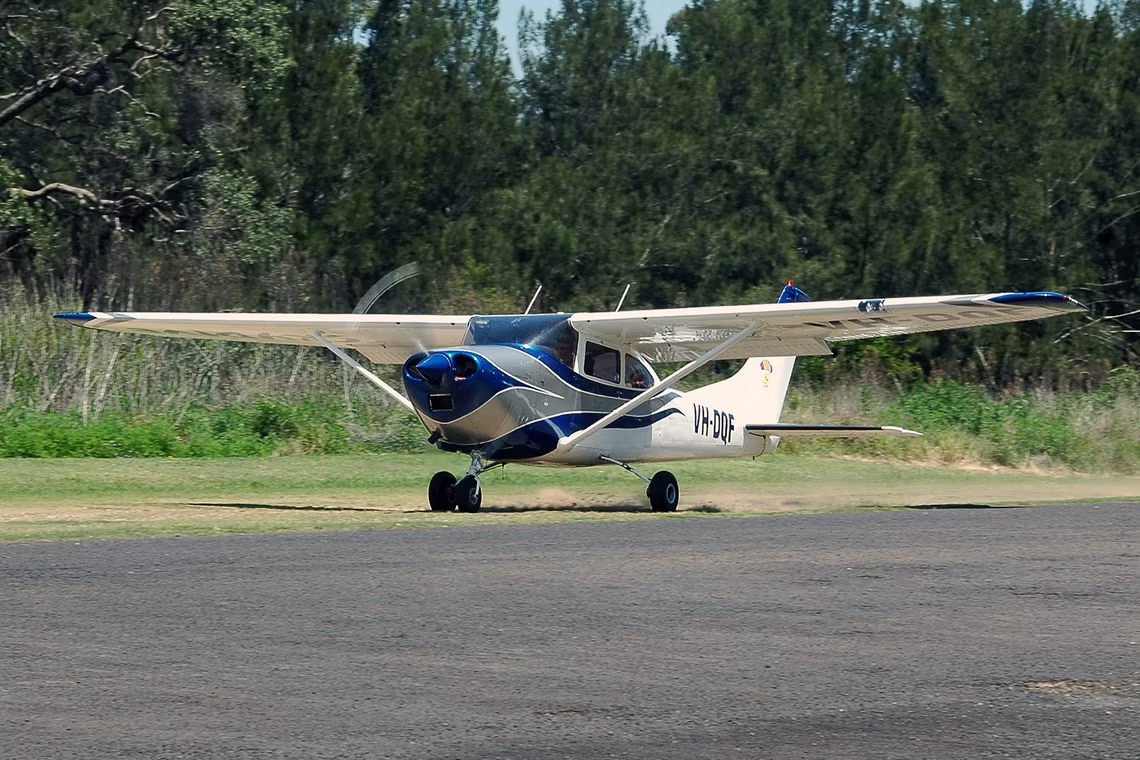
Photo –  Robert Frola via wikimedia Commons

Additionally, according to his father, he was a UFO enthusiast who collected newspaper clippings and watched movies about extraterrestrials. He had accumulated 150 flight hours at the time of his disappearance and was certified to fly at night under ideal meteorological circumstances.
He initially said that he was going to King Island to pick up some pals before telling others that he was going to pick up crayfish. Later, investigators ruled out both justifications. Additionally, he did not follow protocol by notifying King Island Airport (TAS) of his plan to arrive there. This gave detectives reason to suspect that he could have orchestrated the entire incident. What specifically was Valentich doing then? Had he gone in quest of UFOs or was he trying to accrue additional flight time?
At 19:06, Valentich radioed Melbourne Flight Service to report that an unidentified aircraft was following him at 4,500 feet after taking off from Melbourne Moorabbin Airport (MBW) and crossing the ocean. He claimed to have seen four dazzling lights that resembled landing lights. He was unable to identify the plane’s brand; all he could say was that it was traveling at a breakneck pace and seemed to be playing a joke on him. A little while afterward, all radio communication was lost.
He reported seeing what seemed to be four landing lights above him in the bright night sky. Venus was the brightest planet at the time of the occurrence, making a diamond-shaped formation with Mars, Mercury, and the brilliant star Antares. These four white spots might have been misinterpreted for aircraft or UFO lights by Valentich.
Another private aircraft pilot overflying the Bas Strait a month, after Valentich vanished, reported seeing what he believed to be the form of a submerged plane. He flew over it again but could not be sure that it was an airplane in the water. A Cessna 182’s engine cowling washed found on Flinders Island five years after Valentich vanished.
Investigators came to the conclusion that Valentich being disoriented was the most likely cause of his disappearance. Valentich, being a novice pilot, could have been fooled by the appearance of a tilted horizon. Some of the horizons are still light as the sun sets, but the rest progressively grows darker. As a result of the illumination imbalance, the horizon may appear to be slanted, forcing the pilot to adjust the plane’s course. When the plane’s nose is pointed downward, its speed rises and it enters what is known as a “graveyard spiral.”
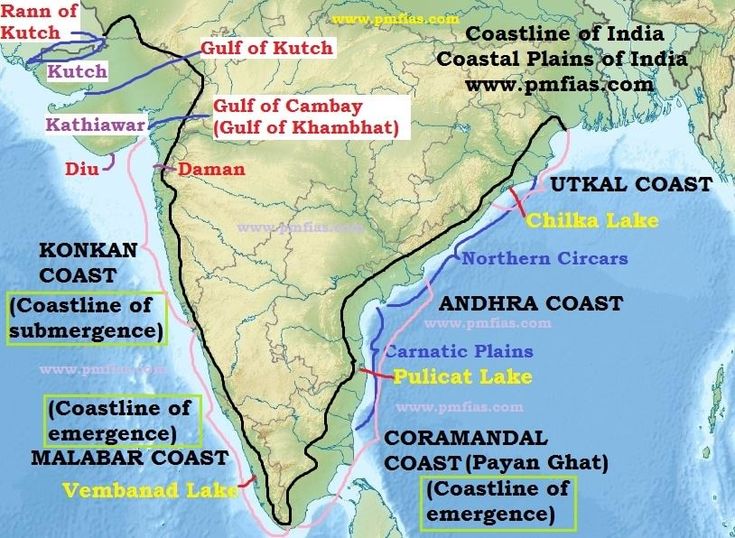
Define coastal zone and its characteristics. Also make a map highlighting the coastal lines of India.

Coastal zone is the area where land meets the sea, it’s a dynamic and constantly changing environment. It typically includes a range of habitats, such as beaches, dunes, cliffs, estuaries, and wetlands. The characteristics of coastal zones vary depending on the specific location, but some common features include:High biological productivity due to the mixing of nutrient-rich water from the ocean and freshwater from rivers.
High levels of biodiversity, with many unique species adapted to the coastal environment.
High levels of human activity, including residential and commercial development, fishing, and tourism.
Vulnerability to natural disasters, such as hurricanes, storm surges, and tsunamis.
India has a long coastline of approximately 7,517 km, which runs along the Bay of Bengal in the east, the Arabian Sea in the west, and the Indian Ocean in the south. The coastal zone of India is a unique and diverse environment that supports a variety of ecosystems and habitats, including beaches, mangrove forests, coral reefs, estuaries, and wetlands. The following are some of the characteristics of the coastal zone in India:

High biodiversity: The coastal zone of India is home to a wide variety of plant and animal species, many of which are endemic to the region. The mangrove forests of the Sundarbans, for example, are home to the Royal Bengal Tiger, while the coral reefs of the Andaman and Nicobar Islands support a diverse array of marine life.
High levels of human activity: The coastal zone of India is densely populated and supports a variety of economic activities, including fishing, aquaculture, tourism, and port development. This has led to significant environmental degradation, including pollution, habitat loss, and overexploitation of natural resources.
Vulnerability to natural disasters: The coastal zone of India is highly vulnerable to natural disasters, including cyclones, storm surges, and sea-level rise. In recent years, severe weather events such as the 2004 Indian Ocean tsunami, the 2017 Cyclone Ockhi, and the 2019 Cyclone Fani have caused significant damage and loss of life along the Indian coast.
Coastal erosion: The coastal zone of India is experiencing significant coastal erosion, particularly in areas of high wave energy and human activity. This is leading to the loss of beaches, dunes, and other important habitats, and is exacerbating the impacts of climate change on the region.
In conclusion, the coastal zone of India is a unique and diverse environment that supports a wide variety of ecosystems and habitats, but is also facing significant environmental challenges. It is important to implement sustainable coastal management practices that balance economic development with environmental conservation and protection of vulnerable coastal communities.

Pana Sankranti – Beginning of Odia New Year

Pana Sankranti, also known as Maha Vishuba Sankranti, is a festival celebrated in the Indian state of Odisha to mark the beginning of the Odia New Year. The festival falls on the first day of the Hindu month of Baisakh (usually around April 14th). The festival is celebrated with great enthusiasm and zeal across the state. The main highlight of the festival is the preparation and consumption of a traditional drink called ‘Pana’. Pana is made from ingredients like water, milk, curd, sugar, and crushed fruits. It is believed to have cooling properties and is offered to Lord Jagannath in the Jagannath temple in Puri.

On the day of Pana Sankranti, people wake up early in the morning and take a bath before heading to the temple to offer prayers to Lord Jagannath. They then return home and prepare the Pana drink. The drink is then distributed to family members, friends, and neighbors as a sign of goodwill and brotherhood. Another important aspect of the festival is the decoration of houses and streets with colorful Rangolis and Alpanas. Women dress up in traditional sarees and adorn themselves with jewelry. They also participate in community activities like singing and dancing.

In rural areas, the festival is celebrated with the worship of the village deity. The village headman, known as the Sarpanch, leads the villagers in offering prayers to the deity. This is followed by community feasting and cultural programs.

In some parts of Odisha, a unique tradition called ‘Chariot pulling’ is observed on Pana Sankranti. A small wooden chariot is constructed and decorated with flowers and leaves. The chariot is then pulled through the streets by the villagers. It is believed that pulling the chariot brings good luck and prosperity.

The festival of Pana Sankranti is also a time for introspection and reflection. People take stock of their past year and make resolutions for the new year. It is a time to forgive and forget past grievances and start afresh. Pana Sankranti is an important festival for the people of Odisha. It is a time to celebrate the new year, offers prayers to the deities, and come together as a community. The festival is characterized by the consumption of the Pana drink, the decoration of houses and streets, community feasting, and cultural programs. It is a time to renew bonds and start anew.