2-Day SCO Young Authors’ Conference Concludes Successfully

 The two-day Shanghai Corporation Organization (SCO) Young Authors’ Conference on” Civilizational Dialogue Among SCO Member States” with delegates from SCO Member Nations concluded on 13 April 2023.

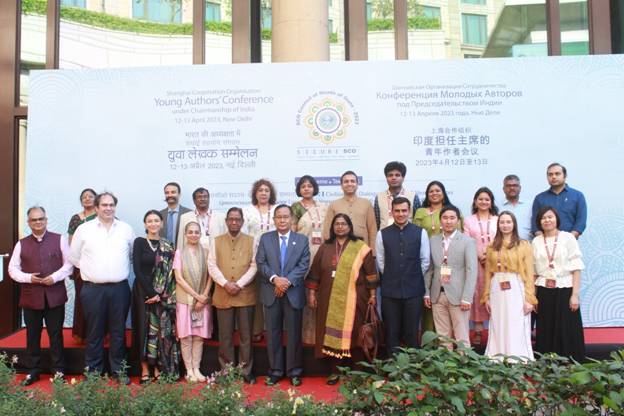
Minister of State for External Affairs & Education, Shri Rajkumar Ranjan Singh presided as the Chief Guest at the Valedictory Ceremony of the SCO Young Authors’ Conference today. The Conference was organised by the Ministry of Education on 12-13 April 2023 at the Leela Palace, New Delhi with National Book Trust, India as the Implementing Agency.

Shri Rajkumar Ranjan Singh said that India has been actively taking part in all the cooperation activities of the organisation and is a highly valued member of the organisation. The focus on shared civilizational linkages at the SCO Young Authors’ Conference is the true reflection of the people of the region and the conference was a testimony of our commitment to contribute to the success of the organisation.   
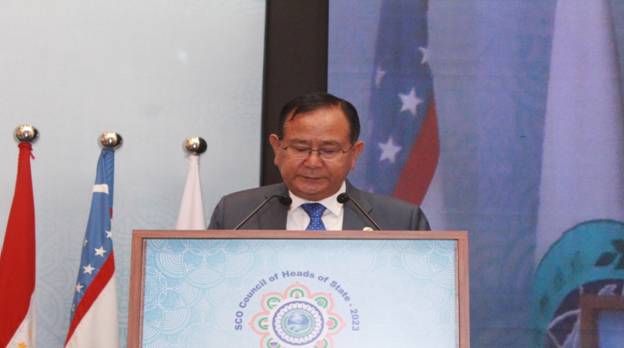
Prof. Govind Prasad Sharma, Chaiman, NBT in his address said that Dialogue is the basic medium to keep any human society and civilization alive. The conference brought forth the connection youth have not only with their own society but also with neighboring countries, as well as the vision that they have to further deepen inter-cultural cooperation.

Shri Yuvraj Malik, Director, NBT while delivering the vote of thanks said that conference was an enriching experience witnessing the exchange of perspective and ideas. The dialogue shed light on the interdependence between human beings and society and explored language as a social tool that facilitates interaction between various communities promoting the advancement of knowledge.

The SCO Youth Conference was centered on the theme “Civilizational Dialogue Among SCO Member States” with six sessions focussing on History & Philosophy, Economy, Religion, Culture, Literature and Science & Medicine, respectively. The first session on History and Philosophy focussing on ‘Shared Civilizational Links and its impact on Modern Ethical Behaviour’ was chaired by Dr. Yuthika Mishra with Ms. Ekatherina S. Manoylo from the Russian Federation and Dr. Ayesha Gautam from India as the panelists. The session was moderated by Prof. Ajoy Karnati. The speakers delved into the commonalities that exist between the SCO nations, the need for dialogue and cooperation by looking back at historical exchanges that facilitate understanding, the relation between morality and traditions and the conditions that gave rise to thought systems which travelled between the countries. The discussants, Dr. Aarshi Dua, Dr. Ruchi Verma and Mr. Fahad Nahvi enriched the session with their detailed comments and questions.

The second session was on the sub-theme Economy, focusing on ‘Trade and Commerce Linkages’. Dr. Sunil Ashra was the Chair for the session with Ms. Anastacia V. Volodina from the Russian Federation and Dr. Pravesh Kumar Gupta from India as the speakers. The session was moderated by Mr. Kumar Vikram. The speakers delved into the connection between the film and the book industry in a fresh take on the different sides of the economy, the history of trade between India and Central Asian countries and how trade routes evolved over the ages. The discussants, Dr. Ritika Joshi and Dr. Tasha Agarwal contributed to the discussion with their insightful observations.
The third session dealt with the topic of Religion with emphasis on ‘Movement of Religious Ideas and Thoughts in the SCO Regions’. The session was chaired by Mr. Chamu Krishna Shastri and moderated by Ms. Deepa Singh. The panelists for the session were Ms. Nurlan Kyzy Begaiym from the Kyrgyz Republic, Dr. Pranshu Samdarshi from India and Ms. Ainur Akhmetova from Kazakhstan. The panelists spoke about the existence of multi-religious, syncretic societies in their countries, the centrality of spirituality, the ancient inter linkages between the SCO countries and the need to use this cooperative spirit to expand the concept of dialogue. The discussants, Dr. Aarshi Dua and Dr. Ritika Joshi continued the discussion with their perspectives on the role of storytelling and social media in the propagation of religious ideas.

Session four revolved around Culture, with an emphasis on ‘Civilizational Roots of Contemporary Cultures’. Dr. J.K. Bajaj was the Chairperson for the session and Ms. Neera Jain was the Moderator. Dr. Rashmini Koparkar from India, Mr. Erkanat Khuatbekuly from Kazakhstan and Ms. Anastacia V. Volodina were the speakers. The panel spoke about how in this era of rapid development, culture helps us preserve our identity and heritage. India and the Central Asian countries have been witness to exchange of ideas, commerce and language since time immemorial which has enabled the emergence of a shared cultural heritage. The discussants, Ms. Ivy Handique and Mr. Mayank Singh Singh took forward the dialogue with their comprehensive commentary.

The fifth session of the Conference took place on the sub-theme of Literature with focus on ‘Translation and Interpretation of Literary Texts’. The session was chaired by Prof. Badri Narayan and was moderated by Mr. Kumar Vikram. The panelists for the session were Ms. Ekatherina S. Manoylo from the Russian Federation, Ms. Tanvi Negi from India, Ms. Ainur Akhmetova from Kazakhstan and Dr. Sonu Saini from India. The speakers delved into the rich corpus of literature that exist in all SCO nations, translation as a mediation between cultures and languages and the complexities behind it. The discussants for the session, Ms. Anagha Gopal and Mr. Sumant Salunke facilitated the discussion with comments and insightful questions.

The last session of the two-day SCO Young Authors’ Conference was on the theme Science & Medicine, with special focus on ‘Perspectives on Science and Medicinal Knowledge Systems of SCO Member States’. The esteemed panellist of the session included Dr Aditya Kolachana from India and Ms Nurlan Kyzy Begaiym from Kazakhstan. Mr Maxim A. Zamshev from the Russian Federation was the Chairperson and Ms Neerja Anand was the moderator of the same. The panel highlighted the role of medicine in the 21st century and the need to strike a balance between traditional and modern medicinal practices. India has been successful in making traditional practices of medicine like Ayurveda, licensed practice of science. It was also highlighted that these traditional medicinal knowledge systems are evidenced in both Kyrgyz and India’s epics. The session was taken forward by discussant, Ms Damini Roy, who initiated a question and answer round with her perceptive points.

The Conference provided fresh perspectives from the participating delegates, scholars and speakers exploring the mutual and distinct characteristics in our cultures and heritage at the same time acknowledging the role of literature in aiding the connection between cultures.

*****
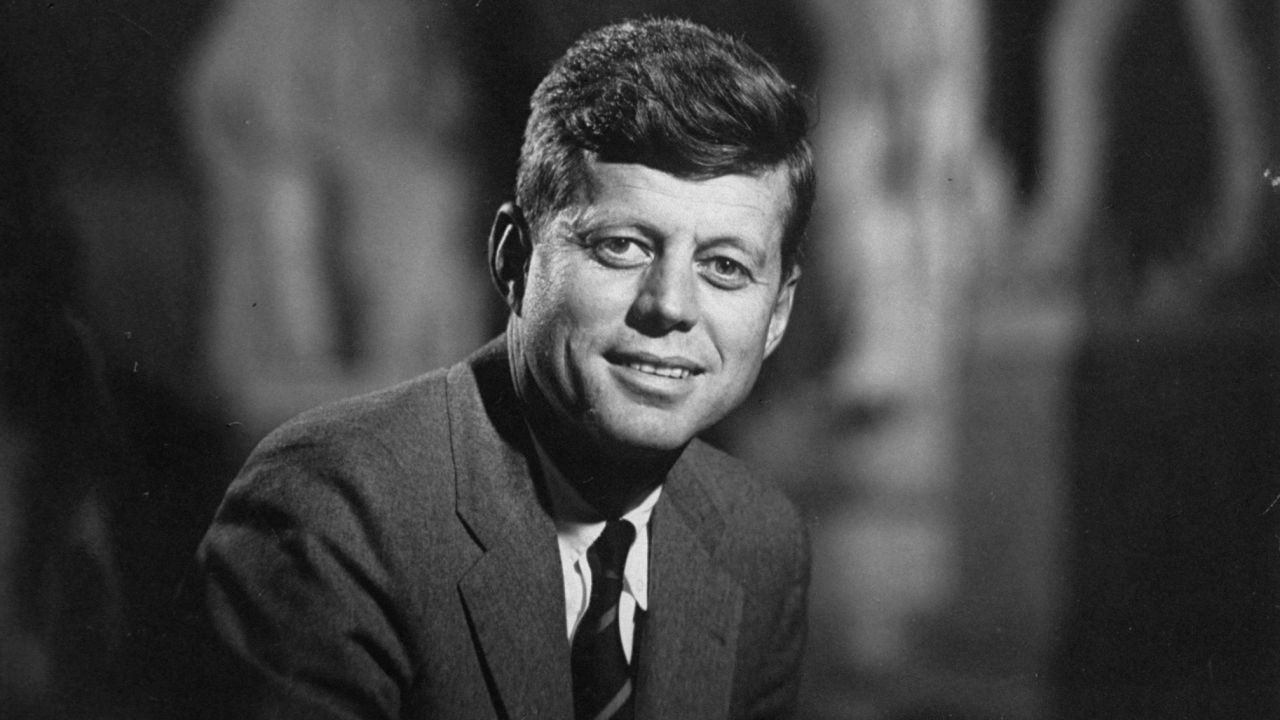
Uncanny coincidences between John F. Kennedy and Abraham Lincoln

Have you ever heard of the strange coincidences that occurred between Abraham Lincoln and John F. Kennedy, both presidents of the United States?

Despite having lived more than a century apart, former presidents of the United States John F. Kennedy and Abraham Lincoln have some truly bizarre coincidences in common.

In addition to having the same well-known job title and experiencing terrible and untimely deaths while in office, Lincoln and Kennedy also have some odd similarities.

Although it isn’t all that unexpected considering their final function as President, both Lincoln and Kennedy served in Congress prior to becoming the Presidency. The two did experience significant Civil Rights issues while serving as president.

Lincoln was elected to Congress in 1846, and Kennedy was elected in 1946. And in the years 1860 and 1960, the two men were each elected to the White House.

Both Presidents Kennedy and Lincoln lost a child while in office. In 1862, Willie Lincoln, age 11, died of typhoid disease, and in 1963, Patrick, the premature son of John F. Kennedy and Jackie, died at the age of two.

Assassinations Similarities

Even while the two horrific occurrences share the tragedy of being assassinated in public, there are some odd underlying similarities between them.

Both men were shot in the head: Kennedy from a distance while traveling in an open-air Dallas motorcade, and Lincoln at close range while watching a performance of “Our American Cousin”.

Kennedy was traveling in the seventh vehicle in his motorcade, while Lincoln was sitting in box number seven of Ford’s Theatre.

A guy with three names—Lee Harvey Oswald, John Wilkes Booth—killed both men on a Friday.

The aftermath

Both the assassins of Lincoln and Kennedy were assassinated before they could be brought to justice, despite the fact that they originally managed to flee the murder sites following the killings.
The two assassins, like Lincoln and Kennedy, had concurrent career trajectories since they were born 100 years apart, in 1839 and 1939, respectively.
Lincoln and Kennedy both had their vice presidents replace them, as is custom. However, Lyndon B. Johnson and Andrew Johnson had the same last name. The two successors were born in 1808 and 1908, respectively, one century apart from one another.
None of these coincidences stand out on their own as particularly compelling but taken as a whole, they create an odd web of similarities between the two presidents, who lived a century apart.

Disapperance of A Cessna 182 over Australia's Bass Strait

Frederick Valentich, 20, vanished on October 21, 1978, when he flew across the Bass Strait from Melbourne to King Island. He was flying a Cessna 182 that had been hired and had the registration. VH-DSJ.

One of three islands comprising the New Year Group in the Bass Strait, King Island is 125 miles from the Australian state of Victoria. Valentich, a RAAF Training Corps member and aviation enthusiast, had twice attempted to enroll in the Australian Air Force but had been turned down due to his lack of academic credentials.

Photo –  Robert Frola via wikimedia Commons

Additionally, according to his father, he was a UFO enthusiast who collected newspaper clippings and watched movies about extraterrestrials. He had accumulated 150 flight hours at the time of his disappearance and was certified to fly at night under ideal meteorological circumstances.
He initially said that he was going to King Island to pick up some pals before telling others that he was going to pick up crayfish. Later, investigators ruled out both justifications. Additionally, he did not follow protocol by notifying King Island Airport (TAS) of his plan to arrive there. This gave detectives reason to suspect that he could have orchestrated the entire incident. What specifically was Valentich doing then? Had he gone in quest of UFOs or was he trying to accrue additional flight time?
At 19:06, Valentich radioed Melbourne Flight Service to report that an unidentified aircraft was following him at 4,500 feet after taking off from Melbourne Moorabbin Airport (MBW) and crossing the ocean. He claimed to have seen four dazzling lights that resembled landing lights. He was unable to identify the plane’s brand; all he could say was that it was traveling at a breakneck pace and seemed to be playing a joke on him. A little while afterward, all radio communication was lost.
He reported seeing what seemed to be four landing lights above him in the bright night sky. Venus was the brightest planet at the time of the occurrence, making a diamond-shaped formation with Mars, Mercury, and the brilliant star Antares. These four white spots might have been misinterpreted for aircraft or UFO lights by Valentich.
Another private aircraft pilot overflying the Bas Strait a month, after Valentich vanished, reported seeing what he believed to be the form of a submerged plane. He flew over it again but could not be sure that it was an airplane in the water. A Cessna 182’s engine cowling washed found on Flinders Island five years after Valentich vanished.
Investigators came to the conclusion that Valentich being disoriented was the most likely cause of his disappearance. Valentich, being a novice pilot, could have been fooled by the appearance of a tilted horizon. Some of the horizons are still light as the sun sets, but the rest progressively grows darker. As a result of the illumination imbalance, the horizon may appear to be slanted, forcing the pilot to adjust the plane’s course. When the plane’s nose is pointed downward, its speed rises and it enters what is known as a “graveyard spiral.”

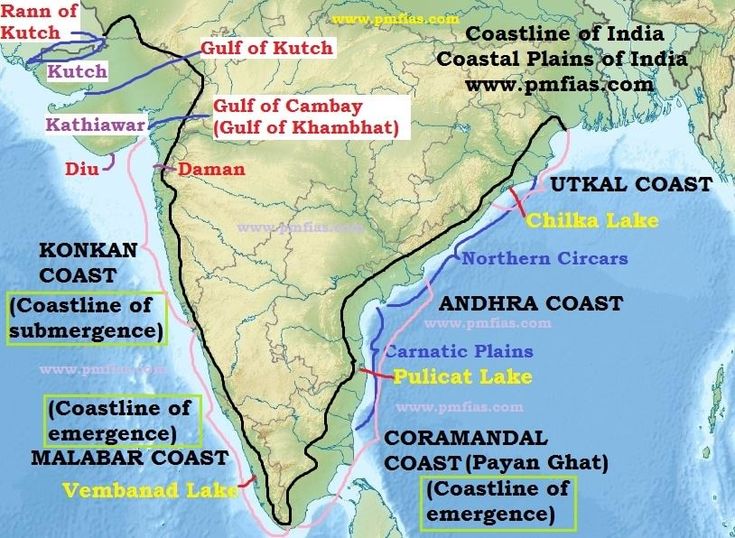
Define coastal zone and its characteristics. Also make a map highlighting the coastal lines of India.

Coastal zone is the area where land meets the sea, it’s a dynamic and constantly changing environment. It typically includes a range of habitats, such as beaches, dunes, cliffs, estuaries, and wetlands. The characteristics of coastal zones vary depending on the specific location, but some common features include:High biological productivity due to the mixing of nutrient-rich water from the ocean and freshwater from rivers.
High levels of biodiversity, with many unique species adapted to the coastal environment.
High levels of human activity, including residential and commercial development, fishing, and tourism.
Vulnerability to natural disasters, such as hurricanes, storm surges, and tsunamis.
India has a long coastline of approximately 7,517 km, which runs along the Bay of Bengal in the east, the Arabian Sea in the west, and the Indian Ocean in the south. The coastal zone of India is a unique and diverse environment that supports a variety of ecosystems and habitats, including beaches, mangrove forests, coral reefs, estuaries, and wetlands. The following are some of the characteristics of the coastal zone in India:

High biodiversity: The coastal zone of India is home to a wide variety of plant and animal species, many of which are endemic to the region. The mangrove forests of the Sundarbans, for example, are home to the Royal Bengal Tiger, while the coral reefs of the Andaman and Nicobar Islands support a diverse array of marine life.
High levels of human activity: The coastal zone of India is densely populated and supports a variety of economic activities, including fishing, aquaculture, tourism, and port development. This has led to significant environmental degradation, including pollution, habitat loss, and overexploitation of natural resources.
Vulnerability to natural disasters: The coastal zone of India is highly vulnerable to natural disasters, including cyclones, storm surges, and sea-level rise. In recent years, severe weather events such as the 2004 Indian Ocean tsunami, the 2017 Cyclone Ockhi, and the 2019 Cyclone Fani have caused significant damage and loss of life along the Indian coast.
Coastal erosion: The coastal zone of India is experiencing significant coastal erosion, particularly in areas of high wave energy and human activity. This is leading to the loss of beaches, dunes, and other important habitats, and is exacerbating the impacts of climate change on the region.
In conclusion, the coastal zone of India is a unique and diverse environment that supports a wide variety of ecosystems and habitats, but is also facing significant environmental challenges. It is important to implement sustainable coastal management practices that balance economic development with environmental conservation and protection of vulnerable coastal communities.

Pana Sankranti – Beginning of Odia New Year

Pana Sankranti, also known as Maha Vishuba Sankranti, is a festival celebrated in the Indian state of Odisha to mark the beginning of the Odia New Year. The festival falls on the first day of the Hindu month of Baisakh (usually around April 14th). The festival is celebrated with great enthusiasm and zeal across the state. The main highlight of the festival is the preparation and consumption of a traditional drink called ‘Pana’. Pana is made from ingredients like water, milk, curd, sugar, and crushed fruits. It is believed to have cooling properties and is offered to Lord Jagannath in the Jagannath temple in Puri.

On the day of Pana Sankranti, people wake up early in the morning and take a bath before heading to the temple to offer prayers to Lord Jagannath. They then return home and prepare the Pana drink. The drink is then distributed to family members, friends, and neighbors as a sign of goodwill and brotherhood. Another important aspect of the festival is the decoration of houses and streets with colorful Rangolis and Alpanas. Women dress up in traditional sarees and adorn themselves with jewelry. They also participate in community activities like singing and dancing.

In rural areas, the festival is celebrated with the worship of the village deity. The village headman, known as the Sarpanch, leads the villagers in offering prayers to the deity. This is followed by community feasting and cultural programs.

In some parts of Odisha, a unique tradition called ‘Chariot pulling’ is observed on Pana Sankranti. A small wooden chariot is constructed and decorated with flowers and leaves. The chariot is then pulled through the streets by the villagers. It is believed that pulling the chariot brings good luck and prosperity.

The festival of Pana Sankranti is also a time for introspection and reflection. People take stock of their past year and make resolutions for the new year. It is a time to forgive and forget past grievances and start afresh. Pana Sankranti is an important festival for the people of Odisha. It is a time to celebrate the new year, offers prayers to the deities, and come together as a community. The festival is characterized by the consumption of the Pana drink, the decoration of houses and streets, community feasting, and cultural programs. It is a time to renew bonds and start anew.

Char Dham Yatra

Char Dham Yatra is a pilgrimage tour to four holy shrines of Hinduism, located in the Himalayan region of Uttarakhand, India. These shrines are Yamunotri, Gangotri, Kedarnath, and Badrinath, and the Yatra is considered one of the most important pilgrimages in Hinduism. It is believed to be a means of achieving salvation or Moksha, and devotees undertake this journey to seek the blessings of the Gods and to attain spiritual enlightenment. The Yatra usually starts in the month of May and continues until November, as the harsh winter conditions in the region make it impossible to travel during the rest of the year.

The Yatra begins with a visit to Yamunotri, which is the source of the Yamuna River and is dedicated to the goddess Yamuna. The temple here is located at an altitude of 3,293 meters and is accessible only by trekking or on a horseback ride. The trek to Yamunotri takes you through scenic Himalayan routes, passing by waterfalls, glaciers, and stunning landscapes.

The second destination on the Yatra is Gangotri, which is the source of the Ganges River and is dedicated to the goddess Ganga. The temple here is located at an altitude of 3,048 meters, and it is believed that taking a dip in the holy waters of the Ganges at Gangotri can wash away all sins and grant Moksha.

The third destination on the Yatra is Kedarnath, which is located at an altitude of 3,583 meters and is dedicated to Lord Shiva. The temple here is one of the 12 Jyotirlingas in India and is considered one of the most important pilgrimage sites for Shiva devotees. The trek to Kedarnath is considered the toughest of the Char Dham Yatra, as it involves a steep climb of around 16 km from Gaurikund.

The fourth and final destination of the Char Dham Yatra is Badrinath, which is located at an altitude of 3,133 meters and is dedicated to Lord Vishnu. The temple here is considered one of the 108 Divya Desams or the holiest of holy shrines of Lord Vishnu. Badrinath is also the only shrine among the four that is accessible by road.

Apart from these four shrines, there are also several other holy places and temples that one can visit during the Char Dham Yatra, including Hemkund Sahib, which is a Sikh shrine, and Valley of Flowers, which is a UNESCO World Heritage Site and is known for its rare flora and fauna.

In conclusion, the Char Dham Yatra is a spiritually enriching journey that takes devotees on a pilgrimage to four holy shrines in the Himalayan region of India. The Yatra is considered one of the most important pilgrimages in Hinduism, and it offers a unique opportunity to experience the beauty and divinity of the Himalayas while seeking the blessings of the Gods.

Ashadi Ekadashi; Its Significance & Celebrations

Ashadi Ekadashi is a significant Hindu festival celebrated every year on the eleventh day of the waxing phase (Shukla Paksha) of the Hindu month of Ashadha. It usually falls in the month of July or August in the Gregorian calendar. This festival is celebrated with great enthusiasm and devotion in Maharashtra, Karnataka, and some parts of Gujarat.

The word ‘Ekadashi’ is derived from the Sanskrit language, which means ‘eleven’. It is believed that Lord Vishnu goes into a deep slumber or ‘Yoga Nidra’ on this day, and wakes up after four months on the day of Prabodhini Ekadashi, which falls in the month of Kartik. Hence, Ashadi Ekadashi is also known as ‘Devashayani Ekadashi’ or ‘Hari Shayani Ekadashi’, which means the day on which Lord Vishnu goes to sleep.


Significance of Ashadi Ekadashi:

Ashadi Ekadashi holds great significance in Hindu mythology. It is believed that by observing a fast and performing puja on this day, one can seek the blessings of Lord Vishnu and be free from all sins and negative energy. It is also believed that by observing this fast, one can attain Moksha or liberation from the cycle of birth and death.

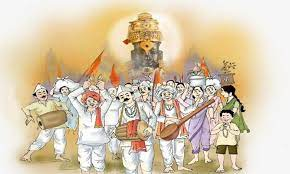
In Maharashtra, Ashadi Ekadashi marks the beginning of the ‘Wari Yatra’, a pilgrimage to the holy town of Pandharpur. The Wari Yatra is a tradition that has been followed for over 700 years, and thousands of devotees undertake this journey every year to seek the blessings of Lord Vithoba, a form of Lord Vishnu. The journey on foot starts from various towns and villages, and the devotees walk for several days to reach Pandharpur, where they offer prayers and seek blessings.

Celebrations:

On the day of Ashadi Ekadashi, devotees wake up early in the morning and take a bath before performing puja to Lord Vishnu. They observe a fast, abstain from food and water, and spend the day in prayer and meditation. The fast is broken the next day after performing puja in the morning. Devotees also visit temples dedicated to Lord Vishnu and offer prayers.

In Maharashtra, the day is celebrated with great fervor and devotion. Processions are taken out with devotees carrying the ‘Palkhis’ (palanquins) of Lord Vithoba and his consort Rukmini. The streets are filled with the sounds of bhajans and kirtans, and devotees offer food and water to the pilgrims on their way to Pandharpur. The Warkaris (devotees of Lord Vithoba) wear traditional attire and carry a flag with the image of Lord Vithoba.

Death of Devi Sati – Tragic tale of love & devotion

Devi Sati was the daughter of Daksha, one of the Prajapatis, and the son of Lord Brahma. She was born with divine qualities and was considered to be an incarnation of the goddess Shakti. Sati was a devoted wife to Lord Shiva, the Hindu god of destruction, and they lived together in Mount Kailash.

One day, Daksha organized a grand Yagna (sacrificial fire ceremony) and invited all the gods, goddesses, and sages except Lord Shiva. Sati, who was not aware of this, decided to attend the ceremony. When she arrived, she was treated with disrespect and insults by Daksha, who disapproved of her marriage to Lord Shiva. Sati tried to reason with her father, but he refused to listen to her and continued to insult her husband. Unable to bear the humiliation, Sati invoked her yogic powers and immolated herself in the fire of the Yagna. Her sacrifice was a shock to the gods and goddesses who were present at the ceremony, and it was considered to be an act of immense courage and devotion.

Credits – Gururaj Bhandari

Lord Shiva, who was unaware of what had happened, sensed the distress of his wife and rushed to the Yagna site. He was horrified to see the charred remains of Sati and was filled with rage and grief. In his anger, he created the ferocious Veerabhadra, who attacked Daksha and his followers and destroyed the Yagna. The news of Sati’s death spread quickly, and Lord Brahma and other gods and goddesses came to offer their condolences. Lord Shiva, who was inconsolable, carried the body of Sati and roamed around the universe in a fit of rage. He was unable to let go of his beloved wife and refused to perform his duties as the god of destruction.

To put an end to Lord Shiva’s agony, Lord Vishnu decided to intervene. He used his Sudarshan Chakra (discus) to cut Sati’s body into fifty-one pieces, which fell to earth in different places. These places are now considered to be Shakti Peethas (sacred shrines dedicated to the goddess Shakti) and are revered by devotees of the goddess.

What is a DOI?

 A DOI is a unique identifier that provides a permanent link to any research you add to your profile – making it easily findable and citable.

DOIs help you:

  • Make your research citable. DOIs provide information on where your work can be found online. They are guaranteed to never change, making them a great way to provide a reliable link to any of your research.
  • Put a date on your discovery. DOIs include the publishing date of your research, to make sure you get the credit you deserve. 

The search bar at the top of every ResearchGate page supports DOIs, allowing you to quickly find and identify a publication when you have its DOI.  

What type of research can I generate a DOI for? 

DOIs can be generated for most of your unpublished work. As publications classified as article, book, chapter, patent, cover page, poster, and conference paper are considered to have been published elsewhere, DOIs cannot be generated for these types of research. You can, however, add an existing DOI issued by your publisher to any of your research. You should not generate a new DOI for a research item that already has one, as this will potentially lead to confusion.

How do I generate a DOI for my research?  

Provided the type of research you have added supports adding a DOI, you can generate one by following these steps:

  1. Go to your Research tab
  2. Select the research item you would like to generate a DOI for by clicking on its title
  3. On the right-hand side, click on the More button and select Generate a DOI (if this is not visible, then generating a DOI for this type of research item is not possible)
  4. Review the details of your research item to ensure they are correct
  5. Click Generate a DOI.

Note: Once a ResearchGate DOI has been generated for a research item, you’re no longer able to edit that research item. Instead, you should remove the research completely, re-upload it with the edits and generate a new DOI.

What if my research already has a DOI from another source?  

You should not generate a new DOI for a work that already has one, as this will potentially lead to confusion. To add a publisher-issued DOI to your research item, follow these steps:

  1. Go to your Research tab
  2. Scroll down to the research item you would like to add the DOI to
  3. Click the More button below the research item’s title and select Edit
  4. Enter the DOI number in the DOI field
  5. Click Save to confirm your changes.

Researchers will now be able to cite your work using its DOI.

SSC Exams

 The SSC (Staff Selection Commission) exam is a prominent recruitment examination in India that aims to fill various non-gazetted and non-technical positions in government departments, ministries, and organizations. The SSC conducts multiple exams throughout the year to recruit candidates for different job profiles.

Here are some key aspects of the SSC exams:

  1. Exams Conducted by SSC:

    • SSC Combined Graduate Level Examination (SSC CGL): This exam is for graduates and recruits for various Group B and Group C posts in ministries, departments, and organizations of the Government of India.
    • SSC Combined Higher Secondary Level Examination (SSC CHSL): It is for candidates who have completed their 10+2 education and recruits for positions like Lower Division Clerk (LDC), Data Entry Operator (DEO), Postal Assistants, and Court Clerks.
    • SSC Junior Engineer Examination (SSC JE): This exam is for recruiting Junior Engineers in various government departments.
    • SSC Multitasking Staff Examination (SSC MTS): It is for recruiting non-technical staff in various ministries, departments, and offices of the Government of India.
  2. Examination Structure:

    • Tier I (Preliminary Exam): Objective-type multiple-choice questions covering subjects such as General Intelligence & Reasoning, General Awareness, Quantitative Aptitude, and English Language.
    • Tier II (Mains Exam): Descriptive paper, comprising questions related to English Language and Comprehension or Quantitative Abilities for certain exams.
    • Tier III (Skill Test/Typing Test): For certain exams like CHSL, a skill test (typing test or skill-based test) is conducted.
  3. Eligibility Criteria: The eligibility criteria for different SSC exams vary based on the educational qualifications, age limit, and specific requirements for each position.

  4. Competition and Preparation:

    • The competition for SSC exams is high due to the number of applicants competing for a limited number of vacancies.
    • Aspirants prepare for these exams by studying subjects such as mathematics, English language, general knowledge, and reasoning. They often utilize study materials, practice papers, and coaching institutes for preparation.
  5. Job Opportunities: Successful candidates in the SSC exams secure employment in various government departments and ministries at different levels, offering job security, perks, and career advancement opportunities.

The SSC exams serve as a significant pathway for individuals seeking government jobs in various administrative and technical roles. Successful candidates contribute to the functioning of government institutions and contribute to the country’s administrative machinery.

Western Ghats of India

The Western Ghats, also known as the Sahyadri Mountain Range is a UNESCO World Heritage Site and a biodiversity hotspot located along the western coast of India. It spans over 1,600 km and covers six Indian states, including Maharashtra, Karnataka, Tamil Nadu, Kerala, Goa, and Gujarat. The Western Ghats are one of the oldest mountain ranges in the world and have significant ecological, cultural, and economic importance. In this article, we will discuss the significance of the Western Ghats and the conservation efforts undertaken to protect this important ecosystem.

Source – Shutterstock

Significance of the Western Ghats

Ecological Significance:

The Western Ghats are home to a diverse range of flora and fauna, with over 5,000 species of flowering plants, 139 mammal species, 508 bird species, 179 amphibian species, and 290 freshwater fish species. The region is also home to numerous endemic species, which are found nowhere else in the world. The Western Ghats also serve as a catchment area for several major rivers in India, including the Godavari, Krishna, and Cauvery.

Cultural Significance:

The Western Ghats have been inhabited by numerous indigenous communities for thousands of years. These communities have a rich culture and tradition that is closely linked to the natural environment. The Western Ghats are also home to several important pilgrimage sites, including the famous Sabarimala temple in Kerala.

Economic Significance:

The Western Ghats are an important source of timber, fuelwood, and non-timber forest products. The region is also home to several important industries, including agriculture, fisheries, and tourism. The Western Ghats also provide numerous ecosystem services, such as regulating the water cycle, carbon sequestration, and soil conservation.

Conservation Efforts

The Western Ghats face numerous threats, including deforestation, mining, hydroelectric projects, and climate change. To protect this important ecosystem, several conservation efforts have been undertaken by the Indian government, non-governmental organizations, and local communities. Some of the key conservation efforts are:

  1. Protected Areas:
    Several protected areas have been established in the Western Ghats to conserve the region’s biodiversity. These include national parks, wildlife sanctuaries, and biosphere reserves. Some of the notable protected areas in the Western Ghats include the Silent Valley National Park, Periyar National Park, Bhadra Wildlife Sanctuary, and Nilgiri Biosphere Reserve.

  2. Forest Conservation:
    Several initiatives have been undertaken to conserve the forests of the Western Ghats. These include community-based forest management programs, afforestation, and reforestation efforts. The Indian government has also launched several programs, such as the Green India Mission and the National Afforestation Program, to increase forest cover in the region.

  3. Biodiversity Conservation:
    Several initiatives have been undertaken to conserve the biodiversity of the Western Ghats. These include species conservation programs, habitat restoration, and research and monitoring programs. The Indian government has also launched several initiatives, such as the National Biodiversity Act and the National Wildlife Action Plan, to conserve the biodiversity of the Western Ghats.

  4. Community-based Conservation:
    Several community-based conservation programs have been launched in the Western Ghats. These programs involve local communities in the conservation of natural resources and provide them with livelihood opportunities. Some of the notable community-based conservation programs in the Western Ghats include the Malnad Mela, the Bhadra Nethravathi River Valley Community Conserved Area, and the Kerala Conservation Alliance.

Lao People's Democratic Republic ; Laos

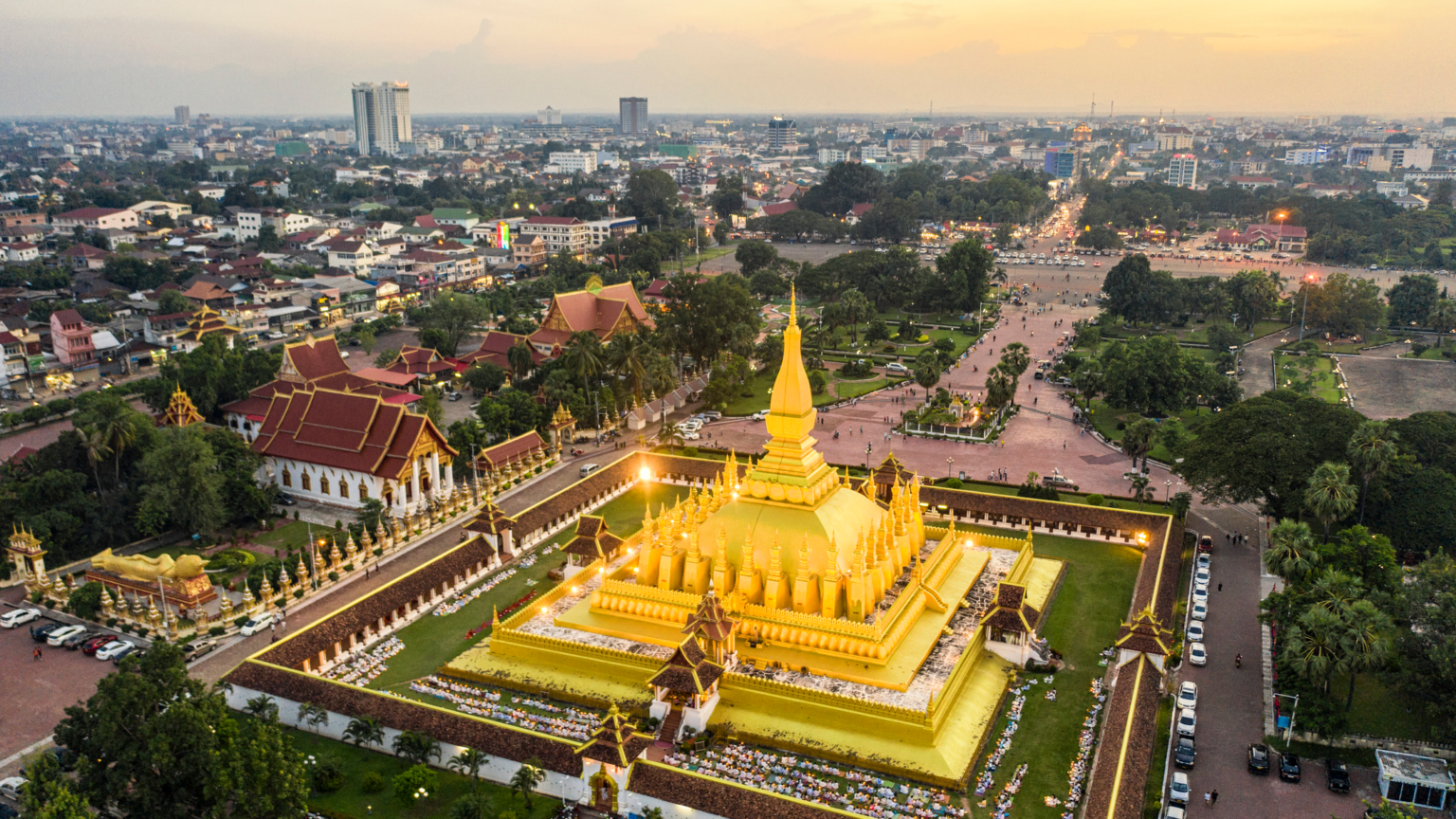
Laos, officially known as the Lao People’s Democratic Republic, is a landlocked country located in Southeast Asia. It shares borders with Vietnam to the east, Cambodia to the south, Thailand to the west, Myanmar to the northwest, and China to the north.

Source – https://smmr.asia/vientiane-nong-khai/

The country has a population of approximately 7.5 million people, with its capital and largest city being Vientiane. The official language of Laos is Lao, which is closely related to Thai, and the majority of the population practices Theravada Buddhism.

Laos has a rich cultural heritage, with influences from its neighboring countries, as well as from its history as a French colony. The country’s traditional arts and crafts include textiles, ceramics, and silverwork, and its cuisine is known for its spicy flavors and use of fresh herbs.

The economy of Laos is primarily based on agriculture, with rice being the main crop grown in the country. Other important crops include corn, vegetables, and fruits, and the country is also known for its coffee and tea production. The mining of minerals such as copper and gold has also become a major industry in recent years.

Laos has a diverse landscape, with mountainous regions in the north and central parts of the country, and the Mekong River running along its eastern border. The country is also home to several national parks and protected areas, including the UNESCO-listed Phong Nha-Ke Bang National Park.

Laos has a complex political history, with the country being a French protectorate from the late 19th century until the mid-20th century. Following independence in 1954, Laos became embroiled in a long and devastating civil war, with the communist Pathet Lao eventually coming to power in 1975.

Today, Laos is a one-party socialist state, with the Lao People’s Revolutionary Party being the only legal political party in the country. While the government has made efforts to modernize the economy and improve living standards for its citizens, Laos remains one of the poorest countries in Southeast Asia.

Tourism has become an increasingly important industry in Laos, with the country’s natural beauty and rich cultural heritage attracting visitors from around the world. Popular tourist destinations include the ancient capital of Luang Prabang, the Plain of Jars, and the Kuang Si Waterfalls.

In conclusion, Laos is a fascinating country with a rich cultural heritage, a diverse landscape, and a complex political history. While the country faces many challenges, including poverty and limited political freedom, its people are known for their warmth and hospitality, and its natural beauty and cultural treasures make it a unique and rewarding destination for travelers.

Evolution of Indian Saree Over Centuries

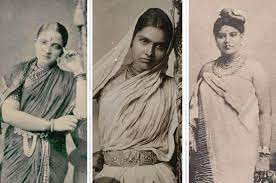
The Indian saree is a traditional garment that has evolved over thousands of years. It is a long piece of cloth that is draped around the body in different styles, and it is worn by women of all ages and social classes in India. The saree is a symbol of cultural heritage and feminine grace in Indian society.

The history of the saree can be traced back to the Indus Valley Civilization, which existed in present-day India and Pakistan around 2800-1800 BCE. Archaeological evidence suggests that women in the Indus Valley Civilization wore garments similar to the saree, which consisted of a long piece of cloth draped around the body.


The saree as we know it today began to take shape during the Maurya Empire (321-185 BCE). The Mauryan period saw the development of weaving techniques, and cotton and silk became popular fabrics for sarees. The saree also became a symbol of social status, with wealthy women wearing more elaborate and expensive sarees.

During the Mughal Empire (1526-1857), the saree became even more elaborate and luxurious. Mughal empresses like Nur Jahan and Mumtaz Mahal wore sarees made of fine silk, adorned with gold and silver thread, pearls, and precious stones. The Mughal period also saw the development of new saree styles, like the lehenga saree and the dupatta.

In the 19th and 20th centuries, the British colonial period had a significant impact on the saree. British textile mills began to produce inexpensive cotton fabrics, which became popular among Indian women. The introduction of the sewing machine also made it easier and faster to produce sarees. However, British colonialism also led to the decline of traditional weaving techniques and the loss of local textile industries.

After India gained independence in 1947, there was a renewed interest in traditional Indian textiles and fashion. The Indian government encouraged the revival of local textile industries and promoted handloom sarees made by skilled artisans. Designers like Ritu Kumar and Sabyasachi Mukherjee also played a significant role in promoting the saree as a fashionable and modern garment.

Today, the saree is worn by women all over the world, and it has become a symbol of Indian culture and fashion. The saree has evolved to include new styles and fabrics, like the chiffon saree and the georgette saree. Designers continue to experiment with the saree, incorporating new elements like embroidery, prints, and sequins. Despite these changes, the saree remains a timeless and elegant garment that embodies the beauty and grace of Indian women.

FooDi52

FooDi52…

Welcome to Foodi52, the ultimate destination for foodies! Whether you’re a beginner cook or an experienced chef, we have something for everyone. At Foodi52, you’ll find recipes, cooking tips and tricks, food history, and more to help you become a true foodie. Our mission is to provide you with the best resources and tools to become a master in the kitchen.

Cooking is an art and Foodi52 is the perfect place to learn it.”

Discover new recipes and ingredients to make your meals truly unique. We feature a variety of dishes from all over the world, from classic Italian dishes to Asianinspired creations. Plus, we provide stepbystep instructions and photos to make each dish simple and easy to follow. With our indepth guides and tutorials, you‘ll learn how to make the most of every ingredient and cooking technique.


Take the time to savor the flavors of life


At Foodi52, you‘ll find everything you need to become a successful home cook. From our comprehensive database of recipes to our helpful tips and tricks, you‘ll never be bored in the kitchen. So, what are you waiting for? Head over to Foodi52 today and start exploring the world of food. With our resources, you‘ll be able to become the master chef you‘ve always wanted to be!

Cooking is an act of love.”

Visit us today at https://foodi52.blogspot.com/ and start discovering the delicious recipes and helpful tips we have to offer. With our resources, you‘ll have all the tools you need to become a successful home cook. Start cooking today and make your meals truly unique!


Controversy of 'comfort women' in japan

During World War II, the Imperial Japanese Army forced thousands of women and girls into sexual slavery, known as comfort women. The majority of these women were from Korea, but also from other countries such as China, Taiwan, the Philippines, and Indonesia.

The Japanese military established comfort stations or brothels to provide sexual services to their soldiers. The women who were taken as comfort women were often kidnapped or coerced into working at these stations. They were subjected to horrific sexual abuse and violence, and many did not survive.

The exact number of women who were forced into sexual slavery is not known, but estimates range from tens of thousands to as many as 200,000. Many of these women were teenagers, and some were as young as 12 years old.

The issue of comfort women has been a controversial and sensitive topic, and Japan has faced criticism from other countries, particularly South Korea, for its handling of the issue. In recent years, Japan has issued official apologies and compensation to some of the surviving comfort women, but many feel that these actions have not gone far enough in acknowledging the atrocities that were committed.

One of the reasons that the issue of comfort women has been so contentious is that the Japanese government has been slow to acknowledge its role in the abuse. For decades, Japanese officials denied that comfort women existed or claimed that they were volunteers. It was not until the 1990s that the Japanese government began to acknowledge the reality of the situation and issue apologies.

Another reason for the controversy is that many surviving comfort women have demanded a formal apology and compensation from the Japanese government. While some women have received compensation, others have not, and there is still a sense among many that Japan has not fully taken responsibility for its actions.

The issue of comfort women has also caused tension between Japan and other countries, particularly South Korea. Many Koreans feel that Japan has not done enough to make amends for its actions, and the issue has strained relations between the two countries. In recent years, there have been some efforts to address the issue of comfort women. In 2015, Japan and South Korea reached an agreement in which Japan apologized and provided compensation to surviving comfort women. However, the agreement was controversial and criticized by many, including some of the surviving comfort women themselves.

Despite these efforts, the issue of comfort women remains unresolved. Many people continue to demand a formal apology and total compensation from the Japanese government, and the issue remains a contentious one between Japan and its neighbors.