An Innovative Project of Belur Math, Gadadhar Abhyudaya Prakalpa (GAP): A Case from Shillong Ramkrishna Mission

According to UNICEF, in India “High levels of malnutrition (38.4 percent children are stunted), poor learning outcomes (only 42.5 percent of children in grade three can read a grade one text), vaccine-preventable diseases and child labour persist”. Lack of nutritious food, medical care, good education, basic facilities, etc., are commonly observed among the children living in slums, footpaths, and many rural areas. Keeping these conditions in mind, the Gadadhar Abhyudaya Prakalpa (GAP) was launched in October 2010, as a part of the 4-year long 150th Birth Anniversary Celebration of Swami Vivekananda, for the 3-fold development of the needy and backward children — physical, mental and intellectual, and since then it has been running up till now in different parts of our country. The project ‘Gadadhar Abhyudaya Prakalpa’ (GAP), named after the childhood name of Sri Ramakrishna, i.e., ‘Gadadhar’, is being implemented for the betterment of the neglected slum and rural children who are often brought from the roadside huts and highly unhygienic garbage-dumping areas (belurmath.org/gadadhar-abhyudaya-prakalpa).
The objectives of GAP are:
• To instill moral and cultural values in the aforesaid targeted children
• To educate them with special coaching on their school subjects
• To inculcate a sense of cleanliness and hygiene in them
• To nourish them for their physical development
• To prepare them to be good citizens of India
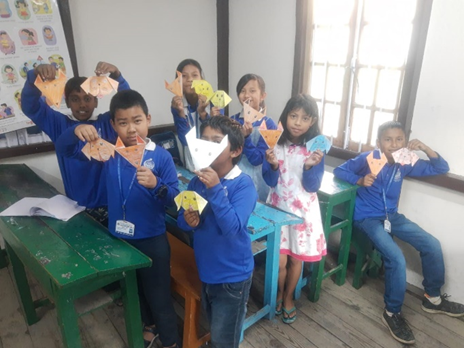
For the benefit of readers, a case of GAP from Shillong Ramakrishna Mission is presented here. Ramakrishna Mission Shillong was established in 1937. It has three centers. One is a dispensary; the second is Vivekananda Cultural Centre and the other one is Ashram. In the dispensary, all sorts of tests are carried out by the medical team and doctors, in addition to giving medicines to the patients. In the Vivekananda Cultural Centre computer training is imparted to the children. Also, a spoken English language class is held. Here one library with a reading room (13,459 books and 38 newspapers and periodicals), an auditorium, and a meditation hall exist. Also, drawing and painting classes and training programs in Indian culture are held. In the Ashram, every Sunday discourses are held where Secretary Maharaj takes classes. Further in the Shillong Ashram under the guidance of Belur Math, the project GAP in three places is continuing. One is in the Ashram itself, the second one is in RR Colony and another one is at Waken Village. In each center 50 children who are from poor echelons of society attend. They come after the completion of school. And they are taught different types of crafts for skill development, yoga, prayer songs, patriotic songs, etc.
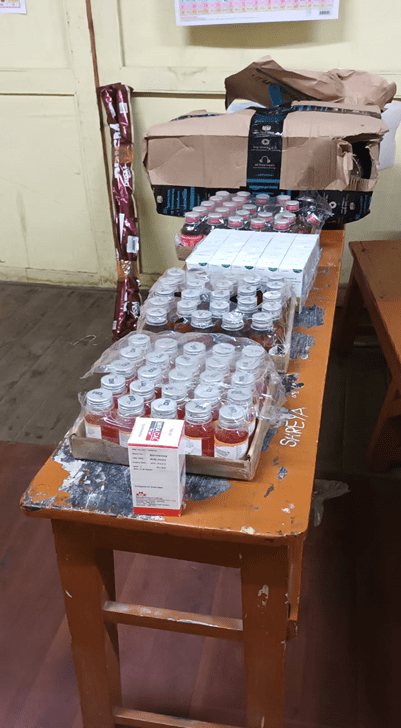
Every month each child is given hair oil, toothbrush, toothpaste, soap, etc. free of cost. As food, they are provided with Horlicks, egg, loaf, pounded rice, vegetables curry, etc. from Monday to Saturday. Of course, only on Saturday rice is given along with curry and egg. From nursery to class VI, children are included under the GAP project but all belong to economically backward. In each center, there are four staff – one for cooking and the others are teachers. All are provided with the minimum honorarium as they serve here selflessly. Wishing GAP great success and I offer my heartfelt regards to the Maharajas of Belur Math for conceiving such a project in the name of a great soul ‘Gadadhar’.

Prof Shankar Chatterjee, Hyderabad
An Innovative Project of Belur Math, Gadadhar Abhyudaya Prakalpa (GAP): A Case from Shillong Ramkrishna Mission

According to UNICEF, in India “High levels of malnutrition (38.4 percent children are stunted), poor learning outcomes (only 42.5 percent of children in grade three can read a grade one text), vaccine-preventable diseases and child labour persist”. Lack of nutritious food, medical care, good education, basic facilities, etc., are commonly observed among the children living in slums, footpaths, and many rural areas. Keeping these conditions in mind, the Gadadhar Abhyudaya Prakalpa (GAP) was launched in October 2010, as a part of the 4-year long 150th Birth Anniversary Celebration of Swami Vivekananda, for the 3-fold development of the needy and backward children — physical, mental and intellectual, and since then it has been running up till now in different parts of our country. The project ‘Gadadhar Abhyudaya Prakalpa’ (GAP), named after the childhood name of Sri Ramakrishna, i.e., ‘Gadadhar’, is being implemented for the betterment of the neglected slum and rural children who are often brought from the roadside huts and highly unhygienic garbage-dumping areas (belurmath.org/gadadhar-abhyudaya-prakalpa).
The objectives of GAP are:
• To instill moral and cultural values in the aforesaid targeted children
• To educate them with special coaching on their school subjects
• To inculcate a sense of cleanliness and hygiene in them
• To nourish them for their physical development
• To prepare them to be good citizens of India
For the benefit of readers, a case of GAP from Shillong Ramakrishna Mission is presented here. Ramakrishna Mission Shillong was established in 1937. It has three centers. One is a dispensary; the second is Vivekananda Cultural Centre and the other one is Ashram. In the dispensary, all sorts of tests are carried out by the medical team and doctors, in addition to giving medicines to the patients. In the Vivekananda Cultural Centre computer training is imparted to the children. Also, a spoken English language class is held. Here one library with a reading room (13,459 books and 38 newspapers and periodicals), an auditorium, and a meditation hall exist. Also, drawing and painting classes and training programs in Indian culture are held. In the Ashram, every Sunday discourses are held where Secretary Maharaj takes classes. Further in the Shillong Ashram under the guidance of Belur Math, the project GAP in three places is continuing. One is in the Ashram itself, the second one is in RR Colony and another one is at Waken Village. In each center 50 children who are from poor echelons of society attend. They come after the completion of school. And they are taught different types of crafts for skill development, yoga, prayer songs, patriotic songs, etc.
Every month each child is given hair oil, toothbrush, toothpaste, soap, etc. free of cost. As food, they are provided with Horlicks, egg, loaf, pounded rice, vegetables curry, etc. from Monday to Saturday. Of course, only on Saturday rice is given along with curry and egg. From nursery to class VI, children are included under the GAP project but all belong to economically backward. In each center, there are four staff – one for cooking and the others are teachers. All are provided with the minimum honorarium as they serve here selflessly. Wishing GAP great success and I offer my heartfelt regards to the Maharajas of Belur Math for conceiving such a project in the name of a great soul ‘Gadadhar’.

Prof Shankar Chatterjee, Hyderabad

Top Ten Visual Arts of India


India has a rich tradition of visual arts that spans centuries and reflects the country’s diverse cultural heritage. Here are the top ten visual arts of India:
Miniature Painting – A style of painting that originated in the Mughal courts, characterized by intricate details and delicate brushwork.
Madhubani Painting – A folk art form from Bihar, characterized by bright colors and bold geometric patterns.
Warli Painting – A tribal art form from Maharashtra, characterized by simple, rustic scenes painted in white on a red or brown background.
Tanjore Painting – A traditional art form from Tamil Nadu, characterized by its use of gold foil and semi-precious stones to create intricate, three-dimensional designs.
Pattachitra Painting – A traditional art form from Odisha, characterized by its use of natural colors and intricate details depicting mythological stories.
Rangoli – A traditional art form from North India, characterized by the use of colorful powders to create intricate designs on the floor or ground.
Sculpture – India has a rich tradition of sculpture, with ancient examples found in temples and archaeological sites across the country.
Embroidery – India is known for its intricate embroidery work, with different regions having their own unique styles and techniques.
Textile Design – India is renowned for its rich and vibrant textiles, with different regions having their own unique styles and patterns.
Architecture – India has a rich architectural heritage, with ancient temples, forts, palaces, and monuments reflecting the country’s diverse cultural and historical influences.
These top ten visual arts of India showcase the country’s rich artistic heritage and are a testament to the creativity and skill of its people. They are a must-see for anyone interested in art and design and are a source of inspiration for artists and designers around the world.