EPFO’s provisional payroll data released on 20thAugust, 2023 highlights that EPFO has added 17.89 lakh net members in the month of June, 2023. The data reveals that 3,491 establishments have extended social security cover of EPFO to their employees by remitting their first ECR during the month. Month-on month comparison of payroll data shows a growing trend in enrollment with an increase of around 9.71% net members over the previous month of May, 2023.The overall remittance also testifies the highest numbers in the last eleven months, since August, 2022.
The data indicates that around 10.14 lakh new members have enrolled during June, 2023 which is highest since August, 2022. Among the newly joined members, the age-group of 18-25 years constitutes 57.87% of total new members added during the month. This demonstrates an increasing trend in youth enrollment, who are mostly first-time job seekers joining the organized sector workforce of the country.
Payroll data suggests that approximately 12.65 lakh members exited but rejoined EPFO. These members switched their jobs and re-joined the establishments covered under EPFO and opted to transfer their accumulations instead of applying for final settlement thus, extending their social security protection.
Gender-wise analysis of payroll data represents that out of the total 10.14 lakh new members added during the month, around 2.81 lakh are new female members, joining EPFO for the first time. The percentage of new female members joining the organizedworkforce has been highest in the last 11 months. Also, the net female member addition during the month stood at around 3.93 lakh, which is also the highest since August, 2022.
State-wise analysis of payroll data denote that net member addition is highest in the 5 states of Maharashtra, Tamil Nadu, Karnataka, Gujarat and Haryana. These states constitute around 60.40% of net member addition, adding a total of 10.80 lakh members during the month. Of all the states, Maharashtra is leading by adding 20.54% of net members during the month.
Month-on-month comparison of industry-wise data displays significant growth in the members working in establishments engaged in Trading-Commercial Establishments, Building & Construction Industry, Electrical, Mechanical and General Engineering Products. This was followed by Textiles, Financing Establishment, Schools, Hospitals etc. Of the total net membership, around 40.36% addition is from expert services (consisting of manpower suppliers, normal contractors, security services, miscellaneous activities etc.).
The above payroll data is provisional since the data generation is a continuous exercise, as updating employee record is a continuous process. The previous data hence gets updated every month. From the month of April-2018, EPFO has been releasing payroll data covering the period September, 2017 onwards. In monthly payroll data, the count of members joining EPFO for the first time through Aadhaar validated Universal Account Number (UAN), existing members exiting from coverage of EPFO and those who exited but re-joining as members, is taken to arrive at net monthly payroll.
****
Rate this:
main:-
enter(monkey,room).
enter(monkey,room):-
write(“Monkey enters the room”),nl,
checkheight(monkey,banana).
checkheight(monkey,banana):-
write(“Monkey cannot reach the banana”),nl,
move(monkey,left).
move(monkey,left):-
write(“Monkey moves towards the chair”),nl,
push(monkey,chair).
push(monkey,chair):-
write(“Monkey pushes the chair towards banana”),nl,
place(monkey,chair).
place(monkey,chair):-
write(“Monkey places the chair below banana”),nl,
climb(monkey,chair).
climb(monkey,chair):-
write(“monkey climbs the chair”),nl,
function(check).
function(check):-
write(‘Enter height of the room’),
read(H1),
write(‘enter height of the chair’),
read(H2),
write(‘enter height of monkey’),
read(H3),
B is H2 + H3, check(H1,B). gets(monkey,stick):-
write(“Monkey Move Towards The Stick”),nl,
write(“Monkey Gets The Stick and Climbs Again”),nl,
write(‘Enter Height of Room: ‘),
read(N1),
write(‘Enter Height of Chair: ‘),
read(N2),
write(‘Enter Height of Monkey: ‘),
read(N3),
write(‘Enter Height of Stick: ‘),
read(N4),
SUM is N2+N3+N4,
check(N1,SUM). check(A,B):-
(
A>B-> write(“Monkey Still Cannot Reach The
Banana”),nl, gets(monkey,stick);
A
write(“Monkey Ate The Banana”);
A=B-> write(“Monkey Ate The
Banana”)
).
from collections import defaultdict visited = defaultdict(lambda: False) jug1=int(input(“Enter Capacity of Jug 1 : “)) jug2=int(input(“Enter Capacity of Jug 2 : “)) aim=int(input(“Enter Goal : “)) def waterJugSolver(amt1,amt2): if (amt1 == aim and amt2 == 0) or (amt2 == aim and amt1 == 0): print(amt1, amt2) return True if visited[(amt1, amt2)] == False: print(amt1, amt2) visited[(amt1, amt2)] = True return (waterJugSolver(0, amt2) or waterJugSolver(amt1, 0) or waterJugSolver(jug1, amt2) or waterJugSolver(amt1, jug2) or waterJugSolver(amt1 + min(amt2, (jug1-amt1)), amt2 – min(amt2, (jug1-amt1))) or waterJugSolver(amt1 – min(amt1, (jug2-amt2)), amt2 + min(amt1, (jug2-amt2)))) else: return False print(“Steps: “) waterJugSolver(0,0)
Around one hundred years ago, Gopal Krishna Gokhale ji, a renowned patriot of India said “What Bengal thinks today, India thinks tomorrow.” The reason is that United Bengal produces/produced great personalities and stalwarts in all fields – games and sports, film, music, literature, politics, spirituality, etc. But the past glory in the present days has been fading. Whenever I visited across the State for academic activities in my service life, I was told “The people are Bhadralooks meaning gentleman to the core”. But in the last Assembly election in the State and this June 2023 during the filing of the nomination of the Panchayat election unprecedented violence took place in West Bengal and bloodshed and deaths which are very unfortunate also happened. As per India Today, New Delhi, June 19, 2023 “Ahead of the next month’s Panchayat polls in West Bengal, a cycle of violence has begun across the state, resulting in death and destruction, quite expectedly. Six people, including a ruling TMC worker, have been killed since the nominations began on June 9. Reports of violence have come from Cooch Behar, North and South 24 Parganas, Murshidabad, Birbhum, East Midnapore, and East Burdwan, among other places. Perhaps in no other Indian states, so much violence took place”. I feel this is a shame to “Bhadralooks”. Against this backdrop elections in Uttar Pradesh (UP) and Karnataka may be cited where there was no death or serious injury in recently completed elections. In UP, “In the Assembly elections of 2022, a total of 33 incidents of electoral violence took place. Of these 28 incidents happened before polling days and five happened on polling days in which no person was seriously injured or died,” Deccan Herald (March 9, 2022). In the recently held Assembly election in Karnataka, some minor incidents of violence took place but not a single case of death or serious injury was reported. Anyway, observing huge violence during the filing of nomination in the Panchayat election in West Bengal, the election issue was State police or deployment of Central force, and finally, “The Supreme Court on Tuesday (20/6/23) refused to interfere with an order of the Calcutta High Court directing the State Election Commission (SEC) to requisition and deploy central forces across West Bengal for the July 8 Panchayat polls. The pleas were filed by the West Bengal Government and the State Election Commission. Holding an election cannot be a license for violence,” a vacation bench of Justice B V Nagarathna and Justice Manoj Misra observed during the hearing (Mid-day, 21/6/23). It is observed from India Today (21/6/23) that “the Supreme Court, on June 20, rejected the Mamata Banerjee government’s challenge to deploying of central forces for the election. The Mamata government and the State Election Commission had opposed the Calcutta High Court’s directive that security during Panchayat polls be handled by central forces”. In another development, the Panchayat polls in Bengal should be stopped if the bloodbath continues, the Calcutta High Court observed on June 21, 2023. The court was hearing a case in connection with the disappearance of names of candidates contesting the election. According to Justice Amrita Sinha “So much violence in panchayat polls. The poll should be stopped if the bloodbath continues.” So, I suggest the Bhadralooks of West Bengal should take lessons from other states as killing, arson, injury, destruction of properties, etc., are highly deplorable in an election. Moreover, this is a state of “Bhadralooks”.
Around one hundred years ago, Gopal Krishna Gokhale ji, a renowned patriot of India said “What Bengal thinks today, India thinks tomorrow.” The reason is that United Bengal produces/produced great personalities and stalwarts in all fields – games and sports, film, music, literature, politics, spirituality, etc. But the past glory in the present days has been fading. Whenever I visited across the State for academic activities in my service life, I was told “The people are Bhadralooks meaning gentleman to the core”. But in the last Assembly election in the State and this June 2023 during the filing of the nomination of the Panchayat election unprecedented violence took place in West Bengal and bloodshed and deaths which are very unfortunate also happened. As per India Today, New Delhi, June 19, 2023 “Ahead of the next month’s Panchayat polls in West Bengal, a cycle of violence has begun across the state, resulting in death and destruction, quite expectedly. Six people, including a ruling TMC worker, have been killed since the nominations began on June 9. Reports of violence have come from Cooch Behar, North and South 24 Parganas, Murshidabad, Birbhum, East Midnapore, and East Burdwan, among other places. Perhaps in no other Indian states, so much violence took place”. I feel this is a shame to “Bhadralooks”. Against this backdrop elections in Uttar Pradesh (UP) and Karnataka may be cited where there was no death or serious injury in recently completed elections. In UP, “In the Assembly elections of 2022, a total of 33 incidents of electoral violence took place. Of these 28 incidents happened before polling days and five happened on polling days in which no person was seriously injured or died,” Deccan Herald (March 9, 2022). In the recently held Assembly election in Karnataka, some minor incidents of violence took place but not a single case of death or serious injury was reported. Anyway, observing huge violence during the filing of nomination in the Panchayat election in West Bengal, the election issue was State police or deployment of Central force, and finally, “The Supreme Court on Tuesday (20/6/23) refused to interfere with an order of the Calcutta High Court directing the State Election Commission (SEC) to requisition and deploy central forces across West Bengal for the July 8 Panchayat polls. The pleas were filed by the West Bengal Government and the State Election Commission. Holding an election cannot be a license for violence,” a vacation bench of Justice B V Nagarathna and Justice Manoj Misra observed during the hearing (Mid-day, 21/6/23). It is observed from India Today (21/6/23) that “the Supreme Court, on June 20, rejected the Mamata Banerjee government’s challenge to deploying of central forces for the election. The Mamata government and the State Election Commission had opposed the Calcutta High Court’s directive that security during Panchayat polls be handled by central forces”. In another development, the Panchayat polls in Bengal should be stopped if the bloodbath continues, the Calcutta High Court observed on June 21, 2023. The court was hearing a case in connection with the disappearance of names of candidates contesting the election. According to Justice Amrita Sinha “So much violence in panchayat polls. The poll should be stopped if the bloodbath continues.” So, I suggest the Bhadralooks of West Bengal should take lessons from other states as killing, arson, injury, destruction of properties, etc., are highly deplorable in an election. Moreover, this is a state of “Bhadralooks”.
Absolutely, India hosts numerous coaching institutes known for their quality education and preparation for engineering entrance exams like JEE (Joint Entrance Examination) Main and Advanced. Here are some of the top coaching institutes in India renowned for their excellence in engineering exam preparation:
FIITJEE: FIITJEE is highly regarded for its coaching programs for JEE Main and Advanced. It offers comprehensive study materials, experienced faculty, and rigorous preparation modules.
Allen Career Institute: Known for its success rate in engineering entrance exams, Allen provides structured coaching, test series, and personalized attention to students preparing for JEE.
Resonance: Resonance is known for its holistic coaching approach, providing comprehensive study materials, regular assessments, and personalized guidance to students aiming for JEE.
Vibrant Academy: Vibrant Academy is recognized for its quality teaching and results. It offers integrated classroom programs and advanced study materials for JEE preparation.
Aakash Institute: Aakash offers coaching programs for JEE Main and Advanced, providing both classroom coaching and online courses, along with test series and doubt-solving sessions.
Bansal Classes: Bansal Classes is well-known for its dedicated faculty and focused approach in coaching students for JEE. It provides a competitive environment and structured courses.
Career Point: Career Point provides coaching for JEE Main and Advanced through classroom programs, study materials, and online resources. It emphasizes concept clarity and practice.
Narayana Institute: While prominent for medical coaching, Narayana also offers coaching for JEE Main and Advanced. It provides a strong foundation and conceptual understanding for students.
Vidyamandir Classes: Vidyamandir is recognized for its teaching methodology and conceptual clarity. It offers comprehensive study materials and regular assessments for JEE aspirants.
PACE IIT & Medical: PACE provides coaching for JEE Main and Advanced with a focus on building a strong foundation in subjects crucial for engineering aspirants.
When considering coaching institutes for engineering exams, students often assess factors such as faculty expertise, teaching methodology, study materials, success rate, infrastructure, and past performance before making a decision. These coaching centers have consistently produced successful engineering
The Government of India, in consultation with the Reserve Bank of India, has decided to issue Sovereign Gold Bonds (SGBs) in tranches as per the calendar specified below:
S. No.
Tranche
Date of Subscription
Date of Issuance
1.
2023-24 Series I
June 19 – June 23, 2023
June 27, 2023
2.
2023-24 Series II
September 11-September 15, 2023
September 20, 2023
The SGBs will be sold through Scheduled Commercial banks (except Small Finance Banks, Payment Banks and Regional Rural Banks), Stock Holding Corporation of India Limited (SHCIL), Clearing Corporation of India Limited (CCIL), designated post offices, and recognised stock exchanges viz., National Stock Exchange of India Limited and Bombay Stock Exchange Limited. The features of the Bond are as under:
Sl. No.
Item
Details
1
Product name
Sovereign Gold Bond Scheme 2023-24
2
Issuance
To be issued by the Reserve Bank of India on behalf of the Government of India.
3
Eligibility
The SGBs will be restricted for sale to resident individuals, HUFs, Trusts, Universities and Charitable Institutions.
4
Denomination
The SGBs will be denominated in multiples of gram(s) of gold with a basic unit of One gram.
5
Tenor
The tenor of the SGB will be for a period of eight years with an option of premature redemption after 5th year to be exercised on the date on which interest is payable.
6
Minimum size
Minimum permissible investment will be One gram of gold.
7
Maximum limit
The maximum limit of subscription shall be 4 Kg for individual, 4 Kg for HUF and 20 Kg for trusts and similar entities per fiscal year (April-March) notified by the Government from time to time. A self-declaration to this effect will be obtained from the investors at the time of making an application for subscription. The annual ceiling will include SGBs subscribed under different tranches, and those purchased from the secondary market, during the fiscal year.
8
Joint holder
In case of joint holding, the investment limit of 4 Kg will be applied to the first applicant only.
9
Issue price
Price of SGB will be fixed in Indian Rupees on the basis of simple average of closing price of gold of 999 purity, published by the India Bullion and Jewellers Association Limited (IBJA) for the last three working days of the week preceding the subscription period. The issue price of the SGBs will be less by ₹50 per gram for the investors who subscribe online and pay through digital mode.
10
Payment option
Payment for the SGBs will be through cash payment (upto a maximum of ₹20,000) or demand draft or cheque or electronic banking.
11
Issuance form
The SGBs will be issued as Government of India Stock under Government Securities Act, 2006. The investors will be issued a Certificate of Holding for the same. The SGBs will be eligible for conversion into demat form.
12
Redemption price
The redemption price will be in Indian Rupees based on simple average of closing price of gold of 999 purity, of previous three working days published by IBJA Ltd.
13
Sales channel
SGBs will be sold through Scheduled Commercial banks (except Small Finance Banks, Payment Banks and Regional Rural Banks), Stock Holding Corporation of India Limited (SHCIL), Clearing Corporation of India Limited (CCIL), designated post offices (as may be notified) and recognised stock exchanges viz., National Stock Exchange of India Limited and Bombay Stock Exchange Limited, either directly or through agents.
14
Interest rate
The investors will be compensated at a fixed rate of 2.50 per cent per annum payable semi-annually on the nominal value.
15
Collateral
The SGBs can be used as collateral for loans. The loan-to-value (LTV) ratio will be as applicable to any ordinary gold loan, mandated by the Reserve Bank from time to time.
16
KYC documentation
Know-your-customer (KYC) norms will be the same as that for purchase of physical gold. KYC documents such as Voter ID, Aadhaar card/PAN or TAN /Passport will be required. Every application must be accompanied by the ‘PAN Number’ issued by the Income Tax Department to individuals and other entities.
17
Tax treatment
The interest on SGBs shall be taxable as per the provision of Income Tax Act, 1961 (43 of 1961). The capital gains tax arising on redemption of SGB to an individual is exempted. The indexation benefits will be provided to long term capital gains arising to any person on transfer of the SGB.
18
Tradability
SGBs shall be eligible for trading.
19
SLR eligibility
SGBs acquired by the banks through the process of invoking lien/hypothecation/pledge alone, shall be counted towards Statutory Liquidity Ratio.
20
Commission
Commission for distribution of the bond shall be paid at the rate of one per cent of the total subscription received by the receiving offices and receiving offices shall share at least 50 per cent of the commission so received with the agents or sub agents for the business procured through them.
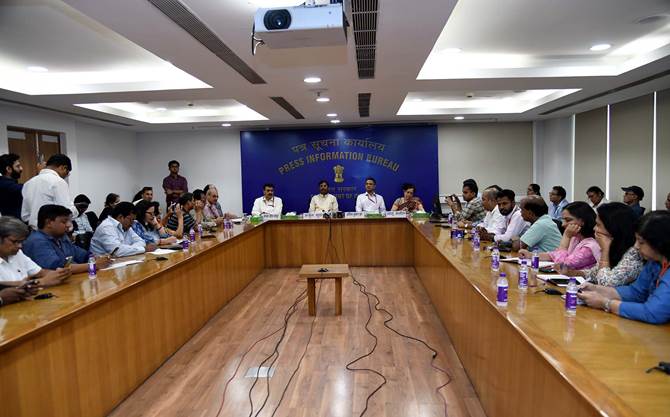
Government has focused on developing tribal human resource with a holistic approach over the last 9 years. Briefing mediapersons on 9 year achievements and Transformational initiatives of the Ministry of Tribal Affairs in New Delhi today, Union Minister for Tribal Affairs Shri Arjun Munda said that Development of Particularly Vulnerable Tribal Groups (PVTGs) in mission mode has been taken up as focus area for the first time ever.
The Minister explained that Pradhan Mantri PVTG Development Mission will saturate PVTG families and habitations with basic facilities and stressed on education for PVTG’s. A fund of Rs 15,000 crore for the next three years has been allocated for the socio-economic development of the group. He said that this is the first time a special scheme for PVTGs has been formulated to have holistic development with a data centric human development indexing for the PVTG groups.
Shri Arjun Munda said that it was an historic occasion that recently on 12th and 13th June , the President of India, Smt Droupadi Murmu invited 20 members each from 75 PVTGs communities at Rashtrapati Bhavan, and Lok Sabha Speaker Shri Om Birla addressed them in Central Hall of Parliament. The PVTGs attired in their traditional dresses brought their culture to the capital and got a first hand feel of being in the capital of their country where for the first time in 75 years after independence that the President of the country met them in Rashtrapati Bhawan, he said.
Giving details of the strides made in the education of tribal people, Sh Arjun Munda said that the Government is setting up 740 Eklavya Residential Model Schools(EMRS) which will serve 3.5 lakh tribal students with quality education. Over the next three years, 38,800 teachers and support staff will be recruited centrally for the 740 EMRSs. These schools will also lay emphasis on local languages to ensure that the students are not detached from their roots, he added.
The Minister said that Tribal Affairs Ministry implements 5 scholarship schemes under which scholarship is given to more than 30 lakh students every year with annual budget of more than Rs. 2500 cr. These scholarships are disbursed in DBT mode to ensure transparency and timely hassle free disbursals.
Shri Arjun Munda also said that financial and technical support to strengthen health care systems to provide affordable healthcare to the poor and vulnerable population in the tribal areas is being taken up under National Health Mission. Government has targeted to eliminate sickle cell anemia by 2047 and under the Mission to eliminate Sickle Cell Anaemia by 2047 , steps will be taken for awareness creation, universal screening of 7 crore people in the age group of 0-40 years in affected tribal areas, and counselling through collaborative efforts of central ministries and state governments.
Shri Arjun Munda said that Ministry of Tribal Affairs is working to develop over 36000 villages with at least 50% tribal population and 500 STs across the country into model tribal villages under Pradhan Mantri Adi Adarsh Gram Yojna to provide basic amenities to tribal villages , and under which various ministries are now required to focus implementation of their schemes in these identified villages.
Union Minster Shri Arjun Munda informed that Pradhan Mantri Janjatiya Vikas Mission (PMJVM) seeks to achieve livelihood driven tribal development across the country by providing forward and backward linkages by setting up Van Dhan Vikas Kendras / Van Dhan Producer Enterprises apart from assisting the States to make procurement of Minor Forest Produce(MFP) at Minimum Support Price(MSP). The mandate for implementing the same lies with TRIFED. As a result of its efforts, 77 MFPs have been added since 2014-15 to be covered under MSP for MFP scheme. Total MFPs being covered under MSP as on date are 87.
TRIFED also started a new concept of organizing ‘Aadi Mahotsav’ – Festival of Craft, Culture, Cuisine and Commerce in all major cities across the country in the year 2017-18, the Minister explained. Keeping in line with the mission of “Be Vocal for Local”, TRIFED organized Aadi Mahotsav at Major Dhyan Chand National Stadium, New Delhi from 16th -27th February, 2023 which was inaugurated by Prime Minister Shri Narendra Modi and became a roaring success all over.
In another historic occasion for the tribal people, 15th November has been declared as “Janjatiya Gaurav Divas” on the Birth Anniversary of Bhagwan Birsa Munda to celebrate tribal pride and pay tribute to tribal freedom fighters, he said.
Speaking on the Forest Rights Act Union Minster informed that21.99 lakh Individual titles and a total of 1.08 lakh Community titles have been distributed till date.
For the development of ST communities across the country, the annual budget of Ministry of Tribal Affairs has been on continuous increase. In 2023-24, a budget of Rs. 12461.88 Crores has been allocated to the Ministry which is 3 times compared to the budget in 2013-14 of Rs. 4295.94 Crore.
Massive 5 times increase has been made in the Budget allocation under Scheduled Tribe Component Funds. The allocation during 2013-14 was Rs. 24,598 Crores, which has been increased to Rs 1,19,509 Crores during 2023-24 across Union Ministries/Departments.
Shri Arjun Munda said an amount of more than Rs 25,000 cr has been released to states under Article 275(1) in last 9 years for more than 5000 projects under different schemes and states have been directed to ensure implementation of schemes/projects under it with proper planning and monitoring.
The Ministry of Tourism is organising the fourth G20 Tourism Working Group meeting and Tourism Ministerial Meeting from 19th to 22 June 2023 in Goa. Briefing media in New Delhi today, Secretary Tourism, Smt V. Vidyavathi said that under India’s G20 Tourism Track, the Tourism Working Group is working on five inter-connected priority areas, which are Green Tourism, Digitalization, Skills, Tourism MSMEs, and Destination Management. Giving more details, the Secretary said that there are two key deliverables of the Tourism Working Group, which are GOA Roadmap for Tourism as a vehicle for achieving sustainable development goals and G20 Tourism Ministers’ Declaration both of which will be finalised shortly. During the meeting, G20 member countries, invited countries, and international organizations will welcome and endorse both the documents.
She also added that the G20 Tourism Working Group meeting and Tourism Ministerial Meeting in Goa aims to strengthen economic growth, preserve cultural heritage, and promote tourism and sustainable development of the region.
The Ministry of Tourism, Government of India, welcomes the participation of Tourism Ministers, Heads of Delegations and delegates from G20 member countries, invited countries, and international organizations to collectively work towards advancing the tourism sector and achieving the UN sustainable development goals 2030.
A side event on ‘Making Cruise Tourism a Model for Sustainable & Responsible Travel’ will be organized , focusing on strategies to promote cruise tourism. The event will see the participation of G20 member countries, invited countries, international organizations, and industry stakeholders. The event will witness deliberations on the challenges and opportunities in the growth of cruise tourism globally. A panel discussion featuring esteemed speakers from G20 Member countries and guest countries will shed light on country specific policies and initiatives on varied aspects of cruise tourism, its growth and need to make cruise tourism sustainable and responsible.
Smt V. Vidyavathi said that, along the sidelines of the main event , a national level side event is also being organized which will focus on ‘Making India a Hub for Cruise Tourism’, to deliberate on various challenges and opportunities for developing Cruise Tourism in the country following the principles of sustainability.
The deliberation upon Multi Facets of Cruise Tourism (Coastal, Island, Regional and Yachting), perspectives from Coastal States, private and public stakeholders in inland waterways, perspectives from Riverine States will be the focus areas of discussion during the event. The event will see the participation of key States and Union Territories, Industry Stakeholders, national and international experts.
She also informed that “The Ministry of Tourism is also organizing a side event ‘Towards a circular economy of plastics in tourism – the Global Tourism Plastics Initiative’ in collaboration with the United Nations Environment Programme (UNEP) and United Nations World Tourism Organization (UNWTO).
This side event will focus on encouraging engagement of tourism stakeholders to address plastic pollution through circular approaches across the tourism value chain. The event will encompass high-level introductory remarks and a keynote presentation on the action framework proposed by the Global Tourism Plastics Initiative (GTPI). These interventions will be followed by a panel discussion with tourism stakeholders and a signing ceremony to welcome the adherence of several organizations to the GTPI.
Further, a ‘Public Private Dialogue: Importance of Travel & Tourism to the G20 Economies’ is also being co-organized by the Ministry of Tourism in Goa on 21st June 2023 in association with World Travel and Tourism Council (WTTC) and United Nations World Tourism Organization (UNWTO). The Dialogue is an opportunity for participants to share their priorities and concerns and identify opportunities for mutual support and greater public-private partnership. This discussion will align and provide a private sector perspective on the 5 priority areas set out for the G20 tourism track. The Dialogue will start by opening the conversation on the respective importance and relevance of these priorities to the private sector and potential areas of support and collaboration from the public sector.
The Secretary informed that good practices and case studies on sustainable tourism by participating countries will be shared on a Dashboard which is being created for the purpose.It will be a dynamic dashboard which will serve as a learning platform for various countries and these case studies will continue to be uploaded on it for coming next three years, she added.
Secretary Tourism also remarked that to celebrate the ‘International Day of Yoga’ on June 21, which coincides with the G20 4th Tourism Working Group Meeting and Tourism Ministerial Meeting, a special yoga session has been organized by the state government of Goa.
This session will offer an enchanting experience of yoga to all G20 Tourism Ministers and delegates, providing them with a moment of serenity and mindfulness amidst the busy proceedings of the meeting. It highlights the significance of incorporating wellness practices in the tourism sector and emphasizes the importance of holistic well-being.
On the occasion, Additional Secretary, Shri Rakesh Verma gave a presentation highlighting the important events and schedule of the meeting.
Various cultural programs will be organized to highlight and showcase the rich cultural heritage of Goa to the international G20 delegates. Some of the choreographed programs planned are: Lamp Dance, Kathak Dance, GoanMandoMusic and Dance presentation, Dekhni Dance, Mussal Khel (Pastel Dance) and Gomant Rang. Delegates will also have the opportunity to experience the local attractions of Goa. Excursion visits have been planned to Lower Aguada Fort and Jail Museum, and experiencing the UNESCO World Heritage Site: Churches and Convents of Goa viz. the Basilica of Bom Jesus, Church of St Francis of Assisi and Se Cathedra land Archaeological Museum.
During the meeting, the delegates will also be visiting the Art and Craft Bazaar organized by the State Government showcasing local handicrafts, work of artisans, signifying the importance of community participation. DIY Activities at the Craft Bazaar have been planned to have hands on experience.
The Ministry of Tourism is promoting local products of Goa by handing below souvenirs to the delegates:
Embroidered Stole/Scarf (Made from Handmade Kunbi Fabric)
G.I. Cashew Feni Miniature
Terracotta Lotus shaped Incense Stick Holder
Upcycled Natural Scented Candle made using discarded bottle
Under the provision of section 40 of RPwD Act 2016, the Central Government in consultation with the Chief Commissioner formulate rules for persons with disabilities laying down the standards of accessibility for the physical environment, transportation, information and communication, including appropriate technologies and systems and other facilities and services provided to the public in urban and rural areas.
Harmonised Guidelines and Space Standards for Universal Accessibility in India-2021 prepared by Ministry of Housing and Urban Affairs has been amended in RPwD (Amendment) Rules, 2023 vide notification G.S. R. 413 (E) dated 05.06.2023.
The detailed status of these guidelines/standards is as follows:
Standards/Guidelines notified in RPwD Rules under Rule 15
1.
Accessibility for the ICT products and services (Part I and II)
2.
Harmonised Guidelines and Space Standard for Universal Accessibility in India-2021
3.
Standard for Bus Body Code for Transportation system,
Guidelines under Draft notification in RPwD Rules and inviting public and other stakeholder comments
4.
Accessibility standards for Health Care by 02.07.2023
5.
Accessibility Standards and Guidelines for Civil Aviation by 10.06.2023
6.
Accessibility standards and guidelines for the Culture sector (monuments/sites/museums/libraries by 10.06.2023
7.
Accessible Sport complex and residential facilities for sports person with disabilities by 10.06.2023
Guidelines awaited for notification in Gazette of India by concerned Ministry/Department
8.
Ministry of Home Affairs
9.
Guidelines on accessibility of Indian Railways stations and facilities at stations for differently abled persons and passengers with reduced mobility
10.
Accessibility Guidelines and Standards for Higher Education Institutions and Universities
11.
Accessibility Guidelines for Bus Terminals and Bus Stops
12.
Department of Drinking Water and Sanitation
Guidelines at various stages in the concerned Departments
13.
Ministry of Rural Development
14.
Ministry of Port, Shipping and Waterways
15.
Ministry of Tourism
16.
Department of Financial Service
17.
Ministry of Information and Broadcasting
18.
Department of School Education and Literacy
All the information is regarding the harmonized guidelines is available in the website of DEPwD department disabilityaffairs.gov.in
In the past decade, cryptocurrencies have become a widely popular asset class among investors. These digital currencies are decentralized, meaning they are not controlled by any government or financial institution. Instead, they rely on blockchain technology to facilitate transactions and maintain their integrity. One such strategy that many beginners use is here in this link. This platform is a trading software that utilizes advanced algorithms to analyze the cryptocurrency market and predict profitable trades. This platform is designed to help beginners make informed decisions when trading cryptocurrencies.
While cryptocurrencies offer the potential for high returns, the market’s volatility can be daunting for beginners. For instance, the price of Bitcoin, the most popular cryptocurrency, has fluctuated from a few cents to almost $65,000 in just over a decade. This means that investing in cryptocurrencies requires a lot of research, knowledge, and a solid strategy.
The Bitcoin Loophole’s algorithm is based on the trading strategies of successful traders and investors. It scans the market 24/7, analyzing market trends and identifying profitable opportunities. Once it finds a profitable trade, it executes the transaction automatically, ensuring that investors can take advantage of the opportunity before the market changes.
The Bitcoin Loophole’s software is easy to use, making it a popular choice for beginners. Users can customize their trading parameters, such as the amount they want to invest and the risk they are willing to take. The platform also offers a demo account, which allows users to practice trading with virtual currency before investing real money.
While the Bitcoin Loophole can be an excellent tool for beginners, it is not a guarantee of profits. The cryptocurrency market remains highly volatile, and there is always a risk of losing money. Therefore, it is essential to research and understand the risks associated with cryptocurrency trading before investing.
In this article, we will explore the top 5 crypto trading strategies for beginners to help you make better investment decisions.
Buy and Hold Strategy
The Buy and Hold strategy is one of the most popular investment strategies in the cryptocurrency market. The strategy involves purchasing a cryptocurrency and holding onto it for a long time, with the hope that it will appreciate in value over time. This strategy requires patience, as the value of the cryptocurrency may fluctuate over time, but it can be a profitable strategy if you choose the right cryptocurrency.
Dollar-Cost Averaging Strategy
The Dollar-Cost Averaging strategy involves investing a fixed amount of money in a particular cryptocurrency at regular intervals, regardless of its market value. This strategy helps to reduce the risk of investing a large sum of money at once, as you invest a fixed amount of money over a more extended period. This strategy can be beneficial for beginners who want to invest in cryptocurrency without taking significant risks.
Swing Trading Strategy
Swing Trading involves buying and selling cryptocurrencies within a short time frame, usually a few days to a few weeks. The goal of this strategy is to capitalize on short-term price fluctuations in the cryptocurrency market. This strategy requires careful analysis of the market trends and understanding the technical indicators. It can be a profitable strategy, but it requires a high level of expertise and experience.
Scalping Strategy
Scalping is a trading strategy that involves buying and selling cryptocurrencies within a short period, usually a few minutes to a few hours. The goal of this strategy is to make a small profit from each trade, with the hope that these small profits will add up over time. This strategy requires a high level of expertise and experience, and it’s not recommended for beginners.
HODL Strategy
HODL (Hold on for Dear Life) is a popular investment strategy in the cryptocurrency market. This strategy involves holding onto a cryptocurrency for an extended period, regardless of its market value. The goal of this strategy is to capitalize on the long-term potential of a cryptocurrency. This strategy requires patience and a long-term investment horizon, but it can be a profitable strategy if you choose the right cryptocurrency.
Conclusion
The cryptocurrency market can be volatile, making it challenging for beginners to navigate. However, with the right strategies, you can make informed investment decisions that can help you capitalize on the potential profits in the market. The Buy and Hold strategy, Dollar-Cost Averaging strategy, Swing Trading strategy, Scalping strategy, and HODL strategy are all viable options for beginners, but it’s essential to choose the right strategy based on your investment goals and risk tolerance.
As we move further into the digital age, cryptocurrency is becoming an increasingly important aspect of our lives. It has the potential to revolutionize the way we do business, store value, and even interact with each other. In this article, we will explore the role of cryptocurrency in the digital age and its impact on various industries. One example of a platform that allows online trading of cryptocurrency is available here.
Cryptocurrency is a revolutionary and innovative form of digital currency that has taken the world by storm. It is a medium of exchange that uses cryptography to secure and verify transactions, ensuring that they are valid and legitimate.
Unlike traditional forms of currency, such as paper bills and coins, cryptocurrencies are purely digital, meaning that they exist solely in cyberspace. They are not backed by a central bank or government, but rather by the power of the blockchain, a decentralized ledger technology that ensures the security and transparency of all transactions.
The first cryptocurrency to be created was Bitcoin, which was introduced in 2009 by an anonymous individual or group of individuals using the pseudonym Satoshi Nakamoto. Since then, thousands of other cryptocurrencies have been created, each with its unique features and characteristics.
One of the key advantages of cryptocurrency is its decentralization, which means that it is not subject to government or financial institution control. This allows for greater financial freedom and flexibility, as users can make transactions without the need for intermediaries or third parties.
Cryptocurrency and the Digital Economy
The digital economy has been growing rapidly in recent years, and cryptocurrency has played a significant role in this growth. It has made it possible for individuals and businesses to transact globally without the need for intermediaries such as banks. This has reduced the cost of transactions and increased their speed, making it easier for businesses to expand globally.
Cryptocurrency has also made it possible for individuals in countries with unstable currencies or inadequate banking infrastructure to store value securely. This has helped to reduce poverty and increase financial inclusion. Furthermore, cryptocurrency has made it possible for individuals to earn income through mining, trading, and other activities related to cryptocurrencies.
Cryptocurrency and the Financial Industry
Cryptocurrency has the potential to disrupt the traditional financial industry. It has already begun to challenge the dominance of traditional payment systems such as credit cards and wire transfers. Cryptocurrencies offer faster, cheaper, and more secure transactions than traditional payment systems.
In addition to this, cryptocurrency has made it possible for individuals to access financial services that were previously only available to those with high net worth or good credit scores. Cryptocurrencies such as stablecoins offer a more stable form of currency, which can be used as a means of payment or as a store of value. This has the potential to reduce financial exclusion and increase financial literacy.
Cryptocurrency and the Technology Industry
Cryptocurrency has had a profound impact on the technology industry, particularly in the area of blockchain technology. Blockchain, the foundation of most cryptocurrencies, is a revolutionary technology that has the potential to transform the way we store and share data. It is a secure and decentralized method of storing data that makes it less vulnerable to hacking and corruption.
One of the main benefits of blockchain technology is its ability to increase transparency, efficiency, and trust in various industries. For instance, in supply chain management, blockchain can help trace products from the manufacturer to the end-user, making it easier to verify authenticity and prevent fraud. This is especially critical for industries that deal with high-value goods, such as the diamond industry.
In the healthcare sector, blockchain technology can be used to store patient data securely, ensure its integrity, and make it easily accessible to authorized parties. This can improve patient care, reduce medical errors, and lower costs. Additionally, it can help address the issue of medical data breaches, which have become increasingly prevalent in recent years.
Conclusion
Cryptocurrency has the potential to revolutionize the way we do business, store value, and interact with each other. Its impact on various industries, including the digital economy, financial industry, and technology industry, has already been significant. As we continue to move further into the digital age, it is likely that the role of cryptocurrency will become even more important.
Cryptocurrencies have taken the world by storm, and the latest craze in the market is Floki. It is no surprise that investors and traders are flocking to this exciting new investment opportunity. However, before diving into the world of Floki, it is important to understand the legal and regulatory landscape surrounding cryptocurrencies. Bit Capex 360 is an online trading platform that enables investors to buy and sell cryptocurrencies.
Floki is a decentralized digital currency that is not controlled by any government or financial institution. It operates on a blockchain technology network, which is a public ledger that records all transactions in a secure and transparent manner. However, despite its decentralized nature, the legality of cryptocurrencies like Floki is still a matter of debate in many countries.
The legal status of cryptocurrencies varies from country to country. Some countries have completely banned their use, while others have embraced them and are actively encouraging their adoption. In the United States, for example, cryptocurrencies are not illegal, but their use is heavily regulated. The Commodity Futures Trading Commission (CFTC) has classified cryptocurrencies as commodities, which means that they are subject to certain regulations and oversight.
When it comes to trading cryptocurrencies like Floki, it is important to choose a reputable platform. However, before investing in Floki or any other cryptocurrency, it is crucial to understand the risks involved.
Cryptocurrencies are highly volatile, and their prices can fluctuate rapidly. They are also vulnerable to hacking and cyber attacks, which can result in the loss of funds. Therefore, it is important to invest only what you can afford to lose and to keep your funds secure by using a reputable exchange and a secure wallet.
Regulation of cryptocurrencies
The world of cryptocurrencies has always been a controversial topic, with regulators and policymakers struggling to keep up with the rapid pace of technological innovation. The legal status of cryptocurrencies varies from country to country, with some countries banning them altogether, while others are more accepting of them.
In the United States, cryptocurrencies are considered commodities and are regulated by the Commodity Futures Trading Commission (CFTC). The Securities and Exchange Commission (SEC) also regulates some cryptocurrencies that are considered securities. It’s important to note that not all cryptocurrencies are considered securities, and therefore not all of them fall under the purview of the SEC.
Floki and the legal landscape
Floki is a relatively new cryptocurrency, and as such, there is still a lot of uncertainty surrounding its legal status. In general, cryptocurrencies are considered legal as long as they don’t violate any existing laws or regulations. However, some countries have taken a more cautious approach to cryptocurrencies, and it’s important to understand how Floki is being regulated in your jurisdiction.
In the United States, the SEC has not yet made any official statements regarding Floki. However, investors and traders should be aware that the SEC has cracked down on other cryptocurrencies that it deemed to be unregistered securities. It’s also important to note that the CFTC has issued warnings about the risks associated with investing in cryptocurrencies, and investors should do their due diligence before investing in any cryptocurrency.
Tax implications of investing in Floki
Investing in cryptocurrencies has become a popular form of investment for many people worldwide, but it is important to be aware of the potential tax implications. One such cryptocurrency that has gained significant attention is Floki, a digital currency named after the dog made famous by Elon Musk’s tweets.
In the United States, the Internal Revenue Service (IRS) has classified cryptocurrencies as property for tax purposes. This classification means that just like other assets, such as stocks and bonds, capital gains tax applies when you sell or exchange your cryptocurrency for fiat currency (such as US dollars).
Capital gains tax is calculated by subtracting the cost basis, or the original purchase price, of the cryptocurrency from the selling price. The resulting amount is the taxable capital gain. It is important to keep accurate records of all cryptocurrency transactions, including the purchase price, date of purchase, and date of sale or exchange, to properly calculate the capital gains tax owed.
In addition to capital gains tax, other tax implications may arise when investing in cryptocurrencies. For example, if you receive cryptocurrency as payment for goods or services, the value of the cryptocurrency at the time of receipt is considered taxable income. Likewise, if you mine cryptocurrency, the value of the coins at the time of receipt is taxable income.
To ensure compliance with all tax regulations, it is crucial to consult with a tax professional who is knowledgeable about cryptocurrency taxation. A tax professional can help you navigate the complex tax implications of investing in cryptocurrencies like Floki, and ensure that you are reporting your cryptocurrency investments accurately on your tax returns.
Conclusion
Floki is an exciting new investment opportunity that has captured the attention of many investors and traders. However, it’s essential to understand the legal and regulatory landscape surrounding it before investing. While cryptocurrencies are generally considered legal, there are still many uncertainties and risks associated with investing in them. It’s important to do your due diligence and consult with a financial advisor before investing in any cryptocurrency.
Are you looking for the best Crypto Trading Courses for Algorithmic trading? With the increasing popularity of cryptocurrencies, algorithmic trading has become one of the most sought-after trading strategies. This technique involves using advanced computer algorithms to analyze data, identify trends, and make trades. It has become an essential tool for crypto traders who want to maximize their profits and minimize their risks. However, finding the right course that provides in-depth knowledge about algorithmic trading can be a daunting task. In this article, we have compiled a list of the top 5 crypto trading courses for algorithmic trading that will help you become a pro in no time. Whether you are a beginner or an experienced trader, these courses, along with online trading Platforms, will help you become a pro in no time.
Cryptocurrencies are digital assets that have become increasingly popular over the years due to their decentralized nature, high liquidity, and potential for high returns. However, the crypto market can be highly volatile, which makes it challenging to trade without the necessary skills and knowledge. To overcome this challenge, traders have turned to algorithmic trading to make informed decisions and maximize their profits.
Algorithmic trading involves using computer programs to execute trades automatically based on predefined rules and strategies. This approach has become increasingly popular in the crypto market due to its ability to analyze vast amounts of data quickly and accurately.
If you’re interested in algorithmic trading in the crypto market, the Crypto Trading Academy offers one of the most comprehensive online courses that cover all aspects of algorithmic trading. The course is suitable for both beginners and experienced traders who want to learn how to trade cryptocurrencies using algorithmic trading.
The Crypto Trading Academy covers a wide range of topics, including technical analysis, chart patterns, candlestick formations, trading indicators, and risk management strategies. Technical analysis involves using past price movements to predict future trends and patterns in the market. Chart patterns refer to the shapes and formations that appear on price charts, which can help traders identify potential trading opportunities. Candlestick formations are a type of chart pattern that uses candlestick charts to represent price movements.
Trading indicators are mathematical calculations that traders use to analyze market data and identify potential trading opportunities. Some of the popular trading indicators covered in the Crypto Trading Academy include moving averages, relative strength index (RSI), and Bollinger Bands. These indicators can help traders identify trends, momentum, and overbought or oversold conditions in the market.
Risk management is an essential aspect of algorithmic trading, and the Crypto Trading Academy covers various risk management strategies, including position sizing, stop-loss orders, and hedging. Position sizing involves determining the amount of capital to risk on each trade based on the trader’s risk tolerance and account size. Stop-loss orders are used to limit losses by automatically selling a position when it reaches a certain price level. Hedging involves using a second trade to offset potential losses in the first trade.
Udemy – Algorithmic Trading in Cryptocurrency
Udemy’s Algorithmic Trading in Cryptocurrency course is an excellent resource for traders who want to learn how to use algorithms to trade cryptocurrencies. The course covers the basics of algorithmic trading, including backtesting, forward testing, and optimization. It also covers topics like data analysis, risk management, and execution strategies. The course is designed for traders who have some experience in cryptocurrency trading and want to take their skills to the next level.
Coursera – Cryptocurrency and Blockchain: An Introduction to Digital Currencies
Coursera’s Cryptocurrency and Blockchain course is a comprehensive introduction to digital currencies and blockchain technology. The course covers topics like the history of cryptocurrencies, the technical aspects of blockchain, and the economics of cryptocurrencies. It also includes a section on algorithmic trading and provides insights into how algorithms are used in the crypto market. The course is designed for beginners who want to gain a thorough understanding of the crypto market and algorithmic trading.
Blockchain Council – Certified Cryptocurrency Trader
The Certified Cryptocurrency Trader course offered by Blockchain Council is a comprehensive course that covers all aspects of cryptocurrency trading. The course covers topics like trading strategies, risk management, market analysis, and technical analysis. It also includes a section on algorithmic trading and provides insights into how to use algorithms to trade cryptocurrencies. The course is designed for traders who want to become certified cryptocurrency traders and gain a competitive edge in the market.
AlgoTrading101 – Crypto Trading Course
AlgoTrading101’s Crypto Trading Course is a comprehensive course that covers all aspects of algorithmic trading in the crypto market. The course covers topics like technical analysis, trading indicators, execution strategies, and backtesting. It also includes a section on risk management and provides insights into how to manage risk when trading cryptocurrencies. The course is designed for traders who want to learn how to use algorithms to trade cryptocurrencies and become profitable in the market.
Conclusion
Choosing the right crypto trading course for algorithmic trading can be a challenging task. With so many options available, it can be overwhelming to choose the best one. However, the above-listed courses are some of the top-rated and most comprehensive courses that cover all aspects of algorithmic trading in the crypto market.
Cryptocurrency trading has been gaining popularity over the years, and more people are looking for ways to trade in a smarter and more efficient way. Algorithmic trading is one such method that has gained widespread popularity due to its ability to execute trades automatically based on predefined rules. However, mastering algorithmic trading requires proper education and training, and there are numerous online courses available to help you learn the skills needed to become a successful algorithmic trader. In this article, we’ll be discussing the top 5 crypto trading courses for algorithmic trading to help you make an informed decision when choosing a course. If you’re interested in trading Bitcoin, you can find More Information about this trading platform on their website.
This is an online course offered by Udemy that teaches you how to use technical analysis to identify potential trading opportunities in the cryptocurrency market. The course is designed for beginners and intermediate traders, and it covers topics such as chart patterns, indicators, and oscillators. The course is taught by Jyoti Bansal, who has over 5 years of experience in trading and has successfully traded cryptocurrencies using technical analysis. This course is perfect for those who want to learn how to analyze cryptocurrency charts and make better trading decisions.
Cryptocurrency trading has gained immense popularity in recent years, and it’s no surprise that many traders are looking to gain a competitive edge by leveraging the power of algorithmic trading. Fortunately, Udemy offers a comprehensive online course on cryptocurrency algorithmic trading that can help traders of all levels learn how to create their own trading robots using Python.
This course is specifically designed for beginners and intermediate traders who are interested in using algorithmic trading to automate their cryptocurrency trading strategies. The course covers a wide range of topics, including creating trading bots, backtesting strategies, and using indicators and alerts to make informed trading decisions.
One of the key advantages of this course is that it is taught by Mohsen Hassan, a software engineer and cryptocurrency trader with over five years of experience. Hassan brings a wealth of knowledge and expertise to the course, which ensures that students receive high-quality instruction and guidance throughout the learning process.
In the course, students will start by learning the basics of Python programming, including variables, data types, loops, and functions. From there, the course will dive into more advanced topics such as creating trading strategies, implementing trading bots, and backtesting these strategies to ensure they are effective.
Students will also learn how to use indicators and alerts to improve their trading decisions, such as technical indicators like Moving Averages, Bollinger Bands, and Relative Strength Index (RSI). The course will also cover how to implement stop-loss orders, which can help traders minimize their losses and protect their investments.
Throughout the course, students will have access to a variety of resources, including downloadable code files, quizzes, and assignments. These resources are designed to help students apply what they have learned and reinforce key concepts.
This is an online course offered by Skillshare that teaches you how to create profitable trading strategies using algorithmic trading. The course is designed for beginners and intermediate traders and covers topics such as market analysis, strategy creation, and backtesting. The course is taught by Nick Nyxson, who is a cryptocurrency trader and content creator with over 10 years of experience. This course is perfect for those who want to learn how to create profitable trading strategies using algorithmic trading.
Algorithmic Trading for Beginners 2021: A Step-by-Step Guide
This is an online course offered by Udemy that teaches you the basics of algorithmic trading. The course is designed for beginners and covers topics such as trading strategies, backtesting, and risk management. The course is taught by Luca Moschini, who is a trader and financial analyst with over 20 years of experience. This course is perfect for those who want to learn the basics of algorithmic trading and how to create their own trading strategies.
Crypto Trading 101: Buy Sell Trade Cryptocurrency for Profit
This is an online course offered by Skillshare that teaches you the basics of cryptocurrency trading. The course is designed for beginners and covers topics such as market analysis, trading strategies, and risk management. The course is taught by Sam Frost, who is a cryptocurrency trader and content creator with over 3 years of experience. This course is perfect for those who want to learn the basics of cryptocurrency trading and how to make profitable trades.
In conclusion, algorithmic trading is a powerful tool that can help you make smarter and more efficient trades in the cryptocurrency market. The courses mentioned above are some of the best available online and can help you gain the skills needed to become a successful algorithmic trader. It is important to note that these courses are just the beginning, and mastering algorithmic trading requires continuous learning and practice.











 Eduindex
You must be logged in to post a comment.