NHAI’s First ‘Sustainability Report’

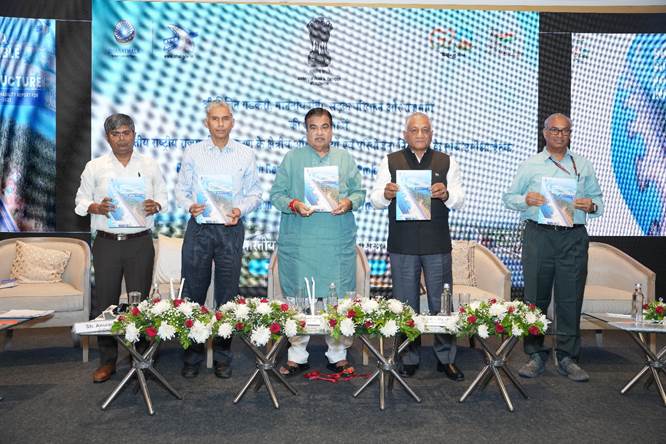
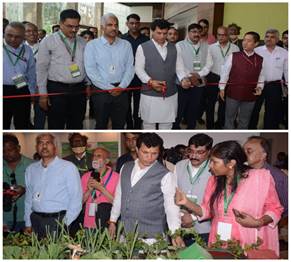
 Highlighting its commitment towards Environment sustainability, NHAI’s first ‘Sustainability Report for FY 2021-22’ covers NHAI’s governance structure, stakeholders, environment and social responsibility initiatives. The report was recently released by Shri Nitin Gadkari, Union Minister for Road Transport and Highways.

The Sustainability Report underlines the effectiveness of various efforts made by NHAI for environment and energy conservation. From FY 2019-20 till 2021-22 direct emission reduced by 18.44% and 9.49% due to less fuel consumption. NHAI continues to work towards reducing indirect emissions as well, by transiting towards clean and green energy sources.

Green House Gas (GHG) Emissions from energy consumption, operations, transport and travel measured in Metric Tonnes CO2 equivalent /km constructed saw a decline of 9.7% in FY 2020-21 and 2% in FY 2021-22.  

Similarly in operations, energy intensity in Giga Joules/km reduced by 37% in FY 2020-21 and 27% in FY 2021-22, while the kilometers constructed through the reporting period has risen steadily. With over 97 percent penetration, Electronic Toll Collection through FASTag has contributed to reduce the carbon footprint.

Apart from this, NHAI has been using recycled materials for National Highway construction. Use of fly-ash and plastic waste in construction has increased over the last three years. NHAI has  been encouraging use of Recycled Asphalt (RAP) and Recycled Aggregates (RA) in the National Highway construction.

In order to ensure sustainable environmental growth, more than 100 Wildlife Crossings were created in three years across 20 States as a measure for wildlife protection and conservation to reduce man-animal conflict.

Over the years, NHAI has been undertaking plantation drives to develop eco-friendly National Highways. There has been a significant increase in number of saplings planted from 2016-17 till 2021-22. Around 2.74 crore saplings were planted till 2021-22 to offset direct emissions from the vehicles.

NHAI has partnered with different stakeholders such as State Rural Livelihood Mission (SRLM), Self Help Groups, CSR partners and NGOs to collaboratively organize plantation drives. In July 2022, NHAI organized a nationwide plantation drive and planted around 1.1 lakh plants in a single day through simultaneous plantations at 114 identified locations across the country.

In addition to sustainable development, the report also highlights NHAI’s commitment to create inclusive and responsible work practices. Over last three years, women employment and employment of marginalized communities at NHAI has increased. With performance-based management system, NHAI has successfully promoted/encouraged women gender diversity and minority employees over the past 3 years with steady increase in female hiring by 7.4 percent and total increase of 3 percent in overall work force in three financial years.

NHAI’s Sustainability Report is not a mandated requirement as per SEBI guidelines, but this has been taken as a voluntary initiative to demonstrate its sustainability credentials and is prepared as per the Global Reporting Initiative (GRI) reporting guidelines. The report has been externally assured by a third party adhering to International Standards on Assurance Engagements. This Sustainability Report will open new avenues for infrastructure financing known as ‘Green Finance’ as per Ministry of Finance, Government. of India framework. The complete report is available on NHAI website at https://nhai.gov.in/nhai/sites/default/files/mix_file/NHAI_Report_2023_2205_with_cutmarks.pdf.

NHAI has taken significant steps towards adopting sustainable and eco-friendly practices, including the use of renewable energy sources, promoting green highways, and adopting waste management practices. Going forward, NHAI remains committed to ensure that its projects are not only economically viable but also socially responsible and environmentally sustainable.

Conference on Consumer-Centric Approaches for E-Cooking Transition

 How can we accelerate the deployment of energy-efficient, clean and affordable e-cooking solutions in India? On World Environment Day today, a conference organized in New Delhi by the Bureau of Energy Efficiency (BEE), Ministry of Power, Government of India, in collaboration with CLASP, sought to find new answers to this question. The “Conference on Consumer-Centric Approaches for E-cooking Transition” brought together institutional consumers, consumer research groups, policy makers, think tanks and manufacturers in a discussion on strategy for the transition to electric cooking.

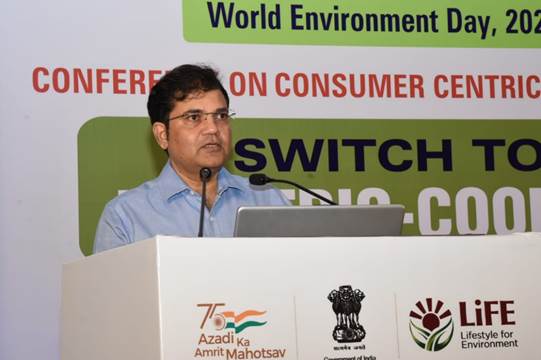
Delivering the special address, Additional Secretary, Ministry of Power, Ajay Tewari said that e-cooking is going to be an environment-friendly habit for all Indians in the times to come. “Some people take it very lightly, but e-cooking has many dimensions for families in urban and rural areas. Given our large population, a change in our behaviour can have the biggest impact on the planet.”

Speaking about Mission LiFE launched by the Prime Minister at the 26th UN Climate Change Conference of the Parties (COP26) in Glasgow in 2021, the Additional Secretary said that India has emerged as the leader in energy transition. “We are going to achieve renewable energy targets much earlier than the timelines we announced. This is evident from our achievement of Nationally Determined Contributions nine years ahead of target and our renewable energy targets.”

Move towards e-cooking driven by 24/7 Electricity

The Additional Secretary said that we want to move towards e-cooking since we have 24/7 electricity in our households. “India has, in just 18 months, given Saubhagya connections to 26 million households who did not have electricity access. Never before in the history of the world has so many households been given electricity connection in such a short time. We are supplying energy for 23.5 hours in all urban areas and 23 hours and more in rural areas. It is a big achievement that the age of power cuts is behind us.” He added that 700 million people in the world however still do not have access to electricity and that universal energy access is one of the priorities of G20.
“E-cooking is going to be the future of the Indian kitchen”

The Additional Secretary asserted that once all Indian households have electricity access, e-cooking is going to be the future of the Indian kitchen. “We can promote electric cooking since the technology is available. It must be scaled up, a model needs to be developed so that the energy comes from renewable sources, so that there is aggregation of carbon credits. The model should work in such a way that it becomes affordable in both urban and rural areas.”

“Need to come up with Affordable E-Cooking Business Models”

After success of UJWALA and thus having transitioned to clean cooking, we now want to make the transition to e-cooking, said the Additional Secretary. Highlighting the importance of affordability, he said that we must promote e-cooking from renewable energy sources such as solar power and thermal power. “We are coming up with aggregation models whereby prices can be brought down. We are moving towards an Indian model of e-cooking to serve Indian kitchens. If we have standard and affordable models, we should be able to cover all urban areas within 2-3 years. By 2030, we will like to cover as many households as possible under e-cooking. This will contribute significantly to our fight against climate change.”

“Very few technology barriers towards adopting e-cooking, need replication at Scale”

In his keynote address, Director General, Bureau of Energy Efficiency, Abhay Bakre said that we have today come to an important juncture in our movement towards environment protection where we are moving ahead with Mission LiFE. Speaking about electric cooking, the Director General said that there is comparatively very little research required in this field since we have e-cooking appliances and consumers too are aware of this. “The principal barriers towards adopting e-cooking were customers’ concerns regarding potential faults in e-cooking appliances and whether all dishes could be prepared using e-cooking. When we launched the GO Electric Campaign, we faced big challenges such as setting up the electric vehicle charging infrastructure, the cost of Electric Vehicles and the production capacity. Contrary to this, we don’t have such challenges in e-cooking. We have found that almost all dishes prepared using conventional stoves can be prepared using e-cooking as well. So, what is needed is replication at scale. Our focus has been on kitchens and locations where cooking can happen for longer periods of time, of 8 – 10 hours per day. Rather than going for full replacement, consumers could go for replacing 50% of their cookers by electric cookers, so that they get the time to build confidence in e-cooking before making full transition.”
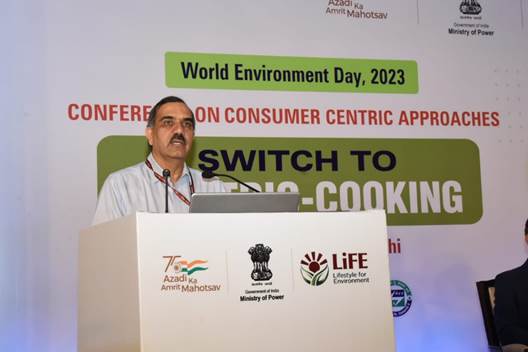
“E-Cooking a Win-Win for both Power Sector and Consumers”

Speaking about Sustainable Development Goal 7.1, the Director General said that 2.1 billion people do not today have access to clean cooking, and are exposed to harmful ways of cooking. “The promotion to e-cooking is a natural way of moving ahead with the SDGs, which are to be achieved by 2030. The first part – universal access to electricity – has been achieved in India. Most of our households also have access to LPG, thanks to UJALA. When we transition to e-cooking, it is going to be a much cleaner fuel. Electric cooking is the future and consumer participation is very important here. E-cooking can save energy consumed in reheating as well.” In conclusion, the DG said that we have to start with urban areas and move to Tier-2, Tier-3 towns and then to rural areas. He said that by 2030, e-cooking is going to be a win-win solution for both the power sector and for consumers as well.

“Transition to e-cooking can improve quality of life, reduce carbon emissions and improve indoor air quality”

Senior Director, CLASP, Bishal Thapa recalled that as we celebrate the 50th anniversary of World Environment Day today, it is time for decisive and transformative action and that the transition to e-cooking represents that opportunity. Noting that the Prime Minister’s articulation of Mission LiFE is bold and visionary, he said that the transition to e-cooking will enable a cleaner, greener and environmentally benign lifestyle. “The potential for e-cooking is not limited to rural areas. It is highly relevant for households and commercial areas in urban areas as well. The transition to e-cooking can help reduce energy imports and reduce our supply vulnerabilities. Overall, the transition can improve the quality of life, reduce carbon emissions and significantly improve indoor air quality.”
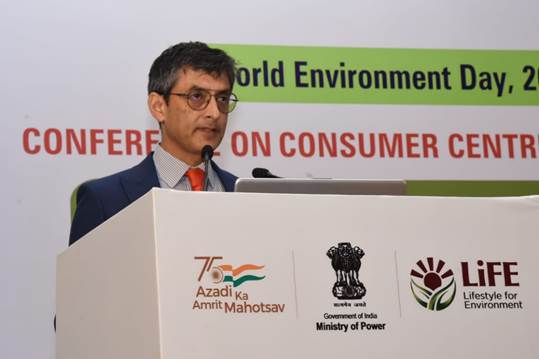
The CLASP Senior Director said that the transition now requires greater consumer awareness, encouraging consumer choices and additional supply. “New partnerships are now required to drive this energy transition.”

The participants took a pledge on Mission LiFE, to adopt environment-friendly lifestyle in all ways possible and to promote the same among fellow citizens.

The Secretary, BEE, Milind Deore delivered the vote of thanks at the conclusion of the inaugural session.

E-cooking Key to Mission LiFE

The focus on electric cooking is based on the recognition that e-cooking is a key pathway to Mission LiFE (Lifestyle for Environment), an India-led global mass movement to nudge individual and community action to protect and preserve the environment. Launched by Prime Minister Narendra Modi at the 26th UN Climate Change Conference of the Parties (COP26) in Glasgow in 2021, Mission LiFE seeks to transform persons into pro-planet people, who would adopt sustainable lifestyles.

Access to clean cooking energy is a crucial aspect of India’s energy transition journey. The choices we make regarding cooking fuel can have a significant impact on India’s trajectory towards becoming a sustainable economy. India’s clean cooking transition requires rethinking individual and community actions and decisions that drive energy consumption. 

Conference to deliberate on Enablers and Approaches for Adopting E-Cooking Solutions

The one-day conference on Consumer-Centric Approaches for E-cooking Transition will explore enablers for adoption of e-cooking solutions such as finance, demand aggregation, carbon credits and business models.

The conference will also brainstorm on consumer-centric approaches and behaviours to bring about the e-cooking transition.

The conference will also have a presentation by Energy Efficiency Services Limited, on e-cooking market transformation program and a presentation by BEE on initiatives undertaken to promote e-cooking.

Also Read: Fast-forwarding India’s transition to Electric Cooking: Conference to be held on World Environment Day, to explore Consumer-Centric Approaches for E-Cooking Transition

***

Microgrids and Electric Vehicles Technologies

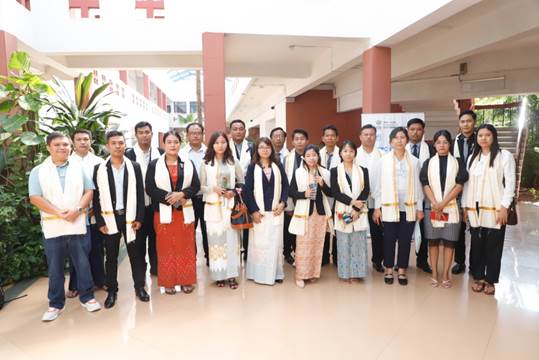
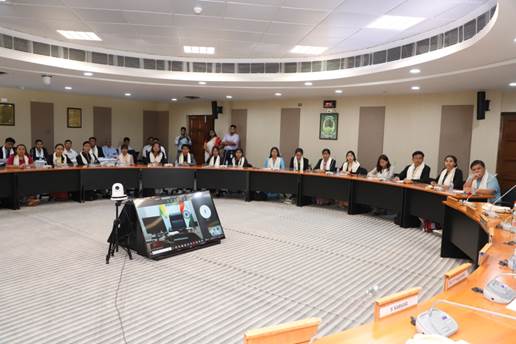
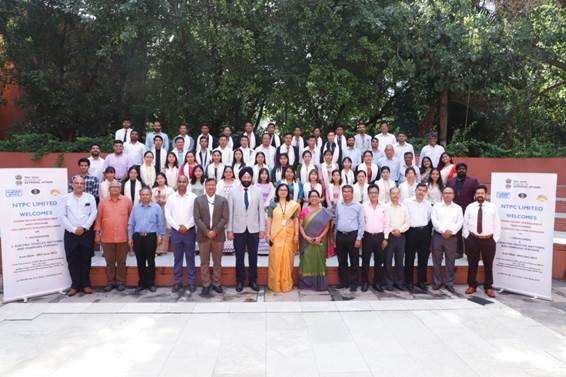
 A team of forty professionals from Myanmar who are working in power sector and associated areas is in India to enhance their professional competencies. The forty participants have come to India, to attend two training programmes, one on “Microgrids” and the other on “Electric Vehicles, Batteries & Charging Stations”. The programmes are being conducted by India’s largest integrated energy company NTPC Limited.

The two programmes are a part of five training programmes for Myanmar’s power sector professionals, which are being conducted by NTPC, under the India-Myanmar Government-to-Government framework for cooperation in power sector. The trainings are being offered under the auspices of Indian Technical and Economic Cooperation (ITEC) Programme, the leading capacity building platform of the Ministry of External Affairs, Government of India.


Two of the training programmes, namely those on Smartgrids and on Cross Border Training Programs were conducted in March-April 2023; the remaining programmes are scheduled to be held in June 2023.

The second leg of the capacity building programme was inaugurated at NTPC’s Power Management Institute, Noida today, June 5, 2023. These programmes will conclude on June 9, 2023.

The Programme on “Microgrids” aims to provide the participants with an understanding of microgrids, their types, components, business models, applications and benefits.

The Programme on “Electric Vehicles, Batteries & Charging Stations” aims to provide the participants with a practical understanding of Electric Vehicles, Batteries & Charging Infrastructure. It also aims to impart an understanding of Vehicle Dynamics, Fleet Electrification, Challenges and Way forward for Electric Vehicles, Batteries & Charging Stations.

Deputy Chief of Mission, Indian Embassy, Yangon, Myanmar, Ms. Nabanita Chakrabarti; Head, International Business Development, NTPC Ltd., Dr J S Chandok; Director, NTPC School of Business, Dr Rajeshwari Narendran; and General Manager, Power Management Institute, NTPC, Mrs. Rachnana Singh Bhal addressed the forty participants, comprising including 23 female and 17 male professionals.

***

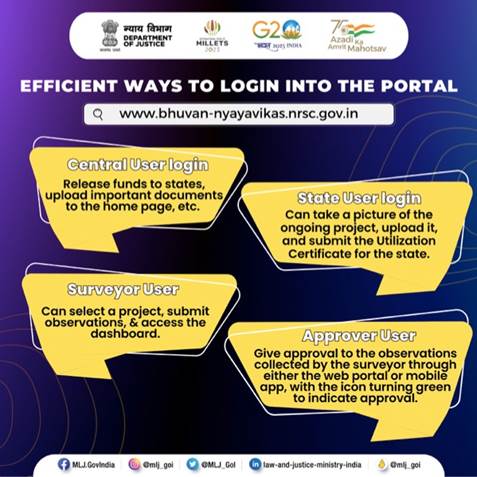
Nyaya Vikas Portal

 Nyaya Vikas Portal allows four  efficient ways of logging into the portal, thereby empowering stakeholders with seamless access to information pertaining to funding, documentation, project monitoring and approval.

About Nyaya Vikas: The Department of Justice has been implementing the Centrally Sponsored Scheme (CSS) for Development of Infrastructure Facilities for Districts and Subordinate Judiciary since 1993-94.

Under the Scheme,  central assistance is provided to the State Government / UT Administrations for construction of court halls and residential units for Judicial Officers / Judges of District and Subordinate Courts. With further extension of the scheme beyond 31.03.2021, some new features like Lawyers Hall, Toilet complexes and Digital computer rooms have been added to the scheme for the convenience of lawyers and litigants, besides court halls and residential units.

The funds sharing pattern under the Scheme for Center and State is 60:40 in respect of States other than North Eastern and Himalayan States. The funds sharing pattern is 90:10 in respect of North Eastern and Himalayan States; and 100% in respect of Union Territories. This portal has been created for monitoring the implementation of this Scheme.


*****

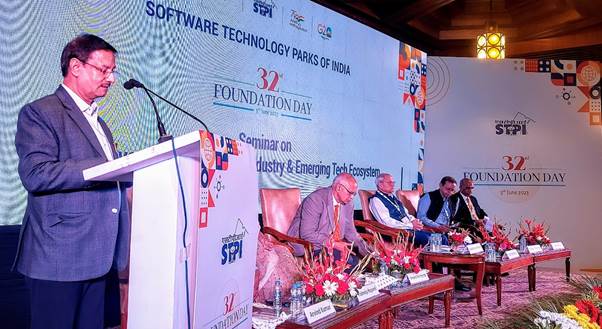
STPI organises seminar on growth avenues for Indian IT industry & emerging tech eco-system

 Software Technology Parks of India (STPI), Ministry of Electronics and Information Technology (MeitY) conducted seminar on “Growth avenues for Indian IT industry and emerging tech ecosystem” here today on its 32nd Foundation Day, which was graced by Secretary, MeitY, Shri Alkesh Kumar Sharma. He extended his greetings to the STPI for clocking 32 years.

Listing out six pillars of IT development, Shri Alkesh Kumar Sharma said, “Today, the world is talking about digital transformation. India is moving from e-governance to digital governance, where each service has to be online. The six major pillars of development that make India an IT superpower are connectivity, low-cost data, affordable devices, people-friendly policies, future-ready talent and cyber security.”

A group of people sitting in front of a large screenDescription automatically generated with low confidence


Delivering the welcome address, Shri Arvind Kumar, Director General, STPI, said, “It’s a proud moment for all of us as we have completed 32 years of serving the IT/ITES industry. Over these last three decades, the STPI has achieved many milestones. It mitigated the three basic concerns of the industry, including ease of doing business, high-speed internet and computing devices.”

Emphasising on the need of India and STPI moving towards high value addition and products, Shri Ajai Chowdhry, Founder, HCL and Chairman, EPIC Foundation, said, “The world is changing and we should be looking at where India’s next opportunity lies. The STPI has created a fantastic support system for the software industry. They have been exceedingly successful in proving that enabler which was essential to get it started and to scale. Now, we have to move towards high value-addition,” he added.

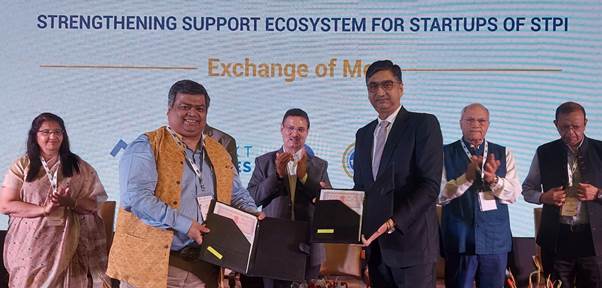
A group of men standing in front of a screenDescription automatically generated with medium confidence


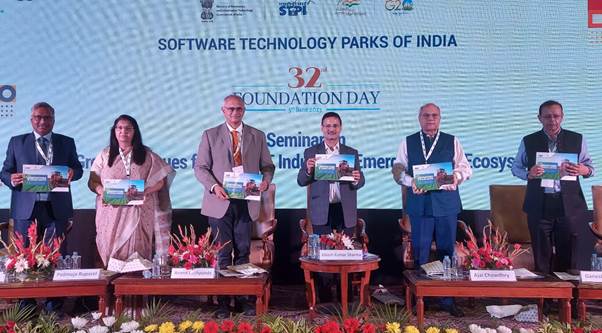
The event also witnessed three Exchange of MoUs—STPI Next Initiatives & BRC, SRM institute of Science and Technology and STPI Next Initiatives & India Angels Network and Center for Entrepreneurship Development and STPINEXT initiatives and Incubation (CEDI) of National Institute of Technology (NIT) Trichy. An agritech report, titled “Innovations through Agritech: A study on the adoption and impact of technology on agri and agri-allied sectors”. The report aims to provide insights into the current state of Agritech in India, the challenges faced by the sector, and the opportunities for growth and innovation.

Smt Padmaja Ruparel, Co-Founder, IAN; Dr Ganesh Natrajan, Chairman, 5F World & Honeywell India; Dr Anand Deshpande, Founder, Persistent Systems and also graced the inaugural session.

A group of people standing on tablesDescription automatically generated with medium confidence


Esteemed panellists, including Shri Bhuvnesh Kumar, Additional Secretary, MeitY; Shri Suresh Raman, Vice President & Regional Head, Chennai, TCS; Ms Sairee Chahal, Founder & CEO, SHEROES & Mahila Money; Shri Sridhar Muppidi, Co-Founder, PurpleTalk India Private Limited; Dr Shakti Goel, Chief Architect and Data Scientist, Yatra Online Limited and Shri Suryansh Jalan, President, FarEye Technologies deliberated on “IndiaAhead: TechAde of opportunities and STPI’s role in promoting emerging technologies ecosystem”.

******

Seva, Sushasan and Garib Kalyan are the hallmarks of nine years

 Union Minister of State for Skill Development & Entrepreneurship and Electronics & IT, Shri Rajeev Chandrasekhar, today said Indian economy’s turnaround in the past nine years has been possible because of Prime Minister Shri Narendra Modi’s leadership and his proactive policies.

“The three words—Seva, Sushasan and Garib Kalyan—define the journey of the nine years’ of the Narendra Modi Government. When Prime Minister Shri Narendra Modi took over in 2014, the economy was in the doldrums. There was widespread corruption and nepotism, and innumerable scams. He had the task of not only resurrecting the economy but also instilling hope, pride and trust of Government among the citizens. Nine years on, not only has he been able to clean up most of the mess, but has steered the country to become the fifth largest economy in the world,” the Minister said, while addressing a Vyapari Sammelan at Ambassa in Tripura.

 “What could not be achieved in 65 years, India under PM Modi ji has achieved in nine years. India will soon emerge as the third largest economy in the world, next to the US and China,” he said.

Shri Rajeev Chandrasekhar also addressed a press conference later along with Lok Sabha MP Rebati Tripura and spoke about the achievements of the Narendra Modi Government during its nine years’ reign. Drawing a comparison between the UPA rule and Prime Minister Shri Narendra Modi’s nine-years in power, the Minister said, “PM Modi ji has displaced politics of corruption, scams, misgovernance, oppportunistic coalition and dynasty to politics of ‘Seva, Sushasan & Garib Kalyan’.

The Minister arrived in Agartala this morning on a three-day visit to Tripura, during which he will be reviewing the Skilling opportunities being undertaken in the state.

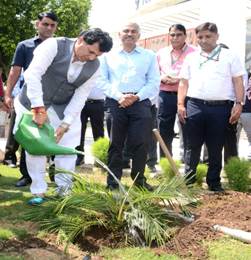
As it was World Environment Day today, Shri Rajeev Chandrasekhar planted a sapling and called upon people to observe every day as World Environment Day. 

Earlier in the day, he met Dr Siddharth Shiv Jaiswal, District Magistrate Dhalai and reviewed the working of the self-help groups in the district. They discussed the challenges being faced by the groups with regard to capacity building and market linkages. He also discussed about the skilling initiatives taken up for creating jobs and entrepreneurships locally for the youth and about the challenges being faced by them.

Shri Rajeev Chandrasekhar also met party leaders like Shri Tapas Bhattacharya and Mahila BJP president Ajanta Bhattacharjee and spoke about issues concerning the state.

The Minister will be visiting Krishnapur tomorrow and will have an interaction with representatives of Janajati Beneficiary Sanmelan, among other engagements.

This is Shri Rajeev Chandrasekhar’s second official visit to Tripura after bbecomin Minister in Prime Minister Shri Narendra Modi’s Cabinet. He was here last time in August 2022 and had taken part in a Tiranga rally.

******

India Rankings 2023

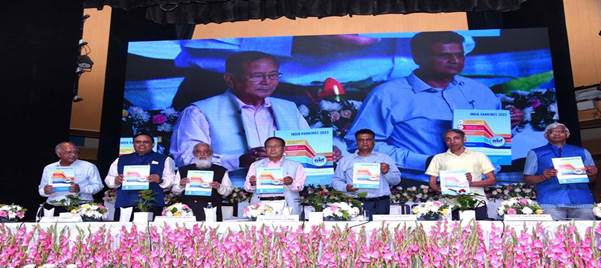
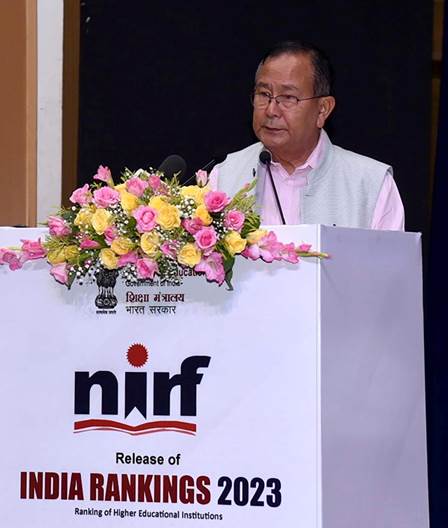
 Minister of State for Education and External Affairs, Dr. Rajkumar Ranjan Singh today released the India Rankings 2023, which implements the National Institutional Ranking Framework (NIRF) drafted for this purpose by the Ministry of Education in 2015. Shri K Sanjay Murthy, Secretary (HE), Prof. M Jagadesh Kumar, Chairman, UGC, Prof. T.G. Sitharam, Chairman, AICTE, Prof.  Anil Sahasrabuddhe, Chairman, NETF and NBA, Dr. Abhay Jere, Vice Chairman, AICTE and Dr. Anil Kumar Nassa, Member Secretary, NBA were present on this occasion along with vice chancellors and directors of institutions of higher education.

Speaking on the occasion, Dr. Rajkumar Ranjan stated that ranking and accreditation are vital for evaluating the quality of educational programs offered by higher education institutions in colleges and universities. He said that the Ministry of Education took the commendable step of drafting National Institutional Ranking Framework (NIRF) in 2015, which defines multi-dimensional parameters to capture quality and excellence of HEIs in India across various categories and subject domains and rank them based on their cumulative score on these parameters, he added.

He mentioned that India Rankings serve as a valuable tool for students in identifying universities based on their relative standing in various categories and subject domains among higher educational institutions (HEIs) in the country. It has also helped universities in identifying areas for improvement in teaching, research, resources, and infrastructure, he added.

While the Minister expressed his pleasure with regard to increase in number of institutions who have applied for ranking in different categories and subject domains, he stressed upon the requirement of working collectively to bring more and more institutions under the ambit of India Rankings as well as accreditation.

This is the eighth consecutive edition of India Rankings of HEIs in India. Three distinct additions of 2023 edition of India Rankings are as follows:

  1. Introduction of a new subject namely Agriculture & Allied Sectors
  2. Integration of “Innovation” ranking previously executed by the Atal Ranking of Institutions on Innovation Achievements (ARIIA) into the India Rankings with an aim to reduce the burden on institutions of providing similar data to two different agencies.
  3. Expansion of scope of “Architecture” to “Architecture and Planning” to include institutions imparting courses in Urban and Town Planning.

With the addition of new category (Innovation) subject domain  (Agriculture & Allied Sectors) and expansion of “Architecture” to “Architecture and Planning”, the existing portfolio of India Rankings has increased to 13 categories and subject domains that have been ranked in India Rankings 2023.

During the maiden year of India Rankings 2016, rankings were announced for Universities as well as for three domain-specific rankings, namely Engineering, Management and Pharmacy institutions. Over the period of eight years, four new categories and five new subject domains are added to bring the total tally to five categories, namely Overall, University, Colleges, Research Institutions & Innovation and 8 subject domains, namely Engineering, Management, Pharmacy, Architecture & Planning, Medical, Law, Dental and Agriculture and Allied Sectors.

Five Broad Categories of Parameters and Weightage

The National Institutional Ranking Framework (NIRF), launched in November 2015 by the Ministry of Education, was used for this edition as well as for the previous seven editions of India Rankings released for the years 2016 to 2023. Five broad categories of parameters identified in the NIRF and their weightage on scale of 10 are given below:

Sl.

No.

Parameter

Marks

Weightage

1

Teaching, Learning & Resources

100

0.30

2

Research and Professional Practice

100

0.30

3

Graduation Outcome

100

0.20

4

Outreach and Inclusivity

100

0.10

5

Perception

100

0.10

Each of these five parameters have 2 to 5 sub-parameters. A total number of 16 – 18 sub-parameters are used for ranking of HEIs in different categories and subject domains. Institutions are ranked based on total sum of marks assigned for each of these five broad groups of parameters. In addition to parameters used for Overall category, the following two additional sub-parameters were included for ranking institutions under “Research Institutions”: i) Research Papers published in journals covered in the First Quartile of Journal Citation Report (JCRQ1); and ii) H Index.

Besides, sourcing data on various parameters from applicant institutions, third party sources of data have also been used, wherever possible. Scopus (Elsevier Science) and Web of Science (Clarivate Analytics) were used for retrieving publications and citations data. Derwent Innovation was used for retrieving data on patents. Data retrieved from these sources was shared with the institutions for transparency with a provision to give their inputs.

Increase in Number of Applicants for India Rankings from 2016 to 2023

A total number of 5,543 unique institutions offered themselves for ranking under “Overall”, category-specific and / or domain-specific rankings for India Rankings 2023. In all, 8,686 applications for ranking were made by these 5,543 unique institutions under various categories / domains including 2,478 in Overall Category, 1,314 in Engineering, and 2,746 in General Degree Colleges. A noticeable increase in institutional participation in the rankings exercise this year indicates its recognition amongst institutions of higher education in India as a fair and transparent ranking exercise. Number of unique applicants to India Rankings have increased from 2,426 in 2016 to 5,543 in 2023 whereas total number of applications for ranking in various categories have increased from 3,565 in 2016, to 8,686 in 2023 i.e. total increase of 3,117 (128.48% increase) in number of unique institutions and 5,121 (143.65% increase) in total number of applicants.

Increase in Number of Institutions Ranked in India Rankings from 2016 to 2023

100 institutions are being ranked in Overall, Universities, Colleges and Engineering since inception of India Rankings in 2016. Moreover, number of institutions ranked in Management and Pharmacy have been increased from 75 to100 each from 2022 onwards. However, number of institutions ranked are restricted between 30 and 50 in subject domains namely Architecture, Law, Medical, Dental as well as in Research Institutions. Additional rankings are suitably bunched in Rank Bands of 101-150 and 151-200 in case of Overall, Universities, Colleges and Engineering and 101-125 in case of Pharmacy and Management.

Key Highlights of India Rankings 2023

  • Indian Institute of Technology Madras retains its 1st position in Overall Category for fifth consecutive year, i.e. 2019 to 2023  and in Engineering for eighth consecutive year, , i.e. from 2016 to 2023..
  • Top 100 in Overall category consists of 44 CFTIs/ CFUs  INI, 24 state universities, 13 deemed universities, 18 private universities, 4 agriculture and allied sector institutions, and 3 management institutions.  
  • Indian Institute of Science, Bengaluru tops the Universities Category for eighth consecutive years, i.e. from 2016 to 2023. It stood first in Research Institutions Category for the third consecutive year, i.e. from 2021 to 2023.
  • IIM Ahmedabad tops in Management subject retaining its first position for fourth consecutive year, i.e. from 2020 to 2023. It was ranked amongst top two in Management subject of the India Rankings from 2016 to 2019.
  • All India Institute of Medical Sciences (AIIMS), New Delhi occupies the top slot in Medical for the sixth consecutive year, i.e. from 2018 to 2023. Moreover, AIIMS is ranked at 6th position in Overall category thereby  improving from its 9th position in 2022.
  • National Institute of Pharmaceutical Education and Research, Hyderabad tops the ranking in Pharmacy for first time pushing Jamia Hamdard to the second slot. Jamia Hamdard was ranked at 1st position for four consecutive years, i.e., from 2019 to 2022.
  • Miranda House retains the 1st position amongst Colleges for the seventh consecutive year, i.e. from 2017 to 2023.
  • IIT Roorkee stands at 1st position in Architecture subject for third consecutive year, i.e. from 2021 to 2023.
  • National Law School of India University, Bengaluru retains its first position in Law for the sixth consecutive year, i.e. from 2018 to 2023
  • Colleges in Delhi maintained their dominance in ranking of Colleges with five colleges out of first 10 colleges from Delhi.
  • The Saveetha Institute of Medical and Technical Sciences takes the top slot for the second consecutive year.
  • Indian Agricultural Research Institute, New Delhi takes the top slot in Agriculture and Allied Sectors.
  • Indian Institute of Technology Kanpur tops in Innovation category.

Click the link to see India Rankings 2023:

https://www.nirfindia.org/2023/Ranking.html


*****

World Environment Day 2023 celebrations

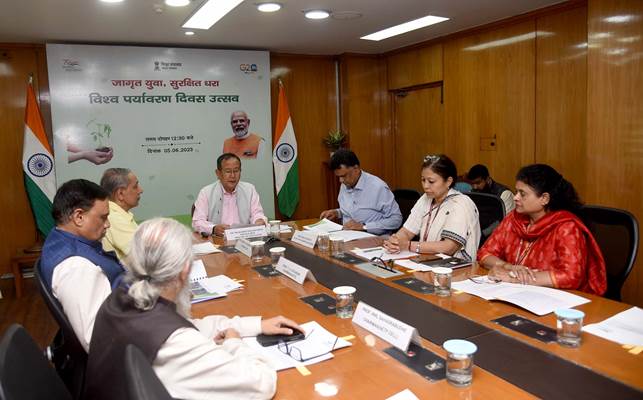
 Minister of State for Education and External Affairs, Dr. Rajkumar Ranjan Singh today interacted with the Heads, teachers and students of the Higher Education Institutions across the country on the occasion of World Environment Day 2023. Secretary, Higher Education Shri K. Sanjay Murthy; Chairman, UGC, Prof. M Jagadesh Kumar; Chairman, AICTE, Prof. T.G. Sitharam, Prof.  Anil Sahasrabuddhe, Chairman, NETF were present on this occasion along with Vice Chancellors and Directors of Institutions of Higher Education.


The event started after observing one minute silence to mourn the death of victims of train accident in Odisha.

Speaking on the occasion, Dr. Rajkumar Ranjan Singh said that the celebration of World Environment Day across the country envisages involvement of youth in spreading the message of LiFE, along with sensitizing school going children and others about LiFE.

The Minister informed that in the National Statement at United Nation Framework Convention on Climate Change (UNFCCC) CoP 26 Global Leaders’ Summit in Glasgow, the Prime Minister’s mantra was Lifestyle for Environment, and he also stressed upon setting a target for Net Zero Carbon Emissions by 2030. On 20th October 2022 the Prime Minister launched Mission LiFE (Lifestyle for Environment), a global movement to safeguard our environment from the impact of climate change. LiFE (Lifestyle for Environment) is an India-led global mass movement for “mindful and deliberate utilization, instead of mindless and destructive consumption” to protect and preserve the environment.

Dr. Singh informed that on the occasion AICTE will launch One Student One Tree Campaign 2023. UGC too has taken initiatives for creating awareness about Mission LiFE.

He also urged HEIs to undertake activities such as aawareness workshops on sustainable practices on Mission LiFE and promoting LiFE Actions, making College and University Campuses plastic free, making campus Digital Campus and avoid use of paper, avoid food wastage in Hostels and Cafeterias, making manure from compost of dried leaves/ food waste/ organic waste, organizing bicycle rallies / plastic collection / water body cleaning activities during the course of scheduled events, etc

On this occasion, Dr. Singh after releasing ‘Guidelines and Curriculum Framework for Environmental Education at Undergraduate level’, stated that it is an important step in line with National Education Policy (NEP) 2020 which underlines the importance of making environmental education an integral part of curricula and encouraging environmental awareness and sensitivity towards its conservation and sustainable development. The guidelines include areas such as climate change, pollution, waste management, sanitation, conservation of biological diversity, management of biological resources and biodiversity, forest and wildlife conservation, and sustainable development. The document is expected to cater to students from diverse disciplinary backgrounds and to sensitise them about the commitment of our nation towards achieving sustainable development goals and addressing global environmental challenges, he added.

The Minister urged all to adopt these guidelines in the course curriculum at the UG level and also take steps for achieving the objectives of ‘Mission LiFE’ thereby protecting the mother earth from the adverse impact of the environmental degradation.

****

INDIAN NAVY ON MISSION LiFE

 With the underlying significance of adopting environmentally conscious lifestyles, Mission LiFE (LiFEStyle for Environment) activities have been organised across all Naval units and establishments as Run-up to World Environment Day 2023 which focuses on living sustainably in harmony with nature. IN has prioritized the adoption of cleaner and greener practices both at the organizational and individual levels. Actions taken include energy savings through the use of occupancy sensors and automatic controllers, reduced vehicular pollution through the emphasis on e-vehicles, observing no-vehicle day within Naval establishments, Public Bicycle Sharing System, enhanced water conservation measures, collection and distribution of unutilized household items, books etc through Meri LiFE Centres.  Reduction in carbon footprint through measures such as solar-powered street lighting, restoration of mangrove forests and tree plantation drives. In 2022-23, a total of 5,24,820 tree saplings have been planted capturing approximately 11,500 Tonnes of carbon in one year.

In keeping with the vision of the ‘Clean India Campaign’, Indian Navy has initiated a nationwide campaign under the program Puneet Sagar Abhiyaan (PSA). The campaign focuses on cleaning the seashores/ beaches of plastic and other waste and increasing awareness about the importance of keeping them clean, serene and pristine. Local naval units and establishments dedicate one day, each month, towards coastal cleanup including rivers/ lakes and have liaised with local municipal bodies, NGOs, NHAI and Regional Directors of NCC towards responsible disposal/ recycling of waste material. In the last year, approximately 78,700 Kg of plastic waste from 58 beaches and 2100 km of coastline has been cleaned.

Community participation has played a great role in the implementation of initiatives. Successful institution of green measures in the Navy has been possible through a self-conscious Naval community, well aware of the necessity of environmental remediation and energy conservation. To foster a sense of responsibility towards the environment, various mass participation events such as the LiFE Pledge ceremony, mass shramdan, coastal cleanup drives, cyclothons/walkathons etc are organized regularly.

**

WORLD ENVIRONMENT DAY AT SOUTHERN NAVAL COMMAND

 The Southern Naval Command observed World Environment Day on 05 Jun 23 with ‘Beat Plastic Pollution’ as the theme and waste segregation, plastic waste removal, afforestation and mangrove restoration as focus areas.

Pursuant to the global campaign of keeping coastlines clean, around 3000 Naval personnel, defence civilians and families of Southern Naval Command undertook mass clean-up drives of beaches, harbours and waterfront areas of Mahatma Gandhi Beach, Fort Kochi Beach, Puthuvype Beach, Puthenthode Beach, Vypin Beach, Cherai Beach, Marine Drive, Queen’s Walkway, Bolgatty and CoPT walkway at Kochi city. Around 4700 kg of plastic and non-biodegradable waste was collected during the campaign. In addition, a 2 km stretch of the Venduruthy channel was also cleaned while restoring about 1 lakh sq m of mangroves along the channel’s banks.

Vice Admiral MA Hampiholi, PVSM, AVSM, NM Flag Officer Commanding-in-Chief, Southern Naval Command along with Mrs Madhumati Hampiholi, President, Naval Wives Wellness Association (Southern Region) participated in the clean-up drive at Fort Kochi beach along with SNC Parivaar. The beach cleanship drive also saw motivated participation by recently joined Agniveers, NCC cadets, school children and families from ICICI Foundation. Hon’ble Mayor Adv M Anilkumar, Kochi Municipal Corporation also graced the occasion with his presence. Speaking to the media team present at the beach, C-in-C South reaffirmed the Indian Navy’s commitment and continued efforts towards environment conservation, green initiatives and energy efficient practices. He also highlighted the various initiatives undertaken as part of environment friendly month in May-Jun 23 and Puneet Sagar Abhiyan at Kochi city. He urged each one to adopt Mission LiFE- Lifestyle for Environment approach towards a sustainable and healthier future.

As part of the Environment Day, more than 1600 saplings were planted by the participants from different Naval units at Kochi. In addition, community awareness/ public outreach programmes, painting and ‘best-of-waste’ competitions, lectures, workshops/ seminars etc were also organised centred around the theme and Mission LiFE. Other outstation naval units located at Jamnagar, Lonavla, Chilka, Coimbatore, Goa, Ezhimala and Malad (Mumbai) also enthusiastically conducted similar events with all out efforts towards making a tangible impact in environment conservation and cleaning.

Children of the Navy Children Schools and KVs in Southern Naval Command also actively participated in the event through conduct of special assembly, educative skits, environmental quiz, seminars, slogan writing, poster making and painting competitions.

___________________________________________________________________

New National Cooperation Policy

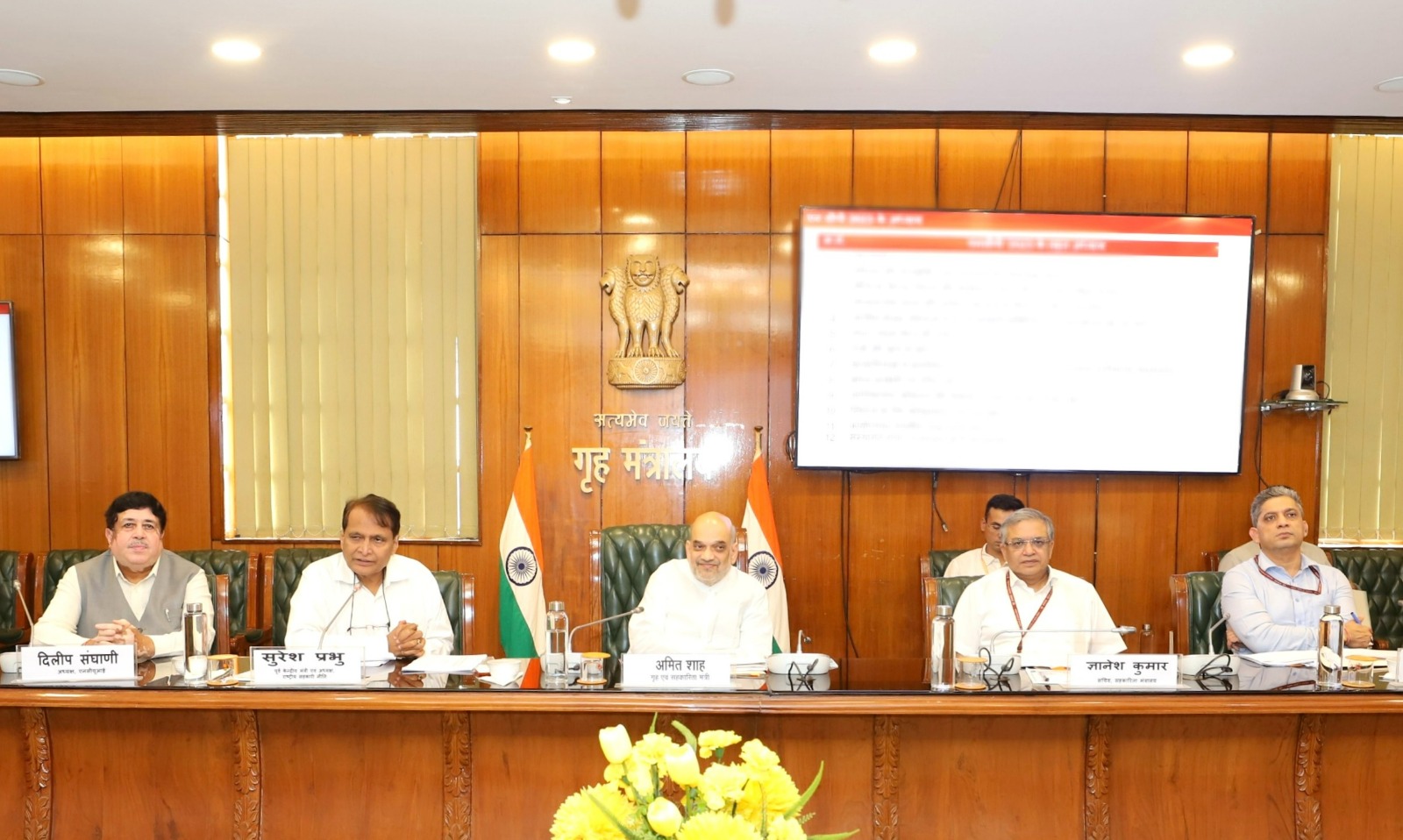
 The Chairman of the National Level Committee for drafting new National Cooperation Policy document Shri Suresh Prabhu, made a presentation to Union Home Minister and Cooperation Minister Shri Amit Shah in New Delhi today. The meeting was also attended by other committee members including Shri Dileep Sanghani, Chairman, NCUI, Shri K V Shahji, Chairman, NABARD, Shri Jyotindra Mehta, Chairman, NAFCUB, Shri P K Aggarwal, Financial Advisor, D/o Cooperation, Govt. of Uttar Pradesh, Dr. Umakant Dash, Director, Institute of Rural Management Anand (IRMA), Shri Satish Marathe, Director, RBI, Dr C Pitchai, Professor, Gandhigram Rural University, Dr. Hema Yadav and Director, VAMNICOM.  Secretary (Cooperation), Additional Secretary (Cooperation) and senior officers of Ministry of Cooperation were also participated in the meeting.

The Committee members briefed Minister of Cooperation Shri Amit Shah about the objectives, vision and mission of the draft Policy along with key recommendations in various sectors including structural reforms & governance, cooperatives as vibrant economic entities, level playing field for cooperatives, sources of capital and funds, inclusion of priority sections, use of technology, upskilling and training, sustainability and implementation plan.

During the meeting, Union Home Minister and Minister of Cooperation Shri Amit Shah gave his guidance on how to realise Prime Minister Shri Narendra Modi ji’s vision of ‘Sehkaar se Samriddhi’ and to strengthen the Cooperative movement at the grassroot level through the new policy. As per the guidance received from Minister of Cooperation, the Committee will prepare a revised draft. The new Cooperation Policy is expected to be unveiled in July, 2023 after consulting all the stakeholders including state governments, central ministries / departments, National Cooperatives, etc.

The National Level Committee for drafting New National Cooperation Policy was formed on 2nd September 2022 with a view to prepare a new National Policy to realise Prime Minister Shri Narendra Modi’s vision of ‘Sehkaar se Samriddhi’ under the leadership of Home Minister and Minister of Cooperation Shri Amit Shah. The current policy on cooperation was formulated in 2002 and there is a felt need to draft a new policy to deal with the changed economic scenario.

The drafting Committee is chaired by Shri Suresh Prabhu, former Union Minister. It comprises of 49 members drawn from all over the country and various stakeholders such as officers of cooperation department of various state governments, ministries/departments concerned of central governments, institutions like IRMA, RBI, National federations like IFFCO, NCCF, NAFCARD, NAFCUB, KRIBHCO, NFCSF, NCUI, NAFED, representatives from Cooperative Societies in various sectors, academicians and experts.

The process of forming new National Cooperation Policy was initiated when the concept was discussed in the conference of State Cooperation Secretaries/ RCS held on 12th & 13th April, 2022 and State Cooperation Ministers held on 8th & 9th September, 2022 which were inaugurated by the Union Home Minister and Minister of  Cooperation. More than 500 suggestions were received from various stakeholders and general public for the draft policy document. The National level Committee after its formation held more than 8 meetings and also consulted various stakeholders to prepare the draft document.


*****

Sustainable & Eco-friendly Lifestyle on World Environment Day 2023

 On the occasion of the World Environment Day (05th June 2023), Ministry of Coal and Coal PSUs have organized numerous programs to encourage employees and local communities to embrace sustainable and Eco-Friendly Lifestyles in line with the LiFE activities envisioned by the Prime Minister Shri Narendra Modi. The LiFE campaign aims to prioritize individual actions in combating climate change. It encourages people to make small but significant changes in their daily lives, such as reducing plastic consumption, minimizing food waste, energy saving, recycling of waste and using public transportation.

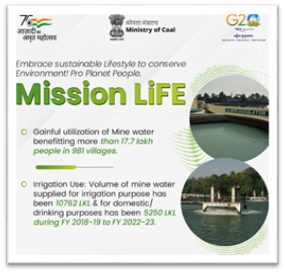
Coal Sector under the aegis of Ministry of Coal has actively undertaken a range of sustainable and environmentally friendly initiatives aligned with LiFE actions. These initiatives include strategic efforts in land amelioration and afforestation, effective management of air quality and noise, emission reduction, gainful utilization of mine water for community purposes, implementation of energy-efficient measures, sustainable utilization of overburden and development of Eco Parks and Mine Tourism.

Glimpses of LiFE Activities taken by Coal/Lignite PSUs

During the last two weeks over 200 awareness campaigns/programs have been organized by Coal PSUs to promote and adopt LiFE actions in day-to-day life. These programs encompass a wide array of activities  such as raising awareness about the 5R principles of Waste Reduction (Refuse, Reduce, Reuse, Repair & Recycle), hosting informative discussions on the significance of diverse tree species found in coal regions through the “Know Your Tree” initiative, emphasizing the importance of sustainable food systems, distributing fruit-bearing plants/saplings and eco-friendly jute bags, organizing essay writing competitions on the theme of “Lifestyle for Environment,” promoting creative endeavors like the Best out of Waste Competition, Quiz competition, Extempore Competition, Speech Competition, Cyclathon  etc.

A picture containing text, water, screenshot, lakeDescription automatically generated

Additional activities like conducting plastic waste collection drives within and around office premises to raise awareness about the detrimental effects of Single-Use Plastic on the environment, organizing e-waste collection drives, facilitating pond cleaning activities, hosting seminars on “Home Composting,” & LiFE Actions were also held.

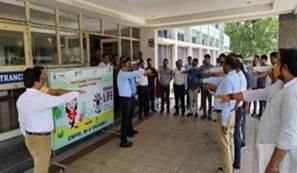
All senior officers, employees of the Ministry of Coal and Coal PSUs have also administered the pledge dedicated to Mission LiFE.

****

World Environment Day

 Ministry of Agriculture and Farmers Welfare organized Mega Event on Mission LiFE on the occasion of “World Environment Day” today at Dr. C. Subramaniam Auditorium, NASC Pusa, New Delhi.  The program began with tree plantation activity in the premises of the venue by Shri Kailash Choudhary, Minister of State for Agriculture and Farmers’ Welfare, with other dignitaries. Shri  Manoj Ahuja, Secretary DA&FW, Additional Secretaries and Joint Secretaries of Ministry of Agriculture & Farmers Welfare were present in the event along with staff of ICAR and DA&FW, FPOs, Agri-start-ups, Students, Scientists, Officers and Farmers from various States. This was followed by inauguration of exhibition on Natural and Organic Farming showcasing and creating awareness on the sustainable agricultural practices symbolizing Mission LiFE.

WhatsApp Image 2023-06-05 at 5.17.41 PM.jpeg WhatsApp Image 2023-06-05 at 5.17.39 PM.jpeg

The program was inaugurated by Shri Kailash Choudhary, Minister of State for Agriculture and Farmers Welfare, by lighting the lamp.  In his remarks, he highlighted the importance of Life Style for Environment and stressed upon chemical free farming as one important options for sustaining the resources for future generations. He emphasized the adoption of Mission LiFE in agriculture to address the adverse impact of climate change. Quoting the example of Rajasthan, he mentioned that the state is having pre-monsoon showers more frequently than earlier years. Untimely and heavy rains are causing distress to the farming community. Farmers are highly vulnerable to climate change. Keeping this in mind ICAR developed 1750 climate resilient varieties after 2016 and these have potential to give normal yields under adverse conditions in vulnerable areas. He also stressed upon recycling of wastes in agriculture as it is best example for circular economy. He emphasized that we should all take care in day to day life to save the resources. Then, he administered the pledge on Mission LiFE with all the audiences present in the event.

WhatsApp Image 2023-06-05 at 5.17.40 PM (1).jpeg WhatsApp Image 2023-06-05 at 5.17.40 PM.jpeg

In his address, Shri Manoj Ahuja, Secretary, DA&FW briefed on the global temperatures rise from pre-industrial era and its direct and indirect impacts on agriculture and allied sectors. Maintenance of soil health through natural and organic practices having beneficial effect on soil flora and fauna is leading to better availability of nutrients in the soil. He also mentioned on the saving of water through adoption of Per Drop More Crop as India consumes more water for irrigation compared to other countries. There is a need to adopt all the 7 principles of MissionLiFE in day to day agricultural practices besides making policy towards sustainable agriculture.

Shri Faiz Ahmed Kidwai, Additional Secretary, DA&FW in his welcome address highlighted the importance of Mission LiFE and mentioned about the background of the launching of Mission LiFE by Prime Minister during CoP-26. He further gave the details of 7 principles underlying the Mission LiFE for adopting. A detailed presentation on Adopting Mission LiFE was given by Joint Secretary, Shri Samuel Praveen Kumar. He expressed that promotion of environment sustainability through agriculture is crucial for Nation’s well being, preserving biodiversity and mitigating the impact of climate change. The programme ended with vote of thanks by Shri Franklin L. Khobung, Joint Secretary (NRM) and Nodal Officer (Mission LiFE). Two champion farmers who are practicing Natural Farming were honored with a certificate of appreciation.  

The inaugural was followed by panel discussion on linking Mission LiFE to organic and natural farming chaired by Shri Faiz Ahmed Kidwai, Additional Secretary (NRM) and moderated by Dr. Yogita Rana, Joint Secretary (INM). Panelist Shri T. Vijaya Kumar shared the success stories of natural farming in Andhra Pradesh. Padam Shri Bharat Bhushan Tyagi stressed on crop diversification and nutritional management through organic and natural means for achieving the goals of Mission LiFE. He also called for strengthening of FPOs for higher returns to the farmers. Ms. Kashika Malhotra, M/s Invest India threw light on the potentials and ways of adopting circular economy in agriculture. Two champion farmers, Shri Shalender Sharma from Himachal Pradesh and Shri Lal from Bhuj, Gujarat shared their experiences on adoption of Natural Framing. The panelists were thanked by Ms. Rachna, Deputy Secretary, INM Division. A total of 713 awareness events and 709 action events have been organized with 52346 no. of participants and total 49028 people took pledge under Mission LiFE so far.

*******

World Environment Day

 Addressing the gathering, the Prime Minister conveyed his best wishes to every country in the world on World Environment Day. Underlining the theme of this year’s Environment Day – the campaign to get rid of single-use plastic, the Prime Minister expressed happiness that India has been working continuously in this direction for the past 4-5 years. Shri Modi informed that India started working on two levels to get rid of single-use plastic in 2018. “On the one hand, we have banned single-use plastic while on the other hand, plastic waste processing has been made mandatory”, he said. Due to this, the Prime Minister said that there has been a compulsory recycling of about 30 lakh tonnes of plastic packaging in India which is 75 percent of the total annual plastic waste produced in India, and around 10 thousand producers, importers and brands have come under its ambit today.

The Prime Minister highlighted that India of the 21st century is moving forward with a very clear roadmap for climate change and environmental protection. Underlining that India has created a balance of Present Requirements and Future Vision, the Prime Minister stated that necessary help has been provided to the poorest of the poor while huge steps have been taken keeping in mind the energy needs of the future. “During the last 9 years, India has made an unprecedented focus on green and clean energy”, the Prime Minister said as he gave examples of solar power and LED bulbs that have helped in saving people’s money as well as contributing towards protecting the environment. Throwing light on India’s leadership during the global pandemic, the Prime Minister informed that India started Mission Green Hydrogen and took major steps towards natural farming to save soil and water from chemical fertilizers.

“In the last 9 years, the number of wetlands and Ramsar sites in India has increased almost 3 times as compared to earlier”, the Prime Minister said, as he informed that two more schemes have been launched today that further the campaign of Green Future, Green Economy. The Prime Minister noted that the ‘Amrit Dharohar Yojana’ has started today which will ensure the conservation of these Ramsar sites through public participation. In future, the Prime Minister elaborated, these Ramsar sites will become the center of eco-tourism and will become a source of green jobs for thousands of people. He further added that the second scheme is the ‘Mishti Yojana’which will help in reviving as well as protecting the mangrove ecosystem of the country. With this, the Prime Minister explained that the mangrove cover will be restored in 9 states of the country and help in mitigating the threat to lives and livelihoods in coastal areas from rising sea levels and disasters like cyclones.

The Prime Minister emphasized that every country in the world should think above the vested interests for the protection of the world climate. Pointing out that the model of development where the thought of developing one’s country and then worrying about the environment has been prevalent for a long time among big and modern countries of the world, the Prime Minister underlined that even though such countries achieved the goals of development, it was the environment of the whole world that paid the price. Even today, the Prime Minister continued, the developing and underdeveloped countries of the world are suffering from the flawed policies of a few developed countries. “For decades, there was no country to stop this attitude of some developed countries”, the Prime Minister said as he expressed delight that India has raised the issue of Climate Justice in front of every such country.

“In the thousands of years old culture of India, there is nature as well as progress”, the Prime Minister remarked as he credited its inspiration to India’s attention to ecology and economy. The Prime Minister said that as India is investing unprecedentedly in its infrastructure, it is focussing equally on the environment. Drawing comparisons of boost in economy and ecology, the Prime Minister gave examples of the expansion of 4G and 5G connectivity on one hand whereas the country’s increased forest cover on the other hand. He further added that while India built 4 crore houses for the poor, there has been a record increase in the number of Wildlife Sanctuaries as well as wildlife in India. Shri Modi also touched upon Jal Jeevan Mission and the construction of 50,000 Amrit Sarovars for water security, India becoming the 5th largest economy in the world and also joining the top 5 countries in renewable energy, increasing agricultural exports and also running a campaign for blending 20 percent ethanol in petrol. He also stated that India has become the base of organizations like Coalition for Disaster Resilient Infrastructure – CDRI, and the International Big Cat Alliance. 

Speaking about mission LiFE i.e. Lifestyle for Environment becoming a public movement, the Prime Minister highlighted that the mission is spreading a new consciousness about lifestyle changes to combat climate change. He mentioned that there was curiosity among the people when the mission was launched last year in Kevadia-Ekta Nagar, Gujarat but a month ago, a campaign was started regarding Mission LiFE where 2 crore people became a part of it in less than 30 days. He also informed about the organization of rallies and quiz competitions in the spirit of ‘Giving Life to My City’. “Lakhs of colleagues have adopted the mantra of Reduce, Reuse, Recycle in their everyday life”, the Prime Minister stated as he underlined that the basic principle of Mission LiFE is changing one’s nature to change the world. “Mission LiFE is equally important for the bright future of the entire humanity, for our future generations”, Shri Modi added. 

“This consciousness towards climate change is not limited to India only, the global support for the initiative is increasing all over the world”, the Prime Minister said. He recalled making a request to the world community on Environment Day last year where he had asked to share innovative solutions to bring climate-friendly behavioral change in individuals and communities. The Prime Minister expressed happiness that thousands of colleagues including students, researchers, experts from different domains, professionals, NGOs and common citizens from around 70 countries shared their views and solutions that are measurable and scalable. He also congratulated those who were awarded for their ideas.

Concluding the address, the Prime Minister said that every step taken towards Mission LiFE will become a strong shield for the environment in the times to come. He also mentioned that a collection of Thought Leadership for LiFE has also been released today. Shri Modi expressed confidence that such efforts will further strengthen the resolve for green growth.

*****

Understanding Man-made Disasters

  1. What is the definition of a man-made disaster?
  2. What are some examples of man-made disasters?
  3. How do man-made disasters differ from natural disasters?
  4. What are the main causes of man-made disasters?
  5. How can human error contribute to man-made disasters?
  6. What role does technology play in man-made disasters?
  7. What are the environmental impacts of man-made disasters?
  8. How do man-made disasters affect human populations?
  9. What are the economic consequences of man-made disasters?
  10. How can man-made disasters be prevented or mitigated?
  11. What are the key challenges in responding to man-made disasters?
  12. What are some international organizations that focus on man-made disaster management?
  13. How has the understanding and management of man-made disasters evolved over time?
  14. What are the ethical considerations in dealing with man-made disasters?
  15. How can communities and individuals prepare for man-made disasters?
  16. What are some case studies of notable man-made disasters?
  17. How does media coverage influence public perception of man-made disasters?
  18. How do man-made disasters impact infrastructure and urban development?
  19. What are some lessons learned from past man-made disasters?
  20. How can interdisciplinary approaches contribute to our understanding of man-made disasters?