
Mastering the Research with Copy AI

Copy AI, an innovative technology powered by artificial intelligence, has revolutionized the world of content creation. With its ability to generate high-quality and engaging written material, Copy AI has become an invaluable tool for individuals, businesses, and content creators. However, to make the most of this powerful resource, it is important to understand how to use it effectively and responsibly. In this essay, we will explore some essential guidelines for utilizing Copy AI to produce exceptional content.

  1. Understand the Purpose:
    Before utilizing Copy AI, it is crucial to clearly define the purpose of the content you wish to create. Whether it is a blog post, social media copy, product description, or email newsletter, having a well-defined objective will help you provide the necessary instructions to the AI model. Understanding the desired tone, target audience, and key messaging will ensure that the generated content aligns with your intentions.

  2. Craft Clear and Specific Prompts:
    When interacting with Copy AI, formulating clear and specific prompts is essential. Provide the AI with a concise description of what you want the content to focus on, the desired length, and any specific keywords or phrases you want to include. Giving the AI precise instructions will yield more accurate and relevant results, saving you time and effort in the editing process.

  3. Collaborate with the AI:
    Copy AI should be viewed as a collaborative tool rather than a replacement for human creativity. While it can generate impressive content, it is still essential to review and refine the output. Treat the AI-generated text as a starting point and apply your expertise, creativity, and personal touch to enhance and personalize the content. Edit, rephrase, and add your unique perspective to make the content truly yours.

  4. Experiment and Iterate:
    Copy AI is a dynamic tool that improves with experimentation and iteration. Don’t hesitate to try different prompts, approaches, and variations to find the best fit for your needs. Use the feedback loop to learn from the AI’s output and refine your instructions accordingly. By continuously experimenting and refining, you will develop a deeper understanding of how to optimize your engagement with Copy AI.

  5. Maintain Ethical Standards:
    As with any technology, responsible usage is paramount. While Copy AI provides immense convenience, it is essential to use it ethically. Avoid generating content that is plagiarized or infringes upon intellectual property rights. Respect copyright laws, give proper attribution when necessary, and ensure that the content generated by Copy AI is aligned with ethical and legal guidelines.

  6. Continuously Learn and Adapt:
    The field of artificial intelligence is evolving rapidly, and Copy AI is no exception. Stay updated with the latest advancements, features, and guidelines provided by the developers. Regularly visit the platform’s documentation, attend webinars or workshops, and engage with the community to learn from others’ experiences and discover new strategies for maximizing the potential of Copy AI.

Conclusion:
Copy AI is a remarkable tool that empowers individuals and businesses to create compelling and engaging content. By following the guidelines outlined in this essay, you can harness the true potential of Copy AI to enhance your productivity and creativity. Remember to approach Copy AI as a collaborative partner, exercise responsible usage, and continuously adapt your strategies. With these practices in place, Copy AI becomes a valuable asset that can unlock new possibilities and help you excel in content creation.
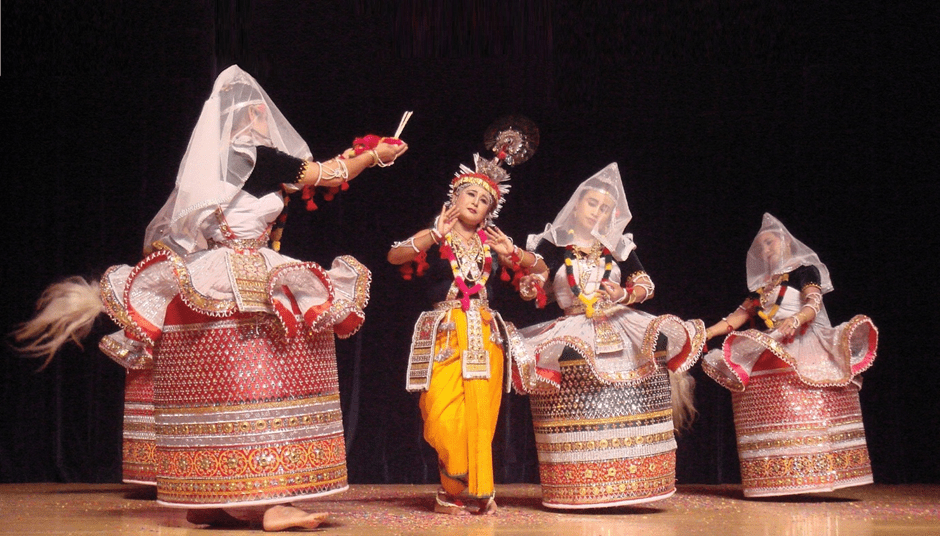
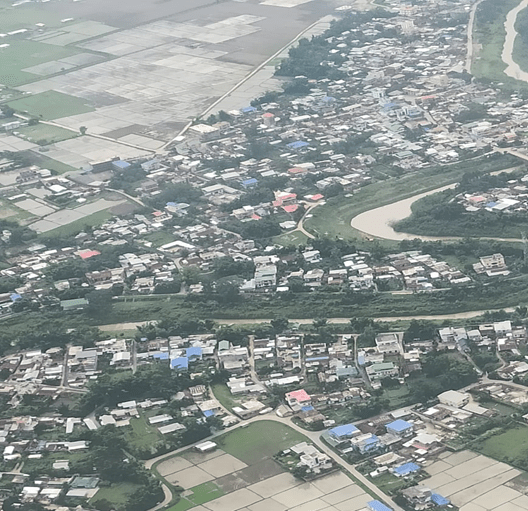
Meira Paibis of Manipur (Women torch bearers): A Few Facts

The north-east state of Manipur is endowed with scenic beauty and inhabited by wonderful peace-loving people. The state is nowadays in the news because of unfortunate conflicts that too among the local residents who lived generation after generation blissfully and peacefully. Before highlighting a few points about the recent issues, I wish to mention some points about Manipur based on the secondary source, viz.,britannica.com/place/Manipur.
It is pertinent to mention that the state has two major physiographic regions -the Manipur River valley and a large surrounding tract of mountainous country. The valley, encompassing around 1,787 square kilometres, runs north-south. Its main physical feature is Logtak Lake, which covers about 100 square kilometres and is the source of the Manipur River. The river flows southward through the valley into Myanmar, where it joins the Myittha River, a tributary of the Chindwin. The lake is really awesome when I visited the state some years ago. The hill ranges, linked by spurs and ridges, run north-south. These ranges include the Naga Hills to the north, the East Manipur Hills along the eastern Myanmar border, the Mizo and Chin Hills to the south and the West Manipur Hills to the west. Average elevations vary between 5,000 and 6,000 feet (1,500 and 1,800 metres), although the hills in the north rise above 9,500 feet (2,900 metres). In the west, the Surma River, known as the Barak River in Manipur, has cut a narrow steep-sided valley through the West Manipur Hills as it flows to join the Meghna River in Bangladesh. About the people of Manipur, it is pertinent to mention that the Meitei people represent around 53 percent of the population of Manipur, followed by various Naga ethnic groups at 24 percent and Kuki/Zomi tribes (also known as Chin-Kuki-Mizo people) at 16 percent. Agriculture and forestry are the primary sources of livelihood.
I had the opportunity to visit the state of Manipur from one corner to another on a few occasions and interacted with all sections of people and observed the people were peace-loving and friendly with the guests and outsiders. Almost all the women still today know weaving and in their kitchen gardens varieties of fruits and vegetables are grown mainly by the women. Also, the women of Manipur come forward in a group for any social issue particularly to address the issue (s) which is known as Meira Paibi/s (Women torch bearers). Based on Wikipedia it may be mentioned that Meira Paibis (Women torch bearers) is a women’s social movement in Manipur. Meira Paibi was established in 1977 in Kakching, Kakching district of Manipur. The women activists carry flaming torches and march through city streets, frequently at night doing patrol duty, and as a way of protest for seeking redress against human rights violations committed by paramilitary and armed forces units against the innocent (en.wikipedia.org/wiki/Meira_Paibi). The Manipuri Dance, also known as the ‘Manipuri Raas Leela’, is one of the eight major Indian classical dance forms, originating from Manipur. Anyway, in 2004, the Meira Paibis stunned the world by stripping naked outside a military camp in the capital, Imphal protesting against a rape case. A few days ago, Soutik Biswas, a Correspondent for BBC presented that “Ethnic violence continues to roil Manipur, nearly two months after clashes between the majority Meitei and tribal Kuki communities left more than 100 dead and displaced some 60,000. This is despite the presence of tens of thousands of security forces in the valley, inhabited primarily by the Meitei community, as well as in the hills, home to the Kukis”. Also as per Biswas report, “A recently shared video by the Indian army from the violence-wracked north-eastern state of Manipur captured a dramatic sequence of scenes. The two-minute 14-second footage shows unarmed women confronting soldiers on a busy street. Aerial shots show women gathering around an excavator on a disrupted road, a bustling mix of SUVs, cars, an ambulance speeding along a scenic valley route, and glimpses of agitated women” (bbc.com/news/world-asia-india).
I hope Kuki, Meitei, and also other communities as usual will live peacefully and blissfully. I humbly request all groups of Meira Paibis ( whom I as a very senior citizen consider as my sisters), politicians, NGOs, civil societies, and others to promote peace and tranquillity among the people by setting aside politics and other differences. Killing, arson, damage to properties, displacement of people, etc, are against humanity. We are all brothers and sisters. I remember the phrase Vasudeva Kutumbakam – sometimes spelt Vasudhaiva Kutumbakam which means “the world is one family.”

Prof Shankar Chatterjee, Hyderabad

Meira Paibis of Manipur (Women torch bearers): A Few Facts

The north-east state of Manipur is endowed with scenic beauty and inhabited by wonderful peace-loving people. The state is nowadays in the news because of unfortunate conflicts that too among the local residents who lived generation after generation blissfully and peacefully. Before highlighting a few points about the recent issues, I wish to mention some points about Manipur based on the secondary source, viz.,britannica.com/place/Manipur.
It is pertinent to mention that the state has two major physiographic regions -the Manipur River valley and a large surrounding tract of mountainous country. The valley, encompassing around 1,787 square kilometres, runs north-south. Its main physical feature is Logtak Lake, which covers about 100 square kilometres and is the source of the Manipur River. The river flows southward through the valley into Myanmar, where it joins the Myittha River, a tributary of the Chindwin. The lake is really awesome when I visited the state some years ago. The hill ranges, linked by spurs and ridges, run north-south. These ranges include the Naga Hills to the north, the East Manipur Hills along the eastern Myanmar border, the Mizo and Chin Hills to the south and the West Manipur Hills to the west. Average elevations vary between 5,000 and 6,000 feet (1,500 and 1,800 metres), although the hills in the north rise above 9,500 feet (2,900 metres). In the west, the Surma River, known as the Barak River in Manipur, has cut a narrow steep-sided valley through the West Manipur Hills as it flows to join the Meghna River in Bangladesh. About the people of Manipur, it is pertinent to mention that the Meitei people represent around 53 percent of the population of Manipur, followed by various Naga ethnic groups at 24 percent and Kuki/Zomi tribes (also known as Chin-Kuki-Mizo people) at 16 percent. Agriculture and forestry are the primary sources of livelihood.
I had the opportunity to visit the state of Manipur from one corner to another on a few occasions and interacted with all sections of people and observed the people were peace-loving and friendly with the guests and outsiders. Almost all the women still today know weaving and in their kitchen gardens varieties of fruits and vegetables are grown mainly by the women. Also, the women of Manipur come forward in a group for any social issue particularly to address the issue (s) which is known as Meira Paibi/s (Women torch bearers). Based on Wikipedia it may be mentioned that Meira Paibis (Women torch bearers) is a women’s social movement in Manipur. Meira Paibi was established in 1977 in Kakching, Kakching district of Manipur. The women activists carry flaming torches and march through city streets, frequently at night doing patrol duty, and as a way of protest for seeking redress against human rights violations committed by paramilitary and armed forces units against the innocent (en.wikipedia.org/wiki/Meira_Paibi). The Manipuri Dance, also known as the ‘Manipuri Raas Leela’, is one of the eight major Indian classical dance forms, originating from Manipur. Anyway, in 2004, the Meira Paibis stunned the world by stripping naked outside a military camp in the capital, Imphal protesting against a rape case. A few days ago, Soutik Biswas, a Correspondent for BBC presented that “Ethnic violence continues to roil Manipur, nearly two months after clashes between the majority Meitei and tribal Kuki communities left more than 100 dead and displaced some 60,000. This is despite the presence of tens of thousands of security forces in the valley, inhabited primarily by the Meitei community, as well as in the hills, home to the Kukis”. Also as per Biswas report, “A recently shared video by the Indian army from the violence-wracked north-eastern state of Manipur captured a dramatic sequence of scenes. The two-minute 14-second footage shows unarmed women confronting soldiers on a busy street. Aerial shots show women gathering around an excavator on a disrupted road, a bustling mix of SUVs, cars, an ambulance speeding along a scenic valley route, and glimpses of agitated women” (bbc.com/news/world-asia-india).
I hope Kuki, Meitei, and also other communities as usual will live peacefully and blissfully. I humbly request all groups of Meira Paibis ( whom I as a very senior citizen consider as my sisters), politicians, NGOs, civil societies, and others to promote peace and tranquillity among the people by setting aside politics and other differences. Killing, arson, damage to properties, displacement of people, etc, are against humanity. We are all brothers and sisters. I remember the phrase Vasudeva Kutumbakam – sometimes spelt Vasudhaiva Kutumbakam which means “the world is one family.”

Prof Shankar Chatterjee, Hyderabad

AuthorAID is an online platform

AuthorAID is an online platform and global research community that provides support and resources for researchers and writers, particularly those from developing countries. It was established in 2007 by INASP (International Network for the Availability of Scientific Publications), an international development organization focused on strengthening research and knowledge systems in developing countries.

The primary goal of AuthorAID is to enhance the quality and visibility of research from low- and middle-income countries (LMICs) by offering support and training to researchers, particularly those who face barriers to publishing their work in international journals. The platform achieves this through various means, including online resources, mentoring, workshops, and networking opportunities.
One of the key features of AuthorAID is its online platform, which serves as a hub for researchers to access a wide range of resources. These resources include e-learning courses, writing guides, interactive forums, and webinars on various aspects of research communication. The platform also hosts a directory of mentors who are experienced researchers and writers willing to provide guidance and support to their peers from LMICs.
AuthorAID organizes workshops and training sessions in collaboration with institutions and organizations worldwide. These capacity-building events focus on topics such as research writing, grant proposal development, data analysis, and publication ethics. Workshops are typically conducted by experienced trainers and mentors who help participants develop their research and writing skills, increasing their chances of successfully publishing their work.
Furthermore, AuthorAID fosters a vibrant and inclusive research community by encouraging collaboration and networking among its members. Researchers from different disciplines and regions can connect with each other through the online platform, exchange knowledge and ideas, and establish valuable professional relationships. This global network allows researchers to expand their research networks, find potential collaborators, and gain exposure to diverse perspectives and expertise.
Over the years, AuthorAID has made significant contributions to improving the research output and visibility of scholars from LMICs. By addressing the specific challenges faced by researchers in these countries, the platform helps bridge the gap between local research efforts and the global scientific community. The support and resources provided by AuthorAID have empowered countless researchers to overcome barriers, enhance the quality of their work, and increase its impact.
In summary, AuthorAID is an invaluable resource for researchers and writers from developing countries, offering support, training, and networking opportunities to enhance the quality and visibility of their research. By empowering researchers with the skills and knowledge needed for effective research communication, AuthorAID plays a crucial role in bridging the research divide and promoting equitable global knowledge exchange.