Third G20 Finance Ministers and Central Bank Governors Meeting

All G20 Finance Ministers and Central Bank Governors agreed to paragraphs 1, 4, and paragraphs 6 to 26 along with Annexes 1 and 2.

  1. We, the Finance Ministers and Central Bank Governors of G20 countries, met on 17-18 July 2023, in Gandhinagar, India. Under the Indian Presidency’s theme of “One Earth, One Family, One Future”, we pledge to prioritize the well-being of our people and the planet and reaffirm our commitment to enhancing international economic cooperation, strengthening global development for all and steering the global economy towards strong, sustainable, balanced, and inclusive growth (SSBIG).
  2. 1 2Since February 2022, we have also witnessed the war in Ukraine further adversely impact the global economy. There was a discussion on the issue. We reiterated our national positions as expressed in other fora, including the UN Security Council and the UN General Assembly, which, in Resolution No. ES- 11/1 dated 2 March 2022, as adopted by majority vote (141 votes for, 5 against, 35 abstentions, 12 absent), deplores in the strongest terms the aggression by the Russian Federation against Ukraine and demands its complete and unconditional withdrawal from the territory of Ukraine. Most members strongly condemned the war in Ukraine and stressed that it is causing immense human suffering and exacerbating existing fragilities in the global economy constraining growth, increasing inflation, disrupting supply chains, heightening energy and food insecurity, and elevating financial stability risks. There were other views and different assessments of the situation and sanctions. Recognising that the G20 is not the forum to resolve security issues, we acknowledge that security issues can have significant consequences for the global economy.
  3. It is essential to uphold international law and the multilateral system that safeguards peace and stability. This includes defending all the Purposes and Principles enshrined in the Charter of the United Nations and adhering to international humanitarian law, including the protection of civilians and infrastructure in armed conflicts. The use or threat of use of nuclear weapons is inadmissible. The peaceful resolution of conflicts, efforts to address crises, as well as diplomacy and dialogue are vital. Today’s era must not be of war.

1 China stated that the G20 FMCBG meeting is not the right forum to discuss geopolitical issues.

2 Russia dissociated itself from the status of this document as a common outcome because of references in paragraphs 2, 3 and 5.

  1. Global economic growth is below its long-run average and remains uneven. The uncertainty around the outlook remains high. With notable tightening in global financial conditions, which could worsen debt vulnerabilities, persistent inflation and geoeconomic tensions, the balance of risks remains tilted to the downside. We, therefore, reiterate the need for well-calibrated monetary, fiscal, financial, and structural policies to promote growth, reduce inequalities and maintain macroeconomic and financial stability. We will continue to enhance macro policy cooperation and support the progress towards the 2030 Agenda for Sustainable Development. We reaffirm that achieving SSBIG will require policymakers to stay agile and flexible in their policy response, as evidenced during the recent banking turbulence in a few advanced economies where expeditious action by relevant authorities helped to maintain financial stability and manage spillovers. We welcome the initial steps taken by the Financial Stability Board (FSB), Standard Setting Bodies (SSBs) and in certain jurisdictions to examine what lessons can be learned from this recent banking turbulence and encourage them to advance their ongoing work. We will use macroprudential policies, where required, to safeguard against downside risks. Central banks remain strongly committed to achieving price stability in line with their respective mandates. They will ensure that inflation expectations remain well anchored and will clearly communicate policy stances to help limit negative cross-country spillovers. Central bank independence is crucial to maintaining policy credibility. We will prioritise temporary and targeted fiscal measures to protect the poor and the most vulnerable, while maintaining medium-term fiscal sustainability. We will ensure the coherence of the overall monetary and fiscal stances. We recognise the importance of supply-side policies, especially policies that increase labour supply and enhance productivity to boost growth and alleviate price pressures. We reaffirm our April 2021 exchange rate commitments. We also reaffirm the importance of the rules-based, non-discriminatory, fair, open, inclusive, equitable, sustainable and transparent multilateral trading system with the World Trade Organization (WTO) at its core in restoring growth and job creation and reiterate our commitment to fight protectionism and encourage concerted efforts for reform of the WTO.
  2. While global food and energy prices have fallen from their peak levels, the potential for high levels of volatility in food and energy markets remains, given the uncertainties in the global economy. In this context, we welcome the G20 Report on Macroeconomic Impacts of Food and Energy Insecurity and their Implications for the Global Economy, informed by policy experiences shared by members and supported by analysis from the International Monetary Fund (IMF), World Bank Group (WBG), International Energy Agency (IEA) and Food and Agriculture Organisation (FAO) and take note of its voluntary and non-binding policy learnings. We look forward to an ambitious replenishment of the International Fund for Agricultural Development (IFAD) resources at the end of the year by IFAD members, to support IFAD’s fight against food insecurity.
  3. We also take note of the discussions on assessing macroeconomic risks to SSBIG, including those stemming from climate change and various transition policies considering country-specific circumstances and different levels of development. The macroeconomic costs of the physical impacts of climate change are significant at an aggregate level and the cost of inaction substantially outweighs that of orderly and just climate transitions. We recognise the importance of international dialogue and cooperation, including in the areas of finance and technology, and timely policy action consistent with country- specific circumstances. It is also critical to assess and account for the short, medium and long-term macroeconomic impact of both the physical impact of climate change and transition policies, including on growth, inflation, and unemployment. We endorse the G20 Report on Macroeconomic Risks Stemming from Climate Change and Transition Pathways that presents an evidence-based assessment informed by policy experiences shared by members and technical inputs from the IMF, IEA, and the Network of Central Banks and Supervisors for Greening the Financial System (NGFS). Building on analysis in this Report, we will consider further work on the macroeconomic implications, as appropriate, particularly as relevant for fiscal and monetary policies, drawing on the inputs from a diverse set of stakeholders.
  4. We remain committed to pursuing ambitious efforts to evolve and strengthen Multilateral Development Banks (MDBs) to address the global challenges of the 21st century with a continued focus on addressing the development needs of low- and middle-income countries.
  5. Following up on the mandate from our Leaders in Bali in November 2022 and based on the updates from MDBs in Spring 2023, a G20 Roadmap for Implementing the Recommendations of the G20 Independent Review of MDBs Capital Adequacy Frameworks (CAFs) has been developed. We endorse this Roadmap and call for its ambitious implementation, within MDBs’ own governance frameworks while safeguarding their long-term financial sustainability, robust credit ratings and preferred creditor status. We also call for a regular review of the progress of implementation on a rolling basis including through engaging with MDBs, subject experts and shareholders. We commend the MDBs for their progress in implementing the CAF recommendations, especially with respect to adapting definitions of risk appetite and financial innovation. At the same time, we emphasise the need to give an additional push to CAF implementation. We appreciate the ongoing collaboration among MDBs on the timely release of Global Emerging Markets (GEMs) data and the launch of GEMs 2.0 as a stand-alone entity by early 2024. Going forward, we also encourage MDBs to collaborate in areas such as hybrid capital, callable capital, and guarantees. We appreciate the enhanced dialogue between the MDBs, Credit Rating Agencies and shareholders and encourage continued transparency in the exchange of information and rating methodologies. We take note that initial CAF measures, including those under implementation and consideration, could potentially yield additional lending headroom of approximately USD 200 billion over the next decade, as estimated in the G20 CAF Roadmap. While these are encouraging first steps, we will need continued and further impetus on CAF implementation.
  6. Furthermore, we reiterate our call for the MDBs to undertake comprehensive efforts to evolve their vision, incentive structures, operational approaches and financial capacities so that they are better equipped to maximize their impact in addressing a wide range of global challenges, while being consistent with their mandate and commitment to accelerate progress towards Sustainable Development Goals (SDGs). Recognising the urgent need to strengthen and evolve the MDB ecosystem for the 21st century, we appreciate the efforts of the G20 Independent Expert Group on Strengthening MDBs in preparing Volume 1 of the Report, and we will examine it in conjunction with Volume 2 expected in October 2023. We take note of Volume 1’s recommendations and the MDBs may choose to discuss these recommendations as relevant and appropriate, within their governance frameworks, in due course, with a view to enhancing the effectiveness of MDBs. We look forward to a High-Level Seminar, on the sidelines of the Fourth FMCBG meeting in October 2023 on strengthening the financial capacity of MDBs. We encourage MDBs to update the International Financial Architecture Working Group (IFA WG) on their evolution efforts to better address global challenges. We welcome the March 2023 Report on Evolution of the World Bank Group and call on the World Bank to advance the implementation of the agreed actions and continue to develop further proposals that can contribute to significant progress of the Bank’s evolution exercise by the IMF/WBG 2023 Annual Meetings in Marrakech. Recognising other multilateral efforts in this area, we take note of the Summit for a New Global Financing Pact. We also look forward to an ambitious IDA21 replenishment. We acknowledge the concluding report on the 2020 Shareholding Review of the International Bank for Reconstruction and Development (IBRD) and look forward to the 2025 Shareholding Review.
  7. We reiterate our commitment to a strong, quota-based, and adequately resourced IMF at the centre of the global financial safety net. We remain committed to revisiting the adequacy of quotas and will continue the process of IMF governance reform under the 16th General Review of Quotas (GRQ), including a new quota formula as a guide, and ensure the primary role of quotas in IMF resources, to be concluded by December 15, 2023. In this context, we support at least maintaining the IMF’s current resource envelope. We welcome the landmark achievement of the global ambition of USD 100 billion of voluntary contributions (in SDRs or equivalent) and USD 2.6 billion of grants in pledges for countries most in need and call for the swift delivery of pending pledges. We welcome the progress achieved under the Resilience and Sustainability Trust (RST) and Poverty Reduction and Growth Trust (PRGT) with pledges for the RST amounting to about USD 45.5 billion and for the PRGT to about USD 24.2 billion in loan resources and nearly USD 1.9 billion in subsidy resources, respectively, through the voluntary channelling of Special Drawing Rights (SDRs) or equivalent contributions. We call for further voluntary subsidy and loan pledges to the PRGT by the IMF/WBG 2023 Annual Meetings in Marrakech to meet the first stage PRGT fundraising needs. We look forward to the IMF delivering a preliminary analysis, by the 2023 IMF/WBG Annual Meetings, of the range of options to put the PRGT on a sustainable footing with a view to meeting the growing needs of low-income countries in the coming years. The G20 reiterates its continued support to Africa, including through the G20 Compact with Africa. We will continue to monitor progress on channelling SDRs or equivalent contributions from countries with strong external positions and look forward to the IMF Ex-Post Report on the use of SDRs in September. We will continue to monitor the effectiveness of RST supported programs and look forward to interim review scheduled for April 2024. We look forward to further progress on the exploration of viable options for channelling SDRs through MDBs, while respecting relevant legal frameworks and the need to preserve the reserve asset character and status of SDRs. We look forward to the review of precautionary arrangements (FCL, PLL and SLL) and take note of the discussions held on the IMF surcharge policy.
  8. We welcome discussions on the potential macro-financial implications arising from the introduction and adoption of Central Bank Digital Currencies (CBDCs), notably on cross-border payments as well as on the international monetary and financial system. We welcome the BIS Innovation Hub (BISIH) Report on Lessons Learnt on CBDCs and look forward to the IMF Report on Potential macro-financial implications of widespread adoption of CBDCs to advance the discussion on this issue. We also look forward to continued discussions on the implementation of international frameworks for the use of different tools in addressing capital flow volatility based on the policy updates by the IMF, the OECD, and the BIS while being mindful of their original purpose. We reiterate our commitment to promote sustainable capital flows. To this effect, we note the OECD’s Report on Towards Orderly Green Transition – Investment Requirements and Managing Risks to Capital Flows.
  9. We re-emphasise the importance of addressing debt vulnerabilities in low and middle-income countries in an effective, comprehensive and systematic manner. We continue to stand by all the commitments made in the Common Framework for Debt Treatments beyond the DSSI, including those in the second and final paragraphs, as agreed on November 13, 2020, and step up the implementation of the Common Framework in a predictable, timely, orderly and coordinated manner. To this end, we ask the G20 International Financial Architecture Working Group (IFA WG) to continue discussing policy-related issues linked to implementation of the Common Framework and make appropriate recommendations. We welcome the recent agreement between the Government of Zambia and official creditor committee on a debt treatment and look forward to a swift resolution. We welcome the formation of an official creditor committee for Ghana and look forward to an agreement on a debt treatment as soon as possible. We also call for a swift conclusion of the debt treatment for Ethiopia. Beyond the Common Framework, we welcome all efforts for timely resolution of the debt situation of Sri Lanka, including the formation of the official creditor committee, and we call for the resolution as soon as possible. Noting the work in developing the G20 Note on the Global Debt Landscape in a fair and comprehensive manner, we ask the G20 IFA WG to continue the development expeditiously. We encourage the efforts of the Global Sovereign Debt Roundtable (GSDR) participants to strengthen communication and foster a common understanding among key stakeholders, both within and outside the Common Framework, for facilitating effective debt treatments.
  10. We welcome joint efforts by all stakeholders, including private creditors, to continue working towards enhancing debt transparency. We note the results of the voluntary stocktaking exercise of data sharing with International Financial Institutions. We welcome the efforts of private sector lenders who have already contributed data to the joint Institute of International Finance (IIF)/OECD Data Repository Portal and continue to encourage others to also contribute on a voluntary basis.
  11. We emphasise the need for enhanced mobilisation of finances and efficient use of existing resources in our efforts to make the cities of tomorrow inclusive, resilient, and sustainable. To this effect, we endorse the G20 Principles for Financing Cities of Tomorrow, which are voluntary and non-binding in nature and the G20/OECD Report on Financing Cities of Tomorrow, which provides a financing strategy as well as presents a compendium of innovative urban planning and financing models. We encourage stakeholders, including the Development Financial Institutions and the MDBs, to explore the potential of drawing upon these principles in their planning and financing of urban infrastructure wherever applicable and share experiences from early pilot cases. We note the progress in outlining the enablers of inclusive cities. We also note the customisable G20/ADB Framework on Capacity Building of Urban Administration to guide local governments in assessing and enhancing their overall institutional capacity for the effective delivery of public services. We note the ongoing pilot application of the voluntary and non-binding Quality Infrastructure Investment (QII) Indicators and look forward to further discussion on their application considering the country circumstances. We thank the Global Infrastructure Hub for supporting the G20’s multi-year infrastructure agenda since 2014. We note that the GIH Board and shareholders are currently engaged in exploring a way to best sustain the value created so far. We look forward to the outcome report of the 2023 Infrastructure Investors Dialogue focused on integrating the private sector perspective in designing policies for financing cities of tomorrow.
  12. We continue to reaffirm our steadfast commitment to strengthening the full and effective implementation of the United Nations Framework Convention on Climate Change (UNFCCC) and the Paris Agreement. We recall and reaffirm the commitment made by developed countries to the goal of mobilising jointly USD 100 billion climate finance per year by 2020, and annually through 2025, to address the needs of developing countries, in the context of meaningful mitigation action and transparency in implementation. Developed country- contributors expect this goal to be met for the first time in 2023. In this context, we also support continued deliberations on an ambitious new collective quantified goal of climate finance from a floor of USD 100 billion per year to support developing countries, that helps in fulfilling the objective of the UNFCCC and implementation of the Paris Agreement.
  13. We welcome the Sustainable Finance Working Group (SFWG) recommendations on the mechanisms to support the timely and adequate mobilisation of resources for climate finance, while ensuring support for transition activities in line with country circumstances. We also recognise the significant role of public finance, as an important enabler of climate actions such as leveraging much-needed private finance through blended financial instruments, mechanisms and risk-sharing facilities, to address both adaptation and mitigation efforts in a balanced manner for reaching the ambitious Nationally Determined Contributions (NDCs), carbon neutrality and net-zero considering different national circumstances. We welcome the recommendations for scaling up blended finance and risk-sharing facilities, including the enhanced role of MDBs in mobilizing climate finance. We underscore the importance of maximizing the effect of concessional resources, such as those of the multilateral climate funds to support developing countries’ implementation of the Paris Agreement and look forward to an ambitious replenishment of the Green Climate Fund (GCF) this year. Recognizing the importance of supporting the commercialization of early-stage technologies that avoid, abate and remove greenhouse gas emissions and facilitate adaptation, we note the recommendations on financial solutions, policies, and incentives to encourage greater private flows for the rapid development, demonstration, and deployment of green and low-carbon technologies. We reiterate the importance of a policy mix consisting of fiscal, market and regulatory mechanisms including, as appropriate, the use of carbon pricing and non-pricing mechanisms and incentives, toward carbon neutrality and net zero. We look forward to the early finalisation of the Compendium comprising the discussions on Non-Pricing Policy Levers to Support Sustainable Investment.
  14. We reiterate our commitment to take action to scale up sustainable finance. In line with the G20 Sustainable Finance Roadmap, we welcome the analytical framework for SDG-aligned finance, and voluntary recommendations for scaling-up adoption of social impact investment instruments and improving nature-related data and reporting, informed by the stocktaking analyses, considering country circumstances. We encourage all relevant stakeholders to consider these recommendations in their actions and support for the 2030 Agenda.
  15. We endorse the multi-year G20 Technical Assistance Action Plan (TAAP) and the voluntary recommendations made to overcome data-related barriers to climate investments. We encourage the implementation of TAAP by relevant jurisdictions and stakeholders in line with the national circumstances. We look forward to reporting on the progress made by members, international organisations, networks and initiatives in the implementation of the G20 Sustainable Finance Roadmap, which is voluntary and flexible in nature, and call for further efforts to advance the Roadmap’s recommended actions that will scale up sustainable finance, including among others the implementation of the Transition Finance Framework. We look forward to the finalisation of the 2023 G20 Sustainable Finance Report, including a review of the implementation of the G20 Sustainable Finance Roadmap. We welcome finalization of the sustainability and climate-related disclosure standards published by the International Sustainability Standards Board (ISSB) in June 2023, which provide the mechanisms that address proportionality and promote interoperability. It is important that flexibility, to take into account country- specific circumstances, is preserved in the implementation of those standards. When put into practice as above, those standards will help to support globally comparable and reliable disclosures.
  16. We remain committed to strengthening the global health architecture for pandemic prevention, preparedness and response (PPR) through enhanced collaboration between Finance and Health Ministries under the Joint Finance and Health Task Force (JFHTF). Under the JFHTF, we welcome the participation of invited key regional organisations in the Task Force meetings as they enhance the voice of low-income countries. We welcome the discussion on the Framework on Economic Vulnerabilities and Risks (FEVR) and the initial Report for Economic Vulnerabilities and Risks arising from pandemics, created through collaboration between World Health Organisation (WHO), World Bank, IMF, and European Investment Bank (EIB). We call on the Task Force to continue refining this Framework over its multi-year work plan in order to regularly assess economic vulnerabilities and risks due to evolving pandemic threats, taking into account country-specific circumstances. We welcome the Report on Best Practices from Finance Health Institutional Arrangements during Covid-19 that will contribute towards joint finance-health sector readiness to support our response to future pandemics. We welcome the Report on Mapping Pandemic Response Financing Options and Gaps developed by the WHO and World Bank and look forward to further deliberations on how financing mechanisms could be optimized, better coordinated and, when necessary, suitably enhanced, to deploy the necessary financing quickly and efficiently, duly considering discussions in other global forums. The analysis provided by these three reports will offer important inputs for discussion in the Joint Finance-Health Ministerial Meeting in August on global response to the next pandemic threat. We welcome the conclusion of the call for proposals by the Pandemic Fund and look forward to the first round of funding in the coming months.
  17. We reaffirm our commitment to continue cooperation towards a globally fair, sustainable and modern international tax system appropriate to the needs of the 21st century. We welcome the delivery of a text of a Multilateral Convention (MLC) on Amount A, significant progress of work on Amount B and the completion of the work on the development of the Subject to Tax Rule (STTR) and its implementation framework as set out in the July 2023 Outcome Statement of the OECD/G20 Inclusive Framework on BEPS (Inclusive Framework). We call on the Inclusive Framework to swiftly resolve the few pending issues relating to the MLC with a view to prepare the MLC for signature in the second half of 2023 and complete the work on Amount B by end of 2023. We welcome the steps taken by various countries to implement the Global Anti-Base Erosion (GloBE) Rules as a common approach. We recognise the need for coordinated efforts towards capacity building to implement the two-pillar international tax package effectively and in particular, welcome a plan for additional support and technical assistance for developing countries. We welcome the launch of the pilot programme of the South Asia Academy in India for tax and financial crime investigation in collaboration with OECD. We note the 2023 update of the G20/OECD Roadmap on Developing Countries and International Taxation. We note the Update on the Implementation of the 2021 Strategy on Unleashing the Potential of Automatic Exchange of Information for Developing Countries by the Global Forum on Transparency and Exchange of Information for Tax Purposes (“Global Forum”). We call for the swift implementation of the Crypto-Asset Reporting Framework (“CARF”) and amendments to the CRS. We ask the Global Forum to identify an appropriate and coordinated timeline to commence exchanges by relevant jurisdictions, noting the aspiration of a significant number of these jurisdictions to start CARF exchanges by 2027, and to report to our future meetings on the progress of its work. We note the OECD Report on Enhancing International Tax Transparency on Real Estate and the Global Forum Report on Facilitating the Use of Tax-Treaty-Exchanged Information for Non-Tax Purposes. We note the discussions held at the G20 High-Level Tax Symposium on Combatting Tax Evasion, Corruption and Money Laundering.
  18. We continue to closely monitor the risks of the fast-paced developments in the crypto-asset ecosystem. We endorse the Financial Stability Board’s (FSB’s) high-level recommendations for the regulation, supervision and oversight of crypto-assets activities and markets and of global stablecoin arrangements. We ask the FSB and standard-setting bodies (SSBs) to promote the effective and timely implementation of these recommendations in a consistent manner globally to avoid regulatory arbitrage. We welcome the shared FSB and SSBs workplan for crypto assets. We look forward to receiving the IMF-FSB Synthesis Paper, including a Roadmap, before the Leaders’ Summit in September 2023, to support a coordinated and comprehensive policy and regulatory framework taking into account the full range of risks, and risks specific to the emerging market and developing economies (EMDEs) and ongoing global implementation of FATF standards to address money laundering and terrorism financing risks. In this context, we note the Presidency Note as an important input for the Synthesis Paper. We also welcome the BIS Report on The Crypto Ecosystem: Key Elements and Risks.
  19. We continue to strongly support the work of the FSB and SSBs to address vulnerabilities and enhance the resilience of non-bank financial intermediation (NBFI) from a systemic perspective while monitoring evolving developments in NBFI. We welcome the FSB’s consultation report on revisions to the FSB 2017 recommendations on addressing liquidity mismatch in open-ended funds, and we support work to promote implementation of the FSB money market fund proposals, enhance margining practices, and address vulnerabilities from non-bank leverage. We welcome the FSB’s recommendations to achieve greater convergence in cyber incident reporting, updates to the Cyber Lexicon and Concept Note for a Format for Incident Reporting Exchange (FIRE). We look forward to the FSB’s work to identify the reporting needs and the prerequisites for and feasibility of the development of FIRE, and we ask the FSB to develop an action plan with appropriate timelines.
  20. We welcome the FSB’s consultation Report on Enhancing Third-party Risk Management and Oversight. We expect the toolkit to support efforts in enhancing the operational resilience of financial institutions, addressing the challenges arising from their growing reliance on critical third-party service providers including BigTechs and FinTechs, as well as reducing fragmentation in regulatory and supervisory approaches across jurisdictions and in different areas of the financial services sector. We reaffirm our commitment to the effective implementation of the prioritised actions for the next phase of the G20 Roadmap for Enhancing Cross-border Payments and welcome the initiatives undertaken by SSBs and international organisations in this direction. To that end, we look forward to the FSB’s progress report in October on the implementation of this roadmap. We look forward to the G20 TechSprint 2023, a joint initiative with the BIS Innovation Hub, which will promote innovative solutions aimed at improving cross-border payments. We welcome the annual progress Report on the FSB’s Roadmap for Addressing Financial Risks from Climate Change. We endorse the revised G20/OECD Principles of Corporate Governance with the aim to strengthen policy and regulatory frameworks for corporate governance that support sustainability and access to finance from capital markets, which in turn can contribute to the resilience of the broader economy.
  21. We welcome the progress made by the Global Partnership for Financial Inclusion (GPFI) towards the completion of the deliverables under the G20 2020 Financial Inclusion Action Plan (FIAP). We welcome the 2023 Update to Leaders on Progress towards the G20 Remittance Target and endorse the Regulatory Toolkit for Enhanced Digital Financial Inclusion of Micro, Small and Medium Enterprises (MSMEs). We endorse the voluntary and non-binding G20 Policy Recommendations for Advancing Financial Inclusion and Productivity Gains through Digital Public Infrastructure. We take note of the significant role of digital public infrastructure in helping to advance financial inclusion in support of inclusive growth and sustainable development. We also encourage the continuous development and responsible use of technological innovations including innovative payment systems, to achieve financial inclusion of the last mile and progress towards reducing the cost of remittances in line with the G20 Leaders’ directions. We also support continuous efforts to strengthen digital financial literacy and consumer protection. We endorse the G20 2023 FIAP, which provides an action-oriented and forward-looking roadmap for rapidly accelerating the financial inclusion of individuals and MSMEs, particularly vulnerable and underserved groups in the G20 countries and beyond. We also endorse the 2023 Updated GPFI Terms of Reference.
  22. We recognise the importance of delivering on the strategic priorities of the Financial Action Task Force (FATF) and FATF Style Regional Bodies. We commit to supporting their increasing resource needs and encourage others to do the same, including for the next round of mutual evaluations. We remain committed to the timely and global implementation of the revised FATF Standards on the transparency of beneficial ownership of legal persons and legal arrangements to make it more difficult for criminals to hide and launder ill- gotten gains. We welcome the ongoing work of the FATF to enhance global efforts to recover criminal proceeds, in particular, the progress made by the FATF towards revising its standards on asset recovery and reinforcing global asset recovery networks. We reiterate the importance of countries developing and implementing effective regulatory and supervisory frameworks to mitigate risks associated with virtual assets in line with FATF Standards especially for terrorism financing, money laundering, and proliferation financing risks. In this regard, we support the FATF’s initiative to accelerate the global implementation of its standards, including the “travel rule”, and its work on risks of emerging technologies and innovations, including decentralised finance (DeFi) arrangements and peer-to-peer transactions. We look forward to the completion of FATF’s work on the use of crowdfunding for terrorism financing and on money laundering related to cyber-enabled fraud.
  23. With a vision reminiscent of Mahatma Gandhi’s teachings, we, the Finance Ministers and Central Bank Governors of G20 countries, envisage a future in which every nation thrives, prosperity is widely shared, and the well-being of humanity and the planet are harmoniously intertwined.


Annex I: Issues for further work

This Annex lists the deliverables from various G20 Finance Track workstreams following the July FMCBG meeting.

Framework Working Group

  • G20 IMF Report on Strong, Sustainable, Balanced and Inclusive Growth, October 2023, in the context of increasing vulnerabilities associated with macroeconomic instabilities and financial globalisation.

International Financial Architecture Working Group

· Volume 2 of the Report of G20 Expert Group on Strengthening MDBs

  • Regular review of the progress of implementation of CAF recommendations on a rolling basis including through engaging with MDBs, subject experts and shareholders

· Updates from IMF on the progress of the 16th General Review of Quotas

  • Update from the IMF on the ex-post assessment of 2021 SDR allocation
  • Continued exploration of opportunities for a “User manual” for the Common

Framework presenting the experience of the first cases.

  • G20 IFA WG to continue developing expeditiously the G20 Note on the Global Debt Landscape in a fair and comprehensive manner.
  • IFA WG to continue discussing policy-related issues linked to implementation of the Common Framework and make appropriate recommendations
  • Technical workshops to be held under the ambit of GSDR, such as the one on Comparability of Treatment (CoT).
  • Improvements to sovereign debt restructuring by continuing the discussion on some specific debt instruments, including potential best practices for LICs on collateralised financing practices, exploring ways to increase private sector involvement, in particular regarding the restructuring of syndicated loans, collective action clauses, assessing the benefits and complications of state- contingent debt instruments (SCDI), and climate-resilient debt clauses in international sovereign bonds and in official bilateral lending.
  • IMF Report on the potential macro-financial implication of widespread adoption of CBDCs, in September 2023.

Infrastructure

  • Continuation of the InfraTracker 2.0 to track planned infrastructure investments across G20 member economies using publicly available sources and transition it to an online tool.
  • Compilation of the scope and taxonomies related to infrastructure across G-20 economies and International Organisations.

Sustainable Finance Working Group

  • Monitoring and reporting of progress on G20 Sustainable Finance Roadmap on the SFWG online dashboard.
  • Finalisation of the 2023 G20 Sustainable Finance Report.
  • Compendium of case studies for financing SDGs.

International Taxation

  • A Handbook by the OECD on Pillar Two to facilitate implementation through a common approach, especially to assist capacity-constrained jurisdictions and present the Handbook by October 2023.

Financial Sector Issues

  • A joint synthesis paper by the IMF and the FSB integrating the macroeconomic and regulatory perspectives of crypto assets to be submitted in September 2023.
  • An interim report by the BIS Committee on Payments and Market Infrastructures (CPMI) on Fast Payment Systems (FPS) interlinking governance, risk management and oversight considerations; and the final report on ISO 20022 harmonisation requirements for cross-border payments in October 2023.
  • FSB to provide a report on the financial stability implications of leverage in NBFI in September 2023.
  • FSB to provide an overall progress report on enhancing the resilience of NBFI in September 2023.
  • FSB to provide its Annual Report on Promoting Global Financial Stability in October 2023.
  • FSB to report in October 2023 its progress on the implementation of the G20 Roadmap for Enhancing Cross-Border Payments.
  • FSB, in coordination with the ISSB and IOSCO, to prepare a report on the progress of jurisdictions and firms on climate-related financial disclosures by October 2023.

Global Partnership for Financial Inclusion

  • GPFI will continue work to complete the Second Update of National Remittance Plans and present a case-study on the impact of digital remittances in reducing the cost of remittances.
  • GPFI will report on progress in implementing the G20 GPFI High-Level Principles on Digital Financial Inclusion.
  • GPFI to work on SME best practices and innovative instruments to overcome common constraints in SME financing based on GPFI SME living database.


Annex 2: Reports and Documents received

  1. G20 Report on Macroeconomic Impacts of Food and Energy Insecurity and their implications for the global economy
  2. G20 Report on Macroeconomic risks stemming from climate change and transition pathways
  3. G20 Roadmap for implementing the recommendations of the G20 Independent Review of MDBs Capital Adequacy Frameworks (CAFs)
  4. Volume 1 of the G20 Expert Group on Strengthening MDBs
  5. BIS Innovation Hub (BISIH) Report on “Lessons learnt on CBDCs”
  6. OECD’s report on “Towards Orderly Green Transition – Investment Requirements and Managing Risks to Capital Flows
  7. G20 note on the total global ambition of USD 100bn of voluntary contributions for countries most in need
  8. G20 Principles for Financing Cities of Tomorrow: inclusive, resilient and sustainable
  9. G20/OECD Report on Financing Cities of Tomorrow
  10. G20/ADB Framework on Capacity Building of Urban Administration
  11. G20 Sustainable Finance Working Group Deliverables
  12. Framework on Economic Vulnerabilities and Risks (FEVR) and the initial Report for economic vulnerabilities and risks arising from pandemics
  13. Report on Best Practices from Finance Health Institutional Arrangements during Covid-19
  14. Report on Mapping Pandemic Response Financing Options and Gaps developed by the WHO and World Bank
  15. G20/OECD Roadmap on Developing Countries and International Taxation Update 2023
  16. OECD Report on ‘Enhancing International Tax Transparency on Real Estate’
  17. Global Forum Report on ‘Facilitating the Use of Tax-Treaty-Exchanged Information for Non-Tax Purposes’
  18. Global Forum Update on the implementation of the 2021 Strategy on Unleashing the Potential of Automatic Exchange of Information for Developing Countries
  19. FSB Chair’s Letters to G20 Finance Ministers and Central Bank Governors, April and July 2023.
  20. FSB’s global regulatory framework for crypto-asset activities: Umbrella public note to accompany final framework
  21. FSB’s high-level recommendations for the regulation, supervision, and oversight of crypto-asset activities and markets
  22. FSB’s high-level recommendations for the regulation, supervision, and oversight of global stablecoin arrangements
  23. BIS Report on “The crypto ecosystem: key elements and risks”.
  24. FSB Consultation report on addressing liquidity mismatch in open-ended funds-Revisions to the FSB 2017 policy recommendations
  25. FSB Report on Enhancing Third-Party Risk Management and Oversight: A toolkit for financial institutions and financial authorities
  26. FSB Roadmap for Addressing Financial Risks from Climate Change: 2023 Progress Report
  27. FSB Recommendations to Achieve Greater Convergence in Cyber Incident Reporting: Final Report
  28. FSB Concept Note on Format for Incident Reporting Exchange (FIRE) – A possible way forward
  29. Revised G20/OECD Principles of Corporate Governance
  30. G20 Policy Recommendations for Advancing Financial Inclusion and Productivity Gains through Digital Public Infrastructure
  31. 2023 Update to Leaders on Progress towards the G20 Remittance Target
  32. Regulatory Toolkit for Enhanced Digital Financial Inclusion of Micro, Small and Medium Enterprises (MSMEs)
  33. G20 2023 FIAP
  34. 2023 Updated GPFI Terms of Reference.
  35. 2023 GPFI Progress Report to G20 Leaders
  36. G20 Financial Inclusion Action Plan Progress Report 2021-23
  37. FATF Report- Countering Ransomware Financing Report (March 2023)
  38. Targeted Update on the Implementation of the FATF Standards for Virtual Assets (June 2023)
  39. FATF Report on Guidance on Beneficial Ownership Transparency for Legal Persons (March 2023)

****
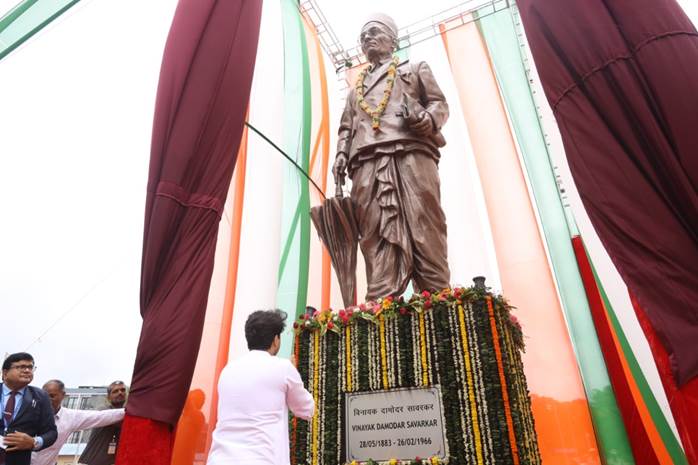
Integrated Terminal Building of Veer Savarkar International Airport, Port Blair

  • The New Integrated Terminal Building has been constructed in an area of 40837 Sqm at a cost of Rs 710 Crores
  • It has a capacity to serve 1200 passengers during peak hours.
  • Shri Jyotiraditya M. Scindia unveiled a statue of freedom fighter Veer Savarkar inside the airport premises.

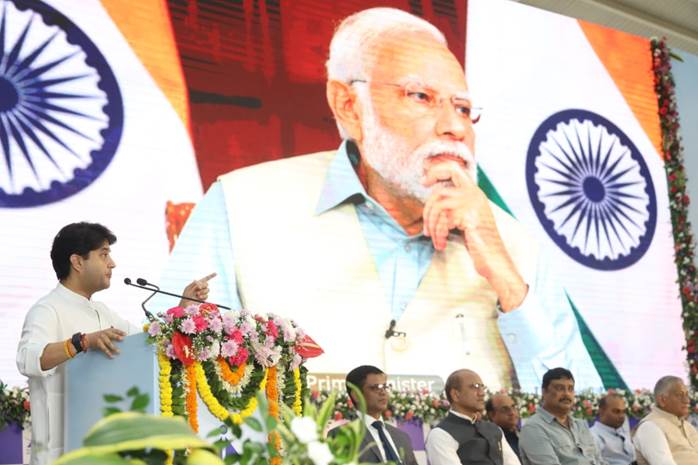
 Prime Minister Shri Narendra Modi inaugurated the new integrated terminal building of Veer Savarkar International Airport today, in the presence of Union Minister of Civil Aviation and Steel, Shri Jyotiraditya M. Scindia, Gen. Vijay Kumar Singh (Rtd.), MoS, Ministry of Civil Aviation, Admiral D. K. Joshi (Rtd.), Lt. Governor, Andaman & Nicobar Islands, and Shri Rajiv Bansal, Secretary, Ministry of Civil Aviation.

The new terminal building of the airport is built at a cost of Rs. 710 Crore, on a 40,837 square meters area, and is capable of serving 1200 passengers during peak hours, which is more than three times the current capacity. Inspired by the rich biodiversity of the picturesque islands, the Port Blair Terminal building is an oyster-shaped structure that reflects the beauty of the sea and the island. The terminal building has been designed in such a way that the terminal is fully lit naturally during the daytime. A Statue of freedom fighter, Veer Savarkar is also erected at the Airport.

The event was organized in hybrid mode. Prime Minister inaugurated the terminal building by pressing a remote button through video conferencing and other dignitaries were present at the airport. As a tribute to the great freedom fighter, Minister of Civil Aviation and Steel, Shri Jyotiraditya M. Scindia along with MoS Gen. Vijay Kumar (Rtd.) and other dignitaries unveiled statue of Vinayak Damodar Savarkar (Veer Savarkar) inside the premises of the airport.

Speaking on the occasion, Minister of Civil Aviation and Steel, Shri Jyotiraditya M. Scindia said “Andaman & Nicobar is among the most beautiful gems of our country. It has witnessed major significant events in the history of Indian Independence. Veer Savarkar International Airport represents the incredible biodiversity of flora and fauna. Designed in the shape of an oyster, this airport doesn’t need an external source of light during the daytime. In terms of sustainability, this airport has double insulating system, LED lighting, Rainwater catchment, and Solar water plant.”

He further said “Apart from this airport, 3 additional airports in Shibpur, Car Nicobar, and Campbell, as well as 4 water aerodromes in Shaheed Dweep, Swaraj Dweep, and Port Blair, will be established by the Govt. of India with the investment of Rs. 150 crores. Under the leadership of Prime Minister Shri Narendra Modi, we are dedicated to the sewa, sushashan and garib kalyan. In the coming time, this airport will be the gateway to employment, education, and investment.”

Veer Savarkar International Airport, also known as Port Blair Airport, is located about 2 km south of Port Blair, Andaman Nicobar Islands. Named after Vinayak Damodar Savarkar, the noted freedom fighter, it is the only commercial airport of Andaman & Nicobar Islands. Port Blair is the capital of the serene Andaman & Nicobar Islands. Located on the east coast of South Andaman Island, Port Blair is the gateway to more than 500 pristine islands. It is also a bustling commercial hub and houses government establishments of Andaman & Nicobar Islands. Port Blair offers water-based activities like snorkeling, scuba diving, sea cruises, and glimpses of the history and culture of the region.

***

Integrated Terminal Building of Veer Savarkar International Airport, Port Blair

  • The New Integrated Terminal Building has been constructed in an area of 40837 Sqm at a cost of Rs 710 Crores
  • It has a capacity to serve 1200 passengers during peak hours.
  • Shri Jyotiraditya M. Scindia unveiled a statue of freedom fighter Veer Savarkar inside the airport premises.

 Prime Minister Shri Narendra Modi inaugurated the new integrated terminal building of Veer Savarkar International Airport today, in the presence of Union Minister of Civil Aviation and Steel, Shri Jyotiraditya M. Scindia, Gen. Vijay Kumar Singh (Rtd.), MoS, Ministry of Civil Aviation, Admiral D. K. Joshi (Rtd.), Lt. Governor, Andaman & Nicobar Islands, and Shri Rajiv Bansal, Secretary, Ministry of Civil Aviation.

The new terminal building of the airport is built at a cost of Rs. 710 Crore, on a 40,837 square meters area, and is capable of serving 1200 passengers during peak hours, which is more than three times the current capacity. Inspired by the rich biodiversity of the picturesque islands, the Port Blair Terminal building is an oyster-shaped structure that reflects the beauty of the sea and the island. The terminal building has been designed in such a way that the terminal is fully lit naturally during the daytime. A Statue of freedom fighter, Veer Savarkar is also erected at the Airport.

The event was organized in hybrid mode. Prime Minister inaugurated the terminal building by pressing a remote button through video conferencing and other dignitaries were present at the airport. As a tribute to the great freedom fighter, Minister of Civil Aviation and Steel, Shri Jyotiraditya M. Scindia along with MoS Gen. Vijay Kumar (Rtd.) and other dignitaries unveiled statue of Vinayak Damodar Savarkar (Veer Savarkar) inside the premises of the airport.

Speaking on the occasion, Minister of Civil Aviation and Steel, Shri Jyotiraditya M. Scindia said “Andaman & Nicobar is among the most beautiful gems of our country. It has witnessed major significant events in the history of Indian Independence. Veer Savarkar International Airport represents the incredible biodiversity of flora and fauna. Designed in the shape of an oyster, this airport doesn’t need an external source of light during the daytime. In terms of sustainability, this airport has double insulating system, LED lighting, Rainwater catchment, and Solar water plant.”

He further said “Apart from this airport, 3 additional airports in Shibpur, Car Nicobar, and Campbell, as well as 4 water aerodromes in Shaheed Dweep, Swaraj Dweep, and Port Blair, will be established by the Govt. of India with the investment of Rs. 150 crores. Under the leadership of Prime Minister Shri Narendra Modi, we are dedicated to the sewa, sushashan and garib kalyan. In the coming time, this airport will be the gateway to employment, education, and investment.”

Veer Savarkar International Airport, also known as Port Blair Airport, is located about 2 km south of Port Blair, Andaman Nicobar Islands. Named after Vinayak Damodar Savarkar, the noted freedom fighter, it is the only commercial airport of Andaman & Nicobar Islands. Port Blair is the capital of the serene Andaman & Nicobar Islands. Located on the east coast of South Andaman Island, Port Blair is the gateway to more than 500 pristine islands. It is also a bustling commercial hub and houses government establishments of Andaman & Nicobar Islands. Port Blair offers water-based activities like snorkeling, scuba diving, sea cruises, and glimpses of the history and culture of the region.

***

ALL WOMEN TRI-SERVICES MOTORCYCLE RALLY FROM NEW DELHI TO DRAS

 To commemorate 24 years of victory over Pakistan in the Kargil War of 1999 and to highlight the indomitable spirit of women, Indian Army launched a Tri-Services ‘Nari Sashaktikaran Women Motorcycle Rally’ from National War Memorial, Delhi to Kargil War Memorial, Dras (Ladakh). The all-women Motorcycle Rally was Flagged Off by the Chief of the Army Staff, General Manoj Pande from the National War Memorial, New Delhi on 18 Jul 23. Mrs Archana Pande, Chairperson of the Army Wives Welfare Association was also present at the occasion. For the Flag Off at the National War Memorial, a host of military and civilian dignitaries including Head Business – Premium of TVS Motor Company and other sponsors were present. The Rally members were motivated and cheered by a large crowd which had gathered at the venue.

The 25-member strong tri-services team includes two Veer Naris, one of whom is a serving officer, 10 serving Indian Army Women officers, one woman officer each from Indian Air Force and Indian Navy, three women soldiers of Indian Army and eight Armed Forces spouses. The team will celebrate the decisive victory of the Armed Forces in the Kargil War and pay tribute to the soldiers who made the supreme sacrifice in service of the Nation. The Rally will cover a total distance of approximately 1000 kilometres, wherein the team will traverse through the plains of Haryana, Punjab and high mountain passes of Jammu & Kashmir and Ladakh to reach Kargil War Memorial in Dras on 25 July 23. During the Rally, the team will interact with NCC Cadets, students from various schools/colleges, Veterans and Veer Naris. For this Rally, the Indian Army has partnered with TVS Motor Company and the participants will be riding on TVS Ronin motorcycles.

The Chief of Army Staff, General Manoj Pande complimented the entire team for taking up such a challenging journey which highlights qualities of determination, Nari Shakti and the vital role played by women in Nation Building.

***

Labour and Ministers' Meeting begins in Indore, Madhya Pradesh (19th to 21 July)

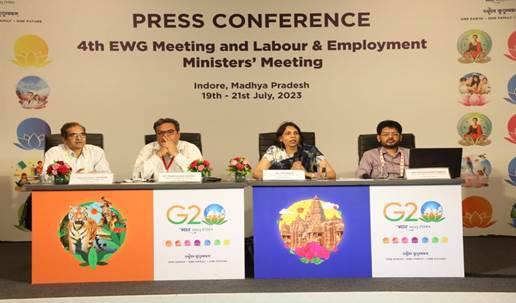
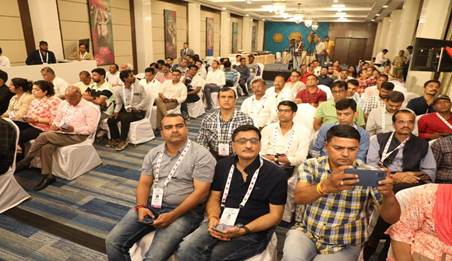
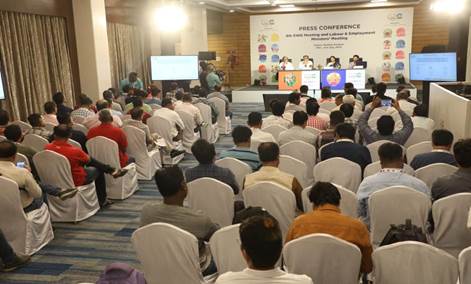
 The fourth Employment Working Group (EWG) meeting will focus on finalizing the Ministerial Declaration and outcome documents. In this the efforts of all the three meetings will be consolidated in this meeting. The EWG delegate’s deliberations will end at the G-20 Labour and Ministers’ Meeting (LEM), where they will gather to discuss and adopt these results. This information was given by Smt. Arti Ahuja, Secretary, Ministry of Labour and Employment, in a press conference organized on the eve of the fourth Employment Working Group of G-20 and the meeting of Labour and Employment Ministers to be held in Indore today.


She said that this meeting will be presided over by the Union Minister for Labour & Employment, Shri Bhupender Yadav and 24 Ministers from different countries will attend. During this, representatives of G-20 members and guest countries, international and regional organizations and groups like Business-20, Labor-20, Startup-20, Think-20 and Youth-20 will participate.

In the press conference, Smt. Ahuja told media persons that India is also keeping innovations like e-Shram portal before the working group meetings. Through this portal, complete information about the workers of unorganised sectors is available with the government, which proves helpful for taking steps towards benefitting their and their families’ interests.

Earlier, Shri Rupesh Kumar Thakur, Joint Secretary, Ministry of Labour and Employment informed through a presentation that while 86 delegates are participating in the 4th EWG meeting, 165 delegates including 24 Ministers will participate in the LEM meeting. Heads of international organizations and employers’ associations, including the ILO, OECD and the World Bank, will also attend the meeting.

He said that it has been planned to showcase the grand natural, cultural and historical beauty of Indore and Madhya Pradesh during the event. In these, a visit to Mandu Fort and Chappan Dukan, the famous food street of Indore has been planned for the delegates. Apart from this, there will also be a heritage walk and cycle ride to see the important historical places in the city of Indore. He informed that traditional folk performing arts (music and dance) and handicrafts will also be displayed for the visiting dignitaries.

In the press conference, Dr. Pawan Kumar Sharma, Divisional Commissioner, Indore said that elaborate arrangements have been made to make the event a grand success. Apart from this, a communication plan has been also made. He outlined the measures taken by the District Administration and State Government for organizing the meeting.

****

India-USA Strategic Clean Energy Partnership Ministerial Joint Statement

 Today, the Ministerial meeting of the U.S.-India Strategic Clean Energy Partnership (SCEP) was held between Indian Minister of Petroleum and Natural Gas, HE Hardeep S. Puri and U.S. Energy Secretary HE Jennifer Granholm in New Delhi. During the meeting, the sides noted the growing importance of bilateral energy cooperation between the countries while underscoring the critical importance of bilateral clean energy engagement and the achievements of the SCEP in strengthening energy security, creating opportunities for clean energy innovation, addressing climate change and creating employment generation opportunities.

In this context, the sides welcomed the growing energy trade between the countries which has been consistently scaling new heights and welcomed the commercial partnerships facilitated by the SCEP.

The sides renewed their commitment to work towards a just, orderly and sustainable energy transition, which prioritises access to reliable, affordable, and clean energy supply. Highlighting that India and the US represent the largest democracies, and the largest and fastest growing economies in the world, the sides underscored the importance of joint action and collaboration not only for bilateral progress but also for navigating the global energy transition.

The sides reviewed the ambitious and dynamic SCEP mandate, which over the years has deepened and strengthened collaboration across a wide breadth of clean energy work streams, including clean and renewable energy, energy efficiency, increased collaboration in emerging technologies like battery storage and swapping technologies, gas hydrates, advanced biofuels, and hydrogen and electrolyzer production. In this context, the sides recognised the importance of producing green/clean hydrogen as a critical energy source for global decarbonisation and agreed to support each other’s national hydrogen missions.

The sides also welcomed the work done by the five pillars of the SCEP towards deepening the cooperation between the Public and Private sectors to support decarbonization in both countries, including through public-private task forces, reverse trade missions, India-US Business Roundtables chaired by the Ministers, and other commercial dialogues.

The sides emphasized the importance of promoting energy access, affordability and energy justice in each country. The sides also acknowledged that successfully achieving ambitious climate and clean energy aspirations necessitates coordinated efforts on development of energy transition roadmaps, capacity building, job skilling, and sharing of best practices at all levels of government. In that context, the sides agreed to work toward development of net zero villages in India to support the clean energy transition.

The sides discussed ways of advancing the positive agenda outlined by Prime Minister Modi and President Biden in their Joint Statement of June 22, 2023which welcomed efforts under the SCEP to develop and deploy energy storage technologies, expand collaboration in support of their respective national hydrogen strategies and cost reduction goals, and accelerate cooperation on new and emerging renewable energy technologies. To that end, the Ministers welcomed:

  • establishment of the public-private Energy Storage Task Force and related efforts to support large-scale integration of renewable energy needed to support the clean energy transition;
  • deepened collaboration to scale and accelerate deployment of hydrogen technologies through the public-private Hydrogen Task Force and other efforts in support of their national hydrogen strategies, including a focus on common cost reduction goals;
  • launch of the U.S.-India New and Emerging Renewable Energy Technologies Action Platform (RETAP) to accelerate development of key technologies to advance common ambitious clean energy goals.

The Ministers also welcomed the leaders’ priority of reducing carbon emissions in the transportation sector through zero emissions vehicles and continued collaboration on securing funding and enabling affordable and accessible debt and equity financing for the e-mobility sector. The sides recognized the importance of the “Electric Vehicle (EV) financing services facility” which will create dedicated funds for e-mobility.

The sides welcomed cooperation between India and the United States to advance research, development and commercialisation of technologies in the emerging fuels arena, including bio-ethanol, renewable diesel, sustainable aviation fuels, and other advanced biofuels as a unique and valued asset to the transition to a cleaner energy future.

The Ministers-affirmed the vision of Prime Minister Modi and President Biden for establishing the Global Biofuels Alliance. The Ministers discussed the role that the Global Biofuels Alliance will play in strengthening markets, facilitating global biofuels trade, development of concrete policy lesson-sharing and provision of technical support for national biofuels programs worldwide.

The sides also underscored the importance of a stable, sustainable, diversified, resilient, and globally responsible clean energy supply chain to enable energy transition pathways while minimizing risks and uncertainty.

The sides also welcomed ongoing collaboration in such areas as:

  • modernizing the power system to improve reliability, resilience, flexibility, affordability, and sustainability of clean energy systems;
  • promoting energy efficiency and conservation, including in buildings, appliances, and the industrial sector;
  • reducing emissions across the oil and gas sector, including through examining methane abatement and transfer and deployment of technologies under voluntary and mutually agreeable terms; and
  • advancing emerging technologies to support electrification and decarbonization of hard-to-abate sectors.

Recognizing the role of carbon capture, utilisation and storage to reduce emissions, the sides agreed to spur partnership in this area by building on existing cooperation and welcoming new collaboration including exploring the geologic carbon storage potential. The sides welcomed the addition of Carbon Capture, Utilization and Storage as a work stream under the Emerging Fuels and Technology Pillar. 

The sides also welcomed engagement through the Low-Emissions Gas Task Force to reduce emissions across the sector through deployment of emerging technologies (i.e., CCUS, hydrogen), alternative fuels, and methane abatement technologies. The Ministers welcomed the commercial partnerships facilitated by this platform.

The sides duly acknowledged the collaboration of USAID with various Indian agencies including Indian Railways, NTPC Green National Skills Development Corporation, Skills Council for Green Jobs, and the Forum of Regulators.

The sides welcomed USAID support on feasibility of Green Chemicals for NTPC, recognizing the importance of such initiatives to ensure development of sustainable and clean energy systems.

The sides welcomed cooperation between USAID and Indian power PSUs – NTPC and SJVN– in the creation of clean energy financing policy to ensure development of sustainable, resilient, and clean energy systems.

The sides noted the importance of robust life cycle assessments and building modelling capacity to assess low carbon technologies costs and emissions, and best practices for modelling and analytics of energy consumption.

Both sides launched the South Asia Group for Energy (SAGE) to deepen the engagement between Indian agencies and US national laboratories to support research, analysis and capacity building activities such as building modelling capacity in Life Cycle Assessment of low carbon technologies and analytics on energy consumption in building sector.

The sides noted the excellent work done by PNGRB, India and FERC, USA under their MoU framework towards development of competitive markets, and promotion of investment in the oil and natural gas sector, protection of consumer interests, capacity building of personnel, up-dation of regulatory framework. The sides also appreciated the work done by PNGRB, India and ASME, USA to develop and establish policies and programs and procedures that will promote and sustain a market for Oil and Gas in India that aligns with ASME standards and certification programs and practices.

Finally, the sides praised the longstanding joint R&D under the Partnership to Advance Clean Energy-Research (PACE-R), including the US-India Collaborative for Smart Distribution System with Storage (UI-ASSIST) consortium co-led by Indian Institute of Technology, Kanpur and Washington State University. Welcoming the importance of such R&D Initiatives, the sides welcomed the successes of PACE-R to date and highlighted the final year of the R&D track on advanced smart grid and energy storage technologies.

Agencies from across the U.S. and Indian governments demonstrated a number of accomplishments across the five technical pillars of cooperation on: 1) Power & Energy Efficiency, 2) Renewable Energy, 3) Responsible Oil & Gas, 4) Sustainable Growth, and 5) Emerging Fuels and Technologies.

The Ministers affirmed that the SCEP represents a comprehensive vision to decarbonise while ensuring healthy rates of growth for both countries and expressed hope that the work undertaken under the SCEP will continue to pave the way for a new anpromising future


Join our Whatsapp Group


***

Quantum Technologies and Artificial Intelligence for Transforming Lives

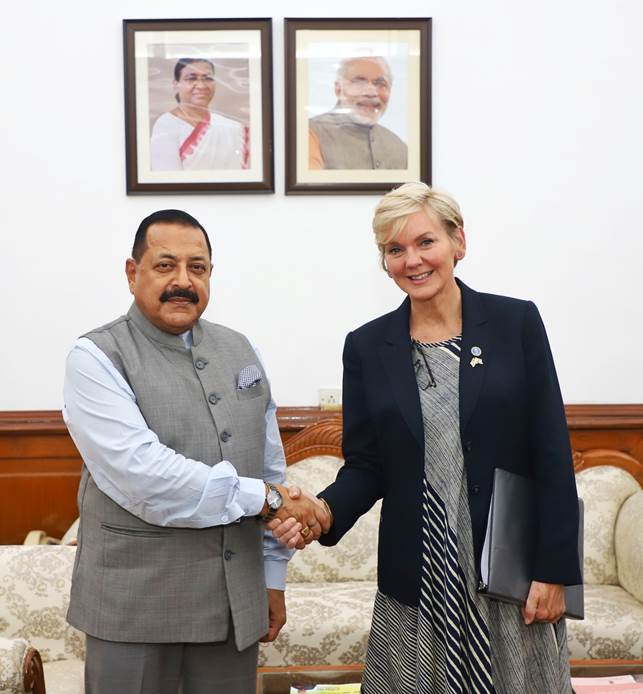
 US Secretary, Department of Energy, Ms Jennifer M. Granholm called on Union Minister of State (Independent Charge) Science & Technology; MoS PMO, Personnel, Public Grievances, Pensions, Atomic Energy and Space Dr Jitendra Singh at North Block here today and discussed bilateral collaboration between the two countries.

The meeting assumes special significance as it comes close on the heels of PM Narendra Modi’s US visit. Ms Jennifer was accompanied by a high-level American delegation.


India and the United States also jointly launched a call for proposals on Critical and Emerging Technology: Quantum Technologies and Artificial Intelligence for Transforming Lives. The Indo-U.S. Science and Technology Forum (IUSSTF) and the Secretariat for USISTEF have designed the program.

Dr Jitendra Singh said, through this competitive grant program, the USISTEF selects and supports promising joint U.S.-India technology innovation and entrepreneurial initiatives that are commercially viable and socially relevant. He said, these joint initiatives can originate from U.S. and Indian entities including StartUps, government, academic, or commercial endeavours, and any combination thereof provided they focus on applied R&D, incorporate a business plan and proof of commercial concept, and have significant sustainable commercial potential.


Dr Jitendra Singh said, the move comes in the wake of Prime Minister Narendra Modi’s recent visit to US, where he stressed upon a new chapter to bilateral comprehensive and global strategic partnership. The Minister said, he felt happy that both the Indian and US sides have positioned themselves quickly to take-up the decision of the leaders to the implementation level.

Dr Jitendra Singh pointed out that the engagement has charted a Technology Partnership for the future with a new direction and a new energy in the AI (America – India) relation in the AI (Artificial Intelligence) era.

Dr Jitendra Singh said, among other technology-oriented matters of high relevance, it is heartening to note that President Biden and Prime Minister Modi had welcomed the launch of a $2million grant program under the U.S.-India Science and Technology Endowment Fund (USISTEF) for the joint development and commercialization of Artificial Intelligence (AI) and quantum technologies, and encouraged public-private collaborations to develop high performance computing (HPC) facilities in India.


Dr Jitendra Singh informed that India has recently approved the National Quantum Mission (NQM) with an aim to seed, nurture and scale up scientific and industrial R&D and create a vibrant & innovative ecosystem in Quantum Technology (QT). Needless to say, that AI has the potential to address the world’s most pressing challenges and presents tremendous opportunities for economic development, he added.

Dr Jitendra Singh said, investments in AI and quantum technology would lead to transformative advances in our everyday lives and greatly benefit our social well-being by impacting healthcare, agriculture, climate change and more. He welcomed the transformative potential of the Endowment fund.


The call will remain open till August 31, 2023 and will invite promising joint Indo-U.S. technology innovation and entrepreneurial proposals that are commercially viable and socially relevant. It will provide a significant boost to the domestic as well as the US priorities looking at various facets of Sustainable Development Goals (SDG).


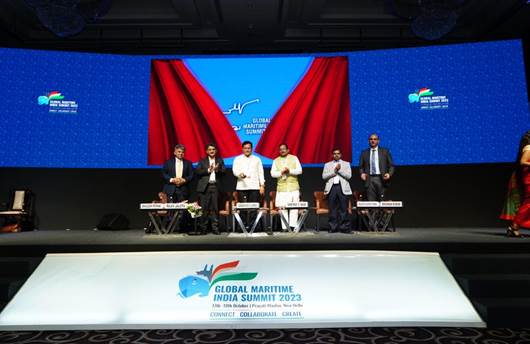
Global Maritime India Summit, 2023

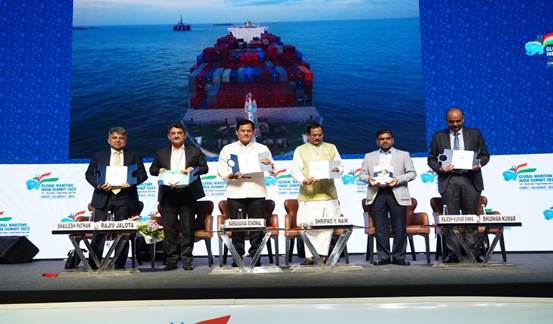
 The Union Minister of Ports, Shipping & Waterways and Ayush, Shri Sarbananda Sonowal launched the curtain raiser of Global Maritime India Summit (GIMS), 2023 in Mumbai today. The event is aimed at unlocking potential for new investment opportunities along with collaborations for knowledge and technology to enhance cooperation in trade and promote Ease of Doing Business (EODB). The event was attended by the Union Minister of State for Ports, Shipping & Waterways and Tourism, Shri Shripad Naik among others.

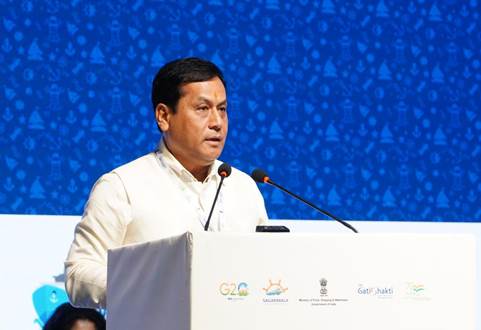
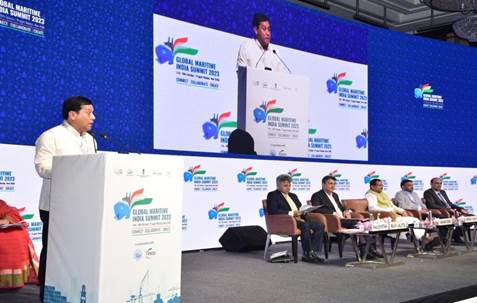
Addressing the Curtain Raiser for the upcoming Global Maritime India Summit 2023, Shri Sonowal emphasised the vital role of the maritime sector in India’s economic progression and the potential it holds for the Asia-Pacific region. “India can lead from the front,” said Sonowal. He added that India’s maritime sector is poised for growth, owing to proactive government policies around, ports, shipping and inland waterways.

The Minister said, “The huge potential of India’s marine sector can play a significant and pivotal role in elevating the economic cycle towards an Atmanirbhar Bharat by 2047 – a vision of our dynamic Prime Minister Shri Narendra Modi ji. As key driver of India’s maritime sector, our ministry has been organising the Global Maritime India Summit, to create value from the vast potential of India’s rich maritime sector. With an identified investment opportunities of more than ₹10 lakh crores in the maritime sector of the country, we are standing at a threshold of a major economic upswing which can generate employment opportunities for more than 15 lakhs youth of India. This summit has been designed to explore and examine riches of India’s Blue Economy. We hope that the best minds of maritime sector will hedge their goodwill, intent, intelligence and skills to produce a roadmap for a sustainable development of maritime sector as well as our country.”

Shri Sonowal further added, “We invite all the maritime stakeholders in India and globally to be part of these investment opportunities. Under the visionary leadership of Prime Minister Shri Narendra Modi ji, India is spearheading the advancement of regional trade within BIMSTEC region, taking a prominent role in the development of various regional projects. India is actively driving the establishment of 5,000 km of multi-country waterways, a significant initiative that will effectively facilitate trade and transportation across the region.”

The curtain raiser event is aimed at creating a global forum of thought leaders as well as industry captains from maritime sector to harness the immense potential of Blue Economy and draw a roadmap to unlock value through creation of investment opportunities in the maritime sector of India. The forum will provide a platform for start-ups, researchers, incubators and innovators to showcase their technology & expertise. The focus areas of GMIS, 2023 are Ports of the Future; Decarbonization; Coastal Shipping & Inland Waterways Transportation; Shipbuilding, repair & recycling; Finance, Insurance & arbitration; Innovation & technology; Maritime Safety & Security and Maritime Tourism.

The Union Minister said, “India stands firmly on its commitment to developing environmentally conscious shipping solutions. Under the visionary leadership of Prime Minister Shri Narendra Modi ji, India proudly occupies the second rank in recycling worldwide, with a clear objective to ascend to the top position within the forthcoming two decades. To propel this vision, we plan to inaugurate carbon-neutral alternatives and boost the use of battery-powered vehicles and apparatus in our major ports. With a vast coastline and over 200 ports, India holds a strategic position in global trade. The country has made impressive strides under transformative initiatives like Sagarmala and the Prime Minister’s Gati Shakti National Master Plan, which have modernised port infrastructure, enhanced connectivity, and facilitated port-led industrialisation.”

Speaking on occasion, Shri Shripad Naik, said, “The Global Maritime India Summit 2023 represents a crucial milestone in our efforts to position India as a global maritime hub. Through collaborative discussions and strategic partnerships, we aim to propel our maritime sector towards sustainable growth, bolstered by innovation and cutting-edge technology.”

Shri Rajiv Jalota, Chairman, Indian Ports Association & Mumbai Port Authority; Shri Rajesh Kumar Sinha, Additional Secretary, Ministry of Ports, Shipping and Waterways; Shri Bhushan Kumar, Joint Secretary (SM), Ministry of Ports, Shipping and Waterways; Shri Rajesh Tandon, CEO, Foreign Owners Representative, Ship Managers Association; Shri Anil Devli, CEO, Indian National Shipowners Association; Shri Dhruv Kotak, Chairman, Ports & Shipping, FICCI Committee on Transport Infrastructure & MD, JM Baxi Group along with Shri Shailesh Pathak, Secretary General, FICCI also spoke on the occasion.

The curtain raiser concluded with the unveiling of the official GMIS 2023 brochure and the launch of the event’s website and mobile app to provide a comprehensive overview of the summit’s agenda and thematic sessions and will serve as essential resources for participants.

About Global Maritime India Summit (GMIS), 2023:
GMIS 2023 is a premier maritime sector focussed event to bring together pivotal figures from the industry to explore opportunities, understand challenges, and stimulate investment within India’s maritime sector. Building upon the legacy of its preceding editions, this third instalment aims to unveil broader prospects for domestic and international maritime stakeholders and investors. Ready to make its presence felt on the global stage, and spotlight India’s maritime industry, the Maritime India Summit has now evolved to the ‘Global’ Maritime India Summit this year. The summit is slated for 17th to 19th October 2023, at Pragati Maidan, New Delhi, with FICCI as the exclusive industry partner.

For more details on the Global Maritime India Summit 2023, including a complete agenda and registration details, please visit the official website at www.maritimeindiasummit.com

*****

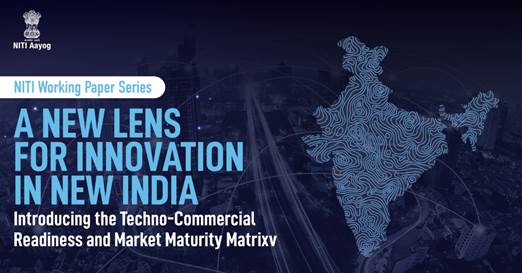
TCRM Matrix Framework to Revolutionize Technology Assessment and drive Innovation in India

 NITI Aayog today released the Techno-Commercial Readiness and Market Maturity Matrix (TCRM Matrix) Framework to Drive Innovation and Entrepreneurship in India.

New Delhi, [18.07.2023] – The NITI Aayog, released, under the NITI Working Paper series, the Techno-Commercial Readiness and Market Maturity Matrix (TCRM Matrix) framework, a pioneering assessment tool designed to revolutionize technology evaluation, foster innovation, and fuel entrepreneurship in India.

The Working Paper casts light on the historical evolution of technology assessment frameworks, including the Technology Readiness Level (TRL), Commercialization Readiness Level (CRL), and Market Readiness Level (MRL) scales. By building upon these frameworks’ core principles, the TCRM Matrix framework presents an integrated assessment model that offers in-depth insights and actionable intelligence to stakeholders at every stage of the technology development cycle.

The working paper provides clear guidelines for integrating the TCRM Matrix framework within the broader innovation ecosystem. By doing so, policymakers, strategists, academicians, and investors can unlock its full potential and drive meaningful change. The adoption of the TCRM Matrix framework necessitates a comprehensive analysis and contextualization within the unique national and sectoral innovation landscapes.

“The introduction of the Techno-Commercial Readiness and Market Maturity Matrix (TCRM Matrix) framework is a significant milestone for India’s innovation and entrepreneurship landscape,” said Dr. V.K. Saraswat, Member (Science & Technology), NITI Aayog. “By providing a robust assessment tool, we aim to empower stakeholders across the nation to make informed decisions, enhance technology commercialization prospects, and propel India towards becoming a global leader in innovation.”

The working paper is authored by Dr. V.K. Saraswat, Member, NITI Aayog along with Dr. Neeraj Sinha, Senior Adviser, Sh. Naman Agrawal, Specialist, Ms. Naba Suroor, Associate and Sh. Siddhey G Shinde, Young Professional, NITI Aayog.

The Government of India, through NITI Aayog, remains steadfast in its commitment to fostering innovation and entrepreneurship. The release of this working paper is a testament to the government’s continuous efforts to drive technological advancements and economic growth. The TCRM Matrix framework is set to play a pivotal role in catalyzing India’s innovation ecosystem and creating a conducive environment for transformative ideas.

The link of the said working paper can be accessed here <<https://niti.gov.in/sites/default/files/2023-07/TCRM-Matrix-Framework-FAD3.pdf>>.

********

CRCS – Sahara Refund Portal

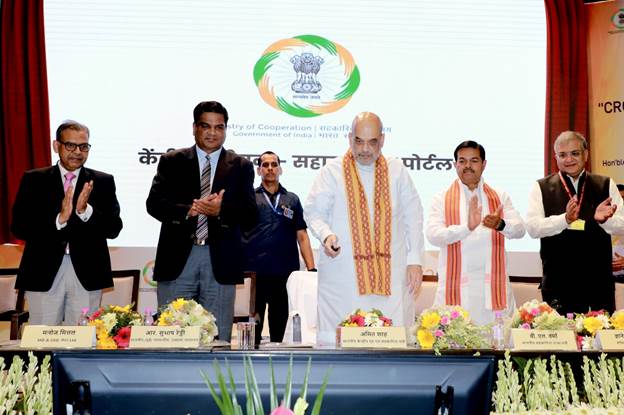
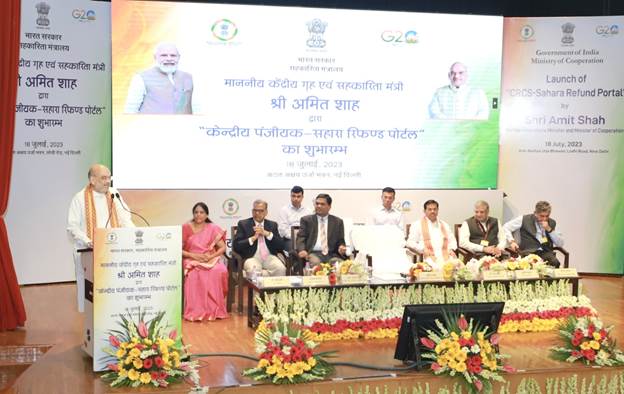
 Union Home Minister and Minister of Cooperation, Shri Amit Shah launched the Central Registrar of Cooperative Societies (CRCS)-Sahara Refund Portal https://mocrefund.crcs.gov.in in New Delhi today. This portal has been developed for submission of claims by genuine depositors of Cooperative Societies of Sahara Group – Sahara Credit Cooperative Society Limited, Saharayan Universal Multipurpose Society Limited, Hamara India Credit Cooperative Society Limited and Stars Multipurpose Cooperative Society Limited. On this occasion, Union Minister of State for Ministry of Cooperation Shri B.L. Verma, Justice R. Subhash Reddy, Former Judge of Supreme Court and Secretary, Ministry of Cooperation, Shri Gyanesh Kumar along with the depositors of the four cooperative societies of Sahara Group were also present.


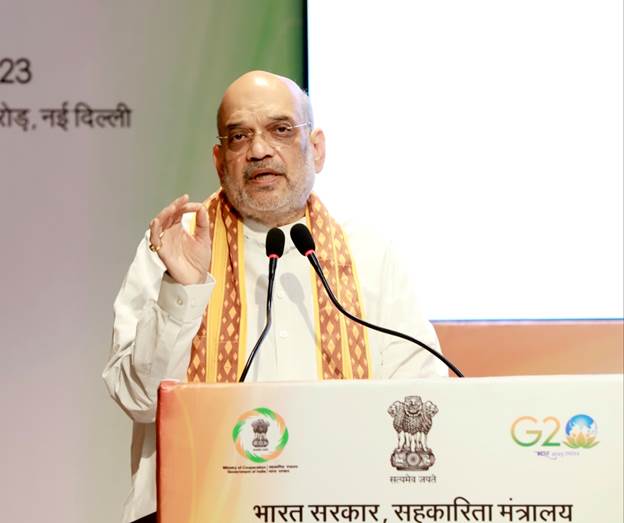
In his address Shri Amit Shah said that this programme is important because the concerns of people whose hard earned money is stuck in these 4 co-operative societies were not paid attention. In such cases, generally multi-agency seizure often happens but no agency thinks about the investor. He added that this leads to feeling of great insecurity and mistrust towards cooperative societies. Shri Shah said that crores of people of the country do not have capital but they want to contribute in the development of the country and there is no other way than cooperative movement. In this direction, Prime Minister Shri Narendra Modi took a decision to form a separate Ministry of Cooperation. He said that co-operative is the only movement in which big works can be done by combining small capital to create big capital.

Shri Amit Shah said that many times allegations of scams are made and those who invest, their capital gets stuck like Sahara whose example is in front of everyone. He said that the case went on in the Supreme Court for many years, the agencies sealed their properties and accounts, and with this, the credibility of the cooperative societies also get lost. Shri Shah said that the Prime Minister Shri Narendra Modi formed a separate Ministry of Cooperation and taking initiative in this matter discussions were held with all the stakeholders. He said that it was considered whether a system can be made in which everyone rises above their claims and thinks about small investors. Shri Shah said that all the agencies together filed a petition in the Supreme Court and the Supreme Court gave a historic decision to form a committee under the chairmanship of a former Supreme Court judge to start the payment process in a transparent manner. He said that the process of returning the amount of Rs. 5,000 crore to the investors is starting today in a transparent manner on a trial basis. He said that after the completion of Rs. 5,000 crore payment, another appeal will be made in the Supreme Court to return the amount to the remaining investors.

Union Home Minister and Minister of Cooperation said that through this portal, first payment up to Rs.10,000 will be made to one crore investors who had deposited Rs. 10,000 or more. He said that complete data of all the four societies is available online for applying on this portal. He said that all necessary provisions have been made in this process so that there is no scope for any kind of manipulation or injustice to any genuine investor.

Shri Amit Shah said that people who have not made any investments cannot receive any refund in any way from this portal, but those who have invested will receive the refunds for sure. Minister of Cooperation instructed that arrangements should be made to file applications through Common Service Center (CSC). He requested all the investors to register online through the facility of CSC. Shri Shah said that there are two main conditions related to the process: first, the investor’s Aadhaar card must be linked to their mobile number, and second, the Aadhaar card must be linked to their bank account. He assured the investors, that the money will be deposited into their bank accounts within 45 days.

Union Minister of Cooperation said that a significant beginning has been made today. He said that under the leadership of Prime Minister Shri Narendra Modi, for the first time the investors are receiving their money which was stuck due to scam, in a transparent manner, and it is a very big achievement. He added that now, crores of people are going to receive their hard-earned money, which was stuck due to scams. Shri Shah said that approximately 1.78 crore small investors, whose money up to Rs. 30,000 stuck, will get their money back and it is a great achievement.

Hon’ble Supreme Court vide its order dated 29th March 2023 directed that Rs. 5000 Crores be transferred out of the “Sahara-SEBI Refund Account”, to the Central Registrar of Cooperative Societies (CRCS) for disbursement against the legitimate dues of the genuine depositors of the Sahara Group of Cooperative Societies. The whole process of disbursement is being supervised and monitored by Justice R. Subhash Reddy, Former Judge of Hon’ble Supreme Court with the assistance of Shri Gaurav Agrawal, learned Advocate, Amicus Curiae as per directions of Hon’ble Supreme Court. Four senior Officers on Special Duty (OSDs) have been appointed for each of the above Societies for assisting in the refund process.

The online Portal developed for submission of claims is user friendly, efficient and transparent. The entire process is digital. Necessary checks and balances have been incorporated in the Portal to ensure that only the legitimate deposits of the genuine depositors are refunded. The portal can also be accessed through Ministry of Cooperation website. The genuine depositors of these Societies have to submit their claims by filling online application form available on the portal and upload requisite documents. The depositors will be verified through Aadhaar card to ensure their identity. After the verification of their claims and uploaded documents by the appointed Societies, Auditors, and OSDs, the payment to the genuine depositors will be credited in their Bank account within 45 days after filing their online claims, subject to fund availability and they will be intimated the status through SMS/Portal. The genuine depositors of the Societies are requested to ensure that they have Aadhar linked mobile number and Bank Account along with requisite documents as proof of their claim and deposits

*****

PRESIDENT OF INDIA PRESENTS BHOOMI SAMMAN 2023

 The President of India, Smt Droupadi Murmu presented the “Bhoomi Samman” 2023 at a function organised by the Union Ministry of Rural Development in New Delhi today (July 18, 2023). The awards were received by State Secretaries and District Collectors along with their teams who have excelled in achieving saturation of the core components of Digital India Land Records Modernization Programme (DILRMP).

Speaking on the occasion, the President said that acceleration of rural development is essential for the overall development of the country. For the development of rural areas, modernization of land records is a basic requirement as the livelihood of most of the rural population is dependent on land resources. A comprehensive integrated land management system is of utmost importance for the overall development of rural areas.

The President said that digitization increases transparency. The modernization and digitization of land records would have a great impact on the development of the country. Digitization of land records and its linkages with various government departments would help in proper implementation of welfare schemes. It would also be of great help in case of loss of documents due to calamities like flood and fire.

The President was happy to note that under the Digital India Land Information Management System, a Unique Land Parcel Identification Number is being provided which could be useful like Aadhaar Card. She stated that this number would help in making proper use of the lands as well as forming and implementing new welfare schemes. Linking of E-Courts with land records and registration data-base would have many benefits. The transparency that is coming from digitization would curb unethical and illegal activities related to land.

The President said that access to land related information in a free and convenient manner would have many benefits. For example, it would help in resolving disputes related to ownership and use of land. She stated that a large population of our country is involved in disputes related to land and a lot of time of the administration and the judiciary is consumed in these matters. Through digitization and linkages of information, the energy of the people and institutions, which gets consumed in resolving disputes, would be utilized for development.


Please click here to see the President’s Speech