Export of Basmati rice to prevent exports of Non-Basmati white rice

 To check the domestic prices and to ensure domestic food security, the Government has been taking measures to restrict export of rice from India. The export of non-basmati white rice was prohibited on 20th July 2023.

It has been noticed that despite restriction on certain varieties, rice exports have been high during the current year. Up to 17th August 2023, total exports of rice (other than broken rice, export of which is prohibited) were 7.33 MMT compared to 6.37 MMT during the corresponding period of previous year, registering an increase of 15.06%. There has been a spurt in the export of parboiled rice and Basmati rice; both of these varieties did not have any restriction on exports. While the export of parboiled rice has grown by 21.18% (3.29 MMT during the current year compared to 2.72 MMT during previous year), export of Basmati rice has increased by 9.35% (1.86 MMT during the current year compared to 1.70 MMT during previous year). Export of non-basmati white rice, which had an export duty of 20% since 9th September 2022 and has been prohibited w.e.f. 20th July 2023, has also registered an increase of 4.36% (1.97 MMT compared to 1.89 MMT during previous year). On the other hand, as per third Advanced Estimate of Department of Agriculture & Farmers Welfare, during the Rabi Season 2022-23, the production was only 158.95 LMT against 184.71 LMT during Rabi Season of 2021-22 i.e., there was a decline of 13.84%.

Internationally, due to strong demand from Asian buyers, production disruptions registered in 2022/23 in some major producing countries like Thailand, and fears of possible adverse effect of the onset of El Nino, international rice prices have also been rising continuously since last year. The FAO Rice Price Index reached 129.7 points in July 2023; its highest value since September 2011, registering an increase of 19.7% over past year levels. As the prices of Indian rice are still cheaper than the international prices, there has been a strong demand for Indian rice, resulting in record exports during 2021-22 and 2022-23. 

The Government has received credible field reports regarding misclassification and illegal export of non-basmati white rice, export of which has been prohibited with effect from 20th July 2023. It has been reported that non-basmati white rice is being exported under the HS codes of parboiled rice and Basmati rice.

As the Agricultural & Processed Food Products Export Development Authority (APEDA) is responsible for regulation of export of Basmati rice and already has a web-based system in place for the purpose, the Government has issued following instructions to APEDA to introduce additional safeguards to prevent the possible illegal exports of white non-basmati rice in the garb of Basmati rice:

  1. Contracts for Basmati exports with the value of USD 1200 per MT only and above should be registered for issue of Registration – cum – Allocation Certificate (RCAC).
  2. Contracts with the value of below USD 1200 per MT may be kept in abeyance and may be evaluated by a committee to be set up by the Chairman, APEDA, for understanding the variation in prices and use of this route for export of non-Basmati white rice. It has been noted that there has been large variation in the contract price of Basmati being exported with lowest contract price being USD 359 Per MT in backdrop of average export price of USD 1214 per MT during the current month. The Committee should submit its report within a period of one month, whereafter a decision on lower price exports of Basmati planned by industry can be taken appropriately.
  3. APEDA should hold consultations with trade to sensitize them about the matter and work with them to discourage any use of this window for export of non-basmati white rice.

***
MSDE organizes a workshop with sending organizations to expand Japan Operations

 To facilitate a comprehensive dialogue and promote knowledge sharing amongst the stakeholders responsible for mobility of skilled candidates to Japan under Technical Intern Training Program (TITP) and Specified Skill Workers (SSW) program, the Ministry of Skill Development and Entrepreneurship (MSDE), organized a brainstorming workshop with Sending Organizations (SOs), empaneled by National Skill Development Corporation (NSDC).The workshop was chaired by Shri Atul Kumar Tiwari, Secretary, MSDE. Additional Secretary, MEA, Shri Anurag Bhushan also participated in the workshop along with other senior ministry officials.

The workshop provided a platform to the stakeholders to identify and address challenges faced by Sending Organizations and students, share on-ground experiences related to the respective programs, explore effective student monitoring practices, and engage in solution driven discussions.

Shri Atul Kumar Tiwari, Secretary, Ministry of Skill Development and Entrepreneurship said the TITP and SSW programs play a pivotal role in forwarding Prime Minister, Shri Narendra Modi’s vision of making India the Skill Capital of the World. India and Japan share age old cultural and religious connect and collaboration as such between the two countries further help promote international cooperation and strengthen the bond between the two countries.

He further said that organizing workshops like these are important for sharing of relevant insights that help to create effective roadmaps for the future. The discussion today has been extremely fruitful in terms of the inputs shared by everyone. He hoped that the next steps will further solidify MSDE’s efforts towards training the segment of the Indian workforce as per the demands of the job market in Japan.

Shri Anurag Bhushan, Additional Secretary, Ministry of External Affairs said that the emigration, spanning decades, has evolved into a powerful catalyst, enriching skill development, bolstering soft power and fostering livelihood opportunities. As our diaspora grows, it not only fuels remittances but also serves as a conduit for knowledge transfer, technology, and skill acquisition that immensely benefit Indian companies to leverage global exposure for their growth. It can be leveraged through the convergence of demography, democracy and diversity that propels emigration. It is evident in strategic agreements like comprehensive Migration Motivating Partnership Agreement with Germany and Mauritius. In the realm of Japanese market, a nuanced approach is paramount to tap into the opportunities. Equipping the workforce with the necessary linguistic skills, building robust language training frameworks, strengthening immigration policy ecosystem, and embracing digital advancements can help in utilizing the talent of young workforce, he added.

The workshop was successful in generating valuable insights from the sending organizations and basis these inputs, National Skill Development Corporation International (NSDCI) under the aegis of the Ministry and Skill Development and Entrepreneurship would align their efforts towards creating a framework that links MSDE, MEA and other ministries, which in turn, will enhance the effectiveness of workforce mobility under the two programs, between the two countries. From an implementation perspective, it was deemed important for creating a larger pool of high skilled Japanese language trainers in the country, while expanding the learning facilities with the help of concerned Ministries and incentivizing the Skill India International Centres. Further, collaborating with companies in Japan and companies from Japan in India would be a necessary step for demand aggregation and alignment of skill training in the respective sectors basis the knowledge of the demand.

*****

Student Scientist Connect Program Event


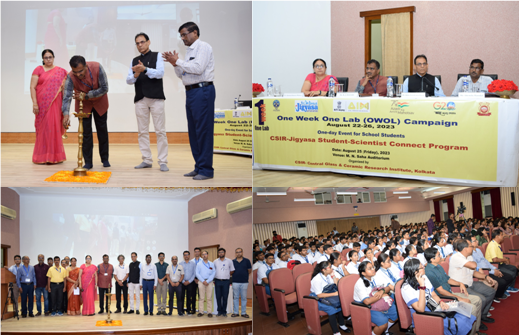
Under the “One Week One Lab” Campaign CSIR-Central Glass and Ceramic Research Institute (CGCRI), Kolkata conducted a school connect programme on 25th August, 2023. It was intended to promote scientific temper among school students and encourage them to pursue research in different scientific domains. Dr S.K. Mishra, Director CSIR-CGCRI welcomed the participants. The Chief Guest Dr. K. J. SreeramDirector of CSIR-Central Leather Research Institute highlighted the role of CSIR in nation-building activities, and the Guest of Honour Dr. Arun Bandyopadhyay, Director of CSIR – Indian Institute of Chemical Biology inspired the students to pursue science for the best interest of the nation. This event was attended by around 295 students and 28 teachers from 7 schools. Participant schools included Kendriya Vidyalaya, Dumdum, St. Xaviers Institution, Laxmipat Singhania School, Silver Point School, Mukul Bose Memorial School, Jadavpur High School, and The Summit School. The school participants in this program enjoyed different scientific activities, including popular lectures, live interactive sessions, different product demonstrations of CSIR-CGCRI, scientific Quizzes, virtual lab platforms, and many more. Scientists working in different fields showcased CGCRI’s various advanced technologies.

Legend (clockwise from left): Lighting of the lamp; dignitaries on the dais; the audience during the popular lecture session; group photo with dignitaries and team

****

ANRF signifies a higher level of priority & commitment to research and innovation

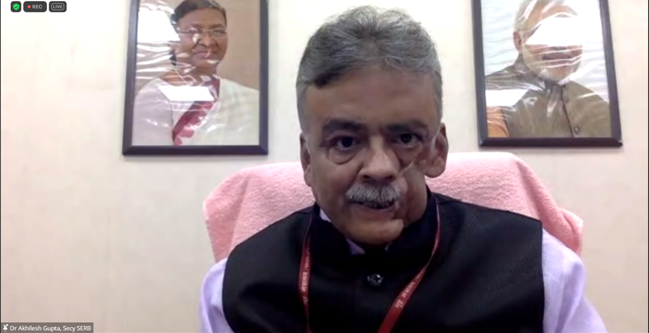
 Anusandhan National Research Foundation (ANRF) signifies a higher level of priority and commitment to research and innovation at the highest level in the government, said Dr Akhilesh Gupta, Secretary of SERB and Advisor, DST at a talk on Anusandhan National Research Foundation hosted by the National Centre for Biological Sciences.

“The challenge of ANRF is to introduce changes so that research makes a tangible impact on society and prioritise quality and relevance over quantity, rather than the current focus on generating research output,” Dr Gupta said at the online talk titled Changing Landscape of Research Funding in India: Anusandhan National Research Foundation: India’s vision to Achieve Global Leadership. 

He added that the foundation will encourage translation research in all universities beyond Technology Readiness Level (TRL) 3, indicating a commitment to taking research outcomes from the lab to practical applications. 


Dr Gupta pointed out that while the funds for NRF will be sourced from various avenues, including contributions from industry, philanthropic foundations, international organisations, and other stakeholders, a novel model has been proposed for the foundation which emphasises industry-led initiatives with government support. “The involvement of the industry is crucial in ensuring that research outcomes are aligned with real-world needs and can be effectively implemented,” he stressed.

He underlined that while Science and Engineering Research Board’s (SERB) transition to NRF represents a significant shift in priority of research funding in India, several significant initiatives like doubling private sector R&D investment, increasing the number of full-time researchers, promoting women’s participation, and National repository of STI Data are under consideration to foster innovation and research in the country.

Professor LS Shashidhara, Director, National Centre for Biological Sciences (NCBS) as well as several scientists from NCBS and other scientific institutions all over the country participated in the interactive session.

20th Atma Ram Memorial Lecture delivered by Dr N. Kalaiselvi

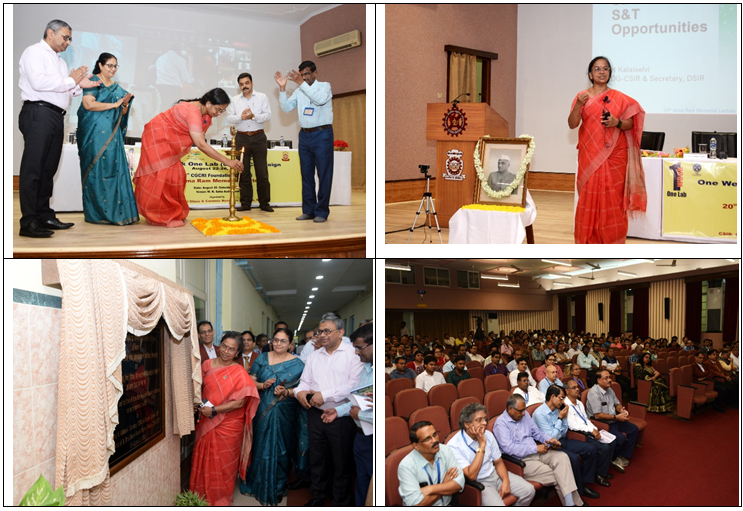
 The One Week One Lab programme of CSIR-Central Glass and Ceramic Research Institute (CGCRI), Kolkata concluded with the 73rd Institute Foundation Day celebration on 26.08.2023. This occasion was marked with the 20th Atma Ram Memorial Lecture delivered by Dr (Mrs) N. Kalaiselvi, Secretary DSIR and Director General, CSIR, who was the Chief Guest. She spoke on “SDGs and S&T Opportunities”, wherein she touched upon the alignment of CSIR themes with the SDGs vis-a-vis national mission programmes; the challenges in their implementation and the road ahead for achieving the same. The programme was also associated with felicitating institute staff members / divisions for their performance. Dr S.K. Mishra, Director CSIR-CGCRI welcomed the participants while Dr Debashis Bhattacharjee, Vice President (Technology and R&D) of Tata Steel was present as Guest of Honour besides other dignitaries. Dr Kalaiselvi also opened the Atma Ram Memorial Museum & Archives to public. The museum envisages tracing the technological evolution of ceramics from historic period; and the journey of CSIR and CSIR-CGCRI since inception.

Legends to photos (clockwise from left): lighting of the lamp during invocation; Dr Kalaiselvi delivering the Atma Ram Memorial Lecture; audience during the lecture; and opening the Atma Ram Memorial Museum & Archives to public by DG, CSIR.  

***

6th Census Report On Minor Irrigation (MI) Schemes

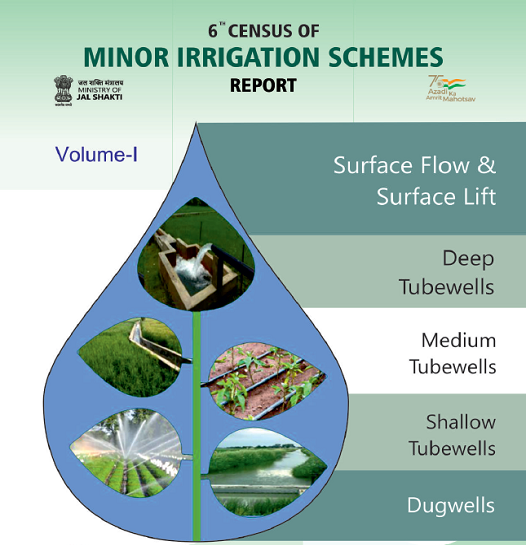
 The Ministry of Jal Shakti, Department of Water Resources, River Development and Ganga Rejuvenation today released the report on the 6th census on minor irrigation schemes. As per the report, 23.14 million minor irrigation (MI) schemes have been reported in the country, out of which 21.93 million (94.8%) are Ground Water (GW) and 1.21 million (5.2%) are Surface Water (SW) schemes. Uttar Pradesh possesses the largest number of MI schemes in the country followed by Maharashtra, Madhya Pradesh and Tamil Nadu. Leading States in GW schemes are Uttar Pradesh, Maharashtra, Madhya Pradesh, Tamil Nadu and Telangana. In SW schemes Maharashtra, Karnataka, Telangana, Odisha and Jharkhand have the highest share. GW schemes comprise dugwells, shallow tube wells, medium tube wells and deep tube wells. The SW schemes comprise surface flow and surface lift schemes.

There has been increase of about 1.42 million in MI schemes during 6th MI census as compared to 5th Census. At the national level, both GW and SW schemes have increased by 6.9% and 1.2%, respectively. Dug-wells have highest share in MI schemes followed by shallow tube-wells, medium tube-wells and deep tube-wells. Maharashtra is the leading State in dug-wells, surface flow and surface lift schemes. Uttar Pradesh, Karnataka and Punjab are the leading States in shallow tube-wells, medium tube-wells and deep tube-wells, respectively. Out of all MI schemes, 97.0% are ‘in use’, 2.1% are ‘temporarily not in use’ whereas 0.9% are ‘permanently not in use’. Shallow tube-wells and medium tube-wells lead in the category of ‘in use’ schemes. A majority of MI schemes (96.6%) are under private ownership. In GW schemes, the share of private entities in the ownership is 98.3% whereas in SW schemes the respective share is 64.2%.

For the first time, the information about gender of the owner of MI scheme was also collected in case of individual ownership. Out of all the individually owned schemes, 18.1% are owned by women. Around 60.2% schemes have single source of finance whereas 39.8% schemes have more than one source of finance. In single source of finance, majority of schemes (79.5%) are being financed by own savings of individual farmer.

A sound and reliable data base for minor irrigation schemes is essential for effective planning and policy making in this sector. With this objective, Government of India has been conducting census of minor irrigation schemes. So far, five censuses have been conducted with reference year 1986-87, 1993-94, 2000-01, 2006-07 and 2013-14 respectively. The 6th minor irrigation census with reference year 2017-18 was completed in 32 States/ UTs. The 6th MI census work was delayed due to the Covid-19 pandemic. The census work has been successfully completed now and the All India and State-wise report on 6thMI census has been published.

The census was conducted under the centrally sponsored scheme “Irrigation Census”. Detailed information on various parameters like irrigation sources (dug well, shallow tube well, medium tube well, deep tube well, surface flow and surface lift schemes), irrigation potential created (IPC), potential utilized, ownership, holding size of land by owner, devices used for lifting water, sources of energy, energy conserving devices such as sprinkler and drip irrigation, use of non-conventional energy sources such as solar pumps, wind mills etc was collected.

This report will be useful for planners, policy makers, researcher scholars, agricultural and ground water scientists, administrators & all concerned with development of irrigation and agricultural economy of the country.

All India Report: https://jalshakti-dowr.gov.in/document/all-india-report-of-6th-census-of-minor-irrigation-schemes-volume-1/

State-wise Report: https://jalshakti-dowr.gov.in/document/state-wise-report-of-6th-census-of-minor-irrigation-schemes-volume-2/

*****

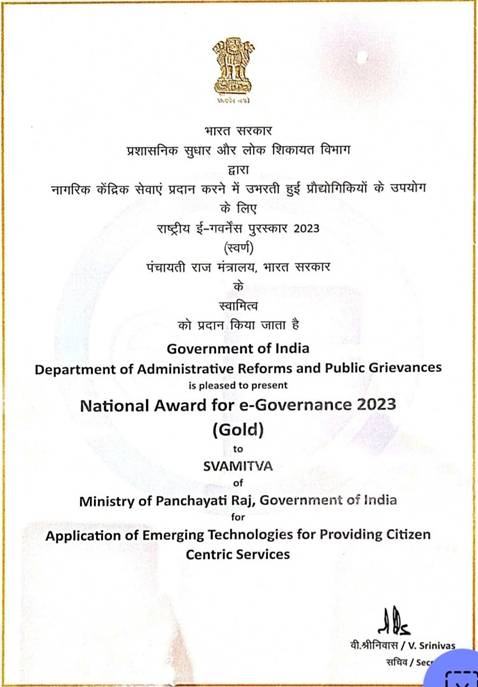
SVAMITVA Scheme of Ministry of Panchayati Raj wins the National Award for e-Governance 2023 (Gold)

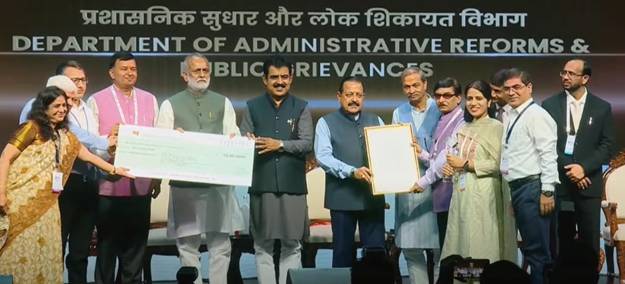
 SVAMITVA (Survey of Villages Abadi and Mapping with Improvised Technology in Village Areas) Scheme of Ministry of Panchayati Raj has been conferred with the prestigious National Award for e-Governance 2023 (Gold) for Application of Emerging Technologies for Providing Citizen Centric Services at the 26th National Conference on e-Governance (NCeG) organized by the Department of Administrative Reforms and Public Grievances (DARPG), Government of India on 25th August 2023 in Indore, Madhya Pradesh.

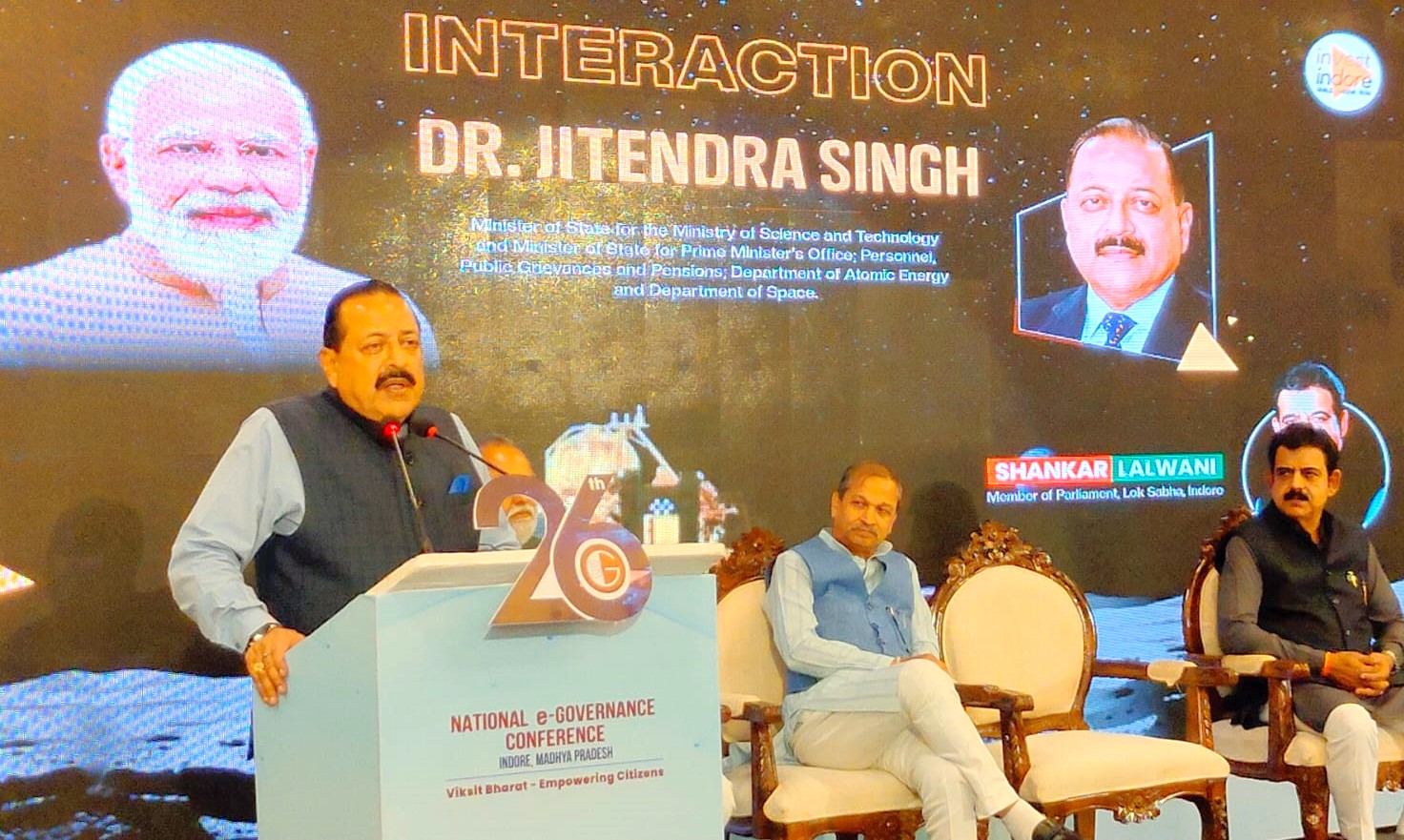
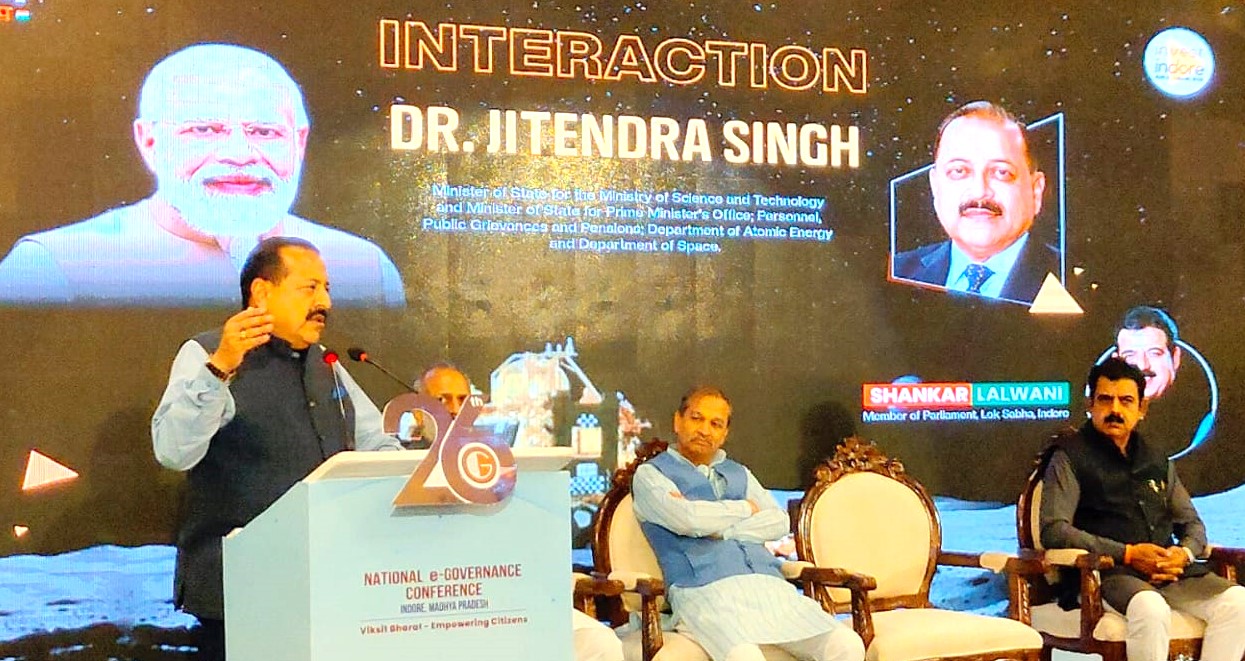
The representatives of the Ministry of Panchayati Raj, Survey of India and NIC-GIS received the National e-Governance Gold Award conferred to SVAMITVA Scheme in the category of Application of Emerging Technologies for Providing Citizen Centric Services from Dr. Jitendra Singh, Union Minister of State (Independent Charge) of the Ministry of Science and Technology; Minister of State (Independent Charge) of the Ministry of Earth Sciences; Minister of State in the Prime Minister’s Office; Minister of State in the Ministry of Personnel, Public Grievances and Pensions; Minister of State in the Department of Atomic Energy; and Minister of State in the Department of Space on 25th August, 2023 during the two-day National Conference on e-Governance (NCeG).

The two-day National Conference on e-Governance (NCeG) was organised on the theme ‘Viksit Bharat, Empowering Citizens’ jointly by the Department of Administrative Reforms and Public Grievances (DARPG), Government of India and the Ministry of Electronics and Information Technology (MeitY), Government of India in collaboration with the Government of Madhya Pradesh on 25th and 25th August, 2023 at Brilliant Convention Centre, Indore, Madhya Pradesh.

Union Minister Dr. Jitendra Singh participated in the 26th National Conference on e-Governance (NCeG) along with other dignitaries and senior officers from Government of India and State Governments. The National e-Governance Awards were presented under 5 categories viz.  Government process re-engineering for digital transformation, application of emerging technology for providing citizen-centric services, district-level initiative for e-Governance, research on citizen-centric services by academic and research institutions, and application of emerging technology in e-Governance by start-ups. The 26th NCeG provided an appropriate platform for effective and meaningful brainstorming on the latest technologies for promoting e-Governance and for sharing knowledge and insights on the theme identified for the National e-Governance Conference.

SVAMITVA Scheme of the Ministry of Panchayati Raj provides ownership to property owners in village-inhabited area by using latest drone and GIS technology. The Property Cards facilitate monetization of rural residential assets for bank loan and other financial benefits and help in the settlement of land-related disputes through the preparation of 5cm accuracy maps. The Scheme is implemented with the collaborative efforts of Survey of India being the technology implementation partner, State Revenue and Panchayati Raj Departments, and NIC–GIS.

******

Compilation of motivational speeches of Prime Minister Shri Narendra Modi Volume-2 and 3 'Sabka Saath, Sabka Vikas, Sabka Vishwas' released

 Union Minister for Information and Broadcasting, Youth Affairs & Sports Shri Anurag Thakur and Chief Minister Shri Shivraj Singh Chouhan released the two-volume book ‘Sabka Saath, Sabka Vikas, Sabka Vishwas’ compiled from the speeches and addresses given by Prime Minister Shri Narendra Modi during his successful second term from June 2020 to May 2021 and June 2021 to May 2022 at Kushabhav Thakre International Convention Centre in Bhopal today. These books have been compiled by the Publications Division of the Ministry of Information and Broadcasting.

In his address on the occasion, Union Minister for Information and Broadcasting, Youth Affairs & Sports Shri Anurag Thakur highlighted that Prime Minister Narendra Modi’s addresses have consistently served as a source of inspiration.

Each of his speeches contains valuable lessons to be learned. It has been challenging to select speeches from among them to compose the book due to the abundance of insightful content.

The Minister said that 86 inspirational speeches have been included in one section of this book and 80 inspirational speeches in the other section. Selected speeches of Prime Minister Narendra Modi have been compiled on many important topics.  The speeches included the Prime Minister’s address to the common citizens on topics like Startup India, Good Governance, Women Empowerment, Nation Power, Self-reliant India, Jai Vigyan, Jai Kisan etc.

The Minister further urged the youth and researchers that they must read this book. There is a lot to know and learn in these. Shri Thakur also commended the remarkable achievement of the successful landing of the Vikram Lander on the Moon’s South Pole for the first time, marking India’s endeavor in this significant feat.

Referring to apps like UPI and BHIM app, the Union Minister said that in the world of digital payments, now 46 percent of the maximum transactions take place in India.

He noted that compared to earlier, over 45 crore bank accounts have been opened, with amounts now efficiently reaching beneficiaries through the Direct Benefit Transfer (DBT) system.

Highlighting the pivotal role of youth, Shri Thakur said that the youth of India have now become job givers. India has more than one lakh startups in comparison to the world.

Shri Thakur said that the cheapest data in the world is now available in India. The nation has made its own 5G technology and is going to make 6G technology in future. He said that in the 75th year of Amrit Mahotsav, India has become the fifth largest economy in the world. 

Lauding the progress made by state Madhya Pradesh, Shri. Thakur expressed that earlier Madhya Pradesh was called Bimaru, but after the formation of the new government, the state has emerged as one of the leading and progressive states in the country.

He said that we have progressed a lot in education in our mother tongue and only in Madhya Pradesh the syllabus for medical studies has been prepared in Hindi. The Minister said that the Seekho Kamao Yojana is a unique scheme and more than 86 thousand registrations have been done so far and also Madhya Pradesh had successfully organized the Khelo India Youth Games.

In his address at the function, Hon’ble Chief Minister Shri Shivraj Singh Chouhan appealed to the youth to read this book. This is a priceless treasure and pearls of wisdom will be found in it. 

He noted that the Prime Minister’s ‘Mann Ki Baat’ is a voice of common citizens offering a platform to address pressing social issues. It is a wonderful initiative carrying within it the very essence of inspiration of the Prime Minister.

The Chief Minister appealed to definitely read this book describing the Hon’ble Prime Minister Shri Narendra Modi as a visionary Prime Minister, and cherished his memories with him.

He said that Indore has been honored with the prestigious Best Smart City award, establishing its excellence in the realm of smart cities nationwide. At the same time, Madhya Pradesh has been bestowed with the distinguished Best State Award in the Indian Smart City category. It’s worth noting that Indore has consistently secured the top position in the cleanliness surveys.

The event commenced with a warm welcome address by Shri Vikram Sahay, Joint Secretary, Ministry of Information and Broadcasting followed by the screening of a short film based on the books. Khajuraho MP Shri VD Sharma also graced the occasion. The vote of thanks was given by Ms. Anupama Bhatnagar, Director General, Publications Division.

Union Minister Shri Anurag Thakur inaugurated the multi-media exhibition organized by the Central Bureau of Communication on the theme ‘Naya Bharat: Sashakta Bharat’ along with ‘9 Years: Seva, Sushasan aur Garib Kalyan’ before the launch of the program along with the hon’ble Chief Minister Shivraj Singh Chouhan.

During this event, a stall was set up by the Publications Department showcasing an array of their published books, providing attendees to explore and purchase them.


***

Compilation of motivational speeches of Prime Minister Shri Narendra Modi Volume-2 and 3 'Sabka Saath, Sabka Vikas, Sabka Vishwas' released

 Union Minister for Information and Broadcasting, Youth Affairs & Sports Shri Anurag Thakur and Chief Minister Shri Shivraj Singh Chouhan released the two-volume book ‘Sabka Saath, Sabka Vikas, Sabka Vishwas’ compiled from the speeches and addresses given by Prime Minister Shri Narendra Modi during his successful second term from June 2020 to May 2021 and June 2021 to May 2022 at Kushabhav Thakre International Convention Centre in Bhopal today. These books have been compiled by the Publications Division of the Ministry of Information and Broadcasting.

In his address on the occasion, Union Minister for Information and Broadcasting, Youth Affairs & Sports Shri Anurag Thakur highlighted that Prime Minister Narendra Modi’s addresses have consistently served as a source of inspiration.

Each of his speeches contains valuable lessons to be learned. It has been challenging to select speeches from among them to compose the book due to the abundance of insightful content.

The Minister said that 86 inspirational speeches have been included in one section of this book and 80 inspirational speeches in the other section. Selected speeches of Prime Minister Narendra Modi have been compiled on many important topics.  The speeches included the Prime Minister’s address to the common citizens on topics like Startup India, Good Governance, Women Empowerment, Nation Power, Self-reliant India, Jai Vigyan, Jai Kisan etc.

The Minister further urged the youth and researchers that they must read this book. There is a lot to know and learn in these. Shri Thakur also commended the remarkable achievement of the successful landing of the Vikram Lander on the Moon’s South Pole for the first time, marking India’s endeavor in this significant feat.

Referring to apps like UPI and BHIM app, the Union Minister said that in the world of digital payments, now 46 percent of the maximum transactions take place in India.

He noted that compared to earlier, over 45 crore bank accounts have been opened, with amounts now efficiently reaching beneficiaries through the Direct Benefit Transfer (DBT) system.

Highlighting the pivotal role of youth, Shri Thakur said that the youth of India have now become job givers. India has more than one lakh startups in comparison to the world.

Shri Thakur said that the cheapest data in the world is now available in India. The nation has made its own 5G technology and is going to make 6G technology in future. He said that in the 75th year of Amrit Mahotsav, India has become the fifth largest economy in the world. 

Lauding the progress made by state Madhya Pradesh, Shri. Thakur expressed that earlier Madhya Pradesh was called Bimaru, but after the formation of the new government, the state has emerged as one of the leading and progressive states in the country.

He said that we have progressed a lot in education in our mother tongue and only in Madhya Pradesh the syllabus for medical studies has been prepared in Hindi. The Minister said that the Seekho Kamao Yojana is a unique scheme and more than 86 thousand registrations have been done so far and also Madhya Pradesh had successfully organized the Khelo India Youth Games.

In his address at the function, Hon’ble Chief Minister Shri Shivraj Singh Chouhan appealed to the youth to read this book. This is a priceless treasure and pearls of wisdom will be found in it. 

He noted that the Prime Minister’s ‘Mann Ki Baat’ is a voice of common citizens offering a platform to address pressing social issues. It is a wonderful initiative carrying within it the very essence of inspiration of the Prime Minister.

The Chief Minister appealed to definitely read this book describing the Hon’ble Prime Minister Shri Narendra Modi as a visionary Prime Minister, and cherished his memories with him.

He said that Indore has been honored with the prestigious Best Smart City award, establishing its excellence in the realm of smart cities nationwide. At the same time, Madhya Pradesh has been bestowed with the distinguished Best State Award in the Indian Smart City category. It’s worth noting that Indore has consistently secured the top position in the cleanliness surveys.

The event commenced with a warm welcome address by Shri Vikram Sahay, Joint Secretary, Ministry of Information and Broadcasting followed by the screening of a short film based on the books. Khajuraho MP Shri VD Sharma also graced the occasion. The vote of thanks was given by Ms. Anupama Bhatnagar, Director General, Publications Division.

Union Minister Shri Anurag Thakur inaugurated the multi-media exhibition organized by the Central Bureau of Communication on the theme ‘Naya Bharat: Sashakta Bharat’ along with ‘9 Years: Seva, Sushasan aur Garib Kalyan’ before the launch of the program along with the hon’ble Chief Minister Shivraj Singh Chouhan.

During this event, a stall was set up by the Publications Department showcasing an array of their published books, providing attendees to explore and purchase them.


***

True Leader stands by his people through every circumstance

 Union Home Minister and Minister of Cooperation Shri Amit Shah has said that a true leader stands by his people through every circumstance. In a series of his post on X, Shri Amit Shah said, Prime Minister Shri Narendra Modi ji flew directly to Bengaluru from Greece this morning, to meet the ISRO scientists behind India’s successful moon mission, Chandrayaan 3. His inspiring address to the scientists in Bengaluru was an ode to India’s stupendous achievement that reached the skies.

Union Home Minister and Minister of Cooperation said that the 23rd of August is a historic day for India, as it marks the accomplishment of its lunar mission Chandrayaan 3. Today, Prime Minister Shri Narendra Modi ji announced it as ‘National Space Day’, so that the story of India’s scientists’ success behind this mission reaches every future generation. This decision will continue to inspire Indian scientists to achieve newer heights in the realm of space exploration, holding the pride of the ‘Tiranga’ aloft.

Shri Amit Shah said that with the historic success of India’s lunar mission, our scientists have imprinted an indelible mark on the sands of time. To commemorate this achievement, Prime Minister Shri Narendra Modi ji named the landing spot of Chandrayaan-3 ‘Shivshakti,’ and the location where Chandrayaan-2 fell ‘Tiranga’, to remind us that ‘No failure is permanent.’

***

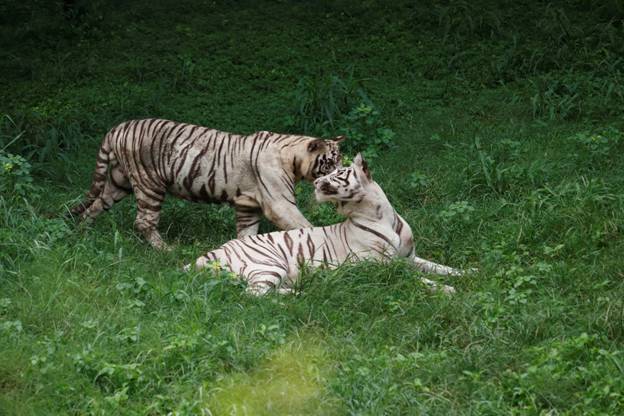
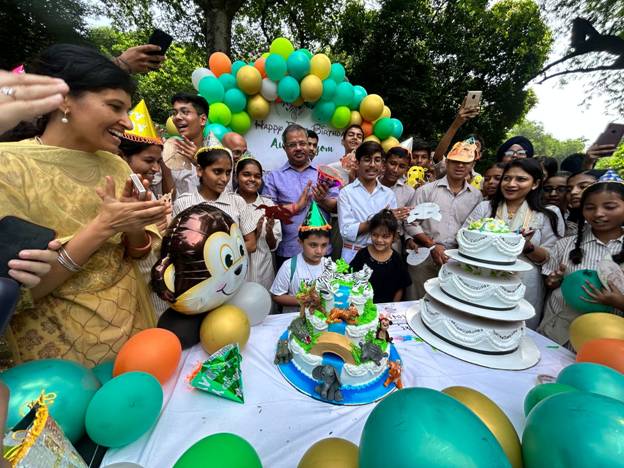
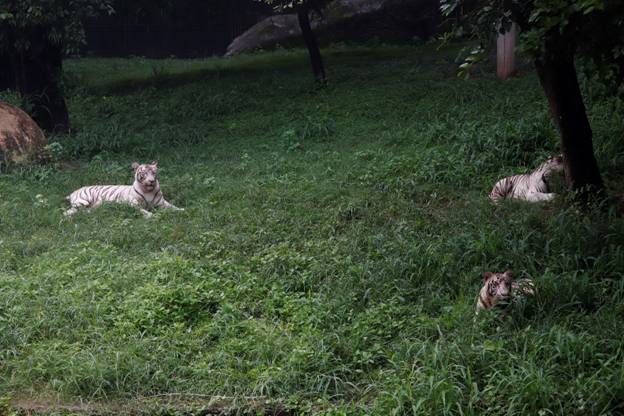
National Zoological Park celebrates the first birthday of white tigress SITA's twin cubs, Avni and Vyom

 National Zoological Park joyously celebrated the first birthday of the adorable white tigress SITA’s twin cubs, Avni and Vyom,today. Shri Chandra Prakash Goyal, DG & SS, MoEFCC as the Chief Guestand Dr. S.K. Shukla Member Secretary, Central Zoo Authority as the Special Guest were present on the occasion.The highlight of the celebration was the cake-cutting ceremony, symbolizing the cubs’ significance to connect between the citizens and wildlife.


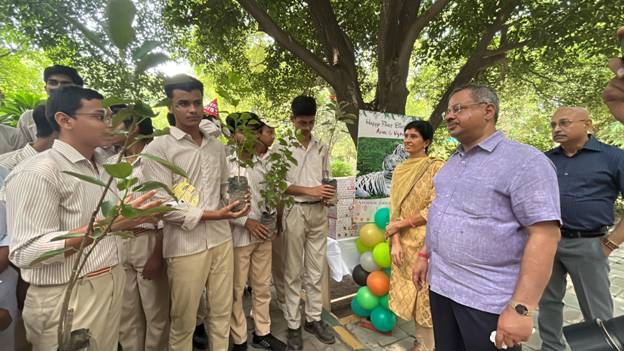
Students of 11th grade were invited to partake in the festivities. The event provided a unique educational opportunity for the students to learn about tigers and their vital role in biodiversity preservation.

National Zoological Park demonstrated its commitment to environmental sustainability by gifting each attending student a plant sapling. This gesture aimed not only to express gratitude for their participation but also to instill a sense of responsibility for the environment among the future generations.


The celebration of Avni and Vyom’s first birthday stands as a testament to the zoo’s dedication to fostering a harmonious coexistence between humans and nature.


At present National Zoological Park have 12 numbers of tigers of 02 varieties, and among these there are 7 normal coloured Royal Bengal Tigers (Panthera tigris tigris) and 5 White Tigers (Panthera tigris tigris color_mutation ).

***

CONCLAVE-CUM-SYMPOSIUM ON SELF RELIANCE IN MISSILE TECHNOLOGY HELD AT VISAKHAPATNAM

 The Missile Technology Conclave-cum-Symposium themed ‘Aatmanirbharta in Missile Repairs & Indigenisation Technologies (AMRIT-2023)’, was organised by INS Kalinga at Samudrika Auditorium, Naval Base, Visakhapatnam on 23 Aug 23. The event was inaugurated by Vice Admiral Sameer Saxena, AVSM, NM, Chief of Staff, Eastern Naval Command. Dr Y Srinivas Rao, DS, DG NS&M and Shri GA Srinivasa Murthy, DS, Director DRDL delivered special address during inaugural session. Papers were presented and technical talks were held by personnel from varied organisations leading to an effervescent exchange of ideas. Academia partners from Military Institute of Technology, Pune and National Research and Development Corporation (NRDC), also actively engaged in the discussions, drawing vital inputs for their work.

           
The Symposium received an overwhelming response from viz. DRDO, PSUs, DPSUs, Indian Private Defence industries, MSMEs/ Start-ups, representatives from State Government and Society of Indian Defence Manufacturers (SIDM). Exhibition stalls were also set-up during the event, wherein the DRDO labs, DPSUs and private defence firms showcased their expertise and capabilities in Missile Repairs and Indigenisation.
           
The seminar provided and fostered a symbiotic environment for all stakeholders viz. Indian Public & Private Industries, DRDO Labs, Academia and Indian Navy in line with the Government of India’s initiative – ‘Aatmanirbhar Bharat’ mission. Going forward it is envisaged to benefit the Indian Navy in particular and the Armed Forces in general to minimise dependence on Foreign OEMs and also strengthen the core competencies of our Defence Industry and ultimately lead the nation towards Aatmanirbharta.
 
The Chief Guest congratulated all the participating agencies to have partnered in the journey towards ‘Aatmanirbhar Bharat’ and in making AMRIT-23 a grand success. Cmde CS Nayar, Commanding Officer, INS Kalinga delivered the vote of thanks. The exhibition stalls were also visited by naval personnel, Subject Matter Experts, local firms, technical institutes and engineering colleges.
***
CGR/VM/JSN

Two-day training programme for chefs/cooks serving at various paramilitary and other government canteens

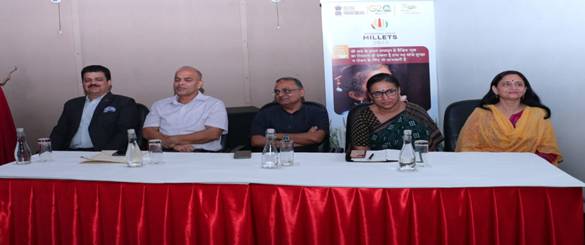
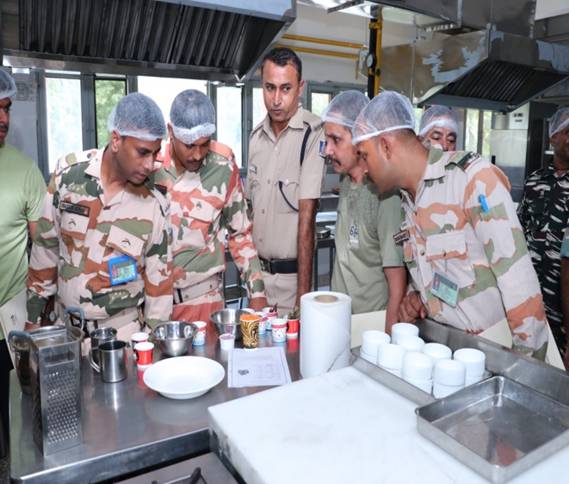
 Department of Agriculture and Farmers’ Welfare is organizing an immersive two-day training programme inviting more than 200 chefs/cooks serving at various paramilitary and other government canteens, focusing on millet-based recipes. The training programme commencing today, aims at encouraging the participant chefs to include simple yet nutritious millet-based items in their respective menus and promote the consumption of millets across wider population. It will familiarize the participants to a variety of millet-based recipes, ranging from simple snacks to wholesome meals, and will encourage them to include it in respective canteens that they work with.

Additional Secretary, Shri Faiz Ahmed Kidwai, Additional Secretary, Smt. Maninder Kaur Dwivedi, and JS (Crops) DA&FW, Smt. Shubha Thakur, along with the other officials attended the event and encouraged the participants to adopt millets in their daily diet and join the ‘millet movement’ of the nation for the benefit of consumer, cultivator and climate.

2.jpeg

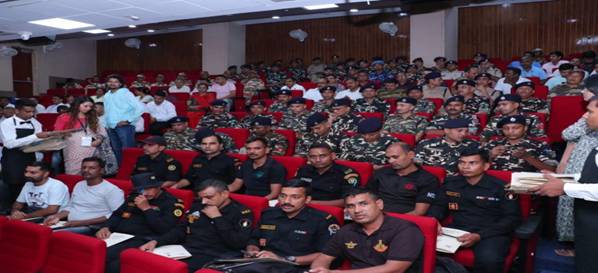
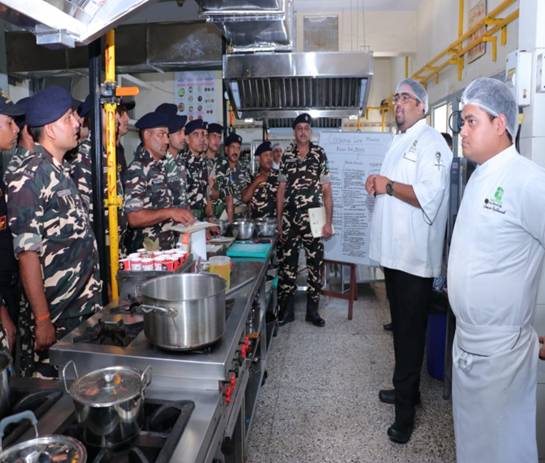
A culinary training session for more than 200 chefs and cooks working with the paramilitary forces, namely, Assam Rifles, Border Security Force (BSF), Central Industrial Security Force (CISF), Central Reserve Police Force (CRPF), Indo-Tibetan Border Police, National Security Guard, Sashastra Seema Bal, and various government canteens is being organized at the Institute of Hotel Management (IHM), PUSA, by the Department of Agriculture and Farmers’ Welfare (DA&FW), Ministry of Agriculture and Farmers’ Welfare.

 1.jpeg

Shri K.K. Pant, Principal, IHM welcomed dignitaries and participants in the auditorium and emphasized millets’ role in meeting holistic nutritional demands of the paramilitary forces. This training has been designed to cater to more than 100 participants each day. After the momentous decision taken by the Ministry of Home Affairs’ (MHA) to introduce Millets (Shree Anna) in the meals of all the forces, the training session will further amplify the overall ‘millet movement’ of India. The decision by MHA to introduce 30% Millets in the meals was taken to champion Millets as an energy-dense food option for paramilitary personnel and aid their physically strenuous routine. Millets are collectively considered to be a ‘superfood’, packed with fibre, minerals, antioxidants, and other essential nutrients critical to human health. The participation of chefs/cooks from the paramilitary forces will ensure that millets become a regular, healthy and delicious component of their diet.

3.jpeg

The participants learnt many interesting recipes, including Bajra Bisi belle Bhaat, Foxtail Millet Poori, Proso Millet Kofta Curry, Brown top Millet Pulao and Ragi Halwa. The training is also being attended by FPOs that displayed the samples of their various millet-based ready-to-cook and ready-to-eat items. It will further expose those present to the versatility of millets as a kitchen ingredient and the ways in which they can be put to culinary use.

  4.jpeg

The training is a part of the ongoing series of events that align with the celebration of 2023 as the International Year of Millets (IYM), undertaken by DA&FW. Millets thrive with minimal intervention, even in water scarce regions, making them a reliable ‘climate-friendly’ alternative to conventional crops. India is trying to encourage the consumption of millets in the country, integrating it with the regular diet of people.

****

Chandrayaan-3 has proved India's capability for cost-effective Space missions

 “Chandrayaan-3 has proved India’s capability for cost-effective Space missions”.

This was stated by Union Minister of State for Space, Dr. Jitendra Singh, while speaking at an interactive meet of intellectuals, prominent citizens and media persons in Indore.

He said, India’s space missions are designed to be cost effective.

The Minister further elaborated saying, “The Russian moon mission, that was unsuccessful, cost Rs.16,000 crore, and our (Chandrayaan-3) mission cost just around Rs.600 crore. Consider, Hollywood films based on Moon & Space Missions cost over Rs.600 crore”.

We have learnt to compensate for cost through our skills, said Dr Jitendra Singh, who is also the Union Minister of State (Independent Charge) Science & Technology; MoS PMO, Personnel, Public Grievances, Pensions, and Atomic Energy.

“Questions will arise, how? We made use of gravitational forces, the spacecraft made about 20 orbits of the earth, each rising in parabola, until it escaped and was captured in the Moon’s gravity and it made 70-80 revolutions of the moon before landing at the designated spot,” he said.

Dr Jitendra Singh said, in order to involve the private sector in R&D efforts, Prime Minister Shri Narendra Modi came out with the “Anusandhan National Research Foundation” Bill, passed by the Lok Sabha in the last session of Parliament, with a budget of Rs.50,000 crore over five years.

“When it is implemented fully, it will be a game-changer. We are planning a unique Public Private Partnership (PPP) entity for which ₹36,000 Cr of the research funding is to come from the private sector, mostly industry whereas the Government will put ₹14,000 crore,” he said.

Dr Jitendra Singh said, under PM Modi India launched a unique initiative which even the US and other countries would envy.

“Two years ago, a provision was made that companies can earmark 10% of their CSR (Corporate Social Responsibility) budget on R&D, earlier this was not so,” he said.

Calling for collective synergy, Dr Jitendra Singh said, we have to get rid of this mutual scepticism between the public and private sector. We can never emerge successful in the geopolitical race by working in silos, the minister said.

“We have to take this off our minds that the Government will and should do everything, those countries that stand developed did not achieve it by depending solely on their government. If today NASA sends rockets for the US, the maximum contribution to such missions is made by private agencies and industry, ” he said.

Stating that no government can provide a Sarkari Naukri to every individual, the Minister said, a responsible government creates job opportunities like PM Modi has done.

“From 350 Startups (in 2014), we now have over one lakh Startups, Startups have sprung up even in Governance technology, which nobody could have imagined earlier. Under Mudra scheme, easy loans of Rs.10-20 lakh are made available to the youth, without mortgage; so, a whole environment has been created to trigger innovation,” he said.

*****

Chandrayaan-3 has proved India's capability for cost-effective Space missions

 “Chandrayaan-3 has proved India’s capability for cost-effective Space missions”.

This was stated by Union Minister of State for Space, Dr. Jitendra Singh, while speaking at an interactive meet of intellectuals, prominent citizens and media persons in Indore.

He said, India’s space missions are designed to be cost effective.

The Minister further elaborated saying, “The Russian moon mission, that was unsuccessful, cost Rs.16,000 crore, and our (Chandrayaan-3) mission cost just around Rs.600 crore. Consider, Hollywood films based on Moon & Space Missions cost over Rs.600 crore”.

We have learnt to compensate for cost through our skills, said Dr Jitendra Singh, who is also the Union Minister of State (Independent Charge) Science & Technology; MoS PMO, Personnel, Public Grievances, Pensions, and Atomic Energy.

“Questions will arise, how? We made use of gravitational forces, the spacecraft made about 20 orbits of the earth, each rising in parabola, until it escaped and was captured in the Moon’s gravity and it made 70-80 revolutions of the moon before landing at the designated spot,” he said.

Dr Jitendra Singh said, in order to involve the private sector in R&D efforts, Prime Minister Shri Narendra Modi came out with the “Anusandhan National Research Foundation” Bill, passed by the Lok Sabha in the last session of Parliament, with a budget of Rs.50,000 crore over five years.

“When it is implemented fully, it will be a game-changer. We are planning a unique Public Private Partnership (PPP) entity for which ₹36,000 Cr of the research funding is to come from the private sector, mostly industry whereas the Government will put ₹14,000 crore,” he said.

Dr Jitendra Singh said, under PM Modi India launched a unique initiative which even the US and other countries would envy.

“Two years ago, a provision was made that companies can earmark 10% of their CSR (Corporate Social Responsibility) budget on R&D, earlier this was not so,” he said.

Calling for collective synergy, Dr Jitendra Singh said, we have to get rid of this mutual scepticism between the public and private sector. We can never emerge successful in the geopolitical race by working in silos, the minister said.

“We have to take this off our minds that the Government will and should do everything, those countries that stand developed did not achieve it by depending solely on their government. If today NASA sends rockets for the US, the maximum contribution to such missions is made by private agencies and industry, ” he said.

Stating that no government can provide a Sarkari Naukri to every individual, the Minister said, a responsible government creates job opportunities like PM Modi has done.

“From 350 Startups (in 2014), we now have over one lakh Startups, Startups have sprung up even in Governance technology, which nobody could have imagined earlier. Under Mudra scheme, easy loans of Rs.10-20 lakh are made available to the youth, without mortgage; so, a whole environment has been created to trigger innovation,” he said.

<

p dir=”ltr”>*****