Experiment 1: Study Basics of OpenMP API

Study Basics of OpenMP API

#include

#include

int main() {

    int size;

    // Get the size of the matrices from the user

    printf(“Enter the size of the matrices: “);

    scanf(“%d”, &size);

    int A[size][size], B[size][size], C[size][size];

    // Get matrix elements from the user for matrices A and B

    printf(“Enter elements for Matrix A:\n”);

    for (int i = 0; i < size; ++i) {

        for (int j = 0; j < size; ++j) {

            printf(“A[%d][%d]: “, i, j);

            scanf(“%d”, &A[i][j]);

        }

    }

    printf(“Enter elements for Matrix B:\n”);

    for (int i = 0; i < size; ++i) {

        for (int j = 0; j < size; ++j) {

            printf(“B[%d][%d]: “, i, j);

            scanf(“%d”, &B[i][j]);

        }

    }

    // Multiply matrices A and B

    #pragma omp parallel for shared(A, B, C) collapse(2)

    for (int i = 0; i < size; ++i) {

        for (int j = 0; j < size; ++j) {

            C[i][j] = 0;

            for (int k = 0; k < size; ++k) {

                C[i][j] += A[i][k] * B[k][j];

            }

        }

    }

    // Display the result matrix C

    printf(“\nResult Matrix C:\n”);

    for (int i = 0; i < size; ++i) {

        for (int j = 0; j < size; ++j) {

            printf(“%d “, C[i][j]);

        }

        printf(“\n”);

    }

    return 0;

}

Experiment 2: Message Passing Interface MPI

MPI Sum of an Array

#include
#include
#include

int main(int argc, char* argv[]) {
int pid, np, elements_per_process, n_elements_received;

MPI_Status status;

// Creation of parallel processes
MPI_Init(&argc, &argv);

// find out process ID and how many processes were started
MPI_Comm_rank(MPI_COMM_WORLD, &pid);
MPI_Comm_size(MPI_COMM_WORLD, &np);

// master process
if (pid == 0) {
int n;

printf(“Enter the size of the array: “);
scanf(“%d”, &n);

// dynamically allocate array ‘a’
int* a = (int*)malloc(n * sizeof(int));

// input array elements
printf(“Enter %d elements for the array:\n”, n);
for (int i = 0; i 1) {
// distribute the portion of the array
// to child processes to calculate
// their partial sums
for (i = 1; i < np – 1; i++) {
index = i * elements_per_process;

MPI_Send(&elements_per_process, 1, MPI_INT, i, 0, MPI_COMM_WORLD);
MPI_Send(&a[index], elements_per_process, MPI_INT, i, 0, MPI_COMM_WORLD);
}

// last process adds the remaining elements
index = i * elements_per_process;
int elements_left = n – index;

MPI_Send(&elements_left, 1, MPI_INT, i, 0, MPI_COMM_WORLD);
MPI_Send(&a[index], elements_left, MPI_INT, i, 0, MPI_COMM_WORLD);
}

// master process adds its own sub-array
int sum = 0;
for (i = 0; i < elements_per_process; i++)
sum += a[i];

// collects partial sums from other processes
int tmp;
for (i = 1; i < np; i++) {
MPI_Recv(&tmp, 1, MPI_INT, MPI_ANY_SOURCE, 0, MPI_COMM_WORLD, &status);
int sender = status.MPI_SOURCE;

sum += tmp;
}

// prints the final sum of the array
printf("Sum of array is: %d\n", sum);

// free dynamically allocated memory
free(a);
}
// slave processes
else {
MPI_Recv(&n_elements_received, 1, MPI_INT, 0, 0, MPI_COMM_WORLD, &status);

// dynamically allocate array 'a2'
int* a2 = (int*)malloc(n_elements_received * sizeof(int));

// store the received array segment in local array 'a2'
MPI_Recv(a2, n_elements_received, MPI_INT, 0, 0, MPI_COMM_WORLD, &status);

// calculate the partial sum
int partial_sum = 0;
for (int i = 0; i < n_elements_received; i++)
partial_sum += a2[i];

// send the partial sum to the root process
MPI_Send(&partial_sum, 1, MPI_INT, 0, 0, MPI_COMM_WORLD);

// free dynamically allocated memory
free(a2);
}

// cleans up all MPI state before the exit of the process
MPI_Finalize();

return 0;
}

Experiment 3: RMI Techniques

Java RMI Sum Program

Experiment 4: Publisher/Subscriber Paradigm

Pub/Sub RabbitMQ 

Experiment 5: Web Service using Flask
Flask Web Service

Empowerment of Persons with Disabilities (Divyangjan)-2023 on International Day of Persons with Disabilities

 The President of India, Smt. Droupadi Murmu will be the Chief Guest on the ‘International Day of Persons with Disabilities’ to be organized by the Department of Empowerment of Persons with Disabilities (Divyangjan), Union Ministry of Social Justice & Empowerment on 3rd December, 2023 at Vigyan Bhawan in New Delhi. President Smt. Droupadi Murmu will confer prestigious National Awards to outstanding Persons with disabilities (Divyangjan) and Individuals/organizations, who are working for the Empowerment of Persons with Disabilities. 

Union Minister for Social Justice & Empowerment Dr. Virendra Kumar will preside over the function, while Union Ministers of State for Social Justice & Empowerment Shri Ramdas Athawale, Shri A. Narayanaswamy and Ms. Pratima Bhoumik will also grace the occasion.

On the occasion of the International Day of Persons with Disabilities i.e. 3rd December, the Department of Empowerment of Persons with Disabilities (Divyangjan), Ministry of Social Justice and Empowerment confers National Awards on Individuals, Institutions, Organizations, State/District etc for their outstanding achievements and work done towards empowerment of Persons with Disabilities every year.

National Awards for the Empowerment of Persons with Disabilities for the year 2023, are being given under following categories:-

I           National Award for Empowerment of Persons with Disabilities-2023 Individual Excellence

1) Sarvshrestha Divyangjan

2) Shrestha Divyangjan

(A) Locomotor Disability- (Locomotor, Muscular Disability. Dwarfism, Acid Attack VictiSushri, Leprosy Cured, Cerebral Palsy)

(B) Visual Impairment – (Blindness, Low Vision)

(C) Hearing Impairment (Deaf, Hard of Hearing, Speech & Language disability.

(D) Intellectual Disability (Mental Retardation, Mental Behavior, Specific Learning Disability, Autism Spectrum Disorder)

(E) Any specified disability except the disabilities mentioned from Sr. (a) to (d) above.  

3) Shrestha Divyang Bal/Balika  

4) Sarvshrestha Vyakti – Divyangjano Ke Sashaktikaran Ke Liye Karyarath

5) Sarvshrestha Punarvas Peshevar (Rehabilitation Professional/ worker) – Divyangatha  Ke Kheshtra Mein Karyarath  

II.  National Award for Institutions engaged in Empowering Persons with Disabilities-2023

 a. Divyang Sashaktikaran Hetu Sarvshrestha Sansthan (Private organization, NGO)

 b. Divyangao Ke Liye Sarvshrestha Niyoktha – (Govt.organisation/ PSEs/Autonomous bodies /Pvt. Sector)  

      c. Sugamya Bharat Abhiyan KeKaryanvayan/Badhamukta Vatavaran Ke Srijan Mein Sarvshrestha Rajya/UT/Zila  

d. Sarvshrestha Sugamya Yatayat ke Sadhan/Soochana Ewam Sanchar Prodyogiki (Govt./Private organization)  

e. Divyangjano Ke Adhikar Adhiniyam/UDID Evam Divyang Sashktikaran ki Anya Yojanaon ke Karyanvayan Mein Sarvshrestha Rajya/UT/Zila  

f. Divyangjano Ke Adhikar Adhiniyam, 2016 Ke Apne Rajya Mein Karyanvayan Mein Sarvshrestha Rajya Divayngjan Aayukta

g. Punarvaas Peshewaron Ke Vikas Mein Sanlagn Sarvshrestha  Sangathan   

NationalAwards for the Empowerment of Persons with Disabilities (Divyangjan), 2023

*****

"Bio-vision" for Bharat

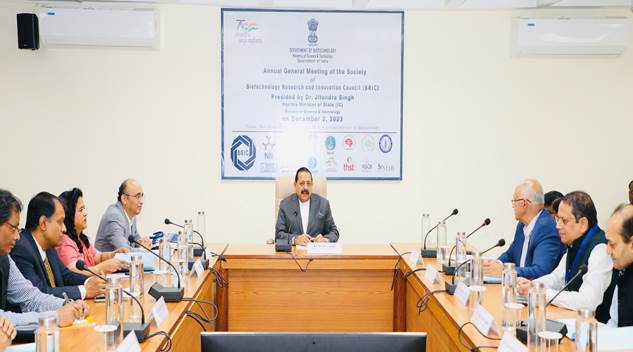
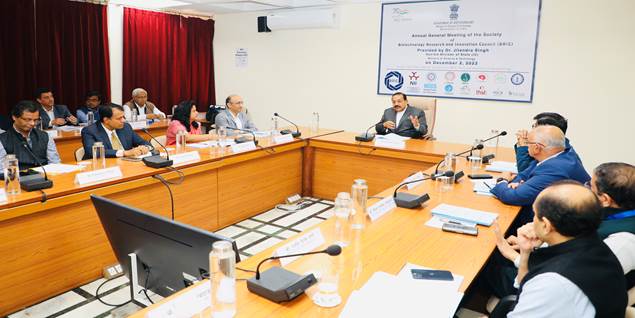
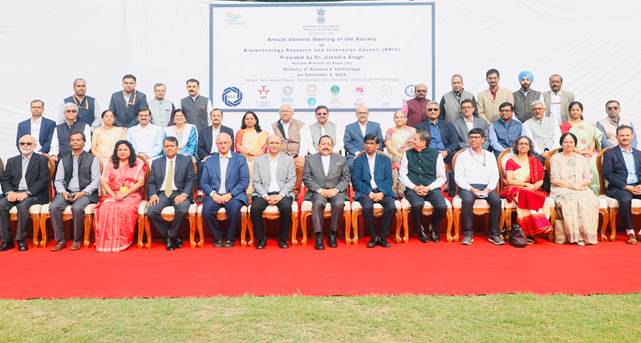
 Addressing the first-ever meeting of the BRIC Society after its registration on 10th November, 2023 after getting the Cabinet approval, Union Minister of State (Independent Charge) Science & Technology; MoS PMO, Personnel, Public Grievances, Pensions, Atomic Energy and Space, Dr Jitendra Singh said here today that time has come for defining “Bio-vision” for Bharat.

Dr Jitendra Singh today said that the new Apex Autonomous Society called Biotechnology Research and Innovation Council (BRIC) will fulfil Prime Minister Narendra Modi’s Vision for Atma Nirbhar Bharat in areas like healthcare, food and energy needs by scaling biotech research and innovation.

Dr Jitendra Singh said, Indian Bio-economy recorded 13 times increase in the last ten years.

The Minister quoted PM Modi as saying, “India is not too far from reaching the league of top-10 countries in Biotech’s global ecosystem”. He added that BRIC is going to be a testimony to this and again by inculcating the spirit of Sabka Prayas, the government is bringing together the best minds on a unified platform.

Dr Jitendra Singh informed that the Department of Biotechnology (DBT), Ministry of Science and Technology is functioning as the nodal agency for promotion of Biotechnology in the country. It was accorded the Cabinet approval for rationalization of its 14 Autonomous Institutions (AIs) by subsuming them under one Apex Autonomous Society viz. Biotechnology Research and Innovation Council (BRIC), for centralized and unified governance to maximize impact of biotech research across the country.


Dr Jitendra Singh described the BRIC meeting as a historical event in India’s Biotech Ecosystem, where elite institutions are consolidating their efforts to impact the biotech R&D ecosystem. He expressed hope that BRIC will prospectively enrich India’s progress in every front including economy and employment. The Minister said, as accomplished institution-builders, he would like to seek their views for defining the Bio-Vision for Bharat in this significant meeting, as they are supposed to bring in tremendous value to this noble mission.

Dr Jitendra Singh also pointed out that this is one of the first Departments in the Government of India to have successfully executed “Rationalization of Autonomous Bodies” for process and performance enhancement of its Autonomous bodies.

Dr Jitendra Singh said, some of the significant changes that will be driven by BRIC include that each of the 14 subsumed BRIC Institutions will maintain their distinct research mandates, governed by one Governing Body, at BRIC. He said, Institutes would be allowed utilization of institutional lab space, not exceeding one third, for researchers from outside DBT institutes and their collaborators (from industry or other institutes) to carry out R&D for start-ups emerging out of institutional research.

Dr Jitendra Singh also underlined that BRIC and its Institutes can engage in public-private research partnerships and receive endowments including funds from non-Governmental resources for research-related activities.

Dr Jitendra Singh also added that new Ph.D programs across BRIC institutions with a common course curriculum at RCB and immersion training for field or experimental studies for validating research hypotheses prior to thesis work. During the Immersion phase (for about 3 months) students will get additional fellowships from Grand Challenges India program. Additionally, to enhance the scientific character of the institutions, additional 120 scientific positions are being brought in. Parity across levels and cadres are also being pursued. Further improving service prospects for scientists are also being taken up, the Minister added.


The DBT initiated this restructuring activity as per the directives on “Rationalization of Autonomous Bodies” issued by Department of Expenditure, Ministry of Finance. However, they have used it as an opportunity to introspect and overhaul the way research is conducted across the DBT institutions. It is envisioned to improve governance, efficiency, encourage collaborations through greater interdisciplinary interactions and democratize resources. The compliance to governmental processes and administrative issues will be centrally managed in a coordinated effort thereby achieving “Minimum Government, Maximum Governance”.

The 14 institutes to be governed by the Society of the new Apex Body of BRIC are: :i) National Institute of Immunology (NII, New Delhi); ii) National Center for Cell Science (NCCS, Pune); iii) Institute of Life Sciences (ILS, Bhubaneshwar); iv) Rajiv Gandhi Centre for Biotechnology (RGCB, Thiruvananthapuram); v) Centre for DNA Fingerprinting & Diagnostics (CDFD, Hyderabad); vi) National Brain Research Centre (NBRC, Manesar); vii) National Institute for Plant Genome Research (NIPGR, New Delhi); viii) Institute of Bioresources and Sustainable Development (IBSD, Imphal); ix) National Institute of Animal Biotechnology (NIAB, Hyderabad); x) Institute for Stem Cell Science and Regenerative Medicine (inStem, Bangalore); xi) National Institute of Biomedical Genomics (NIBMG, Kalyani); xii) Translational Health Science and Technology Institute (THSTI, Faridabad); xiii) National Agri-Food Biotechnology Institute (NABI, Mohali); xiv) Center of Innovative and Applied Bioprocessing (CIAB, Mohali). NABI and CIAB have been merged into one administrative unit with one Director.

Dr. Jitendra Singh today also launched the ‘Zero Waste Life on Campus’ program on the occasion of first Society Meeting of BRIC.

The ‘Zero Waste Life on Campus’ program is aimed at achieving sustainability through application and adoption of knowledge and technologies, and promotion of management models focused on co-responsibility, on each BRIC campus. The diverse locations, cultures and climatic conditions of the 13 BRIC campuses will provide an opportunity to understand the benefits and challenges related to recycling technologies and techniques. This program will forge a new direction for research towards integrated waste management by the community at large.

The Minister in his remarks said that this is a people centric movement that will serve as a beacon leading India into sustainable waste management. This programme will strengthen collaborations among all these institutions and also serve a catalyst for other institutions across India to follow the concept of Zero Waste.

This program is aligned with Prime Minister Shri Narendra Modi’s Mission LiFE movement said, Dr Jitendra Singh.

<

Floor Leaders of Political Parties ahead of Winter Session of Parliament

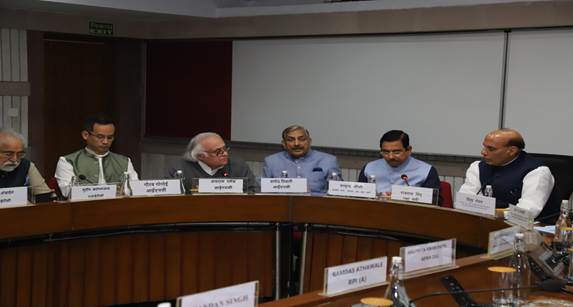
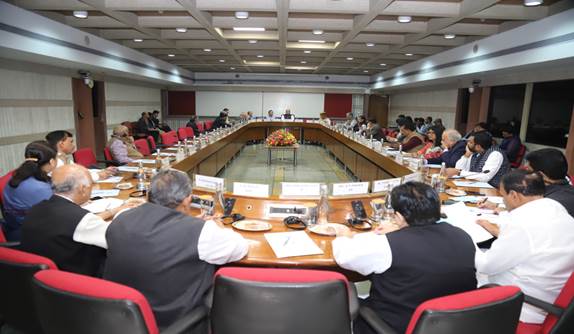
 A meeting of the Government with Floor Leaders of all Political Parties was held under the Chairmanship of Defence Minister, Shri Rajnath Singh, here today, before the start of the Winter Session of Parliament, 2023. In his opening address, Union Minister for Parliamentary Affairs, Shri Pralhad Joshi informed that the Winter Session of Parliament will commence on Monday, the 4th December, 2023 and subject to exigencies of Government Business, the session may conclude on Friday, the 22nd December, 2023. The Session will provide 15 sittings spread over a period of 19 days. He also informed that tentatively 19 items of Legislative Business and 2 items of Financial Business have been identified for being taken up during this session.


Union Minister for Parliamentary Affairs further stated that the Government is always ready to discuss on the floor of the House, any issue as permitted under Rules of Procedure by respective Presiding Officers. He also requested all party leaders for active cooperation and support for the smooth functioning of the two Houses of Parliament. The meeting was also attended by Minister of State (Independent Charge) of the Ministry of Law and Justice; Minister of State in the Ministry of Parliamentary Affairs and Minister of State in the Ministry of Culture,  Shri Arjun Ram Meghwal.

Concluding the meeting, after listening to the points raised by the leaders of various political parties in both Houses of Parliament, Defence Minister, Shri Rajnath Singh thanked leaders for raising important issues in the meeting and stated that Government is ready for discussion on all these issues as per the rules of the respective Houses of Parliament and with the permission of the concerned Presiding Officers.

In total, meeting was attended by Thirty(30) Leaders from Twenty Three political parties.

LIST OF BILLS LIKELY TO BE TAKEN UP DURING THE 14TH SESSON OF 17TH LOK SABHA AND 262nd SESSION OF RAJYA SABHA

I – LEGISLATIVE BUSINESS:-

  1. The Repealing and Amending Bill, 2023, as passed by Lok Sabha.
  2. The Advocates (Amendment) Bill, 2023, as passed by Rajya Sabha.
  3. The Press and Registration of Periodicals Bill, 2023, as passed by Rajya Sabha.
  4. The Constitution (Jammu and Kashmir) Scheduled Castes Order (Amendment) Bill, 2023
  5. The Constitution (Jammu and Kashmir) Scheduled Tribes Order (Amendment) Bill, 2023
  6. The Jammu and Kashmir Reservation (Amendment) Bill, 2023
  7. The Jammu and Kashmir Reorganisation (Amendment) Bill, 2023
  8. The Bharatiya Nyaya Sanhita, 2023
  9. The Bharatiya Nagarik Suraksha Sanhita, 2023
  10. The Bhartiya Sakshya Adhiniyam, 2023
  11. The Post Office Bill, 2023
  12. The Chief Election Commissioner and other Election Commissioners (Appointment, Conditions of Service and Term of Office) Bill, 2023
  13. The Boilers Bill, 2023
  14. The Provisional Collection of Taxes Bill, 2023
  15. The Central Goods and Services Tax (Second Amendment) Bill 2023
  16. The Jammu and Kashmir Reorganization (Amendment) Bill, 2023
  17. The Government of Union Territories (Amendment) Bill, 2023
  18. The National Capital Territory of Delhi Laws (Special Provisions) Second (Amendment) Bill, 2023
  19. The Central Universities (Amendment) Bill, 2023


II – FINANCIAL BUSINESS:-

  1. Presentation, Discussion and Voting on First Batch of Supplementary Demands for Grants for the year 2023-24 and introduction, consideration and passing of the related Appropriation Bill.
  1. Presentation, Discussion and Voting on Demands for Excess Grants for the year 2020-21 and introduction, consideration and passing of the related Appropriation Bill.

***

India’s economy and global respect and credibility of India have increased manifold

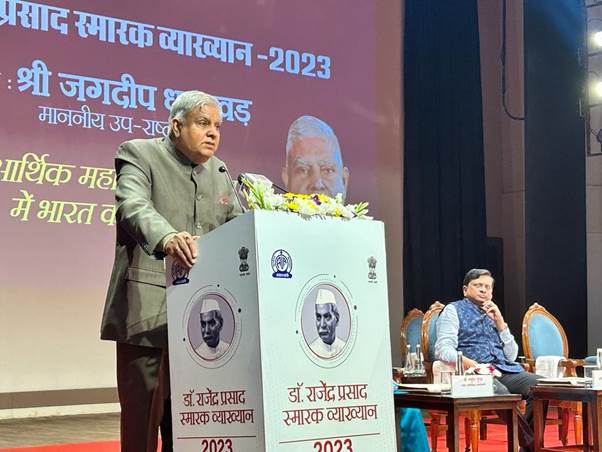
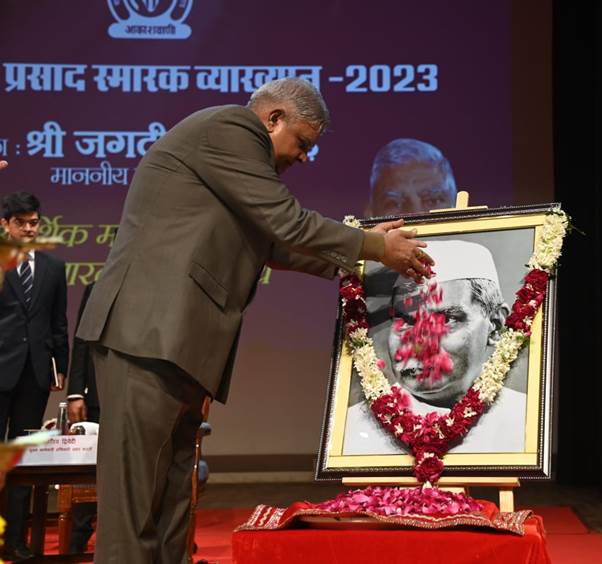
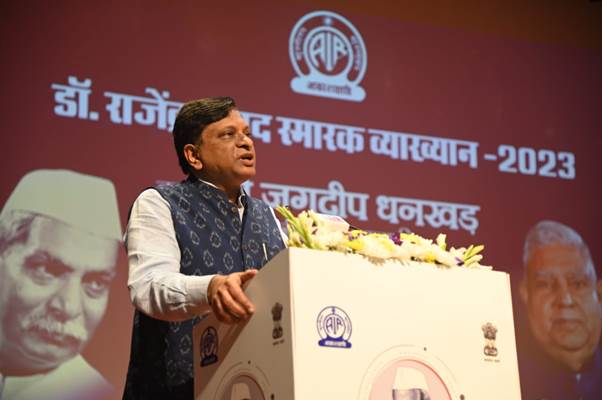
 Vice President of India Shri Jagdeep Dhankhar today delivered the Dr. Rajendra Prasad Memorial Lecture, being organized by Akashvani since 1969 in the memory of the first President of India, Dr. Rajendra Prasad. The topic for this year’s lecture was “Emergence of India as an Economic Superpower”. Addressing the gathering at Broadcasting House, Akashvani, New Delhi, the Vice President said that India’s economy as well as its global respect and credibility has increased manifold in the recent years. “Today, the countries of the world want to listen to India and respect its views and the entire world has recognized the skills and talent of India’s youth. The African Union was granted membership of G20 under India’s G20 Presidency. This is the result of India’s increasing credibility and respect in the world.”

The Vice President pointed out that a decade ago, the Indian economy was counted among the fragile five, but that today it is the fifth largest economy in the world. “The nation has achieved this feat due to the hard work of 140 crore citizens and efficient leadership. India has become the first country in the world to reach the southern end of the Moon. The country has made several achievements in the field of digital public infrastructure and digital payments as well.”

Taking about Prime Minister Narendra Modi’s Mann Ki Baat programme, the Vice President said that it is probably the first programme in the history of radio, which is so regular and has completed the journey of 107 episodes. “The Prime Minister chose radio to communicate with the people and through it, he created a communication revolution. Mann Ki Baat has become Jan Ki Baat of the country and reaches the hearts of the people.”

Image

The Vice President said that the production of some basic goods is necessary to strengthen any country and its economy. “It hurts a lot when India imports small items like candles, lamps, children’s toys and kites. Today, when India is emerging as an economic superpower, there is a need to ensure that the people remain connected to country’s roots and culture.” The Vice President also called upon the citizens to foil the attempts of those tarnishing the image of the country.

Underlining that the country’s youth have the power to take India to the top in Amritkaal, Shri Dhankhar said that India’s re-emergence as a world leader is possible only when every person of the country discharges their duties.

The full text of the Vice President’s lecture can be accessed here.

Image

Image

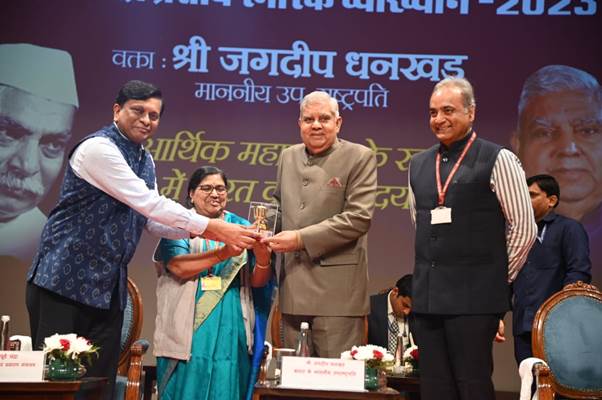
In his welcome address, Union Information and Broadcasting Secretary Shri Apurva Chandra said that Dr. Rajendra Prasad taught us that the post of President should be independent, non-partisan and outside party politics. The path laid by him is continuing to this day, wherein constitutional posts such as those of President, Vice President and Governor of states are kept out of politics, he added. The Secretary pointed out that Dr. Rajendra Prasad is the only President who served two full terms, having served as the first President of independent India, from 1950 – 1962.

Image

The Secretary recalled that Akashvani has been organizing Dr. Rajendra Prasad Memorial Lecture on December 3, the birth anniversary of Dr. Rajendra Prasad, since 1969.

The Lectures seek to thoroughly evaluate the nation’s political, social and cultural environment. The achievements and the future prospects of the country are also critically analyzed in these lectures. Noted scholars and thinkers of India deliver the Lectures on a subject of their choice before an invited audience.

The first Lecture of this series was delivered in 1969 by Hindi litterateur and thinker, Dr. Hazari Prasad Dwivedi. Former President Dr. Shankar Dayal Sharma, former Prime Ministers Shri Atal Bijari Vajpayee, Shri Chandrashekhar and Shri Vishwanath Pratap Singh; Uttar Pradesh Chief Minister Shri Yogi Adityanath; political leaders Shri Vishambhar Nath Pandey and Shri Yashvant Sinha;  litterateurs Smt. Mahadevi Verma, Shri Agyey, Shri Harivansh Rai Bachchan, Dr. Vidyanivas Mishra, Shri Bhishma Sahni, Smt. Gaura Pant Shivani and Shri Krishna Chandra Sharma Bhikkhu are among the distinguished people who have delivered this lecture in the past.

Prasar Bharati CEO Gaurav Dwivedi; Principal Director General, Akashvani News Dr. Vasudha Gupta, officials of Prasar Bharati and I&B Ministry and students of schools and colleges in Delhi attended the programme, at Akashvani’s office in Broadcasting House, New Delhi. The lecture can be watched here.

***

'Smriti Parv' programme organized on the birth centenary of Shri Divyakant Nanavati Ji in Junagadh, Gujarat

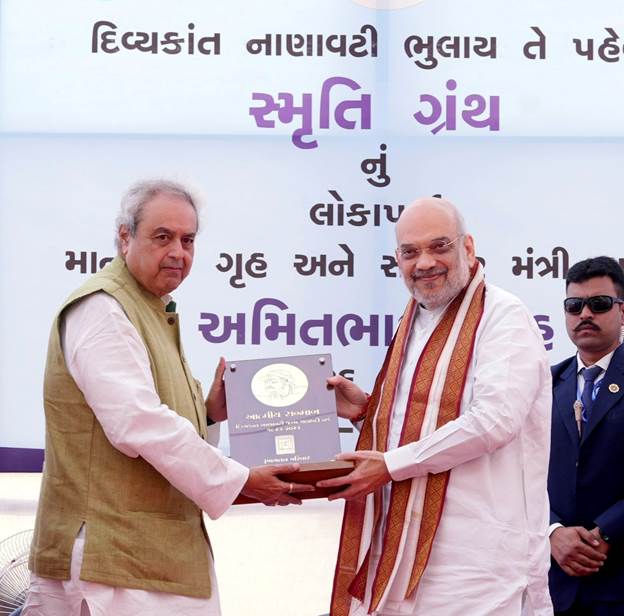
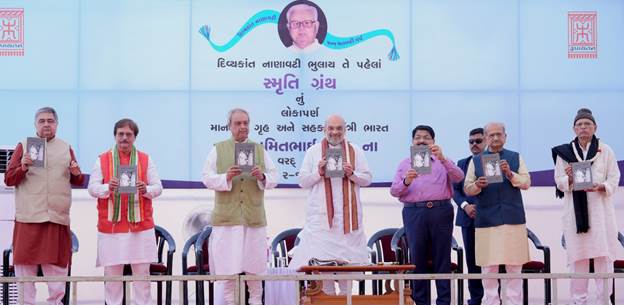
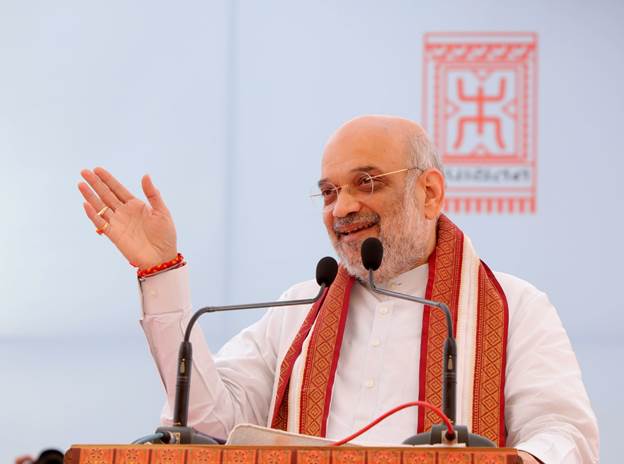
 Union Home Minister and Minister of Cooperation, Shri Amit Shah addressed the ‘Smriti Parv’ programme organized on the birth centenary of Shri Divyakant Nanavati in Junagadh, Gujarat today.

In his address, Shri Amit Shah said that Shri Divyakant Nanavati was one of those people who lived for the society and the people. He said that Rupayatan Sanstha has published such a book today which will definitely prove to be a guide for the leaders of the new generation. Shri Shah said that if someone remembers a person even after 100 years, it means that person’s life has been truly meaningful. Shri Divyakant ji was MLA for two consecutive terms and was also the Law and Justice Minister in the Government of Gujarat and he made numerous contributions not only to Junagadh but also to the public life of Gujarat.

The greatest personality of Bhakti Sahitya, Shri Narsingh Mehta Ji dedicated his entire life to literature and it is impossible to find an excellent litterateur like him. He said that Shri Mehta presented all the secrets of Vedas and Upanishads in front of the people in a concise manner and lucid language. He said that only Shri Narsingh Mehta Ji could have the courage to oppose untouchability at that time. Shri Shah said that if we want to know about social justice then we will have to understand Shri Narsingh Mehta Ji. He said that on this sacred land of Shri Narsingh Mehta Ji, Rupayatan Sanstha has published a book in the memory of son of the soil Shri Divyakant ji. It will definitely become an inspiration for the people working in public life of Junagadh and Gujarat.

Shri Amit Shah said that Rupayatan Sanstha is also doing very good work on various dimensions of social life for the last 75 years. He said that Shri Bhikhudan ji has done the work of transmitting the art of Gujarat and Saurashtra from the older generation to the new generation. He said that Shri Bhikhudan Gadhvi was a bridge between the generation of Shri Kaag Bapu and today’s litterateurs and he has made immense contribution to the literature of Gujarat. Shri Shah said that when Shri Narendra Modi became the Prime Minister, he recognized the contribution of Shri Bhikhudan ji and honored him with Padma Shri award. He said that Prime Minister Shri Narendra Modi has made complete arrangements so that the deserving person of the country can be honored with Padma Award.

*****

‘Mati Kala Mahotsav’ in Ahmedabad, Gujarat

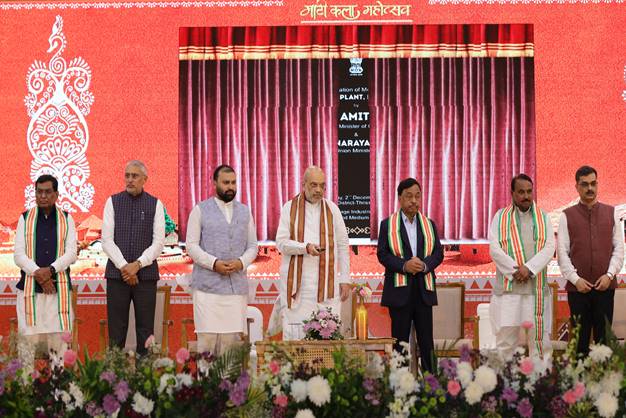
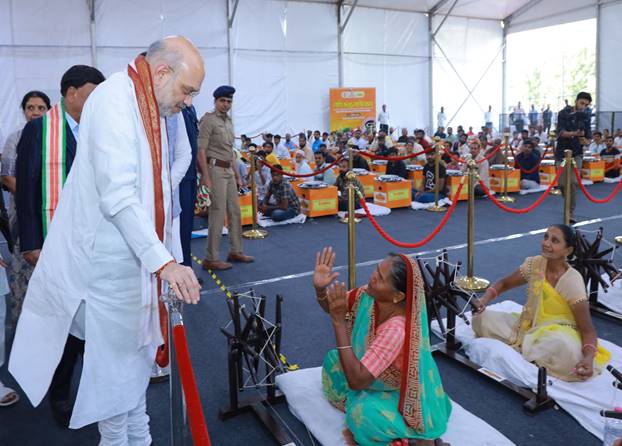
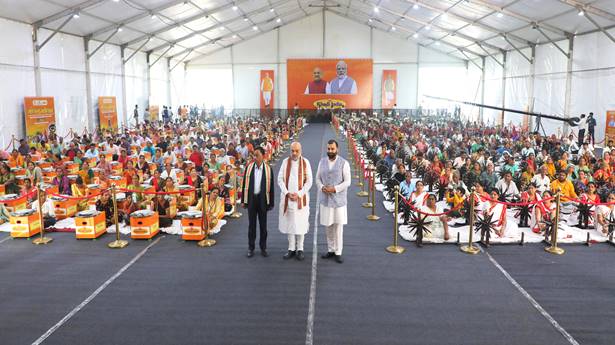
 Union Home Minister and Minister of Cooperation, Shri Amit Shah addressed the Mati Kala Mahotsav in Ahmedabad, Gujarat, today. Many dignitaries including Union Minister Shri Narayan Rane and Shri Bhanupratap Singh Verma were present on this occasion.

In his address, Shri Amit Shah said that Khadi Mati Kala Mahotsav is a multidimensional idea which has been taken forward by Prime Minister Shri Narendra Modi. He said that the idea of Khadi was first put forward by Mahatma Gandhi in front of everyone by linking it with the freedom movement and through this, Bapu worked to connect all the people living in poverty with employment. Along with this, Gandhi Ji worked towards reducing the demand for foreign clothes and spread the spirit of Swadeshi and Swaraj to every village. Shri Shah said that even today the idea of Khadi is multi-dimensional and multi-purpose. He said that Prime Minister Modi has not only revived the idea of Khadi but also worked to popularize Khadi by taking it forward and to the common people.

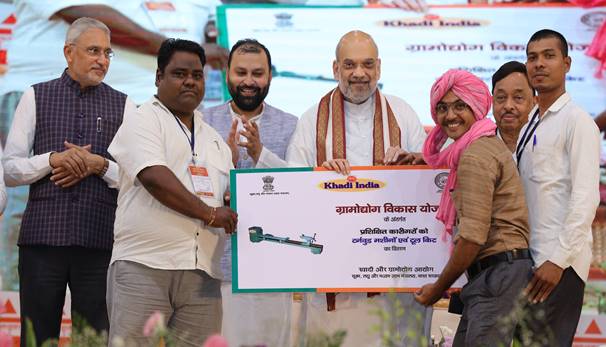
The Union Home Minister and Minister of Cooperation said that Prime Minister Shri Narendra Modi has done the work of linking Swadeshi and employment in the call of “Vocal for Local”. He said that it is because of the vision of Shri Modi that the dying Khadi movement is touching new dimensions today. Under the leadership of Shri Modi, India has become the fastest growing economy in the world. Shri Shah added that under the leadership of Shri Modi the economic development of the country is taking place and along with this, Prime Minister Modi has also taken many steps to make the economy all-inclusive. He said that increasing the turnover of Khadi to three times means providing employment to crores of people and when these people become self-reliant then the increasing GDP figure becomes humane. This also brings confidence, self-reliance and happiness in the lives of crores of people. He said that today in this Khadi Mati Kala Mahotsav, 300 electric potter wheels, 40 agro-based food processing industry tool kits, 40 incense stick making machines to women, 20 plumbing kits and more than 200 traditional charkhas have been given.

Shri Amit Shah said that today a Central Silver Plant (CSP) has been inaugurated which is very important for the production of Khadi. He said that this CSP which was built 30 years ago, has been modernized at a cost of Rs 10 crore, due to which production will increase, quality will improve and all the material of the people spinning Khadi will be utilized. Shri Shah said that today 8 newly constructed post offices have also been inaugurated virtually where many facilities like mail, parcel booking, Aadhaar services, banking postal services, life insurance, rural postal life insurance and digital certificates for pensioners will be available. He said that now all the people of Gandhinagar area do not need to go anywhere to get a passport, now they can get the application processed from their nearest post office. He added that these same post offices had sent 53,000 national flags under the Har Ghar Tiranga Abhiyan in Gandhinagar area. Shri Shah said that when Prime Minister Modi had conceived this campaign, no one had anticipated that this campaign would become such a huge success for awakening the spirit of patriotism. He said that from Kashmir to Kanyakumari and Dwarka to Kamakhya, there was no building left without our Tricolour being hoisted and this campaign revived the spirit of patriotism.


The Union Home Minister said that today, under PMEGP, online payment of margin money of about Rs 200 crore has been made to 5000 beneficiaries across India including Gujarat, which will enable them to get a loan of Rs 600 crore. He said that Khadi Village Industries has made a lot of progress in the last 9 years. Shri Shah said that Shri Modi gave priority to Khadi and as a result the total turnover of Khadi has crossed Rs 1,35,000 crore in 2022-23. At least 1 lakh people have contributed to this turnover of Rs 1,35,000 crore. Today lakhs of people have achieved their livelihood through this turnover of Rs 1,35,000 crore and they are living with dignity.

The Union Home Minister requested the people of Gujarat and the country that every family should promote Khadi by purchasing Rs 5,000 worth Khadi or products of Khadi Village Industries in a year. He said that if every family in the country buys Khadi worth Rs 5000, the number of unemployed people in the country will decrease by more than half.

****

New India has democratized opportunities

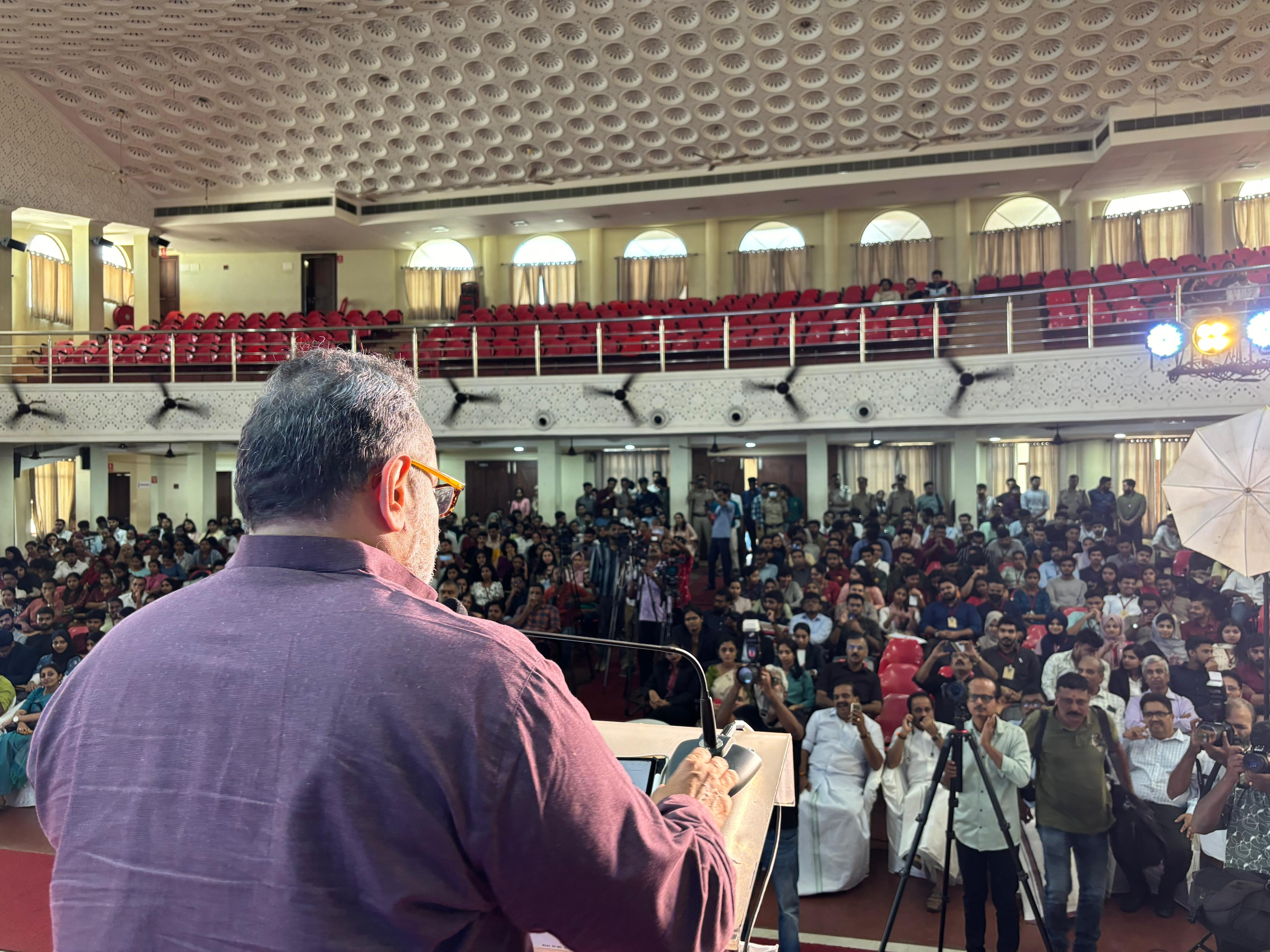
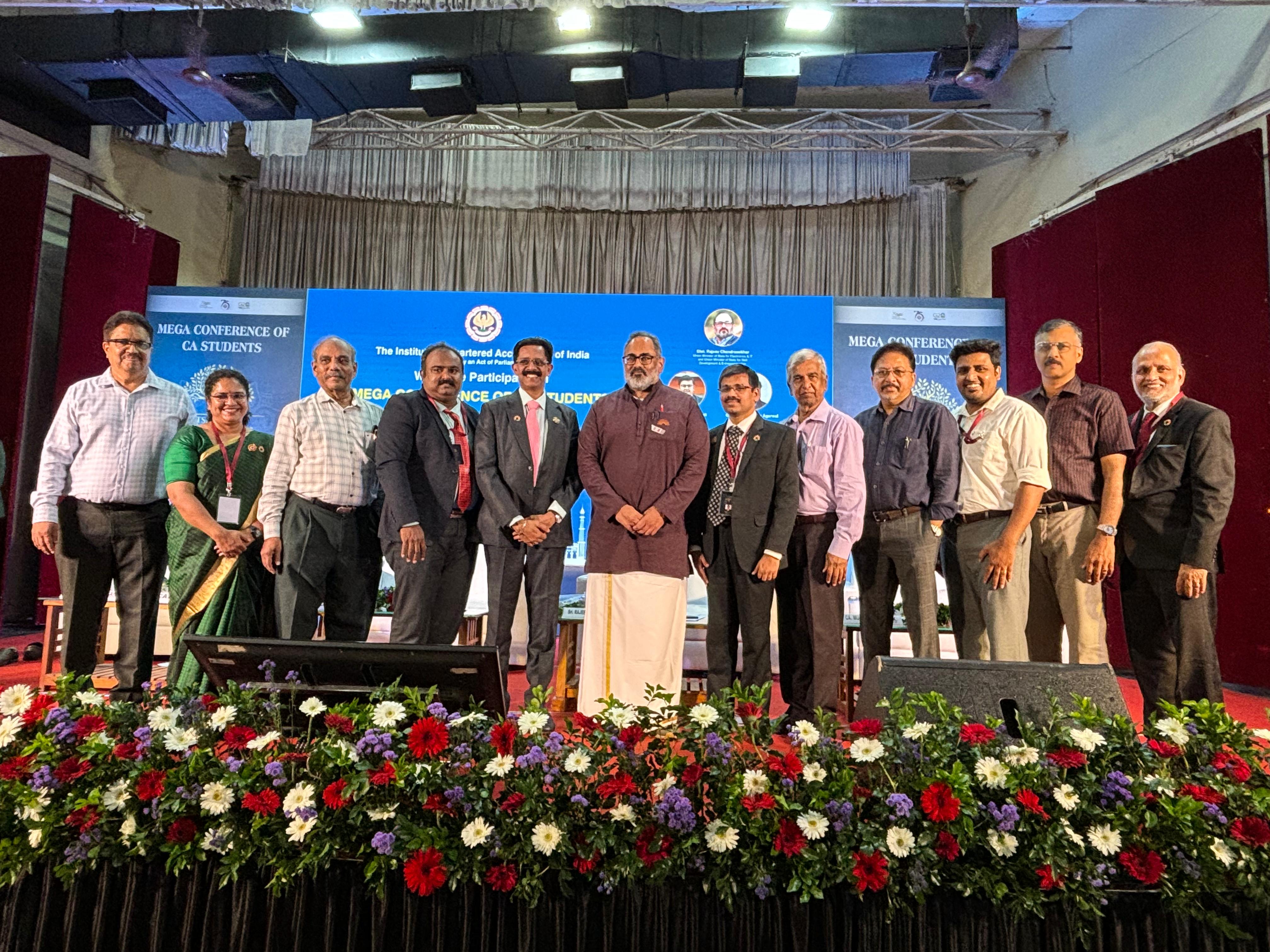
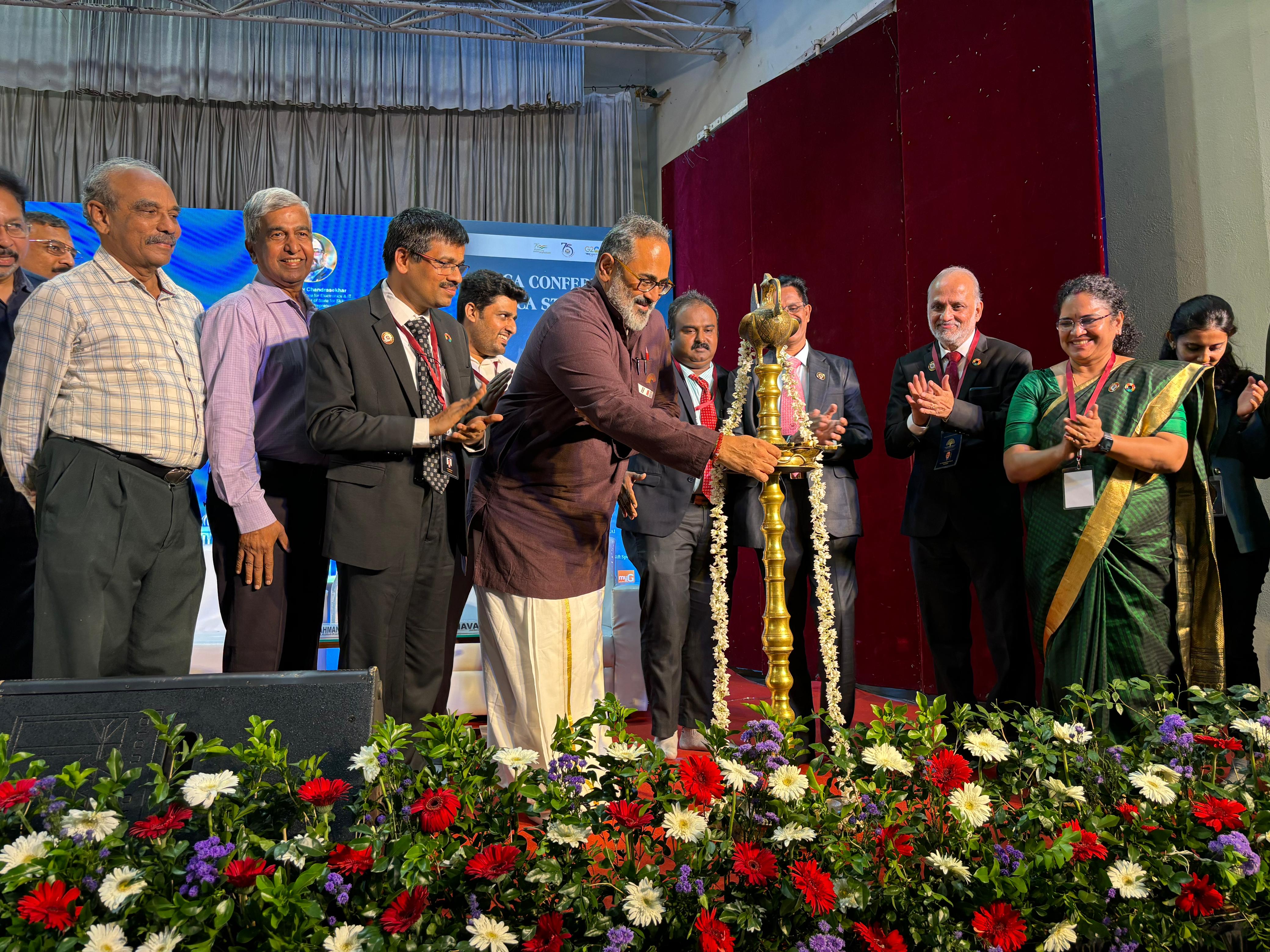
 Union Minister of State for Skill Development & Entrepreneurship and Electronics & IT, Shri Rajeev Chandrasekhar, continued his engagements in Kerala on Day 2 of his visit with an address at the Satsang 2023 Mega-Conference for CA students at Nalanda Auditorium, Kozhikode. The event, organized by the Institute of Chartered Accountants of India, focused on the theme “Insight – Discover the Unseen!”

In his address, Minister Shri Rajeev Chandrasekhar emphasized how New India is leveraging technology to create opportunities for young Indians and startups. He said, “As a Minister, I’ve had the opportunity to travel across the country, engaging with students, and discussing their concerns. One undeniable truth I’ve discovered is that young Indians in this generation are the luckiest in the history of Independent India. They possess unprecedented opportunities for growth and success, unlike any previous generation in the history of independent India. The older generation didn’t have these options; upon graduation, they were limited to just two or three choices.”

Highlighting the democratization of opportunities over the last decade, the Minister expressed, “Today, young Indians from cities like Calicut, Vizag, Bengaluru, Kohima, Surat, or Kashmir have tremendous opportunities. Over the last five years alone, we’ve witnessed the emergence of 1.2 lakh startups and 108 unicorns. The need for a godfather or a famous last name to succeed is obsolete. New India has democratized opportunities, building an enabling environment for success. Whether in semiconductors, Web3, electronics, HPC, or any tech-related field, Indians are excelling in all things tech, and young Indians are at the forefront of these opportunities.”

Encouraging CA students to embrace digital skills, Shri Rajeev Chandrasekhar stated, “Our Prime Minister emphasized the importance of skills alongside degrees and knowledge, especially in the post-Covid world of rapid digitization, digital technologies, and unprecedented electronification. I urge aspiring CAs today to acquire digital skills. Combining these skills with the existing accountancy knowledge will make you unstoppable. India is an unstoppable country. Every CA today has the potential to become catalysts for not just their own success, but the success of their profession, and the overall Indian economy.”

At an event organized by Kozhikode CSC VLE Welfare society, Minister Rajeev Chandrasekhar spoke about the goal of launching Common Service Centre (CSC) 2.0 to further the objectives set by PM Vishwakarma Yojana.

The Minister said, “PM Vishwakarma Yojana is a groundbreaking scheme for artisans who have been ignored for decades. This will certify unskilled artisans, and CSCs hold immense importance in connecting these artisans to schemes. Although CSCs have been successful nationwide, they have faced some hurdles in Kerala, which we are keen on resolving. We will further expand, modernize, and broaden the scope of this initiative.”

Minister Shri Rajeev Chandrasekhar also engaged with prominent citizens of the state in subsequent meetings, where he highlighted PM’s vision of “Vikasit Bharat”.

*****

National Best Tourism Village and National Best Rural Homestays Competition 2024

 Ministry of Tourism has launched National Best Tourism Village Competition 2024 and the National Best Rural Homestay Competition 2024 to strengthen the promotion and development of Rural Tourism in the country. The earlier version of the National Best Tourism Village Competition 2023 recognized 35 villages all over India in Gold, Silver, and Bronze categories.

For the enhancement of Rural Tourism in India the Ministry of Tourism, Government of India launched the comprehensive National Strategy and Roadmap for the Development of Rural Tourism in India, along with the National Strategy for the Promotion of Rural Homestays. The Ministry has initiated the implementation of the National strategies in collaboration with the Indian Institute of Tourism and Travel Management. One of the strategic initiatives for the promotion of Rural Tourism and Rural Homestays is conducting the National Best Tourism Village and National Best Rural Homestays Competition.

To foster collaboration and create a conducive environment for the growth of Rural Tourism, the Ministry has actively engaged Governments, industry stakeholders, Non-Governmental Organizations (NGOs), and local communities through these competitions. This multi-stakeholder approach synergizes the efforts to strengthen the rural economies.

The competitions aim to develop healthy competitiveness among the villages and the rural homestays to identify and reward outstanding contributions to Rural Tourism, thereby incentivizing communities and individuals for active contribution to the sustainable development goals.

The competitions will not only boost tourism in lesser-explored regions but also create a ripple effect to increase community involvement, preserve cultural authenticity, and promote sustainable and Responsible practices in the tourism sector.

The Ministry of Tourism has established the Central Nodal Agency Rural Tourism and Rural Homestay (CNA RT & RH) for the effective implementation of the initiatives for Rural Tourism. CNA RT & RH is conducting the capacity building session for the states to create the Master Trainers for the propagation of the competitions to the village level.

The competition was launched on World Tourism Day i.e., 27th September 2023, and the applications for the competitions are open from 15th November to 31st December, 2023. The application portal can be accessed through www.rural.tourism.gov.in

***