Efforts to Ensure Sustainable Mining

 The National Mineral Policy, 2019 emphasizes on prevention and mitigation of adverse environmental effects due to mining in accordance with the latest scientific norms and modern afforestation practices to form integral part of mine development strategy in every instance. All mining operations have to be undertaken within the parameters of a comprehensive Sustainable Development Framework to ensure that environmental, economic and social considerations are integrated effectively in all decisions on mines and minerals issues. The policy also aims at encouraging use of renewable sources of energy at mining sites with a view to reducing pollution, carbon footprint and operational costs, through appropriate incentives, including sensitization training, workshops about environmental issues to all workers involved in mining operations.

Section 18 of Mines and Minerals (Development and Regulation) Act, 1957 empowers Central Government to frame rules for the mineral conservation, systematic development of minerals, protection of environment by preventing or controlling any pollution which may be caused by prospecting or mining operations. Accordingly, Mineral Conservation and Development Rules (MCDR), 2017 were framed, wherein Rule 40 and Rule 43 provides for:

(i) Rule 40 – Precaution against air pollution – Every holder of prospecting licence or a mining lease shall take all possible measure to keep air pollution due to fines, dust, smoke or gaseous emissions during prospecting, mining, beneficiation or metallurgical operations and related activities within permissible limits. 

(ii) Rule 43 – Permissible limits and standards – The standard and permissible limits of all pollutants, toxins and noise shall be such as may be notified by the concerned authorities under the provisions of the relevant laws for the time being in force. 

Further, before commencement of mining operations, lease holder has to obtain certain statutory clearances, licenses and approvals including Environmental Clearance from Ministry of Environment, Forest and Climate Change (MOEF&CC). As per the conditions of Environmental Clearance, the project proponent has to monitor fugitive emissions in the plant premises at least once in every quarter through labs recognised under Environment (Protection) Act, 1986 and Appropriate Air Pollution Control (APC) system shall be provided for all the dust generating points including fugitive dust from all vulnerable sources, so as to comply with prescribed stack emission and fugitive emission standards.

(c) & (d): Pollution levels in mines are monitored by State Pollution Control Board (SPCB) and Central Pollution Control Board (CPCB) as per their guidelines. Ambient air monitoring is carried out in core zone as well as buffer zone as per CPCB guidelines through laboratory recognized by MOEF&CC under Environment (Protection) Act, 1986. For Core and Buffer zone, for monitoring the fugitive dust emission, the National Ambient Air Quality Standard, 2009 is adhered to. Following practices are in general adopted at the mechanized mines to minimize the fugitive dust emissions: 

  1. Deploying modern fuel-efficient machines.
  2. Eliminating dust at source by maintaining roads in good condition by deploying motor grader and by spraying of water.
  3. Development of green cover along the haul roads.
  4. Emission levels of the mining machinery are kept under check by carrying out timely maintenance as per manufactures recommendations.
  5. Arrangements for wheel wash during exit of trucks/dumpers from mine.
  6. Preventing overloading of trucks and properly covering the cargo with tarpaulin before the truck goes out of mine.
  7. Dedicated manpower to clean the ore spillage on the public road by manual sweeping and washing.
  8. Dust suppression on mines through water sprinkling.
  9. Use of road sweeping machine for cleaning the public road/Mine Haul Road.
Thirty Minerals Listed as Critical Minerals for India

 The Ministry of Mines had constituted a Committee on 01.11.2022 to identify the critical and strategic minerals. The Committee had, inter-alia, recommended to establish a National Institute or “Centre of Excellence on Critical Minerals” (CECM). The purpose of CECM is to periodically update the list of critical minerals for India, preferably every three years, and to notify the critical mineral strategy from time to time. The committee has recommended 30 minerals are critical for the country, out of which 24 minerals are included in the list of critical and strategic mineral in Part D of Schedule 1 of MMDR Act.

A joint venture company namely Khanij Bidesh India Ltd. (KABIL) has been incorporated with the equity contribution from three Central Public Sector Enterprises namely, National Aluminium Company Ltd, Hindustan Copper Ltd and Mineral Exploration and Consultancy Ltd with the objective to ensure consistent supply of critical and strategic minerals to Indian domestic market. On basis of commissioned study and selection criteria, KABIL has initiated engagement with several state owned organizations of the shortlisted source countries through Ministry of External Affairs and the Indian Embassies in countries like Argentina and Australia to acquire mineral assets overseas primarily the critical & strategic minerals.

The Central Government has further amended the Mines and Minerals Development and Regulation Act, 1957 (MMDR Act, 1957) through the MMDR Amendment Act, 2023, whereby 24 critical and strategic minerals have been inserted in part D to the Schedule-I of the MMDR Act, 1957 which have been identified as critical and strategic minerals for the country. Further, the amended Act has also empowered Central Government to auction critical and strategic minerals blocks. Government of India has launched first tranche of auction of these minerals on 29th November, 2023 for 20 blocks. The details of the blocks are at Annexure.

In addition, the Ministry of Mines under its ‘Science and Technology Programme’ provides grants for Promotion of Research and Innovation in Start-ups and MSMEs in Mining, Mineral Processing, Metallurgy and Recycling Sector (S&T-PRISM). One of the thrust areas under S&T-PRISM includes focus on extraction of strategic and critical

minerals at elemental level. 

Furthermore, the Ministry is also actively involved in Mineral Security Partnership (MSP) and other multilateral/ bilateral partnerships with various countries to secure the critical mineral demand of India. Under India’s G20 presidency, recognizing the significance of the role of critical minerals in global energy transition the Ministry of Mines got it included in the G20 New Delhi Leaders’ Declaration.

Annexure


The details of Critical Mineral Blocks which have been notified for auction are as detailed below:


Sl No

Block Name

State

Mineral

ML/

CL

1

Chutia-Nauhatta Glauconite Block

Bihar

Glauconite

CL

2

Pipradih-Bhurwa Glauconite Block

Bihar

Glauconite

CL

3

Genjana Nickel, Chromium and PGE Block

Bihar

Nickel, Chromium and  PGE  

CL

4

Kundol Nickel and Chromium Block

Gujarat

Nickel & Chromium  

CL

5

Muskaniya-Gareriatola-Barwari Potash Block

Jharkhand

Potash

CL

6

Dudhiasol East Nickel and Copper Block

Odisha

Nickel and Copper 


ML


7

Babja Graphite and Manganese Block

Odisha

Graphite and Manganese 

ML

8

Biarapalli Graphite and Manganese Block

Odisha

Graphite  and Manganese 

ML

9

Akharkata Graphite Block

Odisha

Graphite

CL

10

Vellakal Central (Segment-A) Molybdenum Block

Tamil Nadu

Molybdenum Ore

CL

11

Nochchipatti Molybednum Block

Tamil Nadu

Molybdenum Ore

CL

12

Velampatti North A & B  Molybdenum Block

Tamil Nadu

Molybdenum Ore

CL

13

Kurunjakulam Graphite Block

Tamil Nadu

Graphite

CL

14

Iluppakudi Graphite Block

Tamil Nadu

Graphite

CL

15

Mannadipatti Central Molybdenum Block

Tamil Nadu

Molybdenum

CL

16

Marudipatti (Central) Molybdenum Block

Tamil Nadu

Molybdenum

ML

17

Kurchha Glauconite Block

Uttar Pradesh

Glauconite

CL

18

PahadiKalan – Gora Kalan Phosphorite Block

Uttar Pradesh

Phosphorite

CL

19

Salal-Haimna Lithium, Titanium and Bauxite (Aluminous Laterite) Block

UT: Jammu and Kashmir

Lithium, Titanium and Bauxite(Aluminous Laterite) 

CL

20

Katghora Lithium and REE Block

Chhattisgarh

Lithium and REE

CL


This information was given by Union Minister of Coal, Mines and Parliamentary Affairs Shri Pralhad Joshi in a written reply in Rajya Sabha today.

****

Policy Measures & Reforms in Mining Sector

 Government of India through Ministry of Mines has introduced various transformative policy measures since 2015 aimed to unleash the potential of mineral sector and to increase mineral production and employment generation in the sector. The Mines and Minerals (Development and Regulation) Act, 1957 [MMDR Act, 1957] was amended through MMDR Amendment Act, 2015 with effect from 12.01.2015. The most important feature of the said amendment was the provision for grant of mineral concessions through auction to bring in greater transparency and remove discretion at all levels in grant of mineral concessions. The method of auction also ensures that the State Governments get their fair share of revenue accruing from the auction process. Through the said amendment, the provision for establishing District Mineral Foundation was made with an objective to work for the interest and benefit of persons and areas affected by mining related operations. A provision was also made for establishing National Mineral Exploration Trust for providing impetus to exploration.

In order to maintain sustainable production of minerals in the country considering the fact that a large number of mining leases were expiring in March, 2020 under Section 8A(6) of the MMDR Act, the Central Government amended the MMDR Act through the Minerals Laws (Amendment) Act, 2020 with effect from10.01.2020. The reforms included seamless transfer of valid clearances to the new lessee selected through auction for a period of two years and allowing State Governments to take advance action for auction of mineral blocks even before the expiry of lease period to sustain the mineral production in the country.

The MMDR Act was further amended through the MMDR Amendment Act, 2021 with effect from 28.03.2021 with the objective of inter-alia increasing mineral production and time bound operationalization of mines, increasing employment and investment in the mining sector, maintaining continuity in mining operations after change of lessee and increasing the pace of exploration and auction of mineral resources. The reforms included the following:

(i) Removed the distinction between captive and merchant mines by allowing all captive mines to sell upto 50% of the minerals produced during the year after meeting the requirement of attached plant subject to the payment of additional amount as prescribed under sixth schedule of the MMDR Act.

(ii) Removed end-use restriction for future auctions to encourage participation of more bidders in auctions and facilitate increased pace of auctions.

(iii) Resolved all pending cases under section 10A(2)(b) of the Act. The existence of these cases was anachronistic and antagonistic to the auction regime.

(iv) All the valid rights, approvals, clearances, etc. granted to the previous lessee in respect of a mine shall continue to be valid on expiry or termination of lease and such clearances shall be transferred to the successful bidder of the mining lease selected through auction.

(v) To ensure ease of doing business, restrictions on transfer of mineral concessions for non-auctioned mines have been removed.

(vi) Payment of additional the amount to the State Government on extension of mining lease of Government companies to allow extension of many PSU mines which were not being extended by the State Governments.

(vii) Central Government has been empowered to conduct auction in cases where the States face challenges in conduct of auction or fail to conduct auction within prescribed time fixed in consultation with State Government.

(viii) Empowered the Central Government to issue directions regarding composition and utilization of funds under DMF. Direction to include the MPs/MLs and MLCs in the Governing Council was issued on 23.04.2021.

(ix) The exploration regime has been simplified by allowing accredited private exploration agencies which have been notified under second proviso to Section 4(1) of the MMDR Act for conducting exploration without prospecting licence.

Thereafter, considering that at present the availability of the critical minerals or technologies for their extraction and processing are concentrated in a few geographical locations which may lead to supply chain vulnerabilities and even disruption of supplies, the Central Government has amended the MMDR Act, 1957 through the MMDR Amendment Act, 2023.

Through the said amendment the Central Government has been empowered to exclusively auction mining lease and composite licence for 24 critical minerals listed in the new Part-D of the First Schedule to the said Act which includes minerals such as Cobalt, Graphite, Lithium, Nickel, Tantalum, Titanium etc. The objective of the said amendment is to increase exploration and mining of critical minerals and ensure self-sufficiency in supply of critical minerals which are essential for the advancement of many sectors, including high-tech electronics, telecommunications, transport, and defence. They are also vital to power the transition to a low-emission economy, and the renewable technologies that will be required to meet the ‘Net Zero’ commitment of India by 2070.

The auction of critical and strategic minerals brings several key benefits, including bolstering domestic production, reducing import dependency, promoting sustainable resource management, attracting investments in the mining sector and the development of key industries crucial for India’s industrial and technological advancement. This is a step towards creating a reliable supply chain of these mineral and a step towards making an ‘Atma Nirbhar Bharat’ and contribute towards increased economic growth.

The Central Government has launched the first tranche of e-auction of 20 mineral blocks of critical and strategic minerals on 29.11.2023 which include blocks of Lithium, Rare Earth Elements, Platinum Group of Minerals, Nickel, Potash etc. The auction of these blocks aims to expedite the General Exploration (G2 level), achieve the operationalization of mines and create a steady supply of these minerals, thus reducing our reliance on imports and ensuring a more secure and resilient supply chain.

Besides auction of critical minerals by the Central Government, in order to further boost exploration of critical and deep-seated minerals, a new mineral concession namely, exploration licence has been introduced for 29 critical and deep-seated minerals. Critical and deep-seated minerals such as Cobalt, Lithium, Nickel, Gold, Silver, Copper are difficult to explore and mine as compared to surfacial or bulk minerals. The country is mostly dependent on imports of these minerals. The exploration licence granted through auction shall permit the licencee to undertake reconnaissance and prospecting operations for critical and deep-seated minerals mentioned in the newly inserted Seventh Schedule to the Act.

Exploration license is foreseen to create an enabling mechanism wherein the Junior Mining Companies will bring in expertise from across the world in acquisition, processing and interpretation value chain of exploration and leverage the risk-taking ability in discovery of deep-seated mineral deposits through adoption of expertise and latest technologies.

Efficient Usage of Non-Potable Water

 Water being a state subject, management of water is mainly State Government responsibility. However, the Central Government supports States/UTs towards sustainable management of water resources. The Government of India is actively promoting the use of treated waste water for non potable use such as flushing, fire protection, vehicle washing, landscaping, horticulture etc. Further, the use of more efficient water using appliances and location specific water efficient sanitation alternatives is being encouraged.

The National Water Policy-2012 mandates recycle and reuse of water as general norm and advocates treatment to specified standards before reuse of waste water. It provides for properly planned tariff system to incentivize reuse of treated water in various sectors including industries, agriculture and others. It mentions that reuse of urban waste water from kitchen and bathrooms, after primary treatment should be encouraged in toilets ensuring no human contact. 

Besides, a National Framework on Reuse of Treated Waste Water has also been adopted by Department of Water Resources, River Development & Ganga Rejuvenation. The Framework acts as a guiding document for the States to formulate their Reuse Water Policy and implement the same in a time bound manner. A draft policy template has also been developed as part of the framework to aid the preparation of reuse policy by the respective State Governments.

Under Swachh Bharat Mission-Urban (SBM-U) 2.0, launched on October 1, 2021, with a view to achieve garbage free status, which also involves a component of used water management to ensure that no untreated waste water is discharged into the environment, all used water is safely contained, transported, and treated, along with maximum reuse of treated used water, in all cities with less than1 lakh population. The cities with population more than 1 lakh are provisioned to be funded under the Atal Mission for Rejuvenation and Urban Transformation (AMRUT) 2.0 scheme of Ministry of Housing and Urban Affairs (MoHUA) for used water management. The treated used water is recommended to be used for flushing toilets, gardening, agriculture, horticulture, industrial, municipal, and water body rejuvenation.

Bureau of Indian Standards (BIS) BIS has formulated a special publication, namely, SP 7:2016 ‘National Building Code of India 2016 (NBC 2016)’ covering all aspects of planning, design, construction and operation and maintenance of buildings including plumbing services, planning and design of water management system and strategies for water efficiency. Part 9 of the Code ‘Plumbing Services (Including Solid Waste Management)’, Section 1 ‘Water Supply’, clause 4.2.4 and 4.2.4.1 suggests use of treated waste water for purposes such as, water for flushing, landscape irrigation and cooling towers for HVAC system.

Dependence on River Water

 As per the CWC Study “Reassessment of Water Availability in India using Space Inputs, 2019”, the average annual water availability of 20 river basins of the country is 1999.20 BCM. As per the aforesaid report, the average annual water availability of 3 river basins located in the north-eastern region of the country, viz, 1) Brahmaputra, 2) Barak & Others, and 3) Minor rivers draining into Myanmar and Bangladesh is 644.84 BCM, which is quite significant. However, dependence of any area on one source of water, i.e. the surface water exposes it to the vulnerabilities of climate change and erratic precipitation patterns. Therefore, the best strategy to deal with the dynamic nature of hydrological cycle is by ensuring sustainability of groundwater and surface water resources through convergence of various schemes.

Water being a State subject, steps for augmentation, conservation and efficient management of water resources are primarily undertaken by the respective State Governments. In order to supplement the efforts of the State Governments, Central Government provides technical and financial assistance to them through various schemes and programmes. 

Various initiatives have been undertaken by Govt. of India relating to water resources conservation throughout the country including the north-eastern region are as follows:

  1. Master Plan for Artificial Recharge to Groundwater- 2020 has been prepared by Central Ground Water Board (CGWB) in consultation with States/UTs. The Master Plan envisages construction of about 1.42 crore rain water harvesting and artificial recharge structures in the country to harness 185 Billion Cubic Metre (BCM) of monsoon rainfall. The Master Plan has been circulated to all the States/UTs for implementation.
  2. Central Ground Water Authority (CGWA) constituted under Section 3 (3) of the “Environment (Protection) Act, 1986” grants No Objection Certificates (NOCs) for ground water abstraction to Industries, Infrastructure units and Mining projects in feasible areas in certain States/UTs where regulation is not being done by the respective State/UTs.
  3. A nationwide programme of “National Aquifer Mapping and Management (NAQUIM)” for mapping of aquifers, their characterization and development of aquifer management facilitate sustainable development of ground water resources. Under NAQUIM 2.0 programme, various studies have been taken up based on ground water related issues including areas with springs in North Eastern Region. The core objective of NAQUIM 2.0 is to present implementable ground water management plans and strategies. Public Interaction Programs are also being organised at grass root level for disseminating the tenets under National Aquifer Mapping and Management (NAQUIM) Programme for the benefit of the stakeholders.
  4. Government has been implementing Pradhan Mantry Krishi Sinchayee Yojana (PMKSY) since 2015-16 in the country including north-eastern states with an aim to enhance physical access of water on farm and expand cultivable area under assured irrigation, improve on farm water use efficiency, introduce sustainable water conservation practices etc. Central funding is also being provided to schemes for Repair, Renovation and Restoration (RRR) of Water Bodies of various State Governments, including north-eastern states.
  5. Mahatma Gandhi National Rural Employment Guarantee Scheme (MGNREGS) includes water conservation and water harvesting structures as one of the activities under its natural resource management (NRM) component.
  6. Jal Jeevan Mission is implemented for ensuring sustainability of groundwater resources and surface water-based sources through convergence of various schemes.
  7. 15th Finance Commission grants have been released to States to be utilized through Rural Local Bodies. Financial assistance given to various States under 15th Finance Commission tied grants can be inter alia utilised for rainwater harvesting.
  8. Department of Agriculture & Farmers Welfare is implementing Per Drop More Crop scheme which is operational from 2015-16 in the Country. The Per Drop More Crop scheme mainly focuses on water use efficiency at farm level through Micro Irrigation (Drip and Sprinkler Irrigation System). 
  9. ‘Sahi Fasal’ campaign was launched by National Water Mission (NWM) to nudge farmers in the water stressed areas to grow crops which use water very efficiently, are economically remunerative, are healthy and nutritious, suited to the agro-climatic-hydro characteristics of the area, and are environment friendly.
  10. The Hon’ble Prime Minister launched the “Jal Shakti Abhiyan: Catch the Rain” (JSA:CTR) with the theme “Catch the Rain – Where it Falls When it Falls” on 22nd March 2021, the World Water Day, to cover all the blocks of all districts (rural as well as urban areas) across the country during 22nd March, 2021 to 30thNovember, 2021 – the pre-monsoon and monsoon period. JSA:CTR campaign had five focused interventions-(1) rainwater harvesting & water conservation (2) enumerating, geo-tagging & making inventory of all water bodies; preparation of scientific plans for water conservation (3) setting up Jal Shakti Kendras in all districts (4) intensive afforestation and (5) awareness generation. ‘Jal Shakti Abhiyan: Catch the Rain-2022’ has been launched by the Hon’ble President of India on 29.03.2022. The Ministry of Jal Shakti has been implementing Jal Shakti Abhiyan (JSA) since 2019 on an annual basis except 2020 due to Covid pandemic. In the current year, Jal Shakti Abhiyan: Catch the Rain 2023, 4th in the series of JSA, has been launched for implementation during 04.03.2023 to 30.11.2023.
  11. Mission Amrit Sarovar has been launched on 24th April, 2022 with the aim to construct/rejuvenate at least 75 Amrit Sarovars (with a pondage area of 1 acre having water holding capacity of 10000 cubic metre) in each district across India to overcome the water crisis.
  12. Mass awareness programmes (Trainings, Seminars, Workshops, etc.) are conducted from time to time each year under the information, Education & Communication (IEC) Scheme of DoWR, RD & GR in various parts of the Country to promote rain water harvesting and artificial recharge of ground water. Posts on awareness on water harvesting and conservation have been shared regularly on the Department’s social media platforms.
  1. The Ministry has instituted National Water Awards to incentivise good practices done in water conservation and management. The first National Water Awards were launched in 2018, the second in 2019, the third in 2020. These awards focused on recognizing good work and efforts by individuals and organisations across all sectors to create awareness among people about importance of water including water harvesting and conservation.
  2. Ministry has circulated a Model Bill to all the States/UT to enable them to enact suitable ground water legislation for regulation of its development, which also includes provision of rain water harvesting. So far, 21 States/UTs have adopted and implemented the ground water legislation including North Eastern States Assam and Nagaland.
  3. Ministry of Housing & Urban Affairs has released Model Building Bye-laws, 2016 which recommends Rainwater Harvesting for all types of Building with plot size 100 sq.m or more. So far, 35 States including North Eastern States Arunachal Pradesh, Assam, Manipur, Meghalaya, Nagaland, Sikkim and Tripura have incorporated the provisions in their respective building bye laws.

This information was given by the Minister of State for Jal ShaktiShri Bishweswar Tudu in a written reply in Rajya Sabha today.

****

Action Plan to Conserve Rain Water

 Water being a State subject, the responsibility of formulation of action plan to save and conserve rain water primarily lies with the State Governments. Central Government supplements the efforts of States through providing technical and financial assistance. However, Ministry of Jal Shakti has been implementing “Jal Shakti Abhiyan: Catch the Rain” (JSA:CTR) -2023 campaign, the fourth in the series of JSAs, which was launched by Hon’ble President on 04.03.2023 in all districts (rural as well as urban areas) of the country for implementation during 04th March, 2023 to 30th November, 2023 with the theme “Source Sustainability for Drinking Water”. One of the focused interventions of the campaign is water conservation and rainwater harvesting. The campaign offers a major opportunity in leveraging convergence and working towards a greater vision of water conservation. 

Central Ground Water Board (CGWB) has prepared a Master Plan for Artificial Recharge to Groundwater- 2020 in consultation with States/UTs which is a macro level plan indicating various structures for the different terrain conditions of the country including estimated cost. The Master Plan has provisions for the construction of about 1.42 crore rain water harvesting and artificial recharge structures in the country to harness 185 Billion Cubic Metre (BCM) of monsoon rainfall.

Ministry of Housing & Urban Affairs has formulated guidelines for the guidance of the States for their adoption suiting to local conditions. Adequate focus has been given on requirement of rainwater harvesting and water conservation measures in Model Building Bye Laws (MBBL), 2016 and Urban and Regional Development Plan Formulation and Implementation (URDPFI) Guidelines, 2014. 

National Mission for Clean Ganga (NMCG) under Department of Water Resources, River Development & Ganga Rejuvenation, Ministry of Jal Shakti, in partnership with Indo-European Water Partnership has developed a National Framework for the reuse of treated waste water. The framework is meant to develop suitable market and business models for reuse of treated waste water. The framework identifies agriculture as a potential area where reuse of treated water can be explored. The framework envisages and promotes adoption of safer irrigation practices towards use of treated water by farmers in peri-urban and rural areas.

Central Pollution Control Board has formulated and implemented charters for major industrial sectors namely Pulp & Paper, Sugar, Distillery, Textile and Tannery located in Ganga main stem states for adoption of cleaner technology, upgradation of process technology and Effluent Treatment Plant (ETP) system resulting in reduction in specific fresh water consumption and waste water discharge through recycling and reuse of waste water in the process.

National Water Policy-2012 mandates recycle and reuse of water as general norm and advocates treatment to specified standards before reuse of waste water. It recommends properly planned tariff system to incentivize reuse of treated water in various sectors including industries and agriculture. 

In Atal Mission for Rejuvenation and Urban Transformation (AMRUT 2.0), Ministry of Housing & Urban Affairs supports treated water recycling and reuse projects for the non-drinking water needs of industries & agricultural purposes. Reuse of treated used water, tertiary treatment with end-to-end reuse plan (preferably in Public-Private Partnership mode), provision/augmentation and rehabilitation of sewerage systems with end-to-end treatment and reuse, identifying the bulk users of recycled used water and facilitating sale of used water to potential users etc. are admissible elements under AMRUT 2.0 water supply projects.

This information was given by the Minister of State for Jal ShaktiShri Bishweswar Tudu in a written reply in Rajya Sabha today.

****

Vibrant Gujarat Pre-Summit on ‘Biotechnology: The Path of Innovation & Wellness for Viksit Bharat’

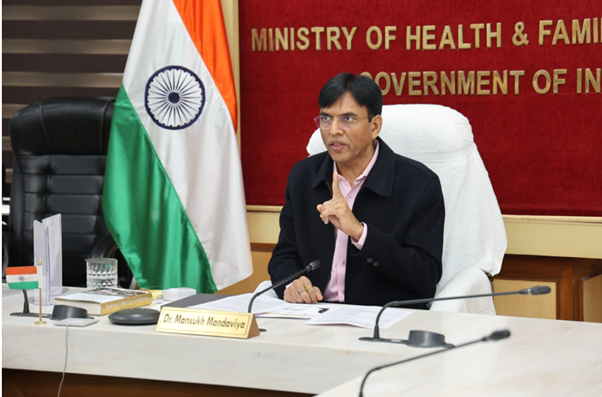
 “India’s ‘Bio Economy’ has grown eight times in the last eight years from $10 billion to $80 billion. In the coming times, biotechnology will become the biggest foundation for health treatment.” This was stated by Dr. Mansukh Mandaviya, Union Minister for Health & Family Welfare as he virtually addressed the pre-event summit “Biotechnology: The Path of Innovation & Wellness for Viksit Bharat” in the presence of Shri. Bhupendra Patel, Chief Minister, Gujarat at Vigyan Bhavan, Science City, Ahmedabad, Gujarat today. The summit is a preliminary event leading up to the 10th Vibrant Gujarat Global Summit that will take place on January 2024 at the Mahatma Gandhi Mandir, Gandhinagar under the theme of ‘Gateway to the Future’

Dr. Mandaviya noted that Indian Biotech Industry aiming to grow to $150 Billion by 2025 and $300 Billion by 2030, and India is currently among the top 12 destinations for Biotechnology in the world with approximately 3% share in the Global Biotechnology Industry. He stated “This industry will become a medium for finding solutions for complex problems in various spheres such as agriculture, environment, industrial production and many more. In light of this, in the future, the economy will become biotechnology based.” Quoting the Prime Minister, Shri Narendra Modi, Dr. Mandaviya stated “in the global biotechnology ecosystem, India will soon feature as one of the top ten nations.” Reiterating the Prime Minister’s vision of India achieving the status of a developed nation by 2047, Dr. Mandaviya cited that “this sector’s contribution will be instrumental in making India a developed nation.” 

Highlighting the growth and prowess of the industry, Dr. Mandaviya stated that the vaccination produced by India during the pandemic showcased India’s power in the field of biotechnology to the world. Underscoring the importance of this sector, the Union Minister stated “the National Biotechnology Development Strategy 2020-25 provides the government a platform to strengthen skill development, resource and innovation converging into one strong ecosystem for knowledge sharing.” He stated it further facilitates commercialization and market linkages by encouraging private-public partnership models in these sectors. 

Commending the progress of the nation and industry in this sphere, the Dr. Mandaviya praised the participation of startups, industries and industry associations, researchers and academicians across the nation for contributing to the development of this sector. The Union Health Minister lauded the efforts and contribution of Gujarat in their dedicated focus on biotechnology over two decades and its strong contribution in making India a healthcare and innovation ready country. The Union Health Minister reflected that Gujarat was the first state in the country to establish Biotech Mission 15-20 years ago. Dr. Mandaviya recalled that when Prime Minister Narendra Modi was the Chief Minister of Gujarat, he had established Biotech Mission and Biotech Park in the state. 

Acknowledging the crucial contribution of the Biotechnology sector will provide to the nation and economy Shri. Bhupendra Patel stated “aligning with the theme of ‘Gateway to the Future’ we will provide additional focus to futuristic sectors of which Biotechnology features as most important.” He further cited that “Biotechnology sector is known as the sector of hope. With its rapid growth, it will provide significant contributions to the world.” The Gujarat Chief Minister also inaugurated the ‘Start-Up Product Launch’.


The event was attended by Shri Raj Kumar, Chief Secretary, Gujarat, Ms. Mona Khandhar, Principal Secretary, Department of Science & Technology, Government of Gujarat, Dr. Rajesh Gokhale, Secretary, Department of Science & Technology, Ministry of Science and Technology, senior government officials, mission directors, as well as eminent dignitaries. 

****

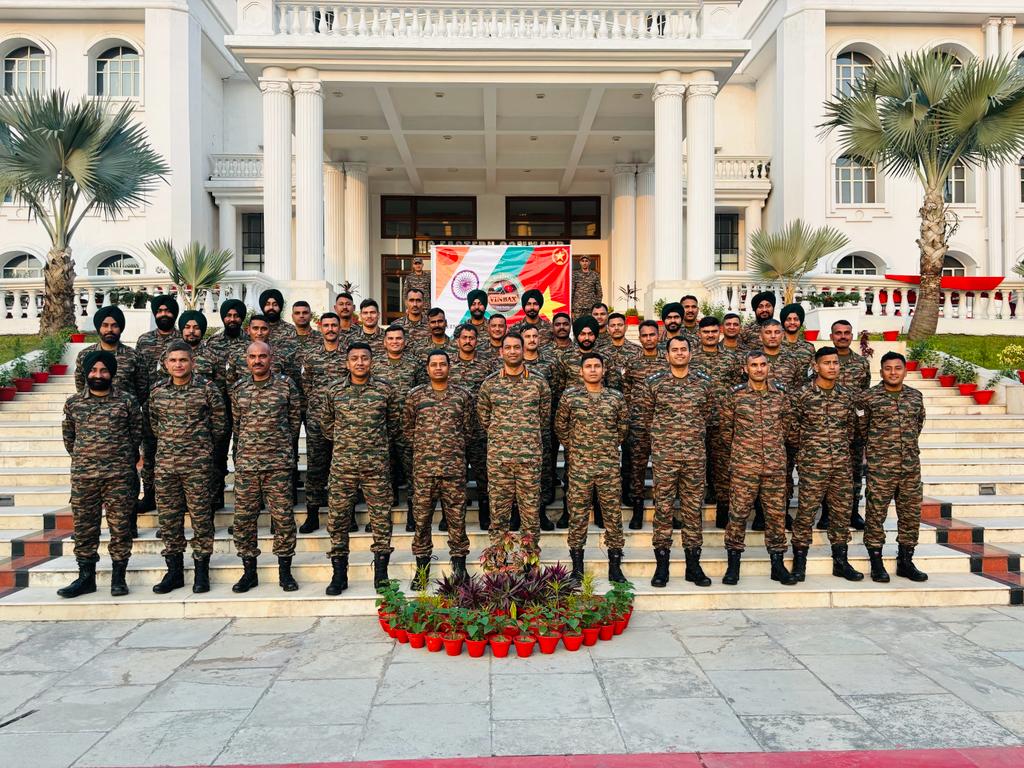
INDIAN ARMED FORCES CONTINGENT REACHES HANOI FOR JOINT MILITARY EXERCISE “VINBAX-2023”

 The Indian Armed Forces contingent comprising 45 personnel reached Hanoi, Vietnam to take part in the fourth edition of Joint Military Exercise VINBAX-2023. The exercise will be conducted at Hanoi, Vietnam from 11th to 21st December 2023. The Indian contingent comprises 39 personnel from an Engineer Regiment of Bengal Engineer Group and six personnel of Army Medical Corps. The Vietnam People’s Army contingent will also be represented by 45 personnel. 

Exercise VINBAX was instituted in 2018 and the first edition was conducted at Jabalpur, Madhya Pradesh. It is an annual training event conducted alternatively in India and Vietnam. Last edition was conducted at Chandimandir Military Station in August 2022.

Aim of the exercise is to foster collaborative partnership, promote inter- operability and share best practices between the two sides under Chapter VII of United Nations Charter on Peace Keeping Operations. The exercise will be conducted as a Command Post Exercise cum Field Training Exercise with focus on deployment and employment of an Engineer Company and a Medical Team.

The joint exercise will encourage exchange of ideas and both contingents will jointly rehearse tactics, technique and procedures. Ideas will be exchanged on modern methods to construct roads, culverts, helipads, ammunition shelter and observation posts in operational areas. In addition, rehearsals will be carried out for drills related to combat engineering and combat medical tasks.

The Exercise will culminate with a Validation Exercise, wherein standards attained by both contingents will be showcased. Both sides will conduct technical military operations in accordance with scenarios akin to worldwide deployment of United Nations’ contingents.

The joint exercise will help in promoting understanding and interoperability between the two contingents and further strengthen the defence cooperation between the friendly armies.

________________________________________________________________

SC/RKS/GKA     

Quad Achievements under the Climate Adaptation Pillar

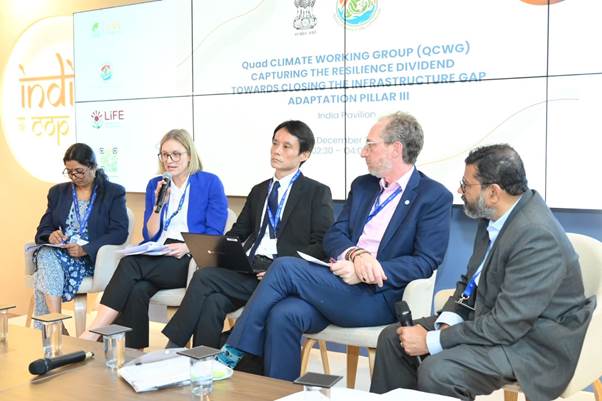
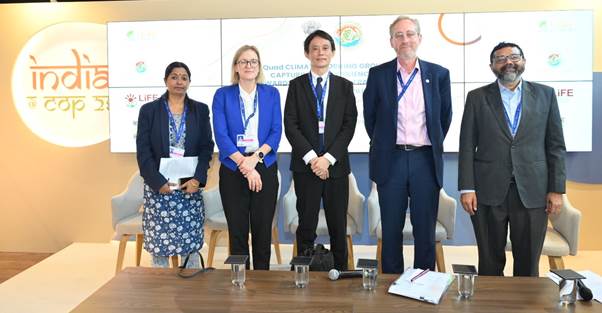
 The Ministry of Environment, Forest and Climate Change (MoEFCC), Government of India along with the Coalition for Disaster Resilient Infrastructure (CDRI) organised a side event under the Adaptation Pillar of Quad Climate Working Group (QCWG) on “Capturing the Resilience Dividend: Quad Achievements under the Climate Adaptation Pillar” on 9th December 2023 at the India Pavilion, on the sidelines of the UNFCCC COP 28 India Pavilion at Dubai. 

The panel was represented by all Quad countries in person by Environmental Management and Climate Change Group, JICA (Japan), Ms. Rajasree Ray, Economic Advisor, Ministry of Environment, Forests & Climate Change (India); Ms. Nicola Ross, Director-Climate Integration Unit, DFAT (Australia); Mr Toru Yoshida, Senior Deputy Director, and Mr. Michael Schiffer, Assistant Administrator of the Bureau for Asia, USAID (USA). The session was moderated by Mr. Krishna Vatsa, Member, National Disaster Management Authority (NDMA), India. The panel advocated on the need to measure and promote resilience dividend amongst all stakeholders. 

The panellists highlighted the need for integrating resilience into investments, policies, planning and governance to safeguard infrastructure, investments and community. They further stressed on challenges including lack of data, coordination, financing gaps and conceptual and  implementation capacity at local level in integrating adaptation. 

They also shared efforts towards resilience integration including Public-Private Partnerships (PPPs), community initiatives with nature, locally-led adaptation and resilience projects. These included climate resilient projects from Indo-Pacific region. The panel commended the Coalition for Disaster Resilient Infrastructure (CDRI), supported by all Quad partners, as an example of effective partnership amongst global stakeholders to advocate for resilience and provide support to countries for accelerating economic growth and helping achieve Sustainable Development Goals.  

****

INITIATIVES TO ENHANCE PERFORMANCE OF SAINIK SCHOOLS

 The primary aim of Sainik Schools is to prepare cadets academically, physically and mentally for entry into the National Defence Academy. Various steps are in place for ensuring the academic excellence of the cadets of 33 Sainik Schools. These include conducting of interactive training & close monitoring of progress of cadets, remedial classes for slow learners, introduction of latest pedagogical practices, in service course and training for teachers, guest lectures & motivational tours for cadets etc. 

Initially in 1961, 05 Sainik Schools were opened by the Government under the aegis of Sainik Schools Society. However, to meet the growing aspirations of the people and to attract youth from diverse socio-economic backgrounds in order to foster a sense of national integration and unity, 28 more Sainik Schools were subsequently opened across the country making it a total of 33 Sainik Schools.

Recently, in 2021, Government has approved a scheme to establish new Sainik Schools under partnership mode with Government/private schools/NGOs/Trusts etc in order to set up such schools on the pattern of existing Sainik Schools by aligning their education system with Sainik Schools ethos, value system and national pride. A total of 42 schools have been approved so far under partnership mode out of which sessions have commenced in 19 schools. 

In order to achieve gender equality and to pave way for induction of women in Armed Forces, Girl Cadets have also been inducted in all 33 Sainik Schools w.e.f. 2021-22.

The Sainik Schools have evolved over the years as a model in imparting quality education and training to cadets and prepare them to be good citizens and excel in all walks of life. 

Various initiatives have been undertaken by Sainik Schools to instill a sense of civic responsibility and leadership among cadets as indicated below:

  • Prefectorial system is followed in all Sainik Schools where cadets are assigned with specific responsibilities to develop leadership qualities. 
  • Cadets are encouraged to participate in various exchange programmes being organized among Sainik Schools and other Schools to make them understand about civic responsibilities and develop leadership qualities. 
  • Sainik Schools undertake social work and community service projects including outreach programmes. Cadets are also involved in initiatives such as tree plantations drives, cleanliness campaigns, and volunteering at local community organizations. This help in fostering a sense of responsibility towards the society.
  • Educational tours and visits are arranged to expose the cadets to diverse environments and situations. These experiences help in developing adaptability, cultural understanding, and a sense of responsibility towards the larger community.
  • NCC is compulsory for both boys and girls cadets which help to develop qualities of character, courage and discipline among the cadets.  


This information was given by Raksha Rajya Mantri Shri Ajay Bhatt in a written reply to Lt Gen (Dr) D P Vats (Retd) in Rajya Sabha today.

****

GUIDELINES FOR COMPENSATING AIR PASSENGERS DUE TO CANCELLATION AND DELAY IN FLIGHT

 The airline has to facilitate affected passengers due to cancellation & delay in flight in accordance with Directorate General of Civil Aviation (DGCA) issued Civil Aviation Requirement (CAR) Section 3, Series M, Part IV titled as “Facilities to be provided to passengers by airlines due to denied boarding, cancellation of flights and delays in flights”.

Under the provisions of said CAR, the airline has to provide following:

I.  In case of cancellation, the airlines shall either provide alternate flight or provide compensation in addition to the full refund of air ticket. Additionally, the airline shall provide meals and refreshments to the passengers who have already reported for their original flight at the airport while waiting for the alternate flight.

II. In case of delay in flight, the airline is required to provide meals and refreshments, an alternate flight/full refund of ticket to the passenger or hotel accommodation (including transfers) depending on the total flight delay.

Airline shall not be obliged to compensate in cases where the cancellation & delay is caused by a force majeure event i.e. extraordinary circumstance(s) beyond the control of the airline.

Facilities to be offered to the affected passengers in case of flight disruption are already available on public domain in form of Passenger Charter published on Ministry’s website, CARS on DGCA website & on respective airline website.

Adequate provisions to safeguard the interests of passengers are already in place.

This information was given by the Minister of State in the Ministry of Civil Aviation Gen. (Dr) V. K. Singh (Retd) in a written reply to a question in Rajya Sabha today.

***

58 AIRPORTS COVERED UNDER THE KRISHI UDAN SCHEME

 Krishi Udan Scheme was launched in August 2020 on international and national routes to assist farmers in transporting agricultural products to help improve their value realization. Krishi Udan Scheme 2.0 was announced on 27 October 2021 mainly focusing on transporting perishable food products from the hilly areas, North Eastern States and tribal areas. The scheme primarily covers 25 airports focusing on North Eastern, Hilly and Tribal region besides 33 airports in other regions/areas.

Krishi Udan Scheme is a convergence scheme where eight Ministries/Departments namely Ministry of Civil Aviation, Department of Agriculture & Farmers’ Welfare, Department of Animal Husbandry and Dairying, Department of Fisheries, Ministry of Food Processing Industries, Department of Commerce, Ministry of Tribal Affairs, Ministry of Development of North-Eastern Region would leverage their existing schemes to strengthen the logistics for transportation of Agri-produce.

In order to facilitate and incentivise movement of agri-produce by air transportation, waiver of Landing charges, Parking charges, etc. are provided under the scheme for Indian freighters by Airports Authority of India (AAI) and Ministry of Defence at selected airports under the Scheme.

The State-wise list of 58 Airports covered under the Krishi Udan Scheme is at Annexure.

Annexure

State-wise List of Airports Covered Under KrishiUdan Scheme

State/Union Territory

Airport

Andaman & Nicobar 

  1. Port Blair 

Andhra Pradesh 

  1. Visakhapatnam 

Arunachal Pradesh 

  1. Tezu

Assam 


  1. Dibrugarh
  1. Jorhat
  1. Lilabari
  1. Rupsi
  1. Silchar
  1. Tezpur

Bihar 

  1. Patna 
  1. Darbhanga

Chandigarh 

  1. Chandigarh 

Chhattisgarh 

  1. Raipur 

Goa 

  1. Goa 

Gujarat 

  1. Bhuj
  1. Jamnagar 
  1. Rajkot 

Himachal Pradesh 


  1. Bhuntar
  1. Gaggal
  1. Shimla 

Jammu & Kashmir 


  1. Jammu 
  1. Srinagar 

Jharkhand 

  1. Ranchi 

Karnataka

  1. Belagavi

Kerala 

  1. Thiruvananthapuram 

Ladakh

  1. Leh

Lakshadweep 

  1. Agatti

Madhya Pradesh 

  1. Indore 
  1. Bhopal
  1. Jabalpur

Maharashtra 

  1. Nashik
  1. Pune 

Manipur 

  1. Imphal

Meghalaya 

  1. Shillong

Mizoram 

  1. Lengpui

Nagaland 

  1. Dimapur

Odisha

  1. Jharsuguda

Punjab

  1. Adampur
  1. Amritsar 
  1. Pathankot

Rajasthan 

  1. Jaisalmer


  1. Jodhpur 

Sikkim 

  1. Pakyong

Tamil Nadu 

  1. Coimbatore 


  1. Tiruchirappalli 

Tripura 

  1. Agartala

Uttar Pradesh 

  1. Agra 


  1. Bareli 


  1. Gorakhpur 


  1. Hindon


  1. Kanpur 


  1. Prayagraj


  1. Varanasi 

Uttarakhand


  1. Dehradun 
  1. Pantnagar
  1. Pithoragarh

West Bengal 

  1. Bagdogra


  1. Kolkata 


This information was given by the Minister of State in the Ministry of Civil Aviation Gen. (Dr) V. K. Singh (Retd) in a written reply to a question in Rajya Sabha today.

***

‘Viksit Bharat @2047: Voice of Youth’

 The Prime Minister, Shri Narendra Modi launched ‘Viksit Bharat @2047: Voice of Youth’ via video conferencing today. During the program, Prime Minister Modi addressed the Vice Chancellors of Universities, Heads of Institutes and faculty members in workshops organized at Raj Bhawans across the country to mark the beginning of this initiative.

The Prime Minister began his address by extending a huge thank you to all the Governors for organizing today’s workshop for the development of Viksit Bharat and said that today is a special occasion regarding this resolution. He lauded their contributions of bringing together all the stakeholders who hold the responsibility of guiding the youth of the nation in accomplishing the goal of Viksit Bharat 2047. Prime Minister Modi highlighted the role of educational institutions in the personality development of an individual and said that a nation becomes developed only with the development of its people. Underlining the importance of personality development in the present era, the Prime Minister extended his wishes for the success of the Voice of Youth workshop.

The Prime Minister said that in the life of any nation, history provides a time period when the nation can make exponential strides in its development journey. For India, “This Amrit Kaal is ongoing” and “this is the period in the history of India when the country is going to take a quantum leap”. He gave examples of many nearby countries that took such a quantum jump in a set timeframe and turned into developed nations. “ For India, this is the time, right time (Yahi Samay hai, Sahi Samay hai)”, he said, adding that each and every moment of this Amrit Kaal should be utilized. 

The Prime Minister reiterated the glorious struggle for freedom as a source of motivation. He said each endeavour such as Satyagrah, revolutionary path, non-cooperation, swadeshi, and social and educational reforms during that time were geared towards freedom. This period saw Universities like Kashi, Lucknow, Vishwa Bharti, Gujarat Vidyapeeth, Nagpur University, Annamalai, Andhra and University of Kerala strengthen the consciousness of the nation. An entire generation of youth dedicated to the freedom of the nation came into being whose every effort was directed toward the goal of Independence. “Today, every institution and every individual should move with a resolution that every effort and act will be for Viksit Bharat. The aim of your goals, your resolutions should be only one – Developed India”. The Prime Minister emphasized that teachers and universities ponder about finding ways to make India a developed country at a faster pace and also identify specific sectors for improvement towards becoming a developed nation. 

Prime Minister Modi underlined the need to channel the energy of the students and the youth of every university towards achieving the common goal of ‘Viksit Bharat’. Noting the diversity of ideas, the Prime Minister stressed linking all the streams towards building a developed India. Shri Modi urged everyone to go beyond their limits to contribute to the vision of Viksit Bharat@2047. He suggested running special campaigns in every college and university in the country to connect more and more youth with this campaign. The Prime Minister mentioned the launch of Ideas Portal related to Viksit Bharat and informed that suggestions can be given on 5 different themes. “A prize has also been arranged for the best 10 suggestions. You can also give your suggestions on MyGov”, he added. “Idea starts with an ‘I’ just like India begins with an ‘I’”, the Prime Minister remarked as he underlined that the idea of development can only begin with the ‘I’ of the self. 

Elaborating on the exercise of seeking suggestions, the Prime Minister emphasized the need to create an Amrit generation which keeps the national interest paramount. He stressed the need to go beyond education and skills and called for alertness for the national interest and civic sense among the citizens. “When citizens,  in whatever role, start doing their duty, the country moves forward”, the Prime Minister said. He gave examples of the preservation of natural resources through water conservation, saving electricity, using fewer chemicals in farming and using public transport. He asked the educationist fraternity to suggest ways of giving new energy to Swachhta Abhiyan, combating lifestyle issues and exploration of the world beyond mobile phones by the youth. He asked them to be role models for the students. He said that social thinking is reflected in the governance too and asked the gathering to see that degree holders should have at least one vocational skill. “You should carry forward a comprehensive process of brainstorming on these topics at every cap, every institution and at the state level”, he added. 

Drawing the analogy of the period of development of ‘Viksit Bharat’ to that of an examination, the Prime Minister mentioned the confidence, preparation and dedication of the students as well as the contributions of the families in maintaining the required discipline to accomplish the goal. He remarked that the exam date has also been declared for us as citizens of the country. “We have 25 years of Amrit Kaal in front of us. We have to work 24 hours a day for the goal of Viksit Bharat. This is the environment we have to create as a family”, the Prime Minister emphasized. 

Noting that the rapidly increasing population of the country is empowered by youth, Shri Modi informed that India is going to be the leader in terms of the working-age population for the coming 25-30 years and the world recognizes this. “Youth power is both the agent of change and also the beneficiaries of change”, PM Modi said. He emphasized that the next 25 years are going to be decisive for the careers of the youth in colleges and universities of today. Noting that it is the youth who are going to create new families and a new society in the future, the Prime Minister said that it is they who have the right to decide how a developed India should be. With this spirit, the Prime Minister added, the government wants to connect every youth of the country with the action plan of a developed India. The Prime Minister stressed moulding the voice of the country’s youth into the policy strategy for building a developed India and highlighted the role of educational institutions that maintain maximum contact with the youth.

Concluding the address, the Prime Minister underlined that the roadmap of progress will not be decided by the government alone but by the nation. “Every citizen of the country will have input and active participation in it”, Shri Modi said pointing out that even the biggest resolutions can be accomplished by the mantra of Sabka Prayas, i.e. public participation. He gave examples of Swachh Bharat Abhiyan, Digital India Campaign, resilience during the Corona pandemic, and Vocal for Local highlighting the power of Sabka Prayas. “Viksit Bharat has to be built only through Sabka Prayas”, the Prime Minister said. Shri Modi reiterated the high expectations from the scholars present on the occasion as it is they who shape the vision of the country’s development and channelize the youth power. “This is a great campaign to write the future of the country”, the Prime Minister concluded and urged them to turn in their suggestions to further enhance the grandeur of Viksit Bharat.

Background

In line with the Prime Minister’s vision to actively involve the youth of the country in the formulation of national plans, priorities and goals of the country, ‘Viksit Bharat @2047: Voice of Youth’ initiative will provide a platform to the youth of the country to contribute ideas to the vision of Viksit Bharat @2047. The workshops will be a key step towards initiating the process of engaging youth to share their ideas and suggestions for Viksit Bharat @2047.

Viksit Bharat @2047 is the vision to make India a developed nation by 2047, the 100th year of independence. The vision encompasses various aspects of development, including economic growth, social progress, environmental sustainability, and good governance.


***

45TH CONVOCATION OF MAHATMA GANDHI KASHI VIDYAPITH

 The President of India, Smt Droupadi Murmu graced and addressed the 45th convocation of Mahatma Gandhi Kashi Vidyapith at Varanasi today (December 11, 2023).

Speaking on the occasion, the President said that association of two Bharat Ratna with this institution is a proof of the glorious heritage of Mahatma Gandhi Kashi Vidyapith. Bharat Ratna Dr. Bhagwan Das was the first Vice Chancellor of this Vidyapith and former Prime Minister Shri Lal Bahadur Shastri was the student of the first batch of this institution. She said that it is expected from the students of this institution that they should adopt the life values ​​of Shastri ji in their conduct.

The President stated that the journey of this Vidyapith began 26 years before the independence of our country, with the goals of self-reliance and Swaraj as envisioned by Gandhiji. This university, as an institution born out of the non-cooperation movement, is a living symbol of our great freedom struggle. She said that all students of Mahatma Gandhi Kashi Vidyapith are the flag bearers of our national ideals of the freedom struggle.

The President said that the intention behind naming the Kashi Vidyapith, as Mahatma Gandhi Kashi Vidyapith, is to express respect for the ideals of our freedom struggle. Following those ideals and making an effective contribution to the progress of the country during the Amrit Kaal will be a true tribute to the nation-building founders of the Vidyapith.

The President said that Varanasi has been the center of Indian knowledge tradition since ancient times. Even today, the institutions in this city are contributing in the promotion of modern knowledge and science. She urged students and teachers of Mahatma Gandhi Kashi Vidyapith to continue enriching the glory of their institution in keeping with the tradition of the center of knowledge.


Please click here to see the President’s Speech – 


How to Reduce your Emissions by Using Carbon Footprint Calculator

 Do you know that even the simplest of the tasks, such as, what you pick out to eat, how you choose to dispose of if you travel via road or air, and many more cause greenhouse gas emissions? In 2016, Australia was among the top 15 countries that contributed the most towards carbon emissions per person. This leaves us with no doubt that climate change is indeed an overwhelming concern down under. 

How to Reduce your Emissions by Using Carbon Footprint Calculator

Impacts Of Climate Change In Australia

Greenhouse gases like carbon dioxide, methane and water vapour can absorb the heat emitted from the earth’s surface and radiate it back to earth. This leads to an increased concentration of greenhouse gases in our atmosphere. Due to the heat getting trapped, we experience a rise in the temperature. 

In the last 50 years, the number of days that break heat records has doubled. The heatwaves are only getting intense and frequent each year. Unfortunately, it’s not just the higher temperatures that Australia is experiencing, it’s also witnessing extreme droughts, floods and fire seasons. We can never forget the horrors of the weeklong Wooroloo bushfire in February 2021.

Another important yet worrisome aftermath of greenhouse emissions has been on the oceans and seas. They have become more acidic as they tend to soak up heat along with excess carbon from the atmosphere. 

Having said that, these are just some of the consequences that Australia has observed till now and there are high chances of many that are yet to be discovered. 

What Can Be Done?

As part of a thriving civilisation and country that contributes highly towards carbon emissions, the responsibility of taking care of our planet lies in our hands. If each one of us knows how to reduce carbon footprint and does our bit, we can make our environment healthy once again. All we need to be mindful of is our carbon footprint. Now before you curve your eyebrow into a question mark thinking how you can achieve this, just sit back and keep reading – we’re here with all the answers. 

Decoding Carbon Footprint

An organisation’s carbon footprint is the total amount of its carbon dioxide emission over a period of time. Carbon is the most commonly emitted gas by humans. According to research done by Our World in Data in 2019, Australia has an average per capita footprint of 17 tonnes. This is more than 3 times higher than the global average, which was 4.8 tonnes per person in 2017.

Mostly, an individual’s carbon footprint comes from transport, housing and food. It stands true for organisations as well. Moving of goods and services from one place to another or burning of fuel at factories or preparing meals for employees on a large scale. Almost everything that requires a person’s or company’s life to propel, is contributing to the carbon footprint. It is possible for a product or service to emit greenhouse gases even after its shelf/service life has expired. So, it becomes further critical for organisations to step up and make sure that we leave a healthy world for future generations. 

Crunching Numbers

Now, you must be contemplating how to know your own or your organisation’s carbon footprint. It’s a complex science that calls for numerous permutations and combinations. But you don’t have to worry about any of that, we’ve got it all covered for you. But let’s discuss what are carbon offsetting and carbon credits before we dive any further. Sometimes, carbon offsets and carbon credits are used interchangeably. However, there is a thin line between the two. Let’s find out.

Carbon Offsetting: 

It is a dependable and reckonable way to make up for an individual’s or organisation’s carbon emissions. Those who invest in carefully chosen carbon offset projects, like renewable energy projects or tree-planting activities, extend social and economic benefits to communities along with reduced emissions. Just like a butterfly effect, amirite?

Each year, we see more organisations demanding carbon offsets voluntarily as they factor the risk of climate change into their future planning. It is essential for companies to take up the ownership of saving our climate by identifying the most efficient carbon offsetting solution and developing a tailored action plan for their business.  

Here Are Some Benefits Of Carbon Offsetting:

  • Meet emission reduction targets
  • Alignment with sustainability principles
  • Increased customer loyalty and sales
  • Build capacity to manage climate risk
  • Environmental, social & economic co-benefits and impact on communities

Carbon Credits:

To put it in a simpler way, carbon credits are like allowances for emission, usually received from the government. When an organisation buys carbon emission credits, they are permitted to generate a tonne of carbon dioxide emissions.

To calculate an individual’s or organisation’s carbon footprint, you can use this calculator. It’s transparent and accurate – a carbon footprint calculator Australia has been waiting for, fair dinkum! It also doubles as a carbon credit calculator. With such calculators, apart from determining the numbers, you can also get to know facts, tips and steps to reduce your carbon footprint that can easily be applied to your daily life. So, you can either offset your footprint or calibrate your carbon credit hassle-free. 

Once you start using a calculator, it’ll get heaps convenient to devise ways onhow to reduce the carbon footprint of your organisation or yourself. Remember that carbon footprint is calculated retrospectively as it’s based on the consumption of resources for a particular time period. So, it’s best to keep the data handy. Try to feed in as much information as you can, it helps in determining precise results. 

“Climate change is the single greatest threat to a sustainable future but, at the same time, addressing the climate challenge presents a golden opportunity to promote prosperity, security and a brighter future for all.”

-Ban Ki-Moon, Former Secretary-General of the UN

Climate change and its impacts are serious stumbling blocks. We must come together to combat this threat and use our powers for a positive change. Let’s start today and promise a better tomorrow.