Membership for Discounted Book Publication

Edupedia Publications Pvt Ltd provide its members and associates to get book published at subsidised rate.  One free book publication is allowed with this membership. Get membership from below link.

It sounds like you’re interested in discounted book publication memberships. EduPub publishing platform and organizations that offer memberships or programs with discounts for authors.

LINK to GET One Book Published Each Yaar with This Membership Plan

After taking membership, send a mail to editor@pen2print.org for book publication. 

National Conference on Adventure Tourism focused on Destination Planning, Development and Management

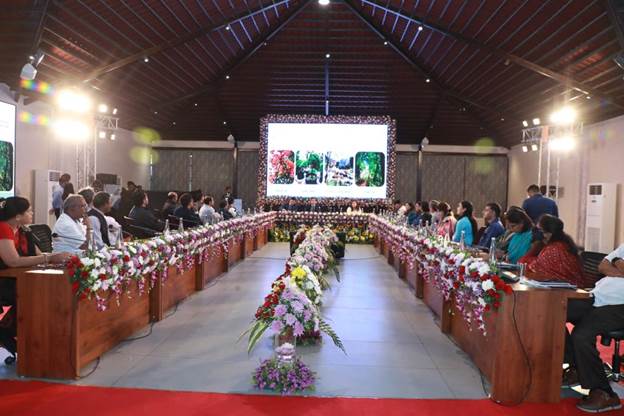
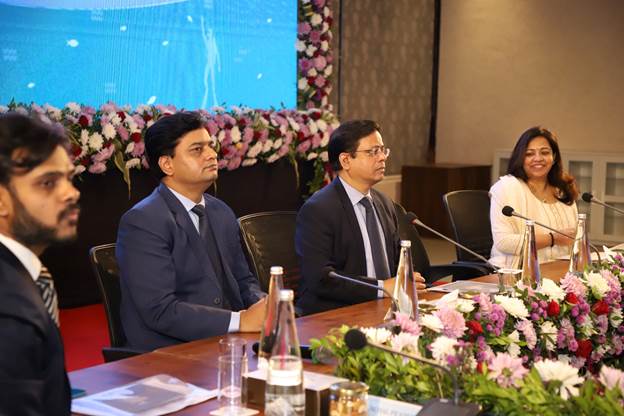
 Ministry of Tourism organized a two-day National Conference on Adventure Tourism at Ekta Nagar, Gujarat with the theme ‘Viksit Bharat@2047: Making India a Global Adventure Tourism Hub’. The aim of the conference was to provide a platform to deliberate and devise strategies and initiatives to make India a Global Adventure Tourism Hub.

On the second day of the National Conference of State Tourism Secretaries, the Ministry of Tourism focused on Destination Planning, Development and Management. The Government of Gujarat made a detailed presentation on the Statue of Unity as a tourist destination, its evolution, master plan, destination development and management authority and way forward.

The Ministry of Tourism shared the ongoing exercise of preparing destination master plans and development under Swadesh Darshan 2.0.

The Ministry also discussed progress on engagement with the States on Incredible India Portal, Meet in India campaign, Wed in India campaign, Travel for LiFE program and Best Rural Tourism Village and Homestay competition.

The States were requested to work closely with the Ministry of Tourism on these initiatives which will help holistic and sustainable development of the tourism sector in the States.

The States were also encouraged to participate in various national competitions launched by the Ministry, which will help discover best practices in the country in various areas and their subsequent replication.

***

Construction of Rural Roads and Amrit Sarovars

 Pradhan Mantri Gram Sadak Yojana (PMGSY-I) is a one-time special intervention of Government of India to provide rural connectivity by way of a single all-weather road, to the eligible unconnected habitations in the core network.

Subsequently, new intervention/verticals namely PMGSY-II, Road Connectivity Project for Left Wing Extremism Areas (RCPLWEA) and PMGSY-III were added under the ambit of PMGSY for upgradation of rural roads, construction of strategically important roads in LWE Areas and for consolidation of 1,25,000 Km Through Routes and Major Rural Links connecting habitations, inter-alia, to Gramin Agricultural Markets (GrAMs), Higher Secondary Schools and Hospitals.

Under PMGSY-I, 99.38% of the eligible habitations have been provided all-weather road connectivity.

Under PMGSY-II, against the target of 50,000 km, 49,857 km has been sanctioned and 48,691 km has been completed.

Under RCPLWEA, 12,100 km has been sanctioned and 8,290 km has been completed.

Under PMGSY-III, against the target of 1,25,000 km, 1,07,454 km has been sanctioned and 69,507 km has been completed.

Since inception till 13.12.2023, 1,86,541 roads of 8,14,522 Km road length and 11,587 bridges have been sanctioned at the value of projects of Rs. 3,76,472.36 crore, out of which 1,77,628 roads of 7,49,363 Km road length and 8,435 bridges have been completed at an investment of Rs. 3,12,986.17 crore (including State Share).

The Mission Amrit Sarovar was launched on 24th April 2022, with an objective to conserve water for the future. The Mission aimed at developing / rejuvenating 75 Amrit Sarovars (Pond) in each district of the Country, totaling about 50,000 Amrit Sarovars in the country. Amrit Sarovar has been a visible manifestation of the actions during Azadi ka Amrit Mahotsav.

As on 15.12.2023, a total number of 68,521 Amrit Sarovar have been constructed. State/UT-wise details of constructed Amrit Sarovar are given below:

State/UT-wise details of constructed Amrit Sarovars (as on 15.12.2023)

SI. No.

State/ UT

Constructed Amrit Sarovar

1

Andhra Pradesh

2196

2

Arunachal Pradesh

2044

3

Assam

2836

4

Bihar

2717

5

Chhattisgarh

2916

6

Goa

165

7

Gujarat

2649

8

Haryana

1732

9

Himachal Pradesh

1644

10

Jammu And Kashmir

2653

11

Jharkhand

2088

12

Karnataka

3649

13

Kerala

856

14

Madhya Pradesh

5330

15

Maharashtra

3013

16

Manipur

1160

17

Meghalaya

685

18

Mizoram

1000

19

Nagaland

266

20

Odisha

2385

21

Punjab

1415

22

Rajasthan

3000

23

Sikkim

199

24

Tamil Nadu

2325

25

Telangana

1888

26

Tripura

948

27

Uttarakhand

1281

28

Uttar Pradesh

14788

29

West Bengal

25

30

Andaman & Nicobar

247

31

The Dadra Nagar And Haveli, Daman And Diu

117

32

Ladakh

152

33

Puducherry

152


TOTAL

68521

National Mineral Policy 2019 to Ensure Sustainable Mining

The National Mineral Policy, 2019 [NMP 2019], states that minerals are valuable natural resources, which are essential raw materials for the core sectors of the economy. The exploration, extraction, and management of minerals are guided by national goals and perspectives, integrated into the overall strategy of the country’s economic development. NMP 2019 also focuses on promoting domestic industry, reducing import dependency, and contributing to the Make in India initiative. NMP 2019 emphasizes on a fair and transparent allocation of mineral resources to ensure equitable distribution of mineral wealth to serve the common good. NMP 2019 aims to ensure environmentally sustainable mining, with stakeholders’ participation; devolution of benefits of mining to mining-affected persons and areas; maintaining high level of trust among all stakeholders; conducive regulatory environment for ease of doing business in the sector; simpler, transparent, and time-bound procedures for obtaining clearances for mining.

Mineral Conservation and Development Rules (MCDR), 2017 was framed under Section 18 of MMDR Act, 1957 for the mineral conservation, systematic development of minerals and protection of environment by preventing or controlling any pollution which may be caused by prospecting or mining operations. As per Rule 12(1) of MCDR (amendment) 2017, the prospecting and mining operations shall be carried out in such a manner so as to ensure systematic development of mineral deposits, conservation of minerals and protection of the environment. Rule 35 to 44 under Chapter V of MCDR, 2017 is provided for Sustainable Mining. Adequate emphasis has been given on Sustainable Development in Mining areas in the NMP 2019. Further, to implement the Sustainable Development Framework (SDF), Ministry has evolved a system of Star Rating of Mines.

India is not a member of Extractive Industries Transparency Initiative (EITI). However, India has adopted the United Nations Framework Classification (UNFC) to report the mineral resources, status of exploration and feasibility of extractions. Further, as per the MMDR Act, 1957 and rules framed thereunder, every lease holder has to adhere to the conditions prescribed under various clearances issued by the different Ministries /Departments of State and Central Government. The lease holders are also mandated to submit the prescribed reports like monthly / annual return, result of exploration, yearly report on progressive mine closure activities, etc. to statutory authorities.

MSME Green Investment and Financing for Transformation Scheme (MSE GIFT Scheme),

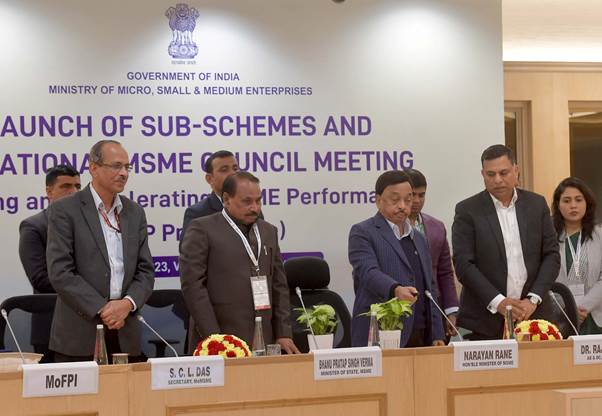
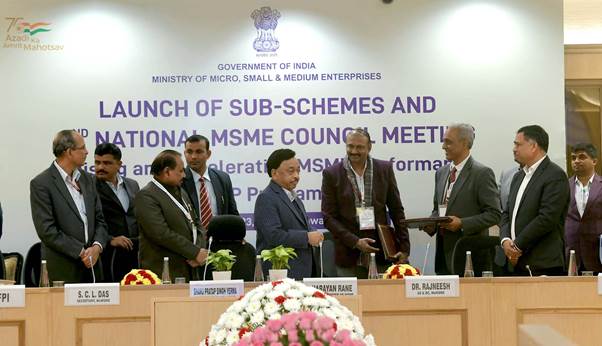
 Union Minister for MSME Shri Narayan Rane launched three sub-schemes under the aegis of the RAMP programme today. These are  MSME Green Investment and Financing for Transformation Scheme (MSE GIFT Scheme), MSE Scheme for Promotion and Investment in Circular Economy (MSE SPICE Scheme) MSE Scheme on Online Dispute Resolution for Delayed Payments.

The first scheme – The MSME Green Investment and Financing for Transformation Scheme (MSME GIFT Scheme) intends to help MSMEs adopt green technology with interest subvention and credit guarantee support.

The MSE Scheme for Promotion and Investment in Circular Economy (MSE SPICE Scheme) is the first ever scheme in the Government to support circular economy projects which will be done through credit subsidy and will lead to realising the dream of MSME sector towards zero emissions by 2070.

The MSE Scheme on Online Dispute Resolution for Delayed Payments is a first of its kind scheme to synergise legal support with modern IT tools and Artificial Intelligence to address the incidences of delayed payments for Micro and Small Enterprises.

The Ministry is also taking new initiatives under the existing schemes to provide enhanced support to the MSMEs. The Support for Commercialisation of IP Programme (MSME – SCIP Programme) will enable the innovators in the MSME sector to commercialize their IPR. In addition, the ZED Scheme of the Ministry has now been made completely free for women led MSMEs. The government guarantees payment of 100 percent financial support for the certification cost. These two interventions were also launched by the Union Minister .

The Ministry exchanged Memorandum of Understanding (MoUs) with the implementing agencies SIDBI (for MSME GIFT and MSME SPICE schemes) and with National Informatics Centre Services Inc. (for NICSI) for MSE ODR scheme.

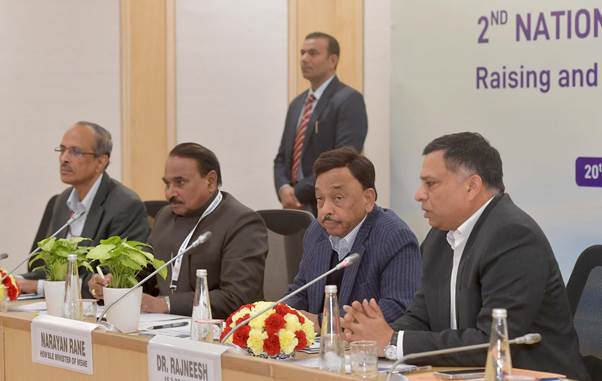
The 2nd meeting of the National MSME Council was also chaired by Shri Narayan Rane. Addressing the participants he asked all the States / UTs to work towards promotion and development of MSME Sector so that their efforts could result in increase in income and employment in the sector and contribute towards country’s economic growth.

Shri Bhanu Pratap Singh Verma,Union Minister of State for MSME also graced the occasion as Vice Chairperson of the National MSME Council. He reiterated the need for supporting MSMEs in becoming globally competitive and emphasised need for developing synergies between the Central and state level initiatives.

Shri SCL Das, Secretary, Ministry of MSME, while addressing the participants urged the representatives from the States/ UTs and other stakeholders to take advantage of the initiatives of the Ministry of MSMEs and ensure the benefits of the schemes are availed by the MSMEs and contribute towards success of the RAMP programme and contribute to achieving the national MSME agenda of MSME development in the country.

The Meeting was attended by the Secretaries of Central Ministries / Departments and Principal Secretaries and Nodal Officers from States / UT governments, CMDs of SIDBI and ONDC, CEO of NICSI, along with other dignitaries.

The National MSME Council has been set up by the Ministry to work as an administrative and functional body of the World Bank supported RAMP Programme to oversee inter-Central Ministerial/Departmental co-ordination, Centre State synergies and advise / monitor progress on the reforms mandated in the MSME sector.  RAMP Programme  aims at improving access to market and credit, strengthening institutions and governance at the Centre and State, improving Centre-State linkages and partnerships, addressing issues of delayed payments and greening of MSMEs. 


ECONOMIC DEVELOPMENT OF THE UNION TERRITORY AREAS

The Government has taken various steps for the economic development of UTs such as promoting tourism, augmentation of telecom & web connectivity, development of road, sea and air connectivity, development and promotion of clean and green energy, waste management including initiatives for waste to energy, commissioning of new power projects, boost to infrastructure, etc.

Tourism has been identified as a key sector due to its multiplier effect. The Government is actively promoting various kinds of tourism like eco-tourism,  heritage   tourism,   adventure   tourism,   monsoon   tourism,

 promotion of niche tourism activities, tourist circuits, religious tourism, astro- tourism, cruise tourism, MICE tourism etc. In UT of J&K tourism sector has been accorded the status of industry, UT of DNH&DD have developed world class sea fronts and premier river fronts, in Island UTs eco-tourism resorts are being developed. In the UT of Ladakh first ever dark sky reserve of the country has been set up in Hanle to promote astro-tourism and livelihood of local communities. All these initiatives have resulted in a boost to tourism and other allied economic activities, improvement in civil aviation and other infrastructure, promotion of clean and green energy and “waste to wealth” in the UTs.

Internet/broadband and mobile/digital connectivity in the Island UTs have been considerably enhanced with the commissioning of the Chennai Andaman Nicobar Islands (CANI) Optical Fiber Cable Project at a cost of about ₹ 1,224 cr. This project has revolutionized internet connectivity and increased the bandwidth utilization in the UT of A&NI from 4.1 Gbps to 70.31 Gbps, internet speed has increased from 100 kbps to upto 300 Mbps, total mobile connections have increased to about 7 lakh from 4.7 lakh and Fiber-to-the-Home (FTTH) services, which provide high broadband speeds directly to home and offices, have increased to about 34,500. 5G services were also launched in the UT.   As a result, the  Islanders  have  benefitted significantly through greater access to online Government to Citizen (G2C) services, tele-medicine, online education, development of tourism,            e-commerce, enhanced participation in the digital economy (the number of digital transactions have increased from about 10 lakh to 2.2 crore) etc. Similarly, The Kochi Lakshadweep Islands Submarine Optical Fiber Cable Project (KLI Project), with a cost of about ₹1,072 Cr, has connected the mainland (Kochi) and all the inhabited Islands of the Union Territory of Lakshadweep through submarine cable. The KLI Project is designed to offer speeds upto 100 Gbps and support 4G as well as 5G networks. Trial traffic has been fed in the network. At present 3,972 FTTH connections have been provided through this network. The KLI Project is expected to benefit the public significantly through enhanced online access in the fields of education, tele-medicine, e-commerce, digital governance, tourism etc.

The Government has also been focusing on air, road and sea connectivity in the UTs. A new terminal building of Veer Savarkar International Airport at Port Blair has come up with a cost of about ₹710.00 crore with a capacity to handle 50 lakh passengers per year. ‘Azad Hind Fauz Setu’ on Humphrey Strait at a cost of ₹ 203.00 crore has significantly  improved  the  road  connectivity  in  the  island  UT  of A&NI.

Several infrastructure projects to boost road connectivity have also been completed/under way in the other UTs like the construction of Zojila tunnel in UT of Ladakh.

Several steps have also been taken to promote ease of doing business and bring in governance reforms in UTs. To promote industry and business activities compliance burden has been significantly reduced. Single window clearance system has also led to faster clearance of proposals. UTs have implemented suitable policies to promote businesses and entrepreneurship including industrial policy, land allotment policy, logistics policy, policies to promote handicrafts, agriculture, MSMEs through suitable incentivisation etc. Investment promotion schemes have been formulated to encourage investment by way of providing capital and interest subsidy. The thrust sectors identified are tourism, manufacturing, production, IT and ITes, shipping, agriculture, fisheries etc. The Prime Minister’s Employment Generation programme, PM VISHWAKARMA, Pradhan Mantri Formalisation of Micro food processing Enterprises (PMFME) scheme, PM SVANidhi etc. are also being effectively implemented in the UTs with an aim to generate employment, provide financial support and skill development support. UTs have also identified certain priority economic sectors for accelerated economic growth of UTs, based on their unique strengths and resources, such as developing a Blue Economy, transforming into regional knowledge/IT/medical hubs, promoting tourism etc. 

The Government’s policy of zero tolerance towards corruption and introduction of IT enabled initiatives have brought greater accountability, transparency and financial transformation resulting in a big push to businesses and economic development in the UTs and also promoting them as new drivers of economic prosperity (Aatmanirbhar Arthvyawastha) and Viksit Bharat.

Initiatives under Aatmanirbhar Bharat have been taken to provide better services to consumers & improvement in operational & financial efficiency in electricity distribution in certain UTs.

Further, a robust monitoring mechanism has been put in place to monitor the implementation of various flagship/development schemes and programmes of Government of India in the UTs.

It is the endeavour of Government of India to make UTs role models of good governance and development. Moreover, it is envisioned to holistically develop the island UTs as global hubs of tourism, raise the standard and quality of living of residents in UTs, create better infrastructure including social infrastructure, achieve saturation of health and educational indicators, enhance health infrastructure to ensure universal access to quality healthcare, promote green energy by leveraging technology, etc. This is a continuous process.

To promote fisheries and blue economy in the island union territories of Andaman & Nicobar Islands and Lakshadweep, the Government has taken various initiatives. The focus is primarily on development of infrastructure & logistics, deep sea fishing, aquaculture, capacity building and fisheries management for overall development.

Assistance to fishermen/fish farmers is provided for modernization of existing fishing crafts and acquisition of new fishing vessels. Further, initiatives like creation and upgradation of post-harvest handling & processing infrastructure, export oriented processing units and use of technological advancements like Fish Aggregating Devices have also been taken.

The Government is also creating forward market linkages and promoting fisheries related co-operative societies and Self Help Groups (SHGs). Agencies like the Marine Products Export Development Authority (MPEDA), Export Inspection Agency (EIA) and Central Marine Fisheries Research Institute are providing technical support and training to the fishermen and fish farmers for their capacity building.

The Government is also implementing various subsidy programme under the Pradhan Mantri Matsya Sampada Yojana to improve the post-harvest infrastructure, promote deep sea fishing, and aquaculture, mariculture activities, fish marketing and shore based infrastructure. Institutional credit is extended through Kisan Credit Card scheme.

Seaweed cultivation is also being promoted with the participation of Self Help Groups and fisheries co-operatives.


CYBER CRIMES AWARENESS IN RURAL AREAS

‘Police’ and ‘Public Order’ are State subjects as per the Seventh Schedule of the Constitution of India. The States/UTs are primarily responsible for the prevention, detection, investigation and prosecution of crimes including cyber crime through their Law Enforcement Agencies (LEAs). The Central Government supplements the initiatives of the States/UTs  through  advisories  and  financial  assistance  under  various  schemes for capacity building of their LEAs. To strengthen the mechanism to deal with cyber crimes in a comprehensive and coordinated manner, the Central Government has taken steps which, inter-alia, include the following:

  1. The Ministry of Home Affairs has set up the ‘Indian Cyber Crime Coordination Centre’ (I4C) to deal with all types of cyber crime in the country, in a coordinated and comprehensive manner.
  2. Seven Joint Cyber Coordination Teams (JCCTs) have been constituted for Mewat, Jamtara, Ahmedabad, Hyderabad, Chandigarh, Vishakhapatnam and Guwahati under I4C covering the whole country based upon cyber crime hotspots/ areas having multi jurisdictional issues by on boarding States/UTs to enhance the coordination framework among the LEAs of the States/UTs. Seven workshops were organized for JCCTs at Hyderabad, Ahmedabad, Guwahati, Vishakhapatnam, Lucknow, Ranchi and Chandigarh in 2023.
  3. The state of the art ‘National Cyber Forensic Laboratory (Investigation)’ has been established, as a part of the I4C, at New Delhi to provide early stage cyber forensic assistance to Investigating Officers (IOs) of State/UT Police. So far, National Cyber Forensics Laboratory (Investigation) have provided its services to State LEAs in around 8,840 cyber forensics like mobile forensics, memory forensics, CDR Analysis, etc. to help them in investigation of cases pertaining to cyber crimes.
  4. The ‘National Cyber Crime Reporting Portal’ (https://cybercrime.gov.in) has been launched, as a part of the I4C, to enable public to report incidents pertaining to all types of cyber crimes, with special focus on cyber crimes against women and children. Cyber crime incidents reported on this portal, their conversion into FIRs and subsequent action thereon are handled by the State/UT LEAs concerned as per the provisions of the law.
  5. The ‘Citizen Financial Cyber Fraud Reporting and Management System’, under I4C, has been launched for immediate reporting of financial frauds and to stop siphoning off funds by the fraudsters. So far, an amount of more than Rs. 1000 Crore have been saved in more than 4 lakh incidents. A toll-free Helpline number ‘1930’ has been operationalized to get assistance in lodging online cyber incidents.
  6. The Massive Open Online Courses (MOOC) platform, namely ‘CyTrain’ portal has been developed under I4C, for capacity building of police officers/judicial officers through online course on critical aspects of cyber crime investigation, forensics, prosecution etc. along with certification. More than 72,800 Police Officers from States/UTs are registered and more than 50,000 Certificates issued through the portal.
  7. Till date more than 2.45 lakhs SIM cards and 42,000 IMEIs as reported by Police authorities have been blocked by Government of India.
  8. I4C has imparted cyber hygiene training to 5,600 officials of various Ministries/ Departments of Government of India.
  9. The Ministry of Home Affairs has provided financial assistance to the tune of Rs. 122.24 crores under the ‘Cyber Crime Prevention against Women and Children (CCPWC)’ Scheme, to the States/UTs for their capacity building such as setting up of cyber forensic-cum-training laboratories, hiring of junior cyber consultants and training of LEAs’ personnel, public prosecutors and judicial officers. So far, cyber forensic-cum-training laboratories have been commissioned in 33 States/UTs. So far, more than 24,600 LEA personnel, judicial officers and prosecutors have been provided training on cyber crime awareness, investigation, forensics etc.
  10. National Cyber Forensic Laboratory (Evidence) has been set up at Hyderabad. Establishment of this laboratory provides the necessary forensic support in cases of evidence related to cyber crime, preserving the evidence and its analysis in line with the provisions of IT Act and Evidence Act; and reduced turnaround time.
  11. I4C has imparted cyber hygiene training to more than 17,000 NCC cadets.
  12. To spread awareness on cyber crime, the Central Government has taken steps which, inter-alia, include; dissemination of messages through SMS, I4C social media account i.e. X (formerly Twitter) (@Cyberdost), Facebook(CyberDostI4C), Instagram(cyberdostI4C), Telegram(cyberdosti4c), Radio campaign, engaged MyGov for publicity in multiple mediums, organizing Cyber Safety and Security Awareness weeks in association with States/UTs, publishing of Handbook for Adolescents/Students, etc. The States/UTs have also been requested to carry out publicity to create mass awareness.
  13. The Centre for Financial Literacy pilot project on financial literacy was initiated by the Reserve Bank in 2017 with an objective to adopt community led innovative and participatory approaches to financial literacy engaging various NGOs across the country. Under the Centre for Financial Literacy project, each Centre for Financial Literacy usually covers three blocks while giving focus on the population in the age group of 18-60 years. A total of 1633 Centre for Financial Literacy covering 4,861 blocks have been set up across the country as on September 30, 2023. Awareness about digital banking in one of the areas covered under the Centre for Financial Literacy project.

Pension Fund Regulatory and Development Authority (PFRDA)

In a significant enhancement to the D-Remit process, the Pension Fund Regulatory and Development Authority (PFRDA) has now allowed National Pension System (NPS) subscribers to deposit their contributions through the convenience of the Unified Payments Interface (UPI) QR code. This advancement aims to simplify the contribution process, making it more accessible and efficient for NPS participants.

The National Pension System (NPS) has long been a reliable savings avenue for those looking to secure their financial futures. Under the NPS, subscribers make voluntary contributions to their NPS Tier I and II accounts. However, the process of directly depositing these contributions, known as D-Remit or Direct Remittance, has just become more user-friendly.

The introduction of QR code – UPI for D-Remit is a positive & revolutionary step towards making NPS contributions more accessible, efficient, and flexible. This initiative by PFRDA empowers NPS subscribers to take control of their retirement savings and benefit from the advantages of systematic investment planning.

D-Remit Virtual Account with UPI QR code

Under this new mechanism, subscribers will utilise the UPI QR Code to transfer their contributions. It is important to note that the D-Remit virtual account is distinct from the Permanent Retirement Account Number (PRAN). Furthermore, the virtual account numbers differ for Tier I and Tier II NPS accounts and so do the QR codes.

Key Benefits of D-Remit QR code

The D-Remit process offers several advantages for NPS subscribers:

  • Same-Day Investment: Contributions received by the Trustee Bank (TB) before 9:30 AM will be invested on the same day, optimizing returns.
  • Periodical Auto Debit: Subscribers can set up periodical auto-debit payments, such as monthly, quarterly, or half-yearly, providing a convenient way to build their retirement corpus.
  • One-Time or Regular Contribution: The flexibility to choose between one-time or regular contributions based on individual preferences and financial goals.
  • Optimised Investment: The D-Remit process leverages standing instructions and rupee cost averaging for long-term retirement wealth creation.

Set up SIP in NPS through D-Remit:

For NPS account holders with a PRAN, the D-Remit process opens up the possibility of starting a systematic investment plan (SIP). This can be done online (D-Remit), allowing subscribers to set up standing instructions for SIP payments to their NPS accounts.

SIPs in NPS offer subscribers the convenience of making regular contributions, helping them build a disciplined and convenient approach to retirement savings without the need to time the market. Similar to mutual funds, SIPs enable NPS participants to benefit from rupee cost averaging. Adjusting existing investments becomes a straightforward process, with the potential for higher returns.

How to Use D-Remit QR Code:

To utilise D-Remit, subscribers must possess a virtual D-Remit ID with the trustee bank. This virtual account can only be used for remitting NPS contributions. Setting up an SIP through net banking involves adding the virtual account as a beneficiary to the subscriber’s net banking account and providing a standing instruction for the SIP amount. With a fund receipt cut-off time of 9:30 AM, subscribers receive the same-day Net Asset Value (NAV) in their NPS accounts. Contributions received after this time or on non-working days will reflect the NAV of the next working day.

****

Kashi Tamil Sangamam Phase II

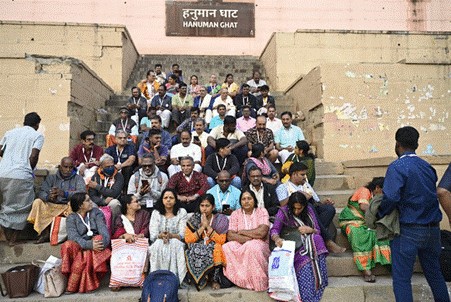
The delegation group comprising teachers (Yamuna) of the Kashi Tamil Sangamam II visited Hanuman Ghat and learnd about the history of various ghats of Ganga from the Acharyas.

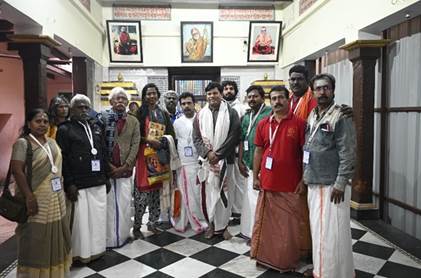
Later, the delegates visited the ancient temples on the ghats and learned about their history, divinity and grandeur. The group also visited the residence of Shri Subramanya Bharati located at Hanuman Ghat and met the family members. The group visited the Kanchi Math and learnt about its history.

The group learnt about the deep connection between Kashi and Tamil Nadu and visited the areas around the Hanuman Ghat, Kedar Ghat, and Harishchandra Ghat where several Tamil families have been residing for many years, exemplifying the spirit of Kasi Tamil Sangamam.

The second phase of the Kashi Tamil Sangamam will continue till 30th December 2023. Last year, the first phase of Kashi Tamil Sangamam was organized from 16th November to 16th December 2022. Nearly 1400 (7 Groups of 200 persons each) people are expected to be travelling from different parts of Tamil Nadu, representing varied walks of life. The first two groups have already arrived at Varanasi. During their stay in Kashi, as per their tour itinerary, they will also visit Prayagraj and Ayodhya.

***

Electoral literacy in classrooms

 The Ministry of Education, Government of India and the Election Commission of India have entered into a Memorandum of Understanding (MoU) on 2nd November, 2023.  This would incorporate voter education and electoral literacy formally into the school and college education system, to prepare future and new voters for greater electoral participation. One of the objectives of this MoU is to make the young citizens fully conversant with the electoral system of the country and inculcate in them the willingness to register as voters and participate in every election in a passionate, informed and ethical manner.

The MoU also provides for introduction/updation of NCERT textbooks to incorporate electoral literacy as part of the National Curriculum Framework (NCF) for Classes 6th to 12th, integration of voter education and electoral literacy appropriately in the curricular framework for all colleges/universities as well as that of adult education. This is to be supplemented by imparting requisite training to teachers by way of inclusion of the subject matter in teacher education course materials.

Apart from the classroom curriculum, the MoU also aims to spread awareness among students through Electoral Literacy Clubs in schools/colleges and Democracy Rooms in every senior secondary school, co-curricular activities, disseminating communication material on electoral literacy through various forms of media appropriate for school/college students, administering a pledge to vote by students, organising mock polls, EVM-VVPAT demonstrations, information about ECI mobile apps, inculcating practices of free, fair and ethical voting in student union elections in colleges/universities etc.

Farmer Producer Organizations (FPOs) by Primary Agricultural Credit Societies (PACS)

 The Government of India has launched the Central Sector Scheme for “Formation and Promotion of 10,000 Farmer Producer Organizations (FPOs)” in the year 2020 with a total budgetary outlay of Rs.6,865 crore which aim at enabling farmers to enhance their bargaining power, leverage economies of scale, reduction in cost of production and enhancing farmers’ incomes through aggregation of their agricultural produce, thus playing a major role towards sustainable incomes.

A target of 1,100 new Farmer Producer Organizations (FPOs) has been allocated to National Cooperative Development Corporation (NCDC), under Ministry of Cooperation, by the Government of India for formation and promotion of FPOs in cooperative sector, through strengthening of Primary Agricultural Cooperative Credit Societies (PACS).

Against the target of 1,100 FPOs, selection and allocation of 645 blocks, for formation and promotion of FPOs, has been completed. The State-wise detail of allocation of 645 blocks across the country, is enclosed at Annexure-I. Further, selection and allocation of remaining 455 blocks is under consideration.

The Scheme has a total budget outlay of Rs.6,865.00 crore (Rs.4,496 crore for five years i.e. 2019-20 to 2023-24 with a further committed liability of Rs.2,369.00 crore for period from 2024-25 to 2027-28 towards handholding of each FPO for five years from its aggregation and formation).

The Ministry of Agriculture and Farmers’ Welfare has further informed that against the target of 10,000 FPOs, 7,597 FPOs have been registered in 34 States/Union territories.

Under the scheme, funds are released to Implementing Agencies (IAs) by Central Nodal Agency (CNA) viz. Small Farmers’ Agri-Business Consortium (SFAC). So far, Rs.1,024.59 crore have been released to Implementing Agencies. The details of IA-wise/component wise status of fund released is enclosed at Annexure-II.

In order to realise the vision of ‘Sahakar Se Samriddhi’, Government of India with active participation of various States/ UTs has taken various initiatives to strengthen the cooperative sector across the country, thereby generating employment through them and contributing in the overall GDP growth of the Nation.

To increase the viability of Primary Agricultural Credit Societies (PACS) and diversify their business activities to make them vibrant economic entities, Model Byelaws for PACS have been prepared to enable PACS to diversify their business activities by undertaking more than 25 business activities, including dairy, fishery, floriculture, setting up godowns, procurement of foodgrains, fertilizers, seeds, LPG/CNG/Petrol/Diesel distributorship, short-term & long-term credit, custom hiring centers, common service centers, Fair Price Shops (FPS), community irrigation, Business Correspondent activities, etc.

Further, in order to strengthen PACS, project for Computerization of 63,000 functional PACS with a total financial outlay of ₹2,516 Crore has also been approved by the Government of India, which entails bringing all the functional PACS onto an ERP (Enterprise Resource Planning) based common national software, linking them with NABARD through State Cooperative Banks (StCBs) and District Central Cooperative Banks (DCCBs).

Government has also approved a proposal to set up new multi-purpose PACS or primary dairy/ fisheries cooperatives covering every Panchayat/ village in the next five years, with support of National Bank for Agriculture and Rural Development (NABARD), National Dairy Development Board (NDDB), National Fisheries Development Board (NFDB), National Cooperative Development Corporation (NCDC) and other National level Federations.

Ministry of Cooperation has taken various other initiatives which aim at providing cooperatives with requisite forward and backward linkages to market agri produce, obtain credit and other services at the Panchayat/ village level itself, generate multiple and stable revenue streams for them, thus making them self-reliant. A list of initiatives taken by the Ministry of Cooperation for development of Cooperative Sector is enclosed at Annexure-III.

Annexure-I

State-wise detail of allocation of 645 blocks for Formation and Promotion of FPOs

S.No.

State/UT

No. of blocks allocated

No. of Districts covered

1

Andhra Pradesh

104

20

2

Arunachal Pradesh

0

0

3

Assam

26

14

4

Bihar

100

20

5

Chhattisgarh

13

4

6

Dadra & Nagar Haveli and Daman & Diu

2

2

7

Gujarat

0

0

8

Haryana

1

1

9

Himachal Pradesh

0

0

10

J&K

54

12

11

Jharkhand

24

11

12

Karnataka

13

9

13

Kerala

17

8

14

Ladakh

28

2

15

Madhya Pradesh

0

0

16

Maharashtra

0

0

17

Manipur

0

0

18

Meghalaya

14

8

19

Nagaland

0

0

20

Odisha

0

0

21

Rajasthan

16

9

22

Sikkim

0

0

23

Tamil Nadu

44

19

24

Telangana

106

28

25

Tripura

0

0

26

Uttar Pradesh

24

18

27

Uttarakhand

0

0

28

West Bengal

59

12

Total

645

197


Annexure-II

Details of IA-wise/component wise status of fund released


S.No.

Implementing Agency / Component

Total Fund Released

(In Rs. Crores)

1

Central Agricultural University (CAU), Imphal, Manipur

8.02

2

Foundation for Development of Rural Value Chains (FDRVC)- MoRD

59.55

3

Gujarat Agro-Industries Corporation Ltd. (GAICL)

15.88

4

National Bank for Agriculture and Rural Development (NABARD)

215.55

5

National Agricultural Cooperative Marketing Federation of India Ltd. (NAFED)

111.28

6

National Cooperative Development Corporation(NCDC)

77.78

7

National Dairy Development Board (NDDB)

5.55

8

North Eastern Regional Agricultural Marketing Corporation Limited (NERAMAC)

12.65

9

Paschimbanga Agri-Marketing Cooperation Limited (PAMCL)

0.61

10

Small Farmers’ Agri-Business Consortium (SFAC)

356.72

11

Tamil Nadu-Small Farmers Agri-Business Consortium (TN-SFAC)

10.62

12

Tribal Co-operative Marketing Development Federation of India (TRIFED)

1.37

13

Uttar Pradesh Diversified Agriculture Support Project (UPDASP)

8.11

14

Watershed Development Department (WDD)- Karnataka

19.88

15

Credit Guarantee Fund released to NABARD

115.00

16

Training & workshops and National Project Management Agency (NPMA) cost

6.02


Grand Total

1024.59


Annexure-III


  1. Making Primary Cooperatives economically vibrant and transparent
  1. Model Bye-Laws for PACS making them multipurpose, multidimensional and transparent entities: Government, in consultation with all the stakeholders, including States/ UTs, National Level Federations, State Cooperative Banks (StCBs), District Central Cooperative Banks (DCCBs), etc., has prepared and circulated Model Byelaws for PACS to all the States/ UTs, which enable PACS to undertake more than 25 business activities, improve governance, transparency and accountability in their operations. Provisions have also been made to make the membership of PACS more inclusive and broad-based, giving adequate representation to women and Scheduled Castes/Schedules Tribes. Model Byelaws have been adopted by 31 States/ UTs so far.


  1. Strengthening of PACS through Computerization: In order to strengthen PACS, project for Computerization of 63,000 functional PACS with a total financial outlay of ₹2,516 Crore has been approved by the Government of India, which entails bringing all functional PACS in the Country onto a common ERP based national software, linking them with NABARD through StCBs and DCCBs. A total of 62,318 PACS from 28 States/ UTs have been sanctioned under the project. Software is ready and trials have already started in 5,673 PACS in 26 States/ UTs so far.


  1. New Multipurpose PACS/ Dairy/ Fishery Cooperatives in uncovered Panchayats: A proposal has been approved by the Government to set up new multi-purpose PACS or primary dairy/ fisheries cooperatives covering every Panchayat/ village in the next five years, with support of NABARD, NDDB, NFDB, NCDC and other National level Federations. As reported by the States/ UTs, the process for registering 9,961 new PACS/ Dairy/ Fishery cooperative societies in 24 States/ UTs is in various stages.


  1. World’s Largest Decentralized Grain Storage Plan in Cooperative sector: Government has approved a plan to create warehouses, custom hiring centres, primary processing units and other agri-infra for grain storage at PACS level, by converging various schemes of Government such as AIF, AMI, SMAM, PMFME, etc. This will reduce wastage of food grains and transportation costs, enable farmers to realize better prices for their produce and meet various agricultural needs at the PACS level itself. 22 States/ UTs and National level Cooperative Federations such as National Cooperative Consumers Federation (NCCF) and National Agricultural Cooperative Marketing Federation of India Ltd. (NAFED), have identified 1,711 PACS for creation of storage capacity under the Pilot Project. At present, construction is going in 13 PACS of 13 States/ UTs under the Pilot Project.


  1. PACS as Common Service Centers (CSCs) for better access to e-services: MoU has been signed between Ministry of Cooperation, MeitY, NABARD and CSC e-Governance Services India Limited for providing more than 300 e-services such as banking, insurance, Aadhar enrolment/ updation, health services, PAN card and IRCTC/ Bus/ Air ticket, etc. through PACS. So far, 24,470 PACS have started providing CSC services to the rural citizens which will also result in increase in income of those PACS at the same time.


  1. Formation of new Farmer Producer Organizations (FPOs) by PACS: Government has allowed 1,100 additional FPOs to be formed by PACS with the support of NCDC, in those blocks where FPOs have not yet been formed or the blocks are not covered by any other implementing agency. This will be helpful in providing the farmers with necessary market linkage and get fair and remunerative prices for their produce.


  1. PACS given priority for Retail Petrol/ Diesel outlets: Government has allowed PACS to be included in the Combined Category 2 (CC2) for allotment of retail petrol/ diesel outlets. As per information received from Oil Marketing Companies (OMCs), a total of 228 PACS have applied online for retail petrol/ diesel outlets.


  1. PACS given permission to convert bulk consumer petrol pumps into retail outlets: Based on the discussions with the Ministry of Petroleum and Natural Gas, guidelines have been issued to convert the existing bulk consumer licensee PACS into retail outlets for increasing the profit of PACS and generate employment opportunities in rural areas. 109 PACS from 5 States having wholesale consumer pumps have given consent for conversion into Retail Outlets, out of which 43 PACS have received Letter of Intent (LOI) from the OMCs.


  1. PACS eligible for LPG Distributorship for diversifying its activities: Government has now allowed PACS to apply for LPG Distributorships. This will give PACS an option to increase their economic activities and create new employment opportunities in rural areas. Two locations have already been advertised in the State of Jharkhand.


  1. PACS as PM Bharatiya Jan Aushadhi Kendra for improving access to generic medicines at rural level: Government is promoting PACS to operate Pradhan Mantri Bhartiya Janaushadhi Kendras which will provide additional income source to them and provide easy access of generic medicines to rural citizens. So far, 4,289 PACS/ cooperative societies have applied online for PM Janaushadhi Kendras, out of which 2,293 PACS have been given initial approval also.


  1. PACS as Pradhan Mantri Kisan Samriddhi Kendras (PMKSK): Government is promoting PACS to operate PMKSK for ensuring easy accessibility of fertilizer & related services to farmers in the country. As per the information shared by States/ UTs, 28,648 PACS are functioning as PMKSK so far.


  1. Convergence of PM-KUSUM at PACS level: Farmers associated with PACS can adopt solar agricultural water pumps and install photovoltaic modules in their farms.


  1. PACS to carry out O&M of rural piped water supply schemes (PWS): In order to utilize the reach of PACS in rural areas, on the initiative of the Ministry of Cooperation, Ministry of Jal Shakti has made PACS as eligible agencies to carry out the Operations & Maintenance (O&M) of PWS in rural areas. As per information received from States/ UTs, 1,381 PACS have been identified by 12 States/ UTs to provide O&M services at Panchayat/ Village level.


  1. Micro-ATMs to Bank Mitra Cooperative Societies for providing doorsteps financial services: Dairy and Fisheries cooperative societies can be made Bank Mitras of DCCBs and StCBs to ensure their ease of doing business, transparency and financial inclusion, Micro-ATMs are also being given to these Bank Mitra Co-operative Societies with support from NABARD to provide ‘Door Step Financial Services’. As a pilot project, 1,723 Micro-ATMs have been distributed to Bank Mitra cooperative societies in Panchmahal and Banaskantha Districts of Gujarat.


  1. Rupay Kisan Credit Card to Members of Milk Cooperatives: In order to expand the reach of DCCBs/ StCBs and to provide necessary liquidity to the members of Dairy Cooperative societies, Rupay Kisan Credit Cards (KCCs) are being distributed to the members of cooperatives for providing credit at comparatively lower interest rates and enable other financial transactions. As a pilot project, 73,503 Rupay KCC have been distributed in Panchmahal and Banaskantha Districts of Gujarat.


  1. Formation of Fish Farmer Producer Organization (FFPO): In order to provide market linkage and providing processing facilities to the fishermen, NCDC has registered 69 FFPOs in the initial phase. Department of Fisheries, Government of India has further allocated conversion of 1000 existing fisheries cooperative societies into FFPOs to NCDC, with an approved outlay of Rs 225.50 crore.


  1. Strengthening the Urban and Rural Cooperative Banks
  1. UCBs have been allowed to open new branches to expand their business: UCBs can now open new branches up to 10% (maximum 5 branches) of the existing number of branches in the previous financial year without prior approval of RBI.


  1. UCBs have been allowed by RBI to offer doorstep services to their customers: Door step banking facility can now be provided by the UCBs. Account holders associated with these banks can now avail various banking facilities at home such as cash withdrawal, cash deposit, KYC, demand draft and life certificate for pensioners, etc.


  1. Cooperative banks have been allowed to make one-time settlement of outstanding loans, like Commercial Banks: Co-operative banks, through board-approved policies, can now provide process for technical write-off as well as settlement with borrowers.


  1. Time limit increased to achieve Priority Sector Lending (PSL) targets given to UCBs: RBI has extended the timeline for UCBs to achieve Priority Sector Lending (PSL) targets by two years i.e., up to March 31, 2026.


  1. A Nodal Officer designated in RBI for regular interaction with UCBs: In order to meet the long pending demand of the cooperative sector for closer coordination and focused interaction, RBI has notified a nodal officer as well.


  1. Individual housing loan limit more than doubled by RBI for Rural and Urban Co-operative Banks:
    1. Housing loan limit of Urban cooperative banks have now been doubled from Rs 30 lakh to Rs 60 lakh.
    2. Housing loan limit of Rural cooperative banks has been increased to two and a half times to Rs 75 lakh.


  1. Rural Co-operative Banks will now be able to lend to commercial real estate/ residential housing sector, thereby diversifying their business: This will not only help Rural co-operative banks to diversify their business, but benefit Housing co-operative societies also.


  1. License fee reduced for Cooperative Banks: License fee for onboarding Cooperative Banks to ‘Aadhaar Enabled Payment System’ (AePS) has been reduced by linking it to the number of transactions. Cooperative financial institutions will also be able to get the facility free of cost for the first three months of the pre-production phase. With this, farmers will now be able to get the facility of banking at their home with their fingerprints.


  1. Non-scheduled UCBs, StCBs and DCCBs notified as Member Lending Institutions (MLIs) in CGTMSE Scheme to increase the share of cooperatives in lending: The co-operative banks will now be able to take advantage of risk coverage up to 85 percent on the loans given. Also, cooperative sector enterprises will also be able to get collateral free loans from co-operative banks now.


  1. Notification of Scheduling norms for including Urban Co-operative Banks: UCBs that meet the ‘Financially Sound and Well Managed’ (FSWM) criteria and have maintained the minimum deposits required for classification as Tier 3 for the last two years are now eligible to be included in Schedule II of the Reserve Bank of India Act 1934 and get ‘Scheduled’ status.


  1. Monetary ceiling doubled by RBI for Gold Loan: RBI has doubled monetary ceiling from Rs. 2 lakh to Rs.4 lakh, for those UCBs that meet the PSL targets.


  1. Umbrella Organization for Urban Cooperative Banks: RBI has accorded approval to the National Federation of Urban Co-operative Banks and Credit Societies Ltd. (NAFCUB) for the formation of an Umbrella Organization (UO) for the UCB sector, which will provide necessary IT infrastructure and operation support to around 1,500 UCBs.


  1. Relief to Cooperative Societies in the Income Tax Act
  1. Surcharge reduced from 12 % to 7% for co-operative societies having income between Rs. 1 to 10 Cr.: This will reduce the burden of Income Tax on Cooperative Societies and more capital will be available with them to work for the benefit of their members.


  1. MAT reduced for cooperatives from 18.5% to 15%: With this provision, now there is parity between Cooperative Societies and Companies in this regard.


  1. Relief in cash transactions under section 269ST of the Income Tax Act: In order to remove difficulties in cash transactions by cooperatives under Section 269ST of IT Act, Government has issued a clarification that cash transaction of less than Rs. 2 lakhs done by a cooperative society with its distributor in a day will be considered separately, and will not be charged with income tax penalty.


  1. Tax cut for new manufacturing Cooperative societies: Government has decided that a flat lower tax rate of 15% will be charged, compared to an earlier rate of up to 30% plus surcharge, for new cooperatives commencing manufacturing activities by March 31, 2024. This will encourage the formation of new cooperative societies in the manufacturing sector.


  1. Increase in limit of Cash Deposits and Cash Loans by PACS and PCARDBs: Government has enhanced the limit for Cash Deposits and Cash Loans by PACS and Primary Cooperative Agriculture and Rural Development Banks (PCARDBs) from Rs 20,000 to Rs 2 lakh per member. This provision will facilitate their activities, increase their business and benefit members of their societies.


  1. Increase in the limit of Tax Deducted at Source (TDS) in Cash Withdrawal: Government has increased the cash withdrawal limit of cooperative societies without deduction of tax at source from Rs.1 crore to Rs.3 crore per year. This provision will save Tax Deducted at Source (TDS) for cooperative societies, which will enhance liquidity of the cooperative society.


  1. Revival of Cooperative Sugar Mills
  1. Relief from Income Tax to Sugar Cooperative Mills: Government has issued a clarification that Sugar cooperative mills would not be subjected to additional income tax for paying higher sugarcane prices to farmers up to Fair and Remunerative or State Advised Price, from April, 2016 onwards.


  1. Resolution of decades old pending issues related to Income Tax of Sugar Cooperative Mills: Government has made a provision in its Union Budget 2023-24, wherein Sugar cooperatives have been allowed to claim as expenditure their payments to sugarcane farmers for the period prior to assessment year 2016–17, giving a relief of more than Rs.10,000 crores.


  1. Rs. 10,000 crore loan scheme launched for strengthening of Sugar Cooperative Mills: Government has launched a scheme through NCDC for setting up ethanol plants or cogeneration plants or for working capital or for all three purposes. Loan amount of Rs. 3,010 cr. has been sanctioned by NCDC to 24 Cooperative Sugar Mills so far.


  1. Preference to Cooperative Sugar Mills in purchase of ethanol: Cooperative Sugar Mills have now been put at par with private companies for ethanol procurement by Government of India under the Ethanol Blending Programme (EBP).


  1. Reduction in GST on molasses from 28% to 5%: Government has decided to reduce the GST on molasses from 28% to 5% which will enable cooperative sugar mills to earn more profits for its members by selling molasses to distilleries with higher margins.


  1. Three new Multi-State Societies at the National Level
  1. New National Multi-State Cooperative Seed Society for certified seeds: Government has established a new apex multi-state cooperative seed society under the MSCS Act, 2002, namely Bharatiya Beej Sahakari Samiti Limited (BBSSL) as an umbrella organization for quality seed cultivation, production and distribution under a single brand. 8,200 PACS/ cooperative societies from 27 States/ UTs have applied to become its members so far.


  1. New National Multi-State Cooperative Organic Society for organic farming: Government has established a new apex multi-state cooperative organic society under the MSCS Act, 2002, namely National Cooperative Organics Limited (NCOL) as an umbrella organization to produce, distribute and market certified and authentic organic products. 2,475 PACS/ cooperative societies from 24 States/ UTs have applied to become its members so far. 6 organic products have already been launched by NCOL so far.


  1. New National Multi-State Cooperative Export Society for promoting exports: Government has established a new apex multi-state cooperative export society under the MSCS Act, 2002, namely National Cooperative Export Limited (NCEL) as an umbrella organization to give thrust to exports from cooperative sector. 2,625 PACS/ cooperative societies from 22 States/ UTs have applied to become its members so far. Till date, NCEL has got permission to export 14.92 LMT rice to 16 countries and 50,000 MT sugar to 2 countries.


  1. Capacity Building in Cooperatives
  1. Establishment of the Cooperative UniversitySteps are being taken by Ministry of Cooperation for setting up of a National Cooperative University for Cooperative education, training, consultancy, research and development and a sustainable and quality supply of trained manpower.


  1. Promotion of training and awareness through National Council for Cooperative Training (NCCT): By increasing its reach, NCCT has conducted 3,287 training programs and provided training to 2,01,507 participants in FY 2022-23.


  1. Use of Information Technology for ‘Ease of Doing Business’
  1. Computerization of the Central Registrar’s Office: Central Registrar’s office has been computerized to create a digital ecosystem for Multi-State Cooperative Societies, which will assist in processing applications and service requests in a time bound manner.


  1. Scheme for computerization of office of RCSs in States and Union Territories: To increase ‘Ease of doing business’ for Cooperative Societies and create a digital ecosystem for transparent paperless regulation in all States/Union Territories, a Centrally Sponsored Project for computerization of RCS Offices has been approved by the Government. Grants will be provided for purchase of hardware, development of software, etc. to the States/ UTs.


  1. Computerization of Agriculture and Rural Development Banks (ARDBs): To strengthen the Long-term Cooperative Credit structure, the project of computerization of 1,851 units of Agriculture and Rural Development Banks (ARDBs) has been approved by the Government. NABARD is the implementing agency for the project and will develop a national level software for ARDBs. Hardware, support for Digitization of legacy data, training to the employees, etc. will be provided under the project.


  1. Other Initiatives
  1. New National Cooperative Database for authentic and updated data repository: A database of cooperatives in the country has been prepared with the support of State Governments to facilitate stakeholders in policy making and implementation of programmes/ schemes related to cooperatives across the country. So far, data of around 7.86 lakh cooperatives has been captured in the database.


  1. Formulation of New National Cooperative Policy: A National level committee comprising 49 experts and stakeholders drawn from all over the Country has been constituted to formulate the New National Cooperative Policy for enabling a vibrant ecosystem to realize the vision of ‘Sahakar-se-Samriddhi’.


  1. Multi-State Co-operative Societies (Amendment) Act, 2023: Amendment has been brought in the MSCS Act, 2002 to strengthen governance, enhance transparency, increase accountability, reform electoral process and incorporate provisions of 97th Constitutional Amendment in the Multi State Cooperative Societies.


  1. Inclusion of Cooperatives as ‘buyers’ on GeM portal:  Government has permitted the cooperatives to register as ‘buyer’ on GeM, enabling them to procure goods and services from nearly over 67 lakh vendors to facilitate economical purchases and greater transparency. So far, 559 cooperative societies have been onboarded on GeM as buyers.


  1. Expansion of National Cooperative Development Corporation (NCDC) to increase its range and depth: NCDC has launched new schemes in various sectors such as ‘Swayamshakti Sahkar’ for SHGs; ‘Deerghavadhi Krishak Sahkar’ for long term agricultural credit and ‘Dairy Sahkar’ for dairy. Total financial assistance of Rs. 41,024 Crores has been disbursed by NCDC in FY 2022-23, which is almost 20% higher than the disbursement of Rs.34,221 crore in 2021-22. Government of India has permitted NCDC to issue bonds worth ₹2000 crore with government guarantee, subject to the adherence of specified terms and conditions. Further, NCDC is setting up sub-offices in 6 North Eastern States – Arunachal Pradesh, Meghalaya, Mizoram, Manipur, Nagaland and Tripura with the objective of taking various national schemes to the cooperative societies at their doorstep.


  1. Financial assistance by NCDC for Deep Sea Trawlers: NCDC is providing financial assistance for projects related to deep sea trawlers in coordination with the Department of Fisheries, Government of India. NCDC has already sanctioned financial assistance of Rs 20.30 crore for purchase of 14 deep sea trawlers for the Fisheries Cooperative Societies of Maharashtra.


  1. Refund to Investors of Sahara Group of Societies: A portal has been launched for making payments to the genuine depositors of the cooperative societies of Sahara Group in a transparent manner. Disbursement have already started after proper identification and submission of proof of their deposits and claims.

Primary fisheries Co-operative societies

 The Government, on 15.02.2023, has approved the Plan for strengthening cooperative movement in the country and deepening its reach up to the grassroots by establishing new multipurpose PACS or primary dairy/ fishery cooperative societies in uncovered  Panchayat/ village of the country in the next five years, through convergence of various GOI schemes, including the following schemes of the Department of Fisheries, Government of India:

  1. Pradhan Mantri Matsya Sampada Yojana (PMMSY)- PMMSY aims to address critical gaps in fish production, productivity, quality, technology, post harvest infrastructure and management, modernization and strengthening of value chain. Under the scheme, beneficiaries are eligible for financial assistance of up to 40 % to 60% of the total project cost/unit cost.


  1. Fisheries & Aquaculture Infrastructure Fund (FIDF)- FIDF aims to create infrastructural facilities, both in marine and inland fisheries sector. The scheme entails construction of ice plants, development of cold storages, fish transport and cold chain network infrastructure, setting up of brood banks, development of hatcheries, fish processing units, fish feed mills/plants and development of modern fish markets. The projects under FIDF are eligible for an interest subvention of 3% per annum for development of above mentioned infrastructural facilities.


This plan for setting up of new primary cooperative societies, including fisheries cooperative societies is being implemented by NCDC with the support of National Bank for Agriculture and Rural Development (NABARD), National Dairy Development Board (NDDB), National Fisheries Development Board (NFDB), National Level Cooperative Federations and State Governments.

The plan would provide small and marginal farmers, including marginal fishermen engaged in fish production, with requisite forward and backward linkages, skill development, processing & cold chain infrastructure facilities, thus enabling them to increase their incomes. By availing the benefits under the schemes identified for convergence, marginal fisherman will be able to modernize/upgrade and setup various fisheries and aquaculture related infrastructural facilities which would help them in improving their productivity.

Ethanol production in the country is 1380 crore litres

 As on 30.11.2023, the ethanol production capacity in the country is about 1380 crore litres out of which about 875 crore litres is molasses based and about 505 crore litres is grain based.

The Government of India has been implementing Ethanol Blended with Petrol (EBP) Programme throughout the country wherein Oil Marketing Companies (OMCs) sell petrol blended with ethanol. Under EBP Programme, Government has fixed the target of 20% blending of ethanol with petrol by 2025.

In order to achieve the target of 20% blending by 2025, about 1016 crore litres of ethanol is required and total requirement of ethanol including for other uses is 1350 crore litres. For this, about 1700 crore liters of ethanol producing capacity is required to be in place by 2025 considering plant operates at 80% efficiency. The Government has estimated the demand of ethanol required for 20% blending by 2025 keeping in view the growth of petrol-based vehicles in two-wheeler and passenger vehicle segments& the projected sale of Motor Spirit (MS).

Further, with a view to enhance the ethanol production capacity in the country to achieve the blending targets set under EBP Programme, the Government has notified various ethanol interest subvention schemes from July 2018 to April 2022.

Under these ethanol interest subvention schemes, Government is facilitating entrepreneurs to set up new distilleries (molasses based, grain-based and dual-feed based) or expansion of existing distilleries (molasses based, grain-based and dual-feed based) throughout the country. Interest subvention @ 6% per annum or 50% of rate of interest charged by banks/financial institutions, whichever is lower, on the loans to be extended by banks/financial institutions is being borne by the Central Government for five years including one-year moratorium.

Installation of new ethanol distilleries/expansion of existing ethanol distilleries has brought investment opportunities worth over ₹ 40,000/- crore in urban as well as rural areas.

Due to effective Government policies, the supply of ethanol to Oil Marketing Companies (OMCs) has increased by more than 13 times to about 502 crore litres in Ethanol Supply Year (ESY) 2022-23 from 38 crore litres in ESY 2013-14. The blending percentage has also increased from 1.53% in ESY 2013-14 to targeted 12% in ESY 2022-23.

Through the sale of ethanol, the cash flows for sugar mills have improved resulting in prompt payment to cane farmers. Sugar mills have cleared 98.3% of cane dues of farmers in Sugar Season (SS) 2022-23 and 99.9% of cane dues in previous SS 2021-22.

In last 10 years, sugar mills have earned revenue of more than ₹ 94,000 crores from sale of ethanol which has added to the bottom line of sugar mills.

Production of ethanol has led to proportionate reduction in the import of petrol or crude oil which has resulted in saving of foreign exchange for India. In 2022-23, with production of about 502 crore litres of ethanol, India has saved about ₹ 24,300 crores of foreign exchange and improved India’s energy security.

99.8% of ration cards seeded with Aadhaar under One Nation One Ration Card (ONORC)

 At present, around 99.8% of ration cards have been seeded with Aadhaar for the rightful targeting of Public Distribution System (PDS) beneficiaries in the country. The One Nation One Ration Card (ONORC) plan has already been implemented by all 36 States/UTs, across the country. Since its inception around 124 Crore portability transactions have been recorded under the ONORC plan, which includes both inter-State and intra-State transactions ensuring the food security of around 80 Crore beneficiaries in the country. ONORC plan is proving to be especially beneficial to the migrant labourers, internally displaced persons (IDPs) etc. who frequently change their place of dwelling in search of temporary employment. Under the plan, the beneficiaries are empowered to lift their entitled foodgrain from any Fair Price Shop (FPS) of their choice, anywhere in the country, by using their existing ration card/Aadhaar card with biometric authentication on an electronic Point of Sale (ePoS) device. ONORC also enables the family members of such migrant beneficiaries back home (in the village/hometown) to lift the part / balance foodgrains on the same ration card. ONORC has also facilitated the migrant beneficiaries/ family members to choose any FPS of their choice without being dependent on visiting only the tagged FPS in their ration cards. Such flexibility was not available earlier under the traditional PDS.  

Due to Aadhaar seeding and installation of ePoS devices at the FPSs, at present, around 97% transactions in the country are done in a transparent manner through biometric authentication by use of ePoS devices on a monthly basis.  This Department has extended the timeline given to the States/UTs, under the Notification dated 08/02/2017 (as amended from time to time) issued in exercise of Section-7 of the Aadhaar Act 2016, for completing the Aadhaar seeding of ration cards up to 31/03/2024. Until then, all States/UTs have been advised that no genuine beneficiary/household shall be deleted from the list of eligible ration cards/ beneficiaries and shall not be denied their entitled quota of foodgrains to Pradhan Mantri Garib Kalyan Anna Yojana (PMGKAY) beneficiaries only for want of Aadhaar number or only on the ground of not possessing an Aadhaar number, failure of biometric authentication due to network/ connectivity/ linking issues or any other technical reasons etc.

However, till the Aadhaar is assigned to the beneficiaries, either of the eight identification documents shall be used for identification purpose i.e. (Voter ID Card, PAN Card, Passport, Driving License, Certificate of Identity with photo issued by Gazetted Officer/Tahsildar on official letter head, Address card having Name and Photo issued by Department of Posts, Kisan Photo Passbook and any other document as specified by State/UT Governments).


New Foreign Trade Policy, extension of Interest Equalization Scheme on pre and post shipment rupee export credit

 Government has taken the following export promotion initiatives:-

i New Foreign Trade Policy was launched on 31st March, 2023 and it came into effect from 1st  April, 2023.

ii Interest Equalization Scheme on pre and post shipment rupee export credit has also been  extended upto 30-06-2024 with additional allocation of Rs. 2500 crores.

iii Assistance provided through several schemes to promote exports, namely, Trade Infrastructure for Export Scheme (TIES) and Market Access Initiatives (MAI) Scheme. 

iv Rebate of State and Central Levies and Taxes (RoSCTL) Scheme to promote labour oriented sector export has been implemented since 07.03.2019.

v Remission of Duties and Taxes on Exported Products (RoDTEP) scheme has been implemented since 01.01.2021. With effect from 15.12.2022, uncovered sectors like pharmaceuticals, organic and inorganic chemicals and article of iron and steel has been covered under RoDTEP. Similarly, anomalies in 432 tariff lines have been addressed and the corrected rates have been implemented with effect from 16.01.2023.

vi Common Digital Platform for Certificate of Origin has been launched to facilitate trade and increase Free Trade Agreement (FTA) utilization by exporters.

vii Districts as Export Hubs initiative has been launched by identifying products with export potential in each district, addressing bottlenecks for exporting these products and supporting local exporters/manufacturers to generate employment in the district.

viii Active role of Indian missions abroad towards promoting India’s trade, tourism, technology and investment goals has been enhanced.

ix Regular monitoring of export performance with Commercial Missions abroad, Export Promotion Councils, Commodity Boards/ Authorities and Industry Associations and taking corrective measures from time to time.

Following measures have been taken by the Government to maximize the growth of domestic markets and to expand its reach globally;-

i.          Pradhan MantriGati Shakti

ii.         National Logistics Policy

iii.        National Industrial Corridor Development Programme

iv.        GIS enabled Land Bank- India Industrial Land Bank (IILB)

v.         Industrial Park Rating System (IPRS)

vi.        Productivity Linked Incentive (PLI)

vii.       Make In India

viii.      Startup India

ix.        One District One Product

x.         National Single Window System

A new Chapter has been introduced within the Foreign Trade Policy (FTP), 2023 that aims to promote e-Commerce exports by bringing such exporters under the ambit of various export promotion schemes of the Government. In line with the special emphasis laid in the FTP 2023 on e-commerce exports, the outreach events are being held in the districts under Districts as Export hubs initiative with focus on promoting e-commerce exports of the identified goods from the districts in collaboration with various stakeholders including the e-commerce platforms, various concerned central and state government departments such as the Department of Posts, Central Board of Indirect Taxes and Customs (CBIC), Banks, Ministry of Micro, Small and Medium Enterprises (MSME), Export Promotion Councils, Local Trade Associations/Chambers of Commerce, District Industries Centers, etc.