

Name of Scholar: Dr. Ratna Shukla
Brief About Scholar:
Name of Institution: CSJM University, Kanpur
Published Research Papers: 7
Month: December 2023
Conference Proceedings Publication with ISBN
It’s great to hear about your interest in publishing conference proceedings! Edupedia Publications Pvt Ltd seems to offer an affordable package with various benefits like ISBN allocation, DOI, and listing on their website.

Open Access eBook Publication with ISBN
Are you ready to share your expertise and knowledge with the world? At Edupedia Publications Pvt Ltd, we believe that every unique perspective deserves to be heard and valued. We understand the importance of disseminating knowledge to a global audience, which is why we’re excited to invite authors like you to publish your work with us through our Open Access Book Publication program.

What sets us apart is our commitment to making knowledge accessible. We believe that cost shouldn’t be a barrier to sharing valuable information. That’s why we offer an incredible opportunity for authors to publish their books with an ISBN for just $30.
Here’s why you should consider publishing with us:
Accessibility and Open Access:
We champion the principles of Open Access, ensuring that your work reaches the widest possible audience. Your book will be freely available to readers worldwide, making a meaningful impact across communities, institutions, and individuals hungry for knowledge.
ISBN Inclusion:
We provide an ISBN for your book, a crucial element for its recognition and visibility in libraries, bookstores, and academic circles. This identifier enhances the discoverability of your work, allowing readers to easily find and engage with your ideas.
Supportive Publishing Process:
Our team is dedicated to guiding you through the publishing journey. From manuscript submission to formatting, editing, and design, we offer comprehensive support at every stage. You retain full ownership and rights to your work while benefiting from our professional assistance.
Reach and Recognition:
By publishing with us, you gain exposure within scholarly communities, academic institutions, and interested readers. Join our network of esteemed authors who have contributed valuable insights and made a lasting impact through their publications.
Cost-Effective Publishing:
We understand the financial constraints that authors may face. With our affordable publishing fee of $30, we aim to empower authors from diverse backgrounds to share their expertise without worrying about exorbitant costs.
Diverse Subjects and Disciplines:
Whether your expertise lies in science, humanities, technology, social sciences, or any other field, we welcome a wide array of subjects and disciplines. Your unique perspective is valuable, and we invite you to contribute to the enrichment of global knowledge.
Your words have the power to inspire, educate, and shape the future. Take this opportunity to make a difference by publishing your book with Edupedia Publications Pvt Ltd. Join us in our mission to foster a world where knowledge knows no bounds.
Together, let’s embark on a journey of discovery, innovation, and enlightenment. Submit your manuscript today and let your ideas flourish on a global stage.
Contact us to learn more about this incredible publishing opportunity and start sharing your insights with the world!
Write a mail to editor@pen2print.org or editor@edupub.org
<
p style=”–tw-border-spacing-x: 0;–tw-border-spacing-y: 0;–tw-ring-color: rgba(69,89,164,.5);–tw-ring-offset-color: #fff;–tw-ring-offset-shadow: 0 0 transparent;–tw-ring-offset-width: 0px;–tw-ring-shadow: 0 0 transparent;–tw-rotate: 0;–tw-scale-x: 1;–tw-scale-y: 1;–tw-scroll-snap-strictness: proximity;–tw-shadow-colored: 0 0 transparent;–tw-shadow: 0 0 transparent;–tw-skew-x: 0;–tw-skew-y: 0;–tw-translate-x: 0;–tw-translate-y: 0;border: 0px solid rgb(217, 217, 227);margin: 1.25em 0px 0px”>For faster publication process, send your manuscript along with the fee receipt after paying using the link given here. or http://pay.edupub.org/
MYSTERIES OF THE WILDERNESS By Apostle Dr Isaac Odoi Danquah
The ‘MYSTERIES OF THE WILDERNESS’ is a book intended for anyone willing to experience greatness, bumper rich harvest in life, jumbo wealth creation, rich successful life and not afraid to go through the hustles, torchers and agonies in life called wilderness to accomplish it. The book explores the various kinds of people on earth, the deep secrets and mysteries associated with greatness such as troubles and problems, test for and towards greatness and the mysteries about creation by the divine creator. How the divine creator created the Heaven and Earth and placed man in the Garden of Eden and asked him to have dominion and nurture the Garden. It explains how man lost control over the Garden and lost dominion to the enemy and found himself in the wilderness – sin. The torcher, hustles and problems he and his wife have to face on the other side of the beautiful garden in catering for their family. This is comparable to the problems and issues of life faced on daily basis on our persue towards greatness, wealth creation and enrichment in life. It explains all kinds of tools and opportunities made available unto us by divine creation as we seek divine encounter and daily walk with Christ and towards self – enrichment and wealth creation in life. It explains how to have dominion and total control over once creation towards a wealthy life and living to impact now and future generations. And finally, how the divine creator is willing to hold our hands and leads us through the wilderness in our persue of wealth creation and enrichment in life and carry us to a successful end. And to a place we love and dream to be most.

Book Specifications
|
Mysteries of the Winderness |
|
|
Authors |
Apostle Dr Isaac Odoi Danquah |
|
Genre |
Education & Teaching |
|
Language |
English |
|
Page |
250 |
|
Edition |
First |
|
Year |
2023 |
|
ISBN: |
978-93-95891-95-0
|
|
Imprint |
EduPub |
|
Publisher |
Edupedia Publications Pvt Ltd, New Delhi |
Trading Account: Definition, How To Open, Margin Requirements
A trading account is like your personal gateway to buying and selling different things like stocks or commodities. In this guide, we’ll explore what a trading account is, how to open one, and understand an important part called margin requirements. Whether you’re new to investing or have some experience, knowing about trading accounts is crucial for making smart decisions in the ever-changing world of finance.
What is a Trading Account?
A Trading Account is like your passport to the financial markets, serving as a digital hub where you can buy and sell various financial instruments. It’s essentially a digital ledger that allows individuals to buy and sell various financial instruments, such as stocks, bonds, commodities, and currencies. Specifically, for day traders, a Trading Account is their primary tool for engaging in the fast-paced world of short-term trading. When day traders open a Trading Account, they are essentially gaining access to a platform that allows them to execute quick and frequent transactions within the same trading day. This account is equipped with features tailored for day trading, such as real-time market data, rapid order execution, and advanced charting tools.
Moreover, a trading account extends beyond mere buying and selling. It often incorporates advanced features like margin trading, enabling users to leverage their positions by borrowing funds. This leverage amplifies both potential gains and losses, adding a layer of complexity to the trading process. Additionally, trading accounts frequently offer tools for technical and fundamental analysis, empowering users to make informed decisions based on market trends and economic indicators.

How does a Trading Account work?
A Trading Account is like your virtual workspace for navigating the financial markets, and it plays a crucial role in day trading. Imagine it as your control center where you can swiftly buy and sell financial instruments like stocks or currencies. If you’re interested in day trading forex, you would fund your Trading Account with the amount you’re comfortable investing. Let’s say you want to take advantage of short-term price movements in a particular currency pair. Using the Trading Account, you can place quick buy or sell orders in response to real-time market data, allowing you to capitalize on fluctuations throughout the trading day. Some Trading Accounts even offer features like margin trading, which lets you borrow funds to increase your buying power. However, it’s important to use this feature cautiously, as it can amplify both gains and losses. If you’re exploring how to open a forex broker, this process would typically involve selecting a reputable brokerage, completing the necessary paperwork, and funding your trading account to begin participating in the forex market.
How to Open a Trading Account
Opening a trading account involves several steps that pave the way for your participation in financial markets:
Research and Select a Brokerage: Conduct thorough research to choose a brokerage that aligns with your trading goals. Consider factors such as fees, available financial instruments, educational resources, and user interface.
Visit the Brokerage’s Website: Navigate to the official website of the chosen brokerage to start the account opening process.
Create an Account: Initiate the account creation by filling in your personal information, including your full name, contact details, and email address.
Verify Your Identity: Most brokerages have identity verification procedures. Follow the instructions to provide necessary documents, such as a copy of your ID, proof of address, and possibly a photo.
Choose an Account Type: Select the type of trading account that suits your needs. Brokerages often offer various account types, such as standard, margin, or retirement accounts.
Review and Accept Terms and Conditions: Thoroughly read and understand the terms and conditions of the brokerage. Agree to the terms if they are acceptable to you.
Deposit Funds: Fund your trading account by depositing the desired amount. Brokerages typically offer multiple funding methods, such as bank transfers or credit/debit cards.
Explore the Trading Platform: Log in to your newly created trading account and explore the platform. Familiarize yourself with features such as real-time market data, charting tools, and order execution options.
Utilize Educational Resources: Take advantage of any educational resources provided by the brokerage. Many platforms offer tutorials, webinars, and articles to help you understand the basics of trading.
Start Trading Responsibly: Once you’re comfortable, start making small trades to gain practical experience. Monitor your account regularly, stay informed about market conditions, and adjust your strategy as needed.
Margin Requirements for Trading Accounts
Overview of Maintenance Requirements
Maintenance requirements are the ongoing minimum account balances that traders must maintain to keep their leveraged positions open. Once a position is opened with borrowed funds, there is a minimum level of equity that must be maintained to prevent a margin call. Maintenance requirements act as a safeguard, ensuring traders have sufficient funds to cover potential losses. It’s important for traders to monitor their account balances regularly, as falling below the maintenance requirements could lead to the closure of positions or additional margin calls.

Day Trading Buying Power
Day trading buying power is the amount of capital available to day traders for executing trades on a given trading day. It takes into account both the trader’s existing cash and any margin provided by the brokerage. Day traders can use this buying power to open and close multiple positions within the same day, capitalizing on short-term market movements. However, you need understand the risks associated with day trading buying power, as losses can accumulate rapidly due to the high frequency of trades. Traders should use this buying power judiciously, implementing risk management strategies to protect their capital.
Risks and Consequences of Margin Calls
Margin calls occur when a trader’s account equity falls below the required maintenance level. This triggers a demand from the brokerage for additional funds to bring the account back to the required level. Failing to meet a margin call can result in the forced liquidation of positions, potentially locking in losses.
Traders should be aware of the risks and consequences of margin calls, as they can significantly impact their overall portfolio. Proper risk management, including setting stop-loss orders and understanding margin requirements, is essential to mitigate the risks associated with margin trading and avoid potential financial consequences.
Why You Need a Trading Account
A trading account is more than just a tool for buying and selling securities; it opens up a world of advantages for traders. Firstly, it allows traders to engage in multiple stock exchanges without needing to be physically present on a trading floor. Through online trading accounts, traders can access various stock exchanges globally, manage funds, place orders, and monitor trades conveniently from any location.
Secondly, trading accounts provide valuable access to real-time business news and financial reports of top companies. This information empowers traders to stay updated on market happenings and assess the financial performance of companies. Armed with insights from research reports, traders can make informed decisions about potential stocks that align with their financial goals, making a trading account an indispensable tool in the dynamic realm of financial markets.
In conclusion, a trading account is the fundamental tool for engaging in financial markets, providing individuals with the means to buy and sell various securities. Understanding how to open a trading account is pivotal, involving selecting a reputable brokerage, completing necessary documentation, and funding the account. Whether for long-term investments or short-term trades, a trading account acts as a digital gateway, offering access to global markets and providing essential features like real-time data and research resources. As traders navigate the dynamic landscape of finance, a well-managed trading account becomes the cornerstone of their success.
Top 10 Sites to Design your Book Cover
Creating an eye-catching book cover is crucial for grabbing a reader’s attention. Here are ten websites that offer tools and services to design captivating book covers:

-
Canva: Known for its user-friendly interface and extensive design options, Canva provides templates, graphics, and tools specifically tailored for creating book covers. It’s popular among authors for its simplicity and versatility.
-
Adobe Spark: This platform offers design tools that allow users to create professional-looking book covers using customizable templates, fonts, and images. It’s intuitive and suitable for both beginners and experienced designers.
-
BookBrush: Designed specifically for authors, BookBrush offers templates and tools to create book covers, promotional graphics, and 3D book mockups. It focuses on catering to the needs of authors and book marketers.
-
Cover Design Studio by Reedsy: Reedsy’s Cover Design Studio provides customizable templates created by professional designers. Authors can create and customize their book covers easily, ensuring a polished and professional look.
-
Snappa: An easy-to-use graphic design tool that offers templates and a wide selection of images to create book covers. It’s ideal for authors seeking simplicity and a range of design options.
-
Placeit: Known for its mockup generator, Placeit offers customizable book cover templates along with 3D mockups. It’s user-friendly and provides a variety of design options.
-
PicMonkey: This versatile online photo editing and design tool offer templates and design elements to create book covers. It’s suitable for authors looking for a balance between simplicity and customization.
-
PosterMyWall: While primarily a poster-making platform, PosterMyWall offers templates and tools that can be adapted for book cover design. It provides a range of customization options.
-
Design Wizard: With an extensive library of images, graphics, and templates, Design Wizard allows users to create professional-looking book covers. It’s suitable for authors seeking a broad range of design elements.
-
Fotor: An online photo editing and graphic design tool that provides templates and customization options for creating book covers. It offers a straightforward approach to design.
Each of these platforms has its strengths, whether it’s a wide variety of templates, user-friendly interfaces, or specialized tools for book-related design. Authors can explore these sites to find the one that best aligns with their design preferences and technical comfort level to create visually appealing book covers.
Top 10 Resources for Authors to Improve Writing
There are numerous services available to authors aiming to enhance their writing skills, refine their manuscripts, and navigate the publishing landscape. Here are ten standout services that provide valuable resources for writers seeking improvement:
-
Grammarly: A widely used writing tool that helps authors improve grammar, punctuation, and style. It offers suggestions for clarity, tone, and conciseness, aiding in refining the overall quality of writing.
-
Scrivener: A versatile writing software designed specifically for authors, Scrivener assists in organizing and structuring manuscripts. It offers features for outlining, note-taking, and drafting, streamlining the writing process.
-
ProWritingAid: Similar to Grammarly, ProWritingAid is a comprehensive writing assistant that checks grammar, style, and readability. It provides in-depth reports and suggestions for improving writing quality.
-
MasterClass: Offers online courses taught by renowned authors across various genres. These classes provide insights into the craft of writing, offering techniques, advice, and inspiration from seasoned professionals.
-
The Writing Cooperative: A community-driven platform that offers resources, articles, and writing advice from a diverse group of authors. It fosters a supportive environment for writers to learn, share experiences, and grow.
-
Writer’s Digest University: Provides online workshops, webinars, and courses covering different aspects of writing, including fiction, non-fiction, publishing, and marketing. These courses are taught by industry experts and offer practical knowledge for writers.
-
Hemingway Editor: A writing tool that highlights complex sentences, passive voice, and readability issues. It aims to simplify and clarify writing, encouraging concise and impactful prose.
-
LitReactor: Offers a variety of online workshops and courses focused on different aspects of writing, such as plot development, character creation, and genre-specific techniques. It provides a platform for writers to refine their skills.
-
Critique Circle: An online platform where writers can receive feedback on their work from a community of fellow writers. It offers a supportive environment for critique and improvement.
-
Your Local Writing Center or Workshops: Many cities and communities have writing centers or workshops offering in-person classes, critique groups, and resources for writers. These can provide invaluable face-to-face interaction and personalized feedback.

Each of these services caters to different facets of writing improvement, whether it’s grammar and style refinement, structuring manuscripts, gaining knowledge through courses, receiving feedback from peers, or engaging with a supportive writing community. Authors can benefit significantly by exploring these services to hone their craft and advance their writing careers.
Top Ten Free Publication Services for Authors
There’s a wealth of publication services available for aspiring authors and seasoned writers alike, each offering distinct features and benefits. Here’s a glimpse into ten notable publication services that have made their mark in the literary world:

-
Amazon Kindle Direct Publishing (KDP): As one of the most popular self-publishing platforms, KDP allows authors to publish and distribute eBooks and paperbacks globally. Its user-friendly interface, extensive reach, and royalty structure make it a go-to choice for many independent authors.
-
IngramSpark: Renowned for its wide distribution network, IngramSpark enables authors to publish print and eBooks. It offers access to various distribution channels, including bookstores, libraries, and online retailers, making it a preferred choice for authors aiming for broad market reach.
-
Smashwords: Focused on eBooks, Smashwords provides authors with a platform to publish and distribute their works across multiple retailers. It offers formatting tools, marketing options, and a broad distribution network, empowering authors to reach diverse audiences.
-
Draft2Digital: Similar to Smashwords, Draft2Digital streamlines the eBook publishing process, providing authors with tools to format manuscripts, distribute across various platforms, and manage royalties. Its user-friendly interface and distribution options make it a convenient choice.
-
BookBaby: Offering a comprehensive suite of services, BookBaby assists authors in self-publishing eBooks, print books, and audiobooks. It provides editing, design, and distribution services, catering to authors looking for a one-stop solution.
-
Lulu: Lulu provides a platform for authors to self-publish print books and eBooks. It offers customizable publishing packages, printing services, and distribution options, catering to authors seeking control over the publishing process.
-
Blurb: Known for its high-quality printing, Blurb specializes in enabling authors to create and publish print books, photo books, and magazines. It offers design tools and distribution services, emphasizing visual content and professional printing.
-
Kobo Writing Life: Kobo Writing Life is an eBook publishing platform catering to authors interested in reaching Kobo’s global audience. It provides easy eBook creation tools, distribution options, and promotional opportunities within the Kobo ecosystem.
-
Wattpad: Popular among writers and readers, Wattpad allows authors to publish stories serially, fostering a community-driven approach to storytelling. It provides exposure to a vast audience and engagement through reader interaction.
-
Reedsy: More than just a publishing platform, Reedsy offers a marketplace connecting authors with professional editors, designers, marketers, and other publishing services. It provides a curated experience for authors seeking professional assistance throughout the publishing journey.
Each of these publication services caters to specific needs and preferences of authors, offering a range of tools, distribution networks, and support systems. Choosing the right service depends on an author’s goals, genre, publishing format, and desired level of control over the publishing process. Ultimately, authors benefit from exploring these options to find the service that aligns best with their vision for their work.
Significance and Art of Book Reviews
Book reviews stand as vibrant reflections of literary critique, offering a glimpse into a reader’s interpretation, evaluation, and analysis of a written work. They serve as guiding beacons, navigating prospective readers through the labyrinth of literature, aiding in informed choices amidst a vast sea of options. These critical assessments not only illuminate the content of a book but also provoke discussions, foster connections, and contribute significantly to the literary ecosystem.

At their core, book reviews are multifaceted mirrors reflecting the myriad dimensions of a literary work. They encapsulate the essence of the narrative, delve into character depth, dissect thematic elements, and scrutinize the author’s style and craftsmanship. A well-crafted review transcends a mere synopsis; it unveils the nuances and intricacies, exposing the strengths and weaknesses while providing a comprehensive understanding of the book’s essence.
Moreover, book reviews serve as catalysts for intellectual discourse. They initiate conversations among readers, fostering a community where diverse perspectives coalesce. Readers engage in debates, share insights, and embark on journeys of intellectual exploration, amplifying the experience beyond the solitary act of reading. These discussions not only enrich individual interpretations but also contribute to a collective understanding of the literary landscape.
The art of crafting a compelling book review requires a delicate balance between objectivity and subjectivity. Reviewers navigate the terrain of personal opinion while maintaining an objective stance, offering a fair evaluation that respects both the author’s intent and the reader’s experience. A well-articulated review acknowledges the subjective nature of reading preferences while providing a reasoned analysis that aids readers in making informed choices.
Furthermore, the impact of book reviews transcends the realm of individual readership. They wield considerable influence in shaping literary trends, amplifying the visibility of authors and their works. A glowing review can catapult a book into the limelight, propelling it towards bestseller status and garnering the attention it deserves. Conversely, critical reviews, when constructive and insightful, serve as valuable feedback for authors, fostering growth and refinement in their craft.
In the digital age, the landscape of book reviews has evolved, proliferating across various platforms. From traditional print publications to online forums, social media, and dedicated book blogs, the avenues for sharing opinions have expanded exponentially. This democratization of reviewing empowers readers, allowing diverse voices to contribute to the rich tapestry of literary critique.
However, amidst this abundance of opinions, the integrity of book reviews stands as a cornerstone. Authenticity, honesty, and ethical responsibility are paramount. Reviewers bear the responsibility of offering genuine assessments, free from external influences or biases, maintaining the trust bestowed upon their insights.
In conclusion, book reviews serve as invaluable gateways into the literary universe, offering guidance, sparking discourse, and shaping the literary landscape. Their significance lies not only in elucidating the essence of a book but also in fostering a community bound by a shared love for literature. As readers, reviewers, and contributors to this vibrant tapestry of critique, we honor the diverse narratives that enrich our lives and perpetuate the timeless allure of the written word.
Send your book reviews for publication to editor@pen2print.org
Two Unique Satras of Majuli (largest river Island in the world), Assam: My Observations
This article is about two Satras (Religious places) from Majuli, a district in Assam, the most beautiful and largest river Island in the world. In this article, I intend to present cases of two Satras out of many Satras in Majuli. Satras are indigenous social institutional centres mainly associated with the Ekasarana tradition of Vaishnavism. Mahapurush Srimanta Sankardev initiated establishing Satra institutions to fulfil the religious and socio-cultural needs of the people. The word ‘Satra’ originates in the Bhagavata Purana in the Sanskrit term ‘Sattra’, meaning ‘an assembly of devotees’.
The Satra consists of a large prayer hall facing a simple shrine, surrounded by dormitories and bathing tanks for monks known as ‘Bhakats’. In many Satras, Bhakats cannot marry (strictly bachelors), known as ‘Udakhain Vaishnav’. They themselves stay on the premises of Satras and eat by self-cooking. Sometimes, one person cooks for some other ‘Udakhain Vaishnavs’. In this article, cases of two Satras are presented. Both are unique in their own ways. It is pertinent to mention that the author visited the Satras on December 13, 2023, and held discussions with the monks/Bhakats of the Satras. It is noteworthy to mention that the head of the Satra is known as Satradhikari.
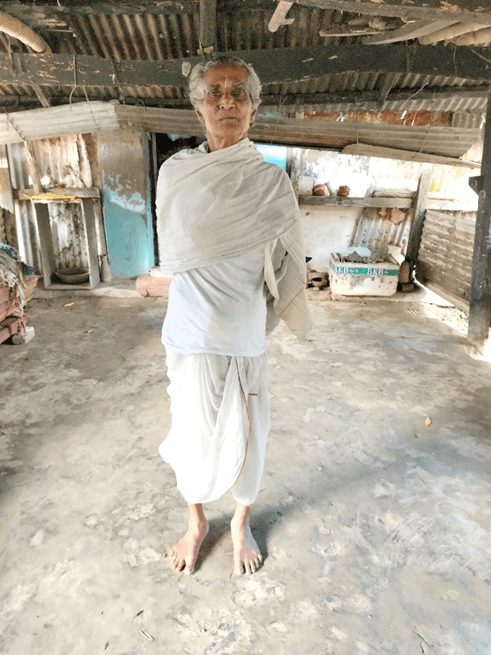
Dakhsinpath Satra: This is one of the oldest Satras of Assam, established in 1654 by Satradikhar Sri Sri Banamali Dev Goswmi under the patronization of Ahom King Jayadhwaj Singha. This Satra is worth witnessing during the festival of ‘Raslila’ (associated with Bhagawan Sri Krishna). In this Satra in addition to the Puja room and Namghar (where devotees sit and chant devotional songs), there is a museum; when the author visited on December 13, 2023, came to know that many items of Ahom Kings, such as golden pots, big metallic dishes, silver utensils, beetle nut cutting instruments, etc., would be preserved in a museum under UNESCO tags (already the works have been done). The items are kept in a normal room with a lock and key. During the visit, a ‘Udakhain Vaishnav’ of Satra Sri Naren Kataky (81 years old) was contacted for the information. According to him, 80 ‘Udakhain Vaishnavs’ live on this campus, and rooms are available. More than 11 lakh disciples under the Satra live in different areas of Assam. These disciples lead normal lives by marrying, etc. Sri Kataky informed that there are four tea gardens and some lands under this Satra (a total of 7,000 acres of land). Earnings from all these sources are used for different activities of Satras, including for maintenance of 80 ‘Udakhin Vaishnavs.’ Also, he informed that the minimum age of a ‘Udakhin Vaishnav’ in the Satra was 11 years, and the maximum age was 83 years.
Chamaguri Satra: Chamaguri Satra is one of the attractions of Majuli. The Satra is considered an important centre of art and cultural and classical studies. This Satra is a leading institution where old craftsmanship, such as mask making and training in cane and bamboo items, are taught. The author had interacted with Sri Prasanna Goswami, who was one of the members of the Satra and competent to make masks, informed that in earlier days, by wearing masks, dramas were performed to educate people about the importance of religions and other issues. And still masks (made of clay) are made, which have high demand in the national and international markets. Further, Sri Goswami said anyone under the Satra need not be a bachelor, which means they can marry and lead normal lives. That is, the ‘Udhakhin Vaishnav’ concept is not applicable here.
I have shared my observations so that readers can understand the two Satras. I suggest readers visit Majuli as this is a different place with pollution-free, environmentally friendly, and amicable people. The people know English, Hindi, Assamese and the local tribal language. Further, fresh vegetables and fresh fish are available. Many of us live in the ‘Concrete jungle,’ so Majuli is different. When I visited, I found some ladies from France and Germany were also present in one Satra, and they appreciated Majuli and Satras, which were new to them.
Prof Shankar Chatterjee, Hyderabad


Dr. Nalla Bala Kalyan
Name of Scholar: Dr. Nalla Bala Kalyan
Brief About Scholar:
Name of Institution: Sri Venkateswara College of Engineering, (Autonomous), Karakambadi Road, Tirupati
Published Research Papers: Research Paper Entitled âJeopardy and Arrival Analysis of Certain Cement Securities in Indiaâ, Published in International Journal of Advanced Science and Technology Vol. 29, No. 5, (2020), pp. 3806-3820, ISSN: 2005-4238 IJAST, Indexed by Scopus. Research Paper Entitled âCompetitive Performance of Micro, Small and Medium Enterprises in Indiaâ, published in Asian Journal of Social Sciences, Vol. III (1), pp.128-146, Jan-June, 2011, ISSN: 0975-5942, Citations: 33. Research Paper Entitled âMicro, Small and Medium Enterprises in the 21st Centuryâ, Published in Zenith International Journal of Business Economics & Management Research, Vol.2 Issue 5, pp.23-38, May, 2012, *UGC Approved Journal, ISSN: 2249 8826, Cita tions: 28. Research Paper Entitled âA Comparative Study on Risk & Return Analysis of Selected Stocks in Indiaâ, published in International Journal of Management and Economics Invention, Volume 04, Issue 05, May 2018, pp.1730-1736, ISSN: 2395-7220, Citations: 16. Research Paper Entitled âA Study on Risk & Return Analysis of Selected Securities in Indiaâ, published in International Journal of Engineering Technologies and Management Research, 5(4), 79-86, April 2018, Citations: 11. Research Paper Entitled âSickness of Micro, Small and Medium Enterprises in Indiaâ, Published in International Journal of Business Management & Economic Research, Vol. 2 (6), pp.345-351, Nov-Dec, 2011, ISSN: 2229-6247, Citations: 10 Research Paper Entitled âA Study on Risk & Return Analysis of the Selected Mutual Funds Schemes in Indiaâ, published in International Journal of Research in Social Sciences, Vol. 8 Issue 5, May 2018, pp.212-221, ISSN: 2249-2496, *UGC Approved Journal, Citation s:9 Research Paper Entitled âInventory Management Pattern of Steel Industry in India”, published in Organizations& Markets: Policies& Processes e journal, Vol.6, No.62, May, 2020, ISSN: 1556-5068, Citations: 6. Research Paper Entitled âBanking Sector Reforms in Indiaâ, Published in International Journal of Management and Humanities Research Script, Volume 4, Issue 4, December, 2017, pp.13-18, ISSN: 2349-7289, Citations: 7. Research Paper Entitled âEvaluation of Portfolio Analysis on Selected Securities of NSE in Indiaâ, Published in International Journal of Applied Engineering Research, Volume 14, Number 4 (2019) pp. 859-868, Research India Publications, ISSN 0973-4562, , UGC Approved Journal, Citations: 5. Research Paper Entitled âMarketing Strategies and Problems of Micro, Small and Medium Enterprises in Andhra Pradeshâ, published in TIJâs Research journal of Economics and Business Studies, Volume; 01, Number: 02, pp.58-65, December, 2011, *UGC Approved Journal , ISSN: 2251-1555, Citations: 4. Research Paper Entitled âA Case Study on Benefits for Quality of Work Life to Employees and Organizations in Indiaâ, published by (Iconic Research and Engineering Journals) IRE Journals, Volume 3, Issue 6, Dec 2019, ISSN: 2456-8880, Citations: 3. Research Paper Entitled âProblems and Prospects of Micro, Small and Medium Enterprises in Chittoor Districtâ, Published in Abhinav National Journal of Research in Commerce & Management, Volume 6, Issue 10, pp.113-119, October, 2017, *UGC Approved Journal, ISSN-2277-1166, Citations: 3. Research Paper Entitled âFeatures of Entrepreneurship in Indiaâ, Published in âInternational Journal of Researchâ Volume 5, Issue1, pp.3752-3759, January 2018, IF: 5.60, *UGC Approved Journal, ISSN: 2348-6848, Citations: 2. Research Paper Entitled âEmployment and Unemployment in Indiaâ, Published in Bookman International Journal of Accounts & Business Management, Vol.1 No.1, pp.1-6, September 2012, ISSN: 2319-426X, Citations: 2. Research Paper Entitled âA Study on Financial Derivatives With reference to Tata Motors Limited, Chittoor District of AP, Indiaâ, published in Global Journal for Research Analysis, Vol. 7, Issue-4, April-2018, pp.430-433, ISSN:2277 â” 8160, Citations: 2. Research Paper Entitled âAn Empirical Study on Development of the MSME Sector in Chittoor District of Andhra Pradesh, Indiaâ, Information Systems e journal, Vol.3, No.48, May1, 2020, ISSN: 1556-5068, SSRN Elsevier, Citations: 2 Research Paper Entitled âErgonomics at Work Environment in Indiaâ, published in Applied & Practicing Anthropology e Journal, Vol. 4, No. 28: Apr 16, 2019, ISSN:1556-5068, SSRN Elsevier, Citations: 1. Research Paper Entitled âAn Experiential Examination of Financial Performance of Foremost Power Segment Organization â” APSPDCLâ, published in Energy Policy and Economics e Journal, Vol.3, No.19: July 27, 2020, ISSN:1556-5068, SSRN Elsevier, Citations:1 Research Pa per Entitled âMagnification and Performance of Various Derivatives in Indiaâ, Published by Journal of Emerging Technologies and Innovative Research (JETIR), July 2021, Volume 8, Issue 7, ISSN-2349-5162, UGC Approved Journal no 63975, Citations:1. Indexed by Google Scholar Research Paper Entitled âA Study on Performance of SBI Blue Chip Fund at SBI Mutual Funds in Indiaâ Published in âInternational Journal of Advance Research, Ideas and Innovations in Technologyâ, Volume3, Issue6, pp.44-53, November, 2017, ISSN: 2454-132X Research Paper Entitled âPerformance of Selected Stocks in Old Generation Private Sector Banks in Indiaâ published in International Journal of Management (IJM), Volume 9, Issue 2, Marchâ”April 2018, pp. 43â”55, ISSN:0976-6510 Research Paper Entitled âRecital Assessment of Selected Balanced Funds of Various Companies in Indiaâ Published in IOSR Journal of Business and Management, Volume 19, Issue 11, pp.74-80, November, 2017, ISSN: 227 8-487X Research Paper Entitled âMacroeconomic Factors Influence on Stock Exchange in Indiaâ Published in International Journal for Science and Advance Research in Technology, Vol.4, Issue 6, pp.696-701, June 2018, ISSN:2395-1052 Research Paper Entitled âA Study on Performance Appraisal System in Service Sector Organizations in Indiaâ Published in âInternational Journal of Research in Computer Application& Managementâ Vol.8, Issue No.1, pp.20-24, January, 2018, ISSN: 2231-1009 Research Paper Entitled âA Study on Working Culture of Ergonomics in Indiaâ Published by International Journal of Innovative Research in Technology, April 2019, Volume 5 Issue 11, ISSN: 2349-6002 Research Paper Entitled âA Study on Employment Trends in Indiaâ Published in âGlobal Advanced Research Journal of Management and Business Studiesâ, Vol.1 (6), pp.173-180, July, 2012, ISSN: 2315-5086 Research Paper Entitled âA Study on Factors Influencing Brand Switching in Telecom Industr y in Indiaâ Published in International Journal of Latest Technology in Engineering, Management & Applied Science, Volume VII, Issue IX, September 2018, ISSN 2278-2540 Research Paper Entitled âA Study on Leadership Styles Adopted at V-Trans in Indiaâ Published in International Journal of Engineering and Management Research, Volume-8, Issue-6, December 2018, 135-141, ISSN: 2250-0758 Research Paper Entitled âAnalysis of Financial Statement of NRC Agro with Special Reference to Goods and Service Taxâ Published in IJSRST, Volume 6, Issue 1, ISSN: 2395-602X Research Paper Entitled âA Study on Competency Mapping at BGR Energy in Indiaâ Published by International Journal of Scientific Research and Engineering Development, Volume2 Issue 2, Mar â”Apr 2019, ISSN: 2581-7175 Research Paper Entitled âCompetitive Performance of Micro, Small and Medium Enterprises in Indiaâ Published in âAsian Journal of Social Sciencesâ, Vol. III (1), pp.128-146, Jan-June, 2011, ISSN: 0975-5942 Research Paper Entitled âA Study on Intellectual Property Rights (IPR) for Micro, Small and Medium Enterprises in Indiaâ Published in âIRE Journals, Volume 1, Issue 7, pp.1-5, January, 2018, ISSN: 2456-8880 Research Paper Entitled âMarketing Management for Micro, Small and Medium Enterprises in Indiaâ published in Journal of Research, Extension and Development, Vol.1, No.7, March 2013, pp.69-73, ISSN:2319-1899 Research Paper Entitled âProblems and Prospects of Micro, Small and Medium Enterprises in Chittoor Districtâ Published in âAbhinav National Journal of Research in Commerce & Managementâ, Volume 6, Issue 10, pp.113-119, October, 2017ISSN-2277-1166 Research Paper Entitled âA Case Study on TQM for Micro, Small and Medium Enterprises in Indiaâ Published in Journal of Exclusive Management Scienceâ, Volume 4, Issue 9, pp.1-6, September, 2015, IF: 2.78, ISSN 2277 -5684 Research Paper Entitled âA Case Study on Budding Inventive Trends in Market ing Products of Small-Scale Industries in Indiaâ, Published by International Journal of Creative and Innovative Research in All Studies, December 2019, Vol.2, Issue 7, ISSN: 2581-5334
ahmad sarmadi
Name of Scholar: ahmad sarmadi
Brief About Scholar:
Name of Institution: Yasi Leaning Eduation
Published Research Papers: 5
Saroj Dayashankar jha
Name of Scholar: Saroj Dayashankar jha
Brief About Scholar:
Name of Institution: St. John College of Humanities and Sciences, Palghar.
Published Research Papers: DEMOGRAPHIC FACTORS DETERMINING CONSUMER PERCEPTION REGARDING HEATH INSURANCE IN PALGHAR DISTRICT OF MAHATASHTRA: AN EMPIRICAL STUDY
Theory of Social Evolution :- Herbert Spencer

Evolution was in the air and developmental thinking can be found in
a variety of different fields.
The word evolution was borrowed from Latin ēvolūtiō, ēvolūtiōnis, which means , “the act of unrolling, unfolding or opening .
Evolution is a process full of complexity .
Evolution is a principle of internal growth . It shows not merely what happens to a thing but also what happens within it .
Their term evolution is borrowed from the biological science of sociology ,Frome the term ” organic evolution ” .
Whereas organic evolution is used to denote the evolution of organisms ,social evolution is used to denote the evolution of human society .
Herbert Spencer (27 April 1820 – 8 December 1903) was an English philosopher, biologist, anthropologist, and sociologist famous for his hypothesis of social Darwinism.
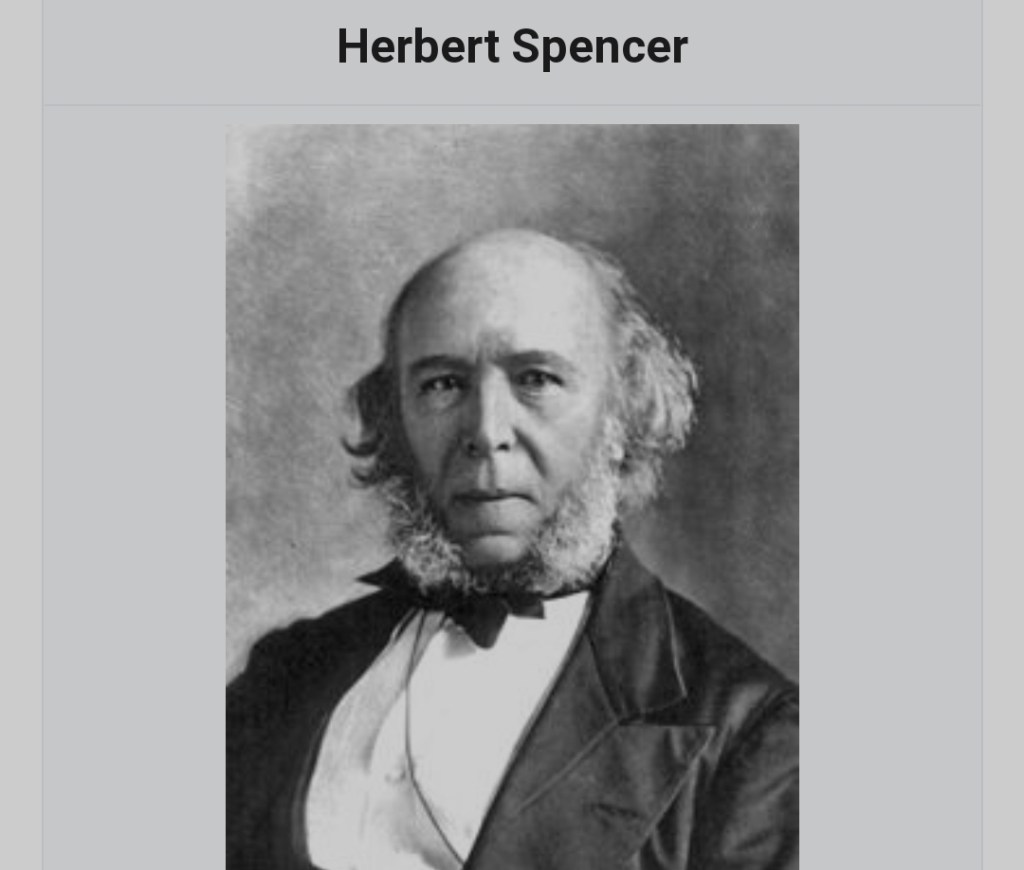
Spencer in his essay “The Social Organism”,
stated that the social organism itself is subject to evolutionary developments as a separate entity and much of the idea that societies, like individual organisms, “spontaneously evolved” .
On passing from Humanity under its individual form, to Humanity as socially
embodied, social evolution can be exemplified .
Spencer said , “Evolution is an integration of matter and concomitant dissipation of motion, during which the matter passes from an indefinite, incoherent homogeneity to a definite, coherent heterogeneity and during which the retained motion undergoes a parallel transformation.”
One of the most important contribution of Herbert Spencer to Sociology is the theory of evolution
His principles included physical and biological evolution in order to elaborate and explain his theory of Social evolution.
He sketches a comprehensive account of evolution of the inorganic, organic, and
human and social realms.
He stated ,
“In respect to that progress which individual organisms display
in the course of their evolution,”
He explained this course of evolution through , the development of a seed into a tree, or an ovum into an animal, constitute an
advance from homogeneity of structure to heterogeneity of structure .
He continue with, the change
from the homogeneous to the heterogeneous is displayed in the progress of civilization as a whole, as well as in the progress of every nation; and is still going
on with increasing rapidity.
Spencer adopted his principle of evolution from naturalist Charles Darwin, who developed the concept of evolution in his “Origin of Species” in 1859.
Herbert Spencer, used Darwin’s theory and applied it to how societies change and evolve .According to Spencer societies were bound to change automatically .
Spencer in his theory applied a comparison of societies with organisms that progress through changes similar to that of a living species.
He included three types of systems where societies can be compared to organisms .
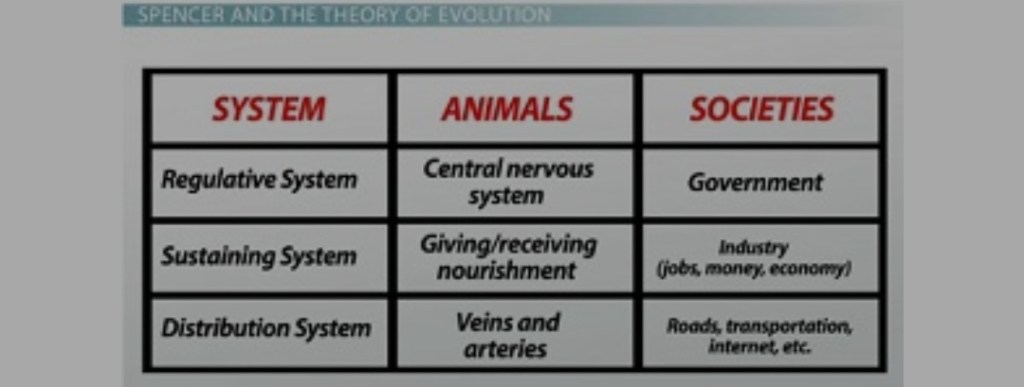
The first system is the regulative system.
In animals, that would be the central nervous system and in societies, it would be a government that regulates everything.
The second system is the sustaining system.
For animals, that’s the giving and receiving of nourishment. For societies, that would be industry – jobs, money, economy and those sorts of things.
The third system would be the distribution system.
In animals, that would be the veins and arteries. In societies, it would be roads, transportation, internet – anything in which information and goods and services are exchanged.
“Survival of the fittest” expounded by Darwin was highly believed by him . According to Spencer only strong creatures survive and evolve; only strong makes progress. And that animal has to struggle to preserve its existence.
All universal phenomena-inorganic, organic, super organic—are subject to the natural law of evolution.
A definite pattern of change is followed by all the phenomena of nature—the stars and planetary systems, the earth and all terrestrial phenomena, biological organisms and the development of species, all the psychological and sociological processes of human experience.
Herbert Spencer includes physical evolution in the form of indefinite incoherent situations to definite and coherent situations.
The underlying principles of physical evolution are a movement from simple to complex and homogeneity to heterogeneity.
According to him , following the Darwin theory of ” Survival of fittest ” the biological evolution only those creatures survive in the struggle for existence who are able to make effective adjustment with changing circumstances.
Herbert Spencer utilized these two principles, physical and biological evolution in order to explain social evolution.
Spencer’s theory of social evolution points out to two stages:
1. The movement from simple to compound societies.
This movement from simple to compound societies can be seen in four types of societies in terms of evolutionary levels
• Simple Society:
• Compound societies
• Double Compound societies
• Trebly Compound societies
2. Change from militant society to industrial society.
According to Spencer, the law of evolution is the supreme law of every becoming.
From the analysis of biological evolution Spencer established the theory of evolution.
He argued that the evolution of human societies, far from being different from other evolutionary phenomena. It is a special case of a universally applicable natural law.
According to some social thinkers Herbert Spencer’s has several criticism ,
They said that theory lacks practicability and is realistic.
It also lacks uniformity.
Qualities like sympathy, sacrifice, kindness, love etc. are of much Importance in human survival . These are quite different from the struggle for existence.
Despite of several criticism Spencer Theory of Evolution is the fundamental base for understanding evolution of man and society .
Seven Ages of Man: Summary
In the poem, Seven Ages of Man Shakespeare compares the entire world to a theatrical stage, where all the human beings perform their allotted role given by the God. Every individual has to go through seven acts that are seven stages of man’s life. Shakespeare has divided human life into seven stages, with each stage having its own qualities and characteristics. Shakespeare considers the world a stage and men and women actors on the stage of life. They play seven roles on the stage depending upon their age.
The first stage, in this phase of his life man, appears as a child in the world. As a child, he is a helpless creature. He cries in the arms of his nurse for one reason or the other. He cries and vomits.
The next phase of his life man appears as a child in the world. He goes to school with a bag hanging from his shoulder. He goes to the school creeping like a snail. He marches to the school unwillingly.
In the third stage of his life, a man plays the part of a lover. He grows into a young man full of desires, ambitions, and dreams. He becomes a romantic young man. He falls in love and sights like a furnace. He begins to write sad poems to his beloved he cannot control his sad feelings.
In the fourth stage of his life man becomes a foul-mouthed soldier who has learned queer words at this stage, he tries to give himself a formidable look with a beard like a part. He is emotional and jealous. He quarrels with others for his honor and grace. He hankers after temporary and bubble fame.
In the fifth stage of his life, he becomes a judge. He becomes mature and experienced in his thoughts. The heat of youth has completely cooled down and he becomes very realistic. He wishes to grab wealth by foul or fair means. He begins to accept bribe and thus adds much to his material comforts. He becomes ease-loving and therefore becomes fat. His belly becomes round. He eats healthy fowls and chicken presented to him as a bribe. His eyes become severe and he grows the beard of formal cut.
Then, in the sixth stage of his life, man grows old. He looks quite ridiculous in his movements. He wears glasses because his eyesight is weak. His shoes become wide for his feet. His voice suffers a change. It becomes a shrill and quivering whistle
However, in the final stage, the man turns into a child once again. He seems to forget everything. He becomes ‘toothless’. His eyesight is weakened and he is deprived of taste. He is ready to leave this world.
Shakespeare has the seven stages of man’s life with a touch of satire and cynicism. In each stage, man imagines himself great and important, but there is something ridiculous in his behavior all through his life. Shakespeare has described each of the man’s life stage with great economy of words. He uses living and concrete images to describe the different stages of life. The use of the word ‘mewling’ of the infant’s cry and the school boy’s reluctance for going to school described in phases ‘creeping like a snail’ are examples of living images.
 Eduindex
You must be logged in to post a comment.