
Understanding the Dynamics of Caste and Creed: A Societal Examination

Daily writing prompt
What is one question you hate to be asked? Explain.

Caste and creed are two intricately intertwined concepts that have deeply influenced societies across the globe for centuries. Both terms carry significant weight in shaping social structures, cultural identities, and individual experiences. While often discussed separately, understanding their interplay is crucial for comprehending the complexities of societal dynamics.
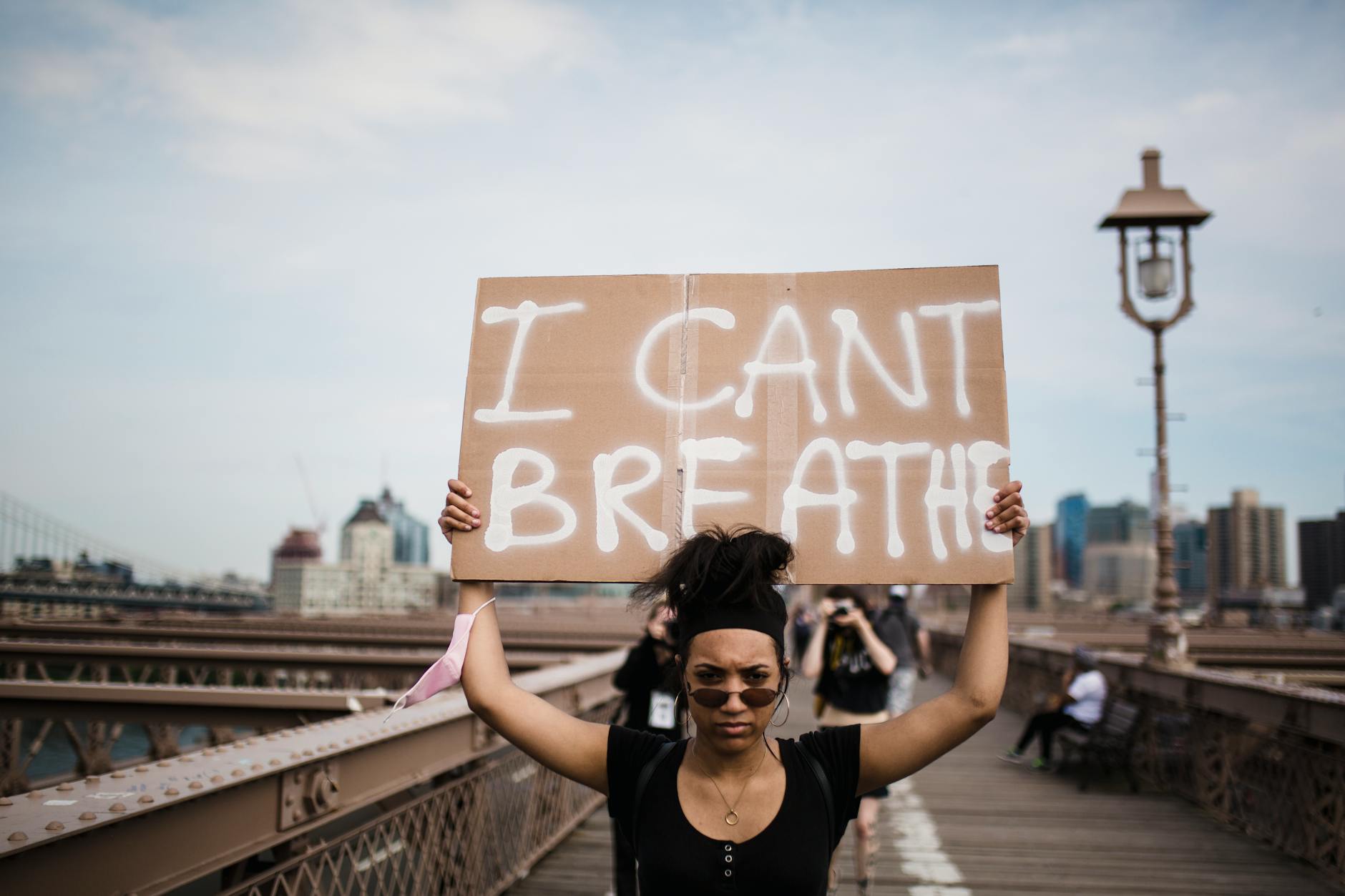
Photo by Life Matters on Pexels.com

Caste: An Ancient Social Hierarchy

Caste refers to a hereditary social class system prevalent in many societies, notably in South Asia. Originating from ancient Hindu scriptures, caste delineates societal stratification based on birth, occupation, and social status. Traditionally, society was divided into four main castes, namely Brahmins (priests and scholars), Kshatriyas (warriors and rulers), Vaishyas (merchants and traders), and Shudras (laborers and artisans), with Dalits (formerly known as “untouchables”) marginalized outside this system.

Caste dictates various aspects of life, including occupation, marriage, and social interactions, often determining an individual’s opportunities and privileges. Despite legal abolishment and efforts towards social reform, caste-based discrimination and prejudice persist, perpetuating inequalities and hindering social mobility.

Creed: The Essence of Belief

Creed encompasses a set of beliefs or principles that guide an individual’s religious, spiritual, or philosophical convictions. It transcends mere religious affiliation, encompassing ideologies, values, and worldviews that shape one’s identity and interactions with the world. Creed influences moral conduct, societal norms, and cultural practices, providing a framework for individual and collective behavior.

Religious creed, in particular, holds immense significance in shaping communities and societies worldwide. It fosters solidarity among adherents, serving as a source of comfort, guidance, and communal identity. However, creed can also be a source of division, leading to sectarianism, intolerance, and conflict when differences are perceived as threats to established norms or power structures.

Interplay of Caste and Creed

The intersection of caste and creed profoundly influences social dynamics, particularly in regions where both concepts are deeply ingrained in the fabric of society. Religious communities often align with specific caste groups, intertwining religious identity with social status and cultural practices. This intersectionality manifests in various ways:

  1. Caste-Based Exclusivity within Religious Communities: In some societies, caste serves as a determinant of access and participation within religious institutions and rituals. Certain castes may be marginalized or excluded from full participation in religious activities, reinforcing social hierarchies within religious frameworks.
  2. Inter-Caste Marriage and Social Stigma: Inter-caste marriages challenge traditional social norms and face resistance from families and communities adhering to strict caste boundaries. Religious creed may exacerbate these tensions, as marriage is not only a union of individuals but also a merging of social identities and cultural practices.
  3. Political Mobilization and Identity Politics: Caste and religious identities often intersect in the political arena, with leaders mobilizing support based on shared caste or religious affiliations. This exploitation of identity politics can deepen divisions and perpetuate social inequalities, hindering efforts towards inclusive governance and social cohesion.
  4. Resistance and Reform Movements: Despite the entrenched nature of caste-based discrimination, religious creed has also been a catalyst for social reform movements advocating for equality and justice. Leaders from marginalized caste groups have drawn inspiration from religious teachings to challenge oppressive systems and promote social change.

Challenges and Pathways Forward

Addressing the complexities of caste and creed requires a multifaceted approach that acknowledges historical injustices, respects cultural diversity, and promotes inclusive social policies. Key considerations include:

  1. Legal Protections and Enforcement: Robust legal frameworks are essential for combating caste-based discrimination and ensuring the rights of marginalized communities. Efforts to enforce anti-discrimination laws must be accompanied by awareness campaigns and capacity-building initiatives to foster social inclusion.
  2. Education and Awareness: Education plays a vital role in challenging entrenched beliefs and fostering empathy and understanding across caste and religious divides. Incorporating diverse perspectives into curricula and promoting interfaith dialogue can contribute to building more tolerant and cohesive societies.
  3. Community Empowerment and Dialogue: Grassroots initiatives that empower marginalized communities and facilitate dialogue between different caste and religious groups are crucial for fostering social cohesion. By promoting mutual understanding and cooperation, communities can work towards dismantling barriers and building inclusive societies.
  4. Promotion of Intersectional Approaches: Recognizing the intersectionality of caste, creed, gender, and other forms of identity is essential for developing holistic solutions to social inequalities. Policies and programs should address multiple dimensions of discrimination to ensure that no individual or community is left behind.

In conclusion, the interplay of caste and creed shapes the social, cultural, and political landscapes of many societies, presenting both challenges and opportunities for social cohesion and justice. By addressing entrenched prejudices, promoting inclusive policies, and fostering dialogue and solidarity, societies can strive towards a more equitable and harmonious future.

Contact

Contact us for news and press release publication.
to editor@eduindex.org

.widget.ContactForm{z-index:1}.contact-form-widget{margin-left:auto;margin-right:auto;width:600px;max-width:100%;padding:25px 0;background:#EBEBE3;-webkit-border-radius:2%;-moz-border-radius:2%;border-radius:2%}.contact-form-widget .form{width:91%;margin:0 auto}.ribbon{font:16px Arial;text-transform:capitalize;text-shadow:0 1px 2px rgba(0,0,0,0.25);position:relative;background:#6B5F53;color:#fff;text-align:center;padding:1em 2em;margin:0 -16px}.ribbon:before,.ribbon:after{content:””;position:absolute;display:block;bottom:-1em;border:1.5em solid #584C40;z-index:-1}.ribbon:before{left:-1.7em;border-right-width:1.2em;border-left-color:transparent}.ribbon:after{right:-1.7em;border-left-width:1.2em;border-right-color:transparent}.ribbon .ribbon-content:before,.ribbon .ribbon-content:after{content:””;position:absolute;display:block;border-style:solid;border-color:#42362A transparent transparent;bottom:-1em}.ribbon .ribbon-content:before{left:0;border-width:1em 0 0 1em}.ribbon .ribbon-content:after{right:0;border-width:1em 1em 0 0}.contactf-name,.contactf-email,.contactf-message{text-align:left;margin-top:25px;color:#a1937b;font-size:13px}.contactf-name,.contactf-email{float:left;width:100%}.contact-form-name,.contact-form-email,.contact-form-email-message,.contact-form-name:hover,.contact-form-name:focus,.contact-form-email:hover,.contact-form-email:focus,.contact-form-email-message:hover,.contact-form-email-message:focus{width:100%;max-width:100%;margin:10px 0 0;padding:10px;font-size:12px;color:#aaa;border-color:#DBD6D1;border-width:1px;box-shadow:none;-webkit-border-radius:5px;-moz-border-radius:5px;border-radius:5px}.contact-form-name,.contact-form-email{height:35px}.contact-form-email-message{height:100px}.contact-form-button-submit,.contact-form-button-submit:hover{margin-top:25px;width:100%;height:37px;font:normal 12px Arial;outline:none;letter-spacing:1px;color:#fff;text-align:center;cursor:pointer;text-shadow:1px 1px 0 #ffe8b2;color:#7c5d1b;border:1px solid #d6a437;background:#febd4b;background:-webkit-gradient(linear,0 0,0 100%,from(#fed970) to(#febd4b));background:-webkit-linear-gradient(#fed970,#febd4b);background:-moz-linear-gradient(#fed970,#febd4b);background:-ms-linear-gradient(#fed970,#febd4b);background:-o-linear-gradient(#fed970,#febd4b);background:linear-gradient(#fed970,#febd4b);-pie-background:linear-gradient(#fed970,#febd4b)}.contact-form-button-submit:active{color:#7c5d1b;border:1px solid #d6a437;background:#febd4b;background:-webkit-gradient(linear,0 0,0 100%,from(#febd4b) to(#fed970));background:-webkit-linear-gradient(#febd4b,#fed970);background:-moz-linear-gradient(#febd4b,#fed970);background:-ms-linear-gradient(#febd4b,#fed970);background:-o-linear-gradient(#febd4b,#fed970);background:linear-gradient(#febd4b,#fed970);-pie-background:linear-gradient(#febd4b,#fed970)}.contact-form-cross{border:medium none!important;box-shadow:none!important;padding:0!important;height:11px !important;width:11px !important;}

Shoot Me an Email

Your name:
E-mail address *:
Message *:

International Women's Day (IWD) i

 International Women’s Day (IWD) is a global celebration that takes place annually on March 8th. The day recognizes and honors the achievements and contributions of women in various fields while also highlighting the ongoing struggle for gender equality. International Women’s Day is a time to reflect on progress made, call for change, and celebrate the courage and determination of women around the world.

Key aspects of International Women’s Day include:

  1. History: The origins of International Women’s Day can be traced back to the early 20th century when women in the labor movement and socialist circles began advocating for better working conditions and suffrage. The first National Women’s Day was organized in the United States on February 28, 1909. The idea of an International Women’s Day gained momentum at the International Women’s Conference in 1910.

  2. Official Recognition: The United Nations officially recognized International Women’s Day in 1977. Since then, the day has become a focal point for global efforts to promote gender equality and women’s rights.

  3. Themes and Campaigns: Each year, International Women’s Day is associated with a specific theme or campaign that addresses critical issues affecting women globally. Themes often center around gender equality, women’s empowerment, and breaking down barriers.

  4. Events and Activities: International Women’s Day is marked by various events, including panel discussions, workshops, art exhibitions, and performances that celebrate the achievements of women and address issues like gender-based violence, discrimination, and economic disparities.

  5. #ChooseToChallenge: In recent years, the #ChooseToChallenge campaign gained prominence as a call to action, encouraging individuals to challenge gender biases, inequality, and stereotypes. The campaign emphasizes the role everyone plays in creating a more inclusive and equal world.

  6. Purple Ribbon: The color purple is often associated with International Women’s Day, symbolizing dignity, justice, and respect. People around the world wear purple ribbons or clothing to show their support for the cause.

International Women’s Day serves as a reminder that gender equality is a shared responsibility and that collective efforts are needed to create a world where women and girls can thrive without facing discrimination or limitations based on their gender. It is an opportunity to celebrate the achievements of women, raise awareness about persisting challenges, and promote positive change.

Ram Charan

 Ram Charan is a popular Indian actor and producer who primarily works in Telugu cinema. He is the son of renowned actor Chiranjeevi and made his acting debut with the film “Chirutha” in 2007. Over the years, Ram Charan has gained widespread recognition for his versatile performances and has become one of the leading actors in the Telugu film industry.

He has been a part of several successful films, including “Magadheera,” which was a massive hit and earned him numerous awards. Ram Charan has also acted in movies like “Racha,” “Naayak,” “Yevadu,” “Dhruva,” and “Rangasthalam,” among others.

It’s important to note that the information provided here might be outdated, and there could be new developments in Ram Charan’s career or specific film releases after January 2022. To get the most recent and accurate details about a film titled “Ram Charan,” I recommend checking the latest news sources, entertainment websites, or Ram Charan’s official social media accounts for updates on his filmography.

TOPSIS Research Method

 TOPSIS, which stands for Technique for Order Preference by Similarity to Ideal Solution, is a multi-criteria decision-making method used to identify the best alternative among a set of options. It is widely employed in various fields, including management, engineering, environmental sciences, and finance.

Here’s a description of the TOPSIS method:

  1. Identifying Criteria: First, you need to define the criteria or attributes that are relevant to your decision-making problem. These criteria should be measurable and contribute to evaluating the alternatives.

  2. Normalization: Once the criteria are identified, the next step involves normalizing the decision matrix. Normalization ensures that all criteria are on the same scale and have equal importance. This step is crucial to prevent bias towards any particular criterion.

  3. Weight Assignment: After normalization, weights are assigned to each criterion to reflect their relative importance. The weights are typically determined based on the preferences of decision-makers or through analytical methods such as the Analytic Hierarchy Process (AHP) or the Analytic Network Process (ANP).

  4. Ideal and Anti-Ideal Solutions: In TOPSIS, two reference points are used: the ideal solution and the anti-ideal solution. The ideal solution represents the best performance for each criterion, while the anti-ideal solution represents the worst performance. These solutions are constructed based on maximizing or minimizing each criterion.

  5. Calculating Proximity to Ideal Solution: For each alternative, the distance to the ideal solution and the distance to the anti-ideal solution are calculated. Typically, Euclidean distance or other distance metrics are used for this purpose.

  6. Relative Closeness to Ideal Solution: Once the distances are calculated, a relative closeness to the ideal solution is determined for each alternative. This is done by comparing the distances and calculating a score that indicates how close each alternative is to the ideal solution.

  7. Ranking Alternatives: Finally, the alternatives are ranked based on their relative closeness to the ideal solution. The alternative with the highest closeness score is considered the best option.

TOPSIS provides a systematic and structured approach to decision-making, allowing decision-makers to consider multiple criteria simultaneously and select the most suitable alternative. It is intuitive, easy to implement, and can accommodate both quantitative and qualitative criteria. However, it is essential to ensure that the criteria and their weights accurately reflect the decision-maker’s preferences and objectives for the method to yield meaningful results.