Proofreading is the final stage of the editing process, focusing on correcting surface errors in writing such as grammatical, spelling, punctuation, and other language mistakes. It’s a critical step before a document is published or submitted, ensuring that the text is polished and professional. Here, we delve into the details of proofreading services, their importance, what they entail, and how to effectively use them.
1. Purpose of Proofreading
The primary goal of proofreading is to ensure that a text is free of any errors that could detract from its readability and professionalism. It involves:
Correcting spelling, grammar, and punctuation mistakes.
Checking for typographical errors.
Ensuring consistency in formatting and layout.
Verifying correct usage of technical terminology and data.
Adjusting improper line and page breaks.
2. Types of Documents That Require Proofreading
Virtually any written content can benefit from proofreading, including:
Academic papers, theses, and dissertations.
Business documents like reports, proposals, and presentations.
Books, novels, and other literary works.
Marketing materials such as brochures, websites, and emails.
Legal documents and contracts.
3. Proofreading vs. Copy Editing
While both services are part of the editing process, they differ significantly:
Copy Editing: Focuses on improving style, formatting, accuracy, and consistency in the text. It may involve substantial changes to the content.
Proofreading: Comes after all other editing stages and focuses solely on correcting surface errors. It does not involve substantial content revision.
4. How Proofreading Services Work
Proofreading services can be provided by freelancers, specialized proofreading companies, or in-house editors at publishing firms. The process typically follows these steps:
Submission: The client submits a document with specific instructions or expectations.
Review: The proofreader reads the document, correcting any errors using markup tools or software like Microsoft Word’s Track Changes.
Feedback: Some proofreaders provide feedback or suggestions, especially if they notice repetitive errors or unclear passages.
Revisions: The client reviews the corrections and makes the final changes.
Final Check: Often, a second proofreading by another professional is recommended to ensure complete accuracy.
5. Tools Used in Proofreading
Professional proofreaders often utilize various tools to enhance their accuracy and efficiency:
Grammar and Spell Checkers: Software like Grammarly or the Hemingway Editor helps identify common errors.
PDF Annotators: Tools such as Adobe Acrobat allow proofreaders to mark errors directly on PDF documents.
Style Guides: Proofreaders reference style guides like the Chicago Manual of Style or APA guide to ensure consistency.
Dictionaries and Thesauruses: Essential for verifying the proper use of words and their meanings.
6. Choosing a Proofreading Service
When selecting a proofreading service, consider the following:
Expertise: Look for proofreaders with experience and qualifications relevant to the document’s subject or industry.
Reputation: Check reviews or testimonials from previous clients.
Price: Costs can vary widely, so compare rates from different services. Remember, extremely low prices might compromise quality.
Turnaround Time: Ensure the service can meet your deadlines.
7. The Importance of Professional Proofreading
Investing in professional proofreading can significantly impact the success of a document. It enhances readability, ensures error-free writing, and maintains the credibility of the content. Especially in professional, academic, or literary fields, proofreading is indispensable as it guarantees that the final product is of the highest possible quality.
Conclusion
Proofreading is an essential, albeit often underestimated, component of the writing and publishing process. Whether it’s a book, business document, or academic paper, thorough proofreading ensures that the text communicates its message in the clearest, most effective manner possible. Utilizing professional proofreading services can be a wise investment in ensuring the success of your written communications.
Nowadays, NFT’s are in trend. You must be hearing the word ‘NFT’ on social medias, newspapers, news channels and various other sources. But what exactly is an ‘NFT’?
Today, we’ll discuss about NFT’s and understand what they exactly are and what’s going on around them that has created a great hype among the people.
Example of an NFT(Source- Google Images)
The term “NFT” stands for Non-Fungible Tokens. In layman language, NFT is a possession which is unique and one of its kind. If we go deep into the concept of NFT’s then basically they are digital assets that one possess. Each NFT has a specific identification code that distinguishes it from the other.
A NFT works upon the blockchain technology which is the same that is used in cryptocurrencies. It can be sold and traded on various online platforms like Binance NFT Marketplace, crypto.com, WazirX NFT Marketplace etc.
A NFT can be literally anything( manual drawings, graphics, art, animations, music, even real estate). Most of the NFT’s are based upon the cryptocurrency Ethereum(ETH). So now after reading all this, you might be getting an idea about what exactly an NFT is but here comes the main question that “WHY NFT?” So to answer this question, let’s take a simple example. Suppose you have a book and you customized the book with a cover of your own and bordered the pages using tapes. So now, it is one of its kind. And now, if you want to sell that book to a buyer for example at Rs. 500 and if the buyer wants to own the book then there has to be a way to prove that he/she owns it. We considered a physical book as an example but what if it’s an image or a video or a music file that is unique and only one of it’s kind. Then, how do you prove the ownership of that one unique piece? This is done by creating an NFT. That is how NFT’s work.
They are a legitimate way to transfer the ownership of a digital item in such a way that your ownership remains on record and is proven. It cannot be edited or modified. If we consider an image(of a monkey let’s say) then you can find numerous images all over the internet that are openly accessible for downloading and using without any copyright issues. And on the other hand, if I create an image and post it online then there is no legit way to prove that I’m the owner of that thing. Also if I list it for sale online on multiple image selling platforms, then too there is no legitimate proof that I’m the owner and I’m ready to transfer the ownership to someone, whosoever is ready to pay me for my work.
I’d rather create an NFT of the same image and then post it online on certified NFT Marketplaces for sale. This will ensure the ownership of the NFT and also prove it’s uniqueness. If anyone tries to copy my work then I can easily claim a copyright by showing that I’m the valid owner of this NFT.
Bored Ape NFT’s
The above is an image of the collection of the famous “Bored Ape NFTs”. These NFT’s are very expensive and some of the owners of these NFT’s are celebrities like Eminem, Serena Williams, Shaquille O’Neal, Justin Bieber etc.
At last, we come to a conclusion that NFTs are the real game changer and blockchain technology is going to change the entire world because now technology has a way by which you can define ‘Ownership’. In the coming years, NFT Marketplace is going to boom and investors seeking towards investing on NFT’s can definitely consider investing by doing the required research before exploring the NFT Marketplace.
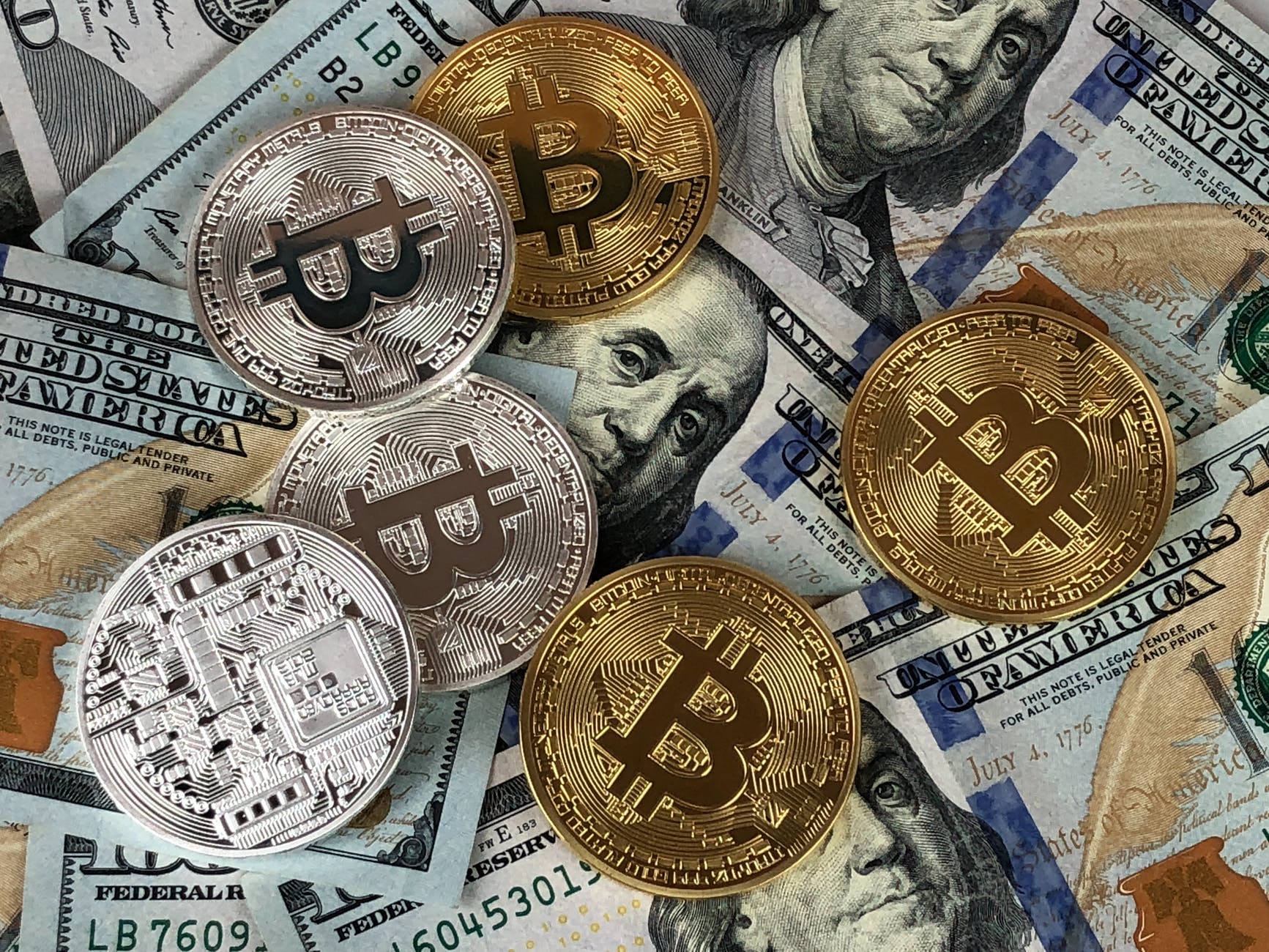
Bitcoin is a type of digital currency that enables instant payments to anyone. Bitcoin was introduced in 2009. Bitcoin is based on an open-source protocol and is not issued by any central authority. It is an electronic currency created back in January 2009. It is known to be decentralized electronic cash that does not rely on banks. It is possible to send from one user to another on the bitcoin blockchain network without the necessity for mediators. It is primarily used for sending or receiving cash through the internet even to strangers. Bitcoin is also known to be a new type of cash. It is predicted to grow at a rapid pace over the years, along with its value. It is typically purchased as an investment by numerous industries and people.
The central government typically handles bitcoins without specific rules, unlike dollars and euros. It is not owned by a country, individual, or group. Therefore, it reduces the chances of corruption and inflation.
History -:
The origin of Bitcoin is unclear, as is who founded it. A person, or a group of people, who went by the identity of Satoshi Nakamoto are said to have conceptualized an accounting system in the aftermath of the 2008 financial crisis.
Uses -:
1. Originally, Bitcoin was intended to provide an alternative to fiat money and become a universally accepted medium of exchange directly between two involved parties.
2. Fiat money is a government-issued currency that is not backed by a commodity such as gold.
3. It gives central banks greater control over the economy because they can control how much money is printed.
4. Most modern paper currencies, such as the US dollar and Indian Rupee are fiat currencies
Acquiring Bitcoins -:
1. One can either mine a new Bitcoin if they have the computing capacity, purchase them via exchanges, or acquire them in over-the-counter, person-to-person transactions.
2. Miners are the people who validate a Bitcoin transaction and secure the network with their hardware.
3. The Bitcoin protocol is designed in such a way that new Bitcoins are created at a fixed rate.
4. No developer has the power to manipulate the system to increase its profits.
5. One unique aspect of Bitcoin is that only 21 million units will ever be created.
6. A Bitcoin exchange functions like a bank where a person buys and sells Bitcoins with traditional currency. Depending on the demand and supply, the price of a Bitcoin keeps fluctuating.
Bitcoin Regulation -:
The supply of bitcoins is regulated by software and the agreement of users of the system and cannot be manipulated by any government, bank, organization, or individual.Bitcoin was intended to come across as a global decentralised currency, any central authority regulating it would effectively defeat that purpose.It needs to be noted that multiple governments across the world are investing in developing Central Bank Digital Currencies (CBDCs), which are digital versions of national currencies. The legitimacy of Bitcoins (or cryptocurrencies)
In India -: In the 2018-19 budget speech, the Finance Minister announced that the government does not consider cryptocurrencies as legal tender and will take all measures to eliminate their use in financing illegitimate activities or as a part of the payment system. In April 2018, the Reserve Bank of India (RBI) notified that entities regulated by it should not deal in virtual currencies or provide services for facilitating any person or entity in dealing with or settling virtual currencies. However, the Supreme Court struck down the ban on the trading of virtual currencies (VC) in India, which was imposed by the RBI. The Supreme Court has held that cryptocurrencies are like commodities and hence they can not be banned.
Possible Reasons for the Rise in the Value of the Bitcoin -:
1. Increased acceptance during the pandemic.
2. Global legitimacy from large players like payments firm PayPal, and Indian lenders like State Bank of India, ICICI Bank, HDFC Bank, and Yes Bank.
3. Some pension funds and insurance funds are investing in Bitcoins.
Bitcoin Transaction -:
Bitcoin address is built from the public key. It is very similar as compared to an email address, anyone can check up and provide bitcoins. The private key is known to be identical to that of an email password since it is possible to send bitcoins with the help of remote access only. That’s why it is essential to keep the private key confidential or hidden. To send bitcoins, it is required to verify to the network that you acquire the private key of that particular address without the private key being revealed. It can be done with a specific mathematics branch referred to as public-key cryptography. The identification of the user possessing bitcoins is known as a public key. The public access and the ID number are very alike. For an individual to send you bitcoins, they require your bitcoin address. It is known to be another version of the public key that can be typed and read effortlessly.
However, the security concern of bitcoin is increasing day by day across the world. Since digital wallets are used to store bitcoins, they might be targeted by hackers as their value increases.
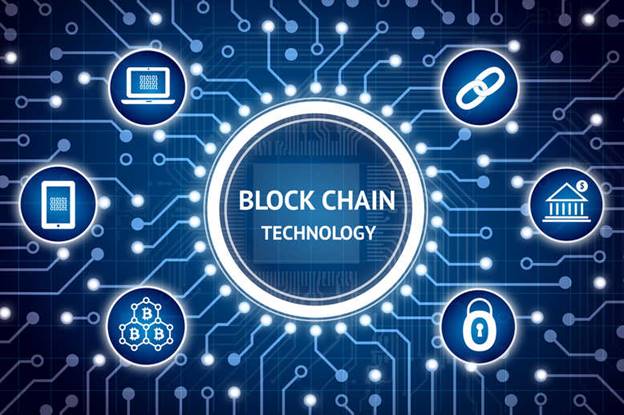
Blockchain—a peer-to-peer network that sits on top of the internet—was introduced in October 2008 as part of a proposal for bitcoin, a virtual currency system that eschewed a central authority for issuing currency, transferring ownership, and confirming transactions. Bitcoin is the first application of blockchain technology. Much of the initial private blockchain-based development is taking place in the financial services sector, often within small networks of firms, so the coordination requirements are relatively modest.
What is Blockchain Technology?
Blockchain is a distributed or decentralized ledger technology which was first introduced in the design and development of cryptocurrency, Bitcoin in 2009 by Satoshi Nakamoto. Blockchain technology is an amalgamation of various technologies such as distributed systems, cryptography, etc. Blockchain is a series of blocks, where each block contains details of transactions executed over the network, hash(address) of the previous block, timestamp etc. Data and transactions stored in blocks are secured against tampering using cryptographic hash algorithms and are validated and verified through consensus (consensus protocols) across nodes of the Blockchain network.
Significance of the Blockchain
Blockchain technology provides efficient distributed ledger storage mechanism with appropriate authentication and authorization thereby eliminating the need for a third party to validate the transactions. Any tangible or intangible asset of value can be represented and tracked on a Blockchain network, which brings transparency, increases processing speed and reduces cost. A system that is based on data stored in a number of places is immune to hackers. It is not that easy to get access to it, and if so, any piece of information can be easily recovered. Features like transparency, efficiency, security and accountability fosters trust in digital arena.
Benefits of Blockchain
Transactions on the blockchain network are approved by a network of thousands of computers. This removes almost all human involvement in the verification process, resulting in less human error and an accurate record of information. Typically, consumers pay a bank to verify a transaction, a notary to sign a document, or a minister to perform a marriage. Blockchain eliminates the need for third-party verification—and, with it, their associated costs. Blockchain does not store any of its information in a central location. Instead, the blockchain is copied and spread across a network of computers. Whenever a new block is added to the blockchain, every computer on the network updates its blockchain to reflect the change.
Drawbacks of Blockchain
Bitcoin is a perfect case study for the possible inefficiencies of blockchain. Bitcoin’s Pow system takes about 10 minutes to add a new block to the blockchain. While confidentiality on the blockchain network protects users from hacks and preserves privacy, it also allows for illegal trading and activity on the blockchain network. Many in the crypto space have expressed concerns about government regulation over cryptocurrencies. While it is getting increasingly difficult and near impossible to end something like Bitcoin as its decentralized network grows, governments could theoretically make it illegal to own cryptocurrencies or participate in their networks.
Conclusion
With many practical applications for the technology already being implemented and explored, blockchain is finally making a name for itself in no small part because of bitcoin and cryptocurrency. As a buzzword on the tongue of every investor in the nation, blockchain stands to make business and government operations more accurate, efficient, secure, and cheap, with fewer middlemen. As we prepare to head into the third decade of blockchain, it’s no longer a question of if legacy companies will catch on to the technology—it’s a question of when. Today, we see a proliferation of NFTs and the tokenization of assets. The next decades will prove to be an important period of growth for blockchain.
Quantum mechanics emerged as a branch of physics in the early 1900s to explain nature on the scale of atoms and led to advances such as transistors, lasers, and magnetic resonance imaging. The idea to merge quantum mechanics and information theory arose in the 1970s but garnered little attention until 1982 when physicist Richard Feynman gave a talk in which he reasoned that computing based on classical logic could not tractably process calculations describing quantum phenomena. Computing based on quantum phenomena configured to simulate other quantum phenomena, however, would not be subject to the same bottlenecks. Although this application eventually became the field of quantum simulation, it didn’t spark much research activity at the time.
What is Quantum Computing?
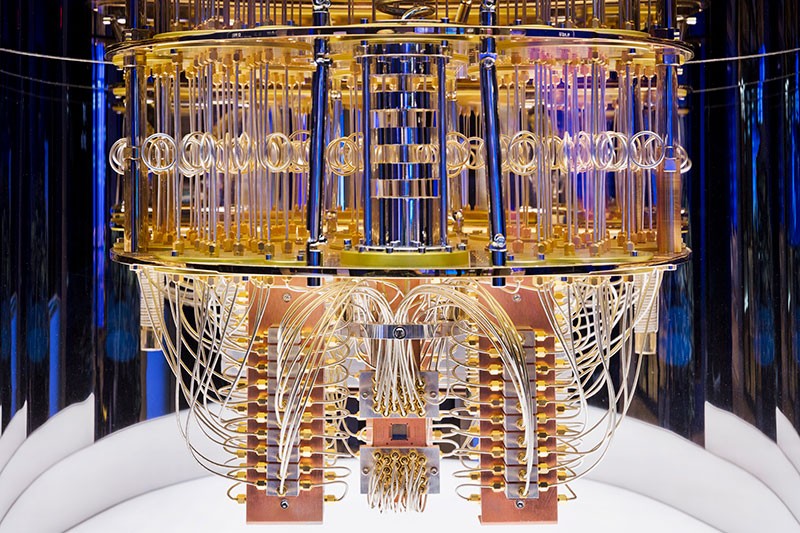
Quantum computers harness the unique behavior of quantum mechanics and apply it to computing. This introduces new concepts to traditional programming methods. Quantum computing use qubits as its the basic unit of information. A quantum computer has three primary parts: o An area that houses the qubits. o A method for transferring signals to the qubits. o A classical computer to run a program and send instructions.
Quantum computing is a type of computation that harnesses the collective properties of quantum states, such as superposition, interference, and entanglement, to perform calculations. The devices that perform quantum computations are known as quantum computers.
Why do we need Quantum Computers?
Until now, we’ve relied on supercomputers to solve most problems. These are very large classical computers, often with thousands of classical CPU and GPU cores. However, supercomputers aren’t very good at solving certain types of problems, which seem easy at first glance. This is why we need quantum computers. Supercomputers don’t have the working memory to hold the myriad combinations of real-world problems. Supercomputers have to analyze each combination one after another, which can take a long time.
Quantum Vs Classical
Quantum computers process information differently. Classical computers use transistors, which are either 1 or 0. Quantum computers use qubits, which can be 1 or 0 at the same time. The number of qubits linked together increases the quantum computing power exponentially. Meanwhile, linking together more transistors only increases power linearly. Classical computers are best for everyday tasks that need to be completed by a computer. Meanwhile, quantum computers are great for running simulations and data analyses, such as for chemical or drug trials. These computers must be kept ultra-cold, however. They are also much more expensive and difficult to build.
Applications of Quantum Computing
10 QUANTUM COMPUTING APPLICATIONS TO KNOW
Cybersecurity
Drug Development
Financial Modeling
Better Batteries
Cleaner Fertilization
Traffic Optimization
Weather Forecasting and Climate Change
Artificial Intelligence
Solar Capture
Electronic Materials Discovery
Conclusion
There are many problems to overcome, such as how to handle security and quantum cryptography. Long-time quantum information storage has been a problem in the past too. However, breakthroughs in the last 15 years and in the recent past have made some form of quantum computing practical. There is still much debate as to whether this is less than a decade away or a hundred years into the future. However, the potential that this technology offers is attracting tremendous interest from both the government and the private sector.
The idea of living a simple life with less stuff sounds attractive to many but seems almost impossible to get rid of stuff you have. They begin to feel overwhelmed, anxious, and defeated around the idea of owning less. That’s too bad. Learning how to declutter your home and as a result, decluttering your life, doesn’t need to be as painful as some make it out to be. And the benefits are numerous.
The Benefits of Decluttering from time to time.
Less to clean. Cleaning is already enough of a chore, but having to clean around things you have zero emotional attachment to (or worse, actively dislike) makes cleaning the house much more stressful.
Less to organize. Finding things suddenly become easier. Things don’t just “disappear” anymore. You can actually move around your home and enjoy the space, instead of moving around things that are in the way. You start to find your tiny house more spacious.
Less stress. Looking around at the clutter is a nausea-inducing sight once your home becomes cluttered enough. Wouldn’t it be nice to be able to look around and see a home you love? You can also do cleaning leisurely and not make rigorous plans.
Less debt. Spending less time shopping for material possessions and adding to the clutter means your wallet and bank accounts remain fuller, your credit cards’ statements are lower, and your home doesn’t get filled with costly things you don’t need.
More financial freedom. Decluttering, paired with minimalism, will help you build up savings to keep you protected in case of unexpected emergencies. Or you can spend it on invisible items like crypto or travel.
More energy for your greatest passions. With less debt, more financial freedom, and a clean home, you can now focus your energy on the things you enjoy instead of worrying about “Keeping up with the Joneses.” This will ultimately make you happier.
If you’re struggling and need guidance on how to declutter, you’ll need to get creative with your plans. Here are several interesting decluttering tips to get you started on decluttering your home:
Start with 5 minutes at a time. If you’re new to decluttering, you can slowly build momentum with just five minutes a day.
Give one item away each day. This would remove 365 items every single year from your home. If you increased this to 2 per day, you would have given away 730 items you no longer needed. Increase this number once it gets too easy.
Donate clothes you never wear. To identify them, simply hang all your clothes with hangers in the reverse direction. After wearing an item, face the hanger in the correct direction. Discard the clothes you never touched after a few months.
Create a decluttering checklist. It’s a lot easier to declutter when you have a visual representation of where you need to get started. You can use our decluttering checklist.
Take the 12-12-12 challenge. Locate 12 items to throw away, 12 to donate, and 12 to be returned to their proper home.
Take before and after photos of a small area. Choose one part of your home, like your kitchen counter, and take a photo of a small area. Quickly clean off the items in the photo and take an after photo. Once you see how your home could look, it becomes easier to start decluttering more of your home.
Get help from a friend. Have a friend or family member go through your home and suggest a handful of big items to throw away or give to someone else. If you defend the item and want to keep it, your friend has to agree with your reason. If they don’t agree, it’s time to get rid of it.
Use the Four-Box Method. Get four boxes and label them: trash, give away, keep, or re-locate. Enter any room in your home and place each item into one of the following boxes. Don’t skip a single item, no matter how insignificant you may think it is. This may take days, weeks, or months, but it will help you see how many items you really own and you’ll know exactly what to do with each item.
No matter which decluttering tip you choose to get started – whether it be one of these ten or one of countless others – the goal is to take your first step in decluttering your life with excitement behind it.
Removing clutter from our homes and our lives doesn’t need to be rushed or done in a single day. It’s something that can be done over time and may even need to be done on a semi-regular basis. As long as you start the process today, you’re further along than you were yesterday. Simple doesn’t mean sparse or boring. The opposite is true. With fewer mess and distractions, your home can become more peaceful. You can view your home as a space for rest and comfort, instead of a source of stress.
NFTs (Non-Fungible Tokens) are units of data that are stored on a blockchain. They are non-fungible, which means they cannot be replaced by another identical item, which means they are unique.
For example, if an artist wishes to sell digital art online, he or she can convert it to NFT and then sell it. People can buy this artwork using cryptocurrency. They will be the official owners of digital artworks if they buy them as NFTs. They can resell it to someone else for a higher price. So, there will be only one official owner for NFT at a time.
Any digital work/art can be converted into NFTs. Music, video clips, photos, URLs, tickets, and metaverse virtual lands are just a few examples of the things that are being converted into NFTs.
Ethereum was the first blockchain to support NFTs. That’s why the Ethereum blockchain is mostly used for NFTs. Because of their growing popularity, several other blockchains are now adding support for NFTs.
The present situation
People are buying and selling NFTs through NFT marketplaces.Currently, the majority of NFTs are digital arts.
Bitcoin and Ethereum are cryptocurrencies that cannot be used for regular purchases. Only a few platforms, such as Xbox games and Overstock, accept cryptocurrency as a payment method. At present, cryptocurrencies are mostly used for trading. So, people who own cryptocurrencies now have something to invest in: NFTs. So, some NFTs were sold for millions of dollars. In February 2021, a Nyan cat gif that had been converted to NFT was sold for $58000. Another example is Jack Dorsey, the co-founder of Twitter, who sold his first tweet for $2.9 million. In August 2021, clip art of rock was sold for 400 ether ($1.3 million).
They are digital assets, according to some. Several people who have bought NFTs have stated that they bought these as an investment in the hope that their value will increase in the coming days.
Benefits of Non-Fungible Tokens
NFTs enable artists to sell their paintings, music, and other works for a high price, which may not be possible before NFTs.
Even though at present NFTs are mostly used to sell digital artworks and video clips, they can also be used for a variety of other reasons such as preserving important documents.
Problems with Non-Fungible Tokens
The transaction of selling or buying an NFT consumes a lot of electricity. Because we are already fighting against climate change, this massive energy consumption is a serious problem.
The copies of digital artworks that were sold as NFTs are now available online and can be seen for free by anyone.
In the hope of becoming rich, many people are burning money to buy these overhyped digital artworks. Many will lose money when people lose interest in buying these NFTs. According to some, NFTs are a bubble that is going to burst.
The non-financial-transactions sector is mostly unregulated.
Hackers are stealing NFTs. They’re also sending malicious NFTs to steal cryptocurrencies. Recently, hackers stole $150k worth of crypto from Twitch co-founder’s Fractal NFT project.
The future of Non-Fungible Tokens
The technology offers a wide range of applications for storing and transferring digital assets. NFTs are still new and the technology is still in its early phases. So, with the new developments, the energy consumption of NFT transactions may also be reduced. Furthermore, the use of NFTs may increase.
Conclusion
Non-fungible tokens are unique pieces of data that are stored on a blockchain. Digital art, music, video clips, and tickets are just a few examples of the digital assets that are being transformed into NFTs. Some believe that this is a bubble that will burst, while others believe that NFTs will drive the digital economy. The technology is still in its early phases, so we must wait and see how it evolves.
According to Oxford Dictionary, “Cryptocurrency is a digital currency in which encryption techniques are used to regulate the generation of units of currency and verify the transfer of funds, operating independently of a central bank.”
Crypto means various encryption algorithms. Cryptocurrency is encrypted data of currency. It is a digital currency. We can also call it virtual currency. It is secured by cryptography. Cryptocurrency is the secured transfer and exchange of digital tokens in a decentralized manner. Cryptocurrency is a medium of exchange like USD but designed for the purpose of exchanging digital information through the process of cryptography.
There are various ways to use cryptocurrency. It is used for fundraising, store of wealth, gaming, hedge against inflation, utility tokens, healthcare CBDCs, trading as well as financial inclusion. It is also used as a means for businesses to stay alive.
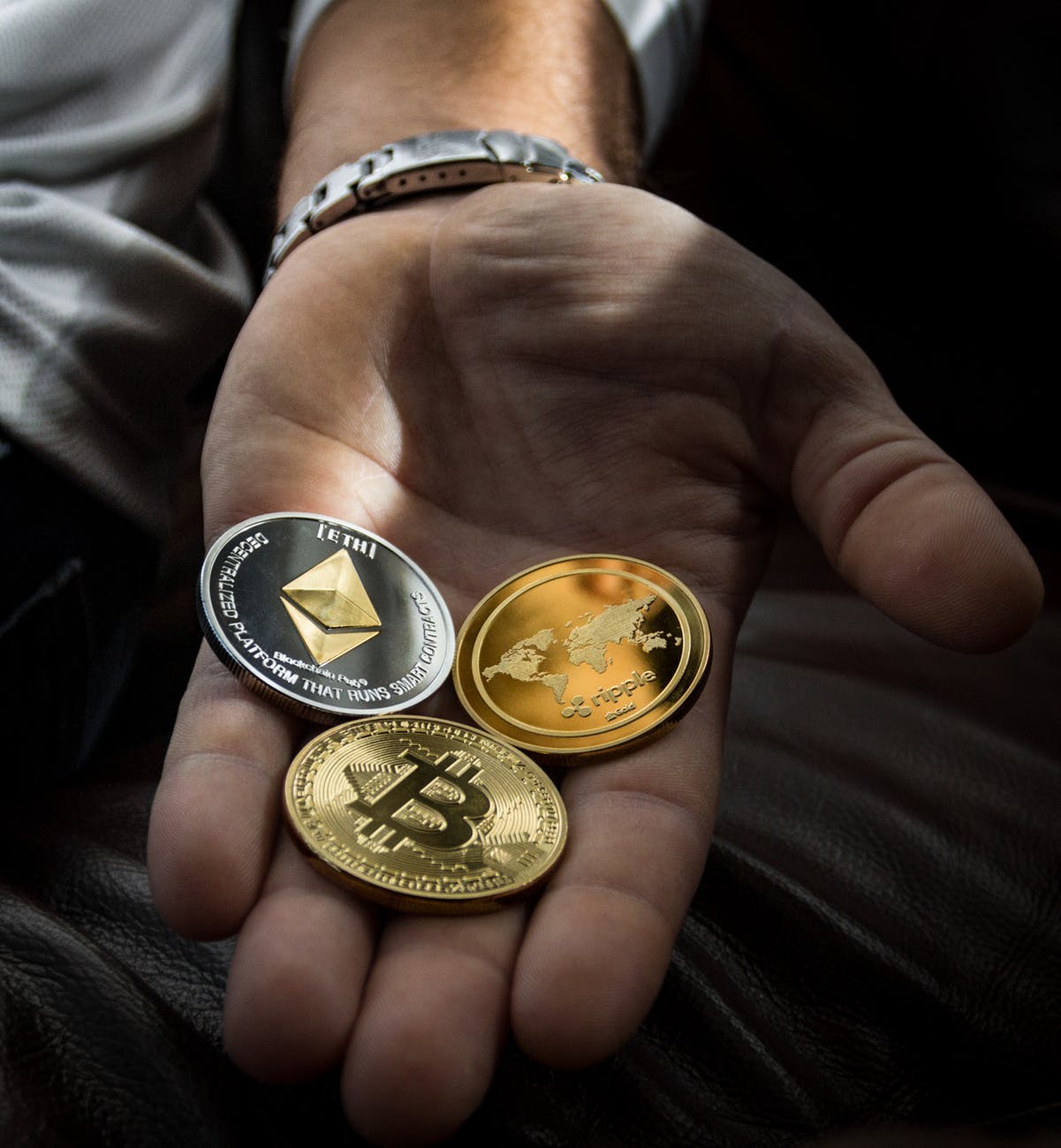
Bitcoin is the first cryptocurrency started in 2009. The current total value of Bitcoin is $826 billion. Ethereum is the secondly built cryptocurrency, developed in 2015. Its market value is $390 billion. Litecoin, Dogecoin, Cardano, Binance coin, Polkadot are some examples of cryptocurrency. Coinbase, Binance, block folio, e Toro, cash app are some apps of cryptocurrency.
The USA’s cryptocurrency market is currently one of the biggest globally which is used to buy, sell, and spend cryptocurrency in the US. India is the second country to use the cryptocurrency market. In 2021, the Indian cryptocurrency market is worth an estimated $5.39 billion. The third country e to make more use of cryptocurrency is Japan. Around 6.29 million people use the cryptocurrency market in Japan.
Blockchain is the buzz word of the decade. Millennials all over the world are hyped about investing in cryptocurrencies and are head over heels for it. If you haven’t joined that race yet, maybe you aren’t sure you want to or you aren’t aware of it . If you belong to the latter part, then this post is for you. This post is curated to the needs of an absolute beginner in regards to Blockchain, no matter your educational background. But if you know what Blockchain means and are looking on how to invest.
What is Blockchain?
In very simple terms, blockchain is nothing but a log of transactions(yes, like a bank transaction). It records transactions(like a ledger) in the form of blocks. Each block is linked to its previous block containing another set of transactions and the chain of blocks continues. Hence the name Blockchain. This definition is provided in a highly abstracted manner, but is enough to understand rest of this post.
A database is a repository of data related to each other. Distributed means that many parties hold the same data. Blockchain is a distributed database which can be centralized or decentralized.
A straightforward example
Assume your friend is in need of money and asks you for say Rs.500. What would you do? Obviously, you can either transfer the specified amount to his bank account via online methods or by physically handing a cheque to your friend. Here, you are invloving the participation of a third party, the bank. Let us assume that you decide to do online transfer. What happens?
If your account has Rs.2000, then after the transfer, it has to be changed to Rs.1500 and this has to change has to be updated in both your account as well as in the logs the bank maintains. Now considering the recipient’s end(your friend), his previous balance, say Rs.100, is now to be updated to Rs.600. The same procedure of updating your friend’s account, their bank ledgers is to be done. If the banks are different, then updating has to be done in both the banks. This process is cumbersome. A lot of updating of ledgers is to be done. This is not only a long process, but also involves a lot of resources, maintenance of bank, manpower, bank’s servers and more.
Now what if we can entirely eliminate the intermediary(bank) and directly transfer funds to your friend? This is where blockchain comes into picture. As I already mentioned, blocks are used to store a record of transactions. So when you send money to your friend, this transaction:
From: You
To: Friend
Value: Rs.500
information is stored in the block. Hence we need to update only once and it eliminates the need to trust an intermediary. Hence this is called a peer-to-peer transaction.
What about security?
Okay, Blockchain is a peer-to-peer technology. But what if one of the parties changes the transaction? So instead of,
From: You
To: Friend
Value: Rs.500
your friend changed it to
From: You
To: Friend
Value: Rs.5000
This leads to major lose of money. So how can we trust the other person? Here is where blockchain proves its worth and is hence the giant of the decade. It provides security at various levels that it is literally impossible to hack into it. In fact, no major hacking has ever been performed on blockchain up till now! Explaining the security measures in detail would require some knowledge on cryptography, but I will explain it in simple terms.
We know that each block contains a set of transactions. Before storing the transaction into the block, 2 steps are to be performed on it. First, the data (from ,to, value information) is hashed. Hashing is when data is given as input into an algorithm which transforms into something entirely different and is meaningless. This would mean that even when hackers get access to blocks, they won’t understand the transactions. Every data has its own unique hash value. Hence if someone tries to change the data, it would result in a different hash value and can be immediately spotted that some tampering has been done.
Next step is that, this hashed data is then encrypted using a private key of the sender. That is, a second layer of protection is provided by encrypting the data that is illegible and can be decrypted only using another key provided by the sender. This is called as digital signature and is used to authenticate data. Thus Blockchain is immutable, is neutral, is decentralized and is non-manipulative, making it very secure and trustable.
Is Blockchain and Bitcoin the same?
Many people confuse both these terms and conclude that both are same. But actually
Weekends have not been welcoming for cryptocurrencies for past some time, and to add to the growing woes, Tesla CEO Elon Musk has again rattled the digital coins through his social media posts.
On Sunday, Musk tweeted that “Goods & Services are the real economy, any form of money is simply the accounting thereof.
Elon Musk
Tweet
Goods & services are the real economy, any form of money is simply the accounting thereof
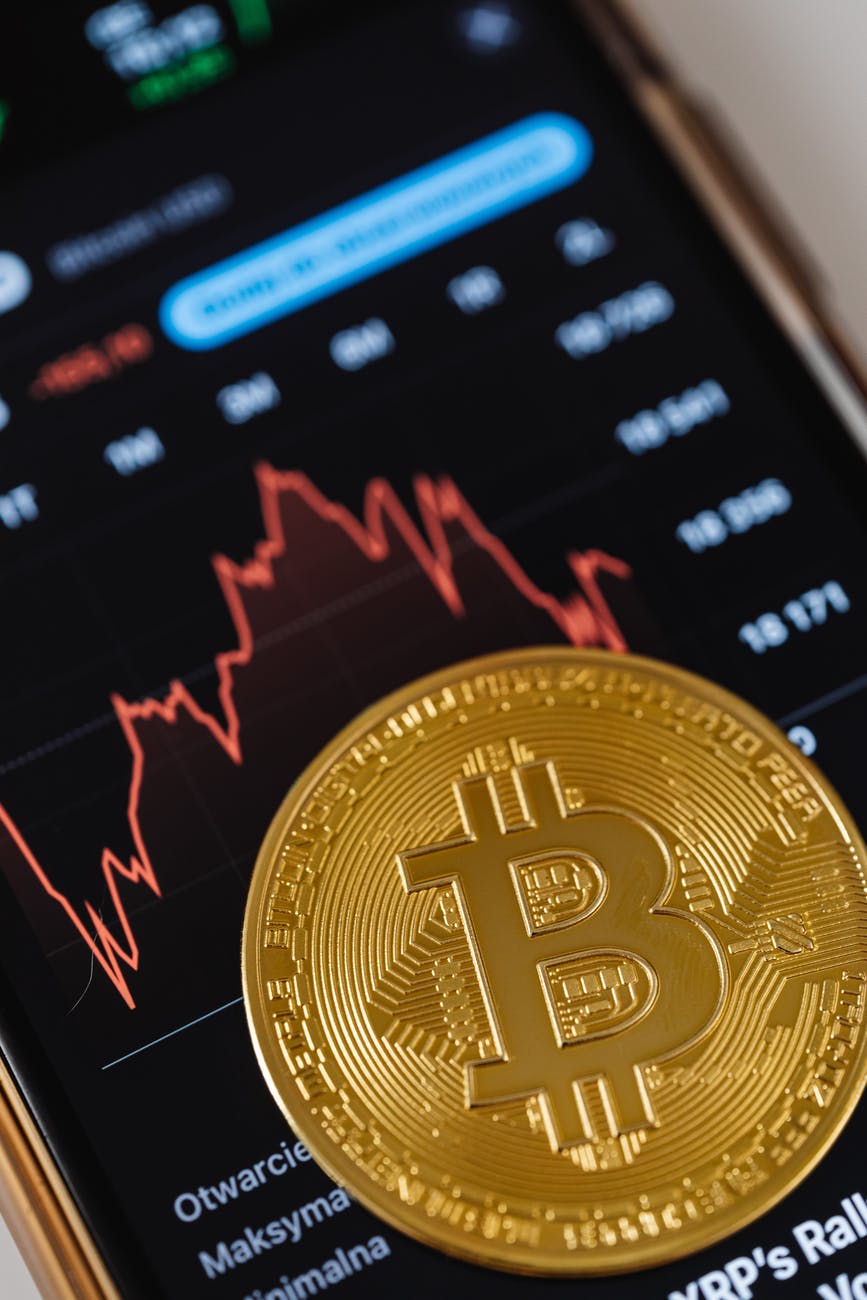
Bitcoin’s average swing on Saturdays and Sundays this year comes in at 5.35%. The world’s largest digital coin slipped to trade around $35,541 as of 5:30 am in New Delhi, down 4.12% in the past 24 hours.
After a assault of brickbats from crypto investors, Musk sought to defend his position on Bitcoin in his own way, “Don’t kill what you hate, Save what you love”.
The move extends its downtrend for a second day after a cryptic tweet from Elon Musk that hinted at a potential split with the cryptocurrency.
Weibo, a Chinese social-media service, appears to have blocked some crypto influencer accounts on Saturday, citing violation of unspecified laws and Weibo community rules.
While Weibo has cracked down on various crytocurrency-related accounts in the past years, the news came on top of recent harsh Chinese regulatory rhetoric that have already led to a plunge in prices for many digital coins.
However, as Bitcoin continues to fluctuate in a narrow range, a retest of the $30,000 level could also be in play until more positive catalysts emerge.
Bitcoin is basically a computer file which is stored in a digital wallet app on a smartphone or computer. People can send Bitcoins or part of one to your digital wallet, and you can send Bitcoins to other people.You can buy Bitcoins using real money. You can sell things and let people pay you with Bitcoins.The money you put into Bitcoin is not safe from value fluctuations. Bitcoin is a volatile investment. If you’re looking for a “safe” investment with guaranteed returns, then don’t invest in Bitcoin
Bitcoin is the oldest cryptocurrency in the world. It is a digital currency that is often used to exchange value for goods and services. Bitcoins work on the principle of blockchain technology. Bitcoins can also be mined or produced using a massive computing system, complex technical process, and an active internet connection.People have traded in Bitcoin for over a decade now. Many companies have even started accepting Bitcoins as a payment method. The price of the coins has gone up substantially over the years.
In April 2018, the RBI had effectively banned cryptocurrency transactions via banks and e-wallets in the country. It was initially supported by the Supreme Court, though the top court later quashed the ban in March last year.Earlier this week, the government listed a bill titled The Cryptocurrency and Regulation of Official Digital Currency Bill, 2021 that is aimed to provide a framework for creation of an official digital currency to be issued by the RBI and prohibit all existing private cryptocurrencies. Experts, however, believe that it would take some time for the country to bring any changes.
Bitcoin held at exchanges are vulnerable to theft through phishing, scamming, and hacking. As of December 2017, around 980,000 bitcoins have been stolen from cryptocurrency exchanges.The use of bitcoin by criminals has attracted the attention of financial regulators, legislative bodies, law enforcement, and the media.Bitcoin gained early notoriety for its use on the Silk Road.
Investment is the way to make your money work for you when you are busy with your work. To start an investment you must keep the capital ready. The total money you want to invest is called capital. If you are a beginner in investing then this article will help you with the basics.
You have to set goals on how much you can invest and the period of the investment. Setting goals will help you to choose the right investment strategy. You can plan your goal to match your long-term or short-term needs like an investment for retirement, buying property, kid’s education, etc.
Know your Risk Appetite
Investment in equity and mutual funds is a risky investment. If you want a risk-free investment then you can invest in bank fixed deposits, Post office schemes, RBI Bonds, PPF, etc depending on your needs. If you are not satisfied with the low returns given by risk-free investment then you should consider investing your money in the stock market.
The higher risk you take higher will be the returns you get or you may be losing your capital. So decide how much risk you can take.
Risk Capacity
Investment Options
Very low Risk
PPF, Bank FDs, RBI Bond, Post Office Schemes, Senior Citizen Savings Schemes
Low Risk
Annuities, Insurance, Gold Investment
Moderate Risk
Debt Mutual Funds, National Pension Schemes
High Risk
Direct Stocks, Equity Mutual Funds, Crypto Assets, IPO
Diversify Investment
Don’t put all your eggs in one basket by investing all your money in a single asset. Depending on your goals you should invest in different assets and within different options in asset classes. Diversification lowers the portfolio risk because if a single investment is failing, others may rise and will balance the portfolio.
Whether you want to invest in the stock market or in risk-free assets, you must read all instructions and policies carefully. This blog is just for informational purposes and not intended for investment advice. You might also want to take a look at RealVantage for more information on property investments.
Blockchain, now and then alluded to as Distributed Ledger Technology (DLT), makes the historical backdrop of any advanced resource unalterable and straightforward using decentralization and cryptographic hashing.
A basic relationship for comprehension blockchain innovation is a Google Doc. At the point when we make a record and offer it with a gathering of individuals, the report is dispersed rather than replicated or moved. This makes a decentralized dispersion chain that gives everybody admittance to the archive simultaneously. Nobody is locked out anticipating changes from another party, while all adjustments to the doc are being recorded progressively, making changes totally straightforward.
Obviously, blockchain is more convoluted than a Google Doc, however the similarity is adept since it shows three basic thoughts of the innovation:
THE WORKING OF BLOCKCHAIN
The general purpose of utilizing a blockchain is to let individuals — specifically, individuals who don’t confide in each other — share significant information in a safe, carefully designed way.
— MIT Technology Review
Blockchain comprises of three significant ideas: blocks, nodes and minors.
Blocks
Each chain comprises of numerous blocks and each square has three essential components:
The information in the block.
A 32-bit entire number called a nonce. The nonce is arbitrarily produced when a square is made, which then, at that point creates a square header hash.
The hash is a 256-bit number married to the nonce. It should begin with an immense number of zeroes (i.e., be minuscule).
At the point when the main square of a chain is made, a nonce creates the cryptographic hash. The information in the square is considered marked and everlastingly attached to the nonce and hash except if it is mined.
Miners
Miners make new squares on the chain through an interaction called mining. In a blockchain each square has its own interesting nonce and hash, yet additionally references the hash of the past block in the chain, so mining a square is difficult, particularly on huge chains.
Excavators utilize uncommon programming to tackle the unquestionably unpredictable mathematical question of discovering a nonce that produces an acknowledged hash. Since the nonce is just 32 pieces and the hash is 256, there are about four billion potential nonce-hash blends that should be mined before the right one is found. At the point when that happens excavators are said to have tracked down the “brilliant nonce” and their square is added to the chain.
Rolling out an improvement to any impede prior in the chain requires re-mining the square with the change, however the entirety of the squares that come after. This is the reason it’s amazingly hard to control blockchain innovation. Consider it is as “wellbeing in math” since discovering brilliant nonces requires a huge measure of time and processing power. At the point when a square is effectively mined, the change is acknowledged by the entirety of the hubs on the organization and the miner is compensated monetarily.
Nodes
Perhaps the main ideas in blockchain innovation is decentralization. Nobody PC or association can claim the chain. All things considered, it is an appropriated record by means of the hubs associated with the chain. Hubs can be any sort of electronic gadget that keeps up with duplicates of the blockchain and keeps the organization working.
Each node has its own duplicate of the blockchain and the organization should algorithmically support any recently dug block for the chain to be refreshed, trusted and checked. Since blockchains are straightforward, each activity in the record can be effortlessly checked and seen. Every member is given a remarkable alphanumeric recognizable proof number that shows their exchanges.
Joining public data with an arrangement of balanced governance helps the blockchain keep up with honesty and makes trust among clients. Basically, blockchains can be considered as the scaleability of trust through innovation.
Blockchain’s most notable use (and perhaps generally disputable) is in digital currencies. Cryptographic forms of money are computerized monetary standards (or tokens), like Bitcoin, Ethereum or Litecoin, that can be utilized to purchase labor and products. Very much like a computerized type of money, crypto can be utilized to purchase everything from your lunch to your next home. In contrast to cash, crypto utilizes blockchain to go about as both a public record and an improved cryptographic security framework, so online exchanges are constantly recorded and gotten.
WORKING OF CRYPTOCURRENCY
Cryptographic forms of money are computerized monetary standards that utilization blockchain innovation to record and get each exchange. A cryptographic money (for instance, Bitcoin) can be utilized as an advanced type of money to pay for everything from ordinary things to bigger buys like vehicles and homes. It tends to be purchased utilizing one of a few computerized wallets or exchanging stages, then, at that point carefully endless supply of a thing, with the blockchain recording the exchange and the new proprietor. The allure of digital forms of money is that everything is recorded in a public record and got utilizing cryptography, making a certain, timestamped and secure record of each installment.
Until this point in time, there are approximately 6,700 digital currencies on the planet that have an absolute market cap around $1.6 trillion, with Bitcoin holding a greater part of the worth. These tokens have gotten unquestionably famous throughout the most recent couple of years, with one Bitcoin rising to $60,000. Here are a portion of the principle reasons why everybody is abruptly considering digital forms of money: Blockchain’s security makes robbery a lot harder since every cryptographic money has its own undeniable recognizable number that is joined to one proprietor.
Crypto lessens the requirement for individualized monetary standards and national manages an account with blockchain, crypto can be shipped off anyplace and anybody on the planet without the requirement for money trading or without obstruction from national banks. Cryptographic forms of money can make a few group rich-Speculators have been driving up the cost of crypto, particularly Bitcoin, assisting some early adopters with becoming tycoons. Regardless of whether this is really a positive presently can’t seem to be seen, as certain retractors accept that examiners don’t have the drawn out advantages of crypto as a top priority.
An ever increasing number of huge enterprises are coming around to the possibility of a blockchain-based computerized money for installments. In February 2021, Tesla broadly reported that it would put $1.5 billion into Bitcoin and acknowledge it as installment for their vehicles.Obviously, there are many authentic contentions against blockchain-based computerized monetary standards. In the first place, crypto is certainly not an extremely controlled market. Numerous administrations rushed to bounce into crypto, however few have a firm arrangement of classified laws in regards to it. Furthermore, crypto is unbelievably unpredictable because of those previously mentioned theorists. In 2016, Bitcoin was valued around $450 per token. It then, at that point leaped to about $16,000 a token in 2018, plunged to around $3,100, then, at that point has since expanded to more than $60,000. Absence of soundness has made a few group get exceptionally rich, while a larger part have still lost thousands.
Regardless of whether computerized monetary standards are the future remaining parts not yet clear. For the present, maybe blockchain’s fleeting ascent is more beginning to flourish actually than unadulterated publicity. However it’s actually gaining ground in this altogether new, profoundly exploratory field, blockchain is likewise showing guarantee past Bitcoin.
Using Tokens
Ethereum software engineers can make tokens to address any sort of advanced resource, track its possession and execute its usefulness as indicated by a bunch of programming directions. Tokens can be music documents, contracts, show passes or even a patient’s clinical records. Most as of late, Non-Fungible Tokens (NFTs) have become extremely popular. NFTs are special blockchain-based tokens that store advanced media (like a video, music or workmanship). Each NFT can confirm legitimacy, previous history and sole responsibility for piece of computerized media. NFTs have become fiercely famous in light of the fact that they offer another flood of computerized makers the capacity to purchase and sell their creation, while getting appropriate credit and a decent amount of benefits.
Newly discovered utilizations for blockchain have widened the capability of the record innovation to pervade different areas like media, government and personality security. A large number of organizations are presently exploring and creating items and environments that run completely on the blossoming innovation. Blockchain is testing the current business as usual of development by allowing organizations to explore different avenues regarding notable innovation like shared energy dispersion or decentralized structures for news media. Similar as the meaning of blockchain, the utilizations for the record framework will just develop as innovation advances.
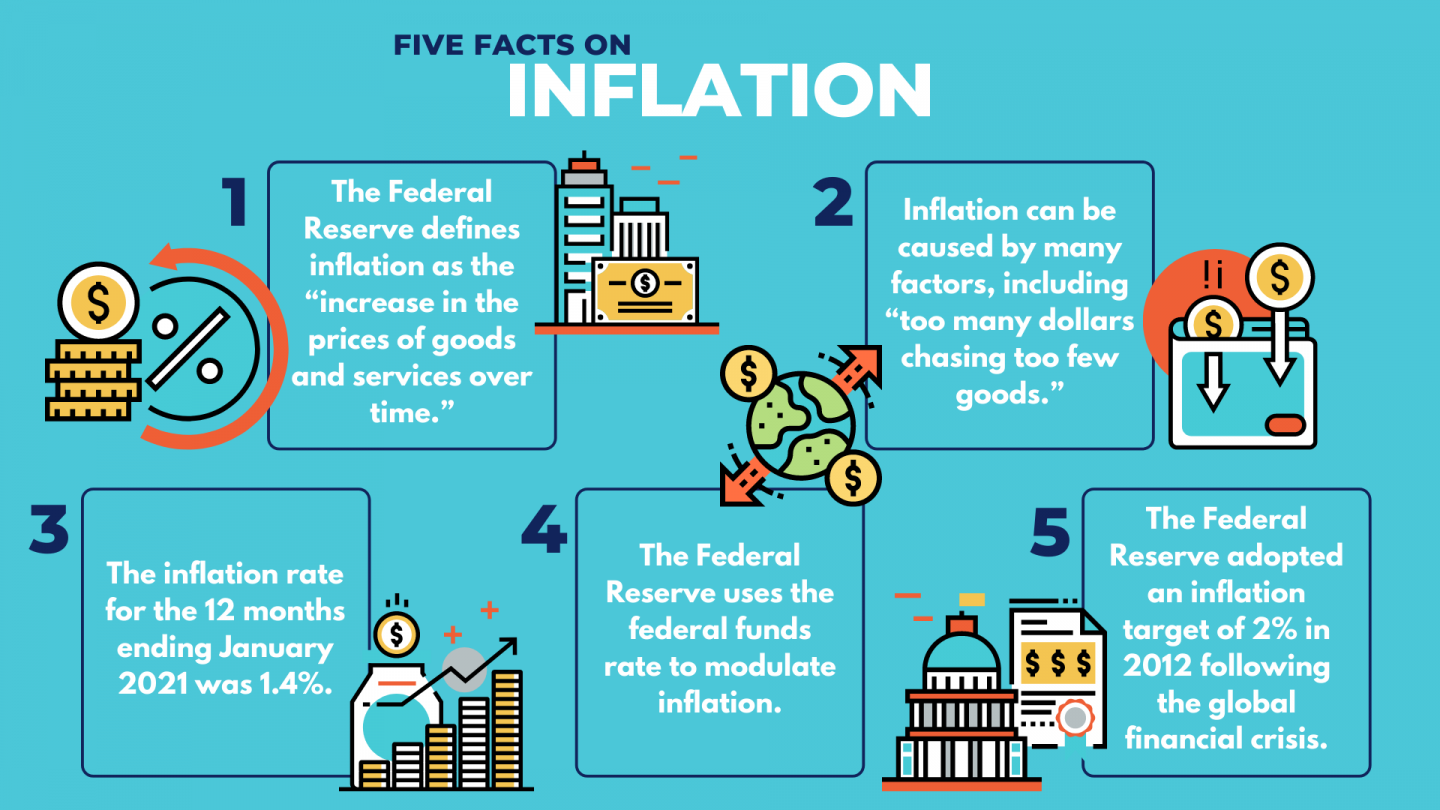
Hello friends! If I gave you a hundred rupee note in the year 1958 and you kept it hidden under your bed for 60 years And if you took out that note today and used it in the market, then the value of that note would have reduced to a mere 1 rupee 20 paise in comparison to 1958 Let me explain it to you from another angle, if you did not understand If you buy something worth 100 rupees today, it would have cost 1 Rupee 20 paise back in 1958 That is 100 rupees of today is equal to 1 rupee 20 paise of 1958 This is because of inflation Inflation means dearness of things that makes things costlier for all of us every year Why does inflation occur and what are the reasons behind this? Is it really a bad thing? And how is inflation related to unemployment and other economic factors? We will talk about all of this in today’s video where I will explain this “ghastly” inflation to you Come, let us see First of all, a very important question- Why does inflation happen and who is causing it to happen? Are some government officials increasing the prices of things arbitrarily? It is not so .
There are several reasons for inflation but I’d like to discuss 4 main reasons for inflation in this article The first reason is very simple- An economic boom That is, a good economic growth When the economic growth is good, then there’s more money in the hands of the people who can spend it on different items When there’s more money in the hands of the people, they can spend it on different items That is, the demand for everything would go up in the economy When demand goes up, the businesses and companies that manufacture these products seek to increase the prices in a bid to earn more profit since so many people are willing to buy So they increase the price of the goods which will then lead to inflation Explaining this with an example- Imagine an aeroplane with 100 seats and 100 passengers have to board that plane But there are only 10 first class seats and 90 economy class seats Now if the passengers are given more money If they’re all given enough money to be able to afford a first class seat, they’ll all want to book a first class seat. But the number of seats are only 10 Not all of them can have a first class seat So what would happen as a response? In response, the airline would hike the prices of its first class seats so that only those who have more money can afford to book a first class seat So basically there is an inflation This type of inflation is called a “demand pull inflation”.
A demand pull inflation is when the inflation rises with the rise in demand The second reason is the increase in the prices of the raw materials due to different reasons For example, if the prices of wheat and rice rise due to a bad monsoon season, the prices of oil rise or a new tax imposed by the government lead to a rise in the price of one of the raw materials then the companies that manufacture products using these raw materials they’d have to hike the prices of the products to make profits since manufacturing them would become costlier which would ultimately lead to inflation This inflation is called “cost push inflation” The third reason is increase in the salaries No, I’m not joking: When the companies or governments raise the salaries of their employees, then they have to increase the price of their products as well to be able to still make profits .This inflation is called “wage push inflation”.
There could be other reasons for this as well If unemployment levels are at very low levels in a country, then it is extremely difficult for the companies to replace their employees and if they aren’t replaced, their salaries would have to be raised and this again, triggers inflation And finally, the fourth reason is currency depreciation This can happen due to several different reasons, out of which one of the most important reasons is printing of more notes by the government which leads to the currency losing its value And this is a very dicey reason This could also potentially trigger hyper inflation which is happening in Venezuela today and happened in Zimbabwe in 2008 If the inflation rate touches even 10% in our country, then it would cause the people to comment that things are becoming extremely dear very fast But in Venezuela, between 2016- 2019, the inflation rate was more than 5 crore percent!
Taking the example of Zimbabwe, Around 2008, the currency of Zimbabwe was losing its value at such a rapid pace that the government began printing 1 million dollar and 1 billion dollar notes! And there existed even a 1 trillion dollar note in Zimbabwean dollars And do you know what the value of that 1 trillion Zimbabwean dollar note was? Just 1 US dollar! This is the extent to which money can lose its value in a case of hyper inflation But this is a very long topic on its own and I will make a video on it in the future because there are several political reasons behind it, apart from the economic ones Talking about the present, the inflation rate in most of the countries today is going down Think about why this is happening It is because of the shrinking demand in the wake of the lockdowns that have been imposed around the world People are buying fewer things and travelling less .
The people do not have money to spend because their businesses have shut down And so, there has been a decline in overall demand And the opposite of the “demand pull”(which I told you about as the first reason) is happening Since the demand is going down, so is the inflation As a response to this, some countries have decided to transfer cash to the people- distribute it for free Now, some people state that doing this would cause the inflation to increase What do you think will happen? I discussed the same logic in this video on Universal Basic Income that the biggest criticism of the Universal Basic Income and the free distribution of money is that it will cause the inflation to spike What do you think? Write down your explanations in the comments below And I will give the answer to this question later in the video I’d like to pose another interesting question before you Is inflation necessary?
What if there was 0% inflation? Observing superficially, you could think that this would be great as things would stop becoming costlier and that it is good for you as you will be able to afford it for cheap You would be able to save up more and overtime, the value of money would not depreciate either So this would be another great thing! Analyzing deeply upon the reasons that lead to inflation then you would understand that 0% inflation is actually not a good thing This would mean that companies would not raise your salaries Your salary would remain constant And since salaries never go down, therefore, in general, inflation always stays in the positive .
And there is a third reason as well If there is deflation, that is, the prices of things keep decreasing every year, then the people would not want to spend money. They would want to save up First of all, the value of money is increasing, If deflation continues to happen, then five years on, the item that one wishes to buy would come for cheaper So they would want to buy it five years later instead of buying it now This would cut down the overall public expenditure Lesser expenditure would mean that the businesses would start incurring losses The businesses incurring losses would translate to people losing their jobs which would then cause the unemployment to rise I’ve told you about a very long and convoluted connection- You might wonder if it actually happens so Yes it does There is a very interesting relation between unemployment and inflation .
This shows us the inverse relation between unemployment and inflation If there’s economic growth, there will be an increase in inflation and unemployment would go down and unemployment will rise if inflation goes down And this is a very interesting explanation because one would not expect this to happen, but it does in reality But as obvious, there are some extreme limits where this graph is not valid For example, in the case of hyperinflation It isn’t that Venezuela today has 100% employment and 0% unemployment Some other factors come into play there. For instance, political factors which cause inflation to spike But generally, this graph is valid A question arises- Excessive inflation is bad because it would cause hyperinflation and increase dearness Nominal inflation is also bad because it would cause unemployment to rise So, what is the optimum level of inflation that a country should maintain? What could it be? This figure is 2% for the developed countries .
The central banks and the governments of the developed nations have decided that they should maintain an inflation rate of about 2% If it is more, then they would try and reduce it And if it is less, they would try and increase it For India, this rate is 4% with a margin of ±2% So the ideal inflation rate in India should be around 2-6% This keeps the prices stable and keeps the levels of unemployment at their lowest It ensures maximum employment So, if a government wants to control inflation, how can it do that? There can be several ways to do this Generally, the central bank of a country is responsible for controlling the inflation rate and normally, the central bank- RBI, in the case of India- controls the inflation rates by increasing/decreasing its interest rates If RBI increases it interest rates (which are called repo rates) which is charged on loans given to other banks.
Then fewer banks would want to take loans And these banks in turn, would increase their interest rates as well which would reduce the number of people wanting to take loans This would result in lesser money being circulated in the economy And if this happens so, then inflation would go down And if RBI slashes its interest rates, then indirectly, through other banks, more people would want to take loans and this would push the inflation up So inflation rate can mainly be controlled by increasing or decreasing the interest rates But there are other ways as well- Inflation can also be controlled by printing of more notes Printing of more notes would obviously cause inflation to rise.
The government can control inflation by imposing more taxes as I had explained in the reasons earlier in this video The government can also control inflation by spending more or by spending less, if there is a recession in a country and there’s no economic growth, then inflation would also decline This happens on a general basis, but not always Sometimes, it also happens that a country’s economic growth is going down and the country is going into recession but inflation is going up This situation is called “Stagflation”. This is a disastrous thing indeed.
Why does this happen? The reason for this is- Assume that there is a recession within a country, but the cost push factors- the second reason for the rise of inflation that we talked about- The cost of the raw materials is rising For example, the rise of oil prices all across the world so the oil imported would then cost more so the inflation would rise because of cost push factors but there is recession within the country There is another exception from the other side- If there is deflation in a country, but simultaneously, there is economic growth in the country This happened in the USA between 1870-1890 This period is referred to as “The Great Deflation”.
The cost of the goods were falling by around 2% every year and there was deflation, but there was also an economic boom Both the people and the businesses were making more money and employment was on the rise The reason behind this attributed to the rise in productivity This was a time when there was technological progress at such a rapid pace and new technologies were being developed that it compensated for the deflation Reverting to our original question- if people are given money for free in today’s times during this recession then would it lead to a rise in inflation? In my opinion, the answer of this is no. Inflation would not rise because handing out money wouldn’t amount to such a huge increase in wealth that people become capable to buy things that are not being supplied It would not be so. Because it would push up the demand very slightly.
And demand has fallen so low that giving out paltry sums of money would not alter the demand drastically So I do not think that the distribution of money for free would trigger any sort of inflation No matter how much importance inflation holds for the entire economy, but if we come down to personal consequences and how it personally affects you, then you could say that it has a negative consequence The money that you save up would lose value over time the prices of the things keep going up and dearness would always be on the rise .
This is why people invest their money in different things rather than stashing it under their bed For example, they buy gold with it. Because the price of gold rises overtime The value of money keeps diminishing due to inflation but the value of gold keeps rising Similarly, some people buy real estate/ Property to avoid this And some people invest in cryptocurrencies like Bitcoin , Ethereum ,etc.














 Eduindex
You must be logged in to post a comment.