

Printing services play a crucial role in the dissemination of information, marketing materials, and creative content across various industries. From small-scale personal projects to large-scale commercial productions, printing services offer a range of solutions to meet diverse needs. This detailed overview will explore the different types of printing services available, the technology behind them, and how they cater to specific requirements.
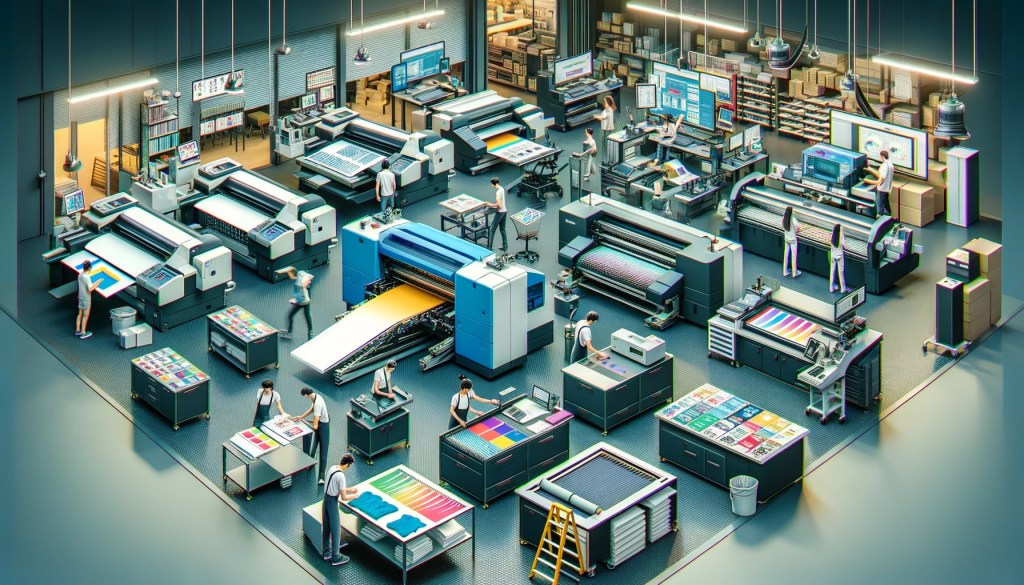
1. Types of Printing Services
- Digital Printing: Best suited for smaller quantities and rush jobs, digital printing uses toner (like in laser printers) or larger printers that use liquid ink. It offers high-quality prints with fast turnaround and is cost-effective for low-volume production.
- Offset Printing: Ideal for high-volume printing, such as newspapers, magazines, and books. Offset printing involves transferring ink from a plate to a rubber blanket and then to the printing surface. It is renowned for producing consistent high-quality images and allows cost savings with larger quantities.
- Screen Printing: Commonly used for designs on fabric, such as t-shirts, and on unique products like mugs and bottles. Screen printing involves creating a stencil (or “screen”), and then using it to apply layers of ink on the printing surface.
- Flexography: Mainly used for packaging and labels. Flexography uses a flexible relief plate to print on a variety of materials like plastic, metallic films, and paper.
- Gravure Printing: Used for high-quality photographic prints, gravure printing involves engraving the image onto a cylinder. It is especially suitable for large-scale production runs of magazines, mail order catalogues, packaging, and other products.
- 3D Printing: A growing sector in printing services, 3D printing builds objects layer by layer using materials such as polymer resins and metals. It is used for prototypes, manufacturing, medical models, and more.
2. Choosing the Right Printing Technique
The choice of printing technique depends on several factors:
- Quantity: High-volume orders are more cost-effective with offset printing, whereas digital printing is better for small to medium volumes.
- Quality: For high-quality, detailed images, gravure and offset printing are excellent options.
- Material: Screen printing and flexography are preferred for non-traditional materials.
- Turnaround Time: Digital printing offers the quickest turnaround.
- Budget: Digital printing is cost-effective for small runs, but offset printing can reduce costs per unit for large orders.
3. Pre-press Process
Before printing, several pre-press steps are necessary:
- Design and Artwork Creation: Using graphic design software to create or finalize designs.
- Proofreading and Editing: Ensuring the text and graphics are error-free.
- Mock-ups and Proofs: Creating preliminary versions of the final product for review and approval.
- Plate Making (for offset and flexography): Producing the plates used to transfer the ink onto the material.
4. Post-press and Finishing Services
After printing, additional processes may enhance the product:
- Cutting and Trimming: Removing excess paper or material.
- Folding: For brochures, pamphlets, and other folded items.
- Binding: Options include spiral, comb, wire, and perfect binding for assembling pages into books or booklets.
- Laminating and Coating: Adding a protective layer or special finishes like gloss or matte.
5. Emerging Trends in Printing Services
- Sustainable Printing: Increased demand for eco-friendly materials and processes.
- Personalization: Using data to create customized marketing materials.
- Integration with Digital Media: QR codes, augmented reality, and other technologies enhancing printed materials.
6. Applications of Printing Services
- Marketing: Brochures, flyers, posters, and business cards.
- Publishing: Books, magazines, and newspapers.
- Packaging: Labels, boxes, and wrappers.
- Specialty Products: Custom apparel, gift items, and decorative pieces.
Conclusion
Printing services encompass a broad spectrum of techniques and applications, each suited to specific project requirements. Whether it’s for advertising, publishing, or custom merchandise, understanding the different types of printing methods and their advantages is key to selecting the right service for your needs. As technology advances, the printing industry continues to evolve, offering more sophisticated solutions to meet the demands of modern consumers and businesses.

 Eduindex
You must be logged in to post a comment.