The Importance of Reading Instructions to Authors

Daily writing prompt
What jobs have you had?

In the world of academic publishing, the process of submitting a manuscript can be both thrilling and daunting. Researchers eagerly look forward to contributing their findings to their fields, but the path from manuscript preparation to publication is fraught with challenges. One of the critical steps in this process is thoroughly reading and adhering to the “Instructions to Authors” provided by the journal to which one is submitting. This step, often overlooked or underappreciated, holds paramount importance for several reasons.

Photo by William Fortunato on Pexels.com

1. Ensuring Compliance with Journal Requirements

Each academic journal has specific requirements regarding manuscript format, structure, and style. These requirements cover aspects such as word count, referencing style, section headings, and figure/table formats. By carefully reading the instructions, authors ensure their submissions comply with these guidelines, reducing the risk of immediate rejection on technical grounds. Non-compliance can lead to unnecessary delays as manuscripts are sent back for revisions, thereby elongating the publication process.

2. Enhancing the Quality of Submissions

Instructions to authors often include valuable insights into the journal’s expectations regarding the content and quality of submissions. This might encompass guidance on the level of detail required in the methodology section, the types of data presentation preferred, or the emphasis on novelty and significance of findings. By aligning their manuscripts with these expectations, authors can enhance the quality and relevance of their submissions, increasing the likelihood of acceptance.

3. Streamlining the Review Process

Reviewers play a critical role in the publication process by evaluating the validity, significance, and originality of submissions. When manuscripts adhere to the prescribed format and style, reviewers can focus on the content rather than getting distracted by format inconsistencies or missing elements. This not only facilitates a smoother review process but also portrays the authors as meticulous and professional, potentially influencing reviewers’ perceptions positively.

4. Avoiding Ethical Pitfalls

Ethical considerations are paramount in academic publishing. Journals often have detailed instructions on issues such as authorship criteria, conflicts of interest, ethical approval for studies involving human or animal subjects, and data sharing policies. By thoroughly understanding and adhering to these guidelines, authors can avoid ethical pitfalls that might lead to retractions or damage to their reputations. Properly addressing these aspects upfront demonstrates the authors’ commitment to ethical standards.

5. Efficient Use of Resources

Both authors and journal editorial teams invest significant time and resources in the publication process. Manuscripts that do not conform to submission guidelines can lead to wasted effort on the part of the editorial staff, who must then correspond with authors to rectify issues. For authors, resubmitting corrected versions can be time-consuming. By getting it right the first time, both parties can make more efficient use of their resources, expediting the publication process.

6. Facilitating Communication

Clear and effective communication is the backbone of academic publishing. Journals use their instructions to communicate specific preferences and requirements to authors. By following these instructions, authors respect and reciprocate this communication channel, fostering a positive relationship with the journal’s editorial team. This can be particularly beneficial for future submissions and establishing a long-term rapport with the journal.

Conclusion

In summary, reading and adhering to the instructions to authors is a crucial step in the manuscript submission process. It ensures compliance with journal requirements, enhances the quality of submissions, streamlines the review process, helps avoid ethical issues, makes efficient use of resources, and facilitates clear communication. For researchers aiming to contribute effectively to their fields, paying close attention to these guidelines is not just advisable but essential. By doing so, they can navigate the complex landscape of academic publishing with greater confidence and success.

REC wins ‘Sustainability Champion – Editor’s Choice Award’ at Outlook Planet Sustainability Summit & Awards 2024

 REC Limited, a Maharatna Central Public Sector Enterprise under the Ministry of Power and a leading NBFC, has been honoured with the ‘Sustainability Champion – Editor’s Choice Award’ at the ‘Outlook Planet Sustainability Summit & Awards 2024’. The Award ceremony was organised by Outlook Group, in collaboration with IIT Goa.

This award recognizes REC’s commitment to sustainability initiatives and its efforts in driving progress towards a greener future. The award highlights the corporation’s pledge to sustainability initiatives, leading the path toward a greener future.

Smt. Saraswathi, Senior General Manager, REC’s Mumbai Office, received the award at an event held in Goa.

REC has been a front-runner in catalysing India’s energy transition. Its plans are intricately aligned with the global thrust towards clean energy sources, and the company remains committed to being the leading financier of India’s energy transition. REC is geared to invest significantly in sustainability initiatives, as reflected in its current loan portfolio of approximately ₹ 38,971 crores under renewable energy. It has set a target of improving the renewables mix to around 30% of projected loan book of about 10 lakh crores by the year 2030.

The Outlook Planet Sustainability Summit & Awards is a prominent platform that brings together industry leaders, policymakers, and sustainability advocates to celebrate and promote excellence in sustainable practices. This year’s summit featured insightful discussions, innovative ideas, and recognized the remarkable achievements of organizations dedicated to sustainability.


About REC Limited


REC is a ‘Maharatna’ company under the administrative control of the Ministry of Power, Government of India, and is registered with RBI as Non-Banking Finance Company (NBFC), Public Financial Institution (PFI) and Infrastructure Financing Company (IFC). REC is financing the entire Power-Infrastructure sector comprising Generation, Transmission, Distribution, Renewable Energy and new technologies like Electric Vehicles, Battery Storage, Pump Storage projects, Green Hydrogen and Green Ammonia projects. More recently, REC Limited has also diversified into the Non-Power Infrastructure sector comprising Roads & Expressways, Metro Rail, Airports, IT Communication, Social and Commercial Infrastructure (Educational Institution, Hospitals), Ports and Electro-Mechanical (E&M) works in respect of various other sectors like Steel and Refinery. REC Limited provides loans of various maturities to State, Central and Private Companies for creation of infrastructure assets in the country.

REC Limited continues to play a key strategic role in the flagship schemes of the Government for the power sector and has been nodal agency for Pradhan Mantri Sahaj Bijli Har Ghar Yojana (SAUBHAGAYA), Deen Dayal Upadhaya Gram Jyoti Yojana (DDUGJY) and National Electricity Fund (NEF) Scheme which resulted in strengthening of last-mile distribution system, 100% village electrification and household electrification in the country. REC has also been made the nodal agency for certain States and Union Territories for the Revamped Distribution Sector Scheme (RDSS). REC has also been given the responsibility of PM Surya Ghar Muft Bijli Yojna. The loan book of REC stands at ₹ 5.09 lakh crores and Net Worth at Rs. ₹ 68,783 crores as on 31 March, 2024.

***

MEA, MeitY and CSC e-Governance Services India Ltd sign MoU to provide eMigrate services through Common Services Centres

 A Memorandum of Understanding (MoU) is entered into between Ministry External Affairs (MEA), Government of India, Ministry of Electronics and Information Technology (MeitY), Government of India and CSC eGovernance Services India Limited to create a synergy between CSC SPV & MEA to provide the eMigrate services through CSCs in the country.

eMigrate project is undertaken to assist mainly the blue-collar workers going to Emigration Check Required (ECR) countries. The project was conceptualized to address issues faced by the migrant workers by making emigration process online seamless and also to bring foreign employers and registered recruitment agents and insurance companies on one common platform aimed at promoting safe and legal migration.

Over the years, the number of Indians going abroad for employment has been increasing as well as the contribution of remittances sent by them has been significant.

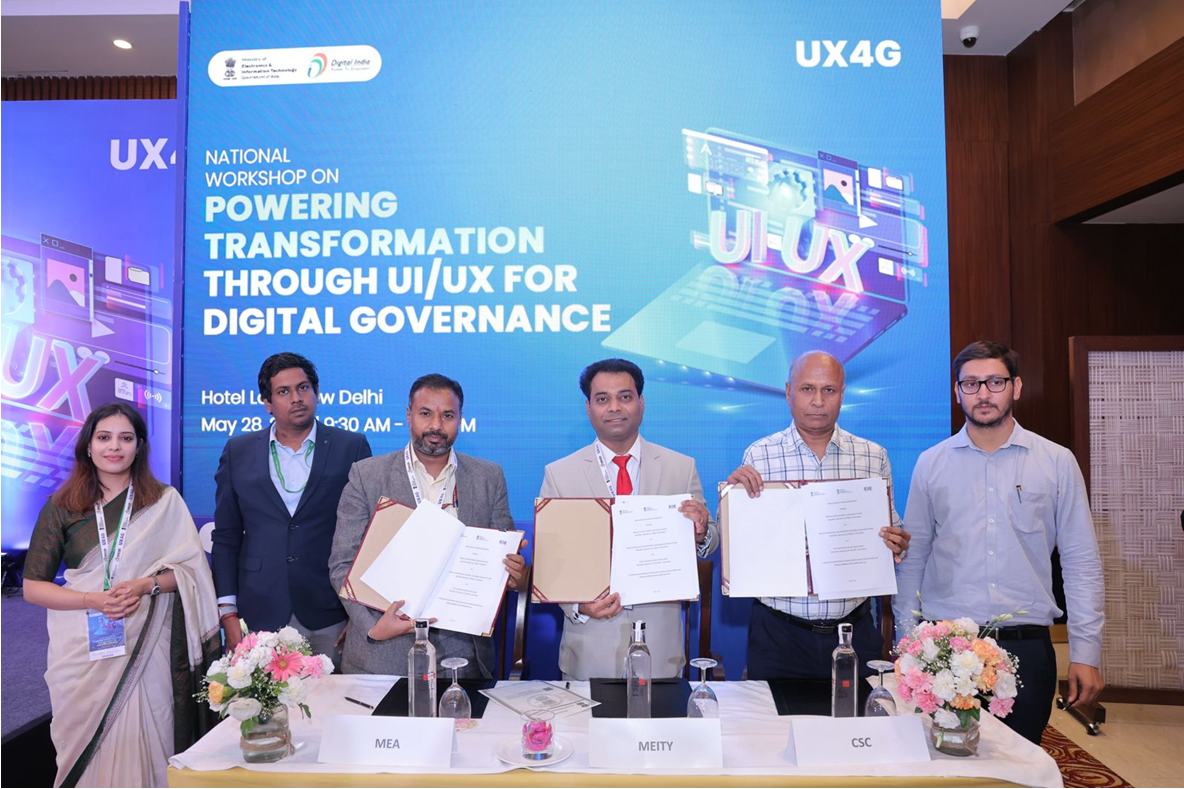
The MoU has been signed during the conference of National Workshop on “Powering Transformation through UI/UX for Digital Governance” in the presence of esteemed dignitaries Shri Rajesh Singh, Joint Secretary & Financial Advisor, MeitY; Ms Debjani Ghosh, President, NASSCOM; Shri Amit Agrawal, CEO, UIDAI & DG, NIC and others.

The MoU has been signed by Shri Bramha Kumar, Joint Secretary (OE & PGE) Division, MEA; Shri Sanket Bhondve, Joint Secretary (DigiGov), MeitY and Shri Akshay Jha, COO, CSC eGovernance Services India Limited.

Under this MoU, eMigrate Portal of MEA would be integrated with CSC’s portal, to provide following eMigrate services to the citizens through CSCs:

  1. Facilitate registration of applicants on eMigrate portal through CSCs.
  2. Facilitation of uploading and processing the required documents for the applicants on eMigrate portal through CSCs.
  3. Facilitate and supporting booking for medical and other services required by migrant workers or applicants registered on eMigrate portal through CSC.
  4. Creating awareness about eMigrate services amongst citizens across India.

About CSC SPV:

Common Services Centers (CSCs) are an integral part of the Digital India mission. The CSCs are frontend services delivery points for the delivery of digital services to the citizens, especially in the rural and remote areas across the country. This helps in contributing towards the fulfilment of the vision of Digital India and the Government’s mandate for a digitally and financially inclusive society. Currently, more than 5.50 lakh CSCs are delivering more than 700 digital services to citizens in assisted mode with enhanced ease and convenience. Apart from delivering essential government and public utility services, CSCs also deliver a range of social welfare schemes, financial services, educational courses, skill development courses, healthcare, agriculture services, digital literacy, etc.

The MoU has been signed with an aim of expanding channels of safe & legal migration at grassroots level, with the particular aim of preventing exploitation from unscrupulous elements of Indian citizens when they seek employment overseas.

***

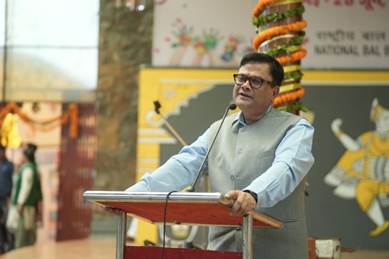
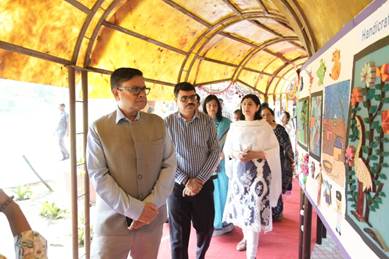
Shri Sanjay Kumar inaugurates Summer Fiesta 2024 at National Bal Bhavan, New Delhi

 Shri Sanjay Kumar, Secretary, Department of School Education & Literacy, Ministry of Education, today inaugurated the month-long “Summer Fiesta 2024” at the National Bal Bhavan, New Delhi. Summer Fiesta is a month-long camp comprising over 30 types of different activities for children aged between 5 to 16 years. Shri Vipin Kumar, Additional Secretary (SS-II), Department of School Education & Literacy, Ministry of Education and the Chairman of National Bal Bhavan, and senior officials from the Ministry were also present on the occasion.

Addressing the enthusiastic gathering of children and their parents, Shri Sanjay Kumar emphasized the significance of such interactive and innovative programmes in nurturing young minds. He said that along with academics, these types of extracurricular activities are equally important for children to become successful in the future. Further, he exhorted children to be curious and to explore things around them, which will help in opening their minds.

Summer Fiesta 2024, which runs from 29th May to 28th June 2024, promises a myriad of engaging and innovative activities in the fields of Creative and Performing Arts, Science, and more, ensuring that every child finds something intriguing to explore and learn. During the Summer Fiesta, special workshops and programs will be conducted weekly, including sessions on Odissi dance, Yoga, Calligraphy, Music recitals, Games etc. These workshops are designed to provide children with opportunities to develop and showcase their skills and talents.

The event will also feature eminent artists and guests who will participate in these special programmes, sharing their experiences and delivering captivating performances to inspire the children. The initiative has seen an overwhelming response, with over 2500 children already enrolled in the various workshops and programs. To facilitate easy access for all participants, transportation facilities all over Delhi have also been made available by the National Bal Bhavan.

The National Bal Bhavan, an autonomous body under the Department of School Education and Literacy, Ministry of Education, was established in 1956. It was founded with the vision of fostering learning through thinking, imagination, creativity, and entertaining activities for children.

******

Home Voting for eligible voters extended pan India for the first time in General Elections 2024

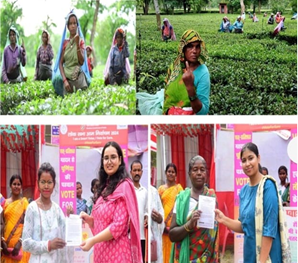
 The Election Commission of India has taken massive strides in ensuring inclusivity and accessibility in the General Elections 2024 to ensure that no eligible voter is deprived of their right to vote on account of physical or other barriers. So far, after the conclusion of 6 phases of elections, immense enthusiasm was seen amongst voters of various sections such as Persons with Disabilities, Senior Citizens, Transgenders, PVTGs. Facility for voting from the comfort of home for senior citizens above 85 years of age and PwDs with 40% benchmark disability was extended for the first time on pan India basis in General Elections 2024.


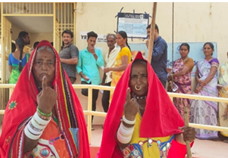
Lambada Tribe at Polling Station of Thiruvur Constituency, Shompen tribe of Great Nicobar voted for the first time in a General Election and Nishi Tribe in Arunachal Pradesh


The concerted efforts, throughout the country under the leadership of Chief Election Commissioner Shri Rajiv Kumar along with Election Commissioners Shri Gyanesh Kumar and Dr Sukhbir Singh Sandhu have seen many success stories from the States/UTs where election has been completed till the Phase 6 of the Lok Sabha Election – 2024. CEC Rajiv Kumar said “It has been the deep founded resolve of the Commission to strive for continuous improvement in the electoral processes setting new standards globally. ECI is determined to make the elections truly reflective of the spirit of plurality and diversity that is the pride of our country. ECI is dedicated to incorporating and deeply integrating the principles and practices of inclusivity and accessibility throughout the entire election process, setting an example before the society for replication everywhere.”
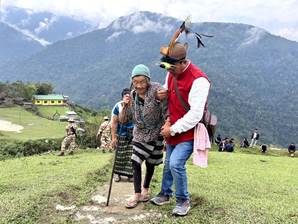
 

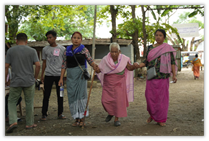
A senior citizen elector on the way to cast her vote in Arunachal Pradesh.


The preparations started two years back with concerted efforts of updation and registration of eligible citizens in the electoral rolls. This was achieved by conducting special registration drives, camps, targeting these categories of voters. ECI has adopted a multipronged strategy to enhance participation amongst communities which are prone to be deprived of their right to vote.

Optional home-voting facility: a first in India’s General Elections draws excellent response

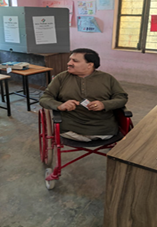
The optional home voting facility marks a paradigm shift in the electoral process and has been made available for the first time in the history of India’s general elections. Any eligible citizen aged 85 and above or with 40% benchmarked disability, can avail the provision of home voting facility through postal ballot in these elections. This facility has received an enthusiastic response from voters. Gratifying scenes of smiling voters and their testimonials voting from the comfort of their homes have flooded social media from all parts of the country. Voting from home takes place with involvement of a full contingent of polling staff and security personnel with secrecy of voting diligently maintained. Agents of candidates are also allowed to accompany polling teams to witness the process.

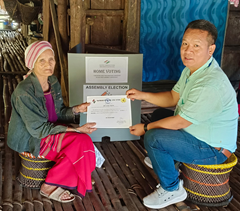
 

Smt. D. Padmavathi, 100 years of age, from Kovvuru Constituency and a Sr. Citizen elector from Arunachal Pradesh
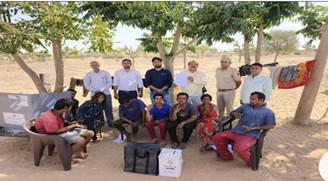
Eight PwD members of same family availing home facility in Churu, Rajasthan.

Bridging barriers: addressing infrastructural requirements for better participation

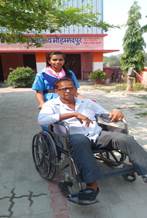
To bridge any infrastructural gaps, ECI ensured that every polling booth is on the ground floor, equipped with assured amenities including ramps, signages for voters, parking space, separate queues, and volunteers. Additionally, ECI’s SAKSHAM app has facilitated PwDs for availing various facilities at polling station like wheelchairs, pick-and-drop and volunteers services. There have been over 1.78 lakh downloads of the Saksham App since announcement of elections.

The Commission has also made provisions for Braille on EVMs, Braille enabled EPIC, and voter slips to assist visually impaired electors. Further, a Voter Guide for PwDs and Sr. Citizens, in English and Hindi, with information on the process of registration to poll day facilitation was made available.

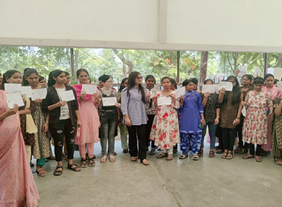
In Indore, Madhya Pradesh, 70 visually handicapped girls were assisted with free transportation to cast their vote.


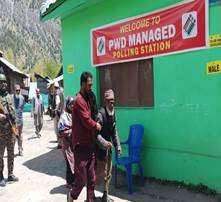
PwD managed PS in J&K


Photos: Braille-coded voter cards distributed to visually impaired electors  | Hindustan Times   

Braille enabled EPIC, Voter Guide, volunteer at a polling station in Bihar and provision of shamiyana at a polling station in Odisha


Inclusivity in spirit: removing psychological barriers to voting

Apart from eradicating physical barriers to voting, ECI also made efforts to address social barriers and stigma surrounding certain vulnerable populations like Transgenders, Sex workers, PVTGs to ensure their participation in election process. Special camps were arranged to enroll the third gender (TG) electors and other marginalized communities like sex workers and PVTGs by Thane District in collaboration with civil society. Over 48,260 TGs are enrolled all over the county, out of which Tamil Nadu has the highest number of third gender electors with 8467, followed by 6628 TGs in Uttar Pradesh and 5720 TGs in Maharashtra.

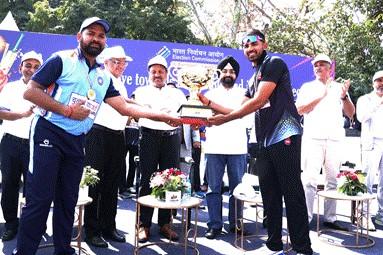
As part of SVEEP initiatives, Commission organized a T-20 Cricket Match on 16th March, 2024 between the IDCA (Indian Deaf Cricket Association) and DDCA (Delhi District Cricket Association) teams to create voter awareness among PwD electors and promote inclusive elections.
https://static.pib.gov.in/WriteReadData/userfiles/image/1BPQT.jpeg

Commission awarding the trophy to the winners at the T-20 Match


Efforts were made to the extent possible by the Commission, to set up at least one polling station in each AC, managed exclusively by PwD officials. For Lok Sabha Election -2024, approximately 2697 PwD managed Polling Stations have been set up across the country, with Uttar Pradesh setting up the highest PwD Manned Polling Stations i.e. 302.


Making registration and voting easy for vulnerable communities

The homeless and other nomadic groups are another critical demographic in achieving high electoral participation. Due to their unique circumstances, these individuals can experience unintentional electoral exclusion because of lack of proof of residency.  However, special efforts were made in the last two years for their enrolment as voters and also participation in the voting process. Location of new polling booths in previously inaccessible areas has led to the large-scale inclusion of PVTGs. In many States/UTs, where PVTGs reside in large numbers, free transportation facilities have been provided for enabling the PVTGs reach polling stations from remote areas. In a historic move, the Shompen tribe of Great Nicobar voted in the Lok Sabha Election -2024 for the first time.


Partnerships

To promote electoral awareness and instill a spirit of partnership and inclusion in the elections, ECI has designated eleven PwD individuals as “ECI Ambassadors” to involve the community further in the electoral process. Polling personnel were are also trained and sensitized regarding special needs of the PwDs to develop a sense of participation and ownership in the elections. State CEOs also collaborated with State Disability and health departments of the concerned states for providing better facilitation to PwDs and Senior Citizens.
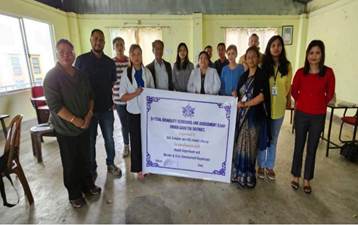
Camps organized in Gangtok by DEO in collaboration with Women & Child Development and Health Department

Also, a team of ECI officials visited Thane District and Kamathipura in Mumbai City to have an open dialogue with the Transgender and Female Sex workers, residing in these areas, to better understand the challenges faced by them in electoral participation, sensitizing the field machinery towards these electors and to encourage these voters to ensure their participation during the Lok Sabha Election-2024.
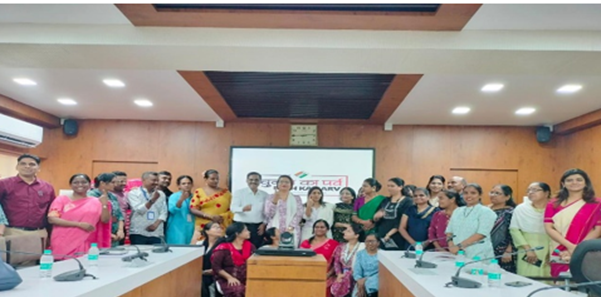
ECI team with NGOs/CSOs and TG community in Thane District and encouraging them to ensure 100% participation in the Lok Sabha Election.


The Commission also appointed Ms. Sheetal Devi, Arjuna Awardee and Para Archer, as the ECI National Icon, to motivate the PwD electors to exercise their franchise in the Lok Sabha Election-2024. Also, eleven prominent PwD personalities have been appointed as Ambassadors of ECI for taking part in various voter awareness initiatives of ECI and reaching out to PwD electors. Moreover, the Commission has also appointed State PwD Icons for the States/UTs.

https://www.newsonair.gov.in/wp-content/uploads/2024/03/para.jpg

Ms. Sheetal Devi, National PwD Icon, ECI


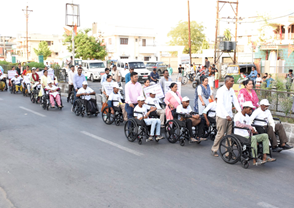
In Mehsana district in Gujarat, a wheelchair rally

was organized by PwD electors to create awareness

An extensive campaign including “Matdata appeal patra” was launched to enhance PVTG participation in the ongoing elections.

Reaching out to the last mile electors

The Commission is committed in ensuring that “no voter is left behind” and has taken special measures to reach out to the electors residing in the remotest corners of the county. For example, a polling station was set up in a shipping container in Aliabet in Gujarat to reach out to the tribal electors residing in this area. Similarly, voters from 102 villages in Bastar and Kanker PCs in Chhattisgarh cast their vote in a polling booth set up in their own village for the first time in a Lok Sabha Election.
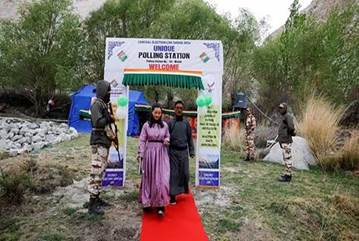
Polling station for just five members of a family in a remote village of Warshi in Leh district, Ladakh


Further, in a major decision to facilitate voting by Kashmiri migrants in the ongoing General Elections 2024, ECI abolished the cumbersome procedure of filling Form-M for the displaced people from the valley who are residing in Jammu and Udhampur. Additionally, for the migrants residing outside Jammu and Udhampur (who will continue to submit Form M), ECI has authorized the self-attestation of the certificate appended with Form-M, thus removing the hassle of getting this certificate attested by the Gazetted Officer. The Commission has enabled Kashmiri migrant voters residing at various relief camps in Delhi, Jammu, and Udhampur to also have the option of voting in person at designated special polling stations or using postal ballot. 21 Special Polling Stations were established at Jammu, 1 at Udhampur and 4 at Delhi.
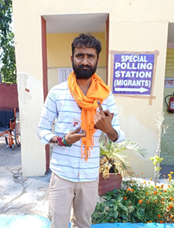

  

Kashmiri migrants casting their vote at Special Polling Stations


Similarly, to ensure voting rights for internally displaced persons (IDPs) in Manipur, 94 Special Polling Stations (SPS) were set up in 10 districts for (IDPs). One SPS was set up in Tengnoupal district for a single voter. Poll was conducted under webcasting/videography and displaced persons staying outside relief camps could also opt to vote at SPS.
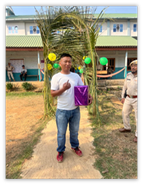
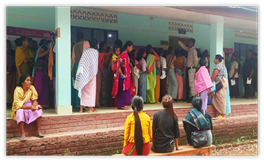


IDP in Manipur casting their vote at Special Polling Stations

******

Summer Training: A Crucial Step Towards Professional Development

 Summer training programs have become an integral part of the educational journey for students and young professionals. These programs, often organized during the summer break, provide hands-on experience and practical knowledge in various fields. Whether it’s engineering, management, healthcare, or any other discipline, summer training plays a pivotal role in bridging the gap between theoretical knowledge and practical application.

Importance of Summer Training

  1. Practical Experience: One of the most significant benefits of summer training is the practical experience it offers. Students get to apply what they have learned in their classrooms to real-world scenarios, which enhances their understanding and retention of the subject matter.

  2. Skill Development: Summer training programs focus on developing specific skills that are crucial in the professional world. This includes technical skills, such as programming or laboratory techniques, as well as soft skills like communication, teamwork, and problem-solving.

  3. Industry Exposure: These programs provide students with exposure to the industry they wish to enter. This exposure helps them understand the working environment, industry standards, and expectations, which is invaluable when they start their careers.

  4. Networking Opportunities: During summer training, students meet professionals, mentors, and peers who can be valuable contacts in their future careers. Networking can lead to job opportunities, collaborations, and guidance from experienced professionals.

  5. Enhancing Resume: A summer training experience adds significant value to a resume. Employers often look for candidates with practical experience, and having completed a summer training program can make a candidate stand out from the crowd.

  6. Career Clarification: For many students, summer training is a time of exploration. It allows them to experience different aspects of a field, helping them decide which area they are most passionate about and would like to pursue further.

Components of an Effective Summer Training Program

  1. Structured Curriculum: A well-structured curriculum that covers both theoretical and practical aspects is crucial. It should be designed to meet the specific needs of the industry and the participants.

  2. Experienced Trainers: The quality of training largely depends on the trainers. Experienced professionals who can share their knowledge and real-world experiences can significantly enhance the learning experience.

  3. Hands-on Projects: Practical projects that mimic real-world challenges are essential. They allow participants to apply their knowledge and develop problem-solving skills.

  4. Feedback and Assessment: Regular feedback and assessments help participants understand their strengths and areas for improvement. This can guide their learning process and ensure continuous improvement.

  5. Certification: A recognized certification upon completion of the training program adds credibility and can be a valuable addition to the participant’s credentials.

Choosing the Right Summer Training Program

When selecting a summer training program, it’s essential to consider the following factors:

  1. Relevance to Career Goals: Choose a program that aligns with your career aspirations and interests.

  2. Reputation of the Training Provider: Research the reputation of the organization offering the training. Look for reviews, testimonials, and the success rate of previous participants.

  3. Curriculum and Trainers: Ensure the curriculum is comprehensive and the trainers are experienced professionals in the field.

  4. Hands-on Experience: The program should offer ample opportunities for hands-on experience and practical learning.

  5. Duration and Timing: The duration of the program should be manageable within your summer break, and the schedule should allow for a balance between training and personal time.

Conclusion

Summer training is an invaluable opportunity for students and young professionals to gain practical experience, develop skills, and build a network within their chosen industry. By providing a bridge between academic knowledge and professional application, these programs play a crucial role in shaping the future workforce. Whether you are a student looking to enhance your resume or a young professional aiming to gain deeper industry insights, participating in a summer training program can be a significant step towards achieving your career goals.