Top Questions to Ask When Hiring a Car Accident Lawyer

Hiring the right car accident lawyer can be crucial for securing the compensation you deserve. This is because navigating the aftermath of a car accident can be stressful, especially when you are dealing with injuries and vehicle damage. Therefore, you must choose a lawyer who understands your situation and has the expertise to handle your case effectively. You can find the best lawyer by asking the right questions during your initial consultation. Here is a list of questions to help you get started.

Alt: A crashed car.

Do You Have the Experience of Negotiating with the Insurance Company?

One of the first questions to address is whether the lawyer has experience with the insurance company handling your case. Each insurance company operates with its unique strategies, often aiming to minimize payout. A lawyer familiar with these tactics can anticipate and counter them, ensuring you receive fair compensation.

For instance, if you’ve had a car accident in Alabama, finding an auburn car accident attorney who regularly deals with the insurance companies in the state can streamline the process and reduce the time spent negotiating settlements.

Will You Personally Handle My Case?

In some law firms, the senior lawyers conduct the initial interviews but delegate the actual work to junior associates. Clarify whether your preferred attorney will manage your case from start to finish. If the work will be shared, inquire about the specific roles and expertise of their colleagues.

Do You Have the Resources and Capacity to Handle My Case?

It’s important to understand whether an auto accident attorney has the resources to handle your case efficiently. Car accident cases often require thorough investigation, which may include visiting the accident scene, interviewing witnesses, and collecting detailed evidence. Ensure the lawyer or law firm has enough staff and the capability to dedicate the necessary time and resources to your case. Delays caused by an overburdened lawyer can hinder your case progress and prolong your stress.

Is Your Firm Recognized in the State?

The lawyer’s reputation and recognition in the legal field also play a vital role. A lawyer with a solid track record and positive reputation is more likely to handle your case proficiently. Reputable lawyers are often known for their competence and success in the courtroom and in negotiations, which can be advantageous for your case. To gauge a lawyer’s reputation, you can ask for references or look up reviews and testimonials from previous clients.

Can You Maintain Clear Communication at All Times?

Finally, ask about the lawyer’s approach to communication. Effective communication is essential for keeping you informed about your case’s progress. Find out how often you can expect updates and through which channels – whether via phone, email, or in-person meetings. Establishing confidence and ensuring that you are always informed of significant developments are both facilitated by communication that is both clear and consistent. It will be easier for you to select a lawyer who is not just knowledgeable but also committed to reaching the most favourable conclusion possible for your case if you follow these steps.

What Are the Possible Defenses to Assault Charges in Georgetown?

Those who suffer assaults experience physical attacks from or the threat of being attacked by other people. This experience may involve being punched, shoved, kicked, or pushed, and can even include weapons like blunt objects and guns. Assault charges are in different ways. They can include sexual assault or rape, grievous bodily harm, actual bodily harm, domestic violence, relationship abuse, hate crime, and so on. Each of these has legal consequences and can impact your life significantly. It can affect your relationships (personal or professional), tarnish your reputation, and lead to huge financial expenses and losses. When faced with assault charges, different possible defenses can boost your chances of getting a favorable result. Below is the detailed information about these defenses.

Alt: Assaulted Woman with Tape on Mouth

Self-Defense

Are you charged with assault? You may have a favorable outcome if you claim you acted in self-defense. The outcome may be that the case will be dismissed or your charges will be reduced. However, two conditions must be met for your claim to be accepted. The first is that the force of defense must be reasonable, and the second is that the cause of the attack should not be because you provoke the accused party. Moreover, you must prove that your self-defense was triggered because of imminent danger. You need to consult an experienced Georgetown assault lawyer to help you navigate how to present a highly convincing case.

Defense of Others or Property

You can claim that assault charges were due to the defense of others. This claim can only be valid in a court of law if you and your attorney can prove that your actions were due to imminent danger and that protecting others requires the use of force. If the case involves property, you need to prove that reasonable force is used for protection against theft or damage. Whereas, the force and the threat posed must be proportional.

Prevention Due to Mental State

For the defense, proving that the cause of actions was due to the lack of mental state, an experienced assault lawyer will be needed as soon as possible. The reason for this is to prove that the state of your mental health when the offense was committed inhibited you from forming the appropriate intent, leading to the assault. 

Consent

Are you involved in a sexual assault or other physical contact cases? You can use consent as a defense to the charges. The success of the case depends on how well your criminal defense lawyer can prove that the alleged affected party gave informed and explicit consent to the act. This defense may be invalid if the alleged victim could not give consent because of several factors, including mental state, age, and so on.

Coercion

Sometimes, your safety or the safety of those around you may be threatened. If you act based on this, you can claim that the assault was because you were forced or threatened with danger. But your criminal defense attorney must prove that the coercion was immediate and that your action was the only reasonable option you had.

Government has taken various initiatives to promote entrepreneurship across various sections of the society including Scheduled Castes and Scheduled Tribes across the Country

 The Government has taken various initiatives to promote entrepreneurship across various sections of the society including Scheduled Castes (SCs) and Scheduled Tribes (STs) across the Country including the State of Tamil Nadu. The details of the various initiatives taken by Ministries/Departments of the Government to promote entrepreneurship are as under:

1.    Department of Financial Services – Pradhan Mantri Mudra Yojana (PMMY) was launched on 08.04.2015 to extend collateral free credit up to Rs.10 lakh by Member Lending Institutions (MLIs), i.e., Scheduled Commercial Banks (SCBs), Non-Banking Financial Companies (NBFCs) and Micro Finance Institutions (MFIs). Any individual, who is otherwise eligible to take a loan and has a business plan for small business enterprise can avail loan under the Scheme for income generating activities in the manufacturing, trading, service sectors including activities allied to agriculture across three loan categories, viz. Shishu (loans up to Rs. 50,000/-), Kishor (loans above Rs. 50,000/- and up to Rs. 5 lakh) and Tarun (loans above Rs. 5 lakh and up to Rs. 10 lakh). As on June 2024, a total of 48.78 crore loans have been extended under PMMY, since inception of the Scheme, out of which 5.55 crore loans have been sanctioned in the State of Tamil Nadu.

           Stand-Up India (SUI) Scheme launched on 05.04.2016 has been extended up to the year 2025. The objective of the Scheme is to facilitate loans from Scheduled Commercial Banks (SCBs) of value between Rs. 10 lakh and Rs. 1 crore to at least one Scheduled Caste (SC) or Scheduled Tribe (ST) borrower and one Women borrower per bank branch for setting up greenfield enterprise in manufacturing, services or trading sector including activities allied to agriculture. The Stand Up India scheme has facilitated over 2.35 lakh loans to SC/ST and Women entrepreneurs across the country, out of which a total of 0.22 lakh loans have been sanctioned in the State of Tamil Nadu as on June 2024.

         The District-wise number of loans sanctioned to SC/ST entrepreneurs during last five years in the State of Tamil Nadu under PMMY and SUPI is at Annexure-I.

2.         Ministry of Electronics and Information Technology (MEITY) – Start-ups, Innovation & IPR Division under the Ministry of Electronics and Information Technology has initiated various startup centric programmes/scheme to encourage the innovation led startup ecosystem to develop indigenous products in ICT domain pan India basis including startups led by Scheduled Castes and Scheduled Tribes in Tamil Nadu State. These initiatives are for the promotion of startups and entrepreneurs irrespective of caste and applicable for SC and ST also. Some of the major initiatives have been elucidated here:

(i) TIDE 2.0 Scheme: Technology Incubation and Development of Entrepreneurs (TIDE 2.0) Scheme was initiated in the year 2019 to promote tech entrepreneurship through financial and technical support to incubators engaged in supporting ICT startups using emerging technologies such as IoT, AI, Block-chain, Robotics etc.  The scheme aims to provide comprehensive support to tech-startups in seven thematic areas of National concern by leveraging emerging technologies. The supported thematic areas are Healthcare, Education, Agriculture, Financial inclusion (including digital payments), Infrastructure and Transportation and Environment  and Clean Tech. The Scheme is being implemented through 51 incubators through a three tiered structure with an overarching objective to promote incubation activities at institutes of higher learning and premier R&D organisations. The scheme is envisaged to provide incubation support to approximately 2000 tech start-ups over a period of five years. Under TIDE 2.0 Scheme, following 6 incubation centre are functioning as TIDE 2.0 centre in the State of Tamil Nadu:

Sl. No.

Name of TIDE 2.0 Centre

Centre belongs to District

Start-ups supported

  1.  

FORGE Accelerator (Coimbatore Innovation Business Incubator), Coimbatore

Coimbatore

32

  1.  

PSG Science and Technology Entrepreneurial Park (PSG-STEP), PSG College of Technology, Coimbatore

Coimbatore

26

  1.  

IITM Incubation Cell (IIT Madras Incubation Cell), Chennai

Chennai

38

  1.  

Vellore Institute of Technology-Technology Business Incubator (VITTBI), Tiruchirapalli

Tiruchirapalli

38

  1.  

OASYS Institute of Technology, Anna University, Tiruchirapalli

Tiruchirapalli

11

  1.  

Vel Tech Technology Business Incubator, Vel Tech Institute of Science and Technology, Tiruvallur

Tiruvallur

18


(ii)    FinBlue – FinTechCoE – FinTech Centre of Excellence set-up at Software Technology Parks of India (STPI) Chennai for supporting the FinTech Start-ups with a target beneficiary of 58 startups over a period of 5 years with budget outlay of Rs. 11.13 Crore. The CoE is supported by MeitY, Government of India, Government of Tamil Nadu and STPI.

3.  Ministry of Micro Small and Medium Enterprises (MSME), through Khadi and Village Industries Commission (KVIC), is implementing Prime Minister’s Employment Generation Programme (PMEGP) for assisting entrepreneurs in setting up of new enterprises in the non-farm sector. It aims to provide employment opportunities to traditional artisans/ rural and urban unemployed youth at their doorstep. PMEGP being a Central Sector Scheme assists General Category beneficiaries with Margin Money (MM) subsidy of 25% of the project cost in rural areas and 15% in urban areas.  For beneficiaries belonging to Special Categories such as Scheduled Castes, Scheduled Tribes, OBCs, MinoritiesWomen, Ex-servicemen, Physically Handicapped, Transgenders, beneficiaries belonging to Northeastern Region, Hill and Border areas, and Aspirational Districts, the Margin Money subsidy is 35% in rural areas and 25% in urban areas. The maximum cost of project is Rs. 50 lakhs in the manufacturing sector and Rs. 20 lakhs in the service sector. Also, own contribution of beneficiaries under Special Category including women is 05% and 10% for General Category beneficiaries. Since 2018-19, existing PMEGP/REGP/MUDRA enterprises are also supported based on past good performances with 2nd loan for upgradation and expansion. Under 2nd Loan, maximum project cost admissible for Margin Money (MM) subsidy under Manufacturing sector is Rs. 1.00 crore and for Service sector is Rs. 25 Lakhs. Eligible subsidy on 2nd loan for all categories is 15% of project cost (20% for NER & Hill States). Since inception i.e., FY 2008-09, more than 9.69 lakh micro enterprises have been assisted with Margin Money subsidy of more than Rs 25,500 Crore providing employment to an estimated ~79 lakh persons. Approximately, 50% of the units are set up by SC/ST/Women and 80% of the units are set up in rural area. During the next 2 years FY (2024-25 to 2025-26), Ministry has a target to set-up 1.6 lakh new enterprises with employment generation potential for 12.8 lakh persons.

The total number of PMEGP Units Assisted and estimated employment generated under SC and ST category throughout the country for the last 5 years is at Annexure-II.

The total number of PMEGP Units Assisted and estimated employment generated under SC and ST category in Tamil Nadu District-wise for the last 5 years is at Annexure-III.

4.         Ministry of Agriculture and Farmers Welfare (MoA&FW) – Agri-Clinics and Agri-Business Centres (AC&ABC) Scheme: Under the scheme, Agriculture Extension of umbrella scheme  Krishonnati Yojana of Department of Agriculture & Farmers Welfare, Ministry of Agriculture & Farmers Welfare, Government of India, Extension Division is implementing a Central Sector component, “Establishment of Agri-Clinics and Agri-Business Centres (AC&ABC)” since April, 2002 to supplement the efforts of public extension, support agricultural development and create gainful self-employment opportunities to unemployed youths with qualification in agriculture and allied sectors. The National Institute of Agricultural Extension Management (MANAGE), Hyderabad is the implementing agency for Training Component and National Bank for Agriculture and Rural Development (NABARD) is the implementing agency for Subsidy Component of AC&ABC programme. MANAGE implement, through selected Nodal Training Institutes (NTIs) under MoU with MANAGE, in various parts of the country

There is a provision of credit linked back-ended upfront composite subsidy on the bank loan availed by trained candidates under the programme. The subsidy is 44% in respect of women, SC/ST and all categories of candidates from North-Eastern and Hill States and 36% in respect of other categories. The subsidy is admissible for loans up to Rs.20 lakhs in case of individual and Rs.100 lakhs in case of Group Projects (for ventures set up by a group of 5 trained candidates).

5.         Department of Science and Technology (DST) – In order to support young innovators and entrepreneurs through NIDHI-Technology Business Incubator (TBI), NIDHI-inclusive Technology Business Incubator (iTBI) program, Department of Science and Technology (DST) has established startup incubation centres in metropolitan cities, Tier-II and Tier-III cities in various parts of the country including Tamil Nadu. Through these centres, mentoring and financial support is provided to startups for development of prototype/products in order to promote youth from Tier-II and Tier-III cities, irrespective of their social status.

6.         Ministry of Rural Development – Start-up Village Entrepreneurship Programme (SVEP), the sub-scheme under the DAY-NRLM programme supports the Self-Help Group (SHG) or their family members to set-up small enterprises in the non-farm sector. SVEP is Implemented across 31 states and UTs, with 358 project proposals approved, 235 DPRs sanctioned, and support extended to 2.98 lakh enterprises. However, the scheme does not specifically focus on the SC/ST population. The SVEP is approved in 10 Blocks in the State of Tamil Nadu. The details are as under:

Sl No.

State

District

Block

1

Tamil Nadu

Kanchipuram

Thiruporur

2

Tamil Nadu

Madurai

Thirumangalam

3

Tamil Nadu

Namakkal

Rasipuram & Vennandur (2)

4

Tamil Nadu

Villupuram

Ulundurpet

5

Tamil Nadu

Kallakurichi

Chinnasalem

6

Tamil Nadu

Thoothukudi

Kovilpatti

7

Tamil Nadu

Madurai

Sedapatti

8

Tamil Nadu

Chengalpet

Acharapakkam

9

Tamil Nadu

Trichy

Pullampadi

10

Tamil Nadu

Virudhunagar

Vembakottai


The District/Block wise SC/ST entrepreneurs supported in the state of Tamil Nadu under SVEP are as under:

Sl No.

District

Block

Total SC entrepreneurs

Total ST entrepreneurs

1

Chengalpattu

Thiruporur

1112

24

2

Kallakurichi

Ulundurpet

443

0

3

Madurai

Tirumanagalam

30

0

4

Namakkal

Rasipuram and Vennadur

55

0


1,640

24


7.         Department for Promotion of Industry and Internal Trade (DPIIT) – The Government with an intent to build a strong ecosystem for nurturing innovation and encouraging investments launched the Startup India initiative on 16th January 2016. For attaining specific objectives, various programs are implemented by the Government under the Startup India initiative. All the steps undertaken by the Government under the initiative are inclusive and are implemented across States/Union Territories (UTs), cities, towns, and rural areas, including the State of Tamil Nadu. The details of such Government initiatives are placed as Annexure-IV.

8.    Ministry of Food Processing Industries (MoFPI) is implementing a Centrally Sponsored Scheme namely Pradhan Mantri Formalization of Micro Food Processing Enterprises (PMFME) that is designed to address the challenges faced by the micro enterprises and to tap the potential of groups and cooperatives in supporting the upgradation and formalization of these enterprises. The Scheme has a Capacity Building component, which envisages providing 24 Hours/ 3 Days, Food Processing EDP (Entrepreneurship Development Programme) Training for, all applicants viz individuals and Groups(SHGs/ FPOs/ Cooperatives) recommended for availing credit linked grant by District Level Committee (DLC) and 8 hours/1 day training to SHG beneficiaries of Seed Capital under PMFME scheme engaged in micro food processing. The details of SC/ST beneficiaries of Tamil Nadu State trained under this capacity building component are as under:
(i) The total number of SC and ST entrepreneurs who have got the loan sanctioned
under PMFME Scheme for setting up of processing units during the last 4 years for the state of Tamil Nadu are as under:

Sl No.

Category

SC

ST

1

DLC Beneficiaries

1583

110

2

Seed Capital Beneficiaries (SHG Members)

1760 (Individual), 362 (Group)

1 (Activity Group)

62 (Individual)

13 (Group)

  1. Seed Capital benefits received by SC/ST beneficiaries in Mayiladuthurai and Thanjavur Districts of Tamil Nadu under the above component of the Scheme are as under:

Sl. No.

Districts

Seed Capital Category (SHG Members)

SC

ST

1

Mayiladuthurai

Individual

13

1

2

Thanjavur

Individual

45

0


9.         Ministry of Skill Development and Entrepreneurship (MSDE) through National Institute for Entrepreneurship and Small Business Development (NIESBUD) has been working for the empowerment, upliftment and development of entrepreneurs including Scheduled Castes (SCs) and Scheduled Tribes (STs) across the country including the State of Tamil Nadu. The details of the initiatives taken are as under:

(i)      NIESBUD has implemented Skill Acquisition and Knowledge Awareness of Livelihood Promotion (SANKALP) Programme of MSDE for strengthening the entrepreneurship ecosystem across different sections of the society including marginalized population. A total number of 90 SC/ST participants have been trained through the project in Tamil Nadu. The District wise details as is under:

State

District

SC

ST

Tamil Nadu

Madurai

6

2

Chennai

10

0

Madurai

38

1

Villupuram

19

1

Sivaganga

2

0

Thrivallur

11

0

Total

86

4

Grand Total

90


(ii)   NIESBUD implemented a project for creating entrepreneurial climate through Training of Trainers and Entrepreneurship Development Programme in Jan Shikshan Sansthan (JSS). The District wise details of SC/ST beneficiaries in Tamil Nadu under the project are as under:

State

District

SC

ST

Tamil Nadu

Chennai

8

1

Madurai

31

1

Salem

68

11

Total

107

13

Grand Total

120


(iii) STRIVE Project – Under the Skill Strengthening for Industrial Value Enhancement (STRIVE) project of MSDE, NIESBUD is conducting Entrepreneurship Awareness, Entrepreneurship Development Programme, Mentoring, and Handholding of trainees (and future trainers) in Industrial Training Institute (ITIs) and National Skill Training Institute (NSTIs). A total number of 456 participants have been trained under the Strive Project in Tamil Nadu. The District wise details are as under

State

District

SC

ST

Tamil Nadu

Chennai

18

79

Gadag

199

121

Tumakaru

14

25

Total

231

225

Grand Total

456


(iv) PMJANMAN – The Hon’ble Prime Minister launched the Pradhan Mantri Janjati Adivasi Nyaya Maha Abhiyan (PM-JANMAN), a Scheme of Ministry of Tribal Affairs (MoTA) on Janjatiya Gaurav Divas on 15th November, 2023 at Khunti District of Jharkhand. The Mission is aimed at targeted development of 75 Particularly Vulnerable Tribal Groups (PVTGs) residing in 18 States including 1 Union Territory. These communities had been by and large left out of the schemes/interventions of Ministries/Departments, and therefore require multi-sectoral handholding through this Mission. The scheme focuses on 11 critical interventions related to 9 key Ministries including Ministry of Skill Development and Entrepreneurship, in about 22,000 villages in 200 districts. One of the key interventions in the mission is facilitating skill and vocational training in PVTG habitations, multipurpose centres, tribal hostels, training skilling, entrepreneurship developments of Van Dhan Vikas Kendra as per the suitable skills of these communities. A total number of 627 participants have been trained under the PMJANMAN Project in Tamil Nadu. The District-wise details are as under:

State

District

PVTG

Tamil Nadu

Ariyalur

305

Chengalpattu

170

Coimbatore

46

Namakkal

2

The Nilgiris

104

Total

627


Annexure-I

The District-wise number of loans sanctioned to SC/ST entrepreneurs during last five years in the State of Tamil Nadu under PMMY and SUPI is

as under:


Sl.  No.

District Name

Pradhan Mantri Mudra Yojana (PMMY)

 Stand Up India Scheme (SUPI)

SC

ST

SC

ST

1

Ariyalur

23,055

3,259

0

0

2

Chengalpattu

40,888

3,907

9

0

3

Chennai

202,755

15,654

489

13

4

Coimbatore

53,630

9,473

178

10

5

Cuddalore

177,717

27,622

51

7

6

Dharmapuri

53,923

6,558

33

4

7

Dindigul

38,988

3,868

66

35

8

Erode

64,625

8,440

88

3

9

Kallakurichi

22,189

1,492

2

0

10

Kanchipuram

152,231

49,981

121

4

11

Kanniyakumari

30,216

6,521

109

10

12

Karur

11,451

1,002

16

5

13

Krishnagiri

36,986

9,600

25

2

14

Madurai

40,125

5,194

207

17

15

Mayiladuthurai

14,018

259

12

0

16

Nagapattinam

93,179

4,478

18

0

17

Namakkal

68,657

9,934

35

8

18

Nilgiris

72,909

4,964

38

7

19

Perambalur

13,038

357

32

0

20

Pudukkottai

28,500

2,474

24

2

21

Ramanathapuram

30,522

4,721

21

2

22

Ranipet

14,346

655

0

0

23

Salem

78,152

13,670

114

8

24

Sivaganga

20,204

7,432

49

5

25

Tenkasi

6,127

789

1

0

26

Thanjavur

86,976

4,958

30

5

27

Theni

25,680

2,273

36

0

28

Thiruvallur

166,075

25,028

154

10

29

Thiruvarur

116,642

12,685

24

1

30

Tiruchirappalli

30,436

7,539

69

4

31

Tirunelveli

99,729

41,474

128

3

32

Tirupathur

50,888

9,624

10

0

33

Tiruppur

38,050

2,309

23

2

34

Tiruvannamalai

39,930

6,075

129

10

35

Tuticorin

101,860

33,488

48

8

36

Vellore

146,971

51,426

106

3

37

Villupuram

119,763

29,601

89

26

38

Virudhunagar

32,981

7,876

46

5

39

Other #

237,831

7,403

0

0

Total


2,682,243

444,063

2,630

219

# District-wise data for some of the NBFCs/ MFIs is not available.


Annexure-II

The total number of PMEGP Units Assisted and estimated employment generated under SC category throughout the country for the last 5 years is as under:

Sl. No.

State

2019-20

2020-21

2021-22

2022-23

2023-24

Units Assisted

Employment Generated

Units Assisted

Employment Generated

Units Assisted

Employment Generated

Units Assisted

Employment Generated

Units Assisted

Employment Generated

1

Andaman Nicobar

2

Andhra Pradesh

329

2,632

303

2,424

414

3,312

526

4,208

1,216

9,728

3

Arunachal Pradesh

1

8

1

8

4

Assam

207

1,656

191

1,528

207

1,656

115

920

109

872

5

Bihar

206

1,648

198

1,584

194

1,552

398

3,184

701

5,608

6

Chandigarh-Ut

2

16

1

8

7

56

2

16

1

8

7

Chhattisgarh

302

2,416

286

2,288

294

2,352

259

2,072

299

2,392

8

Dadra Nagar Haveli

9

Daman And  Diu

1

8

10

Delhi

15

120

7

56

7

56

6

48

6

48

11

Goa

5

40

3

24

1

8

12

Gujarat

263

2,104

189

1,512

313

2,504

243

1,944

274

2,192

13

Haryana

409

3,272

296

2,368

307

2,456

298

2,384

250

2,000

14

Himachal Pradesh

387

3,096

416

3,328

427

3,416

304

2,432

343

2,744

15

Jammu Kashmir

254

2,032

229

1,832

537

4,296

374

2,992

658

5,264

16

Jharkhand

107

856

99

792

92

736

115

920

130

1,040

17

Karnataka

629

5,032

808

6,464

1,146

9,168

1,063

8,504

877

7,016

18

Kerala

164

1,312

152

1,216

169

1,352

245

1,960

292

2,336

19

Ladakh

1

8

1

8

2

16

20

Lakshadweep

21

Madhya Pradesh

132

1,056

447

3,576

921

7,368

725

5,800

653

5,224

22

Maharashtra

843

6,744

502

4,016

627

5,016

510

4,080

374

2,992

23

Manipur

20

160

27

216

16

128

9

72

4

32

24

Meghalaya

3

24

3

24

9

72

1

8

2

16

25

Mizoram

3

24

3

24

4

32

1

8

26

Nagaland

7

56

1

8

11

88

3

24

27

Odisha

277

2,216

313

2,504

393

3,144

320

2,560

248

1,984

28

Puducherry

13

104

8

64

16

128

5

40

6

48

29

Punjab

569

4,552

417

3,336

502

4,016

423

3,384

370

2,960

30

Rajasthan

340

2,720

266

2,128

238

1,904

140

1,120

92

736

31

Sikkim

7

56

5

40

7

56

1

8

6

48

32

Tamil Nadu

508

4,064

534

4,272

691

5,528

765

6,120

823

6,584

33

Telangana

301

2,408

328

2,624

449

3,592

354

2,832

347

2,776

34

Tripura

100

800

117

936

143

1,144

99

792

93

744

35

Uttar Pradesh

785

6,280

1,109

8,872

1,405

11,240

1,279

10,232

1,685

13,480

36

Uttarakhand

307

2,456

399

3,192

290

2,320

279

2,232

223

1,784

37

West Bengal

260

2,080

253

2,024

320

2,560

282

2,256

278

2,224


The total number of PMEGP Units Assisted and estimated employment generated under ST category throughout the country for the last 5 years is as under:

Sl. No.

State

2019-20

2020-21

2021-22

2022-23

2023-24

Units Assisted

Employment Generated

Units Assisted

Employment Generated

Units Assisted

Employment Generated

Units Assisted

Employment Generated

Units Assisted

Employment Generated

1

Andaman Nicobar

2

16

5

40

8

64

2

Andhra Pradesh

108

864

87

696

82

656

115

920

203

1,624

3

Arunachal Pradesh

158

1,264

89

712

196

1,568

155

1,240

166

1,328

4

Assam

421

3,368

353

2,824

474

3,792

310

2,480

271

2,168

5

Bihar

51

408

61

488

61

488

81

648

88

704

6

Chandigarh-Ut

7

Chhattisgarh

323

2,584

273

2,184

320

2,560

267

2,136

212

1,696

8

Dadra Nagar Haveli

6

48

2

16

1

8

1

8

9

Daman And  Diu

2

16

10

Delhi

1

8

11

Goa

2

16

4

32

2

16

1

8

3

24

12

Gujarat

120

960

142

1,136

171

1,368

127

1,016

94

752

13

Haryana

3

24

1

8

2

16

2

16

14

Himachal Pradesh

117

936

107

856

171

1,368

128

1,024

107

856

15

Jammu Kashmir

83

664

73

584

226

1,808

175

1,400

235

1,880

16

Jharkhand

149

1,192

130

1,040

162

1,296

167

1,336

206

1,648

17

Karnataka

169

1,352

188

1,504

307

2,456

305

2,440

286

2,288

18

Kerala

12

96

6

48

19

152

16

128

13

104

19

Ladakh

303

2,424

271

2,168

292

2,336

90

720

117

936

20

Lakshadweep

2

16

7

56

2

16

21

Madhya Pradesh

78

624

256

2,048

567

4,536

466

3,728

368

2,944

22

Maharashtra

112

896

92

736

113

904

91

728

79

632

23

Manipur

610

4,880

548

4,384

403

3,224

211

1,688

140

1,120

24

Meghalaya

348

2,784

315

2,520

581

4,648

272

2,176

259

2,072

25

Mizoram

756

6,048

805

6,440

645

5,160

410

3,280

401

3,208

26

Nagaland

1,102

8,816

739

5,912

1,228

9,824

469

3,752

513

4,104

27

Odisha

122

976

115

920

214

1,712

169

1,352

94

752

28

Puducherry

29

Punjab

3

24

1

8

1

8

30

Rajasthan

266

2,128

227

1,816

236

1,888

170

1,360

121

968

31

Sikkim

27

216

25

200

38

304

34

272

68

544

32

Tamil Nadu

20

160

42

336

63

504

31

248

48

384

33

Telangana

267

2,136

235

1,880

319

2,552

352

2,816

387

3,096

34

Tripura

197

1,576

192

1,536

215

1,720

147

1,176

116

928

35

Uttar Pradesh

18

144

27

216

28

224

27

216

31

248

36

Uttarakhand

52

416

56

448

62

496

40

320

38

304

37

West Bengal

22

176

21

168

12

96

19

152

13

104


Annexure-III

The total number of PMEGP Units Assisted and estimated employment generated under SC category in Tamil Nadu District-wise for the last 5 years is as under:

Sl. No.

District

2019-20

2020-21

2021-22

2022-23

2023-24

Units Assisted

Employment Generated

Units Assisted

Employment Generated

Units Assisted

Employment Generated

Units Assisted

Employment Generated

Units Assisted

Employment Generated

1

Ariyalur

11

88

11

88

8

64

7

56

5

40

2

Chengalpet

0

0

13

104

21

168

22

176

24

192

3

Chennai

16

128

17

136

42

336

25

200

27

216

4

Coimbatore

14

112

12

96

5

40

21

168

15

120

5

Cuddalore

14

112

14

112

34

272

30

240

18

144

6

Dharmapuri

9

72

17

136

7

56

6

48

10

80

7

Dindigul

17

136

18

144

20

160

21

168

17

136

8

Erode

8

64

17

136

8

64

9

72

18

144

9

Kallakurichi

0

0

4

32

10

80

19

152

34

272

10

Kanchipuram

15

120

20

160

23

184

28

224

20

160

11

Kanniyakumari

2

16

1

8

5

40

3

24

3

24

12

Karur

7

56

8

64

14

112

33

264

16

128

13

Krishnagiri

9

72

7

56

11

88

13

104

6

48

14

Madurai

15

120

25

200

24

192

31

248

34

272

15

Mayiladuthurai

0

0

0

0

3

24

49

392

29

232

16

Nagapattinam

24

192

37

296

31

248

25

200

14

112

17

Namakkal

8

64

17

136

24

192

23

184

39

312

18

Nilgiris

7

56

12

96

12

96

18

144

13

104

19

Perambalur

8

64

15

120

16

128

19

152

14

112

20

Pudukottai

15

120

26

208

28

224

32

256

18

144

21

Ramanathapuam

7

56

6

48

8

64

7

56

10

80

22

Ranipet

0

0

0

0

8

64

20

160

20

160

23

Salem

7

56

19

152

18

144

25

200

13

104

24

Sivagangai

13

104

14

112

10

80

13

104

3

24

25

Tenkasi

0

0

4

32

4

32

11

88

19

152

26

Thanjavur

44

352

34

272

61

488

51

408

85

680

27

Theni

15

120

9

72

6

48

10

80

15

120

28

Thiruchirappalli

19

152

17

136

12

96

12

96

21

168

29

Thiruvallore

57

456

29

232

47

376

41

328

46

368

30

Thiruvarur

35

280

28

224

44

352

29

232

31

248

31

Thoothukudi(Tuticorin)

17

136

12

96

22

176

21

168

22

176

32

Tirunelveli

18

144

13

104

19

152

12

96

16

128

33

Tirupattur

0

0

2

16

22

176

3

24

16

128

34

Tirupur

5

40

4

32

8

64

9

72

16

128

35

Tiruvannamalai

17

136

18

144

12

96

20

160

17

136

36

Vellore

24

192

13

104

9

72

11

88

37

296

37

Villupuram

19

152

18

144

21

168

19

152

27

216

38

Virudhunagar

12

96

3

24

14

112

17

136

35

280


The total number of PMEGP Units Assisted and estimated employment generated under ST category in Tamil Nadu District-wise for the last 5 years is as under:

Sl. No.

District

2019-20

2020-21

2021-22

2022-23

2023-24

Units Assisted

Employment Generated

Units Assisted

Employment Generated

Units Assisted

Employment Generated

Units Assisted

Employment Generated

Units Assisted

Employment Generated

1

Ariyalur

0

0

0

0

0

0

0

0

0

0

2

Chengalpet

0

0

1

8

0

0

0

0

1

8

3

Chennai

0

0

0

0

1

8

0

0

0

0

4

Coimbatore

0

0

0

0

0

0

0

0

0

0

5

Cuddalore

0

0

0

0

1

8

1

8

1

8

6

Dharmapuri

0

0

1

8

1

8

3

24

0

0

7

Dindigul

0

0

0

0

0

0

1

8

0

0

8

Erode

0

0

0

0

1

8

0

0

0

0

9

Kallakurichi

0

0

1

8

0

0

0

0

0

0

10

Kanchipuram

0

0

2

16

17

136

2

16

22

176

11

Kanniyakumari

0

0

0

0

1

8

1

8

1

8

12

Karur

0

0

0

0

0

0

0

0

0

0

13

Krishnagiri

0

0

0

0

0

0

0

0

1

8

14

Madurai

1

8

0

0

0

0

0

0

0

0

15

Mayiladuthurai

0

0

0

0

0

0

1

8

1

8

16

Nagapattinam

2

16

0

0

1

8

1

8

0

0

17

Namakkal

0

0

0

0

0

0

0

0

3

24

18

Nilgiris

0

0

5

40

4

32

2

16

7

56

19

Perambalur

0

0

0

0

0

0

0

0

0

0

20

Pudukottai

1

8

1

8

0

0

0

0

0

0

21

Ramanathapuam

0

0

0

0

0

0

0

0

0

0

22

Ranipet

0

0

2

16

2

16

1

8

1

8

23

Salem

2

16

3

24

10

80

0

0

2

16

24

Sivagangai

0

0

0

0

0

0

0

0

0

0

25

Tenkasi

0

0

0

0

0

0

0

0

0

0

26

Thanjavur

0

0

0

0

0

0

0

0

0

0

27

Theni

0

0

0

0

0

0

0

0

1

8

28

Thiruchirappalli

0

0

0

0

0

0

3

24

0

0

29

Thiruvallore

0

0

0

0

1

8

1

8

0

0

30

Thiruvarur

3

24

0

0

0

0

1

8

0

0

31

Thoothukudi(Tuticorin)

0

0

0

0

0

0

0

0

0

0

32

Tirunelveli

0

0

0

0

0

0

5

40

0

0

33

Tirupattur

0

0

1

8

0

0

0

0

1

8

34

Tirupur

0

0

0

0

1

8

0

0

0

0

35

Tiruvannamalai

7

56

6

48

4

32

0

0

2

16

36

Vellore

3

24

12

96

13

104

6

48

4

32

37

Villupuram

1

8

7

56

5

40

2

16

0

0

38

Virudhunagar

0

0

0

0

0

0

0

0

0

0


Annexure-IV

The details of various programs undertaken by the Government to promote startups across the country are as under:

  1. Startup India Action Plan: An Action Plan for Startup India was unveiled on 16th January 2016. The Action Plan comprises of 19 action items spanning across areas such as “Simplification and handholding”, “Funding support and incentives” and “Industry-academia partnership and incubation”. The Action Plan laid the foundation of Government support, schemes and incentives envisaged to create a vibrant startup ecosystem in the country.
  2. Startup India: The Way Ahead: Startup India: The Way Ahead at 5 years celebration of Startup India was unveiled on 16th January 2021 which includes actionable plans for promotion of ease of doing business for startups, greater role of technology in executing various reforms, building capacities of stakeholders and enabling a digital Aatmanirbhar Bharat.
  3. Startup India Seed Fund Scheme (SISFS): Easy availability of capital is essential for entrepreneurs at the early stages of growth of an enterprise. The capital required at this stage often presents a make-or-break situation for startups with good business ideas. The Scheme aims to provide financial assistance to startups for proof of concept, prototype development, product trials, market entry and commercialization. Rs. 945 crore has been sanctioned under the SISFS Scheme for period of 4 years starting from 2021-22.
  4. Fund of Funds for Startups (FFS) Scheme: The Government has established FFS with corpus of Rs. 10,000 crore, to meet the funding needs of startups. DPIIT is the monitoring agency and Small Industries Development Bank of India (SIDBI) is the operating agency for FFS. The total corpus of Rs. 10,000 crore is envisaged to be provided over the 14th and 15th Finance Commission cycles based on progress of the scheme and availability of funds. It has not only made capital available for startups at early stage, seed stage and growth stage but also played a catalytic role in terms of facilitating raising of domestic capital, reducing dependence on foreign capital and encouraging home grown and new venture capital funds.
  5. Credit Guarantee Scheme for Startups (CGSS): The Government has established the Credit Guarantee Scheme for Startups for providing credit guarantees to loans extended to DPIIT recognized startups by Scheduled Commercial Banks, Non-Banking Financial Companies (NBFCs) and Venture Debt Funds (VDFs) under SEBI registered Alternative Investment Funds. CGSS is aimed at providing credit guarantee up to a specified limit against loans extended by Member Institutions (MIs) to finance eligible borrowers viz. DPIIT recognised startups.
  6. Regulatory Reforms: Over 55 regulatory reforms have been undertaken by the Government since 2016 to enhance ease of doing business, ease of raising capital and reduce compliance burden for the startup ecosystem.
  7. Ease of Procurement: To enable ease of procurement, Central Ministries/ Departments are directed to relax conditions of prior turnover and prior experience in public procurement for all DPIIT recognised startups subject to meeting quality and technical specifications. Further, Government e-Marketplace (GeM) also facilitates and promotes procurement of products and services by the Government from startups.
  8. Self-Certification under Labour and Environmental laws: Startups are allowed to self-certify their compliance under 9 Labour and 3 Environment laws for a period of 3 to 5 years from the date of incorporation.
  9. Income Tax Exemption for 3 years: Startups incorporated on or after 1st April 2016 can apply for income tax exemption. The recognized startups that are granted an Inter-Ministerial Board Certificate are exempted from income-tax for a period of 3 consecutive years out of 10 years since incorporation.
  10. Faster Exit for Startups: The Government has notified Startups as ‘fast track firms’ enabling them to wind up operations within 90 days vis-a-vis 180 days for other companies.
  11. Exemption for the Purpose Of Clause (VII)(b) of Sub-section (2) of Section 56 of the Act (2019): A DPIIT recognized startup is eligible for exemption from the provisions of section 56(2)(viib) of the Income Tax Act.
  12. Support for Intellectual Property Protection: Startups are eligible for fast-tracked patent application examination and disposal. The Government launched Start-ups Intellectual Property Protection (SIPP) which facilitates the startups to file applications for patents, designs and trademarks through registered facilitators in appropriate IP offices by paying only the statutory fees. Facilitators under this Scheme are responsible for providing general advisory on different IPRs, and information on protecting and promoting IPRs in other countries. The Government bears the entire fees of the facilitators for any number of patents, trademark or designs, and startups only bear the cost of the statutory fees payable. Startups are provided with an 80% rebate in filing of patents and 50% rebate in filling of trademark vis-a-vis other companies.
  13. Startup India Hub: The Government launched a Startup India Online Hub on 19th June 2017 which is one of its kind online platform for all stakeholders of the entrepreneurial ecosystem in India to discover, connect and engage with each other. The Online Hub hosts Startups, Investors, Funds, Mentors, Academic Institutions, Incubators, Accelerators, Corporates, Government Bodies and more.
  14. International Market Access to Indian Startups: One of the key objectives under the Startup India initiative is to help connect Indian startup ecosystem to global startup ecosystems through various engagement models. This has been done though international Government to Government partnerships, participation in international forums and hosting of global events. Startup India has launched bridges with around 20 countries that provides a soft-landing platform for startups from the partner nations and aid in promoting cross collaboration.
  15. Startup India Showcase: Startup India Showcase is an online discovery platform for the most promising startups of the country chosen through various programs for startups exhibited in a form of virtual profiles. The startups showcased on the platform have distinctly emerged as the best in their fields. These innovations span across various cutting-edge sectors such as Fintech, EnterpriseTech, Social Impact, HealthTech, EdTech, among others. These startups are solving critical problems and have shown exceptional innovation in their respective sectors. Ecosystem stakeholders have nurtured and supported these startups, thereby validating their presence on this platform.
  16. National Startup Advisory Council: The Government in January 2020 notified constitution of the National Startup Advisory Council to advise the Government on measures needed to build a strong ecosystem for nurturing innovation and startups in the country to drive sustainable economic growth and generate large scale employment opportunities. Besides the ex-officio members, the council has a number of non-official members, representing various stakeholders from the startup ecosystem.
  17. National Startup Awards (NSA): National Startup Awards is an initiative to recognize and reward outstanding startups and ecosystem enablers that are building innovative products or solutions and scalable enterprises, with high potential of employment generation or wealth creation, demonstrating measurable social impact. Handholding support is provided to all the finalists across various tracks viz. Investor Connect, Mentorship, Corporate Connect, Government Connect, International Market Access, Regulatory Support, Startup Champions on Doordarshan and Startup India Showcase, etc.
  18. States’ Startup Ranking Framework (SRF): States’ Startup Ranking Framework is a unique initiative to harness strength of competitive federalism and create a flourishing startup ecosystem in the country. The major objectives of the ranking exercise are facilitating states to identify, learn and replace good practices, highlighting the policy intervention by states for promoting startup ecosystem and fostering competitiveness among states.
  19. Startup Champions on Doordarshan: Startup Champions program on Doordarshan is a one-hour weekly program covering stories of award winning/ nationally recognised startups. It is telecasted in both Hindi and English across Doordarshan network channels.
  20. Startup India Innovation Week: The Government organises Startup India Innovation week around the National Startup Day i.e., 16th January, with the primary goal was to bring together the country’s key startups, entrepreneurs, investors, incubators, funding entities, banks, policymakers, and other national/international stakeholders to celebrate entrepreneurship and promote innovation.
  21. ASCEND: Under ASCEND (Accelerating Startup Caliber & Entrepreneurial Drive), sensitization workshops on startups and entrepreneurship were conducted for all eight North Eastern States with the objective to capacitate and augment knowledge on key aspects of entrepreneurship and continue efforts towards creating a robust startup ecosystem in these States.
  22. The Startup India Investor Connect Portal has been co-developed under the Startup India Initiative with SIDBI, serving as an intermediary platform that links startups and investors in order to help entrepreneurs from various industries, functions, stages, regions, and backgrounds in mobilizing capital. The portal has been built with the aim to enable in particular; early-stage startups located anywhere in the country to showcase themselves to leading investors/ venture capital funds.
  23. National Mentorship Portal (MAARG): In order to facilitate accessibility to mentorship for startups in every part of the country, the Mentorship, Advisory, Assistance, Resilience, and Growth (MAARG) program has been developed and launched under the Startup India Initiative.

Key Projects worth more than Rs 13 crores added at Paradip Port, Enhancing Infrastructure and Services

 Shri T.K. Ramachandran, Secretary, Ministry of Ports, Shipping and Waterways (MoPSW), made his maiden visit to Paradip Port Authority (PPA). During his visit he inaugurated and laid foundation stone of several significant projects worth more than Rs. 13 crores.

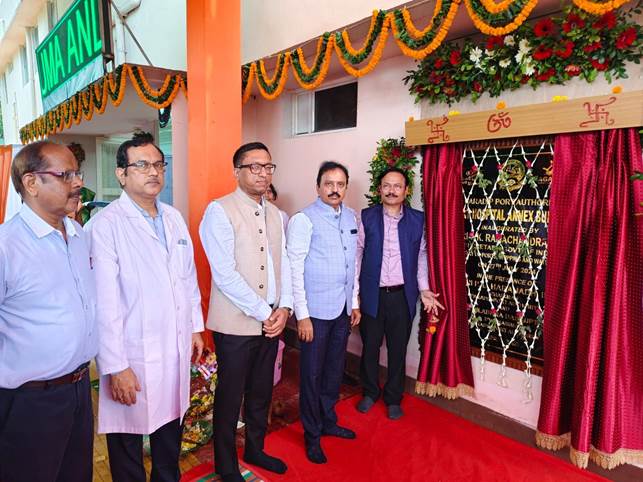
He inaugurated the Trauma and Burn Care (TBC) Centre in the newly constructed Annex building of Paradip Port Hospital. Constructed at a cost of Rs. 2.90 Crores, the centre will provide curative and rehabilitative services for trauma and burn victims in and around Paradip.

Secretary, Shri Ramachandran laid the foundation stone for the Water Treatment Plant of PPA. The project, being constructed at a cost of Rs. 10.50 Crores, will receive raw water through Taldanda Canal and will have the capacity to filter 16 million litres of water per day. The plant is expected to be completed by December 2024, enhancing the water infrastructure of Paradip Port and supplying quality drinking water to the citizens of Port Township.

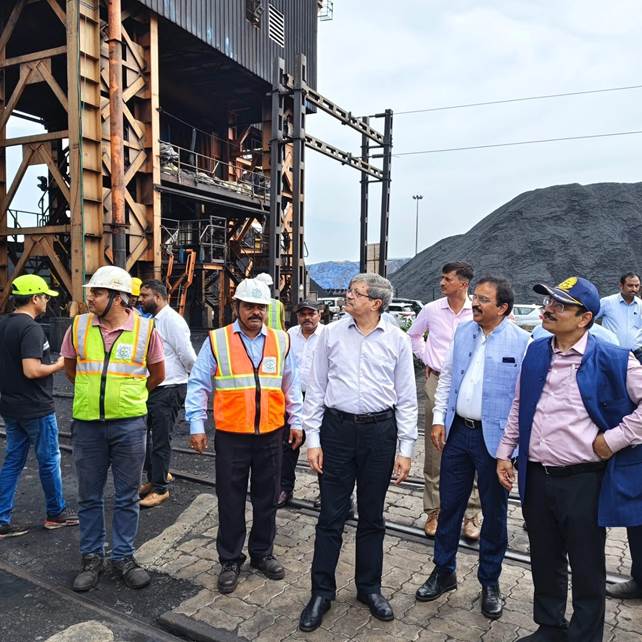
Shri Ramachandran reviewed the functioning of the PPA and interacted with Heads of Departments and Deputy Heads of Departments. He also inspected and reviewed port operations, planning, and expansion at the Mechanized Coal Handling Plant, Twin Wagon Tipplers at JSWPTPL, and KICT silos. He suggested system improvement measures to increase productivity.

The Secretary suggested several measures aimed at improving the overall performance of the port operations. These recommendations are expected to enhance the capacity and streamline the workflow, contributing to Paradip Port’s long-term growth and success.

It is to be noted that, the Paradip Port in Odisha is the highest cargo handling major port of the country. In the financial year 2023-24 PPA became highest cargo handling port by handling 145.38 million metric tonnes (MMT) cargo throughput.

The goal under Vision 2047 is to increase the port handling capacity to 10,000 MTPA. Contours of the plan will soon be spelled out. There will be avenues for private participation that are being worked upon. All ports are preparing a master plan in order to become mega ports by 2047. Improving port infrastructure and facilities, reducing turnaround time, and increasing handling capacity will be the bedrock of the 2047 target.

The latest goal is well above the targets set under the ongoing Sagarmala programme that aims boosting port capacity by 800 MMTPA to an overall 3,500 MMTPA by 2035.

As a part of Sagarmala programme, more than 800 projects at an estimated cost of Rs 5.5 lakh crore have been identified for implementation during 2015-2035. In a nearer goal, the Maritime India Vision (MIV) 2030 has a goal to develop global standard ports in India. The MIV 2030 estimates investments to the tune of Rs 1-1.25 lakh crore for capacity augmentation and infrastructure development at Indian ports.

*****

First STI Conclave on “Traditional Knowledge for Sustainable Livelihoods” organised jointly by ISTIC-UNESCO and CSIR

 The International Science, Technology, and Innovation Centre for South-South Cooperation (ISTIC) under the auspices of UNESCO together with the Council of Scientific and Industrial Research (CSIR) constituents, Traditional Knowledge Digital Library Unit (CSIR-TKDL Unit), New Delhi, and CSIR-Indian Institute of Chemical Technology (CSIR-IICT), Hyderabad, India is organizing a STI Conclave on “Traditional Knowledge for Sustainable Livelihoods” on 29-31 July 2024 at New Delhi, India.

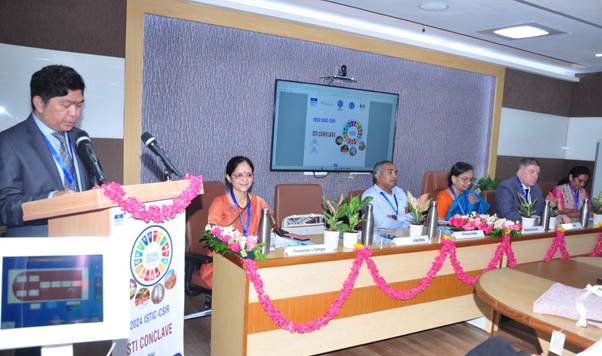
Dr. N. Kalaiselvi, DG, CSIR and Secretary, DSIR inaugurated the first STI Conclave. The Guests of Honour were Dr. D. Srinivasa Reddy, Director, CSIR- IICT, Hyderabad and Dr. Benno Boer, UNESCO Natural Science Specialist in New Delhi. The Plenary Talk was delivered by Prof. Anant Darshan Shankar, Founder and Vice Chancellor of the Trans-Disciplinary University (TDU), Bengaluru.

The three-days Conclave has internationally acclaimed speakers from India on varied subject such as biodiversity, traditional cultural expressions, integrative health and research, national and international policies on TK, IPR and associated matters, besides South-South Cooperation. The ISTIC-UNESCO team was led by Prof.  Mohd Basyaruddin Abdul Rahman, Chairperson, Governing Council and Dr. Sharizad Dahlan, Director of the organization. From the CSIR, Dr. Viswajanani J Sattigeri, Head, CSIR-TKDL Unit and Dr. D. Shailaja, Chief Scientist, CSIR-IICT led the efforts on organizing the Conclave in India.

Speaking on the occasion, Dr. Kalaiselvi remarked that the STI Conclave targets a topic which is the need of the hour considering that sustainability of lives is a matter of growing concern world over. She said that the Conclave provides a platform to bring awareness among the next-gen youth about the importance and value of the knowledge and practices inherited from our ancestors. Stating that modernity is always connected to the fundamentals of our traditional knowledge, she acknowledged that this Conclave rightly spreads the importance of bringing together traditions and modern S&T together.

Dr. Srinivasa Reddy, Director, CSIR-IICT highlighted the CSIR activities related to validation, innovation and integration of traditional medicines and modern S&T interventions as effective tools to address healthcare for all.

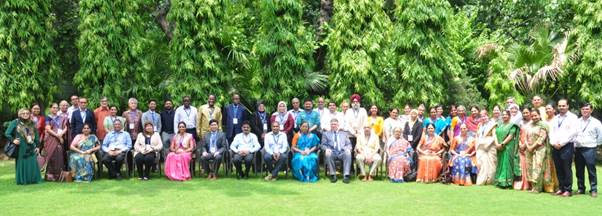
A group of people at a conferenceDescription automatically generated

Dr. Benno Boer elaborated on the three important aspects of sustainability through education, science and culture and how UNESCO brings together collaboration and cooperation to empower people and planet. He stated it was important to respect and live in harmony with nature for achieving sustainable living. He also spoke about the UNESCO’s platforms related to biodiversity spheres and the LINKS programs, that reiterates the need to explore and understand the meaning of local knowledge systems to conserve and preserve nature and thereby livelihoods.

The Conclave envisages promoting understanding and enhancing academic and professional capabilities under the theme of “Strengthening Competencies in Digitization, Preservation and Protection of Traditional Knowledge (TK) – Intellectual Property (IP) and People’s Rights”, among the participants with the aim to provide a platform for exchange of information on challenges related to TK in their countries and learn the best practices being adopted by India and others in safeguarding TK. The participants are from Indonesia, Philippines, Nepal, Democratic Republic of Congo, Kenya, Malaysia and India. The Conclave aims to emphasise the importance of engaging in collaborative learning models and expand the partnership and networks through engagement and cooperation for addressing the development challenges of the region, specifically through sustainable living through local knowledge systems.

About ISTIC-UNESCO

The International Science, Technology and Innovation Centre for South-South Cooperation under the Auspices of UNESCO (ISTIC) is a UNESCO Category 2 Centre, the Malaysian Government has hosted since 2008. The Centre acts as an international platform offering sustainable programmes and services and augmenting sustainable development for South-South Cooperation. The Centre’s hosting is based on a six-year Agreement between the Malaysian Government represented by the Ministry of Science, Technology and Innovation (MOSTI) and UNESCO. Its current Agreement is from February 2022 until January 2028. The Mission of the organization is to be “A leading international platform offering sustainable programmes and services in producing holistic talents towards institutional excellence and augmenting sustainable development for South-South Cooperation.” Its Vision is to be “A global leader in STI and the driving force for developing countries’ nation-building and socio-economic development.”

For more information, please visit: https://www.istic-unesco.org/web/about-istic/

****

Housing and road development to every poor in Chhattisgarh

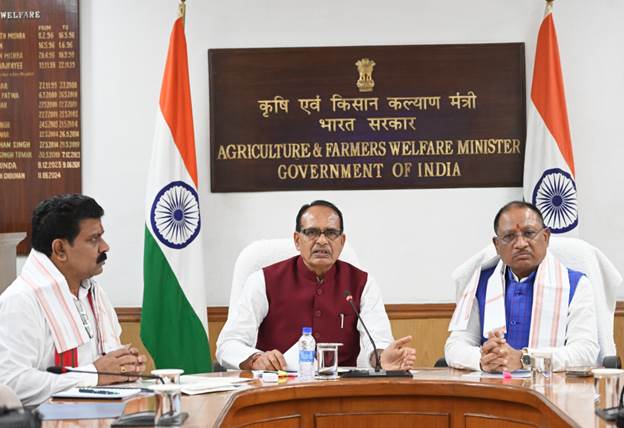
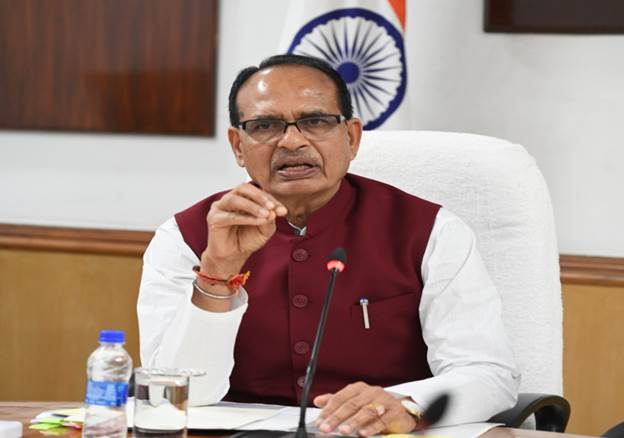
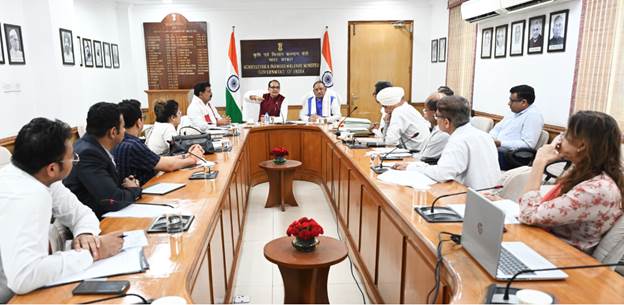
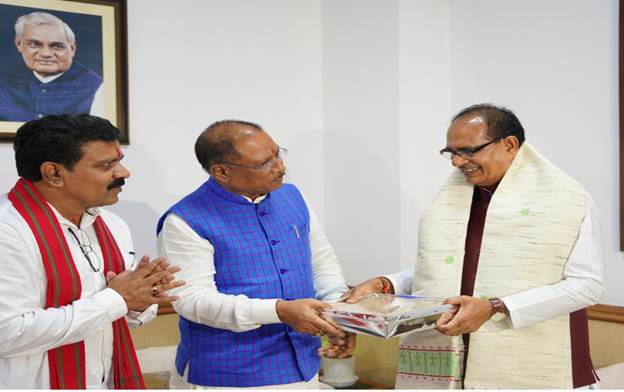
 Union Minister of Agriculture and Farmers’ Welfare and Rural Development Shri Shivraj Singh Chouhan held a meeting with Chhattisgarh Chief Minister Shri Vishnudev Sai and Deputy Chief Minister Shri Vijay Sharma at Krishi Bhavan in New Delhi today.

In the meeting, positive discussions were held on various topics including Pradhan Mantri Gram Sadak Yojana, Pradhan Mantri Awas Yojana (Rural), Mahatma Gandhi National Rural Employment Guarantee Scheme.

Union Minister said that the Central Government under the leadership of Prime Minister Shri Narendra Modi is committed to the development of housing and roads for every poor in Chhattisgarh. The Central and State Governments will jointly complete the public welfare works of the state. Union Minister Shri Chouhan said that houses of all the poor in the state will definitely be built; no poor brother or sister will be deprived of housing under Pradhan Mantri Awas Yojana (Rural). The Central Government is already giving adequate funds to the State Government under public welfare schemes; the present State Government will work seriously in this regard and make good use of the funds.

Shri Chouhan said that the Central Government is also working promptly to build roads under Pradhan Mantri Gram Sadak Yojana in the remote areas of Chhattisgarh. The Central Government is committed to work speedily on the proposals of rural roads in collaboration with the State Government.

Senior central and state officials including Secretary, Rural Development Ministry, Shri Shailesh Kumar Singh were also present in the meeting.

*****

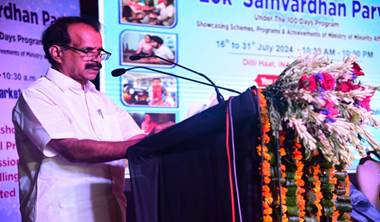
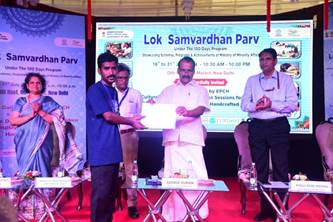
Lok Samvardhan Parv

 The valedictory function of ‘Lok Samvardhan Parv’ was presided over by Shri George Kurian, Minister of State for Minority Affairs, Fisheries, Animal Husbandry and Dairying yesterday ( 28th July 2024) . As part of its 100 days’ programme, the Ministry of Minority Affairs is organising “Lok Samvardhan Parv” to showcase the schemes, programmes and achievements of the Ministry and also highlighting the activities undertaken in convergence with partner organisations and success stories under its various schemes. This Parv is being organized at Dilli Haat, New Delhi.


During his valedictory address, the Minister of State appreciated the ‘Lok Samvardhan Parv’ which has proved to be a platform to popularize the schemes and achievements of the Ministry. He observed that the ‘Lok Samvardhan Parv’ has showcased schemes and programmes and achievements of Ministry of Minority Affairs through poster exhibition. Besides unique schemes and success stories of State Channelizing partners of NMDFC were also exhibited in the ‘Lok Samvardhan Parv’.

Shri George Kurian expressed satisfaction that prominent knowledge partners of the Ministry of Minority Affairs viz. National Institute of Fashion Technology (NIFT), National Institute of Design (NID) participated and showcased the artisans supported by them under various schemes of Ministry of Minority Affairs. The United Nations Children’s Fund (UNICEF) YuWaah also highlighted the work of artisans through young people and their partner organizations. He appreciated the Government E Marketplace (GeM), which has assisted the artisans in providing assistance for online marketing. In addition the knowledge partners of NMDFC viz. Ambedkar University, Delhi have assisted in organizing this event. He also appreciated the Ministry for organizing workshops on various aspects of export marketing through Export Promotion Council of Handicraft (EPCH) everyday, which were attended by the Artisans as well as visitors in the Dilli Haat.


The Minister also appreciated the cultural evenings organized during the Lok Samvardhan Parv, which have depicted the rich cultural heritage of all minority communities such as Singhi Chamm (Lion Dance), Manipuri Dance, Bhangra, Langa & Manganiar, Mando, Siddhi Goma, Karagattam, Phaag Dance, and Folk Dance of Kerala.

It was observed that workshops organized in origami, Doll & toy Making and sketching/paintings saw participation  by children from various Delhi schools such as Anglo Arabic Sr. Secondary School, Ajmeri Gate, Guru Harkrishna Public School Tilak Nagar, Jamia Milia Islamia Sr. Sec. School, Hira Lal Jain Sr. Sec. School etc. This would help in inculcating interest in rich traditional heritage amongst the young generation. The added attraction amongst the young visitors has been quiz competition on general awareness wherein they were rewarded with food coupons for right answers.

Lok Samvardhan Parv is celebrating and showcasing over 70 exquisite handicraft and handloom products from various States made by 162 artisans belonging to various minority communities. These participants include artisans promoted under various schemes of Ministry through NIFT, NID and other Project Implementing Agencies (PIAs). Further the artisans have also been nominated by respective State Channelising Agencies of NMDFC. Till 27th July, 2024 the total sales achieved by the artisans was Rs.1.03 Cr.

He also observed that Lok Samvardhan Parv is testimony of the inclusive development programme of the Ministry which has benefitted a large number of persons from all the minority communities, through convergence with partner organization. The Ministry is striving to fulfil the mantra of “Sabka Saath Sabka Vikas Sabka Vishwash Sabka Prayas”.

***

PROVIDING PUCCA HOUSES TO ALL IN URBAN AREAS

 ‘Land’ and ‘Colonization’ are State subjects. Therefore, schemes related to housing for their citizens are implemented by States/Union Territories (UTs). However, Ministry of Housing and Urban Affairs supplements the efforts of States/UTs by providing Central assistance under Pradhan Mantri Awas Yojana- Urban (PMAY-U) since 25.06.2015 to provide pucca houses with basic civic amenities to all eligible urban beneficiaries across the country. The scheme has four verticals namely, Beneficiary-led individual house construction/enhancements (BLC), Affordable Housing in Partnership (AHP), “In-Situ” Slum Redevelopment (ISSR) and Credit Linked Subsidy Scheme (CLSS).

PMAY-U is a demand driven scheme and Government of India has not fixed any target for construction of houses. Based on the demand for housing in the urban areas, States/UTs prepare project proposals and after approval of State Level Sanctioning & Monitoring Committee (SLSMC), these are submitted to this Ministry for sanctioning of admissible Central assistance by Central Sanctioning & Monitoring Committee (CSMC). Government of India is providing its fixed share as Central assistance of ₹1.0 lakh per house under ISSR, ₹1.5 lakh per house for AHP and BLC verticals of PMAY-U. Under CLSS vertical of PMAY-U, an interest subsidy at the rate of 6.5% which amounts upto ₹2.67 lakh per house was provided for beneficiaries of Economically Weaker Sections (EWS) and Lower Income Group (LIG) category. The remaining cost of the house as per Detailed Project Report (DPR) is shared by States/UTs/Urban Local Bodies (ULBs)/Beneficiaries.

Central assistance under PMAY-U is released to States/UTs in three installments of 40%, 40% and 20%. The release of Central assistance is incumbent upon fulfillment of mandatory compliances by the concerned States/UTs as per operational guidelines and other instructions issued by Ministry of Finance. Due installment of Central assistance is released as soon as requisite compliances are achieved in sanctioned projects.

Based on the proposals submitted by States/UTs, a total of 118.64 lakh houses have been sanctioned under PMAY-U by the Ministry as on 15.07.2024. Of the sanctioned houses, 114.33 lakh have been grounded for construction; of which 85.04 lakh have been completed/delivered. State/UT-wise details of number of houses sanctioned, grounded, completed/delivered along with Central assistance sanctioned and released under PMAY-U is given at Annexure.

The timeline for completion of projects varies from State to State and generally it takes 12-36 months in different verticals of the scheme and as per DPRs of respective projects. The completion timeline for houses depends on various factors like availability of encumbrance free land, statutory compliances for start of construction, arrangement of funds by beneficiaries etc. States/UTs have been advised to expedite the construction of sanctioned houses so that all houses are completed within the stipulated timeline. The scheme period, which was earlier upto 31.03.2022, has been extended upto 31.12.2024, except for Credit Linked Subsidy Scheme (CLSS) vertical, to complete all the houses sanctioned without changing the funding pattern and implementation methodology.

This information was given by the Minister of State for Housing & Urban Affairs, Shri Tokhan Sahu, in a written reply in the Rajya Sabha today.

Annexure 

States/UTs-wise details of number of houses sanctioned, grounded for construction and completed/delivered along with Central assistance sanctioned and released so far under PMAY-U

Sr. No.


Name of the
State/ UT

Physical Progress of Houses (Nos)

Financial Progress in respect of Central Assistance (in Crore)


Sanctioned

Grounded

Completed/ Delivered


 Sanctioned

 Released


1

States

Andhra Pradesh

21,37,028

19,90,937

9,73,837

32,568.27

23,800.26


2

Bihar

3,14,477

3,05,811

1,47,979

4,950.45

3,368.00


3

Chhattisgarh

3,02,663

2,89,128

2,38,894

4,810.98

4,088.81


4

Goa

3,146

3,146

3,145

74.76

75.04


5

Gujarat

10,05,204

9,83,778

9,18,185

21,064.34

19,805.76


6

Haryana

1,15,034

93,153

68,114

2,171.64

1,673.50


7

Himachal Pradesh

12,758

12,668

10,705

215.95

202.02


8

Jharkhand

2,29,156

2,13,534

1,42,810

3,603.31

2,987.87


9

Karnataka

6,38,121

5,73,160

3,69,449

10,614.43

7,168.29


10

Kerala

1,67,322

1,47,721

1,23,453

2,781.18

2,293.45


11

Madhya Pradesh

9,61,147

9,49,265

8,01,068

15,930.45

15,284.69


12

Maharashtra

13,64,923

11,16,949

8,55,339

25,548.21

19,323.37


13

Odisha

2,03,380

1,80,647

1,47,148

3,176.98

2,479.75


14

Punjab

1,32,235

1,16,264

83,894

2,342.54

1,825.79


15

Rajasthan

3,19,863

2,64,357

1,91,971

5,891.46

4,693.97


16

Tamil Nadu

6,80,347

6,63,430

5,70,294

11,185.30

10,135.67


17

Telangana

2,50,084

2,44,219

2,24,659

4,475.66

3,718.27


18

Uttar Pradesh

17,76,823

17,33,051

15,47,101

27,962.68

26,065.17


19

Uttarakhand

64,391

60,160

34,504

1,176.51

940.86


20

West Bengal

6,68,953

6,12,998

4,00,257

10,773.50

7,675.93


Sub- total (States) :-

1,13,47,055

1,05,54,376

78,52,806

1,91,318.59

1,57,606.50


21

North East States

Arunachal Pradesh

8,499

8,070

7,753

182.38

161.18


22

Assam

1,76,643

1,60,473

1,02,712

2,674.26

2,065.73


23

Manipur

56,037

48,657

14,699

841.39

471.91


24

Meghalaya

4,758

3,793

1,632

72.35

43.31


25

Mizoram

39,605

39,215

11,069

607.80

447.22


26

Nagaland

31,860

31,841

22,850

503.91

393.41


27

Sikkim

316

316

202

6.13

7.09


28

Tripura

92,854

84,751

74,049

1,494.35

1,273.47


Sub- total (N.E. States) :-

4,10,572

3,77,116

2,34,966

6,382.57

4,863.31


29

Union Territories

A&N Island

376

376

47

5.84

2.93


30

Chandigarh

1,256

1,256

1,256

28.78

28.78


31

DNH & DD

9,947

9,947

9,230

214.40

200.27


32

Delhi

29,976

29,976

29,976

692.53

692.53


33

J&K

47,040

42,894

24,244

724.94

483.48


34

Ladakh

1,307

1,014

843

30.22

24.05


35

Lakshadweep


36

Puducherry

15,995

15,271

9,994

254.12

223.19


Sub- total (UT) :-

1,05,897

1,00,734

75,590

1,950.84

1,655.23


Grand Total  :-

118.64 Lakh

114.33 Lakh*

85.04 Lakh*

2.00 Lakh Cr.

1.64 Lakh Cr.


Includes completed (3.41 lakh)/ grounded (4.01 lakh) houses of JnNURM during mission period.

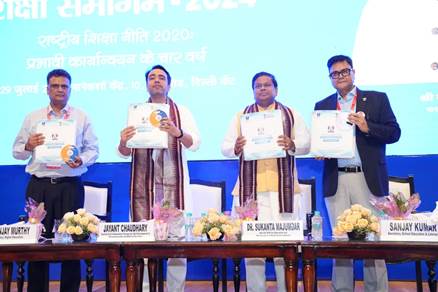
4th anniversary of National Education Policy 2020 with Akhil Bhartiya Shiksha Samagam 2024

 The Ministry of Education celebrated the 4th anniversary of the implementation of the National Education Policy 2020 with Akhil Bhartiya Shiksha Samagam 2024 in New Delhi’s Manekshaw Centre Auditorium today. Minister of State for Education & Minister of State (IC), Ministry of Skill Development & Entrepreneurship Shri Jayant Chaudhary and Minister of State for Education & Development of North Eastern Region, Dr. Sukanta Majumdar were present at the event. Shri K. Sanjay Murthy, Secretary, Department of Higher Education; Shri Sanjay Kumar, Secretary, Department of School Education & Literacy; academicians, Vice Chancellors of the universities, officials, and students, also attended the event.

Image

The Ministers launched several significant NEP 2020 initiatives of the Ministry of Education, such as Dedicated TV Channels to facilitate learning of various Indian languages, a Tamil Channel; Primers for early graders in 25 Indian languages in pursuance to 54 already done; 10 Bagless days Guidelines aimed to transform learning into a fun, stress-free experience in schools; Career Guidance Guidelines, a massive library of over 500 job cards; NMM (National Mission for Mentoring) and National Professional Standards for Teachers (NPST) in Braille and Audio Books; School Innovation Marathon by AICTE, NITI Aayog, and AIM; and a book on Graduation Attributes and Professional Competencies. They also unveiled four books and lecture notes aimed at promoting the Indian Knowledge Systems (IKS) among students and teachers.

Shri Dharmendra Pradhan, in his message, said that the four-year journey of NEP 2020 has been about bringing in transformative change in the country’s education system for nurturing a new generation of learners. NEP 2020 stands as a symbol of hope for transforming the learning landscape, harnessing the country’s demographic dividend, empowering the population and driving socio-economic development, he also mentioned. He said the implementation of NEP has made learning more vibrant and guided in making the country’s education more futuristic, rooted, global and outcome-oriented. Expressing his gratitude to Prime Minister Shri Narendra Modi, he reiterated his commitment to implement NEP in letter and spirit to make the country a 21st-century knowledge economy.

He also appreciated the musical performance of ‘Panch Pran’ by the students of Kendriya Vidyalaya Sangathan at the function, which was inspired by the vision of Prime Minister Shri Narendra Modi.

While addressing the audience Shri Jayant Chaudhary highlighted the immense impact of the teachers and the values and contributions they make in shaping the lives of their students. Reigns of the country truly lies in the hands of the teachers, he added. Farmers, scientists, and teachers are the three pillars of society who envision the nation’s future, he said. Shri Chaudhary also mentioned how, following the recommendations of the stakeholders of the education ecosystem, the forward-looking policy in the shape of the NEP 2020 was formulated. Breaking away from the legacy of the old system, it revolutionised the educational landscape and aligned it with the needs of the 21st century, he added.

Shri Chaudhary emphasised the importance of States as they are the important stakeholders .He appealed to them to be a partner in the journey with a collective effort and strategy that will benefit the entire education ecosystem involving students, teachers, administrators, and more. He also expressed his gratitude to Shri Dharmendra Pradhan for emphasising the future challenges and how they are to be mitigated. The benefit of the progressive, forward-looking and expansive NEP 2020 can be achieved only with its collective implementation, Shri Chaudhary added. Shri Chaudhary specifically mentioned the presentation on APAAR, which he termed as practical for highlighting not only the positive points but the challenges as well.

Dr. Sukanta Majumdar in his address expressed gratitude to Prime Minister Shri Narendra Modi for his farsighted and progressive ideas that shaped the NEP 2020 which embraces the ideal of education as a transformative journey for personal development, beyond making it just a means to obtain certificates. NEP 2020 includes India’s rich heritage, the synthesis of traditional knowledge with modern advancements, and the integration of value education with nation-building at its core, Dr. Majumdar said. He also said that the Akhil Bhartiya Shiksha Samagam, embodying the essence of “Vikas bhi Virasat bhi,” represents a unique participatory dialogue steered by stakeholders from every corner of the education sector. Dr. Majumdar also expressed his gratitude to Shri Dharmendra Pradhan for successfully spearheading the NEP 2020 for the last three years.

Commending the reformist agenda of the NEP 2020, Shri K. Sanjay Murthy highlighted on seamless integration of school and higher education through the APAAR platform. Presenting a vote of thanks Shri Sanjay Kumar informed how Prime Minister Shri Narendra Modi has mentioned NEP 2020 as the basis for radical change and urged everyone to take the recommendation of the Policy to the grassroots level. He also informed about the week-long campaign, “Shiksha Saptah” that was celebrated in schools all over the country.

Shri Govind Jaiswal, Joint Secretary, Ministry of Education, made a presentation on Credit accumulation and seamless creditization of all types of learning including skilling by using the Platform of APAAR ID.

Akhil Bharatiya Siksha Samagam (ABSS) has been conceptualized as an event to celebrate the adoption of National Education Policy 2020 to reinvigorate the commitment of various stakeholders for its effective implementation and to realize the collective strength for achievement of shared goals through collaborative efforts.

ABSS 2024 witnessed six thematic sessions on different themes & initiatives of NEP 2020 related to Schools and Higher Education. These are:


  1.  Importance of Sustainability in Education Curriculum, Job Prospects, Industry-Academia Collaboration

(ii) PM SHRI (School Education & Skilling)

  1.  Role of HEIs in promoting STEM & enhancing GER through Vidyashakti

(iv) Equivalence of Curriculum and Assessment across all School Boards

(v) Role of Ranking and Accreditation in Enhancing Quality

(vi) NCF-FS and NCF-SE Salient Features and Implementation Roadmap


The event was attended by State Education Secretaries, State Project Directors of Samagra Shiksha, SCERT Directors, State Directors of Primary Education and Secondary Education, Chairperson, State School Boards including CBSE, Head of Autonomous Bodies of DoSEL, Regional Officers of CBSE, KVS, NVS, Principals of DIETs and Schools, Students from KV, JNV, CBSE schools, VCs / Directors / Heads of HEIs – 80 from CFIs and 100 from State Universities, State Project Directors of RUSA, Officials of DoSEL, DoHE, MSDE, UGC, AICTE, NETF, NCVET, NIEPA, ICSSR, ICHR, Officials from other Ministries, Heads of CSO, Panelists for the Breakaway sessions etc.

******

MoD & NSE ink MoU to facilitate capital market access to MSMEs

 Ministry of Defence and National Stock Exchange of India Limited (NSE), on July 29, 2024, signed a Memorandum of Understanding (MoU) to facilitate capital market access to the MSMEs. The MoU was signed by Additional Secretary, Department of Defence Production (DDP) and Managing Director, NSE in the presence of Defence Secretary Shri Giridhar Aramane. The MoU intends to facilitate MSMEs in the defence sector to raise productive capital for their growth plan in an efficient and transparent manner through NSE platform ‘NSE Emerge’. The platform offers new and viable options for raising equity capital from diversified set of investors.

The MoU will be in force for a period of five years, during which, DDP and NSE would conduct an extensive awareness drive through seminars, MSME camps, knowledge sessions, road shows & workshops to guide corporates engaged with the Ministry of Defence for fund raising on NSE Emerge platform. NSE will also assist MSMEs in connecting with intermediaries like merchant bankers, registrar, transfer agent, depositories etc and guide them regarding the capital markets, capital raising mechanism and regulatory compliance and requirement. This MoU will help MSMEs and emerging companies in defence sector to scale-up their business operations, explore new markets and fund their R&D activities.

***

SR/Savvy

Tomatoes procured from three centres, Price Stabilisation Fund not used

 Union Minister of Consumer Affairs, Food and Public Distribution & New and Renewable Energy, Shri Pralhad Joshi launched the sale of tomatoes at Rs 60 per kg here today. The National Cooperative Consumers’ Federation of India Limited (NCCF) vans will be providing the tomatoes at subsidised rate. The tomatoes will be sold in Delhi along with Noida and Gurgaon. The Centre undertook the market intervention initiative to stabilise rising tomato price in the retail market.


While addressing the media during the flagging off ceremony, Shri Joshi said that to check the surge of tomato price in major cities, especially Delhi, the Department of Consumer Affairs, Government of India has decided to launch this initiative. “From today onwards subsidised tomatoes will be sold for Rs 60 per kg”, said Shri Joshi.

The Union Minister said that under Shri Narendra Modi government, the Centre has set up a Price Stabilisation Fund (PSF) to stabilise rising food prices and protect consumers’ interests. “Whenever a situation arises price of essential commodities increase, we utilise the PSF to procure the commodities. These essential commodities are directly procured from farmers that reduces intermediary costs and ensure availability to consumers”, said Shri Joshi adding on that in this case PSF was not utilised as tomatoes were directly procured from mandis. He further added that this initiative will ease tomato price, stabilise the market and provide tomatoes at subsidised rate to consumers.

NCCF has initiated market intervention to stabilise rising tomato prices in the retail market. NCCF is procuring tomatoes from wholesale mandis and selling them at reasonable retail prices.This move aims to ensure that profit margins remain reasonable at the retail level and prevent windfall gains to intermediaries and thereby protect the interests of consumers.

By this intervention NCCF seeks to cool off price rise and maintain price stability in the market, benefiting consumers and promoting fair trade practices. This intervention demonstrates NCCF’s commitment to protecting consumer interests and promoting a stable market ecosystem.

To begin with, tomato sales will start from today (29 July 2024) at the following locations at the rate of Rs60/- per kilogram – Rajiv Chowk Metro, Patel Chowk Metro, Nehru Place, Krishi Bhawan, CGO Complex, Lodhi Colony, Hauz Khas Head Office, Parliament Street, INA Market, Mandi House, Kailash Colony, I.T.O, South Extension, Moti Nagar, Dwarka, Noida (Sector 14 and 76), Rohini, Gurugram. In the coming days, the number of retail locations may be increased for consumer convenience.

***

Bureau of Indian Standards and Govind Ballabh Pant University of Agriculture and Technology signs Memorandum of Understanding for Standardized Agriculture Demonstration Farm (SADF)

 The Bureau of Indian Standards (BIS) and Govind Ballabh Pant University of Agriculture and Technology (GBPUAT) has signed a landmark Memorandum of Understanding (MoU) to facilitate the development of the first of its kind ‘Standardized Agriculture Demonstration Farm’ (SADF) in India.

The MoU was signed on July 24, 2024, in the presence of Dr. M. S. Chauhan, Vice-Chancellor, GBPUAT, and senior officials from the University, including Dr. Deepa Vinay, Registrar; Dr. Ajeet Kumar Nain, Director of Research; and Deans of various colleges of GBPUAT, along with Dr. S. B. Singh, BIS Chair at GBPUAT.

Shri Rajeev P, Deputy Director General (North), Shri Saurabh Tiwari, Director & Head, BIS Dehradun, and other senior officials of BIS attended the event. This MoU marks the first collaboration between BIS and an agricultural university in the country to develop SADFs.

While emphasising about the potential benefits of MoU, Shri Pramod Kumar Tiwari, Director General, BIS, stated, “This partnership with GBPUAT is a major step forward. It will enhance agricultural practices by integrating Indian Standards, benefiting farmers and advancing agricultural innovation. We look forward to seeing the positive impact this partnership will have on the agricultural sector and the broader community.”

The primary objective of this MoU is to develop SADFs at GBPUAT in collaboration with BIS. These farms will serve as experimental sites for testing and implementing various agricultural practices and new technologies in accordance with Indian Standards. Regarding the fast pace development, it was informed that the Vice-Chancellor has instructed the concerned officials at GBPUAT to commence work on the project immediately and report the outcomes regularly, keeping BIS informed as per the defined periodicity.

This partnership with GBPUAT is a significant step towards promoting standardised agricultural practices and ensuring the implementation of cutting-edge technologies to enhance agricultural productivity and sustainability.

*****

Atomic Energy inaugurates ‘One DAE One Subscription’

 The inaugural ceremony of ‘One DAE One Subscription’ (ODOS) took place today at Tata Memorial Hospital, in Mumbai today. ODOS is a unique idea enabling Department of Atomic Energy (DAE) & all its units/subunits (about 60) together under one umbrella for read and publish access to national and international research papers as well as scientific journals. With this initiative it is now possible to share the resources digitally and evolve collectively. DAE has signed consortium agreements with M/s. Wiley India Private Limited and with M/s. Springer Nature Group in furtherance of the same.

On the occasion of the inauguration, Secretary, DAE and Chairman AEC, Dr. A. K. Mohanty conveyed a congratulatory message to and stated, “The ODOS Transformative Agreement is a significant milestone for synergizing the read access and publishing requirements of DAE. I am sure ODOS will benefit thousands of scientists, engineers, young students of HBNI and researchers of aided institutes to have access to much larger knowledge platform and also publish in open access journals. The ODOS will later get merged with a bigger national initiative, called One Nation One Subscription (ONOS) which has been initiated by the Office of the Principal Scientific Advisor to the Government of India. ONOS is currently under various stages of implementation.” 

Addressing the gathering, Shri. A.K. Nayak, Head, NCPW, DAE, stated that the objective of the ODOS initiative is to make knowledge accessible to as many people as possible. ODOS a small yet decisive step towards ONOS which will in turn make knowledge accessible to everyone and lead to the cherished dream of a developed India.

Dr. Sudeep Gupta, Director, TMC, expressed that libraries are no longer brick and mortar buildings but computers. In the current era, the world lays stress on creative innovation which can only happen when we have access to the current state of wisdom in any particular field. One way to minimize repetitive research is to let everybody access the current state of science so that we move forward and don’t repeat what has already been done. DEA has once again proven it is a pioneer in taking the lead and showing the way.

About ODOS

The first ODOS agreement with M/s. Wiley India Private Limited will provide access to the collection of 1353 Wiley journals including archives from 1997, to the entire DAE community. This is against the current access of 166 unique journals provided to only 12 DAE units without much increase in price. Perpetual rights will be given to all the DAE units for all the journals for the year 2024. DAE will also get the right to publish more articles in open access journals. Under this agreement Article Processing Charges (APC) have been covered.

The second ODOS agreement with M/s. Springer Nature Group will provide access to about 2,686 Springer Nature titles which includes 553 journals as Fully Open Access (FOA). The access will be provided to entire DAE as against 1752 unique journals access provided to 14 units earlier. Perpetual rights will be given to all the DAE units for all the journals for 2024.  The archives from the year 1997 for the Springer titles and from the year 2012 for Nature titles will also be accessible. The agreement will also enable DAE to publish 281 articles in Springer Hybrid journals as open access without Article Processing Charges (APC).

The ODOS Transformative Agreements (TA) signed with M/s. Wiley India Private Limited and with M/s. Springer Nature Group is a significant milestone for the DAE scientific community and enable sustainable growth of science and technology. This will boost scientific morale, foster innovation, promote research and will enhance academic publications.

***

Coaching has become a flouring industry with returns

 Rajya Sabha today held a short duration discussion under rule 176 of Rajya Sabha on the tragic deaths of UPSC aspirant in a coaching centre in Delhi due to water logging.  Allowing the discussion Chairman Rajya Sabha, Shri Jagdeep Dhakhar remarked “I find that youth demographic dividend of the country has to nurtured, I further find that coaching has become virtually commerce….”

Shri Dhankhar also expressed concern over the huge expenditure made by coaching centres on newspaper advertisements, that is made out of the huge fees charged from the students, “Coachings have become a flourishing industry with high returns….every time we read a newspaper front one or two pages are by way of advertisements….Every penny spent on advertisement is coming from the students, every new building is coming from the students”, he added

Comparing to silos created in the country due to coaching culture to no less than ‘Gas Chambers’, Chairman stated “…..In a country where opportunities are getting enlarged this silo is turning out to be a problem…….they are becoming no less than a gas chamber….”.  He further urged members to make the youth aware about the various other employment & skill opportunities available in the country. 

Lamenting over the practice of boycott and rebuff by floor leaders of certain parties when they are called for discussion and making suggestions to ensure functioning of the house to the Chairman’s chamber, Shri Dhankhar said “ let me share my anguish, let me share my pain. This Chairman, when he makes a request for honorable members for a conference in the chamber, this rebuff is not only unprecedented, but dilution of Parliamentary decorum. The fact that floor leaders virtually seek to boycott the Chairman in chamber is certainly not a healthy practice.”

Earlier today Rajya Sabha members including Sudhanshu Trivedi and Swati Maliwal today gave a notice under rule 267 to discuss the matter of death of UPSC in a coaching centre. Chairman allowed the short duration discussion under rule 176 as Parliamentary affairs minister Shri Kiren Rijiju was ready  to discuss the matter under rule 267 citing the matter as urgent but LoP Shri maliikarjun Kharge and other opposition parties disagreed to discuss the matter under rule 267 and Chairman made it categorically clear that anything under rule 267 will only be discussed if the major parties agree and with the consensus of the house.


****

Construction Accidents, Injuries, and Legal Cases

Daily writing prompt
How would you describe yourself to someone?

Sometimes referred to as construction injury law, construction accident law is a subfield of personal injury law addressing rules and regulations dealing with accidents and injuries in the building industry. Some legal actions, like workers’ compensation claims and personal injury lawsuits, have restricted time for filing. However, construction accident law covers these proceedings. This section of the law is intended to guard workers’ rights, those of onlookers, and other persons impacted by building operations. Below is detailed information about some of the injuries workers can suffer while working on construction sites.

Alt: Construction worker

Fall from Heights

Fall from height is still the biggest problem in the building sector both in Rochester and in the United States. Many workers have to operate on ladders, scaffolds, roofs, and other such platforms all the time. Working from heights may be terrifying and nerve-wracking. More than 46% of all incidents in the building sector—falls, slips, and trips that lead to death are rather common. People who labor at heights run several hazards, including the possibility of scaffolding breaking or falling from stairs. Therefore, ensuring the correct fall protection gear is used, that workers are correctly taught, and that people don’t get reckless will help to prevent horrible mishaps.  Managers must ensure employees have scheduled frequent training courses and rigorously observe safety regulations to help prevent these types of accidents.  If you’re a victim of construction accidents and Injuries due to your employer’s negligence, you may need to hire a Rochester construction accident lawyer

Electrocution

Sadly, the construction industry sees a lot of electrical accidents. On Rochester building sites, tools and electricity lines are common sights. Live lines, damaged circuits, and inadequate grounding are among the hazards workers could come upon that might lead to electrocution. Every electrical system should be installed, maintained, and routinely inspected if we are to prevent these kinds of accidents. People also need appropriate instruction on how to remain safe around power. Moreover, regularly installing, maintaining, and checking electrical systems helps to reduce the danger of electrocution as low as possible.

Demolition Accidents

Demolishing a building is the deliberate destruction, disassembly, or ruin of a structure usually for replacement or reconstruction. Dealing with homes that are no longer needed calls for careful planning and execution. Even though your work is constructing, demolition is a very exact task that has to be done perfectly. Unfortunately, some companies give other considerations higher priority than accuracy, and the results of demolition projects become disastrous, harming people living nearby and workers.

Trench Collapses

In the building industry, digging trenches occurs frequently since trenches are required for some point in many projects, including house building. Builders lay the basis of their constructions and link pipes, wires, and other utilities using trenches. Usually, they lay utility lines or foundations, therefore, one can observe several trenches on building sites. Still, trench collapses can occur in response to unstable ground, insufficient supports, or inadequate safety precautions adopted. Employers should make sure that trenches are correctly built, shored, and routinely examined if they are to effectively stop accidents including cave-ins and collapses.