Call for Book Publication from EduPub

Daily writing prompt
What do you love about where you live?

Are you looking to publish your thesis or research as a book? EduPub invites scholars, researchers, and academics to submit their manuscripts for publication. If you have completed a thesis, dissertation, or any academic research, now is the perfect time to transform it into a professionally published book!

Why Publish with EduPub?

  • Global Reach: Your book will be accessible to readers worldwide, increasing the visibility of your work.
  • Professional Editing and Design: Get your manuscript polished by experts, with custom cover designs and formatting.
  • Affordable Packages: We offer cost-effective publication packages tailored to meet your needs.
  • ISBN and Copyright Registration: Ensure your work is protected and easily identifiable in the global market.

How to Submit: Send your manuscript to editor@pen2print.org and take the first step towards getting your thesis converted into a published book.

Visit us: For more details on our publication services, visit www.edupub.org.

Don’t miss this opportunity to share your research with the world!

ISRO launches Earth Observation Satellite EOS-08

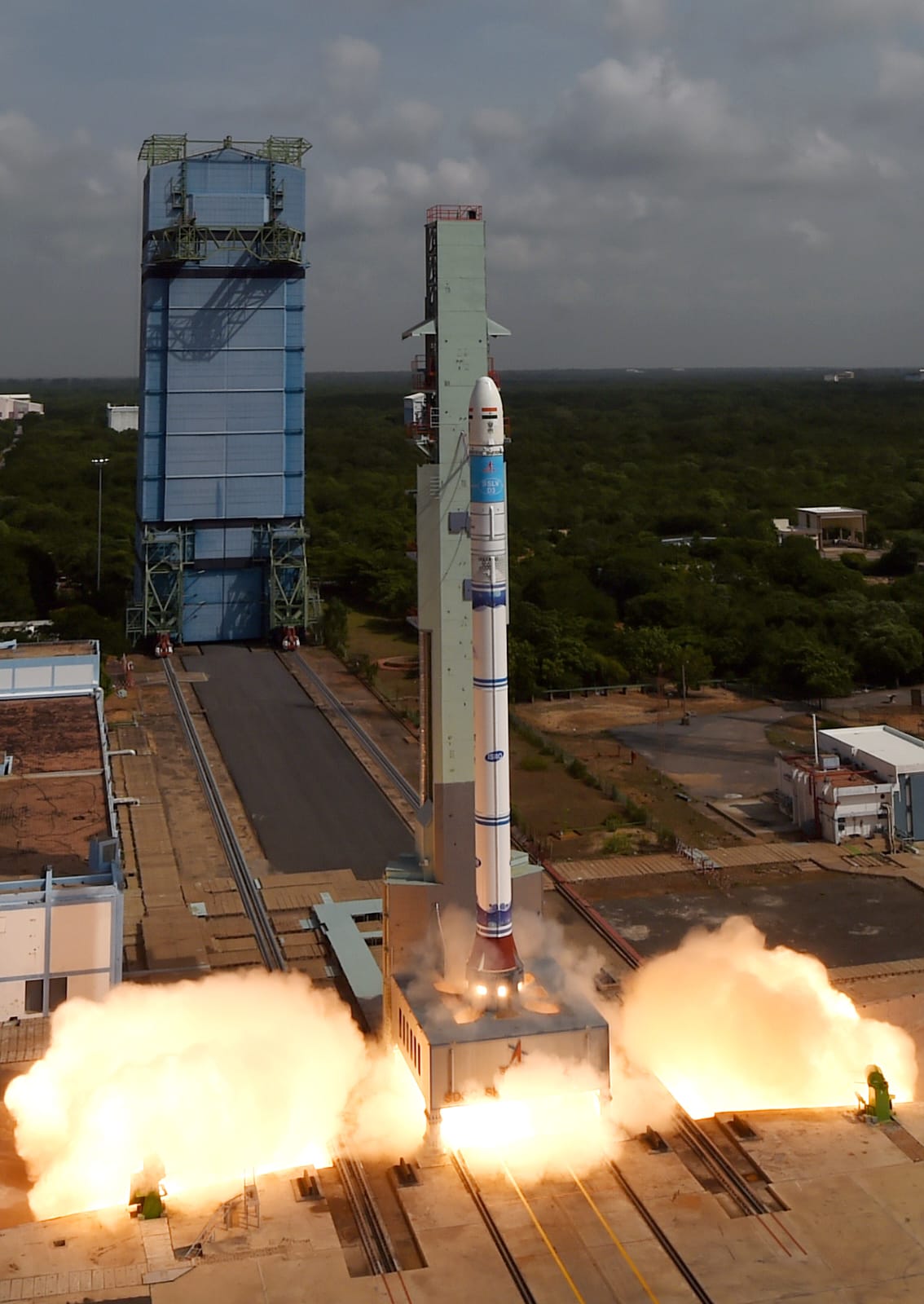
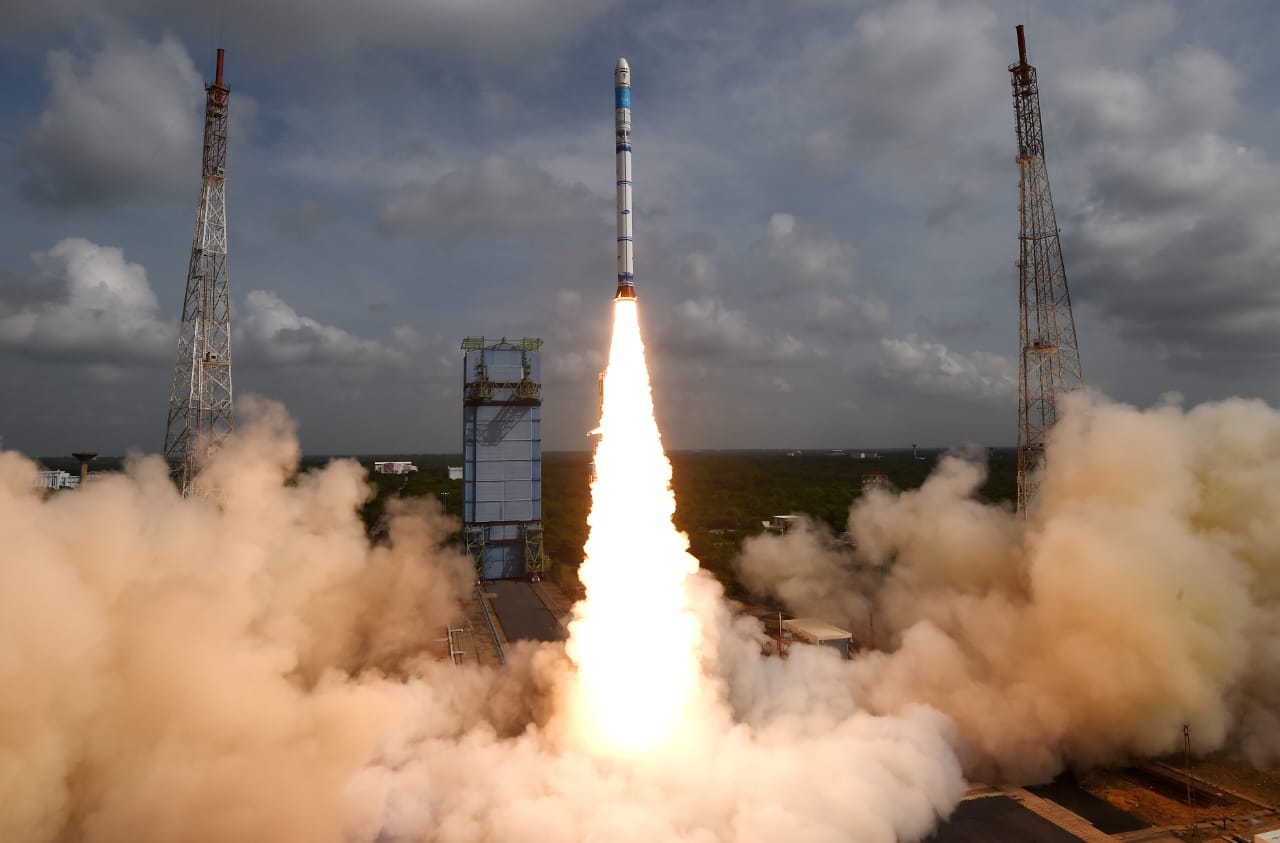
 ISRO’s latest Earth Observation Satellite ‘EOS-08’  launched by the Small Satellite Launch Vehicle (SSLV)-D3 today at 9:17 hrs from Satish Dhawan Space Centre, Shriharikota.

The primary objectives of the EOS-08 mission include designing and developing a microsatellite, creating payload instruments compatible with the microsatellite bus, and incorporating new technologies required for future operational satellites.

Built on the Microsat/IMS-1 bus, EOS-08 carries three payloads: Electro Optical Infrared Payload (EOIR), Global Navigation Satellite System-Reflectometry payload (GNSS-R), and SiC UV Dosimeter. The EOIR payload is designed to capture images in the Mid-Wave IR (MIR) and Long-Wave IR (LWIR) bands, both during the day and night, for applications such as satellite-based surveillance, disaster monitoring, environmental monitoring, fire detection, volcanic activity observation, and industrial and power plant disaster monitoring.

The GNSS-R payload demonstrates the capability of using GNSS-R-based remote sensing for applications such as ocean surface wind analysis, soil moisture assessment, cryosphere studies over the Himalayan region, flood detection, and inland waterbody detection. Meanwhile, the SiC UV Dosimeter monitors UV irradiance at the viewport of the Crew Module in the Gaganyaan Mission and serves as a high-dose alarm sensor for gamma radiation.

The spacecraft mission configuration is set to operate in a Circular Low Earth Orbit (LEO) at an altitude of 475 km with an inclination of 37.4°, and has a mission life of 1 year. The satellite has a mass of approximately 175.5 kg and generates power of around 420 W. It interfaces with the SSLV-D3 launch vehicle.

EOS-08 marks a significant advancement in satellite mainframe systems such as an Integrated Avionics system, known as the Communication, Baseband, Storage, and Positioning (CBSP) Package, which combines multiple functions into a single, efficient unit. This system is designed with cold redundant systems using commercial off-the-shelf (COTS) components and evaluation boards, supporting up to 400 Gb of data storage. Additionally, the satellite includes a structural panel embedded with PCB, an embedded battery, a Micro-DGA (Dual Gimbal Antenna), an M-PAA (Phased Array Antenna), and a flexible solar panel, each serving as key components for onboard technology demonstration.

The satellite employs a miniaturized design in its Antenna Pointing Mechanisms, capable of achieving a rotational speed of 6 degrees per second and maintaining a pointing accuracy of ±1 degree. The miniaturized phased array antenna further enhances communication capabilities, while the flexible solar panel incorporates a foldable solar panel substrate, GFRP tube, and CFRP honeycomb rigid end panel, offering improved power generation and structural integrity. A pyrolytic graphite sheet diffuser plate, known for its high thermal conductivity of 350 W/mK, reduces mass and finds application in various satellite functions. Furthermore, the EOS-08 mission adopts a new method of integrating housekeeping panels using a hinge-based fixture, significantly reducing the duration of the Assembly, Integration, and Testing (AIT) phase.

Incorporating additional novel schemes, the EOS-08 mission improves satellite technology through X-band data transmission, utilizing pulse shaping and Frequency Compensated Modulation (FCM) for X-Band data transmitters. The satellite’s battery management system employs SSTCR-based charging and bus regulation, sequentially including or excluding strings at a frequency of 6 Hz.

  The mission’s indigenization effort is evident in its solar cell fabrication processes and the use of a Nano-Star Sensor for Microsat Applications. Additionally, the inertial system benefits from reaction wheel isolators that attenuate vibrations and a single antenna interface is utilized for TTC and SPS applications. Thermal management is enhanced using materials such as AFE BGA, Kintex FPGA, Germanium Black Kapton, and STAMET (Si-Al Alloy) Black Kapton to handle the thermal properties of COTS components. The mission also incorporates an auto-launch pad initialization feature, further demonstrating its commitment to innovative mission management.

***

Wisdom from our ancient Vedas encapsulates the essence of intellectual property


The Vice-President, Shri Jagdeep Dhankhar today expressed concerns over recent public statements by people holding constitutional positions urging the Supreme Court “to invoke jurisdiction to give wings to a narrative aimed at destroying our economy”.

Addressing the first batch of Joint Masters/LL.M degree in IP Law and Management at NLU, Delhi today Shri Dhankhar said,  “…..Jurisdiction of institution is defined by the Indian Constitution, be it legislature, be it executive, be it judiciary. Jurisdiction of courts is decided. Look around the globe, look at the Supreme Court in the U.S.,  the highest court in the U.K. or other formats.

Has there been suo-motu cognisance even once?  Has a remedy been created beyond what is provided in the Constitution?  The Constitution provides original jurisdiction, appellate jurisdiction.  It provides review also.

But we have curative! I got extremely worried when a person holding a constitutional position,  just last week, declared in a well-publicised media; I would say campaign, beseeching the Supreme Court to suo-motu invoke jurisdiction to give wings to a narrative aimed at destroying our economy”, he added

Shri Dhankhar also urged the youth to neutralise forces that prioritise partisan or self-interest over national welfare, emphasising that such actions undermine the nation’s rise.

Addressing the gathering at the NLU Delhi, Shri Dhankhar Highlighted the overwhelming presence of coaching centres and their advertisements in newspapers, which often feature the same successful faces to attract more students.

“..Extravaganza of coaching centres, advertisements  all over the newspaper, page one, page two, page three, putting boys and girls who made it and same faces being used by multiple organisations. Advertisement, look at the extravaganza, the cost, every penny of that advertisement has come from those young boys and girls who are in pursuit of securing a future for themselves”, he added.

Shri Dhankhar lamented that every penny of those advertisements come from those young boys and girls who are in pursuit of securing a future for themselves.

Advocating for breaking free from the silos of civil service jobs, Shri Dhankar  encourages youth to look beyond the conventional career paths and explore more lucrative and impactful careers.

“..Why should we be in  that silo? We know the opportunities are limited. We have to look away and find there are enormous  vistas of opportunities, far more lucrative, that enable you to contribute massively. And this can happen in disability technologies, it can happen in space,  it can happen in the ocean blue economy”, added Shri Dhankhar.

Referring to Bharat as the gold mine of Intellectual property and Vedas, ancient scriptures as the foundation of Indian philosophy, spirituality, and sciences. The Vice President described them as prime examples of India’s intellectual treasure. He urged everyone to embrace the Vedas in their physical form, emphasising their potential to enrich lives and provide solutions to everything.

Invoking the timeless wisdom of the Rig Veda, stating, “Let noble thoughts come to us from all sides.”, Shri Dhankhar highlighted that this verse from the Rig Veda encapsulates the essence of intellectual property—emphasising the free flow of ideas and knowledge for societal betterment. The Vice President urged that instead of citing modern figures, we should draw inspiration from our authentic sources, reinforcing the profound relevance of our ancient wisdom in today’s intellectual and economic landscape.

Emphasising the critical role of intellectual property (IP) law and management in driving innovation and economic growth, particularly underscoring the need to protect both modern creative endeavours and our ancient knowledge, Shri Dhankhar indicated that IP has become a cornerstone of international trade in globalised era and noted that for a nation like India, with its vast population, strong IP protection is essential for attracting foreign investment and enabling technology transfer.

Acknowledging India’s significant strides in strengthening its IP regime, Shri Dhankhar stated that India’s legislative framework has been progressively aligned with international standards, ensuring robust protection. He underscored that India’s IP regime is carefully crafted to comply with the World Trade Organization’s TRIPS and other bilateral and regional agreements, reinforcing the nation’s commitment to innovation and global trade.

Smt. Himani Pande, Additional Secretary, DPIIT, Ministry of Commerce & Industry,  Prof. (Dr.) G.S. Bajpai, Vice Chancellor, National Law University Delhi, Prof. (Dr.) V K Ahuja, Director, Indian Law Institute, students and other dignitaries were also present on the occasion.

Read here full text : https://pib.gov.in/PressReleseDetail.aspx?PRID=2045853

***