

National Rural Livelihoods Mission (NRLM): Empowering Rural India
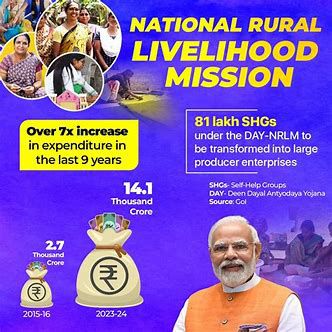
The National Rural Livelihoods Mission (NRLM) is a flagship program of the Indian government aimed at reducing poverty and vulnerability among rural communities. Launched in 2011, NRLM seeks to promote sustainable livelihoods, social empowerment, and inclusive growth in rural areas.
Objectives:
- Promote livelihoods: Enhance income and employment opportunities for rural households.
- Social empowerment: Build capacities and confidence among rural communities, especially women.
- Inclusive growth: Foster inclusive growth, reducing poverty and vulnerability.
Key Features:
- Community-led approach: Empowers rural communities to take ownership of their development.
- Self-Help Groups (SHGs): Supports SHGs, promoting savings, credit, and entrepreneurship.
- Capacity building: Trains community members in skills, leadership, and entrepreneurship.
- Financial inclusion: Facilitates access to financial services, reducing dependence on informal lenders.
- Livelihoods promotion: Supports agriculture, animal husbandry, and non-farm activities.
Strategies:
- Intensive Block-level Approach: Focuses on intensive capacity building and livelihoods promotion in selected blocks.
- Partnerships and collaborations: Fosters partnerships with NGOs, banks, and private sector entities.
- Technology-enabled solutions: Leverages technology for capacity building, financial inclusion, and livelihoods promotion.
Benefits:
- Improved livelihoods: Enhanced income and employment opportunities for rural households.
- Social empowerment: Increased confidence and capacities among rural communities, especially women.
- Financial inclusion: Reduced dependence on informal lenders, improved access to financial services.
- Inclusive growth: Reduced poverty and vulnerability, promoting inclusive growth.
Challenges and Future Directions:
- Scalability and sustainability: Scaling up NRLM’s impact while ensuring sustainability.
- Diversification of livelihoods: Promoting diversified livelihoods, reducing dependence on agriculture.
- Technology integration: Leveraging technology to enhance NRLM’s impact and reach.
- Convergence with other initiatives: Integrating NRLM with other government initiatives for greater impact.
In conclusion, NRLM has been a pioneering initiative in empowering rural India, promoting sustainable livelihoods, social empowerment, and inclusive growth. As the program continues to evolve, addressing challenges and building on successes will be crucial to achieving its vision of a poverty-free, vibrant rural India.

 Eduindex
You must be logged in to post a comment.