



Rimshayelly Fitri
Gunadarma University, Faculty of Psychology, Jl. TB Simatupang Pasar Minggu, Jakarta Selatan, Indonesia
ABSTRACT
Keywords: Student, Emotional Maturity, Self control, Aggressiveness, Martial arts
INTRODUCTION
Aggressiveness or violent behavior is not a new phenomenon in Indonesia. Every year, there are numerous cases of violence occurring within society, such as murder, robbery, kidnapping, rape, brawls, and many more. This aggressive behavior is highly detrimental to the community, not only in terms of material loss but also in causing fatalities that lead to trauma and deep sorrow for the victims’ families.
According to data obtained from the police registration records (Sub-directorate of Political and Security Statistics, 2014), crime incidents in Indonesia during the 2011–2013 period tended to fluctuate. The total number of crime incidents, or crime totals, decreased from around 347,000 cases in 2011 to approximately 341,000 cases in 2012. However, in 2013, it increased again to around 342,000 cases.
Mass brawls during the 2005–2011 period included fights between groups of residents, fights between villagers, fights between residents and security forces, and fights between students or university students, as well as inter-ethnic fights. The percentage of villages that managed to resolve conflicts between residents and fights between students or university students in 2011 was 90.83% and 86.21%, respectively. Meanwhile, the coverage for resolving conflicts between residents and security forces and inter-ethnic fights was only 72.22% and 83.33%, respectively. From the above data, it can be concluded that mass brawls occurred most frequently among residents and students (Sub-directorate of Political and Security Statistics, 2014).
Every person has the right to receive a proper education, security, and comfort. However, in reality, many students still experience violence and even die tragically. One such case involved a student from an outdoor activity club at a university in Yogyakarta. An activity that was supposed to provide meaning and good experience ended tragically due to violent behavior by senior students towards juniors (Rudiana, 2017).
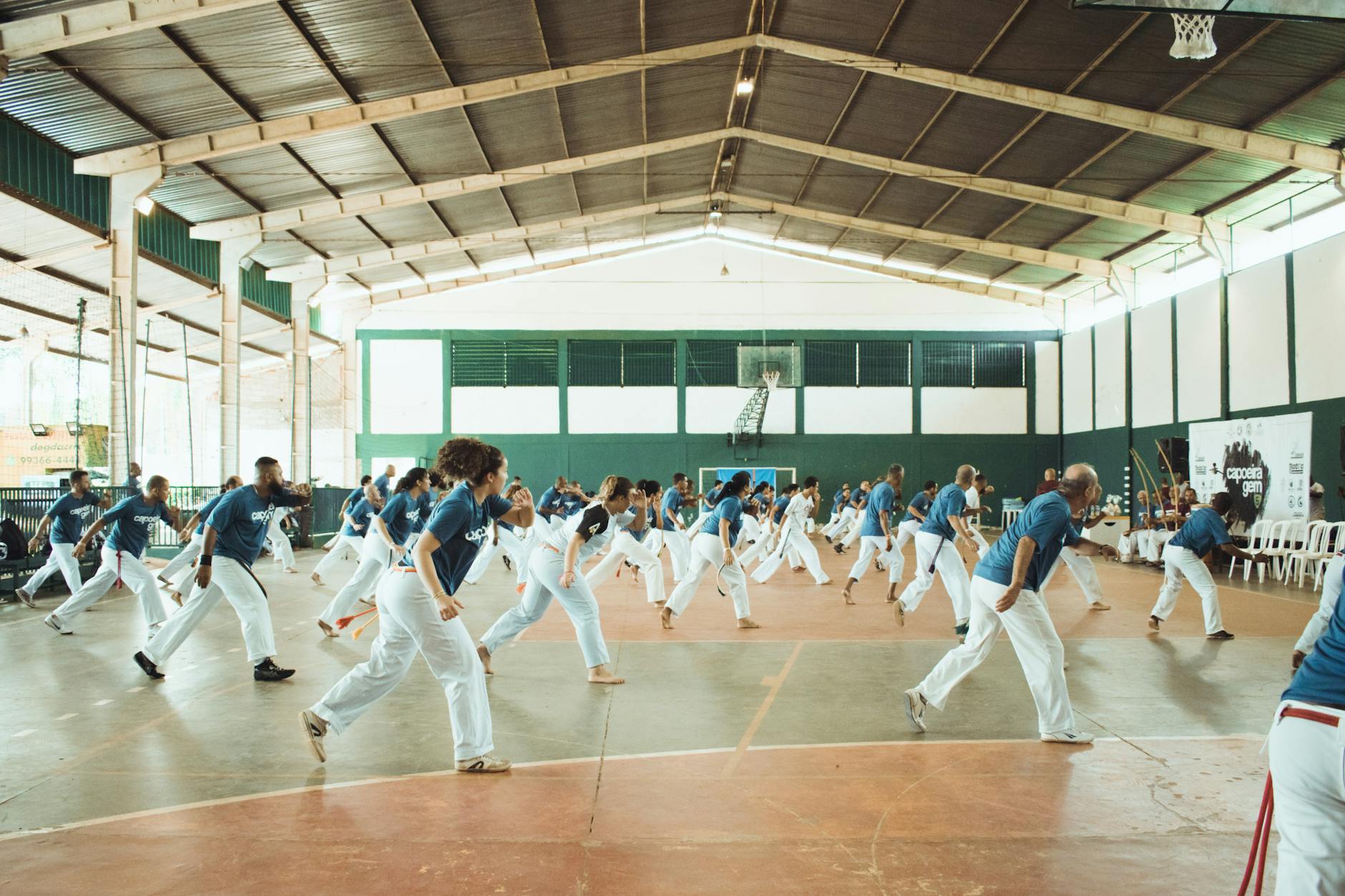
The aggressive phenomena mentioned above also occur among students involved in martial arts activities, such as karate, taekwondo, jiu-jitsu, judo, hapkido, wrestling, taido, taijutsu, pencak silat, kung fu, and muay thai. Mashudi (2011) reported a violent incident involving a student martial arts member in Kediri. This violent behavior involved two martial arts schools, namely Kera Sakti and PSHT. Bony (22), a PSHT warrior, was beaten by about nine members of Kera Sakti at his boarding house. A duel ensued, with several moves exchanged between the victim and his attackers. The victim was punched and kicked, sustaining injuries, but they were not severe.
Martial arts, which should serve as a means of self-defense, is regrettable if the knowledge acquired is misused, for instance, to assert dominance, engage in brawls, rob, or deliberately harm others. Ideally, martial arts should be used to protect oneself only when there is a threat to oneself or others. In karate, for example, before starting training, there is an opening ceremony and a recital of the karate oath, which includes maintaining personality, adhering to honesty, striving for excellence, preserving etiquette, and mastering self-control. Based on these five principles, the researcher concludes that karate is not only about physical strength or demonstrating power but also about character development and self-control, both inside and outside the dojo.
According to Allen and Anderson (2017), aggressive behavior is intended to harm someone who does not wish for such an event. To control aggression, self-control is essential in an individual.
When talking about self-control, every individual should be able to restrain themselves from actions that could harm themselves or others, focus more easily on achieving goals, choose beneficial actions, demonstrate emotional maturity, and not be easily influenced by impulses or actions that provide temporary pleasure (Hurriyati, 2013). According to Nofziger (2001), self-control is the ability and willingness to resist temptations in situations that may hinder long-term goals and delay gratification. Nofziger also states that self-control is the ability to manage emotional impulses, thus suppressing tendencies toward undesirable behavior. Therefore, good self-control in a person is necessary to avoid aggressive actions. This is consistent with the findings of Hurriyati’s (2013) study, which suggests that self-control can be used to predict aggressive behavior.
In addition to self-control, the vulnerability of emotional maturity is also a factor in controlling aggressive behavior. Emotional maturity is a state or condition of achieving a level of emotional maturity and development, whereby the individual no longer exhibits emotional patterns that are inappropriate for social settings (Sarwono, 2017). Pastey and Aminbhavi (2006) describe emotionally mature individuals as those who can manage their emotional lives effectively.
The purpose of this study is to empirically examine the influence of emotional maturity and self-control on aggressiveness among students involved in martial arts activities.
RESEARCH METHODS
This study uses a quantitative approach and involves 75 students as participants. The participants are active students who have participated in martial arts student organizations for at least one year. Data collection was conducted using a questionnaire method. The sampling technique used was purposive sampling, which is a sample selection based on specific criteria (Sugiyono, 2009).
The measurement tools used in this study include three variables: emotional maturity (X1), self-control (X2), and aggressiveness (Y). The emotional maturity scale used in this research is based on the emotional maturity scale by Singh and Bhargavawas (1990), which measures five aspects of emotional maturity, such as emotional stability, emotional development, social adjustment, and integration. This scale consists of 41 items. After calculating item discrimination, 8 items were discarded. The remaining 33 items have a reliability of 0.896. One example of an item on this scale is, “When I am angry, I feel like fighting with others.”
The self-control scale is based on Tangney’s self-control scale (2004) consisting of 21 items, covering aspects such as self-discipline, non-impulsive actions, healthy lifestyle, work ethic, and reliability. After item discrimination analysis, 2 items were removed, leaving 19 items with a reliability of 0.853. An example of an item on this scale is, “I am able to control my emotions in stressful situations.”
The aggressiveness scale used in this study is based on the aspects of aggressiveness described by Buss and Perry (1992), including physical aggression, verbal aggression, anger, and hostility. This scale consists of 24 items. After item discrimination analysis, no items were discarded. The reliability of this scale is 0.873. An example of an item on this scale is, “Sometimes I cannot control the urge to hit someone.”
RESULTS AND DISCUSSION
Based on the research findings, a regression test was conducted to determine the influence of emotional maturity on aggressiveness. The results of this simple regression analysis show an F value of 0.004 and a significance coefficient of 0.947 (p≤0.005). Additionally, the R square value obtained is 0.000, indicating that the influence of emotional maturity on aggressiveness is 0%. The regression test results can be seen in Table 1 below.
Table 1. Regression Test Results of Emotional Maturity on Aggressiveness
| F | Sig | R Square |
| 0.004 | 0.947 | 0.000 |
Based on the regression test results in Table 2 below, a test was conducted to determine the influence of self-control on aggressiveness. The regression analysis shows an F value of 16.142 and a significance coefficient of 0.000 (p≤0.005). These results indicate that the aggressiveness variable is influenced by the self-control variable. Furthermore, the R square value obtained is 0.181, indicating that the influence of self-control on aggressiveness is 18.1%, while the remaining 81.9% is influenced by other factors not explained in this study.
Table 2. Regression Test Results of Self-Control on Aggressiveness
| F | Sig | R Square |
| 16.142 | 0.000 | 0.181 |
Based on the regression test results in Table 3 below, a test was conducted to determine the influence of emotional maturity and self-control on aggressiveness. The results of this multiple regression analysis show an F value of 8.439 and a significance coefficient of 0.001 (p≤0.005). These results indicate that the aggressiveness variable is influenced by both emotional maturity and self-control variables. Additionally, the R square value obtained is 0.190, indicating that the influence of emotional maturity and self-control on aggressiveness is 19%, while the remaining 81% is influenced by other factors not explained in this study.
Table 3. Regression Test Results of Emotional Maturity and Self-Control on Aggressiveness
| F | Sig | R Square |
| 8.439 | 0.001 | 0.190 |
Based on the hypothesis testing results, it is found that emotional maturity does not affect aggressiveness, while self-control does affect aggressiveness (minor hypothesis), and emotional maturity and self-control together affect aggressiveness among students participating in martial arts (major hypothesis). From these two hypotheses, it is found that the minor hypothesis in this study is rejected, and the major hypothesis is accepted. This indicates that emotional maturity and self-control together have an influence on aggressiveness. However, emotional maturity alone does not affect aggressiveness.
The lack of influence of emotional maturity on aggressiveness may be due to other factors that have a greater impact on aggressiveness. Aggressiveness can be influenced by internal factors, external factors, environmental stressors, and situational stimuli. Internal factors influencing aggressiveness include genes, hormones, emotions, stress, instincts, blood chemistry, frustration, and self-concept. External factors include family, peers, neighbors, and school (Susantyo, 2011).
Steffgen and Gollwitzer (2007) stated that emotional maturity is not just a symptom in aggressive behavior; other factors can also influence aggressive behavior, such as triggers, amplifiers, moderators, or even ultimate goals of aggressive behavior.
According to Susantyo (2011), understanding the complexity of aggressive behavior allows for the development of a comprehensive strategy to address the issues in individuals (perpetrators), particularly their behavior.
Self-control has an influence on aggressiveness of 18.1%. Self-control is closely related to reducing the risk of psychosocial problems, such as delinquency and aggressiveness. Factors that weaken self-control increase aggression, while factors that strengthen self-control reduce aggression (DeWall, Finkel, & Denson, 2011).
This is in line with the theory of Goldfield and Merbaum (Indraprasti & Rachmawati, 2008), which defines self-control as the ability to organize, guide, regulate, and control impulses within oneself, directing behavior toward positive consequences. Self-control varies between individuals; some have high self-control, while others have low self-control. Individuals with high self-control can change events and act as the main agents in directing behavior toward positive consequences.
The findings of this study are supported by previous research conducted by Asmoro, Matulessy, and Meiyuntariningsih (2018), which found that the higher the self-control, the lower the aggressive behavior, and vice versa. Individuals with good self-control tend to direct themselves positively and not harmfully.
Emotional maturity and self-control have a significant influence on aggressiveness, amounting to 19%. The findings of this study are supported by previous research conducted by Hurriyati (2013), which indicated a significant relationship between emotional maturity and self-control with aggressive behavior. Behavior is considered aggressive if it shows actions such as physical assault, object assault, verbal or symbolic attack, violating property rights, or attacking someone else’s possessions. Individuals with good emotional maturity and self-control tend to be able to reduce aggressive behavior. Further, Meldrum, Young, and Weerman (2009) stated in their study that individuals with a high level of emotional maturity tend to have better self-control, preventing aggressive behavior. With such self-control, individuals can weigh options and make appropriate decisions for their problems.
Hurlock (2012) states that emotionally mature individuals will have good self-control, can express their emotions appropriately and according to the situation, and can adapt well, providing appropriate responses to the circumstances they are experiencing.
In Puspitasari’s (2018) study, it was found that the lower the emotional maturity, the higher the aggressive behavior. Individuals with high emotional maturity tend to remain optimistic in facing difficult tasks beyond one’s expectations and are not easily provoked by negative emotions or easily offended. They also have a high level of patience, do not like to impose their opinions, and do not need to struggle to solve problems.
Emotional maturity is a state or condition of achieving a level of maturity in emotional development, where the individual is involved in emotional control (Guswani & Kawuryan, 2011).
With good emotional maturity and self-control, individuals can avoid aggressive actions that may harm themselves and others. Each individual has a mechanism that helps regulate and direct behavior. Based on this study, it is clear that emotional maturity and self-control are factors influencing aggressive behavior.
CONCLUSIONS AND RECOMMENDATIONS
Based on the results of this study, it can be concluded that emotional maturity alone does not have an effect on aggressiveness, while self-control alone does have an effect on aggressiveness. However, emotional maturity and self-control together can influence aggressiveness. This indicates that the higher the emotional maturity and self-control, the lower the aggressiveness in students participating in martial arts.
REFERENCES
- Allen, J. J., & Anderson, C. A. (2017). Aggression and Violence: Definitions and Distinctions. In The Wiley Handbook of Violence and Aggression. Doi: 10.1002/9781119057574. whbva001.
- Asmoro, A.R., Matulessy, A., & Meiyuntariningsih, T. (2018). Kematangan emosi, kontrol diri, dan perilaku agresif pada anggota korps brigade mobil dalam menangani huru hara. Jurnal Psikologi Teori dan Terapan, 9(1), 39-48.
- Buss, A.H., & Perry, M. (1992). Personality process and individual differences; the aggression questionnaire. Journal of Personality and Social Psychology, 63(3) 452-459. 12
- DeWall, N.C., Finkel E.J., & Denson, T.F. (2011). Self control inhibits aggression. Social and Personality Psychology Compass, 5(7) 458-472.
- Guswani, A. M., & Kawuryan, F. (2011). Perilaku agresi pada mahasiswa ditinjau dari kematangan emosi. Jurnal Psikologi Pitutur, 1(2), 86-92.
- Hurlock, E. (2012). Psikologi perkembangan: Suatu pendekatan sepanjang rentang kehidupan. Jakarta : Erlangga.
- Hurriyati, D. (2013). Hubungan antara kontrol diri dengan perilaku agresif pada anggota polisi resot pagar alam. Jurnal Ilmiah Psyche, 9 (1), 39-48.
- Indraprasti, D. & Rachmawati, M. A. (2008) Hubungan antara kontrol diri dengan perilaku minum-minuman keras pada remaja lakilaki. (Naskah Publikasi Tidak Diterbitkan.) Yogyakarta; Program Studi Psikologi Fakultas Psikologi Dan Ilmu Sosial Budaya Universitas Islam Indonesia.
- Mashudi, D. (2011, 20 November). Bentrok satu pendekar psht vs sembilan pendekar kera sakti di kediri. Diakses pada 18 April 2022, darihttps://www.tribunnews.com/regional/2011/11/20/bentrokpendekarpshtvs9pendekar-kerasakti-di-kediri.
- Meldrum, R. C., Young, J. T., & Weerman, F. M. (2009). Reconsidering the effect of selfcontrol and delinquent peers: Implications of measurement for theoretical significance. Journal of Research in Crime and Delinquency, 46(3), 353-376.
- Nofziger, S. (2001). Bullies, fight, and guns: Testing selfcontrol theory with juveniles. Washington: LFB Scholarly Publishing LLC.
- Pastey, G. S., & Aminbhavi, V. A. (2006). Impact of emotional maturity on stress and self confidence of adolescents. Journal of the Indian Academy of Applied Psychology, 32(1), 66–70.
- Rudiana, A.P. (2017, 25 Januari). Kasus mapala UII, korban sebut nama senior sebelum wafat. Diakses pada 20 April 2022, dari https://nasional.tempo.co/read/839762/kasus-mapala-uii-korban-sebut-nama-senior-sebelum-wafat.
- Sarwono, S.W. (2017). Psikologi sosial. Jakarta: Salemba Humanika
- Singh, Y., & Bhargava, M. (1990). Manual foremotional maturity scale. Agra: National Psychological Corporation.
- Sub Direktorat Statistik Politik dan Kemanan. (2014). Statistik kriminal. Jakarta : Badan Pusat Statistik.
- Sugiyono. (2009). Metode penelitian kuantitatif dan kualitatif. Bandung: CV. Alfabeta.
- Susantyo, B. (2011). Memahami perilaku agresif. Sebuah Tinjauan Konseptual, 16(03).
- Steffgen, G. & Gollwitzer, M. (2007). Emotions and aggressive behavior. Gottingen: Hogrefe.
- Tangney, J. P., Baumiester, R. F., & Boone, A. L. (2004). High self control predicts good adjusment, less pathology, better grades, and interpersonal success. Journal of Personality, 72(2), 271-3

 Eduindex
You must be logged in to post a comment.