Eduindex News Portal: A Comprehensive Overview

Daily writing prompt
What personality trait in people raises a red flag with you?

Eduindex News is an influential online platform dedicated to providing the latest news, insights, and analysis in the fields of education, research, and academic innovations. As the education sector evolves rapidly with technological advancements, global connectivity, and changing pedagogical paradigms, Eduindex News serves as a valuable resource for educators, researchers, students, and policy-makers alike. This portal is designed to be a hub of information that supports the dissemination of educational knowledge and encourages dialogue on key issues affecting the academic community worldwide.

Mission and Vision

The mission of Eduindex News is to empower educators, students, and researchers by delivering high-quality, relevant, and timely information that supports academic growth and development. The portal strives to be a leading voice in the education sector, championing the dissemination of innovative ideas, best practices, and research findings. The vision of Eduindex News is to bridge the gap between education policy and practice, making scholarly information accessible to a broader audience.

Content and Coverage

Eduindex News covers a wide range of topics related to education, including:

  1. Educational Policies and Reforms: The portal provides in-depth coverage of the latest developments in educational policies, government initiatives, and reforms at national and international levels. This includes analysis of how these changes impact schools, universities, and other educational institutions.
  2. Research and Innovations: Eduindex News highlights the latest research in various academic fields, emphasizing innovative approaches to teaching, learning, and curriculum development. It serves as a platform for scholars to publish their findings and for institutions to showcase their research outputs.
  3. Technology in Education: As technology continues to transform education, Eduindex News keeps its audience updated on the latest trends in EdTech, including online learning platforms, digital classrooms, AI in education, and other technological advancements that are shaping the future of learning.
  4. Higher Education: The portal provides comprehensive coverage of issues pertinent to higher education, including university rankings, admissions, faculty recruitment, academic conferences, and more. It also focuses on challenges and opportunities within the global higher education landscape.
  5. Student and Educator Resources: Eduindex News offers a variety of resources for students and educators, including study tips, career advice, scholarship opportunities, and professional development tools. These resources are designed to support academic success and career progression.
  6. Interviews and Opinion Pieces: The portal features interviews with thought leaders, educators, researchers, and policymakers who share their insights on current trends and future directions in education. Opinion pieces provide diverse perspectives on pressing issues, encouraging debate and critical thinking.

Audience

Eduindex News caters to a diverse audience that includes:

  • Educators and Academics: The portal serves as a valuable resource for teachers, professors, and academic administrators looking for the latest trends, research, and educational strategies.
  • Students and Researchers: With its rich repository of articles, research papers, and news updates, Eduindex News is an essential tool for students and researchers seeking reliable information for their academic work.
  • Policy Makers and Education Leaders: The platform provides data-driven insights and expert analysis that can inform decision-making and policy development in the education sector.
  • General Public: Anyone interested in staying informed about the education landscape can benefit from the broad range of topics covered by Eduindex News.

Contributions and Partnerships

Eduindex News encourages contributions from educators, researchers, and institutions. By providing a platform for guest articles, research publications, and opinion pieces, the portal fosters a collaborative environment where knowledge sharing is prioritized. Partnerships with universities, research organizations, and educational bodies further enhance the quality and reach of the content provided.

Navigating the Portal

Eduindex News is designed with user experience in mind, offering a clean and intuitive interface that makes it easy to find relevant information. The portal is organized into categories and tags, allowing users to quickly navigate to their areas of interest. A robust search feature further facilitates access to specific articles or topics.

Impact and Community Engagement

Eduindex News has established itself as a credible source of information in the education sector, with a growing readership that values its commitment to accuracy, relevance, and quality. The portal’s active presence on social media platforms helps to engage with its community, sharing content and sparking discussions on key educational issues.

Future Directions

Looking ahead, Eduindex News aims to expand its coverage to include more global perspectives, reflecting the increasingly interconnected nature of education. Plans are also in place to introduce multimedia content such as podcasts, webinars, and video interviews, providing more dynamic ways to engage with its audience.

Eduindex News stands out as a pivotal platform in the education sector, committed to informing, inspiring, and connecting the academic community. By delivering comprehensive and insightful content, Eduindex News not only supports the continuous improvement of education but also fosters a global dialogue on the future of learning. Whether you are an educator, student, researcher, or simply an education enthusiast, Eduindex News offers a wealth of information to keep you informed and engaged.

For more information or to contribute to Eduindex News, visit Eduindex News and join the conversation on shaping the future of education.

Teachers’ Day: A Tribute to the Guiding Lights of Society

Daily writing prompt
How do you relax?

Every year, September 5th is celebrated as Teachers’ Day in India, a day dedicated to honoring the individuals who shape young minds and play a crucial role in the development of society. This date was chosen to commemorate the birth anniversary of Dr. Sarvepalli Radhakrishnan, a revered philosopher, scholar, and the second President of India. When his students and friends wished to celebrate his birthday, Dr. Radhakrishnan humbly requested that the day be observed as Teachers’ Day to honor all educators. Since then, the day has been marked by students paying tribute to their teachers in a variety of ways.

Why Teachers’ Day Matters

Teachers’ Day is a reminder of the profound impact educators have on society. It is more than just a day of celebration—it is an acknowledgment of their role as nation-builders. Teachers do more than impart knowledge; they cultivate the values, ethics, and character that shape the future citizens of the world.

Education is not just the transfer of information from teacher to student. It is a transformative experience that shapes the way individuals think, act, and contribute to the world. Behind every great scientist, artist, engineer, or writer, there is a teacher who ignited their passion, nurtured their talent, and guided them toward success. Thus, Teachers’ Day is a moment to express gratitude for their tireless dedication to this cause.

The Role of a Teacher: More Than Just a Job

The role of a teacher extends far beyond the classroom. Teachers are mentors, role models, and often, second parents. They guide students through their academic journey, yes, but also through the personal trials that come with growing up. From instilling discipline to fostering creativity, teachers help shape not just academic minds but well-rounded individuals.

In today’s world, teachers are also tasked with preparing students for a rapidly changing future. The digital age has transformed education, and the role of a teacher has evolved with it. Today’s educators must equip students not just with facts and figures, but with the critical thinking, problem-solving, and digital literacy skills needed to navigate the modern world.

The Challenges Faced by Educators

While Teachers’ Day is a celebration, it is also a time to reflect on the challenges faced by educators. Many teachers, particularly in under-resourced areas, work in difficult conditions. They are expected to educate students with limited supplies, outdated materials, and overcrowded classrooms. Despite these hardships, teachers continue to show up every day, driven by their commitment to their students’ futures.

Moreover, the profession is often underappreciated and undervalued. Teachers are expected to wear many hats—educator, mentor, counselor, and sometimes, social worker—often without adequate pay or professional support. These challenges were further exacerbated by the COVID-19 pandemic, which forced teachers to adapt to online learning almost overnight, showing incredible resilience in the face of adversity.

How Teachers’ Day is Celebrated

On Teachers’ Day, students across the country express their gratitude in creative ways. School assemblies are filled with cultural performances, speeches, and special events where students pay tribute to their teachers. Some institutions organize award ceremonies to recognize outstanding educators, while others have students take on the role of teachers for a day, allowing them to experience the challenges and responsibilities of the profession.

For teachers, the joy of Teachers’ Day lies not in the festivities, but in the acknowledgment of their hard work. It is a day when students reflect on the lessons they have learned, not just academically but also in life, and express their appreciation.

Teachers’ Day Around the World

Teachers’ Day is celebrated on various dates worldwide, reflecting the universal respect for the teaching profession. Internationally, World Teachers’ Day is observed on October 5th, as designated by UNESCO in 1994. This global celebration highlights the importance of teachers in society and underscores the need to support their professional development and well-being.

Countries like China, the United States, and Australia also honor their teachers with their own dedicated days, each celebrating the unique role that educators play in the development of their respective societies.

The Future of Teaching

As the world continues to evolve, so too must the teaching profession. The role of teachers will be even more critical in the coming decades as the challenges facing humanity grow more complex. Teachers will need to equip students not only with knowledge but with the skills to think critically, adapt to new situations, and approach problems creatively.

In a world driven by technological advances, teachers must also prepare students to thrive in a digital landscape. This will require new teaching methods, tools, and resources, as well as a commitment to continuous learning on the part of educators.

Despite the challenges that lie ahead, the fundamental role of the teacher remains unchanged. They are the architects of the future, building a foundation of knowledge and values that will guide the next generation.

Conclusion

Teachers’ Day is more than just a yearly celebration. It is a recognition of the vital role educators play in shaping individuals, communities, and entire nations. Teachers not only impart knowledge but also mold the character, discipline, and values that define future generations.

As we celebrate Teachers’ Day, let us not only honor their contribution but also acknowledge the need to support them in their work. By ensuring that teachers are valued, well-supported, and adequately equipped, we are investing in a brighter, more educated future for all. Teachers are the unsung heroes of society, and their impact will be felt for generations to come.

The Unseen Heroes: Celebrating the Selfless Dedication of Teachers

Teachers are the unsung heroes of our society, working tirelessly behind the scenes to shape the minds of future generations. They are the pillars of education, supporting the weight of knowledge, and guiding students through the journey of learning. On Teachers’ Day, we take a moment to acknowledge the selfless dedication, unwavering commitment, and profound impact of these unseen heroes.
Teachers wear many hats – they are mentors, coaches, counselors, and friends. They create a safe and nurturing environment, where students feel encouraged to explore, experiment, and learn. With patience, empathy, and understanding, teachers help students overcome obstacles, build confidence, and develop essential life skills.
The impact of teachers extends far beyond the classroom. They inspire students to become active citizens, contributing to the betterment of society. They foster a love for learning, encouraging students to pursue their passions, and make a difference in the world. Teachers are the role models, shaping the values, principles, and character traits of future generations.
Despite the challenges they face, teachers remain committed to their craft. They work long hours, often without recognition, to ensure their students receive the best possible education. They adapt to new technologies, methodologies, and curriculum requirements, always striving to improve their practice.
On Teachers’ Day, we honor the unseen heroes of education. We recognize their tireless efforts, their unwavering dedication, and their profound impact on the lives of students. We celebrate the teachers who have made a difference in our lives, and we express our gratitude for all that they do.
In conclusion, Teachers’ Day is a tribute to the selfless dedication of educators who shape the minds of future generations. Let us take a moment to appreciate the unseen heroes of our society, and acknowledge the vital role they play in building a better world.

“Berlin” Movie Review: A Stylish Thriller with a Modern Edge

“Berlin” Movie Review: A Stylish Thriller with a Modern Edge

Title: Berlin
Director: [Director’s Name]
Starring: [Lead Actors’ Names]
Genre: Thriller, Drama
Release Date: [Release Date]

Introduction

“Berlin” emerges as a high-octane thriller set against the backdrop of the vibrant and historically rich city of Berlin. This film combines intricate plotting, stylish cinematography, and a pulsating soundtrack to deliver a gripping cinematic experience. With strong performances from its cast and a narrative that twists and turns, “Berlin” establishes itself as a standout entry in the thriller genre.

Plot Synopsis

The plot of “Berlin” revolves around lead chathe racter, a complex and enigmatic character who finds themselves entangled in a web of intrigue and deception. Set in the pulsating heart of Berlin, the story follows as they navigate through a labyrinth of crime, politics, and personal betrayal. The hero uncovers dark secrets and faces off against formidable adversaries, the lines between ally and enemy blur, leading to a suspenseful and unpredictable journey.

Themes and Impact

“Berlin” delves into themes of trust, betrayal, and the quest for truth. The film’s exploration of these themes is both thought-provoking and entertaining, providing a nuanced look at human motivations and the complexities of personal and political relationships. The narrative challenges viewers to question their assumptions and stay engaged with the evolving storyline.

Critique

While “Berlin” excels in many areas, it is not without its flaws. Some critics might argue that the plot, at times, leans heavily on genre conventions, leading to moments that feel predictable. Additionally, the fast-paced narrative might be overwhelming for viewers who prefer a more measured approach to storytelling. However, these criticisms do little to detract from the film’s overall impact and entertainment value.

Conclusion

“Berlin” is a stylish and engaging thriller that combines strong performances, a gripping storyline, and impressive technical elements. Directed by [Director’s Name], the film stands out for its ability to deliver suspense and drama while showcasing the dynamic setting of Berlin. Whether you are a fan of the thriller genre or simply appreciate well-crafted cinema, “Berlin” is a movie that offers both excitement and substance.

Mamata Banerjee: A Detailed Profile

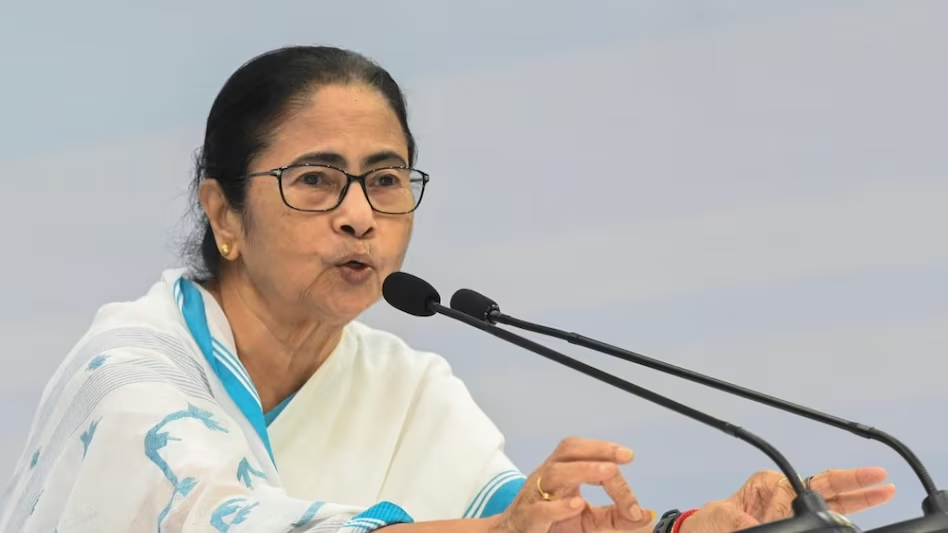
Mamata Banerjee is a prominent Indian politician and the current Chief Minister of West Bengal, a state in eastern India. Known for her dynamic leadership style and distinctive political approach, Banerjee has played a significant role in shaping West Bengal’s contemporary political landscape. Her journey from grassroots activism to becoming one of India’s most influential political figures is marked by both substantial achievements and controversies.

Early Life and Education

Mamata Banerjee was born on January 5, 1955, in Kolkata (then Calcutta), West Bengal. Her father, Promileswar Banerjee, was a freedom fighter and a follower of the Gandhian principles, which deeply influenced Mamata’s ideological framework. Her mother, Gayatri Devi, was a homemaker.

Banerjee pursued her early education in Kolkata. She completed her Bachelor’s degree in History from the Jogamaya Devi College, followed by a Master’s degree in Islamic History from the University of Calcutta. She also earned a Bachelor’s degree in Education (B.Ed.) and later an M.Phil. in Islamic History. Her academic background provided her with a broad understanding of Indian history and social issues.

Political Career Beginnings

Mamata Banerjee’s political journey began in the early 1970s. Initially, she was associated with the Indian Youth Congress and was an active participant in student movements. Her early involvement in politics was influenced by her mentor, the late Subhas Chandra Bose, and she became known for her grassroots activism and oratory skills.

Banerjee’s significant political breakthrough came in 1984 when she was elected to the Lok Sabha (the lower house of India’s Parliament) as a member of the Indian National Congress (INC) from the Jadavpur constituency. At 29, she was the youngest woman ever to be elected to the Lok Sabha. Her rise was rapid; she was appointed the Minister of State for Human Resource Development and later, Minister of State for Youth Affairs and Sports.

Formation of the Trinamool Congress (TMC)

Despite her initial success with the Indian National Congress, Banerjee became increasingly disillusioned with the party’s central leadership and its handling of West Bengal’s issues. In 1997, she founded the All India Trinamool Congress (TMC) as a splinter group from the Congress Party. The TMC was established with the goal of addressing local issues more effectively and to challenge the ruling Communist Party of India (Marxist) (CPI(M)) in West Bengal.

The TMC quickly emerged as a significant political force in West Bengal. Banerjee’s leadership was instrumental in building the party’s base, especially among the rural and urban poor, and in challenging the long-standing dominance of the CPI(M) in the state.

Chief Minister of West Bengal

Mamata Banerjee’s relentless efforts culminated in a historic victory in the 2011 West Bengal Assembly elections. The TMC, under her leadership, ended the 34-year rule of the CPI(M) in the state. This victory marked a significant political shift in West Bengal and established Banerjee as a powerful regional leader.

Key Achievements and Policies:

  • Development Initiatives: Banerjee’s tenure as Chief Minister has been marked by various development initiatives, including infrastructure projects, industrialization efforts, and improvements in the education and healthcare sectors.
  • Social Welfare Schemes: Her government has introduced numerous welfare schemes, such as Kanyashree Prakalpa (a scheme to support the education of girls) and Sabuj Sathi (a program to distribute bicycles to school students).
  • Land Reforms: Banerjee has been known for her focus on land reforms and rural development, although her policies in this regard have sometimes been met with criticism.

Controversies:

  • Political Violence: Her tenure has faced criticism for alleged instances of political violence and law and order issues. The TMC has been accused of encouraging or failing to prevent violence against political opponents.
  • Economic Management: There has been criticism regarding the state’s economic performance under her leadership, with allegations of poor handling of economic development and industrial growth.

Electoral Successes and Challenges

Mamata Banerjee has been re-elected as the Chief Minister of West Bengal in subsequent elections (2016, 2021), showcasing her enduring political appeal. Her leadership was instrumental in the TMC’s victory in the 2021 West Bengal Assembly elections, where the party retained power despite significant challenges from the Bharatiya Janata Party (BJP), which had made substantial inroads into the state.

National and International Presence

Beyond West Bengal, Mamata Banerjee has sought to position herself as a national leader. She has been vocal on various national issues and has occasionally expressed her ambitions for a larger role in Indian politics. Her political stance often aligns with a progressive and regionalist outlook, advocating for more autonomy for states and focusing on social justice issues.

Personal Life

Mamata Banerjee is known for her personal simplicity and austere lifestyle. She is an avid writer and has published several books in Bengali, covering a range of topics including politics, literature, and history. Her personal and professional life is closely intertwined with her political career, and she remains a significant and polarizing figure in Indian politics.

Conclusion

Mamata Banerjee’s career is a testament to her resilience and political acumen. From her early days as a student activist to her current role as the Chief Minister of West Bengal, her journey reflects both her strengths and the challenges she has faced. Her impact on West Bengal’s political and socio-economic landscape is profound, and her continued influence on Indian politics is likely to be significant in the years to come.

Top Travel Destinations in Himalayan Ranges

Daily writing prompt
Share a story about the furthest you’ve ever traveled from home.

The Himalayan mountain range, one of the most awe-inspiring natural wonders of the world, spans five countries: India, Nepal, Bhutan, China, and Pakistan. The region is a magnet for travelers seeking adventure, spirituality, and unparalleled natural beauty. Below are some of the top travel destinations in the Himalayan ranges:

1. Leh-Ladakh, India

  • Overview: Leh-Ladakh is often referred to as the “Land of High Passes” and is renowned for its stark landscapes, Buddhist monasteries, and unique culture. The region’s high-altitude deserts, rugged terrain, and crystal-clear lakes offer an otherworldly experience.
  • Key Attractions:
    • Pangong Lake: A high-altitude lake known for its changing colors.
    • Nubra Valley: Famous for its sand dunes, Bactrian camels, and monasteries.
    • Monasteries: Thiksey, Hemis, and Diskit monasteries showcase the rich Buddhist heritage of the region.
  • Activities: Trekking, motorbiking, visiting monasteries, camping, and exploring local culture.

2. Kathmandu Valley, Nepal

  • Overview: Kathmandu Valley is a cultural and historical hub, surrounded by the majestic peaks of the Himalayas. The valley is home to seven UNESCO World Heritage Sites, offering a blend of Hindu and Buddhist traditions.
  • Key Attractions:
    • Swayambhunath (Monkey Temple): A sacred Buddhist site with panoramic views of the city.
    • Pashupatinath Temple: A significant Hindu temple on the banks of the Bagmati River.
    • Bhaktapur and Patan Durbar Squares: Ancient cities with stunning architecture and vibrant history.
  • Activities: Cultural tours, temple visits, shopping for handicrafts, and short hikes to surrounding hills.

3. Manali, India

  • Overview: Nestled in the Kullu Valley of Himachal Pradesh, Manali is a popular hill station known for its scenic beauty, adventure activities, and vibrant local culture. The region is surrounded by snow-capped peaks and dense forests.
  • Key Attractions:
    • Solang Valley: A hub for adventure sports like paragliding, skiing, and zorbing.
    • Rohtang Pass: A high mountain pass that offers breathtaking views of the Himalayas.
    • Old Manali: A quaint village with traditional Himachali architecture and vibrant cafes.
  • Activities: Trekking, skiing, paragliding, river rafting, and visiting temples.

4. Bhutan

  • Overview: Bhutan, known as the “Land of the Thunder Dragon,” is a small Himalayan kingdom with a strong emphasis on preserving its culture and environment. The country is famous for its monasteries, fortresses (dzongs), and dramatic landscapes.
  • Key Attractions:
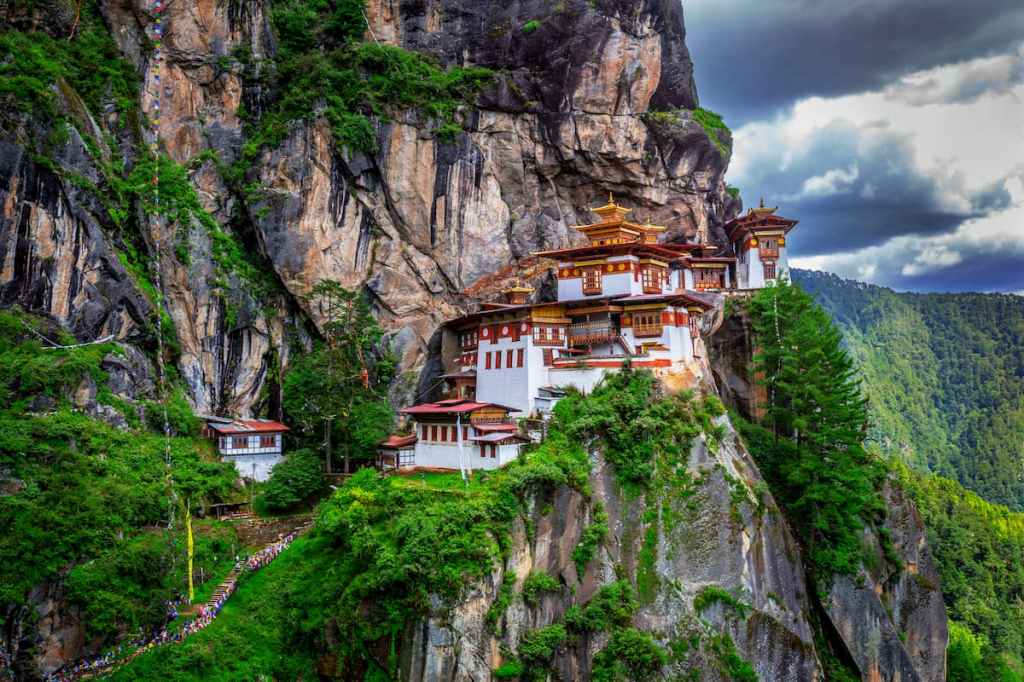
    • Tiger’s Nest Monastery (Paro Taktsang): A sacred Buddhist site perched on a cliffside.
    • Thimphu: The capital city, known for its traditional architecture and cultural landmarks.
    • Punakha Dzong: A stunning fortress at the confluence of two rivers.
  • Activities: Cultural tours, monastery visits, trekking (especially the Jomolhari Trek), and exploring local festivals.

5. Everest Base Camp, Nepal

  • Overview: Everest Base Camp is one of the most iconic trekking destinations in the world. Located at the base of Mount Everest, the trek offers trekkers a chance to experience the breathtaking beauty of the Khumbu region.
  • Key Attractions:
    • Lukla: The starting point of the trek, known for its thrilling airport.
    • Namche Bazaar: A bustling town that serves as a gateway to the high Himalayas.
    • Everest Base Camp: The ultimate destination, offering views of Everest and the Khumbu Icefall.
  • Activities: Trekking, photography, and experiencing Sherpa culture.

6. Darjeeling, India

  • Overview: Darjeeling, known as the “Queen of the Hills,” is a popular hill station in West Bengal, India. It is famous for its tea plantations, colonial architecture, and stunning views of the Kanchenjunga mountain range.
  • Key Attractions:
    • Tiger Hill: Offers panoramic views of the sunrise over Kanchenjunga.
    • Darjeeling Himalayan Railway (Toy Train): A UNESCO World Heritage Site, offering a scenic ride through the mountains.
    • Tea Gardens: Explore the famous tea estates and taste some of the world’s finest teas.
  • Activities: Tea garden tours, trekking, visiting monasteries, and riding the toy train.

7. Shimla, India

  • Overview: Once the summer capital of British India, Shimla is a charming hill station in Himachal Pradesh. The town is known for its colonial architecture, pine forests, and pleasant weather.
  • Key Attractions:
    • The Ridge: A large open space in the heart of Shimla, offering stunning views of the mountains.
    • Jakhoo Temple: A temple dedicated to Lord Hanuman, located on Jakhoo Hill.
    • Mall Road: The main street, lined with shops, cafes, and colonial-era buildings.
  • Activities: Walking tours, visiting temples, exploring colonial architecture, and shopping.

8. Nainital, India

  • Overview: Nainital is a picturesque hill station in the Kumaon region of Uttarakhand, centered around the beautiful Naini Lake. The town is surrounded by hills and offers a serene environment.
  • Key Attractions:
    • Naini Lake: A beautiful lake where visitors can enjoy boating.
    • Naina Devi Temple: A sacred temple overlooking the lake.
    • Snow View Point: Offers panoramic views of the Himalayan peaks.
  • Activities: Boating, trekking, visiting temples, and exploring nearby lakes and viewpoints.

9. Sikkim, India

  • Overview: Sikkim, a small state in northeastern India, is known for its rich biodiversity, pristine landscapes, and Tibetan Buddhist culture. The state is home to Kanchenjunga, the third-highest mountain in the world.
  • Key Attractions:
    • Gangtok: The capital city, offering stunning views of Kanchenjunga and vibrant monasteries.
    • Tsomgo Lake: A glacial lake situated at an altitude of 12,310 feet.
    • Yuksom: A historic town, known as the starting point for the Dzongri-Goechala trek.
  • Activities: Trekking, monastery visits, exploring nature parks, and experiencing local festivals.

10. Spiti Valley, India

  • Overview: Spiti Valley

in Himachal Pradesh is often described as a cold desert and is one of the most remote and unexplored regions in the Indian Himalayas. The valley is characterized by rugged terrain, stark landscapes, ancient monasteries, and a rich Tibetan culture.

  • Key Attractions:
    • Key Monastery: The largest and one of the oldest monasteries in Spiti, perched on a hilltop offering panoramic views.
    • Chandratal Lake: Also known as the “Moon Lake,” this high-altitude lake is famous for its crystal-clear waters and stunning scenery.
    • Tabo Monastery: A UNESCO World Heritage Site, this 1000-year-old monastery is known for its ancient murals and statues.
  • Activities: Trekking, exploring monasteries, camping by lakes, and experiencing local festivals.

11. Rishikesh and Haridwar, India

  • Overview: Situated in the foothills of the Himalayas, Rishikesh and Haridwar are spiritual centers along the banks of the Ganges River. While Rishikesh is known as the “Yoga Capital of the World,” Haridwar is famous for its religious significance and the Ganga Aarti.
  • Key Attractions:
    • Triveni Ghat: A sacred bathing ghat in Rishikesh where the Ganges, Yamuna, and Saraswati rivers meet.
    • Lakshman Jhula and Ram Jhula: Iconic suspension bridges in Rishikesh offering scenic views of the Ganges.
    • Har Ki Pauri: A famous ghat in Haridwar known for its evening Ganga Aarti.
  • Activities: Yoga, meditation, white-water rafting, attending the Ganga Aarti, and spiritual retreats.

12. Paro Valley, Bhutan

  • Overview: Paro Valley is one of the most beautiful regions in Bhutan, known for its scenic landscapes, traditional Bhutanese architecture, and historical significance. The valley is also home to the Paro Airport, the gateway to Bhutan.
  • Key Attractions:
    • Paro Taktsang (Tiger’s Nest Monastery): A sacred monastery perched on a cliff, one of Bhutan’s most iconic landmarks.
    • Rinpung Dzong: A fortress-monastery that offers stunning views and houses important relics.
    • National Museum of Bhutan: Located in the Ta Dzong, it showcases Bhutan’s cultural heritage.
  • Activities: Hiking to Tiger’s Nest, exploring dzongs, cultural tours, and photography.

13. Mount Kailash, Tibet

  • Overview: Mount Kailash is a sacred peak in Tibet, revered in Hinduism, Buddhism, Jainism, and Bon. The mountain is considered the earthly representation of Mount Meru and is a site of pilgrimage for devotees.
  • Key Attractions:
    • Kailash Kora: A 52-kilometer pilgrimage route around Mount Kailash, believed to bring spiritual merit.
    • Lake Manasarovar: A sacred lake situated near Mount Kailash, considered one of the holiest lakes in Hinduism and Buddhism.
    • Rakshas Tal: Another significant lake located near Lake Manasarovar, with mythological importance.
  • Activities: Pilgrimage, trekking the Kailash Kora, spiritual retreats, and meditation.

14. Lhasa, Tibet

  • Overview: Lhasa, the capital of Tibet, is a spiritual and cultural center known for its ancient monasteries and palaces. The city is surrounded by the towering peaks of the Himalayas and is rich in Tibetan Buddhist traditions.
  • Key Attractions:
    • Potala Palace: A UNESCO World Heritage Site, this palace is the former residence of the Dalai Lama and an architectural marvel.
    • Jokhang Temple: The most sacred temple in Tibet, revered by Tibetan Buddhists from all over the world.
    • Norbulingka: The summer palace of the Dalai Lama, known for its beautiful gardens and architecture.
  • Activities: Exploring monasteries, visiting historical sites, experiencing Tibetan culture, and shopping for local crafts.

Conclusion

The Himalayan region offers a diverse range of travel experiences, from spiritual pilgrimages to adrenaline-pumping adventures. Each destination has its unique charm, cultural significance, and natural beauty, making the Himalayas a must-visit for travelers seeking a blend of adventure, spirituality, and serenity. Whether you are looking to trek through some of the highest mountain passes, meditate in a remote monastery, or simply soak in the breathtaking vistas, the Himalayan ranges have something to offer for every type of traveler.

NAFSA (National Association of Foreign Student Advisers)

NAFSA (National Association of Foreign Student Advisers) is a non-profit professional organization for international educators, promoting cross-cultural understanding and exchange. Here’s a detailed overview:

_Mission:_
NAFSA fosters international education and exchange, promoting global understanding and development.
_Objectives:_
– Support international student and scholar services
– Enhance international education programming
– Facilitate networking and professional development
– Advocate for international education policy
_Activities:_
– Annual conferences and regional meetings
– Training and professional development workshops
– Online resources and publications
– Advocacy and public policy initiatives
_Membership:_
– Open to institutions, organizations, and individuals engaged in international education
– Benefits include networking, professional development, and access to resources
_Committees and Knowledge Communities:_
– Focus on specific areas like student services, education abroad, and advocacy
– Provide platforms for networking and knowledge sharing
_Publications:_
– International Educator magazine
– NAFSA Newsletter
– Online resources and reports
NAFSA plays a crucial role in promoting international education and exchange, supporting professionals in the field, and advocating for policies that foster global understanding and development.

GIAN (Global Initiative of Academic Networks) courses

GIAN (Global Initiative of Academic Networks) courses are a program initiated by the Indian government to promote international collaboration and academic exchange. Here’s a detailed overview:

_Objective:_
GIAN aims to facilitate international faculty and scholar participation in Indian educational institutions, promoting global perspectives and expertise.
_Course Structure:_
– Short-term courses (1-2 weeks)
– Taught by international faculty and scholars
– Interdisciplinary and cutting-edge topics
– Hands-on training and workshops
_Subject Areas:_
– Engineering
– Science
– Humanities
– Social Sciences
– Management
_Benefits:_
– Exposure to global perspectives and expertise
– Enhanced research collaborations
– Networking opportunities
– Access to international resources and funding
– Certification and credits
_Eligibility:_
– Indian students, researchers, and faculty
– International students and scholars (in some cases)
_How to Apply:_
– Check the GIAN website for course announcements
– Register and apply online
– Meet the course-specific eligibility criteria
_Funding:_
– Government funding for course fees and logistics
– Scholarships and travel grants available
_Implementation:_
– Courses are conducted in Indian educational institutions
– International faculty and scholars are invited to teach
– Local faculty and experts also participate
_Impact:_
– Enhanced global competitiveness of Indian education
– Increased international collaborations and research
– Exposure to new ideas and pedagogies
– Capacity building and skill development
By participating in GIAN courses, students, researchers, and faculty can gain valuable international exposure, expertise, and networking opportunities, contributing to India’s global academic and research landscape.